
The Cannabis Vegetative Stage
How to build strong, bushy plants with explosive root systems — the foundation of every great harvest.
Key Takeaways
How to build strong, bushy plants with explosive root systems — the foundation of every great harvest.
- What Is the Vegetative Stage?
- Light Schedule & Intensity
- Nutrients During Veg
- Watering & Root Health
1. What Is the Vegetative Stage?
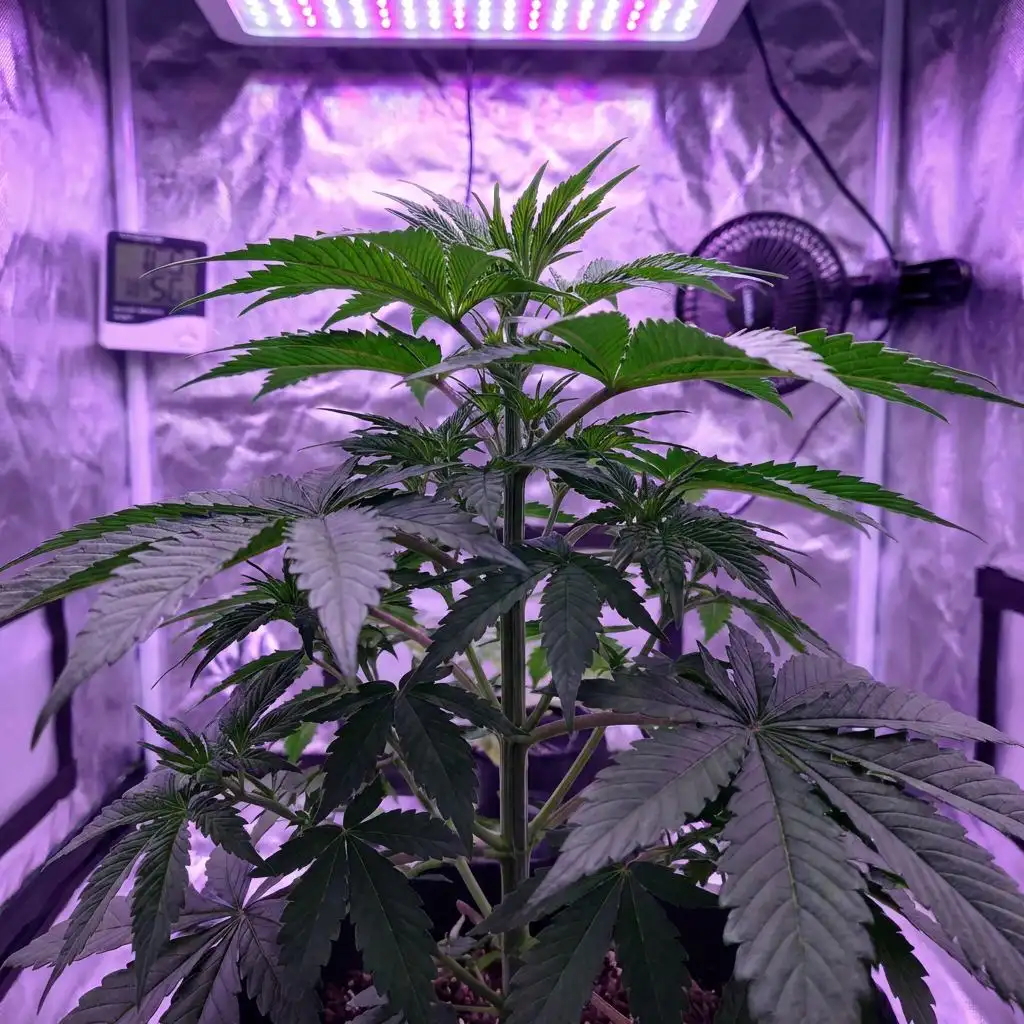
The vegetative stage is the growth phase between germination/seedling and flowering. During veg, your cannabis plant focuses all its energy on building stems, branches, leaves, and roots — the structural foundation that will support heavy buds later.
In photoperiod strains, the vegetative stage lasts as long as you keep the light schedule at 18+ hours. Autoflowers typically veg for 3–4 weeks automatically before transitioning to flower regardless of light.
What you do during veg directly determines your final yield. A plant that enters flower with a strong root system, thick stems, and multiple bud sites will dramatically outperform one that was rushed or neglected.
2. Light Schedule & Intensity
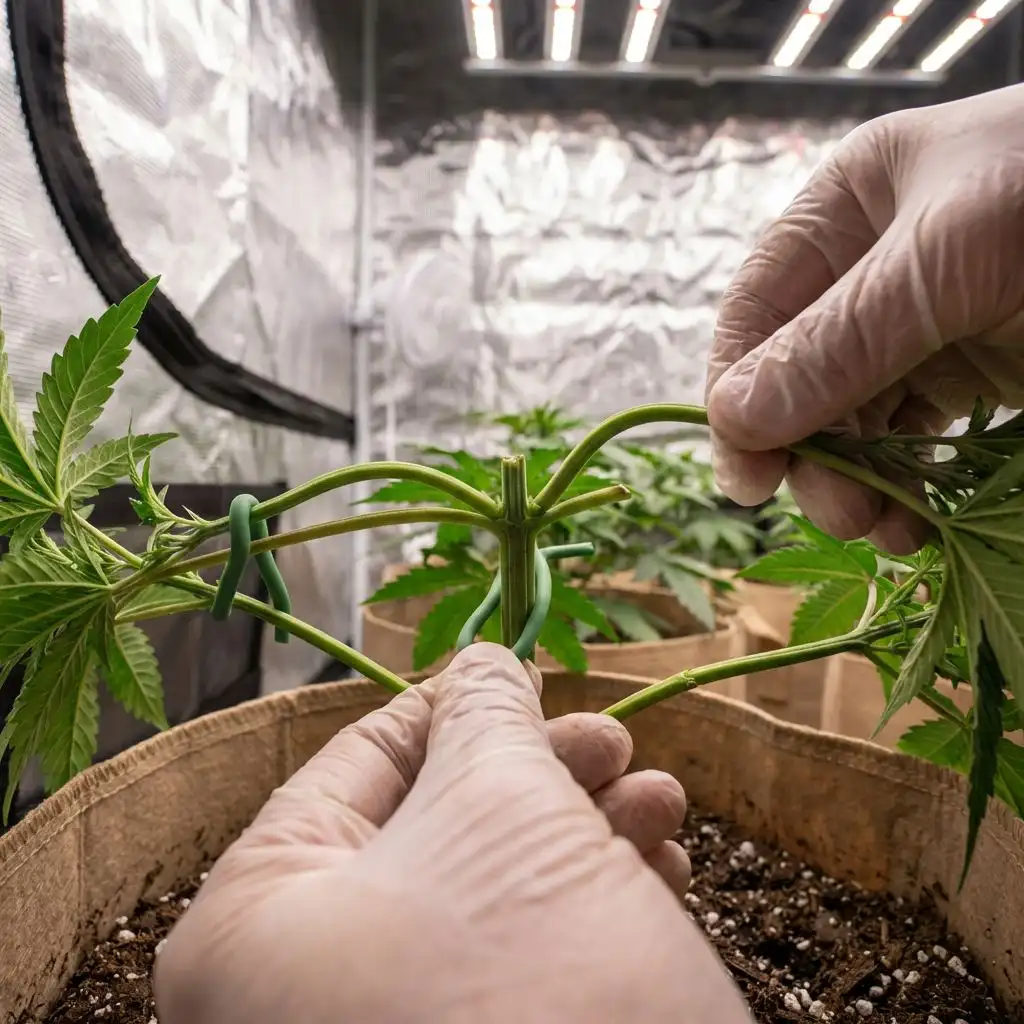
The standard vegetative light schedule is 18 hours on / 6 hours off (18/6). Some growers run 20/4 or even 24/0, but research shows diminishing returns past 18 hours — the dark period allows cellular repair and hormone regulation.
- Seedlings (week 1–2): 200–400 PPFD, lights 24–30 inches away
- Early veg (week 2–4): 400–600 PPFD, lights 18–24 inches
- Late veg (week 4+): 600–800 PPFD, lights 14–20 inches
LED is the gold standard for veg — full-spectrum white LEDs with a blue-dominant spectrum promote compact, bushy growth. Avoid stretchy plants by keeping light intensity adequate.
3. Nutrients During Veg
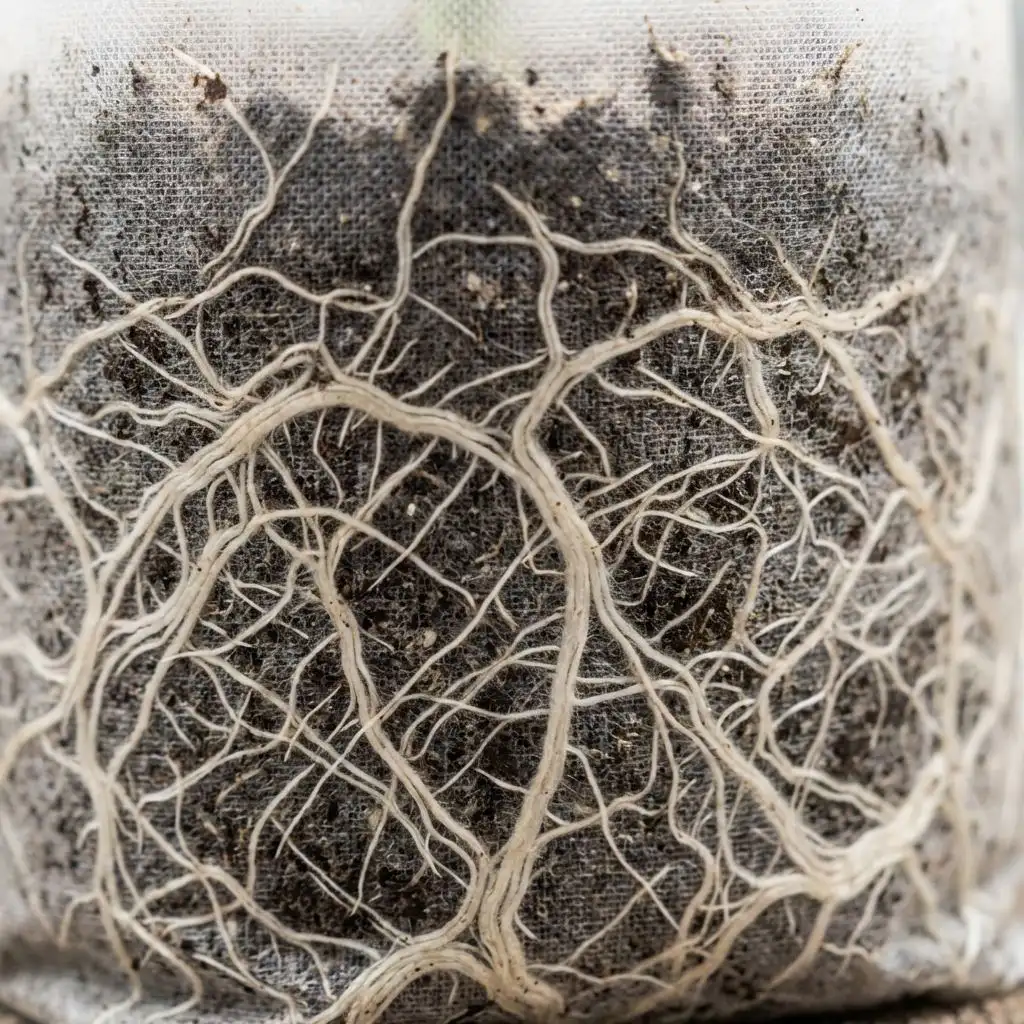
Vegetating cannabis needs a nitrogen-dominant nutrient profile. Nitrogen drives leaf and stem growth — the two things your plant is building most aggressively during veg.
A typical veg NPK ratio is 3-1-2 (high N, moderate K, low P). Start at 25% of the manufacturer's recommended dose for seedlings and ramp up weekly.
| Week | N-P-K Ratio | EC (mS/cm) | pH Range |
|---|---|---|---|
| 1–2 (seedling) | 1-1-1 (light) | 0.4–0.6 | 6.0–6.5 |
| 3–4 (early veg) | 3-1-2 | 0.8–1.2 | 6.0–6.5 |
| 5–6 (mid veg) | 3-1-2 | 1.2–1.6 | 5.8–6.3 |
| 7+ (late veg) | 3-1-3 | 1.4–1.8 | 5.8–6.3 |
4. Watering & Root Health
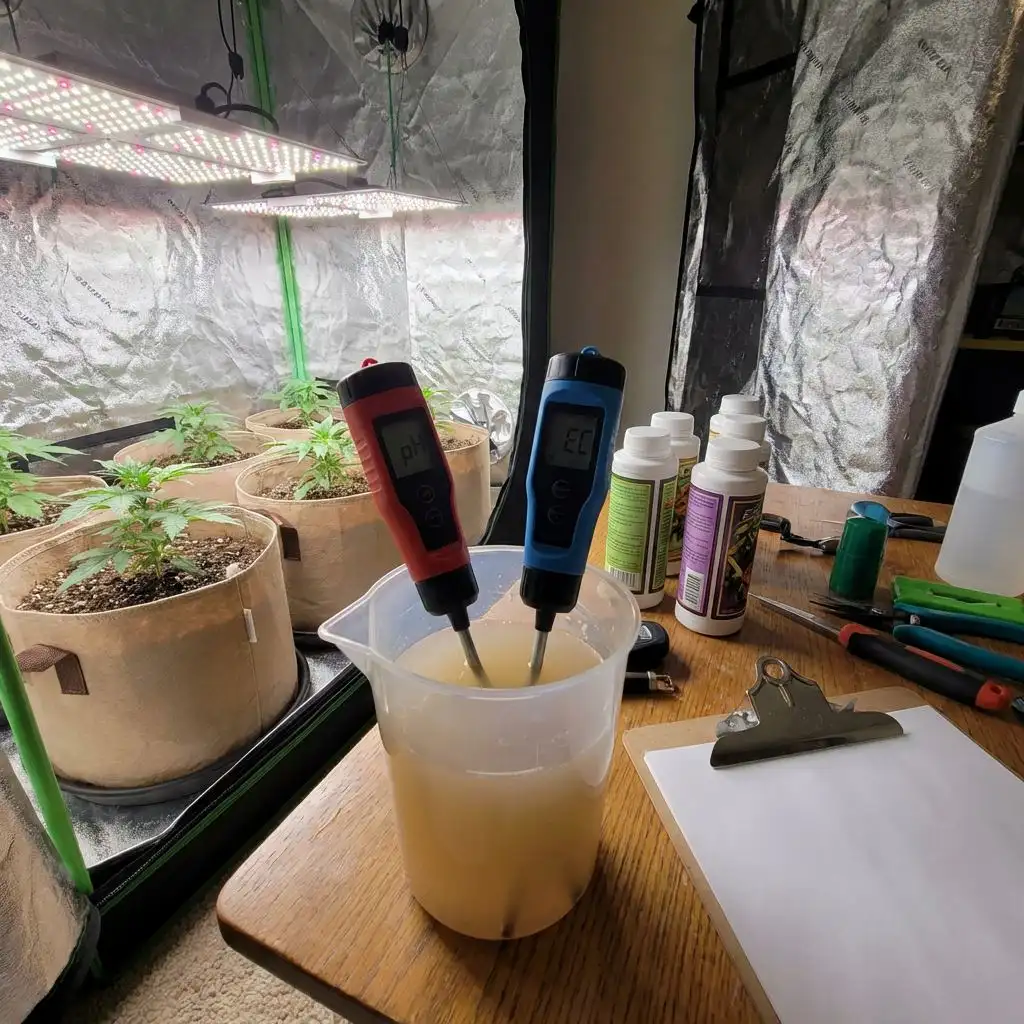
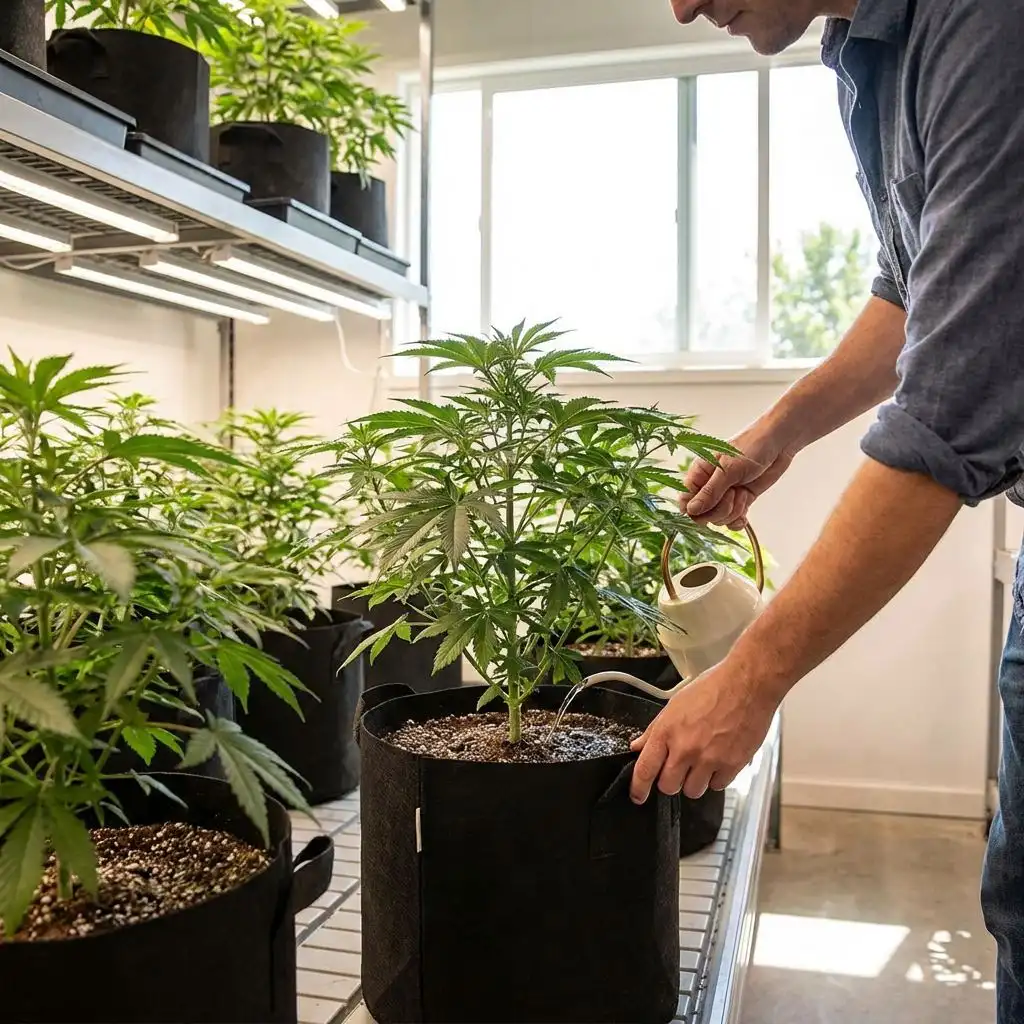
Overwatering is the #1 beginner mistake during veg. Cannabis roots need oxygen — waterlogged soil suffocates roots and invites root rot.
- Water when the top inch of soil is dry — stick your finger in to check
- Lift the pot — a light pot needs water, a heavy pot doesn't
- Water until 10–20% runoff — this prevents salt buildup in the soil
- Never let plants sit in runoff trays — drain them after 15 minutes
In fabric pots or air pots, it's harder to overwater because the sides breathe. This is why experienced growers prefer them over solid plastic containers.
5. Temperature & Humidity
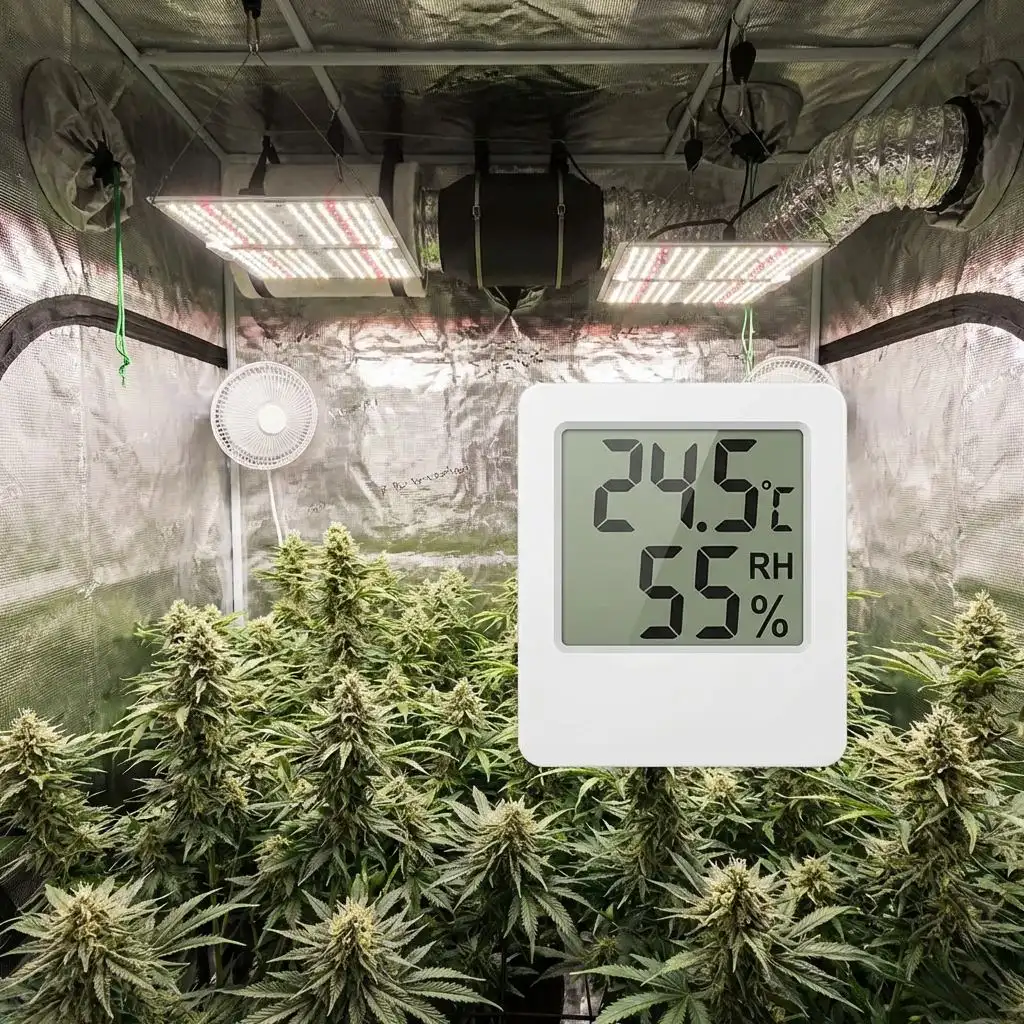
Vegetating cannabis thrives in warm, moderately humid conditions:
- Temperature: 22–28°C (72–82°F) lights on, 18–22°C lights off
- Humidity: 50–70% RH during veg (higher for seedlings, lower as plants mature)
- VPD target: 0.8–1.2 kPa for optimal transpiration
Good airflow is critical — use oscillating fans to strengthen stems and prevent mold. Stems that sway in a breeze grow thicker and stronger, supporting heavier buds during flower.
6. Topping, Training & Node Development
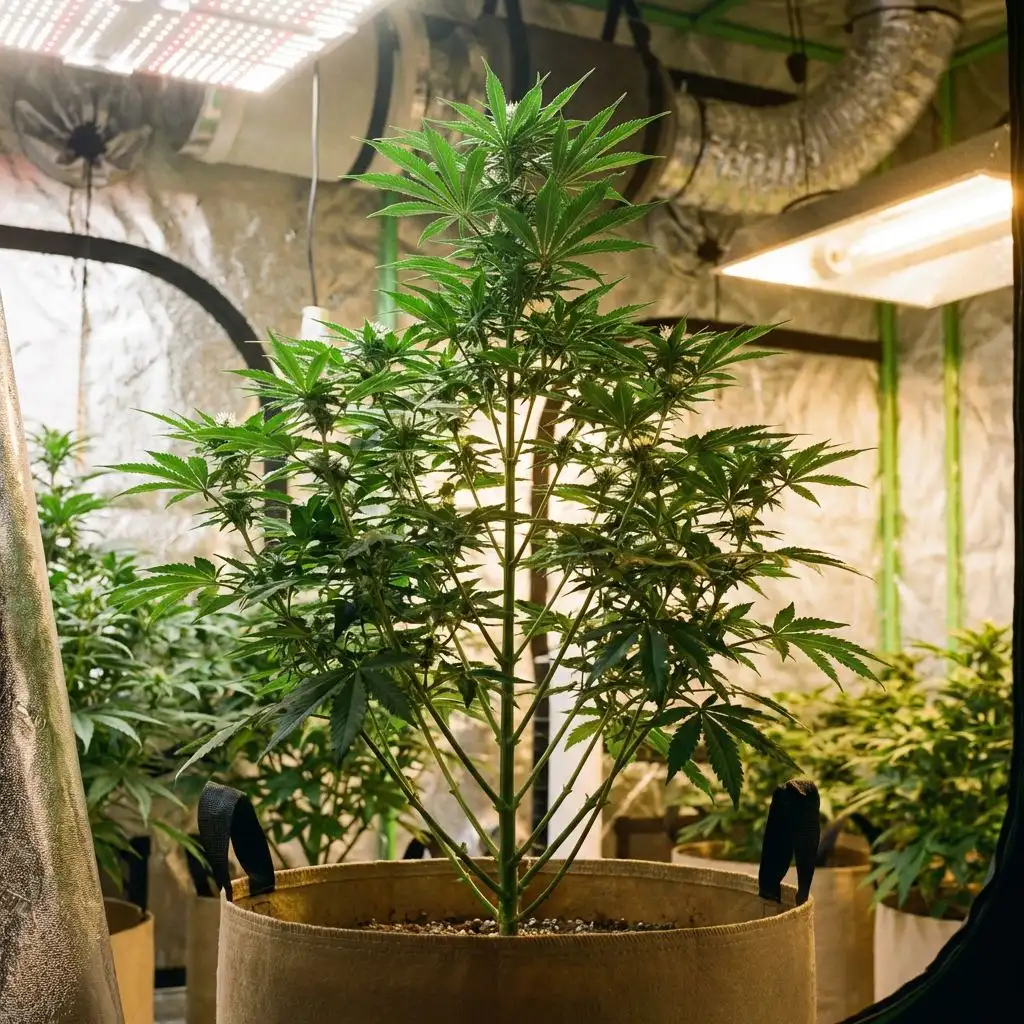
Veg is when you train your plant's shape. Untrained cannabis grows as a single cola "Christmas tree" — training creates multiple bud sites for better yield.
- Topping: Cut the main growing tip above the 4th–5th node. This splits one cola into two, doubling your main bud sites.
- LST (Low Stress Training): Bend and tie down branches to create an even canopy. No recovery time needed.
- FIM: Pinch 75% of the new growth tip — less precise than topping but can create 3–4 new tops.
- Defoliation: Remove large fan leaves blocking light to lower bud sites. Do this sparingly — max 20% of leaves at once.
Wait until your plant has 5–6 nodes before topping, and allow 5–7 days of recovery before additional training.
7. When to Flip to Flower
There's no single right answer — it depends on your space, strain, and goals:
| Method | When to Flip | Best For |
|---|---|---|
| By height | When plant reaches 50% of desired final height | Indoor grows with height limits |
| By node count | After 6–8 nodes + training recovery | Topped/trained plants |
| By time | 4–6 weeks from seed in veg | Consistent scheduling |
| By canopy fill | When 70–80% of SCROG net is filled | SCROG growers |
8. Common Veg Problems & Solutions
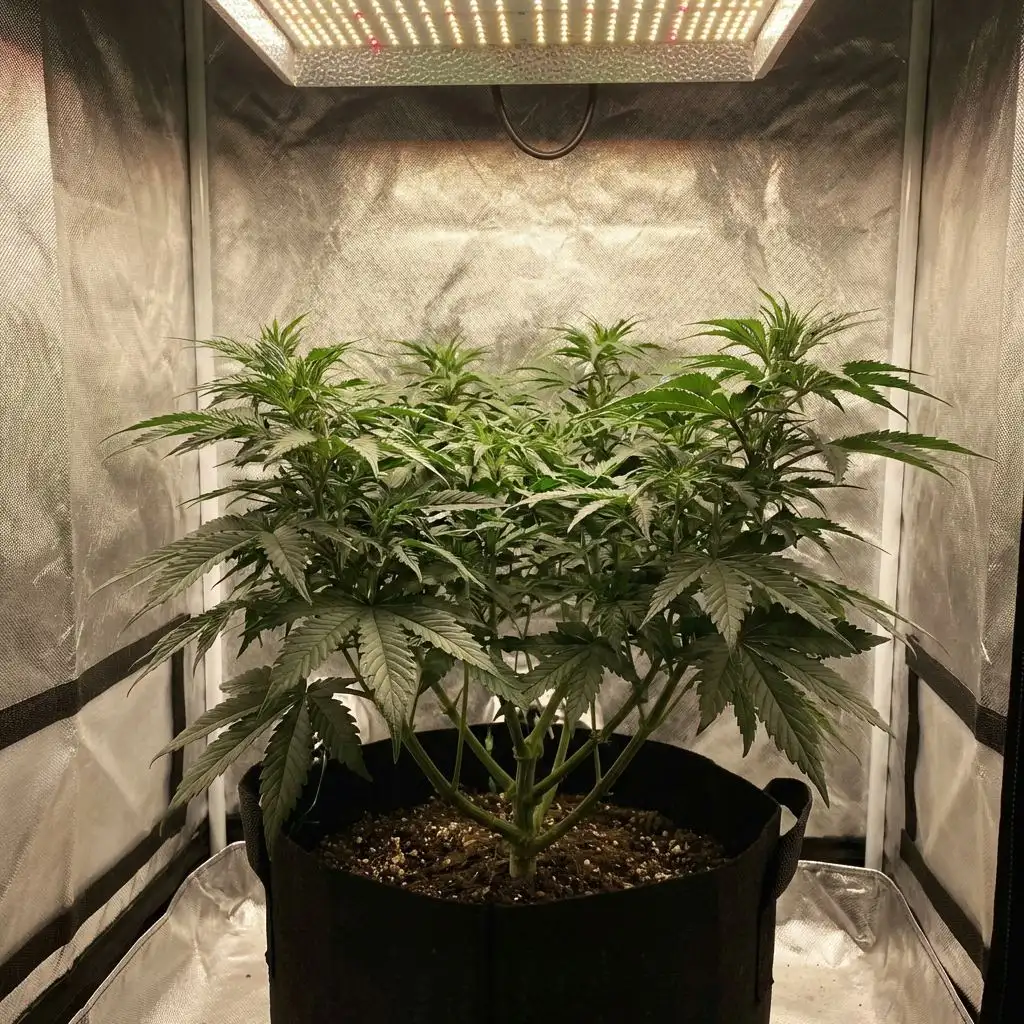
- Stretchy, tall growth: Light too weak or too far → lower it, increase intensity
- Yellow lower leaves: Nitrogen deficiency → increase N in feeding
- Curling/clawing leaves: Nitrogen toxicity → flush and reduce N
- Slow growth: Root-bound, low temps, or pH lockout → check roots, environment, pH
- Brown leaf edges: Nutrient burn → reduce overall feeding strength by 25%
- Droopy leaves: Overwatering (leaves heavy/dark) or underwatering (leaves thin/papery)
🌱 Recommended Strains
Frequently Asked Questions
What Is the Vegetative Stage?
The vegetative stage is the growth phase between germination/seedling and flowering. During veg, your cannabis plant focuses all its energy on building stems, branches, leaves, and roots — the structural foundation that will support heavy buds later. In photoperiod strains, the vegetative stage last...
What is Light Schedule & Intensity?
The standard vegetative light schedule is 18 hours on / 6 hours off (18/6). Some growers run 20/4 or even 24/0, but research shows diminishing returns past 18 hours — the dark period allows cellular repair and hormone regulation. Seedlings (week 1–2): 200–400 PPFD, lights 24–30 inches away Early ve...
What is Nutrients During Veg?
Vegetating cannabis needs a nitrogen-dominant nutrient profile. Nitrogen drives leaf and stem growth — the two things your plant is building most aggressively during veg. A typical veg NPK ratio is 3-1-2 (high N, moderate K, low P). Start at 25% of the manufacturer's recommended dose for seedlings a...
What is Watering & Root Health?
Overwatering is the #1 beginner mistake during veg. Cannabis roots need oxygen — waterlogged soil suffocates roots and invites root rot. Water when the top inch of soil is dry — stick your finger in to check Lift the pot — a light pot needs water, a heavy pot doesn't Water until 10–20% runoff — thi...
What is Temperature & Humidity?
Vegetating cannabis thrives in warm, moderately humid conditions: Temperature: 22–28°C (72–82°F) lights on, 18–22°C lights off Humidity: 50–70% RH during veg (higher for seedlings, lower as plants mature) VPD target: 0.8–1.2 kPa for optimal transpiration Good airflow is critical — use oscillating ...