
Outdoor Cannabis Growing
Harness the power of the sun for massive yields, robust plants, and a growing experience that connects you to the roots of cannabis cultivation.
Key Takeaways
Harness the power of the sun for massive yields, robust plants, and a growing experience that connects you to the roots of cannabis cultivation.
- Advantages of Growing Outdoors
- Climate Zones & Strain Selection
- Soil Preparation
- Sunlight Requirements
1. Advantages of Growing Outdoors
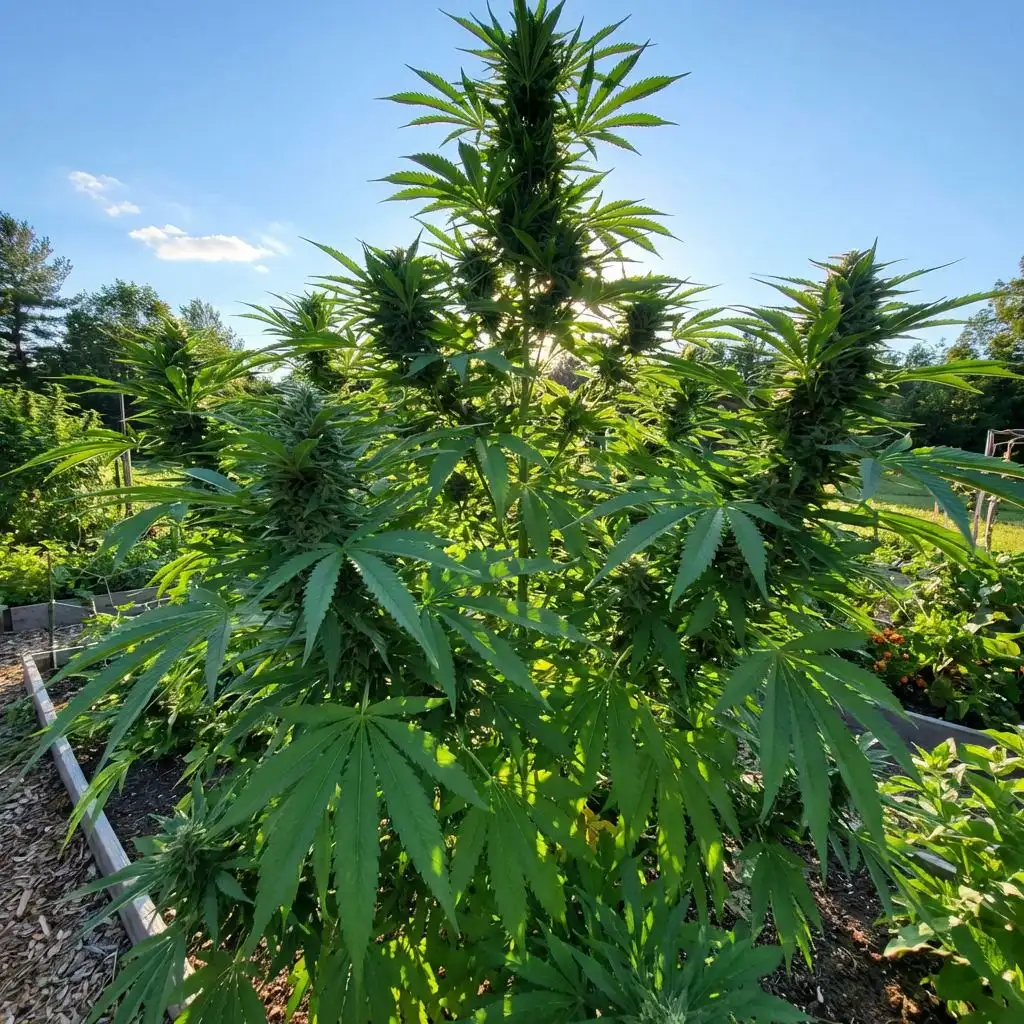
Outdoor cannabis growing offers one enormous advantage that no indoor setup can match: free, full-spectrum sunlight. The sun delivers over 1,500 PPFD at peak hours — more light intensity than even the most expensive LED fixtures. This unlimited light energy, combined with unrestricted root space, allows outdoor plants to grow 6–12 feet tall and yield 1–5+ pounds per plant.
The cost of outdoor growing is a fraction of indoor. No electricity bills for lighting, no fans, no dehumidifiers. Your primary expenses are soil, containers (if not growing in-ground), nutrients, and seeds. A full outdoor grow can be started for under $50 if you're growing directly in amended ground soil.
There's also a quality argument for outdoor flower. Sun-grown cannabis develops a broader cannabinoid and terpene profile due to natural UV exposure and the full light spectrum. Many connoisseurs and hash makers prefer outdoor or "light dep" flower for its complex flavor profiles. The entourage effect — the synergy between cannabinoids and terpenes — tends to be more pronounced in sun-grown buds.
2. Climate Zones & Strain Selection
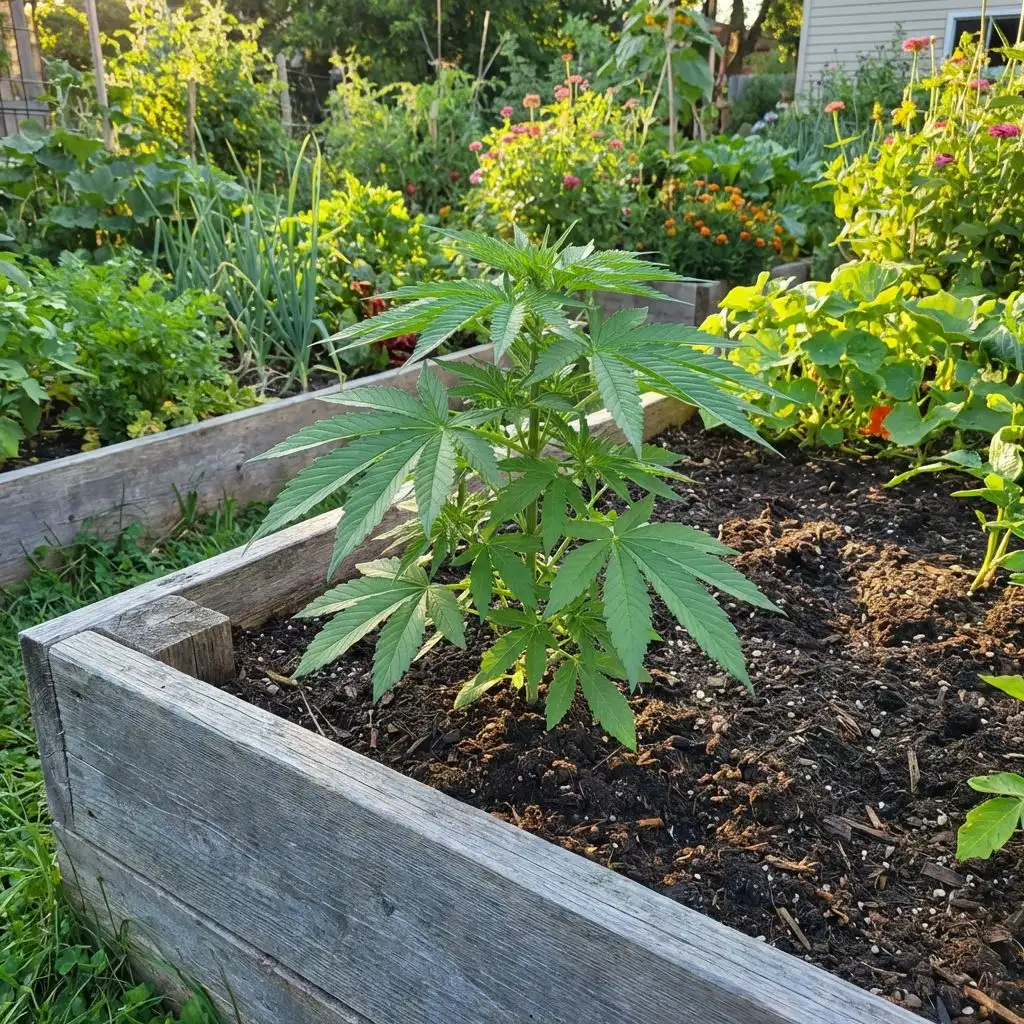
Matching your strain to your climate is the single most important decision in outdoor growing. A 14-week sativa in a northern climate with early frost will never finish — and a pure indica in a tropical climate may struggle with humidity and mold. Choose wisely and the plant does most of the work for you.
Cool/Northern climates (above 45°N — Canada, UK, Scandinavia, northern US): Short summers mean you need fast-finishing strains. Choose indica-dominant photoperiods that finish flowering in 7–8 weeks, or autoflowers that complete their entire lifecycle in 8–10 weeks. Look for mold-resistant genetics — high humidity and cool autumn temperatures make Botrytis a major threat. Northern Lights, Early Skunk, and Frisian Dew are proven performers.
Temperate climates (35–45°N — most of US, southern Europe, Mediterranean): The sweet spot for outdoor growing. You can grow almost any strain, including 10-week sativas. Planting in April/May gives you a full 5–6 month season. Outdoor legends like Blue Dream, OG Kush, and Gorilla Glue thrive here.
Tropical/subtropical climates (below 35°N): Year-round growing is possible, but consistent 12/12 light near the equator means photoperiod strains may flower prematurely or re-veg. Autoflowers are ideal for tropical regions, or use supplemental lighting during veg to prevent early flowering. Sativa landraces (Thai, Colombian, Jamaican) are naturally adapted to these conditions.
| Climate Zone | Season Length | Recommended Strains | Key Challenge |
|---|---|---|---|
| Northern (>45°N) | 4–5 months | Autoflowers, fast indicas (7–8 wk) | Early frost, short season, mold |
| Temperate (35–45°N) | 5–6 months | Any photoperiod or auto | Late-season rain, pest pressure |
| Mediterranean | 6–7 months | Sativas, long-flowering hybrids | Heat stress, drought, spider mites |
| Tropical (<25°N) | Year-round | Autoflowers, sativa landraces | Excessive humidity, re-veg issues |
3. Soil Preparation
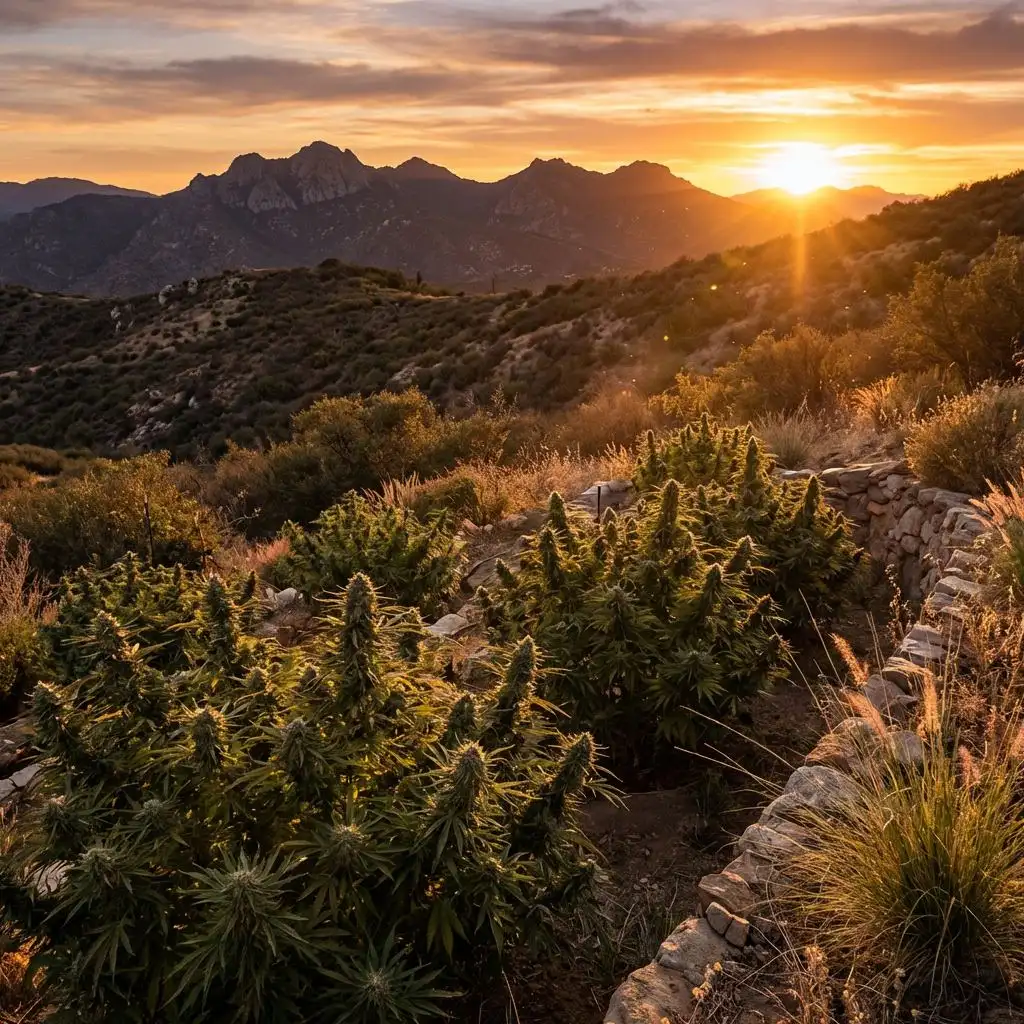
Outdoor cannabis thrives in rich, well-draining soil with a pH between 6.0 and 7.0. If you're growing in-ground, start preparing your soil at least 2–4 weeks before planting. Dig a hole at least 3 feet wide and 2 feet deep for each plant, and backfill with amended soil.
A proven outdoor soil mix combines 1/3 quality compost, 1/3 aeration (perlite or pumice), and 1/3 base soil. Amend with worm castings (10–15% by volume), bone meal for phosphorus, kelp meal for potassium, and dolomite lime to buffer pH. This creates a "supersoil" that can feed your plants for the entire grow with minimal additional fertilization.
If growing in containers outdoors, use minimum 15-gallon fabric pots — though 30–50 gallon pots are better for maximizing yield. Fabric pots prevent root circling and allow air pruning, producing denser root balls than plastic containers. Remember that outdoor containers dry faster than in-ground plantings due to sun and wind exposure on all sides.
4. Sunlight Requirements
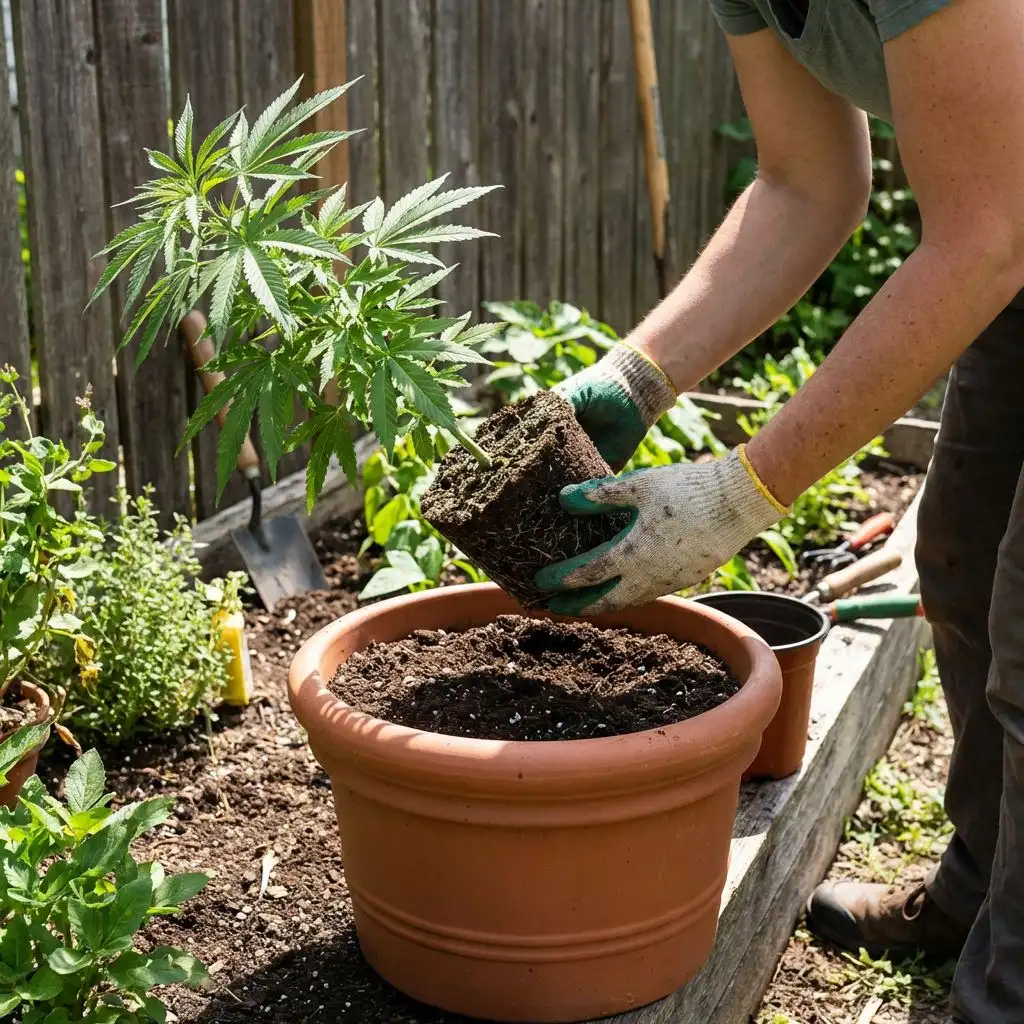
Cannabis is a full-sun plant that needs a minimum of 6 hours of direct sunlight per day to produce decent buds, though 8–10+ hours is ideal. Every additional hour of direct sun translates to denser buds and higher yields. Site selection is critical — a difference of 2–3 hours of daily sunlight can mean a 30–50% difference in final yield.
The ideal outdoor location faces south (in the Northern Hemisphere) with no obstructions — no tall buildings, fences, or trees casting shadows during the 10am–4pm window when the sun is most intense. Morning sun is particularly valuable because it dries dew from leaves quickly, reducing mold risk.
Track the sun path across your proposed site throughout the day before committing. What looks like a sunny spot at noon may be shaded by 3pm. Consider seasonal changes too — the sun's arc drops lower in late summer and fall, and shadows from nearby structures grow longer precisely when your plants need the most light to finish flowering.
5. Watering Outdoor Plants
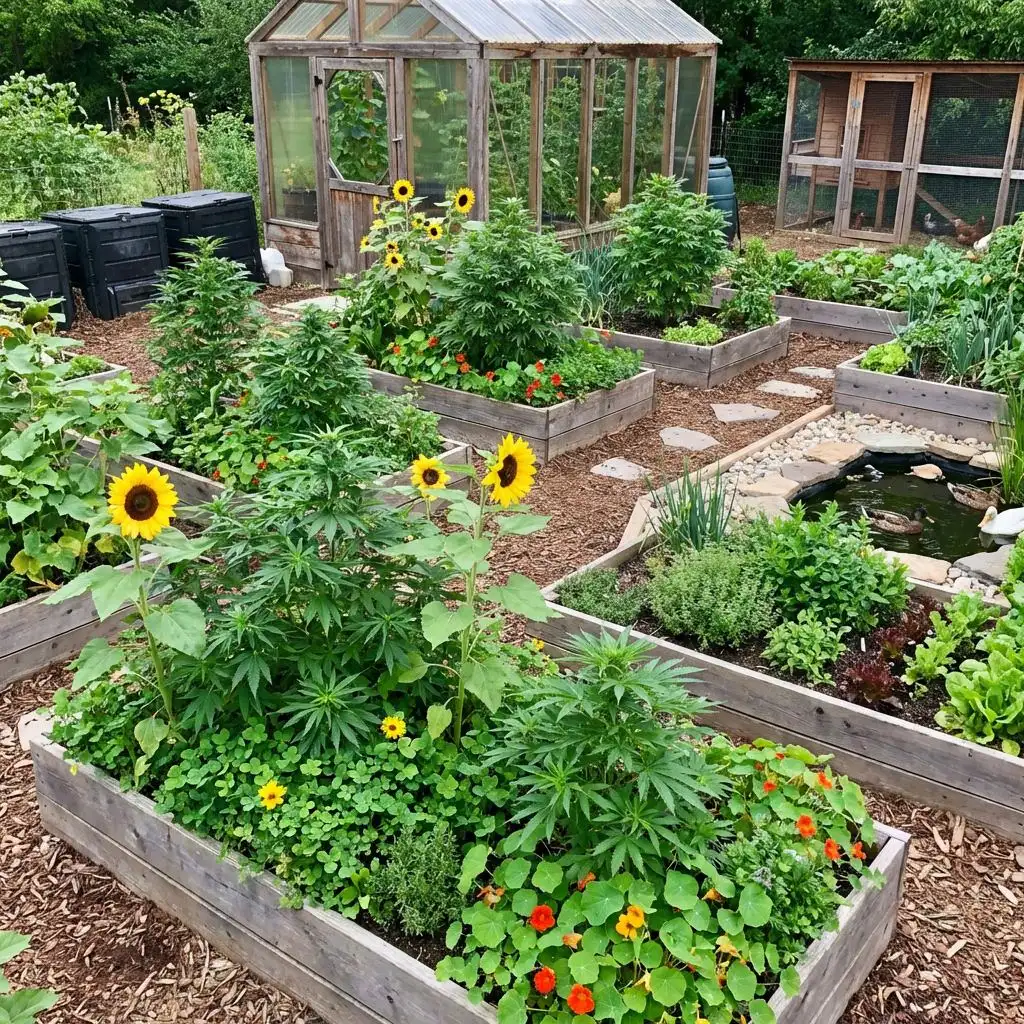
Outdoor cannabis in the ground needs far less frequent watering than indoor container plants, because roots can extend several feet in every direction seeking moisture. Established plants in-ground may only need watering every 3–5 days in moderate weather, or daily during heat waves above 35°C (95°F).
Container plants outdoors are a different story. A plant in a 20-gallon fabric pot in full sun can drink 2–5 gallons per day during peak summer. Large plants in late flower are the thirstiest — they're transpiring heavily through thousands of leaves while simultaneously filling buds with water-soluble sugars and nutrients. Drip irrigation on a timer is a worthwhile investment for container grows.
Water early in the morning, before the heat of the day. This gives roots time to absorb moisture before evaporation increases, and prevents water droplets on leaves from acting as magnifying glasses and burning leaf tissue. If you can't water in the morning, early evening is the second-best option — but avoid leaving wet foliage overnight as this invites fungal issues.
| Plant Stage | Water Frequency (in-ground) | Water Frequency (container) | Amount per Plant |
|---|---|---|---|
| Seedling | Every 2–3 days | Every 1–2 days | 0.25–0.5 gallons |
| Early veg | Every 3–4 days | Every 1–2 days | 0.5–1 gallon |
| Late veg | Every 3–5 days | Daily | 1–3 gallons |
| Flowering | Every 2–4 days | Daily or 2x daily | 2–5 gallons |
6. Pest Management Outdoors
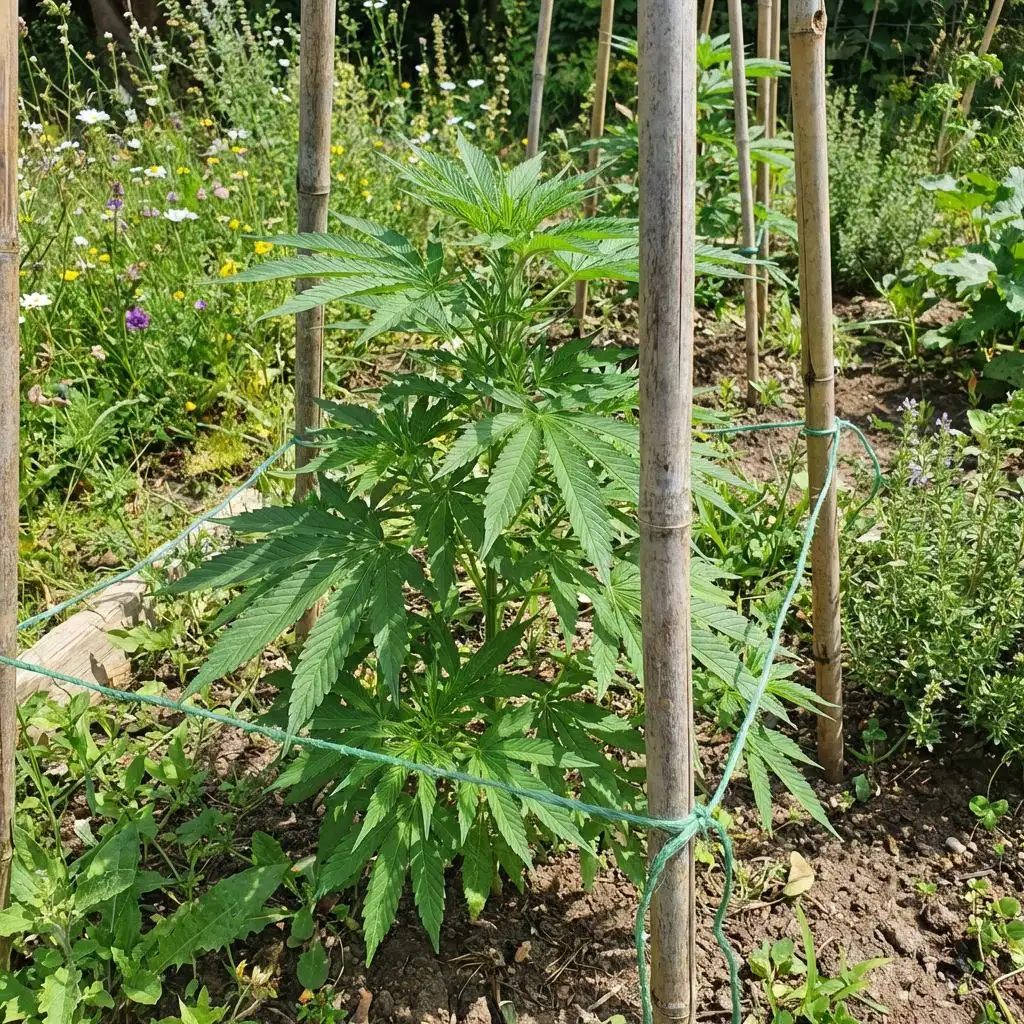
Outdoor grows face a wider range of pests than indoor — from microscopic spider mites to deer and gophers. The key is prevention over treatment. Once a pest population establishes itself on a flowering plant, your options become limited because you don't want to spray anything on buds you'll be smoking.
Start with companion planting: basil, marigolds, and lavender planted around your cannabis repel many common pests while attracting beneficial predatory insects. Ladybugs, lacewings, and praying mantises are natural predators you can purchase and release into your garden. A healthy population of beneficial insects is your best long-term pest defense.
For active infestations during veg, neem oil (diluted to 2 tablespoons per gallon with a drop of dish soap as emulsifier) is effective against spider mites, aphids, whiteflies, and fungus gnats. Apply weekly as prevention or every 3 days for active treatment. However, stop all neem applications at least 2 weeks before flower — neem residue on buds affects taste and may pose health concerns when combusted.
- Spider mites: Tiny dots on leaf undersides, fine webbing. Spray neem in veg; in flower, use predatory mites (Phytoseiulus persimilis)
- Caterpillars/budworms: The #1 outdoor flowering threat. They bore into buds and cause rot from inside. Inspect buds daily and use BT (Bacillus thuringiensis) spray weekly through mid-flower
- Aphids: Clusters of tiny green/black insects on stems and leaf undersides. Blast with water, introduce ladybugs, or spray insecticidal soap
- Slugs/snails: Copper tape around container rims, diatomaceous earth around plant bases, or beer traps
- Deer/rabbits: Fencing is the only reliable solution. A 6-foot fence deters deer; chicken wire handles rabbits
7. Harvest Timing by Latitude
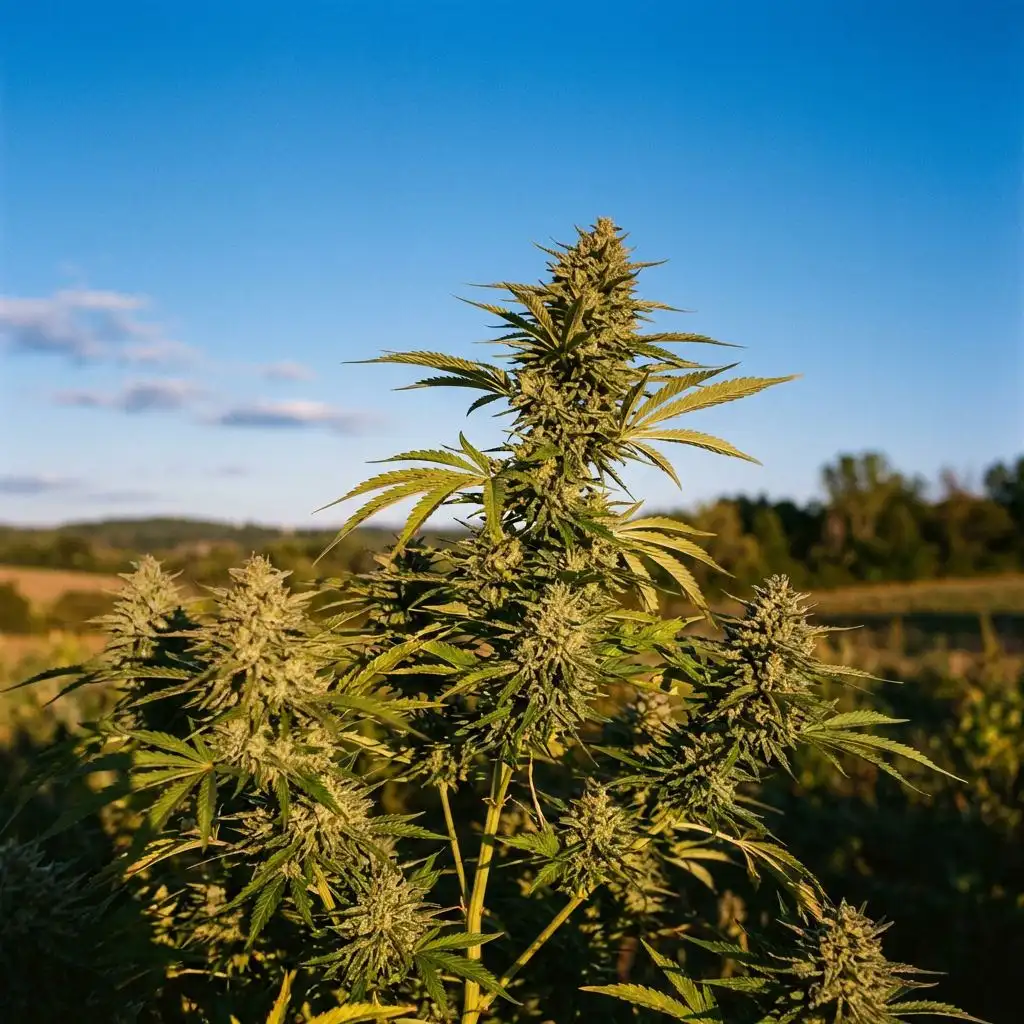
Outdoor harvest timing depends primarily on your latitude and the strain's flowering duration. The natural photoperiod (day length) triggers flowering as days shorten past roughly 14 hours, and the date this happens varies significantly by location.
In the Northern Hemisphere, most photoperiod cannabis strains begin showing flowers in mid-to-late August as day length drops below 14 hours. From that point, add the strain's listed flowering time to estimate your harvest date. An 8-week strain triggered in mid-August harvests around mid-October; a 10-week sativa finishes in early November.
The critical question is whether your first frost arrives before your strain finishes. Light frost (0 to -2°C / 28–32°F) won't kill cannabis but will damage trichomes and reduce quality. A hard frost (-4°C / 25°F or below) kills the plant outright. Always know your area's average first frost date and choose strains that finish at least 2 weeks before it.
| Latitude | Example Locations | Flower Trigger | Typical Harvest | Max Flower Time |
|---|---|---|---|---|
| 50–55°N | Vancouver, London, Berlin | Late July / early Aug | Sept – early Oct | 7–8 weeks |
| 45–50°N | Portland, Montreal, Paris | Early–mid August | Oct | 8–9 weeks |
| 40–45°N | Denver, NYC, Madrid | Mid August | Mid Oct – early Nov | 9–10 weeks |
| 35–40°N | Los Angeles, Lisbon, Tokyo | Late August | Late Oct – mid Nov | 10–12 weeks |
| 25–35°N | Miami, Cairo, New Delhi | September | Nov – Dec | 12+ weeks |
🌱 Recommended Strains
Frequently Asked Questions
What is Advantages of Growing Outdoors?
Outdoor cannabis growing offers one enormous advantage that no indoor setup can match: free, full-spectrum sunlight. The sun delivers over 1,500 PPFD at peak hours — more light intensity than even the most expensive LED fixtures. This unlimited light energy, combined with unrestricted root space, al...
What is Climate Zones & Strain Selection?
Matching your strain to your climate is the single most important decision in outdoor growing. A 14-week sativa in a northern climate with early frost will never finish — and a pure indica in a tropical climate may struggle with humidity and mold. Choose wisely and the plant does most of the work fo...
What is Soil Preparation?
Outdoor cannabis thrives in rich, well-draining soil with a pH between 6.0 and 7.0. If you're growing in-ground, start preparing your soil at least 2–4 weeks before planting. Dig a hole at least 3 feet wide and 2 feet deep for each plant, and backfill with amended soil. A proven outdoor soil mix com...
What is Sunlight Requirements?
Cannabis is a full-sun plant that needs a minimum of 6 hours of direct sunlight per day to produce decent buds, though 8–10+ hours is ideal. Every additional hour of direct sun translates to denser buds and higher yields. Site selection is critical — a difference of 2–3 hours of daily sunlight can m...
What is Watering Outdoor Plants?
Outdoor cannabis in the ground needs far less frequent watering than indoor container plants, because roots can extend several feet in every direction seeking moisture. Established plants in-ground may only need watering every 3–5 days in moderate weather, or daily during heat waves above 35°C (95°F...