
The Cannabis Flowering Stage
From the light flip to fat, frosty buds — everything you need to know about guiding your plants through flower for maximum potency and yield.
Key Takeaways
From the light flip to fat, frosty buds — everything you need to know about guiding your plants through flower for maximum potency and yield.
- What Is the Flowering Stage?
- Triggering Flower: The Light Flip
- Week-by-Week Flowering Breakdown
- Nutrient Shift: Phosphorus & Potassium Heavy
1. What Is the Flowering Stage?
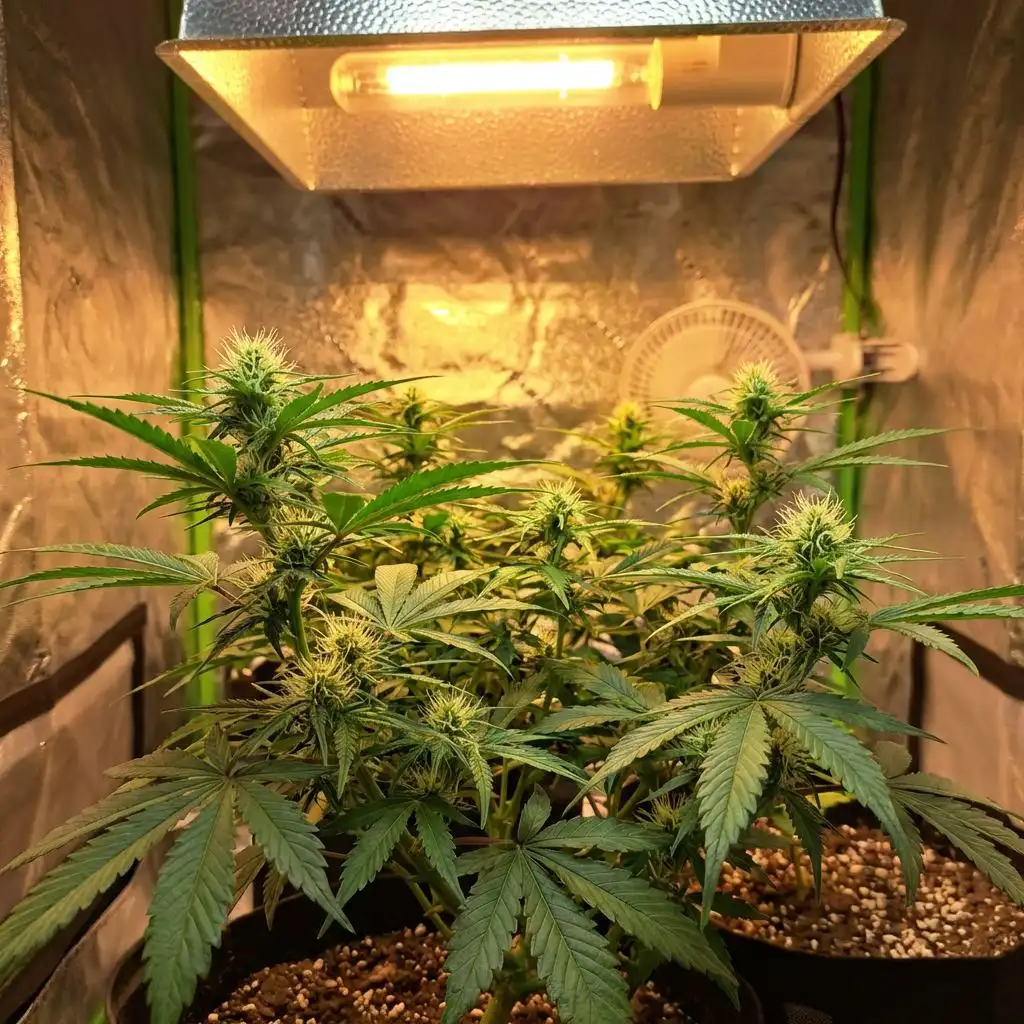
The flowering stage is when cannabis plants stop growing vegetatively and redirect all energy into producing buds. In nature, shortening daylight hours in late summer trigger this transition. Indoors, you control the switch by changing your light schedule to 12 hours on / 12 hours off.
Flowering is the most exciting — and most critical — phase of the grow. Every decision you make from nutrient ratios to temperature differentials directly impacts bud size, density, trichome coverage, and final terpene profile. A well-managed flowering period is the difference between average harvests and truly exceptional ones.
For photoperiod strains, flowering typically lasts 8–12 weeks depending on genetics. Indica-dominant strains tend to finish faster (8–9 weeks), while sativa-dominant varieties can stretch to 10–12 weeks or more. Autoflowers enter flowering automatically around week 3–4 from seed and generally finish their entire lifecycle in 8–11 weeks total.
2. Triggering Flower: The Light Flip
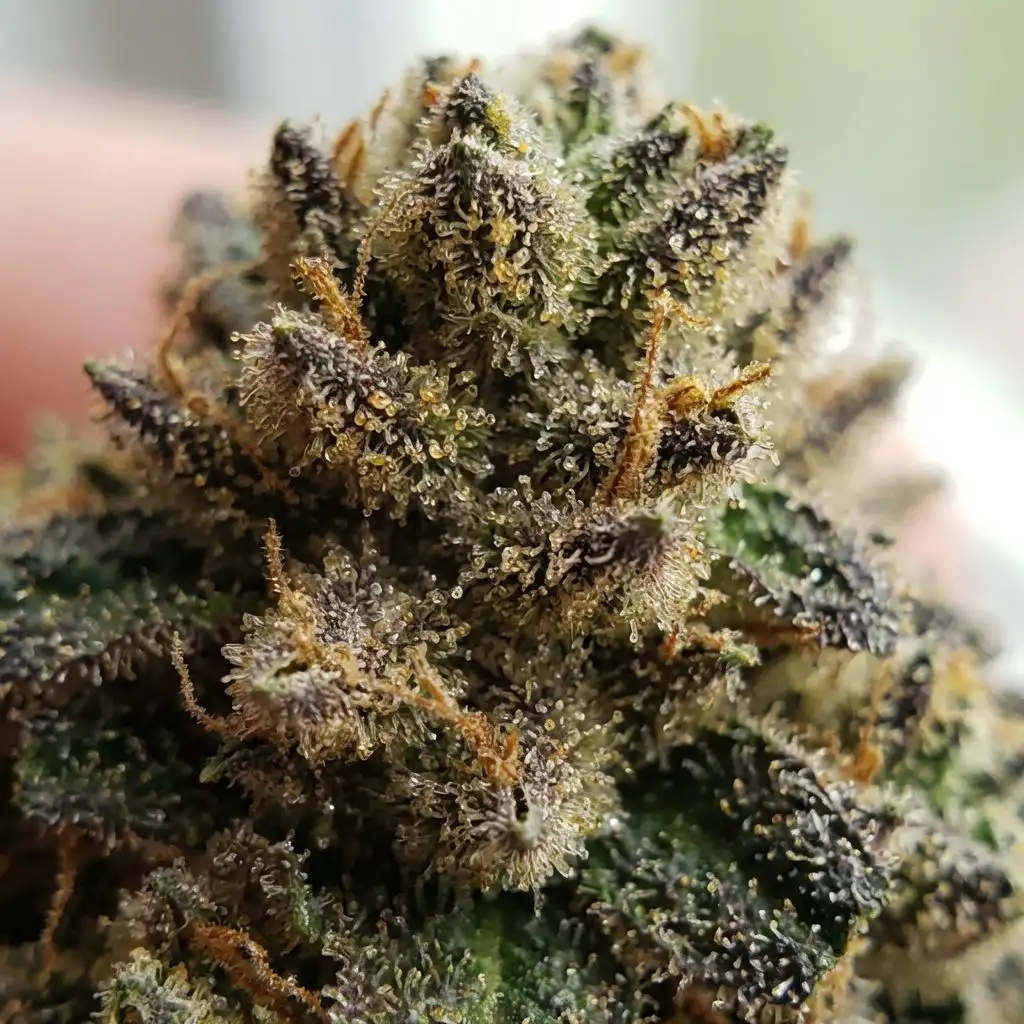
For photoperiod cannabis, flowering begins when you switch from 18/6 to a strict 12/12 light schedule. This mimics the natural shortening of days in autumn and signals the plant to begin reproductive development. The uninterrupted 12-hour dark period is absolutely critical — even brief light leaks during the dark cycle can confuse the plant, delay flowering, or cause hermaphroditism.
After flipping, you won't see flowers immediately. The first 1–2 weeks are a transition period where the plant recognizes the photoperiod change and begins hormonal shifts. You'll notice pre-flowers (small white pistils) appearing at the nodes around days 7–14. This is confirmation that your plant has received the signal and is committing to flower.
Light-proof your grow space thoroughly before flipping. Check for LED indicator lights on fans, power strips, and timers. Use a timer rated for your lighting system's amperage and test the schedule for several days before relying on it. A single timer failure can set you back weeks.
3. Week-by-Week Flowering Breakdown
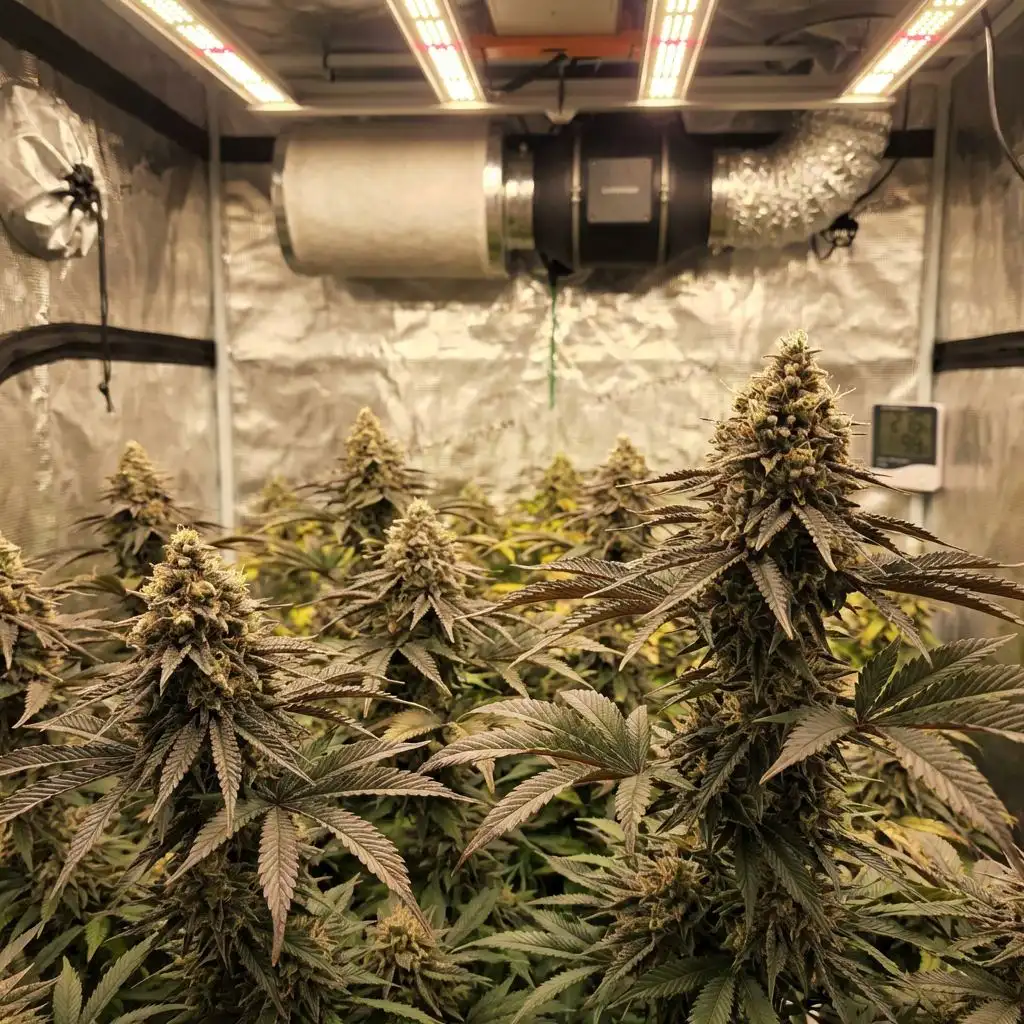
Understanding what happens each week of flowering helps you anticipate your plant's needs and catch problems early. While every strain is different, here's the general timeline for an 8–9 week indica-dominant flower cycle:
| Week | What Happens | What to Do |
|---|---|---|
| 1–2 | Stretch phase — rapid vertical growth, pre-flowers appear | Continue veg nutrients, begin LST/supercropping if needed |
| 3–4 | Bud sites form, pistils multiply, stretch slows | Switch to bloom nutrients (high P/K), defoliate strategically |
| 5–6 | Buds swell rapidly, trichomes developing, strong smell | Peak feeding, maintain environment, support heavy branches |
| 7–8 | Buds ripen, pistils darken, trichomes turn milky | Begin flush (if using), reduce humidity to 40–45% |
| 8–9+ | Harvest window — trichomes milky/amber, fan leaves fade | Check trichomes daily, harvest at desired ripeness |
4. Nutrient Shift: Phosphorus & Potassium Heavy
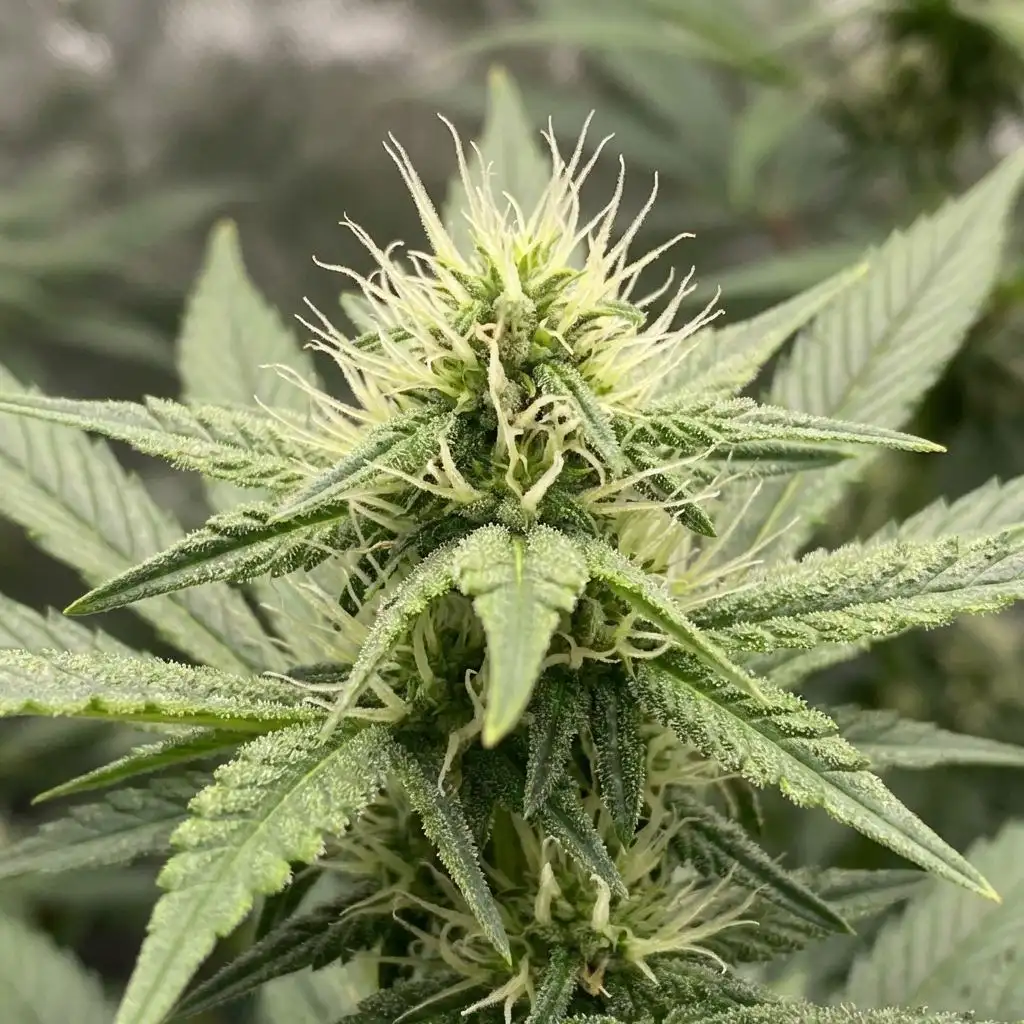
During veg, your plants craved nitrogen. In flower, the priorities shift dramatically. Cannabis in bloom needs high phosphorus (P) and potassium (K) to fuel bud development, with nitrogen reduced to a supporting role. A typical flower NPK ratio is 1-3-2 or 0-3-3.
Phosphorus drives flower formation, energy transfer, and resin production. Potassium strengthens cell walls, regulates water uptake, and enhances terpene synthesis. Too much nitrogen during flower produces loose, leafy buds with reduced potency — this is one of the most common mistakes growers make.
Most nutrient lines include a dedicated "bloom" formula. Start at 50% strength in week 1–2 of flower and ramp up to full strength by week 3–4. Many growers also add a PK booster (like a 0-50-30 supplement) during weeks 4–6 when buds are packing on the most weight. Pull back to plain water for the final 7–14 days if you choose to flush.
| Flower Week | N-P-K Ratio | EC (mS/cm) | Additives |
|---|---|---|---|
| 1–2 (transition) | 2-2-2 | 1.2–1.4 | Transition/base nutrients |
| 3–4 (early bloom) | 1-3-2 | 1.4–1.8 | Bloom base + cal-mag |
| 5–6 (peak bloom) | 0-3-3 | 1.6–2.0 | Bloom base + PK booster |
| 7–8 (ripening) | 0-2-3 | 1.0–1.4 | Reduce feeding, begin taper |
| Final 7–14 days | 0-0-0 | 0.0–0.2 | Plain pH'd water (flush) |
5. Managing the Flowering Stretch
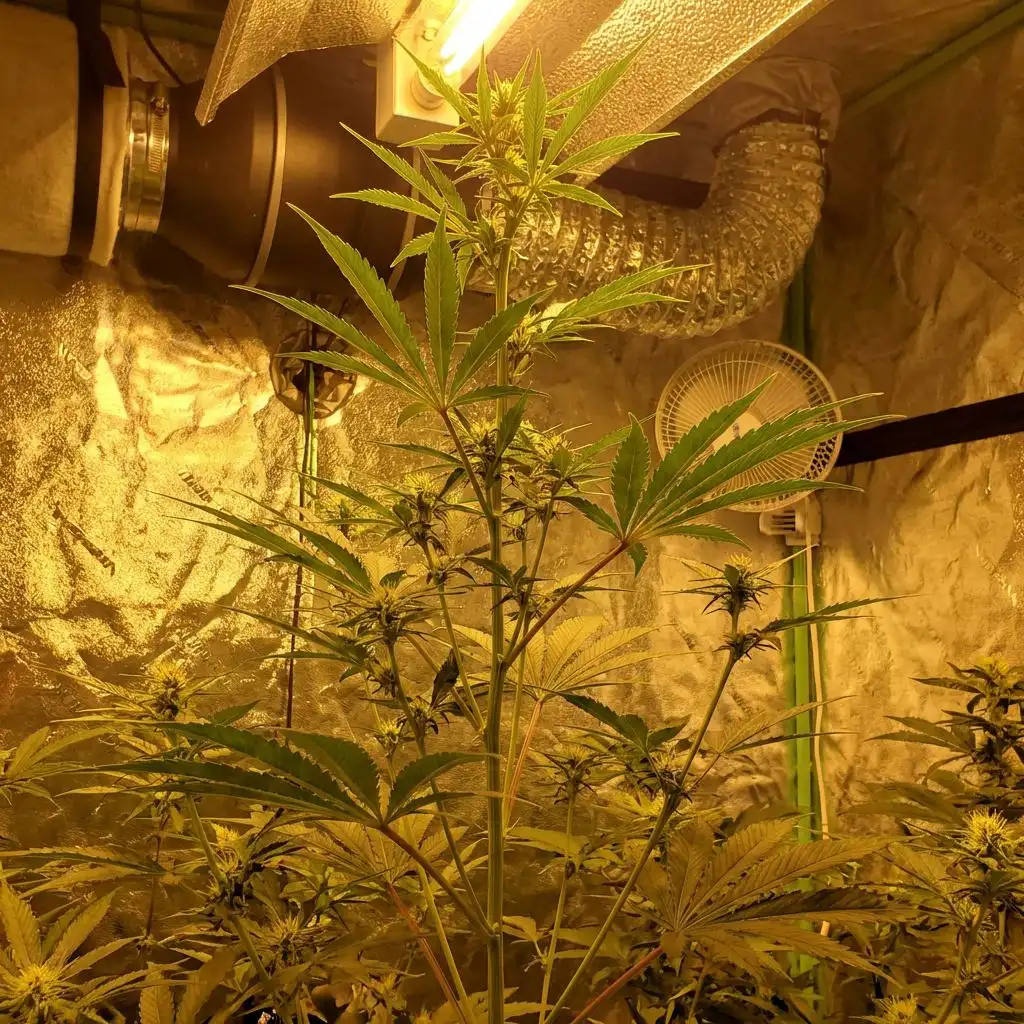
The "stretch" occurs during the first 2–3 weeks after flipping to 12/12, when plants undergo a rapid growth spurt. Most strains will grow 50–100% taller during this period, and some sativa-dominant genetics can stretch up to 200%. If you're not prepared, plants can outgrow their space and burn against the lights.
To manage stretch, plan ahead. Flip to flower when plants are at half your desired final height. If a plant is stretching too aggressively, supercropping (gently bending and crushing the stem between your fingers) is the most effective emergency technique — it reduces height immediately while creating a "knuckle" that actually improves nutrient flow to branches above.
You can also control stretch through environment. Keeping a small temperature differential between lights-on and lights-off (DIF technique) reduces internodal stretching. Running lights-on temperatures 1–2°C cooler than lights-off — called negative DIF — can reduce stretch by 15–20%. Additionally, far-red light exposure during the first 15 minutes of the dark period can reduce flowering time by 5–7 days in some cultivars.
6. Trichome Development & Ripening
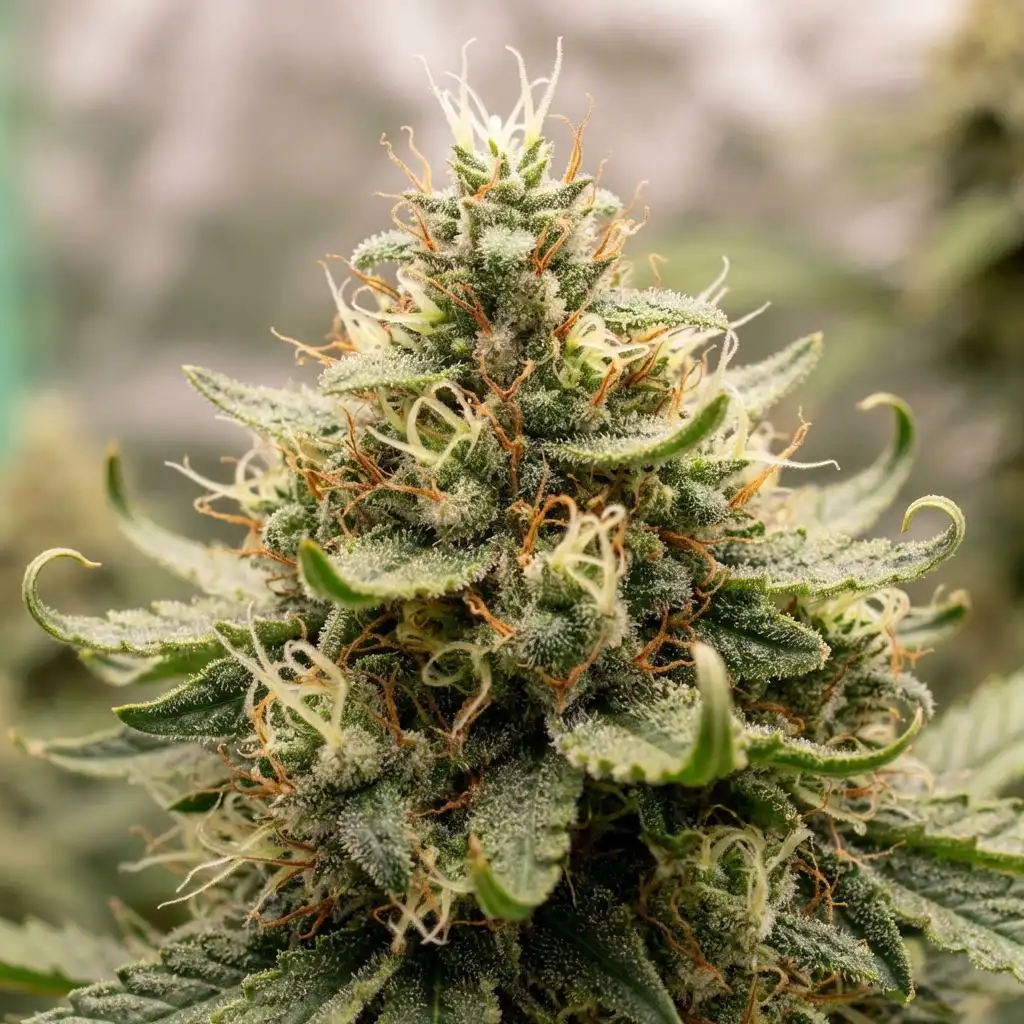
Trichomes are the tiny, mushroom-shaped resin glands that coat cannabis buds and sugar leaves. They produce cannabinoids (THC, CBD), terpenes, and flavonoids — essentially everything that determines your bud's potency, flavor, and effect. Understanding trichome development is key to harvesting at the right moment.
Trichome development follows a clear progression. In early flower, glandular trichomes are clear and translucent, indicating that cannabinoid production is underway but not yet peaked. As buds mature, trichome heads turn cloudy/milky white — this means THC content is at or near its maximum. Eventually, trichome heads shift to amber/gold, indicating that THC is degrading into CBN, producing a more sedative, body-heavy effect.
To monitor trichomes properly, you need at minimum a 60x jeweler's loupe, though a USB digital microscope (around $20–30) makes the job much easier. Check trichomes on the buds themselves, not sugar leaves — leaf trichomes mature faster and will give you misleading readings. Focus on the calyxes in the middle of the main colas for the most accurate picture.
| Trichome Color | % of Head | Effect Profile |
|---|---|---|
| Mostly clear | < 10% milky | Not ready — low potency, racy/anxious high |
| Mostly milky | 0–10% amber | Peak THC — energetic, cerebral, euphoric |
| Milky + 20–30% amber | 20–30% amber | Balanced — potent but relaxing |
| 30%+ amber | 30%+ amber | Heavy body stone — couch lock, sedative, pain relief |
7. Common Flowering Problems
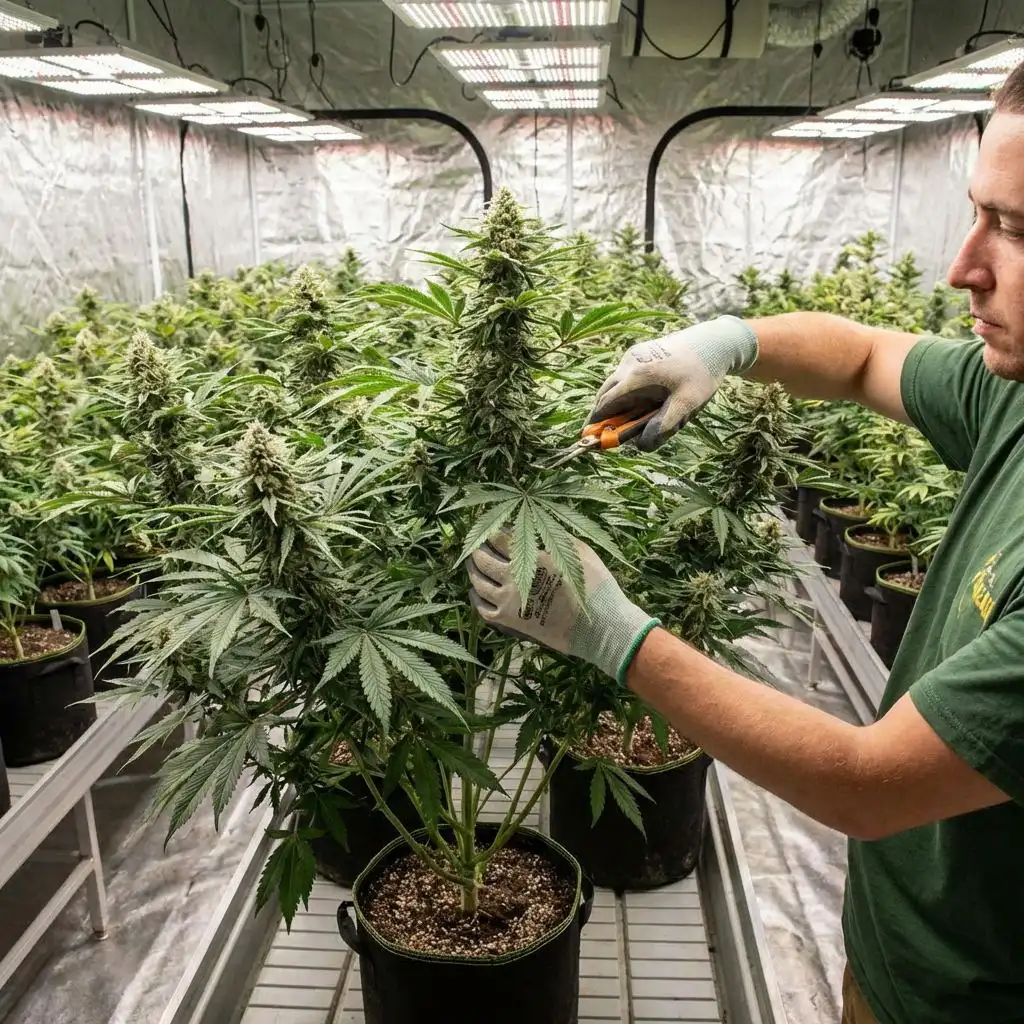
Flowering is when problems hurt the most — you're weeks into the grow and every issue directly impacts your final yield and quality. Here are the most frequent flowering problems and how to handle them:
- Bud rot (Botrytis): Gray-brown mold inside dense buds. Caused by high humidity (>55%) and poor airflow. Remove affected buds immediately, increase ventilation, and drop RH to 40–45%. Check dense colas daily.
- Foxtailing: Buds growing spires of new calyxes stacking on top. Caused by heat stress or light stress — if your canopy temperature exceeds 28°C or lights are too close. Raise lights or increase cooling.
- Hermaphroditism: Male pollen sacs appearing on female plants. Caused by light leaks, extreme stress, or genetic instability. Remove any "nanners" (banana-shaped pollen sacs) immediately. If extensive, consider removing the plant to protect others.
- Nutrient lockout: Leaves showing deficiencies despite adequate feeding. Usually a pH problem — check and correct your pH at every watering. Flush with pH'd water if necessary.
- Premature yellowing: Fan leaves dying off too early (before week 6–7). Likely nitrogen deficiency or root problems. Some fade is normal in the final 2 weeks, but early yellowing reduces photosynthesis and hurts yield.
- Airy/larfy buds: Loose, underdeveloped flowers. Usually caused by insufficient light, excessive heat, or overfeeding nitrogen. Ensure at least 600–800 PPFD reaches lower bud sites.
🌱 Recommended Strains
Frequently Asked Questions
What Is the Flowering Stage?
The flowering stage is when cannabis plants stop growing vegetatively and redirect all energy into producing buds. In nature, shortening daylight hours in late summer trigger this transition. Indoors, you control the switch by changing your light schedule to 12 hours on / 12 hours off. Flowering is ...
What is Triggering Flower: The Light Flip?
For photoperiod cannabis, flowering begins when you switch from 18/6 to a strict 12/12 light schedule. This mimics the natural shortening of days in autumn and signals the plant to begin reproductive development. The uninterrupted 12-hour dark period is absolutely critical — even brief light leaks d...
What is Week-by-Week Flowering Breakdown?
Understanding what happens each week of flowering helps you anticipate your plant's needs and catch problems early. While every strain is different, here's the general timeline for an 8–9 week indica-dominant flower cycle:
What is Nutrient Shift: Phosphorus & Potassium Heavy?
During veg, your plants craved nitrogen. In flower, the priorities shift dramatically. Cannabis in bloom needs high phosphorus (P) and potassium (K) to fuel bud development, with nitrogen reduced to a supporting role. A typical flower NPK ratio is 1-3-2 or 0-3-3. Phosphorus drives flower formation, ...
What is Managing the Flowering Stretch?
The "stretch" occurs during the first 2–3 weeks after flipping to 12/12, when plants undergo a rapid growth spurt. Most strains will grow 50–100% taller during this period, and some sativa-dominant genetics can stretch up to 200%. If you're not prepared, plants can outgrow their space and burn again...