
When to Harvest Cannabis
The difference between good weed and great weed often comes down to a single week. Learn to read your plant's signals and harvest at the perfect moment.
Key Takeaways
The difference between good weed and great weed often comes down to a single week. Learn to read your plant's signals and harvest at the perfect moment.
- Why Harvest Timing Matters
- Reading Trichomes: The Gold Standard
- The Pistil Color Method
- Flushing Before Harvest
1. Why Harvest Timing Matters
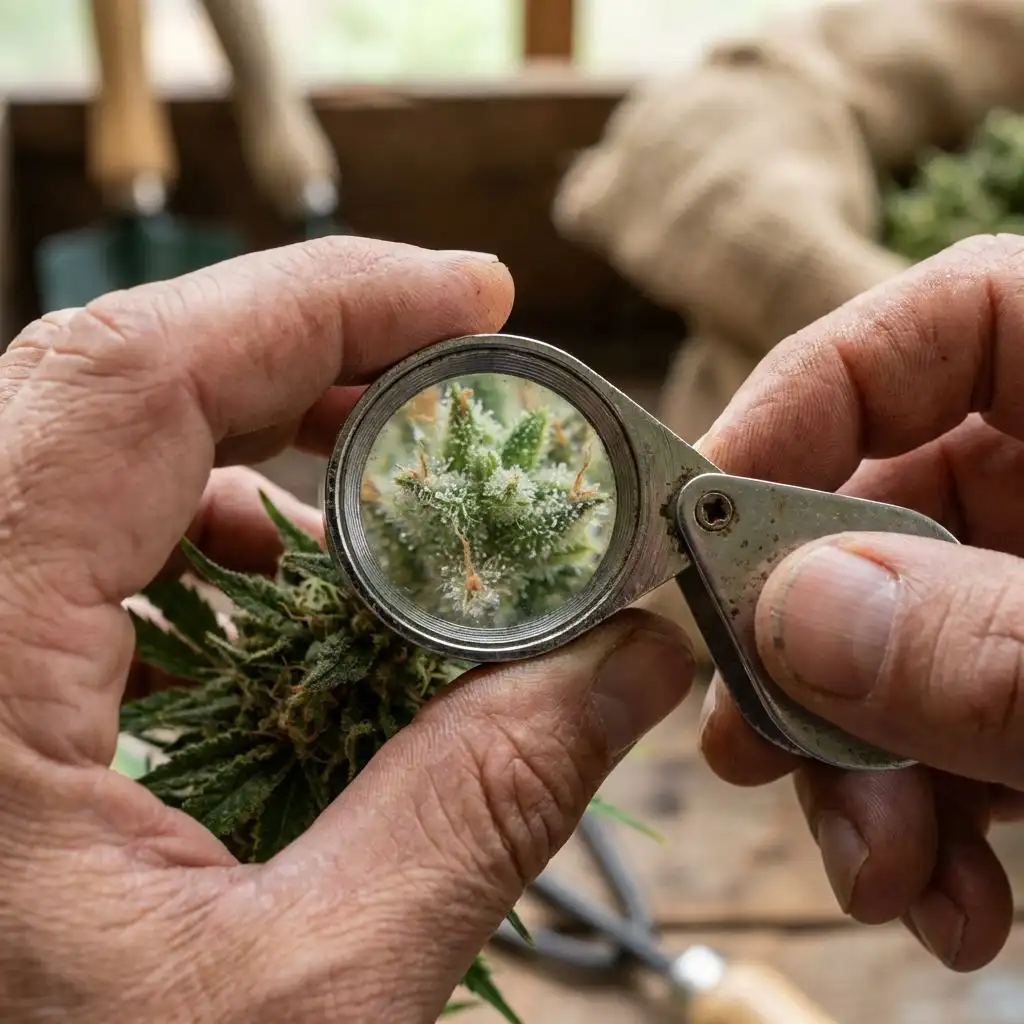
Harvesting too early is the most common mistake new growers make — and it's the most costly. A plant harvested one week too soon can lose 15–25% of its final weight and contain significantly less THC, because the last week of flowering is when buds pack on the most mass and trichomes reach peak cannabinoid concentration.
Conversely, harvesting too late allows THC to degrade into CBN (cannabinol), a mildly sedative cannabinoid. While some growers intentionally harvest late for a sleepier effect, most people want the full-spectrum potency that comes from perfect timing. The harvest window for most strains is roughly 7–14 days wide, giving you some flexibility.
Beyond potency, timing affects terpene preservation, bag appeal, and even how the final product cures. Buds harvested at peak ripeness develop richer flavors during curing, while under-ripe buds often taste "green" or harsh no matter how long you cure them.
2. Reading Trichomes: The Gold Standard
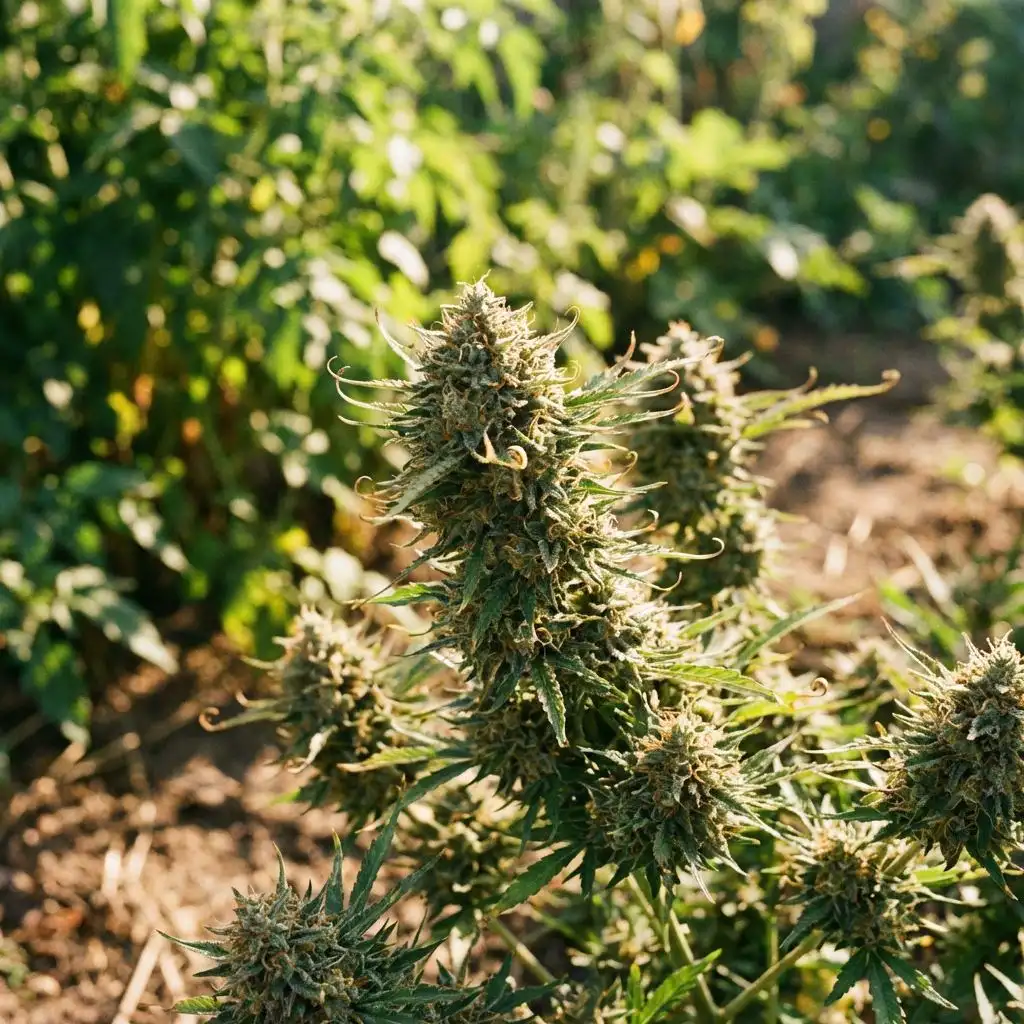
Trichome inspection under magnification is the most accurate method for determining harvest readiness. You need at minimum a 60x jeweler's loupe ($5–10), though a USB digital microscope ($20–30) makes things much easier by projecting the image onto a screen.
Focus on the capitate-stalked trichomes — the ones with visible mushroom-shaped heads on thin stalks. Ignore the smaller, stalkless trichomes. Most importantly, check trichomes on the calyxes (buds) themselves, not on sugar leaves. Sugar leaf trichomes mature 1–2 weeks ahead of bud trichomes and will give you a false "ready" signal.
Sample from multiple locations on the plant. Top colas ripen faster than lower branches because they receive more light. Check 3–4 different bud sites at mid-canopy height for the most representative reading. Here's what each color stage means:
| Trichome State | Appearance | THC Level | Effect |
|---|---|---|---|
| Clear/transparent | Glass-like, see-through heads | Low — still developing | Racy, anxious, incomplete |
| Mostly cloudy/milky | Opaque white, like frosted glass | Peak THC | Energetic, euphoric, cerebral |
| Cloudy + 10–20% amber | Mix of white and golden heads | High THC + some CBN | Balanced — potent and relaxing |
| Cloudy + 30%+ amber | Significant gold/amber present | THC declining, CBN rising | Sedative, body-heavy, couch lock |
3. The Pistil Color Method
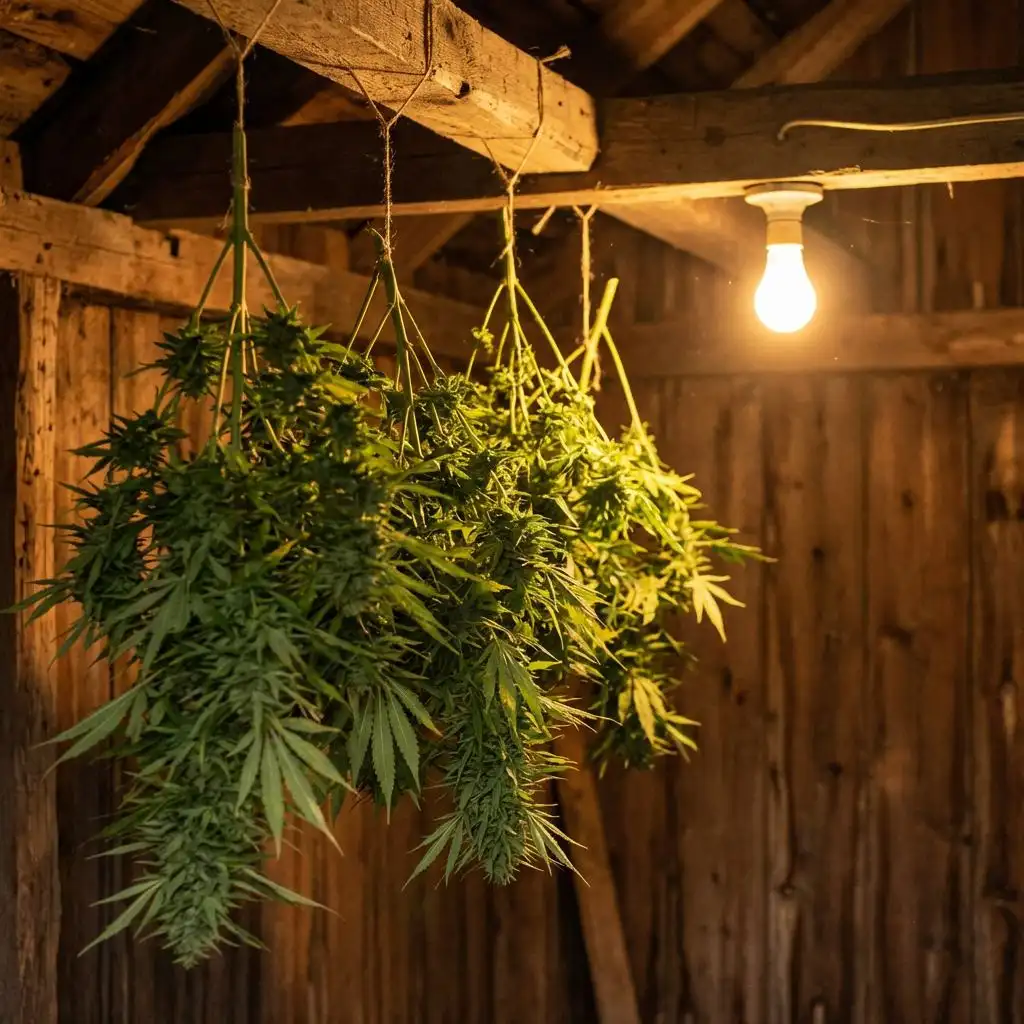
Pistils — the hair-like structures emerging from calyxes — offer a rough visual indicator of maturity, though they're less reliable than trichome inspection. Fresh pistils are white and stand straight out; as buds mature, pistils darken to orange, red, or brown and curl inward toward the bud.
As a general guideline: when 70–80% of pistils have darkened and curled, the plant is approaching harvest readiness. However, pistil color is influenced by many factors beyond maturity — humidity, wind, physical contact, and genetics all affect how quickly pistils change color. Some strains (especially hazes) maintain white pistils well into the harvest window.
Use the pistil method as a preliminary signal — when you see 50%+ darkened pistils, that's your cue to start checking trichomes under magnification daily. Never rely solely on pistil color for harvest timing, as it can easily lead you 1–2 weeks astray in either direction.
4. Flushing Before Harvest
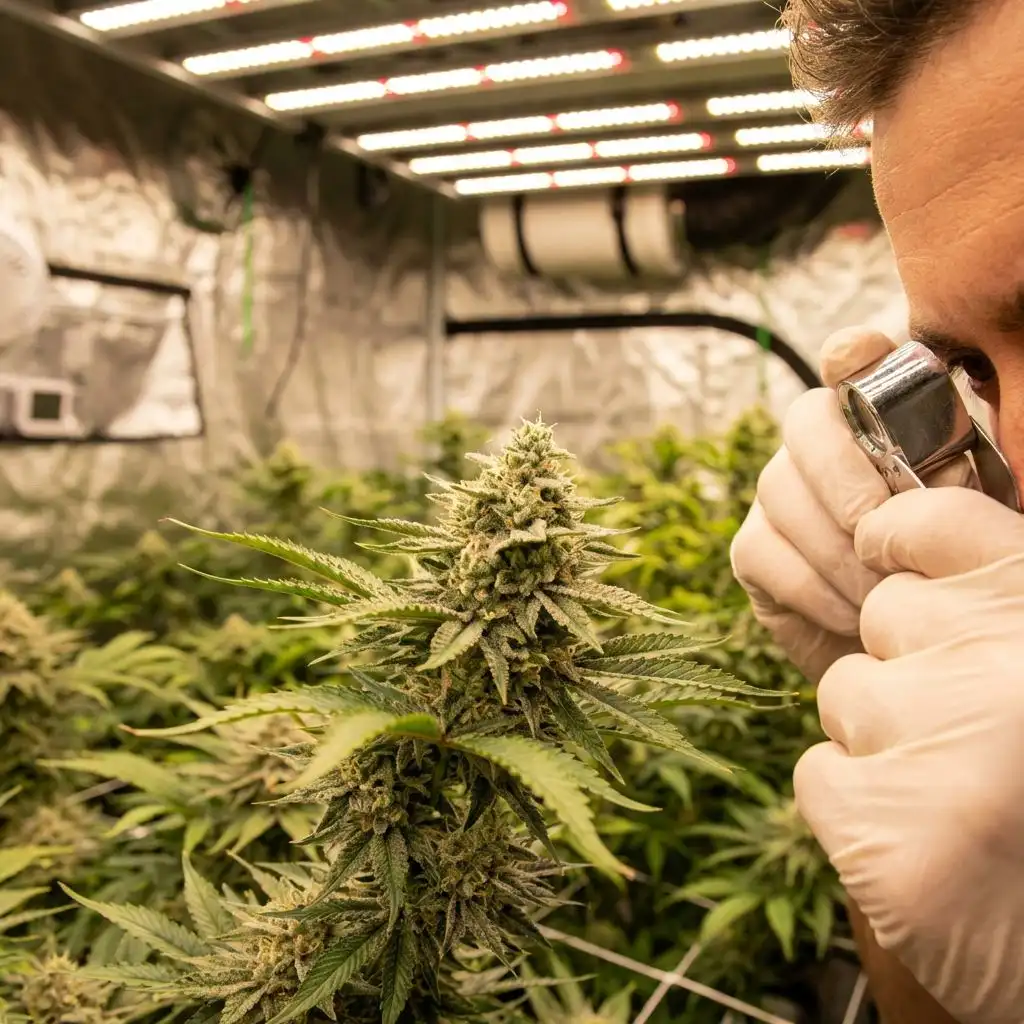
Flushing — feeding plants only plain, pH'd water for the final 7–14 days before harvest — is one of the most debated topics in cannabis cultivation. Proponents claim it forces the plant to use up stored nutrients, producing cleaner-tasting, smoother-smoking buds. Critics point to studies showing no measurable difference in mineral content between flushed and unflushed buds.
Regardless of the science, the practical reality is that most experienced growers flush, and blind taste tests frequently (though not unanimously) favor flushed flower. The risk of flushing is minimal — the worst that happens is slightly reduced yield if you flush too early. The cost of not flushing, if the proponents are right, is harsh-tasting buds that "crackle" when smoked.
If you choose to flush: use plain water adjusted to your normal pH range (6.0–6.5 for soil, 5.5–6.0 for hydro). Water at normal volume until you see 20% runoff. You'll notice fan leaves yellowing and falling off during the flush — this is normal and actually desirable. The plant is cannibalizing stored nutrients from leaves to finish ripening the buds.
| Growing Medium | Flush Duration | Start Flushing When |
|---|---|---|
| Soil/super soil | 10–14 days | 70% cloudy trichomes, 5–10% amber |
| Coco coir | 7–10 days | 80% cloudy trichomes, 5–10% amber |
| Hydro/DWC | 5–7 days | 80% cloudy trichomes, 10% amber |
| Living soil/no-till | No flush needed | N/A — organic inputs break down naturally |
5. The Dark Period Debate
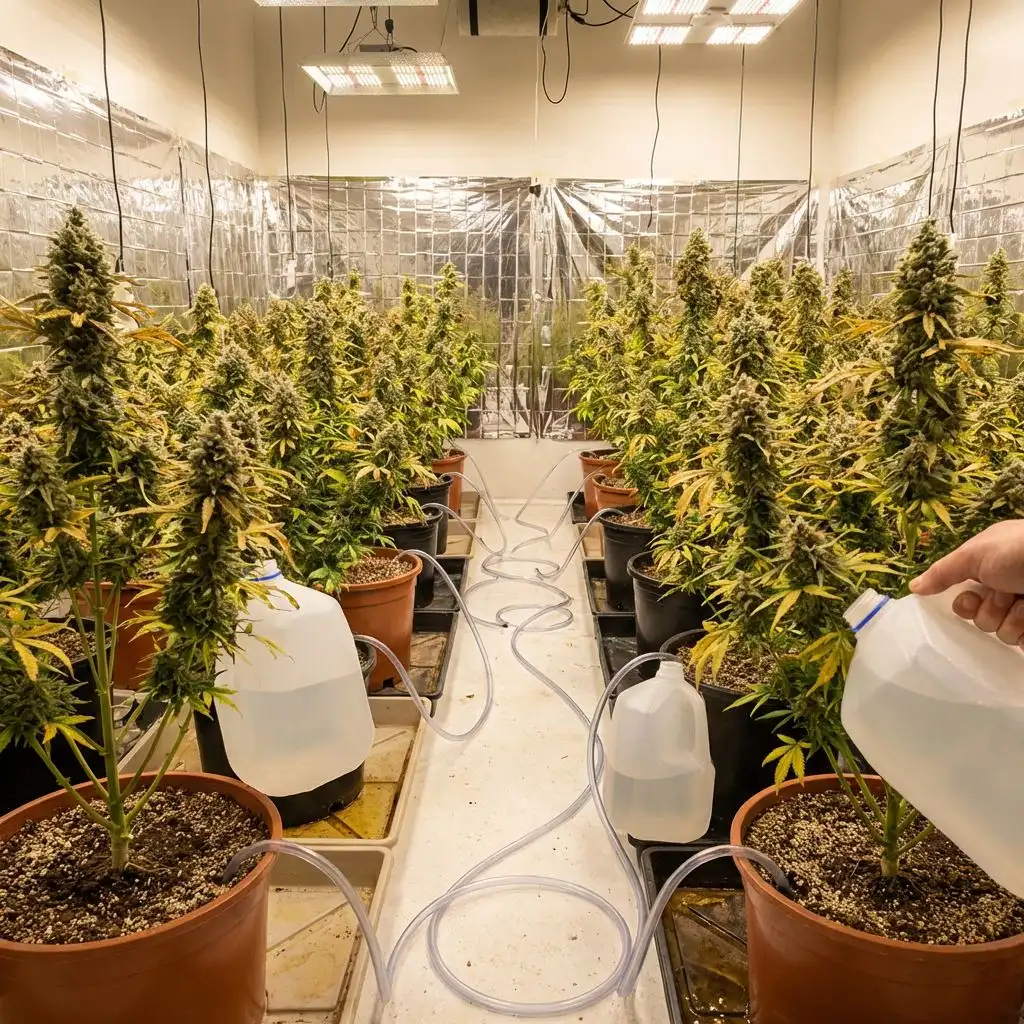
Some growers give plants 24–72 hours of complete darkness immediately before harvest. The theory is that light degrades THC on the plant surface, and an extended dark period allows the plant to push remaining sugars from the buds back into the roots while maximizing resin production as a stress response.
The science here is thin. There's some evidence that terpene production peaks during dark periods (which is why many growers harvest first thing in the morning before lights come on), but whether an extended 48–72 hour dark period meaningfully increases potency is unproven. That said, many award-winning growers swear by it, and it costs you nothing but a couple of days.
If you try the dark period: maintain normal temperature (20–24°C) and humidity (40–45%) during the dark phase. Do not water during this period. Harvest immediately when lights would normally come back on — the goal is to cut the plant while it's in its "nighttime" metabolic state.
6. Harvesting Technique
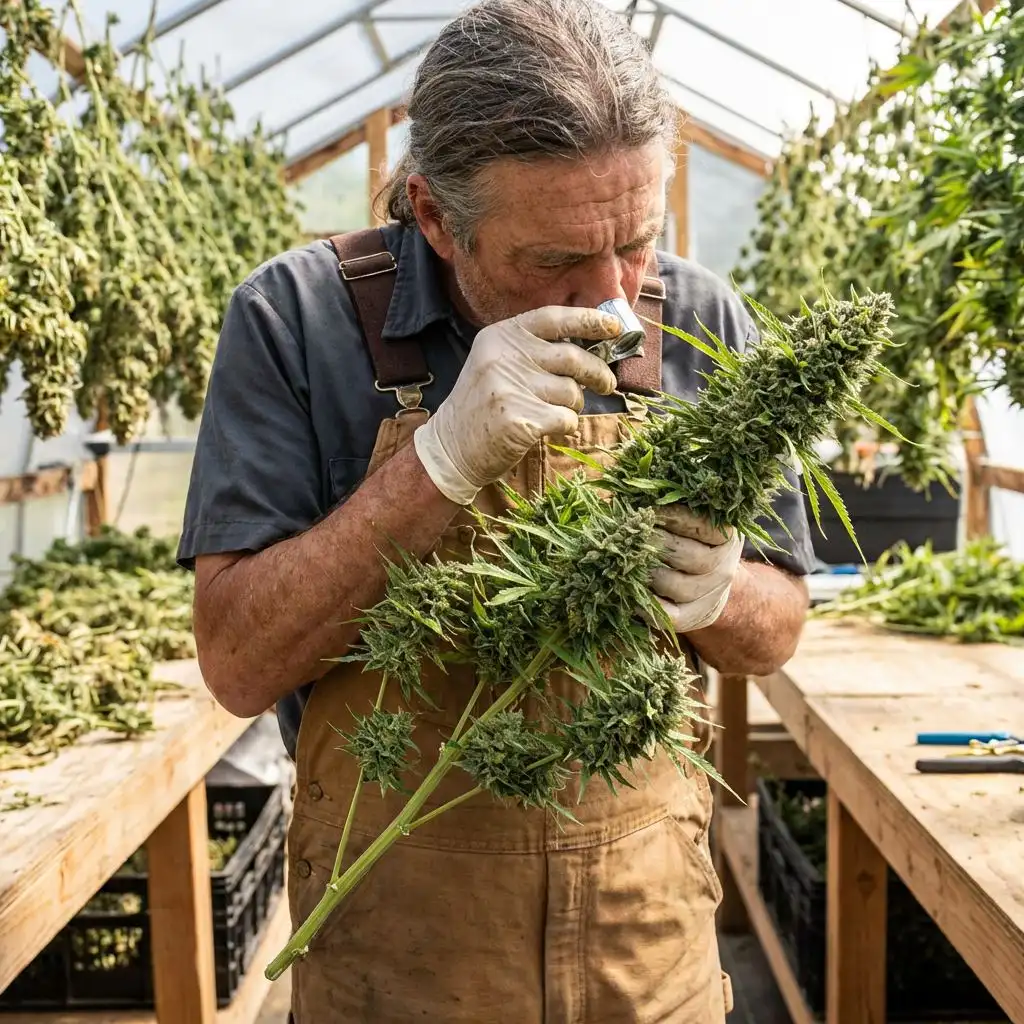
When it's time to cut, work efficiently. Have your workspace prepared: clean scissors or pruning shears, rubbing alcohol for cleaning, hangers or drying racks, and clean working surfaces. Harvest in the morning before lights come on (or immediately after the dark period) when terpene levels are highest.
There are two main approaches to cutting: whole-plant harvest and staggered harvest. Whole-plant harvesting means cutting the entire plant at the main stem. This is simpler and works well when the canopy is even. Staggered harvesting means taking the ripe top colas first and giving lower buds another 5–7 days to finish under light — this is ideal for plants with uneven canopies or minimal training.
Cut branches into manageable sections (12–18 inches). Remove the large fan leaves immediately — these contain very little THC and make drying uneven. Whether you remove the sugar leaves now (wet trim) or after drying (dry trim) depends on your preference and environment, which we'll cover next.
7. Wet Trim vs. Dry Trim
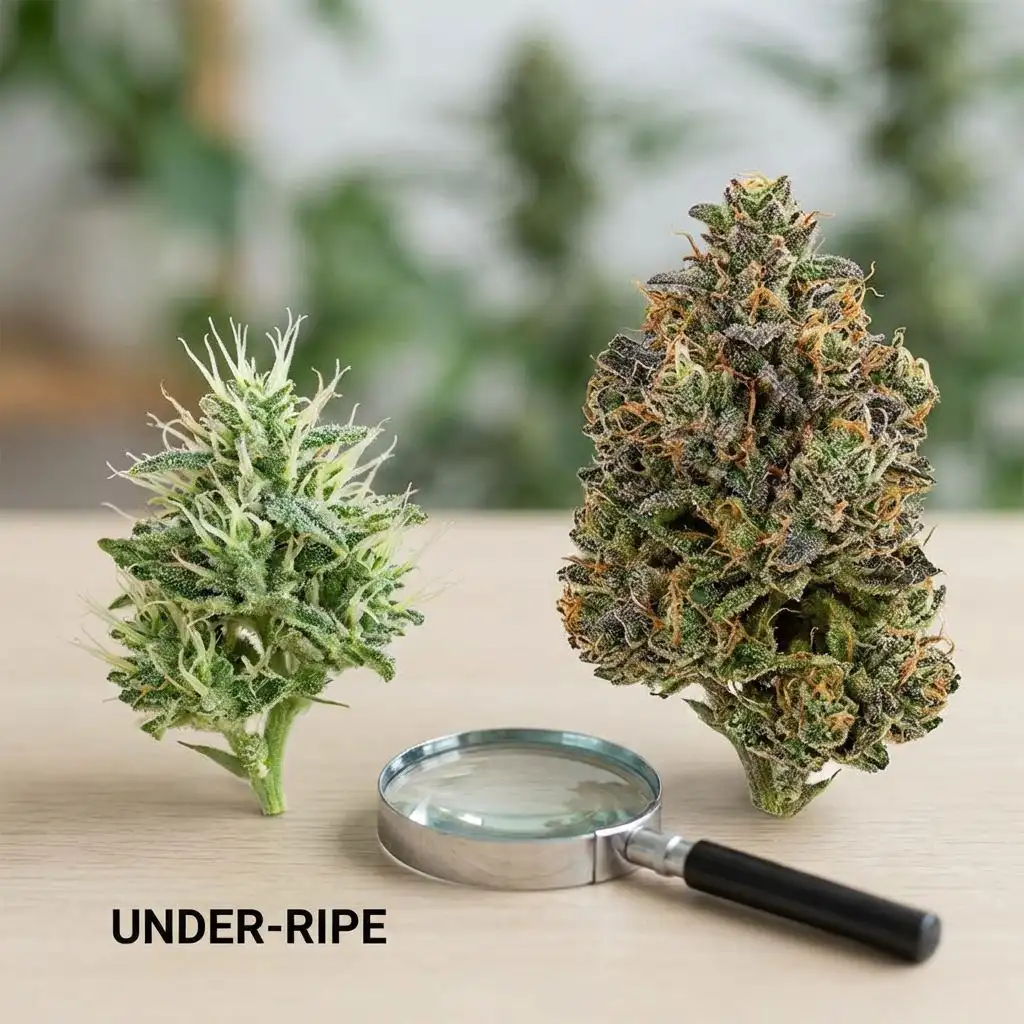
This is largely a matter of preference and environment, but each method has distinct advantages:
- Wet trim means removing all sugar leaves immediately after cutting, while the plant is still fresh. Buds look manicured and beautiful. Drying is faster (5–8 days). Best in humid climates (>55% RH) where slow drying risks mold. Easier to trim when leaves are turgid and sticking out.
- Dry trim means hanging whole branches with sugar leaves intact, trimming only after buds are dry. The leaves curl around the buds and slow drying, which many growers believe preserves more terpenes and produces a smoother smoke. Drying takes longer (10–14 days). Best in dry climates (<50% RH) where buds risk drying too fast.
Many experienced growers use a hybrid approach: remove the largest sugar leaves while wet (they're easy to grab), then do a final detail trim after drying. This gives you the terpene-preservation benefits of dry trimming while preventing the excess moisture that large leaves trap against buds.
Regardless of method, save your sugar leaf trim — it's loaded with trichomes and makes excellent bubble hash, dry sift, or cannabutter. A typical harvest produces enough trim from one plant to make several batches of edibles.
| Method | Drying Time | Best Climate | Terpene Preservation | Bag Appeal |
|---|---|---|---|---|
| Wet trim | 5–8 days | Humid (>55% RH) | Good | Excellent — tight, manicured |
| Dry trim | 10–14 days | Dry (<50% RH) | Excellent — slower dry | Good — may need touch-up |
| Hybrid | 7–10 days | Any | Very good | Very good |
🌱 Recommended Strains
Frequently Asked Questions
Why Harvest Timing Matters?
Harvesting too early is the most common mistake new growers make — and it's the most costly. A plant harvested one week too soon can lose 15–25% of its final weight and contain significantly less THC, because the last week of flowering is when buds pack on the most mass and trichomes reach peak cann...
What is Reading Trichomes: The Gold Standard?
Trichome inspection under magnification is the most accurate method for determining harvest readiness. You need at minimum a 60x jeweler's loupe ($5–10), though a USB digital microscope ($20–30) makes things much easier by projecting the image onto a screen. Focus on the capitate-stalked trichomes —...
What is The Pistil Color Method?
Pistils — the hair-like structures emerging from calyxes — offer a rough visual indicator of maturity, though they're less reliable than trichome inspection. Fresh pistils are white and stand straight out; as buds mature, pistils darken to orange, red, or brown and curl inward toward the bud. As a g...
What is Flushing Before Harvest?
Flushing — feeding plants only plain, pH'd water for the final 7–14 days before harvest — is one of the most debated topics in cannabis cultivation. Proponents claim it forces the plant to use up stored nutrients, producing cleaner-tasting, smoother-smoking buds. Critics point to studies showing no ...
What is The Dark Period Debate?
Some growers give plants 24–72 hours of complete darkness immediately before harvest. The theory is that light degrades THC on the plant surface, and an extended dark period allows the plant to push remaining sugars from the buds back into the roots while maximizing resin production as a stress resp...