
Hydroponic Cannabis Growing
Grow faster, yield more, and control every variable — the complete guide to soilless cannabis cultivation.
Key Takeaways
Grow faster, yield more, and control every variable — the complete guide to soilless cannabis cultivation.
- What Is Hydroponics?
- DWC (Deep Water Culture)
- NFT & Drip Systems
- RDWC & Ebb-and-Flow
1. What Is Hydroponics?
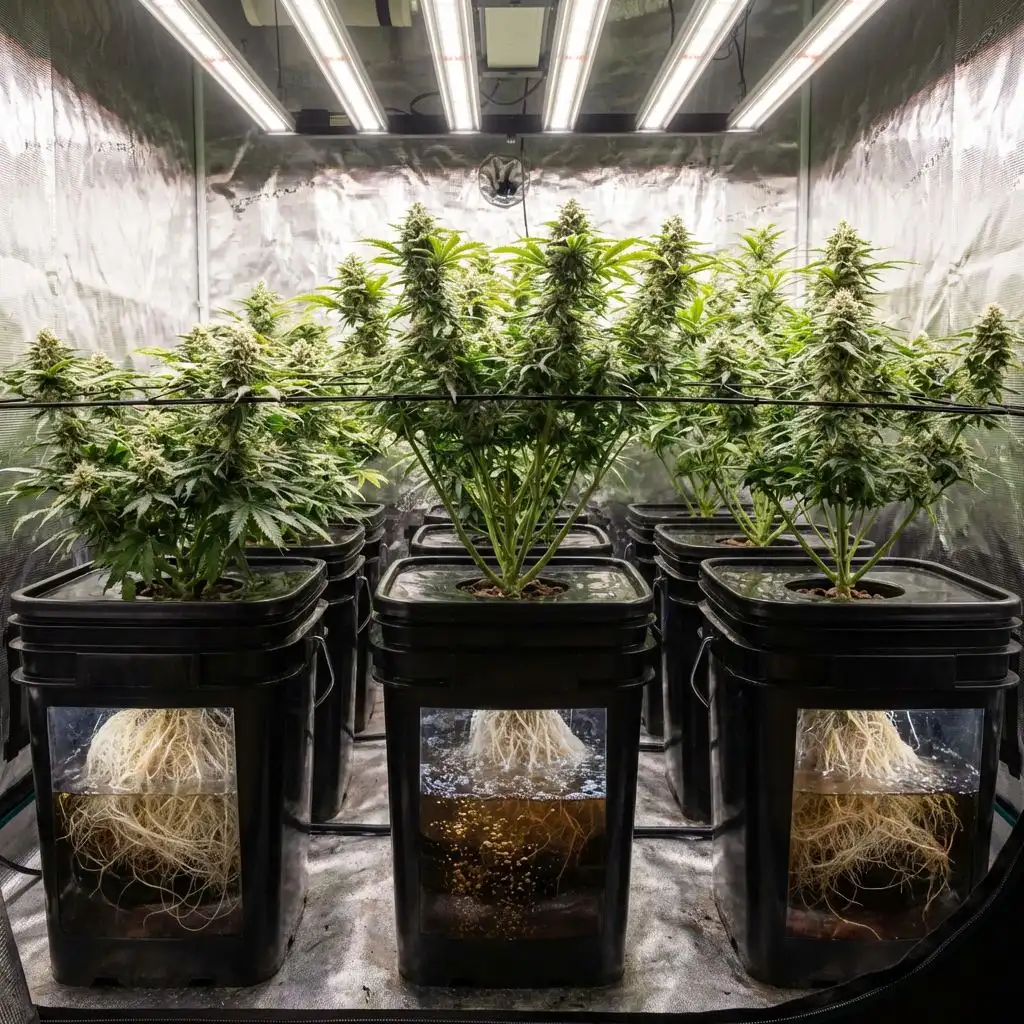
Hydroponics is the practice of growing plants without soil, delivering nutrients directly to the roots through a water-based solution. Instead of extracting minerals from soil, the plant receives a precisely calibrated mix of dissolved nutrients — meaning it spends less energy on root expansion and more on vegetative and flower growth.
In hydroponic cannabis cultivation, roots are suspended in or regularly bathed by nutrient solution, with an inert medium (clay pebbles, rockwool, perlite, or coco coir) providing physical support. The grower controls every variable: nutrient concentration (measured as EC/PPM), pH, dissolved oxygen, water temperature, and feeding frequency.
The result is significantly faster growth — most hydro growers report 20–30% faster vegetative growth and 20–30% larger yields compared to the same genetics in soil. The tradeoff is complexity: hydro systems require more monitoring, more equipment, and leave less margin for error. A pH swing that soil would buffer naturally can cause lockout in hydro within hours.
2. DWC (Deep Water Culture)
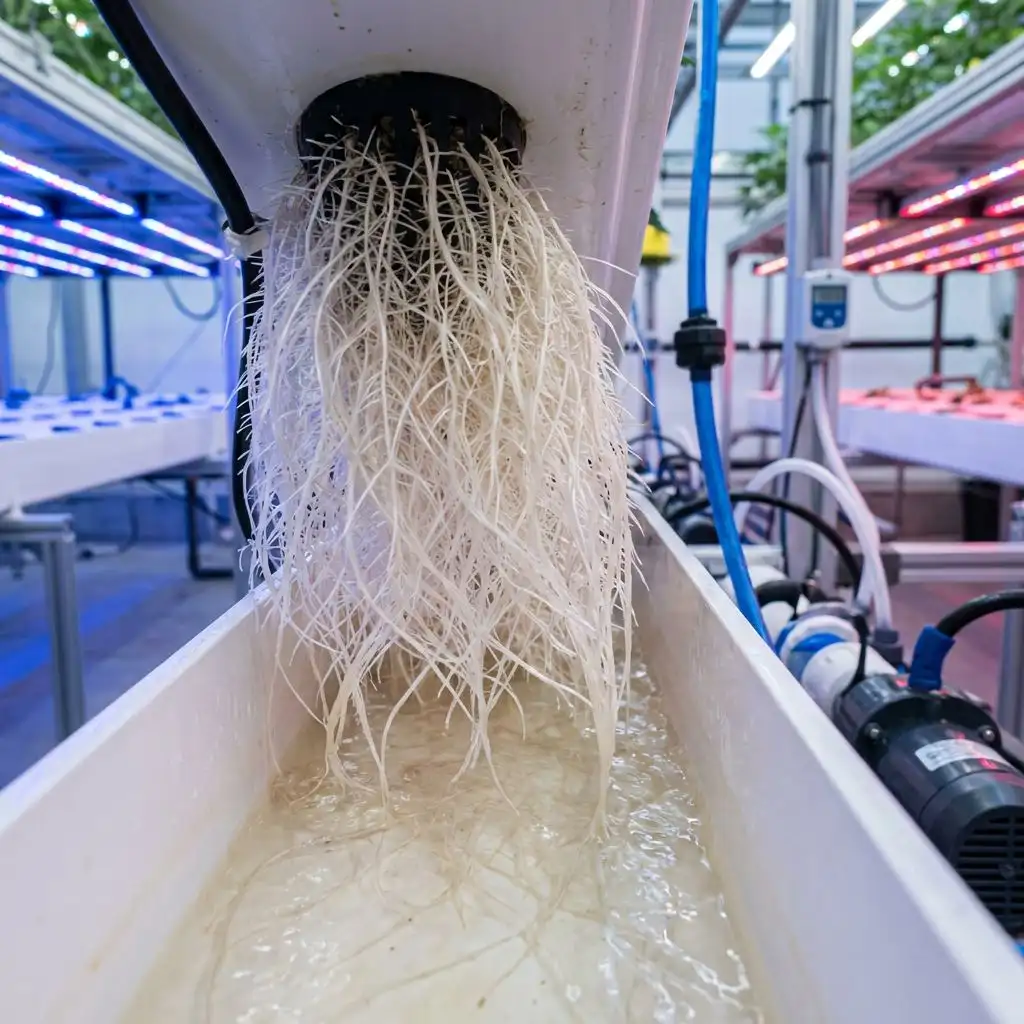
DWC is the most popular hydro method for home cannabis growers due to its simplicity and explosive growth rates. Each plant sits in a net pot filled with clay pebbles, suspended over a 5–10 gallon bucket of nutrient solution. An air pump and airstone at the bottom continuously oxygenate the water, keeping roots healthy and preventing anaerobic bacteria.
The roots hang directly in the nutrient solution 24/7, with constant access to water, nutrients, and oxygen. This unlimited access is what drives DWC's legendary growth speed — plants in DWC often grow 30–50% faster in veg than the same strain in soil. The root mass in a healthy DWC plant is enormous, filling the entire bucket with thick, white roots.
Setup is straightforward: a 5-gallon bucket with a lid, a 6-inch net pot, an air pump rated for at least 1 liter of air per minute per gallon of water, and quality airstone(s). Maintain water temperature at 65–72°F (18–22°C) — warmer water holds less dissolved oxygen and invites root pathogens like Pythium. Change the reservoir completely every 7–10 days and top off with pH-adjusted water between changes.
3. NFT & Drip Systems
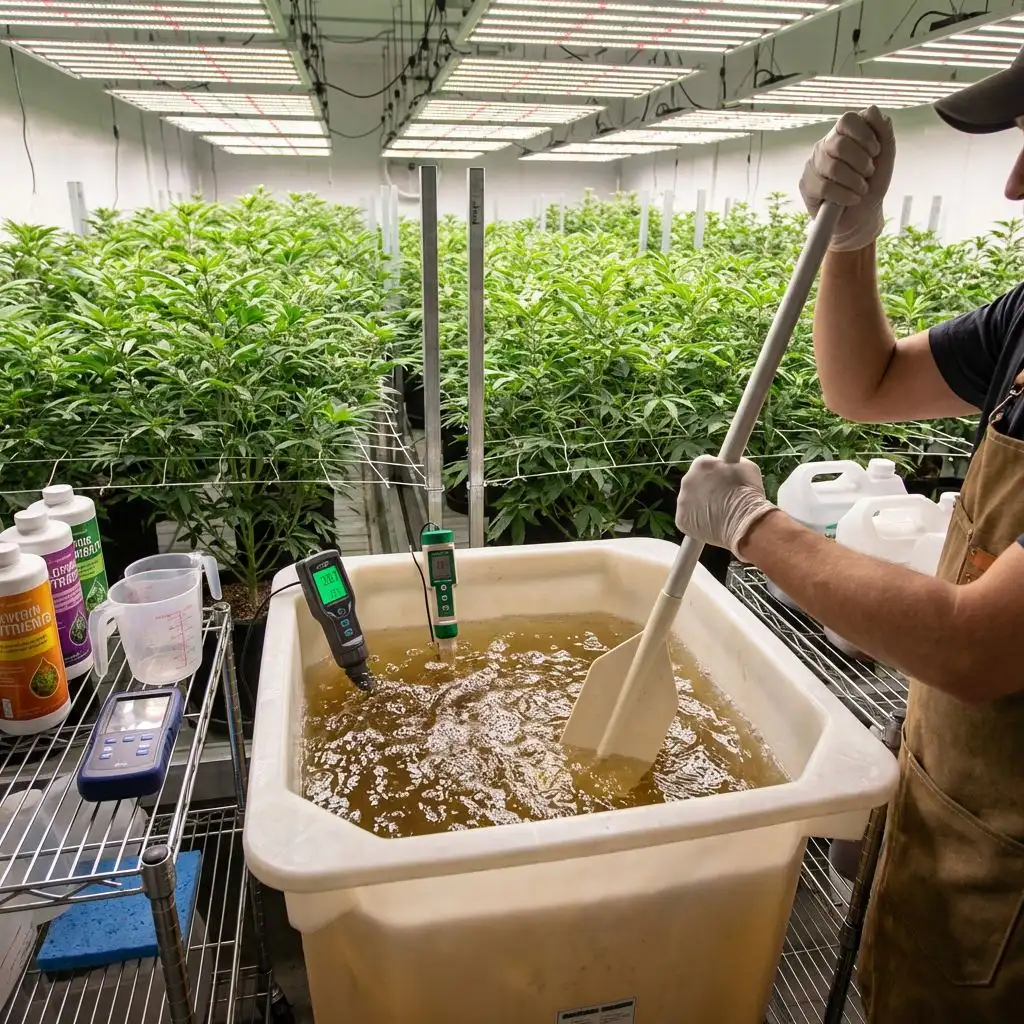
NFT (Nutrient Film Technique) runs a thin, continuous film of nutrient solution along the bottom of a sloped channel or tube. Roots sit in the channel with their tips in the shallow stream while upper roots access oxygen from the air above. NFT is efficient with water and nutrients, using recirculating solution that returns to a central reservoir for reuse.
NFT works well for smaller plants and shorter veg periods. The channels are typically 4–6 inches wide with a 1–2% slope. The main risk is pump failure — since there is no growing medium to retain moisture, roots can dry out and die within 30–60 minutes if the pump stops. A backup pump or battery-powered air pump is essential insurance.
Drip systems deliver nutrient solution through emitters directly to the base of each plant, which sits in an inert medium like perlite, rockwool, or coco coir. The medium retains some moisture between feedings, making drip systems more forgiving than NFT or DWC. Drip can be run-to-waste (drain to waste) or recirculating. Commercial cannabis facilities overwhelmingly prefer drip-to-waste with coco coir for its balance of control, scalability, and simplicity.
| System | Water Use | Forgiveness | Scalability | Best For |
|---|---|---|---|---|
| NFT | Very efficient | Low (pump-dependent) | Medium | SOG, short veg cycles |
| Drip (recirculating) | Efficient | Medium | High | Commercial grows |
| Drip (run-to-waste) | Moderate | High | High | Coco coir grows, beginners |
4. RDWC & Ebb-and-Flow
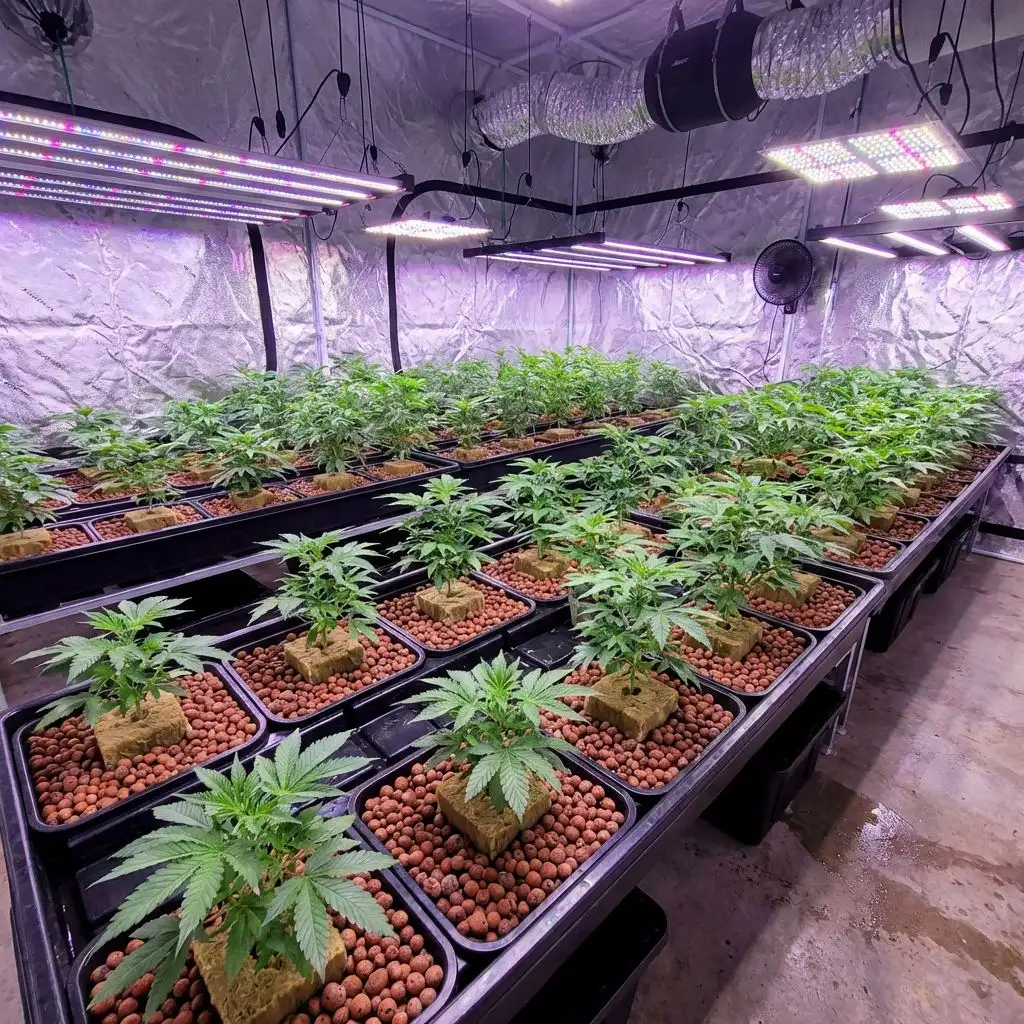
RDWC (Recirculating Deep Water Culture) connects multiple DWC buckets to a central control reservoir through pipes or tubing. A pump circulates nutrient solution between all buckets, ensuring uniform pH, EC, and temperature across every plant. This solves the biggest drawback of standalone DWC — the need to individually manage each bucket.
In an RDWC system, you adjust nutrients and pH in one place (the control reservoir), and changes propagate to all buckets within minutes. Systems typically use 3/4-inch to 2-inch PVC connections between buckets with a water pump rated at 200–400 GPH per 4–8 bucket system. Add a separate air pump with individual airstones in each bucket for oxygenation. RDWC is the preferred method for serious hobbyist growers running 4–12 plants.
Ebb-and-flow (flood and drain) periodically floods a grow tray with nutrient solution, then drains it back to a reservoir. Plants sit in pots filled with clay pebbles or similar medium. The flooding cycle (typically 15 minutes every 2–4 hours) delivers nutrients and then the draining creates a vacuum that pulls fresh oxygen to the roots. This mimics natural wet-dry cycles and is one of the most reliable and low-maintenance hydro systems for beginners.
5. Nutrient Management in Hydro
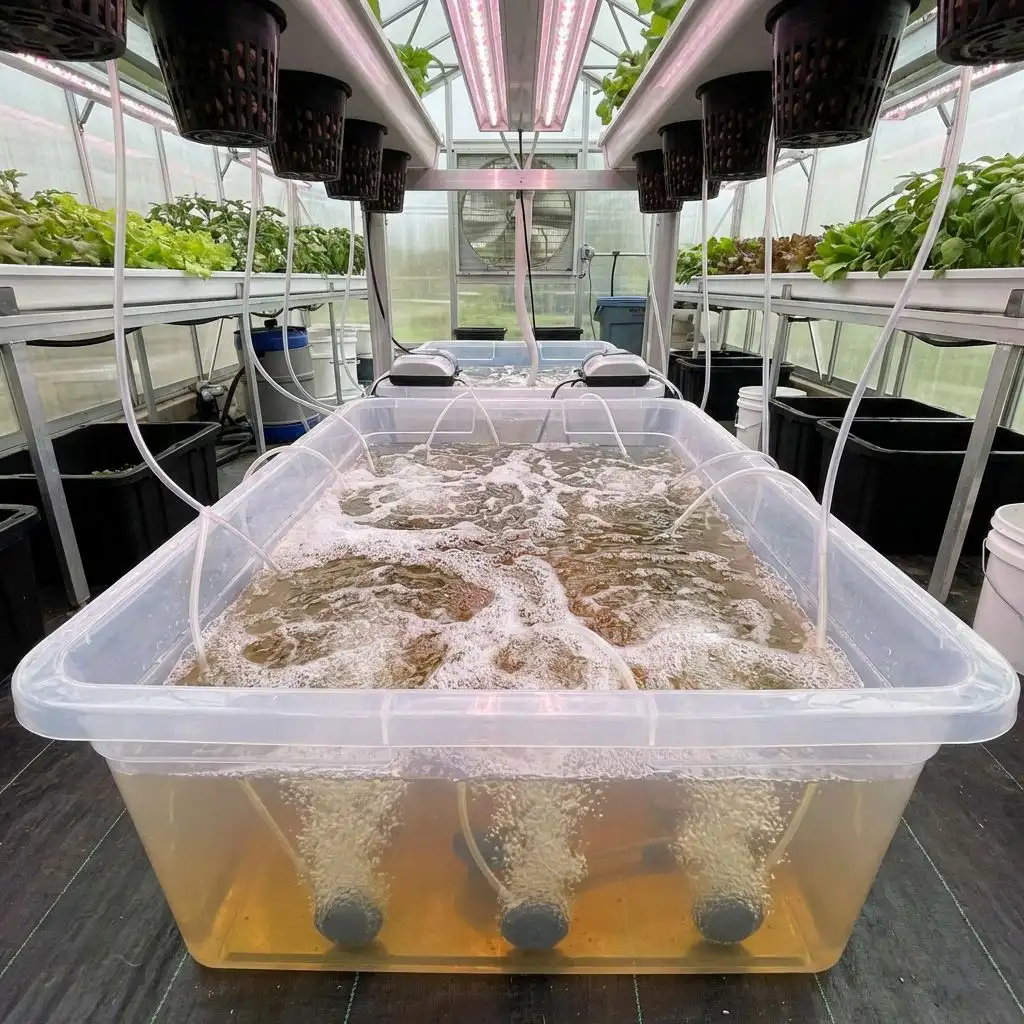
Hydroponic nutrients come in liquid or powder concentrate form, typically as a 2-part or 3-part system (e.g., Grow/Micro/Bloom). Unlike soil, which contains some buffered nutrients, hydro solution is the sole nutrient source — everything the plant needs must be in that water. This means precise measurement is critical.
Feed strength is measured as EC (electrical conductivity) in mS/cm or TDS/PPM. Start low and increase gradually:
- Seedlings/clones: EC 0.4–0.6 (200–300 PPM)
- Early veg: EC 0.8–1.2 (400–600 PPM)
- Late veg: EC 1.2–1.6 (600–800 PPM)
- Early flower: EC 1.4–1.8 (700–900 PPM)
- Peak flower: EC 1.6–2.2 (800–1100 PPM)
- Late flower/flush: EC 0.0–0.4 (0–200 PPM)
Always add nutrients to water — never the reverse. Add Part A, stir, then Part B. Mixing concentrates directly together causes nutrient lockout. Use reverse osmosis (RO) water as your base for the most consistent results, as tap water mineral content varies wildly by location.
6. pH in Hydroponics (5.5–6.5)
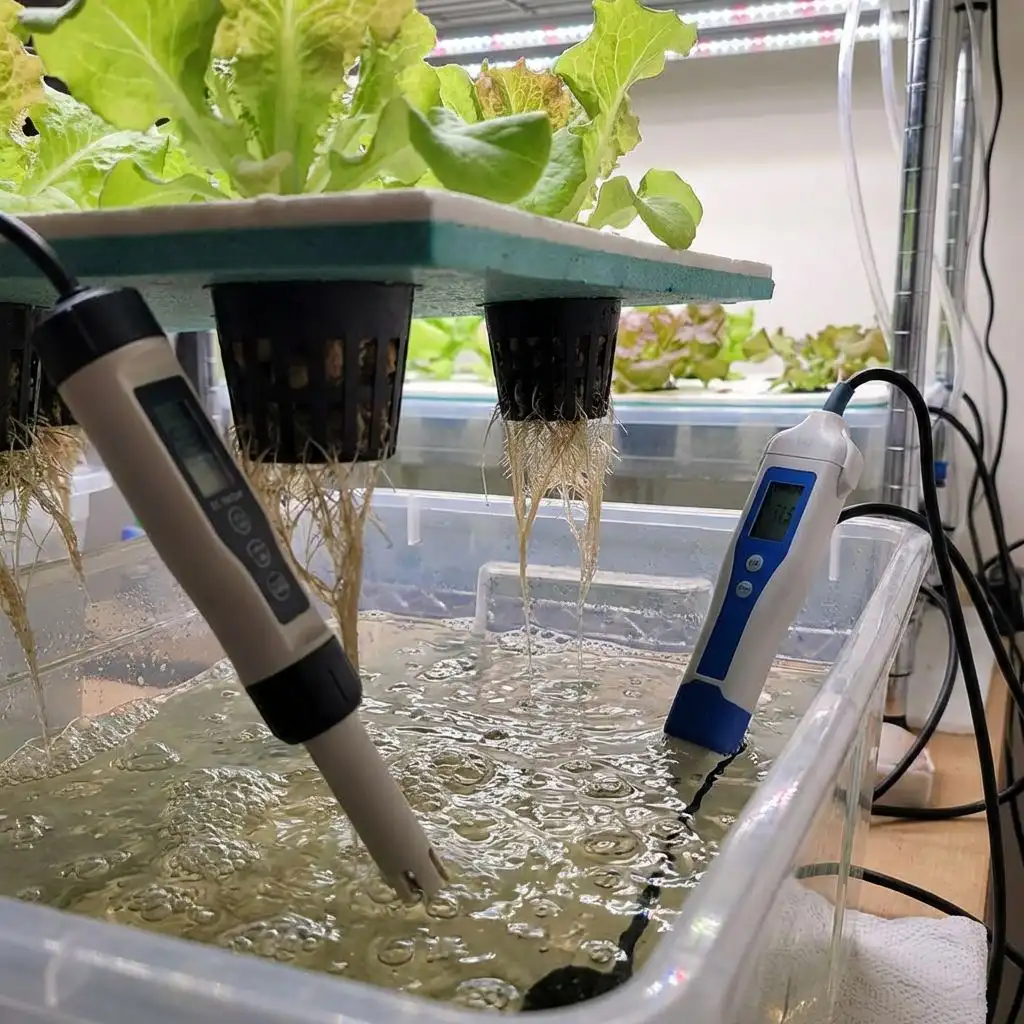
pH control is the single most important factor in hydroponic success. In soil, organic matter and microbial life create a natural buffer that keeps pH relatively stable. In hydro, there is no buffer — pH can swing from 5.5 to 7.0 overnight, locking out critical nutrients and causing deficiencies even when the solution contains everything the plant needs.
The optimal pH range for hydroponic cannabis is 5.5–6.5, with most growers targeting 5.8–6.0 as the sweet spot. Different nutrients are absorbed at different pH levels, so many experienced growers allow a gentle drift between 5.5 and 6.3 over a few days before adjusting — this ensures the plant can access the full spectrum of nutrients at various points in the cycle.
Use pH Up (potassium hydroxide) and pH Down (phosphoric acid) to adjust. Add in small increments — 1 mL at a time in a 5-gallon reservoir — stir, wait 15 minutes, then recheck. A quality digital pH pen (BlueLab, Apera) calibrated weekly is essential; cheap pH pens drift quickly and give false readings that lead to nutrient lockout. Budget at least $50–80 for a reliable pen.
| pH Range | Nutrient Availability | Common Issues |
|---|---|---|
| Below 5.5 | Calcium/Magnesium locked out | Brown spots, curling leaves |
| 5.5–5.8 | Good for micronutrients (Fe, Mn, Zn) | Ideal early veg range |
| 5.8–6.2 | Optimal overall absorption | Best general target |
| 6.2–6.5 | Good for Calcium/Magnesium | Useful in late flower |
| Above 6.5 | Iron/Manganese locked out | Yellowing, slow growth |
7. Pros and Cons vs Soil
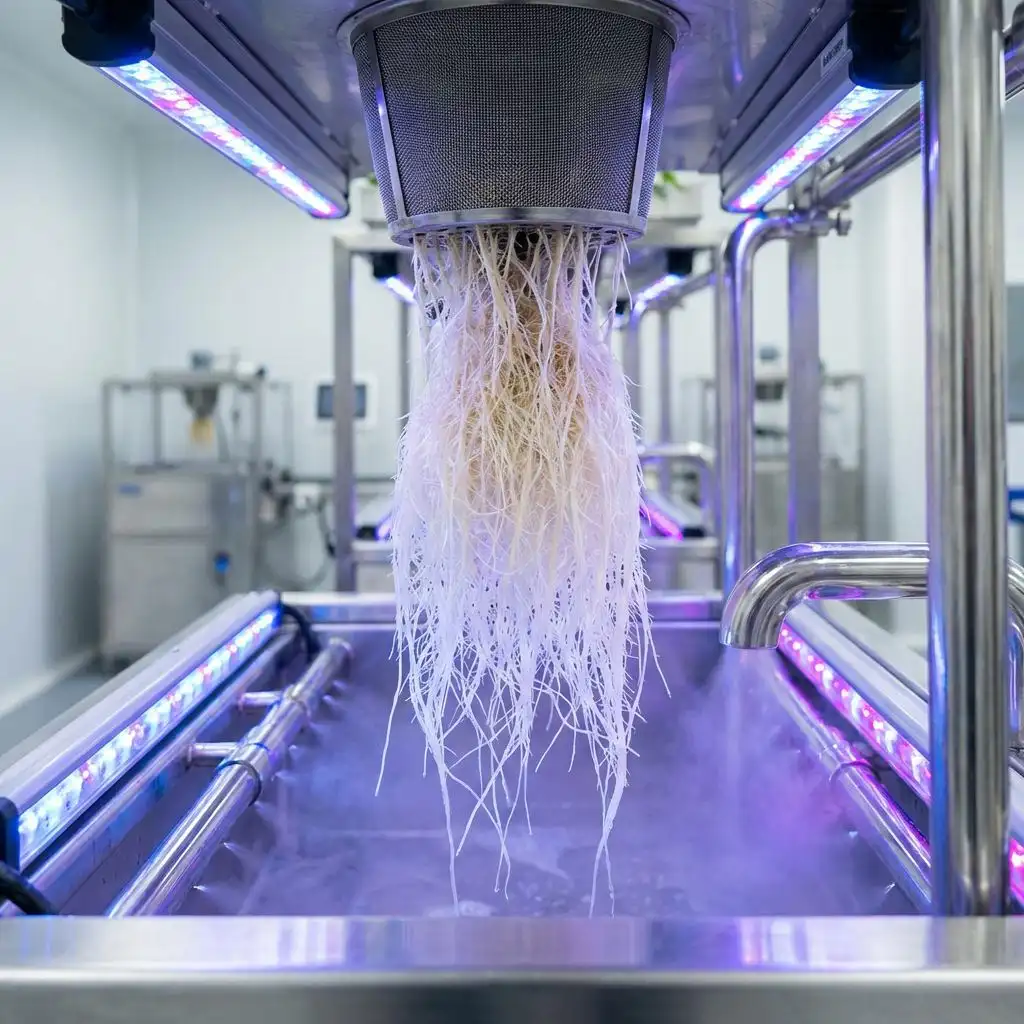
Hydroponics and soil each have distinct advantages. The right choice depends on your experience, budget, goals, and how much time you can dedicate to daily monitoring.
Advantages of Hydro:
- Faster growth: 20–30% faster veg, reaching harvest 1–2 weeks sooner
- Higher yields: 20–30% more weight per plant on average
- Precise control: Exact nutrient ratios, no guessing what is in the soil
- No soil pests: Eliminates fungus gnats, soil-borne pathogens, and many root diseases
- Cleaner operation: No soil mess, easier to keep grow area sterile
Disadvantages of Hydro:
- Higher startup cost: Pumps, air stones, reservoirs, pH/EC meters ($200–500+ for a basic setup)
- Less forgiving: pH and EC errors show within hours, not days
- Power dependent: A pump or air pump failure can kill roots in under an hour (DWC/NFT)
- Steeper learning curve: Requires understanding of water chemistry, EC, pH, dissolved oxygen
- Some argue soil produces better terpene profiles — though this is debated and may depend more on genetics and environment than medium
For beginners, coco coir with a drip-to-waste setup offers the best of both worlds: hydroponic growth speeds with soil-like forgiveness. It is the most recommended starting point for growers transitioning from soil to hydro.
🌱 Recommended Strains
Frequently Asked Questions
What Is Hydroponics?
Hydroponics is the practice of growing plants without soil, delivering nutrients directly to the roots through a water-based solution. Instead of extracting minerals from soil, the plant receives a precisely calibrated mix of dissolved nutrients — meaning it spends less energy on root expansion and ...
What is DWC (Deep Water Culture)?
DWC is the most popular hydro method for home cannabis growers due to its simplicity and explosive growth rates. Each plant sits in a net pot filled with clay pebbles, suspended over a 5–10 gallon bucket of nutrient solution. An air pump and airstone at the bottom continuously oxygenate the water, k...
What is NFT & Drip Systems?
NFT (Nutrient Film Technique) runs a thin, continuous film of nutrient solution along the bottom of a sloped channel or tube. Roots sit in the channel with their tips in the shallow stream while upper roots access oxygen from the air above. NFT is efficient with water and nutrients, using recirculat...
What is RDWC & Ebb-and-Flow?
RDWC (Recirculating Deep Water Culture) connects multiple DWC buckets to a central control reservoir through pipes or tubing. A pump circulates nutrient solution between all buckets, ensuring uniform pH, EC, and temperature across every plant. This solves the biggest drawback of standalone DWC — the...
What is Nutrient Management in Hydro?
Hydroponic nutrients come in liquid or powder concentrate form, typically as a 2-part or 3-part system (e.g., Grow/Micro/Bloom). Unlike soil, which contains some buffered nutrients, hydro solution is the sole nutrient source — everything the plant needs must be in that water. This means precise meas...