
Cannabis Genetics 101
Understand the DNA behind every strain — from ancient landrace origins to modern hybrid breeding and seed technology.
Key Takeaways
Understand the DNA behind every strain — from ancient landrace origins to modern hybrid breeding and seed technology.
- What Are Cannabis Genetics?
- Indica vs Sativa vs Ruderalis
- Phenotype vs Genotype
- F1 Hybrids Explained
1. What Are Cannabis Genetics?
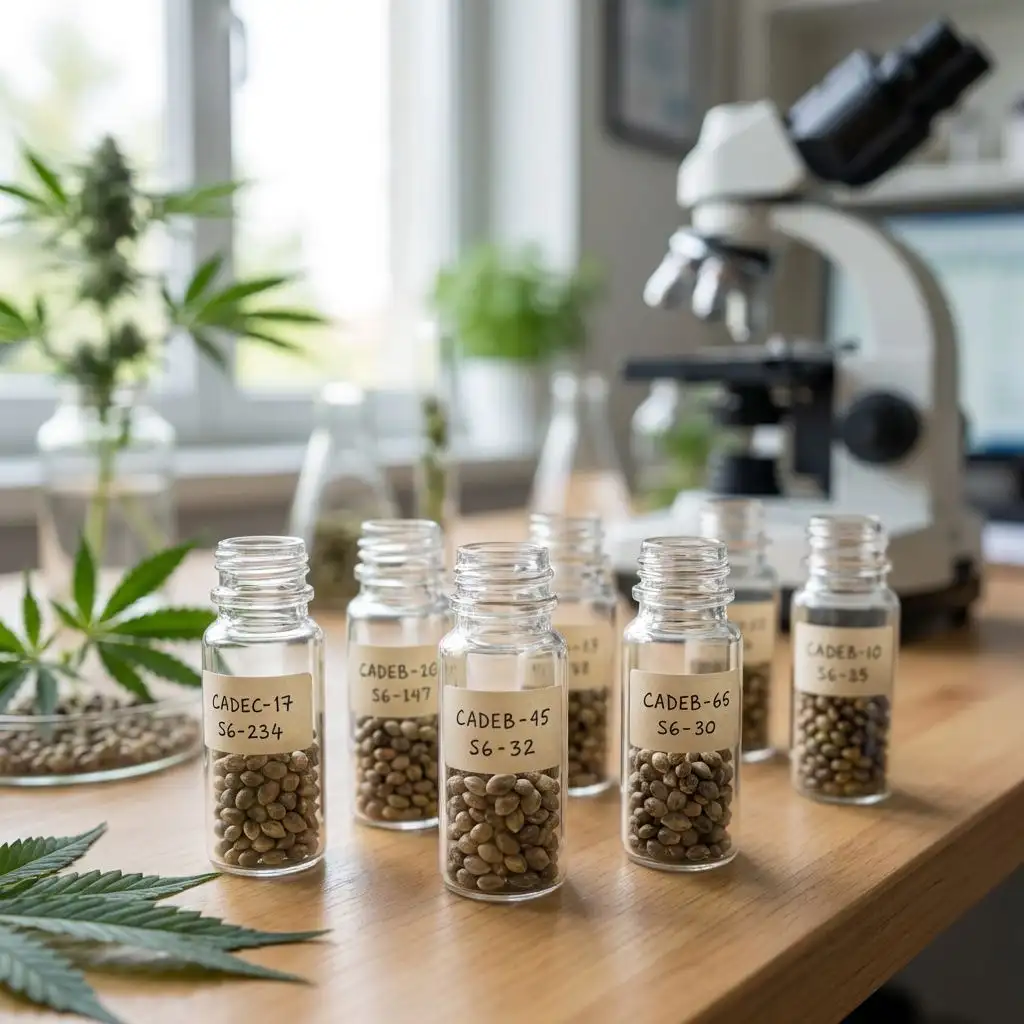
Cannabis genetics refers to the inherited DNA blueprint that determines every characteristic of a plant: its height, leaf shape, flowering time, cannabinoid profile, terpene production, resistance to pests and disease, yield potential, and overall growth pattern. Just as human children inherit traits from both parents, each cannabis seed carries a unique combination of genes from its mother and father plant.
Cannabis (Cannabis sativa L.) has 20 pairs of chromosomes (2n = 20), making its genome relatively compact compared to many other crop plants. Despite this, the species exhibits extraordinary genetic diversity — there are thousands of documented cultivars (strains), each expressing a distinct combination of chemical and physical traits. This diversity is the result of thousands of years of natural evolution across diverse climates, followed by decades of intensive selective breeding by humans.
Understanding genetics is the single most important factor in growing success. You can optimize every environmental variable — perfect lights, ideal nutrients, flawless pH — but if the genetics are mediocre, the results will be mediocre. Genetics set the ceiling; environment determines how close you get to it. This is why serious growers invest in quality seeds from reputable breeders rather than using random bag seeds.
2. Indica vs Sativa vs Ruderalis
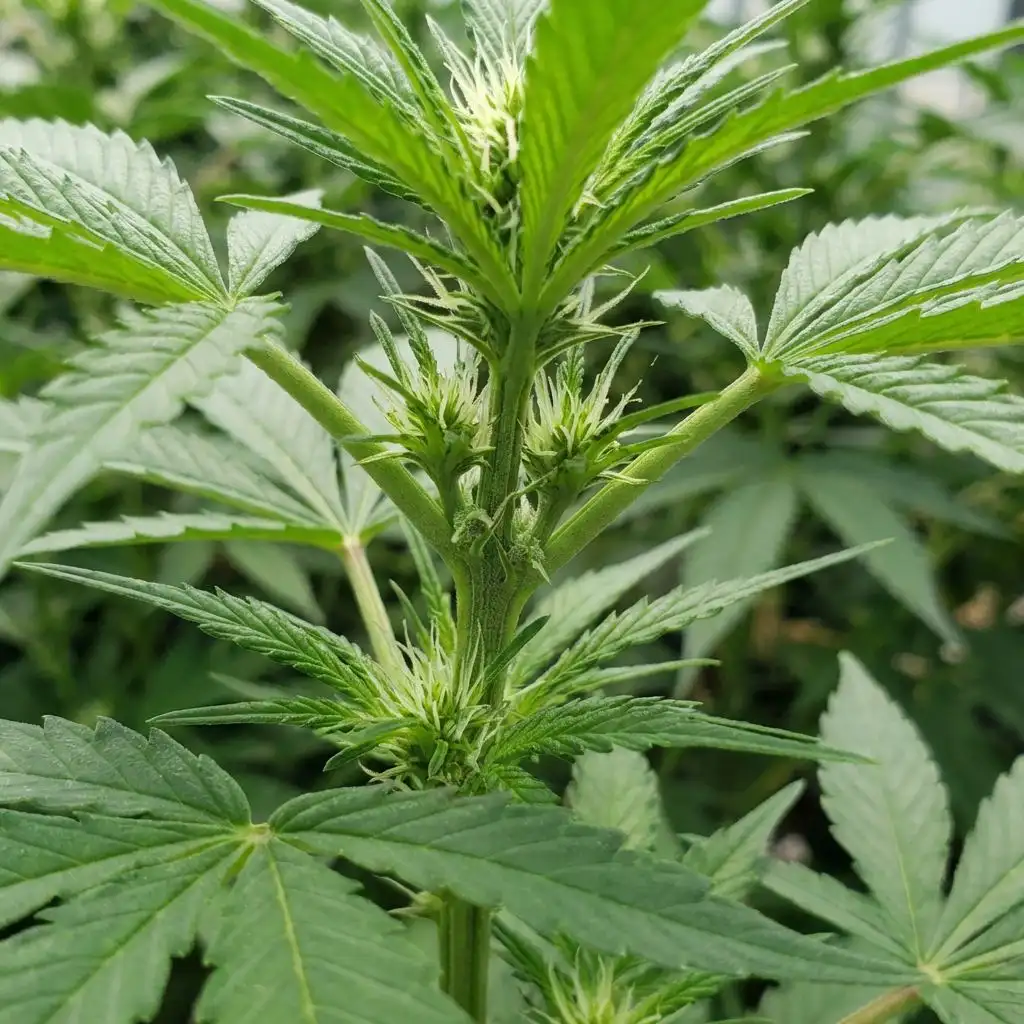
Cannabis is traditionally classified into three subspecies, though modern botanical research increasingly views them as a single species with enormous morphological variation:
Cannabis indica originated in the Hindu Kush mountain region (Afghanistan, Pakistan, northern India). These plants evolved in harsh, arid conditions with short growing seasons, resulting in short, bushy plants (2–4 feet) with broad, dark leaves, dense bud structures, and fast flowering times (7–9 weeks). Indica-dominant strains typically produce relaxing, body-heavy effects associated with higher myrcene and linalool terpene profiles.
Cannabis sativa evolved in equatorial regions (Thailand, Colombia, Mexico, Central Africa) where long growing seasons and intense sun drove plants to grow tall and lanky (6–15+ feet) with narrow leaves, airy bud structures, and long flowering times (10–16 weeks). Sativa-dominant strains tend to produce energizing, cerebral effects, often with higher concentrations of limonene and pinene terpenes.
Cannabis ruderalis developed in the harsh, short-summer climates of Central Russia and Central Asia. These small, hardy plants (1–2 feet) evolved to flower based on age rather than light cycle (autoflowering). While ruderalis itself produces minimal cannabinoids, its autoflowering trait has been crossbred into modern indica and sativa genetics to create autoflowering hybrids that maintain potency while finishing on a fixed timeline.
| Trait | Indica | Sativa | Ruderalis |
|---|---|---|---|
| Height | 2–4 ft | 6–15+ ft | 1–2 ft |
| Leaf shape | Broad, wide fingers | Narrow, thin fingers | Small, sparse |
| Flowering time | 7–9 weeks | 10–16 weeks | 3–5 weeks |
| Bud structure | Dense, compact | Airy, elongated | Small, sparse |
| Typical effect | Body, relaxing | Cerebral, energizing | Minimal (low THC) |
| Origin | Central Asia mountains | Equatorial regions | Russia, Central Asia |
3. Phenotype vs Genotype

These two terms are fundamental to understanding cannabis genetics and why two seeds of the "same strain" can produce noticeably different plants:
Genotype is the plant's complete genetic code — the DNA it inherited from its parents. Think of it as the full set of instructions the plant carries. The genotype determines the range of possible outcomes: a genotype might code for THC levels between 18–25%, height between 3–5 feet, and a flowering time of 8–10 weeks. The genotype sets the boundaries, but doesn't determine exactly where within those boundaries the plant will land.
Phenotype is the actual, observable expression of those genes — what the plant looks, smells, tastes, and grows like in practice. Phenotype is determined by genotype + environment. The same seed (genotype) grown under different conditions (strong light vs weak light, cool vs warm, organic soil vs hydro) will express different phenotypes. Two seeds from the same pack — siblings with similar but not identical genotypes — can express surprisingly different phenotypes in the same environment.
This is why experienced growers "pheno hunt": they grow multiple seeds of the same strain, select the individual plant (phenotype) that best expresses the traits they want — the frostiest, the most aromatic, the highest yielding — and then clone that specific phenotype for future grows. Clones are genetically identical copies, so they produce the same phenotype every time (assuming similar environmental conditions).
4. F1 Hybrids Explained
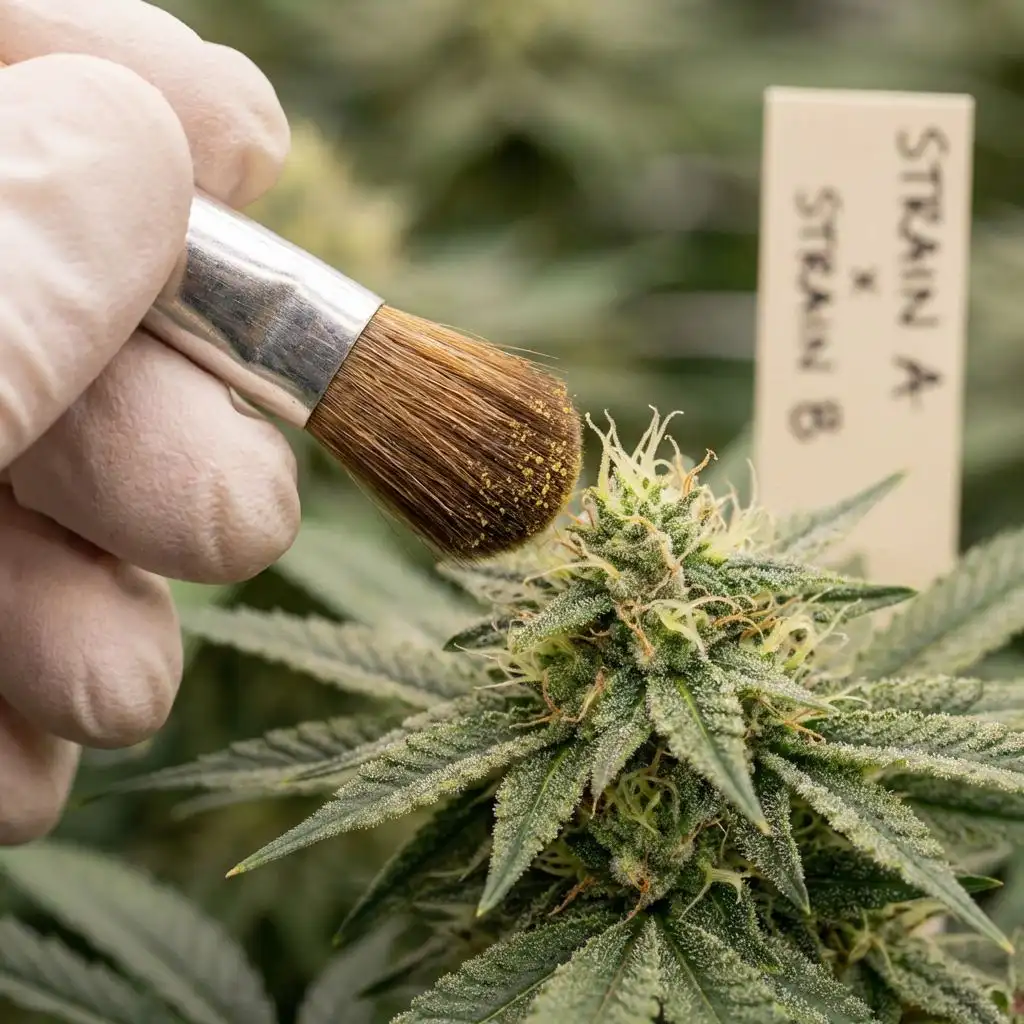
An F1 hybrid is the first-generation offspring of two genetically distinct parent strains. When a breeder crosses a stable Strain A with a stable Strain B, the resulting seeds are F1s. F1 hybrids exhibit "hybrid vigor" (heterosis) — they tend to be more vigorous, faster-growing, higher-yielding, and more disease-resistant than either parent. This is the same principle used in agriculture for corn, tomatoes, and countless other crops.
F1 seeds from stable parent lines produce relatively uniform offspring — most plants will look and grow similarly, though some phenotypic variation is normal. This predictability is what makes F1 genetics from reputable breeders valuable: you know roughly what to expect from each seed.
F2 seeds are created by crossing two F1 siblings. F2 populations show dramatically more variation — the genetic traits from both original grandparents recombine unpredictably, producing a wide spectrum of phenotypes. Some will resemble Parent A, some Parent B, and many will fall somewhere between. Breeders use F2 populations for pheno hunting — selecting exceptional individuals from a diverse F2 pool to become the foundation of new stabilized lines. F3, F4, and beyond progressively stabilize traits through selective inbreeding.
| Generation | Uniformity | Vigor | Use Case |
|---|---|---|---|
| F1 (Strain A × Strain B) | High | Very high (heterosis) | Production, commercial grows |
| F2 (F1 × F1) | Low (high variation) | Moderate | Pheno hunting, breeding projects |
| F3–F5 (selected F2+ × F2+) | Increasing | Moderate | Stabilizing new lines |
| IBL (Inbred Line, F6+) | Very high | Moderate–low | True-breeding parent stock |
5. Feminized Seeds Process
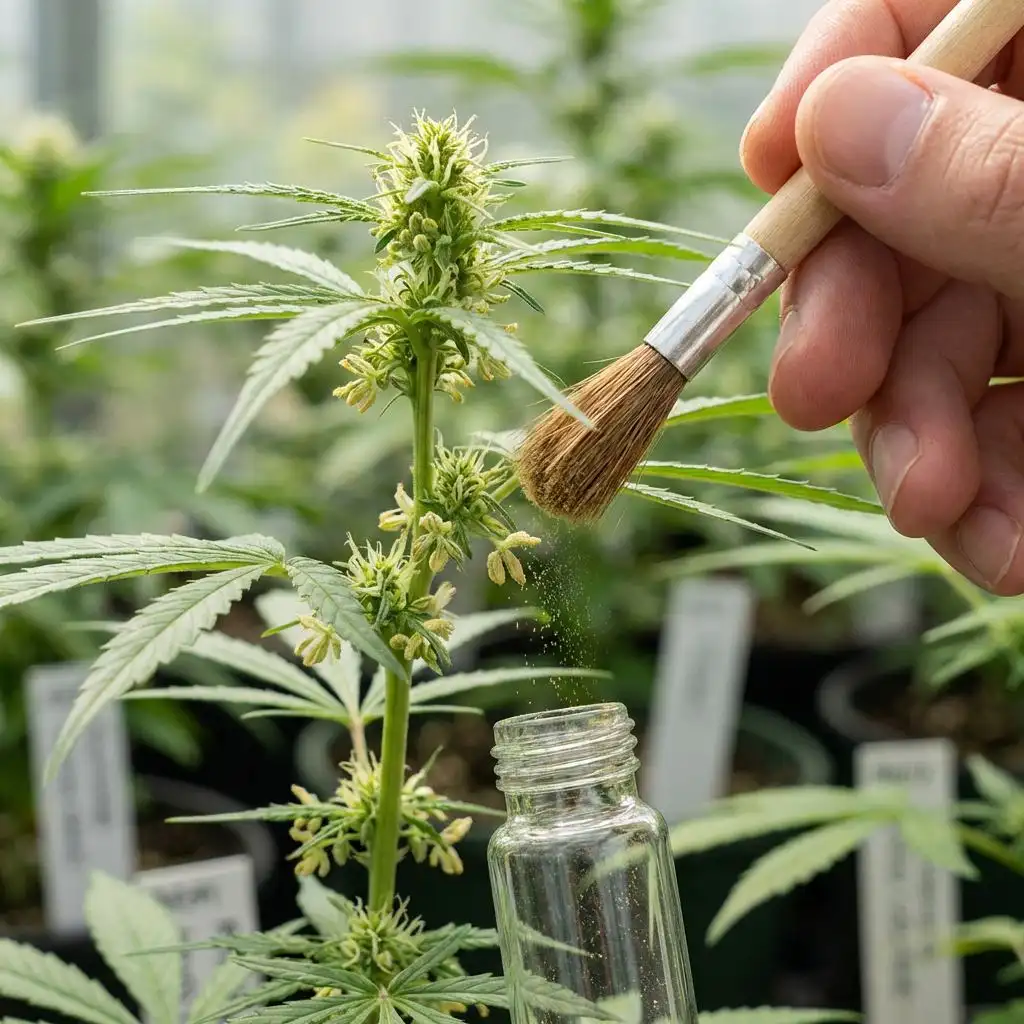
Regular cannabis seeds produce roughly a 50/50 mix of male and female plants. Since only females produce the cannabinoid-rich flowers growers want, regular seeds mean growing twice as many plants as needed and culling males before they pollinate females. Feminized seeds solve this problem — they are bred to produce 99.9%+ female plants, eliminating wasted time, space, and resources on males.
Feminized seeds are created by inducing a female plant to produce pollen — reversing its sex temporarily. The most common method uses colloidal silver (CS) or silver thiosulfate (STS) sprayed on select branches of a female plant during early flower. The silver ions inhibit ethylene production, a hormone required for female flower development. The treated branches produce male-appearing pollen sacs, but this pollen contains only female (XX) chromosomes because the donor plant has no Y chromosome to pass on.
When this female-derived pollen fertilizes a normal female plant, all resulting seeds inherit only XX chromosomes and will develop as female. The process does not involve genetic modification — it is a chemical manipulation of hormone signaling within an otherwise normal female plant. Reputable seed banks test feminized batches extensively; hermaphroditism (plants developing both male and female flowers) can occur if the reversal parent was genetically predisposed to herming, which is why breeders select reversal candidates carefully.
6. Autoflower Genetics (Ruderalis Cross)
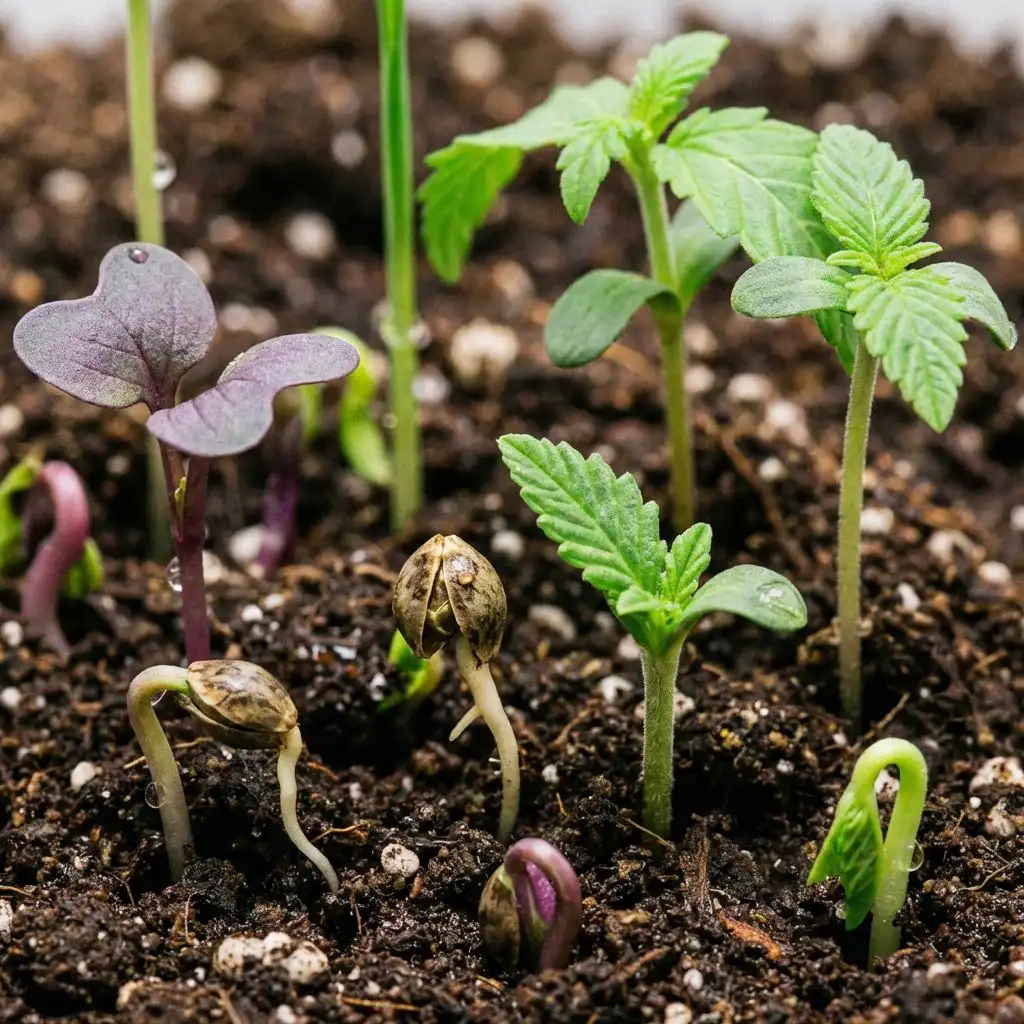
Autoflowering cannabis flowers based on age rather than light schedule. While photoperiod strains require a change to 12/12 light to trigger flowering, autoflowers begin flowering automatically 3–4 weeks after germination regardless of how many hours of light they receive. This trait comes from Cannabis ruderalis, which evolved in regions with extreme seasonal light variation (Russia, Siberia, Central Asia).
Modern autoflowers are created by crossing a desirable indica or sativa strain with a ruderalis line, then backcrossing the offspring with the original photoperiod parent over 3–5 generations. Each generation selects for the autoflowering trait while recovering the potency, flavor, and yield of the photoperiod parent. Early autoflowers (circa 2005–2010) were notoriously low in THC (8–15%) and yield, but modern autos from top breeders now match photoperiod strains at 20–28% THC and produce 50–150g per plant indoors.
Autoflowers offer unique advantages: seed to harvest in 8–12 weeks, ability to grow under 18–20 hours of light from start to finish (more light = more photosynthesis = more yield), compact size ideal for stealth grows and small spaces, and multiple outdoor harvests per season since they don't depend on fall light changes. The main limitation is that you cannot clone autoflowers (clones inherit the parent's age-based flowering clock) and you cannot extend veg to grow larger plants.
| Trait | Photoperiod | Autoflower |
|---|---|---|
| Flowering trigger | 12/12 light change | Age (3–4 weeks) |
| Seed to harvest | 14–24 weeks | 8–12 weeks |
| Veg light schedule | 18/6 or 20/4 | 18/6 or 20/4 (entire life) |
| Cloneable | Yes | No (impractical) |
| Plant size | Controllable (small–huge) | Fixed (small–medium) |
| Yield per plant | 1–8+ oz | 0.5–5 oz |
| Training tolerance | High (topping, SCROG) | LST only (low stress) |
7. Landrace Strains
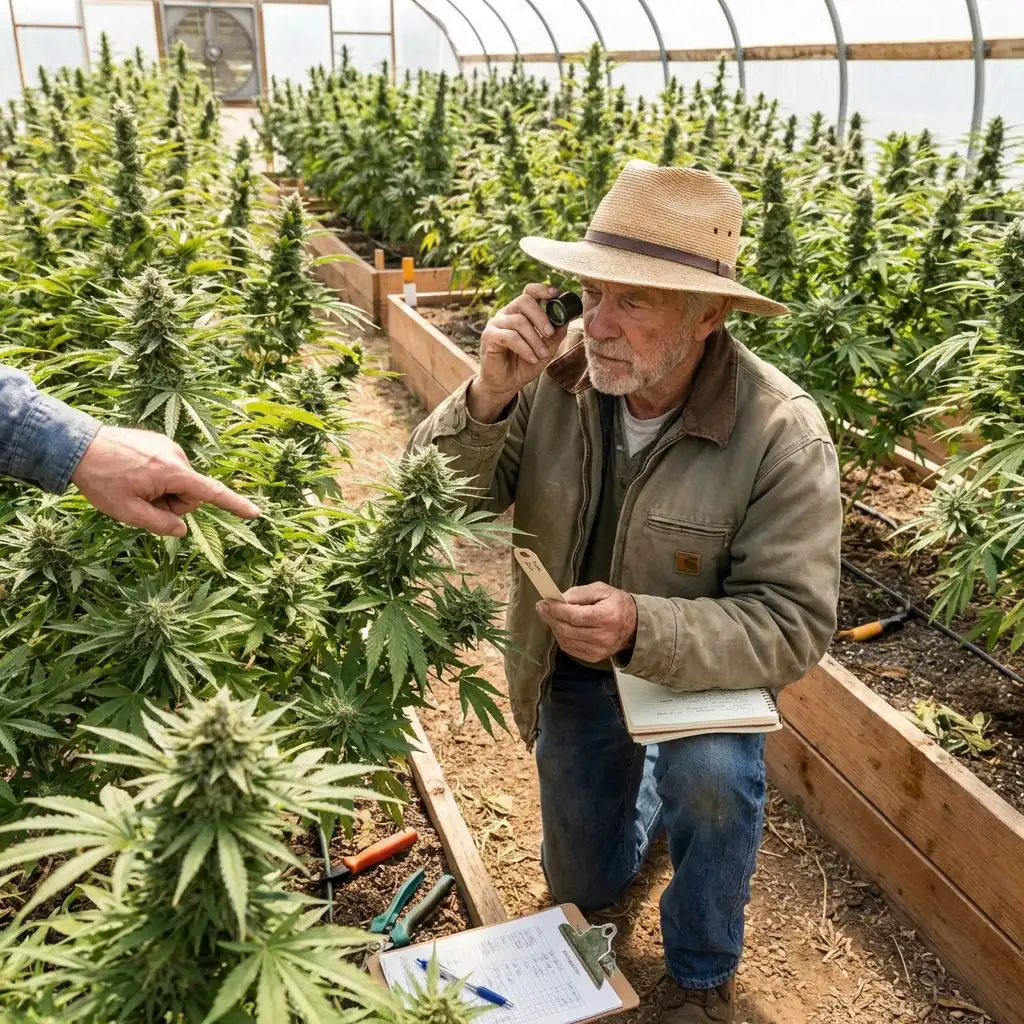
Landrace strains are the original, wild cannabis varieties that evolved naturally in specific geographic regions over thousands of years without human hybridization. They are the genetic ancestors of every modern strain. Each landrace adapted to its local climate, altitude, latitude, and soil conditions, developing unique characteristics that distinguish it from landraces in other regions.
Notable landraces include Hindu Kush (Afghanistan — pure indica, resinous, short), Thai (Thailand — pure sativa, tall, 14–16 week flower), Durban Poison (South Africa — sativa, energizing, fast-finishing for a sativa), Acapulco Gold (Mexico — sativa, golden buds, euphoric), Afghani (Afghanistan — dense, sedating, high resin), and Malawi Gold (Malawi — tall sativa, cerebral, extremely long flowering).
Landraces are critically important for genetic preservation and future breeding. As the global cannabis market consolidates around popular hybrids (OG Kush crosses, Cookies family, etc.), the genetic diversity of landraces is at risk of being lost. Seed banks dedicated to preservation — like the real-world equivalent of a seed vault — work to maintain pure landrace lines. For growers, landrace seeds offer a connection to cannabis history and the chance to experience pure, unhybridized genetics, though they often require more patience (longer flowering times) and space (larger plants) than modern hybrids.
8. How to Choose Genetics for Your Grow
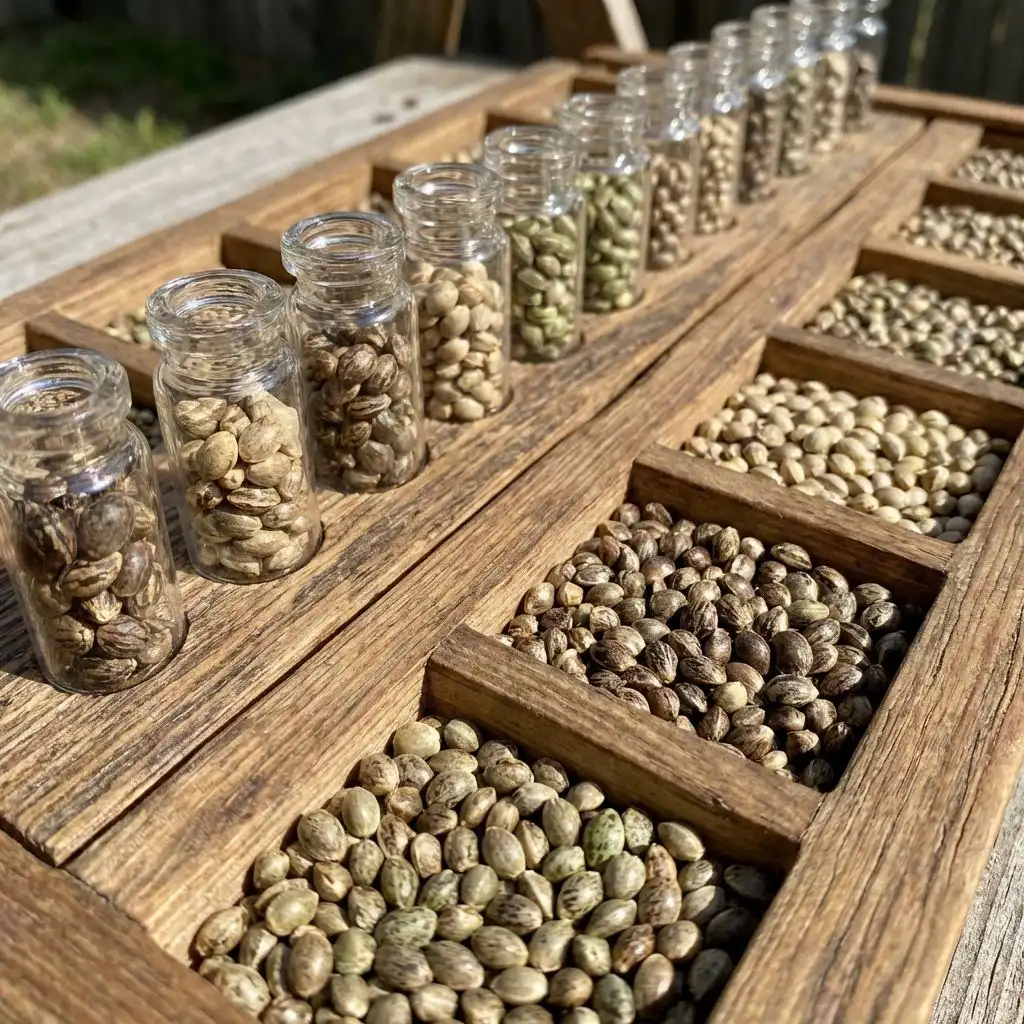
Selecting the right genetics is the most consequential decision you will make before starting a grow. Here is a practical framework:
- Grow space: Short tent (under 5 ft)? Choose indica-dominant strains or autoflowers that stay compact. Tall space? Sativa-dominant genetics can stretch to their full potential.
- Experience level: Beginners should start with forgiving, resilient genetics — Northern Lights, White Widow, Blue Dream, and most autoflowers are famously beginner-friendly. Avoid landrace sativas and finicky strains until you have a few grows under your belt.
- Climate (outdoor): Northern climates with short summers need fast-finishing indicas or autoflowers. Mediterranean climates can support longer-flowering sativa hybrids. Humid climates demand mold-resistant genetics.
- Desired effect: THC-dominant for recreational/psychoactive effects, CBD-dominant or balanced 1:1 for medical/therapeutic use, or specific terpene profiles for targeted effects (myrcene for sedation, limonene for mood elevation).
- Yield vs quality: Some strains are bred as heavy yielders (Big Bud, Critical), while others prioritize cannabinoid/terpene content over weight (many OG Kush and Haze varieties).
Always buy from reputable seed banks that work with established breeders. Quality genetics cost more upfront ($10–$15+ per seed) but save months of grow time compared to unreliable seeds that may produce hermaphrodites, inconsistent phenotypes, or disappointing potency. Read strain reviews, check breeder track records, and don't be afraid to ask experienced growers for recommendations specific to your setup and goals.
🌱 Recommended Strains
Frequently Asked Questions
What Are Cannabis Genetics?
Cannabis genetics refers to the inherited DNA blueprint that determines every characteristic of a plant: its height, leaf shape, flowering time, cannabinoid profile, terpene production, resistance to pests and disease, yield potential, and overall growth pattern. Just as human children inherit trait...
What is Indica vs Sativa vs Ruderalis?
Cannabis is traditionally classified into three subspecies, though modern botanical research increasingly views them as a single species with enormous morphological variation: Cannabis indica originated in the Hindu Kush mountain region (Afghanistan, Pakistan, northern India). These plants evolved i...
What is Phenotype vs Genotype?
These two terms are fundamental to understanding cannabis genetics and why two seeds of the "same strain" can produce noticeably different plants: Genotype is the plant's complete genetic code — the DNA it inherited from its parents. Think of it as the full set of instructions the plant carries. The...
What is F1 Hybrids Explained?
An F1 hybrid is the first-generation offspring of two genetically distinct parent strains. When a breeder crosses a stable Strain A with a stable Strain B, the resulting seeds are F1s. F1 hybrids exhibit "hybrid vigor" (heterosis) — they tend to be more vigorous, faster-growing, higher-yielding, and...
What is Feminized Seeds Process?
Regular cannabis seeds produce roughly a 50/50 mix of male and female plants. Since only females produce the cannabinoid-rich flowers growers want, regular seeds mean growing twice as many plants as needed and culling males before they pollinate females. Feminized seeds solve this problem — they are...