Your plants are little humidifiers — every leaf is pushing water vapor into your tent through transpiration, and by mid-flower that output can outpace a bathroom shower . Getting your dehumidifier grow room cannabis math right is the difference between dense, terpy buds and a mold disaster three days before harvest. This guide walks through the transpiration math, pints-per-day capacity by stage, and the compressor-vs-desiccant tradeoffs that most growers learn the hard way.
Why Dehumidification Is the Job, Not Humidification
General indoor horticulture guidance puts optimal relative humidity at 60-85%, with most crops sitting comfortably in the 75-85% range . Cannabis breaks that rule. Flowering cannabis needs 40-50% RH, dropping from 50-70% during veg . That means indoor cannabis growers are almost always removing moisture, not adding it.
Here's why: plants release significant moisture into the grow environment through transpiration via stomata on their leaves. That process drives photosynthesis and nutrient uptake — but it also creates disease risk if the water vapor isn't pulled back out of the air . A mature flowering plant can move a liter or more of water from root zone to air per day. Multiply by eight plants in a 4x4 and you've got a swimming pool's worth of vapor every week.
In cannabis cultivation, the plants themselves are the humidity source. Your dehumidifier isn't fighting the outside weather — it's fighting your own canopy. Sizing must match transpiration load, not room volume.
The Stakes: Mold, Mildew, and Lost Harvests
High humidity promotes fungal diseases such as powdery mildew and Botrytis cinerea (grey mold, also called bud rot) — threats to plant health, quality, and yield . Controlling humidity directly impacts crop quality, growth, and disease pressure . Bud rot is the nightmare scenario: it hollows out the densest, prettiest colas from the inside, usually in the last two weeks of flower when your investment is maxed. For deeper prevention tactics, see our cannabis mold prevention guide.
The Transpiration Math: How Many Pints Per Day for a Grow Room
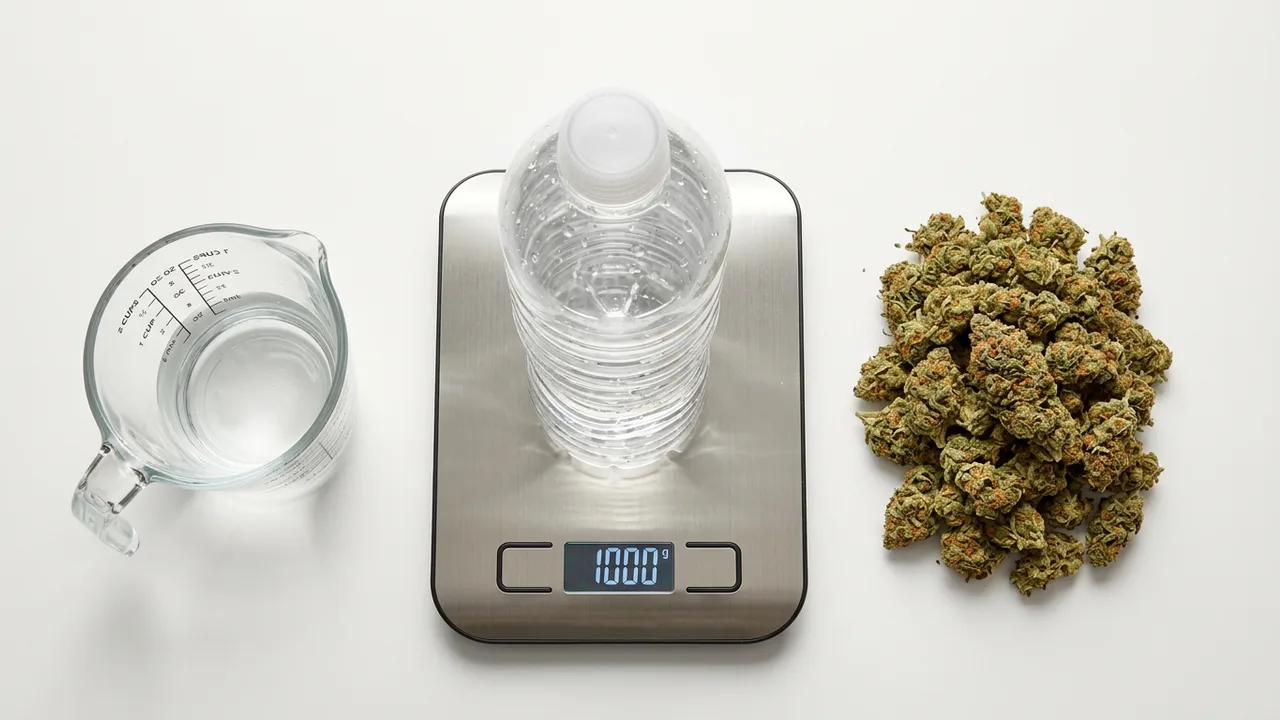
Dehumidifier capacity is rated in pints per day (PPD) — how much water the unit can pull from the air in 24 hours under specific temperature and humidity conditions. To size correctly, you need to estimate how much water your plants will release in that same window.
The Working Rule: 1 Liter Per Day Per Pound of Bud
A mature flowering cannabis plant transpires roughly 1 liter (about 2.1 pints) of water per day per pound of dry bud it will produce. This is a working estimate used widely in the industry — it's not a peer-reviewed number, and actual transpiration depends on crop type, heat, evaporation, light intensity, and more factors . But it gets you in the ballpark.
Translate that to a sizing worksheet:
- Estimate yield per plant at harvest in pounds (a 4x4 with four healthy plants under 400W might pull 1 lb total — 0.25 lb each).
- Multiply by 2.1 pints to get daily transpiration per plant in peak flower.
- Multiply by plant count for total daily load.
- Add 30-50% buffer for evaporation from media, reservoirs, and runoff.
Use our yield estimator to pin down your pound figure before buying a unit.
Sizing Chart by Tent Size and Stage
| Setup | Veg PPD | Flower PPD | Late Flower PPD |
|---|---|---|---|
| 2x2 tent (1-2 plants) | 10-20 | 20-30 | 30-35 |
| 3x3 tent (2-4 plants) | 20-30 | 30-40 | 40-50 |
| 4x4 tent (4-6 plants) | 30-40 | 40-55 | 55-70 |
| 5x5 tent (6-9 plants) | 40-55 | 55-80 | 80-100 |
| 10x10 room (16+ plants) | 80-120 | 120-180 | 180-240 |
Manufacturer PPD ratings are measured at 80°F and 60% RH. At a typical 75°F flowering tent at 50% RH, a unit rated 50 PPD realistically delivers closer to 30-35 PPD. Always oversize by 20-30% against the chart above, or buy based on the AHAM-rated capacity rather than the headline number.
What Size Dehumidifier for a 4x4 Tent?
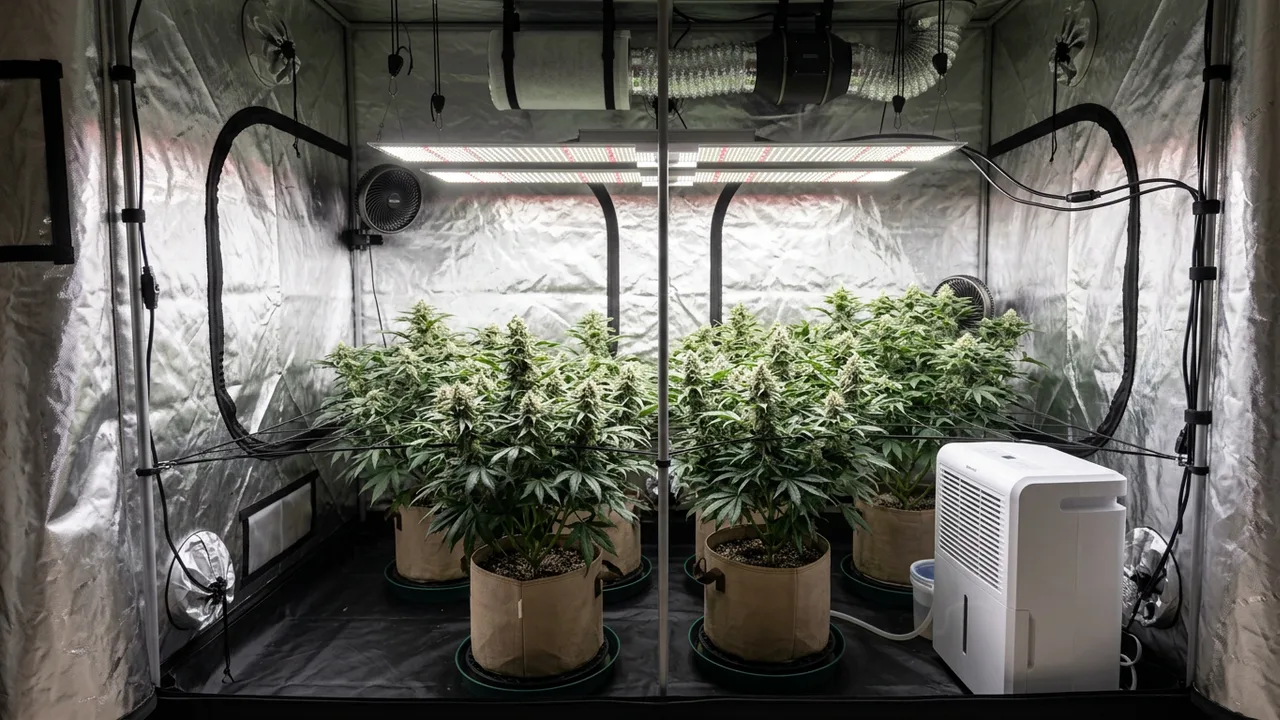
The single most-asked sizing question. The honest answer: a 30-50 pint unit in veg, 50-70 pint unit in peak flower, depending on plant count, strain vigor, and whether you're sealed or vented.
The 4x4 Breakdown
- 4 plants, SOG style, ~1 lb total yield → 35-40 PPD minimum in late flower
- 4 plants, ScrOG or bigger veg, ~1.5-2 lb total → 50-70 PPD
- 6-9 plants SOG, ~2+ lb total → 70+ PPD (two smaller units often better than one big one)
- Autoflowers in a 4x4, lighter canopy → 25-35 PPD usually handles it
If you're still planning your build, our 2x2 vs 4x4 tent sizing guide pairs directly with this math. Strain vigor matters too — heavy feeders like OG Kush and Quantum Kush push more water than compact indicas like Northern Lights x Big Bud.
Late Flower: The Critical Window for Bud Rot
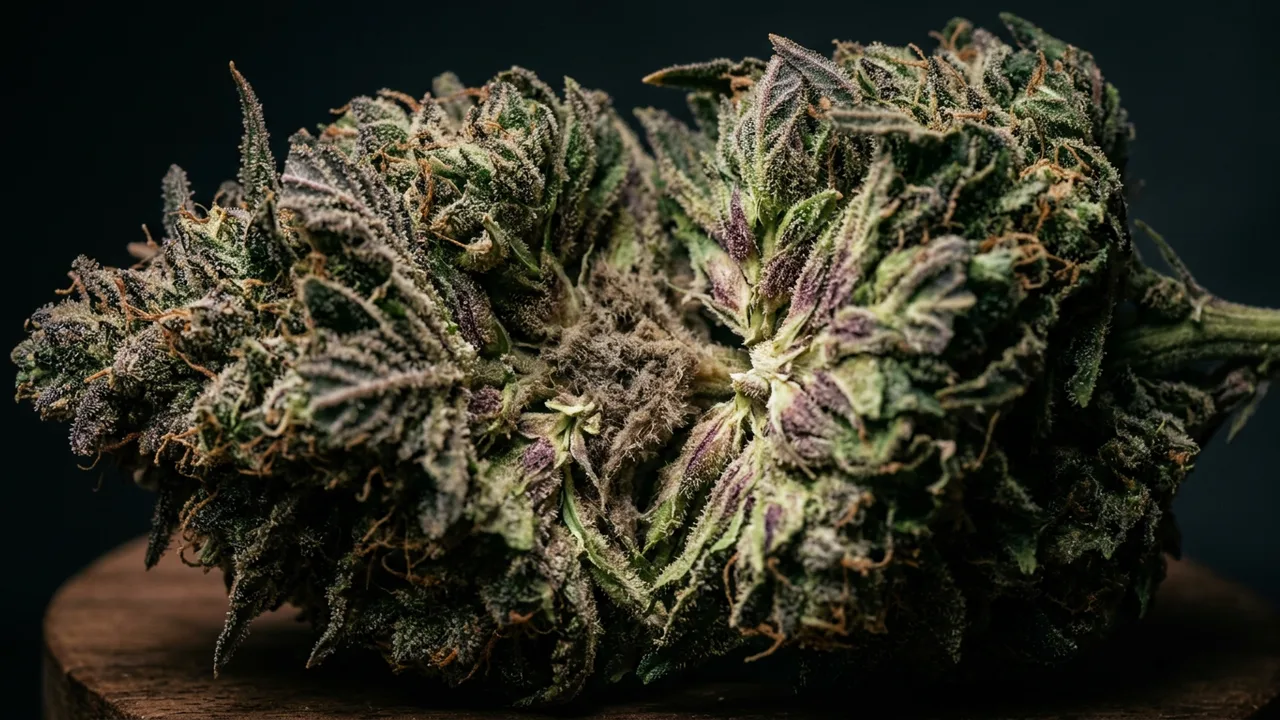
Weeks 6-9 of flower are when everything converges against you. Buds are at maximum density, trapping moisture deep inside. Transpiration per gram of bud tissue is at its peak. And lights-off temperature drops pull ambient RH up fast — a ~10°F day-to-night drop is desired for plant metabolism , but that same drop raises RH by 15-20 percentage points on the humidity meter without a single drop of new water entering the room.
Dial RH Down in Stages
Weeks 1-3 flower
Hold 50% RH. Plants are still stretching and bulking leaf mass.
Weeks 4-6 flower
Drop to 45% RH as buds densify. Transpiration peaks here.
Weeks 7+ (late flower)
Target 40% RH. This is when bud rot strikes — dehumidifier runs hardest now.
Pair your RH targets with correct vapor pressure deficit using our VPD calculator and printable VPD chart. Humidity alone doesn't tell the whole story — it's the leaf-to-air water gradient that drives transpiration.
If your dehumidifier can't hold 45% in week 6, it cannot hold 40% in week 8. Buy for the worst-case night in late flower, not the easy average across the whole cycle.
Compressor vs Desiccant Dehumidifiers
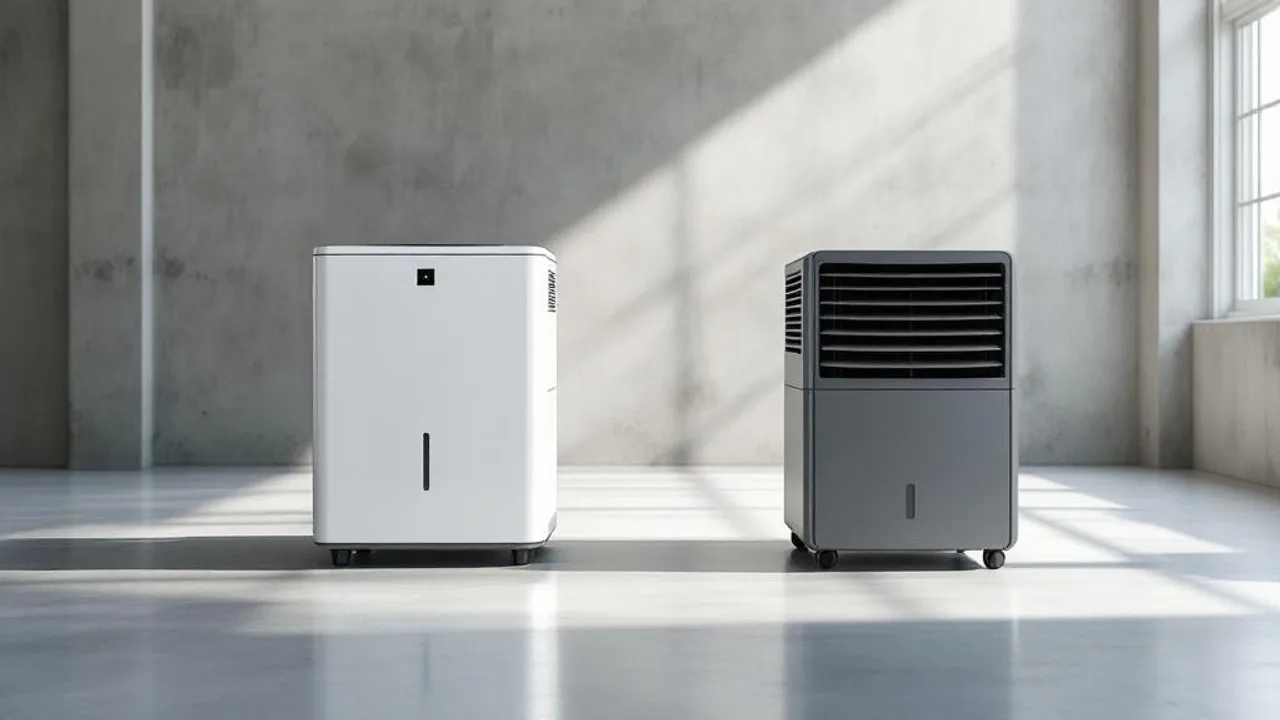
Two technologies dominate grow room dehumidification, and they behave very differently.
Compressor (Refrigerant) Units
These work like a mini air conditioner — cold coils condense moisture out of passing air. They're efficient in warm, humid conditions (exactly what most flowering tents are) and cheap to buy. Downsides: they dump heat into the room (often 2-4°F of added load for a mid-size unit), and they lose efficiency below about 65°F ambient.
Desiccant Units
These use a moisture-absorbing wheel (silica or zeolite) and regenerating heat. They run well in cold spaces (drying rooms, basements) and maintain capacity down near freezing. Downsides: they cost more, use more electricity per pint pulled, and produce even more heat than compressors.
| Feature | Compressor | Desiccant |
|---|---|---|
| Best temp range | 65-90°F | 35-75°F |
| Efficiency (pints/kWh) | Higher | Lower |
| Heat output | Moderate | High |
| Upfront cost | Lower | Higher |
| Best use | Flowering tent | Cold drying room, garage grow |
For most indoor cannabis growers in 2026, a compressor unit sized properly for your canopy is the right call. Desiccants earn their keep in unheated drying rooms and cold climates.
The Heat Output Problem
Every pint of water a compressor dehumidifier removes releases latent heat back into the room. A 70-pint unit in a sealed 4x4 can raise tent temps 5-8°F — often enough to undo your lights-off cooling window. Solutions:
- Place the dehumidifier outside the tent and duct dry air in
- Upsize exhaust to match the extra heat load (see our CFM sizing guide)
- Use two smaller units with staggered cycling rather than one big one
- Consider an AC unit with built-in dehumidification for sealed rooms
Drainage Setup: Set It and Forget It
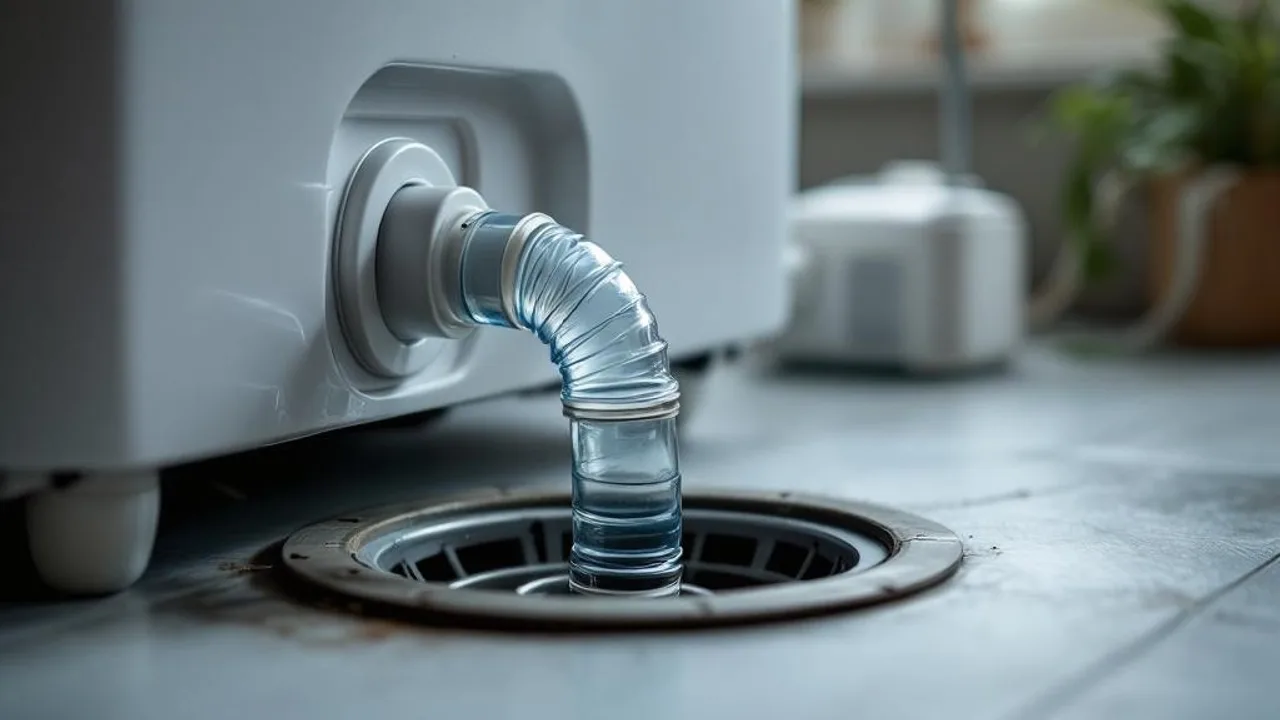
A 50-pint unit fills its internal tank in 6-10 hours during late flower. If you're not home to dump it, the unit shuts off and RH climbs — exactly when you least want that. Every grow room dehumidifier should have continuous drainage.
Gravity drain
If the unit sits above a floor drain, sink, or bucket, attach a 5/8" vinyl hose to the drain port and run it downhill. Simplest, most reliable.
Condensate pump
If drainage needs to go up or across a long horizontal run, install a small condensate pump (~$40). It triggers on a float switch and pushes water anywhere you want.
Backup bucket
Always have a secondary catch bucket under the pump or drain junction. Hoses kink, pumps fail, and you don't want 50 pints on your grow room floor.
Drying Room Dehumidifier Sizing
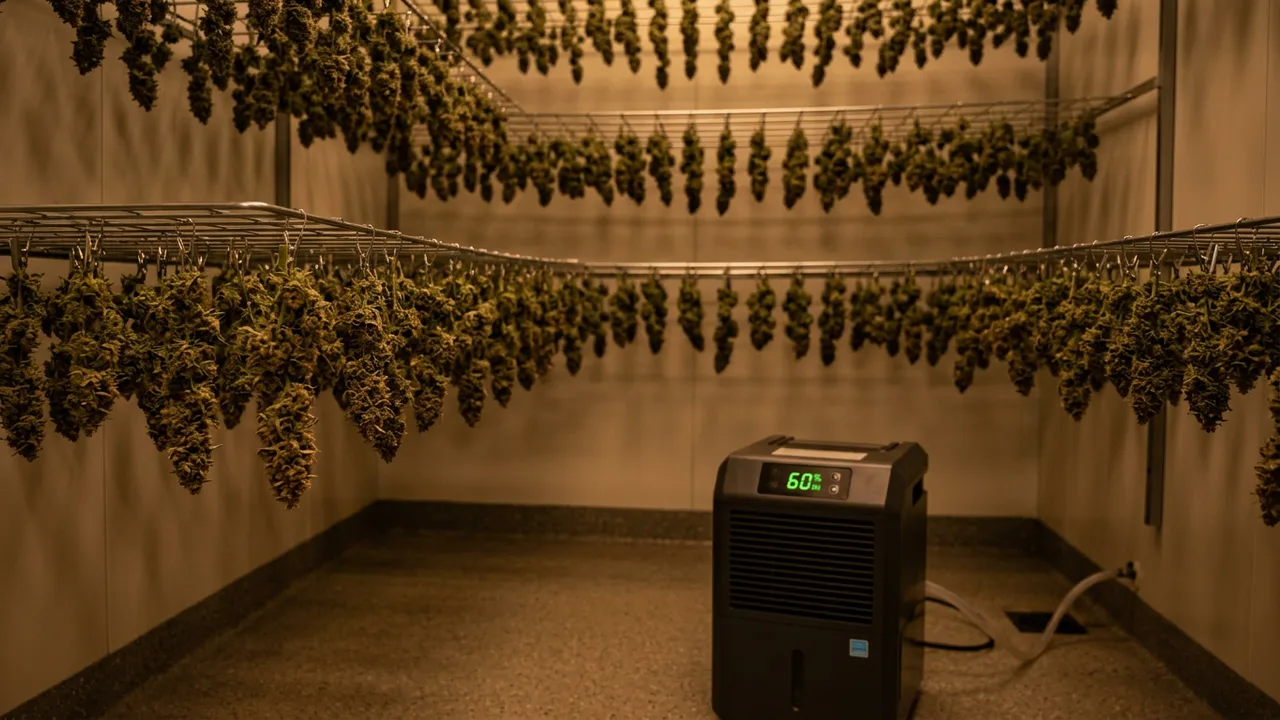
Post-harvest, your load changes completely. Plants are cut down, so transpiration is zero — but wet buds are releasing water through evaporation at a high rate for the first 3-5 days. A 1-lb harvest at ~75% water weight releases roughly 12 pints of water over the dry-down window.
Target 60% RH at 60-65°F for a slow 10-14 day dry [S11 framework adapted]. A 30-35 pint compressor handles most home-scale dries, but you need to keep the drying room cool — which is where desiccants shine. Pair this with our drying room setup guide for the full environmental picture.
In our 15+ years running grow rooms, the biggest drying mistake we see is oversizing the dehumidifier and driving buds below 55% RH on day 2. Fast exterior dry, locked-in interior moisture, and hay smell for life. For drying, undersize slightly and let the buds breathe down to target over 10+ days.
Matching the Dehumidifier to Your Controller
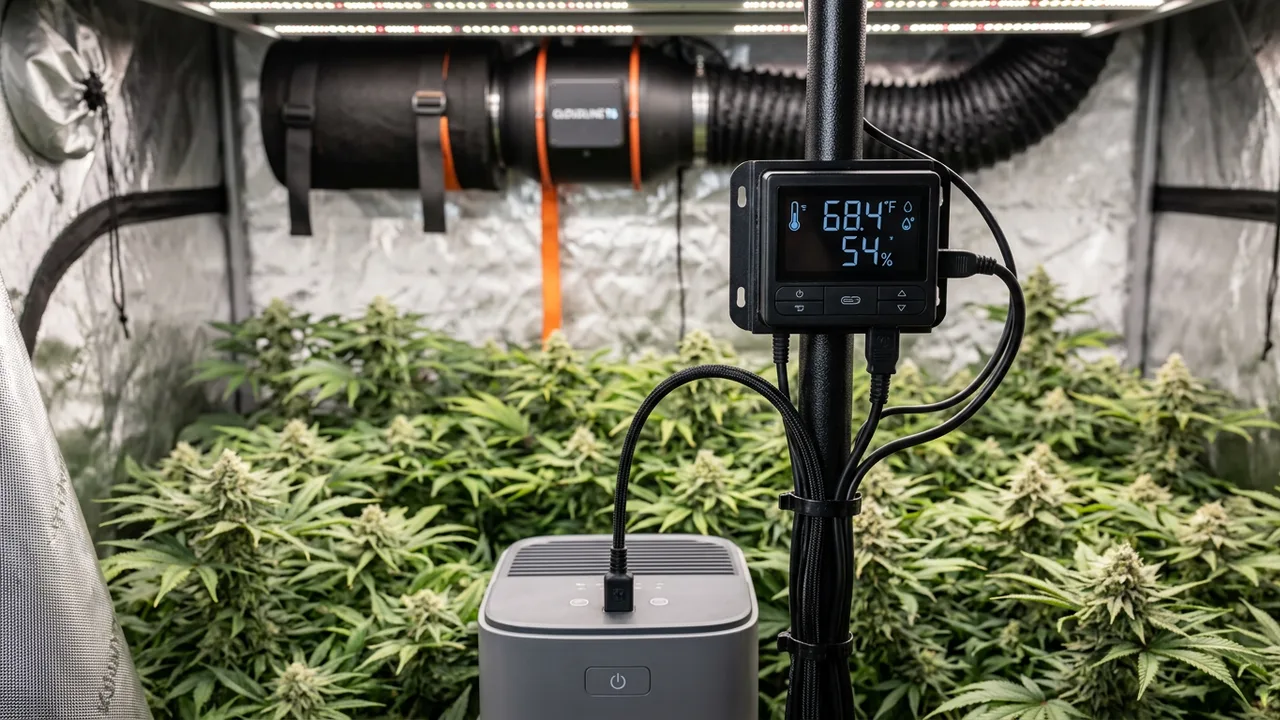
Cheap consumer dehumidifiers have a built-in humidistat that clicks on at a set RH. That's fine — until you realize the sensor sits next to the exhaust vent and reads the dry air the unit just produced. Better setups use an external controller (Inkbird, AC Infinity Controller 69/76, Trolmaster) that reads canopy-level RH and switches the dehumidifier outlet on/off.
Key features to look for when shopping:
- Auto-restart after power failure (critical for 12-hour lights-off cycles)
- Continuous drain port, not just a tank
- External humidistat compatibility or manual "always on" mode
- AHAM-verified pint rating (not just the marketing number)
- Low-temp operation down to 41°F if used for drying
Common Humidity Problems and Visual Signs
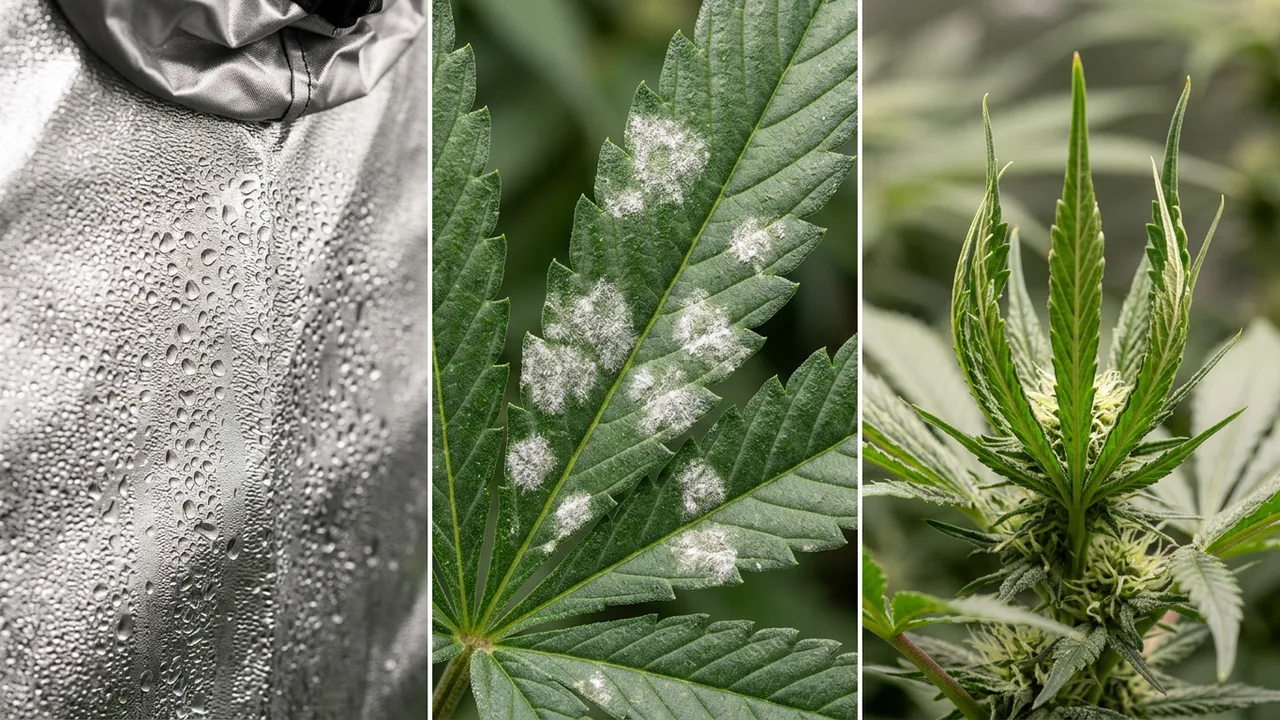
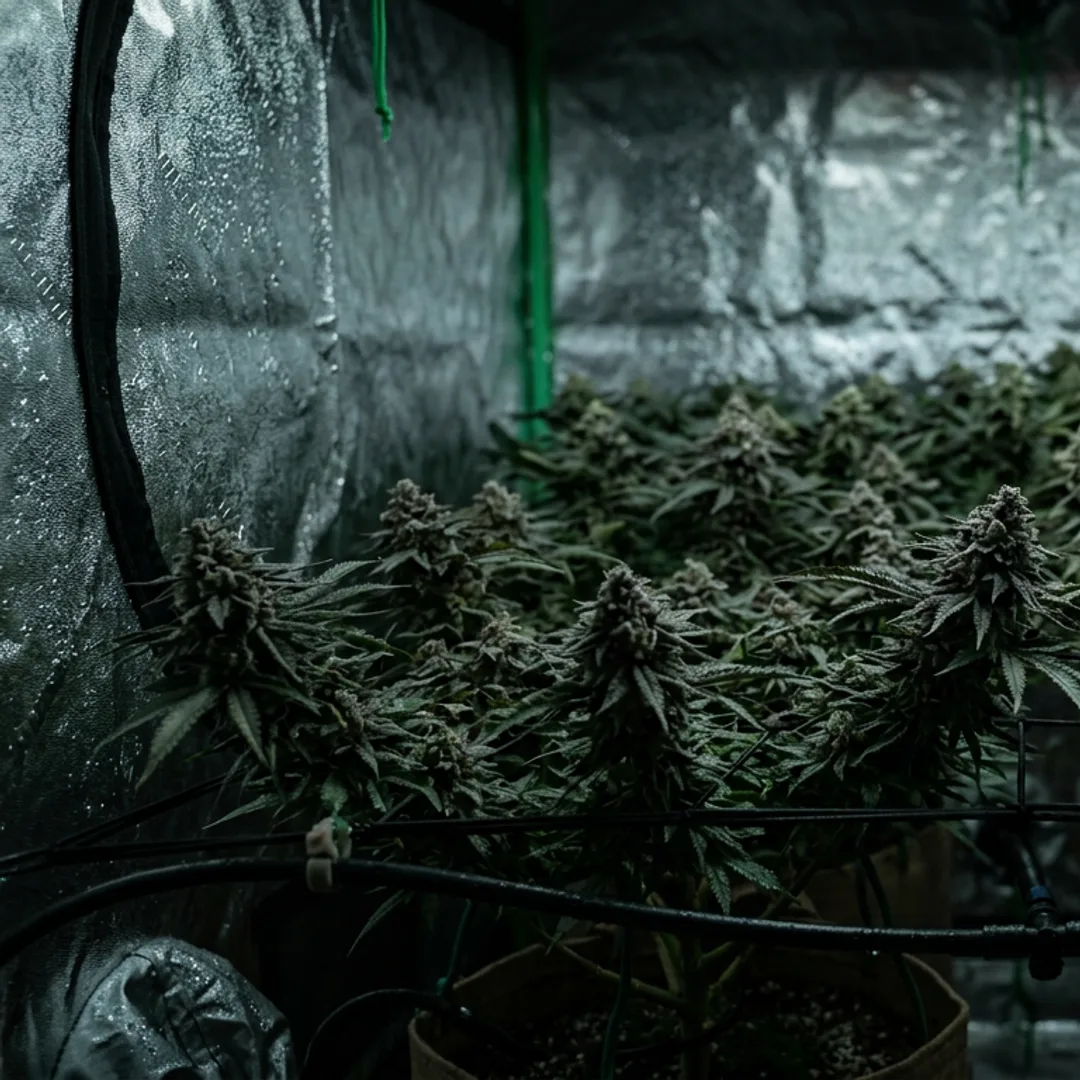
- Condensation on tent walls at lights-off: RH is already above 65%. Your unit can't keep up with the night-time temperature drop.
- White powder on fan leaves: Powdery mildew. Humidity has been over 60% for too long .
- Brown, wilted interior of dense buds: Active bud rot. Cut affected colas immediately, bag them, and audit your dehumidifier capacity for next run.
- Dehumidifier runs 24/7 and never shuts off: Undersized. Add a second unit or upgrade capacity by 30-50%.
- Leaves curling up (praying): Often a VPD issue — air is too dry relative to leaf temp. Check VPD, not just RH.
Frequently Asked Questions
What size dehumidifier for a 4x4 grow tent?
A 30-40 pint unit handles veg and early flower in a 4x4 with 4 plants. Size up to 50-70 pints for peak and late flower, especially if you're growing 6+ plants or high-yielding strains. Always verify the AHAM-rated capacity, not the marketing number.
How many pints per day does a flowering cannabis plant produce?
A mature flowering plant transpires roughly 2.1 pints (1 liter) of water per day per pound of expected dry bud yield. This is a working industry estimate — actual output depends on temperature, light intensity, strain, and airflow .
What RH should I target in flower vs veg?
Veg runs 50-70% RH; flower drops to 40-50% RH . Pull RH down in stages through flower — 50% early, 45% mid, 40% in the last two weeks to minimize bud rot risk.
Compressor or desiccant dehumidifier for cannabis?
Compressor for flowering tents at 65-85°F — more efficient and cheaper. Desiccant for cold drying rooms under 65°F or unheated basement grows. Most home growers only need a compressor.
Why does my RH spike at lights-off?
A ~10°F day-to-night temperature drop is desired for plant metabolism , but cooler air holds less water vapor. The same moisture load now reads 15-20% higher on your humidity meter. Size your dehumidifier for the coldest point of the lights-off cycle, not the daytime average.
Should the dehumidifier sit inside or outside the tent?
Outside whenever possible. Compressor units dump heat into whatever room they sit in — keeping them outside the tent and ducting dry air in prevents a thermal runaway in late flower. Small tents may have no choice, in which case upgrade exhaust CFM to compensate.
Do I need a dehumidifier for drying?
Almost always, yes. A 1-lb harvest releases about 12 pints of water over 10-14 days of drying, and without control the room will climb above 70% RH and grow mold. Target 60% RH at 60-65°F with a 30-35 pint unit for home-scale dries.
Sources & References
This article was researched and fact-checked using 1 verified sources including 1 community resource.
- How to Control Temperature and Humidity In Your Indoor Grow Room – Sylvane — sylvane.com/blogs/knowledge-center/how-to-control-humidity-in-your-indoor-growing-space [Community]