If you've ever stared at a hygrometer reading 60% RH and wondered whether your canopy is thriving or suffocating, you've run into the exact problem a VPD chart for cannabis was built to solve. Vapor Pressure Deficit measures the drying power of your grow room air — the invisible pull that moves water (and dissolved nutrients) from root to leaf to atmosphere. Relative humidity alone can't tell you that story, because the same 60% RH behaves completely differently at 75°F versus 85°F. This guide gives you a printable, stage-by-stage chart, the leaf-temperature offset math most growers skip, and the troubleshooting framework we use in our own rooms.
What Is a VPD Chart and Why Cannabis Growers Use It
A VPD chart is a lookup grid that converts temperature and relative humidity into a single number — vapor pressure deficit, measured in kilopascals (kPa) — so you can tell at a glance whether your environment is pulling moisture out of your plants at the right rate for their current growth stage. Vapor Pressure Deficit is the difference between the moisture currently in the air and the maximum moisture the air could hold at saturation. That gap is what drives transpiration, and transpiration is what drives nutrient uptake.
As Grow Weed Easy puts it plainly: "VPD tells you how strongly the air is 'pulling' water out of the cannabis plant's leaves." Too little pull and your plants stagnate, roots sit in moist media, and pathogens thrive. Too much pull and stomata slam shut, nutrient uptake stalls, and leaves curl.
RH alone is a misleading metric. The same 60% RH produces 1.17 kPa VPD at 75°F but 1.59 kPa at 85°F — a 36% difference. That's the entire reason a VPD chart exists.
Why VPD Beats RH-Only Targets
Most beginner guides say "keep humidity around 60% in veg." That's roughly true — until you change the temperature. VPD corrects for temperature automatically by calculating how much more water the air could hold before saturating. When a commercial VPD reference like the one from Dimlux explains the underlying physics, it's describing exactly this: "Vapor Pressure Deficit is the difference between the Saturated Vapor Pressure SVP and Relative Humidity. Saturated Vapor Pressure is the maximum amount of moisture the atmosphere can hold according to its temperature."
How VPD Is Calculated (Temperature + Humidity + Leaf Temp)
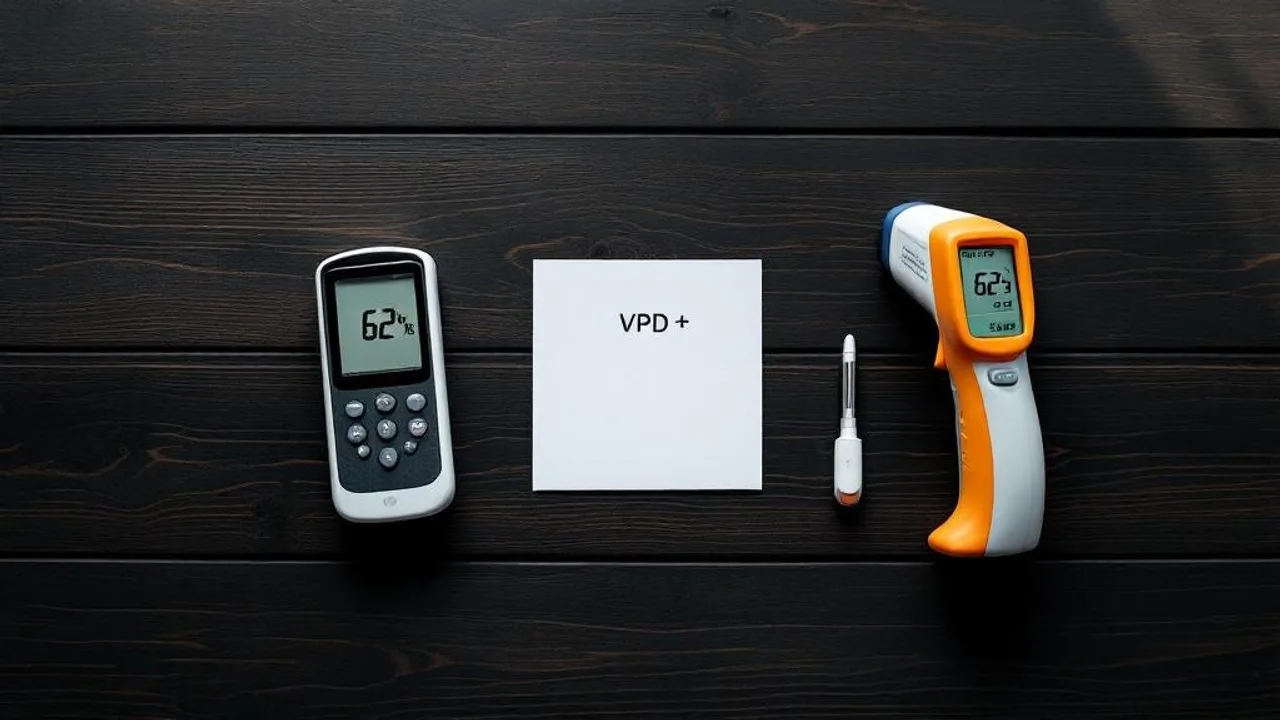
Calculating VPD requires two primary measurements — air temperature and relative humidity — with leaf temperature factored in for the more precise leaf-to-air VPD that actually matters to your plants. The conceptual formula is:
VPD = SVP(leaf temp) − (SVP(air temp) × RH%)
SVP is Saturated Vapor Pressure — the maximum water vapor air can hold at a given temperature. You don't need to calculate this by hand. Use our VPD calculator, plug in your three numbers, and you'll get the kPa value in seconds.
The Three Inputs That Matter
- Air temperature at canopy height (not at the top of the tent)
- Relative humidity at canopy height
- Leaf surface temperature, measured with an infrared thermometer
Instruments We Actually Recommend
- Digital hygrometer with data logging — spot readings lie; 24-hour curves tell the truth.
- Infrared (IR) thermometer — the single cheapest upgrade to your grow room.
- Canopy-height sensor — measure where the leaves are, not where the controller sits.
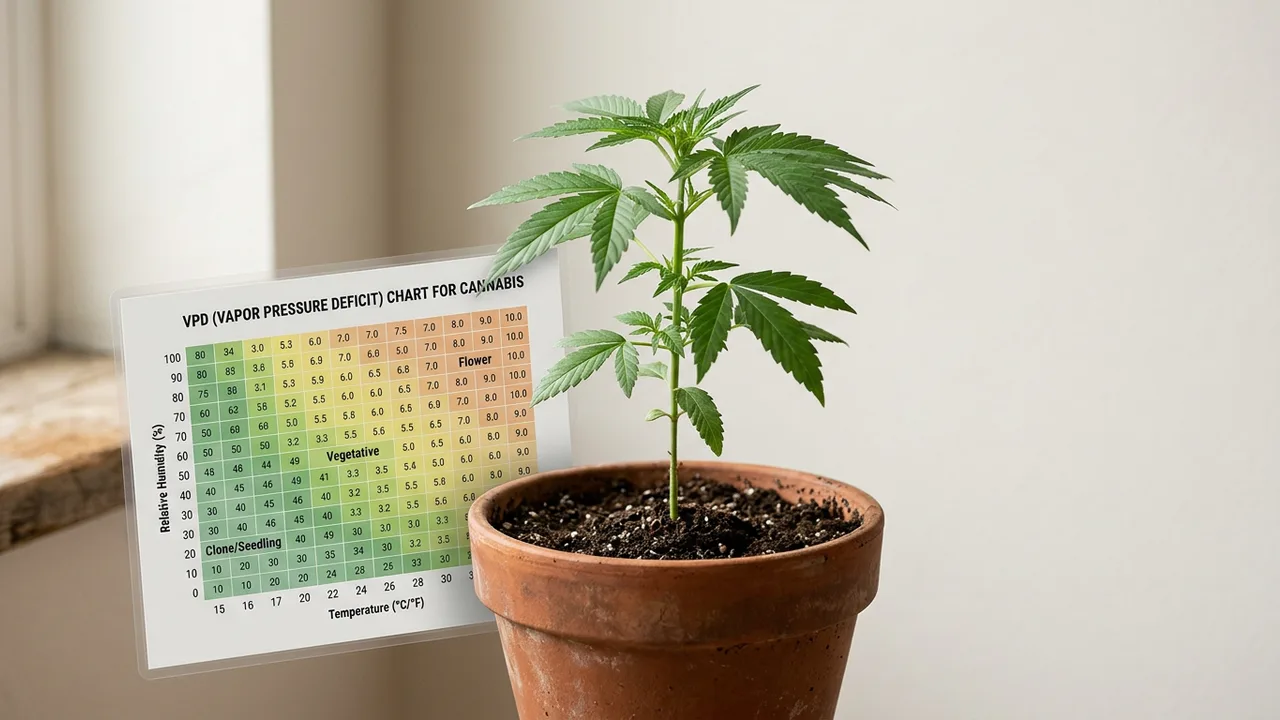
The Printable VPD Chart — How to Read It
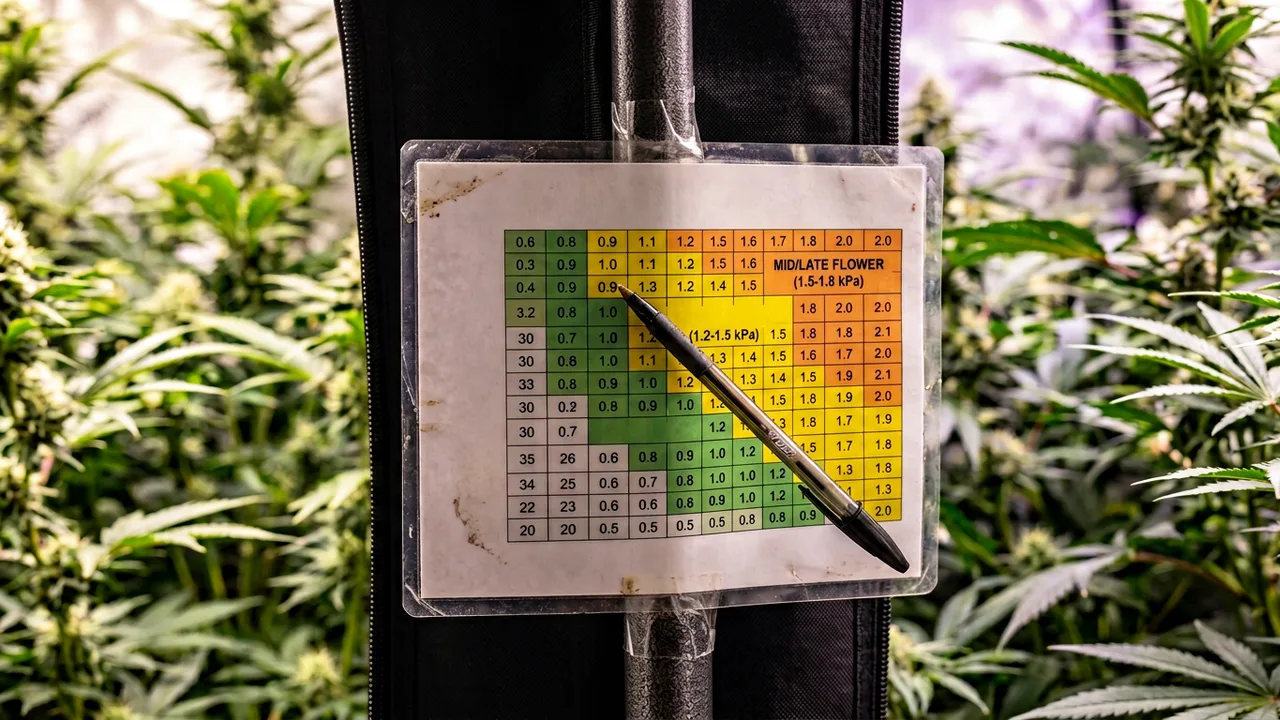
This chart uses air temperature across the top and relative humidity down the side. Values are approximate kPa assuming leaf temp is roughly equal to air temp. For accuracy, subtract 2–5°F from the temperature column to account for leaf cooling (we'll cover that in detail below).
| Temp / RH | 40% | 50% | 60% | 70% | 80% |
|---|---|---|---|---|---|
| 65°F | 1.34 | 1.12 | 0.89 | 0.67 | 0.45 |
| 70°F | 1.56 | 1.30 | 1.04 | 0.78 | 0.52 |
| 75°F | 1.76 | 1.47 | 1.17 | 0.88 | 0.59 |
| 80°F | 2.09 | 1.74 | 1.39 | 1.05 | 0.70 |
| 85°F | 2.38 | 1.99 | 1.59 | 1.19 | 0.79 |
| 90°F | 2.86 | 2.38 | 1.91 | 1.43 | 0.95 |
Color-code your target bands on a printed copy:
- 0.4–0.8 kPa = Seedling / Clone / Early Veg
- 0.8–1.2 kPa = Vegetative / Early Flower
- 1.2–1.6 kPa = Mid to Late Flower
Print the chart. Laminate it. Tape it to your tent pole. You will reference it more than any other tool in your grow kit.
Optimal VPD Ranges by Growth Stage (2026 Updated)
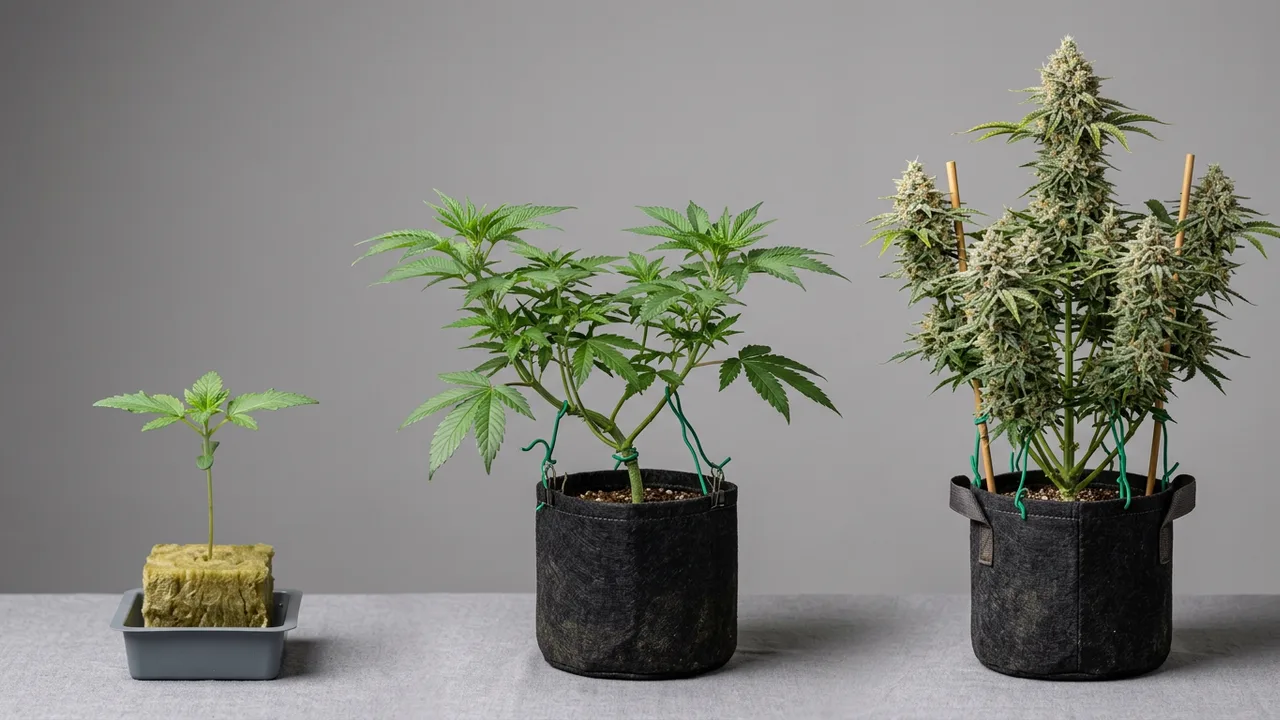
Different sources band the stages slightly differently, so we'll present the ranges most growers converge on and flag where commercial HVAC guides disagree.
Seedlings & Clones: 0.4–0.8 kPa
Young plants and cuttings have underdeveloped root systems that can't replace water fast enough under strong transpiration pressure. The propagation/seedling/clone VPD target is 0.4–0.8 kPa. Environmentally, that means roughly 70–80% RH at 70–77°F. Humidity domes exist precisely to hold this low-VPD microclimate. For a full seedling care walkthrough, see our seedling care guide.
Vegetative Stage: 0.8–1.2 kPa
The vegetative sweet spot is 0.8–1.2 kPa, hit at 55–70% RH and 75–82°F. Commercial HVAC references narrow the ideal vegetative range slightly to 0.8–1.1 kPa. Either framing works — aim for roughly 1.0 kPa as the bullseye and you'll drive fast, stress-free growth with strong branching. Our vegetative stage guide covers the full environmental picture.
Early Flower: 1.0–1.2 kPa
The flowering stage targets a VPD range of approximately 1.0–1.5 kPa. Early flower (stretch phase) sits at the lower end — around 1.0–1.2 kPa — because the plant is still building structure and hasn't closed canopy yet.
Mid to Late Flower: 1.2–1.6 kPa
Mid and late flower target 1.2–1.6 kPa, delivered at 45–60% RH and 75–85°F. This higher VPD drives two things you absolutely need: strong transpiration to feed fat, hungry buds, and a drier microclimate inside dense flower clusters that prevents mold. Anything above 1.6 kPa pushes into the over-transpiration danger zone.
Some charts use a simpler 3-stage progression: Propagation/Early Veg 0.8→1.0 kPa, Late Veg 1.0→1.2 kPa, Mid Flower 1.2→1.6 kPa. Both framings describe the same progression — a steady ramp from low to high VPD as the plant matures.
Stage-by-Stage Temperature and Humidity Targets
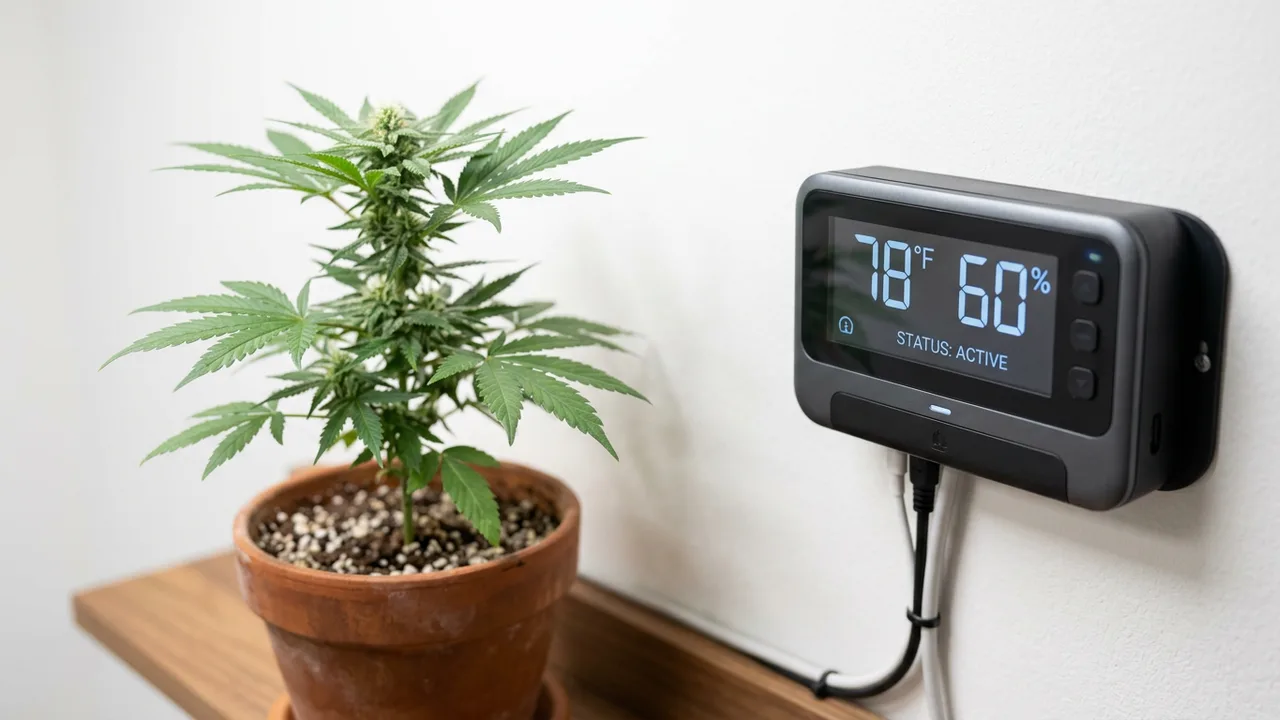
If you prefer working in temp and RH (and adjusting to hit VPD), here's the cleanest translation:
| Stage | Temp | RH | VPD Target |
|---|---|---|---|
| Seedling / Clone | 70–77°F | 70–80% | 0.4–0.8 kPa |
| Vegetative | 75–82°F | 55–70% | 0.8–1.2 kPa |
| Early Flower | 75–82°F | 50–60% | 1.0–1.2 kPa |
| Mid/Late Flower | 75–85°F | 45–60% | 1.2–1.6 kPa |
Ranges from . For a cross-reference on humidity-specific setup, see our cannabis humidity control guide.
Why Leaf Temperature Matters (and How to Measure It)
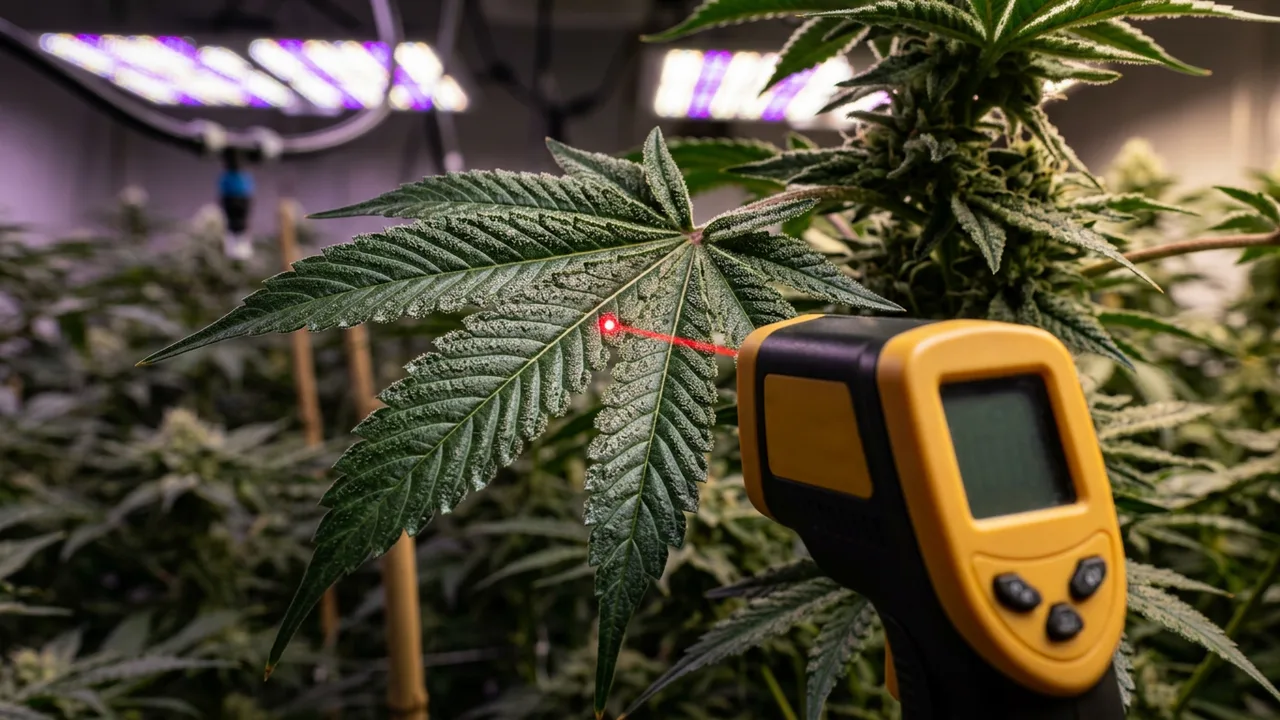
Here is the mistake almost every home grower makes: they calculate VPD using air temperature. Leaves don't run at air temperature. Leaves transpire, and transpiration cools the leaf surface — typically 2–5°F below ambient. That means using air temperature alone gives you a falsely low VPD reading. Your plants are actually experiencing stronger drying pressure than your chart suggests.
"Point an infrared thermometer at a mature fan leaf. Leaves run 2–5°F cooler than ambient air because of transpiration cooling — using air temperature alone gives a falsely low VPD reading." — Gorilla Grow Tent Team
How to Measure Leaf Temp Correctly
Pick a mature fan leaf
Target healthy, fully expanded leaves at mid-canopy — not shaded lower leaves or small new growth.
Aim perpendicular to the leaf
Hold the IR thermometer 6–12 inches from the leaf surface, perpendicular to the blade. Angled readings pick up background heat.
Sample several leaves
Leaves directly under the light run hotter than leaves at the canopy edge. Average 3–5 readings.
Recalculate VPD with leaf temp
Plug leaf temp into the leaf-temp field of our VPD calculator. You'll often find your "1.0 kPa" room is actually running 1.2–1.3 kPa at the leaf.
Common VPD Mistakes and Danger Zones
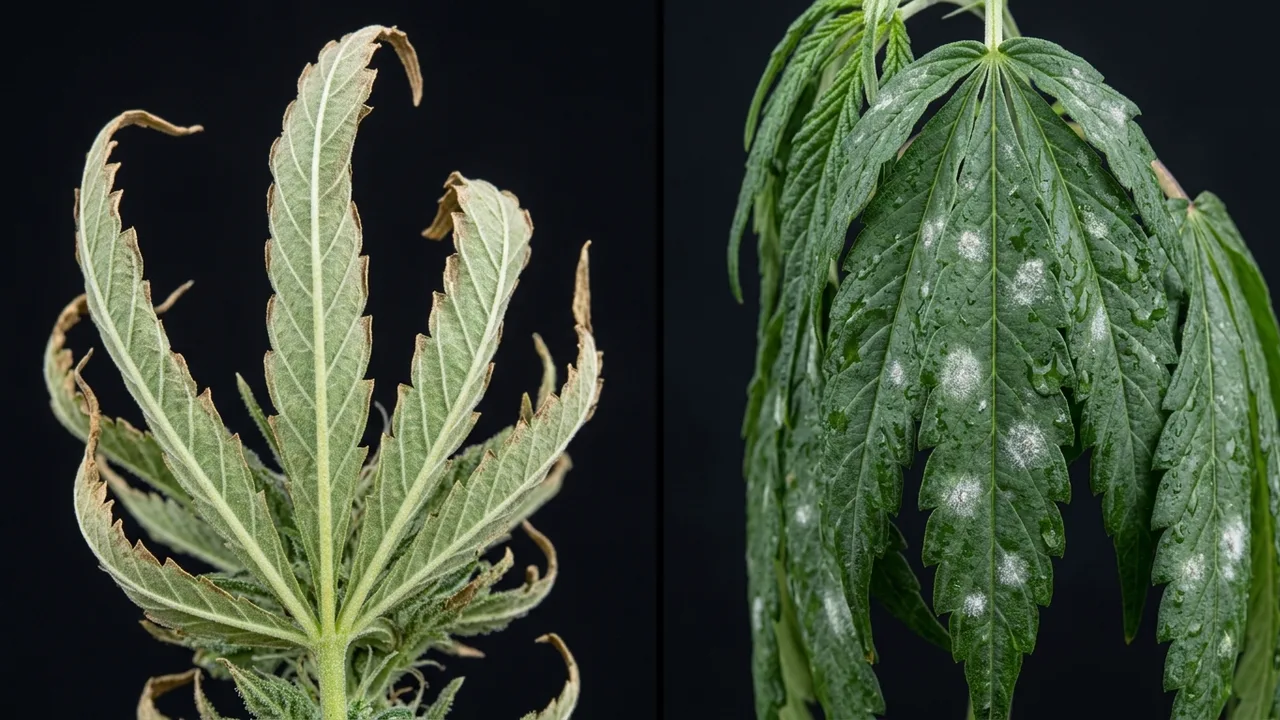
VPD below 0.4 kPa puts you in the under-transpiration danger zone, and VPD above 1.6 kPa puts you in the over-transpiration danger zone. Most grow problems we troubleshoot trace back to living in one of these two extremes for too long.
Under-Transpiration (Low VPD, High Humidity)
Symptoms: slow growth, drooping leaves, calcium deficiency symptoms, powdery mildew, and — most dangerously — botrytis (bud rot). Bud rot is primarily caused by low VPD conditions: high humidity combined with relatively low temperature, typically when RH stays above 60–70% during flowering. See our full mold prevention guide for rescue protocols.
If your flower room is holding 65%+ RH at 72°F, you're sitting under 0.8 kPa — prime territory for botrytis. Drop RH, raise temp, or both.
Over-Transpiration (High VPD, Low Humidity)
Symptoms: curled/tacoing leaves, leaf edges folding up, wilting despite wet media, stunted growth, and nutrient burn-like symptoms even at moderate EC. When VPD exceeds 1.6 kPa, stomata close defensively, photosynthesis drops, and nutrient uptake crashes.
Troubleshooting Checklist
- Leaves tacoing upward → VPD too high, raise RH or lower temp
- Leaves drooping with wet media → VPD too low, raise temp or dehumidify
- Interveinal chlorosis despite good feed → transpiration pull insufficient, check VPD
- Mold spots on colas → low VPD for days, improve airflow and cut RH
- Stunted growth across canopy → VPD extremes, verify leaf temp not just air temp
Chart vs. Real-World Practice — When to Trust Experience
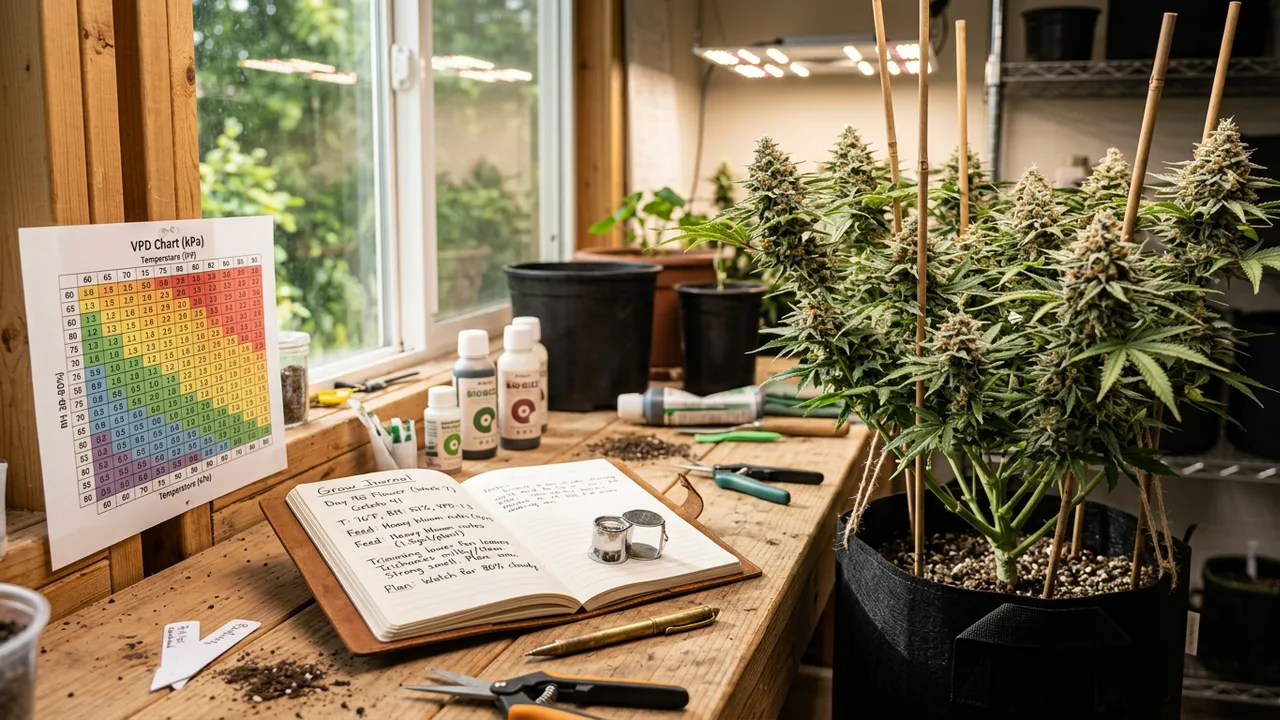
Here's the honest truth: VPD charts are a precision tool, but they aren't gospel. Grow Weed Easy makes a case worth hearing:
"Cannabis rewards you for keeping your environment in the right ranges 70-85°F/20-30°C, 40-60% RH at first, and 50% RH or less after buds form if possible. That might not result in the 'correct' VPD, according to whatever chart you're looking at, for whatever plant it was tested on, but this proven range is what home growers have found produces the best weed growth and bud density/potency/smell/yields." — Grow Weed Easy
Our take: use the chart as your starting point and observation as your fine-tuning. If your plants look healthy at 1.4 kPa in mid-flower but a chart says "stress zone," trust the plants. If your plants look stressed at a "perfect" 1.0 kPa, recheck leaf temp — you're likely measuring wrong.
Worked Examples: Veg, Flower, and CO2 Rooms
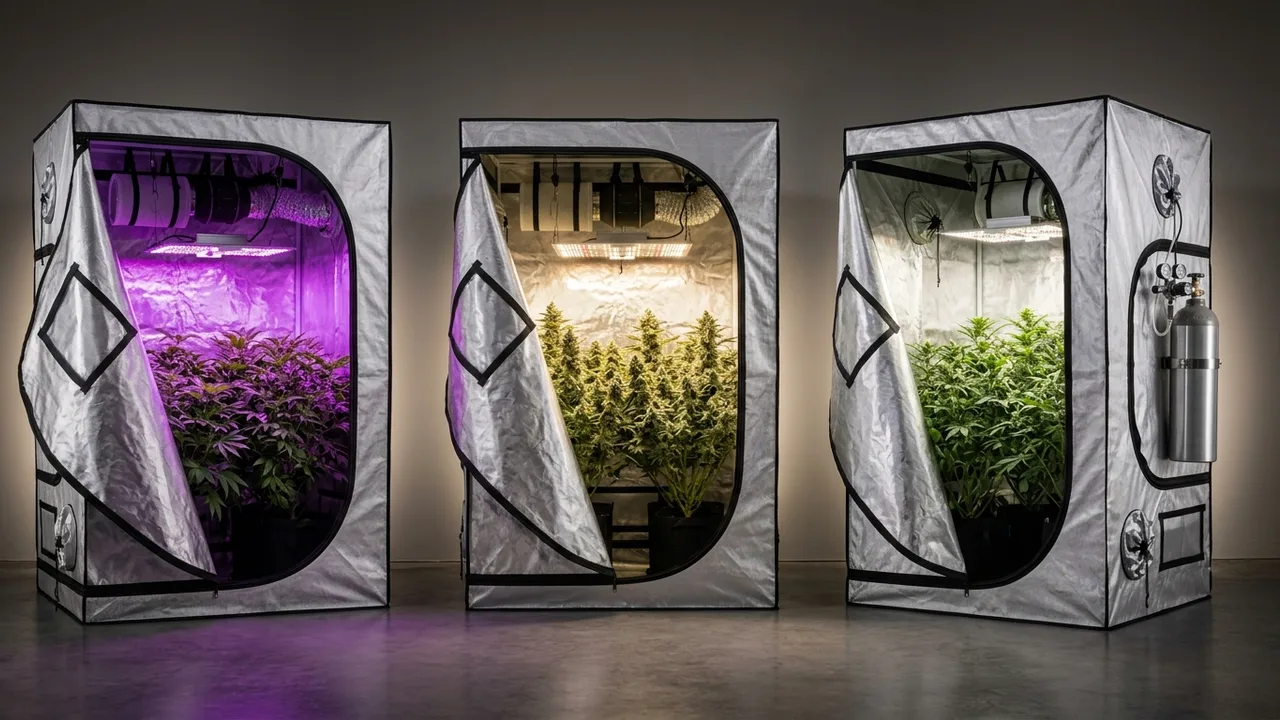
Example 1: Veg Room at 75°F
Setpoint: 75°F, 60% RH → 1.17 kPa VPD. That's just above the ideal veg range — fine for late veg, slightly high for early veg. Drop RH only if plants show stress; otherwise this is a productive setpoint. Using 70°F / 60% RH instead yields ~0.99 kPa, a textbook veg target.
Example 2: Late Flower with Dense Indica Buds
Advanced Nutrients recommends at 77°F canopy temperature in late grow phase, target 65–80% RH, choosing the lower end (around 65%) for dense Indica buds to minimize botrytis risk. Strains like Northern Lights x Big Bud, OG Kush, and Purple Kush produce exactly the kind of rock-hard colas that demand the lower-humidity end of that range.
Example 3: CO2-Supplemented Flower Room
When running CO2 with 84°F leaf temperature, target 70–85% RH, approaching the lower end if buds are fat and dense. Higher temps raise the SVP ceiling, so higher absolute humidity is needed to stay in the VPD sweet spot. If you're considering CO2, read our CO2 supplementation ROI guide first.
The Commercial HVAC Angle
Identical ideal VPD ranges can be achieved at different temperature and RH combinations, meaning HVAC setpoints of 70°F/60% RH versus 75°F/65% RH can produce similar plant performance but dramatically different HVAC size, upfront cost, and energy use. At commercial scale, picking the right combination isn't just horticulture — it's a six-figure capital decision.
Strains That Reward Tight VPD Control
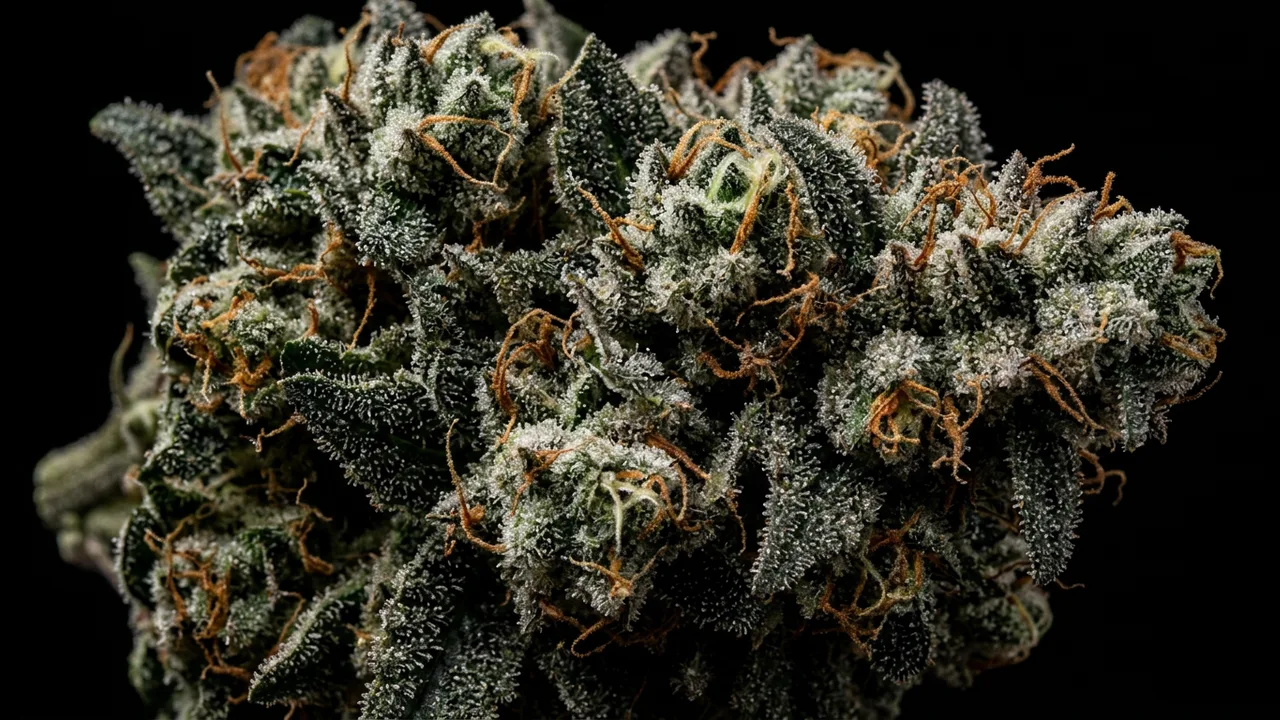
Any strain benefits from dialed VPD, but dense-bud, mold-prone genetics reward it most. In our trials, these varieties showed the biggest yield and quality jump when we moved from RH-only targeting to true VPD control:
- White Widow — classic dense-bud hybrid, 25% THC
- Sour Diesel — sativa-leaning, loves 1.3–1.5 kPa mid-flower
- Papaya — 25% THC, heavy trichome loading when transpiration is dialed
- Quantum Kush — 30% THC, rewards disciplined late-flower VPD
- Blue Magoo — rock-hard colas that punish low-VPD rooms
Other well-known commercial strains that demand tight VPD include Gorilla Glue #4, Wedding Cake, Gelato, Runtz, and Zkittlez — all dense, terpy genetics where mold risk scales with bud density. Every seed we ship is covered by our germination guarantee.
Building Your VPD Workflow
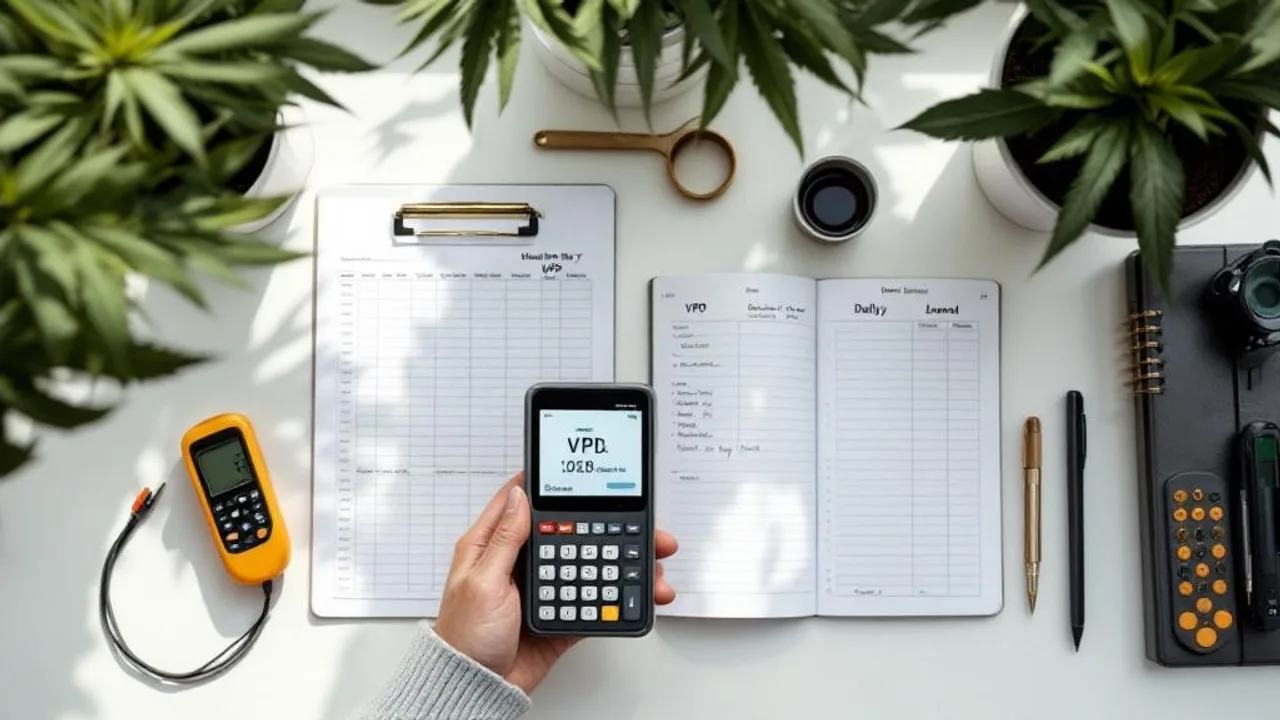
Here's the exact workflow our cultivation team uses in every room:
Measure leaf temp daily
IR thermometer, 3–5 leaves, averaged.
Log air temp and RH
Canopy-height sensor, 24-hour data.
Calculate true VPD
Use our VPD calculator with leaf temp, not air temp.
Compare to stage band
0.4–0.8 / 0.8–1.2 / 1.2–1.6 kPa depending on stage.
Adjust temp OR RH — not both at once
Change one variable, wait 24 hours, reassess.
Observe the plant
Chart first, plant second. If plants disagree with chart, trust the plants.
Frequently Asked Questions
What VPD should I run for cannabis?
Depends on stage: 0.4–0.8 kPa for seedlings/clones, 0.8–1.2 kPa for veg, 1.0–1.2 kPa for early flower, and 1.2–1.6 kPa for mid to late flower. Use leaf temperature, not air temperature, for the most accurate reading.
How do I calculate VPD for my cannabis grow?
You need three inputs: air temperature, relative humidity, and leaf temperature. VPD = SVP(leaf temp) − (SVP(air temp) × RH%). Use our VPD calculator to avoid the manual math.
How much cooler is leaf temperature than air?
Leaves typically run 2–5°F cooler than ambient air due to transpiration cooling. Measure with an infrared thermometer aimed at a mature fan leaf.
Why does RH alone not tell me what I need?
The same RH produces very different VPD values at different temperatures. 60% RH yields 1.17 kPa at 75°F but 1.59 kPa at 85°F — a 36% difference. Temperature is half the equation.
Can I ignore VPD and just manage temp and RH?
Many home growers do — 70–85°F with 40–60% RH (50% or less after buds form) has produced great results for decades. But VPD gives you a single precision number that removes guesswork, especially in dense-bud flowering.
What VPD causes bud rot?
Bud rot is primarily caused by low VPD conditions — typically when RH stays above 60–70% during flowering at relatively low temperature. Keep flower-room VPD above 1.0 kPa and improve airflow to minimize risk.
Should I adjust VPD when running CO2?
Yes. With CO2 and higher leaf temps (around 84°F), target 70–85% RH, leaning toward the lower end for dense buds. Higher temperature raises the SVP ceiling, so absolute humidity needs to rise to stay in the VPD sweet spot.
Is there a printable VPD chart I can use?
Yes — the chart in this article is built to print. Screenshot the table, print on letter paper, laminate, and tape it inside your tent. Color-code the 0.4–0.8 / 0.8–1.2 / 1.2–1.6 kPa bands to match your stage.
Sources & References
This article was researched and fact-checked using 5 verified sources including 2 industry sources, 3 community resources.
- How To Use a VPD Chart For Cannabis Plants — advancednutrients.com/articles/cannabis-vapor-pressure-deficit-humidity [Industry]
- What is VPD and Why Do Cannabis Growers Care? | Grow Weed Easy — growweedeasy.com/vpd [Industry]
- Vapor Pressure Deficit - The Ultimate Guide - Dimlux Lighting - The Best Grow Lights — dimluxlighting.com/knowledge/blog/vapor-pressure-deficit-the-ultimate-guide-to-vpd [Community]
- VPD Chart for Grow Tents: Complete Guide with Printable Chart (2026) — gorillagrowtent.com/blogs/news/vpd-chart [Community]
- VPD Chart - Meaning & Application — spider-farmer.com/blog/vpd-chart-in-celsius-and-fahrenheit [Community]