Walk into a grow room with a spider mite problem and you can feel it before you see it — that sickly stippled yellowing on fan leaves, the faint webbing in the upper canopy, the creeping sense that your harvest window is shrinking by the day. Cannabis pest control isn't a single spray or a one-time treatment. It's a layered defense system that starts the moment seeds germinate and doesn't end until buds are in jars.
In over 15 years of cultivation across indoor tents, sealed commercial rooms, and outdoor gardens, we've learned that the growers who avoid infestations aren't luckier — they're running disciplined indoor growing protocols rooted in Integrated Pest Management (IPM). This guide walks through identification, organic treatments, flowering-stage spray safety, and the prevention habits that keep cannabis pests from ever getting a foothold.
Why Cannabis Pest Control Is Different From Any Other Crop
Cannabis is smoked, vaped, and ingested — meaning any pesticide residue goes straight into the lungs or bloodstream. Regulatory pesticide lists for cannabis are not based on cannabis-specific human health data, which raises the stakes for organic-first pest control .
Tomatoes get washed. Apples get peeled. Cannabis flower gets combusted and inhaled, which means residue on a bud is residue in your body. That single fact reshapes every pest decision a grower makes.
Research published in 2026 highlighted that pesticide residue testing lists required for cannabis are not grounded in cannabis-specific human safety data, and no pesticides have been specifically evaluated for human health safety when used on cannabis . A Canadian multiresidue study using an expanded 327-pesticide method found dramatically higher pesticide loads in illicit cannabis inflorescence compared to licensed samples — a reminder that the regulated market is far from perfect, and unregulated product can be genuinely dangerous.
Licensed cultivators in Massachusetts, for example, are required under 935 CMR 500.120(9) to use best practices that limit contamination from mold, fungus, bacterial diseases, rot, pests, non-compliant pesticides, and mildew . The regulation itself captures the spirit of IPM:
"The cultivation process shall use best practices to limit contamination including, but not limited to, mold, fungus, bacterial diseases, rot, pests, Pesticides not in compliance with 500.120(5) for use on Marijuana, mildew, and any other contaminant identified as posing potential harm." — Massachusetts Cannabis Control Commission, 935 CMR 500.120(9)
Integrated Pest Management (IPM): The Foundation of Clean Cannabis
IPM is the recommended framework for cannabis pest control, combining prevention, identification, and targeted control into a tiered response instead of reactive spraying . Think of it as defense-in-depth rather than a single wall.
Prevention
Sanitation, quarantine, environmental control, and resistant genetics. Most infestations are invited, not inevitable.
Identification & Monitoring
Sticky traps, magnification, and daily visual scouting. You can't treat what you can't name.
Targeted Control
Biological predators first, organic foliar sprays second, with escalation only if pressure demands it — and never during late flower.
The growers who skip step one end up stuck in step three forever. We've diagnosed countless rooms where the real problem wasn't the pest — it was a torn intake filter, a pair of garden shoes worn indoors, or clones sourced from a friend's infested tent.
Start with a plant diagnosis habit. Before you spray anything, run the symptoms through our plant diagnosis tool. Accurate pest identification on the first attempt is critical — misidentification lengthens remediation time and can worsen infestations .
Identifying Common Cannabis Pests (2026 Field Guide)
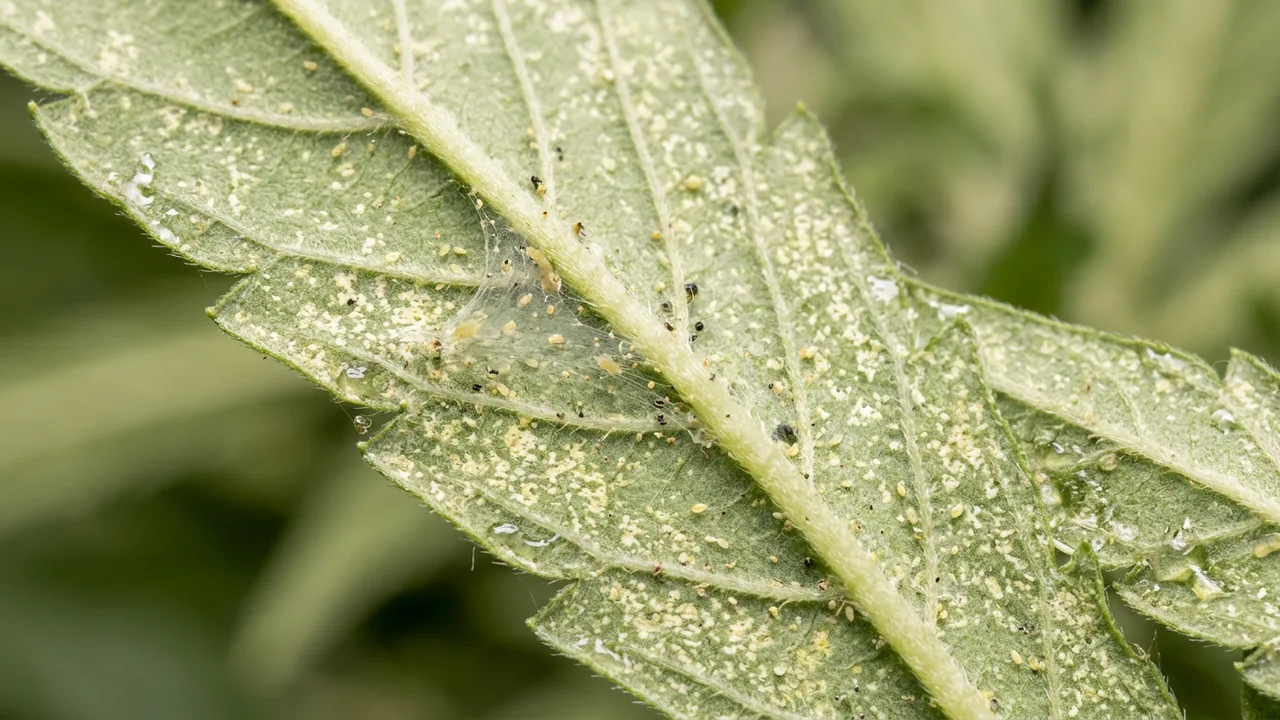
The experienced cultivation resource GrowWeedEasy notes that common cannabis pests include aphids, fungus gnats, thrips, spider mites, whiteflies, caterpillars, and inchworms, along with diseases like mosaic virus and powdery mildew . Each leaves a distinctive signature if you know where to look.
Spider Mites
The number-one cannabis room killer. Spider mites are arachnids, not insects, which matters because many insecticides don't touch them. Look for:
- Tiny yellow or white stippling dots on fan leaves
- Fine silk webbing in nodes and upper canopy
- Visible moving specks (red, yellow, or translucent) on leaf undersides under 30x magnification
- Rapid leaf bronzing and drop under heavy pressure
Thrips
Slender, elongated insects that rasp leaf surfaces and suck out the juices. The damage is unmistakable: silvery, papery patches with tiny black fecal dots scattered like pepper. Young thrips are pale and wingless; adults are darker with fringed wings.
Whiteflies
Shake a leaf and a cloud of tiny white moth-like insects flies up — that's whiteflies. They cluster on leaf undersides, secrete sticky honeydew, and invite sooty mold. Yellow sticky traps catch adults; nymphs stay glued to leaves.
Fungus Gnats
Small black flies buzzing around the topsoil. The adults are annoying but mostly harmless; the larvae are the real problem, chewing root hairs in wet media. If your medium stays soggy between waterings, you're building a fungus gnat nursery.
Aphids
Pear-shaped, soft-bodied insects — green, black, or gray — that cluster on new growth and stem tips. They reproduce asexually and explode in population overnight. Telltale signs: curled new leaves, sticky honeydew, and sometimes ants farming them.
Caterpillars & Inchworms
Outdoor and greenhouse growers' nightmare during late flower. They bore into buds, leaving frass (droppings) that trigger bud rot from the inside. By the time you see a chewed leaf, there's often a worm tunneling through a cola.
Accurate pest identification on the first attempt is critical; misidentification lengthens remediation time and can worsen infestations. A 30x jeweler's loupe or a phone-mounted macro lens is one of the cheapest, most effective tools in the room .
Indoor vs. Outdoor Pest Pressures: Know Your Battlefield
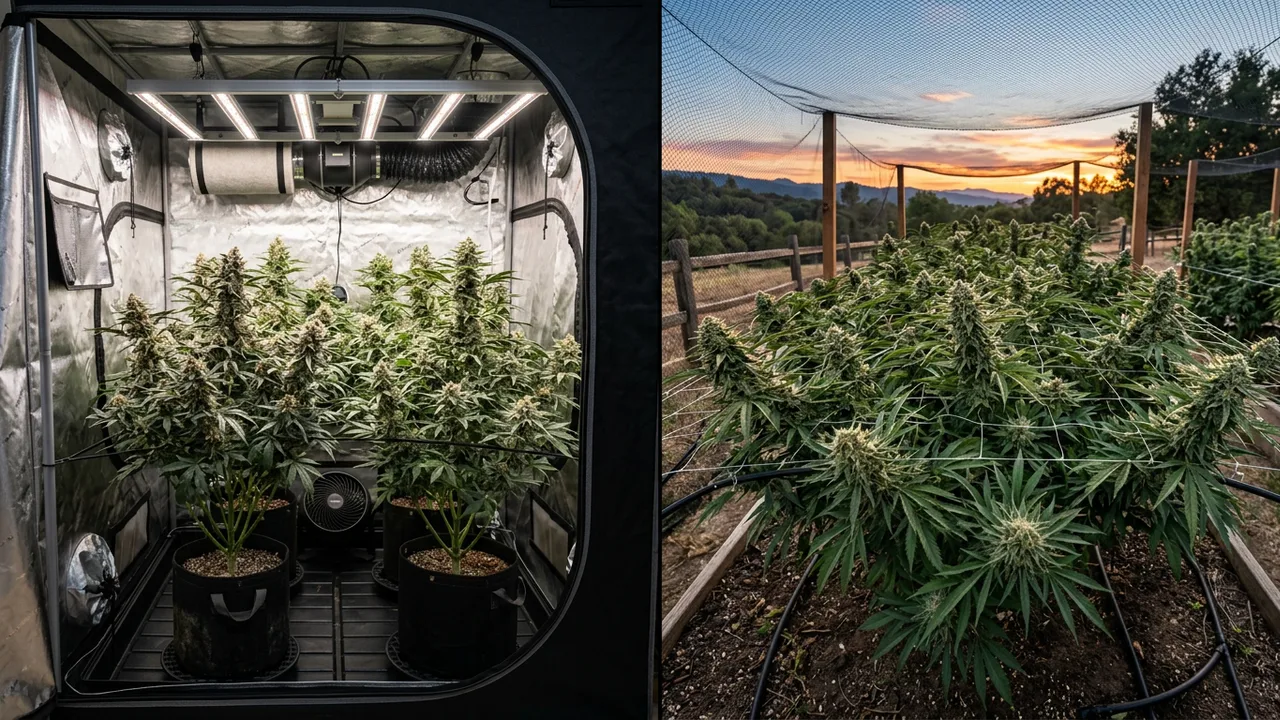
Cannabis pests differ by cultivation environment: high-humidity indoor grow rooms favor fungal pathogens, while outdoor crops are vulnerable to vertebrate pests like deer and mice and larger insect pests like stem borers .
The pest profile you'll face depends heavily on where you grow. We plan prevention strategies differently for sealed rooms, tents, greenhouses, and open-field grows because the vectors and ecology are genuinely different.
| Environment | Primary Pest Threats | Primary Disease Threats | Biggest Prevention Lever |
|---|---|---|---|
| Sealed indoor room | Spider mites, thrips, fungus gnats, russet mites | Powdery mildew, botrytis (if humidity creeps) | Quarantine + sanitation |
| Grow tent | Fungus gnats, spider mites, thrips | Powdery mildew in late flower | Airflow + VPD control |
| Greenhouse | Whiteflies, aphids, caterpillars, thrips | Botrytis, powdery mildew | Insect screens + beneficials |
| Outdoor | Caterpillars, grasshoppers, deer, mice, stem borers | Botrytis, leaf septoria, rust | Physical barriers + genetics |
If you're running a tent, dial in environmental ranges with our VPD calculator — keeping humidity in the sweet spot is arguably the single most powerful pest prevention move you can make indoors. For outdoor growers, mold and pest pressure rise together in late flower, so pairing this guide with our cannabis mold prevention guide is smart.
Organic Treatment Arsenal: What Actually Works
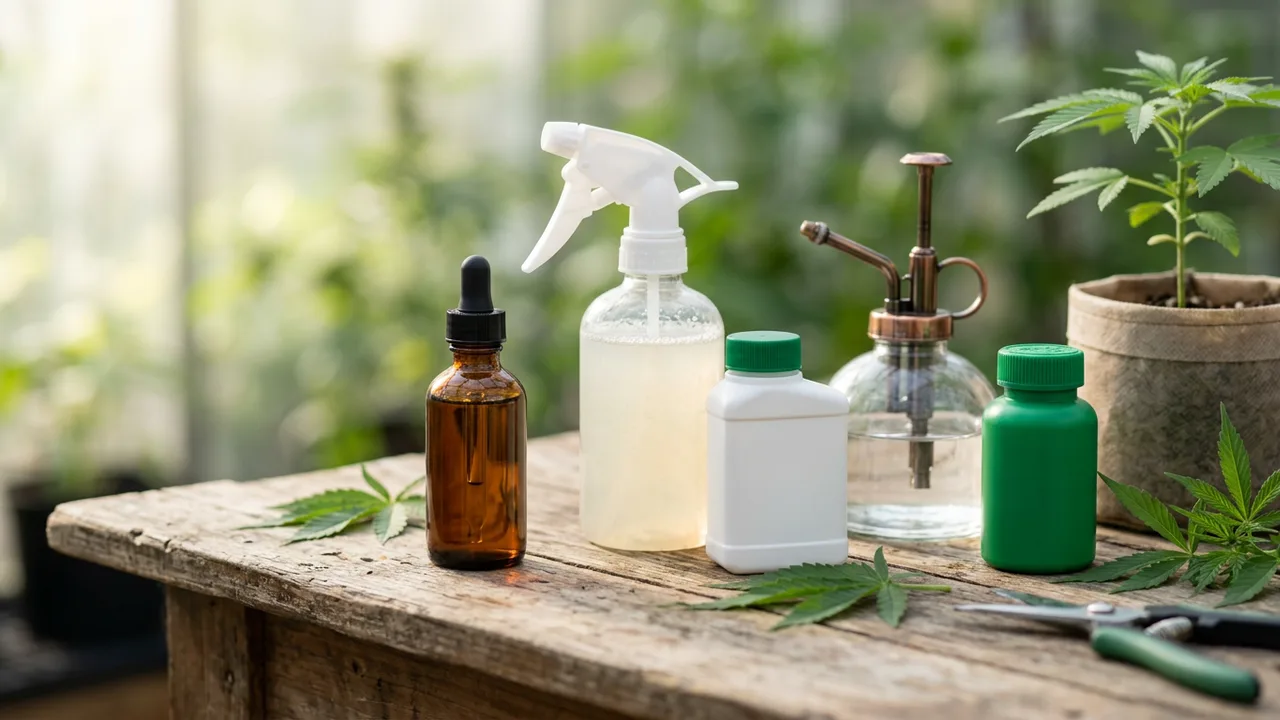
Once pests are confirmed, match the treatment to the pest — and the growth stage. Nothing destroys a harvest faster than the wrong spray on week 6 of flower.
Neem Oil
Cold-pressed neem oil disrupts insect hormones, feeding, and molting. It's broad-spectrum and forgiving on plants in veg, but it leaves a pungent residue that should never contact developing flowers. Our rule: neem in veg and early stretch only. Specific dosages and application intervals weren't verifiable from peer-reviewed cannabis sources, so we default to conservative label rates, early-morning or lights-off application, and stopping at least two weeks before flip if pest pressure is low.
Insecticidal Soap
Potassium salts of fatty acids that physically break down soft-bodied insect cuticles on contact. Kills aphids, whiteflies, thrips, and spider mites that it directly touches, but has no residual activity — which is actually a feature, not a bug, for cannabis. Coverage of leaf undersides is everything.
Spinosad
A fermentation-derived bacterial metabolite, spinosad is effective against thrips, caterpillars, and leafminers. It's OMRI-listed in many products and breaks down in sunlight within days. Best used during veg and early flower; rotate with other modes of action to avoid resistance.
Bacillus thuringiensis (Bt)
Bt is a naturally occurring soil bacterium whose proteins specifically disrupt caterpillar digestive systems — harmless to humans, pets, and beneficial insects. Bt spray is an effective treatment for caterpillars on cannabis and works best when applied with a mister for even leaf coverage . For outdoor growers heading into late flower, Bt is a non-negotiable in the toolkit.
BTI for Fungus Gnats
Bacillus thuringiensis israelensis (a different strain than caterpillar Bt) targets fungus gnat larvae in the soil. Drench the top 1–2 inches of media when gnats are confirmed, then pair with letting the medium dry between waterings to break the life cycle.
Flowering stage spray safety: Once pistils are forming, stop all foliar sprays except targeted biologicals like Bt or BTI. Oil-based sprays (neem, horticultural oils) trap residue in trichomes and ruin flavor, smoothness, and lab test results. If you're fighting pests in mid-flower, you've already lost the prevention battle — focus on minimizing damage to harvest.
Beneficial Insects: Let Nature Do the Killing
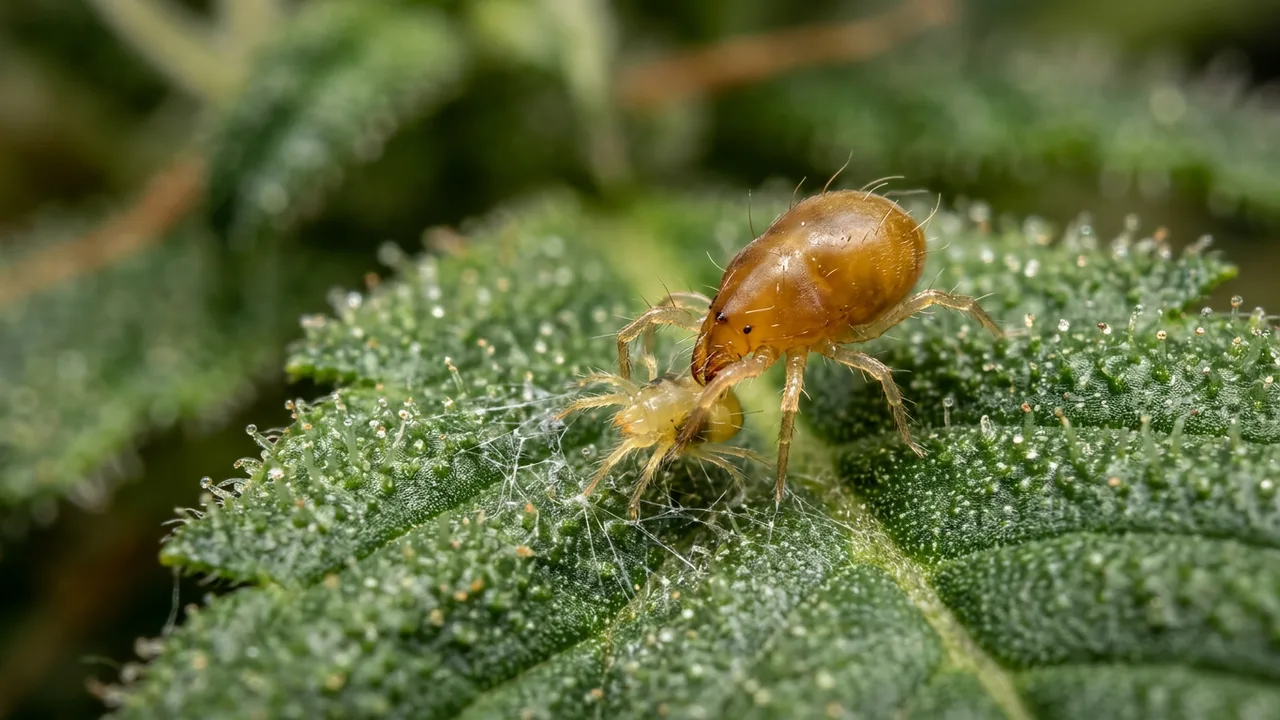
Biological control is the most elegant pest solution available to cannabis growers. Predatory insects and mites hunt specific pests relentlessly, reach places sprays miss, and leave zero residue on flowers. The challenge is timing and stage — most beneficials work best as preventive or early-intervention tools, not late-stage rescues.
- Phytoseiulus persimilis — predatory mite that hunts two-spotted spider mites
- Amblyseius swirskii — generalist predator for thrips and whitefly larvae
- Neoseiulus cucumeris — thrip-specific predator
- Lacewing larvae — voracious generalist predators of aphids and soft-bodied pests
- Ladybugs (Hippodamia convergens) — aphid specialists in greenhouses and outdoors
- Hypoaspis miles (Stratiolaelaps scimitus) — soil predator for fungus gnat larvae and thrip pupae
Quantitative efficacy and release-rate data for specific biological control agents in cannabis are not well-established in peer-reviewed literature, so follow supplier guidance for your specific pest pressure and room size. The key principle: release beneficials before you see a full-blown infestation, not during one.
Beneficials and foliar sprays are largely incompatible. If you release predatory mites, avoid sprays for at least 2–3 weeks. Commit to one strategy per pest event, not both.
Prevention: The Habits That Keep Pests Out
The cheapest, most effective cannabis pest control is the one that prevents introduction in the first place. Sanitation, quarantine, environmental control, and starting from clean genetics eliminate 80–90% of pest events before they start.
Start From Seed, Not Clones
Clones are the single biggest vector for spider mites, russet mites, and hop latent viroid entering cannabis rooms. Starting from feminized seeds delivers pest-free genetics with zero viroid or mite carryover. Strains like Northern Lights x Big Bud, White Widow, Super Skunk, and classic OG Kush have decades of grower feedback documenting their vigor and relative resistance to common pest pressure. Every seed we ship is backed by our germination guarantee.
Quarantine Every New Plant
No exceptions. New clones, mother plants, or returning vegging plants spend at least 10–14 days in a separate space with yellow sticky traps and daily inspection before entering the main garden. This one habit prevents more infestations than any spray ever will.
Sanitation Protocols
- Dedicated grow-room shoes or shoe covers
- Clean clothes before entering (no going from outdoor garden to indoor tent)
- 70% isopropyl on pruners between plants
- Wipe-down of walls, floors, and surfaces between cycles
- HEPA or MERV-13 filtration on intake air
- Bug screens on every opening
Environmental Control
Most indoor cannabis pests and pathogens thrive outside ideal VPD. Spider mites love hot, dry rooms (above 82°F, below 45% RH). Powdery mildew loves cool, humid rooms (below 70°F, above 65% RH). Dial in your tent or room using our VPD calculator and grow planner and you eliminate huge swaths of the pest spectrum without lifting a sprayer.
Scouting Routine
Yellow sticky traps above the canopy, blue sticky traps at soil level, and a daily 60-second eye on leaf undersides. If you see one pest, assume there are 100 you haven't seen yet. Detailed scouting thresholds specific to cannabis aren't well-documented in peer-reviewed literature, so err on the side of earlier intervention rather than later.
Keep a dated grow journal photo log. Weekly canopy shots under the same lighting make slow-building pest damage obvious — stippling that's invisible day-to-day jumps out in a seven-day time-lapse.
The Pesticide Residue Problem: Why This Matters for Patients
For medical patients — especially those with compromised immune systems or respiratory conditions — the pesticide residue question is not academic. Peer-reviewed analysis from 2026 specifically noted that pesticide residue testing lists required for cannabis are not based on cannabis-specific human health data, and no pesticides have been specifically evaluated for human health safety when used on cannabis .
That same body of research found, using an expanded 327-pesticide multiresidue method, that illicit cannabis inflorescence in Canada carried significantly higher pesticide loads than licensed samples . The takeaway isn't that licensed cannabis is dangerous — it's that home growers who run organic, IPM-first programs have a level of residue control that beats both illicit and much commercial product.
If you're growing for medical use — whether for pain, insomnia, or nausea — this is the strongest argument for an organic, prevention-focused pest program there is.
When to Escalate and When to Cull
Not every infested plant is worth saving. Late-flower spider mite explosions, caterpillar-infested colas, or hop latent viroid symptoms are often better resolved by harvesting early (see our early harvest guide) or culling outright.
We've made peace with the fact that losing one plant to protect nine others is almost always the right math. Stubborn growers trying to rescue a single infested plant often end up losing the whole room six weeks later.
If you identify broad mites or russet mites, isolate immediately. These microscopic pests are devastating to cannabis and spread on tools, gloves, and airflow. Evidence is limited on heat-treatment thresholds specifically validated for cannabis, so consult a local IPM professional before attempting aggressive interventions.
Putting It All Together: Your 2026 Pest Control Checklist
- Start from quality feminized or autoflower seeds instead of unverified clones
- Quarantine every new plant for 10–14 days minimum
- Run yellow and blue sticky traps continuously
- Scout daily — leaf undersides, nodes, soil surface
- Keep VPD in range; use a VPD calculator
- Sanitize tools, surfaces, and yourself between plants and rooms
- Identify before you spray — use a 30x loupe or our plant diagnosis tool
- Default to biologicals (beneficials, Bt, BTI) before chemical options
- Neem and soap in veg only; stop all oil sprays by week 3 of flower
- Rotate modes of action to prevent pest resistance
- Cull, don't rescue, late-stage infested plants
- Document everything — photos, dates, treatments, outcomes
For growers layering pest control into a broader cultivation plan, pair this guide with our VPD guide, mycorrhizal inoculation guide, and seedling care guide. Clean plants from day one are the single biggest predictor of a clean harvest.
Frequently Asked Questions
Can I spray neem oil during flowering?
We don't recommend it past week 2–3 of flower. Neem leaves a bitter residue on trichomes that affects flavor, smoothness, and potentially lab test results. Switch to biological controls like Bt for caterpillars or predatory mites for spider mites once pistils are forming.
What's the fastest way to kill spider mites organically?
Contact sprays of insecticidal soap every 3 days for 2–3 cycles, combined with dropping room temperature and raising humidity into the high end of VPD range. For heavier infestations in veg, rotate with spinosad. In flower, release Phytoseiulus persimilis predatory mites instead of spraying.
Are fungus gnats actually harmful or just annoying?
The adults are annoying, but the larvae chew root hairs in wet media and can stunt seedlings and weaken mature plants. More importantly, they're a symptom of overwatering — fix the watering habit, drench with BTI, and add Hypoaspis mites if pressure persists.
Do ladybugs actually work for cannabis aphid control?
They can help, especially in greenhouses and outdoors, but most commercial ladybugs fly away within a day or two indoors unless released carefully at night with misted foliage. For serious aphid pressure, lacewing larvae or Aphidius parasitic wasps tend to deliver more reliable results.
Is it safe to smoke cannabis that had a pest problem during flower?
It depends on what you sprayed. Plants treated only with Bt, BTI, or biological predators are generally considered safe after normal drying and curing. Plants sprayed with oils or broad-spectrum products during flower should be extracted or discarded, not smoked — especially for medical patients.
Sources & References
This article was researched and fact-checked using 2 verified sources including 1 peer-reviewed study, 1 industry source.
- Pesticides in Cannabis: The Need for Evidence to Inform Policy and Protect Patients - ScienceDirect — sciencedirect.com/science/article/abs/pii/S0149291826000378 [Research]
- Complete Pest Guide - Cannabis Pests, Bugs & Viruses | Grow Weed Easy — growweedeasy.com/bugs-pests-symptoms-marijuana-grow [Industry]