Strip too many leaves at the wrong moment and you'll watch bud sites shrink. Strip the right leaves at the right time and lower colas fatten up, airflow improves, and your final trim takes half as long. Cannabis defoliation sits on that knife-edge, and the difference between a yield boost and a stalled plant almost always comes down to timing.
This guide walks through the three-stage defoliation protocol, what peer-reviewed research actually says about leaf removal, and how to run your own side-by-side test. We'll cover photoperiod plants, autoflowers, and the specific windows when you should absolutely put the scissors down.
What Cannabis Defoliation Is (and What It Isn't)
Cannabis defoliation is the strategic removal of fan leaves (and sometimes small lower branches) to improve light penetration, airflow, and canopy efficiency. When focused on the bottom third of the plant, it's called lollipopping. It is not random leaf-plucking, and it is not a substitute for dialed environmental control.
Defoliation means pulling or snipping fan leaves — usually the large, flat, fingered leaves — to redirect the plant's energy and open the canopy. The bottom-focused version that strips lower growth is called lollipopping because it leaves a bare stem with a cola crown on top [5][7].
This is a training technique, not a rescue technique. If your plant is struggling with nutrient lockout, pests, or light burn, defoliation makes things worse by adding stress on top of stress. We treat it as an optimization tool for healthy plants, used alongside other methods like topping, FIMming, or ScrOG.
Defoliation vs. Pruning vs. Lollipopping
- Defoliation: Removing fan leaves to open the canopy.
- Pruning: Removing entire branches, usually lower, weak, or dwarf growth.
- Lollipopping: A targeted form of defoliation + pruning on the lower plant to eliminate popcorn bud sites [5].
Why Growers Defoliate: Airflow, Light, and Leaf Efficiency
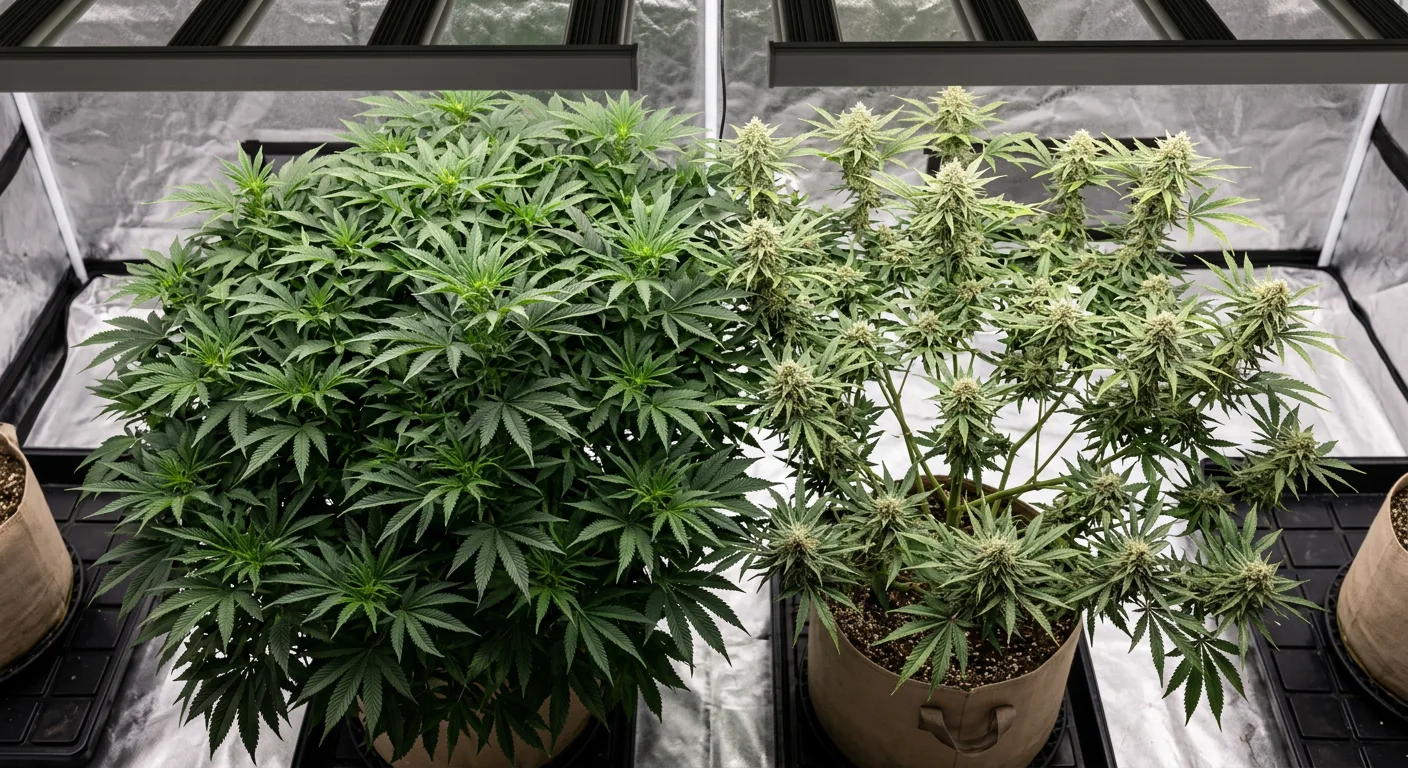
The three core reasons growers remove leaves are improved airflow and transpiration, deeper light penetration to lower bud sites, and elimination of inefficient or damaged leaves [5][7][8]. In dense indoor canopies, these benefits compound because light intensity falls off steeply with distance from the fixture.
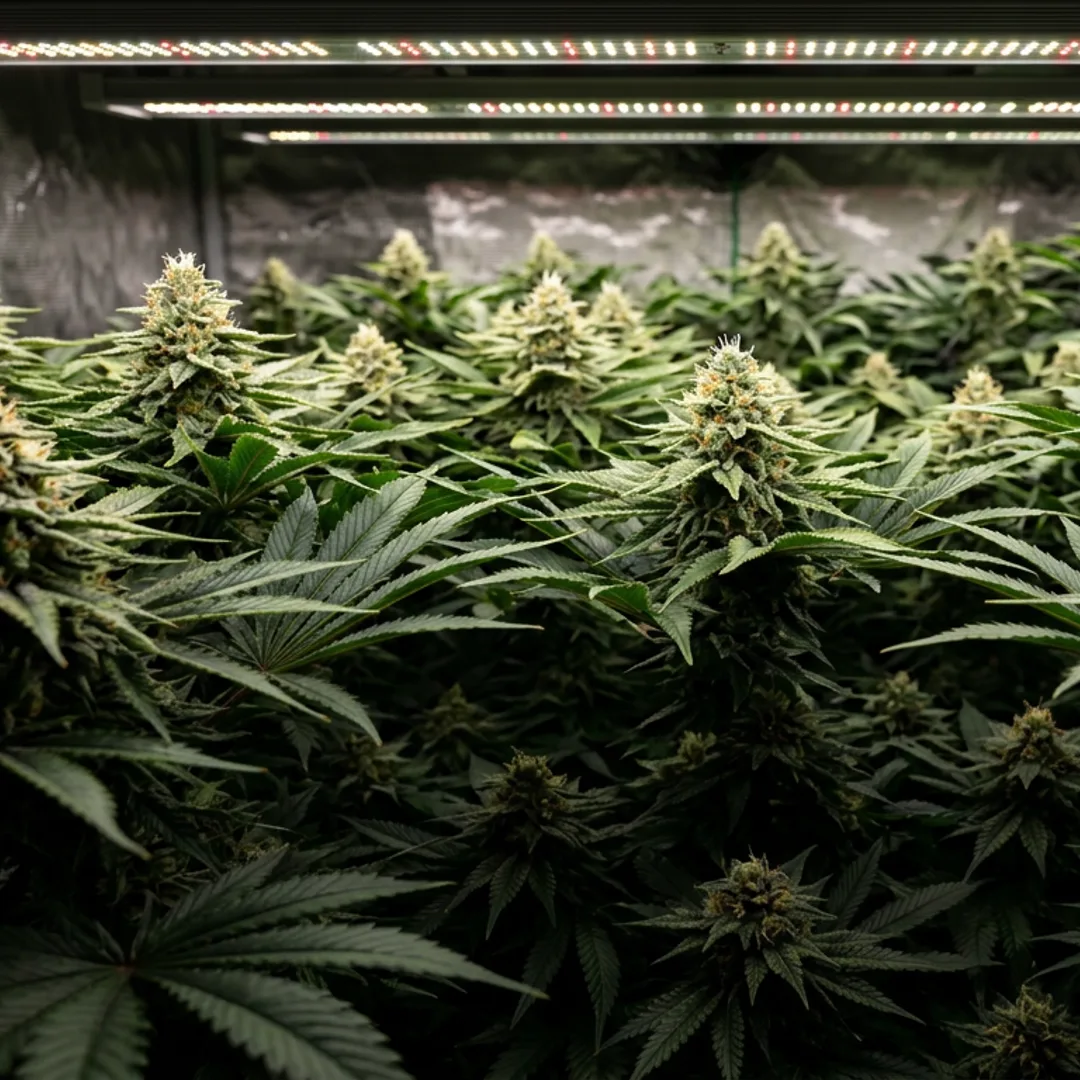
Indoor grow light intensity drops roughly 5-10x per foot of distance from the source [7]. That means a lower bud sitting 18 inches below your canopy top can receive a small fraction of the PPFD hitting the upper colas. Fan leaves that shade those lower sites aren't photosynthesizing for them — they're starving them.
The Airflow Argument
Tight leaf packing holds humid air against buds, and that's exactly the microclimate botrytis (bud rot) loves. Opening the canopy with targeted leaf removal improves transpiration and lets airflow reach the inner plant. Pair this with proper environmental control — see our VPD guide and VPD calculator — for the best results, and review mold prevention fundamentals.
Plant-physiology research shows that defoliation draws on stored root carbohydrate reserves during recovery, and that repeated defoliations deplete those reserves more aggressively than a single event [1]. That's the mechanistic reason to defoliate with restraint, time your passes, and never defoliate a stressed plant.
What the Science Actually Says in 2026
The strongest peer-reviewed signal comes from a 2024 Colorado State University field study on industrial hemp: defoliation during early flowering significantly impacted phytocannabinoid content in the 'Unicorn 1' high-CBD cultivar [3]. Rigorous yield data on THC-type cannabis remains limited, so we hedge carefully here.
The CSU team, publishing in Industrial Crops and Products (Vol. 211, May 2024), quantified 12 phytocannabinoids via LC-MS/MS: CBD, CBDA, CBDV, CBDVA, CBG, CBGA, CBN, CBNA, THC, THCA, THCV, and THCVA [3]. The authors concluded that "Our results demonstrate that defoliation during early flowering significantly impacted phytocann[abinoid content]" [3].
That hemp finding does not automatically transfer to high-THC drug-type cannabis. Direction and magnitude of the effect on THC cultivars is still an open research question — don't let anyone tell you defoliation is a proven potency booster.
How Researchers Measure Post-Defoliation Performance
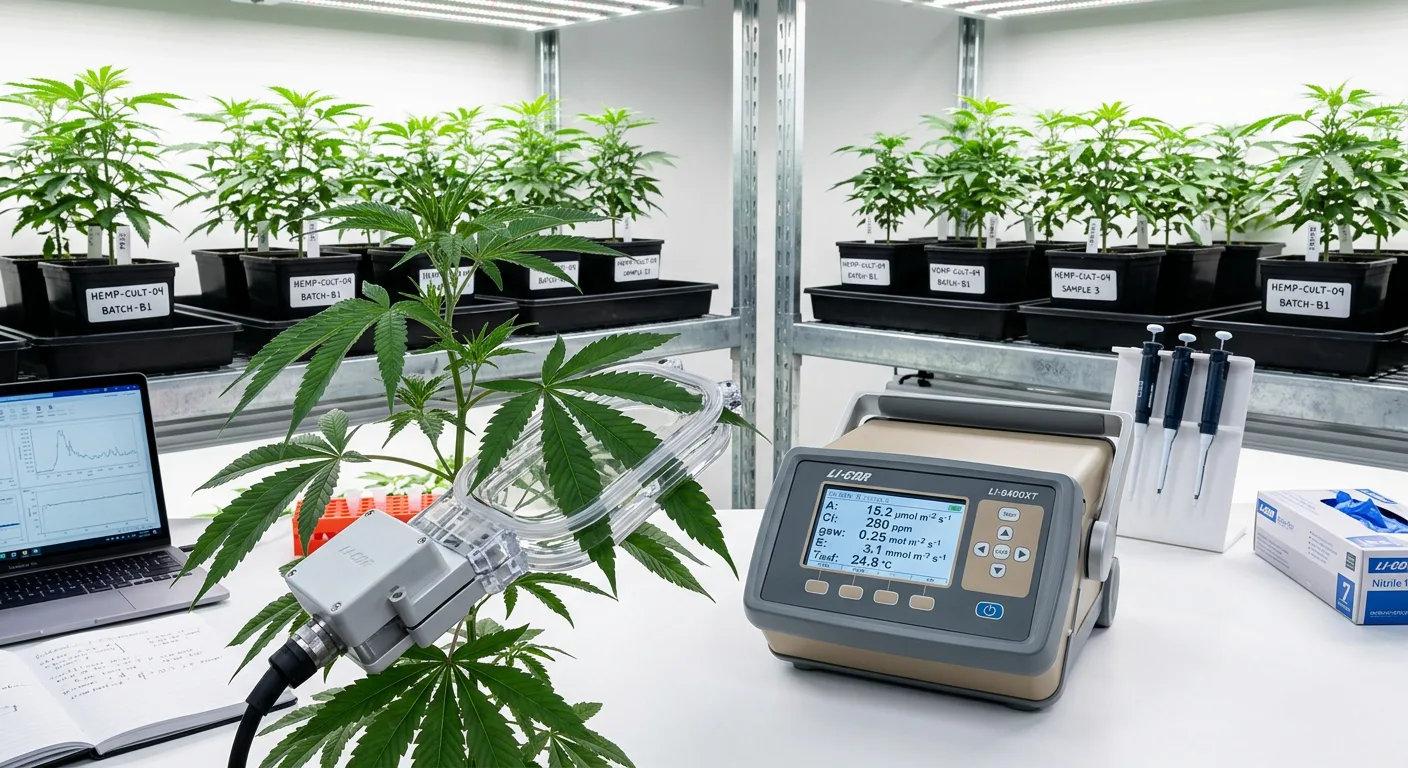
A separate medical cannabis density/leaf-removal study measured gas exchange with a LI-COR 6400XT under standardized conditions: leaf temperature 25°C, 60% relative humidity, CO₂ at 400 mg L⁻¹, and PPFD of 500 μmol m⁻² s⁻¹ [2]. Measurements were taken one week after leaf removal and two weeks before harvest, 69 days after transfer to 12/12 [2]. That's the level of precision needed to actually separate defoliation effects from normal plant variability.
The Yield Debate
Grower consensus holds that well-timed defoliation increases yields through better light distribution and airflow [5][7]. But experienced cultivators set up controlled side-by-side experiments precisely because results aren't universal — one documented test used identical tents, four strains each, and paired clones of the same genetics in each tent to isolate defoliation's effect [4]. Mistimed or excessive removal can reduce bud-site size, especially during stretch [7].
When NOT to Defoliate: The Three No-Go Windows
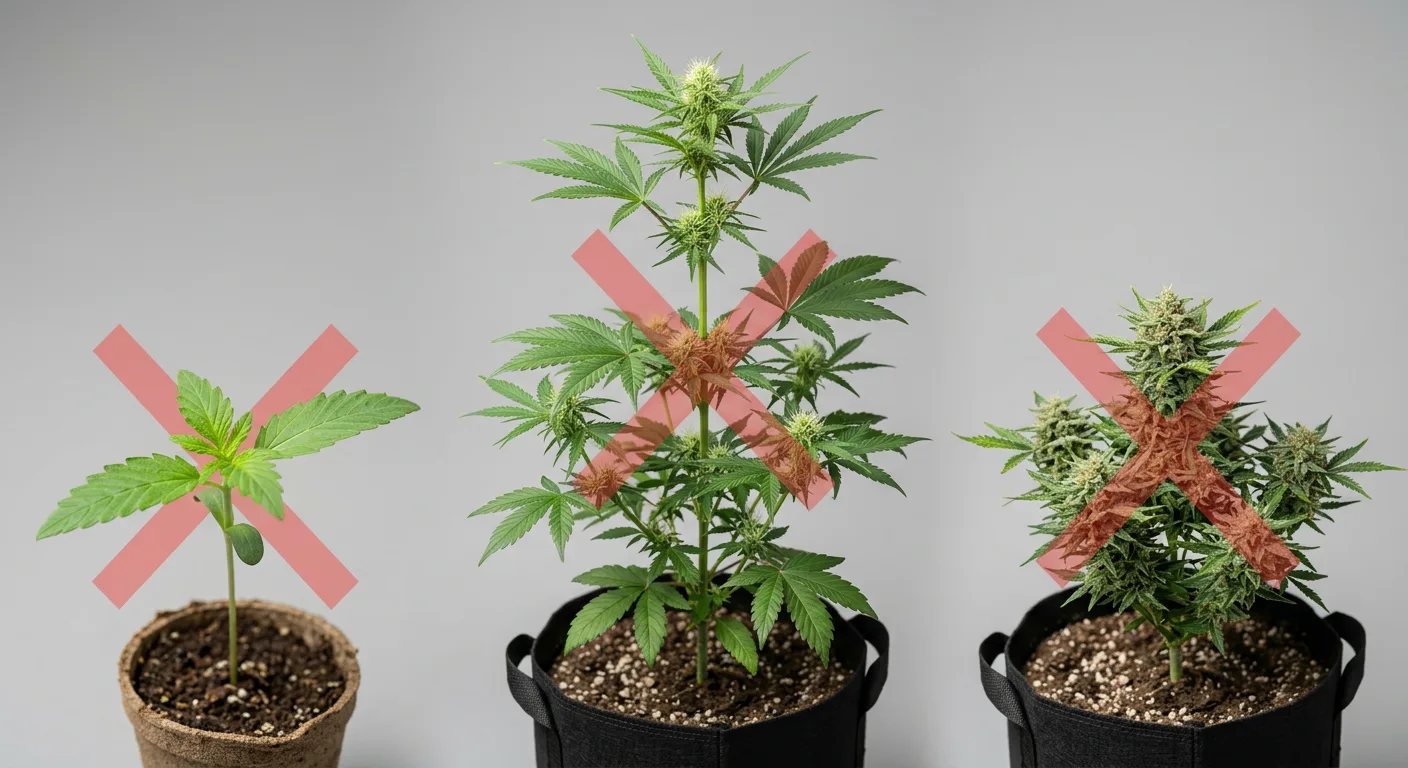
Skip defoliation entirely during early vegetative growth (before week 5), the 20-25 day stretch phase at the start of flowering, and on any plant showing active stress [7]. Autoflowers also warrant a much more conservative approach because they can't recover lost veg time.
1. Before Week 5 From Germination
Stage 1 defoliation should not begin until week 5 or later from germination [7]. Before that, the plant is still building the leaf mass it needs to photosynthesize its way to a strong root system and sturdy stems. See our seedling care guide for what that early period should look like.
2. During the Stretch Phase (First 20-25 Days of Flower)
This is the single most misunderstood window. As BudTrainer's educational guide puts it: "During the stretch phase the first 20-25 days of flowering: Your plant is growing aggressively and needs all the leaf surface area it can get to fuel that growth. Defoliating during the stretch stresses the plant at exactly the wrong moment and can reduce the final size of your bud sites" [7].
3. On Autoflowers (Mostly)
Stage 1 vegetative defoliation should be skipped entirely for autoflowers because they don't have enough veg time for it to be worthwhile [7]. Autos move on their own clock, and a heavy defoliation setback can't be recovered with an extra week in veg. If you're running autos like Swiss Cheese Auto or Holy Grail Kush Auto, the flowering-only protocol below applies.
Stage 1 — Vegetative Defoliation (Week 5+)
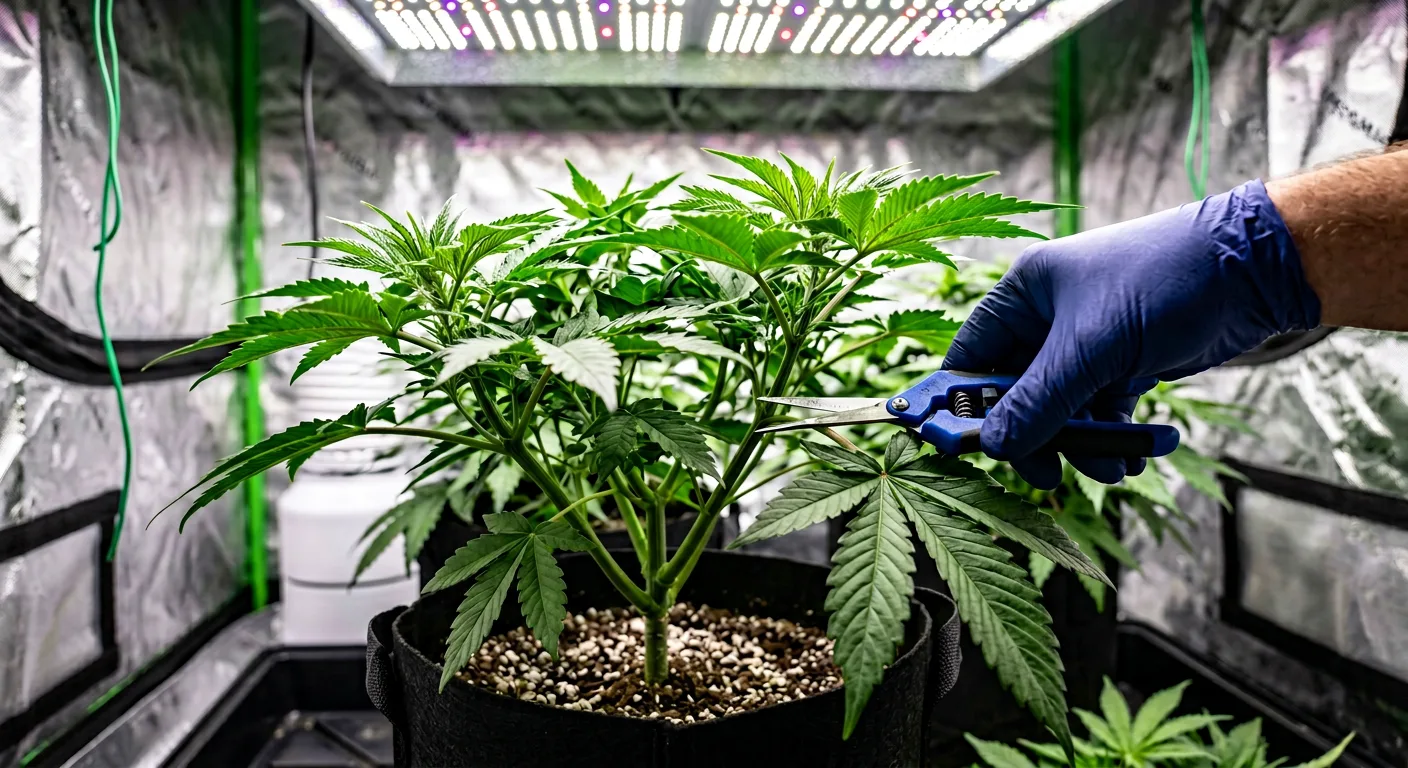
Begin Stage 1 no earlier than week 5 from germination on photoperiod plants only. Outdoor growers can repeat the pass every two weeks through veg [7]. The goal is setting up an even canopy before flip, not stripping the plant bare.
Confirm the plant is healthy and 5+ weeks old
Check that leaves are vibrant green, new growth is vigorous, and there are no signs of stress, deficiency, or pest damage.
Identify the worst offenders
Target large fan leaves that are shading multiple bud sites, any leaves touching the soil, and yellowing or damaged leaves regardless of position.
Remove in moderation
Pull or snip at the petiole (leaf stem) where it meets the branch. On photoperiod plants in good health, a moderate first pass is reasonable — but there are no verified numeric thresholds for "correct" percentage removal, so err on the restrained side.
Wait and observe recovery
Give the plant at least 3-5 days to recover before any additional work. Outdoor photoperiod plants can receive another Stage 1 pass every 2 weeks through veg [7].
Pair vegetative defoliation with topping or FIMming on the same day if the plant is robust. Consolidating training stress into a single recovery window beats spreading small traumas across the week.
Stage 2 — Mid-Flower Defoliation (Weeks 3-4 of Flower)
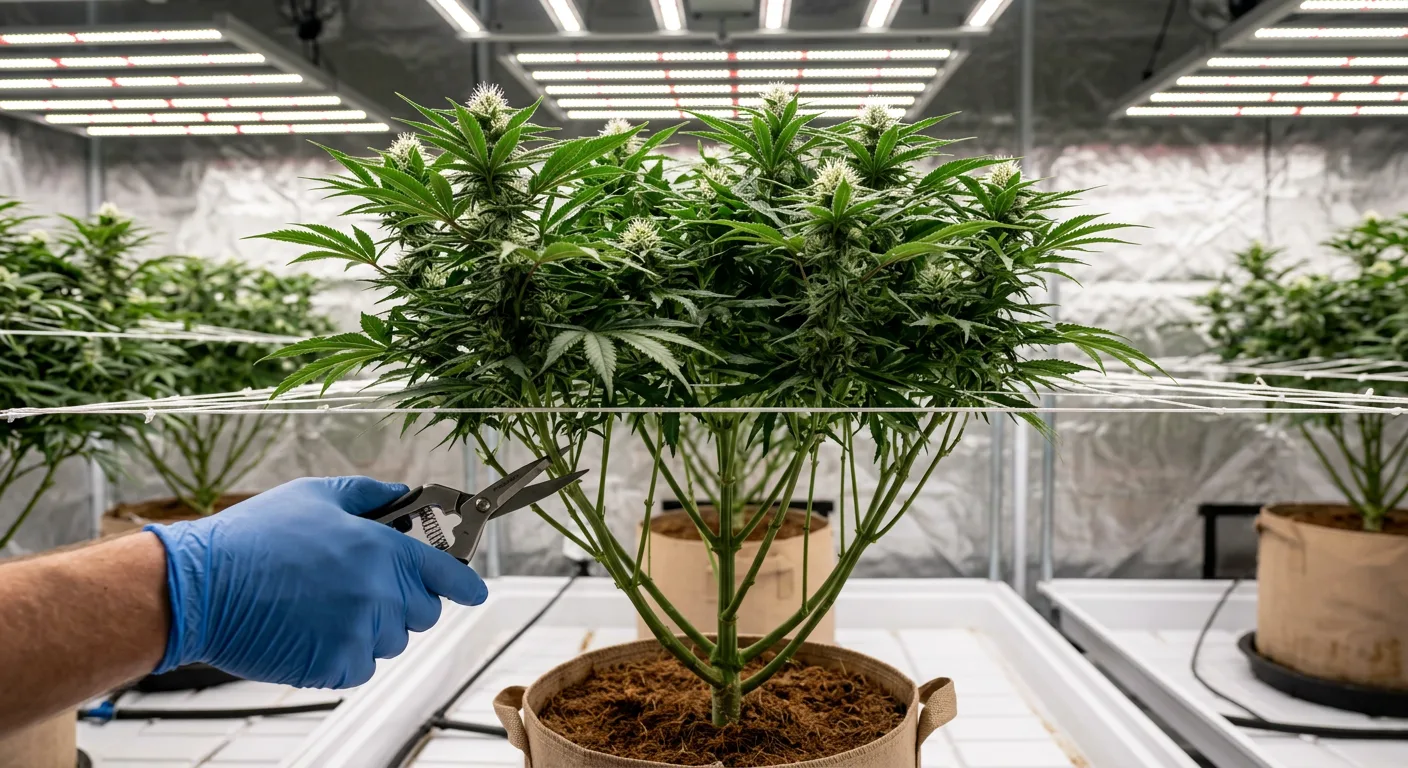
The major mid-flower pass happens 3-4 weeks into flowering, after the stretch phase ends [7][9]. By this point bud sites are locked in, the plant has finished its vertical explosion, and you can open up the lower canopy without sacrificing cola size.
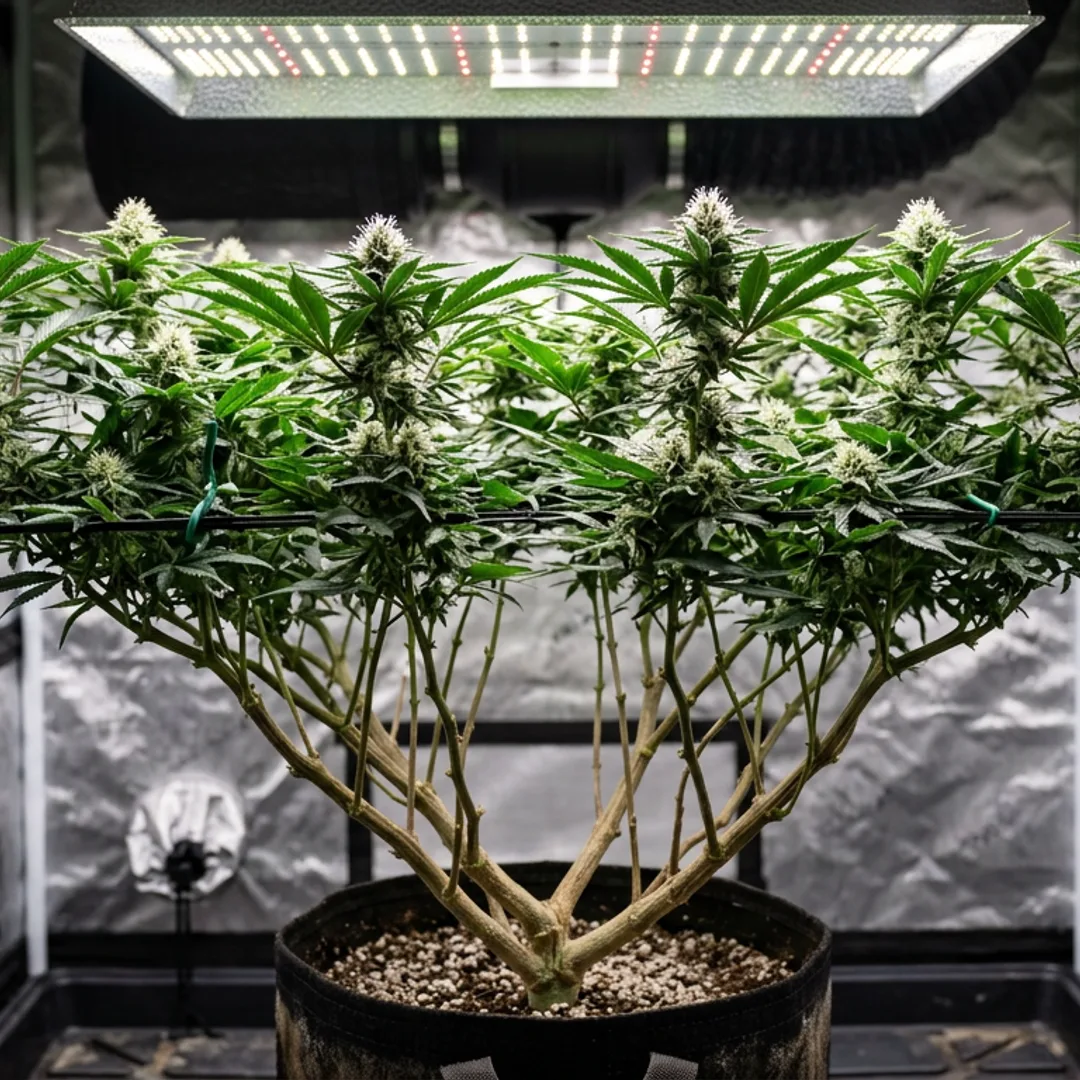
The 12-18 Inch Lollipop Line
Draw an imaginary horizontal line 12-18 inches below your canopy top. Remove fan leaves and small branches below that line, and prune any dwarf branches more than 6 inches below the top [7]. Those lower branches won't receive enough light to produce dense flower anyway — they'll just produce airy popcorn.
Stage 2 Target List
- Fan leaves below the 12-18 inch line
- Dwarf branches more than 6 inches below the canopy
- Leaves shading developing bud sites from directly above
- Yellowing, damaged, or disease-spotted leaves anywhere on the plant
- Leaves pressed tight against bud sites (humidity traps)
- Inner suckers that won't reach the canopy in time
Do not pull large amounts of healthy upper-canopy leaf material at Stage 2. Those leaves are actively feeding the colas you want to fatten for the next 4-6 weeks. Remove only what's shading or trapping humidity.
Stage 3 — Pre-Harvest Defoliation (1 Week Before Chop)
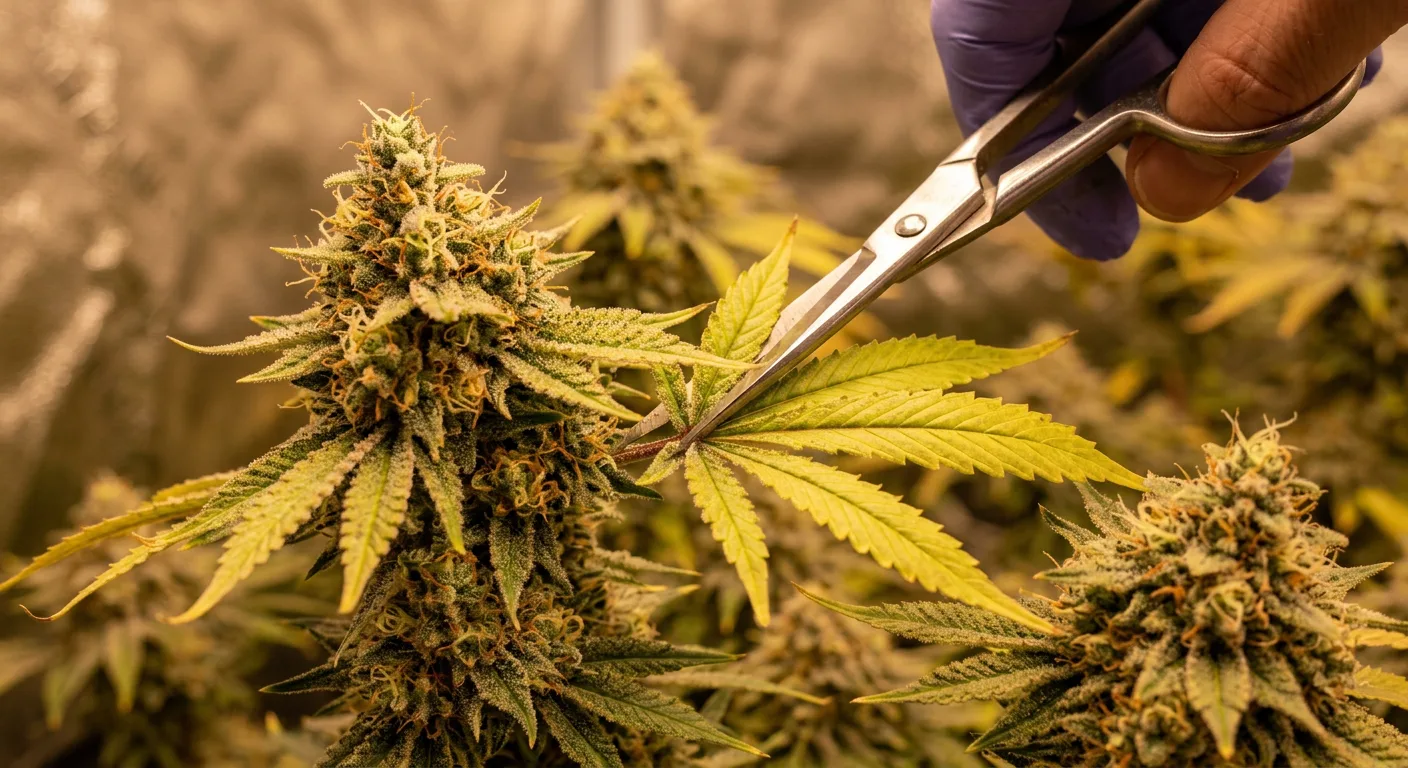
The final pass happens about 1 week before harvest. Remove fan leaves that don't carry trichomes using scissors — never pull by hand [7]. As the BudTrainer guide notes: "Pre-harvest defoliation saves over 50% of trimming time and gives shaded lower buds a final week of light exposure before harvest" [7].
Why Scissors, Not Fingers
Leaf stems pulled by hand at this stage can strip skin from the stalk and damage adjacent buds [7]. At week 8+ of flower, the bud-to-stem junction is packed with trichomes and sugar leaves you want preserved for trim or hash. Snip cleanly at the petiole base, close to but not flush against the main stem.
Use this window to build a mental map for harvest day. Cut from the bottom up, and leave trichome-coated sugar leaves alone — those get processed during trim or saved for hash making.
What Stage 3 Actually Does for You
- Cuts trim time in half or more [7] — fewer leaves to pick through on chop day
- Final light boost to lower colas [7] — an extra 7 days of direct PPFD on previously shaded buds
- Improves drying airflow — fewer leaves = faster, more even moisture loss in the hang
- Preserves trichomes by reducing the rough handling required during wet trim
For timing the final cut itself, cross-reference with our harvest timing guide and avoid the common trap of harvesting too early.
Autoflower-Specific Defoliation Rules
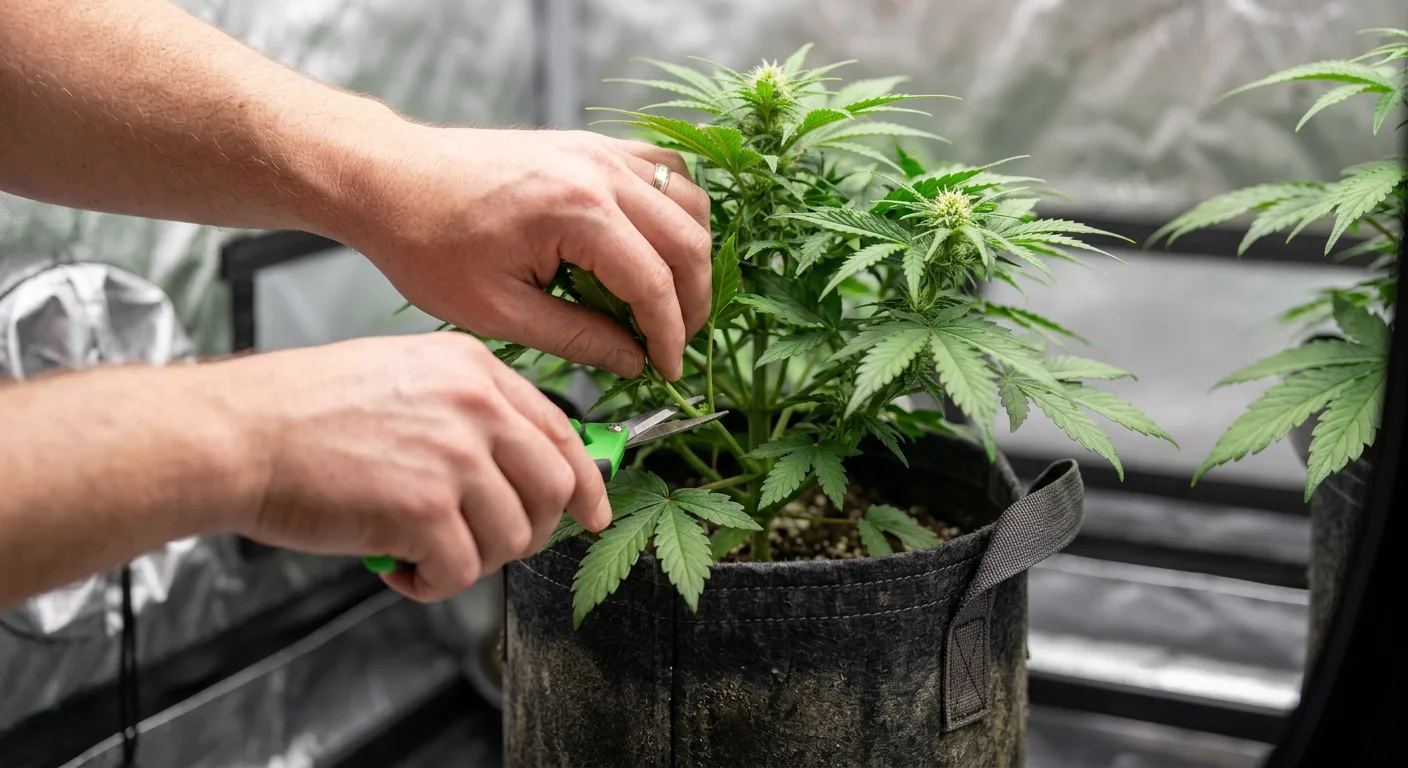
Autoflowers should be defoliated conservatively during flower only — limit removal to 3-5 leaves or branches per day spread over 2-3 weeks [7]. Skip Stage 1 entirely [7]. The logic is simple: autos can't extend veg to recover from a heavy stress event.
The 3-5 Per Day Protocol
Instead of one aggressive mid-flower pass, autos get a slow-drip approach. Pick off 3-5 of the worst-offending fan leaves or dwarf branches each day, spread across 2-3 weeks [7]. This keeps the plant's carbohydrate recovery demand low at any given moment.
Strong autoflower genetics handle this schedule better. Proven performers include Skywalker OG Auto (23% THC), Great White Shark Auto, and popular non-catalog names like Northern Lights Auto, Gorilla Glue Auto, and Lowryder.
For autos, think "grooming" not "training." Remove what's clearly shading or trapping humidity, and leave the rest alone. A heavy-handed defoliation on an autoflower can cost you a week of finishing that the plant will never get back.
Tools, Technique, and Stress Recovery
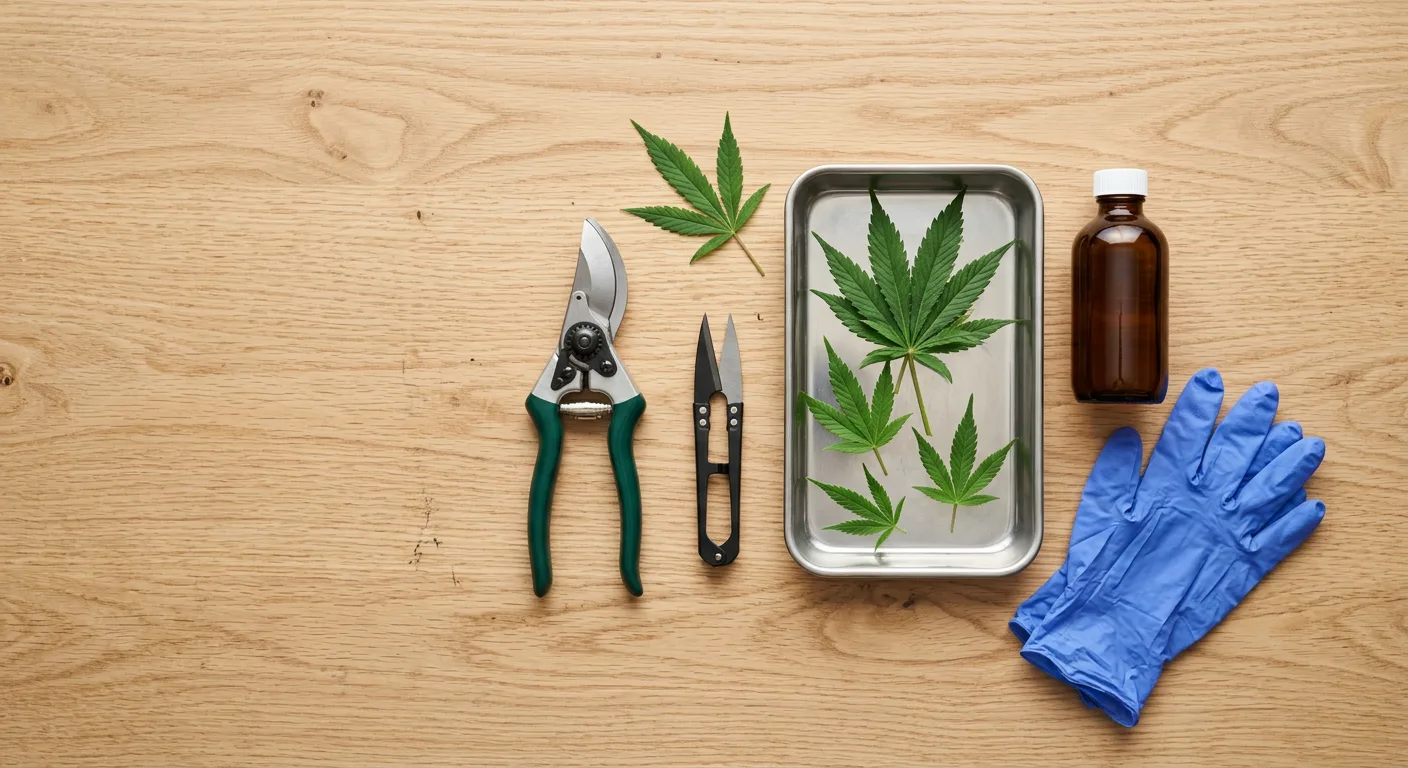
Clean, sharp snips and clean hands are the baseline. Beyond that, technique is about minimizing the compound stress on any single day and giving the plant time to repay the carbohydrate debt of recovery [1].
The Basic Toolkit
- Sharp, small-bladed trimming scissors or pruning snips
- Isopropyl alcohol or hydrogen peroxide for wiping blades between plants
- Clean nitrile or vinyl gloves (optional but reduces contamination risk)
- A small tray or bag for removed leaves
Evidence on specific sterilization protocols, blade types, and cut angles is limited in the available research — use general horticultural best practices and don't overthink the hardware.
Reducing Recovery Cost
Because defoliation pulls on stored root carbohydrates, and repeated defoliations deplete reserves more than single events [1], stacking decisions well matters:
- Never defoliate a stressed plant — heat, nutrient, or water stress first, leaves second
- Don't combine heavy defoliation with a transplant or repot on the same day
- Water with plain, pH-corrected water on defoliation day — skip the heavy feed
- Keep VPD in the sweet spot so the remaining leaves can transpire efficiently
- Give 3-5 days minimum between significant passes
Strain Response Varies
Some strains handle aggressive defoliation better than others, and growers should adjust based on the strain's natural leaf-to-bud ratio [8]. Indica-leaning, bushy plants with dense lateral growth (think Northern Lights x Big Bud, OG Kush, or Wedding Cake) tend to reward defoliation because their natural canopy traps more humidity. Tall, airy sativas like Super Lemon Haze, Sour Diesel, or classics like Durban Poison often need less intervention.
How to Run Your Own Side-by-Side Defoliation Test
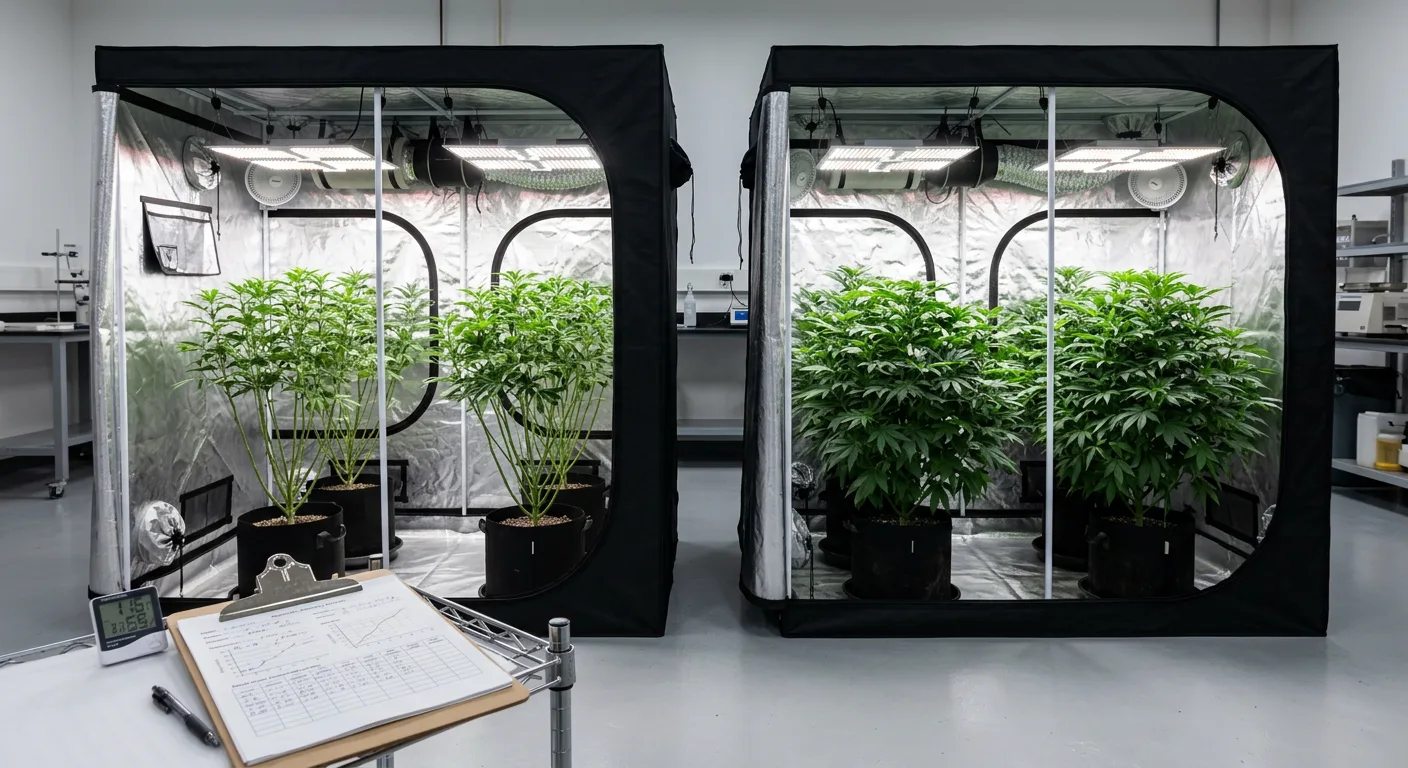
The most honest way to know if defoliation helps your specific setup is to test it yourself. One documented experimental design used identical tents with four strains each, placing one clone per strain in each tent — defoliated versus non-defoliated — to isolate the variable [4].
Your Home Experiment in 6 Steps
Use clones, not seeds
Seed plants have genetic variation. Clones from a single mother remove genetics as a variable. If you must use seeds, use at least 4 plants per group to average out variation.
Split into two identical environments
Two tents, same light, same medium, same nutrients, same pot size, same VPD. The only intentional difference is the defoliation treatment.
Treat veg identically
Run both groups through veg with the same (or no) training. Defoliation is the only variable you change.
Apply the Stage 2 protocol to one group only
At 3-4 weeks into flower, defoliate one tent using the 12-18 inch lollipop line. Leave the other alone.
Harvest, dry, and cure identically
Same harvest window, same hang, same cure. Weigh dry flower per plant after a 2-week cure minimum.
Log everything
Final dry weight per plant, subjective bud density, trim time, and any mold or pest issues. Our yield estimator and grow planner can help you organize the data.
One side-by-side home test is a data point, not proof. Run it across 2-3 cycles with different strains before drawing firm conclusions about your specific environment. Strain, light intensity, pot size, and VPD all interact with defoliation response.
Defoliation Decision Matrix
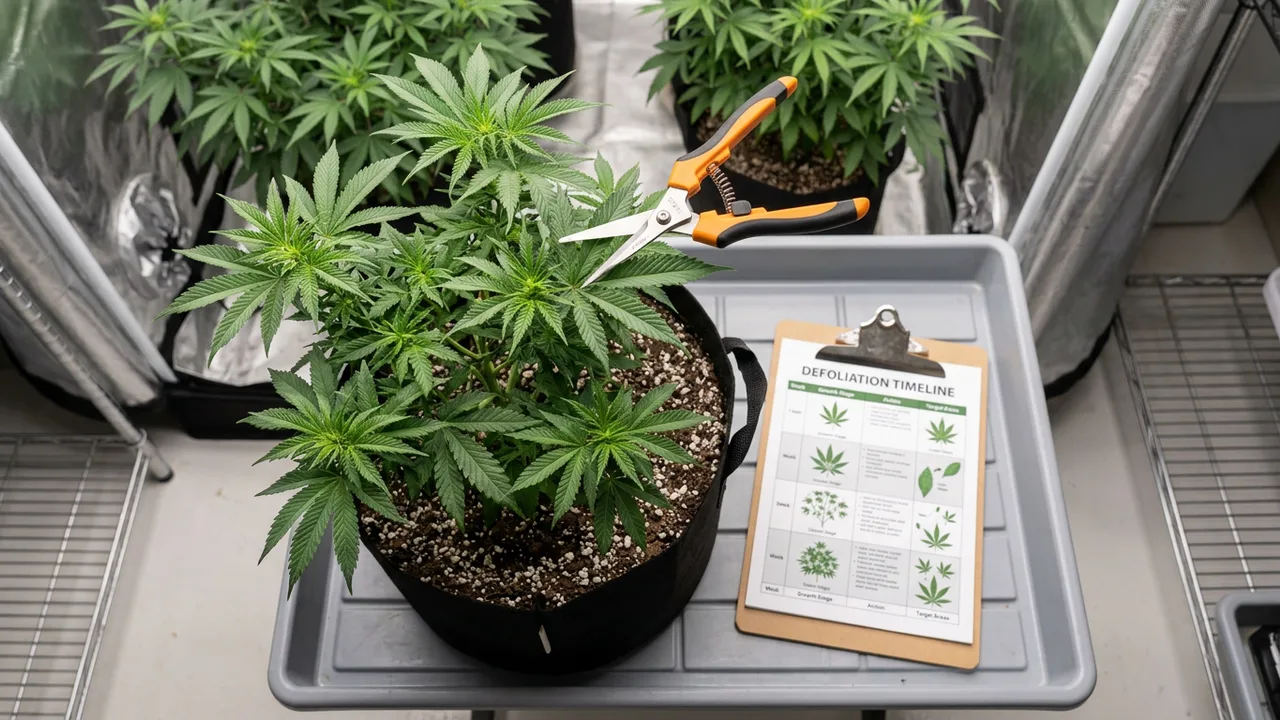
Use this quick reference when you're standing over the plant with scissors in hand and second-guessing yourself. For broader training context, see our indoor growing pillar guide.
| Situation | Defoliate? | Notes |
|---|---|---|
| Week 3 of veg, photoperiod | No | Too early — wait until week 5+ [7] |
| Week 6 of veg, healthy photoperiod | Yes, moderate | Stage 1 window opens at week 5 [7] |
| Day 10 of flower (stretch) | No | Stretch = 20-25 days, hands off [7] |
| Week 3-4 of flower, post-stretch | Yes, major pass | Use 12-18 inch lollipop line [7] |
| Autoflower, any veg stage | No | Skip Stage 1 on autos [7] |
| Autoflower, mid-flower | Yes, slowly | 3-5 leaves/day over 2-3 weeks [7] |
| 1 week before harvest | Yes, scissors only | Saves 50%+ trim time [7] |
| Plant showing stress signs | No | Fix the stressor first |
Frequently Asked Questions
Does cannabis defoliation actually increase yield?
Experienced growers report yield gains from well-timed defoliation through better light penetration and airflow, but rigorous peer-reviewed yield data on THC-type cannabis is limited. Side-by-side grower experiments exist precisely because results aren't settled [4]. Mistimed defoliation — especially during the 20-25 day stretch phase — can reduce bud-site size [7]. Treat yield gains as probable when timing is correct, not guaranteed.
Can I defoliate an autoflower the same way as a photoperiod plant?
No. Skip vegetative-stage defoliation on autoflowers entirely, and during flower limit yourself to 3-5 leaves or branches per day spread over 2-3 weeks [7]. Autos can't recover lost veg time, so a single heavy pass can permanently shrink your final yield.
What's the 12-18 inch rule?
During the mid-flower pass at 3-4 weeks into flowering, remove fan leaves and small branches below a line 12-18 inches from the top of the canopy, and prune any dwarf branches more than 6 inches below the top [7]. Those lower sites don't receive enough light to produce dense flower.
Will defoliation affect THC or terpene content?
A 2024 Colorado State University study in Industrial Crops and Products found that defoliation during early flowering significantly impacted phytocannabinoid content in industrial hemp ('Unicorn 1', a high-CBD cultivar) [3]. Direction and magnitude for high-THC cannabis remain open research questions, so don't assume defoliation is a proven potency tool.
Why use scissors instead of my fingers for pre-harvest defoliation?
Leaf stems pulled by hand at harvest-week density can strip skin from the main stalk and damage nearby trichome-coated buds [7]. Clean scissor cuts at the petiole base preserve bud structure and the sugar leaves you'll want during trim or hash production.
Sources & References
This article was researched and fact-checked using 9 verified sources including 3 peer-reviewed studies, 2 industry sources, 4 community resources.
- The dynamics of recovery and growth: how defoliation affects stored resources - PMC — pmc.ncbi.nlm.nih.gov/articles/PMC3996606 [Research]
- Too Dense or Not Too Dense: Higher Planting Density Reduces Cannabinoid Uniformity but Increases Yield/Area in Drug-Type Medical Cannabis - PMC — pmc.ncbi.nlm.nih.gov/articles/PMC9559401 [Research]
- Impact of Defoliation Stress on Phytocannabinoid Content in Industrial Hemp - ScienceDirect — sciencedirect.com/science/article/abs/pii/S0926669024002036 [Research]
- Nebula's Cannabis Defoliation Experiment - Side-by-side grow journal | Grow Weed Easy — growweedeasy.com/nebulas-cannabis-defoliation-experiment-side-by-side-grow-journal [Industry]
- Cannabis Defoliation Tutorial: How to Increase Yields by Removing Leaves | Grow Weed Easy — growweedeasy.com/defoliation [Industry]
- Pro Cannabis Grower's Guide to Defoliation and Schwazzing - YouTube — youtube.com/watch [Community]
- How to Defoliate & Prune Cannabis: When, Why & Step-by-Step Guide – BudTrainer — budtrainer.com/blogs/learn/defoliating [Community]
- Cannabis Defoliation: Techniques for Maximum Yield — 454bags.com/blogs/education/cannabis-defoliation-techniques-timing-and-benefits-for-optimal-plant-growth [Community]
- Growing How-To: Defoliation: Defoliation in week 3 of flower – Black Dog LED — blackdogled.com/blogs/education/defoliation-in-week-3-of-flower [Community]