Picture a cannabis root system suspended in total darkness, touched by nothing but a fine mist of oxygenated nutrient solution every 45 seconds. No substrate. No standing water. Just roots, air, and a precisely timed fog. This is aeroponics — arguably the most technically demanding, and potentially the most productive, cultivation method available to the advanced home grower in 2026.
Most articles on aeroponics cannabis hype the yields and skip the science. We're going to do the opposite. In this guide, our cultivation team breaks down exactly how aeroponic root zones work, why droplet size matters more than pressure alone, and whether the complexity is actually worth it for your setup. If you want the broader context first, our hydroponics pillar guide covers every soilless method side-by-side.
What Aeroponics Actually Means for Cannabis
Featured snippet answer: Aeroponics is a soilless cannabis cultivation method where plant roots are suspended in a sealed chamber and misted at regular intervals with an oxygenated, nutrient-rich solution . No growing medium is used. The roots absorb nutrients directly from the fine mist, and the air gap between mistings delivers extreme oxygen availability — the rate-limiting factor in most hydroponic systems.
In a functioning aeroponic system, the plant is held by a net cup or neoprene collar at the top of a lightproof chamber. The roots dangle into empty air. A timer triggers a pump every 30–60 seconds, pushing nutrient solution through nozzles that atomize it into a fog. The roots drink, the mist cycle ends, and the roots spend the next minute bathed in pure oxygen before the cycle repeats.
That's the entire concept. The difficulty is in the execution — droplet size, pressure, timing, and reliability all have to be dialed in simultaneously.
LPA vs HPA: Two Very Different Systems
The cannabis community loosely splits aeroponics into two tiers. Low-Pressure Aeroponics (LPA) runs on standard submersible or inline pumps at 20–50 PSI, producing coarse droplets closer to a sprinkler spray than a true mist. True High-Pressure Aeroponics (HPA) uses diaphragm pumps and accumulator tanks to deliver 80–120 PSI through precision misting nozzles, producing droplets around 50 microns — the threshold most research associates with maximum nutrient absorption efficiency.
| Spec | Low-Pressure (LPA) | High-Pressure (HPA) |
|---|---|---|
| Operating Pressure | 20–50 PSI | 80–120 PSI |
| Droplet Size | 100–500+ microns | 20–80 microns (target 50) |
| Pump Type | Submersible / inline | Diaphragm + accumulator |
| Mist Duration | Continuous or 5–15 sec | 1–3 sec pulses |
| Rest Interval | 30–60 sec | 30–300 sec |
| Build Cost | $150–$400 | $600–$1,800 |
| Oxygen Delivery | Good | Exceptional |
| Clog Risk | Moderate | High (without RO water) |
LPA is forgiving. HPA is precise. If LPA is a well-made filter coffee machine, HPA is a lab-calibrated espresso setup — the ceiling is higher, but so is the cost of every small mistake.
From Lab Curiosity to Grow Room: The Origin Story
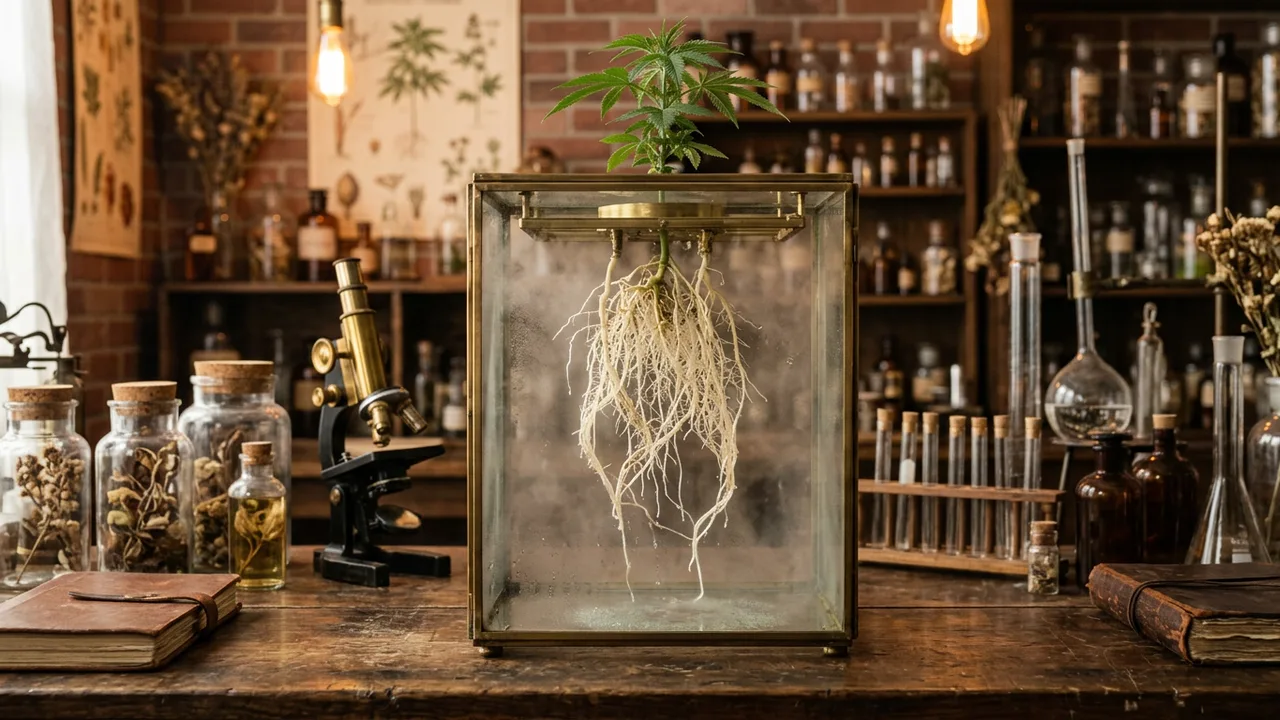
Aeroponics wasn't invented for cannabis. It wasn't even invented for food crops. It was developed in the early 20th century as a research technique for studying plant root systems, because misting roots in an enclosed chamber let botanists observe root morphology without destroying the plant by excavation . That pedigree is the single most important thing to understand about why it works so well for weed.
Aeroponics was built to interrogate roots — not to feed them efficiently. The feeding efficiency was a side effect researchers noticed while studying root architecture.
When the method eventually migrated from academic greenhouses into commercial horticulture and then into cannabis, growers inherited a system already optimized to keep root systems pristine, visible, and absurdly oxygenated. Everything a cannabis plant's root zone actually wants.
Why That History Matters for Modern Growers
Because aeroponics originated as a diagnostic tool, it gives cultivators something no other method offers: total visual access to the root zone. Crack open an aeroponic chamber and you can see every root hair, every color shift, every sign of stress or vigor. For breeders running phenotype hunts or anyone troubleshooting a root health issue, this is a genuine advantage.
The Science Behind Aeroponic Speed
Plants absorb nutrients through a mix of passive diffusion (water and dissolved ions moving down concentration gradients) and active transport (energy-dependent ion pumps in the root cell membranes). Both processes are dramatically limited by oxygen availability at the root surface. Aeroponics removes that bottleneck almost entirely.
In soil, roots sit in substrate where dissolved oxygen has to diffuse through water-filled pore spaces. In DWC, roots are submerged in water that maxes out at around 8–10 mg/L dissolved oxygen even with heavy air stones. In aeroponics, roots spend most of each cycle fully exposed to atmospheric air — effectively unlimited oxygen availability between mist pulses.
Why 50 Microns Is the Magic Number
Droplet size governs the surface-area-to-volume ratio of the water touching the root. Very large droplets (500+ microns) run off quickly and deliver nutrients only to the outer root surface. Very small droplets (under 20 microns) behave like aerosol fog — they drift, evaporate, and don't always coalesce on the root.
At roughly 50 microns, droplets are small enough to coat root hairs evenly, large enough to deliver meaningful volume, and structured enough to wet the entire root mass without pooling. This is why HPA's pressure spec isn't arbitrary marketing — the droplet size it produces is genuinely different from what a cheap pump can output.
Cannabis Root Chemistry: A New Research Frontier
Peer-reviewed research has begun using aeroponic cannabis cultivation specifically to study root chemistry — an area previously ignored because cannabinoids are not significantly present in roots . Instead, the roots concentrate sterols and triterpenes like β-sitosterol, campesterol, epi-friedelanol, and friedelin .
One study comparing aeroponic, aeroponic-elicited, and soil-grown plants reported β-sitosterol at 0.49 ± 0.05 mg in standard aeroponic roots versus 10.86 ± 0.72 mg in aeroponic-elicited plants and 9.9 ± 2.17 mg in soil-grown plants . Friedelin content ran 2.37 ± 0.3, 4.55 ± 0.47, and 5.67 ± 0.4 mg respectively across those same three cultivation methods . The takeaway isn't "aeroponics wins" — it's that aeroponics gives researchers a controllable platform to manipulate root chemistry with elicitors in ways soil simply doesn't allow.
Building a Low-Pressure Aeroponic System
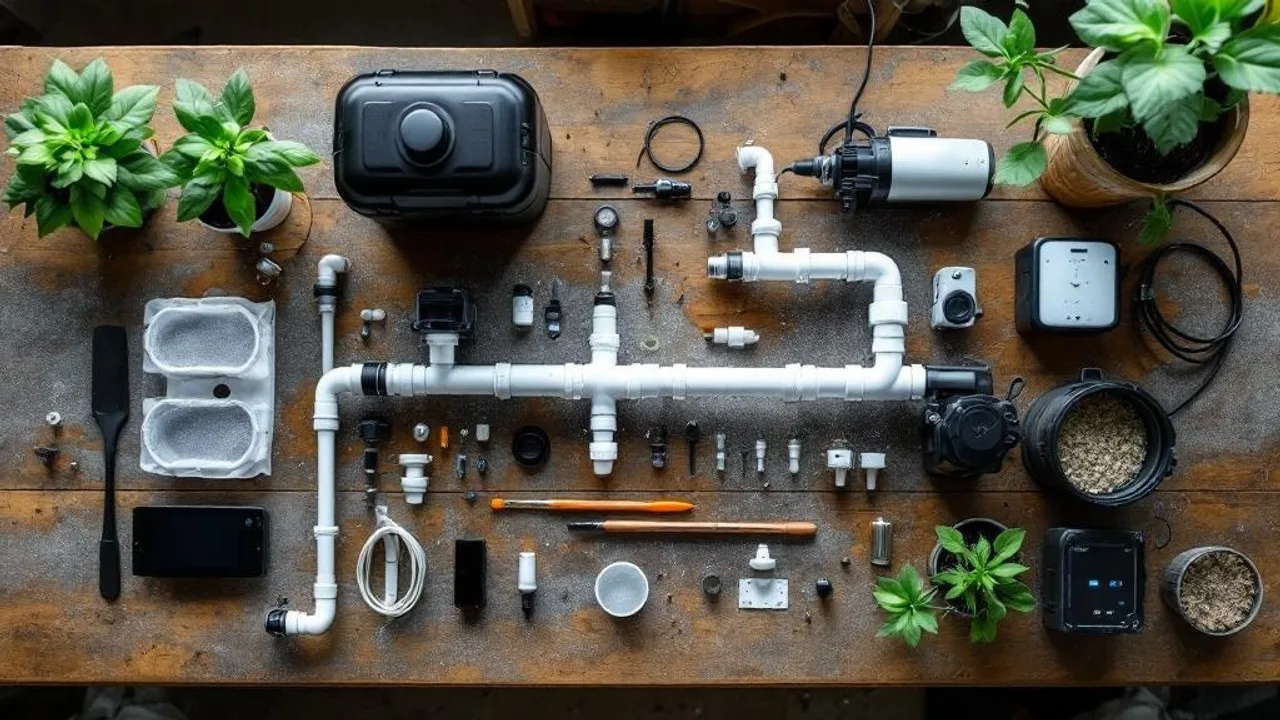
An LPA build is the reasonable entry point. It teaches you the principles without the nozzle-clogging headaches, and a well-tuned LPA easily outperforms soil or coco for vegetative growth rates.
Core Components
- Lightproof reservoir (20–40 gallons for 4 plants)
- Separate root chamber or integrated tote with net-cup lid
- Submersible pump rated 40+ PSI
- 360° spray nozzles (EZ-Clone style) — 4 to 8 per chamber
- Food-grade PVC manifold (½" typical)
- Recycling cyclic timer (1-second resolution)
- Air pump + air stone for reservoir oxygenation
- pH and EC meters
- Chiller if ambient temps exceed 75°F
Build the Chamber
Use an opaque tote (black inside, white outside is ideal for light rejection plus heat reflection). Cut 3" net-cup holes in the lid. Line every interior seam with aquarium-grade silicone.
Install the Manifold
Mount the PVC spray manifold along the bottom of the chamber, angled so nozzles spray upward toward the root mass. Space nozzles so every root zone gets direct coverage from at least two nozzles.
Set the Timer
Start with 1 minute ON / 5 minutes OFF for seedlings and clones. Transition to 30 seconds ON / 3–5 minutes OFF once roots are established. Adjust based on root color and turgor.
Light the Clones Correctly
For the cloning stage, run approximately 18 hours per day of vegetative lighting with a low-heat fixture like a T5 positioned 1–2 feet above the clones . Aeroponic roots form fast — don't stress young plants with excess light intensity.
Upgrading to True High-Pressure Aeroponics
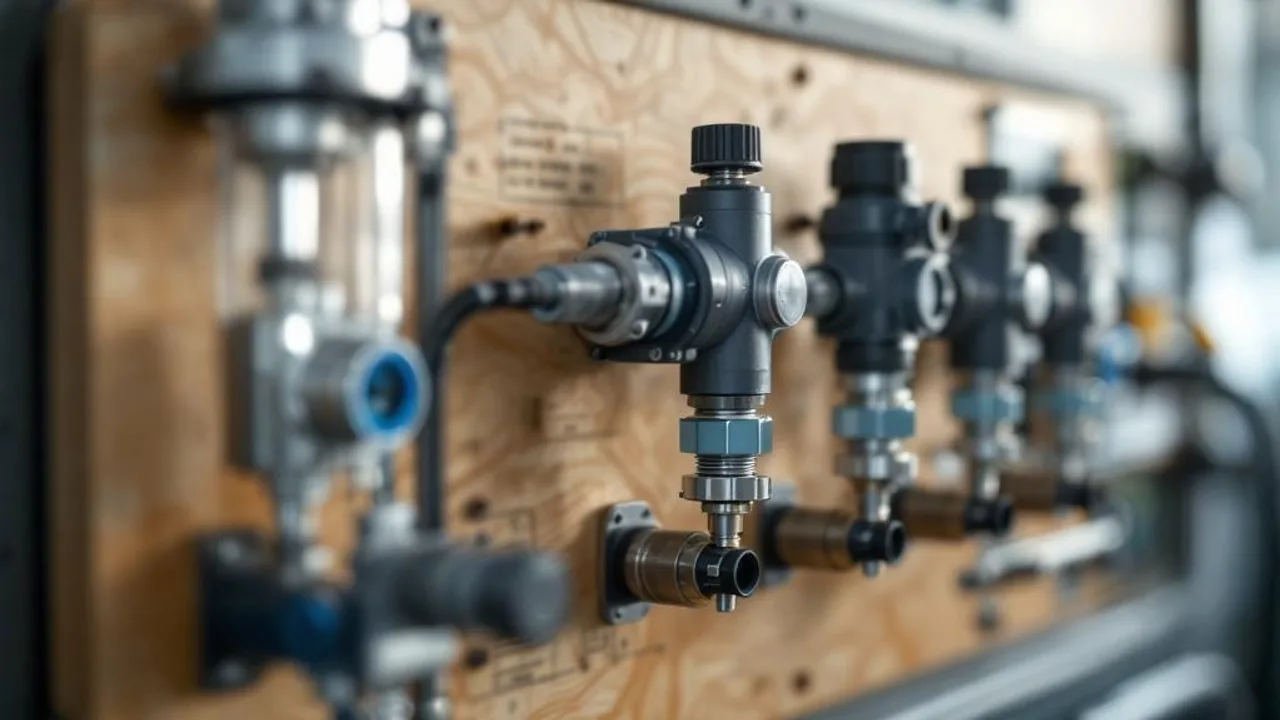
HPA is where aeroponics earns its reputation — and its reputation for difficulty. The architecture is fundamentally different from LPA. You're no longer running a continuous pump; you're using a high-pressure diaphragm pump to charge an accumulator tank, which then releases precise bursts through misting nozzles.
HPA Component Stack
- Diaphragm pump (100–150 PSI rated)
- Pressure accumulator tank (2–4 gallon stainless)
- Pressure switch (cut-in 80 PSI / cut-out 120 PSI)
- Solenoid valve (24V DC, fast-acting)
- Precision misting nozzles (stainless, 0.3–0.5mm orifice)
- Millisecond-resolution controller (Arduino or commercial unit)
- 5-stage RO system for source water
- Pre-pump sediment and carbon filtration
Timing Is Everything
HPA timing runs in seconds, not minutes. Typical cycles:
- Seedling/clone stage: 2 seconds ON / 60 seconds OFF
- Vegetative: 1–2 seconds ON / 45–90 seconds OFF
- Flower: 1–3 seconds ON / 30–60 seconds OFF (shorter rest as canopy demand rises)
Research-grade protocols transplant aeroponic seedlings once they've developed two real leaves approximately 3 cm long — a useful benchmark for knowing when root systems are robust enough for an HPA environment . Before that point, run them on LPA or in a propagation dome.
Install your pressure switch and solenoid in a drip-protected enclosure above the reservoir, not on the floor. When (not if) a fitting weeps, you want water dripping into the reservoir, not onto your electronics.
Failure Modes: The Honest Part of the Conversation

Critical: Exposed aeroponic roots die within roughly 30 minutes without misting. A single failed pump, clogged nozzle bank, or tripped breaker during a summer power outage can kill an entire crop faster than any other cultivation method. Aeroponics is the least forgiving system in the room.
Nozzle Clogging
This is the number-one HPA failure mode. Calcium and magnesium salts precipitate inside precision nozzle orifices, gradually reducing flow until the spray pattern collapses. Mitigation:
- Use only reverse-osmosis water as the base, then add nutrients and cal-mag back in controlled amounts
- Inspect and clean nozzles weekly — soak in food-grade citric acid solution
- Install an inline filter (5 micron) immediately upstream of the manifold
- Run a dilute citric acid flush through the entire system monthly with plants removed
Pump and Power Redundancy
Because the root death window is so short, redundancy isn't optional for serious aeroponic builds:
- Secondary pump on a pressure-drop relay — kicks in if primary fails
- UPS backup sized for at least 2 hours of controller + pump operation
- Low-pressure alarm that texts your phone
- Manual backup: a pressurized garden sprayer full of nutrient solution you can use to hand-mist in an emergency
Biofilm and Pathogens
The same warm, nutrient-rich environment that accelerates root growth accelerates biofilm formation. Scrub the chamber interior every reservoir change. Keep reservoir temperatures under 68°F with a chiller — above that, Pythium risk climbs fast. See our root rot diagnosis guide for visual identification.
Aeroponic-Specific Nutrient Strategy
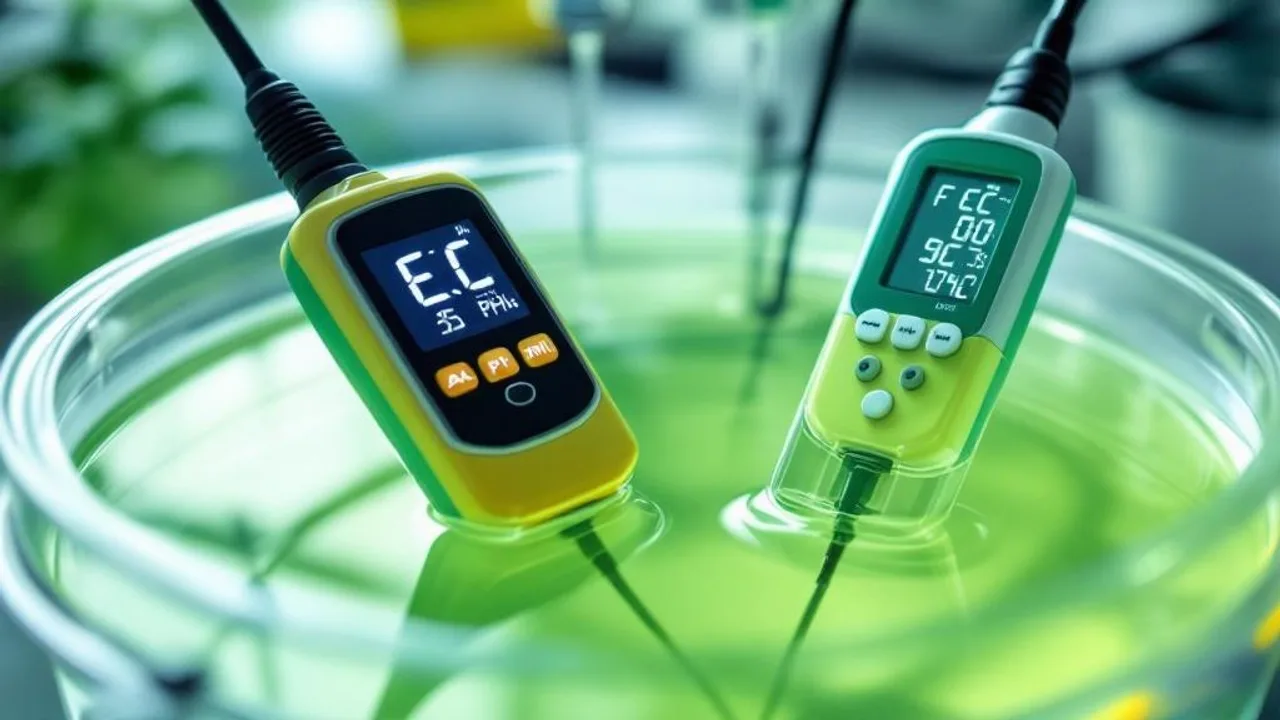
Nutrient concentrations in aeroponic cannabis must be adjusted carefully by growth stage — more so than in almost any other system . Because nutrient uptake is so efficient, EC targets run noticeably lower than in DWC or coco:
| Stage | EC (mS/cm) | pH | Notes |
|---|---|---|---|
| Seedling / Clone | 0.6–1.0 | 5.8–6.0 | Start light, watch for tip burn |
| Early Veg | 1.0–1.4 | 5.7–6.0 | Add cal-mag at 150–200 ppm |
| Late Veg | 1.4–1.8 | 5.6–5.9 | Transition feed, ramp K |
| Early Flower | 1.8–2.2 | 5.7–6.0 | P and K up, N down |
| Peak Flower | 2.0–2.4 | 5.7–6.0 | Cap at 2.4 — burn risk |
| Flush | 0.0–0.4 | 6.0 | Plain RO final 7–10 days |
Cal-mag supplementation is non-negotiable when feeding RO-based solutions. We recommend running calcium at 150–200 ppm and magnesium at 50–75 ppm throughout. Use our nutrient calculator to dial in exact mixes, and the pH management guide for daily maintenance.
Aeroponic reservoirs drift fast. Because uptake is so efficient and the solution volume is relatively small, EC can shift 0.3–0.5 points per day under heavy canopy demand. Check twice daily during flower and top up with half-strength nutrient solution rather than letting concentrations crash.
Aeroponics vs DWC: The Comparison That Actually Matters
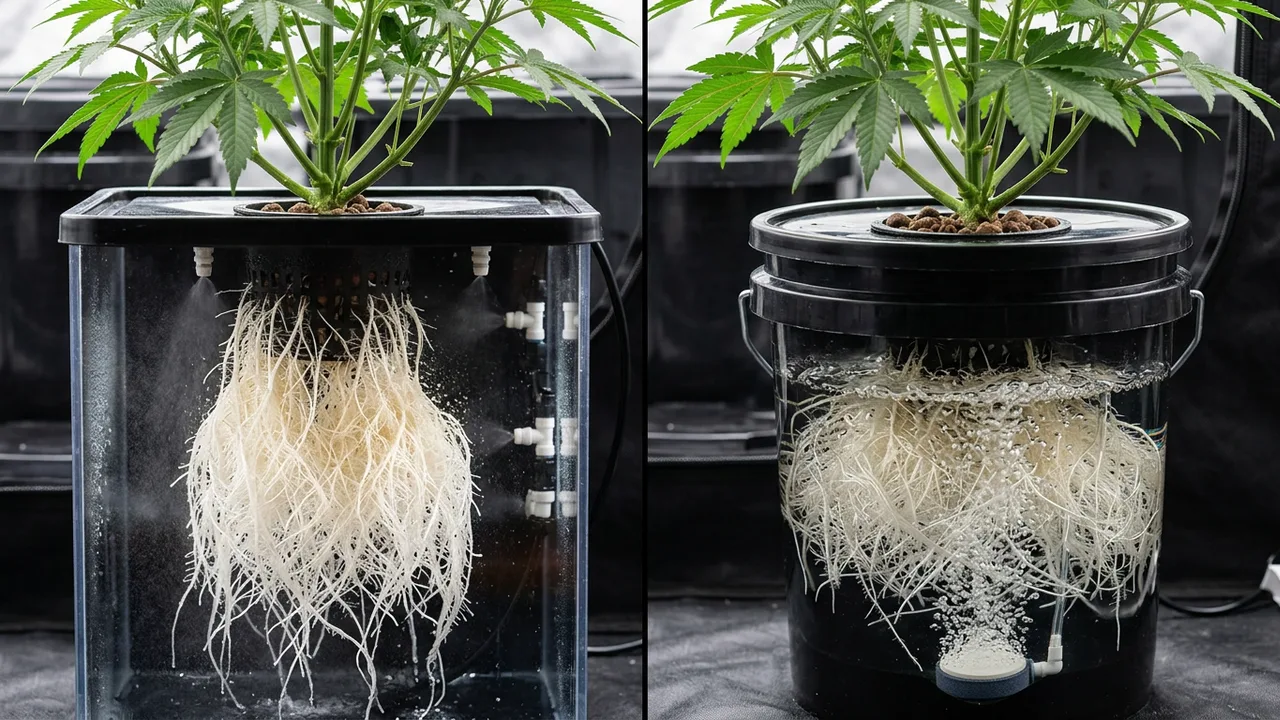
This is the question every advanced grower asks before committing. Both are soilless, both deliver rapid growth, both require electrical reliability. Here's the honest breakdown:
| Factor | Aeroponics (HPA) | DWC |
|---|---|---|
| Root Zone O₂ | Exceptional (atmospheric) | Good (8–10 mg/L max) |
| Growth Speed | Fastest available | Very fast |
| Build Complexity | High | Moderate |
| Failure Tolerance | 30 minutes | 12–24 hours |
| Water Use | Very low | Moderate |
| Pest/Pathogen Risk | Low (sealed chamber) | Moderate |
| Beginner Friendly | No | Yes |
| Nutrient Precision | Extreme (±0.05 EC matters) | High |
For most home growers building their first hydroponic system, DWC is the correct answer. Aeroponics becomes worth it when you've already mastered DWC and want to push cycle times down further, or when you're doing work — breeding, phenotype hunting, research — where root access and cycle speed directly translate to productivity.
Is Aeroponics Worth It for Home Growers in 2026?
The honest answer: it depends entirely on your goals and your tolerance for technical risk. After running comparison trials across DWC, coco, ebb and flow, and both LPA and HPA setups, our take is this:
Aeroponics Makes Sense For:
- Commercial-minded home growers running perpetual harvests where shaving a week off veg compounds across crops
- Breeders and pheno hunters who need to evaluate many plants quickly and want visual root access
- Tinkerers who genuinely enjoy building, monitoring, and dialing in systems
- Growers with reliable power and the discretionary budget for UPS backup, RO, and chillers
Stick With DWC or Coco If:
- This is your first or second indoor grow
- You travel frequently or can't respond to an alarm within 30 minutes
- Your power grid is unreliable and you don't have generator backup
- You're happy with current yields and just want consistent, low-drama harvests
Best Cannabis Genetics for Aeroponic Growing
Aeroponics rewards vigorous, fast-rooting genetics with resilient vascular systems. Stretchy sativas that throw deep root masses fast tend to thrive; heavy indicas with slower root development can underperform relative to their potential. Strains we've seen respond well across our and other growers' trials:
- Super Lemon Haze — 23% THC, vigorous root development, classic sativa response to oxygen-rich zones
- OG Kush — 26% THC, dense rooting, exceptional terpene production under aeroponic stress
- Sour Diesel — 24% THC, stretchy and fast, handles aggressive feeding well
- White Widow — 25% THC, extremely resilient and forgiving for aeroponic learners
- Quantum Kush — 30% THC, rewards precision feeding with massive yields
Industry staples that also perform exceptionally well in aeroponic setups include Gorilla Glue (GG4), Wedding Cake, Gelato, and Zkittlez — all known for vigorous root architecture and responsiveness to controlled environments. For broader recommendations, our best yielding strains guide cross-references yield potential with grow method.
Before committing an unknown pheno to HPA, run it in LPA or DWC first. Aeroponic stress amplifies everything — a plant that shows minor nutrient sensitivity in coco will throw a tantrum in HPA. Prove the pheno, then promote it.
Frequently Asked Questions
What is aeroponics cannabis growing?
Aeroponics is a soilless cannabis cultivation method where roots are suspended in air inside a sealed chamber and misted every 30–60 seconds with oxygenated nutrient solution . The air gap between mist cycles provides exceptional root zone oxygen, accelerating nutrient uptake and growth.
What's the difference between low-pressure and high-pressure aeroponics?
LPA runs at 20–50 PSI using submersible pumps, producing coarse 100–500 micron droplets. HPA runs at 80–120 PSI using diaphragm pumps and accumulator tanks, producing 50-micron droplets associated with maximum nutrient absorption efficiency. HPA delivers superior results but requires significantly more equipment and maintenance.
How often should I mist aeroponic cannabis roots?
In LPA, typical cycles run 30–60 seconds on with 3–5 minutes off. In HPA, cycles are much shorter: 1–3 seconds on with 30–90 seconds off. Adjust based on root color, turgor, and canopy demand — roots should look white and glossy, never wilted or brown.
What happens if my aeroponic pump fails?
Exposed aeroponic roots can die within approximately 30 minutes without misting. Always run redundant pumps, UPS backup power, low-pressure alarms, and keep a pressurized hand sprayer with nutrient solution as an emergency manual backup.
Is aeroponics better than DWC for cannabis?
Aeroponics offers higher root zone oxygen and potentially faster growth, but DWC is far more forgiving, cheaper to build, and tolerates equipment failures for 12–24 hours instead of 30 minutes. For most home growers, DWC is the better practical choice; aeroponics makes sense for experienced growers, breeders, and commercial-scale operations.
What EC should I run in aeroponic cannabis?
Start seedlings and clones at 0.6–1.0 EC, progress to 1.4–1.8 in veg, and peak at 2.0–2.4 EC during flower . Aeroponic uptake is extremely efficient, so EC targets run lower than DWC or coco equivalents. Flush with plain RO water the final 7–10 days.
Sources & References
This article was researched and fact-checked using 4 verified sources including 2 peer-reviewed studies, 2 authoritative references.
- Yield, Characterization, and Possible Exploitation of Cannabis Sativa L. Roots Grown under Aeroponics Cultivation - PMC — pmc.ncbi.nlm.nih.gov/articles/PMC8401984 [Research]
- Characterization of the Biological Activity of the Ethanolic Extract from the Roots of Cannabis sativa L. Grown in Aeroponics — mdpi.com/2076-3921/11/5/860 [Research]
- How to Grow Marijuana with Aeroponics | Leafly — leafly.com/learn/growing/how-to-grow-marijuana-hydroponics-aeroponics-aquaponics/how-to-grow-marijuana-aeroponics [Reference]
- What is Aeroponics? | Cannabis Glossary | Leafly — leafly.com/learn/cannabis-glossary/aeroponics [Reference]