A sealed grow room cannabis setup promises faster growth, denser buds, and yield jumps that sound almost too good to be true. And for the right grower — with the right lights, the right budget, and a genuine respect for safety — it delivers. For everyone else, it's an expensive, complicated answer to a problem they don't actually have yet.
This guide gives you the honest version. We'll cover when CO2 enrichment actually moves the needle, the target ppm range that works, the safety issues nobody wants to talk about, and a real ROI calculation per harvest so you can decide if sealing up your space in 2026 is a smart play — or a pricey distraction.
Bottom line up front: If your PPFD is below roughly 900 µmol/m²/s at canopy, skip CO2 — your plants can't use it. If your lights are dialed in and you can seal the room properly, CO2 supplementation can increase crop size by 20–25% during the first 2–5 weeks of flower . Most hobby growers should fix lighting, VPD, and genetics first.
What Is a Sealed Grow Room (and Why CO2 Changes the Math)?
A sealed grow room is exactly what it sounds like: an enclosed cultivation space with no active exchange of air to the outside. Instead of pulling in fresh air with an inline fan and exhausting heat and humidity out, a sealed room handles everything internally — cooling with a mini-split or water-cooled system, pulling moisture with a dehumidifier, and crucially, supplementing CO2 to replace what the plants consume .
Ambient air sits around 400 ppm CO2 (0.04%), which is enough to support growth rates similar to outdoor cultivation . In a ventilated tent, fresh air constantly resupplies that baseline. But in a sealed environment, growers can push CO2 far above ambient — into the 1,200–1,500 ppm range where cannabis photosynthesis runs hardest, provided light and other inputs keep up .
That's the entire premise. Seal the room so you can control the atmosphere, then push CO2 high enough to feed plants that are getting more light than ambient air can support. It's an advanced-cultivation move, not a beginner fix.
Sealed vs Ventilated: What Actually Changes
| Factor | Ventilated Tent | Sealed Room + CO2 |
|---|---|---|
| CO2 supply | Ambient 400 ppm | Supplemented 1,200–1,500 ppm |
| Temperature control | Exhaust fan + intake | Mini-split AC (no air exchange) |
| Humidity control | Exhaust-driven | Standalone dehumidifier |
| Odor control | Carbon filter on exhaust | Internal scrubber or none needed |
| Complexity | Low | High |
| Upfront cost | $ | $$$–$$$$ |
If you're still working out basic airflow in a tent, our carbon filter and CFM sizing guide is the better starting point before you even think about sealing.
Why Growers Seal Rooms: The CO2 Enrichment Payoff
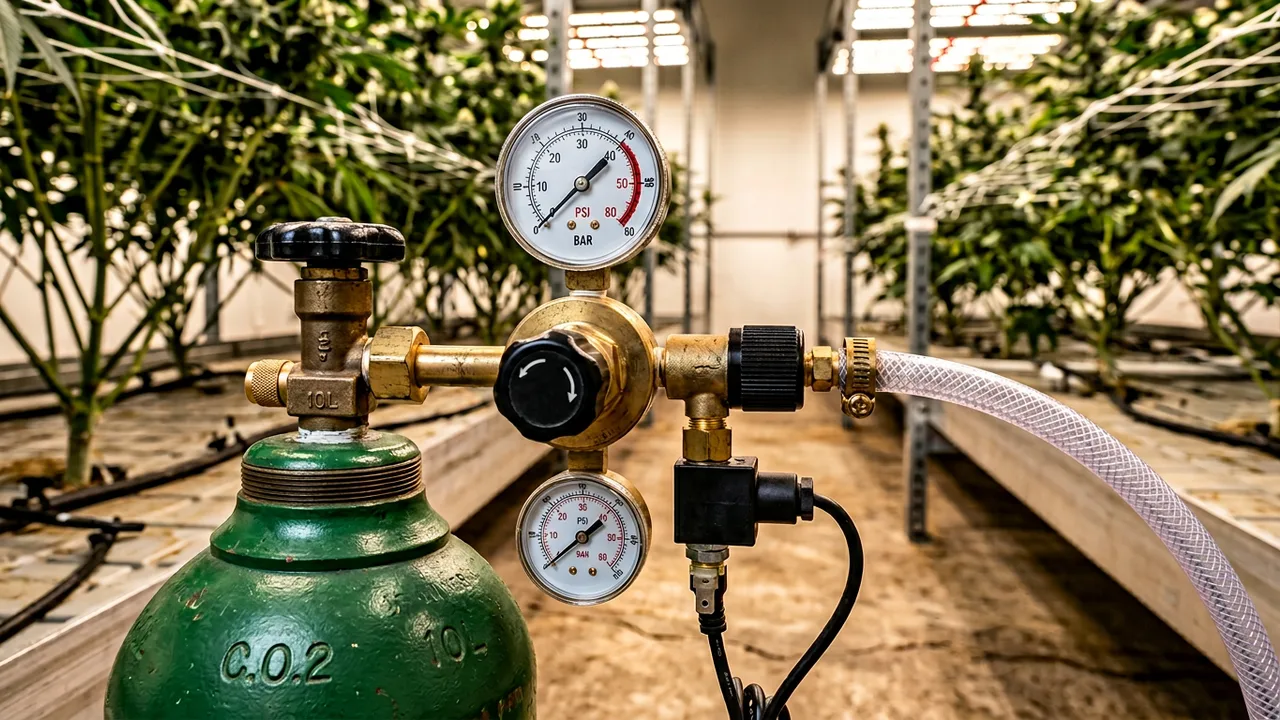
The one real reason to seal a room is CO2 supplementation. Everything else — pest exclusion, odor control, tighter environmental stability — is secondary and, frankly, achievable in a well-designed ventilated space. Sealed grow rooms exist to enable elevated CO2 .
Here's why that matters. Plants build sugars through photosynthesis using CO2, water, and light. In a well-lit environment, CO2 becomes the limiting factor long before light does — your lamps are blasting photons at leaves that simply can't find enough CO2 molecules to keep up. Push CO2 up, and photosynthesis accelerates. The reported payoff: crop-size increases of 20–25% when CO2 is supplemented during the first 2–5 weeks of flowering, assuming light, heat, water, and nutrients are already dialed in .
That "assuming" is doing a lot of work. CO2 is a yield multiplier on a dialed-in grow, not a rescue for a marginal one. If your VPD is off, your feed is sloppy, or your light coverage is patchy, adding CO2 does almost nothing.
What CO2 Is Not
- Not a fix for weak lighting. Below roughly 12,330 lux / 1,150 fc at canopy, keeping CO2 at 400 ppm is sufficient — added CO2 beyond ambient isn't useful .
- Not a substitute for training. Canopy management and plant training still determine how much of that photosynthesis reaches the bud sites.
- Not unlimited. Excess CO2 can slow or stop photosynthesis outright .
Optimal CO2 Levels: The 1,200–1,500 ppm Target
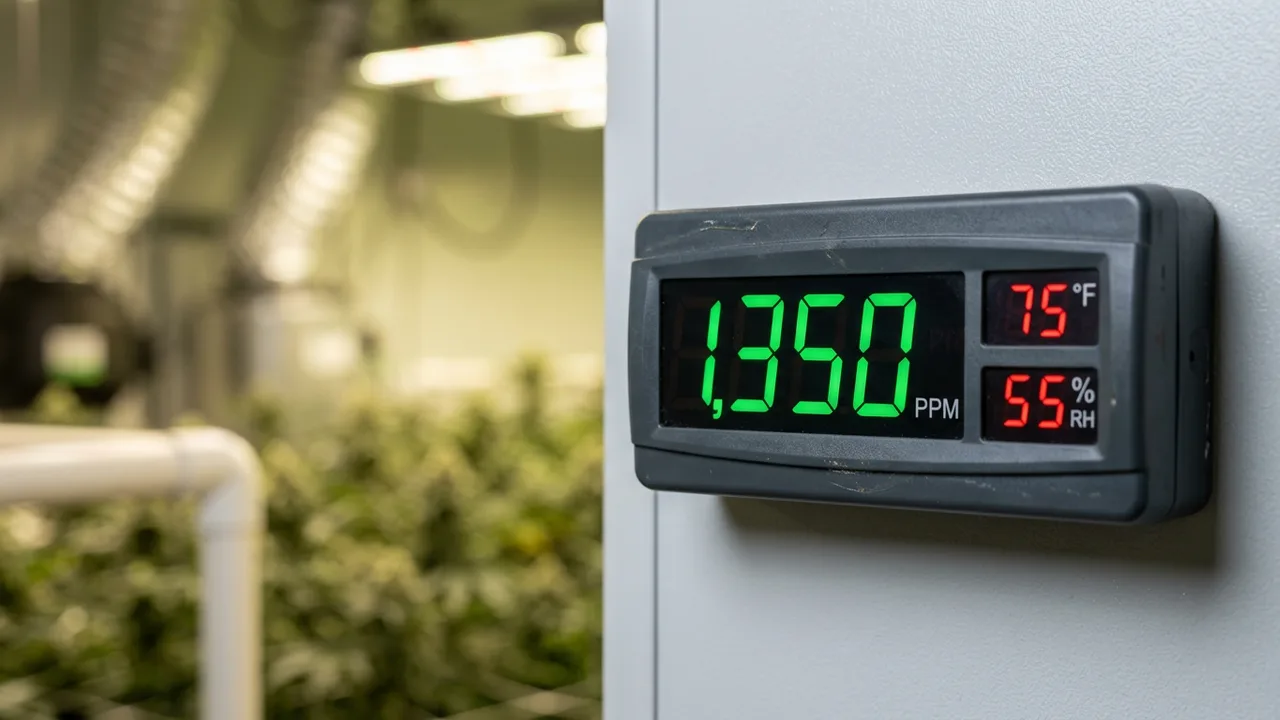
The consensus target for cannabis in an enclosed grow space is 1,200–1,500 ppm CO2 . Below that range, you're not getting much above ambient payoff. Above it, you risk slowing photosynthesis and wasting gas.
As the CO2Meter editorial team puts it: "Growers have achieved the best success with CO2 levels between 1,200ppm and 1,500ppm. However, you cannot simply increase the CO2 level unless your plants can use it."
That second sentence is the whole game. CO2 only helps plants that have the light intensity to use it. Dump 1,500 ppm into a low-light tent and you've just spent money to produce no extra yield — or worse, as the same source notes: "On the other hand, if a plant gets too much CO2 it will slow down or even stop photosynthesis. The trick is finding the right CO2 level for a grow space to maximize photosynthesis and yield."
ppm Ranges at a Glance
| CO2 Level | What Happens |
|---|---|
| ~400 ppm | Ambient baseline — normal outdoor/ventilated growth |
| 800–1,000 ppm | Mild enrichment — benefit only if light is strong |
| 1,200–1,500 ppm | Optimal cannabis range in a sealed room |
| 1,500+ ppm | Diminishing returns; risk of slowed photosynthesis |
| 5,000+ ppm | Occupational exposure limit — unsafe for humans |
Timing CO2 Supplementation in the Flowering Cycle
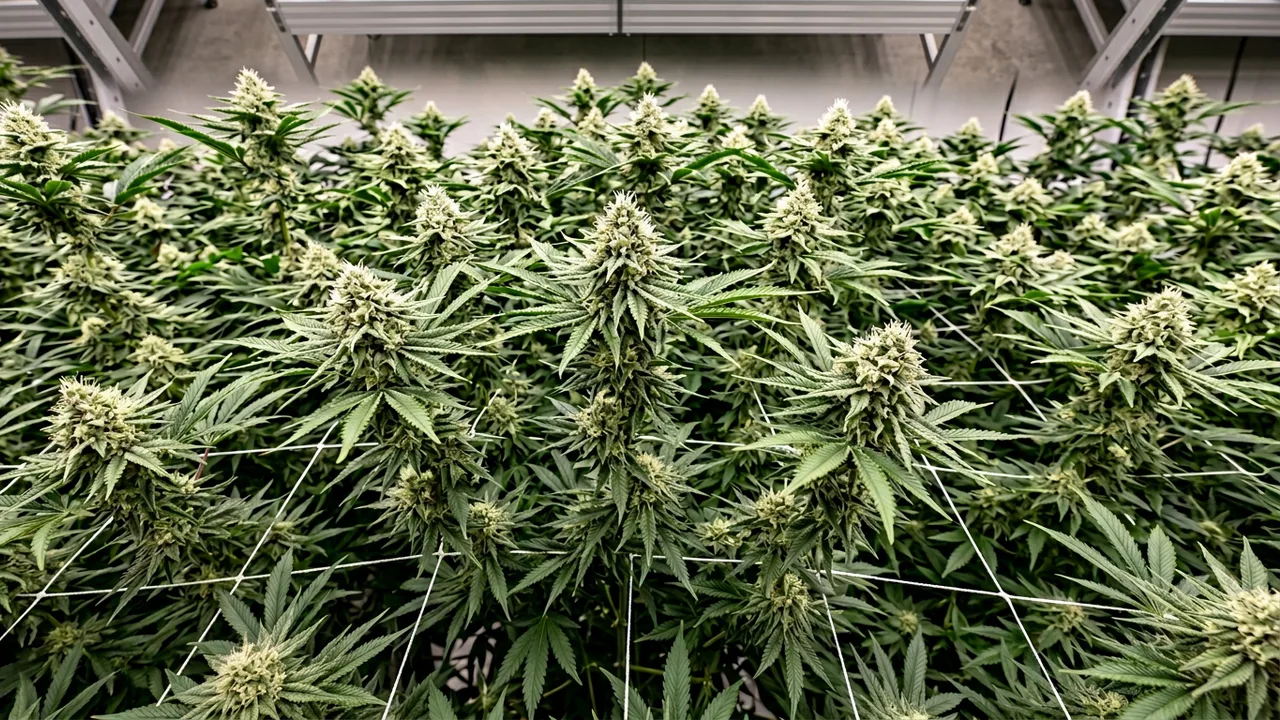
Not every week of the grow benefits equally from CO2. The highest-leverage window is weeks 2–5 of flowering — the stretch-and-early-bulk phase when plants are building the framework for bud development and running photosynthesis at maximum capacity .
This timing matters for two reasons. First, it's when the plant's carbon demand peaks. Second, it lets you be more economical with CO2 — you're not running the tank 24/7 from seedling to harvest, just during the phase that moves the yield needle. For a refresher on what's happening biologically, see our flowering stage timeline guide.
Veg stage
Optional light enrichment (800–1,000 ppm) if light intensity supports it. Many growers skip CO2 entirely here — returns are smaller than in flower.
Flower weeks 1–2
Ramp toward target as stretch begins. Start at ~1,000 ppm and climb.
Flower weeks 2–5 (peak window)
Hold 1,200–1,500 ppm during lights-on only. This is the period where CO2 delivers the reported 20–25% crop-size boost .
Flower weeks 6+ to harvest
Many growers taper CO2 as bud development slows and focus shifts to ripening. Returns shrink in late flower.
CO2 is only useful during the photoperiod. Plants don't fix carbon in the dark, so turn supplementation off during lights-off. Running CO2 24/7 wastes gas and builds unnecessary concentration.
The Light–CO2 Relationship: Why Sealing Alone Isn't Enough
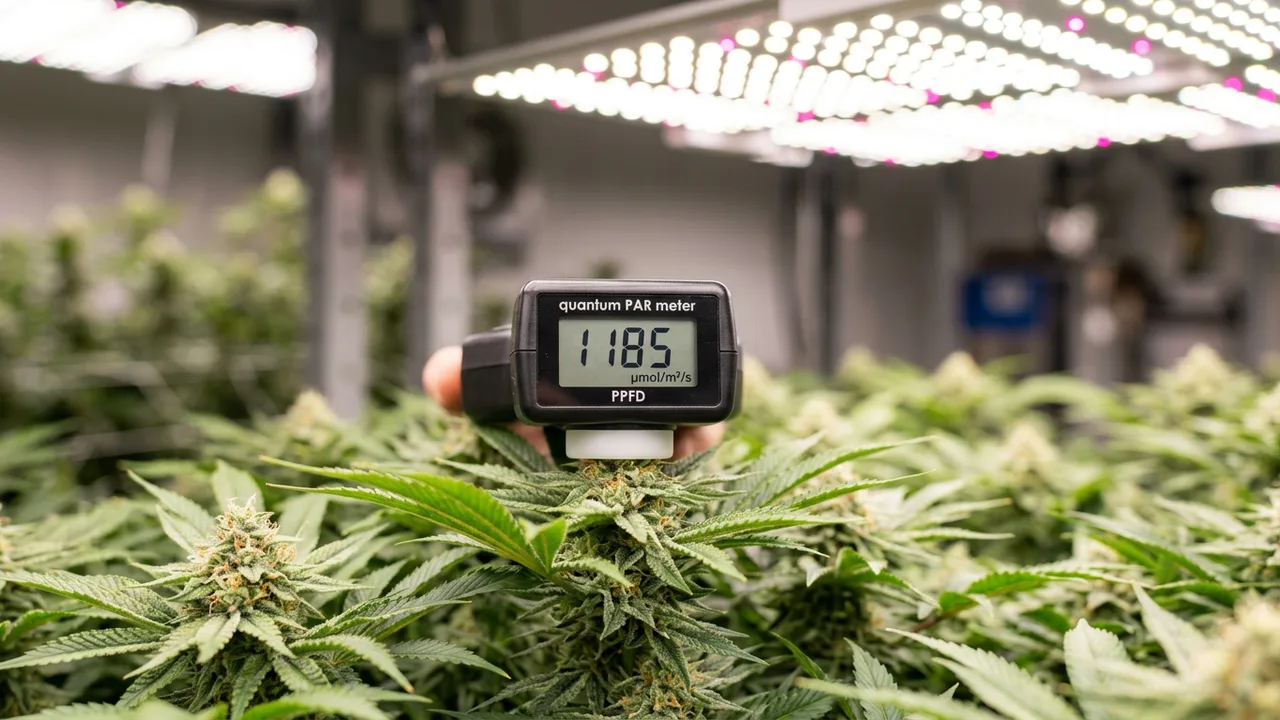
Here's the single most important concept in this guide: CO2 is useless without enough light. The two work as a pair. Elevated CO2 only pays off when photosynthesis is already bottlenecked by CO2 availability — and that only happens when light intensity is high enough to saturate what ambient 400 ppm can support .
The published threshold: below roughly 12,330 lux / 1,150 fc at canopy, keeping CO2 at 400 ppm is sufficient. Anything above ambient won't help at that light level . In PPFD terms that most modern growers use, CO2 supplementation becomes genuinely useful around PPFD 900+ µmol/m²/s at canopy — the intensity range where high-end LEDs and double-ended HPS start outrunning ambient CO2 supply.
Reality check: If you're running a budget LED in a 4x4 tent pushing 600 PPFD at canopy, CO2 will not give you a 20–25% boost. Upgrade the light first. Period.
How to Check If Your Light Supports CO2
- Measure PPFD at canopy with a quantum meter (not a lux meter for LEDs)
- Target 900+ µmol/m²/s average across the canopy during flower
- Verify even coverage — hotspots and dark corners cancel out gains
- Confirm your VPD is in range (use our VPD calculator)
- Confirm feed EC and pH are dialed for the increased growth rate
If any of those boxes is shaky, fix them before spending a dime on CO2 gear. Our VPD chart guide and nutrient schedule guide are the right place to start.
Delivery Methods: Tank, Burner, or Bag?
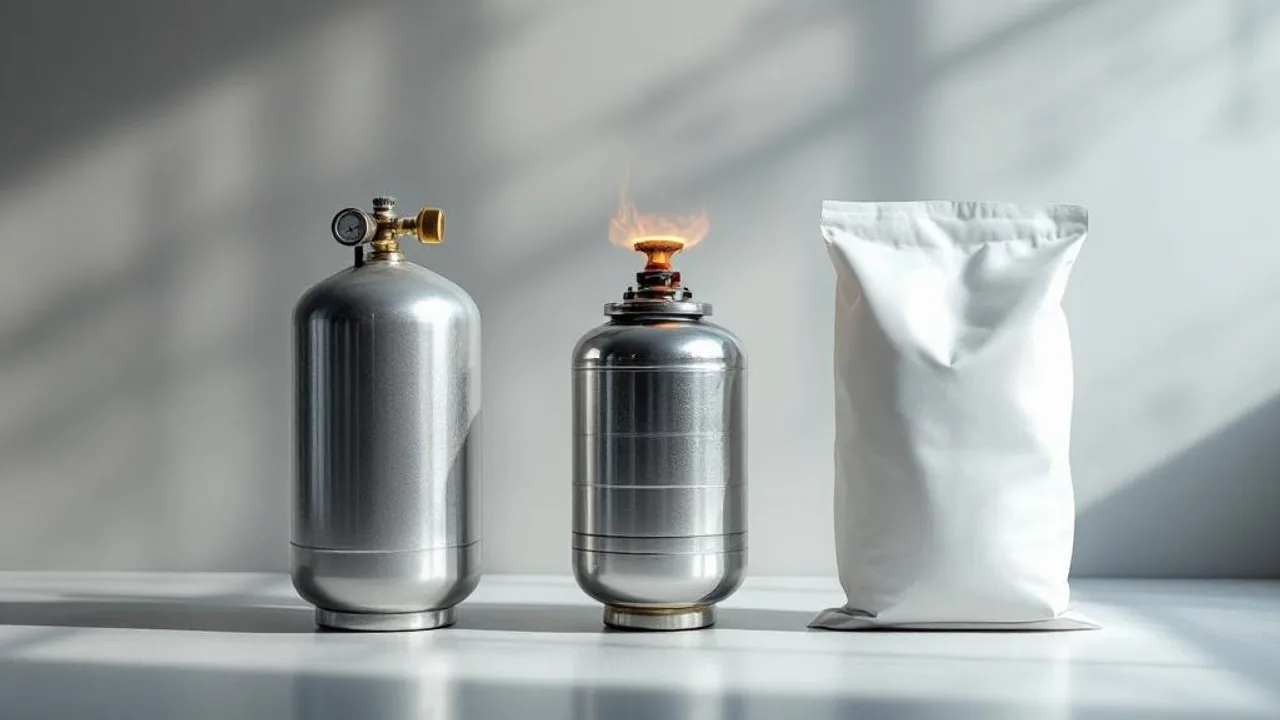
Three practical ways to add CO2 to a sealed room. Each has a use case — and a price tag.
Compressed CO2 Tank + Regulator
The gold standard for small-to-mid sealed rooms. You buy or lease a CO2 cylinder (20 lb or 50 lb), connect it to a regulator with a solenoid, and pair it with a CO2 controller that pulses gas to hold your ppm setpoint.
- Pros: Clean, no heat added, precise control, works for any room size
- Cons: Tanks run out; refills require a supplier; upfront gear cost $300–$600
- Best for: Tents and rooms up to about 10x10, growers who want precision
CO2 Burners (Natural Gas or Propane)
Burners combust fuel to produce CO2 as a byproduct. Efficient for large commercial rooms, but they also produce heat and water vapor — a lot of both. That means you need bigger AC and bigger dehumidification to handle the extra load.
- Pros: No tank refills; cheap per ppm in large rooms
- Cons: Adds heat and humidity; fuel line required; not tent-friendly
- Best for: Commercial grows 200+ sq ft with robust HVAC
CO2 Bags and Buckets (Mycelium-Based)
Passive bags produce CO2 through fungal respiration. They're cheap, but they can't hit 1,200+ ppm in a sealed room — they barely lift ambient in a tent.
- Pros: Cheap, simple, no equipment
- Cons: Output is too low and uncontrollable for real enrichment
- Best for: Honestly? Nobody chasing the 20–25% yield boost. Skip them.
For a home sealed room or tent, compressed tank + controller is the only delivery method that reliably hits and holds the 1,200–1,500 ppm range . Everything else is either marketing (bags) or overkill (burners).
Sealing, Cooling, and Dehumidification Requirements
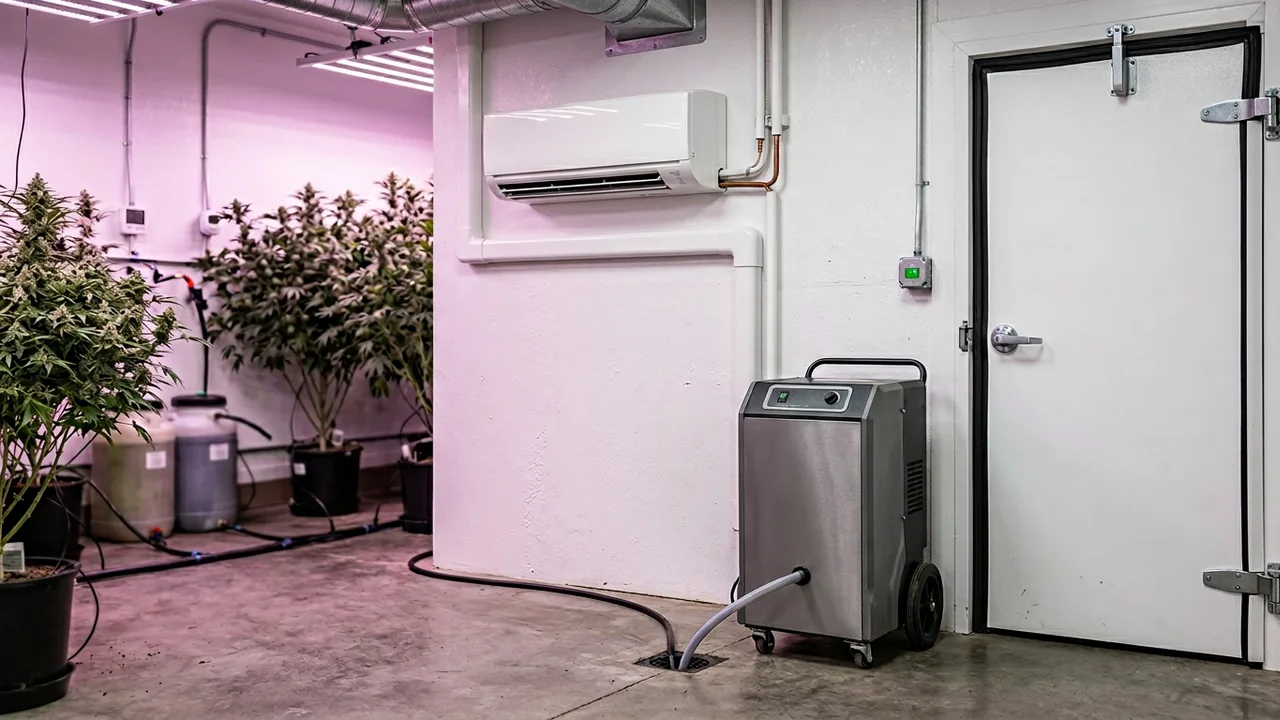
Sealing a room is more than taping the door shut. The space has to be tight enough that injected CO2 stays put rather than leaking into your living space — and the HVAC has to handle 100% of the heat and moisture load without any help from an exhaust fan.
We'll be honest about the limits of published guidance here: specific sealing techniques (caulk, spray foam, gasketed doors), exact mini-split BTU sizing, and exact dehumidifier pint-per-day capacity for sealed cannabis rooms aren't covered in peer-reviewed cannabis literature we can cite. What follows is framework-level guidance — for precise equipment sizing, work with an HVAC professional who has grown-room experience.
Sealing Framework
- Walls, ceiling, and floor should be finished with vapor-tight materials
- All penetrations (electrical, plumbing, duct stubs) sealed airtight
- Door should have a full gasket or sweep — a leaky door defeats CO2 enrichment
- If you must have a small intake/exhaust for emergencies, use motorized dampers that close during CO2 injection
HVAC Load Increases
Because there's no exhaust fan removing heat, every watt of light energy becomes an AC load. Plan for significantly more cooling capacity than a ventilated room of the same size. Dehumidifiers must handle the full transpiration load — plants sweat a lot of water, and without exhaust there's nowhere for it to go but the dehumidifier coil.
Our dehumidifier sizing guide covers the math for pint-per-day requirements and is worth reviewing before committing to a sealed build.
Safety: The Part Nobody Wants to Talk About
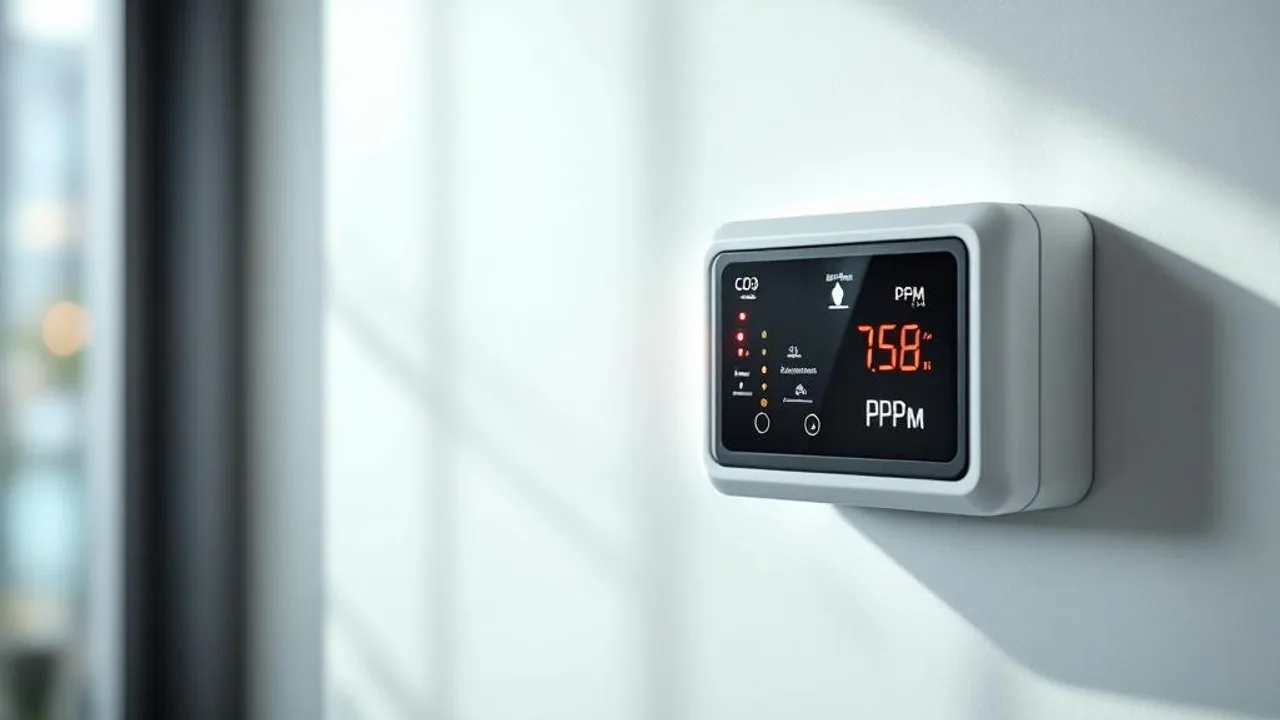
CO2 is odorless, colorless, and dangerous at elevated concentrations. You will not smell it. You will not see it. At high levels it causes headaches, dizziness, loss of consciousness, and in extreme cases death. Running CO2 in a home means accepting that responsibility.
Cannabis rooms typically target 1,200–1,500 ppm , which is well below acute danger levels — but leaks, stuck solenoids, overfilling, or venting into an adjoining living space can push concentrations far higher. A 50 lb tank dumping into a small sealed room can create a lethal atmosphere within minutes.
Non-Negotiable Safety Checklist
- Install a dedicated CO2 monitor/alarm in the grow space (not just the controller sensor — a separate alarm)
- Install a second CO2 alarm in any adjoining living area
- Use a CO2 controller with automatic shutoff on overdose
- Never enter the room during active CO2 injection without ventilating first
- Purge the room (open doors, run a fan) before extended work inside
- Keep tanks upright, secured, and away from heat
- Check all fittings with soapy water for leaks after every tank swap
- Never run burners in a space without proper combustion-gas monitoring
- Tell anyone who shares the building what CO2 does and where the alarms are
In over 15 years of covering cultivation equipment, the single most common CO2 failure we've seen is a stuck solenoid dumping gas into a room while the grower was away. A standalone CO2 alarm — not the controller's own sensor — is the backup that catches this. Spend the $80.
ROI Calculation: Is CO2 Worth It Per Harvest?

Let's do the math honestly. Assume a 4x4 sealed tent with a dialed-in 500W LED hitting PPFD 900+ at canopy, pulling a baseline yield of 1.5 lb per harvest without CO2.
Costs (Rough Estimates, 2026)
| Item | Upfront | Per Harvest |
|---|---|---|
| CO2 regulator + controller | $300–$500 | — |
| CO2 tank (50 lb, purchased) | $200 | — |
| Extra AC capacity (sealed) | $400–$800 | — |
| CO2 alarm (safety) | $80–$150 | — |
| CO2 refills | — | ~$30–$60 |
| Added electricity (AC/dehu) | — | ~$40–$100 |
Returns
If CO2 delivers the reported 20–25% crop-size boost on a 1.5 lb baseline, that's an extra 0.3–0.375 lb per harvest. At a conservative home-grower valuation of $1,000 per pound of finished flower, that's $300–$375 in additional value per harvest.
Break-Even Math
- Upfront: ~$1,000–$1,600 for gear
- Per-harvest return: $300–$375 in added yield, minus ~$80–$160 in consumables = ~$150–$290 net per harvest
- Break-even: 4–10 harvests
CO2 pays off for growers who (a) already have 900+ PPFD lighting, (b) run multiple harvests per year, and (c) will keep the setup running for 2+ years. If any of those are missing, the ROI math tips negative.
The Trade-Off: Energy Use and Carbon Footprint
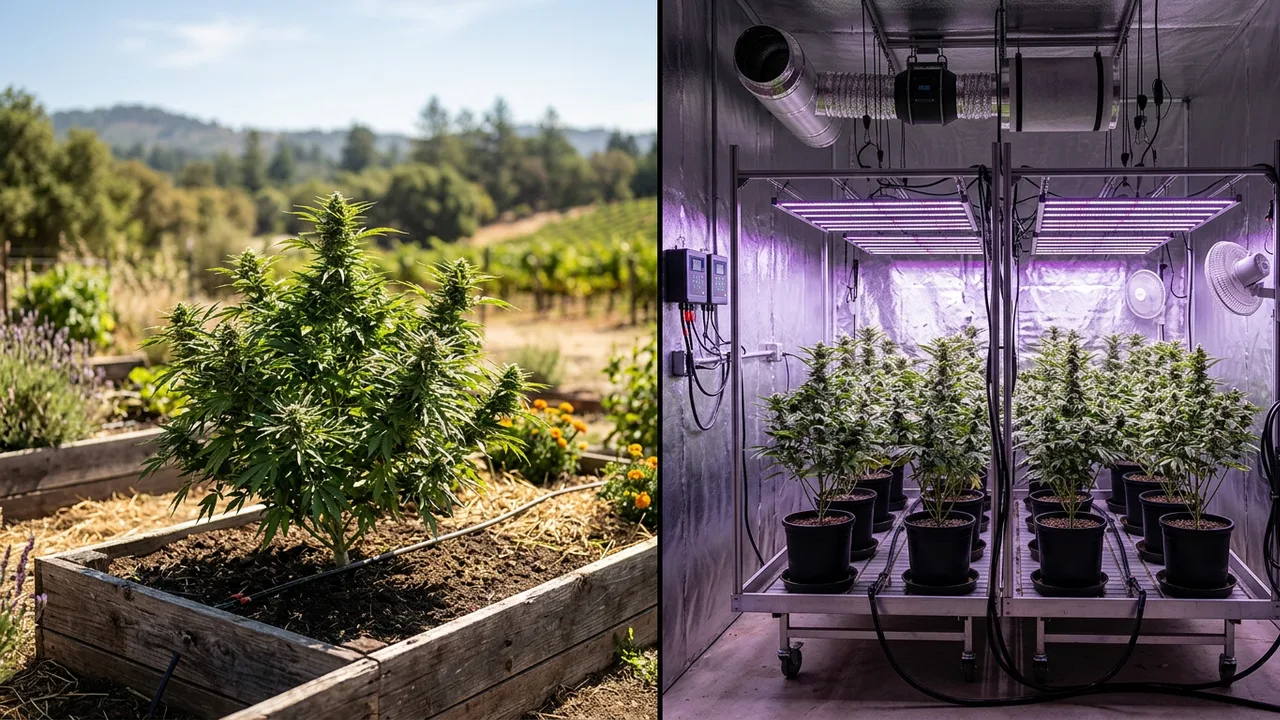
There's a sustainability conversation that gets dodged in most sealed-room content. Indoor cannabis cultivation is already energy-intensive and a major greenhouse gas emitter compared to outdoor cultivation . Sealing a room and adding CO2 injection, extra AC, and heavier dehumidification makes that footprint bigger, not smaller.
A life cycle assessment indicates outdoor cultivation could reduce cannabis production emissions by up to 76% compared to indoor . That's a real number worth sitting with. If you have legal outdoor options and your climate supports a season, outdoor is the lower-impact path — and for many home growers, the lower-cost one too.
This doesn't mean sealed indoor is wrong. It means it's a premium choice with real environmental costs, and it deserves to be made consciously rather than by default.
When a Sealed Room Makes Sense — and When It Doesn't
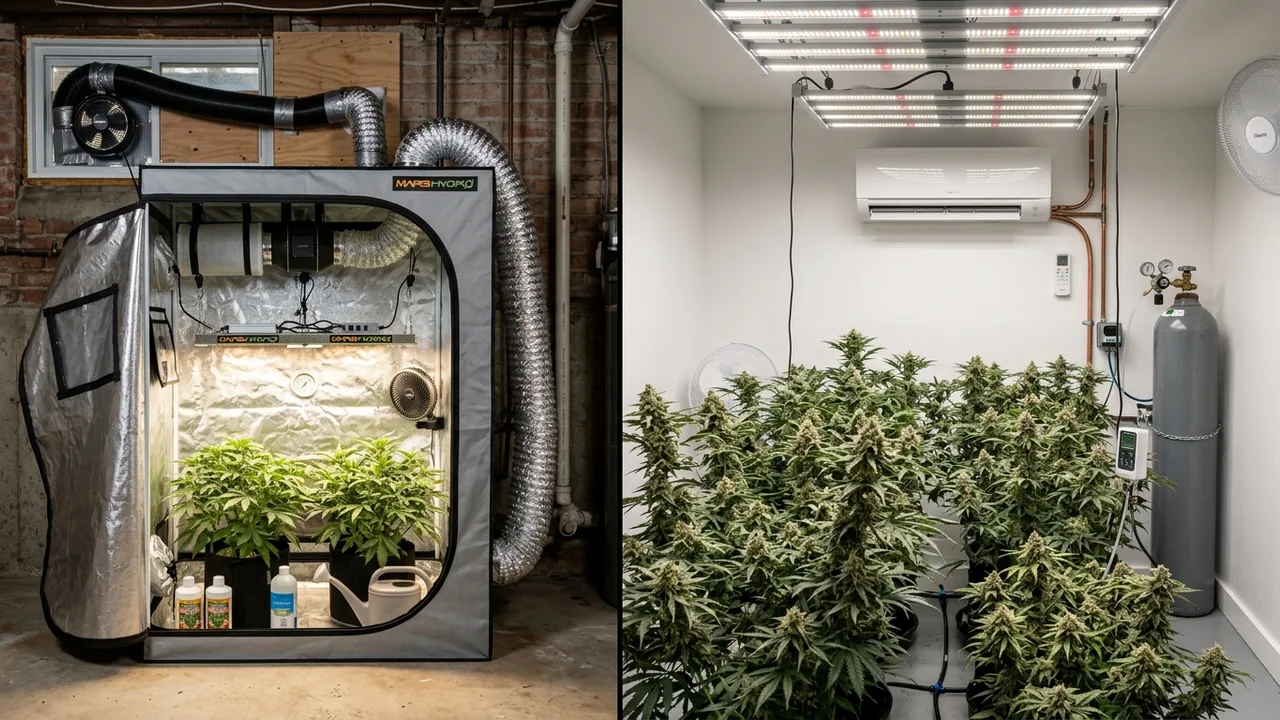
Sealed + CO2 Is Worth It If…
- Your lighting already delivers 900+ PPFD at canopy
- VPD, nutrients, and genetics are dialed in
- You run 3+ harvests per year
- You can commit to the safety protocols (alarms, monitors, training)
- You have the HVAC budget for proper cooling and dehumidification
- Local climate or regulations rule out outdoor cultivation
Stick With a Ventilated Tent If…
- You're in your first 1–3 grows
- Your light is under 500W / PPFD under 800
- Basic environmental control (temp, RH, airflow) isn't locked in yet
- You have outdoor or greenhouse options
- Budget is tight and yield gains could come cheaper from lighting or genetics upgrades
- You can't reliably run CO2 alarms and safety monitoring
For most hobby growers, the biggest yield unlock isn't CO2 — it's better genetics paired with proper training and VPD control. Strains like Northern Lights x Big Bud (20% THC, heavy-yielding indica-dominant), OG Kush (26% THC), or Quantum Kush (30% THC) will move the needle more than CO2 ever will in a sub-optimal room. Check our germination guarantee before you order.
Plan Your Setup Before You Buy
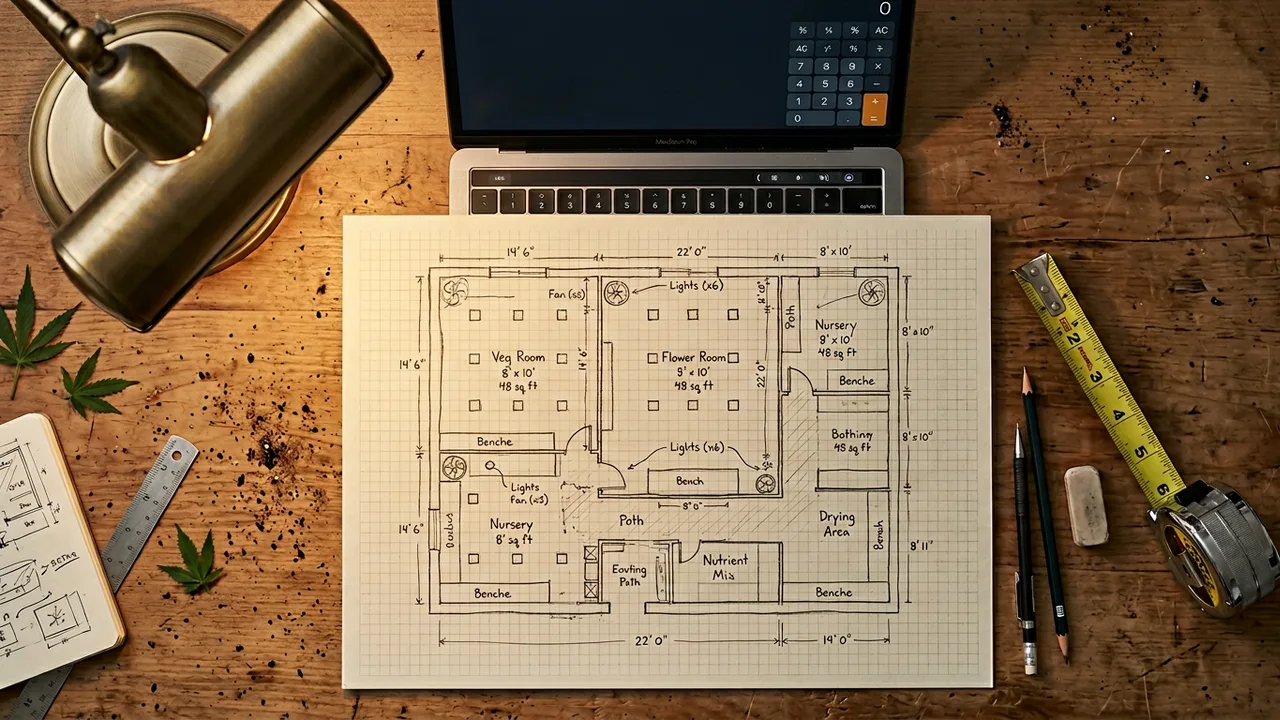
If you've read this far and still want to build a sealed CO2 room, good — you're going in with eyes open. Before you spend a dollar, run the numbers and map the space:
- Use our grow cost calculator to compare sealed vs ventilated total cost of ownership
- Use our yield estimator to model the 20–25% boost against your current baseline
- Check our light calculator to confirm your fixture actually hits 900+ PPFD
- Review our full grow room setup guide for the foundational build
A sealed CO2 room is a serious investment — financially, operationally, and in terms of the attention it demands. Done right, it's one of the most productive indoor setups possible. Done wrong, it's an expensive way to produce the same yield you'd get from a ventilated tent with better genetics.
Frequently Asked Questions
What's the optimal CO2 ppm for cannabis?
The target range for cannabis in an enclosed grow space is 1,200–1,500 ppm . Above that, photosynthesis can slow or stop, and you waste gas. Below that, the boost over ambient 400 ppm is minimal.
Do I need a sealed room to use CO2?
Effectively, yes. In a ventilated tent with an exhaust fan running, injected CO2 gets pulled out almost as fast as you add it. Hitting and holding 1,200–1,500 ppm requires a sealed or near-sealed environment — otherwise you're paying for gas that goes straight outside.
When during flower is CO2 most effective?
Weeks 2–5 of flowering is the highest-leverage window, when plants are building bud framework and running photosynthesis at maximum . Many growers taper CO2 in late flower as growth slows.
Will CO2 work with my 300W LED?
Probably not meaningfully. Below roughly 12,330 lux / 1,150 fc at canopy, CO2 above 400 ppm doesn't help . A 300W LED in a 4x4 tent typically falls short of that threshold. Upgrade lighting first.
Is CO2 supplementation dangerous?
CO2 is odorless and colorless. At the 1,200–1,500 ppm used for cannabis it's below acute danger thresholds, but leaks, stuck solenoids, or small enclosed spaces can push levels far higher. Always use a standalone CO2 alarm, a controller with automatic shutoff, and ventilate before entering during active injection.
Are CO2 bags worth buying?
For hitting real enrichment levels (1,200+ ppm ), no. Mycelium-based CO2 bags produce too little CO2 and offer no control. They won't deliver the yield boost associated with proper supplementation.
How much yield increase can I realistically expect?
Published figures cite 20–25% crop-size increases during the first 2–5 weeks of flowering — but only when other inputs (light, heat, water, nutrients) are dialed in . In a suboptimal grow, the boost can be close to zero.
Is CO2 worth it for one plant in a 2x2 tent?
Almost never. Gear cost, safety overhead, and the small absolute yield gain make the ROI negative for tiny grows. Put the money into better lighting or genetics instead.
Does CO2 supplementation affect potency or terpenes?
Published evidence on cannabis specifically ties CO2 primarily to crop-size increases . We have limited peer-reviewed data on cannabinoid or terpene-percentage impacts from CO2 alone — environmental factors like VPD, harvest timing, and genetics remain the primary levers for potency.
What's the environmental cost of running a sealed CO2 room?
Significant. Indoor cannabis cultivation is already a major greenhouse gas emitter compared to outdoor , and life cycle analysis suggests outdoor cultivation could reduce emissions by up to 76% relative to indoor . Sealing a room with CO2 injection and heavier HVAC increases that footprint further.
Sources & References
This article was researched and fact-checked using 3 verified sources including 2 peer-reviewed studies, 1 community resource.
- Energy-intensive indoor cultivation drives the cannabis industry’s expanding carbon footprint - ScienceDirect — sciencedirect.com/science/article/pii/S2590332225000053 [Research]
- Postharvest Operations of Cannabis and Their Effect on Cannabinoid Content: A Review - PMC — pmc.ncbi.nlm.nih.gov/articles/PMC9404914 [Research]
- How to Implement CO2 to your Grow – CO2 Meter — co2meter.com/blogs/news/how-to-implement-co2-to-your-grow [Community]