Walk into any grow shop in 2026 and you'll see two camps of LEDs staring back at you: the old purple-pink 'blurple' panels still kicking around on clearance, and the warm-white full-spectrum boards that took over commercial cultivation. The difference isn't marketing — it's photosynthesis. The cannabis light spectrum you choose changes how plants stretch, branch, flower, and even how many cannabinoids they pack into trichomes .
This visual guide breaks down what each band of the spectrum actually does, what the research says about UV and far-red supplementation, and how to match light intensity to growth stage. We'll cite the peer-reviewed work — including a 2025 Scientific Reports far-red trial and a Korean dynamic-spectrum study — and call out where the science is still genuinely contested.
What the Light Spectrum Actually Is
Photosynthetically Active Radiation (PAR) is the slice of sunlight between 400 and 700 nanometers that drives photosynthesis . Every wavelength inside that window does a different job — and a few wavelengths just outside it (UV below 400 nm, far-red above 700 nm) act as signaling triggers that change plant behavior without contributing much energy.
Cannabis evolved under full-spectrum sunlight, which means it reads the ratio of colors hitting its leaves the way you read a clock. As Nebula Haze of Grow Weed Easy puts it: "Over the years, scientists have learned that plants actually make 'decisions' about how to grow based on the spectrum of light they receive. A different color spectrum can change how cannabis germinates, grows, and even makes buds."
Spectrum is information, not just energy. Two fixtures with identical PPFD can produce wildly different morphology and chemistry depending on how they distribute photons across the 400-800 nm range.
The McCree Curve in Plain English
In the 1970s, K.J. McCree measured how efficiently plants convert each wavelength into photosynthesis. The curve peaks twice — once in blue (~440 nm) and once in red (~660 nm) — with a noticeable dip in green. That dip is why early LED makers loaded panels with red and blue diodes only, ignoring green entirely. The result: blurple lights that looked scientific but ignored the signaling role of the rest of the spectrum .
Visual Breakdown: How Different Fixtures Distribute Light
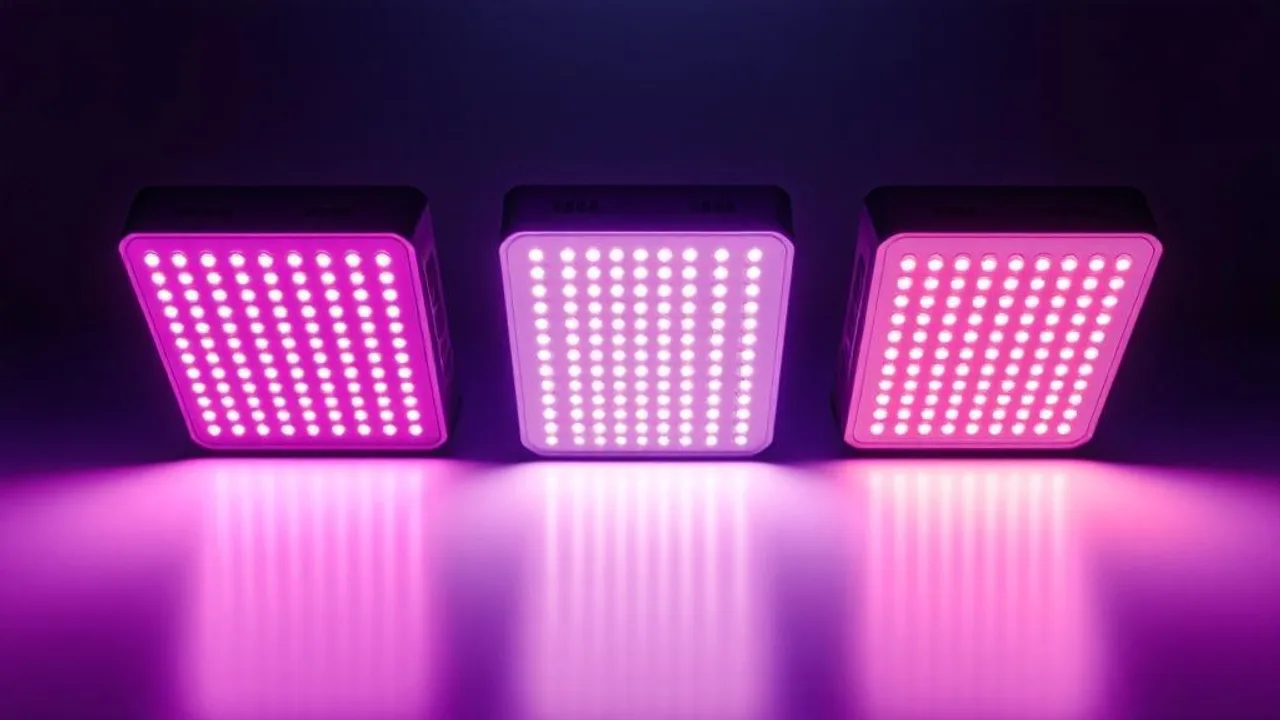
The clearest way to understand spectrum is to compare what comes out of three common fixtures. A study analyzing two LEDs and an HPS lamp found dramatically different distributions across the PAR range :
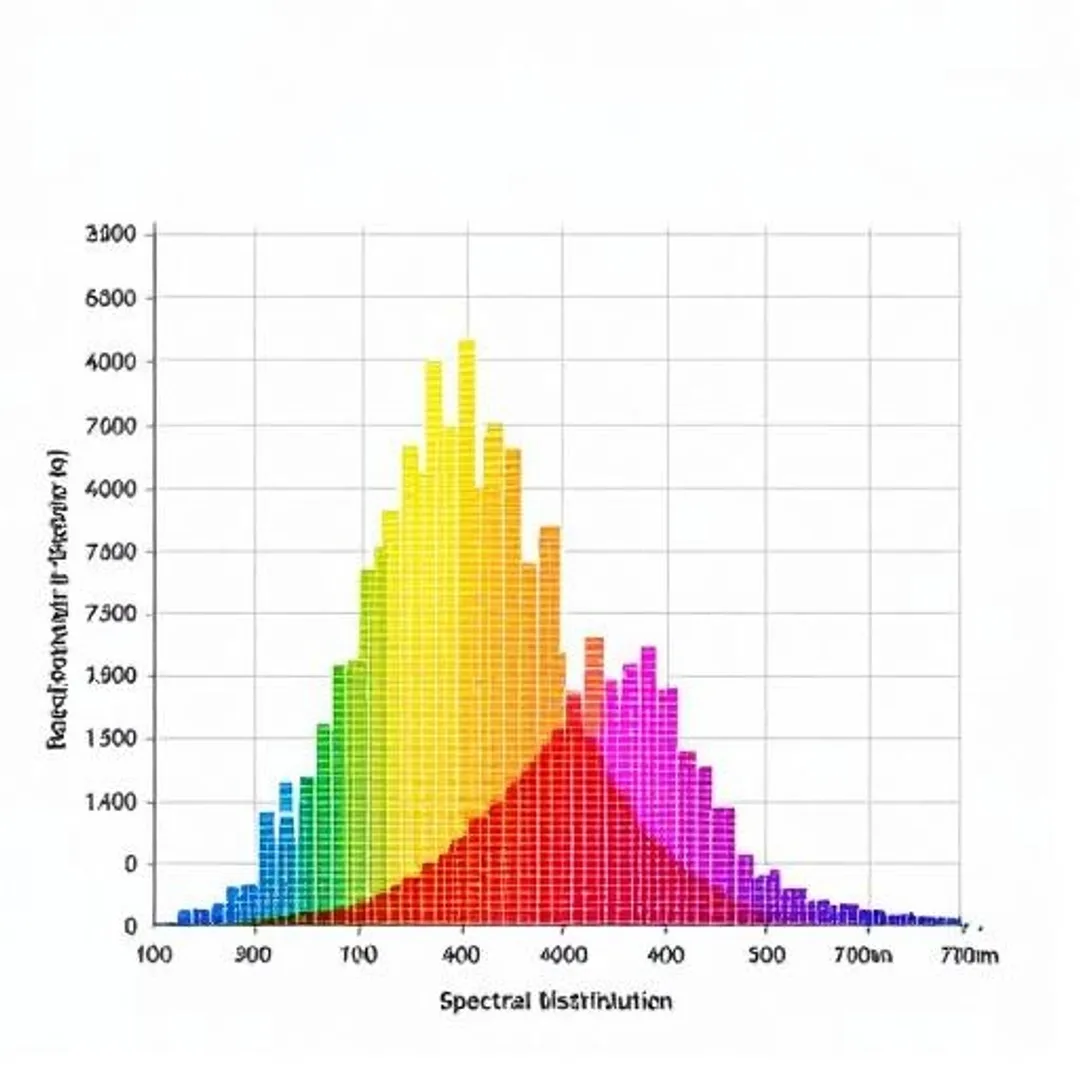
| Wavelength Band | NS1 LED | AP673L LED | HPS |
|---|---|---|---|
| 500-600 nm (green/yellow) | 68% | 20% | 37% |
| 600-700 nm (red) | 21% | 59% | 33% |
| Total within 400-700 nm PAR | 93-96% | 93-96% | 93-96% |
Source: spectral analysis published in PMC . Notice all three fixtures put 93-96% of their photons inside PAR — the difference is where inside PAR those photons land . The NS1 is green-heavy and looks white; the AP673L is red-heavy and looks pink; HPS sits in the middle with a yellow-orange cast.
This is why two grow lights advertised at the same wattage and PPFD can grow completely different-looking plants. Always look for the spectral distribution graph on a fixture's spec sheet, not just the photon flux number.
Blue Light (400-500 nm) and the Vegetative Stage
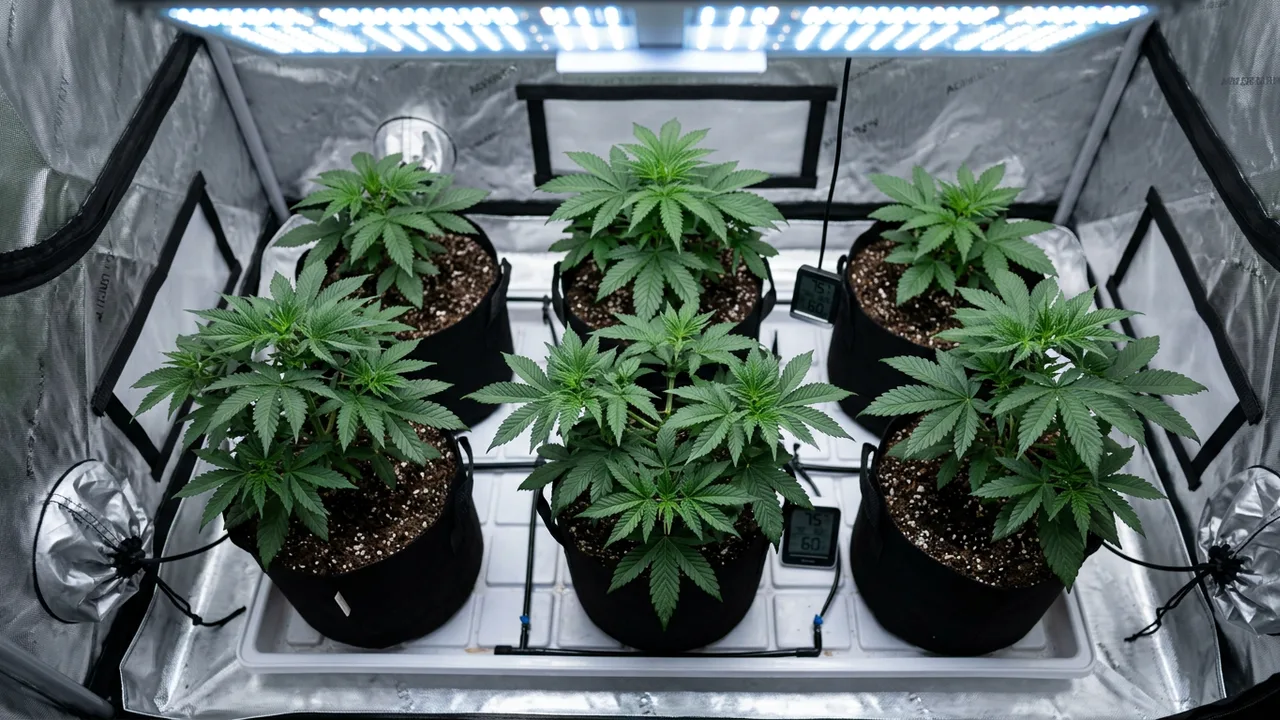
Blue light during veg promotes compact, bushy growth and shorter internodes . Plants under blue-rich light produce thicker stems, smaller darker-green leaves, and stay tighter — which is exactly what you want before flipping to flower in a confined tent.
Why Blue Tightens Internodes
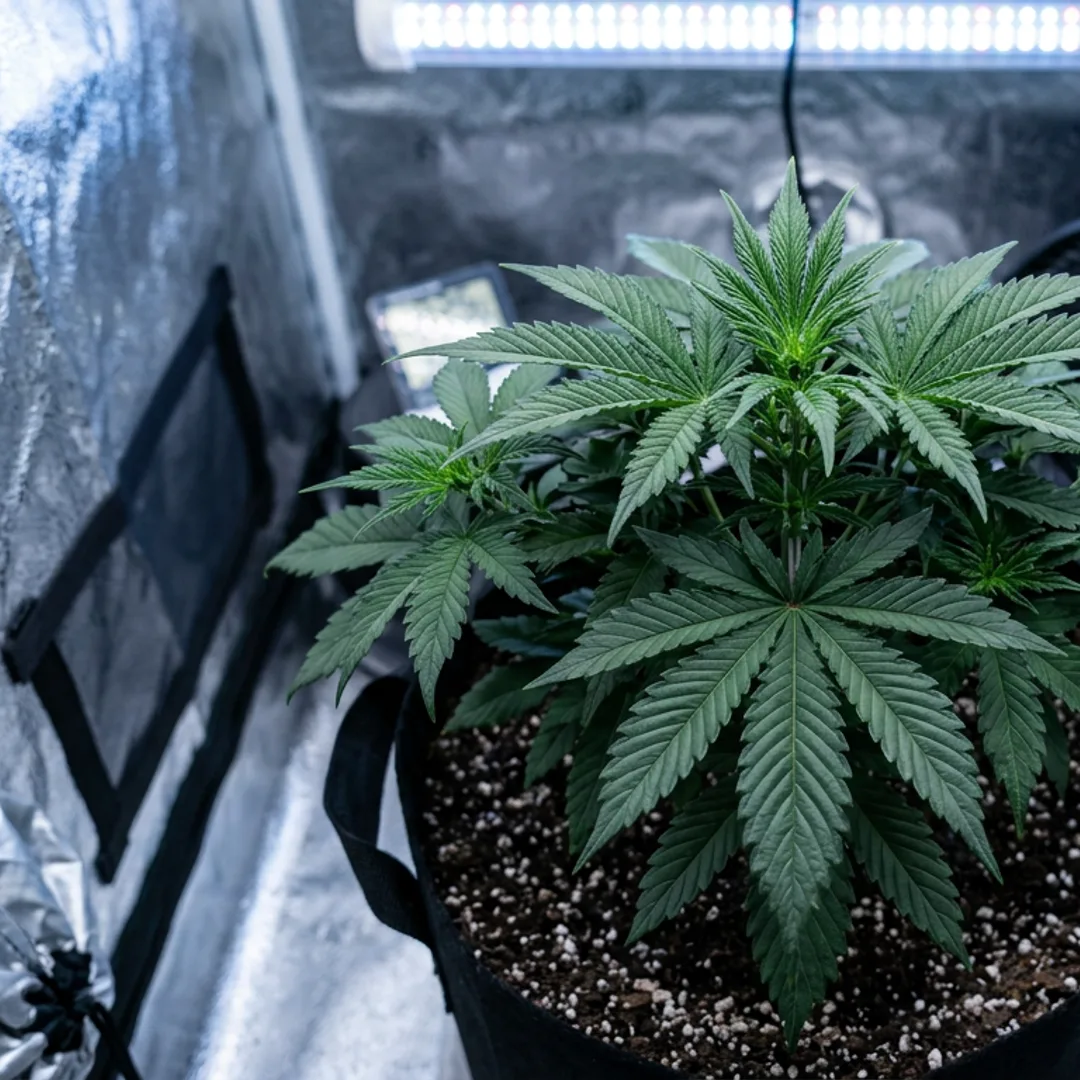
Blue photons activate cryptochrome and phototropin photoreceptors, which suppress stem elongation. The plant interprets a blue-heavy spectrum as 'I'm in direct sunlight, no need to stretch for light.' Drop the blue and add red, and the same plant suddenly thinks it's being shaded — and races skyward.
Practical Veg Spectrum Targets
- 5000-6500K white LEDs work well — they contain plenty of blue without sacrificing the rest of the spectrum
- PPFD: 400-600 μmol/m²/s through the photoperiod
- Photoperiod plants: 18/6 light cycle keeps them in veg indefinitely
- Pair with our light calculator to size the fixture to your tent footprint
For training-heavy methods like ScrOG or LST, the tight node spacing from blue-rich veg light gives you more bud sites per square foot once you flip.
Red Light (600-700 nm) and Flowering
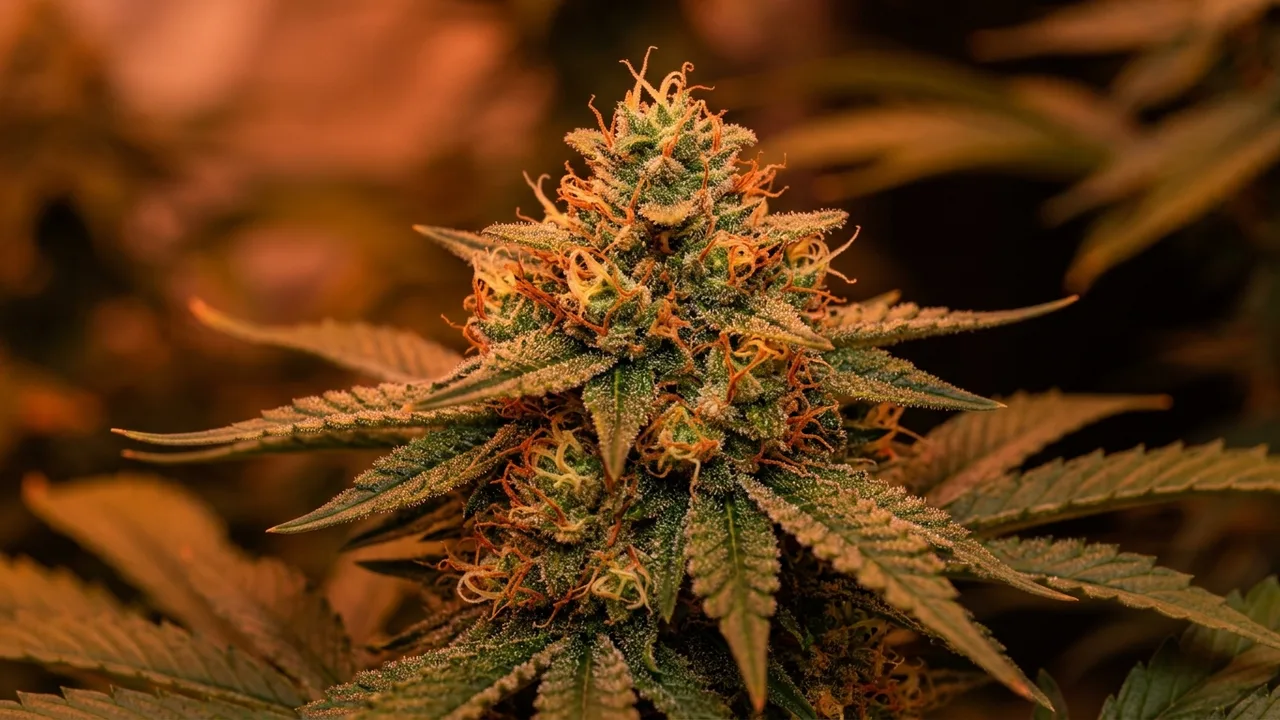
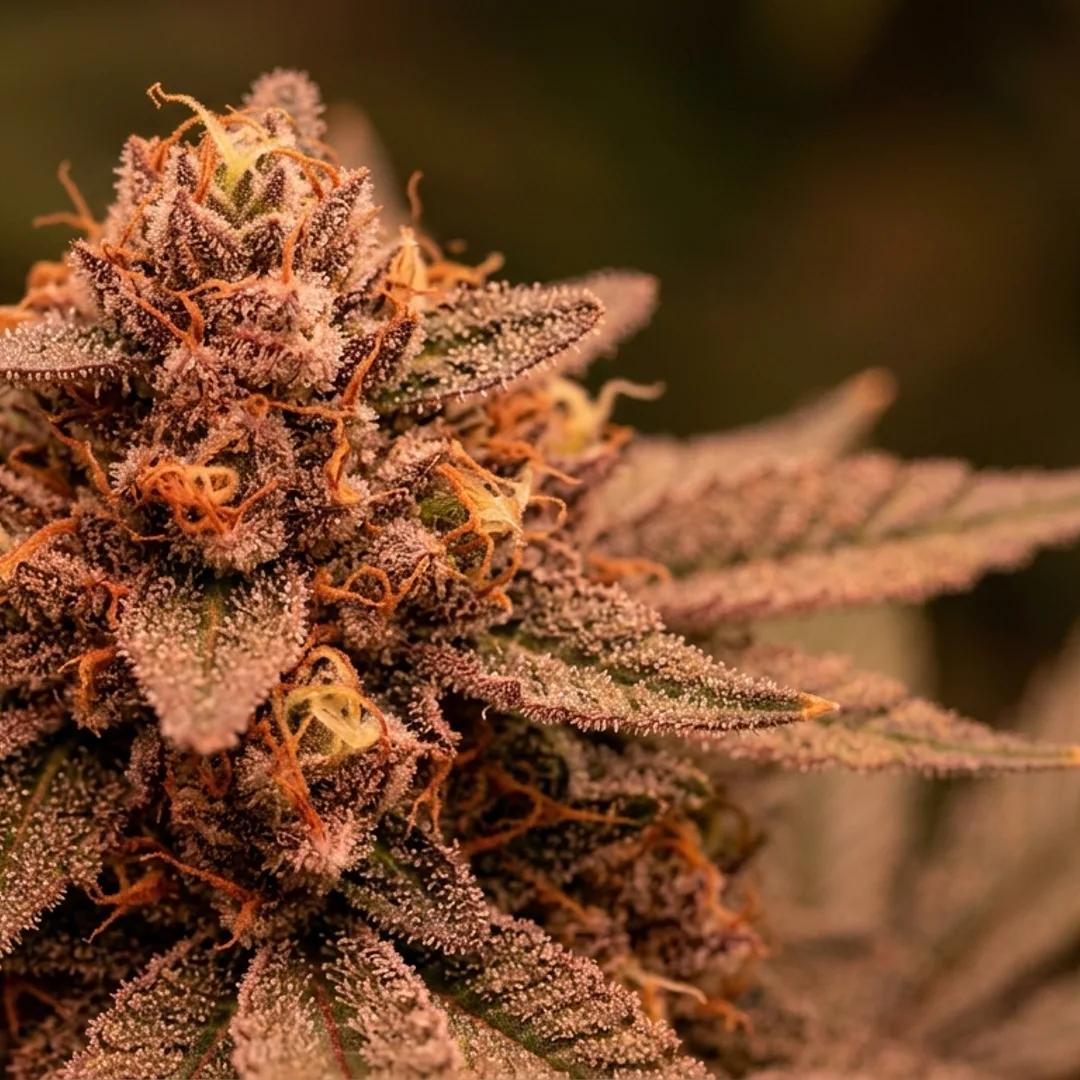
Red light is associated with the flowering stage and promotes bud development and cannabinoid production . Once you flip to 12/12, the plant's priority shifts from making leaves to making flowers — and red photons are the most photosynthetically efficient way to power that transition.
640 nm vs 660 nm: Does It Matter?
A Wageningen University trial on medical cannabis tested red wavelengths at 640 nm and 660 nm alongside white light fraction and spectrum broadness, evaluating impacts on inflorescence weight and specialized metabolites . The takeaway from the abstract: spectrum precision at this level matters enough that researchers are actively measuring 20 nm differences. For home growers, a quality full-spectrum LED already covers both peaks — you don't need to chase single-wavelength diodes.
Flowering Spectrum Targets
- Warm white (3000-3500K) bars deliver red-rich output without going blurple
- PPFD: 600-900 μmol/m²/s for photoperiod flowering
- Push to 800+ μmol/m²/s only with CO2 supplementation — see our CO2 ROI guide for whether it pays off (potential 20-30% yield increase)
- LEDs deliver these intensities at 40-60% energy savings vs HPS
Far-Red Light (700-800 nm): Shade Avoidance and Photoperiod Hacking
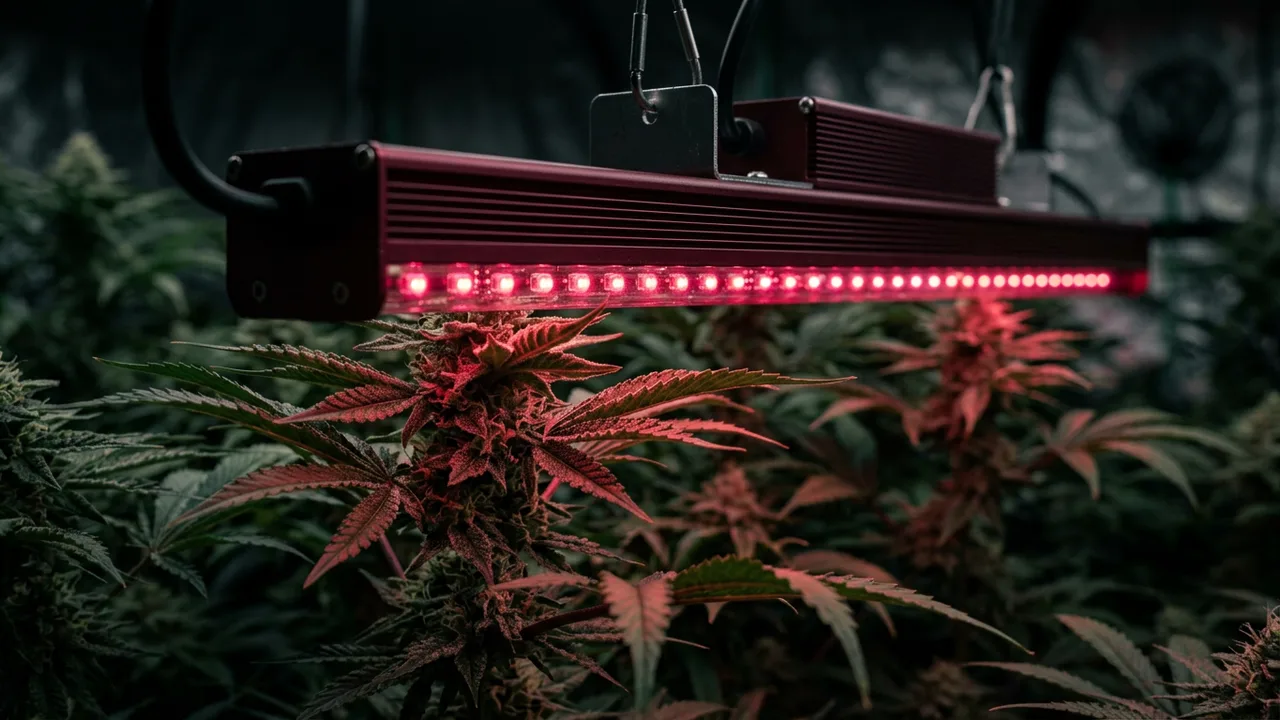
Far-red is the most interesting — and most misunderstood — band in cannabis lighting. Per the authors of the 2025 Scientific Reports far-red study: "Far-red (FR) light elicits two distinct processes in plants. First, a shade avoidance response which is triggered when the ratio of red to FR (R: FR) declines. Second, it interacts synergistically with higher frequency wavelengths of light (e.g. red or white) which improves the efficiency of photosynthesis."
The Emerson Effect (and Why It's Real)
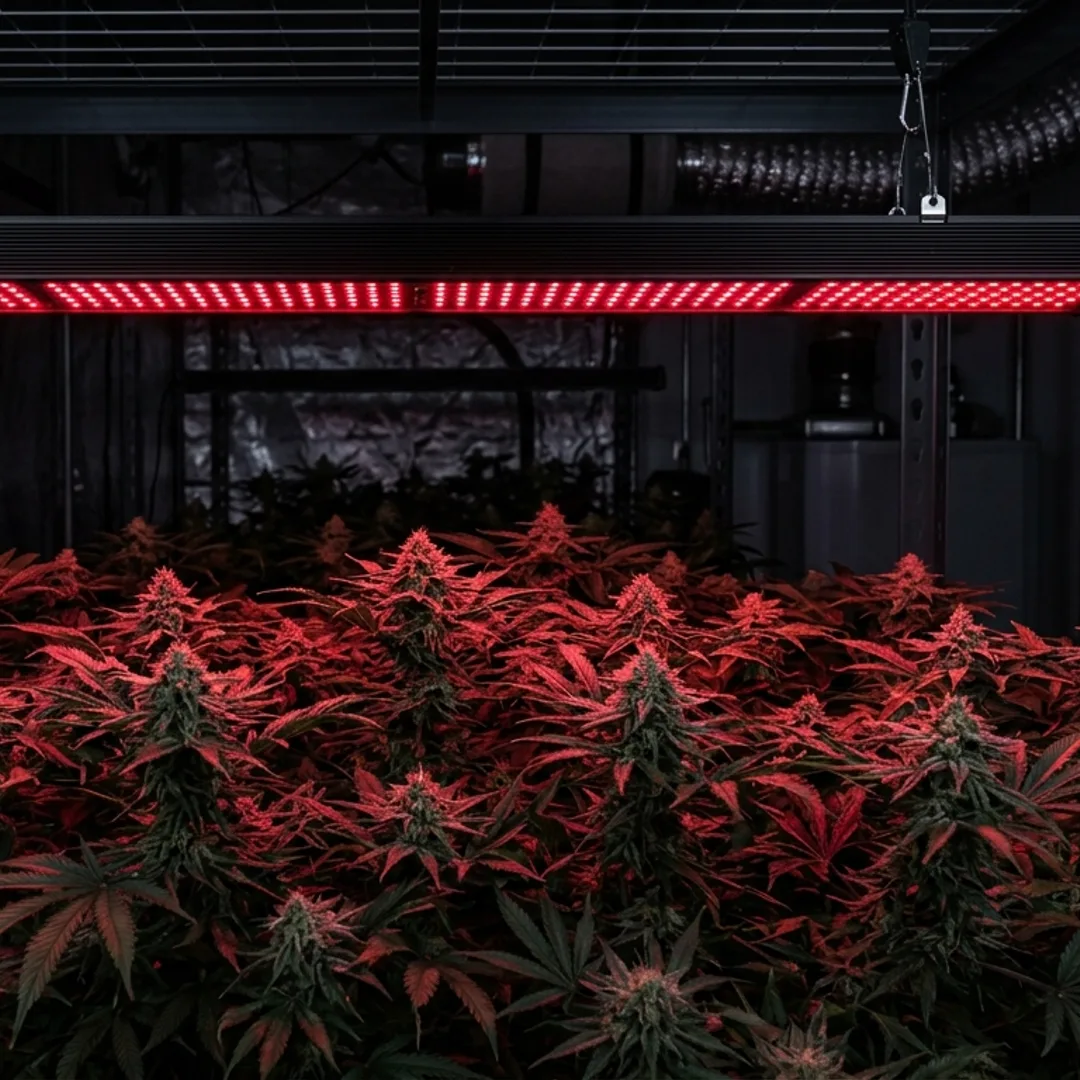
Adding far-red to red or white light boosts photosynthetic efficiency above what either band achieves alone — that's the Emerson enhancement effect, and it's been confirmed in cannabis . The practical question is whether it raises yield enough to justify the extra fixtures.
Far-Red as a Photoperiod Hack
Here's the operations angle most articles miss: in the same Northern Lights trial, researchers replaced two hours of regular light with four hours of far-red, running a 10-hour primary photoperiod plus 4h of far-red instead of a standard 12-hour photoperiod. Total cannabinoid yields increased by nearly 70% over the 12-hour control (0.43 vs 0.25 g per plant) . Far-red also elevated THC concentrations in both Hindu Kush and Northern Lights varieties in that study .
If the 10L + 4h far-red protocol replicates outside the lab, growers could cut electricity from their main lights by ~17% while maintaining or improving yield. Far-red diodes draw a fraction of the wattage of full PAR fixtures.
The Honest Caveat on Far-Red
Far-red results are promising but strain- and protocol-dependent. A separate Korean trial on Gorilla Glue found morphology varied dramatically by spectrum strategy: average plant height was 84.8 cm under 3-stage lighting, 70 cm under broad white, and 68.9 cm under dynamic spectrum . Taller plants and altered yields don't always translate to higher cannabinoid concentration per gram, and different fixtures produce different stem diameters and bud densities . Don't assume far-red automatically raises potency on every cultivar — test on a small batch first.
What About UV Light? The Honest Answer
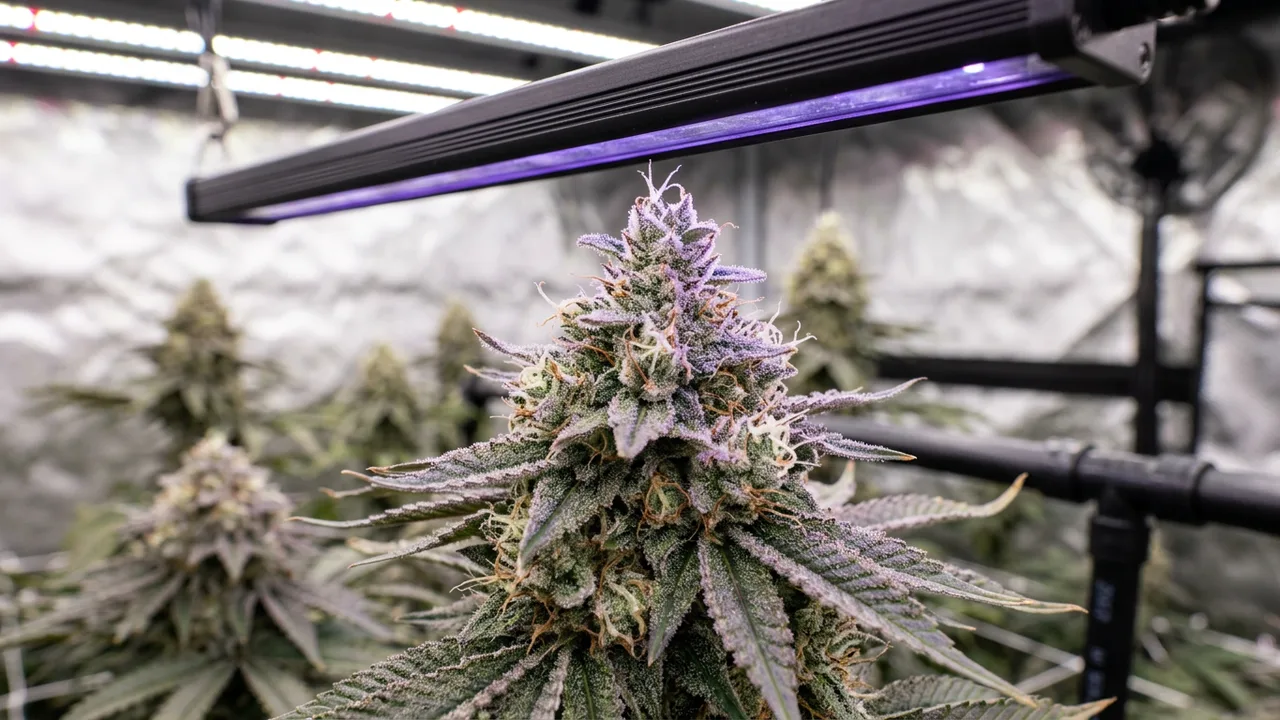
UV-A (315-400 nm) and UV-B (280-315 nm) supplementation is one of the most hyped topics in cannabis lighting, and one of the most thinly evidenced in peer-reviewed literature. The popular claim is that UV-B exposure in late flower triggers trichome production as a sunscreen response, raising THC.
Evidence is limited on this point in the sources we can verify. The peer-reviewed studies in our research pool do not quantify UV-B's specific effect on THC production in cannabis. Anecdotal reports from commercial growers using supplemental UV bars in the final 2-3 weeks of flower are abundant, but rigorous controlled trials with quantified outcomes are still scarce.
Safety first: UV-B is a known carcinogen for humans. If you experiment with UV bars, never enter the room while they're on without UV-rated eye and skin protection. Run UV cycles when you're not in the space.
If You Want to Experiment with UV
- Start with UV-A only — it's lower-energy and lower-risk than UV-B
- Run 1-3 hours per day during the final 2-3 weeks of flower
- Mount bars 12-18 inches above canopy and rotate plants for even exposure
- Run a side-by-side test: split your tent and compare trichome density and lab-tested potency
Full Spectrum vs Single-Color Myths (Killing the Blurple Argument)
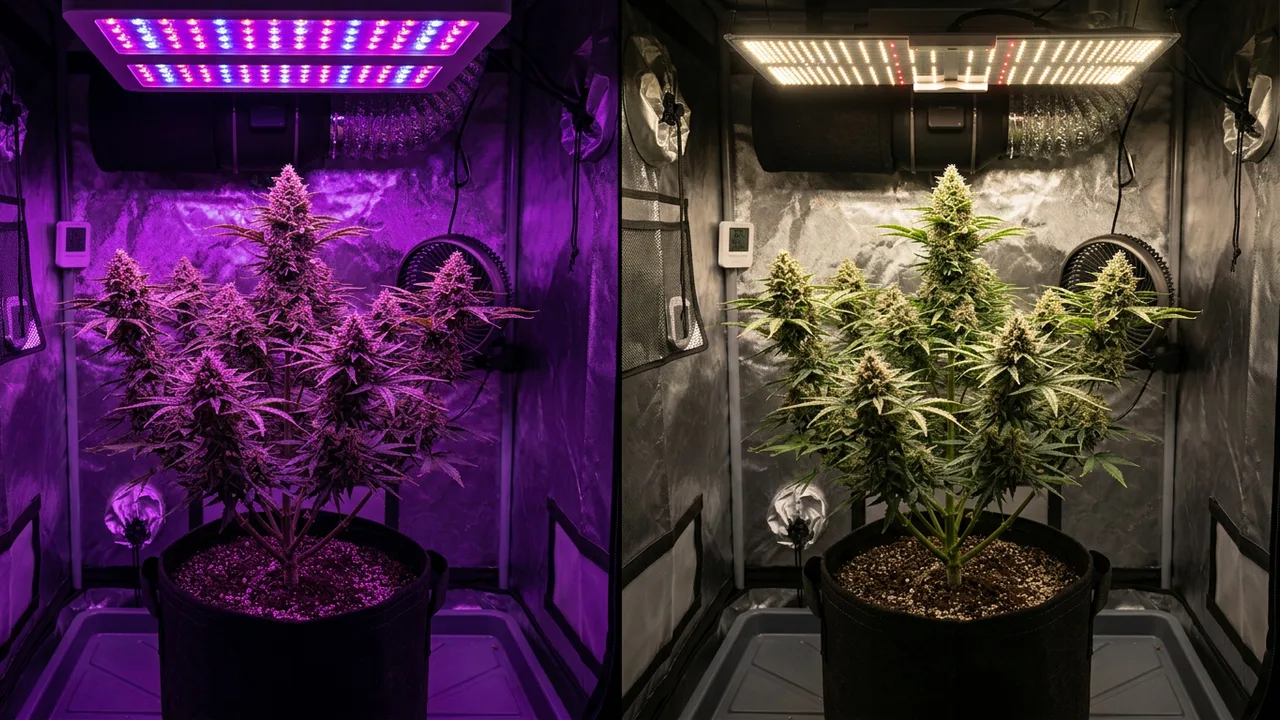
The blurple LED was born from the McCree curve — engineers saw the chlorophyll absorption peaks at red and blue, decided everything else was wasted, and built panels with only those two colors. The science has moved on. As Elizabeth Johnson at Blimburn Seeds summarizes: "Cannabis light spectrum misconceptions clarified through scientific research show that balance is key. Overreliance on a single light spectrum can lead to suboptimal growth and production."
A balanced full spectrum outperforms reliance on a single color band — the interplay between wavelengths is what drives optimal cannabis development . Three reasons blurple lost the war:
- Green light is not wasted. While chlorophyll absorbs less green than red or blue, green photons penetrate deeper into the canopy and contribute to lower-leaf photosynthesis.
- Signaling needs the full spectrum. Cryptochromes (blue), phytochromes (red/far-red), and UV receptors all need their target wavelengths to coordinate growth properly.
- Diagnosis is impossible under purple light. You can't see calcium spotting, early powdery mildew, or pre-flower sex under monochromatic light. White light is a workflow tool, not just a spectrum tool.
Dynamic Spectrum Lighting: Changing Spectrum Across Growth Stages
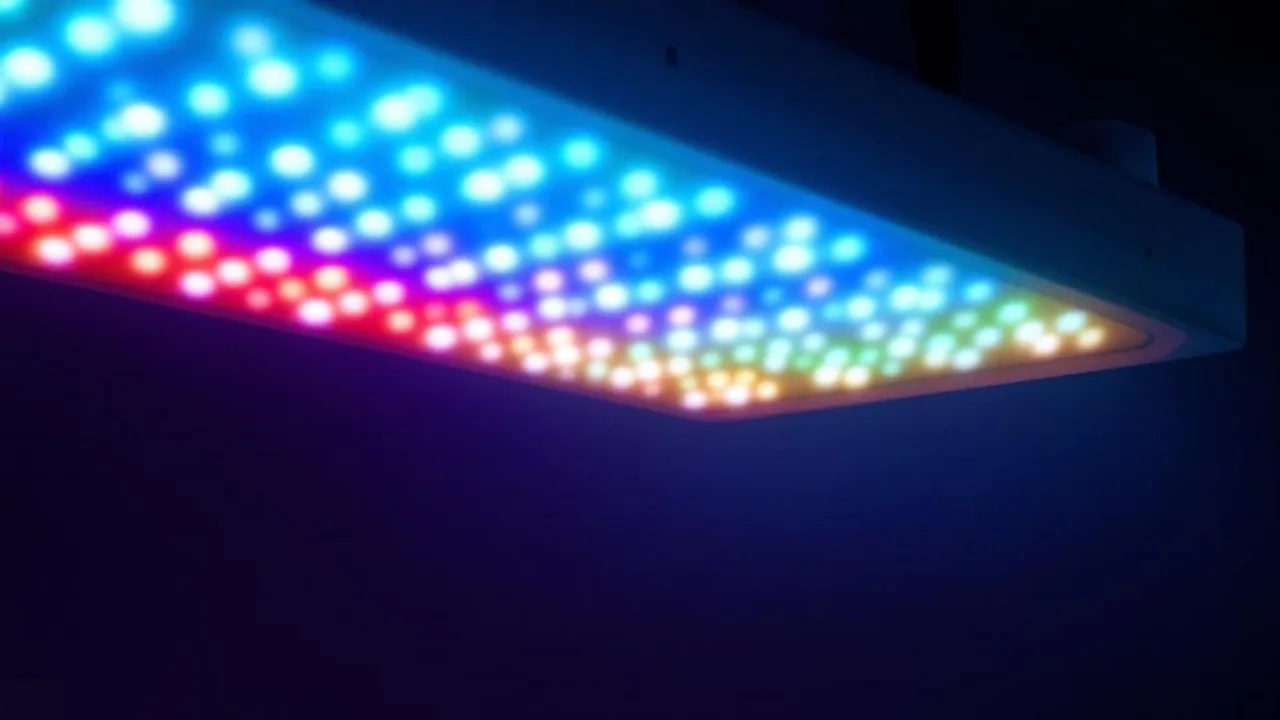
One of the most interesting recent findings comes from the KAIST cannabis trial published in Industrial Crops and Products: "Dynamic spectrum lighting resulted in a 26% increase in cannabinoid content." In that experiment, researchers shifted spectrum across growth stages — blue-rich during early veg, balanced full-spectrum mid-cycle, red-shifted in late flower — and compared the result to static spectrum treatments .
Practical Dynamic Spectrum Protocol
Seedling / Early Veg
Cool white (5000-6500K) at 200-400 PPFD. High blue keeps internodes tight from day one.
Late Veg
Balanced full spectrum (4000K) at 400-600 PPFD . Maintain blue ratio while ramping intensity.
Stretch / Early Flower (Weeks 1-3)
Shift to 3500K, 600-800 PPFD. Add red diodes if your fixture allows it. Internodes elongate and bud sites form.
Mid-Late Flower (Weeks 4-end)
Full warm spectrum (3000K) at 700-900 PPFD . Optional: add far-red end-of-day or supplemental UV-A in last 2-3 weeks.
You don't need a fancy tunable fixture to do this. Many growers stack 5000K bars for veg and swap to 3000K bars for flower, or run both simultaneously with dimmers.
Matching PPFD to Spectrum by Growth Stage (2026 Reference)
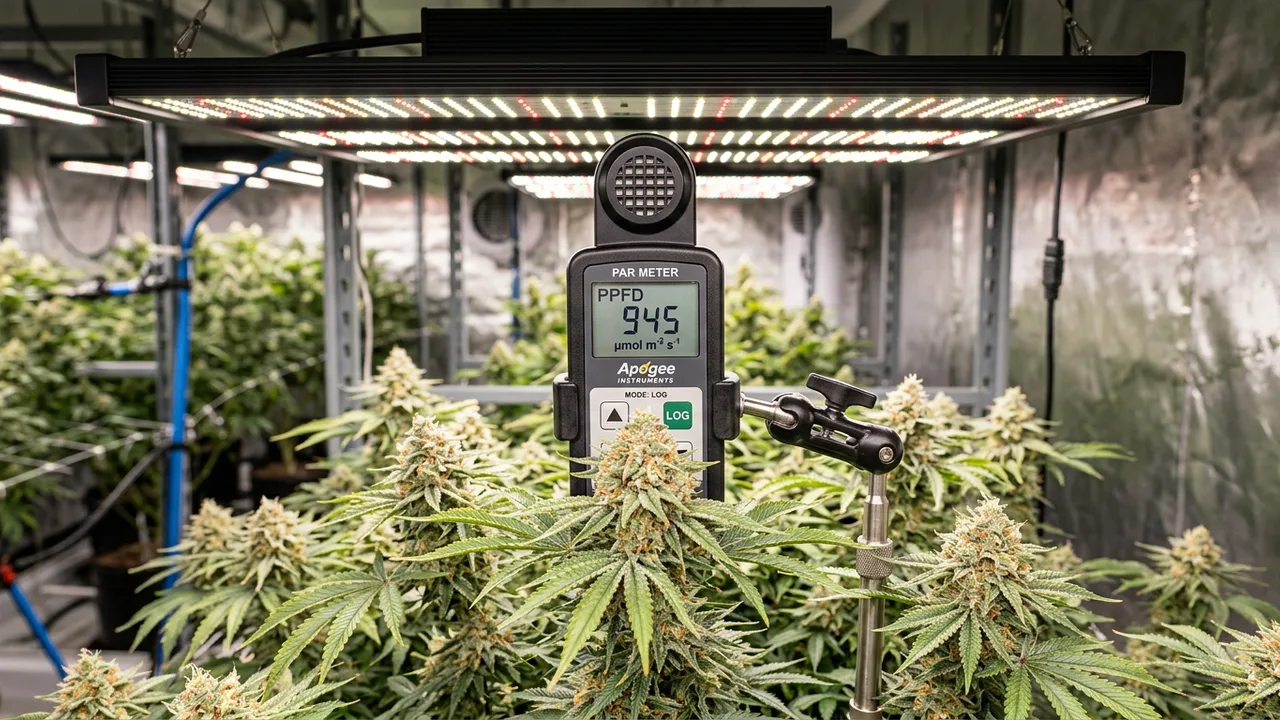
Spectrum without intensity is a half-conversation. Cannabis is a high-light crop, and dialing PPFD by stage is non-negotiable :
| Stage | PPFD Target | Spectrum Notes | Photoperiod |
|---|---|---|---|
| Seedling | 200-400 μmol/m²/s | Cool white, blue-leaning | 18/6 |
| Vegetative | 400-600 μmol/m²/s | 5000-6500K full spectrum | 18/6 |
| Flowering | 600-900 μmol/m²/s | 3000-3500K full spectrum | 12/12 |
| Flower + CO2 | 800-1200 μmol/m²/s | Same as flower | 12/12 |
Use a quantum PAR meter at canopy height — your phone's lux meter is not accurate for LED PPFD. If you don't have one, our light calculator estimates target PPFD by tent size and stage.
Strain Choices That Forgive Spectrum Mistakes
Beginners dialing in a new light should start with sturdy, light-tolerant cultivars. Industry classics like Wedding Cake, Gelato, and Zkittlez handle a range of spectrums without freaking out. From our catalog, our team has had consistent results dialing in spectrum on:
- Northern Lights x Big Bud — the Northern Lights side specifically responded to far-red supplementation in the published trial
- White Widow Feminized — handles intensity well, classic indoor performer at 25% THC
- OG Kush Feminized — responds beautifully to red-shifted late flower spectrum, 26% THC potential
- Super Skunk Feminized — forgiving across spectrum experiments, 20% THC
For more strain selection guidance, see our best indoor strains guide. Every seed is backed by our germination guarantee.
What the Research Still Doesn't Settle
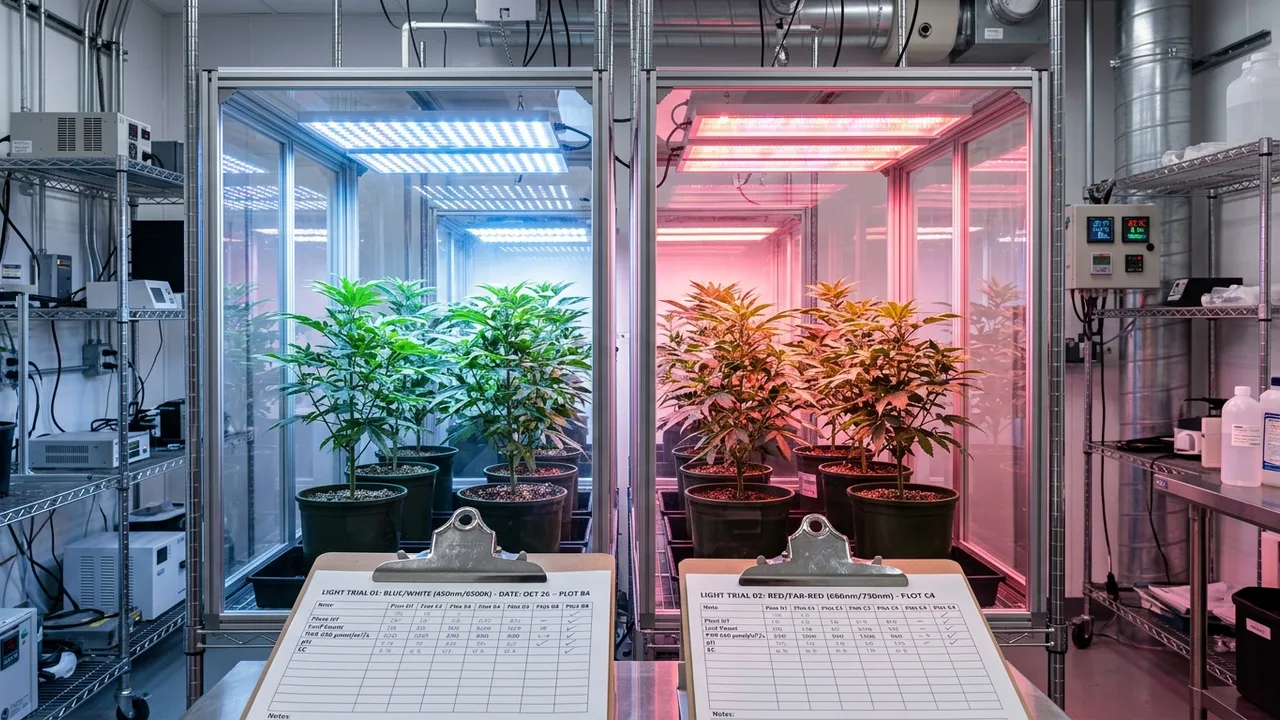
Let's be honest about where the spectrum conversation is still genuinely open:
- UV-B's exact effect on THC. Anecdote is everywhere; rigorous controlled trials with quantified percentage gains are scarce in the peer-reviewed literature we can verify.
- Optimal far-red dose by strain. The Northern Lights gain was striking , but we don't yet have a strain-by-strain dose-response curve.
- Whether 'dynamic spectrum' beats a well-tuned single fixture. The 26% cannabinoid increase is impressive but came from one trial — replication is still thin.
- Green light's specific contribution to canopy penetration. Strong theoretical case, weak cannabis-specific data.
The honest 2026 takeaway: buy a quality full-spectrum LED with a published photon distribution chart. Match PPFD to growth stage. Treat UV and far-red as experimental upgrades, not requirements. The biggest yield gains still come from VPD, nutrients, and training — not exotic spectrum tricks.
Frequently Asked Questions
Is full spectrum really better than blurple LEDs for cannabis?
Yes, in almost every practical sense. A balanced full spectrum outperforms reliance on a single color band — the interplay between wavelengths drives optimal cannabis development . Full-spectrum white LEDs also let you visually inspect plants for deficiencies, pests, and sex, which is impossible under purple light.
Does UV light increase THC in cannabis?
The popular claim is yes, but evidence in peer-reviewed cannabis-specific literature is limited. Many commercial growers use supplemental UV-A bars in the final 2-3 weeks of flower and report increased trichome density, but rigorous controlled trials quantifying the effect are still scarce. If you experiment, use UV-rated eye protection and run UV cycles when you're not in the room.
What does far-red light do for cannabis flowering?
Two things: it triggers shade-avoidance responses (taller, stretchier plants) when red:far-red ratio drops, and it synergistically improves photosynthesis when combined with red or white light . In one trial, adding 4 hours of far-red to a 10-hour photoperiod increased Northern Lights cannabinoid yield by ~70% versus a 12-hour control .
What's the best PPFD for cannabis flowering?
600-900 μmol/m²/s for standard photoperiod flowering without CO2 supplementation . Push to 800-1200 μmol/m²/s only if you're running CO2 enrichment, which can yield a 20-30% increase at 800+ PPFD . Lower PPFD if leaves show light stress (bleaching, taco-ing).
Should I change my light spectrum between veg and flower?
It helps. A Korean dynamic-spectrum trial showed a 26% increase in cannabinoid content versus static spectrum . Practically: cooler white (5000-6500K) for veg promotes tight internodes, warmer white (3000-3500K) for flower promotes bud development. Many modern fixtures let you blend both via dimmer channels.
Do LEDs really save 40-60% energy versus HPS?
Yes — modern full-spectrum LEDs deliver comparable or higher PPFD at 40-60% lower power draw than equivalent HPS lamps . They also run cooler, reducing your AC and dehumidification load, which compounds the savings.
Sources & References
This article was researched and fact-checked using 7 verified sources including 4 peer-reviewed studies, 1 industry source, 2 community resources.
- The Effect of Light Spectrum on the Morphology and Cannabinoid Content of Cannabis sativa L - PMC — pmc.ncbi.nlm.nih.gov/articles/PMC8489345 [Research]
- Dynamic spectrum lighting impact on plant morphology and cannabinoid profile of medical and recreational cannabis – A novel leapfrog strategy towards shaping the future of horticulture lighting - ScienceDirect — sciencedirect.com/science/article/abs/pii/S0926669023005642 [Research]
- The effects of far-red light on medicinal Cannabis | Scientific Reports — nature.com/articles/s41598-025-99771-6 [Research]
- Frontiers | The role of red and white light in optimizing growth and accumulation of plant specialized metabolites at two light intensities in medical cannabis (Cannabis sativa L.) — frontiersin.org/journals/plant-science/articles/10.3389/fpls.2024.1393803/full [Research]
- How Does Color Spectrum Affect Growing Weed? | Grow Weed Easy — growweedeasy.com/color-spectrum-marijuana-grow-light [Industry]
- Cannabis Light Spectrum Myths Debunked: The Facts — blimburnseeds.com/blog/tips-and-tricks/cannabis-light-spectrum-myths-debunked [Community]
- Cannabis Light Requirements Chart — Cannabiz Credit Association — cannabizcredit.com/blog/cannabis-light-requirements-chart [Community]