1. What Is VPD and Why Every Serious Grower Needs to Understand It
Temperature and humidity are numbers every cannabis grower tracks. But tracking them in isolation is like reading only half a map.
Vapour Pressure Deficit — VPD — is the missing variable that ties them together into something genuinely useful: a measure of the atmosphere's "thirst" and, by extension, your plant's transpiration rate.
In simple terms, VPD is the difference between the amount of moisture the air could hold at a given temperature and the amount it actually holds. When VPD is low, the air is nearly saturated and your plants transpire slowly. When VPD is high, the air is dry and hungry for moisture, pulling water through the plant aggressively.
Why does that matter for cannabis? Because transpiration is the engine that drives nutrient uptake, calcium transport, terpene concentration, and structural strength.
A plant sitting in poorly dialled VPD is either drowning in humidity or working so hard to move water that it stresses, stunts, or locks out nutrients. Neither outcome serves your harvest.
Modern cultivators growing elite genetics — such as the resin-drenched Great White Shark Autoflower — have found that precisely managing VPD is one of the single highest-leverage adjustments available to them.
The difference between a 15% and 30% yield increase often comes down to atmospheric control, not nutrients or lighting alone.
The Physics in Plain Language
Air at any temperature has a maximum water-vapour capacity called saturation vapour pressure, measured in kilopascals (kPa). Relative humidity (RH) tells you what percentage of that capacity is currently filled.
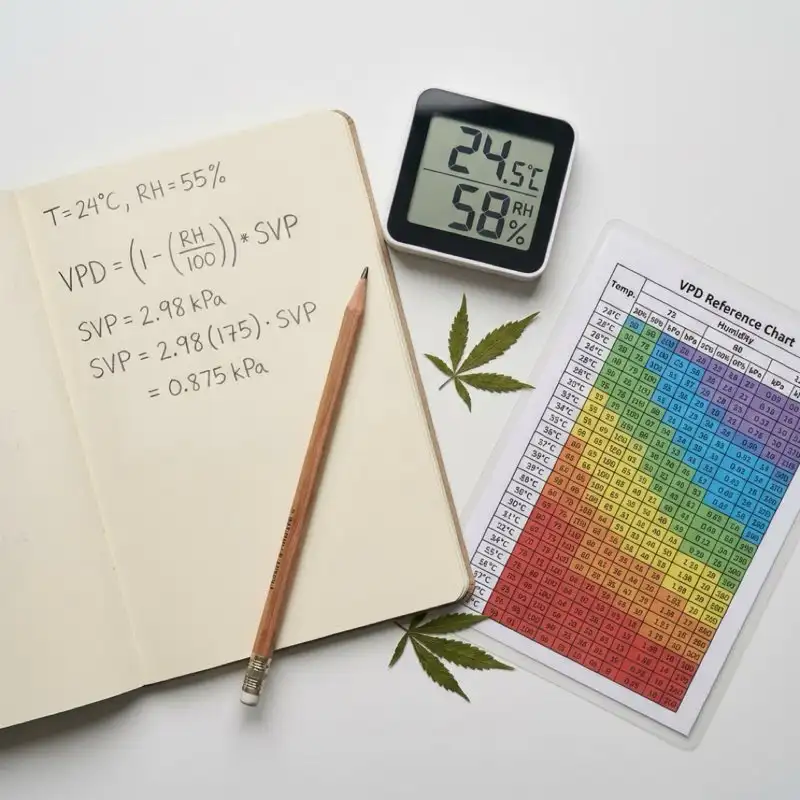
VPD is simply: VPD = SVP × (1 − RH/100). We will walk through the full manual calculation in section 6, but understanding the concept first makes the numbers feel intuitive.
2. Reading a VPD Chart: A Grower's Visual Decoder
A VPD chart plots leaf temperature along one axis and relative humidity along the other. Each cell in the resulting grid shows the corresponding VPD value in kPa. Colour-coding typically runs from deep blue (dangerously low VPD, high humidity, mould risk) through green (optimal) to red (dangerously high VPD, drought stress).
The critical insight most beginners miss: the chart uses leaf temperature, not air temperature. Leaf surfaces run 1–3°C cooler than ambient air under good airflow.
If your thermometer reads 27°C and airflow is moderate, assume a leaf temp of roughly 25–26°C when reading the chart. Ignoring this offset produces systematically incorrect VPD readings and suboptimal decisions.
Zones Explained
- Below 0.4 kPa — Danger zone. Stomata close. Transpiration nearly halts. Mould and pythium pressure spike dramatically.
- 0.4–0.8 kPa — Propagation and early seedling range. Gentle moisture movement protects fragile root systems.
- 0.8–1.2 kPa — Vegetative sweet spot. Brisk transpiration fuels rapid canopy development.
- 1.2–1.6 kPa — Mid-to-late flower optimal. Elevated transpiration concentrates essential oils and flushes calcium into bud sites.
- Above 1.6 kPa — Stress zone. Stomata slam shut defensively. Growth stalls. Trichome development is compromised.
Print a laminated copy of your VPD chart and keep it in the grow room alongside a calibrated hygrometer. Cross-reference it at least twice daily during the first week of any new environment setup.
3. Optimal VPD by Growth Stage
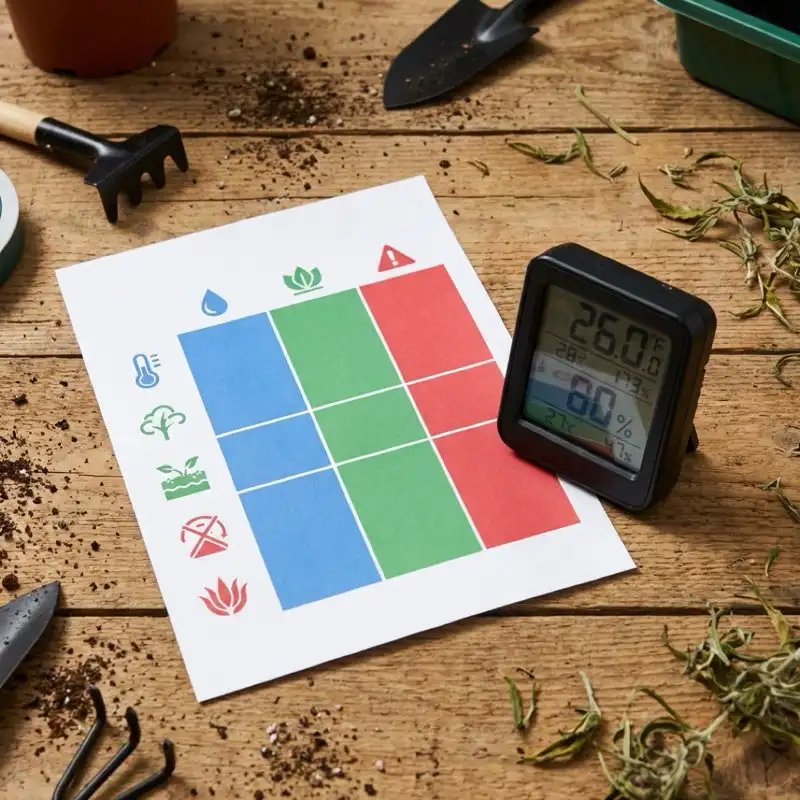
Cannabis passes through physiologically distinct phases, each demanding a different atmospheric envelope. Treating the whole life cycle with a single humidity and temperature target is a common and costly mistake.
Germination and Seedling (Days 1–14)
Target VPD: 0.4–0.6 kPa. Air temperature: 22–25°C. RH: 65–75%. Root systems are minimal at this stage and cannot compensate for atmospheric water demand.
Keep the dome on propagation trays to maintain a micro-climate. Many growers use a dedicated propagation tent with a low-wattage heater mat and passive humidity to hold these figures without a full HVAC system.
Early Vegetation (Weeks 2–4)
Target VPD: 0.6–0.9 kPa. Air temperature: 23–27°C. RH: 55–65%.
As roots colonise the medium, you can begin stepping humidity down gradually — around 5% per week — while nudging temperature upward. This trains the plant to develop robust vascular tissue.
Late Vegetation (Weeks 4–8)
Target VPD: 0.8–1.1 kPa. Air temperature: 24–28°C. RH: 50–60%.
Vigorous strains bred for bulk production — like the heavy-yielding genetics at the DSS Genetics catalog — will show explosive lateral branching when transpiration is dialled in here. Larger leaf area means greater total transpirational surface, so avoid letting humidity creep high during this period.
Early Flower (Weeks 1–3 of 12/12 or Auto Transition)
Target VPD: 1.0–1.3 kPa. Air temperature: 24–26°C. RH: 45–55%.
The flip to flower triggers hormonal changes that benefit from slightly elevated VPD. Calcium mobility increases, and the developing calyxes receive the mineral nutrition they need for dense bud architecture.
Peak and Late Flower (Weeks 4–Harvest)
Target VPD: 1.2–1.6 kPa. Air temperature: 22–25°C. RH: 40–50%. This is where terpene production accelerates.
Lowering the temperature relative to earlier flower — while maintaining VPD by also reducing humidity — is a well-documented technique for driving volatile terpene accumulation.
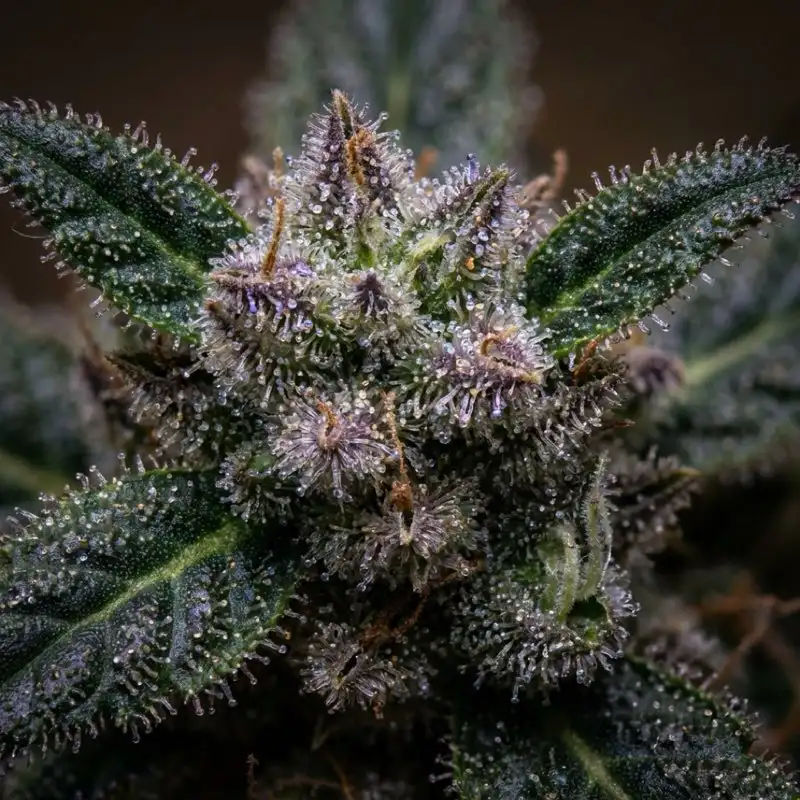
The Great White Shark Autoflower is a compelling case study: its dense, resinous colas respond visibly when late-flower VPD sits at 1.3–1.5 kPa, producing the sharp, sweet-spicy aroma profile the strain is celebrated for.
4. How to Control VPD in Your Grow Room
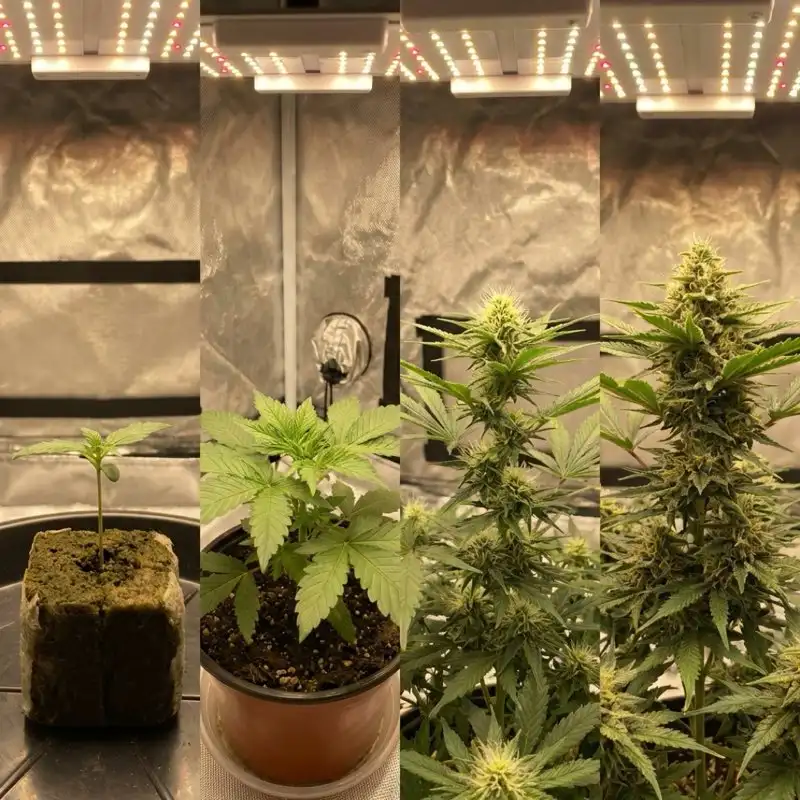
Understanding target numbers is the easy part. Achieving them consistently across seasons, climates, and lighting schedules demands a systematic approach to environmental control.
Temperature Management
Your primary temperature levers are your lighting, HVAC or air conditioning unit, and exhaust rate. LED fixtures run significantly cooler than HPS equivalents, giving you more precise control.
For every 1°C increase in temperature at fixed RH, VPD rises by roughly 0.06–0.08 kPa — useful to remember when making small corrections.
Humidity Management
Humidifiers and dehumidifiers are the most direct tools. Ultrasonic humidifiers respond quickly but require distilled water to avoid mineral deposits on leaves. Evaporative humidifiers are slower but distribute moisture more evenly.
For dehumidification, size your unit to at least 1.5× the estimated transpirational output of your canopy at peak flower. Under-powered dehumidifiers are the number-one cause of high-humidity spikes in mature tents.
Integrated Controllers
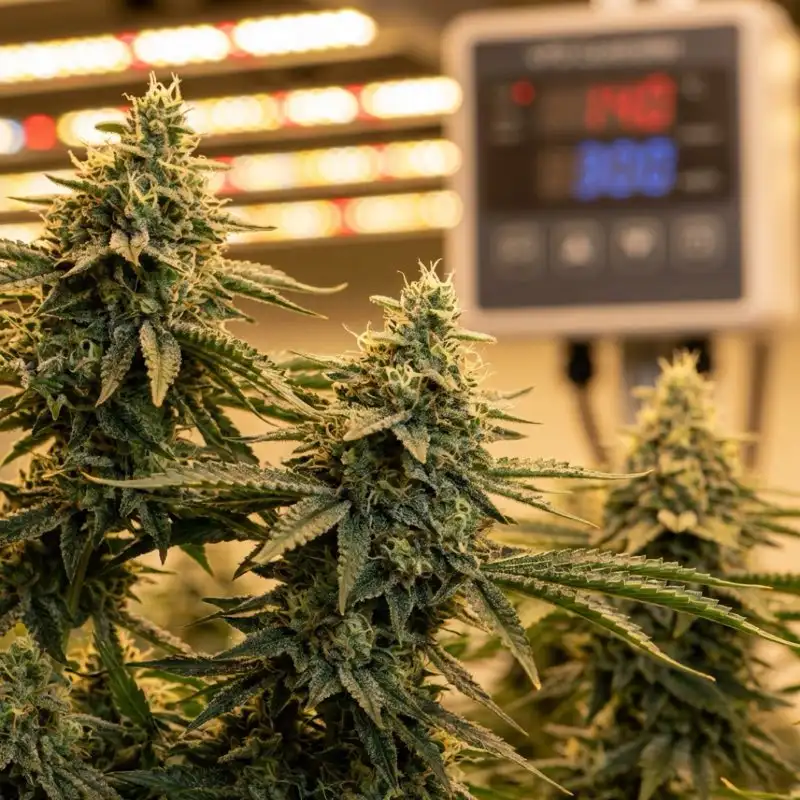
Dedicated VPD controllers such as the Aroya, Pulse Pro, or even a basic Inkbird with temperature and RH probes can automate corrections. The best setups run a VPD ramp programme — gradually transitioning through target ranges over the plant's life cycle without manual intervention.
If budget is a constraint, a programmable smart plug and two separate analogue controllers (one for temperature, one for humidity) can approximate the same result.
Airflow as a Co-Variable
Oscillating fans are not optional. Stagnant boundary layers around leaves create pockets of elevated humidity that locally suppress VPD regardless of what your sensor reads.
Aim for gentle, constant leaf movement — leaves should flutter, not thrash. A well-circulated canopy can tolerate 5–10% higher ambient RH than a stagnant one while maintaining equivalent stomatal activity.
5. Common VPD Mistakes and How to Avoid Them
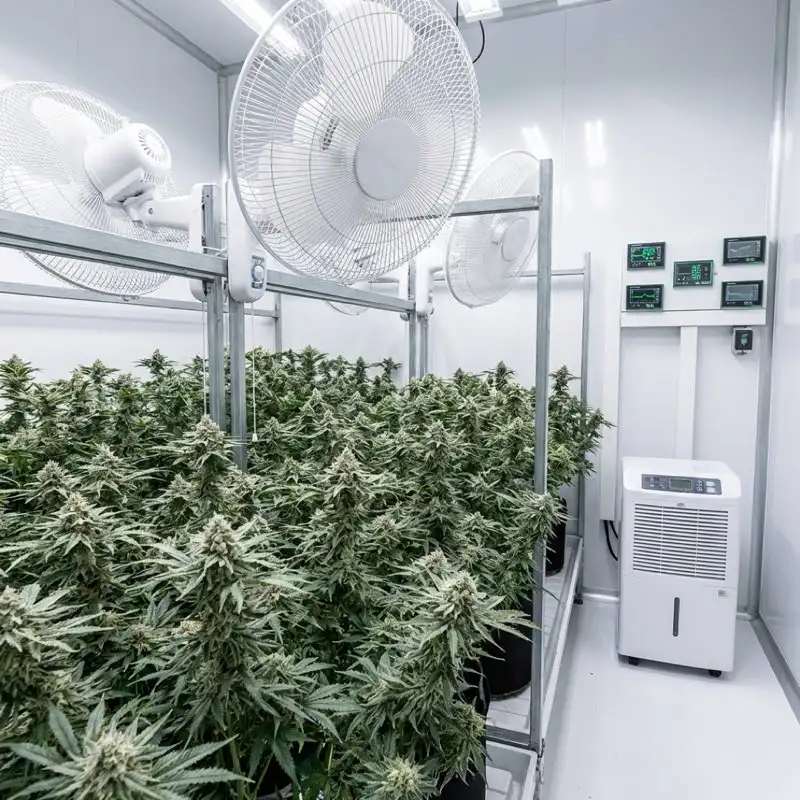
Even experienced growers mismanage VPD in predictable ways. Recognising these patterns will save you from costly crop failures.
Using Air Temperature Instead of Leaf Temperature
As noted earlier, leaf temperature runs cooler than ambient. Growers who use raw air temperature consistently overestimate VPD by 0.1–0.2 kPa, leading them to add humidity they do not need — often pushing conditions into the mould zone during late flower.
Ignoring Night Cycle Drops
When lights go off, temperature falls and RH typically rises. If your day-cycle VPD is a perfect 1.4 kPa but your night-cycle sends RH soaring to 70%, you are creating an 8-hour mould window every single day.
Set your dehumidifier to maintain target RH through the lights-off period, or use a temperature controller to keep night temps from crashing more than 4–5°C below day temps.
Chasing the Number Without Understanding the Plant
VPD targets are guidelines, not laws. A plant with a compromised root zone cannot transpire at the rate a healthy root zone supports, even at optimal VPD.
If you see wilting at textbook VPD ranges, check root health, medium moisture, and EC before adjusting atmosphere.
Single-Point Monitoring
One sensor in the middle of a tent does not represent the full canopy. Place sensors at canopy level — not above the lights or on the floor — and consider multiple sensors for rooms over 10 square metres.
6. Calculating VPD Manually Without a Controller
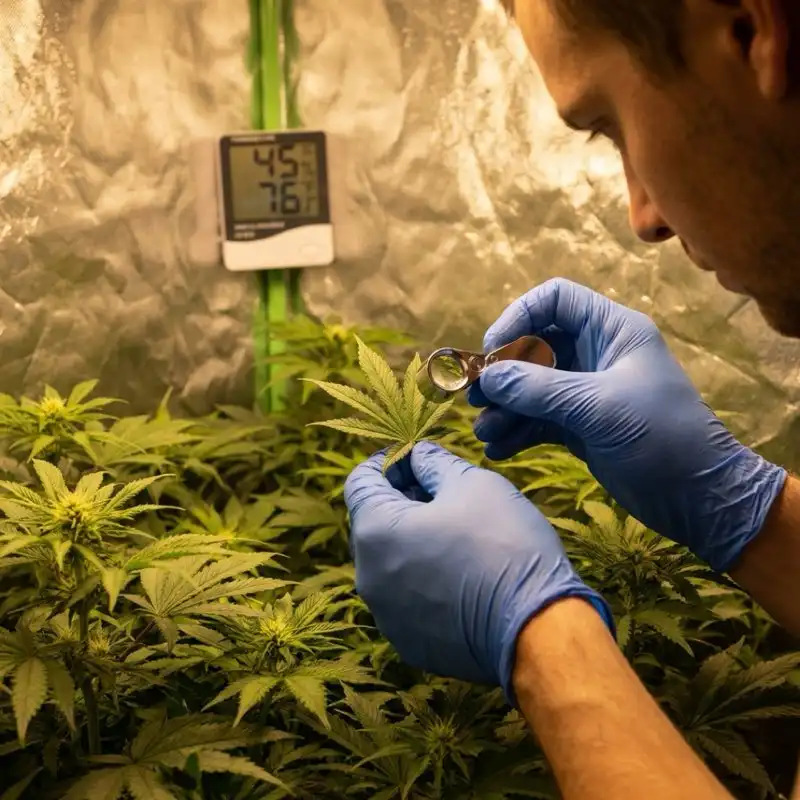
You do not need expensive equipment to calculate accurate VPD. A digital thermometer, a calibrated hygrometer, and this formula are sufficient.
- Measure air temperature (T_air) and relative humidity (RH) at canopy level.
- Estimate leaf temperature: T_leaf = T_air − 2°C under moderate airflow.
- Calculate saturation vapour pressure at leaf temperature using the Magnus formula: SVP = 0.6108 × e^(17.27 × T_leaf / (T_leaf + 237.3)). For a leaf temp of 25°C, SVP = approximately 3.17 kPa.
- Calculate actual vapour pressure: AVP = SVP × (RH / 100). At 60% RH: AVP = 3.17 × 0.60 = 1.90 kPa.
- Calculate VPD: VPD = SVP − AVP = 3.17 − 1.90 = 1.27 kPa.
That result — 1.27 kPa — sits comfortably in the early-flower optimal range. Running this calculation manually once or twice per day takes under two minutes and builds an intuitive understanding of your environment that no controller app can replace.
For growers cultivating demanding genetics like the Great White Shark Auto alongside high-yielding companions such as Northern Lights Autoflower, manual spot-checks complement automated systems and catch sensor drift before it damages a crop.
7. VPD's Direct Impact on Terpene Production
Of all the reasons to optimise VPD, its relationship with terpene biosynthesis may be the most compelling for quality-focused cultivators.
The Transpiration–Terpene Connection
Terpenes are synthesised in secretory cells within glandular trichomes and are partly volatile — they evaporate from the plant surface. When VPD is appropriately elevated in late flower, two mechanisms work in your favour.
- Increased transpiration draws a greater supply of precursor compounds (particularly isopentenyl pyrophosphate) toward bud sites.
- Slightly cooler late-flower temperatures — achieved by lowering both temp and RH in tandem to maintain target VPD — reduce the evaporation rate of volatile monoterpenes like myrcene, limonene, and pinene.
The result is higher terpene retention in the final dried flower.
Research-Backed Numbers
Studies on aromatic plant transpiration (directly applicable to Cannabis sativa) suggest that maintaining VPD between 1.2 and 1.5 kPa during the final three weeks before harvest, combined with a canopy temperature of 21–24°C, can increase total terpene content by an estimated 10–20%.
These figures align with what premium indoor producers report empirically and compare favourably to higher-temperature, low-VPD environments.
Cultivar-Specific Responses
Not all strains respond identically. Terpene-dense cultivars each have slight variations in the VPD sweet spot where terpene expression peaks, including:
- A classic like Amnesia Haze Autoflower
- A fruity hybrid like Zkittlez Autoflower
- A resin powerhouse like Gorilla Glue Autoflower
Keeping a grow journal that records VPD alongside nose-test assessments at week six, seven, and eight of flower builds invaluable cultivar-specific data over time.
Pair that discipline with genetics known for aromatic complexity — explore the full range at the DSS Genetics product catalog — and the cumulative gains in quality become significant.
The Final Days: The Low-VPD Debate
Some growers deliberately drop VPD to 0.8–1.0 kPa in the last 48–72 hours before harvest, pairing it with darkness and minimal watering. The rationale is that mild stress encourages the plant to "seal" trichome heads, potentially reducing terpene off-gassing.
Evidence is largely anecdotal, but the practice carries minimal risk if humidity remains below 55% RH to prevent late-stage mould. If you try this, monitor closely — it is not a technique for rooms without good airflow.
8. Building Your 2026 VPD Toolkit
Putting everything into practice requires the right equipment, habits, and genetics. Here is a consolidated action framework for the coming season.
Essential Equipment List
- Calibrated digital hygrometer/thermometer with data logging (calibrate against a known reference every 90 days)
- Oscillating clip fans — minimum one per 1.2 × 1.2m canopy area
- Appropriately sized dehumidifier — calculate peak transpiration load before buying
- Ultrasonic or evaporative humidifier for propagation and veg phases
- VPD reference chart laminated and posted at eye level in the grow space
Habit Stack for Consistent Results
Log temperature, RH, and calculated VPD at the same time each day — ideally two hours after lights-on when conditions have stabilised. Review the previous week's data every Sunday and make one adjustment at a time.
Stacking multiple changes simultaneously makes it impossible to identify cause and effect. Treat your grow room like a laboratory: change one variable, observe for five to seven days, then evaluate.
Pair this systematic approach with genetics that reward the effort. The Blue Cheese Autoflower and Wedding Cake Autoflower are both cultivars where the difference between mediocre and exceptional results is directly traceable to atmospheric precision.
When VPD is right, these plants produce flowers that justify every hour spent learning the science behind the numbers. VPD is not a trend or an advanced-grower luxury — it is the foundational metric that explains why two growers using the same genetics, lights, and nutrients produce dramatically different harvests. Master it in 2026, and everything else in your cultivation practice will compound on a stronger foundation.
6. Frequently Asked Questions
What is the ideal VPD for cannabis in flowering?
During early flowering (weeks 1–3), target a VPD of 1.0–1.3 kPa with temperatures around 24–26°C and RH of 45–55%. During peak and late flower (weeks 4 to harvest), raise VPD slightly to 1.2–1.6 kPa while lowering temperature to 22–25°C and RH to 40–50%. This elevated VPD drives calcium transport to bud sites and, when paired with cooler temperatures, encourages terpene accumulation. Avoid exceeding 1.6 kPa as this triggers defensive stomatal closure and stalls development.
How do I calculate VPD without a dedicated controller?
You can calculate VPD manually using three steps. First, measure air temperature and RH at canopy level with a calibrated hygrometer. Subtract 2°C from air temperature to estimate leaf temperature. Then calculate saturation vapour pressure (SVP) using the formula SVP = 0.6108 × e^(17.27 × T_leaf / (T_leaf + 237.3)). Multiply SVP by RH/100 to get actual vapour pressure (AVP). Finally, VPD = SVP − AVP. For example, at a leaf temp of 25°C and 60% RH, VPD equals approximately 1.27 kPa — ideal for early flower.
Why is leaf temperature used in VPD calculations instead of air temperature?
Leaf surfaces are consistently cooler than surrounding air — typically by 1–3°C depending on airflow, lighting intensity, and transpiration rate. Using air temperature in VPD calculations produces an overestimate of roughly 0.1–0.2 kPa. This seemingly small error leads growers to add humidity they do not need, which increases mould risk during late flower. A practical rule of thumb is to subtract 2°C from ambient air temperature when conditions are moderate and airflow is adequate.
Can VPD affect terpene levels in cannabis?
Yes, significantly. Maintaining VPD between 1.2 and 1.5 kPa during the final three weeks of flower, combined with canopy temperatures of 21–24°C, is associated with higher terpene retention. Elevated transpiration moves terpene precursor compounds toward bud sites, while cooler temperatures slow the evaporation of volatile monoterpenes such as myrcene, limonene, and pinene. Many cultivators report 10–20% improvements in aromatic intensity when late-flower VPD and temperature are dialled in precisely compared to warmer, lower-VPD environments.
What happens if VPD is too low during cannabis flowering?
When VPD drops below 0.8 kPa during flowering, the air is close to saturation and the plant has little atmospheric drive to transpire. This slows calcium uptake, which is critical for dense bud formation and cell wall integrity. More critically, high-humidity conditions above 55–60% RH during flower dramatically increase the risk of Botrytis (grey mould) and powdery mildew. Prolonged low VPD also encourages overwatering symptoms since medium moisture cannot evaporate efficiently, compounding root stress issues.