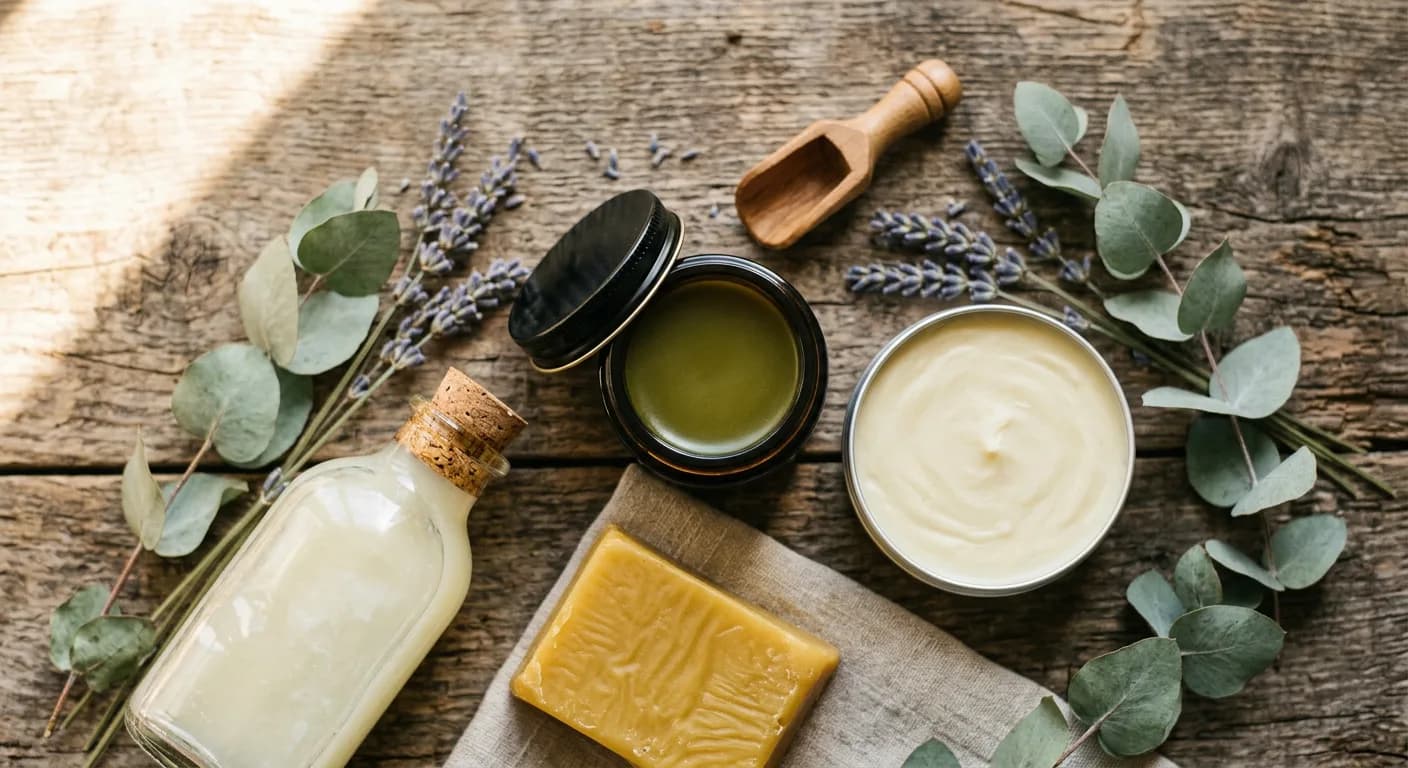
You grew the plant. You dried it, cured it, and stored it carefully. Now a jar of homemade cannabis salve is sitting on your bathroom shelf — and your partner is eyeing it suspiciously, asking the same question everyone asks: will that get me high?
The answer is no — and the reason why tells you almost everything you need to know about how cannabis topicals how they work. Understanding the skin barrier science doesn't just settle arguments; it unlocks a genuinely useful application for your home-grown harvest that most growers completely overlook.
This guide covers the real biology behind topical cannabinoids, what the research actually says about pain and inflammation, and a full DIY walkthrough — from decarbing your trim to adding the right essential oils for maximum effect.
The Skin Barrier: Why Topicals Don't Get You High
Standard cannabis topicals don't produce psychoactive effects because the skin's outermost layer — the stratum corneum — acts as a near-impenetrable wall for cannabinoid molecules. THC cannot reach the bloodstream in meaningful quantities through intact skin with a regular cream or salve, so it never crosses the blood-brain barrier to cause intoxication.
The stratum corneum is roughly 10–15 micrometers thick and made of tightly packed dead keratinocyte cells held together by lipid bilayers. It evolved as a waterproofing and antimicrobial barrier. While cannabinoids are lipophilic (fat-loving) — which helps them penetrate the upper layers — they are also large molecules that cannot pass through in amounts sufficient to cause systemic effects under normal topical application.
Topical vs. Transdermal: A Critical Distinction
Here's where people get confused, and the distinction genuinely matters:
- Topical — stays in the skin and underlying local tissue; interacts with local receptors only; does not enter the bloodstream; does not get you high; will not cause a drug test positive
- Transdermal — engineered to breach the stratum corneum and enter systemic circulation; examples include prescription fentanyl patches and some cannabis patches using penetration enhancers like DMSO or ethanol
Transdermal cannabis patches can produce measurable blood plasma THC levels and may cause a positive drug test. If you use a penetration enhancer like DMSO in a DIY formulation, treat it as transdermal — the same pharmacology applies. Standard salves and creams are not transdermal.
This is why the product format matters so much. A coconut oil cannabis salve rubbed onto a sore knee works locally. A cannabis patch with a chemical penetration enhancer worn on the wrist works systemically. Same plant, very different outcomes.
How Cannabinoids Actually Move Through Skin Layers
After application, cannabinoids penetrate the stratum corneum using their lipophilic properties and accumulate in the deeper epidermis and dermis layers. From there, they interact with cannabinoid receptors embedded in keratinocytes, sensory nerve fibers, sebaceous glands, and immune cells — all without crossing into capillary blood flow at therapeutic concentrations.
Research published in the Journal of Dermatological Science confirmed that the skin's endocannabinoid system (ECS) is extensive and active, with CB1 and CB2 receptors found throughout all skin layers. This local ECS is the target for topical formulations — and it's surprisingly responsive.
What Cannabis Topicals Can Actually Do for Your Body
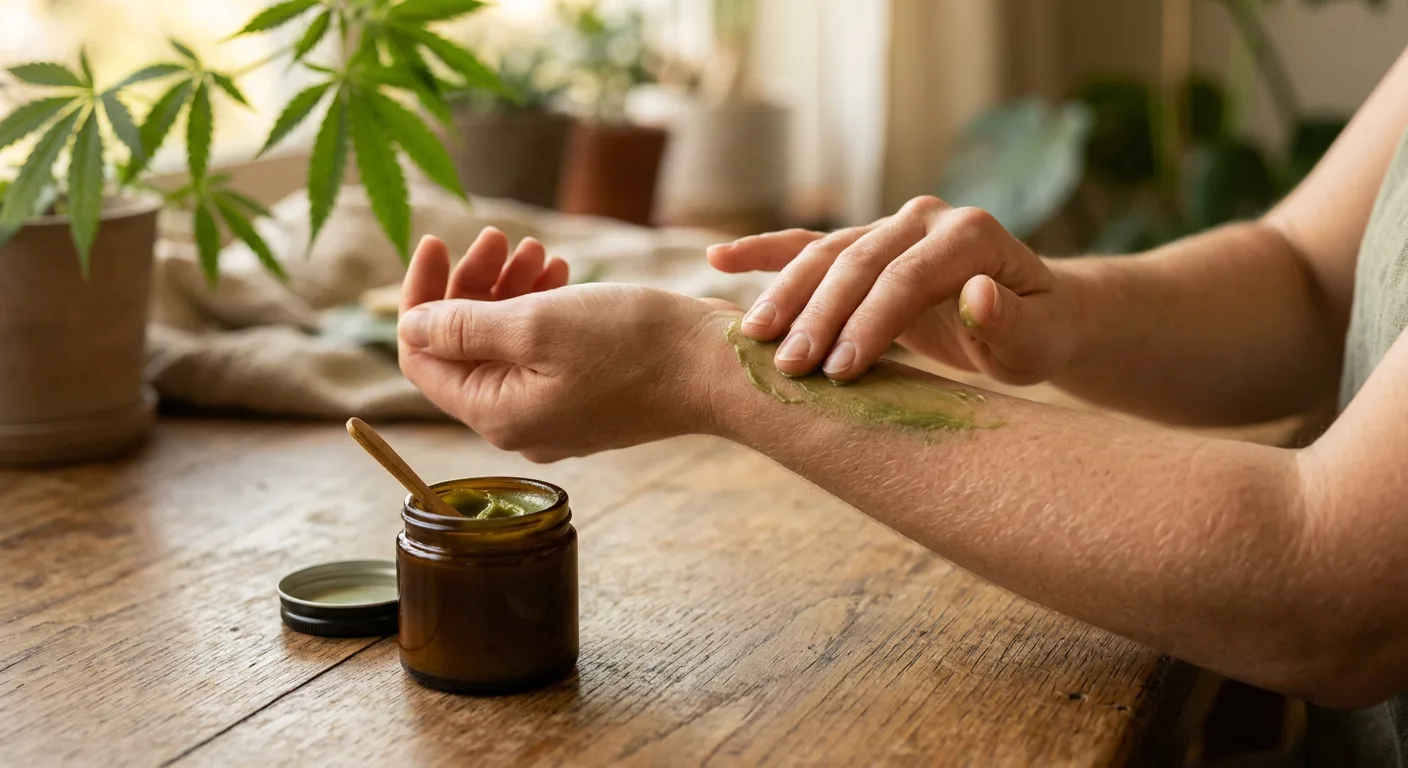
Cannabis topicals work primarily through localized CB2 receptor activation in the skin, subcutaneous tissue, and nearby muscles, producing effects like reduced inflammation, calmed immune response, and modulated pain signaling — all in the application area. Early evidence supports benefits for muscle tension, joint discomfort, and certain skin conditions.
Pain and Muscle Tension
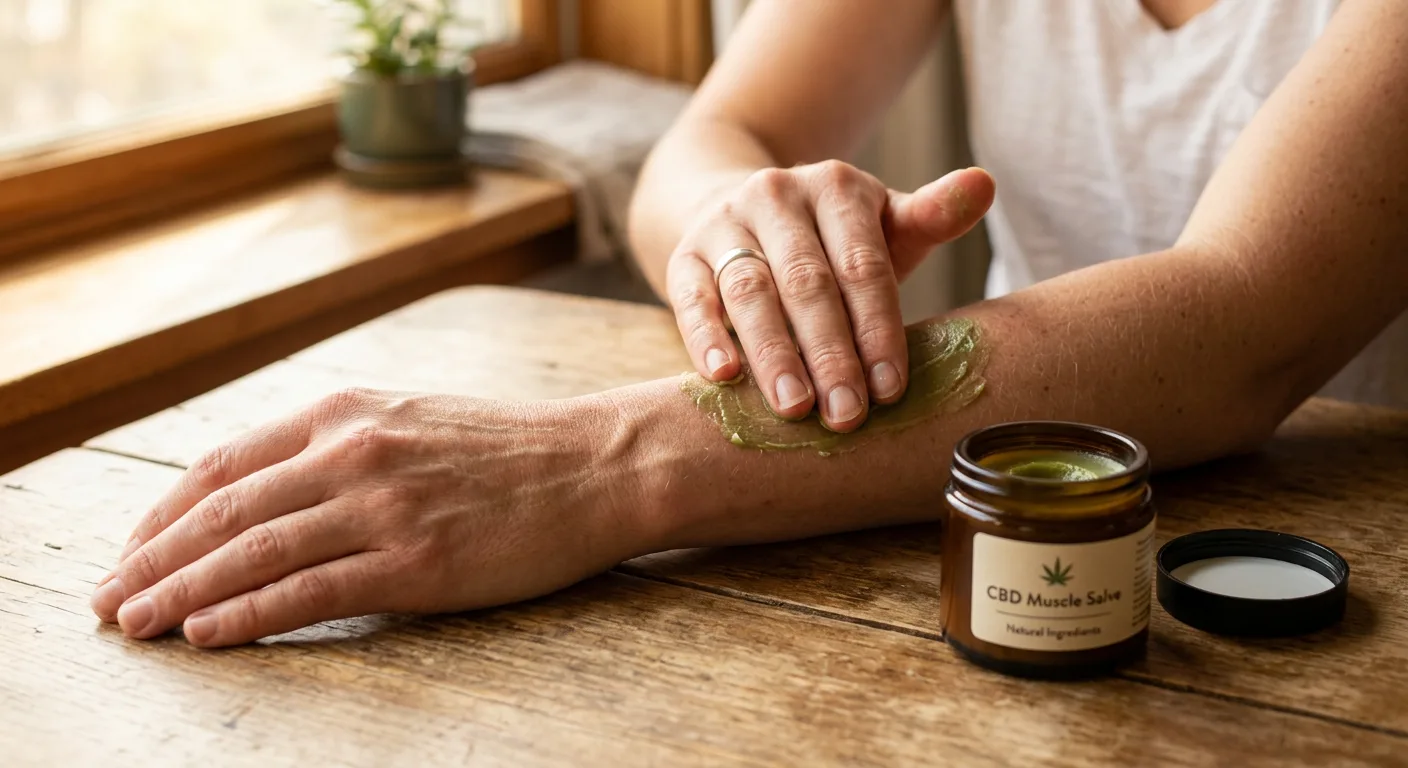
CB1 and CB2 receptors are both present in the peripheral sensory neurons that run through skin and muscle fascia. When THC or CBD binds to these receptors topically, it can reduce the release of pro-inflammatory neuropeptides like substance P, which play a role in how your brain perceives localized pain.
A 2019 study in the European Journal of Pain found that topical CBD application significantly reduced pain and inflammation in a rat arthritis model without systemic side effects. Human clinical data remains limited but consistently positive in self-reported outcomes. Think of it as a precision tool — it targets exactly where you put it.
- Post-workout muscle soreness — apply to specific muscle groups within 30 minutes
- Joint stiffness — massage into affected joint with firm circular pressure for better absorption
- Tension headaches — some users report benefit from temple application, though evidence is anecdotal
- Lower back tightness — salves with peppermint or menthol add a cooling counterirritant effect
Skin Conditions: Psoriasis and Eczema
CB2 receptor activation in keratinocytes has been shown to regulate skin cell proliferation and immune response — which is directly relevant to conditions like psoriasis, where skin cells multiply too rapidly. A 2007 study in the Journal of Dermatological Science found that cannabinoid receptor activation slowed excessive keratinocyte growth.
For eczema and general skin inflammation, CB2 activation may reduce mast cell degranulation — the process that triggers histamine release and the itch-scratch cycle. This evidence is preliminary, largely derived from in vitro and animal studies, and should not replace dermatological care. But it's a biologically plausible mechanism with early human data emerging.
Cannabis topicals don't cure skin conditions. What they may do — based on early research — is modulate the local immune and inflammatory response through the skin's own endocannabinoid system. That's a meaningful but limited action that works best as part of a broader skincare approach.
TRPV1 Channels: The Pain Gateway Cannabinoids Also Target
Beyond the ECS, cannabinoids — especially CBD — activate TRPV1 receptors (transient receptor potential vanilloid type 1) in sensory nerves. TRPV1 is sometimes called the capsaicin receptor, and it plays a major role in how your body processes heat, pain, and inflammation signals. CBD activates and then desensitizes TRPV1, reducing pain signaling in a way that's distinct from CB receptor activation.
This dual mechanism — CB2 for immune modulation, TRPV1 for pain desensitization — is part of why topical CBD often outperforms isolated anti-inflammatory ingredients in user reports.
THC Topicals vs. CBD Topicals: What's the Real Difference?
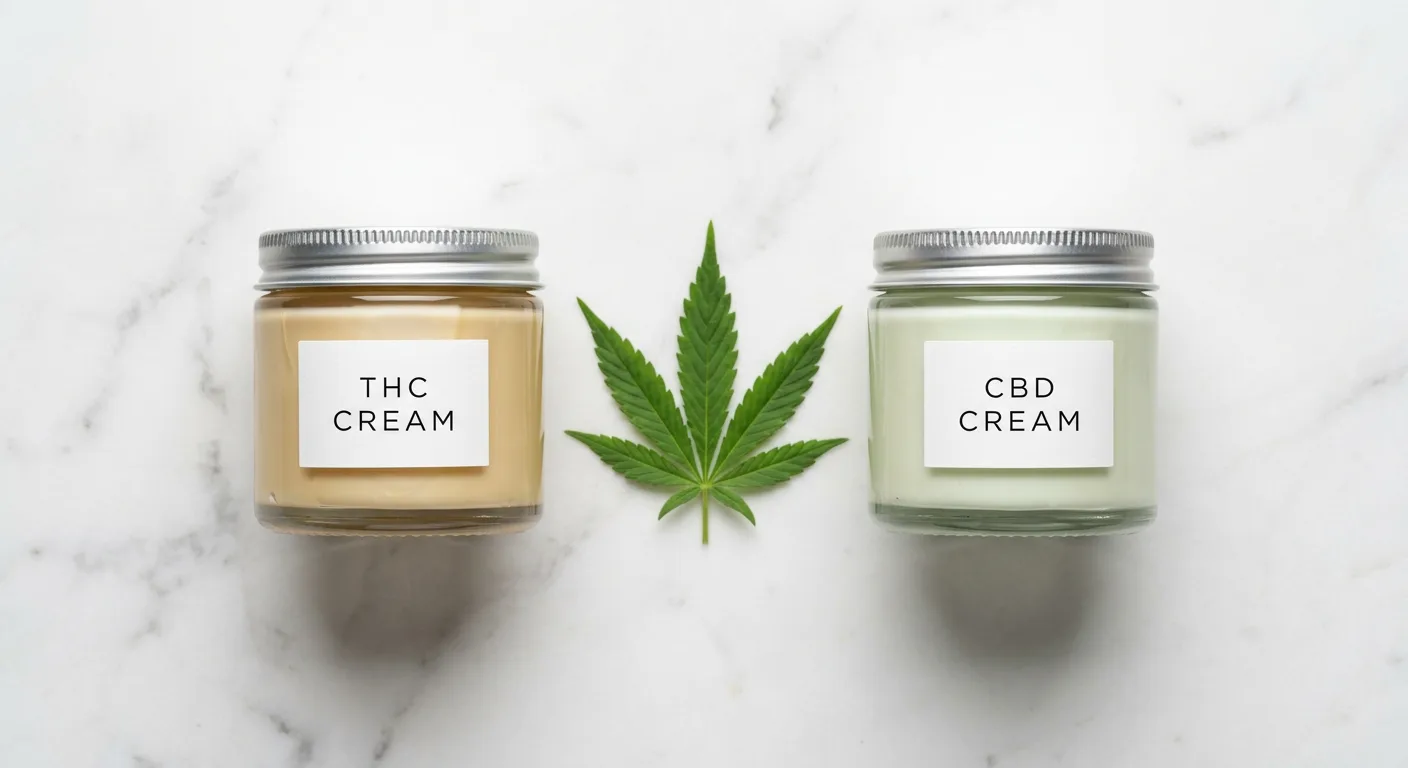
The difference between CBD cream and THC topical comes down to receptor targeting. CBD primarily activates CB2 receptors and modulates CB1 indirectly, favoring anti-inflammatory and skin-calming effects. THC directly activates both CB1 and CB2 receptors locally, which may offer stronger pain relief in tissues — but neither reaches the bloodstream to produce a high.
| Property | CBD Topical | THC Topical | Full-Spectrum (Both) |
|---|---|---|---|
| Primary receptor target | CB2, TRPV1 | CB1 + CB2 | CB1, CB2, TRPV1, others |
| Psychoactive effect | None | None (topical only) | None (topical only) |
| Drug test risk | Very low | Low (standard topical) | Low (standard topical) |
| Best for | Inflammation, skin conditions | Localized pain, muscle tension | Broad-spectrum relief |
| Legal status | Generally legal (hemp-derived) | Restricted by state law | Restricted by state law |
| Entourage effect | Partial | Partial | Full |
The Entourage Effect in Local Tissue
The entourage effect — the synergistic interaction between cannabinoids, terpenes, and flavonoids — doesn't just apply to inhaled or ingested cannabis. It operates in local tissue too. When a full-spectrum topical delivers THC, CBD, CBG, and terpenes like beta-caryophyllene simultaneously, those compounds interact at overlapping receptor sites in ways that isolated CBD or THC cannot replicate.
Beta-caryophyllene deserves special attention here: it's a terpene that directly binds CB2 receptors, functioning as a dietary cannabinoid. In a topical, it acts as a third cannabinoid-like molecule alongside THC and CBD, potentially amplifying the anti-inflammatory response. You can read more about caryophyllene's mechanism in our guide to caryophyllene strains for inflammation.
For maximum entourage effect in a home topical, use a full-spectrum infusion made from whole cured flower rather than isolated CBD or THC distillate. Your trim and lower buds are perfect for this — they still carry the full terpene and cannabinoid profile.
How to Make Your Own Cannabis Topical at Home
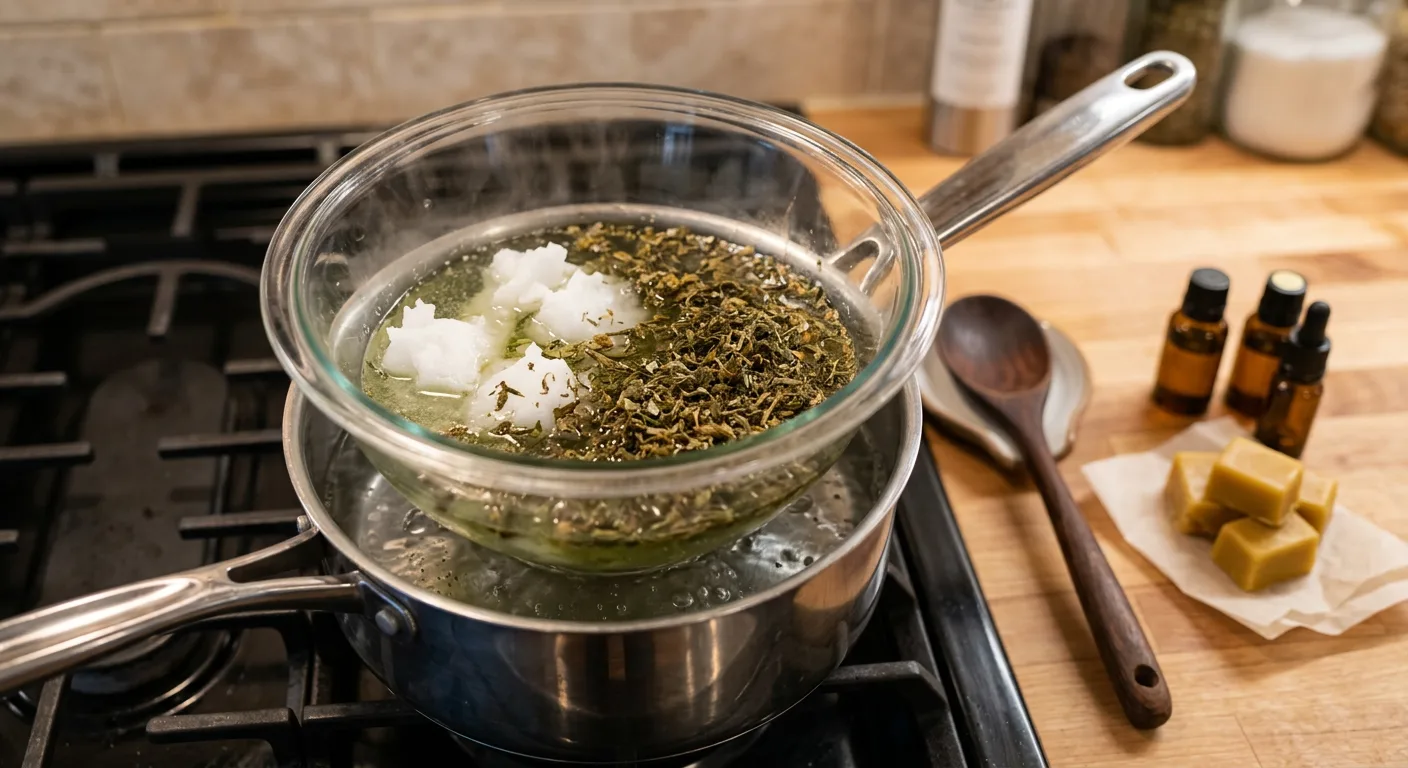
Making a cannabis topical at home starts with decarboxylating dried cannabis at 240°F for 40 minutes, then infusing it into a fat-based carrier like coconut oil using a double boiler or slow cooker. This activated oil becomes your base for any format — salve, cream, or body butter — by adding beeswax, shea butter, or emulsifying agents.
Step 1: Decarboxylation
Activate Your Cannabinoids
Spread 7–14 grams of dried, ground cannabis (or 28g of trim) on a parchment-lined baking sheet. Bake at 240°F (115°C) for 40 minutes, stirring once at the halfway point. You're converting THCA → THC and CBDA → CBD through heat. The material will turn from green to light brown. Let it cool completely before infusing.
Do not skip decarboxylation for topicals. Raw THCA and CBDA have minimal receptor binding affinity compared to their activated forms. An undecarboxylated infusion is significantly less effective — regardless of how much plant material you use.
Step 2: Oil Infusion
Infuse into Carrier Oil
Combine decarbed cannabis with 1 cup (240ml) of coconut oil in a double boiler or slow cooker. Maintain a temperature of 160–180°F (71–82°C) for 2–3 hours. Never exceed 200°F or you'll degrade terpenes. Stir every 30 minutes. After infusion, strain through cheesecloth into a clean glass jar, squeezing firmly to extract all oil. Discard the spent plant material.
Coconut oil is ideal for topicals for several reasons: it's solid at room temperature (easier to work with in salves), highly stable against oxidation, and its medium-chain fatty acids support cannabinoid binding. Olive oil and jojoba oil also work well — jojoba most closely mimics the skin's natural sebum, improving absorption.
Step 3: Choose Your Format and Add Beeswax
Set Your Consistency
For a salve (firm, balm-like): melt 1 oz (28g) of beeswax per 1 cup of infused oil. For a softer body butter: skip beeswax and whip cooled infused coconut oil with shea butter (1:1 ratio). For a light lotion: combine infused oil with aloe vera gel and an emulsifying wax at 25% oil / 75% water phase ratio.
Step 4: Essential Oil Additions and Their Synergistic Effects
Essential oils added at 1–3% of total weight aren't just fragrance — they bring functional compounds that work alongside cannabinoids:
- Lavender (linalool-dominant) — anti-inflammatory, mild analgesic, supports the skin barrier; pairs well with CBD for skin conditions
- Peppermint (menthol) — counterirritant that activates TRPM8 cold receptors, reducing pain perception; excellent for muscle salves
- Eucalyptus — contains 1,8-cineole, a mild penetration enhancer that may improve cannabinoid delivery into deeper tissue
- Arnica extract — well-documented for bruising and muscle soreness; works synergistically with THC on inflammation
- Rosemary — antioxidant that extends shelf life while adding mild analgesic properties
Linalool — the terpene that gives lavender its scent — also appears in many cannabis cultivars. When you add lavender essential oil to a full-spectrum cannabis topical, you're reinforcing a terpene already present in the plant. This is the same synergy we explore in linalool vs myrcene for sleep — the concept translates directly to topical applications.
Ratios and Recipes: From Beginner Body Butter to Advanced Gel
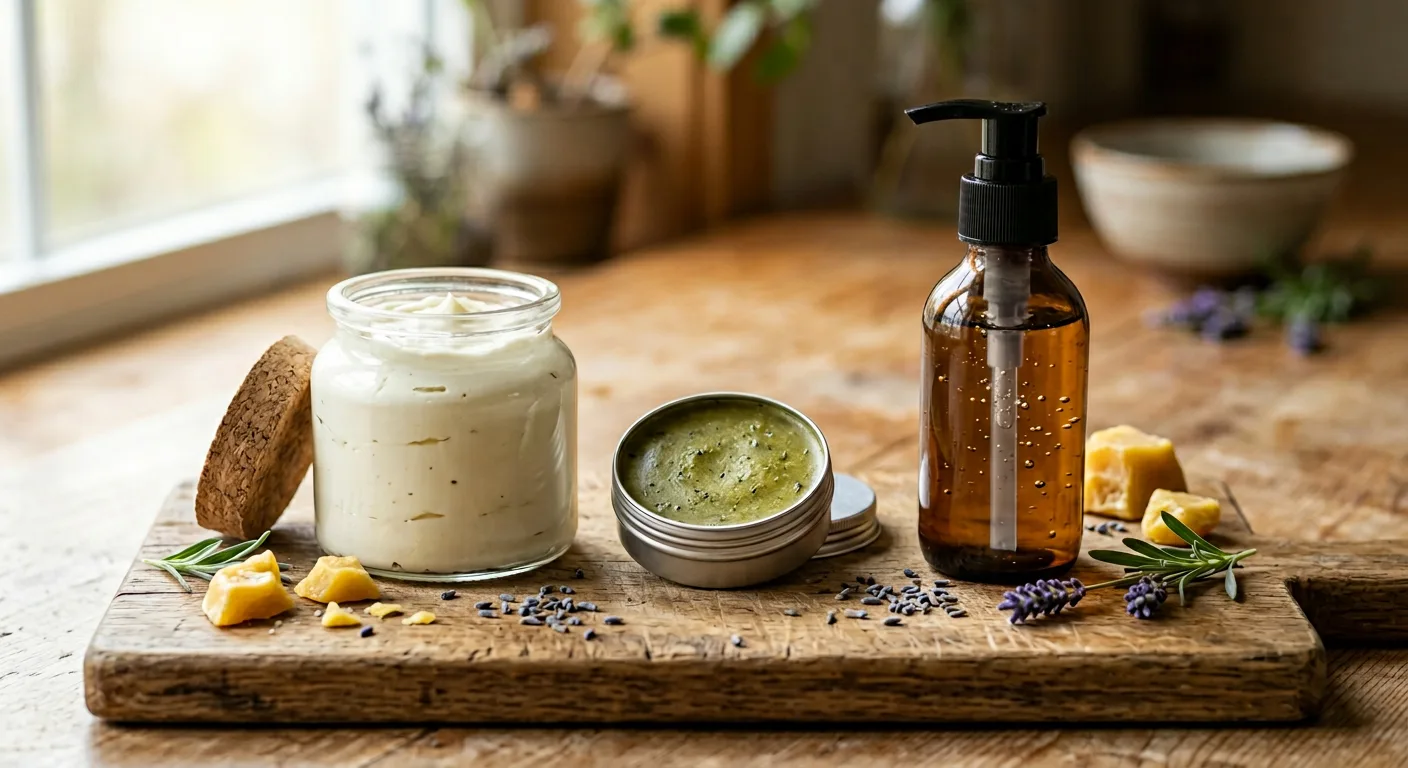
Cannabis topical recipes range from a simple 2-ingredient body butter to a more complex DMSO-based transdermal gel. Beginners should start with a beeswax salve using 7g of flower per cup of coconut oil. Intermediate users can add shea butter and multiple essential oils. Advanced users may explore DMSO-enhanced formulations with strict safety protocols.
Recipe 1: Beginner Cannabis Body Butter
- 1 cup coconut oil infused with 7g decarbed flower
- ½ cup shea butter
- ¼ cup cocoa butter
- 20 drops lavender essential oil
- 10 drops peppermint essential oil
Melt shea and cocoa butter together. Add infused coconut oil. Cool to room temperature, then refrigerate for 1 hour until semi-solid. Whip with a hand mixer for 3–4 minutes until fluffy. Add essential oils and whip again. Store in a wide-mouth glass jar. Use within 3 months.
Recipe 2: Intermediate Cannabis Salve
- 1 cup coconut oil infused with 14g decarbed flower (or trim)
- 1 oz beeswax pellets (28g)
- 2 tbsp jojoba oil
- 1 tbsp arnica-infused olive oil
- 15 drops eucalyptus essential oil
- 15 drops peppermint essential oil
- 10 drops rosemary essential oil
Melt beeswax in a double boiler. Add all oils and stir until combined. Remove from heat, cool to 120°F, then add essential oils. Pour immediately into tins or small glass jars. Do not disturb until fully set (30–45 minutes). Label with date and cannabis quantity.
Recipe 3: Advanced Transdermal-Style Gel with DMSO
Safety Warning — Read Before Proceeding: DMSO (dimethyl sulfoxide) is a powerful penetration enhancer that carries anything on your skin — including contaminants — directly into your bloodstream. Use only pharmaceutical-grade DMSO. Wear nitrile gloves (DMSO penetrates latex). Apply only to clean, chemical-free skin. Never use near synthetic fabrics. This formulation is transdermal — it will produce measurable blood THC levels and may cause a drug test positive. This is not appropriate for anyone subject to drug testing.
- 30ml cannabis-infused jojoba oil (14g flower per cup)
- 20ml pharmaceutical-grade DMSO (70% concentration)
- 10ml aloe vera gel (pure, preservative-free)
- 5ml ethanol (190 proof food-grade grain alcohol)
- 10 drops peppermint essential oil
Combine in a small glass bottle. Shake before each use. Apply 1ml to clean skin using a glass dropper — do not use plastic droppers with DMSO. Start with a small test patch on the inner arm. Effects from this formulation may be felt systemically within 30–60 minutes due to transdermal absorption. Dose conservatively.
Not sure how much THC is in your infused oil? Use our edible dosage calculator to estimate cannabinoid concentration based on your starting flower potency and infusion ratio. The same math applies to topicals when calculating transdermal formulations.
Shelf Life, Storage, and Contamination Prevention
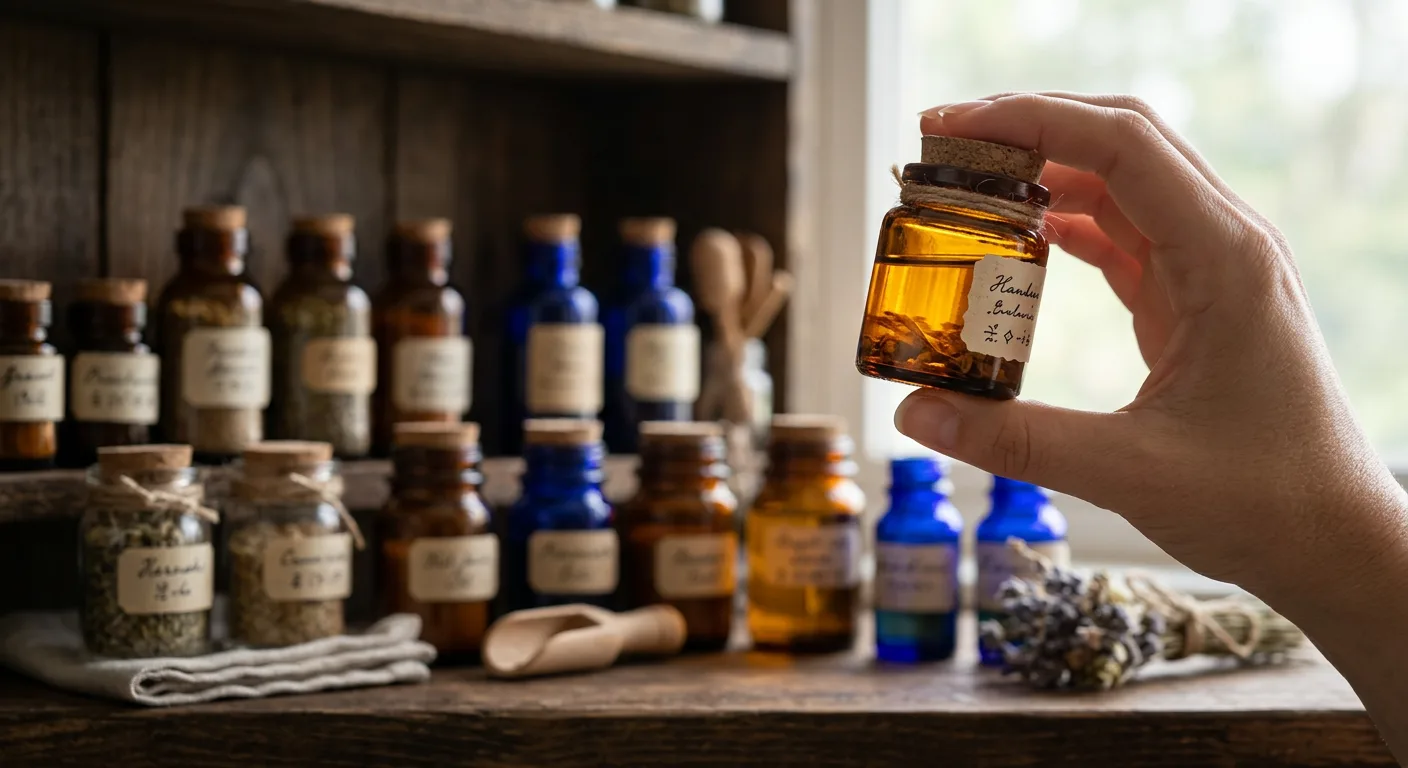
A properly made cannabis salve stored in a sealed glass container away from light and heat lasts 12 months. Body butters using water content (lotions) last 3–6 months and require a broad-spectrum preservative to prevent microbial growth. Contamination from water exposure, double-dipping, or heat is the main cause of early spoilage.
What Causes Cannabis Topicals to Go Bad
- Rancidity — oils oxidize over time, especially unsaturated fats like hemp seed oil; use vitamin E (1% concentration) as an antioxidant preservative
- Microbial contamination — any formulation containing water (lotions, gels) needs a preservative like Leucidal Liquid or phenoxyethanol
- UV degradation — THC and CBD degrade rapidly under UV light; store in amber or cobalt glass, never clear containers
- Heat cycling — beeswax salves melt and re-solidify, changing texture; store at consistent cool temperatures
- Contaminated tools — always use clean, dry utensils; water droplets introduced during use rapidly promote mold growth
Storage Best Practices
- Store in amber or cobalt glass jars
- Keep away from direct sunlight and heat sources
- Ideal storage temperature: 60–70°F (15–21°C)
- Add 400IU vitamin E oil per cup to extend shelf life
- Label every batch with date, strain, and estimated cannabinoid content
- Use a clean, dry spatula — never fingers — to scoop from jars
- Refrigerate lotion formulations (containing water) when not in use
- Discard if you see discoloration, unusual odor, or mold spots
Oil-only formulations (salves, balms) are the most shelf-stable and the easiest for beginners to manage safely. Save lotion-making for when you're comfortable with the oil-based process and ready to learn basic cosmetic preservation chemistry.
Which Strains Make the Best Cannabis Topicals?
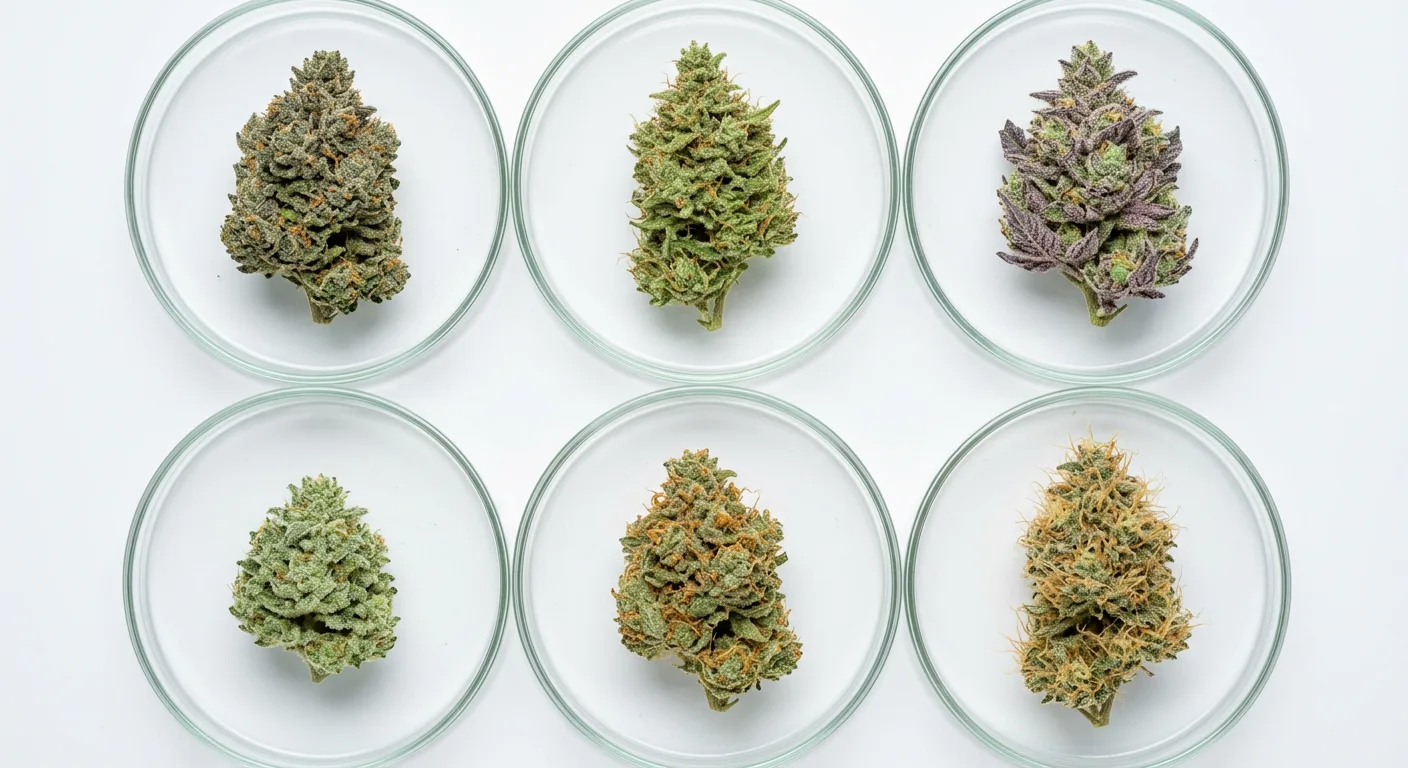
The best cannabis strains for topicals are high in CBD, rich in beta-caryophyllene and myrcene terpenes, and ideally grown to full trichome maturity. CBD-dominant strains provide the strongest anti-inflammatory topical base. High-THC strains add CB1 receptor engagement for pain relief. Balanced 1:1 strains are the most versatile topical starting point.
What to Look for in a Topical Strain
- Beta-caryophyllene content — directly activates CB2 receptors; look for kush and diesel genetics known for spicy, peppery aromas
- Myrcene — enhances skin penetration by fluidizing cell membranes; present in most indica-leaning strains
- Linalool — adds skin-soothing properties; found in strains with floral, lavender notes
- CBD content — higher CBD means more CB2 activation and TRPV1 modulation without psychoactivity
- Full trichome maturity — milky-to-amber trichomes at harvest indicate maximum cannabinoid content; check our harvesting guide for exact timing
Top Strain Picks for Topical Production
For a CBD-forward anti-inflammatory topical, strains like Charlotte's Web, ACDC, and Cannatonic are industry standards with CBD:THC ratios up to 20:1. These are purpose-bred CBD cultivars that deliver exceptional topical bases but are harder to source as seeds for home growing.
For growers who want to use higher-THC home-grown material in full-spectrum topicals, the following deliver excellent terpene profiles for topical use:
- OG Kush — heavy caryophyllene and myrcene content, dominant kush genetics ideal for pain-focused salves; our OG Kush Feminized Seeds (26% THC) produce resin-rich flower with exactly the terpene profile topicals need
- Purple Kush — linalool-forward with deep myrcene base; the purple anthocyanins also have antioxidant properties that may benefit skin formulas; see Purple Kush Feminized Seeds (27% THC)
- Sour Diesel — caryophyllene-dominant with pinene; excellent for energizing muscle salves; Sour Diesel Feminized Seeds (24% THC) are a reliable home grow choice
- Northern Lights x Big Bud — robust myrcene content, easy to grow heavily, produces high trim yields ideal for topical production; Northern Lights x Big Bud Feminized Seeds (20% THC)
- Gorilla Glue #4 — exceptionally resinous, caryophyllene-heavy, industry favorite for full-spectrum extracts and topicals (not in our range, but worth mentioning for trim purchases)
- Skywalker OG — balanced myrcene and caryophyllene; our Skywalker OG Autoflower Seeds (23% THC) are a great option for growers wanting fast harvests for topical use
- White Widow — classic resin producer with balanced terpene profile; White Widow Feminized Seeds (25% THC) yield generous trim for large-batch topical production
- ACDC — high-CBD phenotype of Cannatonic; widely available as a cutting; 20:1 CBD:THC ratio makes it the gold standard topical base (not carried — source through local dispensary clones)
Your trim and small popcorn buds are perfect topical material. Don't throw away the plant material that doesn't make it into your jars — it contains the same cannabinoids and terpenes as your top colas. A pound of trim can produce enough infused coconut oil for 20+ jars of salve.
If you're growing specifically for topical production, plan your harvest for when 70–80% of trichomes have turned milky with amber beginning to appear. This maximizes the combined THC + CBD + terpene content that makes topicals most effective. Learn the exact method in our complete harvesting guide.
Growing your first batch for topicals? Use our yield estimator to calculate how much flower and trim your plants will produce — that way you can plan how many batches of topical you'll be able to make before you even plant.
For inflammation-focused topicals, check our curated list of the best strains for inflammation — those selections overlap strongly with what works in topical formulations. Similarly, strains recommended for muscle spasms and pain relief tend to carry the caryophyllene and myrcene profiles that perform best in salves and body butters.
Processing Your Harvest for Topicals
After harvest, properly cured cannabis infuses more efficiently and produces less chlorophyll contamination (which creates bitter, green-smelling topicals). Follow a full 2-week cure minimum before infusing. A well-cured bud also retains terpenes better — which directly improves the entourage effect in your finished topical.
For large-batch topical production from home-grown material, consider making a concentrated infused oil first, then diluting to your target strength. This lets you adjust potency without making a new batch from scratch. Our small harvest curing guide covers the preservation steps that protect terpene content before you infuse.
Cannabis topicals represent one of the most practical, non-smoking uses for a home harvest. They require no smoking, no edible dosing math, and zero psychoactive effect — making them accessible to family members or friends who would never otherwise engage with your crop. A jar of well-made salve is often more persuasive than any argument about cannabis.
Frequently Asked Questions
Will cannabis cream show up on a drug test?
Standard topicals — creams, salves, and lotions — are extremely unlikely to cause a positive drug test because cannabinoids don't cross the skin barrier into the bloodstream in meaningful amounts. Transdermal patches are different and may cause a positive result. If you're subject to drug testing, avoid DMSO-enhanced or transdermal patch formulations entirely and stick to conventional salves and body butters.
Does CBD cream work for nerve pain?
Early research suggests CBD may activate CB2 receptors and TRPV1 channels in the skin and underlying tissue, which could reduce localized nerve sensitivity and inflammation. A 2020 pilot study published in the journal Pain Medicine found that topical CBD reduced pain and cold, itchy sensations in peripheral neuropathy patients over 4 weeks of use. The evidence is promising but still preliminary — always consult a healthcare provider for nerve pain treatment before using cannabis topicals as a replacement for prescribed therapy.
How do I make cannabis lotion at home?
Start by decarboxylating your cannabis at 240°F for 40 minutes, then infuse it into coconut oil or jojoba oil in a double boiler at 160–180°F for 2–3 hours. Strain out plant material. For lotion (not salve), you'll need to emulsify this oil phase with a water phase: combine your infused oil with emulsifying wax (25% of total), then slowly blend with warm distilled water and aloe vera gel. Add a broad-spectrum cosmetic preservative (like Leucidal Liquid at 2–4%), then essential oils below 120°F. Pour into clean containers and label with the date.
Do cannabis topicals get you high?
No. Standard cannabis topicals — salves, creams, body butters, and lotions — do not get you high. The skin's outermost layer, the stratum corneum, prevents cannabinoids from entering the bloodstream at psychoactive concentrations. Without reaching the bloodstream, THC cannot cross the blood-brain barrier and produce intoxication. Only transdermal formulations (patches and DMSO-based gels specifically engineered to breach the skin barrier) can produce systemic effects.
What is the difference between a CBD cream and a THC topical?
CBD topicals primarily activate CB2 receptors and TRPV1 channels, making them well-suited for inflammation, skin conditions like eczema, and nerve sensitivity. THC topicals also target CB1 receptors in local tissue, which may provide stronger localized pain relief. Neither type produces psychoactive effects when used as a standard topical. Many users find that full-spectrum topicals containing both cannabinoids plus terpenes like beta-caryophyllene produce the best results, thanks to the entourage effect operating at the local tissue level.