You're staring at the ceiling at 2 a.m. again. You've already tried the usual cannabis routine, but choosing between a high-linalool strain and a high-myrcene strain feels like guessing, because most guides treat these two terpenes as interchangeable. They aren't. Linalool vs myrcene for sleep is one of the most useful distinctions you can make as a consumer, because each terpene targets a different part of the sleeplessness equation.
Linalool calms the mind before it calms the body. Myrcene drops the body first and pulls the mind down after. That single difference determines which one you should reach for depending on whether you struggle to fall asleep, stay asleep, or both.
This guide breaks down the science in plain English, maps out the subjective differences, explains how to stack them, and gives you a strain selection table rated for each terpene's sleep role. By the end, you'll know exactly which profile to look for, and which seeds are worth growing.
How Each Terpene Works: The Mechanism Comparison
Linalool and myrcene both promote sedation, but they take completely different biochemical roads to get there. Understanding the mechanism tells you why the effects feel so different in practice.
Linalool: The GABA-A Pathway
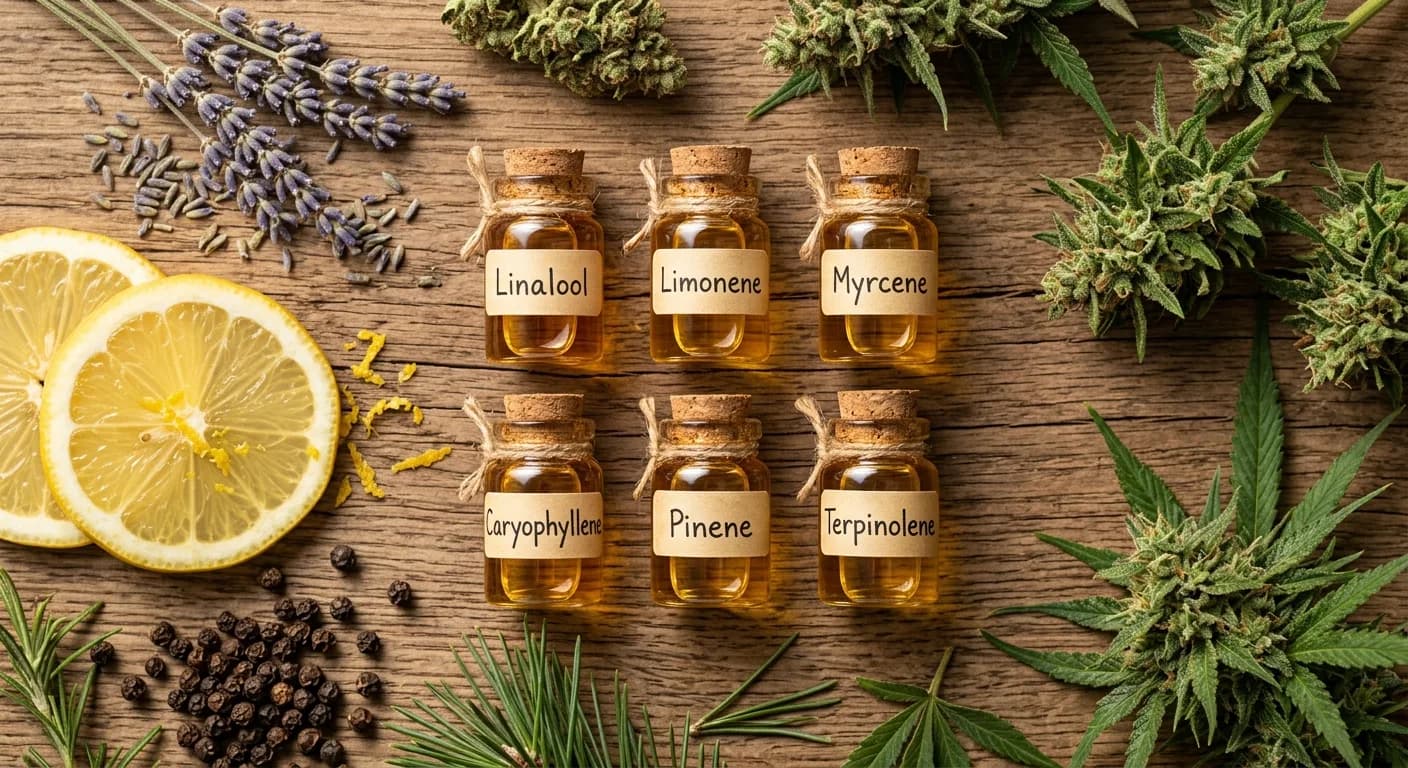
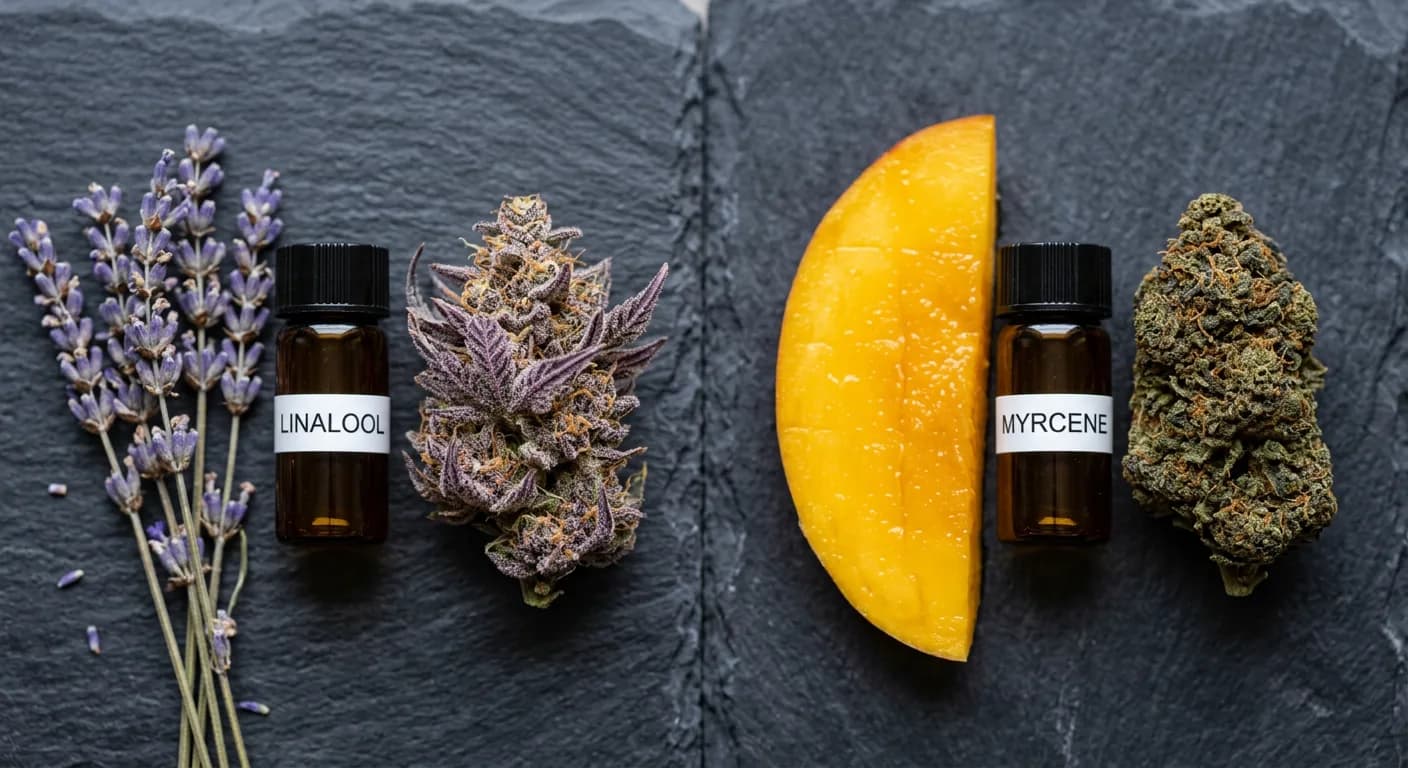
Linalool is a floral, slightly citrus monoterpene found in lavender, coriander, and dozens of cannabis cultivars. Its best-documented sleep mechanism is positive modulation of GABA-A receptors, the same receptors targeted by benzodiazepines, though linalool acts far more gently and without the receptor desensitization that causes dependency.
A 2009 study published in the Journal of Agricultural and Food Chemistry showed that inhaled linalool reduced anxiety-like behavior in mice without impairing motor function, a critical distinction from sedative drugs that create hangover grogginess. The GABA-A modulation promotes neural quieting, which manifests as reduced racing thoughts and lowered psychological arousal before sleep onset.
Science note: GABA-A receptors are the brain's primary inhibitory gate. When linalool modulates them, it reduces the excitatory noise that keeps anxious minds awake, which is why linalool's effect is often described as 'quieting the mental chatter' rather than physically pinning you to the couch.
Myrcene: Muscle Relaxation and Opioid-Adjacent Pathways
Myrcene is an earthy, musky monoterpene that dominates the terpene profiles of most commercial indica-heavy strains. Its sedative mechanism is less straightforward than linalool's. Research suggests myrcene acts on opioid receptors, specifically mu-opioid receptors, as a partial agonist, which explains the analgesic body relaxation users report.
Myrcene also appears to potentiate THC's own sedative effects by increasing the permeability of the blood-brain barrier, allowing cannabinoids to reach CB1 receptors more efficiently. A commonly cited threshold is 0.5% myrcene by dry weight, strains testing above this level show statistically higher rates of user-reported sedation. Myrcene's muscle-relaxant properties are also well-documented in animal models, with some studies comparing its activity to chlorpromazine at higher doses.
Core distinction: Linalool quiets the mind via GABA-A modulation. Myrcene relaxes the body via opioid-adjacent pathways and potentiates THC sedation. These are different tools for different sleep problems.
The Subjective Experience: How They Feel Different
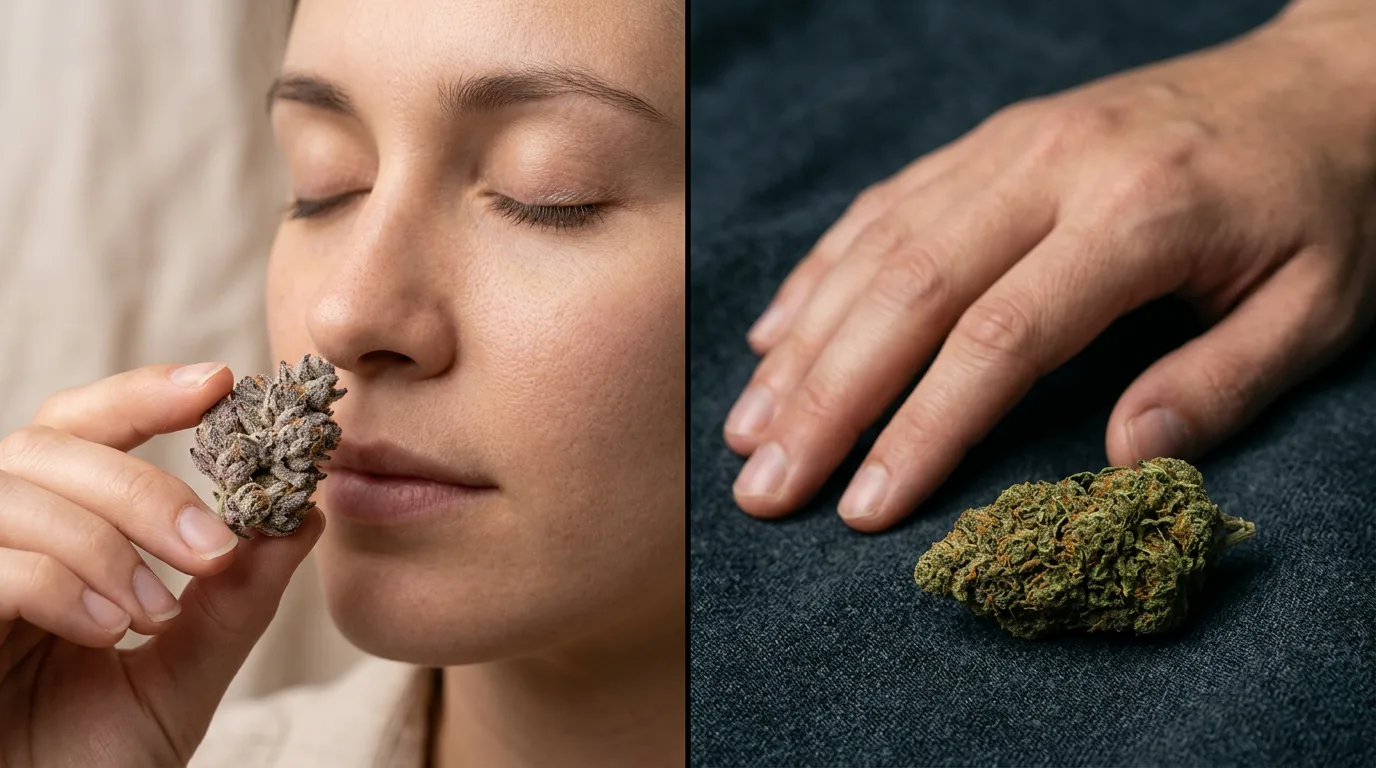
Mechanism matters, but what you actually feel is what determines whether you sleep. The subjective profiles of linalool and myrcene are distinct enough that experienced consumers can often identify which is dominant without reading a lab report.
What a High-Linalool Strain Feels Like
Linalool-dominant strains produce what most users describe as a soft landing. The first wave is anxiolytic: a loosening of mental tension, reduced rumination, and a general sense that the day's problems have been filed away. Physically, the body follows the mind rather than leading it. You feel relaxed, not sedated, for the first 20–40 minutes.
- Mental: calm, reduced anxiety, slower thought cycling
- Physical: light muscle relaxation, no immediate heaviness
- Onset: gradual, 20–40 minutes to full effect when smoked
- Character: floral, slightly sweet aroma on the exhale
- Next morning: clean, minimal grogginess reported
What a High-Myrcene Strain Feels Like
Myrcene-dominant strains hit differently. The body effect arrives first, a dense, gravitational heaviness in the limbs that many users call the "couch-lock" sensation. Within 15–25 minutes, staying awake feels like effort rather than choice. The mental shift comes second, often described as a dimming rather than a quieting.
- Mental: foggy, heavy-lidded, thoughts slow without anxiolytic clarity
- Physical: strong muscle relaxation, limb heaviness, body sedation
- Onset: faster body effect, 15–25 minutes when smoked
- Character: earthy, musky, sometimes fruity (mango-adjacent)
- Next morning: some users report residual grogginess at high doses
Pro tip: If you find high-myrcene strains leave you groggy in the morning, try vaporizing at lower temperatures (around 157°C / 315°F). Myrcene boils at 167°C, so slightly lower temps release less of it per draw, giving you a lighter dose without switching strains.
Sleep-Onset vs. Sleep-Maintenance: Which Terpene Targets Which Problem?
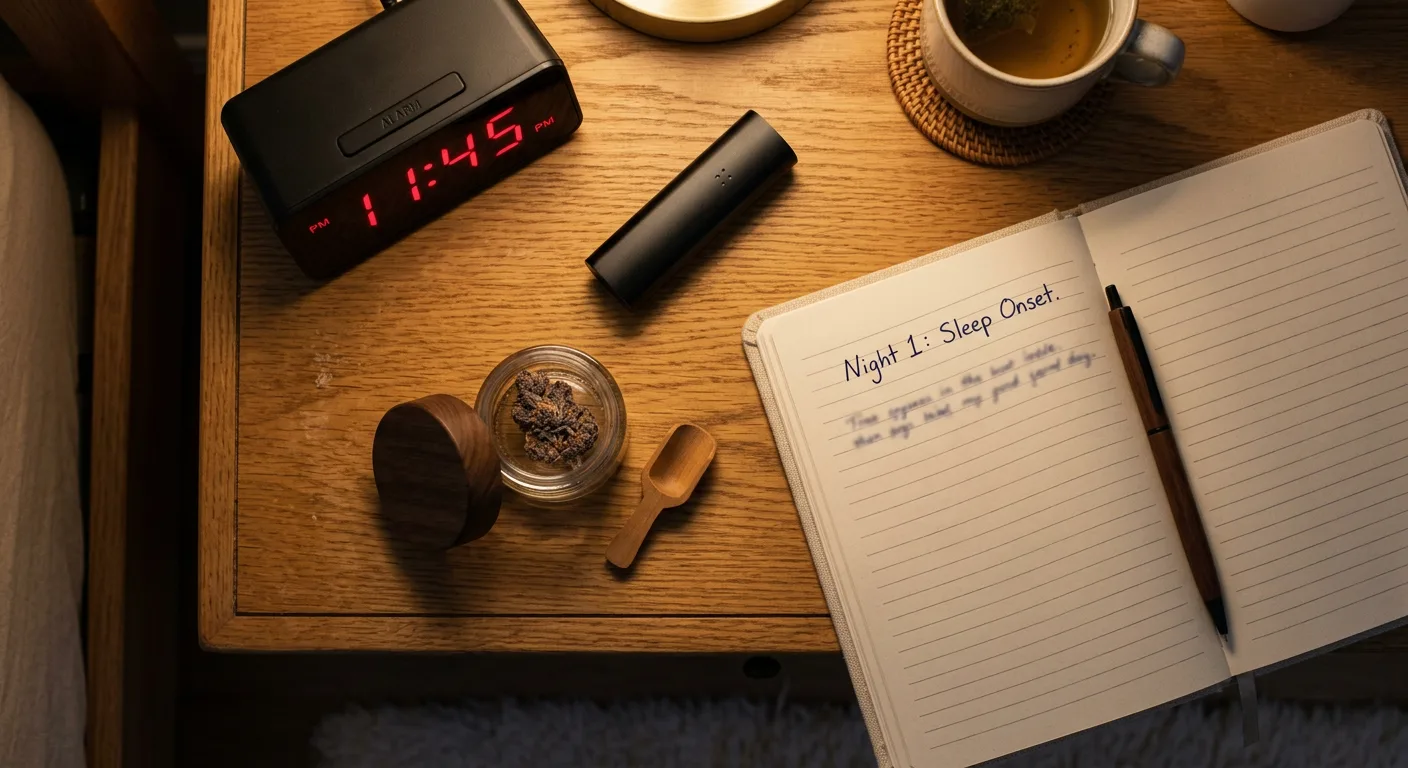
This is the most actionable distinction in the entire linalool vs myrcene debate, and it's one most competing guides completely skip. Your sleep problem type should drive your terpene choice, not just general marketing language about "indica for sleep."
Sleep-Onset Insomnia → Choose Linalool
If your core problem is getting to sleep, lying awake with racing thoughts, anxiety, mental overstimulation, or an inability to "switch off", linalool is your primary target. Its GABA-A anxiolytic action directly addresses the psychological barrier to sleep onset.
The research on lavender aromatherapy (which is essentially concentrated linalool delivery) consistently shows reduced sleep latency, meaning people fall asleep faster, in anxious populations. Cannabis cultivars carrying high linalool percentages (0.3%+ by dry weight) replicate this mechanism through inhalation, with the added synergy of THC and CBD amplifying the effect.
Sleep-onset insomnia pick: Prioritize strains where linalool appears in the top 2–3 terpenes on the lab report. Look for floral, slightly lavender-adjacent aromas as an informal indicator when lab data isn't available.
Sleep-Maintenance Insomnia → Choose Myrcene
If you fall asleep without much trouble but wake at 2 or 3 a.m. and can't return to sleep, or if physical discomfort, pain, or muscle tension is what wakes you, myrcene is the stronger tool. Its muscle-relaxant and opioid-adjacent analgesic properties keep the body physically suppressed through the night.
Myrcene's potentiation of THC also extends the duration of cannabis sedation, which is especially relevant for sleep-maintenance issues. Strains testing above 1% myrcene combined with moderate-to-high THC (18–26%) produce the longest-lasting body sedation profiles in most user reports.
Mixed Insomnia → Use Both
If you struggle with both onset and maintenance, the most common clinical presentation of insomnia: the strongest strategy is a strain that carries both terpenes above meaningful thresholds. This is where the synergy case becomes compelling, and where the best sleep-focused cultivars earn their reputation.
The Synergy Case: Why High Linalool + High Myrcene Strains Outperform Either Alone
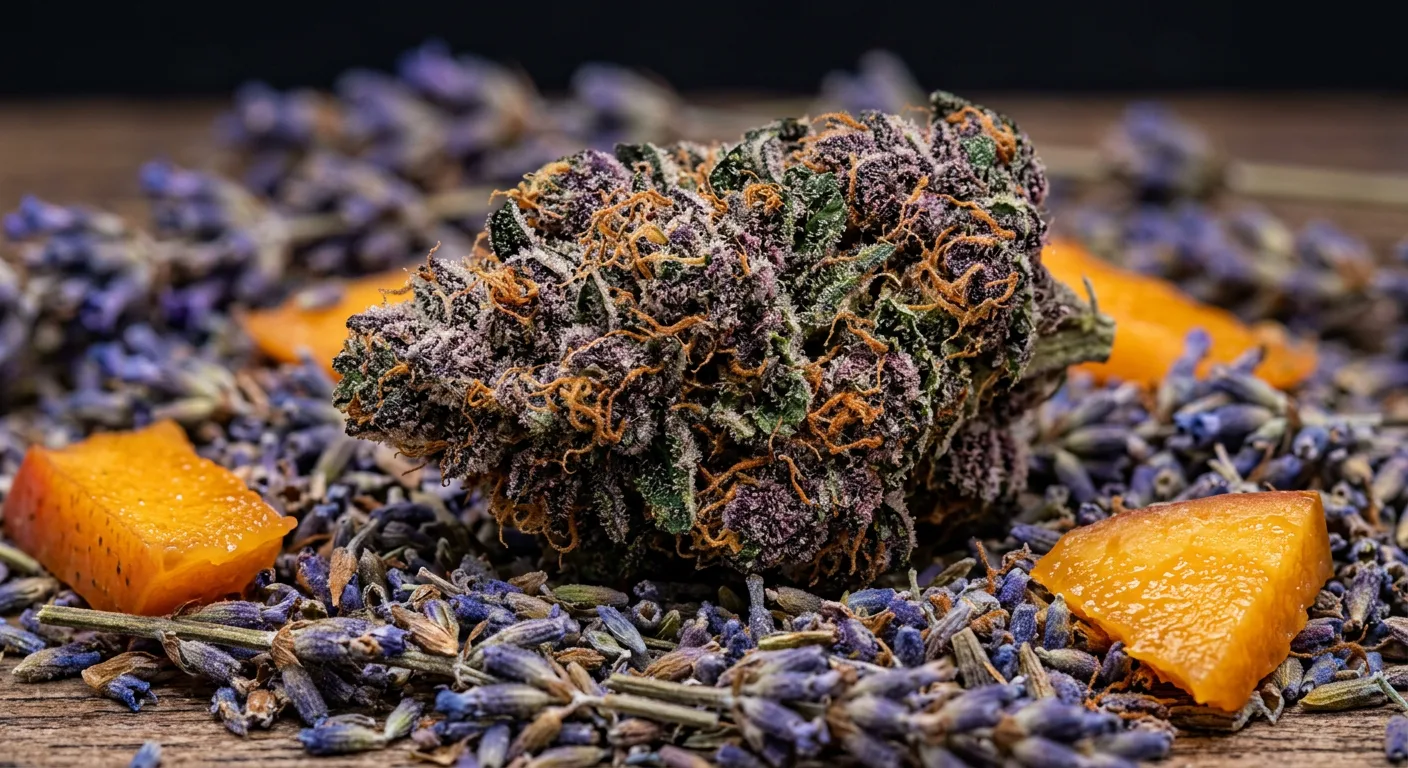
The entourage effect is sometimes invoked loosely as a catch-all explanation for why whole-plant cannabis "just works better." But the linalool-myrcene synergy has a more specific and defensible logic than the general claim.
Linalool addresses psychological arousal (GABA-A pathway). Myrcene addresses physiological arousal (muscle tension, pain, THC potentiation). When both are present above threshold concentrations, they work simultaneously on both arousal systems. This two-pronged suppression of the wakefulness state is more complete than either terpene can achieve alone.
Three classic cultivars that consistently test high in both terpenes have become the benchmarks for this combined sleep profile:
- Granddaddy Purple: One of the most studied sleep cultivars for terpene synergy. GDP routinely tests with myrcene as its dominant terpene and linalool in a strong secondary position, alongside caryophyllene. The purple phenotype is a reliable visual marker of linalool-rich genetics (more on this below).
- Do-Si-Dos: A Cookies-lineage hybrid that punches well above its weight for sedation. Its dense resin production concentrates both myrcene and linalool in the trichome layer. Effects are often described as "physically cemented" with mental calm layered on top.
- LA Confidential: An OG-lineage pure indica known for pharmaceutical-grade sedation. It typically leads with myrcene and follows with linalool, producing a rapid body drop followed by sustained mental quieting through the night.
Science note: A 2011 review by Dr. Ethan Russo in the British Journal of Pharmacology established the foundational entourage framework and specifically highlighted linalool-myrcene interactions as among the most clinically relevant for sleep and anxiety applications.[1] This remains the most-cited academic basis for the combined-terpene approach.
Strain Selection Table: Rated by Linalool and Myrcene Dominance
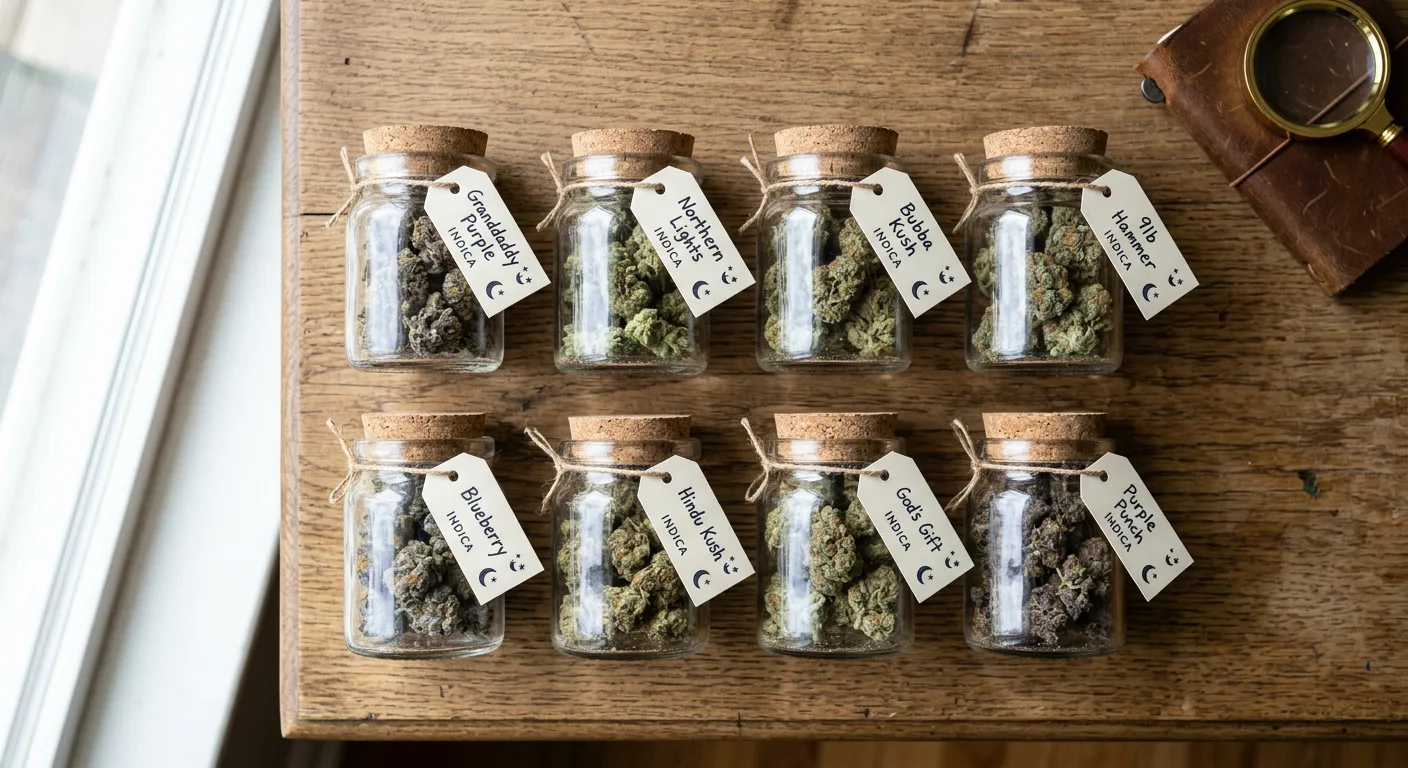
The table below rates 10 strains on their typical linalool and myrcene profiles and assigns a sleep-use-case score for onset problems, maintenance problems, and combined insomnia. Scores are based on reported terpene lab data averages and user experience patterns.
Ratings use a 1–5 scale: 1 = minimal contribution, 5 = excellent for this use case.
| Strain | Linalool Level | Myrcene Level | Sleep Onset Score | Sleep Maintenance Score | Combined Insomnia Score | Best For |
|---|---|---|---|---|---|---|
| Granddaddy Purple | High (secondary) | Very High (dominant) | 4/5 | 5/5 | 5/5 | Mixed insomnia, pain at night |
| Do-Si-Dos | High | High | 4/5 | 5/5 | 5/5 | Anxiety + body tension combination |
| LA Confidential | Moderate-High | High (dominant) | 4/5 | 5/5 | 4/5 | Hard-to-treat chronic insomnia |
| Purple Kush (27% THC) | High | High | 4/5 | 5/5 | 5/5 | Deep sleep, pain-related waking |
| Bubba Kush | Moderate | Very High (dominant) | 3/5 | 5/5 | 4/5 | Physical sedation, maintenance issues |
| Northern Lights x Big Bud (20% THC) | Moderate | High | 3/5 | 4/5 | 4/5 | Reliable everyday sleep strain |
| Lavender (Soma Seeds) | Very High (dominant) | Moderate | 5/5 | 3/5 | 4/5 | Anxiety-driven sleep-onset insomnia |
| Blue Magoo (22% THC) | Moderate-High | Moderate-High | 4/5 | 4/5 | 4/5 | Balanced anxiety + relaxation profile |
| Alien OG | Low-Moderate | Very High (dominant) | 2/5 | 5/5 | 3/5 | Pure physical sedation, not anxiolytic |
| Skywalker OG Auto (23% THC) | Moderate | High | 3/5 | 5/5 | 4/5 | Easy grow, strong physical sedation |
Important: Terpene levels vary significantly between phenotypes of the same strain, and between grows. Lab reports from dispensaries or your own COA tests are the only reliable way to confirm what's actually in a specific batch. Use this table as a starting framework, not an absolute guarantee. Learn how to read a cannabis terpene lab report to verify your own harvests.
Verdict Cards: Which to Choose Based on Your Sleep Problem
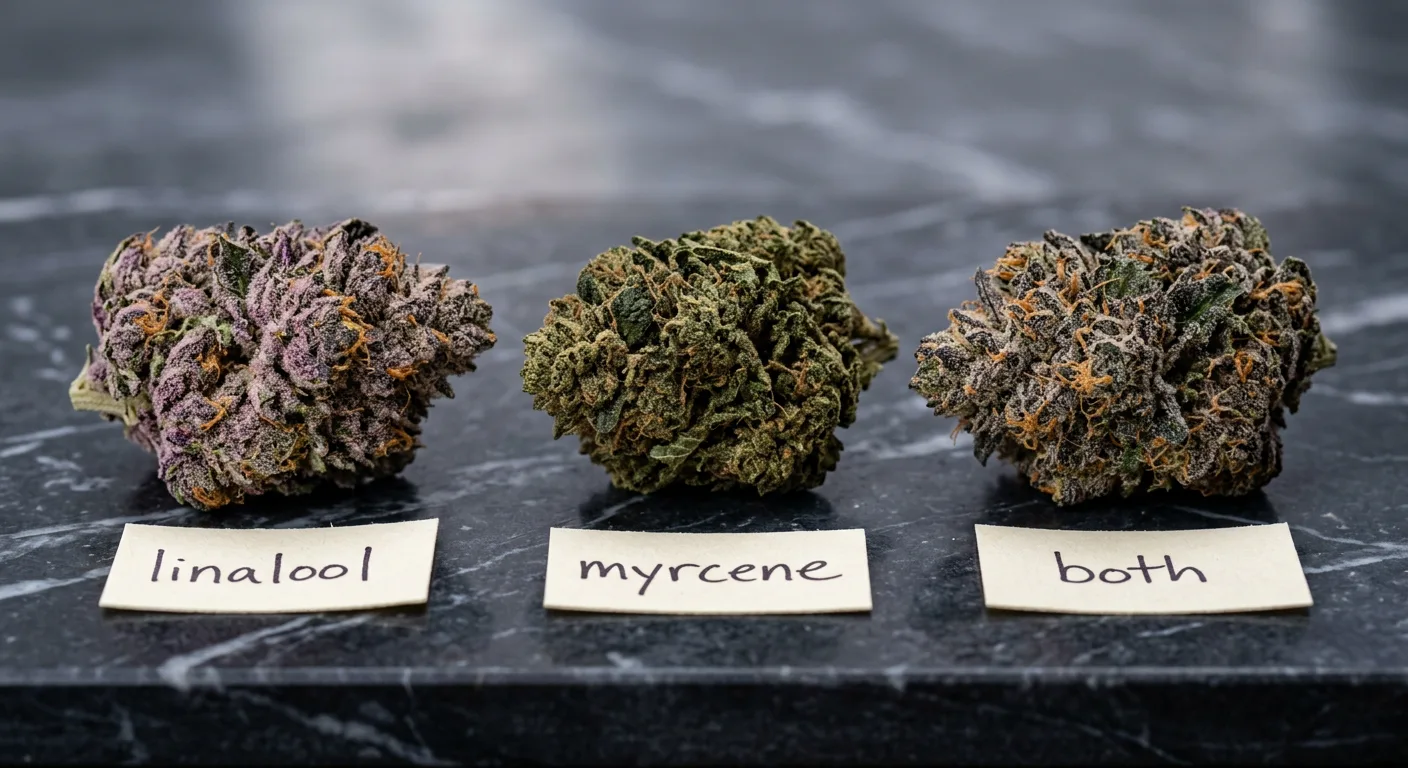
If you want a fast answer without reading every section, these verdict cards give you the decision framework in plain terms.
✅ Choose Linalool If:
- Your primary complaint is racing thoughts or anxiety at bedtime
- You fall asleep late but sleep well once you're out
- You've found high-myrcene strains leave you groggy the next day
- You prefer a calm, gradual descent into sleep rather than being "knocked out"
- Stress or PTSD-adjacent hyperarousal is a factor in your insomnia
Top picks: Lavender strain, Granddaddy Purple, Do-Si-Dos, Blue Magoo, Purple Kush
✅ Choose Myrcene If:
- You fall asleep fine but wake up in the middle of the night
- Physical pain, muscle tension, or restless legs disrupt your sleep
- You want the strongest possible body sedation effect
- You don't experience next-morning grogginess from heavier indicas
- You want to extend the duration of sedation through the night
Top picks: Bubba Kush, LA Confidential, Alien OG, Skywalker OG Auto, Northern Lights x Big Bud
✅ Choose High Linalool + High Myrcene If:
- You have mixed insomnia, trouble both falling and staying asleep
- Anxiety and physical discomfort both contribute to your sleep problems
- You want the most complete, two-pathway sedation profile
- You're growing your own and want a single strain that covers all bases
Top picks: Granddaddy Purple, Do-Si-Dos, Purple Kush, Blue Magoo
Do Terpenes Actually Help with Sleep? What the Evidence Really Says
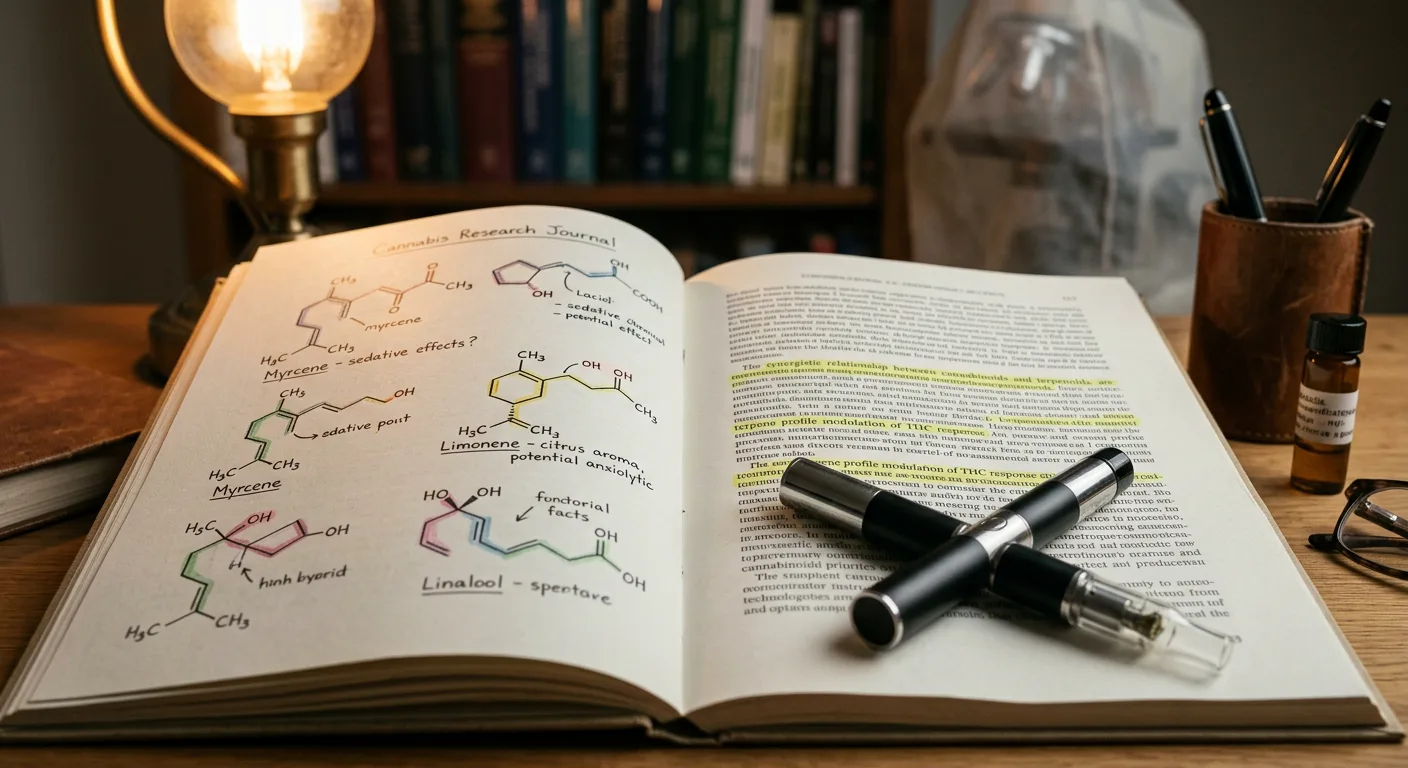
It's a fair question to ask before building a purchasing decision around terpene profiles. The honest answer is: the evidence is promising but not definitive for cannabis-derived terpenes specifically, while the evidence for lavender-derived linalool is considerably stronger.
What We Know With Confidence
- Inhaled linalool vapor reduces anxiety-like behavior in animal models (multiple peer-reviewed studies)
- Lavender aromatherapy, essentially linalool delivery, shows consistent sleep-improvement results in human trials for populations with mild-to-moderate insomnia
- Myrcene demonstrates muscle-relaxant and sedative properties in rodent models at relevant doses
- Cannabis users consistently report stronger sedation from high-myrcene strains vs. low-myrcene strains with similar THC levels
- The 0.5% myrcene threshold for notable sedation is widely referenced by dispensary pharmacists and correlates with user-reported outcomes
Where the Evidence Is Still Thin
- Controlled human clinical trials isolating cannabis terpene effects are rare due to research restrictions
- It's difficult to separate terpene effects from THC/CBD effects in real-world use
- Individual variation in terpene sensitivity is significant and poorly mapped
- Most terpene percentages in commercial cannabis are low enough that direct pharmacological effects may be subtle
Bottom line on evidence: Terpenes are not magic sleep pills, and anyone claiming certainty about precise mechanisms in humans is overstating the science. But the convergence of animal research, lavender human trials, and consistent user-reported patterns gives linalool and myrcene more credibility than most cannabis compounds marketed for sleep. Use the terpene framework as a meaningful filter, not a guarantee.
For a deeper look at all the cannabis terpenes that may influence your experience, explore our complete cannabis terpene chart: a comprehensive reference for all major and minor terpenes with effects, aromas, and strain associations.
Grower's Note: Linalool Genetics, Purple Phenotypes, and What to Grow
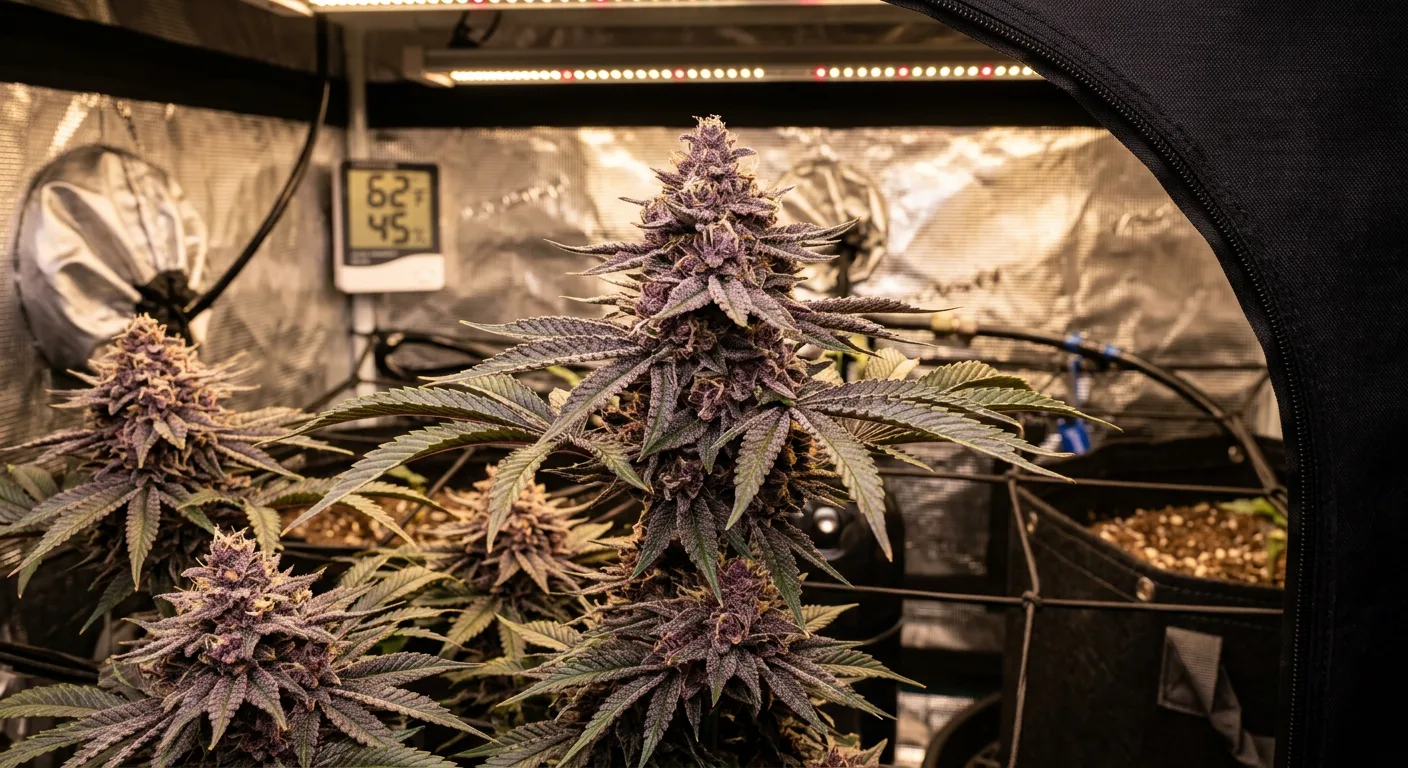
If you're growing your own sleep medicine, this section will save you time. Linalool-rich genetics often, though not always, correlate with anthocyanin expression, which is the pigment that turns cannabis buds, leaves, and stems purple or blue-violet as temperatures drop in late flower.
The Purple-Linalool Connection
This correlation exists because the biochemical pathways that produce anthocyanins (purple pigments) and those that produce floral terpenes like linalool share common regulatory genes. It's not a universal rule: some purple strains are low in linalool, and some high-linalool strains show no purple coloration, but it's a useful heuristic when selecting phenotypes from a mixed seed pack.
- Look for purple coloration in sugar leaves and calyxes during the final 2–3 weeks of flower
- Encourage anthocyanin expression by dropping nighttime temperatures to 60–65°F (15–18°C) in late flower
- A floral, slightly soapy or lavender-adjacent aroma at harvest is an informal linalool indicator
- High-linalool phenotypes often have denser, more compact bud structure than high-myrcene expressions of the same genetics
- Preserve linalool by harvesting at peak trichome maturity, degraded trichomes lose monoterpenes like linalool first
Maximizing Myrcene in Your Grow
Myrcene is a monoterpene that concentrates heavily in mature trichomes. Unlike linalool, which can be encouraged by cooler late-flower temperatures, myrcene levels are more determined by genetics than environment, but harvest timing is still critical.
- Harvest when trichomes are predominantly cloudy with 10–20% amber for maximum sedation profile
- Earthy, musky, or mango-like aromas during flush indicate strong myrcene expression
- Avoid over-drying, myrcene is volatile and degrades rapidly in under-humidity storage
- Store cured flower at 58–62% relative humidity to preserve myrcene through the storage period
- Cold-cure slowly at 60°F (15°C) to slow monoterpene evaporation during the cure cycle
Pro tip for growers: Use our yield estimator to plan harvest volume before you start. High-myrcene indicas like Purple Kush and Northern Lights crosses tend to produce denser, heavier buds than their sativa counterparts, factor this into your planning.
Best Seeds to Grow for Sleep Terpene Profiles
When selecting seeds with sleep applications in mind, prioritize genetics with documented indica heritage and known terpene consistency. Here are the product options worth considering for their sleep-terpene relevance:
- Purple Kush Feminized (27% THC): Pure indica heritage, strong purple phenotype expression, high probability of elevated linalool and myrcene. One of the most reliable home-grow sleep strains available in feminized seed form.
- Skywalker OG Autoflower (23% THC), OG-lineage genetics with strong myrcene dominance and an autoflowering lifecycle that suits indoor growers wanting faster harvests. Excellent for sleep-maintenance users.
- Northern Lights x Big Bud Feminized (20% THC), A classic indica cross with consistent myrcene-forward profiles and exceptional resin density. Reliable for both beginners and experienced growers targeting sedation.
- Blue Magoo Feminized (22% THC), Berry-forward hybrid with balanced linalool and myrcene presence. A strong choice for mixed insomnia where both onset and maintenance are problems.
- Cookies Kush Feminized (18% THC), Cookies and Kush lineage delivers a solid dual-terpene profile. Slightly lower THC makes it approachable for consumers sensitive to THC-driven anxiety.
Germination confidence: All seeds linked above are covered by our germination guarantee. If your seeds don't sprout under standard conditions, we make it right, no questions asked.
How to Build the Best Terpene Combination for Deep Sleep
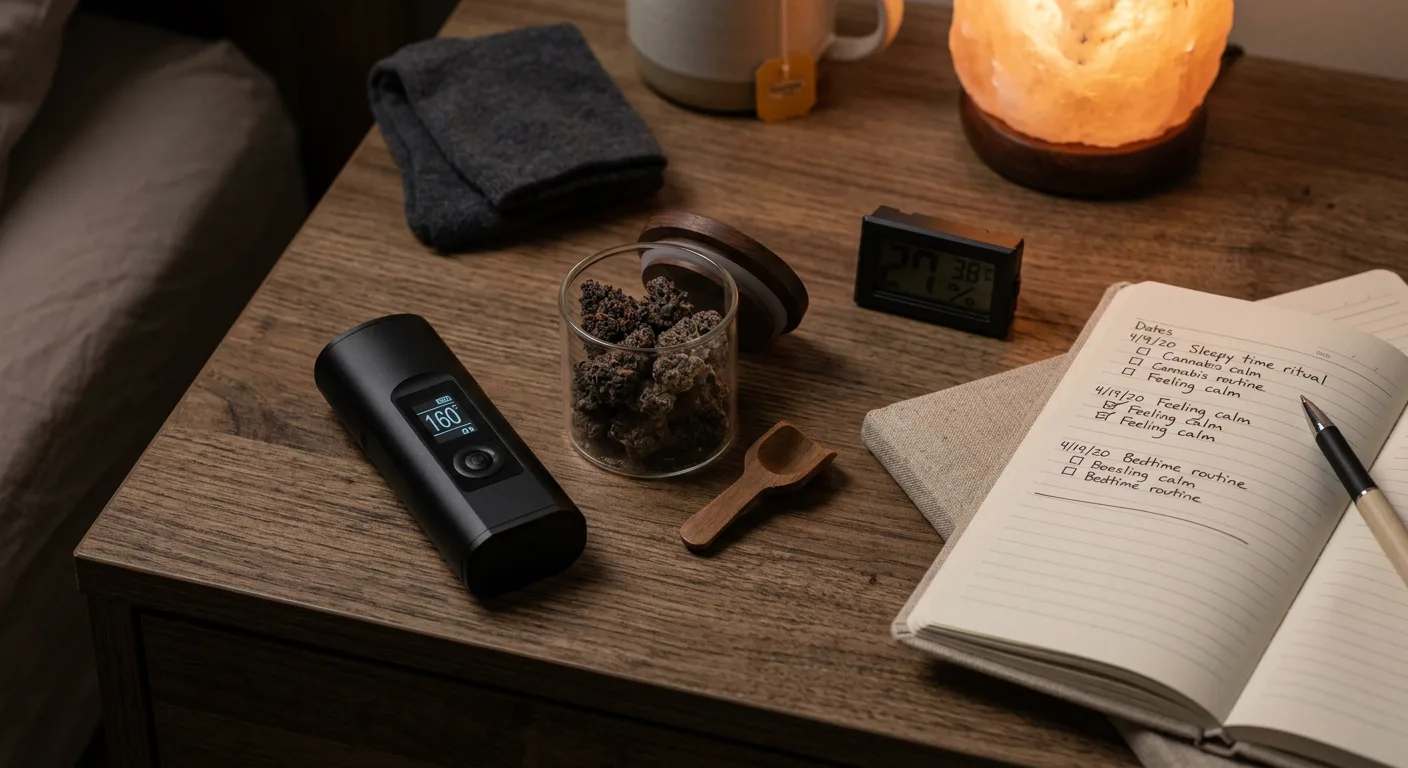
Beyond just picking a strain, you can actively stack your sleep protocol to make both terpenes work harder. This section goes beyond what most cannabis sleep guides cover.
Consumption Method and Terpene Delivery
The consumption method significantly affects which terpenes reach you at what concentration. Vaporizing at lower temperatures (157–165°C / 315–329°F) is the most terpene-efficient method because it releases volatile monoterpenes without combustion degradation. Both linalool (boiling point: 198°C) and myrcene (167°C) survive low-temperature vaping well.
- Low-temp vape (150–165°C): Maximum myrcene and linalool delivery, lighter vapor, better terpene taste
- Mid-temp vape (170–185°C): Good terpene + cannabinoid balance, slightly heavier effect
- Combustion: Some terpene degradation, but still effective, the traditional sleep method
- Edibles: Terpenes largely cook out during processing, less relevant for terpene targeting
- Tinctures: Full-spectrum products retain terpenes; isolate-based products do not
Timing for Maximum Sleep Effect
60–90 Minutes Before Bed (Edibles)
If using edibles, time your dose 60–90 minutes before your target sleep time. The delayed onset means myrcene-enhanced THC sedation peaks around lights-out.
20–30 Minutes Before Bed (Vape or Flower)
For inhaled methods, 20–30 minutes before bed is ideal. This allows linalool's anxiolytic effect to settle in during your wind-down routine before the body sedation peak hits.
Bedside Micro-Dose for Maintenance (Optional)
If you struggle with mid-night waking, keep a pre-loaded vaporizer at a very low dose (1–2 draws) bedside. A small myrcene-heavy hit at 3 a.m. can reset body relaxation without full wake-up sedation.
Pair with Supporting Terpenes
Linalool and myrcene don't have to do all the work alone. Two supporting terpenes compound the sleep effect when present in the same strain:
- Caryophyllene: A CB2 receptor agonist that reduces physical discomfort and inflammation, extending the window of uninterrupted sleep. Common in Kush-lineage strains alongside myrcene. Read more in our humulene terpene guide for related sesquiterpene context.
- Terpinolene: Found in some sedative indicas; contributes to the "dreamy" quality some users report. Less common than myrcene but worth noting when it appears in a lab report for a sleep strain.
Caution: High-THC strains combined with high myrcene can produce strong sedation that impairs morning alertness in some users, particularly at doses above 0.3mg/kg bodyweight. If you're using cannabis for sleep and have responsibilities requiring full cognitive function in the morning, start low and adjust over multiple nights. Track your dose, strain, and next-morning function for at least one week before settling on a protocol.
Quick-Reference: Linalool vs Myrcene Side-by-Side
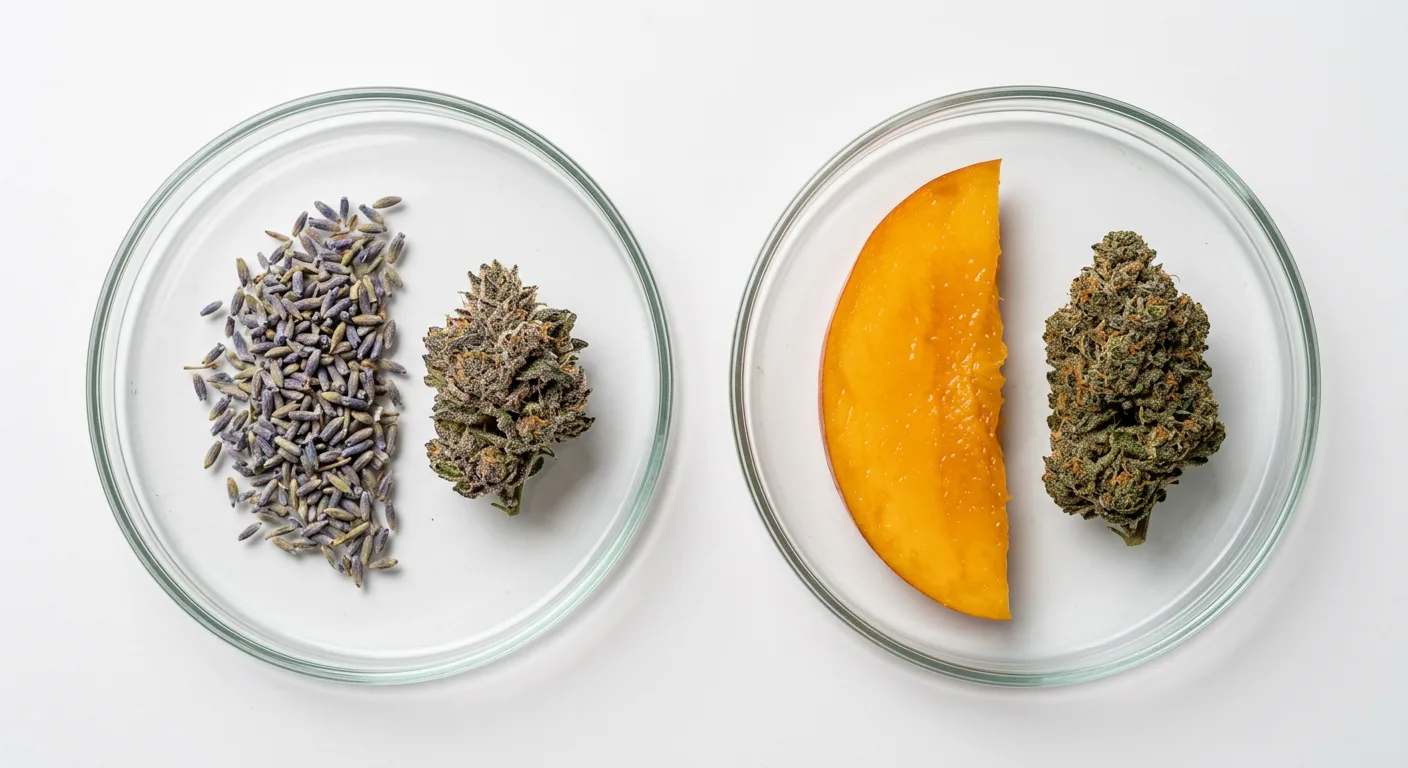
Use this summary table as a fast reference when evaluating strains, reading lab reports, or shopping for seeds with sleep applications in mind.
| Factor | Linalool | Myrcene |
|---|---|---|
| Primary mechanism | GABA-A receptor modulation | Opioid-adjacent + THC potentiation |
| First effect felt | Mental calm, reduced anxiety | Physical heaviness, muscle relaxation |
| Effect onset (inhaled) | 20–40 minutes | 15–25 minutes |
| Primary sleep target | Sleep onset (latency) | Sleep maintenance (duration) |
| Morning grogginess risk | Low | Moderate at high doses |
| Aroma profile | Floral, lavender, slightly citrus | Earthy, musky, mango-adjacent |
| Also found in | Lavender, coriander, basil | Mango, hops, thyme |
| Key strain examples | Lavender, GDP (secondary), Do-Si-Dos | Bubba Kush, Alien OG, LA Confidential |
| Meaningful threshold | 0.3%+ by dry weight | 0.5%+ by dry weight |
| Best consumption method | Low-temp vape (157–165°C) | Low-to-mid temp vape (165–175°C) |
| Evidence strength | Strong (lavender human trials) | Moderate (animal models + user data) |
| Synergy potential | Excellent paired with myrcene | Excellent paired with linalool |
If you want to explore the full landscape of sleep-focused cannabis genetics beyond this comparison, visit our curated best strains for sleep and best strains for insomnia pages. You'll also find our best strains for sedation list useful if maximum myrcene expression is your primary goal.
For a complete reference on how terpenes interact with cannabinoids across the full cannabis profile, our cannabis terpene chart is the most comprehensive single-page resource available. And if you want to go deeper on individual terpenes, our pinene guide covers the cognitive side of the terpene equation, useful context for understanding why some sleep strains leave you clear-headed and others don't.
Track your results: Use our free grow planner to log strain, terpene data, dose, and sleep quality scores across your harvest cycle. Over 4–6 weeks you'll have your own personal dataset on which terpene profile works best for your biology.
Frequently Asked Questions
Is linalool or myrcene better for sleep?
Neither is universally better: it depends on your sleep problem type. Linalool is better for sleep-onset insomnia driven by anxiety or racing thoughts, because it modulates GABA-A receptors to quiet mental arousal. Myrcene is better for sleep-maintenance problems, physical discomfort, or muscle tension because it acts on opioid-adjacent pathways and potentiates THC's sedative duration. For mixed insomnia, strains carrying both above meaningful thresholds, like Granddaddy Purple, Do-Si-Dos, or Purple Kush, consistently outperform single-terpene profiles.
What terpenes help with insomnia in cannabis?
The two best-evidenced sleep terpenes in cannabis are myrcene and linalool. Myrcene is the most abundant terpene in commercial cannabis and produces strong physical sedation above 0.5% dry weight concentration. Linalool produces anxiolytic calm and reduces sleep latency via GABA-A modulation. Caryophyllene and terpinolene are secondary sleep terpenes worth noting when they appear alongside the primary two in a lab report.
Do terpenes actually help with sleep, or is it just THC?
Both play a role, and they interact. THC is the primary driver of cannabis sedation through CB1 receptor activation. But myrcene demonstrably potentiates THC's effects by increasing blood-brain barrier permeability, meaning a high-myrcene strain produces stronger sedation than a same-THC low-myrcene strain. Linalool adds an independent anxiolytic layer through GABA-A modulation that THC alone doesn't fully replicate. The combined evidence from animal research, lavender human trials, and consistent user patterns supports terpenes as meaningful contributors, not just passive flavoring compounds.
Which cannabis strains have both linalool and myrcene for sleep?
Granddaddy Purple, Do-Si-Dos, and LA Confidential are the three most consistently cited strains carrying both terpenes above meaningful thresholds. Among seeds available to home growers, Purple Kush, Blue Magoo, and Skywalker OG regularly test with strong dual-terpene profiles. When buying or growing, look for strains with OG, Kush, or purple-lineage genetics: these backgrounds most reliably produce the high-myrcene, secondary-linalool terpene architecture associated with comprehensive sleep effects.
How do I know if a cannabis strain is high in linalool or myrcene?
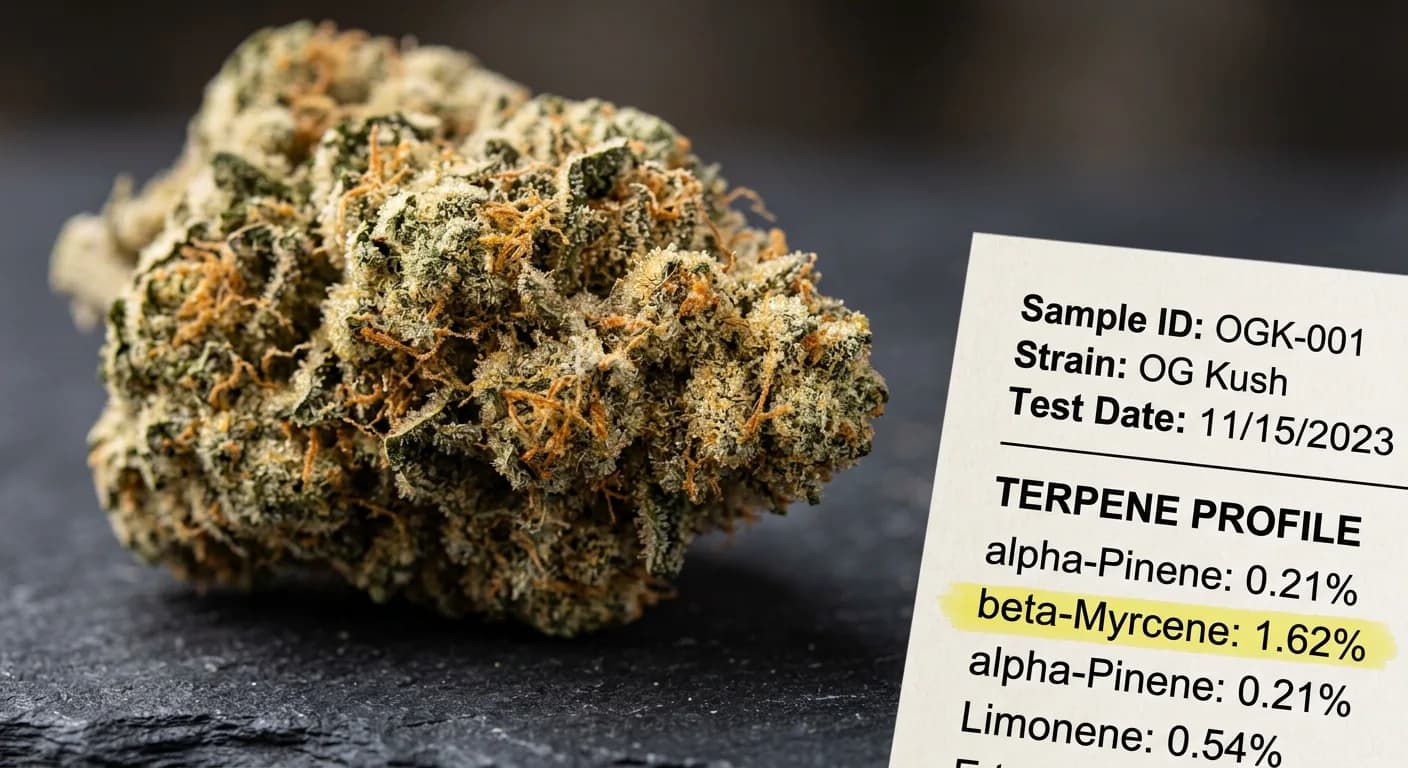
The most reliable method is reading a Certificate of Analysis (COA) terpene panel from a licensed lab. Look for myrcene listed as the first or second terpene (indicating dominance) and check whether linalool appears in the top three. Without lab data, use aroma as an informal guide: earthy and musky suggests myrcene dominance; floral, lavender-adjacent, or slightly soapy suggests notable linalool presence. Purple coloration in the bud is an additional informal indicator for linalool-rich phenotypes, though not a guarantee. Our COA reading guide walks through terpene panel interpretation step by step.
Sources & References
This article was researched using 1 peer-reviewed study.
- Russo EB. Taming THC: potential cannabis synergy and phytocannabinoid-terpenoid entourage effects. British Journal of Pharmacology. 2011 — pubmed.ncbi.nlm.nih.gov/21749363 [Research]