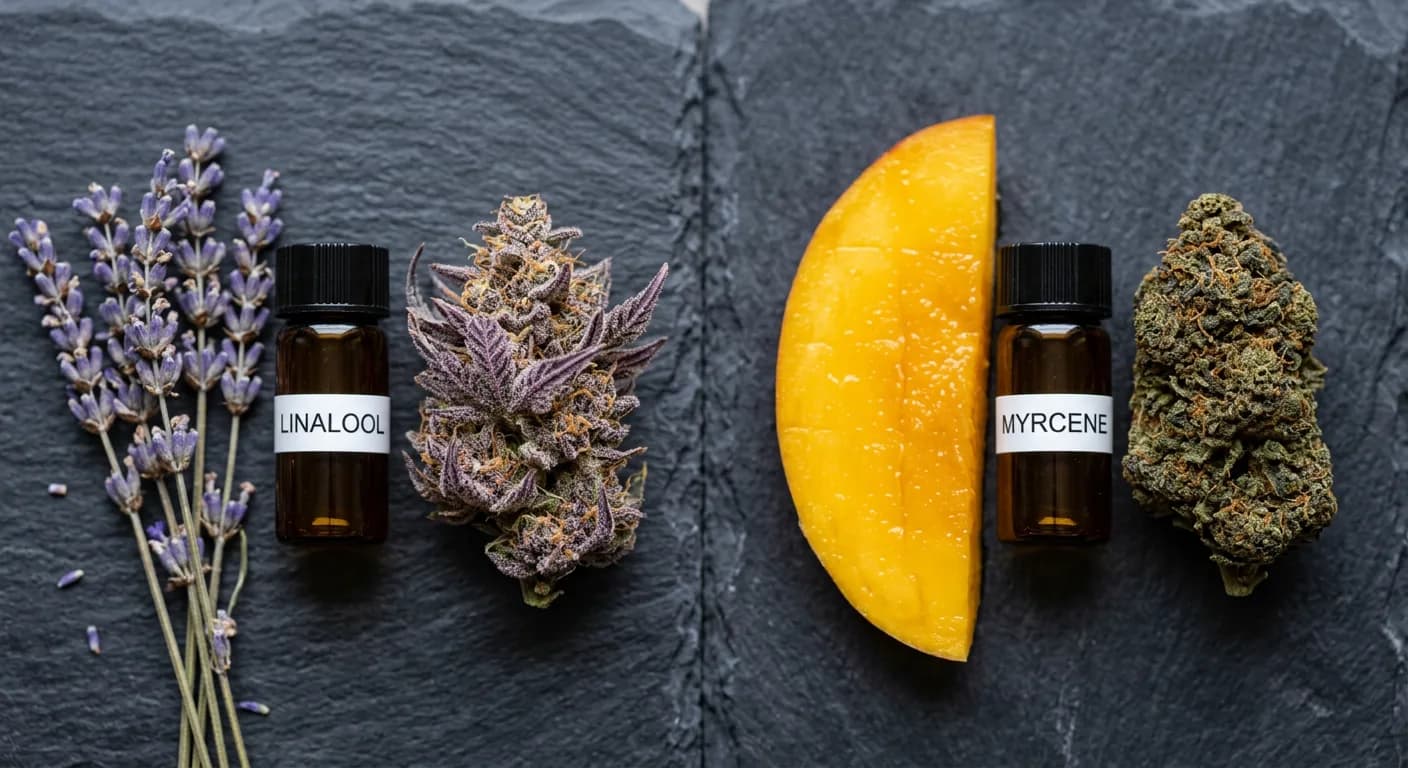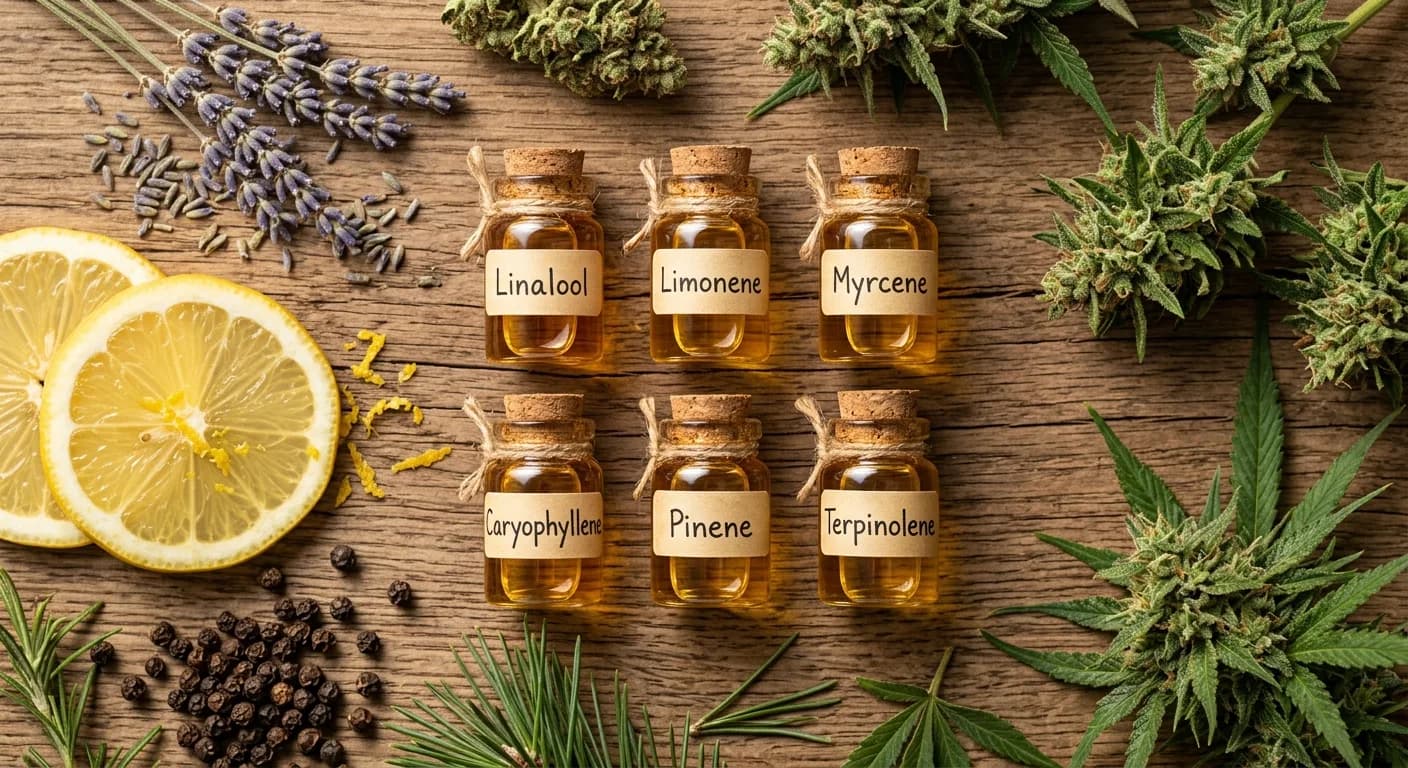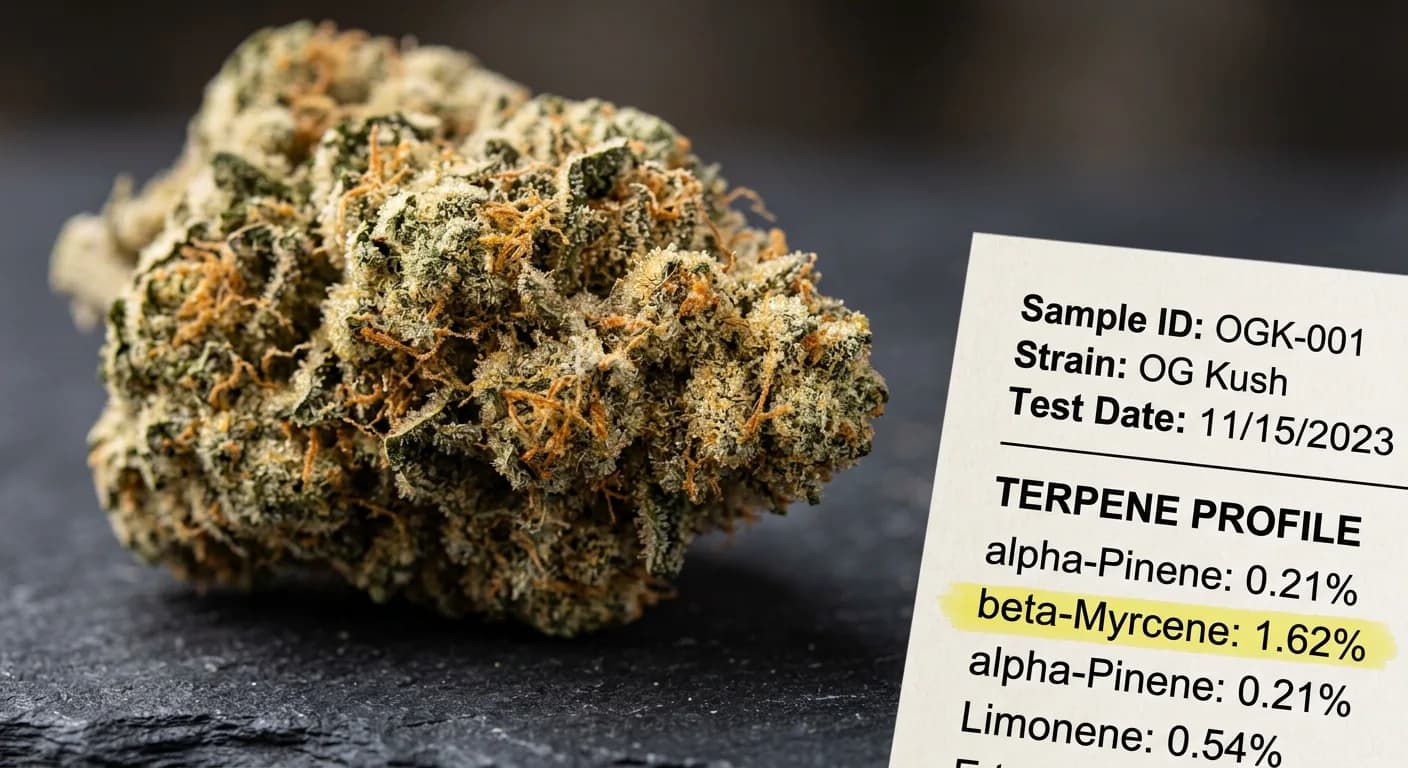
Open any cannabis lab report and there it is, myrcene, sitting at the top of the terpene panel, larger than everything else. It happens so often across so many myrcene dominant strains that it barely registers as a surprise anymore. But it should, because understanding why myrcene dominates, and what that dominance actually does to your experience, changes how you choose strains entirely.
This guide goes beyond the basics. You already know myrcene smells earthy, musky, and a little like ripe mango. What you need now is the decision framework: which strains run high, which run low, what the numbers on a lab report mean in practice, and how to grow in a way that preserves, or reduces, myrcene content in your final harvest.
Why Myrcene Dominates So Many Cannabis Strains: The Biosynthesis Answer
Myrcene is the most common terpene in cannabis because of where it sits in the plant's terpene manufacturing process, not because of selective breeding or any particular evolutionary advantage. Understanding this one fact reframes everything.
Cannabis produces terpenes through two primary biochemical pathways: the methylerythritol phosphate (MEP) pathway in plastids and the mevalonate (MVA) pathway in the cytoplasm. Both converge on a single compound called geranyl pyrophosphate (GPP), a five-carbon building block that acts as the central junction for almost all monoterpene synthesis.
The GPP Junction: Why Myrcene Gets First Priority
When the enzyme myrcene synthase encounters GPP, it converts it directly into myrcene in a single enzymatic step. No complex rearrangements, no multiple enzyme sequences, just one conversion. This makes myrcene the metabolic path of least resistance.
Every other monoterpene, pinene, limonene, terpinolene, ocimene, requires additional enzymatic steps or different synthase enzymes with narrower substrate specificity. So in strains where those specialized enzymes are less active or present in lower concentrations, GPP flows predominantly into myrcene production.
Biosynthesis insight: Myrcene synthase has unusually broad substrate tolerance compared to other terpene synthases. This means even in strains bred for different terpene profiles, myrcene synthase competes effectively for GPP. Genetics that suppress myrcene production must actively upregulate competing synthase enzymes, which is why truly low-myrcene cultivars like Durban Poison and Jack Herer represent specific genetic selections, not the norm.
The result is that in the absence of strong genetic pressure toward other terpene profiles, cannabis defaults to myrcene. Indica-heavy genetics, which dominate the commercial market through decades of indoor cultivation: tend to show the least competition from alternative terpene pathways, which is why the modern catalog skews so heavily myrcene-dominant.
Sativa-dominant landrace genetics often carry stronger expression of terpinolene synthase or ocimene synthase, redirecting GPP away from myrcene. That's why strains with Thai, Colombian, or African lineage frequently show more diverse or lower-myrcene terpene profiles. You can explore the full terpene landscape for strain selection on our complete cannabis terpene chart.
The Couch-Lock Myth: Does Myrcene Actually Sedate You?

Myrcene does not cause couch lock on its own. This is the single most important correction in modern cannabis science, and the evidence has been building for years. Sedation from cannabis is a multifactorial outcome, myrcene is one variable among several, and rarely the dominant one.
What Ethan Russo's Entourage Research Actually Says
In his landmark 2011 paper Taming THC: potential cannabis synergy and phytocannabinoid-terpenoid entourage effects, published in the British Journal of Pharmacology, neurologist Dr. Ethan Russo proposed that terpenes modulate, not replace, cannabinoid effects.[1] Myrcene was identified as potentially enhancing blood-brain barrier permeability and increasing cannabinoid receptor binding efficiency, not as a standalone sedative.
Russo's model suggests myrcene may act as a potentiator: it could help THC reach receptors faster and in higher concentrations, amplifying whatever the dominant cannabinoid is already doing. If the THC level is high and the strain is indica-dominant, myrcene may intensify that sedative outcome. But myrcene alone, in the absence of high THC and synergistic terpenes: does not produce sedation in clinical observations.
Core finding: A 2021 study published in Psychopharmacology by Elms et al. directly tested the sedation hypothesis and found no significant difference in sedation between high-myrcene and low-myrcene cannabis samples when THC levels were controlled. The sedative effect tracked THC concentration and indica genetics, not myrcene percentage alone.
The Real Drivers of Cannabis Sedation
If myrcene isn't the couch-lock culprit, what is? Current evidence points to three interacting factors:
- THC concentration: High-THC strains (above 20%) produce stronger overall psychoactivity, including sedation at peak effect. This is the strongest single predictor.
- Linalool co-dominance: When myrcene and linalool appear together in significant concentrations (above 0.1% each), the combination shows stronger GABAergic (sedative) activity than either alone. See our comparison of linalool vs. myrcene for sleep.
- Caryophyllene synergy: Beta-caryophyllene activates CB2 receptors and may reduce anxiety-related stimulation, creating a calmer baseline that reads as sedation. Our humulene guide covers related sesquiterpene dynamics.
Marketing caution: Many retailers and seed banks label high-myrcene strains as "sedating" or "couch-lock" cultivars purely on myrcene content. This oversimplification misleads buyers. A high-myrcene strain at 18% THC with no linalool will behave very differently from a high-myrcene strain at 26% THC with 0.2% linalool, even if the myrcene levels are identical.
The Threshold Question: What Myrcene Percentage Actually Matters?
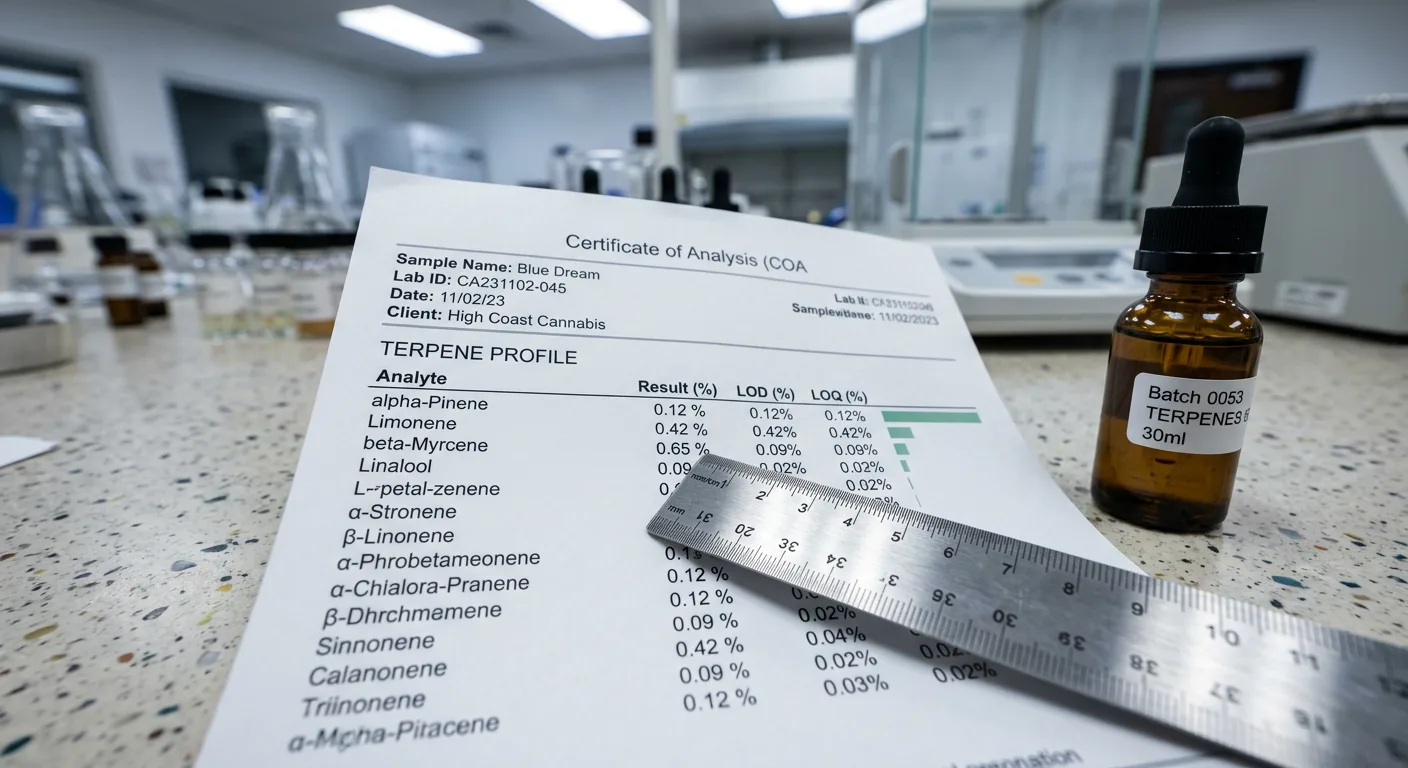
Lab data from thousands of tested cannabis samples points to 0.5% myrcene by dry weight as the practical threshold where effects become distinguishable. Below that number, myrcene is present but unlikely to contribute meaningfully to the experience beyond aroma.
Breaking Down the Percentage Ranges
Understanding myrcene concentration tiers helps you interpret any COA (Certificate of Analysis) correctly. Here is how to read the numbers:
- Below 0.2%: Myrcene is present but trace-level. Another terpene is almost certainly dominant. Expect minimal myrcene contribution to effects or aroma.
- 0.2%–0.5%: Myrcene is a supporting terpene. It adds to the earthy base note but doesn't define the profile. Effects are shaped primarily by other terpenes.
- 0.5%–1.0%: Myrcene is genuinely dominant. The earthy, musky character is pronounced. Entourage potentiation is possible, especially alongside high THC. This range covers most commercial indica-dominant strains.
- Above 1.0%: High myrcene. Strains in this range have a dense, heavy aromatic quality. Combined with 20%+ THC and co-terpenes, this is where sedative character becomes most likely. Top-shelf OG Kush phenotypes and Granddaddy Purple cuts regularly test here.
Lab report tip: Myrcene percentage is almost always reported as a percentage of total flower mass (% w/w) on COAs, NOT as a percentage of total terpenes. When Dutch Passion reports myrcene as "48% of total terpene content," that's a different metric: it means myrcene makes up 48% of whatever terpenes are present, which could still only be 0.3–0.4% of total flower weight. Always check which measurement system a lab report is using. Learn more in our guide to reading cannabis terpene lab reports.
The Myrcene Threshold: Why 0.5% Is the Practical Benchmark
The 0.5% threshold isn't arbitrary. It corresponds to the approximate concentration at which terpene-receptor interactions become pharmacologically relevant based on estimated oral and inhalation bioavailability modeling. Below this level, even generous assumptions about bioavailability suggest receptor-level concentrations remain subclinical.
Above 0.5%, myrcene's proposed mechanisms, enhanced membrane permeability, opioid receptor partial agonism at high doses, and GABA-A receptor potentiation, move into ranges where they could plausibly contribute to the overall effect in combination with cannabinoids.
High Myrcene Strains vs. Low Myrcene Strains: The Decision Table
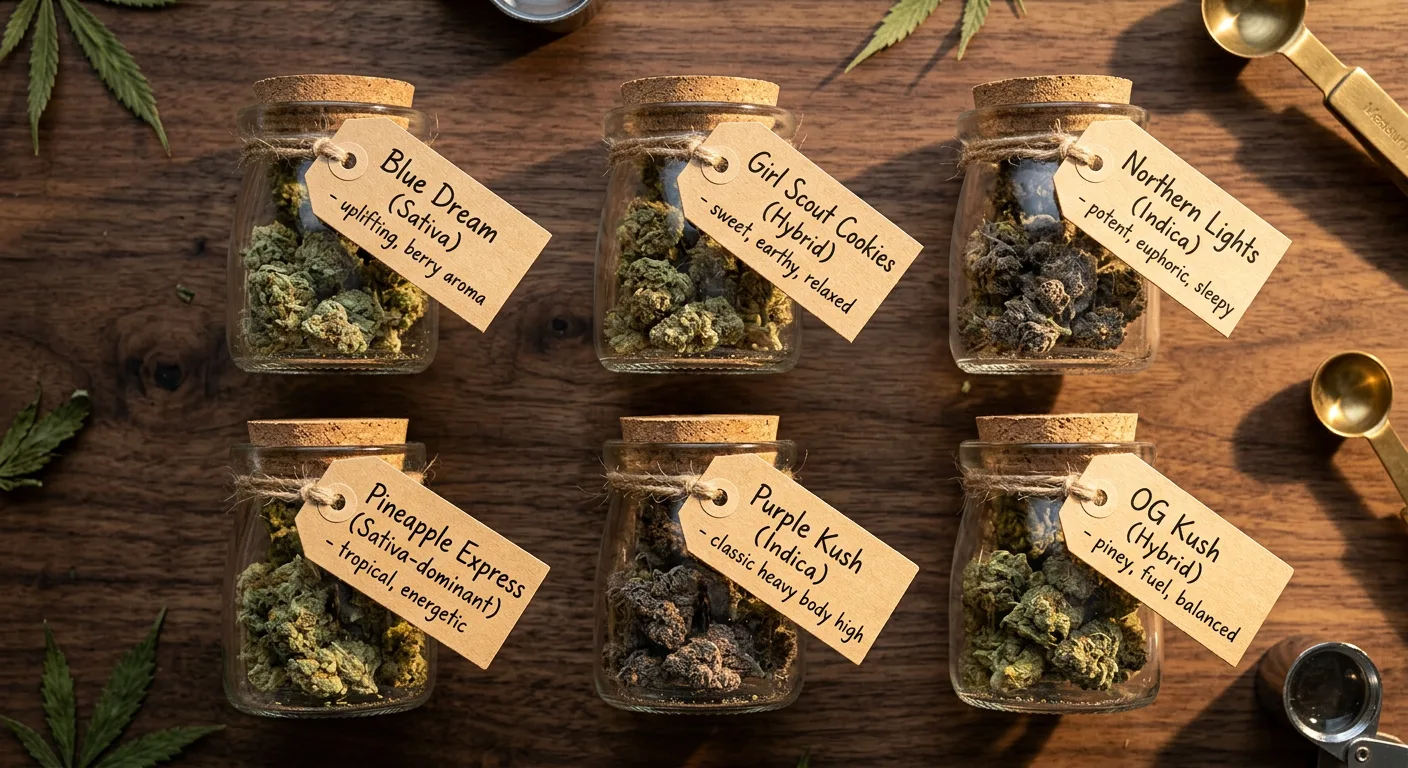
The table below gives you a practical strain selection framework based on verified terpene profiles from third-party lab testing and widely reported cultivar data. Use this to match your goals: whether that's evening relaxation, creative focus, pain management, or daytime productivity.
| Strain | Myrcene Level | Approx. THC | Dominant Terpene Profile | Best Use Case |
|---|---|---|---|---|
| OG Kush | High (0.8–1.2%) | 20–26% | Myrcene + Limonene + Caryophyllene | Evening relaxation, stress relief |
| Granddaddy Purple | High (1.0–1.5%) | 17–23% | Myrcene + Caryophyllene + Pinene | Sleep, pain, deep body relaxation |
| Blue Dream | Moderate-High (0.6–1.0%) | 17–24% | Myrcene + Pinene + Caryophyllene | Balanced, daytime-to-evening transition |
| Skywalker OG | High (0.9–1.3%) | 20–23% | Myrcene + Caryophyllene + Linalool | Deep relaxation, insomnia |
| Banana Kush | High (0.7–1.1%) | 17–21% | Myrcene + Limonene + Ocimene | Mood lift, evening calm |
| Gorilla Glue #4 | High (0.9–1.4%) | 25–30% | Myrcene + Caryophyllene + Limonene | Heavy relaxation, pain, appetite |
| Wedding Cake | Moderate-High (0.6–1.0%) | 22–27% | Myrcene + Caryophyllene + Limonene | Stress, creative evening use |
| Purple Kush | High (1.0–1.4%) | 22–27% | Myrcene + Caryophyllene + Pinene | Sleep, chronic pain, muscle tension |
| Jack Herer | Low (0.1–0.3%) | 18–23% | Terpinolene + Ocimene + Caryophyllene | Daytime focus, creative energy |
| Durban Poison | Very Low (<0.2%) | 17–22% | Terpinolene + Myrcene + Ocimene | Energizing, social, daytime |
| Strawberry Cough | Low (0.15–0.35%) | 17–21% | Myrcene + Pinene + Caryophyllene | Social anxiety, uplifting daytime |
| Tangerine Haze | Low-Moderate (0.2–0.5%) | 17–20% | Terpinolene + Ocimene + Myrcene | Daytime energy, mood lift, creativity |
| Sour Diesel | Low-Moderate (0.3–0.6%) | 20–26% | Caryophyllene + Myrcene + Limonene | Daytime productivity, cerebral energy |
| Super Lemon Haze | Low (0.2–0.4%) | 19–23% | Terpinolene + Ocimene + Caryophyllene | Energizing, social, daytime |
Decision rule: If your primary goal is evening relaxation or sleep, prioritize strains where myrcene exceeds 0.7% AND THC is above 20% AND at least one co-terpene (linalool or caryophyllene) appears above 0.1%. That triple combination is a stronger predictor of sedative character than myrcene percentage alone.
Myrcene Dominant Strains for Pain and Sleep: What the Research Suggests

For users seeking myrcene dominant strains specifically for pain management or sleep support, the evidence suggests these strains work, but the mechanism involves the full cannabinoid-terpene matrix, not myrcene in isolation. Understanding this helps you select smarter.
Myrcene and Pain: The Opioid Receptor Connection
A 1990 study by Rao et al. in the Phytotherapy Research journal found that myrcene demonstrated analgesic activity in rodent models, with effects partially blocked by naloxone (an opioid antagonist). This suggests myrcene may interact with mu-opioid receptors, the same receptors targeted by morphine and similar painkillers.
The doses used in animal studies are significantly higher than what you'd consume through cannabis inhalation, so direct extrapolation to humans is speculative. However, the mechanism is plausible, and anecdotal reporting from pain patients consistently favors high-myrcene indica-dominant strains over terpinolene-dominant sativas for physical pain relief.
- High-myrcene OG Kush phenotypes are among the most reported strains for back pain and muscle tension
- Granddaddy Purple (GDP), one of the highest natural myrcene producers, appears frequently in sleep-focused patient surveys
- Purple Kush genetics combine myrcene with caryophyllene, creating dual CB1 and CB2 receptor engagement
- Strains above 1% myrcene paired with 0.1%+ linalool show the strongest sleep-supporting profiles in available data
Our Purple Kush Feminized Seeds (27% THC) represent one of the highest-THC, deeply indica-dominant options in our catalog, consistently producing the myrcene-heavy, sedative-leaning terpene profile associated with evening and therapeutic use. If you're exploring strains specifically for sleep, see our curated guide at /best-strains-for/sleep.
Myrcene Dominant Strains for Pain Specifically
Beyond sleep, myrcene-forward strains appear frequently in patient-reported data for chronic pain and inflammation management. The OG Kush Feminized Seeds (26% THC) deliver the classic high-myrcene, earth-and-fuel profile that defines this category, and at 26% THC, the cannabinoid backbone amplifies whatever analgesic character the terpene profile contributes.
For broader pain management strain selection, visit our dedicated page at /best-strains-for/pain. And for inflammation-focused use cases, caryophyllene-dominant strains often pair effectively with myrcene-heavy cultivars since caryophyllene directly activates CB2 receptors with anti-inflammatory properties.
High-Myrcene Strains Worth Growing for Therapeutic Goals
Several strains in the myrcene-dominant category stand out for growers targeting therapeutic outcomes:
- Northern Lights x Big Bud Feminized Seeds (20% THC), NL genetics are among the most consistently myrcene-heavy in the industry; the Big Bud cross amplifies yield without sacrificing the classic NL terpene expression.
- Skywalker OG Autoflower Seeds (23% THC), OG Kush lineage with the convenience of autoflowering; delivers the high-myrcene OG profile in a faster cycle.
- Banana Kush Autoflower Seeds (18% THC), Kush genetics with a lifted myrcene-limonene profile that produces a warmer, less heavy sedation than pure OG expressions.
- Cookies Kush Feminized Seeds (18% THC), Cookie and Kush genetics combine to create a myrcene-caryophyllene dominant profile with moderate THC, better suited for daytime-adjacent therapeutic use.
How to Choose Low Myrcene Strains for Daytime Use

If high-myrcene strains leave you foggy or heavy-headed, you are not imagining it, even if myrcene isn't the direct cause, the entourage context of myrcene-dominant strains (high THC, indica genetics, co-sedating terpenes) does lean toward heavier experiences. Choosing genuinely low-myrcene cultivars is a practical solution.
Terpene Profiles to Look For Instead
Low-myrcene daytime strains are typically dominated by one of three alternative terpenes:
- Terpinolene: Associated with uplifting, energetic, and clear-headed effects. Found in Durban Poison, Jack Herer, Ghost Train Haze, and Super Lemon Haze. Terpinolene-dominant strains almost never cause couch lock.
- Ocimene: Light, floral, and mildly sweet. Found in Clementine, Golden Goat, and Dutch treat varieties. Typically accompanies active, social effects.
- Limonene (as primary terpene): When limonene leads, rather than appearing as a secondary terpene, it drives a more euphoric, mood-elevating experience. Strains like Lemon Haze and Strawberry Banana with limonene dominance lean energetic.
Grower shortcut: Landrace sativa genetics, Durban Poison, Thai, Malawi, and Colombian Gold lineages, reliably produce terpinolene or ocimene-dominant profiles over myrcene. If you want daytime strains, start with landrace-influenced genetics rather than hoping a hybrid leans sativa. Our Swazi Feminized Seeds (18% THC) and Malawi Gold Autoflower Seeds (13% THC) both carry African sativa heritage that pushes terpene synthesis away from myrcene dominance.
Low-Myrcene Strains With Verified Profiles
For daytime users who want specific strain options backed by terpene data:
- Sour Diesel Feminized Seeds (24% THC), Caryophyllene leads with limonene secondary; myrcene present but not dominant. Classic energizing, cerebral daytime cultivar.
- Super Lemon Haze Feminized Seeds (23% THC), Terpinolene-dominant with citrus limonene secondary. One of the cleanest uplifting profiles available.
- Tangerine Haze Feminized Seeds (18% THC), Terpinolene and ocimene dominant. Bright, citrus-forward, and reliably non-sedating even at moderate doses.
- New York Power Diesel Feminized Seeds (24% THC), Diesel lineage carries strong limonene-caryophyllene profiles with secondary myrcene only; known for cerebral energy despite high THC.
For energy-focused strain recommendations, our dedicated page at /best-strains-for/energy cross-references terpene profiles with reported effects to help you narrow options further.
How Growing Conditions and Harvest Timing Affect Myrcene Levels
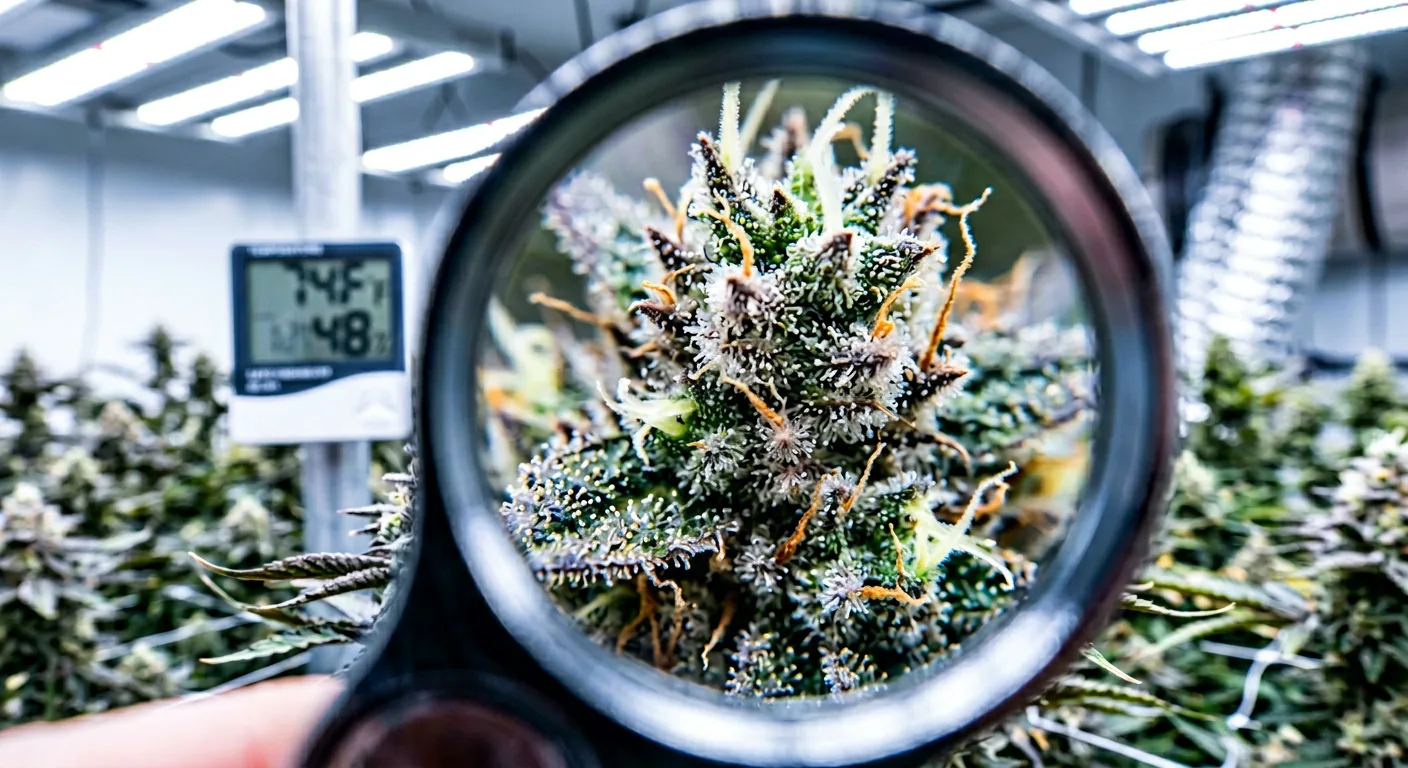
Here is something most strain guides skip entirely: the myrcene percentage you read on a seed bank's lab report is not fixed. It is a snapshot of one environment, one phenotype, one harvest. Your grow conditions will raise or lower that number, sometimes dramatically.
Pre-Harvest Factors That Influence Myrcene
Myrcene is a monoterpene, which means it is relatively small and volatile compared to sesquiterpenes like caryophyllene. It responds strongly to environmental conditions in the final weeks of flowering.
UV Light Exposure in Late Flower
UVB light (280–315nm wavelengths) during the final 2–3 weeks of flowering increases overall terpene production as a stress response. Myrcene production increases alongside other terpenes. Adding a UVB-capable light source or using supplemental UVB for 2–4 hours daily during this window can measurably increase final myrcene content.
Temperature Management in Late Flower
Running daytime temperatures above 82°F (28°C) in the final weeks causes myrcene to volatilize off the plant before harvest, reducing final concentration. Keep canopy temperatures at 72–78°F maximum during the terpene accumulation phase. Cooler nights (62–68°F) during this period also stimulate terpene production.
Harvest Timing and Trichome State
Myrcene peaks when trichomes are predominantly cloudy with early amber appearing (approximately 10–20% amber). Harvesting too early (all clear trichomes) means myrcene hasn't fully accumulated. Harvesting too late (majority amber) means monoterpene degradation has already reduced myrcene levels. Optimal harvest is a narrow window, learn more in our guide on when to harvest cannabis for maximum potency.
Nutrient Taper and Flush Timing
Reducing nitrogen input in the final 2 weeks of flower while maintaining potassium and phosphorus appears to redirect plant energy toward secondary metabolite production including terpenes. An aggressive flush with plain water 5–7 days before harvest is commonly reported to improve final aroma intensity, though direct evidence for myrcene specifically is anecdotal.
Post-Harvest Factors: Cure Temperature Is the Critical Variable
Myrcene degrades rapidly above 68°F (20°C). This is not a small effect, improper cure temperature is one of the primary reasons commercially dried cannabis often smells flat and earthy without the richer layered aroma of properly cured flower.
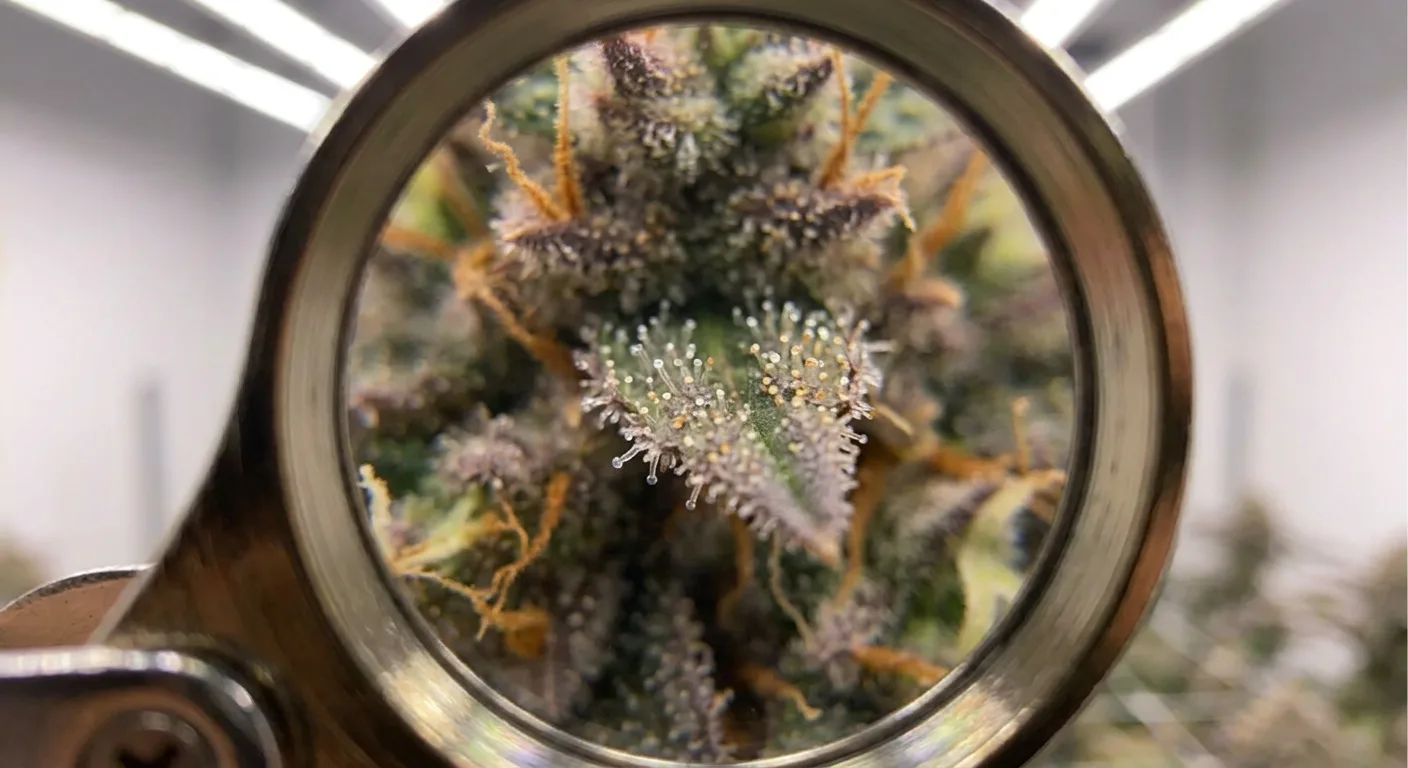
- Drying phase: Hang-dry at 60–65°F (15–18°C) and 50–55% RH for 10–14 days. Faster drying at higher temperatures drives off volatile myrcene before it can be preserved.
- Curing jars: Store at 60–65°F with 58–62% RH (using calibrated humidity packs). Open jars for 10–15 minutes daily for the first 2 weeks to allow off-gassing without myrcene loss. See our humidity pack guide for Boveda vs. Integra Boost comparisons.
- Light exposure: Cure and store in dark amber jars. UV light degrades terpenes including myrcene. Even short exposure to ambient light during burping sessions accelerates degradation.
- Extended cure: A 4–6 week cure at proper temperature and humidity measurably improves terpene integration and complexity. Myrcene may decrease slightly (being volatile), but the remaining terpene ratios become more harmonious and the perceived aroma quality improves.
Water activity matters: Drying cannabis to the correct water activity range (0.55–0.65 Aw) preserves terpene structure more effectively than drying by feel or weight alone. At Aw above 0.65, microbial activity degrades terpenes. Below 0.55, the cellular structure dries too fast, rupturing trichomes and releasing myrcene prematurely. Our complete guide to water activity in cannabis curing explains this in detail.
Reading Lab Reports for Myrcene: A Practical Buyer's Checklist
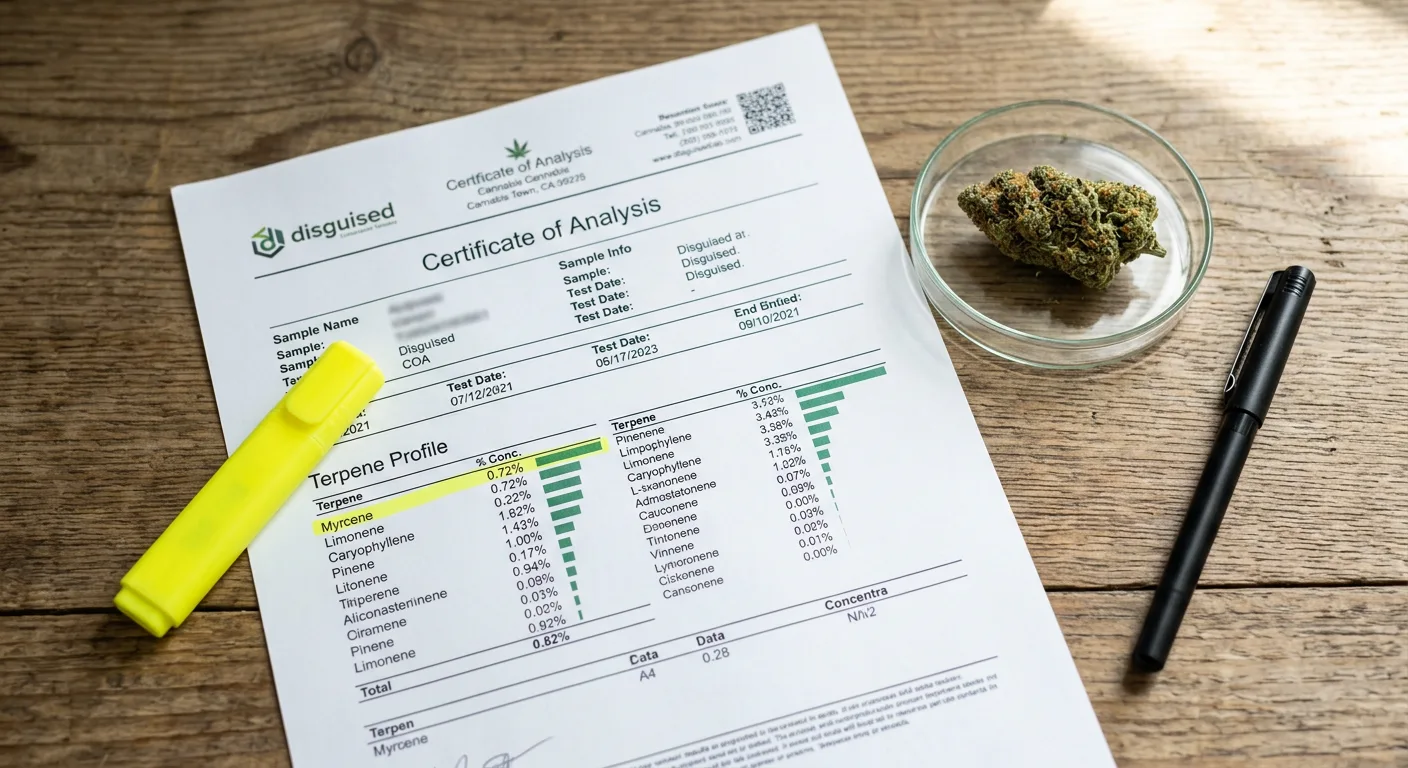
Buying cannabis or seeds based on terpene data only works if you can read the data correctly. Lab reports for terpenes are not standardized across the industry, which means the same strain tested at two different labs can show different myrcene percentages. Here is how to interpret what you see.
Key Things to Verify on Any COA
- Confirm the measurement unit: % w/w (weight of terpene per weight of flower) vs. mg/g vs. % of total terpenes: these are different scales
- Check the detection limit: labs with detection limits above 0.05% may miss minor terpenes that affect the entourage profile
- Verify the sample date: terpene data degrades faster than cannabinoid data; a COA older than 6 months is less reliable for terpene content
- Confirm the terpene panel breadth: labs testing only 10–12 terpenes may miss ocimene, terpinolene, or guaiol that could shift your interpretation of the profile
- Look for total terpene content: above 2% total terpenes is considered rich; below 1% indicates either a less resinous cultivar or post-harvest degradation
- Cross-reference myrcene against the next two terpenes: if myrcene is 0.7% but caryophyllene is 0.65%, the profile is nearly co-dominant, effects will differ from a strain where myrcene is 1.0% and caryophyllene is 0.15%
Lab variability note: A 2020 review in Cannabis and Cannabinoid Research found that terpene results for the same sample sent to multiple licensed labs varied by up to 30% for myrcene. This is primarily due to differences in GC column calibration and sample preparation (fresh frozen vs. dried). Use terpene data as a directional guide rather than a precise specification.
For a step-by-step walkthrough of decoding a full terpene COA, our guide to reading a cannabis terpene lab report walks through every section. You can also explore our full cannabis terpene chart to see how myrcene compares to other terpenes across major strain categories.
Red Flags in Terpene Marketing
- Claims that a specific myrcene percentage guarantees couch lock (unsupported by evidence)
- Terpene data presented without a date, lab name, or batch number
- "% of total terpenes" presented without disclosing total terpene content (making 50% of nothing look like a lot)
- Absence of any terpene COA for a strain being sold as "terpene-rich" or "full spectrum"
Strain Recommendations by Goal: The Decision Matrix
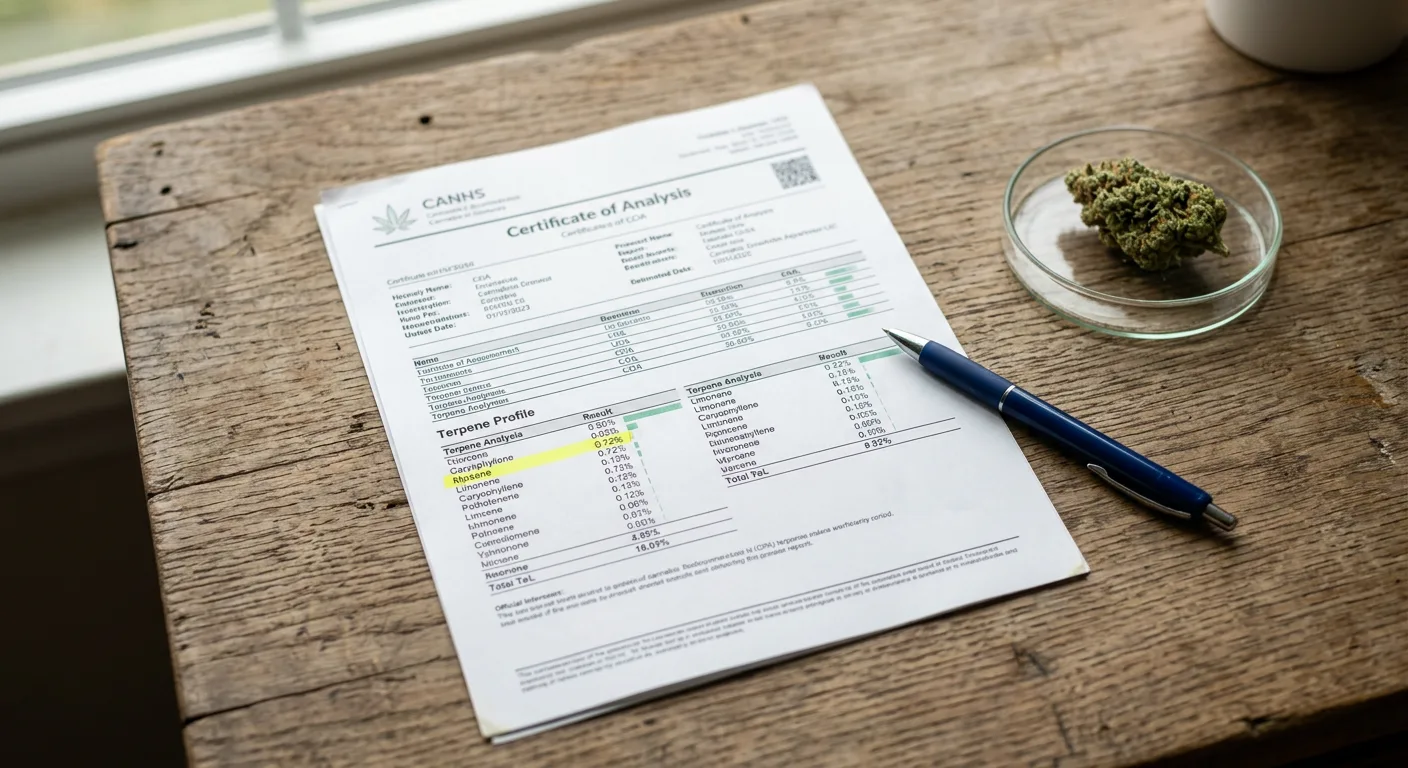
Use this section as a practical decision tree. Match your primary consumption goal to the myrcene profile and strain category that best serves it, then verify against a lab report before purchasing or growing.
Goal: Deep Sleep and Insomnia Relief
Prioritize: Myrcene above 0.8% + Linalool above 0.1% + THC above 20%. The combination of these three factors produces the strongest anecdotally and preclinically supported sleep-leaning profile.
Best options: Granddaddy Purple (not in our catalog but widely available), Purple Kush Feminized (27% THC), Northern Lights x Big Bud Feminized (20% THC), Skywalker OG Autoflower (23% THC). For more options see /best-strains-for/insomnia.
Goal: Pain Management Without Heavy Sedation
Prioritize: Moderate myrcene (0.5–0.8%) + high caryophyllene (above 0.2%) + THC 18–24%. Caryophyllene's CB2 activity targets peripheral pain pathways with less CNS sedation than the full high-myrcene/high-THC package.
Best options: OG Kush Feminized (26% THC), White Widow Feminized (25% THC), Cookies Kush Feminized (18% THC). See our full list at /best-strains-for/pain.
Goal: Relaxation Without Full Sedation
Prioritize: Myrcene 0.5–0.7% + limonene secondary + THC 18–22%. This profile delivers body relaxation and mood lift without the heavy, immobilizing effect of the top-tier myrcene + linalool combinations.
Best options: Blue Dream (widely available), Blue Magoo Feminized (22% THC), Papaya Feminized (25% THC), Alien Rock Candy Feminized (22% THC). See /best-strains-for/relaxation for more.
Goal: Daytime Focus and Productivity
Prioritize: Myrcene below 0.4% + terpinolene or limonene dominant + THC 18–24%. Staying below the 0.5% myrcene threshold while selecting an energizing primary terpene gives you the cognitive engagement of high-THC cannabis without the sedative entourage context.
Best options: Sour Diesel Feminized (24% THC), Super Lemon Haze Feminized (23% THC), Tangerine Haze Feminized (18% THC), New York Power Diesel Feminized (24% THC). See /best-strains-for/focus.
Tolerance note: High-tolerance users often report that even high-myrcene, high-THC strains feel less sedating than the same strains would for infrequent consumers. Myrcene's potentiating effect on THC amplifies the base effect, meaning for low-tolerance users, the sedative risk at high myrcene + high THC is significantly greater than for regular consumers. Adjust your strain choice based on your current tolerance level.
Using Our Tools to Plan Your Myrcene Strategy
Terpene selection is one layer of a larger cultivation and purchasing decision. Our free grower tools help you build a complete plan around your chosen strain: accounting for yield, grow environment, and cost before you commit.
- Grow Planner, Schedule your grow cycle around the optimal terpene accumulation window in late flower
- Yield Estimator, Plan harvest weight so you can afford a slow, cool cure that preserves myrcene
- Light Calculator, Dial in late-flower DLI for maximum terpene production without temperature spikes that degrade myrcene
- VPD Calculator, Keep vapor pressure deficit in the terpene-preserving range during the final flowering weeks
The bottom line on myrcene dominant strains: Myrcene dominates cannabis because of plant biochemistry, not breeding intent. It influences but doesn't determine your experience, the full profile of THC concentration, co-terpenes, and your personal endocannabinoid system all shape the outcome. Use myrcene percentage as one data point in a multi-variable decision, not as the single defining metric.
Frequently Asked Questions
What is considered a high myrcene percentage in cannabis?
Lab data consistently shows that myrcene levels above 0.5% of total flower weight are considered notable, and levels above 1% are considered high. Most commercially tested cannabis flowers contain myrcene between 0.1% and 1.5%. Strains like OG Kush and Granddaddy Purple regularly test above 1%, while terpinolene-dominant strains like Durban Poison may test below 0.2%.
Do high myrcene strains always cause couch lock?
No. Myrcene alone does not cause couch lock. Current research, including Ethan Russo's entourage effect work published in the British Journal of Pharmacology, indicates that sedative effects result from a combination of high THC, indica-dominant cannabinoid ratios, and multiple synergistic terpenes including linalool and caryophyllene, not myrcene in isolation. A 2021 controlled study found no significant sedation difference between high and low myrcene samples when THC was held constant.
Why is myrcene the most common terpene in cannabis?
Myrcene is produced early in the cannabis terpene biosynthesis pathway from geranyl pyrophosphate (GPP), the same precursor that feeds most other terpenes. Myrcene synthase requires only a single enzymatic conversion step from GPP, making it the metabolic path of least resistance. In strains without strong competing terpene synthase expression, the plant defaults to myrcene production, which is why 40%+ of commercial strains are myrcene-dominant.
Which strains are lowest in myrcene for daytime use?
Jack Herer, Durban Poison, Strawberry Cough, Super Lemon Haze, and Tangerine Haze are consistently among the lowest-myrcene cannabis strains available. These cultivars tend to be dominated by terpinolene, ocimene, or limonene instead, terpenes associated with more energetic and uplifting effects. Look for strains with landrace sativa lineage (African, Thai, Colombian) to find reliable low-myrcene profiles.
Can growing conditions change how much myrcene a cannabis strain contains?
Yes, significantly. Myrcene is a volatile monoterpene that degrades rapidly above 68°F (20°C) during curing. Harvesting at peak trichome maturity (10–20% amber trichomes), drying slowly at 60–65°F, and curing at 58–62% RH in dark jars all preserve myrcene. Adding UVB light exposure during the final 2–3 weeks of flowering can also boost terpene production, including myrcene. Conversely, drying at high temperatures or over-curing can reduce myrcene content by 30–50%.
Sources & References
This article was researched using 1 peer-reviewed study.
- Russo EB. Taming THC: potential cannabis synergy and phytocannabinoid-terpenoid entourage effects. Br J Pharmacol. 2011 — pubmed.ncbi.nlm.nih.gov/21749363 [Research]