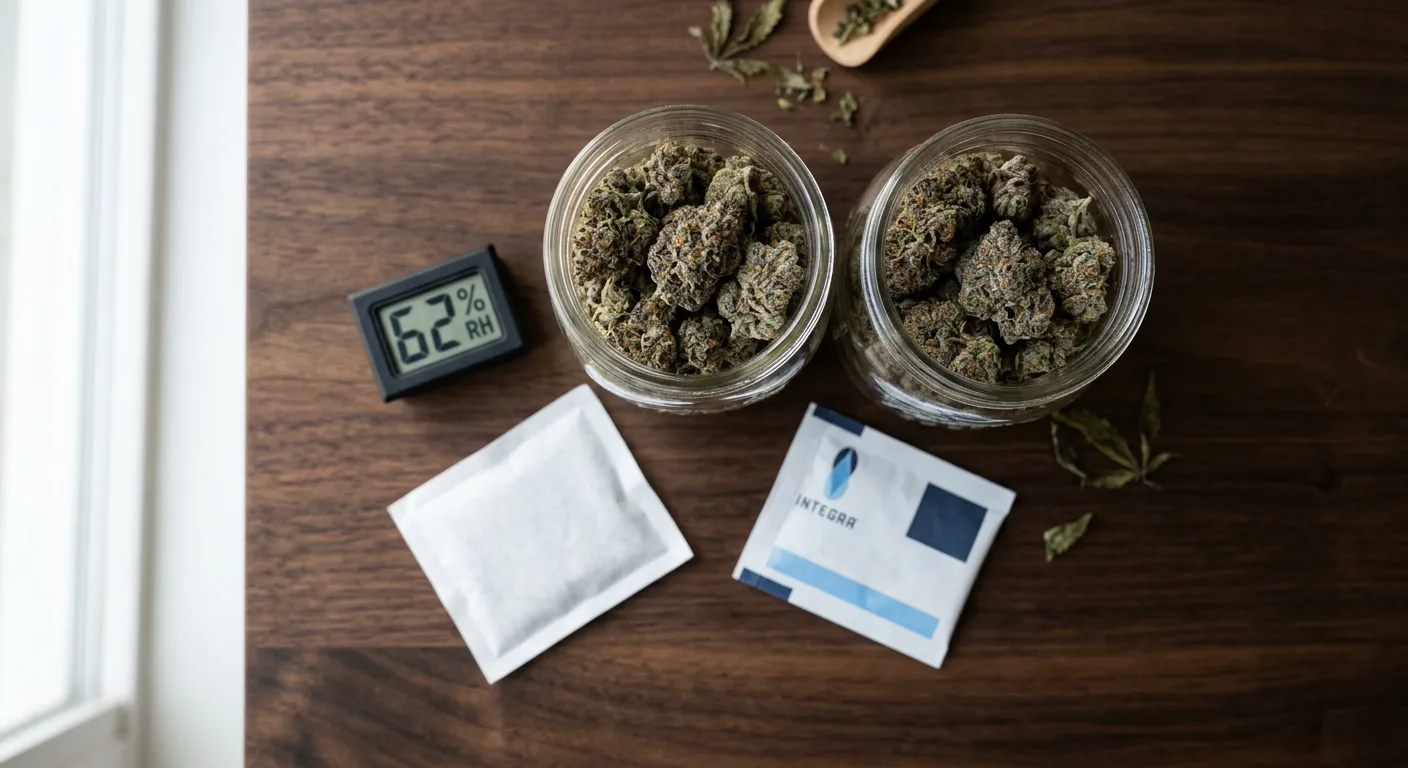
Every month on r/microgrowery, the same thread appears: "Boveda or Integra Boost, which one should I use?" It gets 40 replies, half of them contradictory, and nobody leaves with a clear answer. This guide fixes that.
Humidity packs for cannabis storage are one of the simplest, most impactful upgrades any grower can make to their post-harvest process, yet most content about them is written by the brands selling them or Amazon listing descriptions. What growers actually need is an independent, side-by-side breakdown: how these packs work, which RH percentage to choose, how to size them correctly, and whether DIY options are worth the hassle.
If you've already read our guide on how to cure cannabis in mason jars with a burping schedule, this article picks up exactly where that one ends, moving from active burping into long-term humidity management.
What Two-Way Humidity Control Packs Actually Do
Two-way humidity control packs both add and remove moisture from the air inside a sealed container to maintain a specific target relative humidity (RH). Place a 62% pack in a jar and it will absorb excess moisture if RH climbs above 62% and release moisture if RH drops below 62%, automatically, with no intervention required.
This is the critical distinction that separates humidity packs from silica gel. Silica gel is one-way only: it absorbs moisture and keeps absorbing until it's saturated. Put silica gel in a jar with cannabis and it will eventually pull the buds bone dry. That desiccation destroys trichomes, degrades terpenes, and turns your cure into powder.
The science behind two-way control: Both Boveda and Integra Boost use a semi-permeable membrane surrounding a moisture-containing solution. Water vapor passes through the membrane in either direction depending on the vapor pressure differential between the solution and the surrounding air. Boveda uses a saturated salt solution (the specific salt determines the target RH). Integra Boost uses a proprietary glycol-based formula. In both cases, the chemistry, not electronics, does the regulating.
The practical result is that two-way packs act as a buffer against the two biggest post-harvest threats to cannabis quality:
- Over-drying: Buds lose terpenes, become brittle, and burn harshly
- Over-humidification: Mold grows at 65%+ RH, ruining the entire jar in days
- Fluctuation damage: Repeated RH swings degrade terpene profiles and slow the cure
For more on why controlling moisture fluctuations matters throughout your entire grow and harvest cycle, see our cannabis mold prevention and humidity guide.
58% vs 62% RH: Which Humidity Level Is Right for You
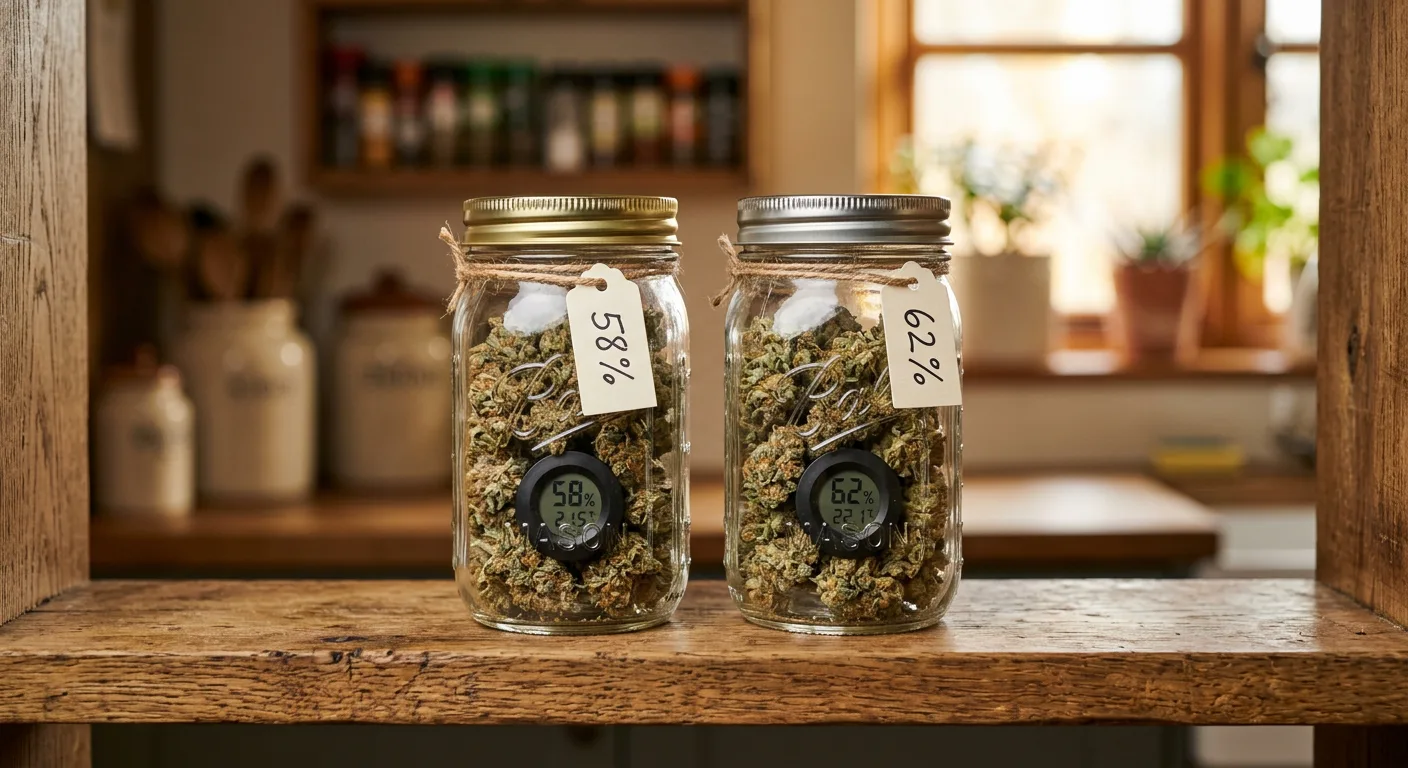
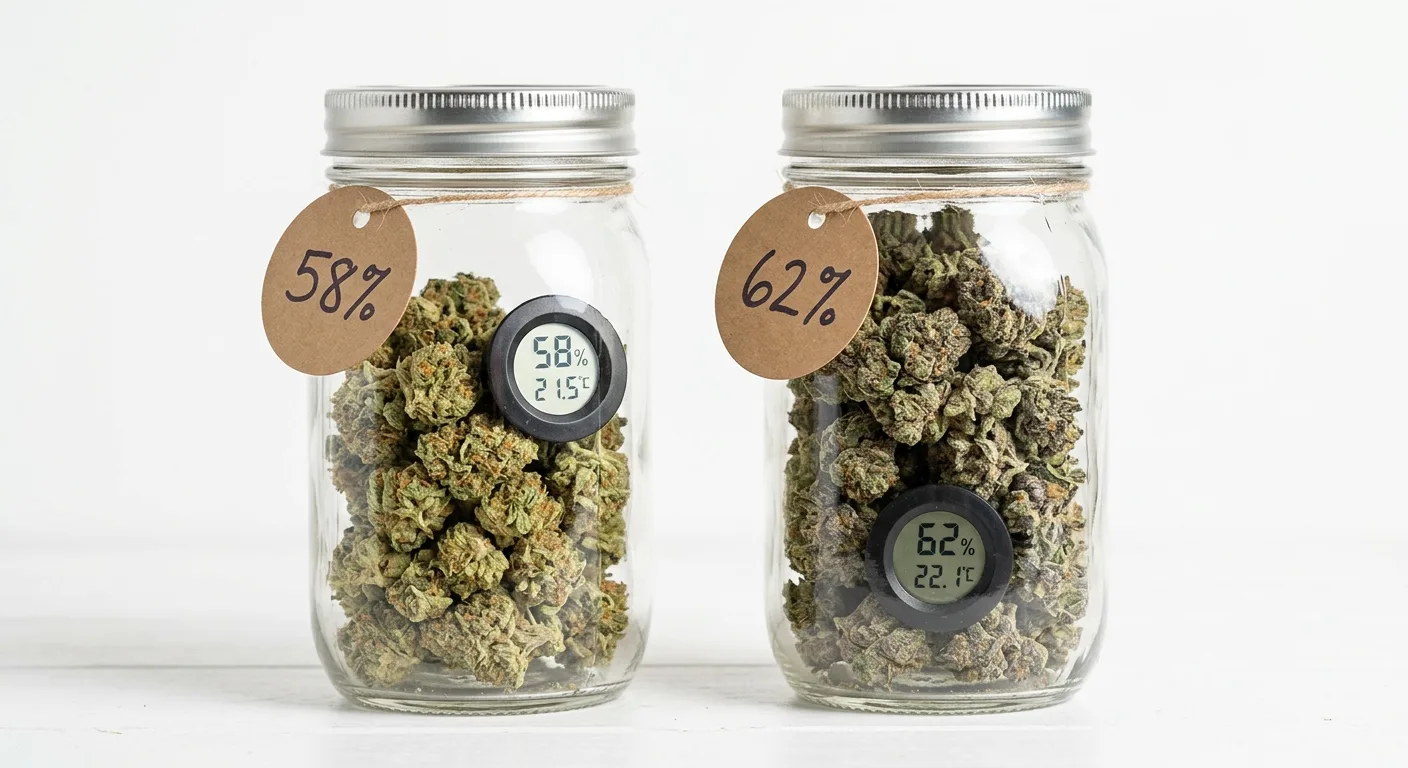
The 58% vs 62% choice comes down to where you are in the post-harvest process and personal texture preference. Use 62% packs during active curing (weeks 1–6 in jars) and 58% packs for long-term storage beyond 6 weeks. Most growers keep 62% packs on hand as their primary curing tool and use 58% for the jars they plan to store for months.
The 62% Case: Active Curing and Stickier Texture
During the first 2–6 weeks of jar curing, moisture is still redistributing throughout the bud, migrating outward from the dense inner core toward the drier outer surface. A 62% pack gives that process a slightly more forgiving environment by maintaining enough moisture for chlorophyll breakdown and slow enzymatic reactions to continue without drying out prematurely.
Growers who prefer their final product sticky, bouncy, and dense tend to land on 62% as their permanent setting, even for storage. It's particularly well-suited for:
- Dense indica-dominant strains with thick buds that dry unevenly
- High-terpene strains where preserving aroma is the top priority
- Medical users who prefer a moister consistency for rolling
The 58% Case: Long-Term Storage and Cleaner Burns
At 58% RH, buds are slightly firmer and less prone to any residual mold risk during extended storage. Cannabis stored at 58% for 6–12 months maintains potency better because the lower moisture content slows oxidative degradation. Many growers also report a cleaner, less harsh burn at this humidity level.
Use 58% packs when:
- Curing is complete and you're moving to long-term storage (3+ months)
- You're storing in a warm environment where mold risk is elevated
- You prefer easier-to-grind, slightly drier bud texture
Simple decision rule: Jars you'll open within 6 weeks → 62%. Jars going into long-term storage → 58%. If you only want to buy one size, 62% is the more versatile choice for most growers actively curing their harvest.
What About 55% and 65% Packs?
Boveda sells 55% and 65% packs. The 55% pack is suited for very long-term archival storage in warm climates where even 58% feels too high. The 65% pack is designed for tobacco and cigars: it's too wet for cannabis and risks mold above 65% in closed containers. Avoid 65% packs for cannabis entirely.
Boveda vs Integra Boost: Full Head-to-Head Comparison
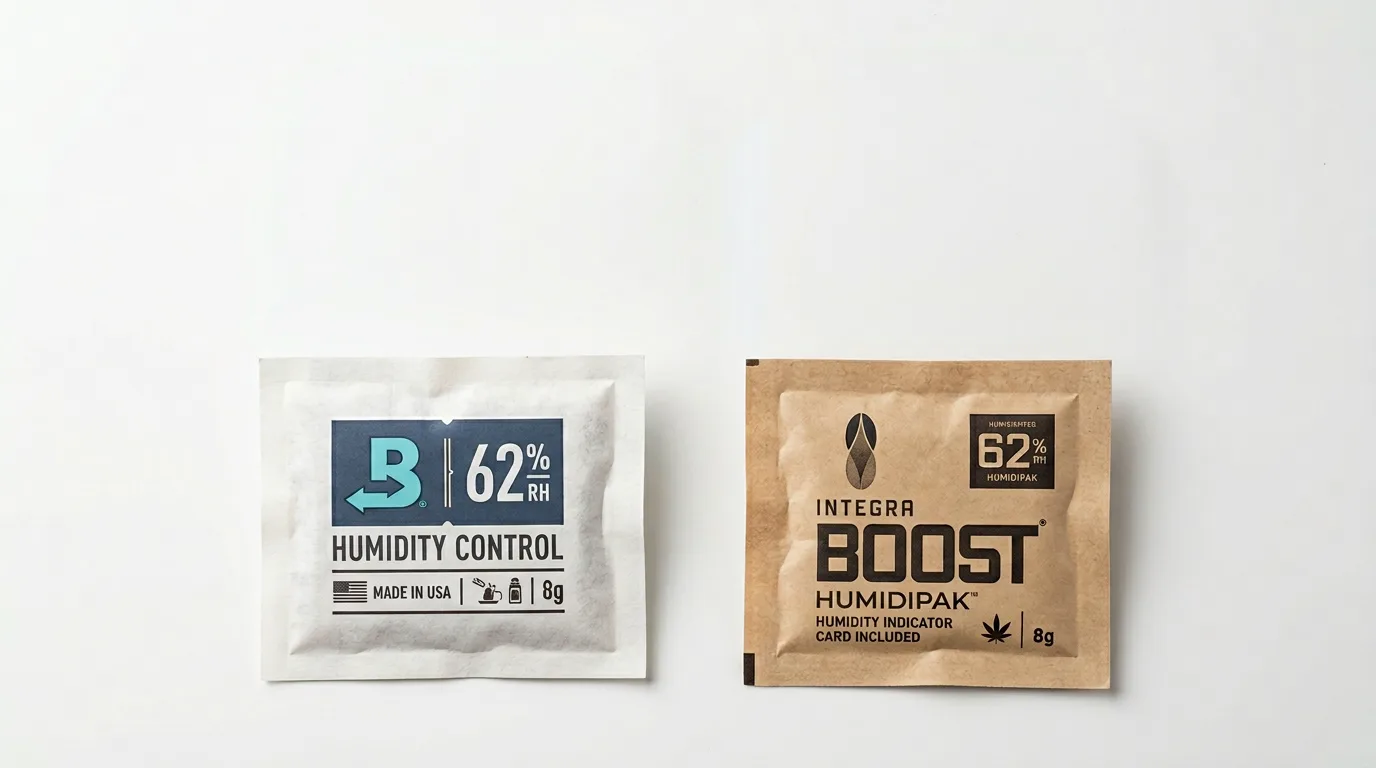
Boveda and Integra Boost are the two dominant commercial humidity packs for cannabis storage. Both are two-way humidity control systems that legitimately work. The differences between them are real but subtle, and the right choice depends on your priorities around cost, precision, and feel of the final product.
| Feature | Boveda | Integra Boost |
|---|---|---|
| Active ingredient | Saturated salt solution (proprietary salt blend) | Glycol-based formula |
| Available RH levels | 55%, 58%, 62%, 65%, 69%, 72%, 75%, 84% | 55%, 62%, 69% |
| Pack sizes (cannabis) | 1g, 4g, 8g, 67g, 320g | 2g, 4g, 8g, 67g |
| Lifespan (sealed jar) | 2–6 months | 2–4 months |
| Replacement indicator | None (check firmness) | Yes, free included card turns pink |
| Rechargeable? | Yes (partially, with damp paper towel method) | Yes (same method) |
| Price per pack (4g) | ~$0.80–$1.20 each in 10-packs | ~$0.60–$0.90 each in 10-packs |
| Membrane material | Food-safe, non-woven fabric | Food-safe fabric with replacement card |
| RH precision (tested) | ±1% of stated RH | ±2% of stated RH |
| Effect on final bud texture | Slightly stickier, bouncier feel reported by many users | Very similar; slightly firmer by some accounts |
| Overdose risk | None, calibrated not to exceed target RH | None, same two-way design |
| Best for | Maximum precision, high-terpene strains, serious curators | Budget-conscious growers, beginners, high-volume storage |
Material Difference: Salt vs Glycol
The salt-based chemistry in Boveda packs is well-established science, specific salts dissolved in water create thermodynamically fixed vapor pressure at defined RH levels. This is the same principle used in laboratory humidity calibration. Integra Boost's glycol formula achieves similar results through a different chemical pathway.
In real-world cannabis jars, both perform well. The ±1% vs ±2% precision difference matters most to growers running expensive, terpene-dense genetics where any RH variation can affect the final aroma profile, not to someone curing their first home grow.
The Replacement Indicator Advantage of Integra Boost
One genuinely useful feature Integra Boost includes is a small replacement indicator card that turns from blue/green to pink when the pack is exhausted. With Boveda, you diagnose exhaustion by feel: a completely hard, rigid, brick-like pack needs replacing. Neither method is difficult, but the visual indicator is handy for people who store multiple jars and don't open them often.
Grower tip: Write the date you added the pack on a small piece of masking tape and stick it to the lid. Even without an indicator, you'll know exactly how old each pack is, and you'll be surprised how quickly 4 months passes during a busy grow season.
The Rechargeability Question
Can you recharge Boveda packs for cannabis storage? Yes, but manage your expectations. Seal the hardened pack in a zip-lock bag with a slightly damp paper towel, close it completely, and leave it for 12–24 hours. The pack will reabsorb water and become pliable again. However, recharged packs:
- Perform less precisely than new packs (the salt solution becomes more dilute)
- Last roughly 30–50% as long as a fresh pack
- Work acceptably for a secondary storage jar but not for your best harvest
The same recharging approach works for Integra Boost. For long-term, precision curing, the $0.80–$1.20 cost of a fresh pack is almost always worth it over the unreliable performance of a recharged one.
Do not microwave, oven-dry, or heat humidity packs to recharge them. Heat permanently damages the semi-permeable membrane and destroys the calibrated salt or glycol solution inside. The damp paper towel method is the only safe recharging approach.
Verdict: Which One Should You Buy?
Buy Boveda if: You're curing high-terpene genetics, you want the most lab-verified RH precision available, or you've noticed aroma degradation during previous cures. Buy Integra Boost if: You want a lower cost per pack, you appreciate the built-in replacement indicator, or you're curing a large volume of standard strains where ±2% RH is perfectly acceptable.
How Many Packs Per Jar: Sizing Guide
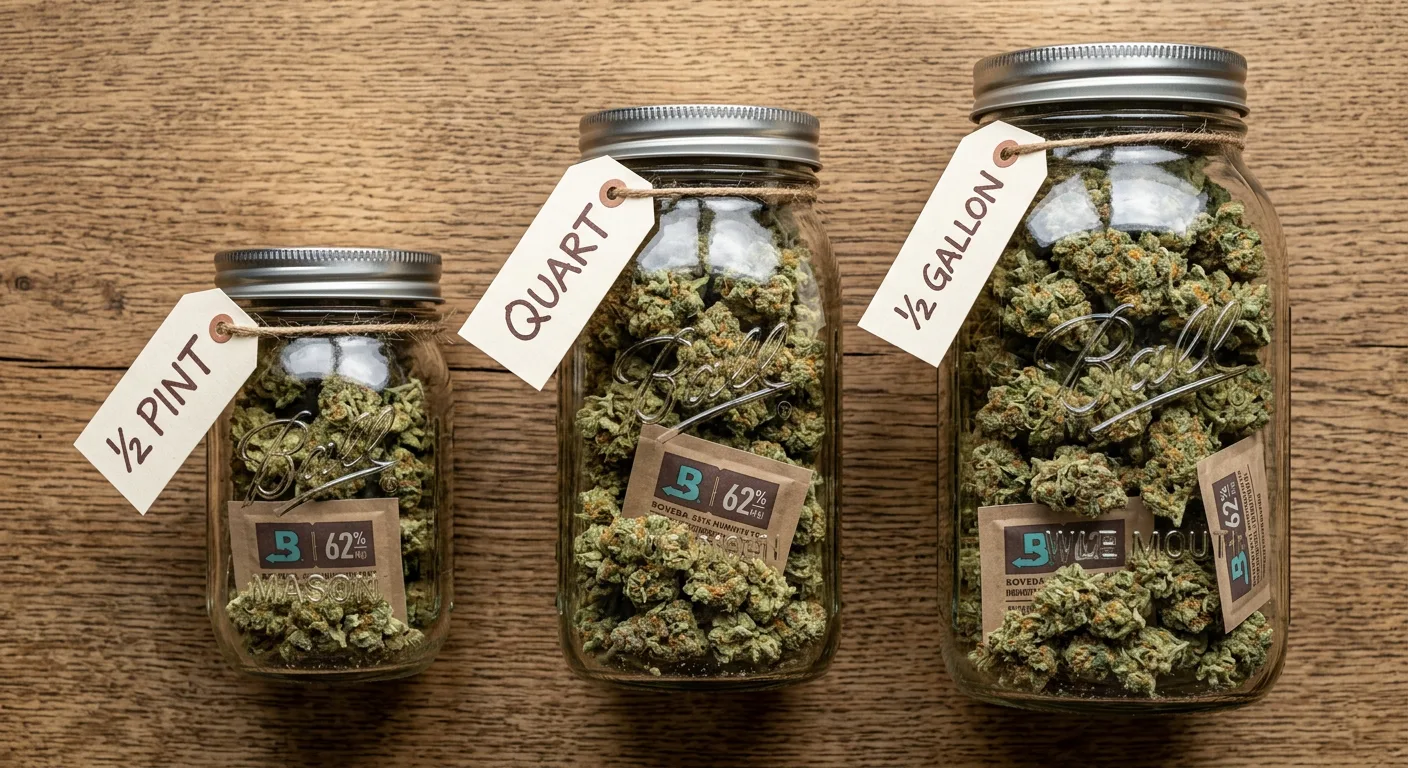
The standard rule of thumb for humidity packs in cannabis jars is 1 gram of pack capacity per 1 ounce of cannabis. This ratio gives the pack enough reserve capacity to regulate RH for the expected lifespan without being overwhelmed. Both Boveda and Integra Boost use this same general guideline.
Practical Pack Sizing by Container
- Half-pint mason jar (1 oz cannabis): 1× 4g pack: the 4g packs are the most common size and slightly oversized for 1 oz, which is fine and extends lifespan
- Pint mason jar (2 oz cannabis): 1× 8g pack OR 2× 4g packs
- Quart mason jar (3–4 oz cannabis): 1× 8g pack, or 2× 4g packs: this is the most common home-grow setup; the 4g pack per quart jar is the widely-cited standard
- Half-gallon jar (up to 8 oz): 2× 8g packs or 1× 67g pack
- 1-gallon jar or large container (up to 16 oz): 1× 67g pack or 4× 8g packs
Sizing tip: When in doubt, go slightly larger. A slightly oversized pack simply exhausts more slowly without damaging your cannabis. The bigger risk is undersizing: one 4g pack trying to regulate a half-gallon jar will exhaust in weeks and leave your long-term storage unprotected.
If you're storing cannabis for 12+ months, our full guide on long-term cannabis storage for 12+ months covers container selection, light and oxygen management, and how to layer humidity packs into a complete storage system.
DIY Humidity Control: Honest Assessment
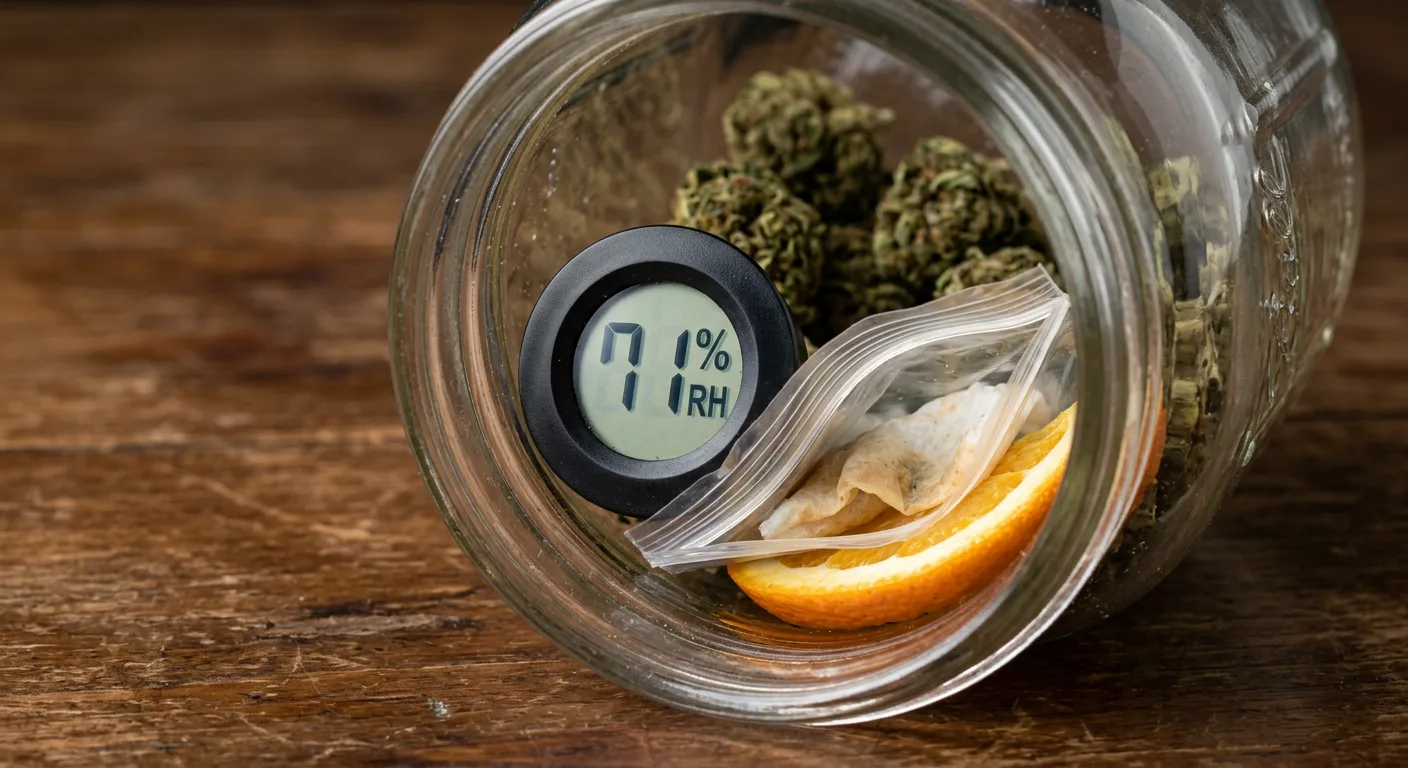
DIY humidity control options for cannabis jars include orange peels, damp paper towels in a bag, raw potato slices, and lettuce leaves. These all add moisture and can rescue slightly over-dried cannabis in an emergency, but none of them provide genuine two-way control, and none are precision tools for curing.
Common DIY Methods and Their Real Limitations
- Orange or lemon peel: Adds moisture quickly, but also introduces citrus terpenes that alter your bud's flavor profile. RH can spike to 70%+ in a closed jar within hours, creating mold risk. No way to target a specific RH.
- Damp paper towel in a zip-lock bag: Works as a rough rehydration tool for very dry cannabis. Zero precision: you're guessing at RH. Open the jar and you'll often see condensation on the glass, a warning sign of excess moisture.
- Raw potato or lettuce: Introduces organic material that can harbor bacteria and mold spores. Not safe for quality cannabis storage.
- Humidipak knockoffs: Lower-cost generic two-way packs from unknown brands. Some work reasonably well; quality control is inconsistent. Without third-party lab verification of the stated RH, you're trusting marketing copy.
Bottom line on DIY: Orange peel in a pinch to rescue bone-dry cannabis is fine. DIY methods as a planned curing strategy are not: the lack of precision, the risk of contamination, and the inability to target a specific RH make them a poor substitute for a $1 commercial pack. The cost difference simply doesn't justify the quality risk.
Signs Your Humidity Pack Is Exhausted
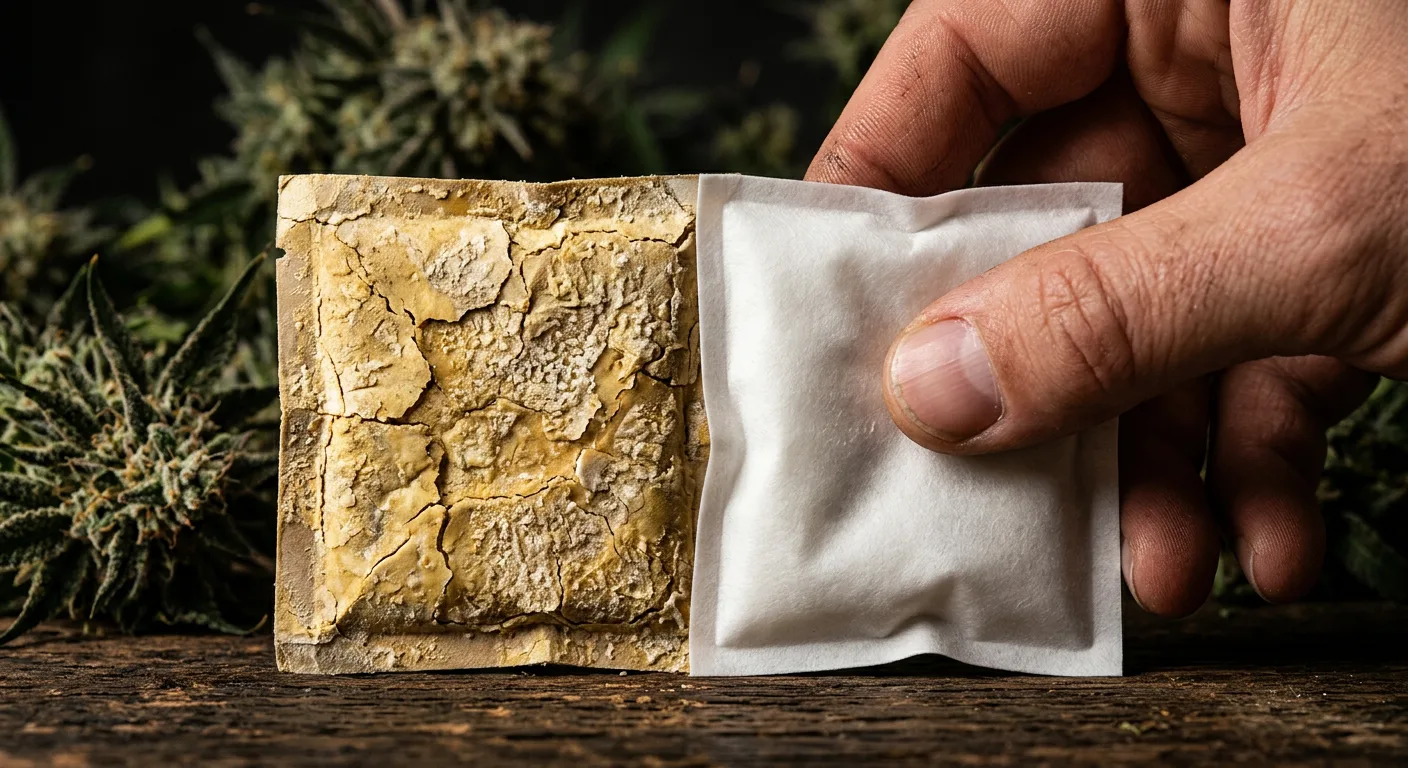
A humidity pack is exhausted when it has completely hardened into a rigid, brick-like solid. This happens because the moisture reserve inside the pack has been fully consumed, either by adding humidity to a dry environment over time, or through the normal aging process in a regularly opened jar.
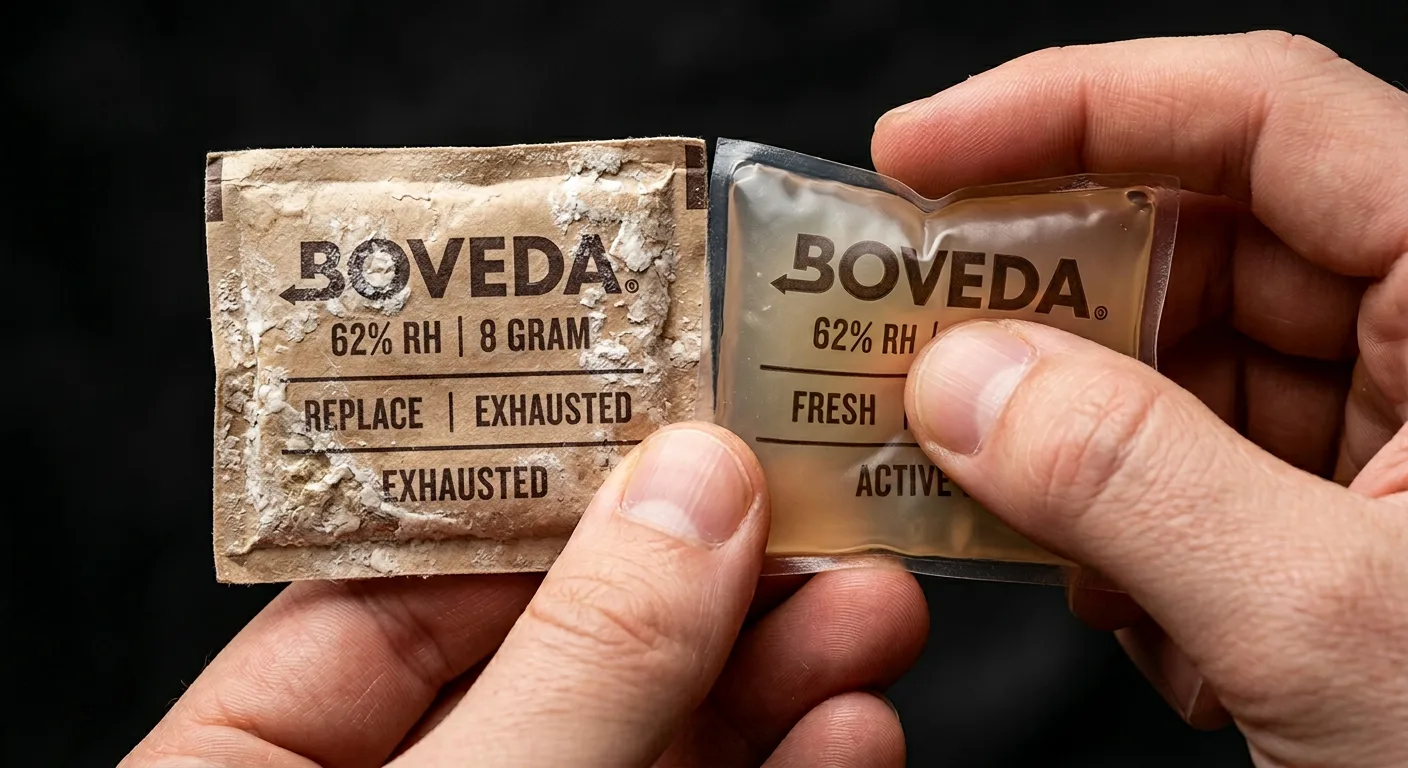
How to Check Pack Status
The Squeeze Test
Gently pinch the pack between two fingers. A fresh or still-active pack will feel soft, gel-like, and pliable: you'll feel slight resistance and a slight give. An exhausted pack feels completely hard, with no flex at all.
Check the Indicator Card (Integra Boost)
If you're using Integra Boost, pull out the small replacement indicator card included with your pack. A blue or green card means the pack is still active. A pink card means it's time to replace, straightforward and reliable.
Check the Jar Hygrometer
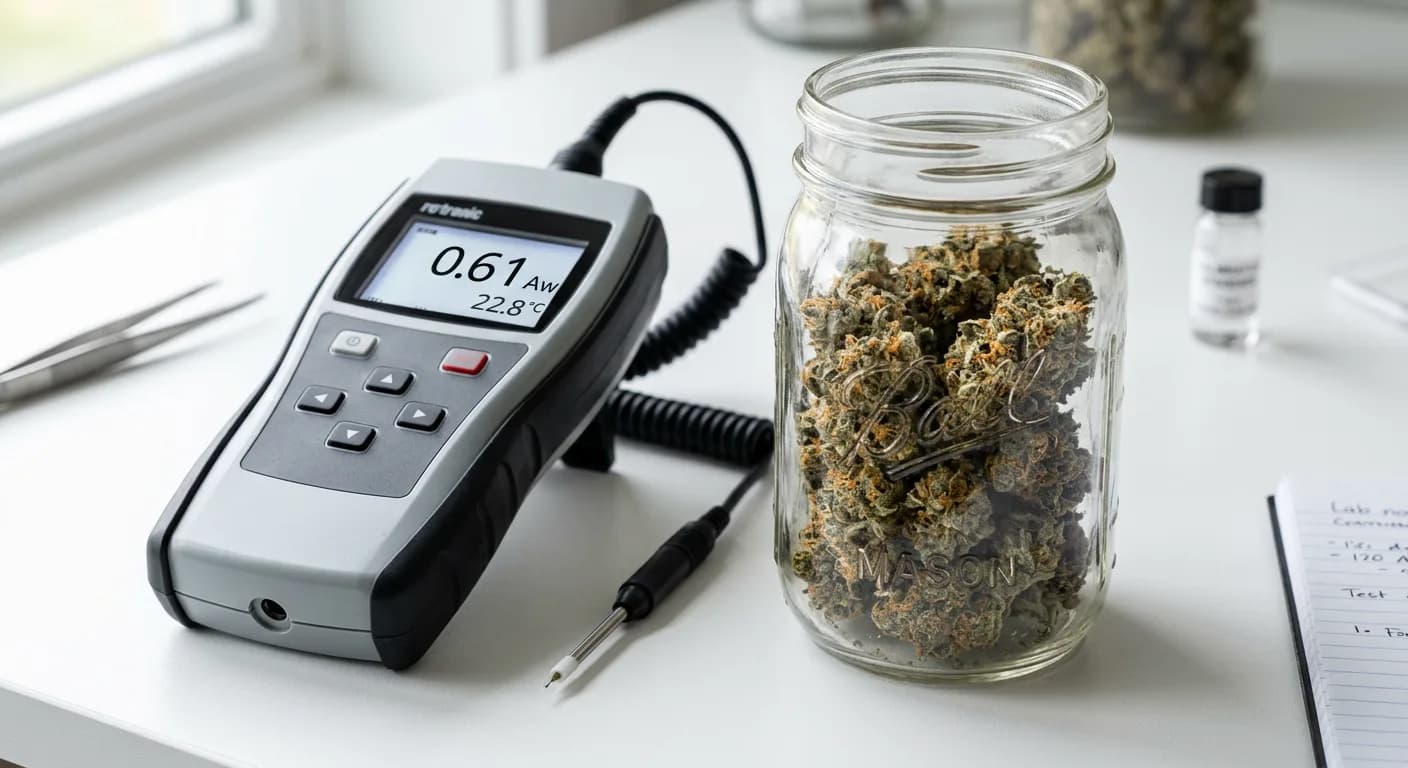
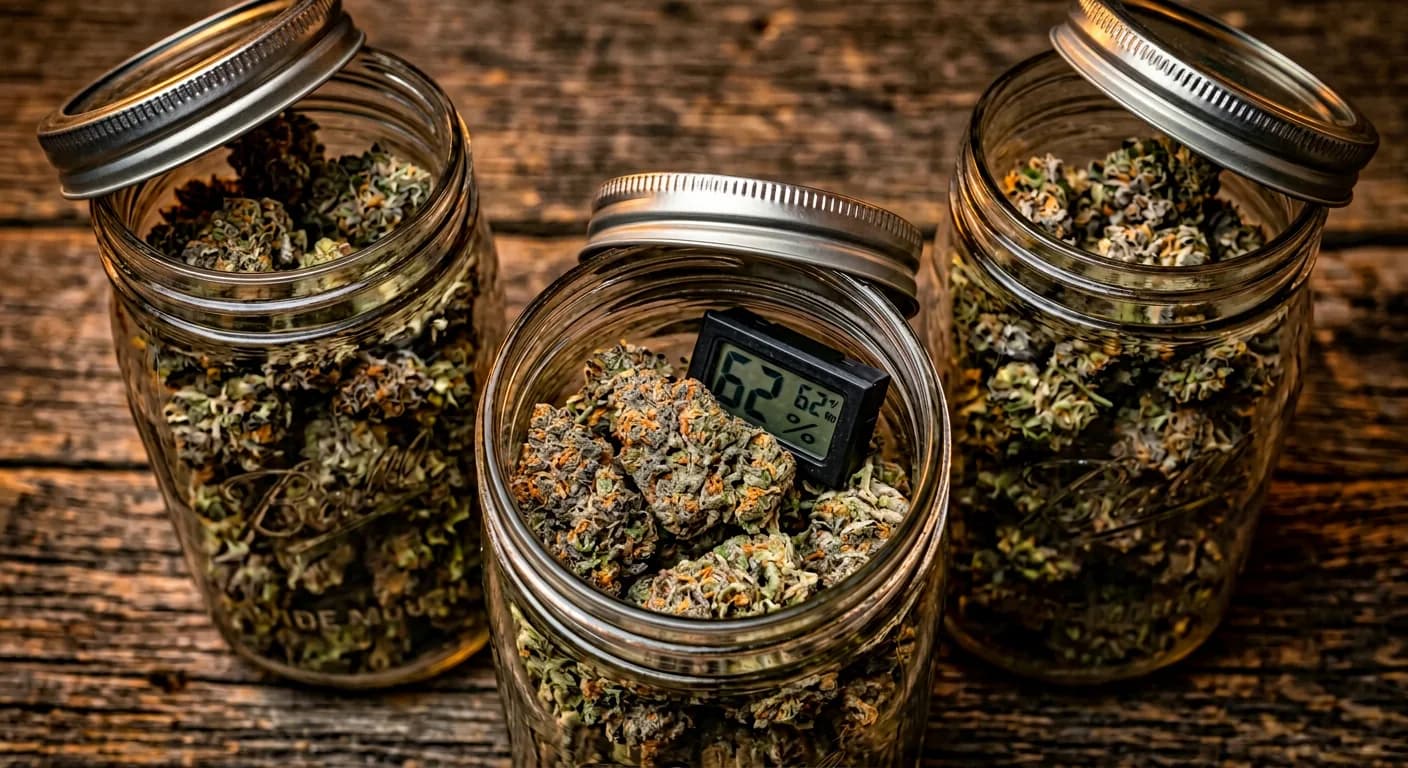
If you're tracking RH in your jars with a small digital hygrometer (highly recommended), watch for RH drifting away from your target, consistently reading 55% in a 62% jar, or 68% in a jar that used to hold 62% steadily. Both signal the pack has lost regulation capacity.
Date Tracking
If a pack is more than 4–6 months old in an actively opened jar, or more than 6 months in a sealed long-term storage jar, replace it proactively even if it still feels soft. The reserve capacity has likely dropped below effective regulation levels even if it's not fully hardened yet.
Integrating Humidity Packs Into Your Burping Schedule
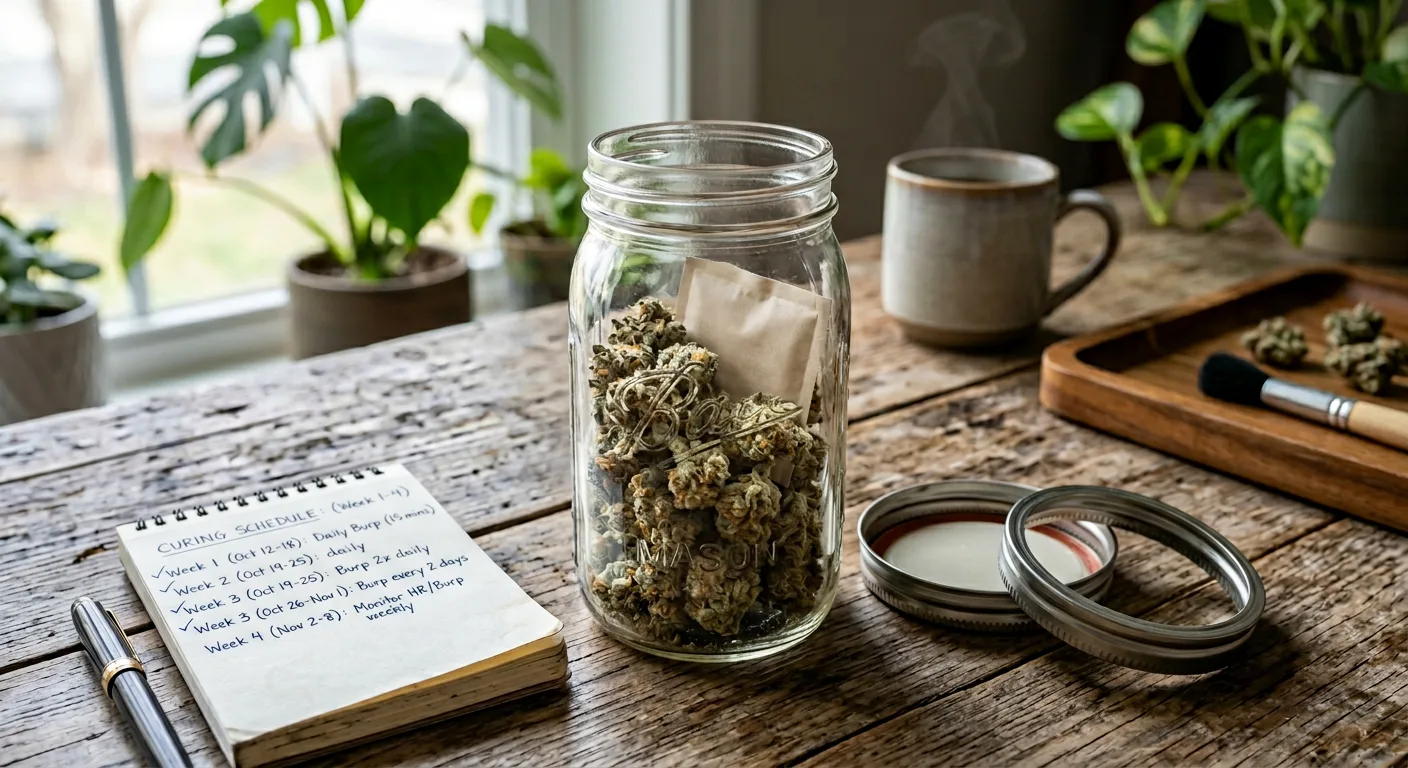
Humidity packs are not a replacement for burping: they're a complement to it. During the first two weeks of jar curing, when moisture levels are still actively shifting and CO2 needs to escape, burping remains essential. Humidity packs become your primary management tool from week 3 onward as the cure stabilizes.
Week-by-Week Integration Timeline
- Days 1–3 (immediate post-jar): Do not add a humidity pack yet. Buds entering the jar at 10–15% moisture content may be wetter inside than they feel outside. Let them gas off with daily burping first.
- Days 4–7: If RH in the jar has stabilized between 60–65% after burping and the smell has shifted from cut-grass to something more floral or earthy, add your humidity pack now. Use 62% at this stage.
- Weeks 2–4 (active cure): Continue daily burping for 5–10 minutes even with the pack in place. The pack buffers against large swings but the cure still benefits from fresh air exchange. Remove pack during burping, then replace.
- Weeks 4–6 (late cure): Reduce burping to every 2–3 days. The humidity pack is now doing most of the moisture management work.
- Week 6+ (storage phase): Swap from a 62% pack to a 58% pack if you're moving into long-term storage. Seal jars fully. Burping is no longer necessary.
Never add a humidity pack to wet cannabis. If RH inside the jar is above 70%, remove all cannabis, spread it on a rack for 30–60 minutes to release moisture, then re-jar. A humidity pack placed in a 75% RH jar will simply absorb moisture until it exhausts rapidly: it cannot solve an over-wet cure.
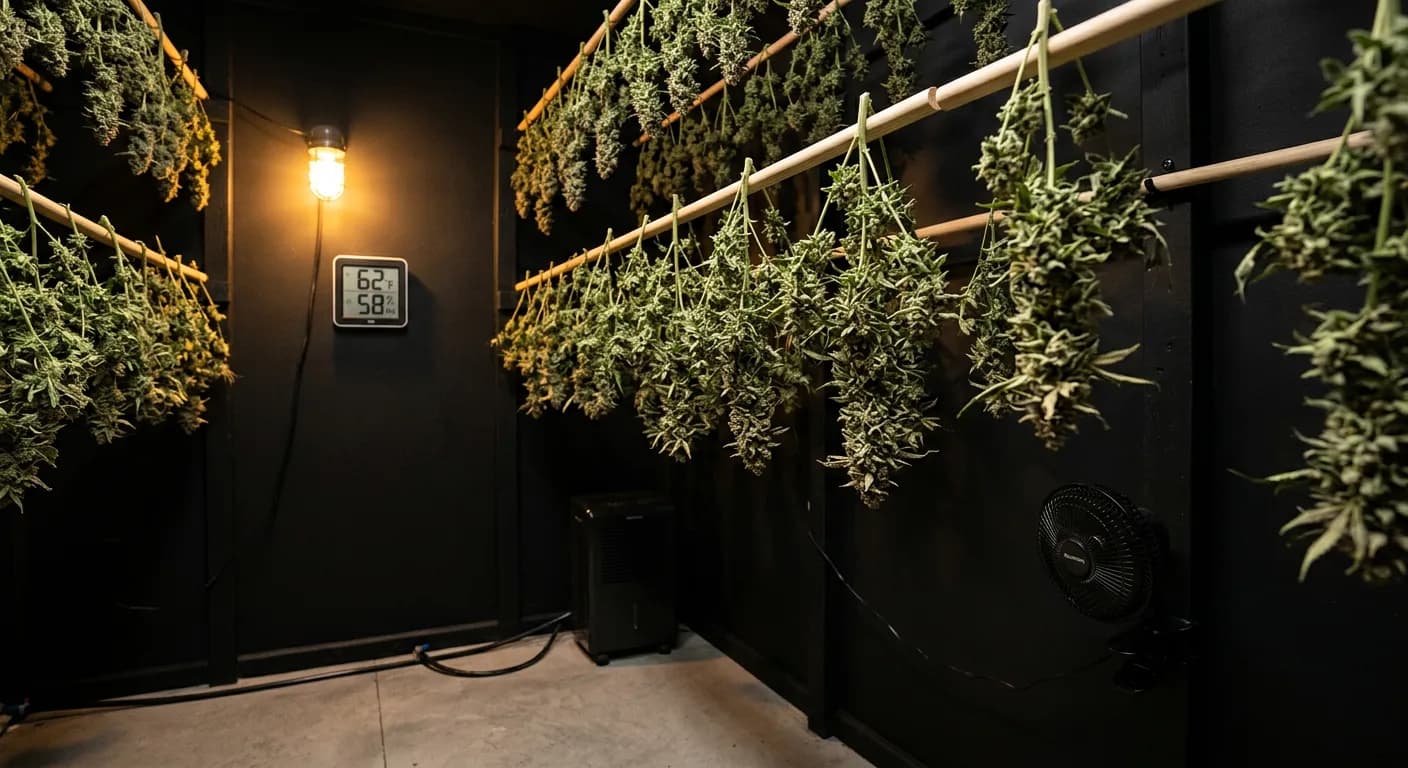
For the complete burping schedule and RH targets week-by-week, see the mason jar curing and burping schedule guide referenced above. For the drying stage before jars even enter the picture, our cannabis drying room setup guide covers temperature and airflow targets for the 10–14 day slow dry.
Terpene-Rich Strains That Benefit Most From Precision RH Control
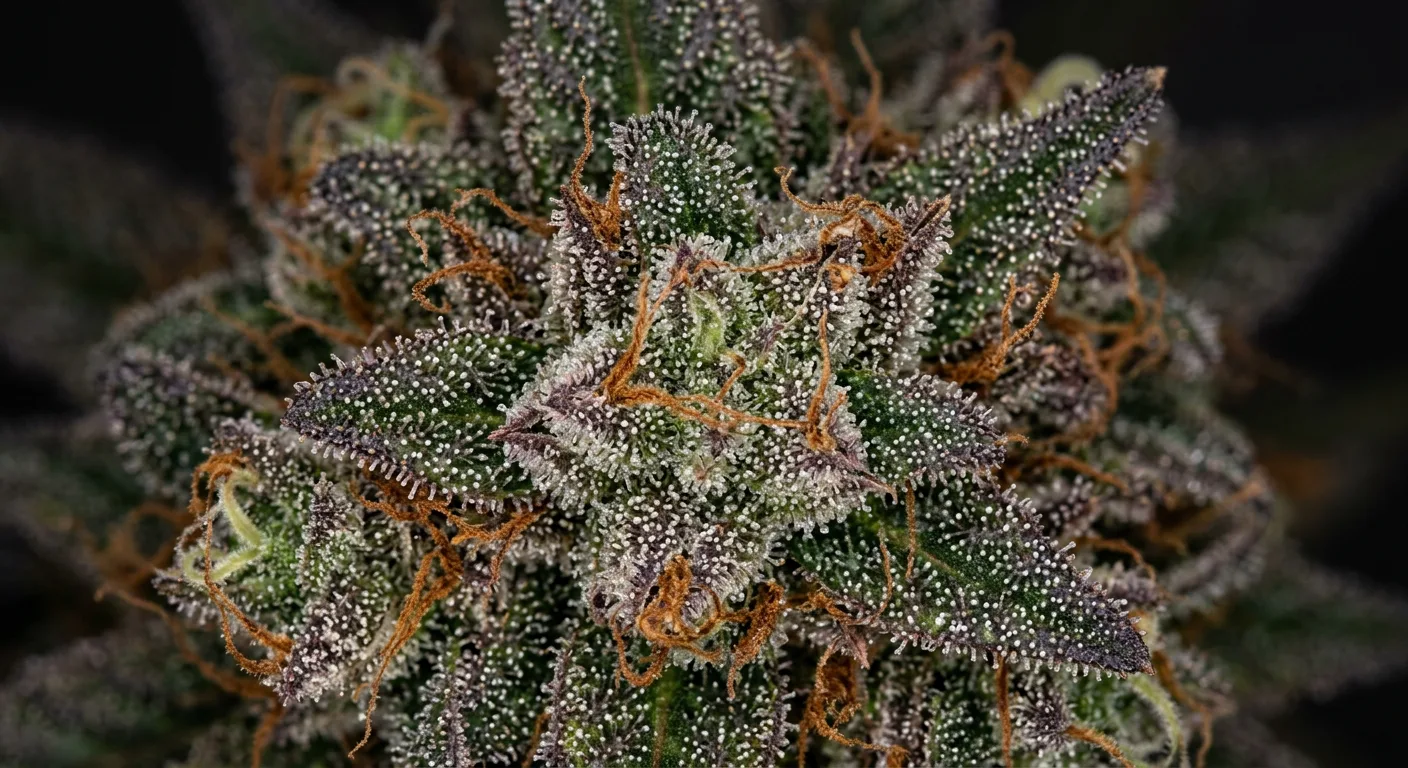
High-terpene strains are more sensitive to humidity fluctuations during cure than lower-terpene varieties. The monoterpenes and sesquiterpenes responsible for complex cannabis aromas, myrcene, limonene, linalool, terpinolene, ocimene, are volatile compounds that evaporate faster when RH drops and can condense or degrade under RH swings. For these genetics, precision packs aren't a luxury; they're the difference between good and exceptional final aroma.
To understand why terpene preservation during curing matters so much, and how specific terpenes like pinene interact with the endocannabinoid system, our complete pinene terpene guide and ocimene terpene guide go deep on the science.
Strains Worth Protecting With Precision Humidity Management
These genetics produce terpene profiles complex enough that a careless cure can strip weeks of work from the final aroma. Some are strains we carry; others are well-known industry varieties worth knowing about:
- OG Kush (industry classic, fuel-pine-earth terpene triad), tight humidity control during cure preserves the characteristic petrol-and-pine aroma that makes it iconic. Our OG Kush feminized seeds at 26% THC reward careful post-harvest technique.
- Sour Diesel (pungent, diesel-heavy terpene profile dominated by myrcene and limonene), highly volatile aromatics that dissipate fast if RH swings during cure. See our Sour Diesel feminized seeds at 24% THC.
- Super Lemon Haze (limonene-dominant citrus profile that requires stable 62% RH during cure to hit its full lemon-candy expression), available as Super Lemon Haze feminized seeds at 23% THC.
- Tangerine Haze: an aromatic, citrus-forward variety where terpene-forward curing makes the most visible difference in final nose. Our Tangerine Haze feminized seeds at 18% THC punch above their THC number on aroma alone.
- Gelato (industry-wide favorite, cookie-and-citrus terpene complexity), widely available, not our product, but worth naming as a precision-cure candidate.
- Zkittlez (tropical, fruity, dominant in linalool and myrcene), another industry strain where the cure makes or breaks the candy-fruit profile.
- White Widow: a resin-dense classic where proper 62% curing enhances the earthy, woody terpene base. Try our White Widow feminized seeds at 25% THC.
- Quantum Kush: our highest-THC offering at 30% pairs extreme potency with a complex terpene profile that deserves careful curing. See Quantum Kush feminized seeds.
- Runtz (industry strain, fruity-candy profile extremely sensitive to RH fluctuation during cure), not our product but widely grown and worth flagging.
- Purple Kush: earthy, floral, grape-adjacent terpenes that respond well to 62% cure followed by 58% long-term storage. Our Purple Kush feminized seeds at 27% THC are a natural fit for precision curing.
Why terpene volatility matters for cure RH: The boiling points of dominant cannabis terpenes range from 156°C (myrcene) to 198°C (caryophyllene), but at room temperature, these compounds still have meaningful vapor pressure. Every time RH drops significantly in a sealed jar, the partial pressure of terpene vapors increases relative to moisture, accelerating escape through any micro-gap in the seal. Holding RH at a consistent 62% minimizes this vapor pressure differential and slows terpene loss to measurable levels.
If you're growing terpene-rich genetics and want to read lab reports to understand exactly what you're preserving during cure, our guide on how to read a cannabis terpene lab report (COA) explains terpene percentages, what they mean, and how curing affects them.
Quick-Reference Decision Guide: What to Buy
Based on everything covered above, here's a practical decision framework for choosing humidity packs for cannabis storage. Use this as your buying checklist before placing an order.
- Active curing (weeks 1–6 in jars) → use 62% RH packs
- Long-term storage (6+ weeks sealed) → use 58% RH packs
- Maximum precision, terpene-heavy strains → choose Boveda
- Budget-conscious, high-volume curing → choose Integra Boost
- Quart mason jar (most common) → use 1× 4g pack
- Half-gallon jar (large harvest) → use 2× 8g packs or 1× 67g
- Multiple jars, hate checking packs → choose Integra Boost (indicator card)
- Pack feels hard and rigid → replace immediately
- RH in jar drifting off-target → pack is near exhaustion
- Using DIY options for precision curing → switch to commercial packs
- Recharging old packs for primary jars → buy new packs instead
- Storing cannabis 12+ months → pair 58% pack with oxygen absorber and vacuum-sealed outer bag
Buying tip: Buy packs in 10-packs or 20-packs, not individually. The per-pack price drops by 30–40% in bulk quantities, and you'll always have fresh replacements on hand when a pack exhausts mid-cure. Store unused packs in their original sealed bag in a cool, dry location: they stay fresh for 18–24 months unopened.
Tracking your RH accurately is equally important as choosing the right pack. A small digital hygrometer inside each jar costs $4–8 and tells you exactly what your packs are doing in real time. Our cannabis humidity control guide covers monitoring tools from seedling through harvest, and our free VPD calculator helps dial in the right conditions at every stage of the plant's life before it ever reaches the jar.
Frequently Asked Questions
Should I use 58% or 62% humidity packs for cannabis?
Use 62% packs during active curing (the first 2–6 weeks in jars) to keep buds supple as moisture redistributes throughout the flower. Switch to 58% packs for long-term storage beyond 6 weeks. Personal texture preference also plays a role: 62% produces a slightly stickier, bouncier bud while 58% gives a slightly firmer, easier-to-break-up texture that many growers prefer for storage.
How long do Boveda packs last in cannabis jars?
Boveda packs last 2–6 months depending on how full the jar is, how often you open it, and ambient conditions. A jar opened daily during active burping will exhaust a pack in 6–8 weeks. A sealed long-term storage jar can extend a pack's life to 4–6 months. The pack turns completely hard and brick-like when exhausted: that's your replacement signal.
Can you recharge Boveda packs for cannabis storage?
Yes. Seal the hardened pack in a zip-lock bag with a slightly damp paper towel for 12–24 hours until it becomes pliable again. However, recharged packs are less precise than new ones and last roughly 30–50% as long. For critical curing of your best genetics, replacing packs is the more reliable approach. Recharging is fine for a secondary storage jar where precision matters less.
Do humidity packs actually work for curing cannabis?
Yes: humidity packs are highly effective for the stabilization and maintenance phase of curing after buds have been properly dried to 10–15% moisture content. They cannot rescue wet buds and should not replace active burping during weeks 1–2. Think of them as precision stabilizers that maintain a target RH once the active cure is underway, not a substitute for a proper slow dry and early burping schedule.
Which is better for cannabis, Boveda or Integra Boost?
Both work well, but they differ in ways that matter to different growers. Boveda uses a salt-based solution for lab-verified ±1% RH precision, slightly higher cost, and reportedly produces a stickier final bud texture. Integra Boost uses a glycol-based formula, costs 20–30% less per pack, comes with a free replacement indicator card, and delivers ±2% RH accuracy, excellent for most growers. Choose Boveda for terpene-dense genetics and maximum precision; choose Integra Boost for value and ease of use at scale.