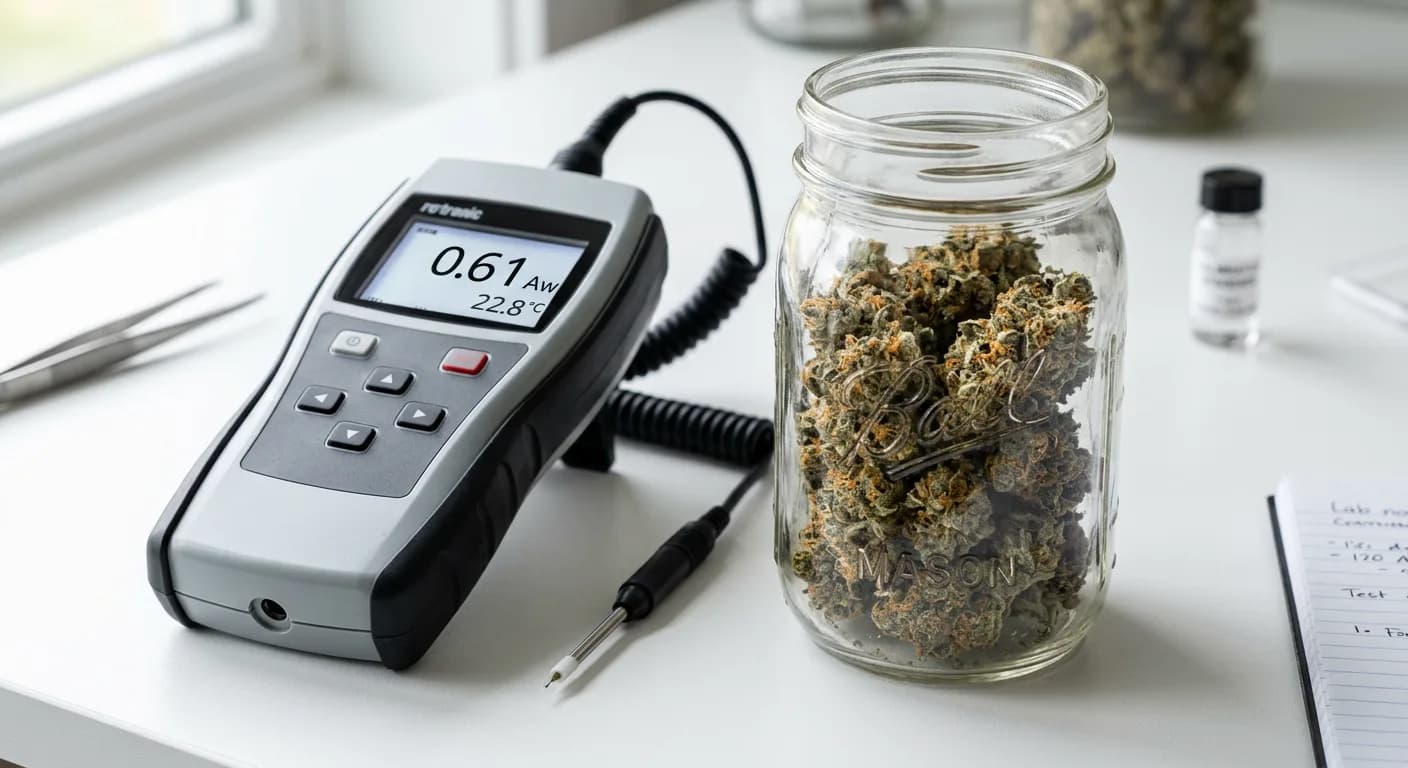
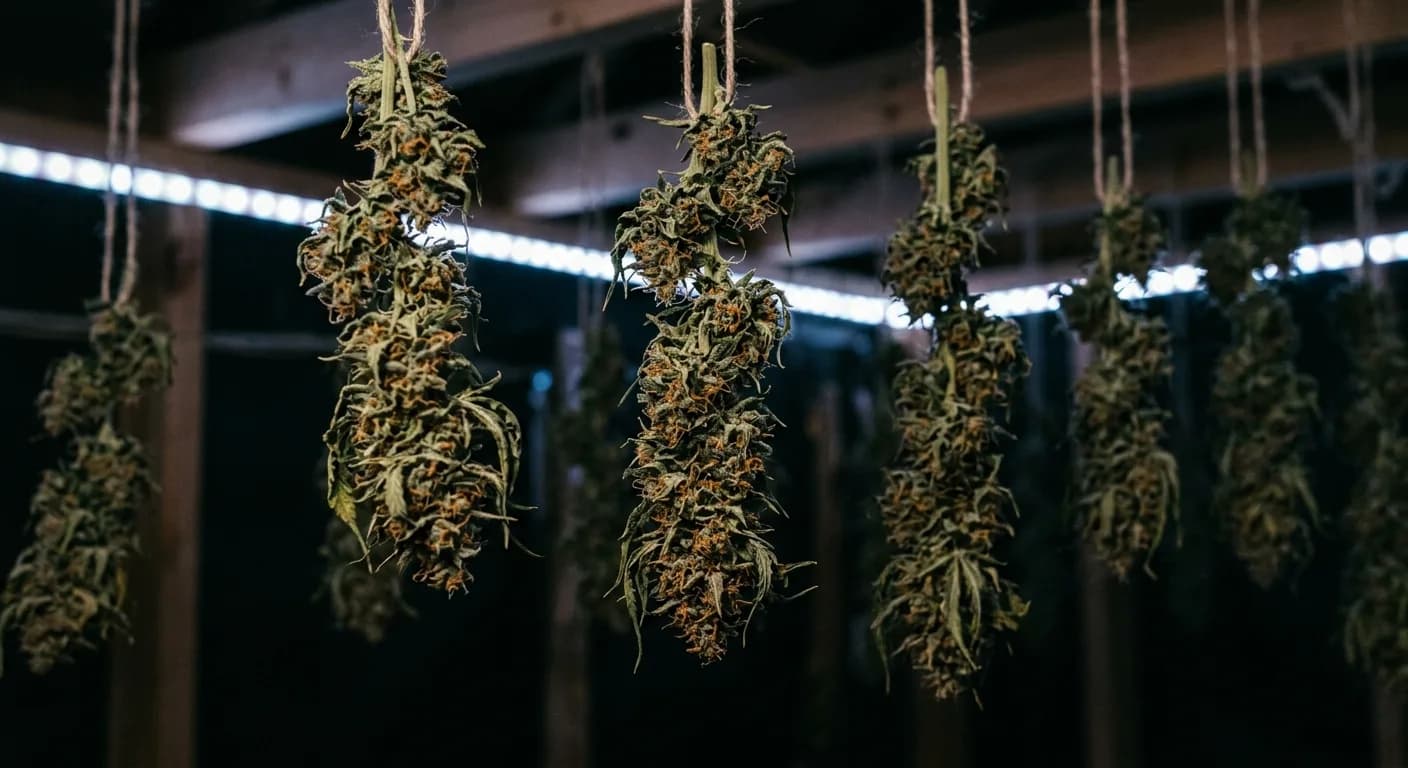
Ask ten cannabis growers whether you should flush before harvest and you'll get ten different answers — ranging from "absolutely, it's non-negotiable" to "it's an outdated myth." The truth sits somewhere in the middle, and it's finally being tested in labs. This guide walks through the full flushing protocol, the research shaking up old assumptions, and how to decide if flushing cannabis before harvest makes sense for your grow in 2026.
Flushing is watering with plain, pH-balanced water for a few days to about two weeks before chop. The science is mixed — one lab trial found no difference, a newer peer-reviewed study found benefits. Popular growing guides still recommend it for smoother smoke.
What Flushing Cannabis Actually Means
Featured snippet: Flushing cannabis means watering plants with plain water — no added nutrients — for a period of days up to roughly two weeks before harvest . The goal is to let the plant use up stored nutrients in its tissue and reduce salt buildup in the root zone before the final chop .
In practical terms, you stop your feed schedule, switch to plain pH-balanced water, and keep watering as normal until harvest day. That's it. There's no special additive, no magic ritual — just water.
"Flushing cannabis just means watering your marijuana plant with plain water for a period of time before harvest. This helps make smoother buds." — Grow Weed Easy
The logic behind the technique goes like this: during flower, plants accumulate nitrogen, phosphorus, potassium, and various mineral salts. If you harvest while tissues are still loaded with these inputs, the theory says, you end up with harsh smoke, black ash, and muted flavor. Flushing is meant to force the plant to metabolize what it has stored, leaving cleaner bud behind.
Whether that theory holds up under lab conditions is exactly what we'll unpack below.
Why Growers Flush: The Traditional Case
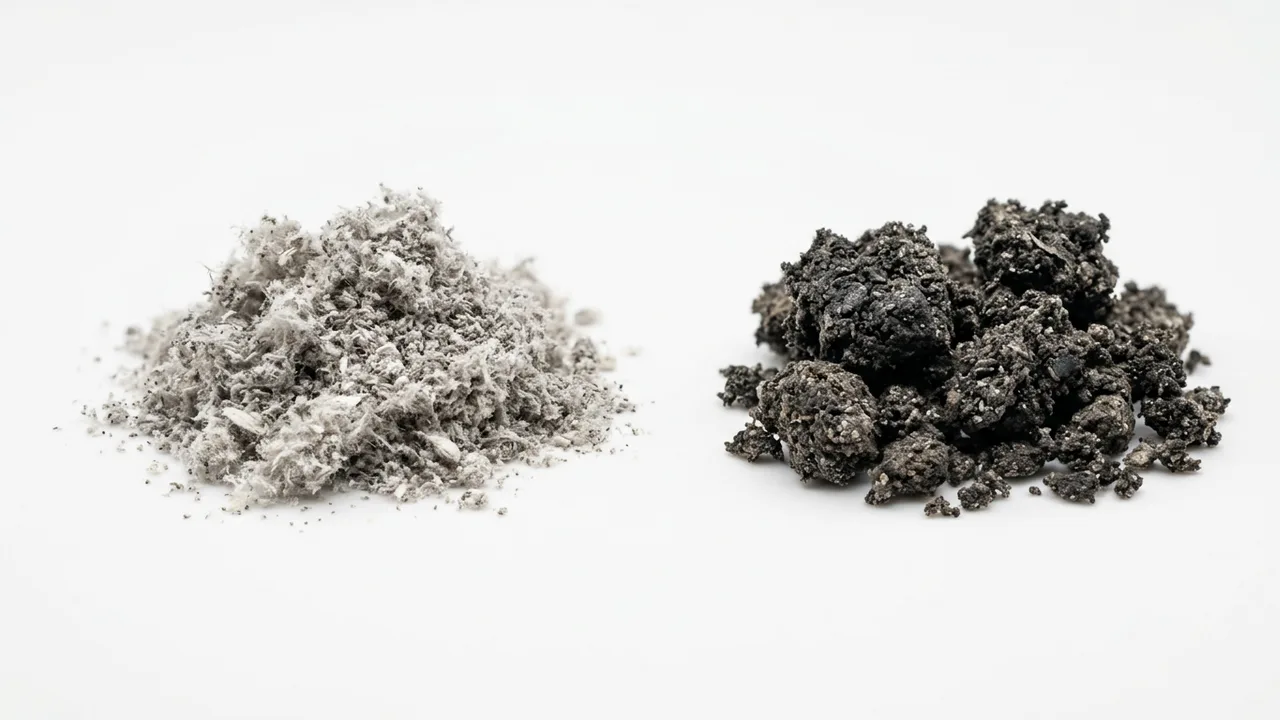
Featured snippet: Growers flush to remove excess nutrients, salts, and minerals from the growing medium and plant tissue, which is claimed to produce smoother-smoking, better-tasting cannabis . It's also meant to prevent the harsh taste and black ash associated with nutrient-heavy flower.
The traditional case for flushing rests on three pillars that have been passed down through decades of cultivation:
- Smoother smoke with less throat burn
- Cleaner, more pronounced terpene flavor
- White or light-gray ash instead of black, tarry residue
- Reduced salt buildup in coco, soil, or hydro reservoirs
- Lower environmental nutrient runoff at harvest
As detailed in DripWorks' cultivation guide, flushing is framed as a quality-control step — the cultivation equivalent of rinsing a pot of rice before cooking . The idea is that residual fertilizer in plant tissue contributes to that scratchy, chemical edge some dried flower has.
Black ash alone isn't a reliable flush indicator. Ash color is influenced by moisture content, cure quality, and combustion temperature — not just nutrient load. Judge your cure before blaming your feed schedule.
What the 2024 Research Actually Says
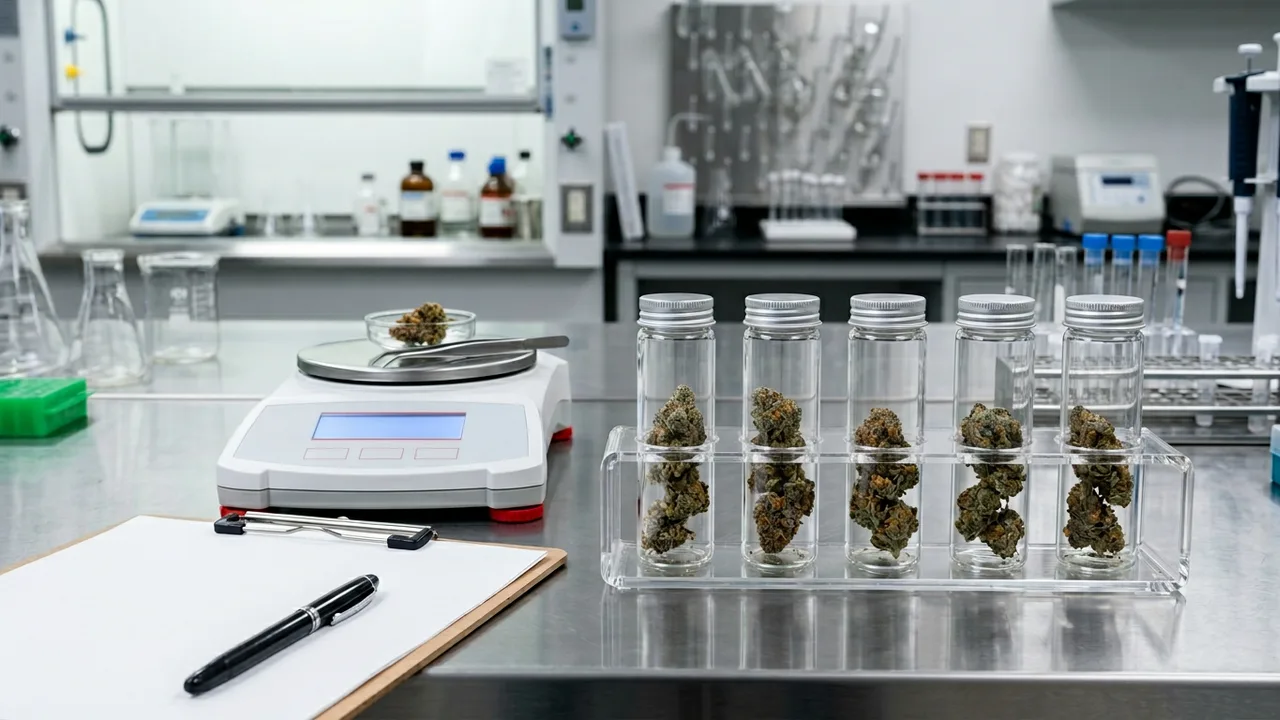
Featured snippet: The two most cited flushing studies reached opposite conclusions. Rx Green Technologies found no major differences between 0, 7, 10, and 14-day flushes , while a 2024 peer-reviewed study in Industrial Crops and Products concluded flushing was beneficial across five medical cultivars .
This is where things get interesting — and where most blog posts stop updating.
The Rx Green Technologies Trial
Rx Green Technologies ran a controlled flushing trial on the Cherry Diesel cultivar, comparing flush durations of 0, 7, 10, and 14 days . The team measured taste, chemical composition, and smoking quality across all four treatments.
"Rx Green's cannabis flushing study showed no major differences in the results of flush treatments for cannabis nutrient systems." — Rx Green Technologies R&D team
The takeaway: across every metric they measured, the four groups performed similarly. No flush duration clearly won on taste, potency, or smoke quality . For years, this single trial was the main scientific rebuttal to flushing orthodoxy.
The 2024 Industrial Crops and Products Study
Then, in late 2024, a peer-reviewed paper dropped that complicates the picture. Researchers tested five medical cannabis cultivars — 'Marom', 'Maayan', 'Edom', 'Desert Queen', and 'Royal Medic' — grown in perlite (particle size 0.075–2.5 mm) in 3 L pots, comparing continuous fertilization against a final flushing period with plain water .
"The data obtained in this study, for responses of five medical cannabis cultivars to growth-media flushing vs. continuous fertilization, suggest that flushing is a beneficial practice for medical cannabis cultivation." — Industrial Crops and Products (2024)
Crucially, the researchers found no negative effect on cannabinoid or terpenoid production, and they highlighted environmental and economic benefits from reduced fertilizer inputs at the end of the cycle .
The two studies aren't necessarily contradictory — they tested different cultivars in different media (coco vs. perlite) with different measurement priorities. What we can say: the evidence is limited, mixed, and actively evolving. Anyone claiming flushing is "proven" or "debunked" is overstating the data.
What Grower Guides Still Say
Popular grower-facing guides, including Grow Weed Easy and DripWorks, continue to recommend flushing for smoother, better-tasting buds . So you have two lab studies pulling in opposite directions and decades of anecdotal grower consensus on the third side.
How Long to Flush Before Harvest
Featured snippet: Flushing duration commonly ranges from a few days to roughly two weeks depending on medium and grower preference . The Rx Green trial specifically tested 0, 7, 10, and 14 days and found no meaningful difference between them .
Since no study has identified an optimal number, most growers work off experience-based rules of thumb. Here's how the common durations map to growing styles:
| Growing Medium | Typical Flush Window | Reasoning |
|---|---|---|
| Hydroponics (DWC, NFT, Ebb & Flow) | Shorter end of 3-7 days | Water-only reservoirs flush plant tissue quickly |
| Coco Coir | Mid-range, around 7-10 days | Coco holds salts but drains freely when watered heavily |
| Soil (amended/bottled nutrients) | Longer end, 10-14 days | Soil releases stored nutrients slowly |
| Living / Organic Soil | Often skipped entirely | Microbial ecosystem cycles nutrients naturally |
Note: evidence is limited on exact flush durations per medium — these ranges reflect common grower practice rather than controlled trials.
When to Start the Clock
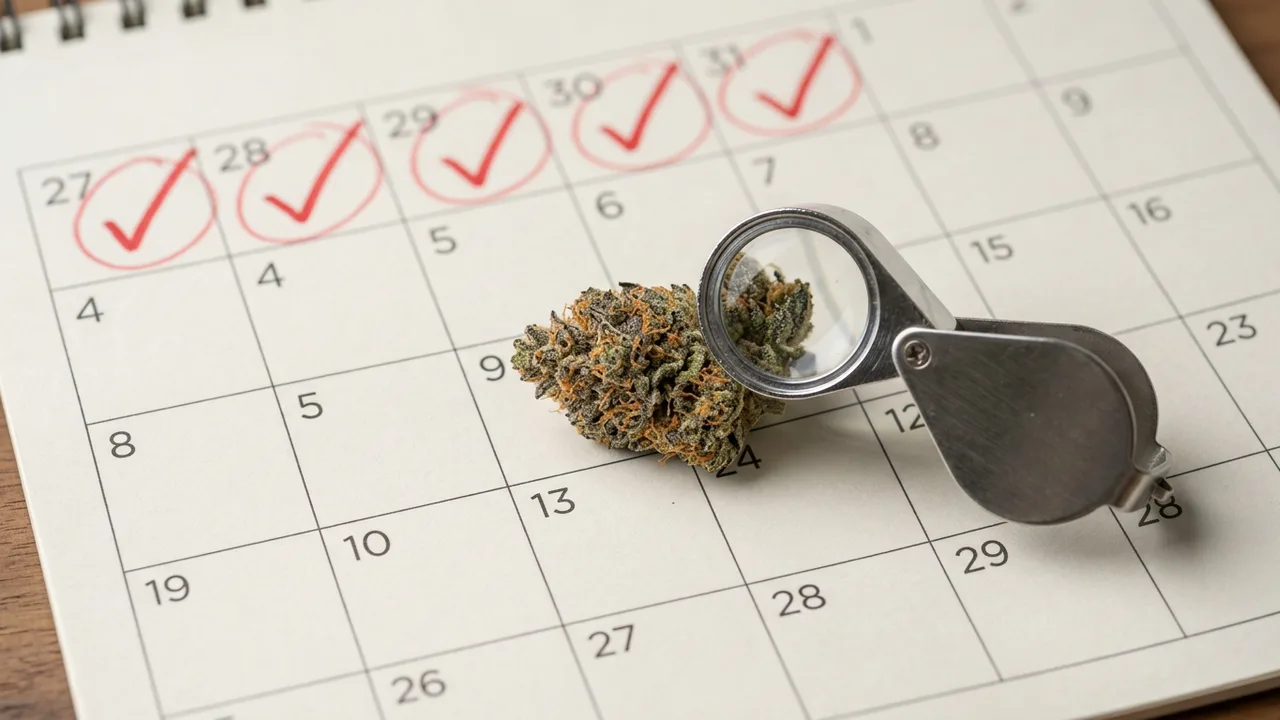
Start flushing when the harvest window is almost open, not before . Checking your trichomes with a jeweler's loupe or USB microscope is the most reliable cue — when you see mostly cloudy trichomes with a few ambers appearing, that's the start line .
Starting a flush too early starves the plant during peak bud-fattening weeks and can hurt yield. Don't flush based on a calendar week number — flush based on trichome maturity. Our harvest timing guide walks through trichome reading in detail.
How to Flush Your Plants: Step-by-Step
Featured snippet: To flush cannabis, stop all nutrient feeds, water with plain pH-balanced water , and continue normal watering frequency until harvest. For soil and coco, some growers do an initial heavy flush to rinse salts, then water normally with plain water for the remaining days.
Confirm Harvest Timing First
Check trichomes with 30-100x magnification. Look for mostly cloudy heads with early amber. If they're still mostly clear, it's too early to flush — you'd starve the plant during heavy resin production .
Prepare pH-Balanced Water
Use filtered, RO, or dechlorinated tap water. Adjust pH to the target for your medium (roughly 6.0-6.5 for soil, 5.8-6.2 for coco and hydro — verify with your own meter). Flushing with unadjusted water can cause nutrient lockout during the critical final week .
Optional Initial Heavy Flush (Soil/Coco Only)
Some growers begin by running 2-3x the pot volume of plain water through the medium once, letting it drain fully. This rinses accumulated salts. Skip this step in hydro — just swap the reservoir for plain water instead.
Water Normally With Plain Water
Return to your regular watering schedule and volume — the only change is no nutrients. In hydro, refresh the reservoir with plain pH-adjusted water and top off as usual.
Watch the Fan Leaves
Over the flush period you should see fan leaves begin to yellow and fade as the plant pulls stored nitrogen into the buds. Light fading is normal and expected. Rapid collapse means you flushed too early.
Harvest at Peak Trichome Maturity
Keep checking trichomes daily. When you hit your target ratio of cloudy to amber, chop. Don't let the flush drag on past the harvest window just to hit a day count.
Running filtered or RO water during flush makes a bigger difference than most growers realize. Carbon filtration strips chlorine and chloramine from municipal water, which is especially helpful if your tap water is heavily treated. You can also let tap water sit uncovered for 24 hours to off-gas chlorine, though this doesn't remove chloramine.
Signs of a Successful Flush
Featured snippet: Visible signs include gradual fan leaf yellowing as the plant translocates stored nitrogen, slightly faded bud color, and no new aggressive growth. Measurable signs include a drop in runoff EC/PPM compared to your pre-flush baseline .
During a proper flush, here's what to look for:
- Fan leaves yellow progressively from the bottom up
- Sugar leaves around buds stay mostly green until the final days
- Runoff EC drops closer to your input water EC over time
- No burnt tips or sudden dramatic collapse
- Trichomes continue maturing normally — cloudy to amber transition
- Pistils finish darkening and curling inward
If leaves go from green to crispy in 48 hours, that's not a flush — that's a plant crash. Either you started too early or your water pH is pushing nutrient lockout.
Common Flushing Mistakes to Avoid
Featured snippet: The most common flushing mistakes are starting too early based on calendar dates instead of trichomes, using unadjusted pH water that causes lockout , flushing organic living soil unnecessarily, and flushing so aggressively that plants yellow and collapse before harvest.
Starting Too Early
A two-week flush sounds responsible until you realize you've just starved your plant during its peak resin-production window. Trichomes, not a calendar, should start your flush clock .
Ignoring Water pH
Plain water without pH adjustment can drift far from the plant's uptake range. That triggers nutrient lockout exactly when you want smooth metabolism . Keep your pH pen calibrated through the flush — don't get lazy in the final week.
Flushing Organic/Living Soil
Living soil works on microbial cycling, not mineral salts. Flooding it with plain water can disrupt the microbial community without delivering any of the theoretical benefits. Most no-till organic growers skip flushing entirely.
Overwatering During the Flush
"Flushing" doesn't mean drowning. Stick to your normal watering frequency and volume — just swap nutrient solution for plain water. Waterlogged roots in late flower invite bud rot and root issues, which ruin a harvest faster than any nutrient residue ever could.
Never flush during heat waves or when VPD is already stressing the plant. Adding root-zone disruption to environmental stress can trigger hermaphroditism in late flower. Check your VPD calculator before making late-flower changes.
Hydro, Coco, and Soil: Medium-Specific Notes
Featured snippet: Hydroponic systems respond fastest to flushing since plain water can be introduced instantly via reservoir swap. Coco is intermediate — it drains freely but holds some salt. Soil responds slowest, which is why soil growers typically flush longest.
Hydroponics
In DWC, NFT, or ebb-and-flow systems, "flushing" is really a reservoir change. Dump the nutrient reservoir, refill with plain pH-adjusted water, and monitor EC daily . Our ebb and flow guide and NFT guide cover reservoir management in detail.
Coco Coir
Coco's cation-exchange capacity means it can hold onto some salts even when drained. Most coco growers flush 7-10 days, often starting with a heavier initial run-through. See our coco coir complete guide for feed schedules leading into flush.
Soil
Peat- and compost-based soils with mineral fertilizer additions respond to longer flush windows — 10-14 days is common. Amended organic soils and living soils usually don't need flushing.
Should You Flush? Weighing the Evidence in 2026
Featured snippet: Flushing is best treated as optional rather than mandatory . The Rx Green trial found no significant difference while a 2024 peer-reviewed study found flushing beneficial . Traditional grower guides still recommend it for smoother smoke .
Here's the honest bottom line based on current evidence:
- If you grow in heavily fertilized coco or soil: flushing costs nothing and may help taste
- If you grow organic/living soil: you can skip flushing without guilt
- If you grow hydro: a short 3-7 day reservoir swap covers most theoretical benefits
- If you're a perfectionist: the 2024 peer-reviewed paper gives you scientific cover
- If you're a skeptic: Rx Green's trial backs you up too
The research is limited and mixed. Grower practice varies widely. What matters more than flushing is nailing the other fundamentals — harvest timing, proper drying, and cure quality. A perfectly flushed bud that was dried too fast will still taste harsh. A non-flushed bud cured meticulously for 60 days can be exceptional.
Best Strains for Practicing Your Flush Protocol
Featured snippet: Forgiving, vigorous strains make good candidates for dialing in a flush protocol because they recover from feeding changes without dramatic stress responses. Classic genetics like Northern Lights, White Widow, and Skunk varieties are historically tolerant of flushing schedules.
If you're testing flush protocols, start with hardy, well-documented genetics where you can compare notes against decades of grower reports. Strong candidates from our catalog include:
- White Widow Feminized — 25% THC, a benchmark strain thousands of growers have flushed
- Northern Lights x Big Bud — 20% THC, heavy feeder that responds visibly to flush
- OG Kush Feminized — 26% THC, known for intense terpene expression after proper cure
- Super Skunk Feminized — 20% THC, classic skunk aroma that rewards clean finishing
- Sour Diesel Feminized — 24% THC, diesel terps shine when harsh nutrient notes are minimized
Other widely grown strains worth flush-testing include Gorilla Glue #4, Wedding Cake, Gelato 33, Zkittlez, and Runtz — all heavy feeders where taste differences between flushed and non-flushed samples have been widely discussed in grower communities. None of these are single-session conclusions though; you need multiple runs to control for cure variables.
Every seed we ship carries our germination guarantee, and if you're planning a full indoor cycle from seed to flush, our indoor growing pillar guide covers the complete workflow.
Team notes from the DSS Genetics Team: in our side-by-side runs, cure quality has consistently had a larger impact on smoke smoothness than flush duration. A 21-day slow cure in glass jars with 62% humidity packs outperforms a perfectly flushed bud that was rushed through drying every single time.
Frequently Asked Questions
How long should I flush cannabis before harvest?
Most growers flush somewhere between 3 and 14 days depending on medium . Hydro can be shorter (3-7 days), coco mid-range (7-10 days), and soil longer (10-14 days). The Rx Green trial tested 0, 7, 10, and 14 days and found no clear winner , so there's no single correct answer.
Does flushing actually improve cannabis taste?
Evidence is mixed. A 2024 peer-reviewed study in Industrial Crops and Products supported flushing as beneficial , while the Rx Green Technologies trial on Cherry Diesel found no major differences in taste across flush durations . Popular grower guides still recommend it for smoother smoke . Cure quality likely matters more than flushing for final taste.
Should I flush organic or living soil?
Most organic and living-soil growers skip flushing. These systems rely on microbial nutrient cycling rather than mineral salts, so there's little salt buildup to rinse — and flooding the medium can disrupt the microbial community. Evidence is limited on this point, but grower consensus leans toward skipping.
Can I flush too early?
Yes. Starting a flush before trichomes indicate maturity can starve the plant during peak resin and bud development, potentially reducing yield and potency . Always check trichomes with magnification before starting — flush based on plant maturity, not a calendar week.
What pH should flush water be?
Match your medium's normal target pH — roughly 6.0-6.5 for soil and 5.8-6.2 for coco and hydro. Using unadjusted water can push the root zone out of range and cause nutrient lockout exactly when you want clean uptake . Verify with a calibrated pH meter.
Sources & References
This article was researched and fact-checked using 4 verified sources including 1 peer-reviewed study, 2 industry sources, 1 community resource.
- To flush or not to flush: Does flushing the growing media affect cannabinoid and terpenoid production in cannabis? - ScienceDirect — sciencedirect.com/science/article/abs/pii/S0926669024011348 [Research]
- Weed Flushing - How Long to Flush Plants Before Harvest | Grow Weed Easy — growweedeasy.com/flushing [Industry]
- Cannabis Flushing Study on Grow Nutrients I Rx Green — rxgreentechnologies.com/rxgt_trials/flushing-trial [Industry]
- Flushing Cannabis Plants: Everything you need to Know - DripWorks — dripworks.com/blog/flushing-cannabis-plants-everything-you-need-to-know [Community]