Malawi Gold Autoflower Seeds
By Ivan K., DSS Genetics · Updated April 2026

Malawi Gold Autoflower Seeds
SKU: DSS-MAGO-AUTO-5PK
Pack Size
Quantity
Disclaimer: For informational purposes only — not medical advice. Consult a healthcare professional before use.
About This Strain
Malawi Gold Autoflower Seeds — Complete Strain Profile
Malawi Gold Autoflower Seeds – Strain Overview
Malawi Gold is one of the rarest landrace sativas still available in seed form — a 100% pure sativa originating from the sun-scorched hillsides of Malawi, a landlocked nation in southeastern Africa long celebrated for producing some of the continent's most prized cannabis. Unlike modern hybrids bred for speed and bulk, this strain carries unaltered genetics that evolved over centuries in equatorial heat, developing a terpene signature and cerebral character that no lab-engineered cross has fully replicated. Now available as an autoflowering variety, it delivers that legendary East African experience without demanding the extreme photoperiod conditions of its homeland. With 9–13% THC and a rare 1–2% CBD, it sits in a moderate-potency range that emphasizes clarity and longevity of effect over brute force.
What makes Malawi Gold genuinely special is not its raw THC ceiling but the quality of the high it produces — a sustained, clean sativa experience that serious cannabis connoisseurs seek out specifically because it feels nothing like an indica-dominant hybrid. This autoflower conversion opens the door for growers in temperate and northern climates to cultivate a strain that would otherwise require months of outdoor growing in near-tropical conditions. If you are building a serious collection of heritage genetics, Malawi Gold belongs alongside every other entry in the best sativa category — it is the benchmark, not the exception.
Effects and Medical Benefits
The Malawi Gold high does not arrive like a hammer — it builds. Within the first five minutes, a gentle pressure settles behind the eyes and temples, followed almost immediately by a brightening of mood that feels less like intoxication and more like stepping outside after a long afternoon indoors. By the fifteen-minute mark, the creative and energetic qualities become prominent: thoughts connect faster, conversation flows more freely, and tasks that felt heavy suddenly feel approachable. This is a daytime strain through and through, and experienced sativa users will recognize the clean, non-anxious uplift that distinguishes genuine landrace sativas from their hybridized descendants.
The experience then settles into a sustained plateau — two to three hours of happy, euphoric engagement — before easing into a soft relaxation that never tips into sedation. It is one of the rare strains that earns both 'relaxing' and 'energetic' in the same breath, because the relaxation here is the absence of tension rather than the presence of heaviness.
Users commonly report these effects:
- Uplifting euphoria — a mood elevation that arrives early and holds steady without peaking into anxiety
- Creative engagement — enhanced lateral thinking and sensory appreciation, well-suited to artistic work or focused projects
- Energetic motivation — physical restlessness that encourages movement rather than couch-sitting
- Gentle whole-body relaxation — muscular ease that supports the mental uplift without undermining it
On the medical side, the combination of moderate THC and meaningful CBD makes Malawi Gold a thoughtful choice for consumers who need functional relief without cognitive impairment. It is frequently sought out for:
- Stress — the sustained euphoria interrupts the cortisol-driven thought loops that define chronic stress
- Anxiety — the 1–2% CBD tempers any edge that THC might otherwise produce, keeping the experience grounded
- Depression — the energetic and happy effects directly counteract the flatness and withdrawal associated with depressive episodes
- Insomnia — particularly useful when insomnia is driven by racing thoughts rather than physical discomfort; the soft landing at the end of the high eases transition into sleep
- Pain — mild analgesic support suited to everyday discomfort rather than severe chronic pain
The 1–2% CBD content is meaningful here, not incidental. Research into the entourage effect suggests that even low concentrations of CBD can modulate the psychoactive character of THC — smoothing the onset, reducing the likelihood of anxiety at higher doses, and potentially extending the anti-inflammatory and anxiolytic benefits of the terpene profile. Myrcene and pinene further reinforce this synergy, with pinene specifically studied for its capacity to partially offset THC-induced short-term memory effects.
Aroma, Flavor and Terpene Profile
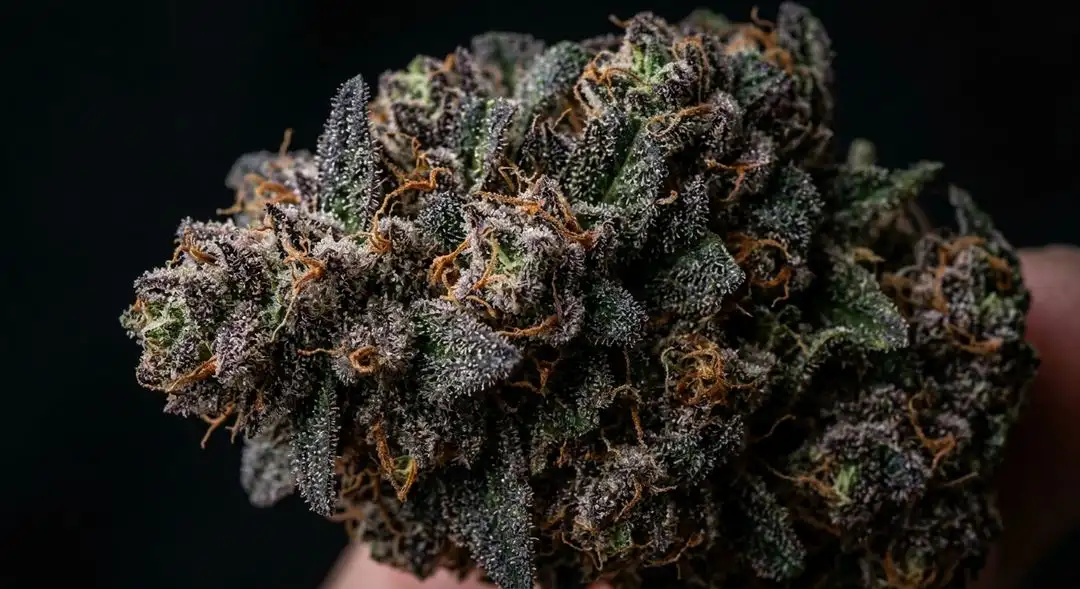
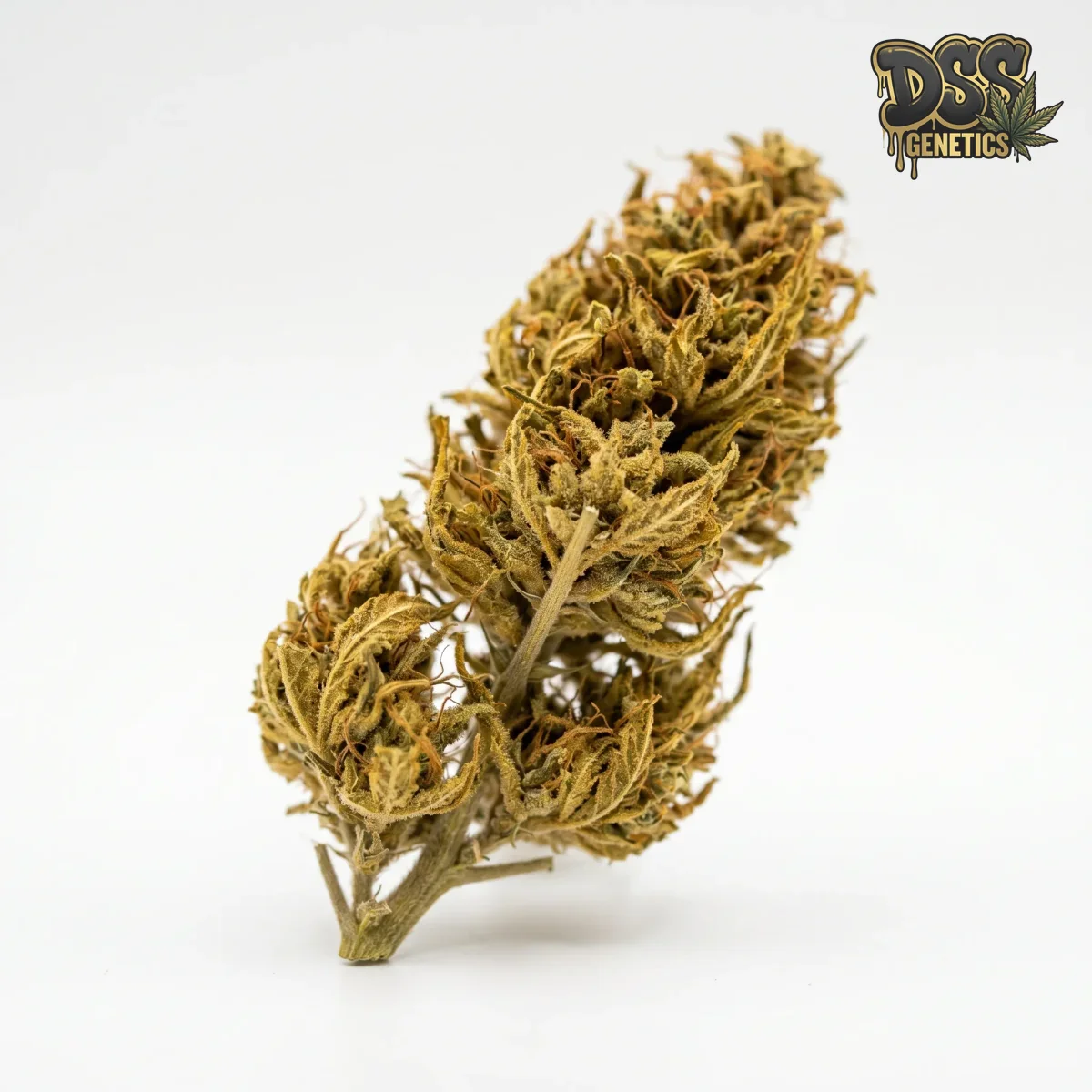
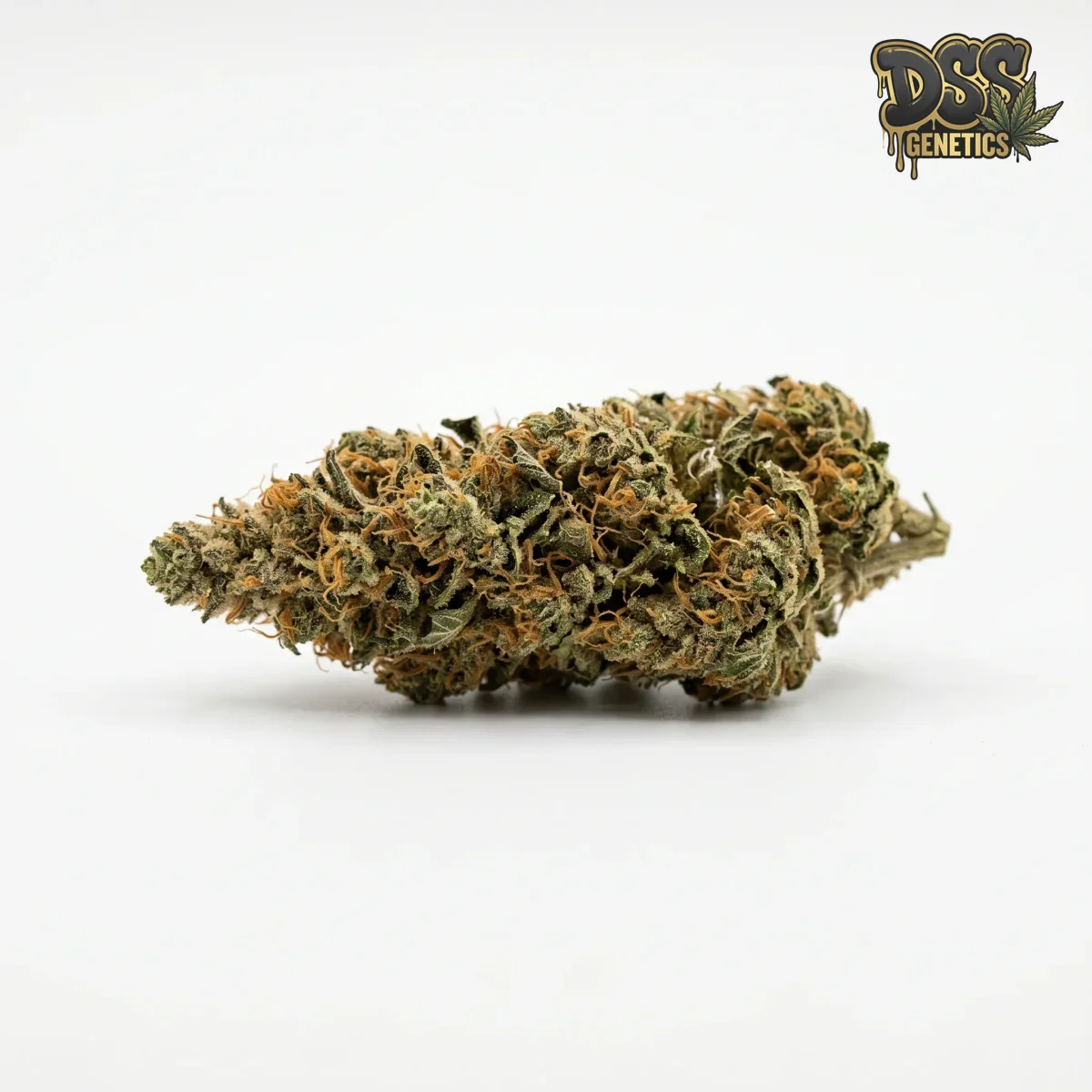
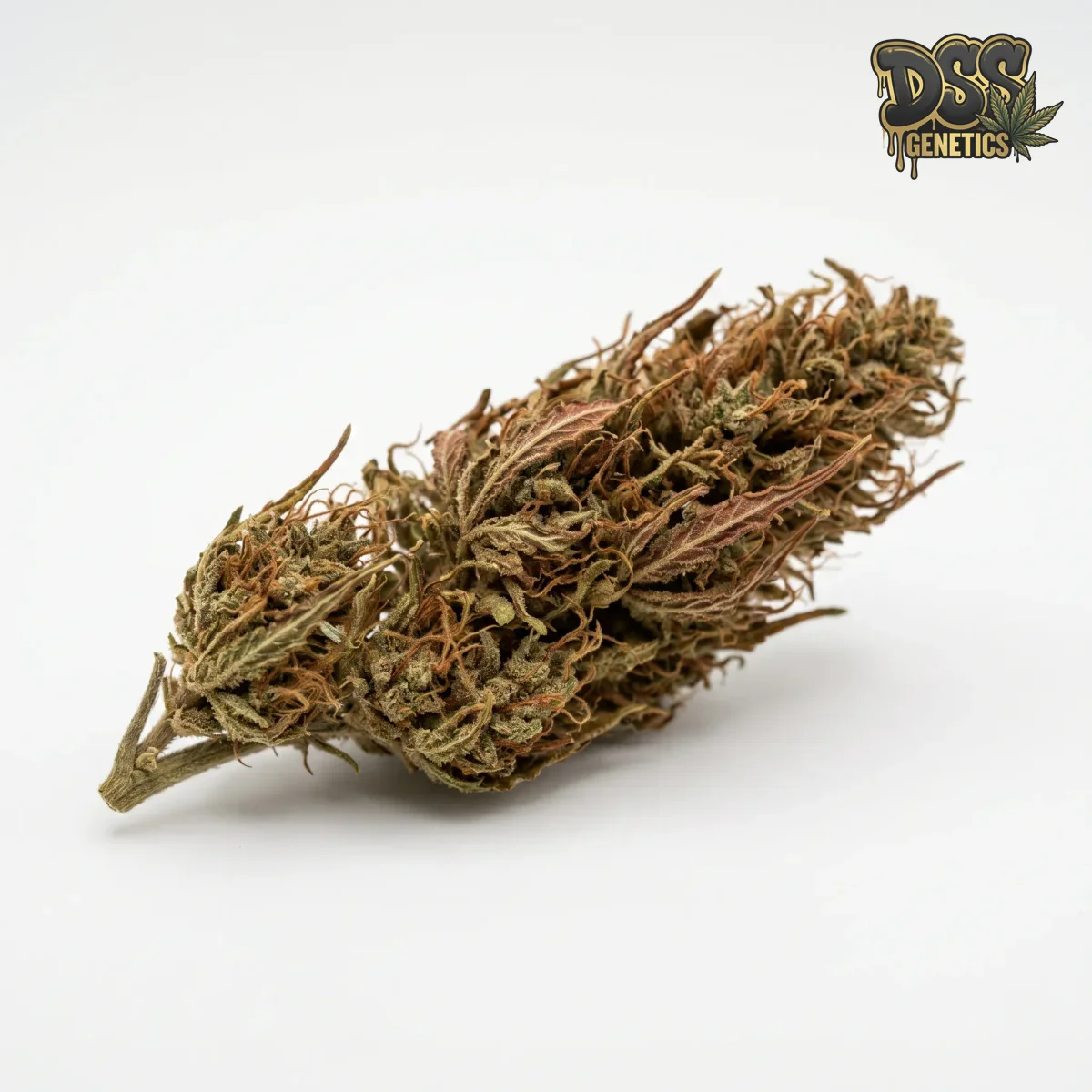
Crack a properly cured Malawi Gold bud and the first thing that hits is a sharp, resinous pine that carries the cool clarity of a forest after rain. Underneath it, something sweeter pushes through — a ripe grape quality that is almost jammy, surprising against the earthiness beneath it. As the bud warms between your fingers, a skunky depth emerges alongside a spicy, almost peppery finish that lingers in the back of the throat long after the exhale. This is not a simple flavor profile. It rewards slow smoking and attentive palates.
On the inhale, the pine and sweet grape notes dominate — clean, bright, and distinctly herbal in the way that only authentic landrace genetics tend to produce. The exhale opens up the earthier and spicier layers: a rich, loamy base with a skunk sharpness and a subtle spice that coats the tongue. The sweetness never becomes candy-like; it stays grounded in fruit-and-earth territory that feels botanical rather than artificial.
Myrcene is the most abundant terpene at 0.73%, and it is doing significant work here. In most strains, myrcene reads primarily as musky and herbal, but in Malawi Gold's all-sativa context it expresses more of its fruity, tropical facets — contributing directly to the grape and sweet earthiness that defines the mid-palate. Myrcene is the most common terpene found in cannabis and is associated with relaxing, sedation-moderating effects; even at 0.73%, it adds body to the high without converting it toward indica territory.
Pinene at 0.25% is responsible for the clean, resinous pine note that forms the aromatic backbone of this strain. Alpha-pinene in particular has been studied for bronchodilatory properties and for its potential to counteract some short-term memory effects associated with THC — a quality that makes Malawi Gold feel cognitively clean even at its upper THC range. That forest-air quality on the nose is pinene in its most direct expression.
Limonene rounds out the profile at 0.23%, adding a bright citrus thread that ties the grape sweetness and pine sharpness together. Limonene is strongly associated with mood elevation and stress relief, and its presence here helps explain why the Malawi Gold high feels so consistently uplifting rather than sedating. It also carries antimicrobial properties and may support the anxiolytic effects of the CBD content in this strain.
Growing Malawi Gold Seeds
Let us be direct: Malawi Gold Autoflower is rated difficult, and that rating is earned. This is not a strain you grow as your first autoflower. The landrace genetics that make it exceptional — the pure sativa structure, the long terpene development cycle, the sensitivity to environmental stress — are the same qualities that require an experienced grower's attention. What we have found across dozens of grows with equatorial sativa genetics is that the most common failure point is not the plants themselves but grower impatience. Malawi Gold flowers for 70–90 days, and the longer end of that range is where the real quality lives. Harvest too early and you get a fraction of the terpene complexity this strain is capable of producing.
Temperature management is critical. This strain evolved near the equator and expresses its best genetics between 75°F and 85°F (24–29°C) during the light period, with a night drop of no more than 10°F. Humidity should sit at 55–65% during the vegetative phase, dropping progressively to 45–50% as flowering advances. Malawi Gold's sativa structure — longer internodal spacing, airier bud sites compared to indica-dominant strains — actually provides some natural mold resistance, but that is not an excuse to ignore RH in late flower.
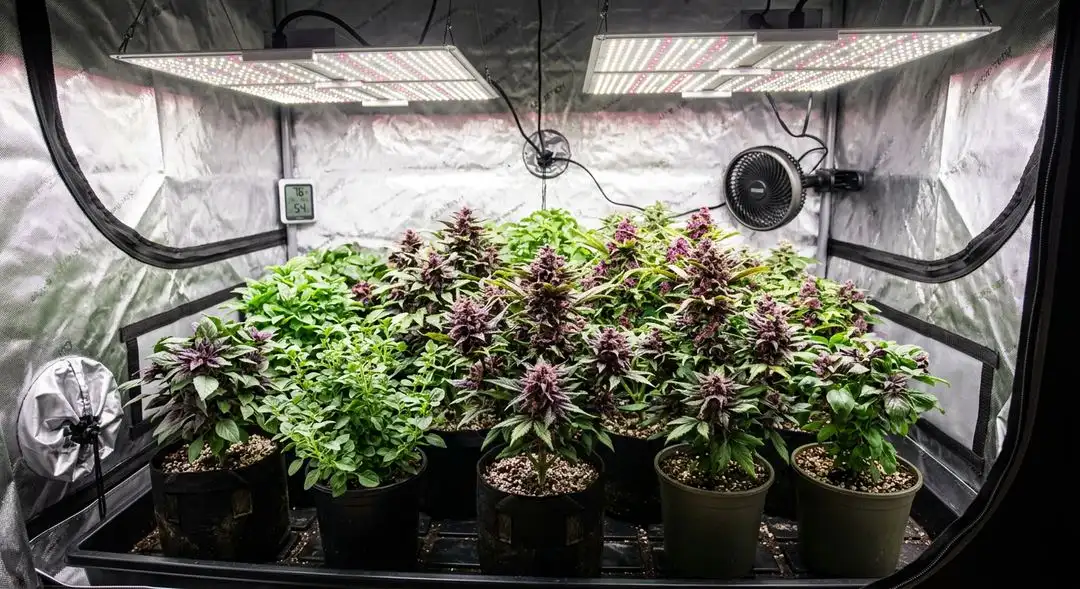
Indoors, this strain performs best in a high-light environment — 600–1000 µmol/m²/s PPFD during peak flowering — because its landrace origins mean it evolved under intense equatorial sun, not the modest light levels that suit compact indica hybrids. Outdoors, it demands a long, warm growing season; a full southern-exposure position with no afternoon shade is non-negotiable. The autoflower genetics remove the photoperiod constraint, but they do not remove the need for heat and light intensity. In our experience, Malawi Gold grown outdoors in genuinely warm climates consistently outperforms the same strain grown under artificial light — the outdoor plant simply has access to the full spectrum and intensity this genetics was built for.
Key growing tips for Malawi Gold Autoflower:
- Gentle LST only: Because this is an autoflower, aggressive training techniques like topping or FIM carry real risk — the plant cannot recover the way a photoperiod strain can. Low-stress training applied early in the vegetative stage is the right tool here; bend and tie rather than cut.
- Calibrate your nutrients carefully: Pure sativas are more nitrogen-sensitive than hybrids. We have seen Malawi Gold tip into nitrogen toxicity at feeding rates that indica-dominant autoflowers handle without complaint. Follow a conservative nutrient schedule and watch leaf color closely — dark green curling leaves are your first warning sign.
- Prioritize light intensity outdoors: If growing outside, choose the sunniest available position and consult our outdoor growing guide for site selection and seasonal timing specific to your latitude.
- Extend the dark period if growing indoors: Some growers have had success running Malawi Gold autoflowers on a 20/4 light schedule through the full cycle, taking advantage of the autoflowering trait while maximizing photosynthesis time for this light-hungry landrace.
- Monitor the vegetative stage closely: The transition from veg to flower in this autoflower can be subtle — watch for the first pistils at bud sites and adjust your feeding ratios immediately, shifting from nitrogen-forward to phosphorus and potassium as soon as flowering is confirmed.
Yield and Flowering Time
Malawi Gold Autoflower flowers across a 70–90 day window — long by autoflower standards, and deliberately so. The extra weeks in late flower are when the grape and spice terpenes fully develop and when the resin glands reach peak density. Growers who push through the full 90 days when conditions allow consistently report superior flavor and a noticeably more complex high than early harvests produce. Indoor yields land at 1.9–2.1 oz/ft², which is a strong return for a pure sativa autoflower and reflects the light intensity investment this strain demands. Outdoor plants in genuinely warm, long-season climates are where Malawi Gold truly distinguishes itself: 28–35 oz/plant is a figure that rivals many photoperiod sativas, and it is achievable because the autoflower genetics allow multiple grows per season in favorable climates. This strain belongs in any serious discussion of the best autoflower genetics currently available, precisely because it delivers landrace quality at autoflower convenience — a combination that remains rare.
To maximize your harvest:
- Use a jeweler's loupe or digital microscope: With a 70–90 day flowering window, trichome inspection is the only reliable harvest signal — aim for 80–90% milky trichomes with 10–15% amber for peak Malawi Gold character; more amber pushes the effect toward sedation and away from the uplifting clarity this strain is celebrated for.
- Lower humidity to 42–48% in the final two weeks: The airier sativa bud structure provides some buffer, but late-flower humidity control still protects terpene integrity and prevents any opportunistic mold on the densest bud sites.
- Flush for 10–14 days before harvest if growing in soil: With a strain this terpene-forward, a thorough flush makes a measurable difference in the cleanliness of the final flavor — the pine and grape notes in particular are dulled by residual nutrient salts.
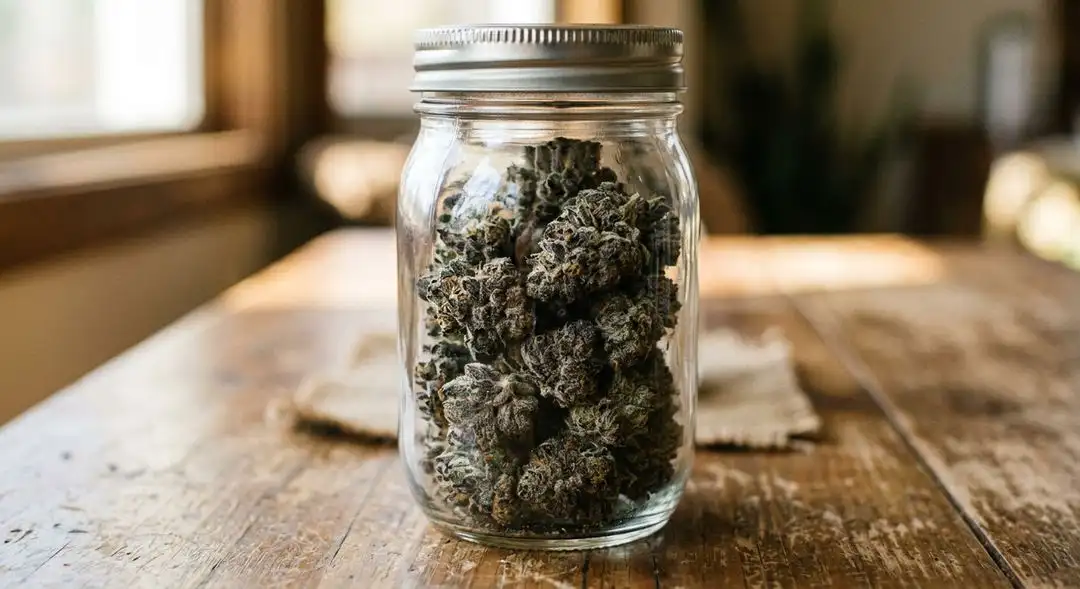
- Dry and cure with patience: Malawi Gold's complex terpene profile rewards a slow drying and curing process — hang-dry for 10–14 days at 60–65°F and 55–60% RH, then cure in sealed glass jars for a minimum of four weeks, burping daily for the first two weeks. The grape and spice notes that are faint at harvest become pronounced and layered after a proper cure.
Why Buy Malawi Gold Seeds from DSS Genetics?
Every Malawi Gold Autoflower seed ships with our full germination guarantee — if it does not sprout under proper conditions, we replace it without question. We store all seeds at controlled temperature and humidity from the moment they arrive in our facility to the moment they leave in your order, because seed viability is not something we leave to chance. Shipping is in discreet, unmarked packaging that gives nothing away.
- Germination guaranteed — every seed is backed by our replacement policy, no hoops to jump through
- Discreet shipping — plain, unmarked packaging on every order
- Spend $100 or more — receive complimentary premium seeds added to your order automatically
- Verified landrace genetics — we source and test to ensure the Malawi Gold you receive carries the authentic sativa heritage this strain's reputation is built on
Frequently Asked Questions
Is Malawi Gold Autoflower suitable for beginner growers?
Malawi Gold Autoflower is rated difficult and is best suited to growers who have already completed at least a few successful grows. The long 70–90 day flowering window, sensitivity to nutrient levels, and high light demands require hands-on experience to manage well. If you are new to growing, we recommend starting with a strain from our easy-to-grow collection
Medical Disclaimer: This information is for educational purposes only and should not be considered medical advice. Always consult a healthcare professional before using cannabis for medical purposes. Individual results may vary.
Frequently Asked Questions
Malawi Gold — Common Questions Answered
What is Malawi Gold?
Malawi Gold is a sativa-dominant cannabis strain (100% Sativa / 0% Indica) bred from Malawi landrace. It produces THC levels of 9–13% and CBD levels of 1–2%. Known for its relaxing, happy, euphoric effects and pine, sweet, earthy flavor profile.
Is Malawi Gold easy to grow?
Malawi Gold is considered an advanced-level strain that requires experience with training techniques, environmental control, and nutrient management for best results. Growing difficulty: Difficult. It thrives in temperate climates and reaches a medium plant size.
How long does Malawi Gold take to flower?
Malawi Gold has a flowering time of 70–90 days. Switch to a 12/12 light cycle to initiate flowering. Expected yields are 1.9 to 2.1 oz/ft² indoors and 28 to 35 oz/plant outdoors.
What are the effects of Malawi Gold?
Malawi Gold delivers relaxing, happy, euphoric, uplifting, creative, energetic effects. Many growers report it helps with stress, anxiety, depression, insomnia, pain. With THC levels of 9–13%, it offers a mild, manageable experience suitable for all tolerance levels.
What does Malawi Gold smell and taste like?
Malawi Gold's dominant terpenes are Myrcene (0.73%), Pinene (0.25%), Limonene (0.23%), which give it a pine, sweet, earthy, grape, skunky, spicy flavor and aroma profile.
Can I grow Malawi Gold indoors and outdoors?
Yes, Malawi Gold performs well both indoors and outdoors. Indoor yields average 1.9 to 2.1 oz/ft², while outdoor grows can produce 28 to 35 oz/plant. It prefers temperate conditions. Its medium height is manageable in most indoor setups.
Grower Reviews
Real grow experiences from our community
Get 10% Off Your First Order
Join our newsletter for exclusive deals, growing tips, and new strain drops.