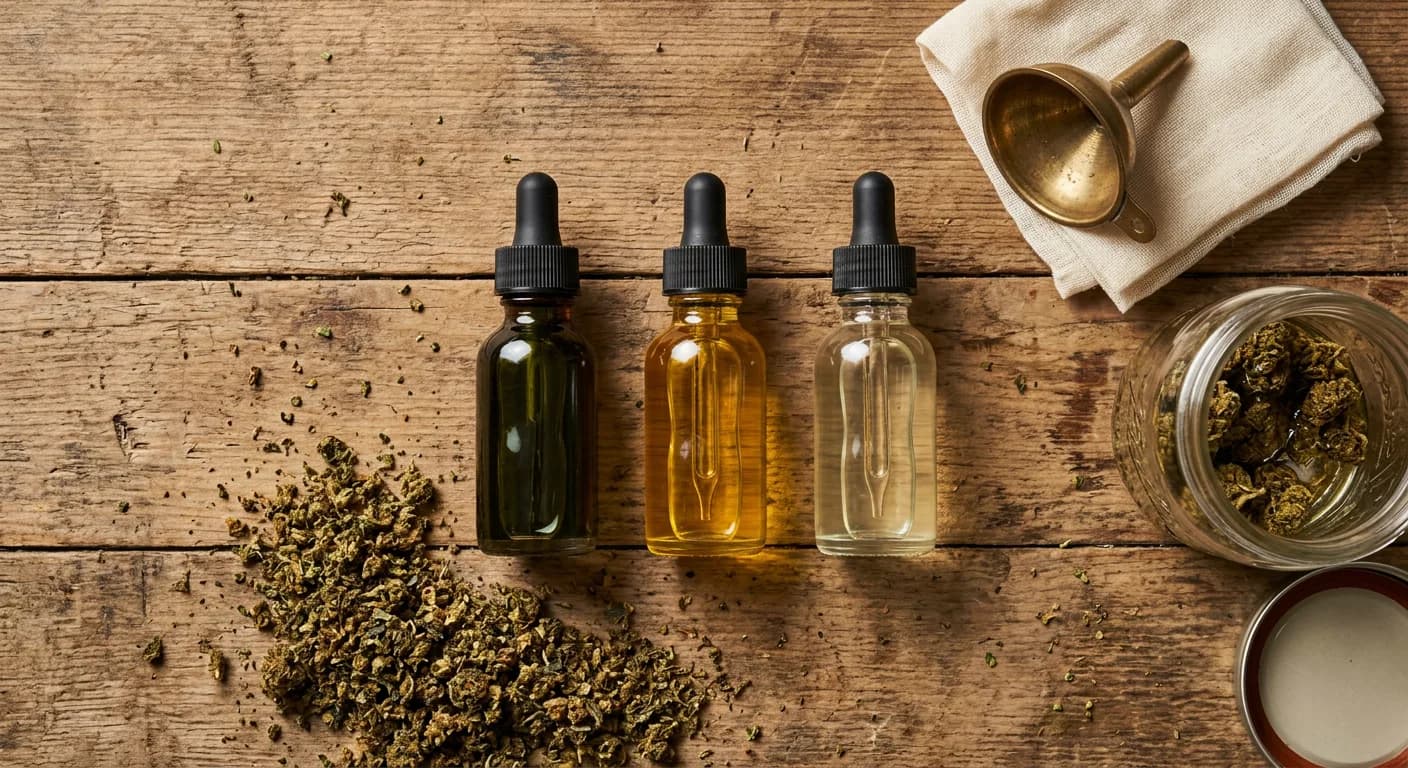
You trimmed your harvest, cured your jars, and now you have more cannabis than you can smoke in a month. Here is what most home growers never consider: the most versatile, precise, and discreet product you can make from your harvest is a tincture — and it takes less than an hour of active time.
Knowing how to make cannabis tincture at home opens up a completely different relationship with your grow. No smoke, no calories, no smell that lingers. You can dose it to the milligram, hold it under your tongue for fast onset, stir it into coffee, or cook with it the same as any oil. No other homemade cannabis product offers that range.
This guide covers every method — alcohol (Green Dragon), vegetable glycerin, and MCT oil — with exact ratios, soak times, potency math, and real dosing guidance built specifically for the home grower working from their own harvest. No dispensary prices, no mystery ingredients, no guessing.
The Three Solvents: Alcohol, Glycerin & MCT Oil Compared
Your solvent choice shapes everything — potency, onset speed, flavor, shelf life, and who the tincture is safe for. Each solvent extracts cannabinoids through a different mechanism, and each has a clear best-use case. Here is what you need to know before you pick one.
| Property | High-Proof Ethanol | Vegetable Glycerin | MCT Coconut Oil |
|---|---|---|---|
| Extraction Efficiency | ★★★★★ Highest | ★★★ Moderate | ★★★★ High |
| Sublingual Onset | 15–30 min | 30–60 min | 30–90 min |
| Shelf Life | 2–5 years | 1–2 years | 6–12 months |
| Flavor | Harsh, botanical | Sweet, mild | Neutral, slightly fatty |
| Alcohol-Free? | No | Yes | Yes |
| Best For | Max potency, precise dosing | Kids, pets (CBD), alcohol-free users | Cooking, capsules, general use |
| Bioavailability | High sublingual | Moderate | High (fat-soluble uptake) |
High-Proof Ethanol (Green Dragon)
Ethanol is the gold-standard solvent for cannabis tincture. It strips cannabinoids, terpenes, and flavonoids from plant material more completely than anything else available to a home grower. The higher the alcohol percentage, the better — Everclear 190-proof (95% ABV) is ideal, but 151-proof works well too.
The resulting product is often called Green Dragon tincture, named for its dark green color from chlorophyll extraction. You can reduce chlorophyll pickup significantly by keeping everything ice-cold during extraction — more on that in the QWET section.
No Everclear in your state? High-proof vodka (80–100 proof / 40–50% ABV) works but requires longer soak times and produces a less concentrated extract. Brandy is a classic historical choice for tinctures and adds pleasant flavor notes.
Vegetable Glycerin (VG)
Food-grade vegetable glycerin is a thick, sweet, syrup-like liquid derived from plant oils. It is alcohol-free, naturally sweet, and much gentler on the throat — making it the go-to choice for anyone avoiding alcohol, including those making CBD tinctures for pets or children. The main trade-off is lower extraction efficiency: glycerin simply does not pull cannabinoids as thoroughly as ethanol.
MCT Coconut Oil
Medium-chain triglyceride (MCT) oil is a refined coconut oil that stays liquid at room temperature. Cannabinoids are fat-soluble, and MCT oil's small molecular structure makes it one of the most bioavailable fat carriers available. MCT tinctures blend seamlessly into drinks, cook well, and fill capsules cleanly. The onset is slower sublingually than alcohol, but fat-mediated absorption is excellent when swallowed with food.
For maximum potency per mL from your own harvest, choose ethanol. For alcohol-free use or pet CBD applications, choose glycerin. For cooking, capsules, or daily wellness use, choose MCT oil.
Decarboxylation for Tinctures: The Step You Cannot Skip (Usually)
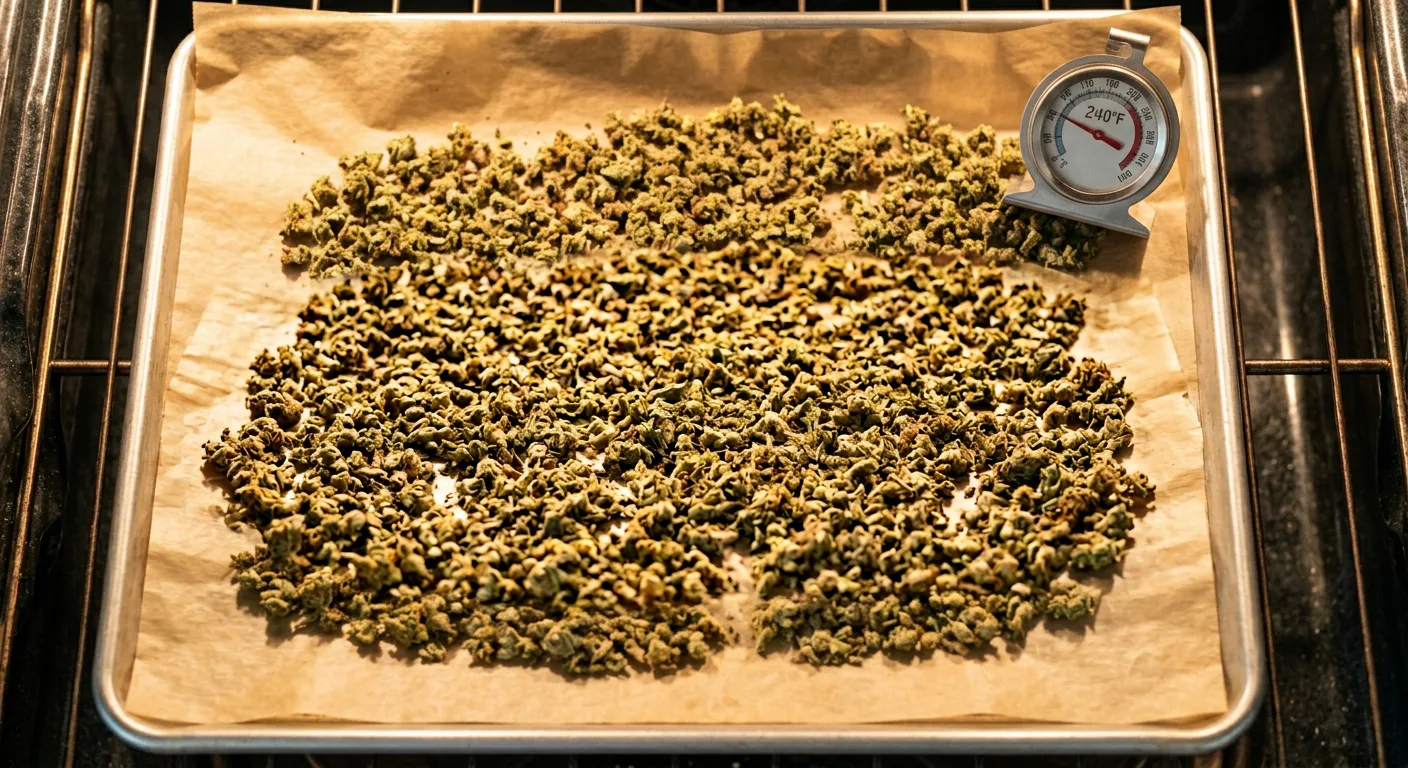
Decarboxylation converts non-psychoactive THCA into psychoactive THC by removing a carboxyl group through heat. Raw cannabis flower contains mostly THCA — so if you skip decarbing, your tincture will be non-intoxicating regardless of how potent the starting material is.
Standard Decarb Protocol
- Preheat oven to 240°F (115°C) — not higher, or terpenes degrade rapidly
- Break flower into small pieces (do not powder — too much surface area causes over-decarb)
- Spread on a parchment-lined baking sheet in a single, even layer
- Bake for 40 minutes for dried, cured flower
- Watch for a color shift from bright green to light olive-brown
- Remove and cool completely before adding to solvent
- Expect 10–15% weight loss from moisture evaporation
The Science: THCA fully converts to THC at 240°F over 30–45 minutes. At temperatures above 300°F, THC itself begins to degrade into CBN (a mildly sedative, non-intoxicating cannabinoid). Lower-and-slower decarb preserves more terpenes and secondary cannabinoids, which contribute to the entourage effect in your finished tincture.
When to Skip Decarboxylation
If you specifically want a THCA tincture — sought for its potential anti-inflammatory, neuroprotective, and anti-nausea properties without psychoactivity — skip decarboxylation entirely. THCA does not convert to THC in a cold alcohol or room-temperature glycerin extraction, so you preserve it intact.
THCA tinctures are gaining serious attention in wellness communities. Athletes and people managing inflammation often prefer them because they can use larger amounts without intoxication. If this is your goal, use a cold-ethanol or glycerin method and never apply heat.
Decarb for Different Cannabinoids
- THC: 240°F / 40 min
- CBD: 240°F / 40–60 min (requires slightly longer)
- THCV: 220°F / 30 min (lower boiling point)
- CBGA → CBDA → CBD: 240°F / 40–60 min
Do not decarb in a microwave. Uneven heat distribution creates hot spots that destroy cannabinoids unevenly. Oven decarb takes longer but produces a consistently activated product.
Step-by-Step: How to Make Green Dragon Alcohol Tincture
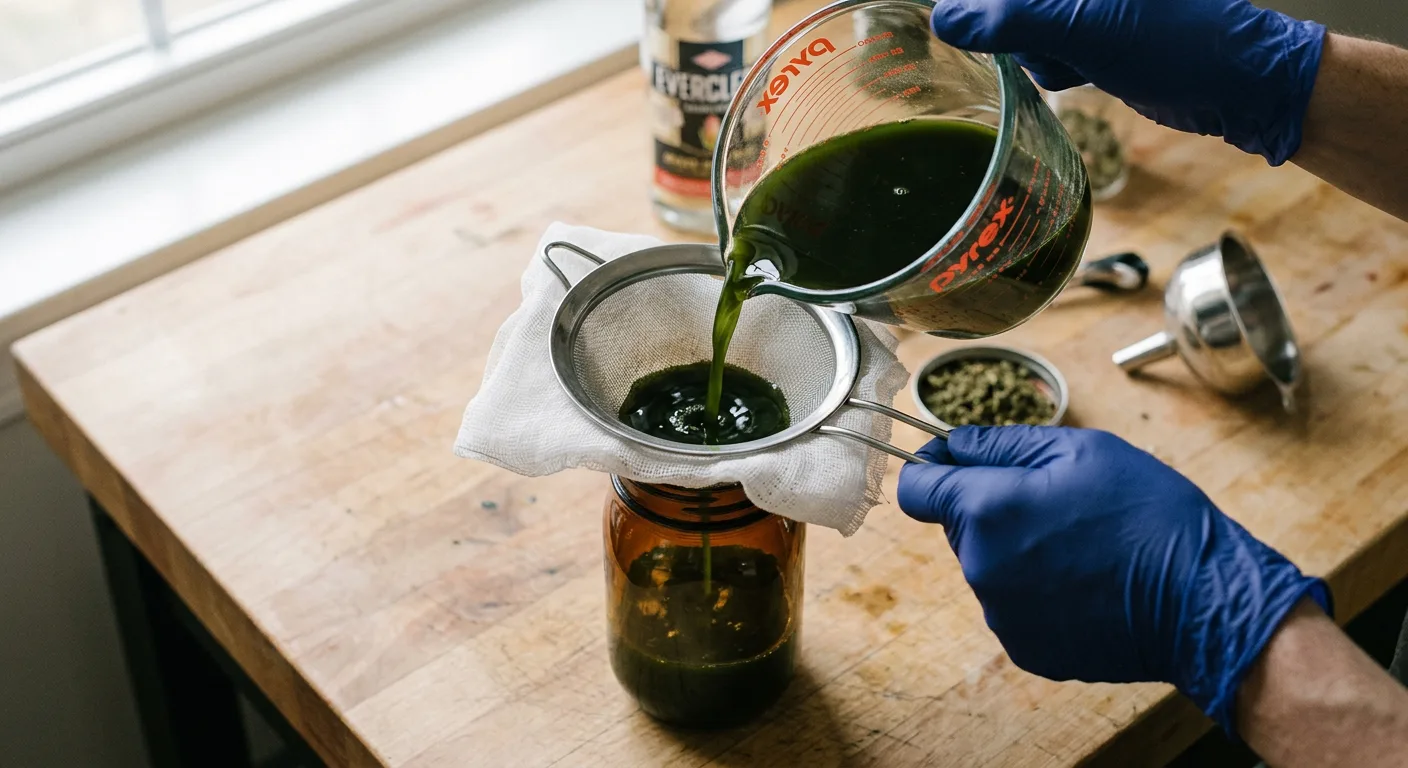
The Green Dragon alcohol method produces the strongest, most potent tincture per milliliter of any home method. It is also the fastest active process — once your material is decarbed, the extraction itself takes as little as 24 hours.
What You Need
- 3.5–7g decarboxylated cannabis (adjust to desired potency)
- 250–500mL high-proof ethanol (Everclear 190-proof preferred)
- 1 quart Mason jar with tight lid
- Fine mesh strainer + cheesecloth or coffee filter
- Amber glass dropper bottles (1oz / 30mL)
- Kitchen scale (0.1g accuracy)
- Measuring cup or graduated cylinder
- Freezer space for at least 12 hours
The Process
Decarboxylate Your Cannabis
Follow the standard protocol above — 240°F for 40 minutes. Cool completely before proceeding. Weigh your decarbed material after cooling for accurate potency math later.
Freeze Both Materials Separately
Place your decarbed, ground cannabis in a sealed zip-lock bag. Place your ethanol in a separate sealed jar. Freeze both for a minimum of 12 hours, ideally 24 hours. Cold extraction dramatically reduces chlorophyll and wax pickup, producing a cleaner, less harsh tincture.
Combine and Soak
Working quickly while everything stays cold, add your frozen cannabis to the frozen ethanol. Ratio: use 1 gram of flower per 10mL ethanol for a roughly 10mg/mL tincture (with 20% THC flower). For a more concentrated product, use 1g per 5mL. Seal and shake for 2–3 minutes, then let sit in the freezer for another 4–24 hours. Longer soaks pull more cannabinoids but also more chlorophyll.
Strain Thoroughly
Pour through a fine mesh strainer first to catch large plant matter. Then run through cheesecloth or a coffee filter into a clean jar. Press or squeeze the plant material to extract the last of the solvent. This liquid is your raw tincture.
Optional: Reduce for Concentration
To make a more concentrated tincture without increasing cannabis input, allow the strained tincture to evaporate in a shallow dish in a well-ventilated area (never near open flame — ethanol is flammable). Evaporate 30–50% of the volume to double or triple the mg/mL concentration. Do this outdoors or with a fan exhausting vapor outside.
Bottle and Label
Use a dropper or syringe to fill amber glass bottles. Label with date, strain, THC%, calculated mg/mL, and solvent type. Store in a cool, dark place.
Second wash: After your first strain, return the spent plant material to the jar and add a fresh pour of ethanol (about 30–50% of the original volume). Soak for another 4–8 hours and strain again. This second wash captures residual cannabinoids — it will be lighter colored and slightly less potent, but still valuable.
Step-by-Step: Vegetable Glycerin Cannabis Tincture
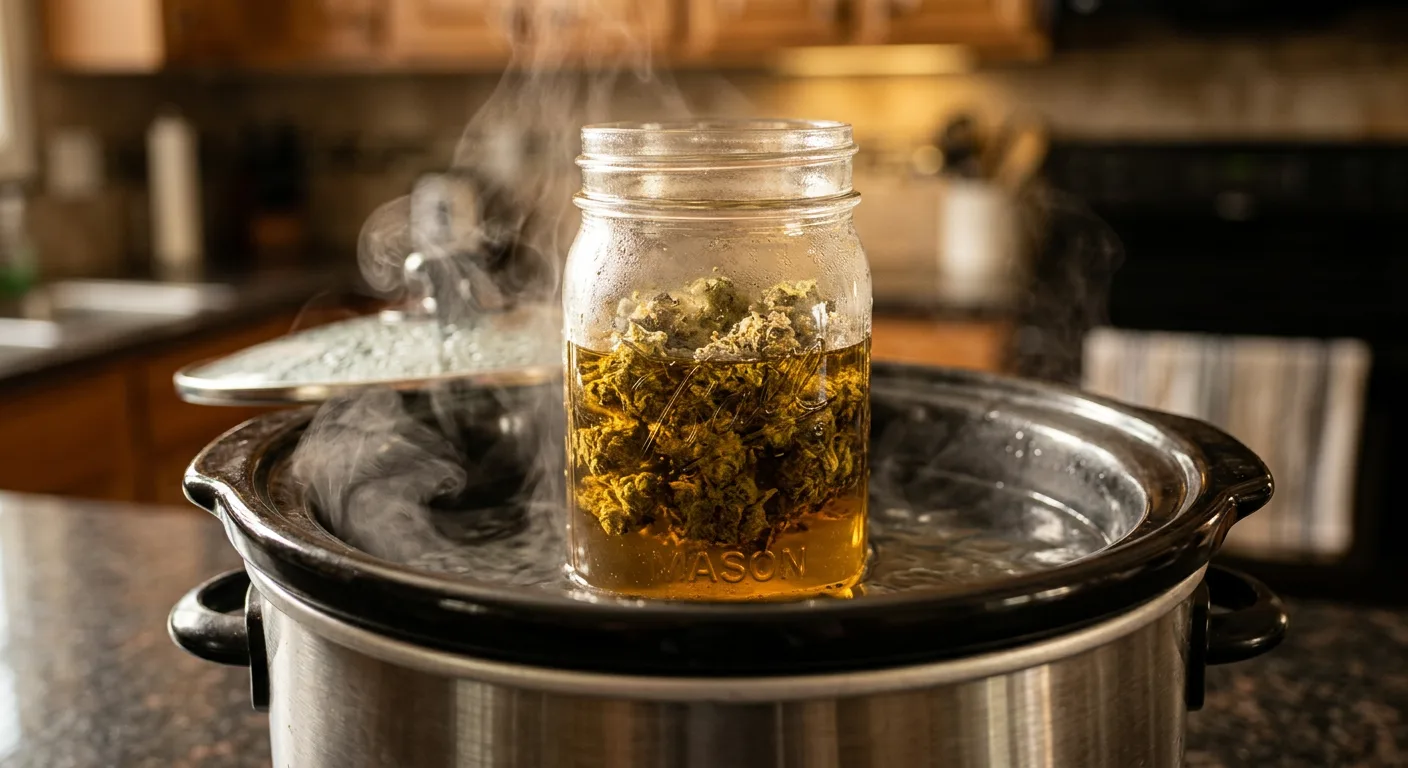
Vegetable glycerin tincture takes longer than the alcohol method — typically 24–60 hours of low-heat infusion — but produces a sweet, mild-tasting product that works well for anyone avoiding alcohol.
What You Need
- 3.5–7g decarboxylated cannabis
- 250–500mL food-grade vegetable glycerin
- Mason jar with lid
- Slow cooker or double boiler
- Thermometer (candy or probe style)
- Fine mesh strainer + cheesecloth
- Amber dropper bottles
Combine Cannabis and Glycerin
Add decarbed, ground cannabis to a Mason jar. Cover completely with glycerin using the same 1g:10mL ratio as the alcohol method. Stir well to coat all plant material. Seal loosely — do not fully tighten, as the jar needs to vent slightly.
Low-Heat Water Bath Infusion
Place the jar in a slow cooker. Fill the slow cooker with water to the shoulder of the jar. Set to LOW (140–160°F / 60–71°C). Maintain this temperature for 24 hours, stirring every few hours when possible. Never exceed 180°F or you will degrade cannabinoids and terpenes.
Cool and Strain
Let the jar cool to room temperature before straining. Glycerin is thick and strains slowly — let gravity do the work through a double layer of cheesecloth. Squeeze gently to recover the last of the glycerin from the plant material. Expect the process to take 30–45 minutes longer than an ethanol strain.
Bottle
Fill amber dropper bottles while glycerin is still slightly warm — it flows more easily. Label with strain, date, and estimated mg/mL. Glycerin tinctures keep for 12–24 months in a cool, dark location.
Glycerin tincture potency is roughly 25–30% lower than an equivalent ethanol tincture from the same starting material. Compensate by using a slightly higher cannabis-to-glycerin ratio (1g:7mL) or accepting a lower mg/mL and adjusting dose accordingly.
Step-by-Step: MCT Oil Cannabis Tincture
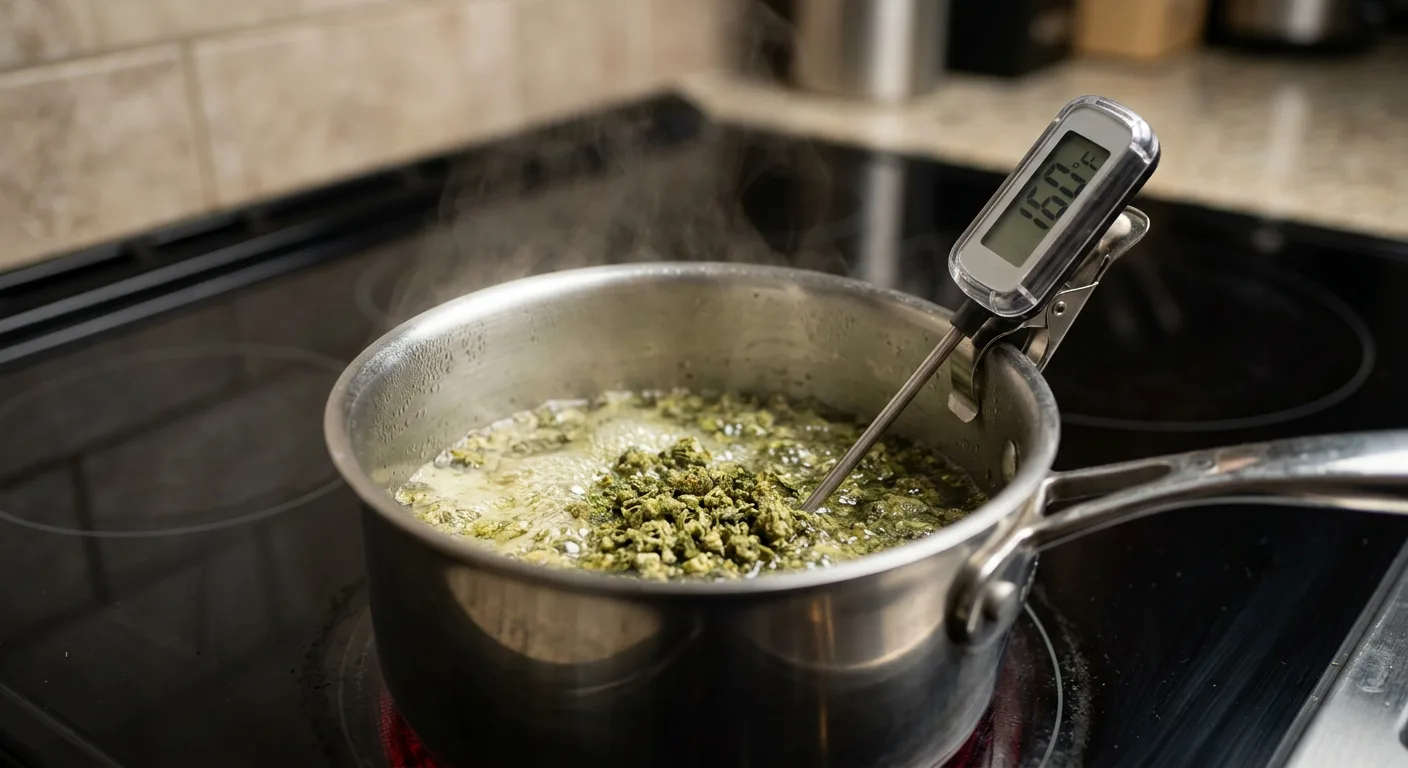
MCT oil tincture is the most food-friendly of the three methods. It blends into smoothies, coffee, and salad dressings without the harshness of alcohol or the sweetness of glycerin. Bioavailability when swallowed is excellent because cannabinoids are inherently fat-soluble.
What You Need
- 3.5–7g decarboxylated cannabis
- 250mL MCT coconut oil (liquid form)
- Small saucepan or double boiler
- Probe thermometer
- Fine mesh strainer + cheesecloth
- Amber glass bottles with dropper or pour spout
Combine on Low Heat
Add decarbed cannabis and MCT oil to a saucepan. Heat to 160°F (71°C) over the lowest flame your stove allows. Use a thermometer — staying between 150–170°F maximizes cannabinoid infusion without degrading THC. Never bring MCT oil to a boil during this process.
Maintain Low Heat for 2–4 Hours
Stir every 15–20 minutes. The oil will gradually take on a golden-green color as it infuses. Two hours is minimum; four hours extracts more completely. A slow cooker on WARM setting (around 150–160°F) handles this hands-off — set it and check occasionally.
Strain While Warm
Pour through cheesecloth while the oil is still warm — it flows much more easily than cooled oil. Squeeze the plant bundle firmly to recover all infused oil. Discard the spent plant material (it retains very little usable cannabinoid at this point).
Cool, Bottle, and Label
Let the oil cool to room temperature before bottling in amber glass. MCT oil tincture has a shelf life of 6–12 months at room temperature and up to 18 months refrigerated. Label with strain, date, and mg/mL.
MCT oil is not suitable for sublingual use the same way alcohol tincture is. The thick oil does not absorb as efficiently through mucous membranes. It works best swallowed or added to food and drinks, where fat-mediated absorption in the gut is excellent.
QWET: The Quick Wash Ethanol Method for Maximum Efficiency
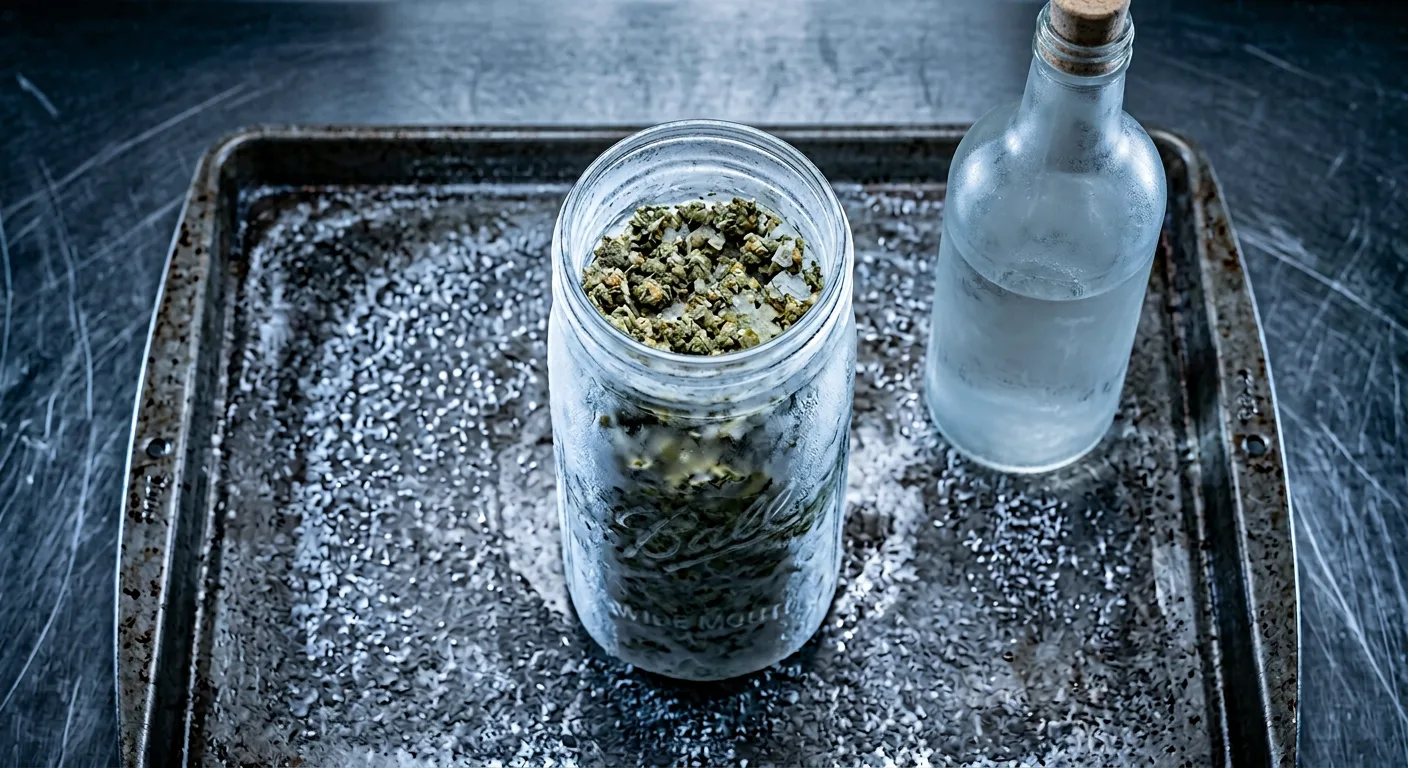
QWET (Quick Wash Ethanol) is the method serious home growers use when they want maximum cannabinoid extraction with minimum chlorophyll and plant wax contamination. It produces a cleaner, more golden tincture than a long soak — and it takes under 5 minutes of active solvent contact time.
Why QWET Works
Cannabinoids and terpenes are non-polar and dissolve readily in cold ethanol within seconds. Chlorophyll, plant waxes, and water-soluble bitter compounds take longer to dissolve — they require warmer temperatures and extended contact. QWET exploits this difference: brief, icy-cold contact extracts what you want and leaves behind what you do not.
QWET Step-by-Step
Freeze Everything Hard
Freeze your decarbed, broken-up flower and your ethanol (separately, in sealed containers) for a minimum of 24 hours. If your freezer runs at -10°F (-23°C) or colder, even better. The colder, the cleaner your extraction.
Combine and Agitate for Exactly 3 Minutes
Working as fast as possible (cold dissipates quickly), add frozen cannabis to frozen ethanol in a Mason jar. Seal and shake vigorously. Set a timer: 3 minutes total contact time. Do not exceed this — every additional minute extracts more chlorophyll.
Strain Immediately
The moment your timer ends, strain through cheesecloth. Work quickly — speed matters here. A pre-chilled funnel and collection jar keep temperatures low during straining. The resulting liquid should be pale gold to light amber, not dark green.
Optional: Winterize for Clarity
Place the strained tincture back in the freezer overnight. Waxes and fats will precipitate out and settle to the bottom or form a cloudy layer. Pour carefully through a coffee filter to remove them. This step is optional but produces a cleaner, more refined tincture.
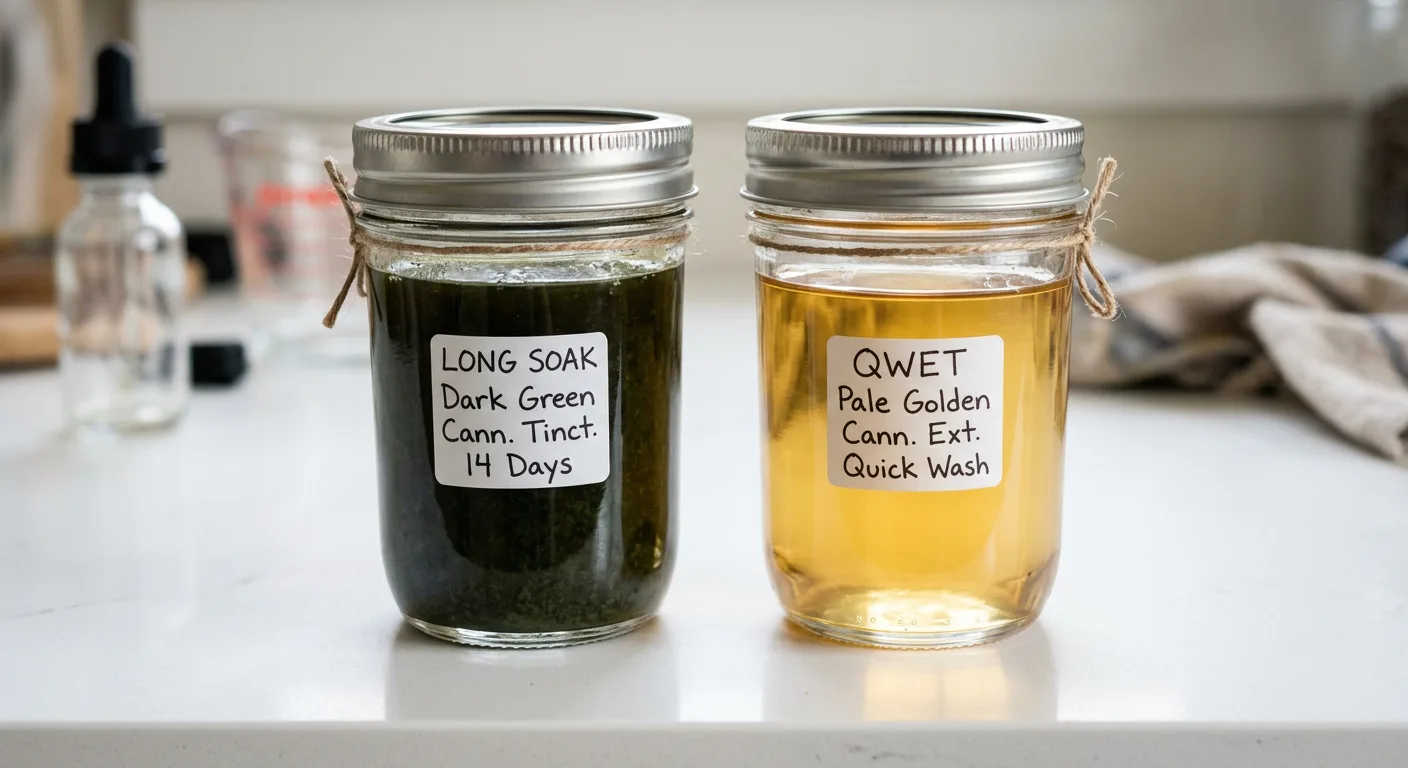
QWET efficiency vs. long soak: A properly executed QWET at -20°C extracts approximately 80–85% of available cannabinoids in 3 minutes. A 24-hour room-temperature soak extracts closer to 95–98% — but also pulls significantly more chlorophyll, plant waxes, and bitter compounds. For most home growers, the QWET trade-off is worth it for a cleaner, better-tasting product.
Best Cannabis for QWET
QWET rewards high-potency, well-cured flower. The higher your starting THC%, the more potent your per-mL result even at 80–85% extraction efficiency. High-THC strains from your own harvest make the biggest difference here.
If you are growing your own material for tincture production, consider cultivars with potency above 20% THC for the most concentrated results. Strains like OG Kush (26% THC), Purple Kush (27% THC), and Quantum Kush (30% THC) give you a significant potency advantage going into extraction. Popular non-seeded options like Gorilla Glue #4 and Wedding Cake (both typically 25–28% THC) are also excellent tincture candidates if you source them locally.
How to Dose Your Homemade Cannabis Tincture
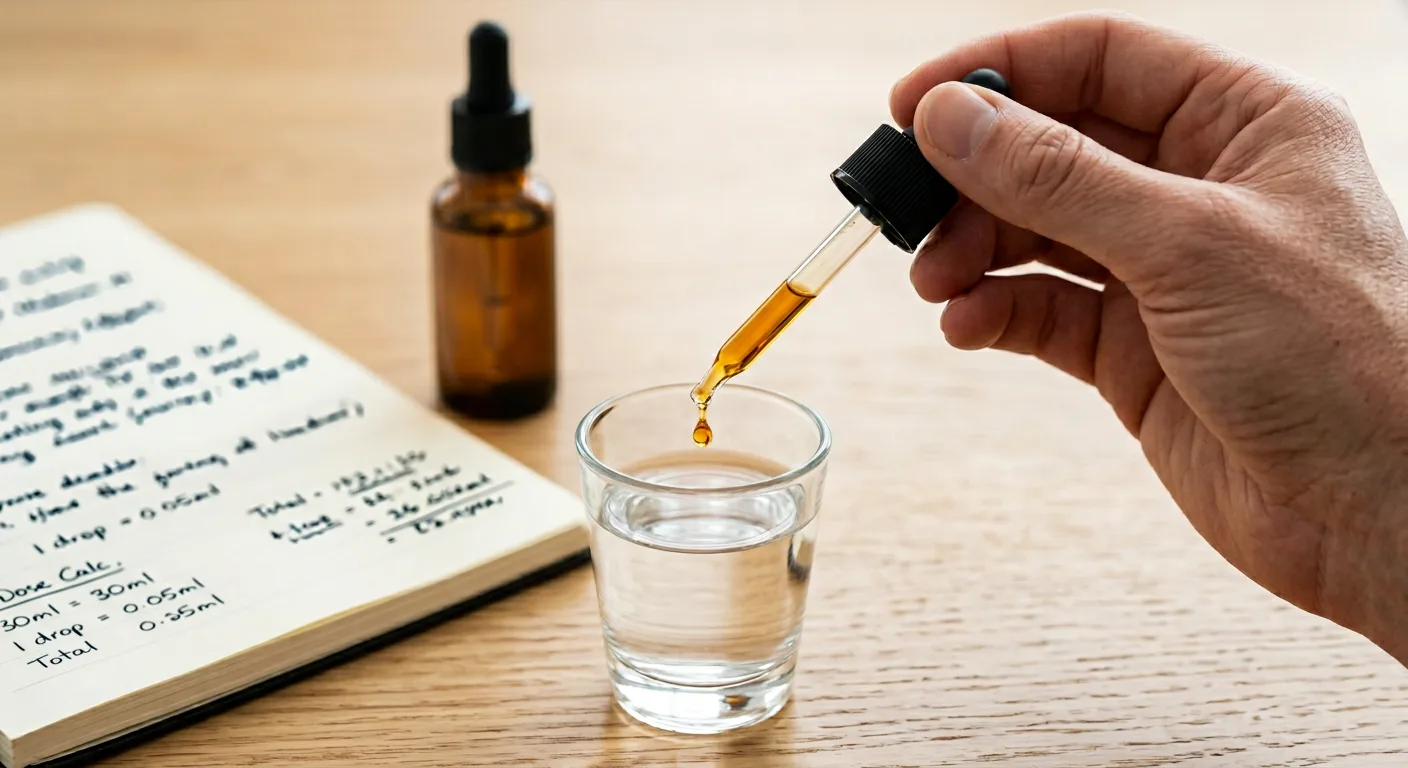
Dosing homemade tincture is straightforward math once you know your starting THC percentage. This is the section every other guide online skips — and it is the most important part for home growers using their own harvest.
Potency Calculation: The Formula
Here is the math every home grower needs:
- 1 gram of cannabis = 1,000mg of plant material
- If your flower is 20% THC, that gram contains 200mg of THCA
- Decarboxylation converts THCA to THC with roughly 88% efficiency (the carboxyl group lost in decarb = ~12% weight loss in conversion)
- So 200mg THCA → approximately 176mg active THC per gram
- Extraction efficiency: ~85% for good ethanol method → ~150mg extractable THC per gram
Real Example: 7 Grams at 20% THC in 100mL Ethanol
- 7g × 200mg/g = 1,400mg THCA
- × 0.88 decarb conversion = 1,232mg THC
- × 0.85 extraction = 1,047mg THC in tincture
- ÷ 100mL = ~10.5mg THC per mL
- A standard 1mL dropper = approximately 10.5mg THC
Use our free Edible Dosage Calculator to run these numbers with your specific strain's THC%, batch size, and desired mg/mL target. It does all the math automatically and helps you plan exactly how much flower you need before you even start.
Dosing by Experience Level
| Experience Level | Starting Dose | Max per Session | Notes |
|---|---|---|---|
| First-time / new | 2.5–5mg THC | 5mg | Wait 90 min before any redose |
| Occasional user | 5–10mg THC | 15mg | Assess after 45 min sublingual |
| Regular user | 10–20mg THC | 30mg | Tolerance plays a major role |
| High-tolerance | 25mg+ | Personal | Experienced users calibrate over time |
Sublingual vs. Swallowed: Why It Matters
Held under the tongue for 60–90 seconds before swallowing, a tincture absorbs directly through mucous membranes. This bypasses first-pass liver metabolism and produces onset in 15–45 minutes — much faster than edibles and with a gentler peak.
Swallowed tincture acts exactly like an edible. It metabolizes in the liver, converting THC to 11-hydroxy-THC — a more potent, longer-lasting compound. Onset is 1–2 hours and effects can last 4–6 hours. If you have ever been surprised by how hard a tincture hit after you swallowed it in a drink, this is why.
For precise, repeatable dosing: hold the tincture sublingually for 60–90 seconds before swallowing. Use the same amount at the same time of day until you know exactly how your specific batch affects you. Homemade tinctures vary more than dispensary products — treat the first few uses as calibration sessions.
Flavoring, Bottling & Shelf Life
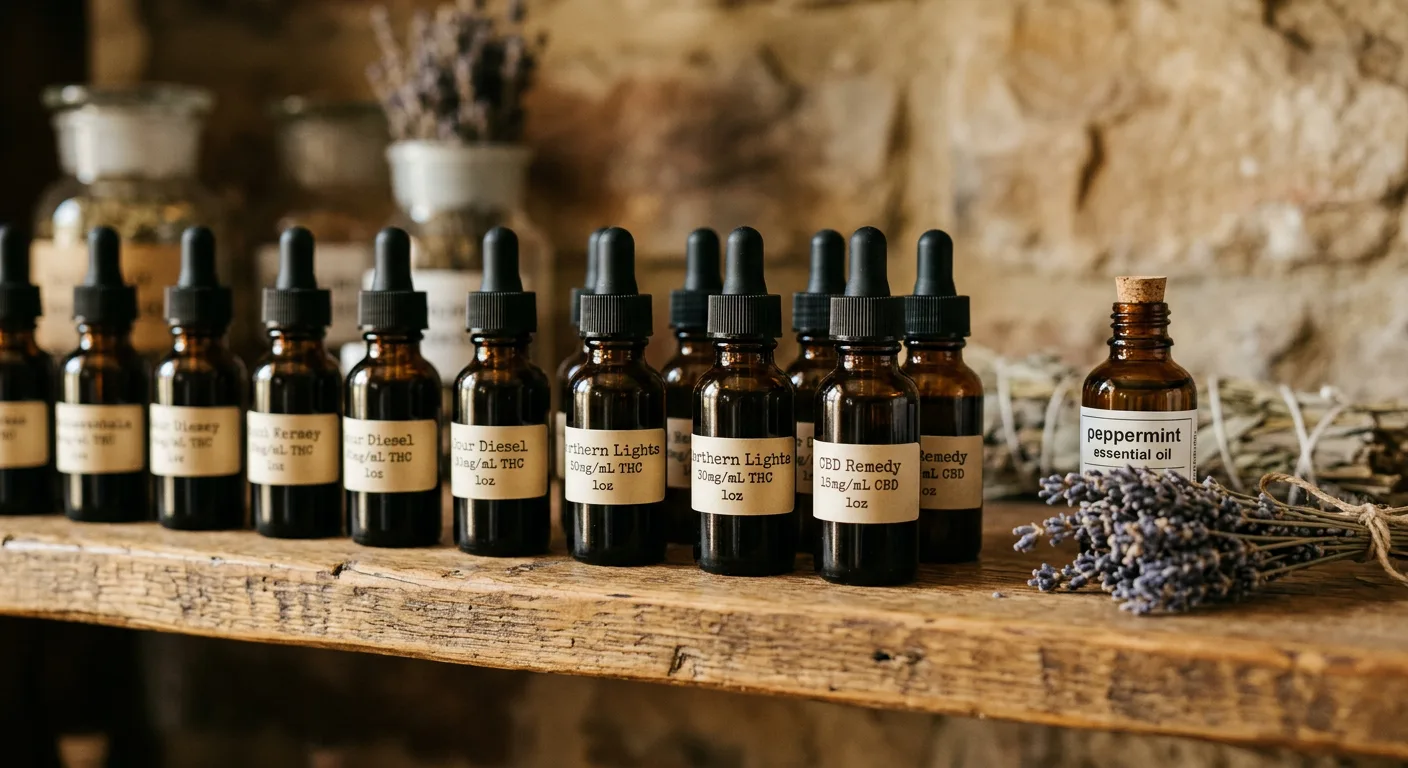
Raw alcohol tincture tastes intensely botanical and harsh. Glycerin is naturally sweet. MCT oil is nearly flavorless. With a few additions, you can make any of these genuinely pleasant to take directly or mix into drinks.
Safe Flavoring Options
- Food-grade peppermint essential oil: 2–3 drops per 30mL bottle. Classic, masks the cannabis taste effectively.
- Vanilla extract: 5–10 drops per 30mL. Works especially well in glycerin and MCT tinctures.
- Cinnamon essential oil (food-grade): Use sparingly — 1–2 drops maximum per 30mL. Potent.
- Lemon or orange oil: 2–4 drops per 30mL. Pairs naturally with citrusy strains like Super Lemon Haze (23% THC) or Tangerine Haze (18% THC).
- Honey: Add to glycerin or MCT tinctures (not alcohol — water in honey can degrade shelf life). 1 tsp per 100mL adds sweetness.
Only use food-grade essential oils at very low concentrations. Essential oils are highly concentrated and can cause irritation or adverse reactions at incorrect doses. Never use fragrance oils, which are not safe for ingestion.
Bottling Best Practices
- Always use amber glass dropper bottles — UV light degrades cannabinoids over weeks
- 1oz (30mL) bottles are the standard for tinctures — easy to handle, dose, and travel with
- Fill using a blunt-tip dispensing syringe for precision
- Label every bottle: strain, THC%, mg/mL, solvent type, date made
- Consider a color-coding system if you make multiple batches or strains simultaneously
Shelf Life by Solvent
| Solvent | Room Temp (Dark) | Refrigerated | Frozen |
|---|---|---|---|
| High-proof ethanol | 2–5 years | 5+ years | Indefinite (does not freeze) |
| Vegetable glycerin | 12–24 months | 2–3 years | Up to 5 years |
| MCT coconut oil | 6–12 months | 12–18 months | 2–3 years |
Potency degrades primarily through oxidation and light exposure. Stored in amber glass in a cool dark cupboard, a properly made ethanol tincture retains full potency for years. This long shelf life is one of tincture's biggest advantages over fresh flower, edibles, or most concentrates. For more on maximizing your post-harvest product longevity, see our guide to long-term cannabis storage.
How to Use Your Cannabis Tincture
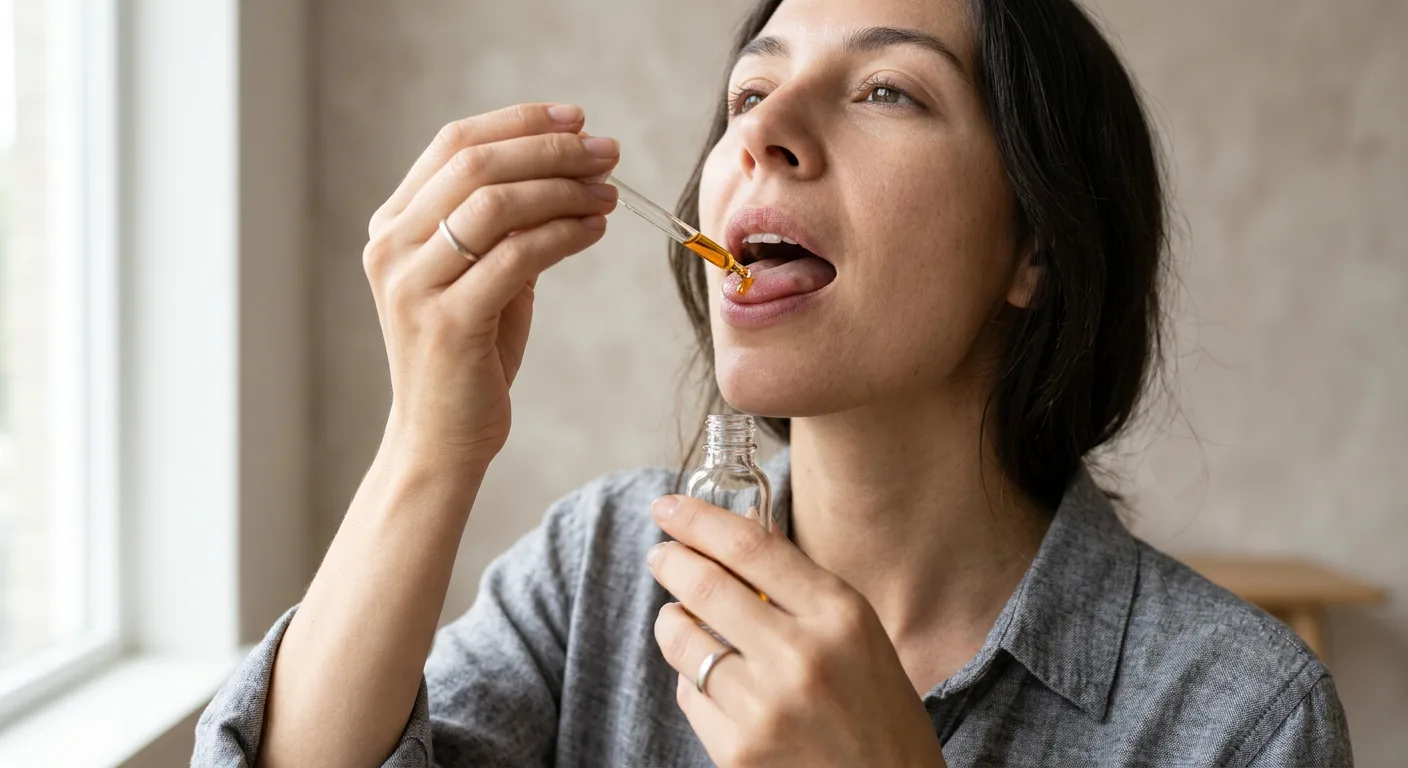
One of tincture's greatest strengths is how many ways you can use it. Each method produces a different experience — knowing which to use when gives you real control over your cannabis consumption.
Sublingual (Under the Tongue)
This is the primary method for fast onset and precise dosing. Draw your measured dose in the dropper, hold it under your tongue for 60–90 seconds, then swallow. The mucous membrane absorbs cannabinoids directly into the bloodstream. Onset: 15–45 minutes. Duration: 2–3 hours typically. Use this when you want to know exactly what a dose feels like before committing to a full session.
Added to Drinks
Stir tincture into coffee, tea, juice, or sparkling water. Alcohol tincture disperses well in most beverages. MCT oil tincture blends best with fatty drinks (lattes, smoothies) — it will separate in plain water. When consumed this way, onset shifts to edible territory: 1–2 hours, longer duration. Do not add tincture to very hot beverages (above 165°F) — heat degrades THC over time.
Cooking and Baking
MCT oil and glycerin tinctures integrate cleanly into recipes. Add to salad dressings, sauces, soups (off heat), or baked goods. Calculate your per-serving dose by dividing total batch THC by number of servings. Use our Edible Dosage Calculator to get precise per-serving numbers before you cook.
Alcohol tincture can technically be used in cooking, but the high heat of most cooking evaporates ethanol and can reduce potency. Add alcohol tinctures to no-heat applications or add them after cooking.
Topical Application (Alcohol and MCT Only)
High-concentration alcohol tinctures can be applied directly to skin for localized relief. This is a non-psychoactive application — transdermal absorption of THC is minimal without specific penetration enhancers. CBD-dominant tinctures applied topically have a strong anecdotal following for joint discomfort and skin conditions. If topical use is your primary goal, consider a higher-concentration extract specifically designed for that purpose.
Cannabis Tincture for Pets — CBD Only
CBD-dominant tinctures made with vegetable glycerin (never alcohol) are increasingly used by pet owners for anxiety, pain management, and age-related conditions in dogs and cats. Glycerin's sweetness makes it palatable for most animals.
Important pet disclaimer: Only CBD-dominant, alcohol-free tinctures should ever be given to pets. THC is toxic to dogs and cats — even small doses can cause tremors, hypersalivation, urinary incontinence, and lethargy. Always consult a veterinarian before giving any cannabis product to an animal. Dosing for pets is weight-based and entirely different from human dosing.
Choosing the Right Strain for Tincture Production
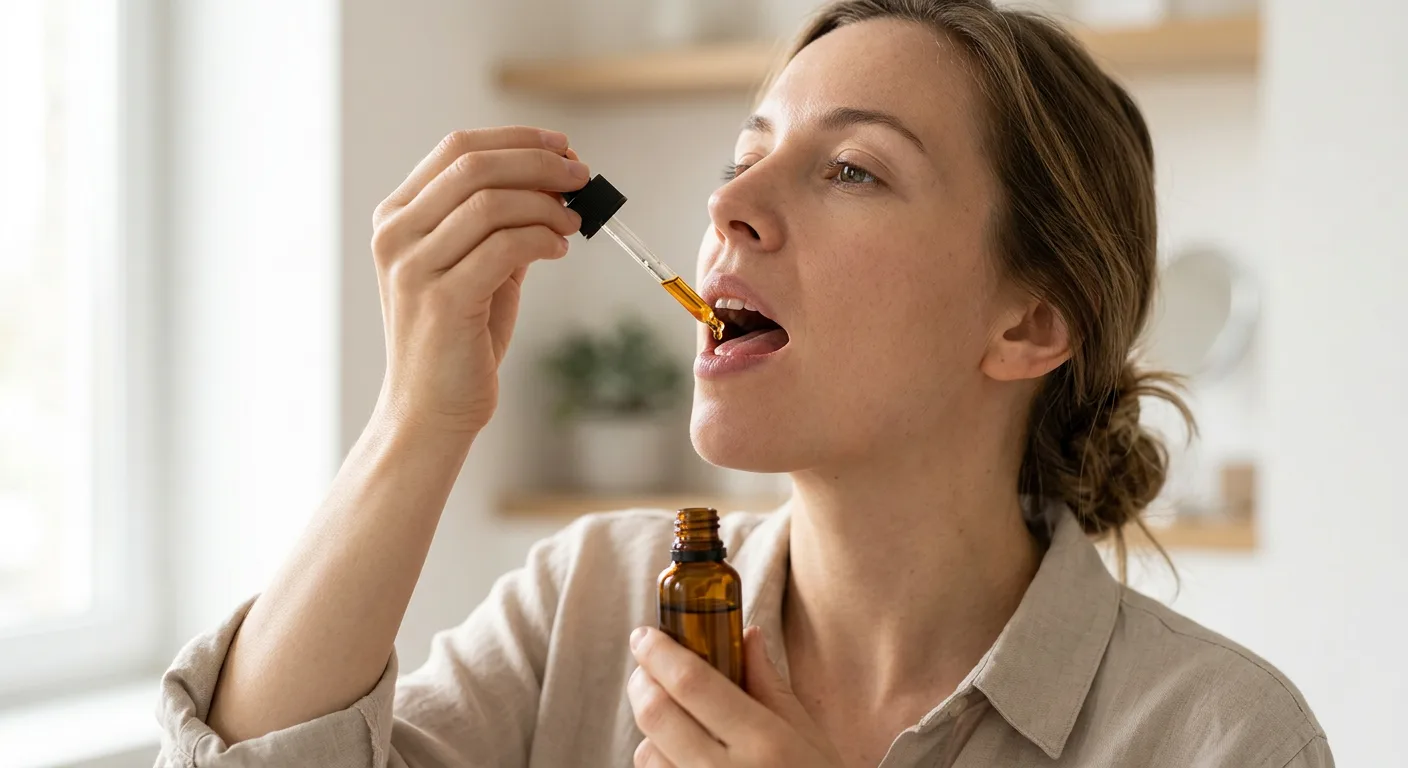
Not every strain makes an equally efficient tincture. The variables that matter most are THC percentage (or CBD percentage for non-intoxicating tinctures), terpene profile, and resin density. Here is how to think about strain selection specifically for tincture production.
High-THC Strains for Maximum Potency
The higher your starting THC%, the more potent your finished tincture per unit of flower. This directly affects both how much flower you need and how small a dose delivers a meaningful effect. If you are growing your own material specifically for tincture, these high-THC options give you the best return:
- Quantum Kush — 30% THC. One of the highest-testing strains available. Dense, resinous buds mean very efficient extraction. Balanced hybrid effects in the finished tincture.
- Purple Kush — 27% THC. Indica-dominant, heavy relaxing terpene profile (myrcene-forward). Excellent for evening or sleep-focused tinctures.
- OG Kush — 26% THC. The classic high-resin cultivar. Complex terpene profile translates to a rich, full-spectrum tincture with earthy, piney notes.
- Black Widow — 26% THC. Sativa-dominant with a sharp, euphoric effect profile. Makes an energizing daytime tincture.
- Gorilla Glue #4 — typically 25–28% THC. Extremely resinous with a relaxing, heavy-body profile. Excellent for pain-relief focused tinctures.
- Wedding Cake — typically 24–27% THC. Sweet, vanilla terpene notes that come through pleasantly in glycerin tinctures specifically.
High-CBD, Low-THC Strains for Non-Intoxicating Tinctures
For wellness-focused tinctures without psychoactive effect, look for strains with CBD:THC ratios of 2:1 or higher. Harlequin, ACDC, and Cannatonic are popular choices not covered in our catalog. For something closer to balanced, Swiss Miss (15% THC) and California Orange Bud (15% THC) produce milder, more manageable tinctures suited to low-dose users.
For exploring the relationship between specific terpenes and tincture effects, our guides on pinene in cannabis and humulene in cannabis explain how terpene-rich extraction amplifies the entourage effect in full-spectrum tinctures.
Autoflowering Strains for Continuous Small-Batch Tincture
Autoflowers finish in 70–90 days from seed and can be grown year-round indoors with no light schedule changes. For home growers who want a steady supply of tincture material, running autoflowers in rotation produces harvest every 2–3 months. Skywalker OG Auto (23% THC) and Holy Grail Kush Auto (20% THC) both offer strong extraction potential from compact plants.
Common Mistakes Home Growers Make With Tincture
Most tincture failures come down to one of five errors. Knowing them in advance saves you both cannabis and time.
Mistake 1: Skipping Decarboxylation
The single most common reason a homemade tincture has no effect. Raw flower contains THCA, not THC — the conversion only happens with heat. If your tincture is not working, this is the first thing to check. The only exception is an intentional THCA tincture for non-psychoactive use.
Mistake 2: Using Too-Low Proof Alcohol
Beer, wine, and most standard spirits (below 100 proof) contain too much water to extract cannabinoids efficiently. Water repels cannabinoids (they are non-polar). Use 151-proof minimum; 190-proof is ideal. If you want to make cannabis tincture without Everclear specifically, high-proof grain alcohol from any liquor store (look for 75–95% ABV products) works equally well.
Mistake 3: Not Filtering Finely Enough
Residual plant matter makes tincture taste harsh and go off faster. Always do a double-filter: first through a mesh strainer to catch bulk material, then through cheesecloth or a coffee filter for the fine particles. For the clearest possible product, a final pass through a paper coffee filter (slow but thorough) removes the last of the plant matter.
Mistake 4: Storing in Clear Glass or Plastic
UV light and oxygen degrade cannabinoids significantly over weeks to months. Clear glass exposes your tincture to light degradation every time it sits on a counter. Amber glass is essential. If you only have clear bottles temporarily, keep them inside a box or drawer. Never store in plastic — cannabinoids leach into certain plastics over time.
Mistake 5: Inconsistent Dosing
Eyeballing dropper doses produces wildly inconsistent results. A standard 1mL dropper is not always exactly 1mL depending on head pressure and how you fill it. Use a graduated syringe for the first few doses of any new batch until you confirm the actual volume your dropper delivers. Small measuring inconsistencies become big potency surprises with a strong tincture.
Start with quality flower, calculate your potency before you begin, keep everything cold during alcohol extraction, double-filter every time, and store in amber glass. These five habits separate consistently excellent homemade tincture from a mediocre or ineffective batch.
For more on post-harvest processing and storage, see our complete guides to curing small harvests and humidity pack storage — well-cured starting material always produces better tincture.
Frequently Asked Questions
How long does cannabis tincture take to work?
Sublingual cannabis tincture held under the tongue for 60–90 seconds absorbs through mucous membranes and typically takes effect in 15–45 minutes. Swallowed tincture passes through digestion and acts like an edible — onset is 1–2 hours with a stronger, longer-lasting effect due to liver conversion of THC to 11-hydroxy-THC. Method of administration makes a bigger difference than solvent type.
How much homemade tincture should I take?
Start at 0.5–1mL (5–10mg THC) for a tincture calculated at 10mg/mL. Wait at least 45 minutes before considering a second dose if taken sublingually, or 2 full hours if swallowed. First-time users should start at 2.5–5mg and assess over multiple sessions. Use the potency formula in this guide to know your exact mg/mL before dosing.
Does cannabis tincture get you high?
Yes — if made from decarboxylated cannabis containing THC. Sublingual dosing typically produces a milder, cleaner effect than smoking or edibles at equivalent doses. Tinctures made from raw, non-decarbed cannabis contain THCA, which is non-psychoactive. CBD tinctures made from hemp or CBD-dominant strains will not produce intoxication regardless of decarboxylation.
Can I make cannabis tincture without Everclear?
Yes. Any food-grade ethanol above 80 proof (40% ABV) extracts cannabinoids — but higher proof always extracts more efficiently. Alternatives include 151-proof rum, high-proof grain alcohol available in most liquor stores, or brandy. For a completely alcohol-free result, use vegetable glycerin or MCT coconut oil as detailed in this guide. Both produce effective tinctures without any ethanol.
Is alcohol or glycerin tincture stronger?
Alcohol tincture is consistently stronger per milliliter than glycerin tincture from identical starting material. High-proof ethanol extracts approximately 85–95% of available cannabinoids; vegetable glycerin extracts roughly 60–70% under optimal conditions. To compensate, glycerin tinctures can be made with a higher cannabis-to-glycerin ratio. For maximum potency from your home harvest, ethanol is the clear choice.