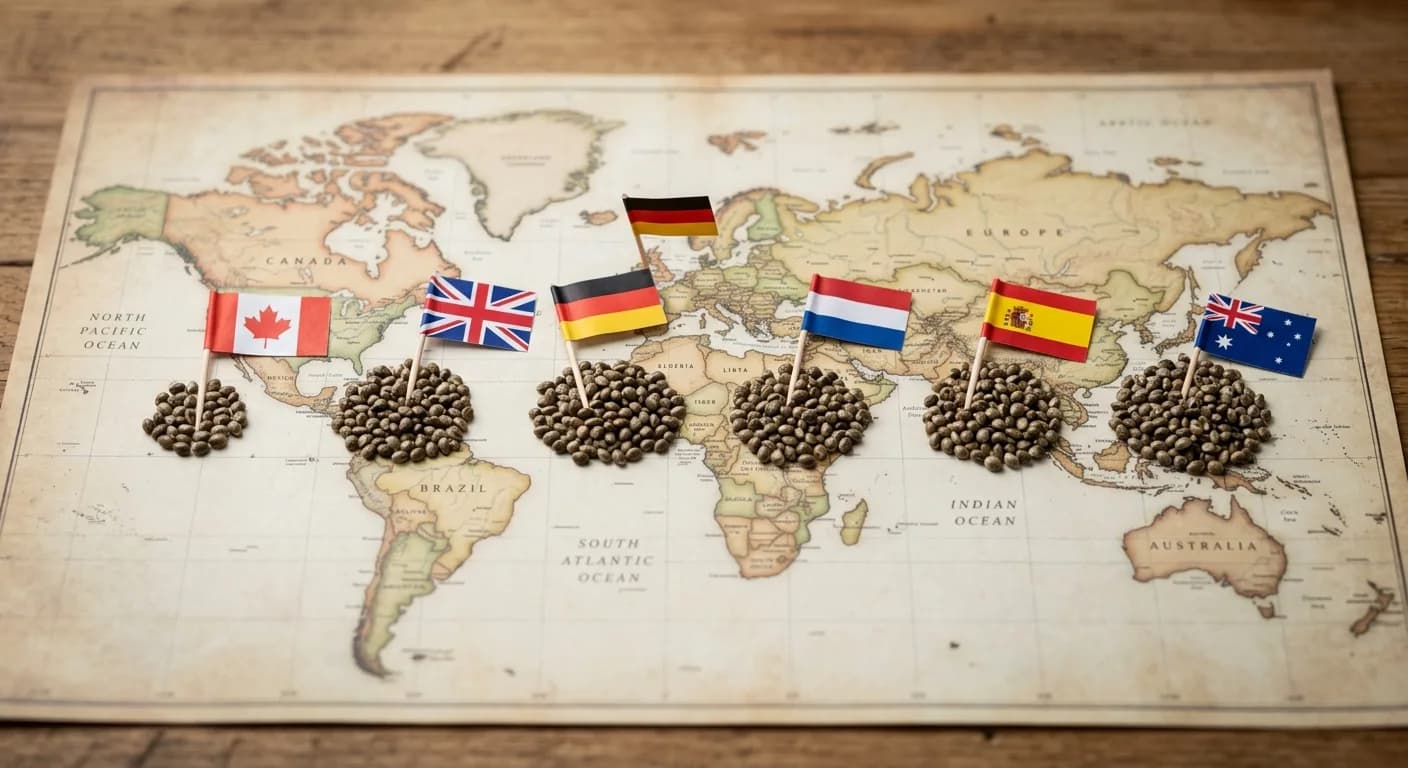
In 2022, a home grower in Colorado, where recreational cannabis is fully legal, packed a handful of feminized seeds into his carry-on before a flight to visit family in Oregon, another legal state. Both states allow home cultivation. Both sell seeds in licensed dispensaries. And yet, the moment those seeds entered his carry-on at Denver International Airport, he was technically committing a federal crime. Nobody stopped him. Nobody cared. But the law was clear, and that disconnect between legal reality and lived experience is exactly why traveling with cannabis seeds legally remains one of the most misunderstood topics in cannabis culture today.
This guide cuts through the noise. We'll cover what TSA actually does when they find seeds, why crossing state lines is a federal problem even between two legal states, what happens when international customs intercepts a seed shipment, and why ordering from a reputable domestic seed bank is almost always the smarter move.
The Federal Elephant in the Room: Why Cannabis Seeds Are Still Illegal to Transport
Under federal law cannabis seeds transport is illegal. Period. Cannabis, including its seeds, is classified as a Schedule I controlled substance under the Controlled Substances Act. This applies regardless of your state's laws, your medical card, or your good intentions.
However, the 2018 Farm Bill introduced a critical nuance. It legally defined hemp as any part of the cannabis plant, including seeds, containing no more than 0.3% delta-9 THC by dry weight. Since ungerminated cannabis seeds naturally contain negligible THC, they technically meet this threshold. As DNA Genetics notes in their legal analysis, the DEA essentially clarified in 2022 that seeds containing 0.3% THC or less fall within the federal definition of hemp.
The core paradox: Cannabis seeds themselves almost always test below 0.3% THC, which qualifies them as hemp. But if you germinate those seeds and the resulting plant exceeds 0.3% THC, which virtually all cannabis strains will: you've crossed into federally illegal marijuana territory. Intent matters.
This creates a legal gray area that seed banks have leveraged to operate openly. Many sell seeds as "hemp seeds" or "souvenir seeds" and include documentation showing sub-0.3% THC content. But make no mistake: if law enforcement can demonstrate you intended to grow marijuana from those seeds, the hemp classification won't protect you.
"The legal complication arises when seeds are germinated. Plants grown from these seeds can exceed the 0.3% THC limit, making them classified as marijuana under federal law.", DNA Genetics Legal Overview, 2025
Can You Fly with Marijuana Seeds? The TSA's Actual Position in 2026
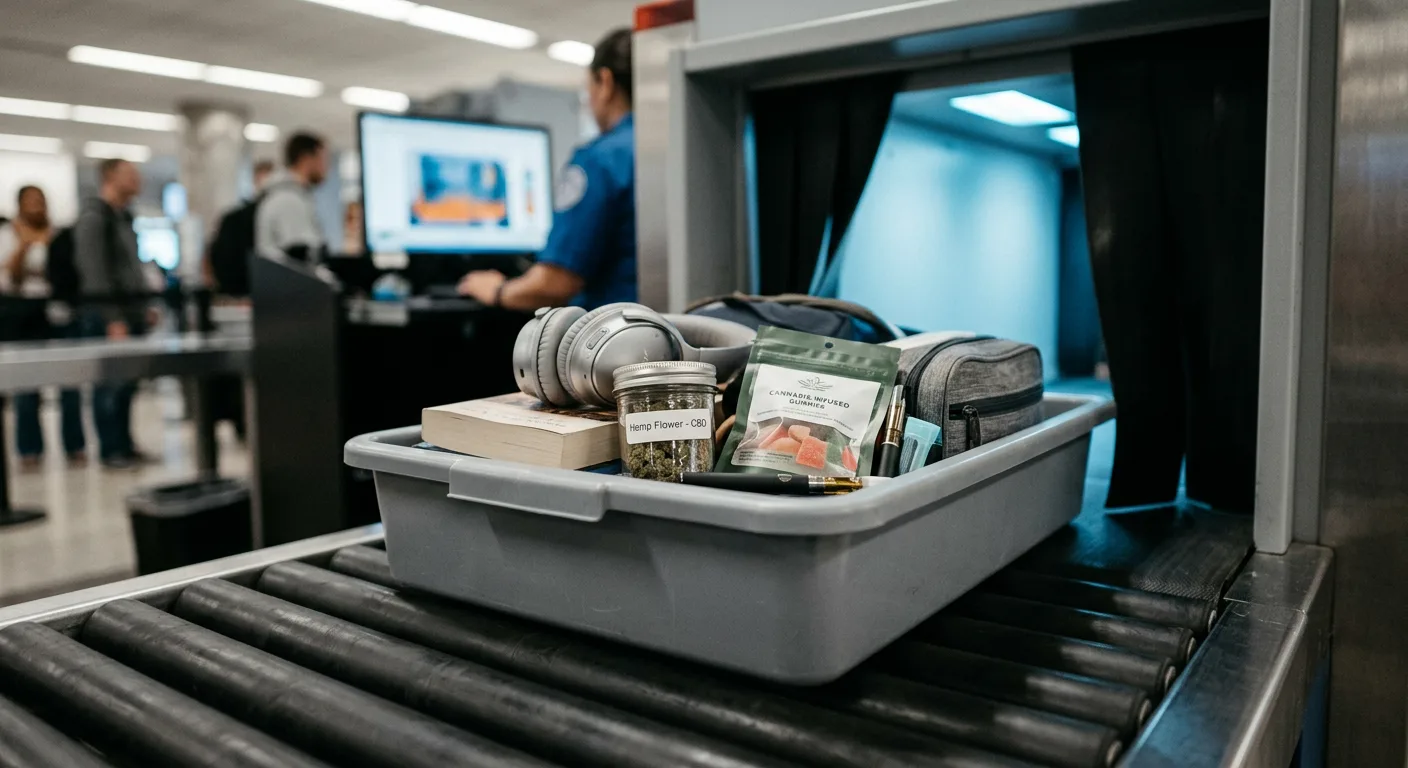
The short answer to can you fly with marijuana seeds is: TSA isn't looking for them, but that doesn't make it legal. The TSA cannabis seeds policy 2026 remains consistent with their longstanding position: their agents are focused on security threats, not drug enforcement.
TSA's official website states that their screening procedures are designed to detect potential threats to aviation and passengers. They are not a drug enforcement agency. If a TSA officer discovers cannabis or cannabis seeds during a security screening, however, they are required to refer the matter to local law enforcement.
Critical distinction: TSA agents don't arrest anyone. They call local police. What happens next depends entirely on where you are. At LAX, local police will likely wave you through for small personal amounts. At an airport in a prohibition state, the outcome could be very different.
What About Cannabis Seeds in Checked Luggage?
Many travelers wonder whether cannabis seeds in checked luggage are safer than carry-on. From a detection standpoint, checked bags go through different screening equipment. Seeds are small, organic, and not metallic, they don't typically trigger security flags.
But the legal risk is identical. Whether seeds are in your pocket, your carry-on, or your checked luggage, you're transporting them through federal airspace under federal jurisdiction. The practical likelihood of getting caught with a few seeds in checked luggage is extremely low. The legal exposure, however, doesn't change based on which compartment of the plane they're in.
- Carry-on: Seeds will pass through X-ray. Unlikely to be flagged unless mixed with other suspicious items. If flagged, TSA refers to local law enforcement.
- Checked luggage: Screened separately. Lower chance of manual inspection. Same legal consequences if discovered.
- On your person: Won't trigger metal detectors. Could be found during a pat-down, which is uncommon.
Can You Bring Weed Seeds on a Plane? A Practical Risk Assessment
Let's be blunt: thousands of people bring weed seeds on a plane every year without incident. Seeds are tiny, look like any number of ordinary plant seeds, and don't show up distinctly on X-ray machines. But "people get away with it" is not legal advice.
The risk matrix looks roughly like this:
| Scenario | Detection Risk | Legal Risk if Detected | Likely Outcome |
|---|---|---|---|
| Few seeds in checked bag, legal state to legal state | Very Low | Moderate (federal law) | Confiscation, no charges |
| Seeds in carry-on, legal state departure | Low | Moderate | Referral to local police, likely released |
| Seeds in carry-on, prohibition state departure | Low | High | Possible state charges + federal exposure |
| Large quantity of seeds, any scenario | Moderate | High | Potential trafficking charges |
| International flight with seeds | Moderate–High | Very High | Customs seizure, possible criminal charges |
Practical reality: In over 15 years of working with cannabis cultivators, we've heard countless stories of seeds making it through domestic airport security without issue. We've also heard stories of seeds being confiscated. What we've almost never heard of is someone being criminally prosecuted for a personal quantity of seeds at a US airport. That said, being the test case is never worth it.
Taking Cannabis Seeds Across State Lines: The Interstate Problem
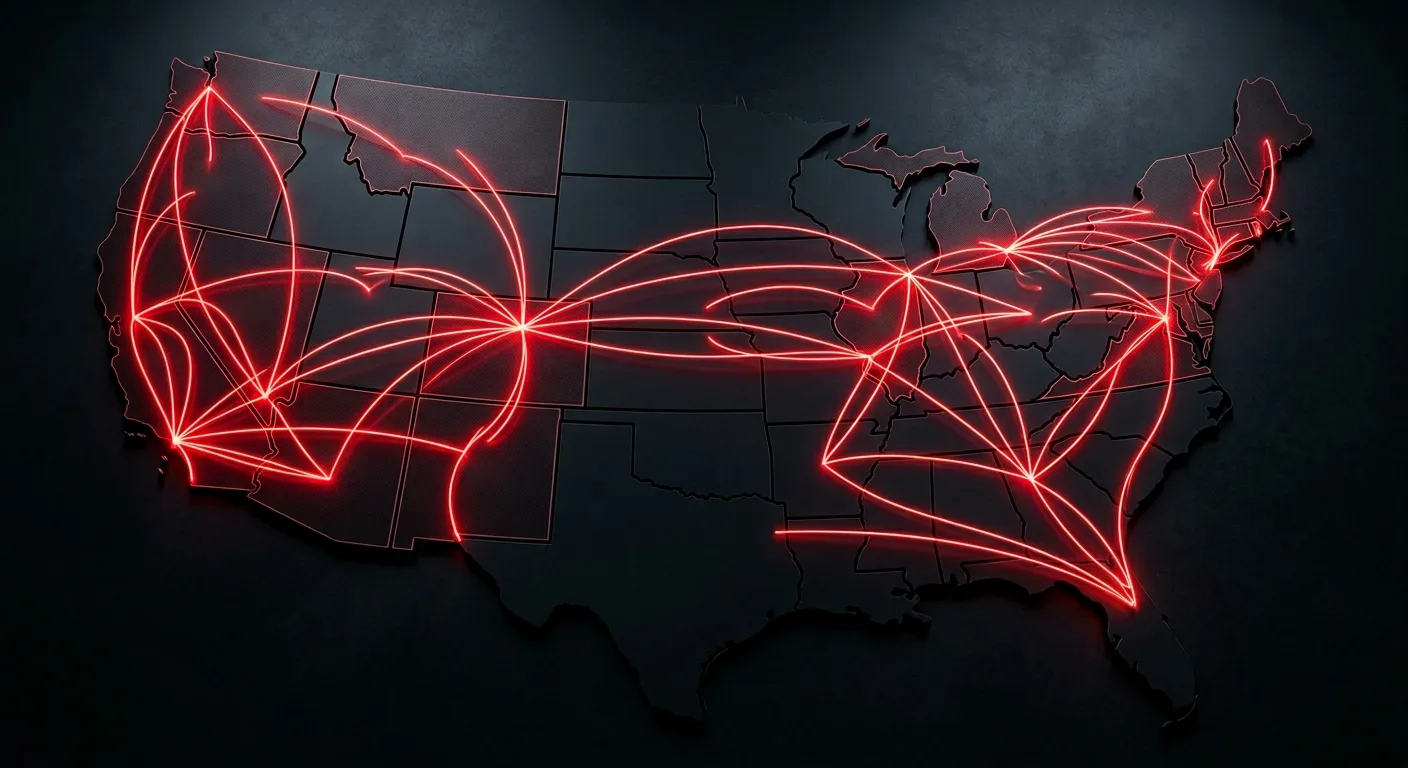
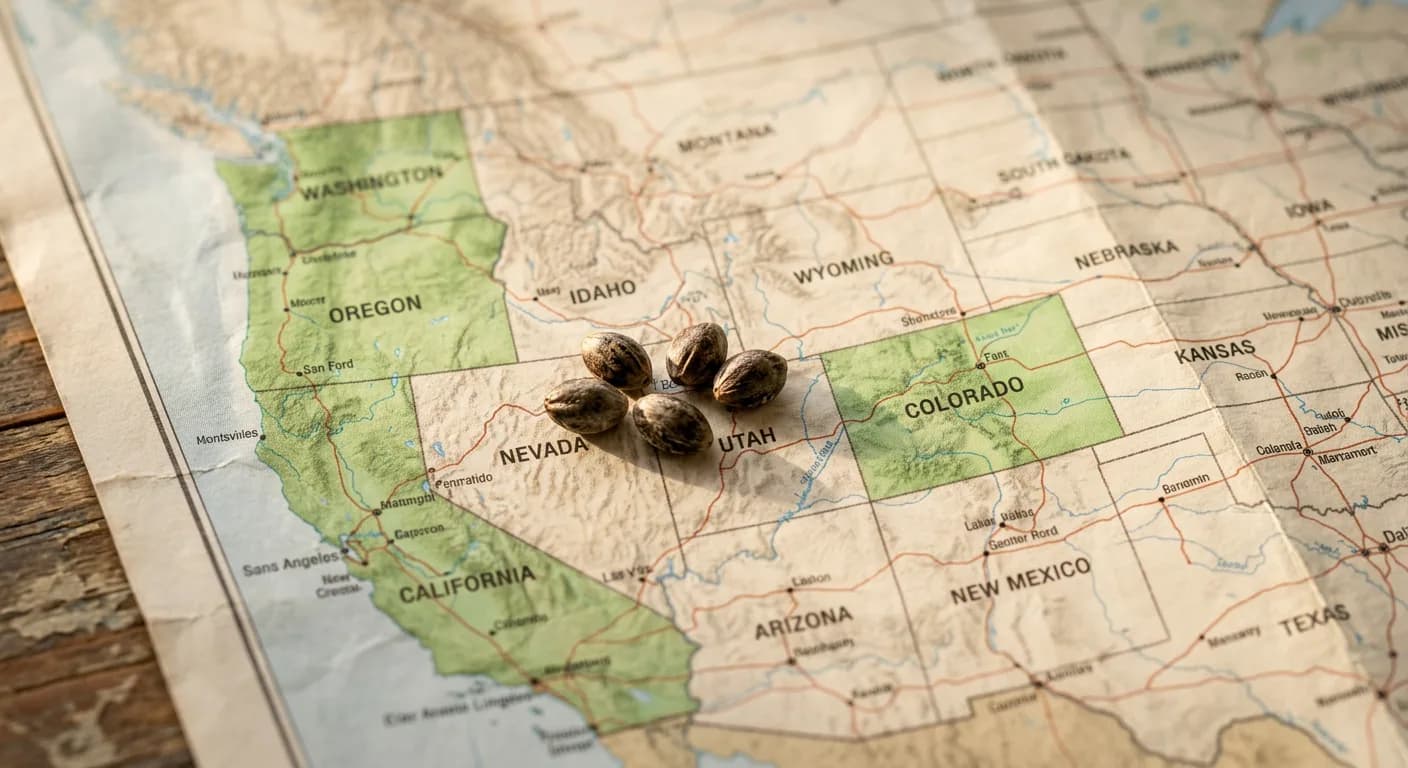
Taking cannabis seeds across state lines is a federal offense, even when both states have legalized cannabis. This is perhaps the most counterintuitive aspect of cannabis law in America, and it trips up growers constantly.
The reason is jurisdiction. The moment you cross a state border, you enter the domain of federal law. And federally, cannabis is still Schedule I. It doesn't matter that California and Nevada both allow recreational use and home growing. The act of crossing state lines with cannabis seeds, whether legal in both jurisdictions or not, violates the federal Controlled Substances Act.
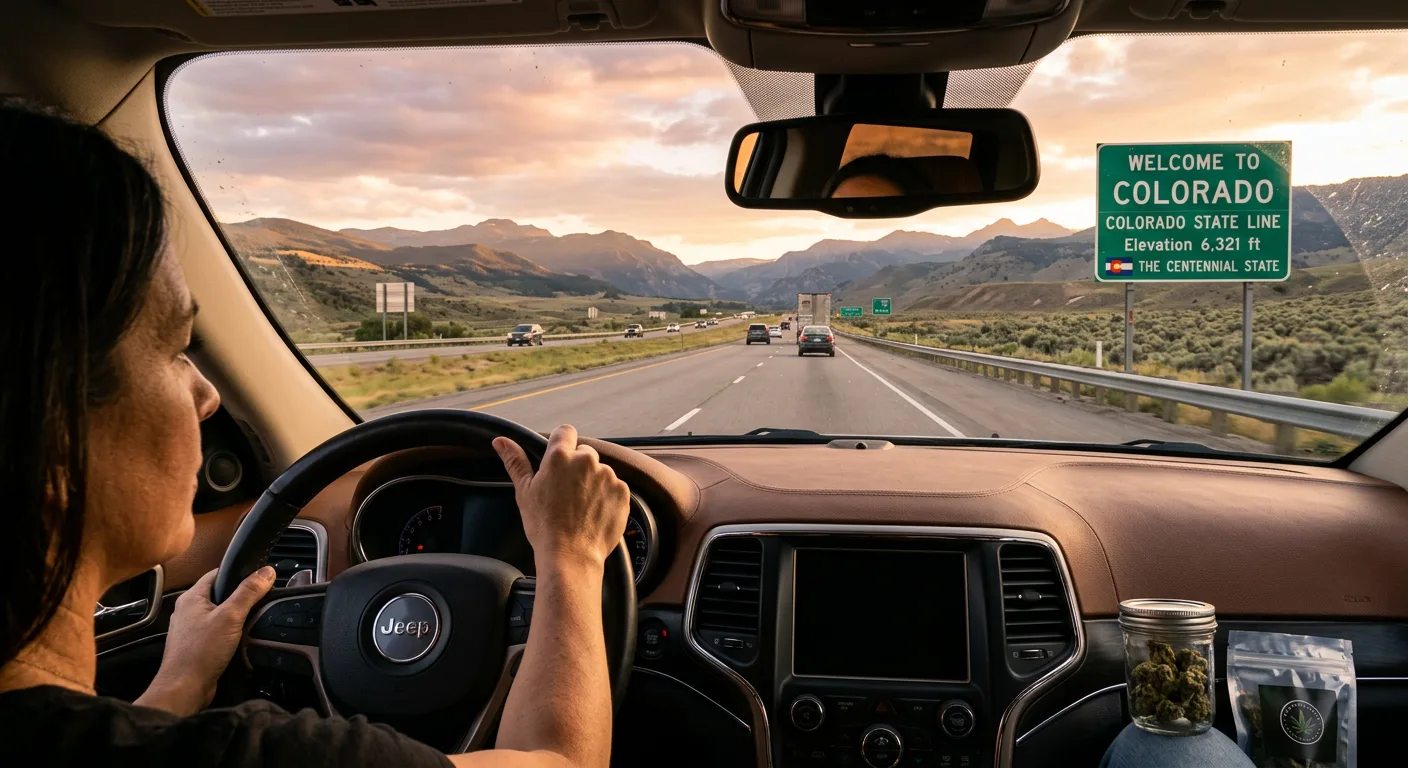
The legal reality of driving with cannabis seeds across states: Whether you're flying, driving, taking a bus, or walking, transporting cannabis seeds from one state to another is interstate commerce involving a controlled substance. Federal prosecutors have broad authority here, even if they rarely exercise it for small personal quantities.
Driving with Cannabis Seeds Across States: What Could Actually Happen
For many growers, driving with cannabis seeds across states feels less risky than flying. No TSA. No X-ray machines. Just you and the road. And practically speaking, the odds of being caught with a few seeds during a routine traffic stop are astronomically low.
But consider a few scenarios where risk escalates:
- Border checkpoints: Some states, particularly near the US-Mexico border, operate checkpoints where vehicles can be searched.
- K-9 units: Drug-sniffing dogs at highway checkpoints or during traffic stops can alert to cannabis seeds, though this is unusual for seeds alone.
- Crossing into prohibition states: States like Idaho, Kansas, and Wyoming maintain strict anti-cannabis laws. Getting pulled over with seeds in these states can lead to state-level criminal charges on top of federal exposure.
- Quantity: A handful of seeds for personal growing looks very different to law enforcement than hundreds or thousands of seeds, which suggests commercial intent or distribution.
The hemp seed defense: Some growers carry documentation showing their seeds test below 0.3% THC, invoking the 2018 Farm Bill's hemp protections. While this may provide a defense, it's untested in many jurisdictions and depends on the responding officer's knowledge of federal hemp law. Roadside officers aren't typically equipped to test seed THC content, which means your fate may depend on their discretion.
Traveling Internationally with Cannabis Seeds: Where Things Get Serious
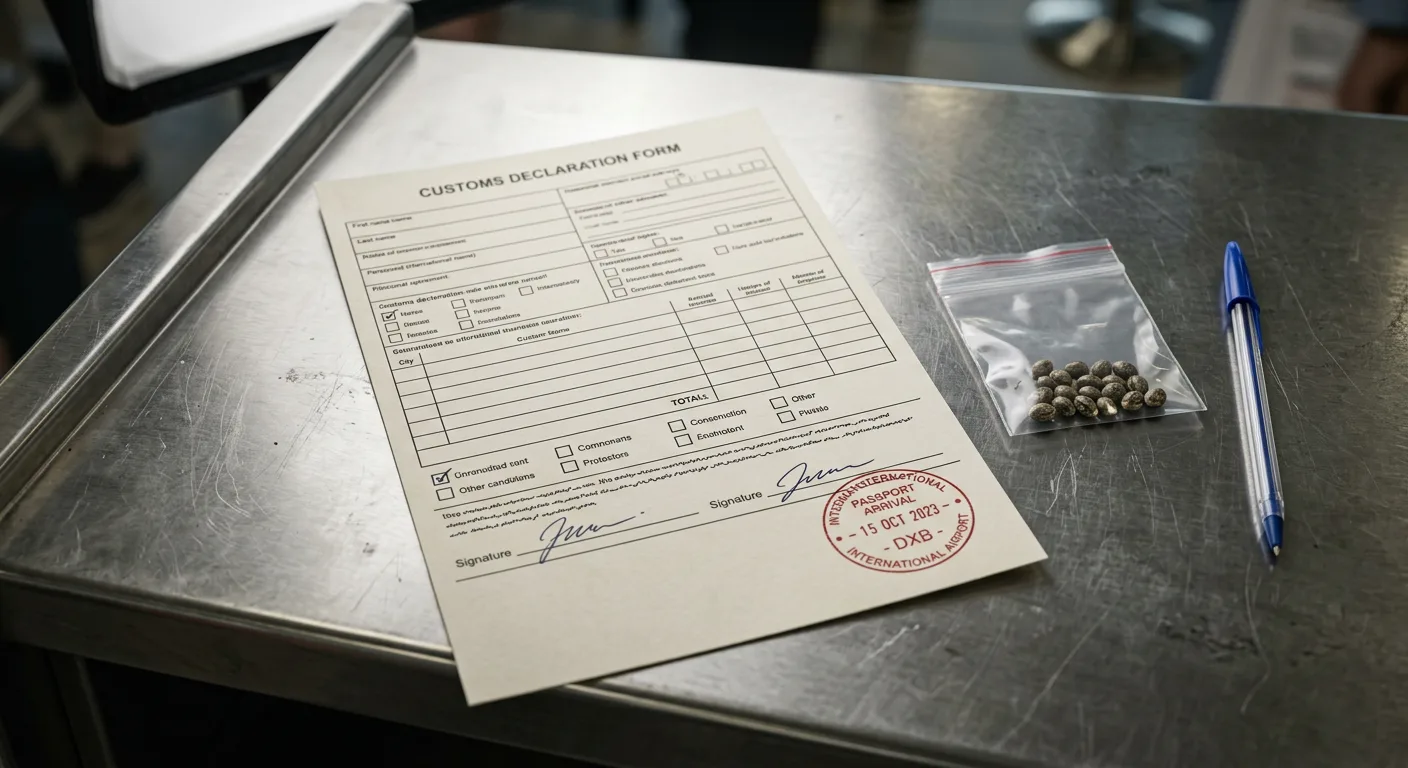
Traveling internationally with cannabis seeds is where the stakes escalate dramatically. Unlike domestic travel: where enforcement is lax and penalties for small personal quantities are typically mild, international borders involve customs agencies with drug enforcement mandates and zero tolerance policies.
Different countries treat cannabis seeds very differently:
| Country/Region | Cannabis Seed Status | Risk Level | Potential Consequence |
|---|---|---|---|
| Netherlands | Legal to purchase and possess | Low (in-country) | N/A within borders |
| Spain | Legal for personal use, purchase common | Low (in-country) | N/A within borders |
| United Kingdom | Legal to sell as souvenirs, illegal to germinate | Moderate at customs | Seizure, possible fine |
| Canada | Legal domestically, illegal to export/import | High at border | Criminal charges, entry ban |
| Australia | Illegal | Very High | Criminal charges, heavy fines |
| Japan | Strictly illegal | Extreme | Imprisonment, deportation |
| Thailand | Decriminalized (shifting policy) | Moderate–High | Evolving; check current law |
| UAE / Singapore | Strictly illegal | Extreme | Severe criminal penalties |
Never assume another country shares America's relatively lax enforcement posture. Countries like Japan, Singapore, the UAE, and parts of Southeast Asia impose severe penalties for cannabis-related offenses, including seeds. A conviction abroad can result in imprisonment, deportation, and a permanent criminal record that affects your ability to travel internationally for life.
Can Customs Seize Cannabis Seeds? What Actually Happens
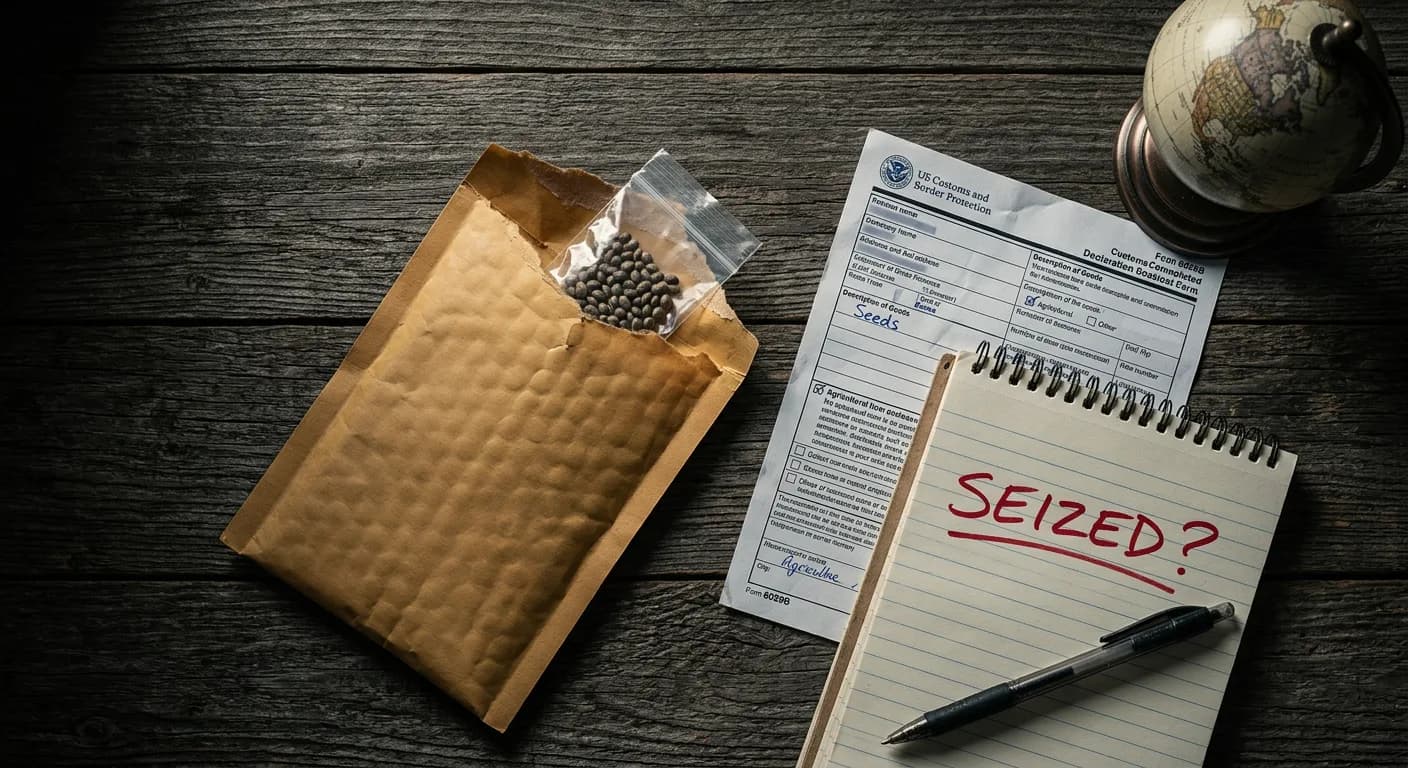
Yes, customs can seize cannabis seeds, and they do regularly. US Customs and Border Protection (CBP) routinely intercepts international seed shipments. When buying seeds abroad and bringing them home to the US, you face both agricultural import restrictions and controlled substance laws.
Here's the typical sequence when CBP seizes seeds from an incoming international package:
Interception
CBP identifies the package during routine inspection. Seeds are often detected through X-ray or during random manual inspections of international mail.
Seizure
The seeds are confiscated. CBP retains the package and logs the seizure.
Notification
The recipient receives a seizure notice letter (sometimes called a "love letter" in cannabis communities) informing them the package was seized and listing the reason.
Resolution
For small personal quantities, the matter typically ends with the letter. No charges are filed. The seeds are destroyed. However, the seizure is logged, and repeated seizures to the same address can trigger further investigation.
This process is well-documented in cannabis growing communities. Most international seed bank customers who've had packages seized report receiving the letter and nothing more. But it's important to understand that CBP has the authority to pursue criminal charges, they simply choose not to for small quantities in most cases.
Is It Legal to Mail Cannabis Seeds Domestically? The USPS Question
Growers frequently ask: is it legal to mail cannabis seeds domestically? The technical answer is no. USPS is a federal agency, and sending Schedule I substances through the federal mail system is a crime. Using private carriers like FedEx or UPS doesn't help either, their terms of service explicitly prohibit shipping cannabis products.
Despite this, the domestic seed bank industry thrives largely through mail order. How? A few factors are at play:
- The hemp classification: Many seed banks classify their products as hemp seeds under the 2018 Farm Bill, since ungerminated seeds typically test below 0.3% THC.
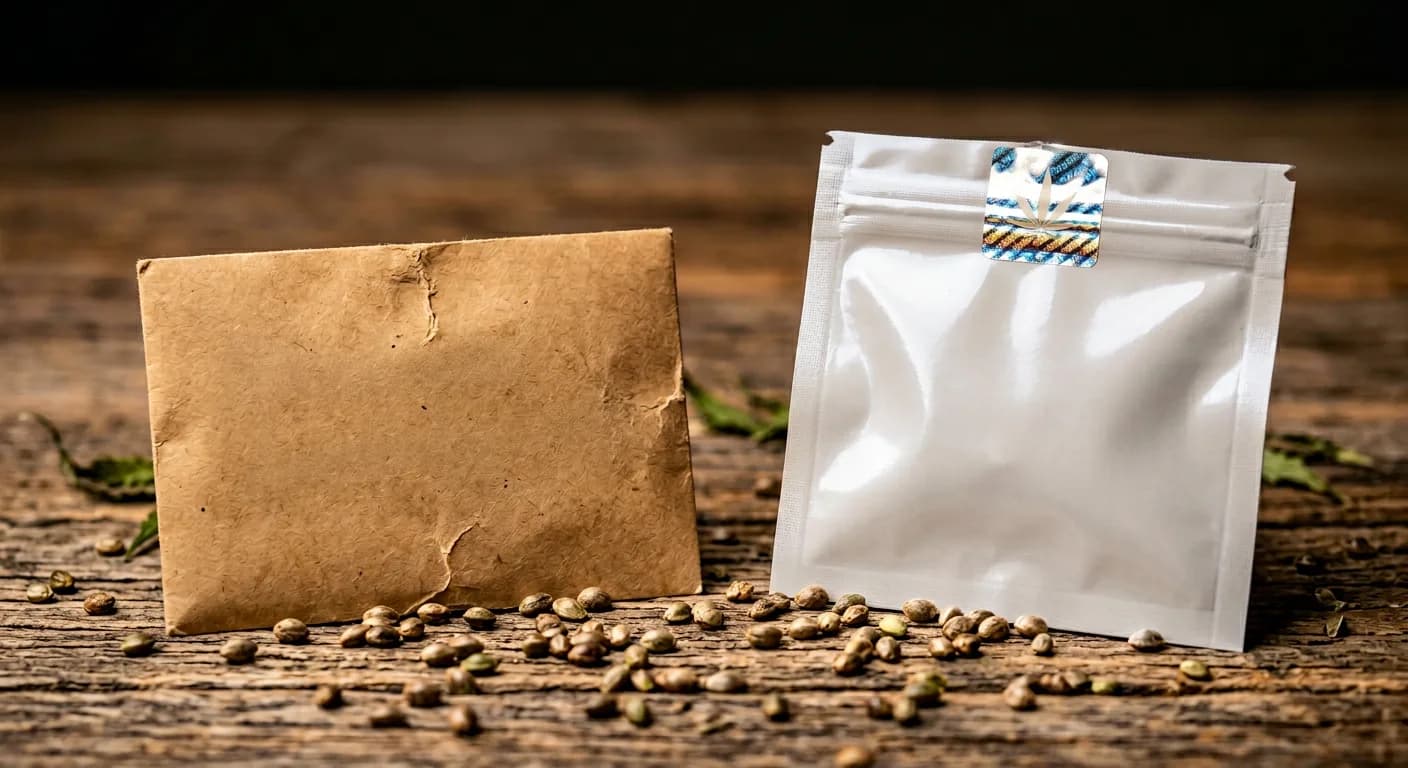
- Discreet packaging: Reputable seed banks ship in plain, unmarked packages that don't attract attention.
- Enforcement priorities: Federal law enforcement has shown virtually zero interest in pursuing individual seed buyers. Resources are directed at large-scale trafficking operations.
- Volume: The sheer volume of domestic packages, hundreds of millions monthly, makes targeted inspection of every parcel impossible.
From our experience: Domestic seed bank shipments arrive successfully at an extremely high rate. International shipments face significantly more scrutiny due to customs inspection. If you're choosing between ordering from a domestic seed bank versus carrying seeds through an airport yourself, the math strongly favors the seed bank every time.
"Seed banks rely on this distinction to operate legally, even though plants grown from these seeds can exceed the 0.3% THC limit.", DNA Genetics Legal Analysis
The Smart Alternative: Why Ordering from a Seed Bank Beats Traveling with Seeds
Here's the bottom line that experienced cultivators already know: physically transporting cannabis seeds yourself, whether by plane, car, or international travel, carries legal risk with zero upside that you can't get from simply ordering online.
Consider the comparison:
| Factor | Carrying Seeds Yourself | Ordering from a Domestic Seed Bank |
|---|---|---|
| Federal legal risk | You personally assume all risk | Seed bank assumes shipping risk |
| Detection risk | TSA, highway stops, border checkpoints | Discreet packaging, high delivery rate |
| Strain selection | Limited to what you find in person | Hundreds of verified genetics available |
| Quality assurance | No guarantees on viability or genetics | Germination guarantees, lab-tested genetics |
| Documentation | None | Many banks provide hemp compliance documentation |
| Convenience | Requires travel, risk, and planning | Delivered to your door in days |
Whether you're looking for a classic strain like White Widow Feminized Seeds with its 25% THC and rich terpene profile of myrcene, pinene, and caryophyllene, or a heavy-hitting variety like OG Kush Feminized Seeds at 26% THC, domestic seed banks deliver verified genetics directly to your door without the airport anxiety.
The calculus is simple: There is no strain you can find while traveling that you can't find from a reputable online seed bank, and the seed bank option removes you from the legal equation entirely. Your seeds arrive in discreet packaging, often with tracking and germination guarantees. Your only job is to be home when they arrive.
State-by-State Considerations: Where Seeds Land in a Legal Gray Zone
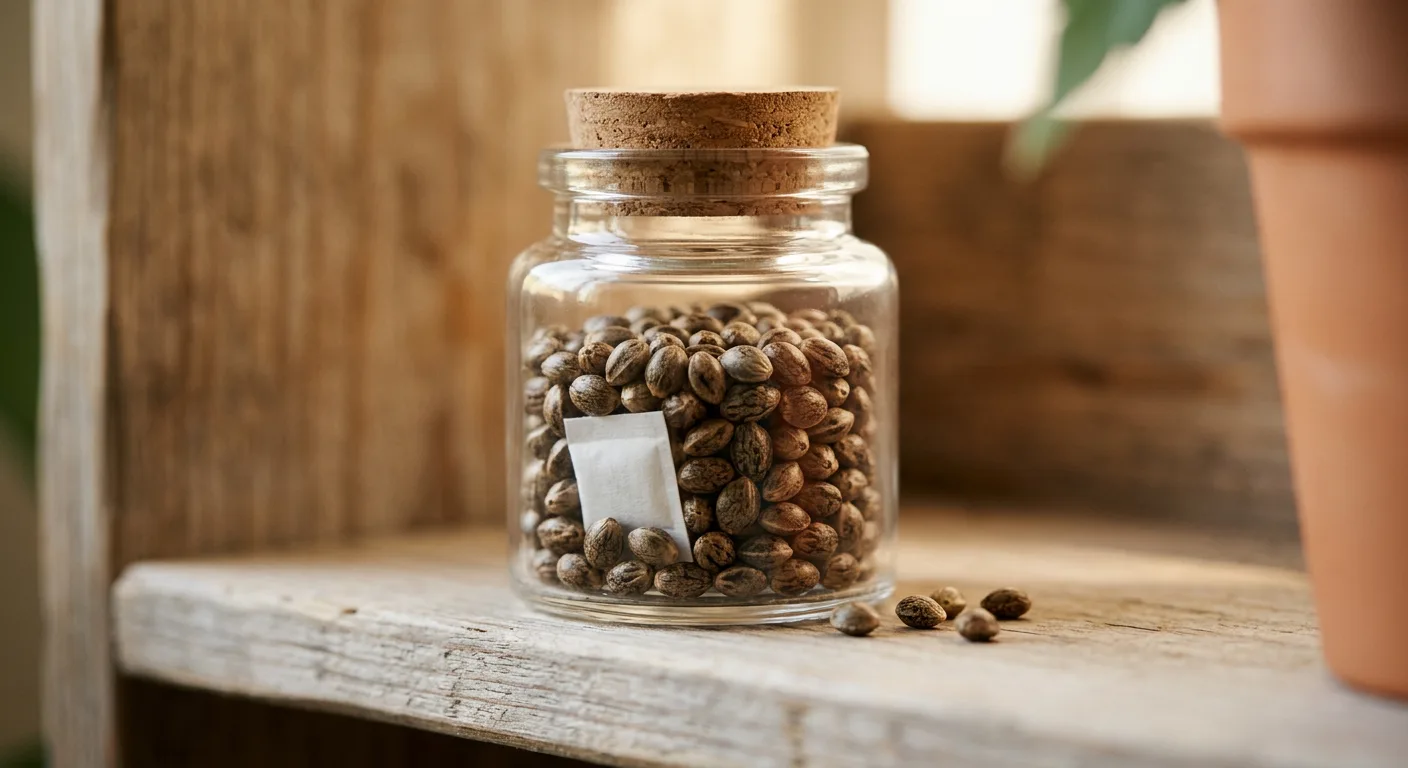
While federal law provides the overarching framework, state laws create a patchwork of rules that affects what happens if seeds are discovered in your possession. Understanding your state's position matters for assessing real-world risk.
States Where Seed Possession Is Generally Safe
In states with legal recreational cannabis and home cultivation provisions, possessing seeds is typically protected under state law. These include:
- California: Adults 21+ can possess and cultivate up to 6 plants.
- Colorado: Home cultivation of up to 6 plants per adult (12 per household max).
- Oregon: Up to 4 plants per household for recreational use.
- Michigan: Up to 12 plants per household.
- Massachusetts: Up to 6 plants per person, 12 per household.
- Illinois: Medical patients may cultivate up to 5 plants.
In these states, buying seeds locally from a licensed dispensary is straightforward and legal under state law. The complications arise only when those seeds cross state borders. For a comprehensive look at which strains thrive in home cultivation setups, our Cannabis Strain Genetics Guide covers lineage and growing characteristics in depth.
States Where Seeds Remain Risky
Prohibition states still classify cannabis seeds as drug paraphernalia or controlled substances. Possession can result in misdemeanor or felony charges depending on quantity and intent. For current details on state-level hemp and THC restrictions, see our Hemp THC State Bans 2026 overview.
- Idaho: Any amount of cannabis, including seeds, is illegal. Zero tolerance.
- Kansas: Seeds are illegal. Possession can result in criminal charges.
- Wyoming: Cannabis is fully illegal. Seeds can lead to paraphernalia charges.
- South Carolina: No legal cannabis program. Seeds are prohibited.
If you're in a prohibition state: Do not assume that the "seeds are hemp" argument will protect you from local law enforcement. Officers in these states are often trained to treat any cannabis-related material as illegal, and you'd be fighting the legal battle from a jail cell or courtroom, not from a position of strength.
The 2018 Farm Bill Loophole: How Seed Banks Operate in a Gray Area

The 2018 Farm Bill is the single most important piece of legislation for the legal cannabis seed market. By removing hemp from the Controlled Substances Act and defining it as cannabis containing 0.3% or less delta-9 THC by dry weight, it inadvertently created a pathway for seed sales nationwide.
Here's why this matters for seeds specifically: cannabis seeds, regardless of the strain they'll produce, contain virtually no THC in their ungerminated state. A seed from a plant that produces 30% THC flower, like Quantum Kush Feminized Seeds, still contains negligible THC as a seed. Technically, it meets the hemp definition.
This is the loophole that allows seed banks to operate openly. They're selling hemp seeds. The fact that those hemp seeds, once planted and grown, will produce plants exceeding 0.3% THC is, legally speaking, a separate matter from the sale of the seed itself.
The DEA's 2022 clarification essentially confirmed this interpretation. As reported by multiple legal analysts, the DEA conceded that cannabis seeds containing less than 0.3% delta-9 THC are not controlled substances under the Controlled Substances Act. This was a watershed moment for the seed industry, though it didn't change the illegality of growing marijuana from those seeds in prohibition states.
Reputable seed banks lean into this framework. They provide certificates of analysis, label products as hemp seeds, and include compliance documentation. Whether a court would ultimately uphold this defense in a contested case remains untested in many jurisdictions, but the operating assumption across the industry is that the Farm Bill provides meaningful legal cover for seed sales.
For growers curious about the differences between seed types available through these banks, our Feminized vs Regular Cannabis Seeds guide covers the practical distinctions.
Practical Scenarios: A Risk-by-Risk Breakdown for Real Growers
Let's move beyond abstract legal theory and assess the realistic risk levels for common scenarios growers actually face. This is based on documented cases, community reports, and the practical enforcement landscape as of 2026.
Scenario 1: Flying from Legal State to Legal State with a Few Seeds
Risk level: Low (but not zero). TSA is unlikely to notice or care about a few seeds. If discovered, they'll refer to local law enforcement, who in legal states will likely decline to pursue the matter. Federal prosecution for personal seed quantities in this context is virtually unheard of.
Scenario 2: Driving Across State Lines with Seeds in Your Vehicle
Risk level: Low to Moderate. The detection risk is very low unless you're stopped for another reason and your vehicle is searched. Risk increases significantly if your route passes through prohibition states or border checkpoints. A small quantity of seeds buried in luggage is unlikely to be discovered during a routine stop.
Scenario 3: Flying into a Prohibition State with Seeds
Risk level: Moderate. If seeds are discovered at your destination airport, local law enforcement in a prohibition state may press charges. This is the scenario where real consequences are most likely for domestic travelers.
Scenario 4: Carrying Seeds Through International Customs
Risk level: High to Extreme. International customs agencies in many countries actively screen for plant materials. Detection technology is more sophisticated, officers are specifically trained in identifying seeds, and penalties can be severe. In countries like Japan, the UAE, or Singapore, this could result in imprisonment.
Scenario 5: Buying Seeds Abroad and Bringing Them Home to the US
Risk level: Moderate to High. The act of buying seeds abroad bringing home to US combines two risky moves: clearing foreign customs on departure and US customs on arrival. Even in countries where seed purchase is legal (Netherlands, Spain, UK), bringing them into the US requires clearing CBP, and seeds are a known target.
Our recommendation: If you find an incredible strain while traveling abroad, write down its name and genetics. Then order the seeds, or something with similar lineage, from a domestic seed bank when you get home. Strains like Amnesia Trance Feminized Seeds (27% THC) and Super Lemon Haze Feminized Seeds (23% THC) represent European genetics that you can source domestically without ever touching an international border.
Protecting Your Genetics: Smart Seed Storage Instead of Risky Transport
One of the main reasons growers consider traveling with seeds is to preserve specific genetics they've encountered. Maybe you found a phenomenal cut at a dispensary in another state, or a friend in a legal state has seeds from a rare pheno. The impulse to physically carry those genetics home is understandable, but unnecessary.
Instead of risking transport, focus on sourcing comparable genetics through legal channels and storing them properly for long-term viability. Our Complete Guide to Long-Term Seed Storage covers the exact protocols for maintaining germination rates over years of storage.
Once you've legally acquired seeds through a domestic seed bank, proper storage protects your investment far better than any travel precaution. Seeds stored at cool, stable temperatures with controlled humidity maintain viability for 5+ years.
For growers just getting started with their first seed purchase, our Cannabis Seedling Care Guide walks through the critical early stages from germination to transplant. And if you're exploring growing media for your newly ordered seeds, our Coco Coir Cannabis Growing Guide is one of the most popular resources on the site.
What About Landrace Genetics and International Seed Sourcing?
Collectors of landrace cannabis strains face a unique dilemma. Authentic landrace genetics, pure sativas from Thailand, indicas from the Hindu Kush, African varieties from Malawi, are by definition found abroad. The temptation to bring seeds home from a trip is strong.
But the risks of traveling internationally with cannabis seeds apply doubly here. Not only are you dealing with US customs on reentry, you're often departing from countries with their own strict drug laws. Thailand may have decriminalized cannabis domestically, but attempting to leave the country with seeds in your luggage is still an export violation.
The better approach? Seek out domestic seed banks that specialize in preserving landrace genetics. Varieties like Malawi Gold Autoflower Seeds and Swazi Feminized Seeds offer authentic African genetics that have been stabilized for home cultivation, available without a passport or a customs agent.
"The smartest move a traveling grower can make isn't figuring out how to sneak seeds through an airport: it's having a trusted seed bank that delivers exactly what you need to your front door."
The Bottom Line: A Decision Framework for 2026
Cannabis law is evolving rapidly, but as of 2026, the fundamental rules haven't changed at the federal level. Here's our honest framework for making smart decisions about seeds and travel:
Never Transport Seeds Internationally
The risk-reward ratio is terrible. Customs agencies actively look for seeds, penalties abroad can be catastrophic, and everything you could find overseas is available domestically. Full stop.
Avoid Interstate Transport When Possible
Even between legal states, crossing state lines creates federal exposure. Order from a seed bank instead. If you absolutely must transport seeds domestically, keep quantities tiny, carry no other cannabis products, and understand you're accepting legal risk.
Buy Locally When You Can
If you're in a state with legal recreational cannabis and home cultivation, buy seeds from a licensed dispensary. This is the only scenario with essentially zero legal risk.
Use Reputable Domestic Seed Banks for Everything Else
Domestic seed banks ship discreetly, offer verified genetics, provide germination guarantees, and remove you from the transportation equation. Whether you want a relaxing indica like Northern Lights x Big Bud at 20% THC or a creative sativa like Strawberry Banana Feminized Seeds at 26% THC, the selection available through domestic shipping covers virtually every preference.
Stay Informed as Laws Change
Federal cannabis reform remains an active legislative conversation. Rescheduling, banking access, and interstate commerce rules could all shift within the next few years. Follow our legality coverage for updates that directly affect seed buyers.
The cannabis community has thrived for decades despite legal obstacles. Seeds have always found their way to growers who needed them. But in 2026, with a robust domestic seed bank infrastructure and discreet shipping as the industry standard, there's simply no good reason to gamble with personal transport. Let the professionals handle the logistics. You focus on growing.
Final thought: The question isn't really "can you travel with cannabis seeds?", people do it every day. The question is "should you?" And when the alternative is a verified, discreet, domestic shipment of exactly the genetics you want, delivered to your door with a germination guarantee, the answer is almost always no.
Sources & References
This article was researched and fact-checked using 6 verified sources including 6 community resources.
- Are you allowed to carry cannabis seeds on international flights? - Quora, quora.com [Community]
- Can I board a flight to Hawaii with cannabis seeds with me? : r/legaladvice, reddit.com [Community]
- How do airports make sure that hemp seeds are hemp rather than marijuana? - Quora, quora.com [Community]
- Flying With Weed: TSA Marijuana Rules Explained | TravelPulse , travelpulse.com [Community]
- Tips for Travelling with Cannabis Seeds, amsterdamseedcenter.com [Community]
- Importing hemp seeds and hemp plants into the United States, help.cbp.gov [Community]