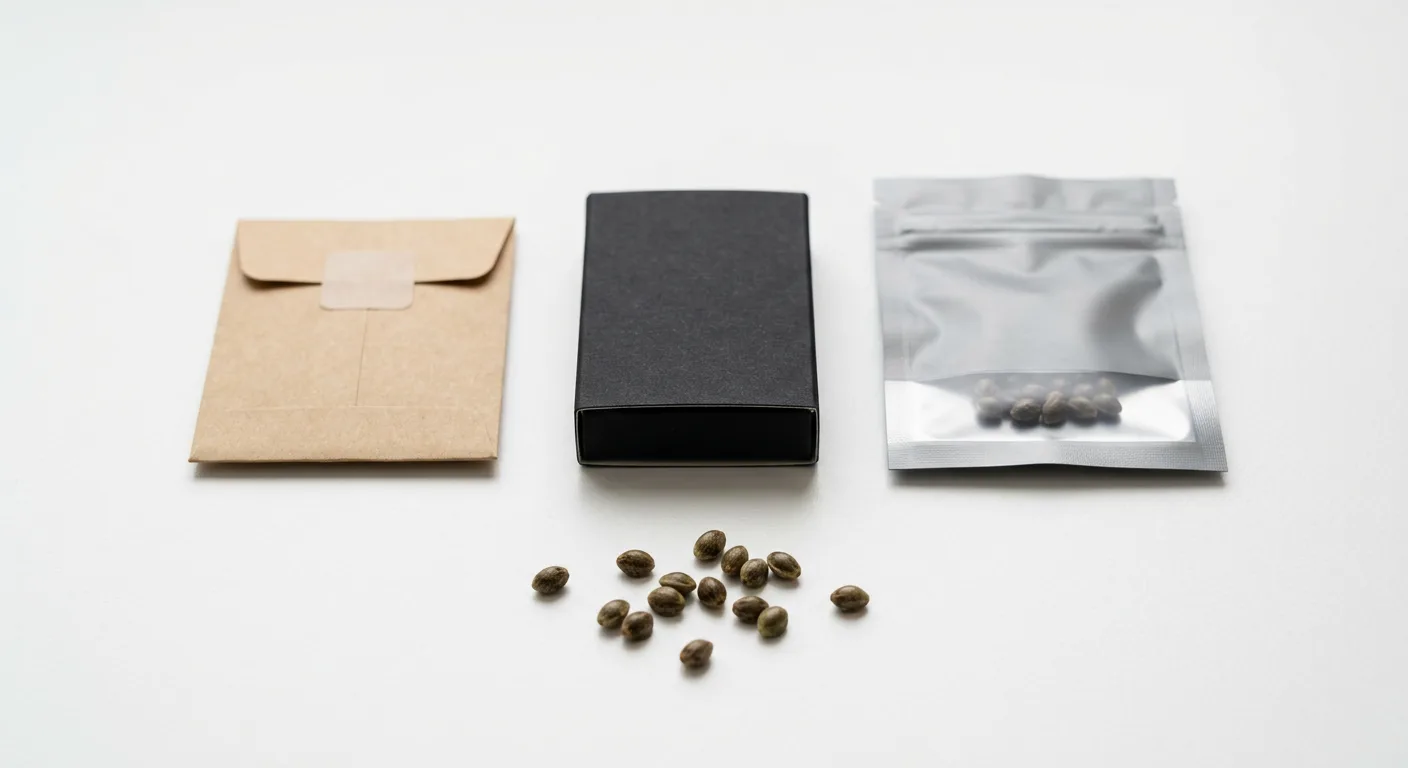
Here's a scenario that plays out on cannabis forums every week: a grower has $150 to spend on seeds and can't decide whether to buy three premium single seeds or one 10-pack of a proven strain. The debate gets lengthy, passionate, and almost never reaches a clean answer. That's because buying cannabis seeds in bulk vs single isn't just a price question: it's a grow strategy question.
The right pack size depends on your tent dimensions, your skill level, your seed type, and what you actually want from the harvest. This guide builds a real decision framework with numbers, tables, and worked examples so you can close the browser tab and add exactly the right quantity to your cart.
The Real Question: Matching Seed Quantity to Your Grow Setup
Before comparing prices, define your grow parameters. The "best value" pack for a 2×2 tent running one autoflower at a time is completely different from the best value for a 4×8 tent running perpetual harvests.
The right number of seeds depends on your grow space, skill level, seed type, and goals, not just the per-seed price. A beginner in a 2×2 tent wastes money buying a 10-pack; an experienced grower running pheno hunts wastes opportunity buying singles.
The Four Variables That Determine Your Ideal Quantity
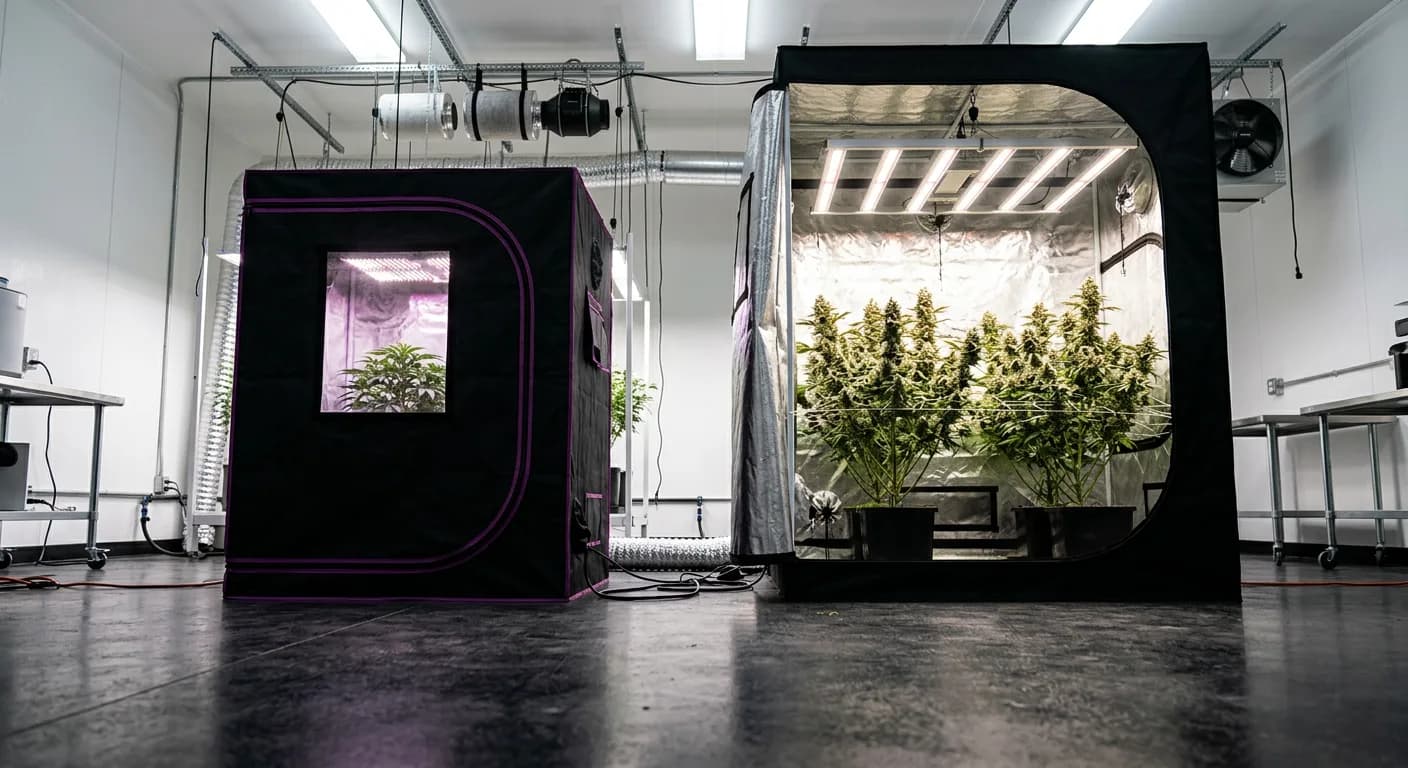
- Grow space: A 2×2 tent fits 1–2 plants comfortably. A 4×4 fits 4–6. A 4×8 fits 8–10.
- Skill level: First grows have higher failure rates. Beginners need more backup seeds.
- Seed type: Autoflowers are typically planted all at once with no pheno selection. Feminized photoperiods benefit from running multiples to find a keeper phenotype.
- Harvest goals: Personal use from one strain = fewer seeds. Perpetual setup or pheno hunting = more seeds.
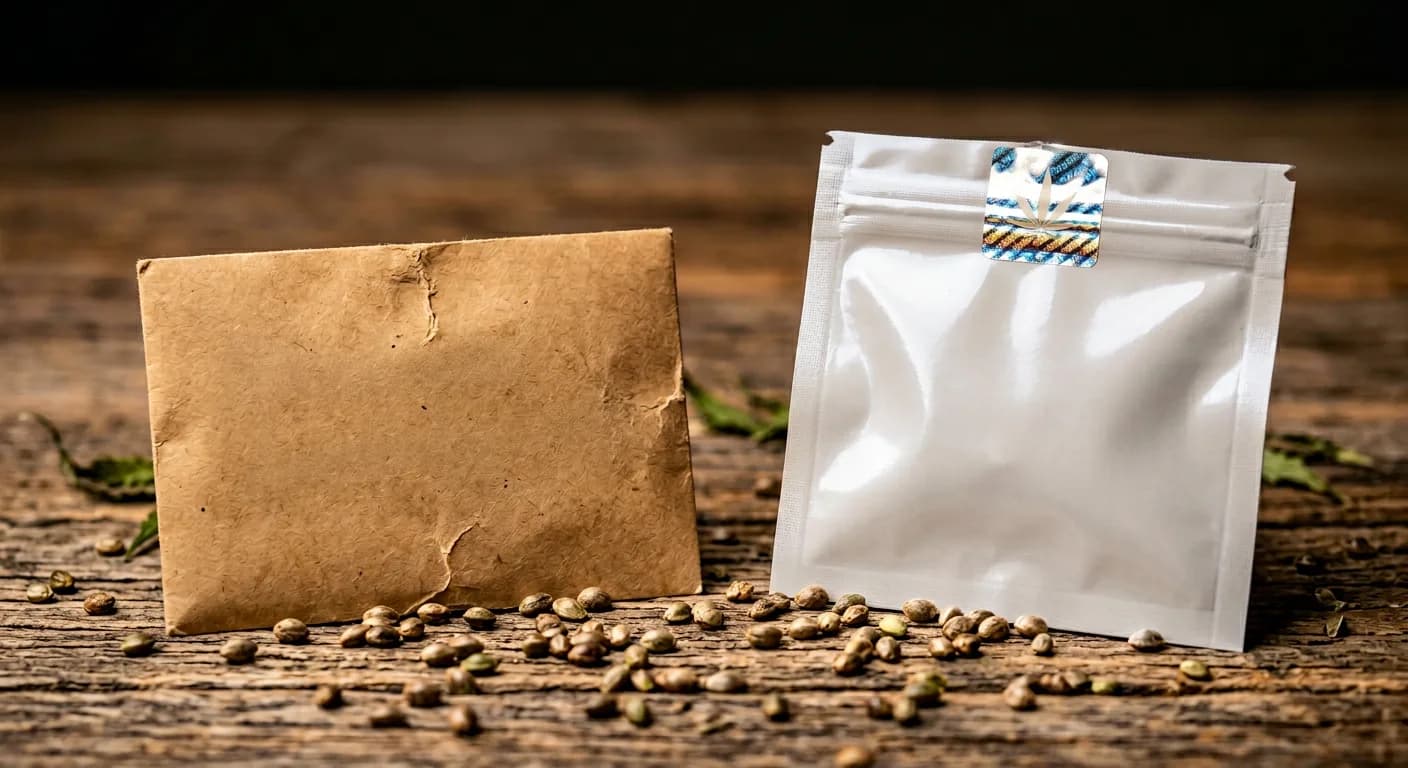
Before you calculate price per seed, calculate how many plants your space supports. Buying 10 seeds when you can only grow 2 plants at a time means 8 seeds sitting in storage, valuable only if you store them correctly. See our complete guide on how to store cannabis seeds for 5+ years.
The True Cost Framework: Price Per Seed Is a Lie
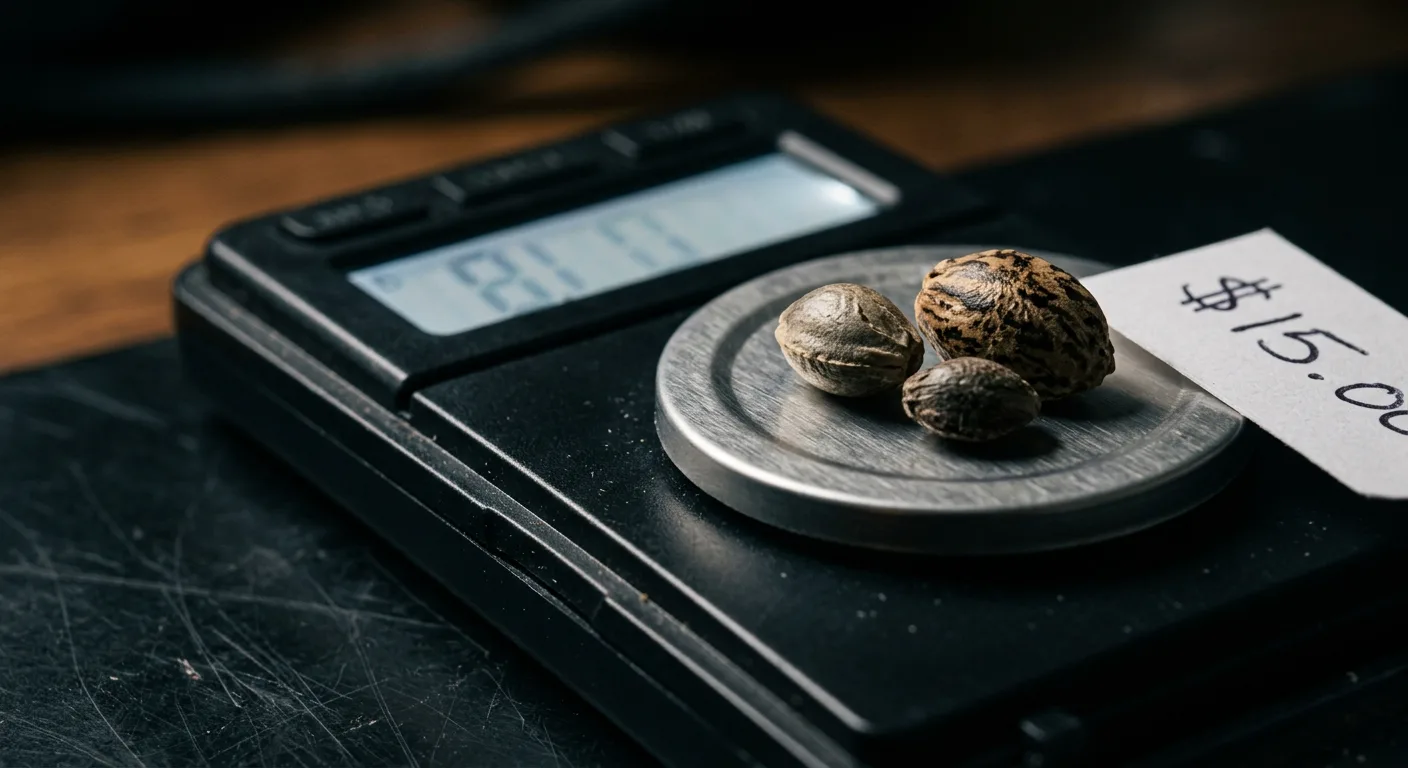
The sticker price per seed tells you almost nothing about your real cost per gram of flower. A "cheap" $5 seed with a 60% germination rate costs you more per successful harvest than a $15 seed that germinates at 95%. Here's the full formula.
True cost per gram = (seed price ÷ germination rate ÷ successful grow rate) ÷ expected yield in grams. Running this calculation for your specific numbers reveals which pack size actually saves you money.
The True Cost Per Gram Formula
Work through these five inputs for any seed purchase:
Seed Price
The raw cost per seed based on pack size. A 10-pack at $120 = $12/seed. A single at $20 = $20/seed.
Germination Rate
Quality feminized seeds from reputable breeders germinate at 80–95%. Budget seeds can drop to 60–70%. Divide seed price by this rate to get your cost per sprouted seedling.
Sex Ratio (Regulars Only)
Regular seeds are approximately 50% male, 50% female. Double your per-seed cost when calculating cost per female plant. Feminized seeds skip this step entirely.
Successful Grow Rate
Even healthy seeds can produce plants that hermie, get stressed, or underperform. Experienced growers hit 90–95% success. Beginners are closer to 70–80% on their first few grows.
Expected Yield Per Plant
A beginner in a 2×2 tent might pull 30–50g per plant. An experienced grower in a 4×4 under 600W can pull 100–200g per plant. Use our yield estimator tool to get a realistic number for your setup.
Worked Example: $15 Single Seed vs $10/Seed in a 10-Pack
| Variable | Single Seed ($15) | 10-Pack ($100 = $10/seed) |
|---|---|---|
| Raw seed cost | $15.00 | $10.00 |
| Germination rate | 90% | 90% |
| Cost per sprouted seedling | $16.67 | $11.11 |
| Successful grow rate (beginner) | 75% | 75% |
| Cost per completed harvest | $22.22 | $14.81 |
| Expected yield (beginner, 2×2) | 40g | 40g |
| True cost per gram (seed only) | $0.56/g | $0.37/g |
| Savings over 5 harvests | , | ~$47 saved |
The 10-pack wins on per-gram cost, but only if you'll actually use all 10 seeds within their viable storage window (2–5 years in a cool, dark place; up to 10+ years when properly vacuum-sealed and refrigerated).
Use our free grow cost calculator to plug in your exact seed price, germination rate, setup costs, and expected yield. It outputs your true all-in cost per gram including electricity, nutrients, and media, not just seeds.
When Single Seeds Make Sense
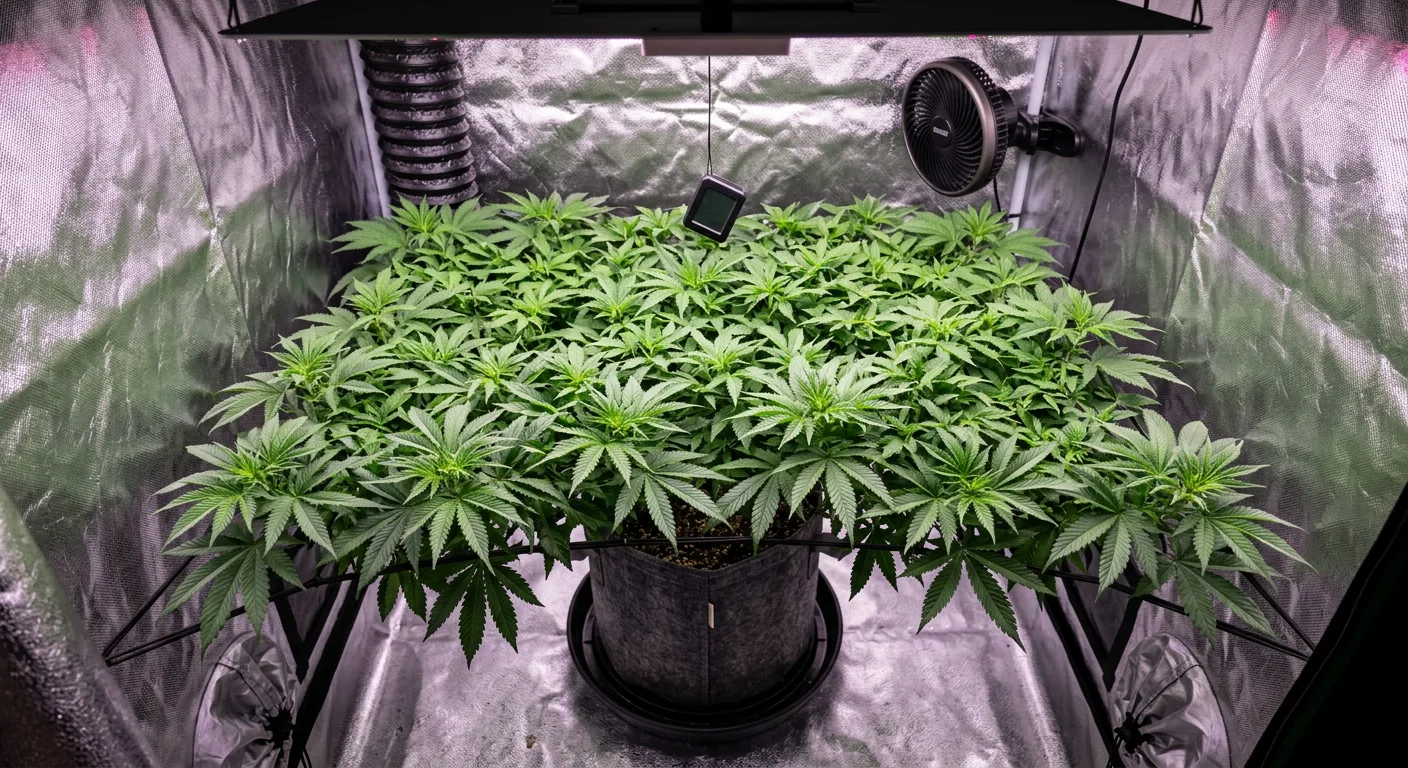
Single seeds are not just for growers who can't afford a pack. There are specific situations where buying one seed at a time is the smartest decision you can make.
Single seeds make sense when you're testing expensive or unfamiliar genetics before committing, when your grow space physically limits you to one or two plants, or when you're pheno hunting across multiple strains rather than multiple seeds of the same strain.
Scenario 1: Limited Grow Space
A 2×2 tent with a single 200–300W light comfortably supports one, maybe two, plants. Buying a 10-pack when you can only run one plant per cycle means seeds sitting in storage for 5–10 cycles. That's not bulk value: that's inventory you have to manage.
- 2×2 tent → 1–2 plants max → buy 2–3 seeds at most
- 2×4 tent → 2–4 plants → a 3-pack or 5-pack is appropriate
- 4×4 tent → 4–6 plants → 5-pack or 10-pack starts making sense
Scenario 2: Testing New or Expensive Genetics
If you're eyeing a premium strain like Quantum Kush (THC up to 30%) or a highly sought-after cultivar you've never grown before, buy one or two seeds first. Confirm it grows well in your specific environment, your light, your soil, your watering habits, before committing to a full pack.
Even experienced growers get surprised by how a new strain behaves in their setup. A test run protects your time and environment investment, not just your seed budget.
Scenario 3: Running Multiple Strains at Once
Some growers prefer to explore variety rather than depth. If you want to run four different strains in a 4×4, buying one or two seeds of each gives you a diverse canopy without overcommitting to any single genetic line. Strains like OG Kush (26% THC), Sour Diesel (24% THC), Super Lemon Haze (23% THC), and White Widow (25% THC) each bring distinct effects and terpene profiles worth experiencing together. Managing multiple strains in one tent requires attention to flowering time, feeding schedules, and height differences.
Avoid buying single seeds purely because they're cheaper upfront if you plan to run the same strain repeatedly. Over three cycles, three separate single-seed purchases almost always cost more than one 3-pack purchased at the start.
When 3-Packs Make Sense
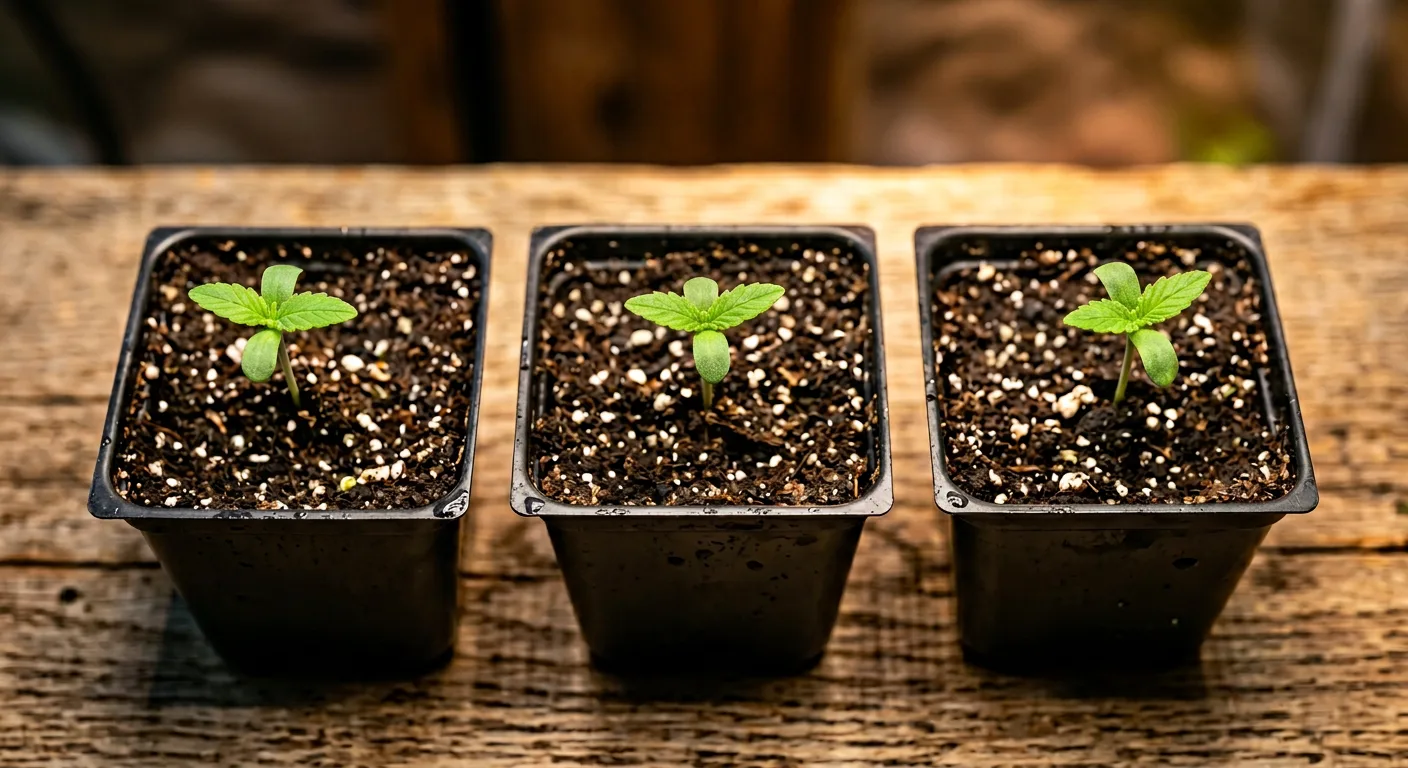
The 3-pack is the most underrated pack size in cannabis cultivation. It hits the sweet spot between variety, backup coverage, and cost efficiency for a wide range of growers.
A 3-pack is ideal for new growers who need at least one backup seed for germination failures, for small-tent growers with space for 2–3 plants, and for anyone testing a strain they plan to grow long-term before buying a larger pack.
The New Grower Backup Case
Even at a 90% germination rate, 1 in 10 seeds won't sprout. For a beginner, that failed germination on their only seed is a crushing setback. A 3-pack means you plant two seeds, keep one in reserve, and have a backup if one fails to germinate or produces a weak seedling.
- Plant 2 seeds, keep 1 in reserve
- If both germinate well, store the third for your next run
- If one fails, you still have a successful plant plus a reserve
- If both are strong, consider topping one and training the other for comparison
First-time growers: before you even touch your seeds, read our complete indoor grow tent setup guide and make sure your environment is dialed in. A perfect seed in a broken environment is still a failed grow.
Best Strains for a First 3-Pack Purchase
For a first grow, choose strains known for resilience and forgiving growth patterns. Avoid ultra-sensitive sativa-dominants on your first run.
| Strain | Type | THC | Why It's Good for a 3-Pack First Grow |
|---|---|---|---|
| Northern Lights × Big Bud | Feminized | 20% | Compact, forgiving, heavy yields |
| Super Skunk | Feminized | 20% | Robust, fast flowering, beginner-friendly |
| White Widow | Feminized | 25% | Industry benchmark, stable genetics, easy to grow |
| Gorilla Glue #4 | Feminized | ~27% | Extremely resinous, tolerates minor mistakes |
| Amnesia Haze Auto | Autoflower | 17% | Fast finish, no light-schedule management needed |
When 10-Packs and Bulk Buying Makes Sense
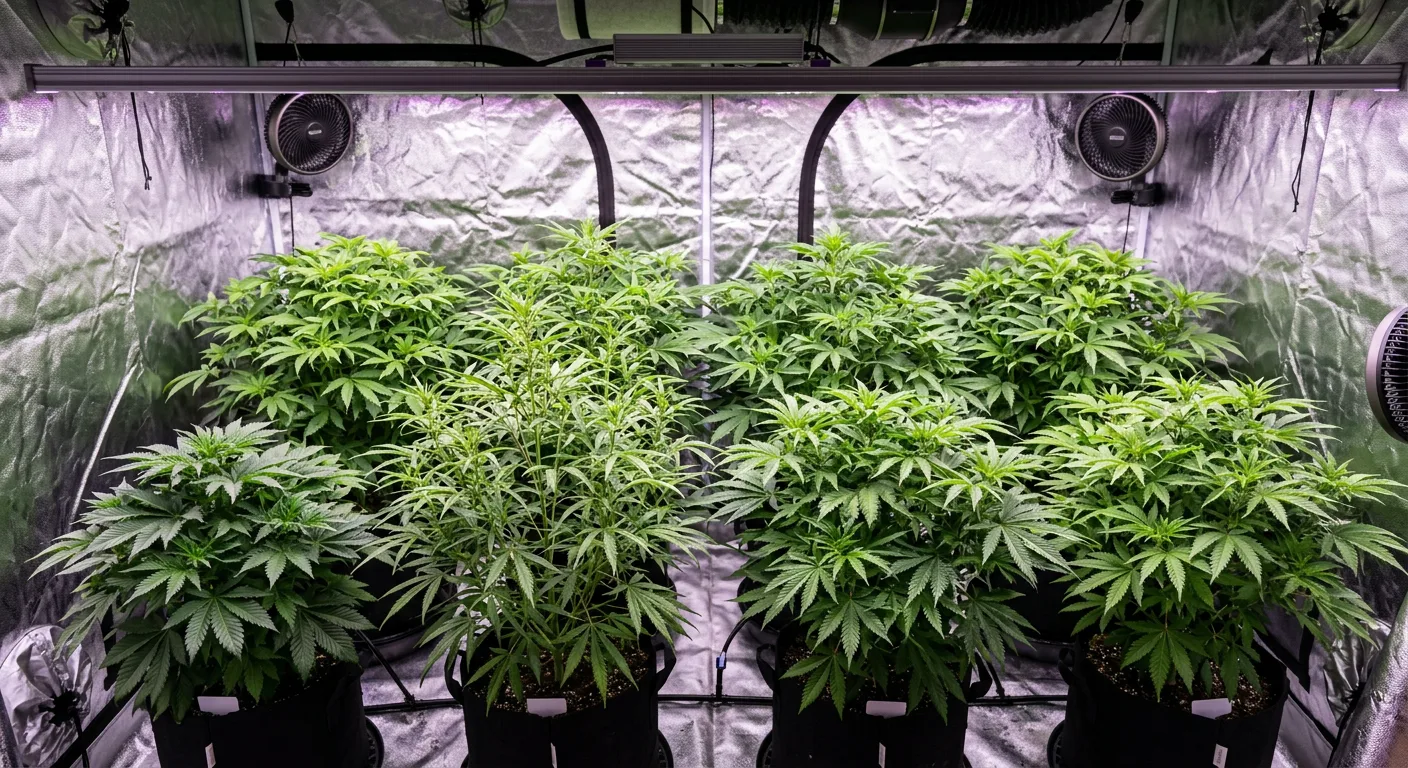
A 10-pack isn't just "more seeds for less money", it unlocks a fundamentally different growing strategy. At this scale, you're not just growing plants; you're running a selection process.
Ten-packs deliver the best per-seed value and make sense for experienced growers running pheno hunts, perpetual harvest setups, or anyone committed to a strain for multiple seasons. The savings compound with every cycle.
Pheno Hunting: The Primary Reason Experienced Growers Buy in Bulk
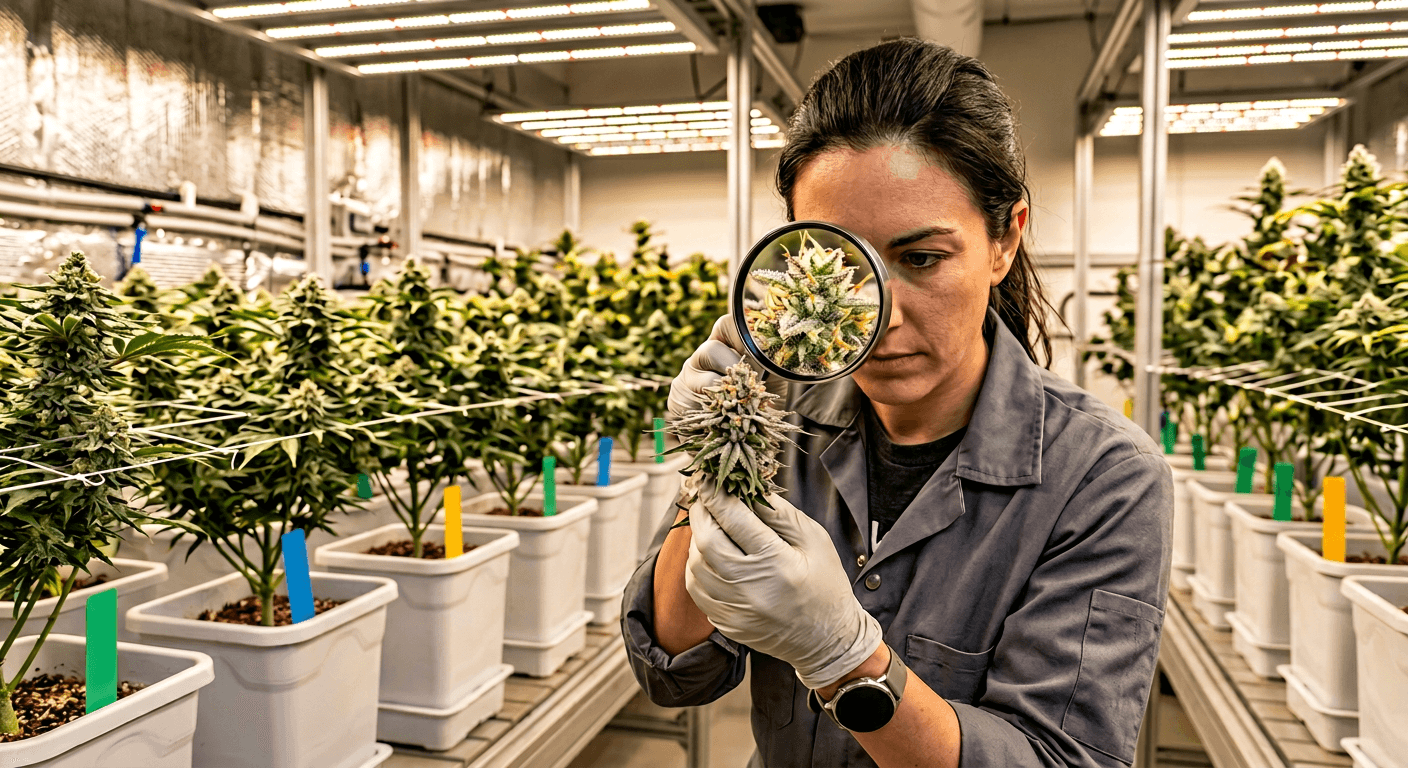
Even fully feminized seeds from stable genetics express phenotypic variation. One plant from a batch might be taller, more resinous, faster to flower, or carry a more pronounced terpene profile than its siblings. Running 5–10 plants of the same strain lets you identify and clone your personal keeper.
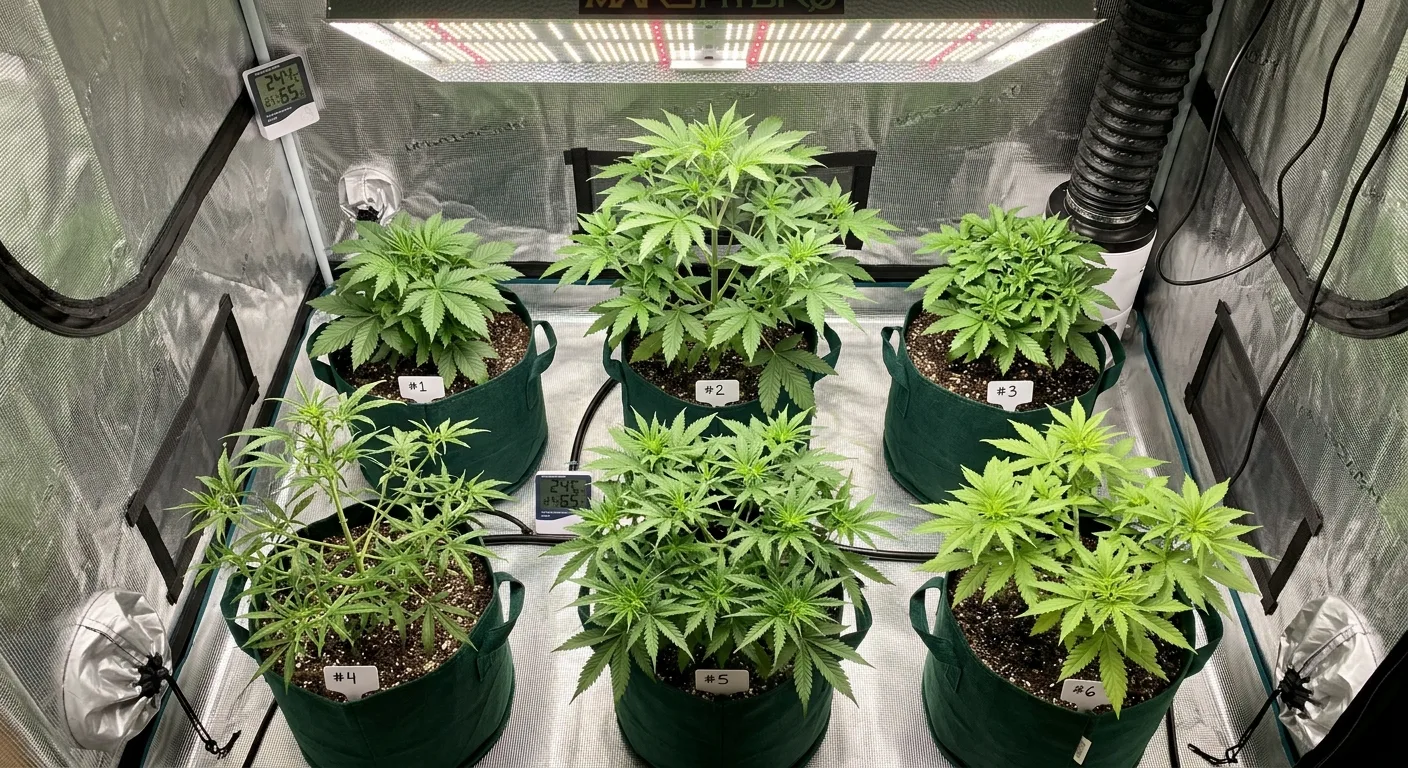
- Run 6–10 plants from the same strain
- Observe growth structure, node spacing, leaf color, and aroma during veg
- Identify 2–3 standouts going into flower
- Take clones from your top candidates before flipping to 12/12
- Harvest all, evaluate final product, select your keeper phenotype for cloning
Strains worth running as a 10-pack pheno hunt include OG Kush, Black Widow (26% THC), Purple Kush (27% THC), and high-complexity strains like Gelato or Wedding Cake where the best phenotype is dramatically better than an average one.
Perpetual Harvest Setups
Perpetual growers flip a new batch into flower every 4–6 weeks, maintaining a constant pipeline from seedling to harvest. This model burns through seeds quickly. Buying 10-packs or 20-packs means fewer reorders, lower per-seed cost, and uninterrupted production cycles.
For long-term storage of bulk seeds, the critical variables are temperature, humidity, and light exclusion. Seeds stored at 6–8°C (42–46°F) with relative humidity below 20% in an opaque, airtight container retain viability for 5+ years. Vacuum-sealed and frozen, quality seeds can last a decade or more. Read the full cannabis seed storage guide before buying more seeds than you'll use in one season.
Per-Seed Price Comparison Across Pack Sizes
| Pack Size | Typical Price Range | Cost Per Seed | Best For | Bulk Savings vs Single |
|---|---|---|---|---|
| 1 seed (single) | $10–$25 | $10–$25 | Testing genetics, single-plant grows | Baseline |
| 3-pack | $25–$55 | $8–$18 | Beginners, small tents, backup coverage | 10–25% cheaper/seed |
| 5-pack | $40–$85 | $8–$17 | Moderate growers, small pheno hunts | 15–30% cheaper/seed |
| 10-pack | $70–$150 | $7–$15 | Experienced growers, pheno hunts, perpetual | 25–50% cheaper/seed |
| 25+ seeds (bulk) | $150–$350+ | $6–$14 | Commercial-scale, breeding projects | 40–60% cheaper/seed |
These savings only materialize if you store unused seeds properly and actually use them. A 25-pack that degrades in a desk drawer delivers zero value over a 3-pack you use immediately.
The Backup Seed Strategy: Why You Always Need 20% More Than You Plan to Grow
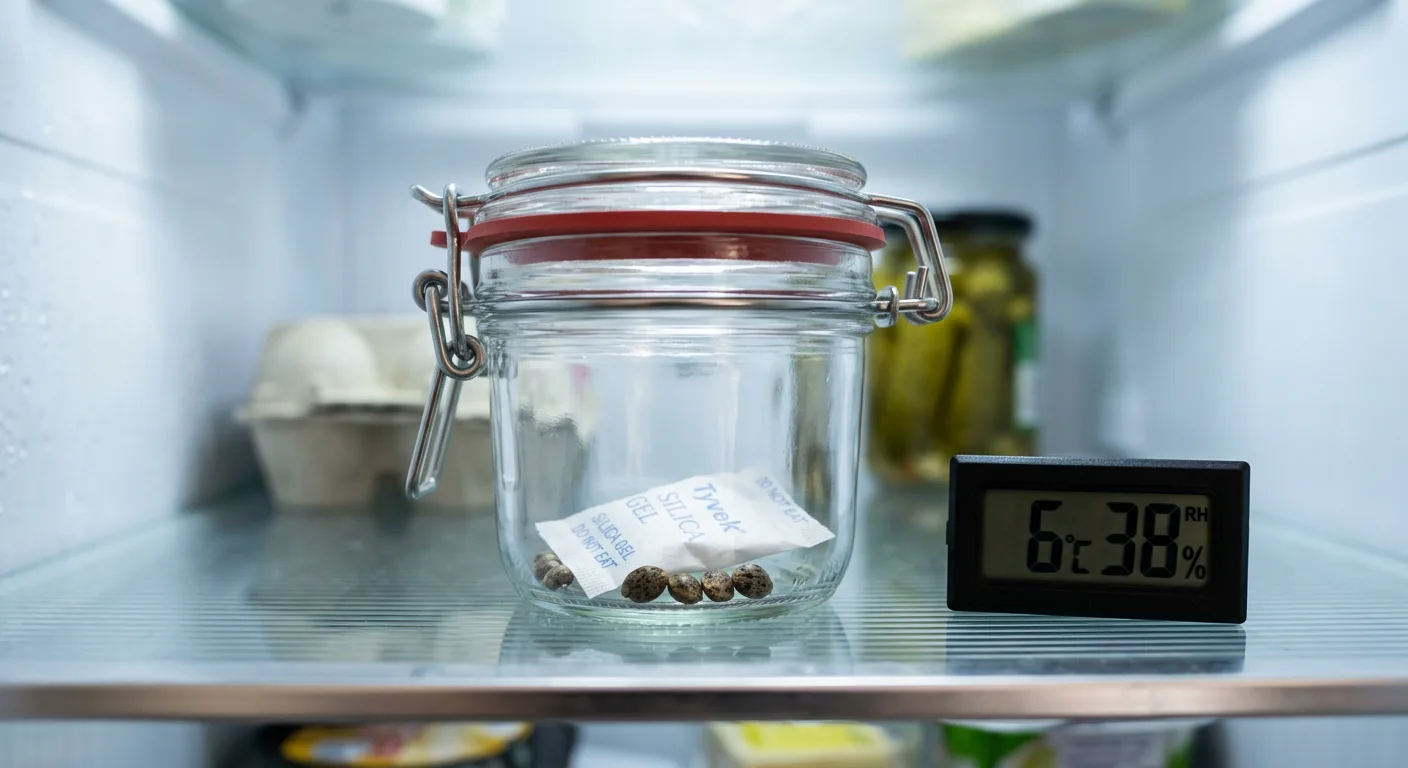
Even experienced growers lose plants. Germination fails, seedlings damp off, a plant hermaphrodites under stress. Planning exactly to your plant count with zero backup is a strategy that fails roughly 1 in 5 grows for even skilled cultivators.
The 20% backup rule means buying at least one extra seed per five plants you plan to grow. This buffer absorbs germination failures, early seedling losses, and unexpected hermaphrodites without derailing your entire harvest timeline.
Real Germination Rate Data
Here's what the numbers actually look like across different seed quality tiers:
| Seed Quality Tier | Typical Germination Rate | Expected Failures per 10 Seeds | Backup Seeds Needed per 10 Planned Plants |
|---|---|---|---|
| Premium feminized (reputable breeder) | 90–95% | 0–1 | 1–2 |
| Mid-tier feminized | 80–90% | 1–2 | 2–3 |
| Budget/unknown source | 60–75% | 2–4 | 3–5 |
| Aged seeds (3–5 years, poor storage) | 40–65% | 3–6 | 4–6 |
| Aged seeds (properly stored) | 75–90% | 1–2 | 2–3 |
Our germination guarantee covers seeds that fail to sprout under proper germination conditions. This changes the backup seed calculus: when you have quality assurance backing your purchase, you need fewer emergency spares. Still, buying 20% extra is cheap insurance against environmental failures outside the seed itself.
Applying the Backup Strategy by Pack Size
- Growing 1 plant: Buy a 3-pack. Use 1, store 2 as backup.
- Growing 2–3 plants: Buy a 5-pack. Plant 3, store 2 in reserve.
- Growing 4–6 plants: Buy an 8–10 pack. Plant 5–6, keep 2–4 in storage.
- Growing 8–10 plants: Buy a 12–15 pack or a second 10-pack. Always have 2–3 seeds in reserve.
How Pack Size Interacts With Seed Type: Autos vs Feminized
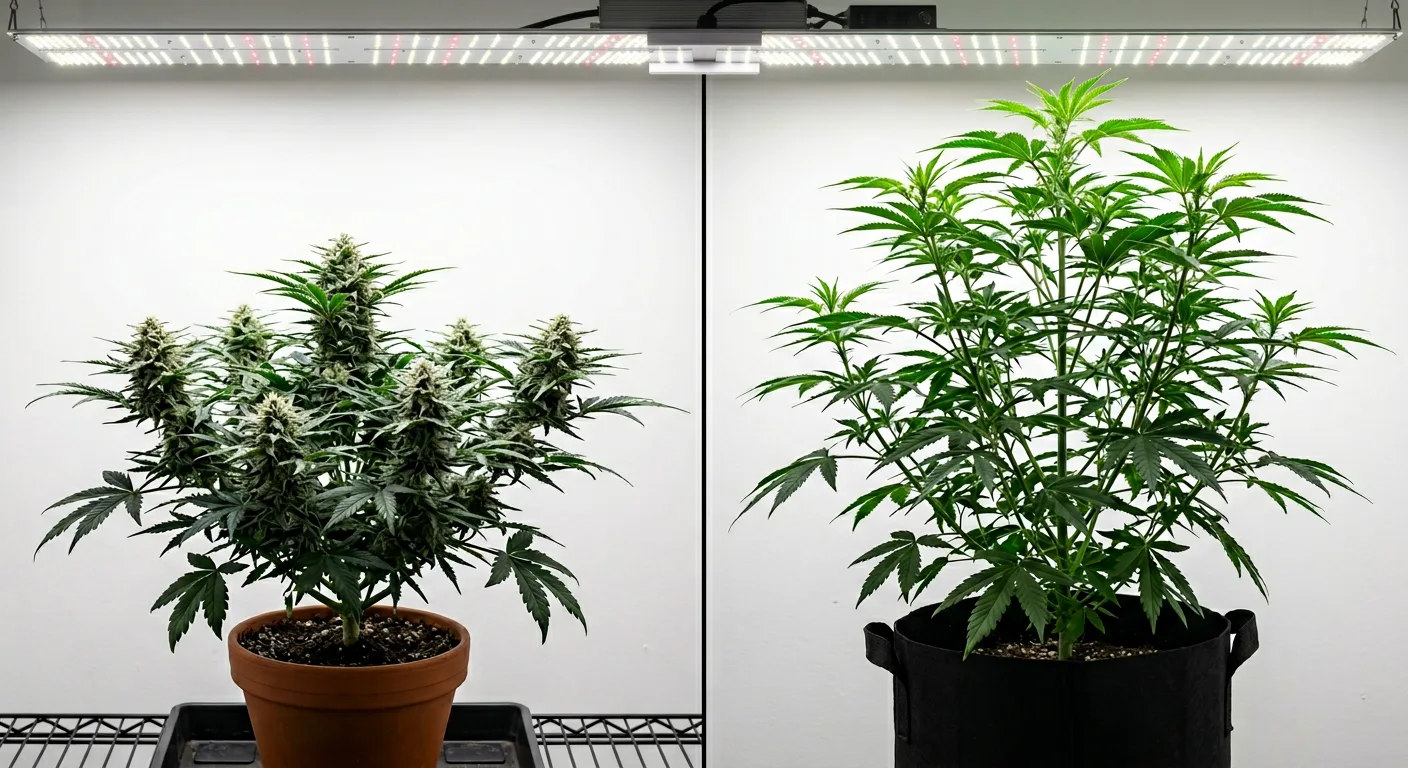
Your seed type fundamentally changes how many seeds you actually need. Autoflowers and feminized photoperiods have different lifecycle structures, different selection strategies, and different approaches to pack size optimization.
Autoflowers are typically planted all at once with no cloning or pheno selection phase, so smaller packs suffice. Feminized photoperiods benefit from running multiples to select a keeper clone, making larger packs more strategically valuable.
Autoflower Pack Size Strategy
Autoflowers can't be cloned effectively, their growth clock starts at germination and doesn't reset. You grow each seed from start to finish, harvest it, and start fresh. This means:
- No keeper clone to maintain → no reason to run 10 plants to find one pheno
- Faster cycles (60–80 days) → you'll go through seeds faster than with photoperiods
- Best strategy: 3-packs or 5-packs, reordering the same strain you enjoy
- Exception: if you want to sample the range of auto phenotypes, a 10-pack lets you do that in one run
Strong autoflower options for consistent multi-pack growing include Skywalker OG Auto (23% THC), Holy Grail Kush Auto (20% THC), and Banana Kush Auto (18% THC). For a detailed breakdown of the auto vs feminized decision, see our autoflower vs feminized seed comparison guide.
Feminized Photoperiod Pack Size Strategy
Feminized photoperiods give you control: you decide when to flip to flower, you can take clones before flowering, and you can maintain a mother plant indefinitely once you find a phenotype you love. This changes the math on pack size significantly.
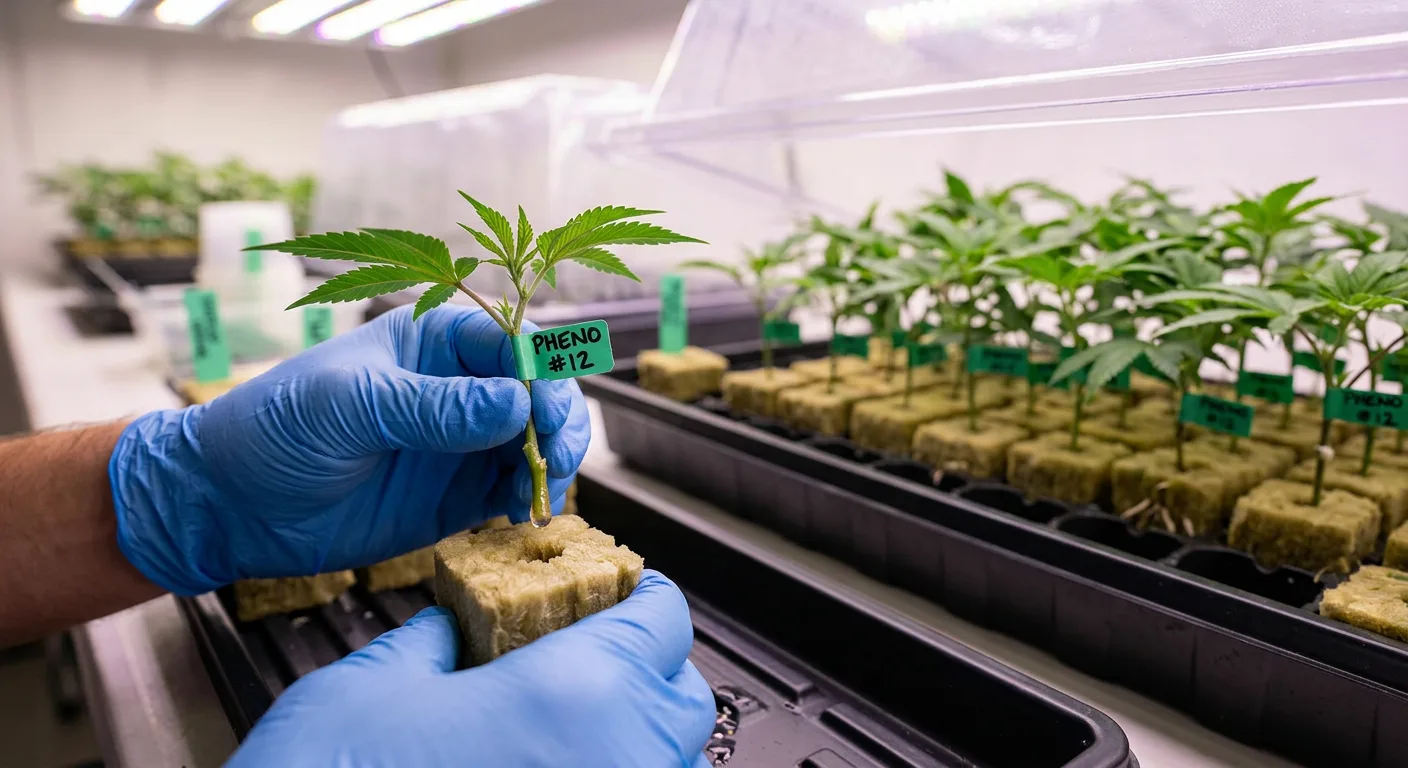
- Run 5–7 feminized plants from one 10-pack
- Take clones from your top 2–3 candidates before flipping to 12/12
- Flower all originals, evaluate at harvest
- Select your best plant, maintain its clone as a mother
- One 10-pack purchase potentially gives you a lifetime supply of genetics via cloning
Running a pheno hunt? Use our grow planner tool to map out clone timing, flip dates, and harvest windows across multiple plants so nothing gets out of sync during your selection run.
Regular Seeds: The Special Case
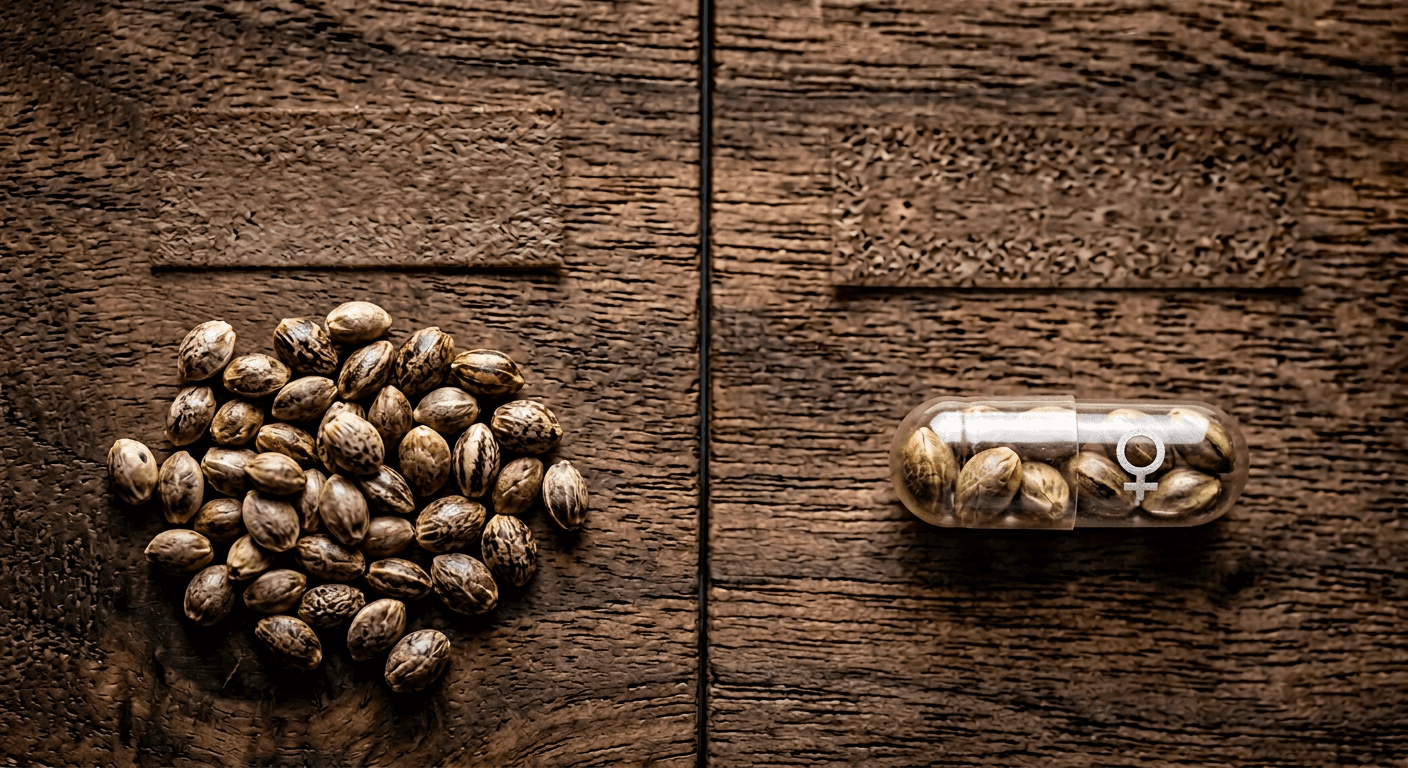
If you're working with regular (non-feminized) seeds, common in heirloom and landrace work: the sex ratio makes pack size even more critical. At roughly 50% male, a 10-pack yields approximately 5 females. A 3-pack might give you only 1–2 females, potentially zero if you're unlucky. For regular seeds, never buy fewer than a 10-pack if you need a guaranteed female harvest. Learn more about heirloom genetics in our heirloom cannabis strains guide.
Side-by-Side Verdict: Which Pack Size Is Right for You?
Use this decision matrix to match your situation to the optimal pack size. Be honest about your grow space, experience level, and how quickly you'll cycle through seeds.
The best pack size is the one that matches your plant count plus a 20% backup buffer, aligns with your storage capacity, and fits your growing strategy, whether that's simple personal use or systematic pheno hunting.
| Grower Profile | Grow Space | Seed Type | Recommended Pack | Why |
|---|---|---|---|---|
| First-time grower | 2×2 tent | Feminized auto | 3-pack | Backup coverage without waste |
| Second or third grow | 2×4 tent | Feminized photo | 3–5 pack | Room to select between 2–3 phenos |
| Experienced, personal use | 4×4 tent | Feminized photo | 5–10 pack | Pheno hunt + long-term storage value |
| Perpetual harvest grower | 4×8 tent or larger | Feminized photo | 10-pack+ | Constant supply, best per-seed cost |
| Strain explorer, variety seeker | 4×4 tent | Mixed | 1–2 seeds per strain | Maximize variety, minimize excess |
| Pheno hunter, clone keeper | 4×4 or larger | Feminized photo | 10-pack | Selection pool + potential lifetime source via cloning |
| Outdoor seasonal grower | Garden / greenhouse | Feminized photo | 5–10 pack | Seasonal timing, weather risk needs buffer |
The grower who benefits most from bulk buying is the one with a clear plan to use the seeds AND proper storage for the ones they don't plant immediately. The grower who wastes money on bulk buying is the one who overbuy based on price-per-seed calculations and lets half the pack degrade in a kitchen drawer.
Choosing the Right Strain for Your Pack Size Strategy
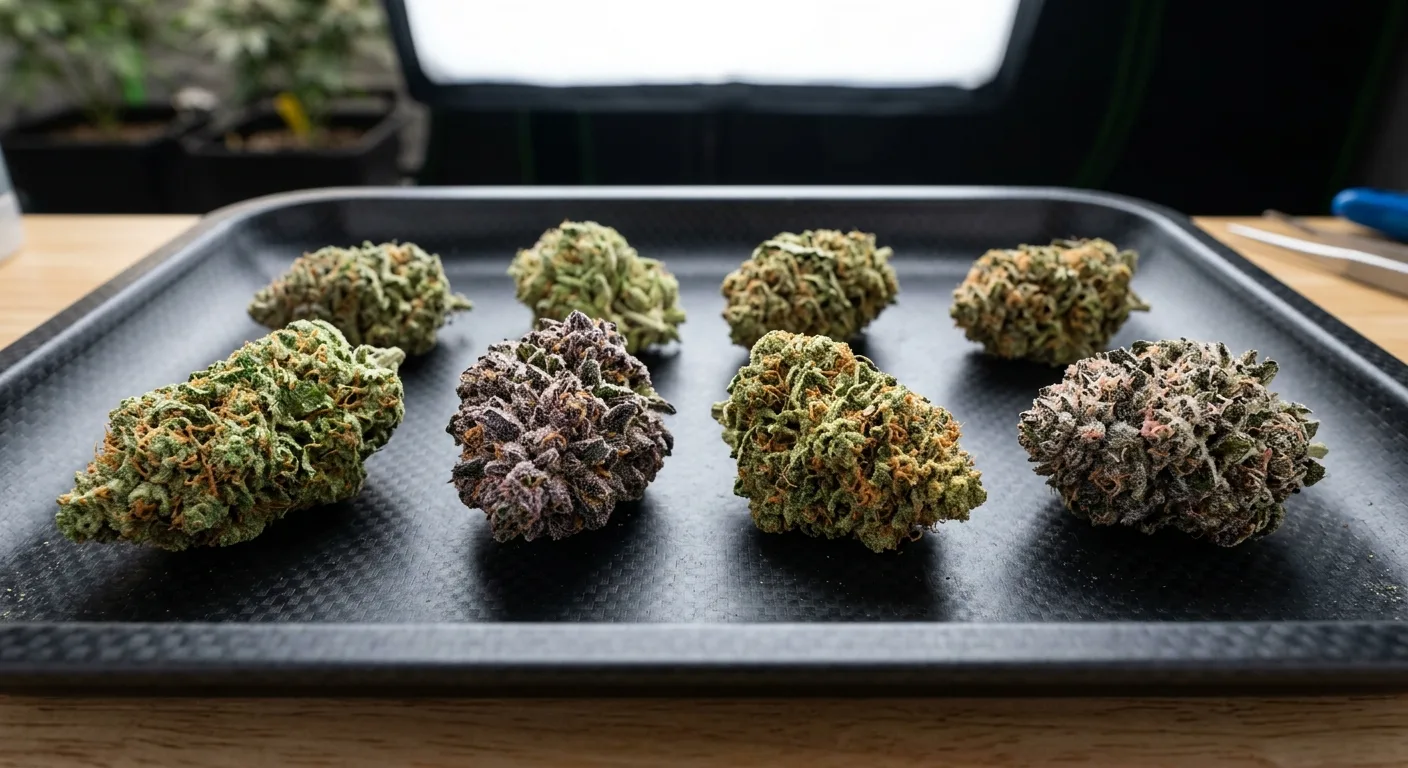
Pack size strategy and strain selection work together. High-THC complex strains with noticeable phenotypic variation reward 10-pack pheno hunts. Stable, consistent strains are fine in 3-packs for reliable repeated grows.
Match your strain's variability and your goals: stable workhorses suit small packs for consistent personal production, while complex or premium genetics justify bulk investment when you're hunting for a standout phenotype.
Best Strains for 3-Pack Consistent Production
These strains are known for stable, predictable expression, ideal for growers who want reliable outcomes from a small pack without needing to run 10 plants to find a good one:
- Northern Lights × Amnesia Haze (24% THC), Consistent structure, predictable flowering time
- Skunk Special (24% THC), Classic genetics, stable across phenotypes
- Super Skunk (20% THC), Reliable producer, forgiving of minor environmental swings
- Wedding Cake, Highly stabilized modern feminized genetics, excellent consistency
- White Widow (25% THC), One of the most reliably consistent strains in cannabis history
Best Strains for 10-Pack Pheno Hunts
These strains show meaningful variation between phenotypes, making it worth running a full 10-pack to find your standout plant:
- OG Kush (26% THC), Famous for divergent phenos with different terpene profiles and structure
- Purple Kush (27% THC), Color expression and density vary significantly between phenotypes
- Gelato, High variability in flavor and effect profile across the phenotypic range
- New York Power Diesel (24% THC), Sativa-leaning phenotypes worth selecting for flavor and effect
- Runtz, Modern hybrid where the best phenotype is dramatically better than an average one
- Alien Rock Candy (22% THC), Complex hybrid with notable variation in resin production across phenotypes
Don't start a pheno hunt unless you have the space to vegetate 6–10 plants simultaneously, the cloning skills to preserve your top candidates, and enough grow space to flower all originals. A pheno hunt in a 2×2 tent isn't a pheno hunt: it's just an overcrowded grow.
The Smart Buying Framework: A Step-by-Step Decision Process
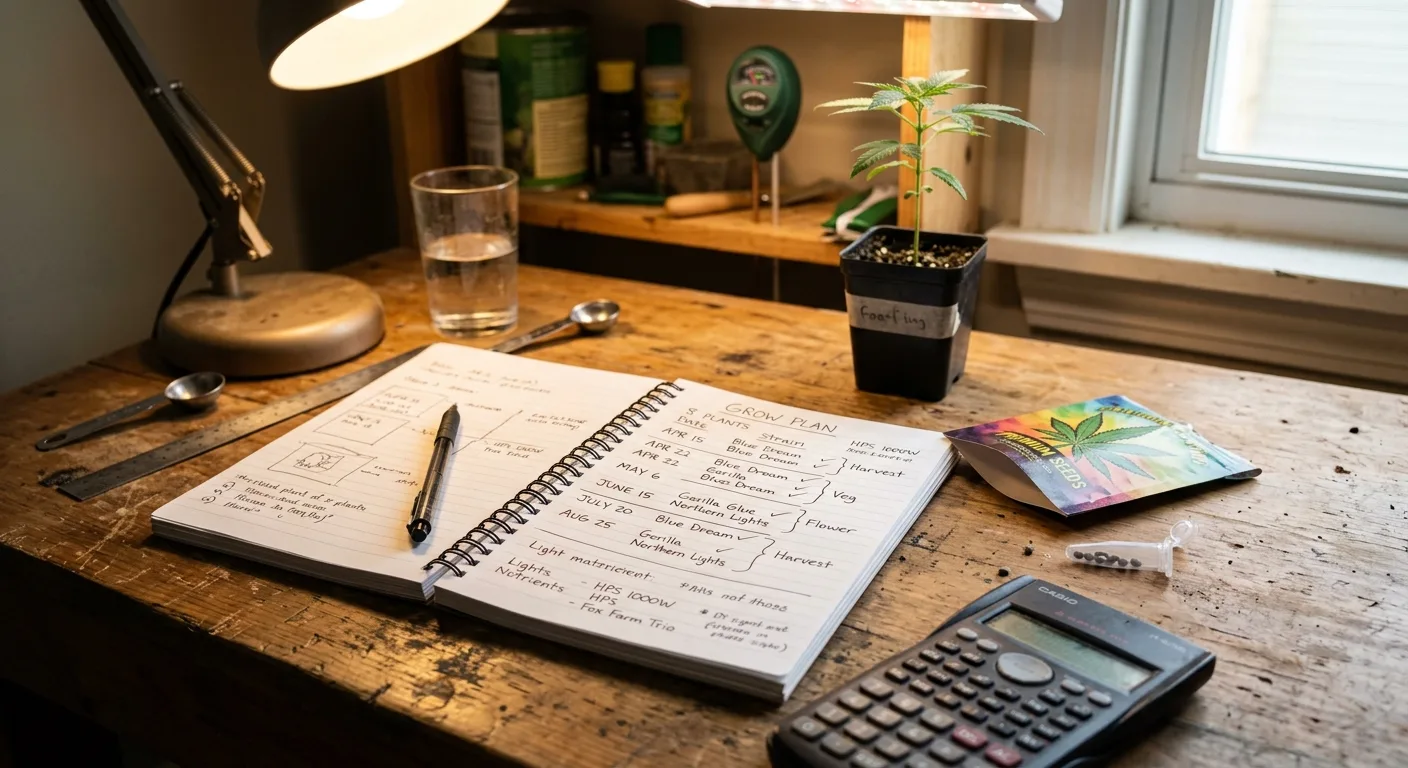
Synthesize everything above into a repeatable decision process you can use every time you're about to buy seeds.
A structured 5-step buying framework prevents both under-buying (no backup coverage) and over-buying (seeds that degrade before use). Run through this process before every seed purchase to land on the right quantity every time.
Count Your Canopy Spots
How many plants will your space support at harvest size? That's your base number. Use our light calculator to confirm your watt-per-square-foot coverage supports your planned plant count.
Add Your Backup Buffer
Multiply your base plant count by 1.2 (20% buffer). Round up to the nearest whole number. This is your minimum seed purchase for one cycle.
Multiply for Planned Cycles
If you plan to run the same strain for 3 cycles before switching, multiply your per-cycle minimum by 3. Compare this total to available pack sizes: does it line up with a 5-pack, 10-pack, or 20-pack?
Check Your Storage Capability
Can you store seeds properly for the time it'll take to use them all? If not, don't buy a larger pack just to save per-seed cost. Degraded seeds cost more per successful harvest than full-price fresh seeds.
Calculate True Cost Per Gram
Run the formula from Section 2 with the pack size you're considering. If the per-gram cost difference between a 3-pack and 10-pack is under $0.10, and you won't use all 10 within their storage window, the 3-pack wins on total value.
- Know your space's plant capacity before buying
- Always add 20% backup buffer to your base number
- Factor in germination rate when calculating true cost
- Match pack size to seed type (autos need smaller packs; feminized photos reward larger ones)
- Only buy bulk if you have proper long-term storage in place
- Check germination guarantees before purchasing, they change your risk calculation
- Use the grow cost calculator to see total per-gram cost, not just seed price
The growers who consistently get the best value from their seed purchases are not the ones who always buy the biggest pack: they're the ones who have a clear grow plan before they open the seed bank website. Every seed purchase should serve a specific strategy, not just a sale price.
Frequently Asked Questions
Is it cheaper to buy cannabis seeds in bulk or single?
Per-seed price is always lower in bulk packs, a 10-pack typically costs 25–50% less per seed than buying singles. However, the true cost comparison must include germination rate, successful grow rate, yield, and whether you'll actually use all the seeds before they degrade. If you can store seeds properly and will use them within 3–5 years, bulk buying nearly always wins on total cost per gram of flower.
How many seeds should I buy for my first grow?
For a first grow, buy a 3-pack of a forgiving, stable strain. Plant 2 seeds, keep 1 in reserve. This gives you backup coverage for germination failures without leaving you with 7–8 seeds to store long-term while you're still learning. A 3-pack of feminized seeds is the lowest-risk first purchase for most beginner setups.
When does a 10-pack make financial sense vs a 3-pack?
A 10-pack makes financial sense when you have space to grow 5+ plants per cycle, plan to run the same strain for 3 or more cycles, have proper cool-dark storage for unused seeds, and ideally want to run a pheno hunt to find a keeper clone. If you only run 1–2 plants per cycle in a small tent, a 10-pack means 4–8 seeds sitting in storage, valuable only with good storage and a clear plan to use them.
Do autoflowers need larger or smaller packs than feminized seeds?
Autoflowers generally need smaller packs than feminized photoperiods. Because autoflowers can't be cloned effectively, there's no benefit to running 10 plants to find a keeper: you'll just grow each one out and start fresh. A 3-pack or 5-pack of your preferred auto strain is typically the right size, with reorders as needed. Feminized photoperiods benefit from larger packs because running 5–10 plants lets you select a keeper clone that you can maintain indefinitely.
What is the 'true cost per gram' formula for cannabis seeds?
True cost per gram (seed contribution only) = (seed price ÷ germination rate ÷ successful grow rate) ÷ expected yield in grams. For example: a $12 seed with 90% germination, 80% successful grow rate, and 50g yield = ($12 ÷ 0.9 ÷ 0.8) ÷ 50g = $0.33/g in seed cost alone. Use our grow cost calculator to add electricity, nutrients, and media to get your all-in cost per gram.