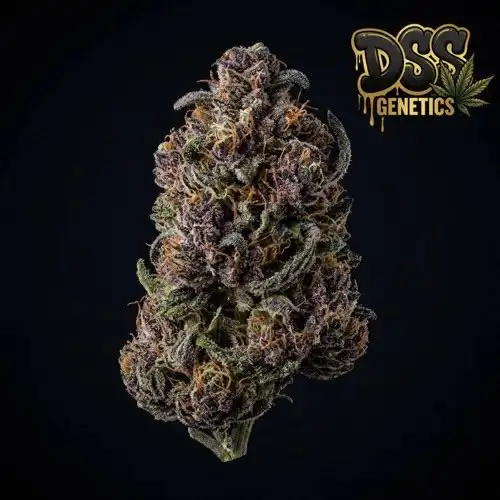
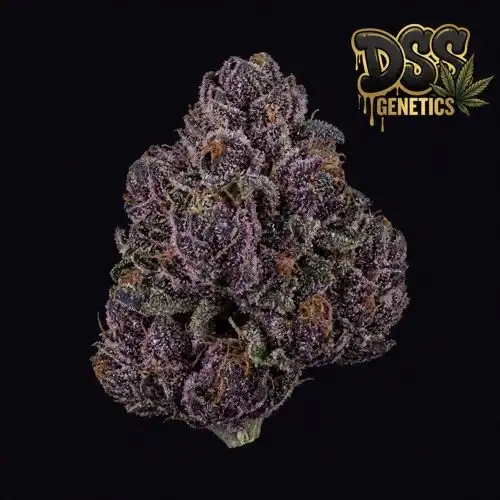
What Causes Cannabis to Turn Purple? The Science of Anthocyanins
Purple cannabis strains get their striking color from anthocyanins—water-soluble pigments found in the vacuoles of plant cells. These flavonoid compounds are the same molecules responsible for the deep reds in cherries, the blue in blueberries, and the violet in eggplant. In cannabis, anthocyanins can express as purple, blue, red, or nearly black depending on cellular pH levels.
Understanding what causes purple cannabis color starts with basic plant biochemistry. Chlorophyll dominates during the vegetative phase, keeping leaves and stems green. As plants enter flowering—and especially during late bloom when chlorophyll production slows—anthocyanins become visible in strains genetically programmed to produce them.
Anthocyanins are pigments, not cannabinoids. They affect color but not THC levels, CBD content, or psychoactive effects. Purple buds are not inherently more potent than green buds—potency depends on genetics and cultivation practices.
Research suggests that anthocyanin expression in plants serves several biological purposes, including UV protection and antioxidant activity. A review in the Journal of Biomedicine and Biotechnology noted that anthocyanins may help plants cope with environmental stressors like cold temperatures and high light intensity. In cannabis specifically, these pigments accumulate in response to both genetic triggers and environmental conditions.
How pH Affects Anthocyanin Color
The exact shade of purple depends on the pH inside the plant's cell vacuoles. Here's how pH shifts the color spectrum:
- Acidic pH (below 6): Anthocyanins appear red or pink
- Neutral pH (around 7): Anthocyanins appear violet or purple
- Alkaline pH (above 7): Anthocyanins appear blue
This is why different purple weed strains display such a wide range of hues—from lavender and magenta to deep indigo and near-black. The genetic makeup of each cultivar determines both the quantity of anthocyanins produced and the cellular environment in which they express.
Purple Strain Genetics: Why Some Cultivars Are Born Purple
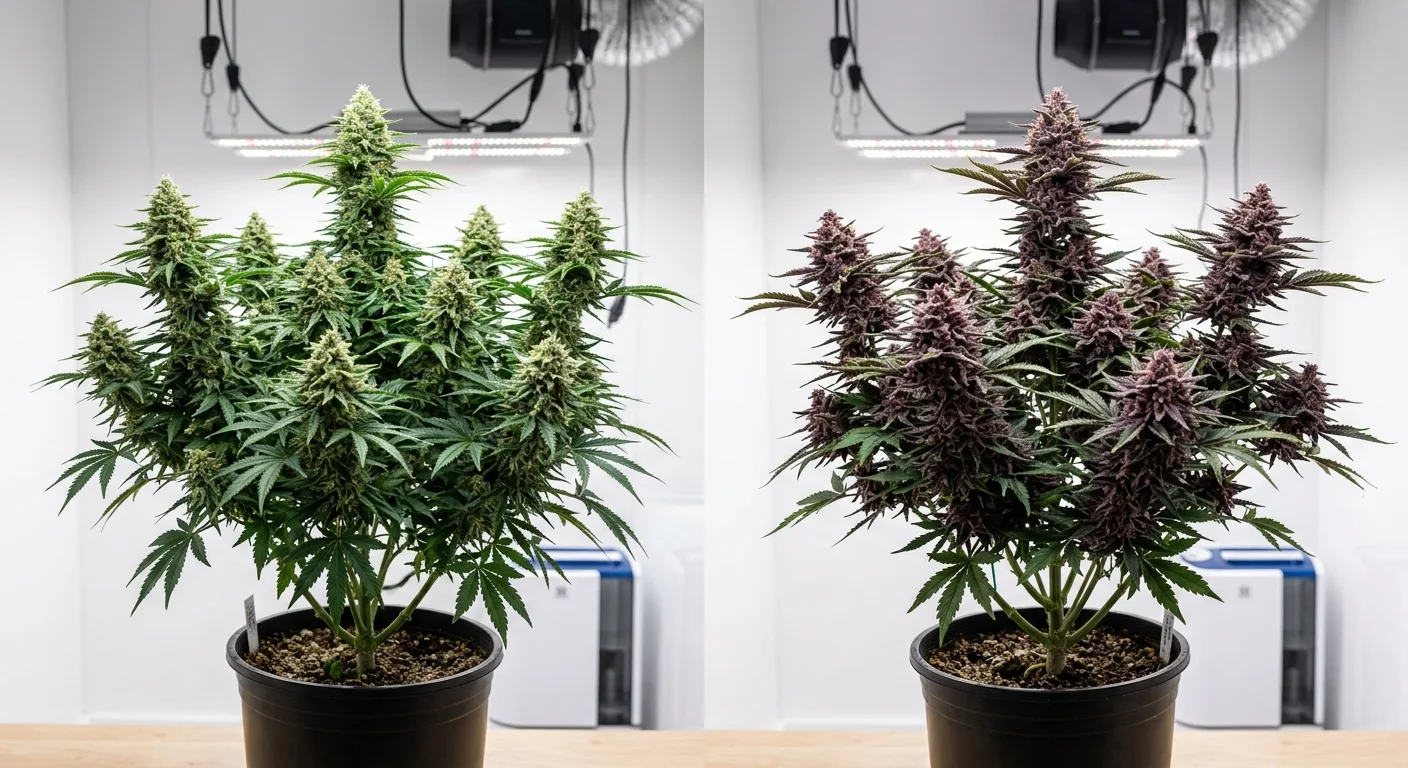
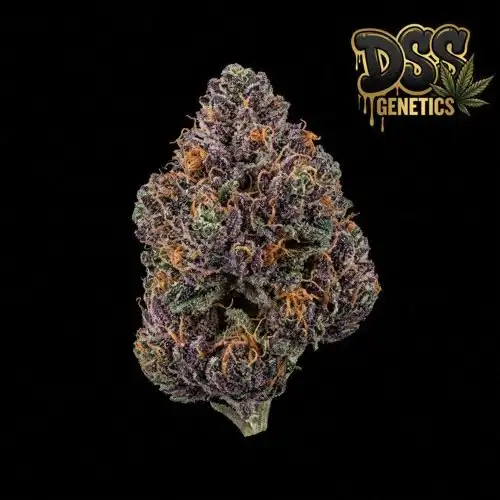
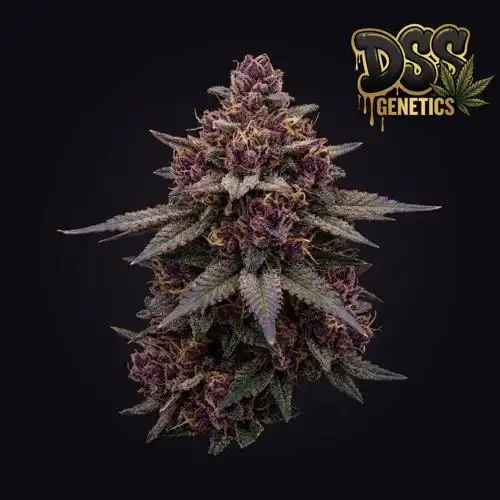
Genetics are the single most important factor determining whether cannabis turns purple. Strains must carry specific alleles that code for anthocyanin biosynthesis enzymes. Without these genetic instructions, no amount of cold exposure or nutrient manipulation will produce true purple coloration.
The anthocyanin biosynthesis pathway involves several key enzymes, including chalcone synthase (CHS), dihydroflavonol 4-reductase (DFR), and anthocyanidin synthase (ANS). Research suggests that variations in the genes encoding these enzymes—particularly regulatory genes called MYB transcription factors—determine how much anthocyanin a plant produces.
Landrace Origins of Purple Genetics
Many of today's naturally purple cannabis strains trace their lineage to high-altitude landrace varieties from regions like:
- Hindu Kush mountains (Afghanistan/Pakistan): Where cold nights at elevation naturally selected for anthocyanin-producing plants
- Southeast Asian highlands: Thai and Vietnamese landraces with purple phenotypes
- Central Asian plateaus: Uzbek and Kazakh varieties adapted to extreme temperature swings
These landrace genetics became the foundation for modern purple breeding. As noted by Royal Queen Seeds, breeders specifically select for plants that "develop high levels of anthocyanins" and cross them to stabilize purple traits across generations. The result is purple strain genetics so deeply embedded that some modern cultivars turn purple regardless of temperature.
Not every plant from a purple strain will express identical coloration. As Leafly documents, Purple Kush has four distinct phenotypes—three showing sativa influence and one exhibiting more indica-like characteristics. Phenotypic variation means individual plants from the same seed batch may display different intensities of purple coloration.
The Genetics vs. Environment Spectrum
| Category | Purple Expression | Cold Needed? | Examples |
|---|---|---|---|
| 100% Genetic Purple | Purple in any environment | No | Purple Kush, Granddaddy Purple |
| Genetically Predisposed | Purple enhanced by cold | Helpful | Purple Punch, Blue Magoo |
| Cold-Triggered Only | Purple only with cold nights | Required | Some OG phenotypes, certain Haze crosses |
| No Purple Genetics | Will not turn purple | Irrelevant | Most sativa-dominant strains |
10 Best Purple Cannabis Strains for 2026
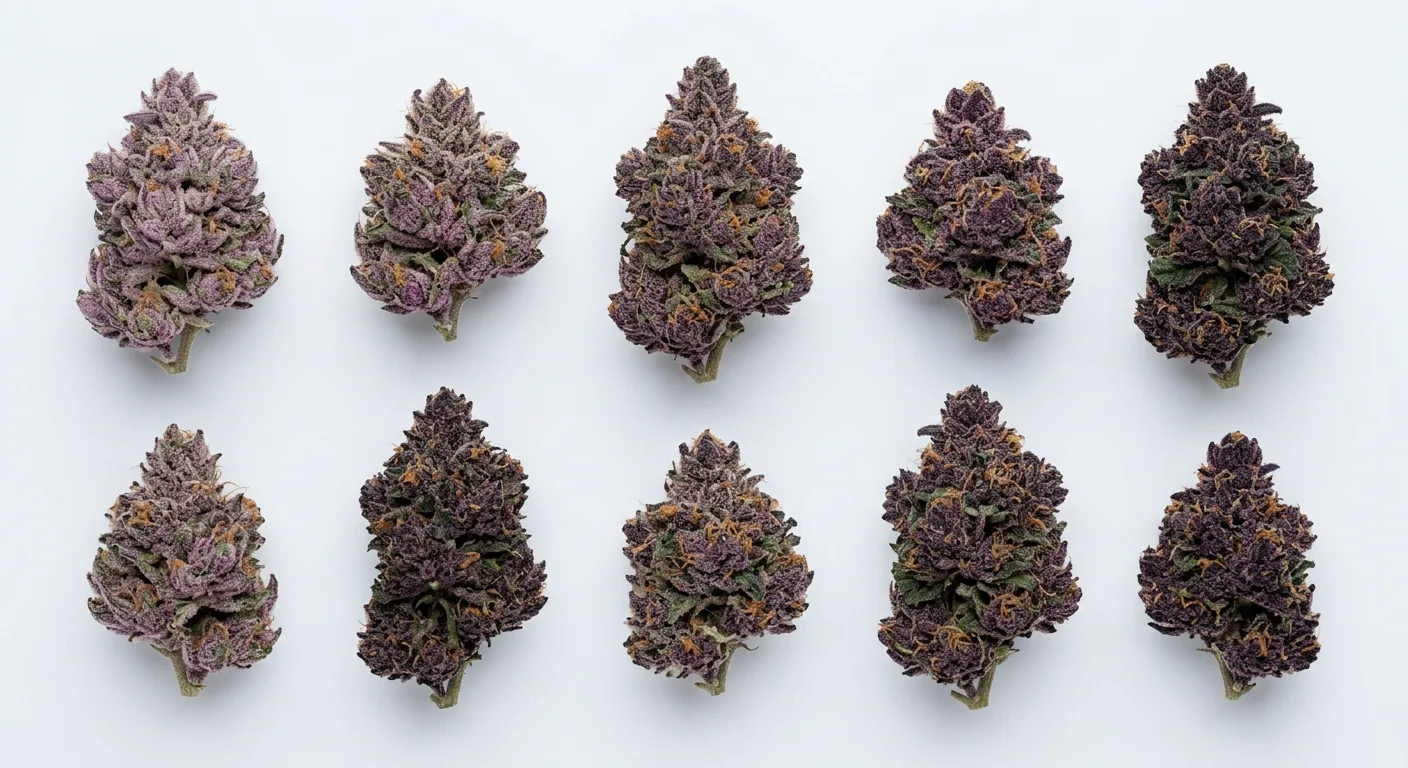
The best purple cannabis strains combine stunning visual appeal with excellent potency, yields, and flavor profiles. We've curated this list from both well-known industry favorites and proven performers in our own seed catalog, prioritizing strains with reliable purple expression and strong growing characteristics.
1. Granddaddy Purple (GDP)
Arguably the most iconic purple strain ever created. GDP crosses Purple Urkle with Big Bud, delivering massive purple-hued colas with grape and berry aromatics. THC levels typically range from 17–23%, and the deep body relaxation makes it a nighttime favorite. Flowering takes 8–10 weeks with indoor yields around 500g/m².
2. Purple Kush
A pure indica born from Hindu Kush and Purple Afghani genetics in Oakland, California. Purple Kush delivers up to 27% THC with earthy, sweet Kush flavors. According to Leafly, it flowers in approximately 8 weeks and grows wide rather than tall. Over 2,300 user reviews report its effectiveness for stress (42%), anxiety (36%), and pain (36%).
3. Purple Punch
A cross of Larry OG and Granddaddy Purple, Purple Punch has become one of the most vibrant purple strains available. As documented by Zamnesia, it produces up to 650g/m² indoors and 800g/plant outdoors after a 9-week flowering period. At 21% THC, its apple pie and spice flavor profile is exceptional. Purple Punch's coloration is almost guaranteed without cold manipulation.
4. Tropicana Cookies Purple
This crossing of Tropicana Cookies with a purple phenotype produces electric purple and orange buds with citrus-forward terpenes. THC levels hit 22–25%, and the balanced hybrid effects combine cerebral stimulation with gentle relaxation. It's one of the newer entries on the purple scene but has rapidly gained popularity for its bag appeal.
5. Blue Magoo
A Pacific Northwest classic, Blue Magoo delivers 22% THC alongside deep blue-purple hues and a berry-dominant flavor. Its DJ Short Blueberry lineage carries some of the oldest purple genetics in modern cannabis. This variety thrives in both indoor and outdoor settings and reliably produces purple coloration.
6. Purple Haze
One of the original purple strains, Purple Haze crosses Haze with a purple-leaning phenotype to create a sativa-dominant variety with energizing, euphoric effects. Unlike most purple strains that lean indica, Purple Haze proves that purple genetics exist across the sativa-indica spectrum. THC ranges from 17–21% with a 9–10 week flowering period.
7. Ayahuasca Purple
This 100% indica strain results from crossing Red River Delta with Master Kush. According to Zamnesia, it showcases "beautiful, colourful colas accentuated with broad, lush green leaves" and delivers a potent 24% THC. Flowering in up to 9 weeks with yields of 650g/m² indoors, it's a powerhouse for growers wanting both color and potency.
8. Zkittlez
A cross of Grape Ape and Grapefruit, Zkittlez earned its reputation with candy-like terpenes and stunning purple phenotypes. THC averages 19–23%, and the strain won multiple Cannabis Cup awards. Its indica-dominant genetics (70/30) produce dense, colorful buds with one of the most complex terpene profiles in the purple category.
9. Purple Power
For growers seeking an approachable entry into purple cultivation, Purple Power offers reliable purple expression at a moderate 10% THC. This makes it ideal for users who want the visual appeal and terpene-rich experience without overwhelming potency. It's also one of the easiest purple varieties to grow for beginners.
10. Slurricane
Crossing Do-Si-Dos with Purple Punch, Slurricane is one of the newer purple heavyweights. It delivers 24–28% THC with deep purple-to-black buds and a creamy berry exhale. Flowering takes 8–9 weeks, and the dense bud structure makes it a trimmer's dream. It's quickly become one of the most sought-after purple cultivars in dispensaries nationwide.
Strain selection tip: If you're new to growing purple varieties, start with strains that express purple genetically without requiring cold manipulation. Granddaddy Purple, Purple Punch, and Purple Kush are among the most reliable for consistent purple expression.
Temperature and Purple Cannabis: The Cold-Night Technique
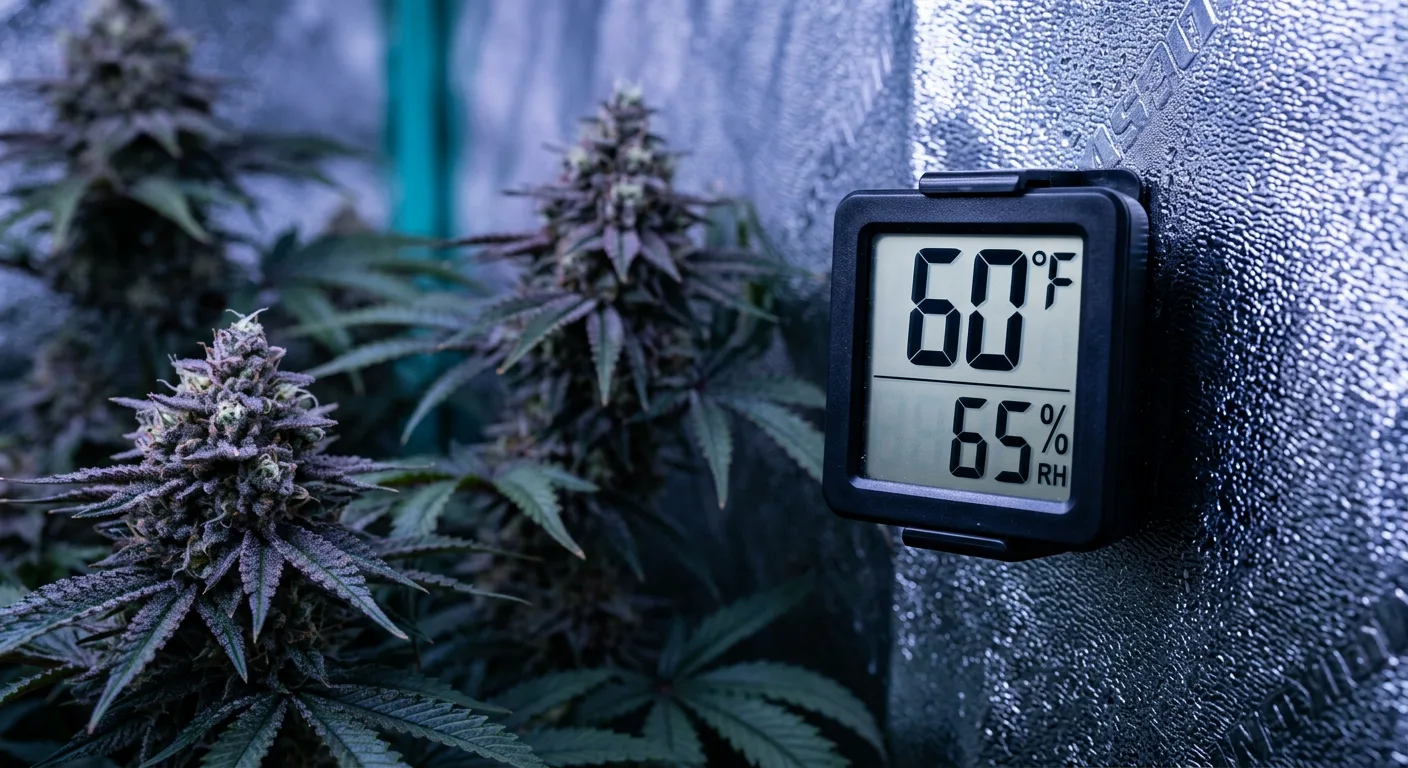
While genetics determine whether a plant can turn purple, temperature and purple cannabis coloration share a direct relationship. Cooler nighttime temperatures during late flowering stimulate anthocyanin production in genetically predisposed strains, often deepening and intensifying the purple hues dramatically.
The Science Behind Temperature Triggering
Cold temperatures accelerate chlorophyll degradation while simultaneously upregulating anthocyanin biosynthesis genes. As chlorophyll breaks down and green pigments fade, anthocyanins become the dominant visible pigment. This is the same process that causes autumn leaf color changes in deciduous trees.
As noted by 420 Seeds, the target range for triggering purple coloration is "cooler nighttime temperatures, around 55–65°F." Here's a detailed breakdown of the technique:
- Daytime temperature: 75–80°F (24–27°C) — maintain normal flowering range
- Nighttime temperature: 55–65°F (13–18°C) — the anthocyanin activation zone
- Temperature differential: 10–15°F (6–8°C) between day and night
- Timing: Begin during the final 2–3 weeks of flowering only
- Duration: Maintain cool temperatures throughout the full dark period
Critical warning: Never drop temperatures below 50°F (10°C). Extreme cold stresses plants, slows metabolism, invites mold, and can damage trichomes. Stress-induced discoloration (yellowing, browning) is not the same as healthy anthocyanin expression. Use our VPD calculator to maintain safe humidity levels at lower temperatures.
Indoor vs. Outdoor Temperature Control
| Factor | Indoor Growing | Outdoor Growing |
|---|---|---|
| Temperature control | Precise via AC/controllers | Dependent on climate |
| Best approach | Lower tent temp during lights-off | Time harvest for autumn nights |
| Cost | Higher (AC, controllers) | Free (natural temps) |
| Consistency | Very consistent | Variable by weather |
| Mold risk at cool temps | Manageable with dehumidifier | Higher — monitor closely |
Outdoor growers in temperate climates have a natural advantage—autumn harvests align perfectly with cooling night temperatures. If you're growing outdoors, plan your grow timeline so that the final 2–3 weeks of flowering coincide with nights that naturally dip into the 55–65°F range.
Step-by-Step Guide: How to Grow Purple Cannabis
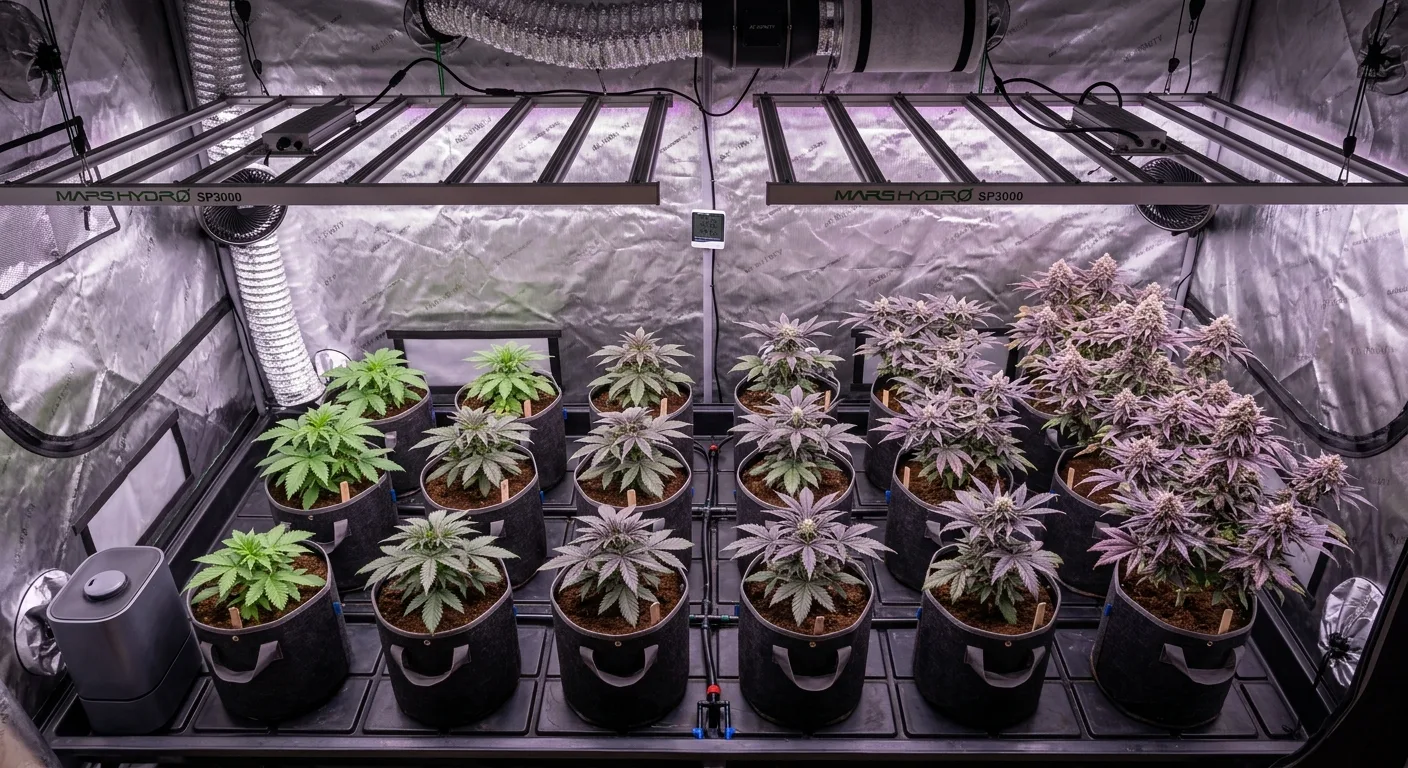
How to grow purple cannabis successfully requires the right genetics, precise environmental control during late flowering, and careful attention to nutrition and pH. Follow these eight steps from seed selection through harvest to maximize your chances of growing vibrant purple buds.
Select Proven Purple Genetics
Start with strains bred specifically for anthocyanin production. Look for cultivars with documented purple lineage—Purple Kush, Granddaddy Purple, or Purple Punch are reliable choices. Read strain descriptions carefully, and prioritize varieties where purple expression is genetic rather than cold-dependent. Check our germination guarantee for seed quality confidence.
Germinate and Establish Healthy Seedlings
Use the paper towel method or direct-in-soil germination. Maintain 75–80°F and 65–70% humidity during the seedling phase. Purple genetics are no more difficult to germinate than any other strain. Focus on building strong root systems during the first 2 weeks—healthy seedlings become healthy purple plants. For detailed instructions, see our seedling care guide.
Vegetate Under Standard Conditions
Run an 18/6 light cycle with temperatures at 72–80°F and humidity at 50–60%. There's nothing special to do during veg for purple strains—focus on healthy growth, topping, and training. Some strains like Purple Kush grow wide rather than tall, so plan your canopy management accordingly. Purple coloration won't appear yet; this is normal.
Flip to Flowering (12/12 Light Cycle)
Switch to a 12/12 light schedule to initiate flowering. Maintain normal temperatures (70–80°F day, 65–72°F night) for the first 5–6 weeks of flowering. During this period, focus on phosphorus-heavy bloom nutrition and maintaining proper VPD. Early flowers will appear green—don't worry, purple develops later.
Introduce the Cold-Night Protocol (Weeks 6–8+)
During the final 2–3 weeks of flowering, lower nighttime temperatures to 55–65°F while keeping daytime temps at 75–80°F. This temperature differential is where the magic happens for strains with purple genetics. Drop temperatures gradually over 2–3 nights rather than making a sudden change. Monitor humidity closely with a hygrometer—cool air holds less moisture, so VPD shifts dramatically.
Optimize pH for Purple Expression
Maintain soil pH at 6.0–6.5 or hydro pH at 5.5–6.0 throughout flowering. Slightly lower pH within these ranges (toward the acidic end) may encourage more red-purple tones rather than blue-purple. Test runoff regularly and adjust inputs accordingly. Use our nutrient calculator for precise feeding schedules.
Monitor and Flush Before Harvest
Begin a plain water flush 7–14 days before harvest. This step forces the plant to use stored nutrients, which accelerates chlorophyll breakdown and makes anthocyanins even more visible. You'll often see the most dramatic purple color development during the final week as green fades away. Watch trichomes with a jeweler's loupe—harvest based on trichome ripeness, not color alone.
Harvest, Dry, and Cure Carefully
Cut branches and hang dry in a dark room at 60°F and 55–60% humidity for 10–14 days. Purple buds maintain their coloration beautifully through drying and curing. Cure in airtight jars at 58–62% humidity for a minimum of 2 weeks. Well-cured purple buds develop deeper color saturation over time.
Nutrient and pH Management for Maximum Purple Expression
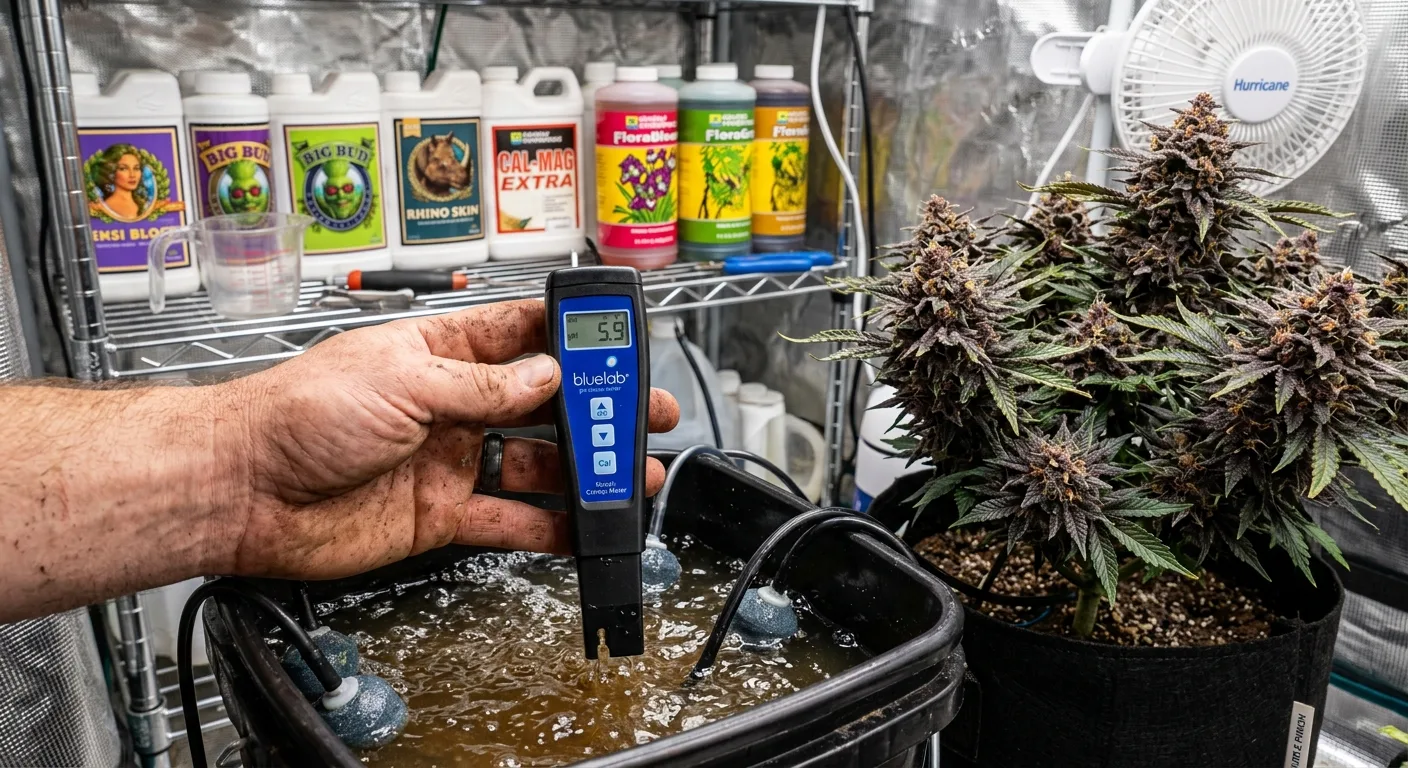
Proper nutrition supports anthocyanin biosynthesis while avoiding deficiencies that mimic or mask purple coloration. The goal is a healthy plant that expresses purple through genetics—not a stressed plant showing false color from nutrient problems.
Key Nutrients for Anthocyanin Production
- Phosphorus: Critical for anthocyanin biosynthesis. Bloom-phase nutrients should supply ample phosphorus (the "P" in NPK). Research suggests phosphorus deficiency can cause purple stems and petioles—but this is a stress response, not desirable anthocyanin expression.
- Potassium: Supports overall plant health and enzyme function during flowering. Potassium deficiency causes purple-edged leaves that look similar to anthocyanin expression but indicate a problem.
- Nitrogen: Reduce nitrogen during late flowering. Lower nitrogen accelerates chlorophyll breakdown, allowing anthocyanins to become visible sooner and more intensely.
- Sulfur and micronutrients: Adequate sulfur, iron, and magnesium support the flavonoid pathway that produces anthocyanins.
Nutrient tip: The late-flowering flush is your most powerful tool for purple expression. When you stop feeding and give only plain water, the plant cannibalizes stored nitrogen from fan leaves, rapidly breaking down chlorophyll. In genetically purple strains, this reveals underlying anthocyanins in just days. Plan your flush using our nutrient calculator timeline.
pH Ranges for Color Optimization
The pH of your growing medium influences nutrient availability, which indirectly affects anthocyanin production. But the pH inside the plant cells (which determines anthocyanin color shade) is regulated by the plant itself—not by your soil pH.
- Soil pH: 6.0–6.5 (target 6.2 for purple strains)
- Coco/hydro pH: 5.5–6.0 (target 5.8)
- Check runoff pH weekly during flowering
- Avoid pH swings greater than 0.5 in 24 hours
- Use pH-stable water sources when possible
- Calibrate pH meters monthly for accuracy
Light Spectrum and Purple Color Development
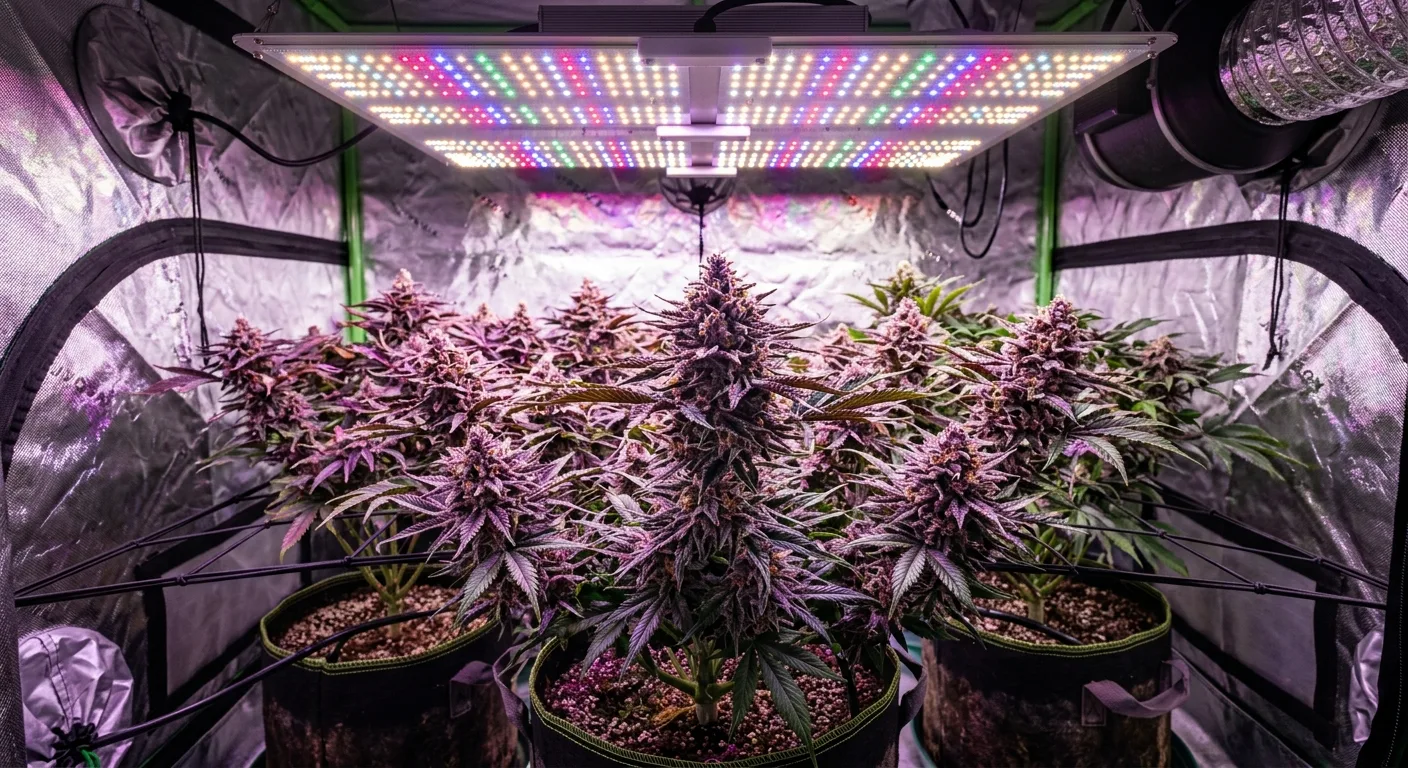
Light spectrum influences anthocyanin production in cannabis, though less dramatically than temperature or genetics. Research on other anthocyanin-producing plants suggests that UV-A and blue-spectrum light (400–500nm) may upregulate anthocyanin biosynthesis genes.
Spectrum Recommendations by Growth Phase
- Vegetative phase: Full-spectrum LED with emphasis on blue (400–500nm) promotes compact growth and may prime anthocyanin pathways
- Early flowering: Balanced full-spectrum with increased red (620–700nm) supports flower development
- Late flowering (final 2–3 weeks): Consider adding UV-A supplementation (315–400nm) if your LED fixture supports it. Some growers report enhanced purple coloration with increased UV exposure during this window
As noted by 420 Seeds, purple strains follow standard light cycle requirements: "18/6 light cycle during veg and 12/12 during flowering." The light cycle itself doesn't change for purple strains—it's the spectral composition and intensity that may play a secondary role in color development. Use our light calculator to ensure adequate PPFD throughout flowering.
Light spectrum is a secondary factor for purple expression. Genetics come first, temperature manipulation second, and light spectrum optimization third. Don't invest in expensive UV supplements until you've dialed in genetics and temperature—those two factors account for roughly 90% of purple color development.
Common Mistakes That Prevent Purple Development
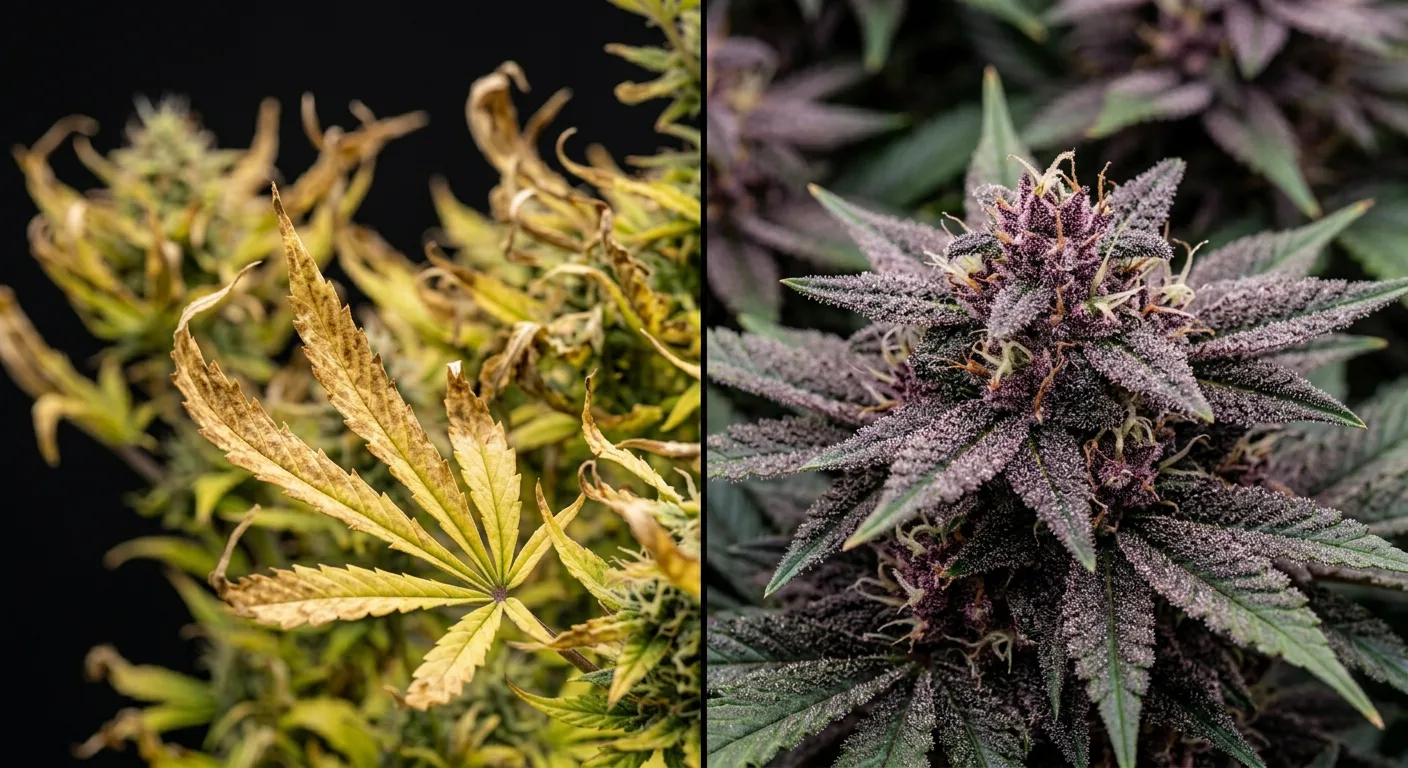
Even with the right genetics and growing techniques, several common errors can prevent or diminish purple coloration. Here are the most frequent mistakes we see from growers chasing vibrant purple buds—and how to avoid each one.
Mistake 1: Wrong Genetics
This is the number one reason growers fail to produce purple buds. No growing technique can force a strain without anthocyanin genetics to turn purple. Cold stress on a non-purple strain will produce brown, yellow, or dying tissue—not beautiful purple flowers.
Fix: Always start with verified purple genetics from reputable seed sources. Look for strains with "purple" in the lineage, not just the name. Check our genetics guide for help understanding strain pedigrees.
Mistake 2: Dropping Temperatures Too Early
Introducing cold temperatures during early or mid-flowering slows growth, reduces yields, and can stunt bud development. Anthocyanins express most visibly during the final 2–3 weeks anyway, so early cold exposure sacrifices bud size for minimal color gain.
Fix: Wait until at least week 6 of flowering (or 2–3 weeks before your expected harvest date) to begin the cold-night protocol.
Mistake 3: Excessive Nitrogen in Late Flowering
High nitrogen levels keep chlorophyll production strong, masking anthocyanins behind a wall of green. Many growers continue feeding vegetative-ratio nutrients (high N) well into flowering, which is counterproductive for purple development.
Fix: Switch to bloom-specific nutrients (low N, high P-K) by week 2 of flowering. Begin a plain water flush 7–14 days before harvest.
Mistake 4: Ignoring Humidity at Cool Temperatures
When you drop nighttime temperatures, relative humidity rises because cooler air holds less moisture. This creates ideal conditions for bud rot (Botrytis cinerea)—the fastest way to lose a harvest. Dense purple indica buds are especially susceptible.
Fix: Run a dehumidifier during cool-night periods. Keep humidity below 50% during late flowering, ideally 40–45%. Reference our mold prevention guide for detailed protocols.
Bud rot alert: Purple strains are often dense indica varieties—exactly the bud structure most vulnerable to mold. When lowering temperatures for purple expression, ALWAYS compensate with increased airflow and lower humidity. A lost harvest teaches this lesson the hard way.
Mistake 5: Using HPS Lighting Exclusively
High-pressure sodium (HPS) lights emit a narrow amber-orange spectrum that can visually mask purple coloration during growth. While HPS grows excellent cannabis, LED lights with broader spectral output (including blue and UV wavelengths) may better support anthocyanin expression and allow you to accurately assess color development.
Fix: Use full-spectrum LED lighting, especially during late flowering. If running HPS, supplement with a blue-spectrum or UV bar during the final weeks.
- Verified purple genetics selected
- Cold-night protocol timed for final 2–3 weeks only
- Bloom nutrients (low N, high P-K) from week 2 of flower
- Late-flower flush with plain water
- Humidity below 50% during cold nights
- Dehumidifier and fans running during lights-off
- Full-spectrum LED or UV supplementation
- pH monitored and stable (soil: 6.0–6.5)
Purple Cannabis Effects and Terpene Profiles
Purple cannabis strains span the full effects spectrum—from deeply sedating indicas to energizing sativa-dominant varieties. The purple color itself doesn't determine effects; terpene profiles and cannabinoid ratios drive the experience. However, many popular purple strains share certain terpene tendencies.
Common Terpenes in Purple Strains
Many purple varieties descend from Kush, Afghani, or grape-lineage genetics that tend to produce specific terpene profiles:
- Myrcene: The most abundant terpene in indica-dominant purple strains. Contributes earthy, musky, grape-like aromas and may promote relaxation
- Linalool: Found in lavender and many purple cannabis varieties. Associated with calming, stress-reducing effects. Learn more in our terpene science series
- Caryophyllene: A spicy, peppery terpene common in Kush-lineage purple strains. Research suggests it interacts with CB2 receptors
- Limonene: Increasingly present in newer purple hybrids like Tropicana Cookies Purple and Purple Lemonade, adding citrus brightness to traditionally earthy profiles
Effects by Purple Strain Category
| Effect Category | Notable Strains | THC Range | Best For |
|---|---|---|---|
| Deep Relaxation | GDP, Purple Kush, Slurricane | 17–28% | Sleep, evening use |
| Balanced Hybrid | Purple Punch, Zkittlez | 19–23% | Social, creative, relaxation |
| Energizing | Purple Haze, Tropicana Cookies Purple | 17–25% | Daytime, creativity |
| High CBD | Purplematic CBD | <1% THC, 17% CBD | Wellness, non-intoxicating |
As documented by Zamnesia, CBD-rich purple strains like Purplematic CBD offer "all of the visual appeal of a purple strain alongside the potential benefits offered by cannabidiol" with minimal THC content. This opens the purple cannabis category to users seeking non-intoxicating options.
Do Anthocyanins Offer Health Benefits?
Anthocyanins are recognized antioxidants in the nutritional science community. They're studied in the context of berries, red wine, and other dietary sources. However, whether anthocyanins in smoked or vaporized cannabis provide meaningful antioxidant benefits remains unclear. Research suggests that anthocyanins degrade at high temperatures, so any potential benefits may be more relevant for edibles, tinctures, or raw cannabis preparations than for smoking.
Harvesting and Curing Purple Cannabis for Best Results
Purple buds look spectacular on the plant—but proper harvest timing and curing techniques ensure that color, flavor, and potency are preserved through the final product. The good news: purple coloration is remarkably stable through drying and curing when done correctly.
Harvest Timing for Purple Strains
Always base harvest timing on trichome maturity, not bud color. Use a 60x jeweler's loupe or digital microscope to examine trichome heads:
- Clear trichomes: Not ready—wait longer
- Mostly cloudy trichomes: Peak THC—harvest for maximum potency
- 10–30% amber trichomes: Slightly more sedative effect—ideal for indica-leaning purple strains
Purple buds can appear "ready" visually well before trichomes reach optimal maturity. Don't let color trick you into harvesting too early—this is one of the most common mistakes with purple strains.
Purple coloration intensifies during the drying and curing process as remaining chlorophyll continues to degrade. Buds that appear partially purple at harvest often become fully purple after a proper 2-week cure. Patience during curing is rewarded with deeper, richer hues.
Drying and Curing Protocol
Dry Trim or Wet Trim
Both methods work for purple strains. Dry trimming (leaving sugar leaves on during drying) tends to produce a slower, more even dry that preserves terpenes and color. Wet trimming (removing sugar leaves immediately) exposes buds to more airflow and slightly speeds drying.
Hang Dry in Controlled Conditions
Hang branches upside down in a dark room at 60°F (15°C) with 55–60% humidity. Air circulation should be gentle—a fan pointed at the wall, never directly at buds. Drying takes 10–14 days. Stems should snap (not bend) when dry.
Jar Cure for Color and Flavor
Place trimmed buds in airtight glass jars at 58–62% humidity. Burp jars 1–2 times daily for the first week, then 2–3 times weekly for weeks 2–4. Use humidity packs to maintain consistent RH. Cure for a minimum of 2 weeks; 4–8 weeks produces the best color and flavor development.
For detailed long-term storage guidance, see our long-term cannabis storage guide. Purple buds store exceptionally well and maintain their visual appeal for months when kept in cool, dark, airtight conditions.
Photography tip: Purple buds look best under natural daylight or 5000K lighting. HPS-tinted grow room lighting washes out purple hues. If you're photographing your harvest, move buds to a naturally lit area for accurate color representation.
Frequently Asked Questions About Purple Cannabis Strains
Why does cannabis turn purple?
Cannabis turns purple due to anthocyanin pigments that accumulate in plant cells during flowering. These pigments are genetically determined—only strains carrying alleles for anthocyanin biosynthesis will develop purple coloration. Cooler nighttime temperatures (55–65°F) during the final 2–3 weeks of flowering can enhance anthocyanin visibility by accelerating chlorophyll breakdown, but genetics are the primary driver. Without the right genes, no environmental manipulation will produce true purple buds.
Are purple cannabis strains more potent than green strains?
No—purple coloration has no direct relationship to potency. Anthocyanins are pigments, not cannabinoids, and they don't affect THC or CBD levels. Some purple strains like Purple Kush (27% THC) and Slurricane (24–28% THC) are extremely potent, while others like Purplematic CBD contain less than 1% THC. Potency depends on genetics, growing conditions, and harvest timing—not bud color.
Can you make any cannabis strain turn purple?
No. Only strains with genetic capacity for anthocyanin production will turn purple. Exposing a non-purple strain to cold temperatures will cause stress responses like yellowing, browning, or slowed growth—not purple coloration. For reliable results, always start with strains specifically bred for purple expression, such as Granddaddy Purple, Purple Punch, or Blue Magoo.
What is the best temperature to make cannabis turn purple?
Aim for nighttime temperatures of 55–65°F (13–18°C) with daytime temperatures at 75–80°F (24–27°C) during the final 2–3 weeks of flowering. This 10–15°F differential triggers anthocyanin expression in genetically predisposed strains. Never drop below 50°F, as extreme cold damages trichomes and invites mold. Monitor humidity closely—cool air increases relative humidity, raising bud rot risk. Use a VPD calculator to maintain safe conditions.
Do purple strains taste different from green strains?
Purple strains often exhibit grape, berry, and floral flavor notes, but this comes from their terpene profiles—not directly from anthocyanins. Many purple strains descend from Kush and Afghani genetics that naturally produce myrcene, linalool, and caryophyllene, contributing earthy, sweet, and spicy flavors. Newer purple hybrids like Tropicana Cookies Purple add citrus-forward terpene profiles, proving that purple strains span the full flavor spectrum.
Sources & References
This article was researched and fact-checked using 7 verified sources including 1 authoritative reference, 2 industry sources, 4 community resources.
- Purple Kush Weed Strain Information | Leafly — leafly.com [Reference]
- Buy Purple Weed Seeds - Royal Queen Seeds USA — royalqueenseeds.com [Industry]
- Discover 10 Of The Best Purple Cannabis Strains — zamnesia.com [Industry]
- Purple Weed Strains | 420 Seeds — 420-seeds.com [Community]
- 11 Best Purple Weed Strains 2026 — humboldtseedcompany.com [Community]
- Buy Purple Weed Seeds | Top Purple Cannabis Strains — pevgrow.com [Community]
- The Most Popular Weed Strains You Need To Try | STIIIZY — stiiizy.com [Community]