Here is a fact that changes how you shop for cannabis: two terpenes present together in a strain can produce an effect that neither terpene generates on its own. Not a stronger version of the same effect — a genuinely different one. This is the core of cannabis terpene synergy, and it is the reason experienced consumers learn to read terpene profiles just as carefully as THC percentages.
Most terpene content online describes each compound in isolation. You will find articles explaining what myrcene does, what limonene does, what caryophyllene does. What almost nobody has mapped, until now, is what happens when those terpenes meet each other inside the same flower — and inside your body at the same time.
This guide closes that gap. We cover the biochemical mechanism behind synergy, profile the eight most important terpene pairings with their effects and ideal strains, present a full terpene interaction matrix, and end with a practical strain-selection guide keyed to the effect you are chasing. Explore our complete cannabis terpene chart alongside this guide for the full reference picture.
Why Two Terpenes Can Do What One Cannot: The Synergy Mechanism
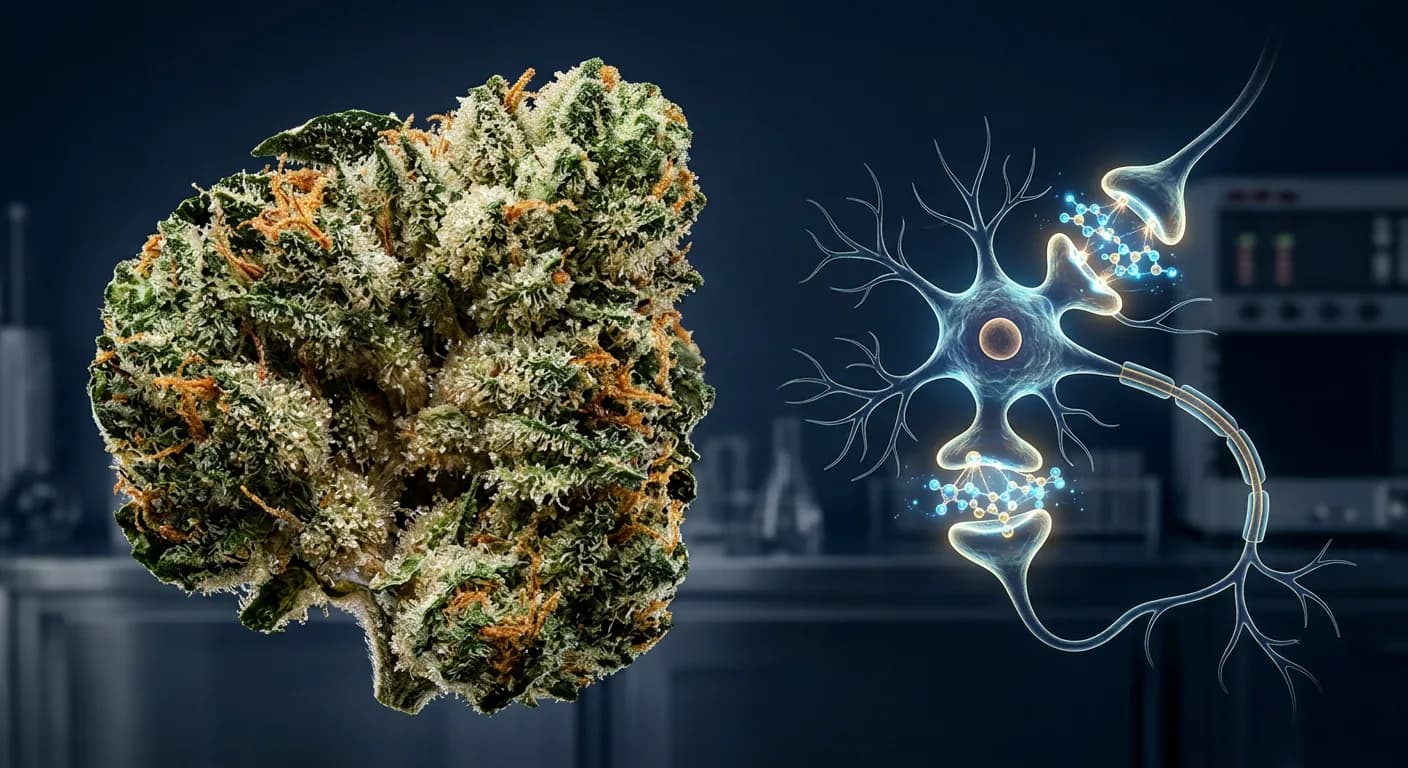
Cannabis terpene synergy occurs because individual terpenes target different biological pathways simultaneously. When two terpenes act through separate but converging mechanisms at the same time, the combined output is non-additive — meaning 1 + 1 can equal 3 in terms of felt effect.
Three distinct mechanisms drive terpene-to-terpene synergy in cannabis:
- Receptor sensitivity modulation: Some terpenes upregulate or sensitize receptors that other terpenes then act upon. Caryophyllene, for example, binds directly to CB2 receptors while myrcene appears to potentiate CB1 receptor activity — two receptor systems whose outputs converge on pain and inflammation reduction.
- Neurotransmitter reuptake inhibition: Limonene inhibits serotonin reuptake. Linalool modulates GABA-A receptor activity. These are separate neurotransmitter systems, but anxiety is governed by the balance of both — so hitting both simultaneously produces stronger anxiolysis than either does alone.
- Membrane permeability changes: Certain terpenes, particularly myrcene, alter lipid bilayer fluidity in cell membranes. This can accelerate the absorption of other terpenes and cannabinoids across biological barriers, effectively amplifying their peak concentration at receptor sites.
Research Context: Ethan Russo's landmark 2011 paper in the British Journal of Pharmacology — 'Taming THC: potential cannabis synergy and phytocannabinoid-terpenoid entourage effects' — remains the most cited framework for terpene synergy. Russo documented that isolated THC produces more anxiety and cognitive impairment than whole-plant extracts with equivalent THC, pointing to terpene co-factors as modulators. The mechanism continues to be refined in more recent studies examining specific terpene-receptor interactions.
It is also worth distinguishing two related but different concepts. The entourage effect describes the broad interaction between cannabinoids and terpenes. Terpene synergy specifically refers to terpene-to-terpene interactions — the subject of this guide. Both are real, and both matter, but they operate through partially overlapping mechanisms.
Terpene synergy is not about terpenes being present together by accident. It is about specific molecular interactions across receptor systems, membrane dynamics, and neurotransmitter chemistry that produce effects no single terpene generates alone. Understanding these pairs lets you choose strains with intention.
The 8 Most Powerful Terpene Pairings in Cannabis
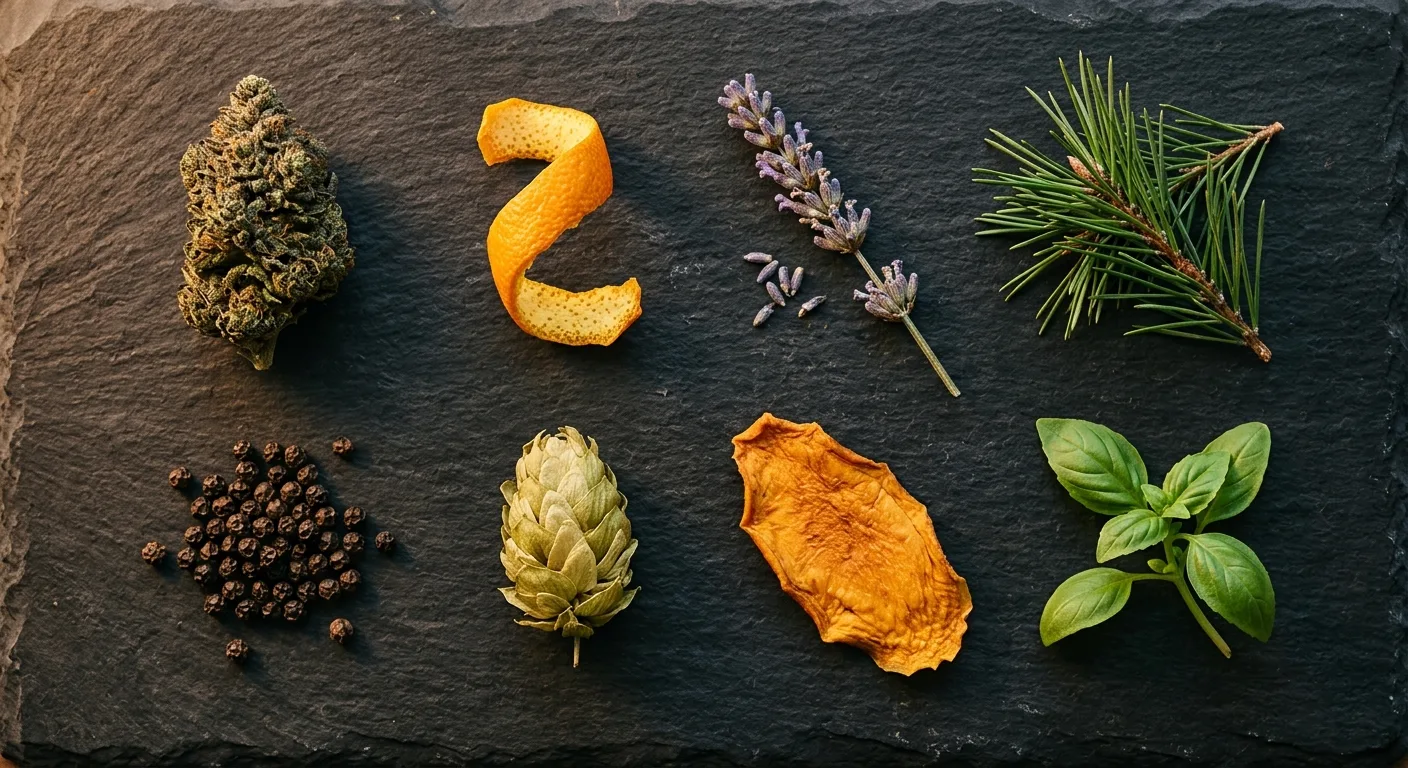
The eight pairings below represent the most researched, most commonly expressed, and most practically relevant terpene combinations found in cannabis. Each profile includes the mechanism, expected effects, representative strains, and medical use cases.
1. Myrcene + Caryophyllene: The Body Relaxation Combo
This is the pairing most responsible for what consumers call 'couch lock' — the heavy, full-body physical relaxation associated with potent indicas. Myrcene acts as a muscle relaxant and mild sedative, likely through modulation of GABA receptors and possible opioid receptor interaction. Caryophyllene binds directly to CB2 receptors (making it the only terpene classified as a dietary cannabinoid), reducing inflammatory signaling in peripheral tissue.
Together, they address both the neurological (myrcene) and peripheral inflammatory (caryophyllene) components of physical tension and pain. The result is body relaxation significantly deeper than either produces alone.
- Primary effects: Deep muscle relaxation, anti-inflammatory, mild sedation, pain reduction
- Representative strains: OG Kush, Chemdawg, GSC (Girl Scout Cookies), OG Kush Feminized (THC 26%)
- Medical use cases: Chronic pain, muscle spasm, post-exercise recovery, fibromyalgia symptom management
- Aroma profile: Earthy, musky, spicy, fuel-like undertones
If you are growing specifically for this myrcene-caryophyllene profile, keep temperatures below 26°C (79°F) during late flowering. Both terpenes have relatively low boiling points (myrcene: 167°C, caryophyllene: 119°C for the sesquiterpene form) and degrade quickly with heat stress during the final two weeks before harvest.
2. Limonene + Pinene: The Productive Focus Combo
If myrcene and caryophyllene define the classic indica experience, limonene and alpha-pinene define the archetypal sativa. Limonene elevates mood by increasing dopamine and serotonin availability in the prefrontal cortex. Alpha-pinene is an acetylcholinesterase inhibitor — meaning it slows the breakdown of acetylcholine, the neurotransmitter central to attention, learning, and short-term memory formation.
This is the combination that makes some high-THC sativas feel cognitively sharpening rather than foggy. Pinene's acetylcholinesterase inhibition may also partially counteract the short-term memory impairment associated with THC, which is a well-documented antagonism Russo highlighted in his 2011 framework.
- Primary effects: Mental clarity, elevated mood, improved focus, memory retention, mild energizing
- Representative strains: Jack Herer, Blue Dream, Trainwreck, New York Power Diesel Feminized (THC 24%)
- Medical use cases: Fatigue, depression, ADD/ADHD symptom management, daytime productivity
- Aroma profile: Citrus, pine, fresh, herbaceous
3. Linalool + Myrcene: The Sleep Combo
This is the most sedating terpene pairing in the cannabis plant. Linalool is a lavender-associated terpene that acts as a positive allosteric modulator of GABA-A receptors — the same mechanism by which benzodiazepines and alcohol produce sedation, though linalool does so far more gently and without the same dependency risk profile. Myrcene adds muscle relaxation and independently potentiates central nervous system depressant activity.
Together, they produce a two-pathway sedation: linalool quiets the anxious mind, myrcene relaxes the body. This combination specifically targets two of the most common reasons people cannot fall asleep — racing thoughts and physical restlessness.
- Primary effects: Sedation, anxiolysis, muscle relaxation, sleep onset support
- Representative strains: Granddaddy Purple, Bubba Kush, LA Confidential, Purple Kush Feminized (THC 27%), Northern Lights x Big Bud Feminized (THC 20%)
- Medical use cases: Insomnia, anxiety disorders, PTSD-related sleep disruption, chronic pain interfering with sleep
- Aroma profile: Floral, fruity, musky, grape-like
For a deeper look at cannabis and sleep science, see our guide on cannabis for insomnia: strains, timing, and sleep science and our curated list of best cannabis strains for sleep.
4. Limonene + Linalool: The Daytime Calm Combo
This is the pairing most underappreciated by consumers but most valued by medical users who need anxiety relief without impaired function. Limonene lifts mood and activates dopaminergic pathways. Linalool soothes the nervous system via GABA modulation. But critically, linalool without myrcene does not produce heavy sedation — it produces what researchers describe as 'anxiolytic without hypnotic' activity at normal cannabis exposure levels.
The combination delivers genuine anxiety relief while limonene's stimulating mood elevation counterbalances any drowsiness risk from linalool. The net experience is calm alertness — often described as the sensation of a manageable, pleasant social high.
- Primary effects: Anxiety reduction, mood elevation, relaxed alertness, social ease
- Representative strains: Do-Si-Dos, Zkittlez, Wedding Cake, White Widow Feminized (THC 25%), Super Lemon Haze Feminized (THC 23%)
- Medical use cases: Generalized anxiety disorder, social anxiety, stress relief, daytime mood support
- Aroma profile: Citrus-floral, sweet, light herbal notes
5. Caryophyllene + Humulene: The Dual Anti-Inflammatory Combo
This pairing is specifically optimized for pain management. Caryophyllene targets CB2 receptors and downstream NF-κB inflammatory pathways. Humulene works through a parallel but distinct mechanism — it inhibits COX-2 enzyme activity (the same enzyme targeted by ibuprofen and other NSAIDs) and has shown activity against pro-inflammatory prostaglandin production in preclinical research.
Hitting both the endocannabinoid pathway (caryophyllene via CB2) and the classical arachidonic acid inflammatory cascade (humulene via COX-2) simultaneously creates a two-front anti-inflammatory response. This combination is found naturally in many hop-forward, earthy strains and is one reason certain cannabis varieties are described as more effective for pain than others with equivalent THC content.
- Primary effects: Anti-inflammatory, analgesic, potential appetite reduction, mild relaxation
- Representative strains: Headband, Girl Scout Cookies, Gelato, OG Kush Feminized (THC 26%), Sour Diesel Feminized (THC 24%)
- Medical use cases: Arthritis, inflammatory bowel conditions, neuropathic pain, post-surgical recovery
- Aroma profile: Spicy, hoppy, earthy, woody
For a full breakdown of humulene's individual properties, read our complete humulene terpene guide. For caryophyllene's individual profile, see our beta-caryophyllene cannabis guide.
6. Terpinolene + Limonene + Pinene: The Uplifting Sativa Trio
This three-terpene combination is the biochemical signature of the 'classic sativa' archetype — cerebral, energizing, creative, and clear-headed. It is most famously expressed in Jack Herer and its descendants. Terpinolene is the wildcard: it adds a complex floral-piney dimension, shows mild sedating properties in isolation at very high doses, but at the concentrations found in cannabis acts as a mood brightener that blends seamlessly with limonene's dopaminergic lift.
Pinene holds the trio together by anchoring focus and preventing the scattered, anxious edge that high limonene concentrations can occasionally produce in THC-sensitive individuals. The three-way interaction creates what many consumers describe as 'clean energy' — alert, happy, and grounded rather than jittery.
- Primary effects: Cerebral euphoria, creative energy, focus, uplifted mood, mild anti-anxiety
- Representative strains: Jack Herer, Ghost Train Haze, Durban Poison, Amnesia Haze Autoflower (THC 17%), Northern Lights x Amnesia Haze Feminized (THC 24%)
- Medical use cases: Depression, fatigue, creative blocks, daytime mood management
- Aroma profile: Pine, citrus, floral, fresh, slightly sweet
The terpinolene + limonene + pinene trio is the reason Jack Herer became a benchmark for 'cerebral sativa' effects. It is not just about THC content — strains with this terpene profile at even moderate THC levels (17-20%) often outperform 30% THC strains that lack this combination in terms of clean, functional energy.
7. Myrcene + THC: The Couch-Lock Amplifier
This is the most discussed — and most contested — terpene-cannabinoid interaction in cannabis science. The widely cited hypothesis is that myrcene increases the permeability of the blood-brain barrier, allowing THC to cross more rapidly and at higher effective concentrations. The proposed mechanism involves myrcene's ability to fluidize lipid bilayer membranes, reducing the resistance that large hydrophobic molecules like THC normally face when crossing biological barriers.
The practical implication, if the hypothesis holds, is significant: a strain with 20% THC and high myrcene content could produce stronger effects than a 25% THC strain with low myrcene. This aligns with a great deal of anecdotal consumer experience — mangoes (extremely rich in myrcene) consumed before cannabis is a long-standing folk practice for intensifying effects.
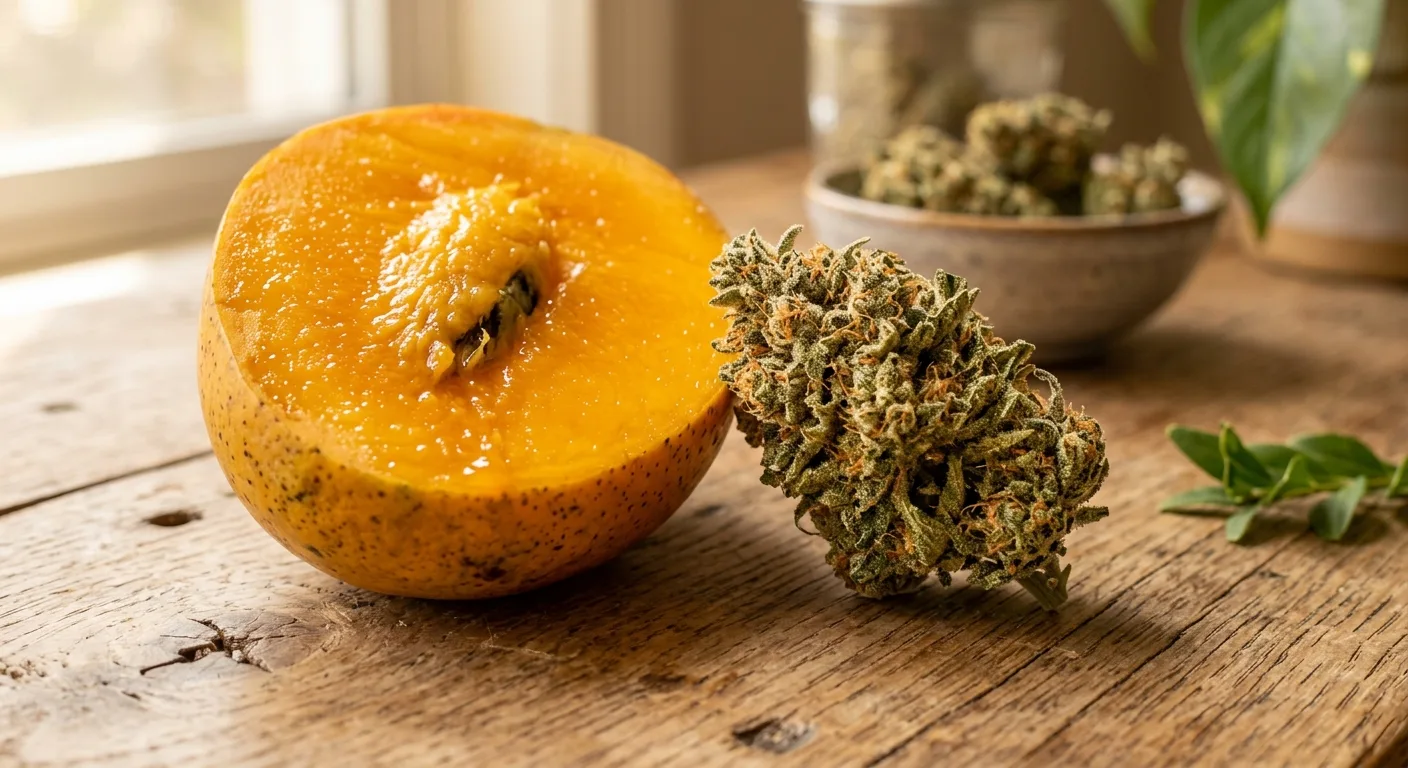
Important nuance: The myrcene-blood-brain-barrier hypothesis is broadly cited in cannabis media but has not been confirmed in controlled human pharmacokinetic studies as of publication. The membrane-fluidizing properties of myrcene are documented in cell biology research, but the leap to claiming it meaningfully alters THC pharmacokinetics in humans requires more evidence. Treat it as a plausible, widely-believed mechanism — not a confirmed fact.
- Primary effects: Intensified THC effects, deeper sedation, stronger euphoria, enhanced body high
- Representative strains: Granddaddy Purple, OG Kush, Mango Kush, Purple Power Feminized (THC 10%, high myrcene), Skywalker OG Autoflower (THC 23%)
- Note for growers: Myrcene content is heavily influenced by curing. Slow, cool curing at 60-62% relative humidity for a minimum of 4 weeks preserves myrcene content better than fast drying.
8. Ocimene + Linalool: The Floral Calming Profile
Ocimene is one of the least discussed major terpenes in cannabis, yet it appears in many beloved hybrid strains at meaningful concentrations. It contributes sweet, floral, tropical, and slightly woody aromatic notes. Pharmacologically, ocimene shows antifungal and antiviral properties in plant biology research, and emerging evidence suggests anti-inflammatory and mild mood-modulating activity in mammalian models.
Paired with linalool's established GABA-modulating anxiolytic activity, the combination produces a gentle, enveloping calming profile. Unlike the linalool + myrcene sleep combo, the absence of heavy myrcene load means this pairing feels more softly tranquil than deeply sedating — closer to the feeling of stepping into a warm bath than being pressed into a couch.
- Primary effects: Gentle relaxation, mood softening, anti-anxiety, mild euphoria, aromatic pleasure
- Representative strains: Clementine, Golden Goat, Strawberry Cough, Tangerine Haze Feminized (THC 18%), Jillybean Feminized (THC 18%)
- Medical use cases: Mild anxiety, stress, social tension, sensory sensitivity
- Aroma profile: Floral, tropical, sweet, lightly herbal
Ocimene is one of the most volatile terpenes in cannabis. It begins degrading at temperatures above 20°C (68°F) in dried flower. Store ocimene-rich strains in cool, dark, airtight glass containers and consume within 90 days of harvest for the best expression of this floral synergy profile.
Cannabis Terpene Synergy Matrix: The Reference Table

The matrix below maps the primary interaction type between the most common cannabis terpenes. Cells are classified as Synergistic (effects amplify beyond additive), Complementary (effects add together without amplification), or Neutral/Understudied (no meaningful documented interaction at typical cannabis concentrations).
Use this table as a quick-reference guide when reading lab terpene reports or choosing between strains with different dominant terpene profiles.
| Terpene A | Terpene B | Interaction Type | Primary Combined Effect | Mechanism |
|---|---|---|---|---|
| Myrcene | Caryophyllene | ✅ Synergistic | Deep body relaxation + anti-inflammatory | CB1 potentiation + CB2 direct binding |
| Myrcene | Linalool | ✅ Synergistic | Sedation + anxiolysis (sleep combo) | Muscle relaxation + GABA-A modulation |
| Myrcene | THC | ✅ Synergistic (contested) | Amplified THC effects | Membrane permeability hypothesis |
| Limonene | Pinene | ✅ Synergistic | Focus + mood lift + memory | Dopamine/serotonin + acetylcholinesterase inhibition |
| Limonene | Linalool | ✅ Synergistic | Daytime anxiety relief without sedation | Serotonin + GABA pathway co-activation |
| Caryophyllene | Humulene | ✅ Synergistic | Dual anti-inflammatory + analgesic | CB2 pathway + COX-2 inhibition |
| Terpinolene | Limonene | ✅ Synergistic | Euphoria + creative energy | Dopaminergic co-activation |
| Terpinolene | Pinene | 🔶 Complementary | Clear-headed focus + mild uplift | Acetylcholine preservation + mood modulation |
| Ocimene | Linalool | ✅ Synergistic | Floral calm, gentle anxiety relief | GABA modulation + anti-inflammatory co-activity |
| Pinene | Caryophyllene | 🔶 Complementary | Mental clarity + physical anti-inflammatory | CB2 binding + cognition preservation |
| Pinene | Linalool | 🔶 Complementary | Calm focus, mild sedation | GABA modulation + acetylcholine preservation |
| Humulene | Myrcene | 🔶 Complementary | Relaxation + systemic anti-inflammatory | CNS modulation + COX-2 inhibition |
| Terpinolene | Myrcene | ⬜ Neutral/Understudied | Possibly cancels uplift vs sedation | Opposing CNS direction — context-dependent |
| Ocimene | Caryophyllene | ⬜ Neutral/Understudied | Mild anti-inflammatory with light floral note | Insufficient data for clear mechanism |
| Limonene | Humulene | 🔶 Complementary | Mood lift + appetite reduction | Dopamine + appetite hormone modulation |
✅ Synergistic: amplified effects beyond additive | 🔶 Complementary: additive effects | ⬜ Neutral/Understudied: insufficient evidence
Myrcene + THC: The Couch-Lock Amplifier
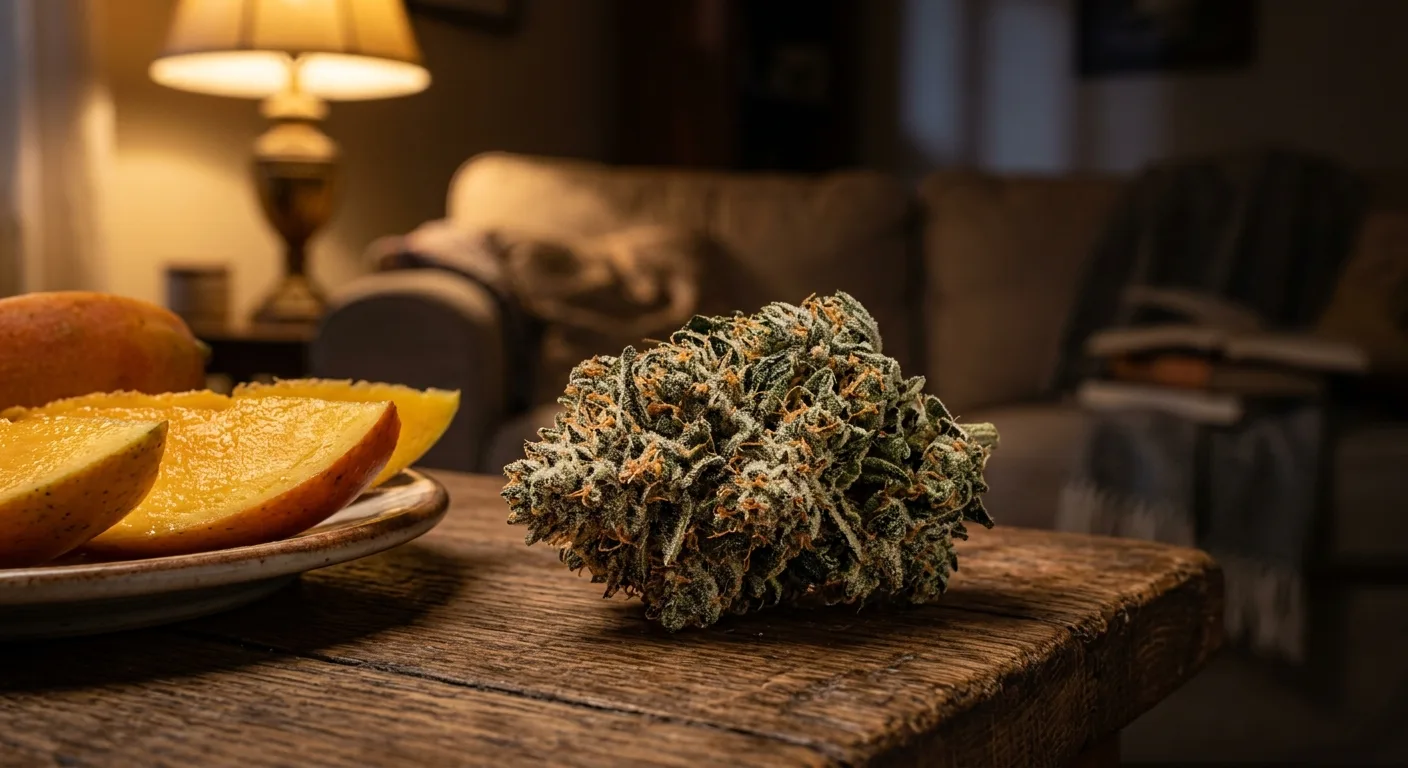
This pairing deserves its own expanded section because it sits at the intersection of terpene science and cannabinoid pharmacology — and because it is the most practically consequential interaction for consumers trying to understand why some strains hit harder than their THC percentage predicts.
The Membrane Permeability Hypothesis Explained
The theory works like this: THC is a large, lipophilic molecule. To produce psychoactive effects, it must cross the blood-brain barrier — a highly selective membrane that restricts which molecules can enter the central nervous system. Myrcene, as a small monoterpene, integrates readily into phospholipid bilayers and increases membrane fluidity.
A more fluid membrane offers less physical resistance to large hydrophobic molecules attempting to cross it. If myrcene is present in the bloodstream at the same time as THC, the hypothesis proposes that THC crosses the blood-brain barrier faster and at higher effective concentrations — producing stronger, faster-onset effects from the same nominal dose.
Why It Remains Contested
The challenge is the chain of inference. Myrcene's membrane-fluidizing properties are documented in in-vitro (cell culture) settings. Applying that to whole-organism pharmacokinetics — especially through inhalation or oral consumption — requires several assumptions that have not been validated in controlled human clinical trials. The dose of myrcene reached in the bloodstream from smoking cannabis may be too low to meaningfully alter BBB permeability in practice.
What is well-established is that myrcene strains produce reliably deeper body effects regardless of mechanism. Whether that is membrane permeability, independent CB1 potentiation, or pure GABA-system activity, the practical outcome for the consumer is consistent.
When a consumer reports that a 20% THC myrcene-dominant strain 'hits harder' than a 27% THC terpinolene-dominant strain, they are almost certainly observing real terpene-cannabinoid synergy — even if the precise molecular mechanism is still being mapped by researchers.
Which Terpene Combinations Work Best for Specific Effects
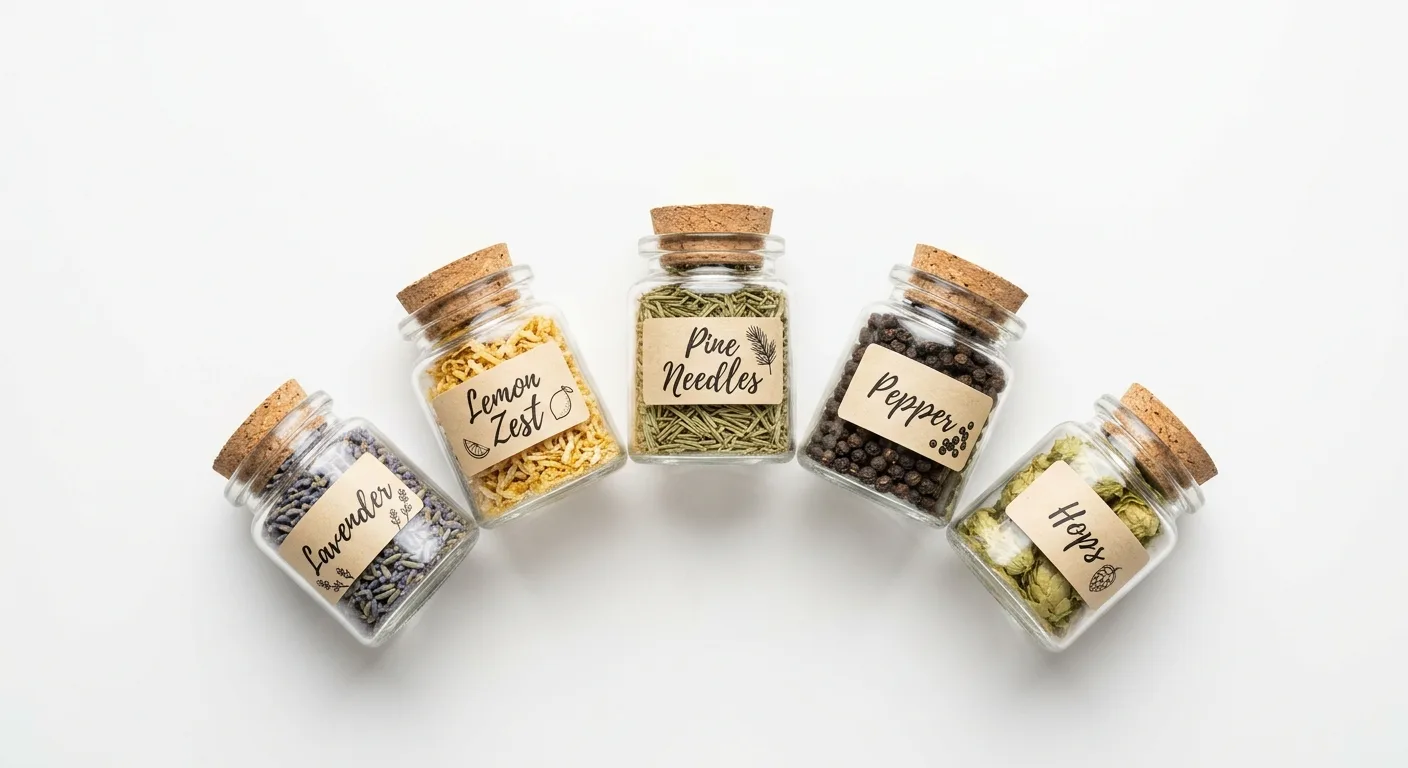
Below is a direct-reference guide organized by desired effect. For each goal, we identify the optimal terpene pairing, the expected experience, and the aroma signature to look for when reading strain data or lab reports.
For Deep Sleep
- Target pairing: Linalool (>0.3%) + Myrcene (>0.5%)
- Look for: Floral-fruity, slightly musky aroma; purple or indica-dominant cultivars
- Consume: 1-2 hours before bed; avoid high-pinene strains which may counteract sedation
- Recommended product: Purple Kush Feminized (THC 27%)
For Anxiety Without Sedation
- Target pairing: Limonene (>0.4%) + Linalool (>0.2%), low myrcene
- Look for: Citrus-floral aroma; hybrid cultivars with sativa dominance
- Consume: Daytime; keep dose moderate — high THC can override terpene anxiolytic action
- Recommended product: White Widow Feminized (THC 25%)
For Pain and Inflammation
- Target pairing: Caryophyllene (>0.4%) + Humulene (>0.2%)
- Look for: Spicy, earthy, hoppy aroma; OG and Kush lineage strains
- Consume: Morning or afternoon; this pairing does not necessarily sedate
- Recommended product: OG Kush Feminized (THC 26%)
For Focus and Productivity
- Target pairing: Limonene + Pinene + optional Terpinolene
- Look for: Pine-citrus aroma; Haze or Diesel lineage sativas
- Consume: Morning; avoid high-myrcene combinations if cognitive clarity is the goal
- Recommended product: Sour Diesel Feminized (THC 24%), Northern Lights x Amnesia Haze Feminized (THC 24%)
For Creative Euphoria
- Target pairing: Terpinolene + Limonene + Pinene (the Jack Herer trio)
- Look for: Complex fresh-piney-floral aroma; sativa-dominant hybrids
- Consume: Daytime creative work; social settings; moderate doses
- Recommended product: Amnesia Haze Autoflower (THC 17%)
For Social Ease
- Target pairing: Ocimene + Linalool
- Look for: Tropical-floral, sweet aroma; bright hybrid cultivars
- Consume: Before social situations; low to moderate doses preferred
- Recommended product: Tangerine Haze Feminized (THC 18%)
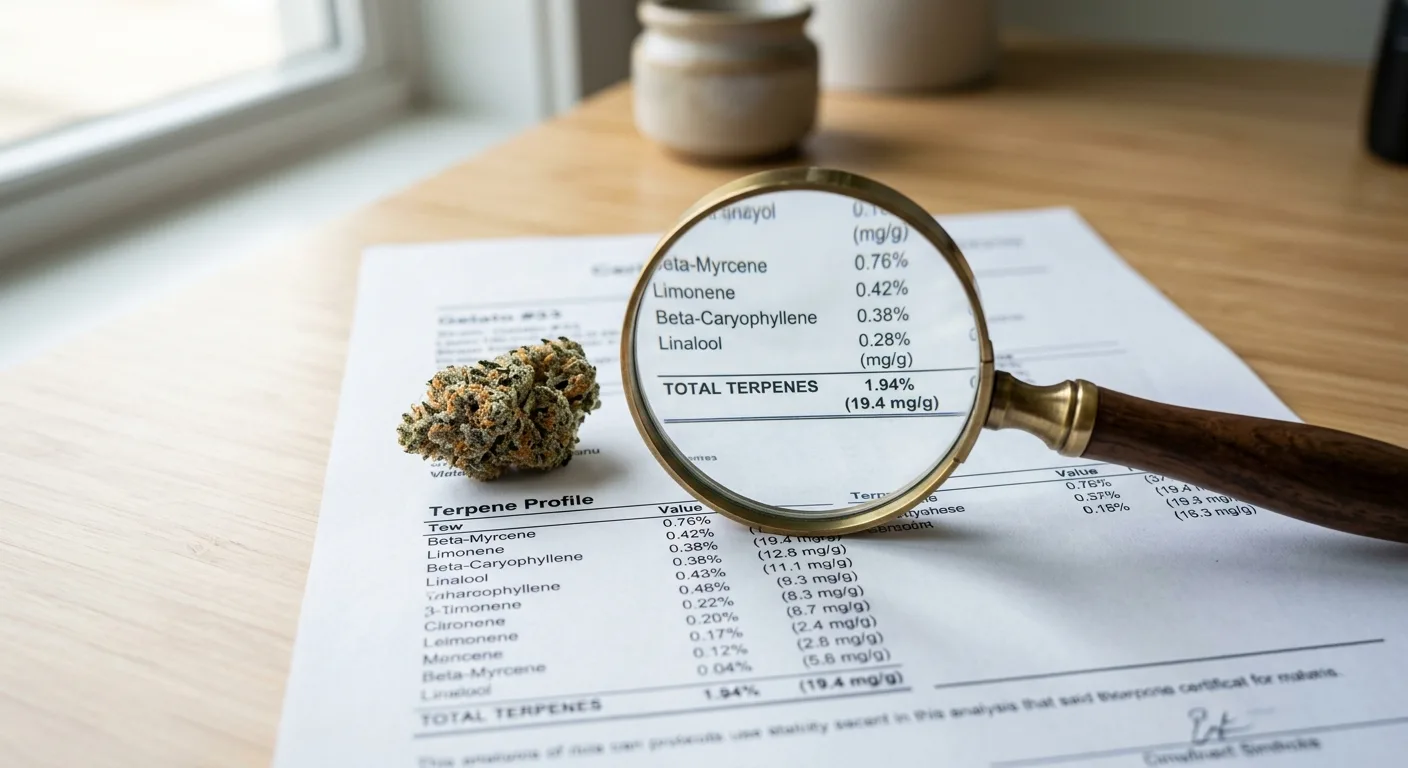
When using terpene lab reports to select a strain, focus on terpenes present at 0.2% or above by dry weight — these are the concentrations where pharmacological activity becomes meaningful. Trace amounts below 0.1% contribute to aroma but are unlikely to drive significant synergistic effects.
How Terpenes Interact With Cannabinoids: Understanding the Full Entourage
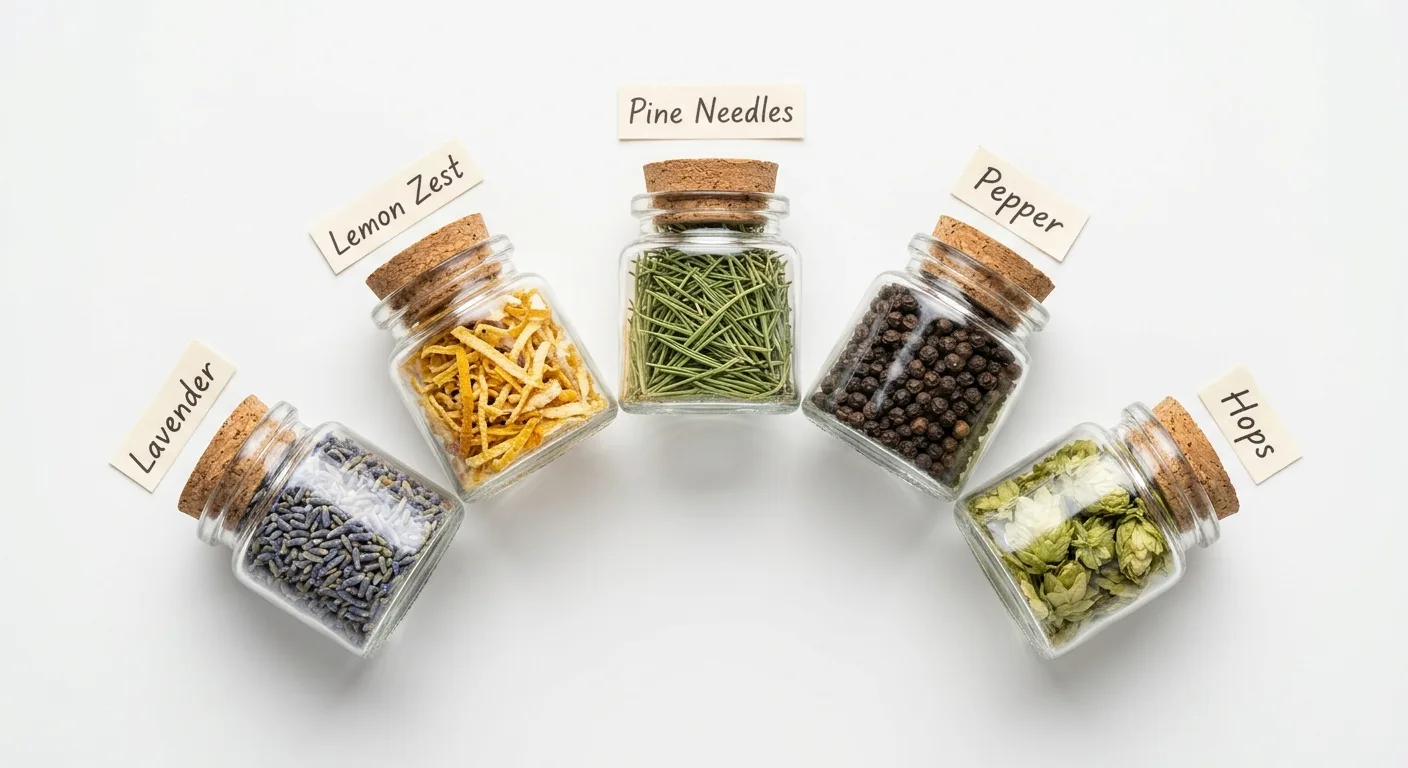
Terpene-to-terpene synergy is the focus of this guide, but it operates inside a larger system that includes cannabinoids like THC, CBD, CBG, and CBC. Understanding where terpene synergy ends and the full entourage effect begins helps you make even more informed strain choices.
CBD as a Terpene Synergy Modulator
CBD does not just interact with THC — it also modulates the activity of several terpenes. CBD enhances caryophyllene's anti-inflammatory action by activating complementary TRPV1 and PPAR-γ pathways that caryophyllene's CB2 binding alone does not reach. In high-CBD strains, the caryophyllene + humulene pairing may therefore be even more effective for pain management than in pure-THC cultivars.
THC as a Terpene Synergy Variable
High THC concentrations can override terpene modulation at the receptor level. A strain with 30% THC and a beautiful anxiolytic terpene profile (limonene + linalool) may still produce anxiety in THC-sensitive individuals because the cannabinoid signal overwhelms the terpene signal. This is why moderate-THC strains with strong terpene profiles often deliver more nuanced, comfortable effects than maximum-THC cultivars with minimal terpene development.
To understand the full picture of how cannabinoids work within the endocannabinoid system, see our guides on anandamide and the endocannabinoid system and cannabis and serotonin system interactions.
Key Research Point: A 2020 study published in Frontiers in Plant Science found that whole-cannabis extracts consistently outperformed isolated cannabinoid fractions in analgesic and anti-inflammatory models, even when adjusted to equivalent cannabinoid concentrations. The authors attributed the difference to terpene and flavonoid co-factors — direct evidence that synergy between terpenes and cannabinoids is a real and measurable pharmacological phenomenon.
Strains That Naturally Express the Best Terpene Synergy Profiles
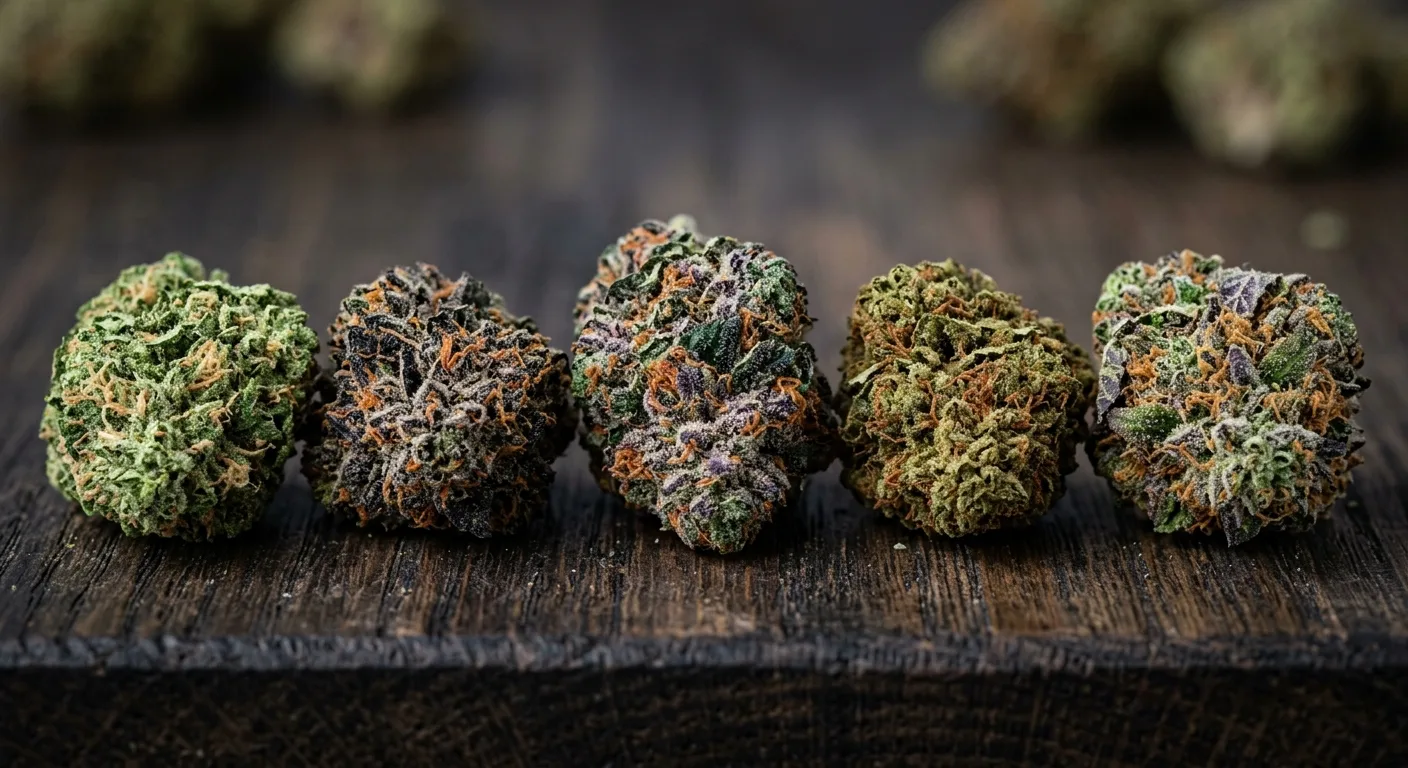
Not all strains achieve clean, dominant terpene pairing expressions. The best terpene synergy comes from strains where one or two terpenes clearly lead the profile at high concentrations, rather than strains where six terpenes all appear at roughly equal, low concentrations.
Top Strains for Myrcene + Caryophyllene (Body Relaxation)
- OG Kush — dominant myrcene, caryophyllene, limonene
- Chemdawg — high caryophyllene, strong myrcene base
- GSC (Girl Scout Cookies) — caryophyllene-forward with myrcene support
- OG Kush Feminized — classic OG terpene expression at 26% THC
- Cookies Kush Feminized — GSC lineage, 18% THC
Top Strains for Limonene + Linalool (Daytime Calm)
- Do-Si-Dos — strong linalool, limonene secondary
- Zkittlez — limonene-forward, balanced linalool
- Wedding Cake — limonene + linalool with caryophyllene
- White Widow Feminized — citrus-floral hybrid profile, 25% THC
- Super Lemon Haze Feminized — limonene-dominant, 23% THC
Top Strains for the Uplifting Sativa Trio (Terpinolene + Limonene + Pinene)
- Jack Herer — the archetypal expression of this trio
- Ghost Train Haze — high terpinolene, limonene secondary
- Durban Poison — terpinolene-dominant with pinene base
- Amnesia Haze Autoflower — haze terpene structure, 17% THC
- Northern Lights x Amnesia Haze Feminized — Haze sativa terpene profile with indica body, 24% THC
Top Strains for Linalool + Myrcene (Sleep)
- Granddaddy Purple — linalool + myrcene benchmark strain
- Bubba Kush — myrcene dominant, linalool secondary
- LA Confidential — classic sleep indica terpene profile
- Purple Kush Feminized — purple indica heritage, 27% THC
- Northern Lights x Big Bud Feminized — myrcene-rich indica, 20% THC
- Skywalker OG Autoflower — heavy indica terpene profile, 23% THC
Growing for Terpene Synergy: How to Maximize Paired Terpene Expression
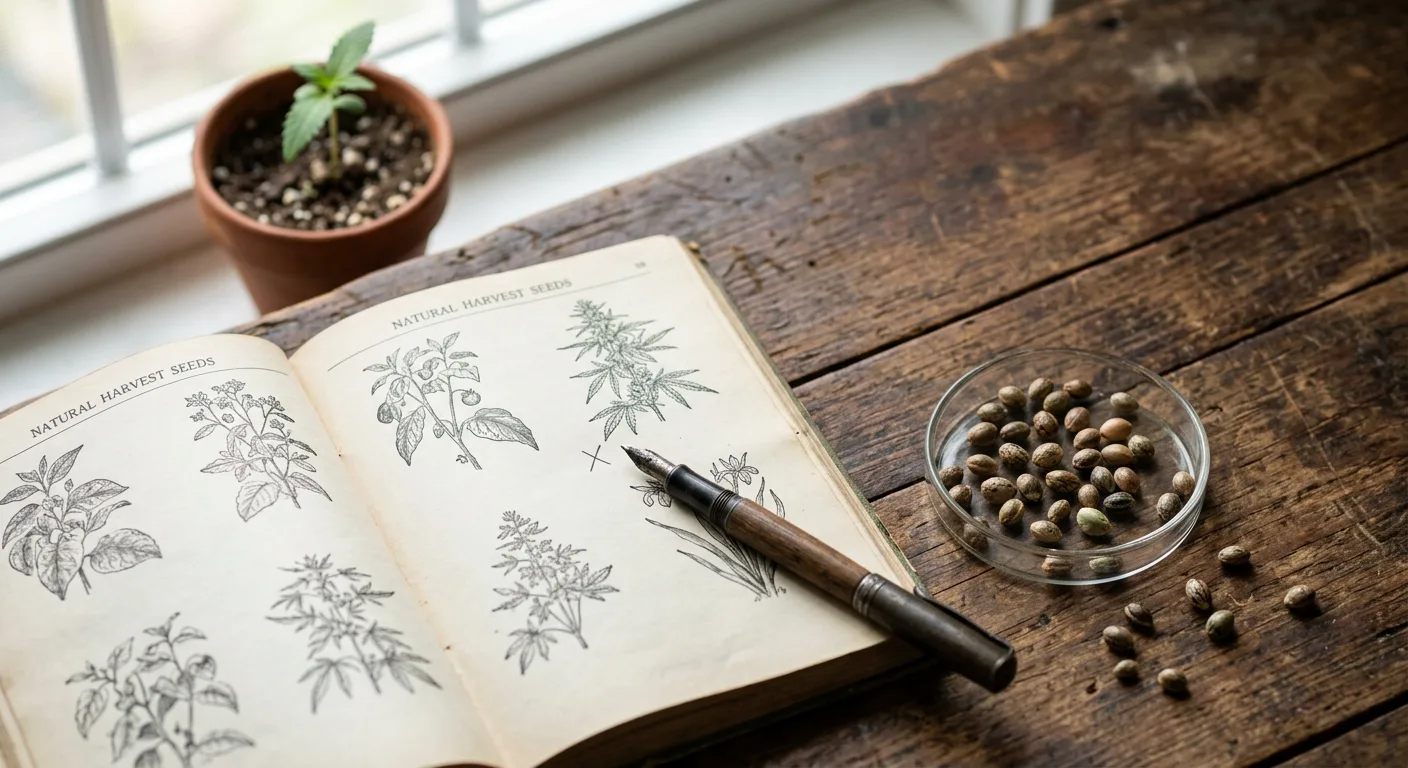
Genetics set the ceiling for terpene expression, but your growing environment determines how close you get to that ceiling. Several variables directly influence both overall terpene volume and the relative balance between individual terpenes — which means you can dial in your preferred synergy profile through cultivation technique.
Temperature Management
Different terpenes have different biosynthesis temperature optima. Myrcene production peaks under mild heat stress (26-28°C daytime), while more delicate terpenes like ocimene and terpinolene are suppressed by the same temperatures. Keeping late-flowering temperatures between 22-25°C daytime and 18-20°C nighttime typically produces the most balanced, full-spectrum terpene profile — rather than a single dominant terpene at the expense of synergistic companions.
Light Intensity and UV Exposure
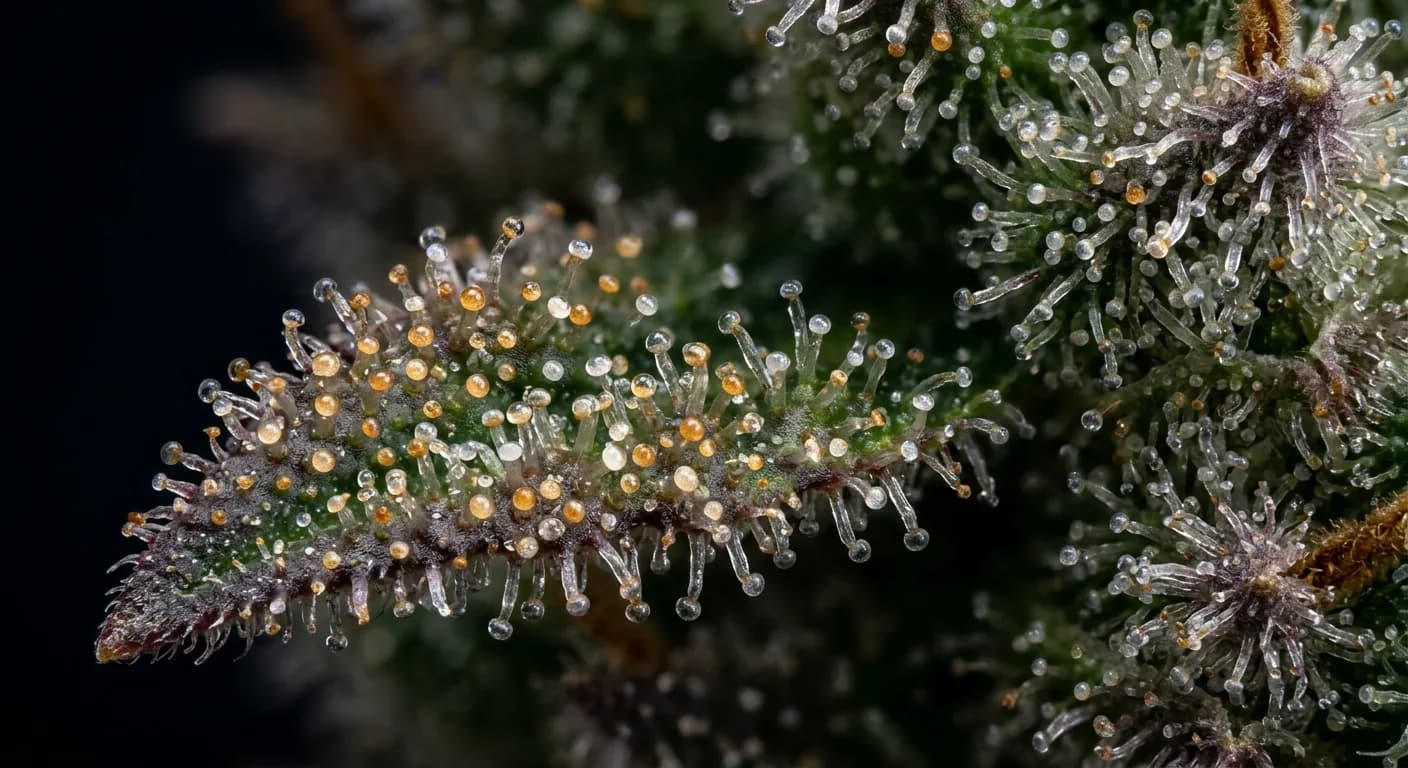
Terpenes, like cannabinoids, are secondary metabolites produced in trichomes partly as UV protection responses. Increasing light intensity (PPFD 800-1000+ during late flower) and introducing modest UVB exposure in the final 2-4 weeks can boost total terpene production by an estimated 15-30% based on controlled cultivation trials. This benefits the entire terpene profile rather than shifting the ratio between individual terpenes.
Harvest Timing
Early harvest (mostly clear trichomes) captures the highest concentration of lighter, more volatile terpenes — terpinolene, limonene, pinene. These are the uplifting sativa terpenes. Later harvest (mostly amber trichomes) allows volatile terpene degradation while the heavier, more stable terpenes like myrcene and caryophyllene persist. If you are growing for the sleep profile (linalool + myrcene), wait for 20-30% amber trichomes. For the focus profile (limonene + pinene + terpinolene), harvest at 10-15% amber maximum.
Use our cannabis grow planner to time your harvest window precisely based on your strain's flowering period and your target terpene profile.
Choose Your Target Synergy Profile
Decide which effect you are growing for — sleep, focus, pain, anxiety relief, or creative uplift — and identify the target terpene pairing from the guide above.
Select a Strain with Matching Genetic Expression
Use terpene data, lineage, and aroma descriptions to choose a strain that genetically expresses your target terpenes as primary or secondary dominants, not trace-level contributors.
Dial in Late-Flowering Environment
Set nighttime temperatures 5-8°C cooler than daytime in the final 2 weeks, maintain moderate humidity (45-50% RH), and maximize light intensity within your strain's tolerance to drive terpene synthesis.
Harvest at the Right Trichome Stage
Match your harvest timing to your terpene target: early for volatile sativa terpenes, later for stable indica terpenes. Use a 60x loupe or digital microscope to check trichome clarity daily in the harvest window.
Cure Properly to Preserve Synergy
Cure for a minimum of 4 weeks at 60-62% RH in sealed glass jars, burping daily for the first week. Proper curing preserves the relative balance of terpenes — rushed drying collapses the synergy profile by losing volatile terpenes first.
For cannabis cultivation science connected to terpene biology, read our guide on cannabis trichome biology and cannabinoid production and explore decarboxylation effects on terpenes.
Seed Selection Guide: Choose Your Terpene Profile
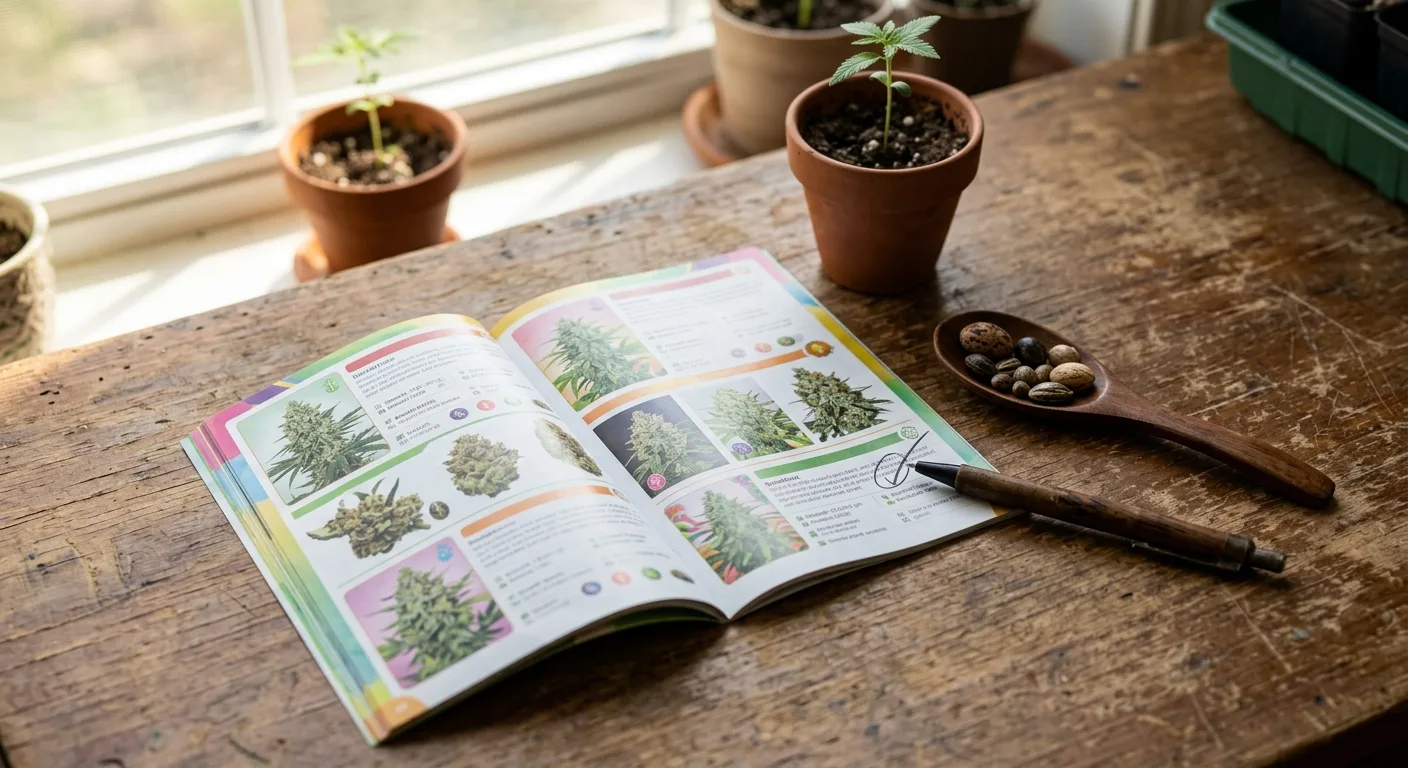
This is your actionable conclusion: a direct match between the effect you want and the seed that delivers the terpene pairing most likely to achieve it. All terpene profiles are approximate and can vary with growing conditions — but genetics are the strongest predictor of which terpenes a plant can express.
| If You Want… | Target Terpene Pairing | Aroma to Look For | Recommended Strain |
|---|---|---|---|
| Deep, uninterrupted sleep | Linalool + Myrcene | Floral, fruity, musky | Purple Kush Feminized |
| Daytime anxiety relief | Limonene + Linalool | Citrus, floral, light | White Widow Feminized |
| Pain and inflammation | Caryophyllene + Humulene | Spicy, earthy, hoppy | OG Kush Feminized |
| Focus and productivity | Limonene + Pinene | Pine, citrus, fresh | Sour Diesel Feminized |
| Creative euphoria | Terpinolene + Limonene + Pinene | Pine-citrus-floral | Amnesia Haze Autoflower |
| Body relaxation + couch lock | Myrcene + Caryophyllene | Earthy, musky, spicy | Skywalker OG Autoflower |
| Social ease, gentle calm | Ocimene + Linalool | Tropical, sweet, floral | Tangerine Haze Feminized |
| Energizing mood lift | Limonene dominant | Citrus, lemon, bright | Super Lemon Haze Feminized |
| Balanced hybrid effects | Caryophyllene + Limonene | Spicy-citrus, complex | White Cookies Feminized |
Terpene lab reports vary significantly between harvests, growing environments, and post-harvest handling. A strain described as 'myrcene-dominant' by one grower may express more limonene in a different grow environment. Terpene profiles stated by seed banks and dispensaries are approximations based on typical expression — not guarantees. Always consult actual lab certificates of analysis (COAs) when available for precise terpene data.
For broader strain comparison guidance, see our Indica vs Sativa effects and growing guide and the full cannabis terpene chart reference for individual terpene profiles.
Frequently Asked Questions About Cannabis Terpene Synergy
What is cannabis terpene synergy and how is it different from the entourage effect?
Cannabis terpene synergy specifically refers to interactions between individual terpenes that produce amplified or unique effects neither creates alone. The entourage effect is the broader concept describing interactions between all cannabis compounds — terpenes, cannabinoids, and flavonoids together. Terpene synergy is a subset of the entourage effect, focused exclusively on terpene-to-terpene biochemical interactions through receptor modulation, membrane dynamics, and neurotransmitter pathways.
Which cannabis terpenes work best together for sleep?
Linalool and myrcene form the most effective terpene combination for sleep support. Linalool modulates GABA-A receptors to reduce anxiety and quiet racing thoughts, while myrcene promotes muscle relaxation and sedation through separate pathways. Together they address both psychological and physical sleep barriers. Look for purple indica strains with floral-fruity aromas — Granddaddy Purple, Bubba Kush, and Purple Kush are classic examples of this profile.
Can I tell a strain's terpene synergy profile from its smell alone?
Aroma is a useful but imprecise indicator. Musky-earthy = myrcene likely dominant. Citrus-lemon = limonene likely dominant. Pine-fresh = pinene likely dominant. Spicy-pepper = caryophyllene likely dominant. Floral-lavender = linalool likely dominant. Tropical-sweet-floral = ocimene likely present. However, for reliable terpene data you need a third-party laboratory Certificate of Analysis — aroma can be misleading because minor terpenes at low concentrations can dominate the smell even when they are not the most abundant terpene by weight.
Do terpene synergy effects change between smoking, vaping, and edibles?
Yes, significantly. Terpenes have specific boiling points between approximately 156°C and 220°C. High-temperature smoking (combustion exceeds 800°C at the cherry) degrades most terpenes before inhalation. Vaporizing at 170-185°C preserves the full terpene synergy spectrum most reliably. Edibles and tinctures can preserve terpenes if processed at low temperatures, but decarboxylation (required to activate THC) at 110-120°C for extended periods degrades lighter terpenes including terpinolene and ocimene preferentially. For terpene synergy, vaporizing is the optimal consumption method.
How much terpene content is needed for synergy effects to be meaningful?
Most cannabis pharmacologists suggest that individual terpenes need to be present at 0.2% or above (by dry weight) to contribute meaningfully to pharmacological activity. For synergy, both terpenes in a pairing ideally exceed 0.2%, with at least one exceeding 0.4%. Total terpene content above 2% of dry weight is associated with noticeably more complex and nuanced effects. Premium craft cannabis typically measures 2.5-4%+ total terpenes, while mass-market flower often falls below 1.5%.