Most guides to reading a cannabis terpene lab report are written for dispensary buyers or compliance officers — not for the home grower who just wants to know whether the seeds they're about to buy will actually produce the citrus-forward, anxiety-melting smoke they're after. That gap ends here.
A Certificate of Analysis (COA) is the single most honest document a seed bank or cultivator can publish. Once you know how to read one, you'll never select a strain blind again. This guide walks you through every field, every number, and every red flag — with a worked example you can apply immediately.
What Is a COA and Why Do Reputable Seed Banks Publish Them?
A Certificate of Analysis (COA) is an official document issued by an accredited third-party laboratory confirming the chemical composition of a cannabis sample. It covers cannabinoid potency, terpene content, and — in full-panel versions — pesticides, heavy metals, residual solvents, and microbials.
For home growers, the COA is the difference between marketing copy and measurable truth. Any seed bank or breeder can claim their strain has "explosive terpenes" or "diesel fuel aromas" — a COA proves it with numbers.
What Makes a COA Trustworthy?
- ISO/IEC 17025 accreditation — the international standard for testing labs
- Named third-party lab — not an in-house test by the breeder themselves
- Sample ID and batch number — allows traceability back to a specific harvest
- Date of analysis — terpenes degrade; a 3-year-old COA is nearly worthless
- Method disclosure — GC-FID, GC-MS, or HPLC should be listed
When a seed bank links a COA, check the lab name and look them up independently. Well-known testing labs include SC Labs, Steep Hill, Kaycha Labs, and ProVerde Laboratories. If you can't find the lab with a simple search, treat the document with skepticism.
Reputable seed banks publish COAs because transparency builds long-term customer trust. When you're comparing genetics — say, deciding between OG Kush Feminized and Sour Diesel Feminized for their very different terpene profiles — a published COA gives you real chemistry to compare, not guesswork.
The Anatomy of a Terpene Panel on a Cannabis COA
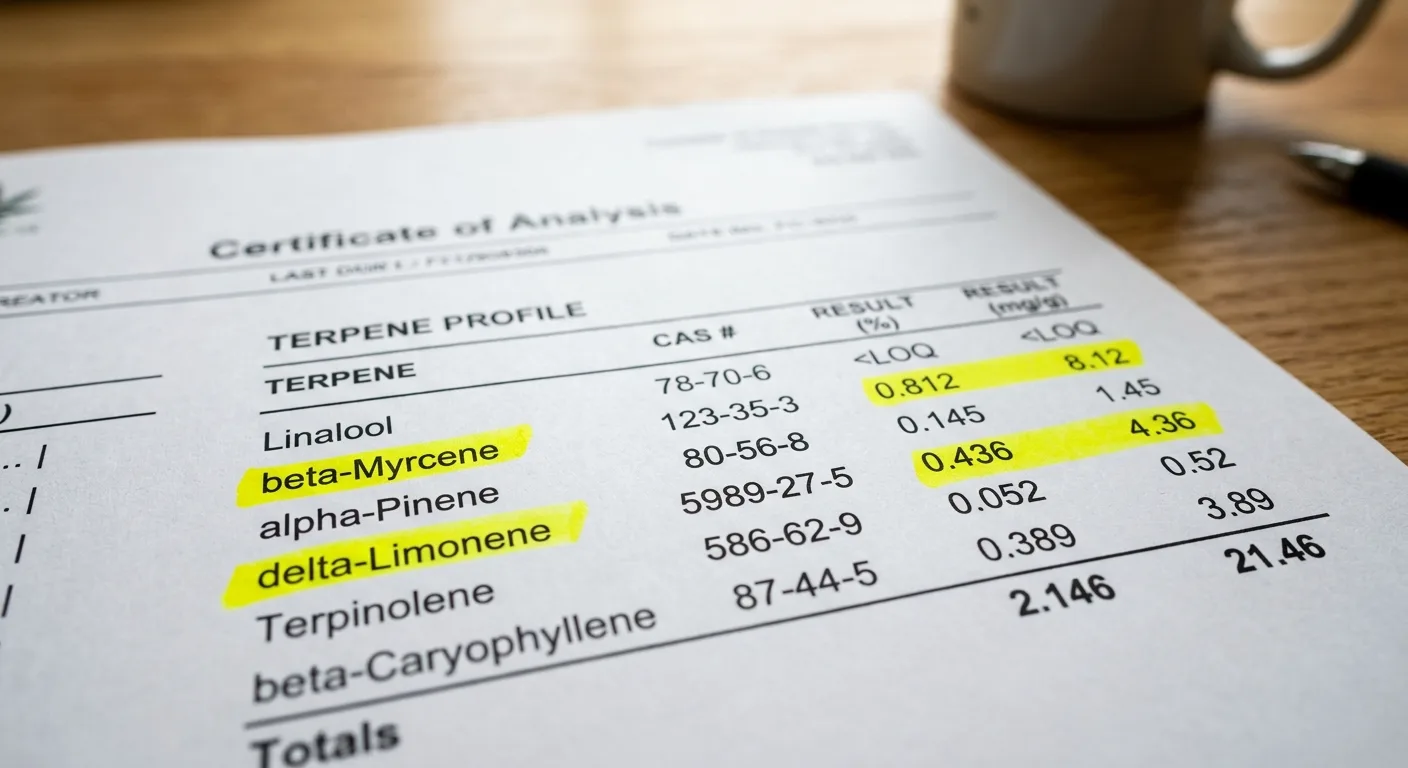
A terpene panel is the section of the COA dedicated to volatile aromatic compounds. Understanding its structure is step one to extracting useful information from any cannabis lab report.
Which Terpenes Get Tested?
Most standard terpene panels test between 12 and 30 individual terpenes. The exact list varies by lab, but the most consistently reported compounds include myrcene, limonene, caryophyllene, linalool, pinene, terpinolene, ocimene, humulene, bisabolol, camphene, valencene, and nerolidol. For a full breakdown of these compounds, see our cannabis terpene chart.
Some premium labs run extended panels of 40+ terpenes, capturing minor contributors like fenchol, guaiol, and geraniol. These extended panels are more expensive but give you a richer picture of a strain's aromatic fingerprint.
Reporting Units: mg/g vs Percentage
Terpene results appear in two formats, and confusing them is a common beginner mistake:
- Percentage (%) — the most common format; 1% means 1g of terpenes per 100g of flower
- mg/g (milligrams per gram) — multiply by 0.1 to convert to %; 10 mg/g = 1%
- mg/mL — used for extracts and liquids, not dry flower
The conversion is simple: mg/g ÷ 10 = %. So if myrcene reads 4.2 mg/g, that's 0.42% myrcene. Always confirm which unit a COA uses before comparing numbers between labs — mixing units is the #1 source of confusion when people try to compare terpene profiles from different sources.
Detection Limits and LOQ
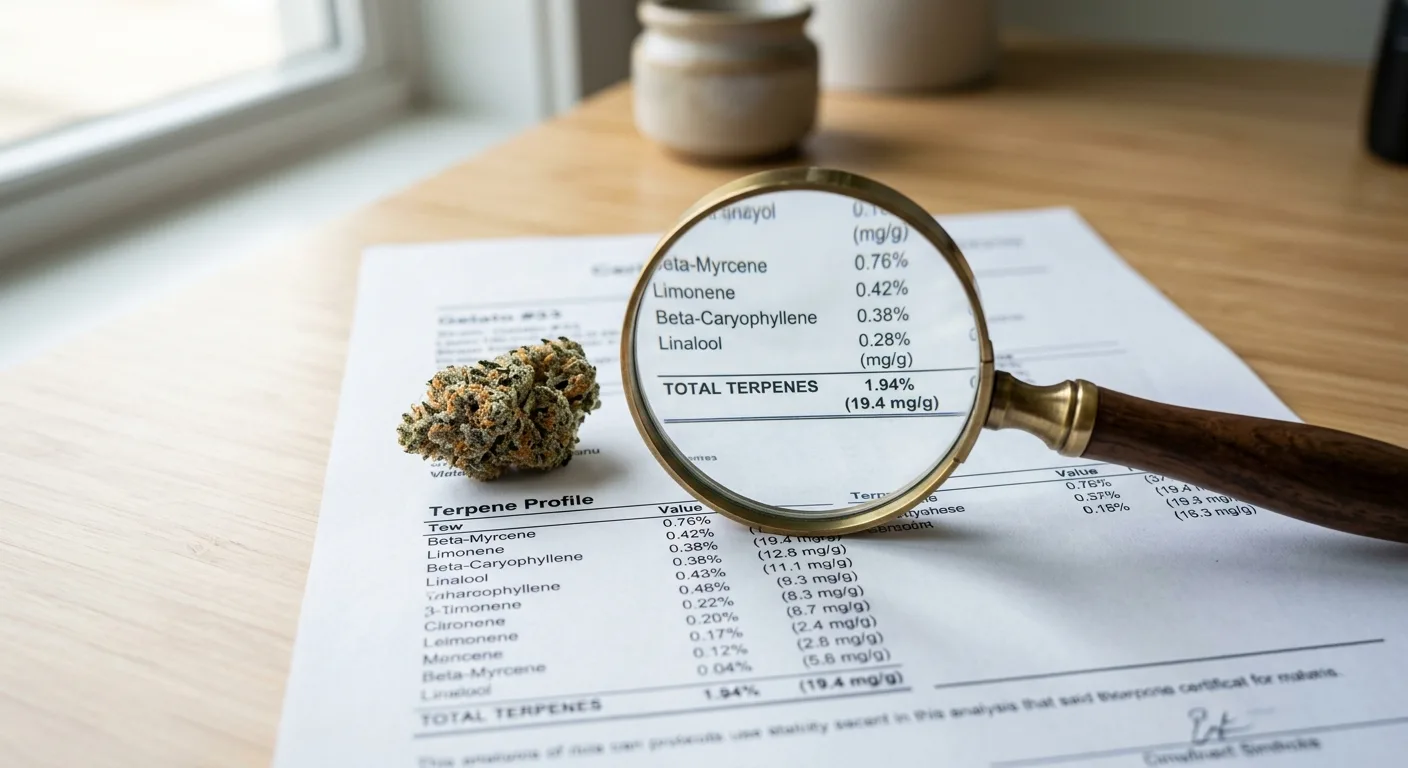
Every lab has a Limit of Quantification (LOQ) — the lowest concentration they can reliably measure. For terpenes, this is typically 0.01–0.05% (0.1–0.5 mg/g). Any terpene below this threshold appears as "ND" (not detected) or " This matters because a terpene listed as ND doesn't necessarily mean it's absent. It may simply be below the lab's detection threshold. Low-expression terpenes like bisabolol or nerolidol frequently fall near or below LOQ in average grows. Total terpene content is the sum of all individually detected terpenes on the panel, expressed as a percentage. In practice, this number tells you how aromatic and flavourful a given batch of flower is likely to be. A total of 1–3% is the benchmark for high-quality, well-cultivated cannabis flower. Here's how the numbers break down in real-world terms: The question "is 2% terpenes good for cannabis?" has a clear answer: yes, 2% total terpenes puts a batch firmly in the premium tier. Most commercially available flower sits between 0.8–1.5%. Hitting 2%+ consistently requires optimized genetics, controlled environment, and precise harvest timing. It's also worth noting that total terpene content doesn't tell the full story. A flower with 2.5% total terpenes dominated by a single compound can smell one-dimensional. A flower with 1.8% spread across eight distinct terpenes can smell complex and layered. The ratio matters as much as the total. Different labs use different extraction methods — typically Gas Chromatography with Flame Ionization Detection (GC-FID) or headspace GC-MS. These methods produce slightly different results for the same sample. One lab might report 1.8% total terpenes on a sample that another lab measures at 2.1%. Always compare terpene COAs from the same lab when evaluating two strains side by side. Cross-lab comparisons introduce method-based variance that can mislead your conclusions. Follow this numbered process every time you open a COA. It takes about five minutes once you know what to look for. Find the lab name, accreditation number, and test date. Confirm ISO 17025 status on the lab's website. Reject any COA older than 18 months for terpene data — terpenes are volatile and degrade even in properly stored samples. COAs are multi-section documents. The terpene panel is usually on page 2 or 3, after cannabinoid potency. Look for column headers like "Analyte," "LOQ," "Result," and "Unit." Confirm the reporting unit (% or mg/g) before reading any numbers. This is usually at the bottom of the terpene table or highlighted in a summary box. Record this number first — it gives you the quality benchmark before you dive into individual compounds. Sort the detected terpenes from highest to lowest. The top three — your primary, secondary, and tertiary terpenes — define the strain's aromatic and experiential identity. These three usually account for 60–80% of total terpene content. Count how many terpenes read "ND." A panel with many ND results could mean the strain genuinely lacks those compounds — or it could mean poor growing conditions suppressed expression. Cross-reference with other COAs for the same strain if available. Before trusting the numbers, scan for the warning signs listed later in this guide. Round numbers, missing standard terpenes, and unaccredited labs should all trigger deeper scrutiny. The terpene hierarchy is the framework that explains how individual compounds combine to create a strain's overall experience. Understanding this layered structure is what separates an informed seed buyer from someone just chasing THC percentages. The primary terpene is the compound present in the highest concentration. It drives the dominant aroma, flavour note, and often the primary experiential quality. In most indica-leaning strains, myrcene dominates. In citrus-forward sativas, limonene or terpinolene typically leads. For example, in a typical Super Lemon Haze COA, you'd expect terpinolene to appear as the primary terpene — that characteristic bright, slightly resinous citrus note is terpinolene's signature. Learn more about individual compounds in our dedicated terpene articles, including the humulene guide and beta-caryophyllene guide. Secondary terpenes modify and deepen the primary character. They add complexity, round out sharp edges, and often contribute to the entourage effect — the way multiple cannabis compounds interact to influence the overall experience. A myrcene-dominant strain with high caryophyllene as its secondary terpene will have an earthier, spicier quality than one where linalool plays second chair (which adds a floral softness). Tertiary terpenes exist in small quantities but contribute to the strain's unique fingerprint. Even at low concentrations, compounds like nerolidol (woody, fresh) or ocimene (sweet, herbaceous) add nuance that distinguishes phenotypes of the same strain. These are the notes that make a cannabis sommelier pause and say "there's something interesting in the back." Think of the terpene hierarchy like a musical chord: the primary terpene is the root note, secondary terpenes are the third and fifth that define the chord quality, and tertiary terpenes are the embellishments that make the progression memorable. A flat COA with one high terpene and nothing else is a single note — impressive in isolation but lacking depth. Use this table as a quick-reference guide when reading any cannabis terpene lab report. Typical percentage ranges reflect well-cultivated indoor flower. See our full cannabis terpene chart for extended data on 30+ compounds. Not all COAs are created equal. Knowing the warning signs of a questionable or manipulated lab report protects you from making decisions based on bad data. Real analytical chemistry produces messy numbers: 0.347%, 1.183%, 0.062%. If a COA shows terpene results like 0.5%, 1.0%, 2.0% — perfectly round figures across multiple analytes — something is wrong. Either the data has been manually edited or the testing methodology is unreliable. If a COA panel completely omits myrcene or caryophyllene — the two most ubiquitous cannabis terpenes — that's unusual enough to warrant scrutiny. These compounds are present at detectable levels in virtually all cannabis cultivars. Their absence may indicate a limited panel or selective reporting. Manually add up the individual terpene results and compare to the stated total. If the numbers don't add up within normal rounding error (±0.05%), the document may have been altered. This check takes 60 seconds and catches more fraud than any other single test. Be cautious of COAs published without a sample collection date, a named analyst signature, or a traceable sample ID. These omissions may indicate the document was produced internally rather than by an accredited third-party lab. Legitimate COAs from ISO-certified labs always include these fields. In US regulated markets, some labs have faced enforcement actions for inflating potency numbers — a practice known as "lab shopping" or "lab fraud." While terpene inflation is less common than THC inflation, it does occur. Cross-reference results from seed banks by looking for labs that are mentioned consistently across multiple independent growers and verified by state regulators. Claims above 5% total terpenes for dry flower should trigger healthy scepticism. While exceptional grows can push past 3%, figures above 4–5% for whole flower (not fresh-frozen extract or live resin) are biologically implausible under standard growing conditions. Fresh-frozen live resin and full-spectrum extracts can legitimately show higher numbers, but dry cured flower rarely crosses 4%. Here's the insight most seed bank COAs don't tell you: the COA on a seed bank's website reflects one specific grow, in one specific environment, by one specific cultivator. Your results will differ — and the variables that drive that difference are learnable. Terpene production is closely linked to trichome development, and trichomes are stimulated by UV light — particularly UV-B wavelengths. Full-spectrum LEDs that include UV-B output during late flowering consistently produce higher terpene concentrations than narrow-spectrum blueshift lighting. Studies on similar cultivars show 15–25% increases in total terpene content with optimized light spectrums in the final two weeks. See our cannabis trichome biology guide for the underlying science. Living organic soil consistently produces the most complex terpene profiles — the microbial ecosystem converts organic matter into mineral forms that enhance secondary metabolite production in ways that synthetic nutrient solutions can't fully replicate. Coco coir produces clean, fast growth but often shows simpler terpene profiles. Living soil growing is the most reliable path to maximizing terpene expression in a home grow. Hydroponic systems (DWC, NFT) prioritize speed and yield over terpene complexity. The tradeoff is a flatter aromatic profile — often higher THC but lower total terpenes compared to equivalent soil grows. Terpene content peaks at different times than maximum THC — a nuance that most harvest guides underemphasize. Monoterpenes (like myrcene and terpinolene) are most concentrated 5–10 days before peak THC. Sesquiterpenes (like caryophyllene and humulene) peak slightly later. Harvesting for maximum terpene retention often means pulling slightly earlier than you would for pure THC maximization. Monitoring trichome colour under magnification remains the most reliable harvest timing method. Clear trichomes = immature. Cloudy/milky = peak cannabinoid and terpene production. Amber = degradation beginning. For strains like Papaya Feminized or Tangerine Haze Feminized, catching the harvest window at 70–80% cloudy trichomes preserves the fruity terpene profile that defines these genetics. Up to 50% of terpene content can be lost during improper drying and curing. The target environment for drying is 60°F / 15°C at 55–60% RH, with a slow 10–14 day process. Rushed high-heat drying (above 75°F) volatilizes monoterpenes rapidly — you can literally smell them leaving the room. Let's walk through a fictional but realistic COA for a strain called "Tropical Haze" — an OG Kush × Super Lemon Haze cross grown indoors under full-spectrum LED. This is the type of COA you'd find published by a quality-focused seed bank. The terpene hierarchy for Tropical Haze is clear: myrcene dominates (primary), terpinolene and limonene form a citrus-forward secondary tier, and caryophyllene adds a spicy counterpoint in the tertiary position. The result is a strain that leads with earthy body relaxation, opens into bright citrus, and finishes with a subtle spice. Total terpene content of 2.31% confirms this is well above the average commercial threshold. The numbers aren't round (0.84, 0.52, 0.38 — not 0.5, 0.5, 0.4) — a good sign for analytical validity. The absence of bisabolol at ND is unremarkable; it's a minor compound frequently below detection in flower. When you find a strain COA you like, screenshot or save the terpene hierarchy ratios — not just the absolute percentages. Ratios are more genetically stable across different grows than raw numbers. A strain where myrcene:limonene is roughly 2:1 will likely maintain that character whether grown in coco or soil, indoors or out. Seed selection based on terpene COA data is a skill that most home growers never develop — and it's one of the most powerful tools available for intentional cultivation. Here's how to apply everything you've learned. Before opening a single COA, decide what you're growing for. Do you want: When comparing two strains using COA data, focus on three metrics: total terpene content, the primary terpene identity, and the diversity of detectable compounds. A strain with total terpenes of 1.9% and eight distinct detected compounds will typically offer a more interesting experience than one with 2.1% concentrated entirely in a single terpene. For example, comparing White Widow Feminized to Purple Kush Feminized using COA data would typically reveal very different profiles: White Widow shows a more distributed, complex terpene spread with strong caryophyllene and myrcene, while Purple Kush leans heavily myrcene-dominant with linalool as a notable secondary — a profile that aligns directly with its reputation for deep physical relaxation. COA data from seed banks is produced in specific growing conditions — usually optimized indoor. If you're growing outdoors, in coco, or under HPS lighting, use the COA as a directional guide rather than an absolute prediction. The terpene hierarchy (which compounds dominate) will remain consistent even if absolute percentages vary 20–30% from the published figures. Use our grow planner tool to map your environmental targets — temperature, humidity, and light spectrum — against the optimal conditions for terpene production. Strains that express high terpinolene particularly benefit from cooler late-flower temperatures (64–68°F nights) to preserve those volatile citrus compounds right up to harvest. Based on published COA data and widely documented terpene profiles, here are some strong options organized by dominant terpene: High Myrcene (earthy, relaxing): OG Kush, Skywalker OG Autoflower, Granddaddy Purple, Northern Lights x Big Bud, Blue Dream High Limonene/Terpinolene (citrus, uplifting): Super Lemon Haze Feminized, Jack Herer, Tangerine Haze Feminized, Durban Poison, New York Power Diesel Feminized High Caryophyllene (spicy, complex): OG Kush Feminized, Girl Scout Cookies, Gelato, Cookies Kush Feminized, Runtz High Linalool (floral, calming): Purple Kush Feminized, Lavender, Do-Si-Dos, Plushberry Autoflower, Zkittlez The most informed seed buyers use COA terpene data the same way a sommelier uses wine notes — as a predictive guide to experience, not just a chemistry report. When you can read a terpene panel fluently, you're selecting the exact sensory and experiential outcome you want before a single seed hits the germination medium. COA data captures chemistry at one moment in time, from one grow. It doesn't tell you about phenotype variation within a strain (some phenos of the same genetics express very different terpene profiles), growing difficulty, or how the genetics will perform in your specific setup. For seed purchasing decisions, treat a COA as one important data point alongside grow reports, grower reviews, and breeder descriptions. Also check our guide on how to read cannabis seed packaging for the full picture. For deeper context on how trichomes produce both cannabinoids and terpenes, our cannabis trichome biology article explains the biosynthesis pathways that determine why some genetics simply produce more aromatic compounds than others. Understanding this science helps you make environmental decisions — lighting, feeding, harvest timing — that actively support terpene expression rather than leaving it to chance. Never make seed purchasing decisions based solely on THC percentage. High-THC flower with low total terpenes (below 0.8%) is pharmacologically potent but experientially flat. The most satisfying harvests consistently come from genetics with verified terpene profiles of 1.5%+, grown in conditions that support maximum terpene expression. For home-grown or craft flower, 1–2% total terpenes is considered good quality, and anything above 2% is premium. Most commercial cannabis sits between 0.8–1.5%. Figures above 3% are exceptional and typically require optimized genetics, full-spectrum lighting with UV-B, and careful harvest timing. A COA showing 1.47% total terpenes — as seen in some well-documented seed bank grows — still represents solid, above-average performance. Check for ISO/IEC 17025 lab accreditation, a traceable sample ID, a named analyst signature, and a test date within the last 18 months. The individual terpene numbers should be non-round (e.g., 0.347%, not 0.3%) and should add up to the stated total within normal rounding tolerance. Cross-reference the lab name — it should be findable as an independent, verifiable business with state or national accreditation. Yes — 2% total terpenes puts a batch in the premium tier. The industry benchmark for high-quality flower is 1–3%, with the average commercial product sitting well below 1.5%. A grow that consistently achieves 2%+ total terpenes reflects excellent genetics, optimized environment (particularly late-flower light spectrum and temperature), and careful post-harvest handling including slow drying and proper curing. Terpene expression is influenced by growing medium, light spectrum, temperature, harvest timing, and curing method — not just genetics. Different grows of the same strain can legitimately show 30–50% variation in total terpene content. Additionally, different labs use different analytical methods (GC-FID vs GC-MS) which produce slightly different readings for the same sample. Always compare COAs from the same lab for the fairest strain-to-strain comparison. ND means "not detected" — the compound was either absent or present below the lab's Limit of Quantification (LOQ), typically 0.01–0.05%. An ND result doesn't confirm a terpene is completely absent; it may simply be below measurable levels. Minor terpenes like bisabolol, nerolidol, and camphene frequently appear as ND in average grows but can register in premium, well-cultivated harvests.What Does 'Total Terpene Content' Actually Mean?
The 1–3% Benchmark Explained
Total Terpene % What It Means Typical Source Below 0.5% Very low aroma, likely degraded or poorly grown Old stock, improper cure, heat damage 0.5–1.0% Mild aroma, average commercial quality Standard indoor/outdoor mid-tier 1.0–2.0% Good quality, noticeable aroma and flavour Well-cultivated indoor, good genetics 2.0–3.0% High quality, strong nose, premium flower Optimized indoor, top genetics Above 3.0% Exceptional, rare, often craft or competition-grade Best-case indoor with dialled environment Why Terpene Numbers Can't Be Compared Across Labs Directly
Step-by-Step: How to Read a Cannabis Terpene Lab Report
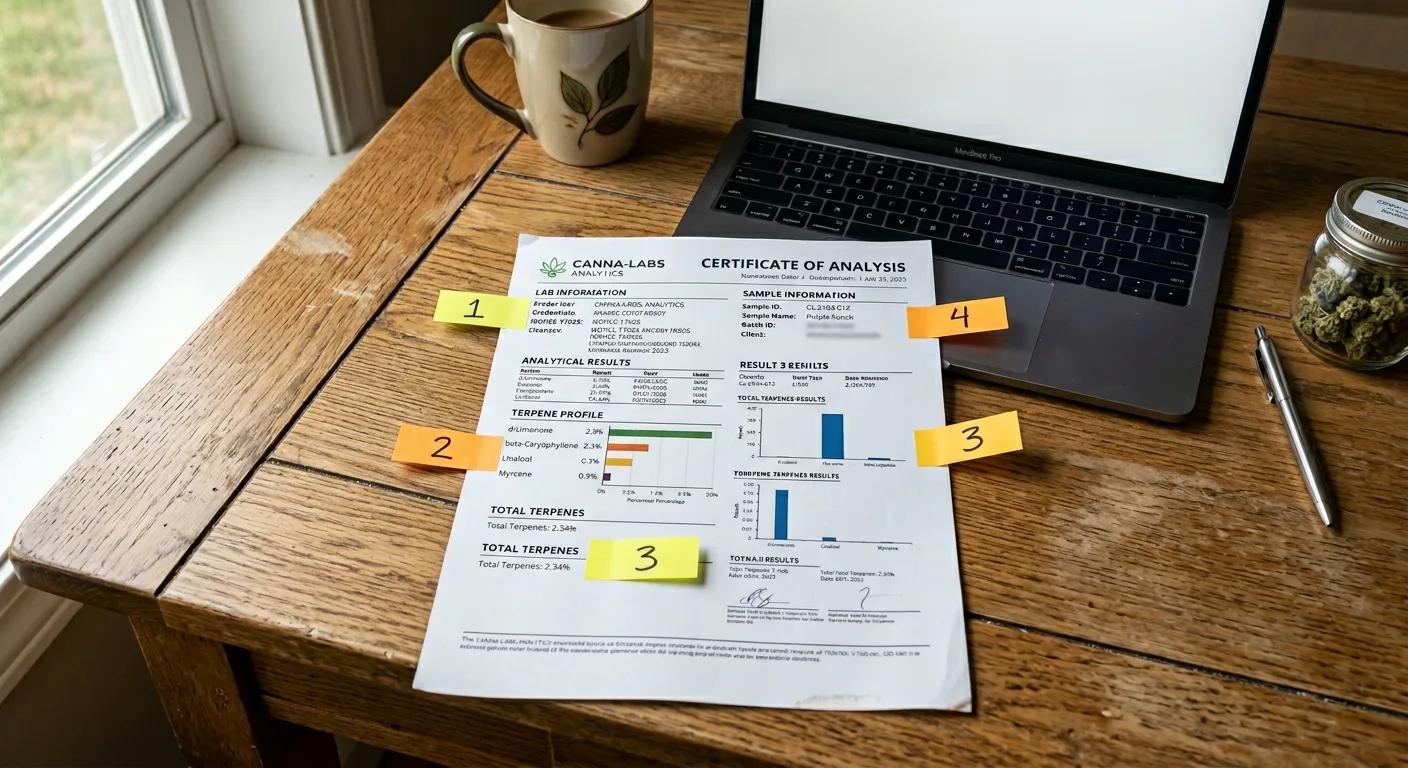
Verify Lab Credentials
Locate the Terpene Panel Section
Find the Total Terpene Content Line
Identify the Top Three Terpenes by Percentage
Check for ND Values Across the Panel
Look for Red Flags (See Section 6)
The Primary, Secondary, and Tertiary Terpene Hierarchy

Primary Terpenes (Dominant — Above 0.3%)
Secondary Terpenes (Supporting — 0.1–0.3%)
Tertiary Terpenes (Background — 0.01–0.1%)
The 12 Most Common Cannabis Terpenes: Reference Table

Terpene Aroma Profile Typical Range (%) Primary Effects / Notes Myrcene Earthy, musky, mango 0.2–1.2% Sedating, body-relaxing, most abundant terpene in cannabis Limonene Citrus, lemon, orange 0.1–0.8% Uplifting, stress-reducing, mood elevation Caryophyllene Spicy, pepper, woody 0.1–0.6% Binds CB2 receptors; anti-inflammatory potential Terpinolene Fresh, floral, piney, citrus 0.05–0.5% Uplifting, often dominant in sativa-leaning strains Pinene (α & β) Pine, fresh air, rosemary 0.05–0.4% Alertness, memory retention, bronchodilator Linalool Floral, lavender, spice 0.02–0.3% Calming, anxiolytic, sleep-supportive Humulene Earthy, woody, hoppy 0.05–0.3% Appetite-suppressing, anti-inflammatory notes Ocimene Sweet, herbal, woody 0.01–0.3% Uplifting, decongestant properties noted Bisabolol Floral, chamomile, sweet 0.01–0.2% Soothing, skin-calming, often a tertiary terpene Nerolidol Woody, citrus, floral 0.01–0.15% Sedating, often enhances penetration of other compounds Valencene Fresh orange, grapefruit 0.01–0.2% Citrus brightness, often found in tropical strains Camphene Damp earth, fir needles 0.01–0.1% Minor contributor; adds complexity to earthy profiles Red Flags on Cannabis Lab Reports: What to Watch For

Suspiciously Round Numbers
Missing Common Terpenes
Inconsistent Totals
Labs With Known Accuracy Issues
Extremely High Total Terpene Claims
How Growing Conditions Change Terpene Numbers
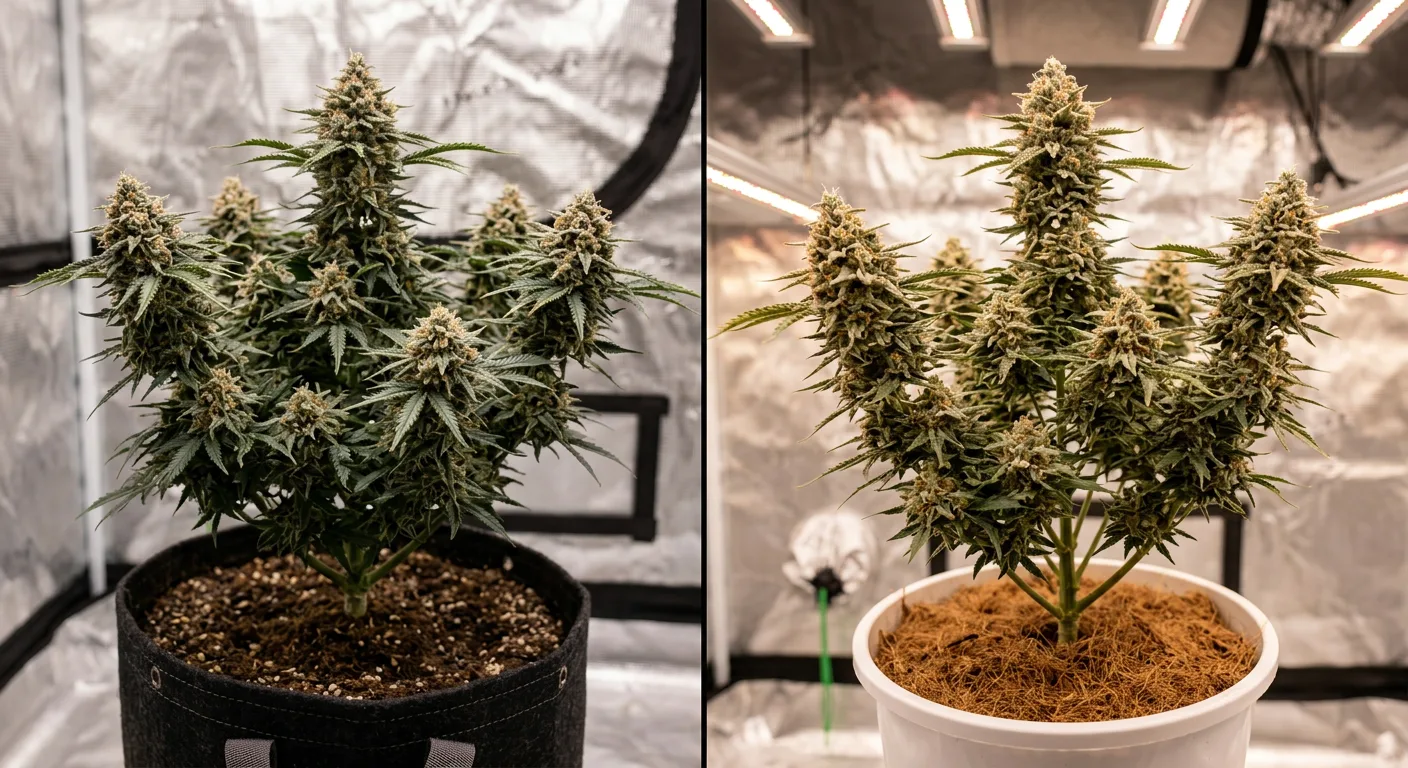
Light Spectrum and Intensity
Growing Medium: Soil vs Coco vs Hydro
Harvest Timing
Post-Harvest: Drying and Curing
Worked Example: Reading a Real-Style COA for a Hypothetical Strain
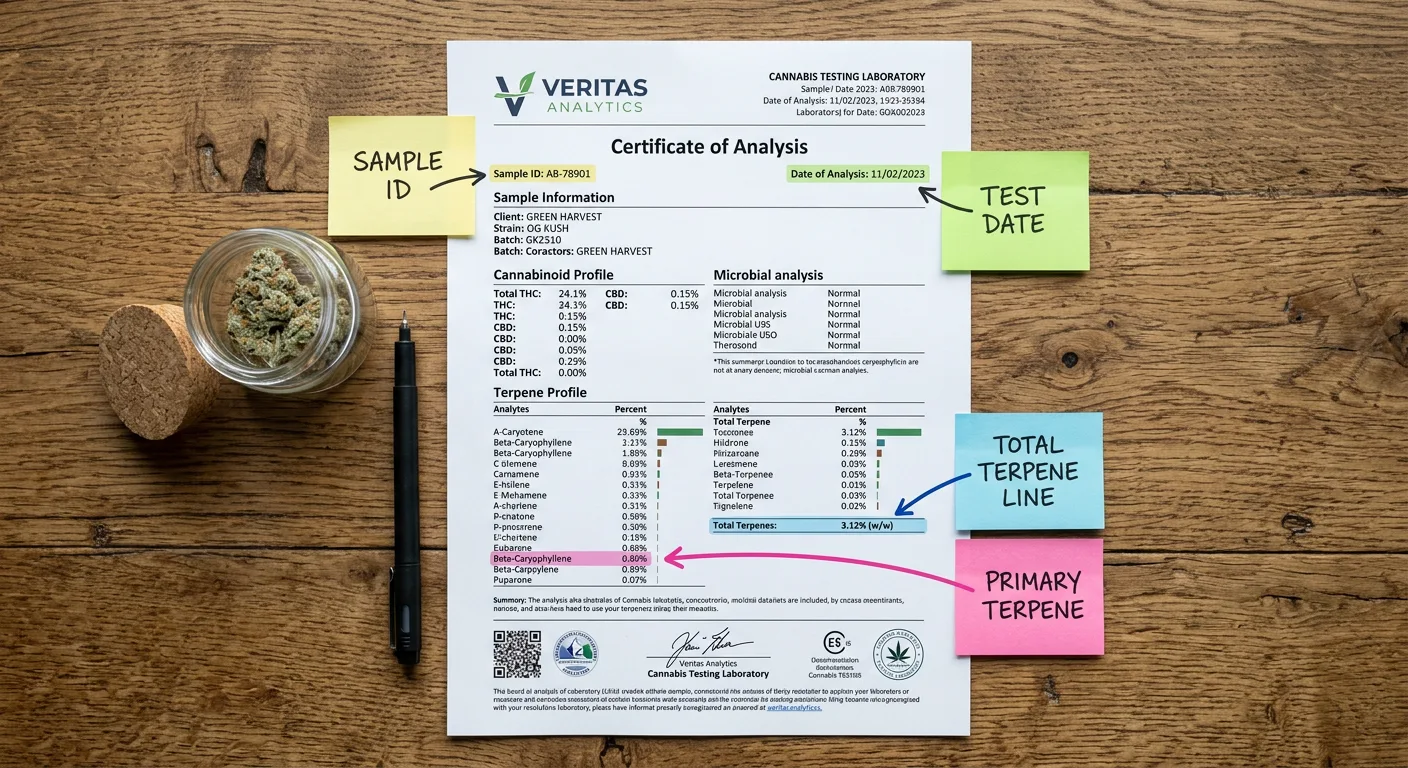
Sample COA: Tropical Haze — Annotated Breakdown
Field Sample Value What It Means for You Lab Name ProVerde Laboratories Accredited third-party lab — verified ISO 17025 ✓ Sample ID PVL-2024-04-18293 Traceable to specific batch — legitimate ✓ Date Analyzed April 18, 2024 Recent enough for terpene data to be valid ✓ Total THC 22.4% High potency — cross-reference with terpene quality Total Terpenes 2.31% Premium tier — above the 2% benchmark ✓ Myrcene 0.84% Primary terpene — earthy, relaxing base note Terpinolene 0.52% Secondary terpene — bright, fresh citrus character Limonene 0.38% Secondary terpene — reinforces the citrus uplift Caryophyllene 0.27% Tertiary — adds spicy depth, CB2 activity Ocimene 0.14% Tertiary — sweet herbal background note Pinene (α) 0.09% Tertiary — pine freshness, mental clarity note Linalool 0.07% Minor — soft floral cushion in the finish Bisabolol ND Not detected — below LOQ (0.05%), may still be present Reading This COA: Key Takeaways
How to Use COA Data to Select Seeds With the Right Terpene Profile
Define Your Target Profile First
Comparing Terpene Profiles Between Strains
Matching Strains to Growing Environment
Strain Recommendations by Terpene Profile
What COAs Can't Tell You
Frequently Asked Questions
What is a good terpene percentage on a cannabis COA?
How do I know if a cannabis lab report is legitimate?
Is 2% terpenes good for cannabis flower?
Why does the same strain show different terpene numbers on different COAs?
What does ND mean on a terpene lab report?