1. What Is Humulene? Chemistry and Natural Sources
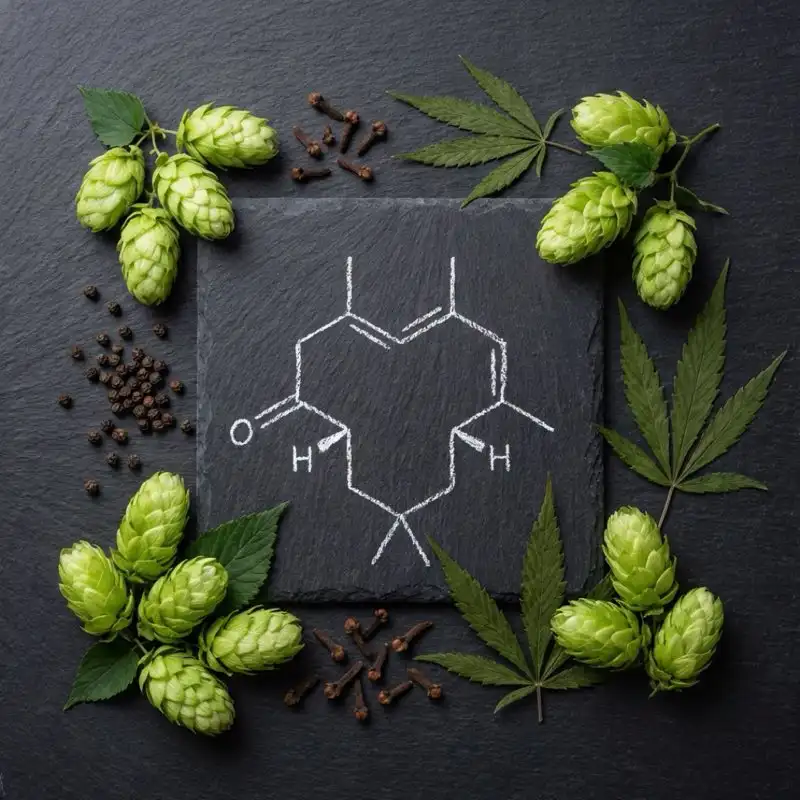
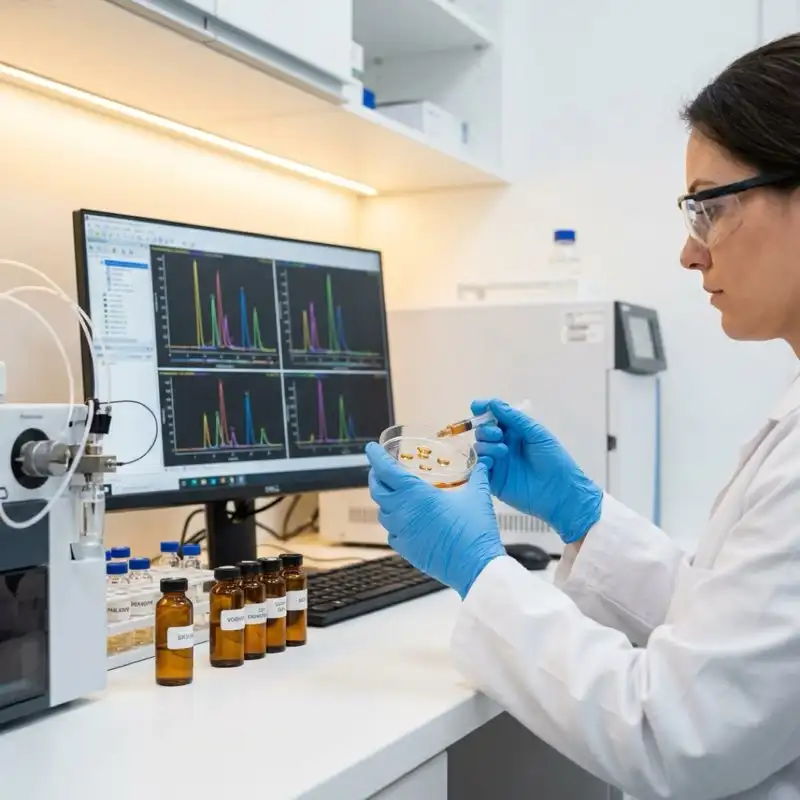
Humulene (also written as α-humulene or α-caryophyllene) is a monocyclic sesquiterpene with the molecular formula C₁₅H₂₄. It belongs to the same chemical family as beta-caryophyllene and shares a 11-membered ring structure that makes it immediately recognizable to analytical chemists running gas chromatography on cannabis samples.
Despite flying under the radar compared to myrcene or limonene, humulene is one of the most ecologically widespread terpenes on the planet.
In nature, humulene appears as a primary aromatic compound in a range of plants and spices, including:
- Hops (Humulus lupulus — from which it takes its name)
- Ginseng and sage
- Clove and black pepper
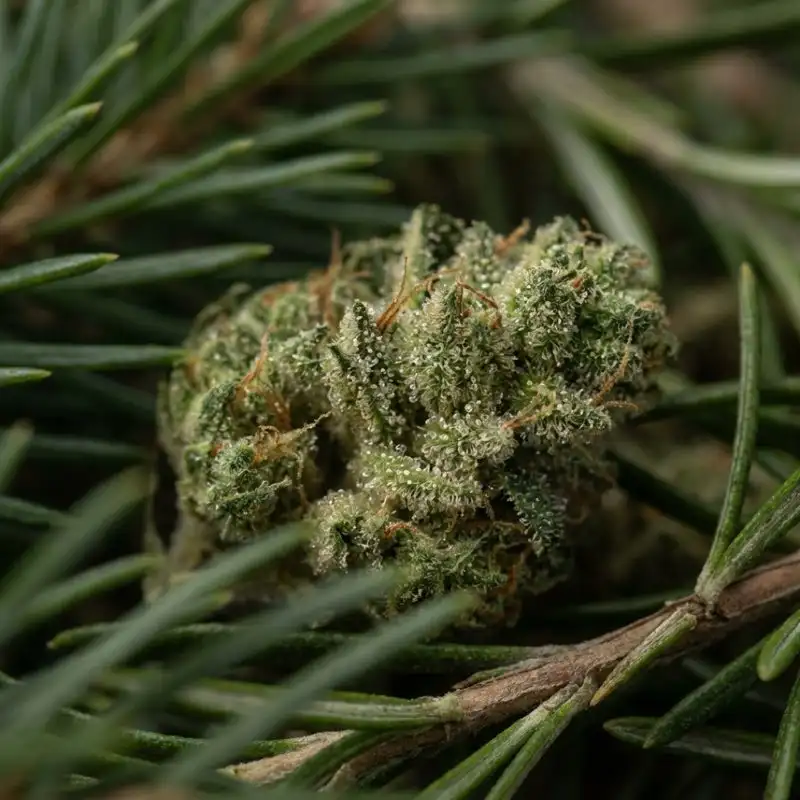
- Balsam fir trees
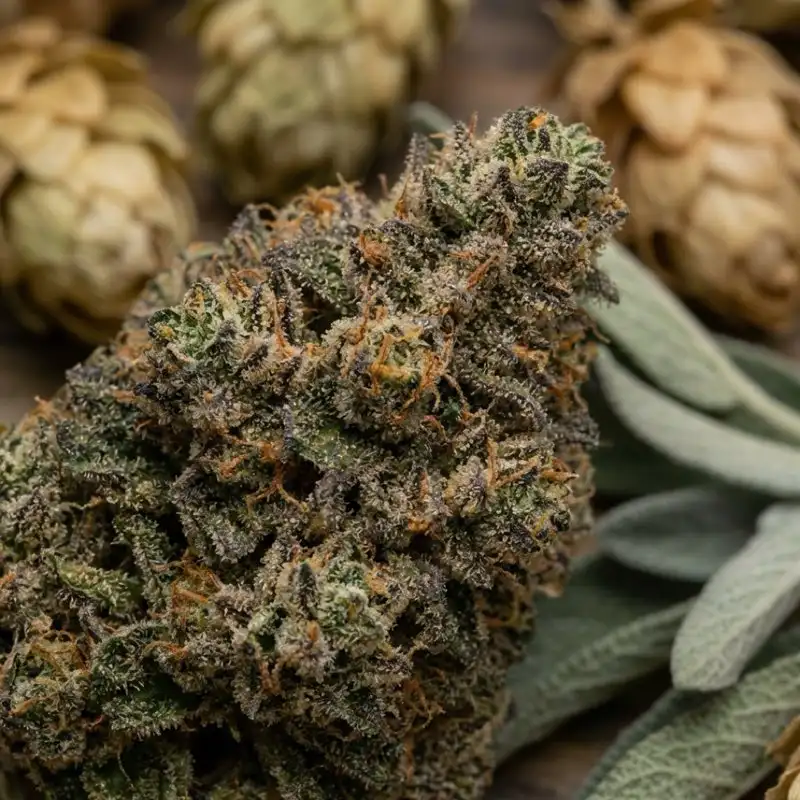
Brewers have long known that certain hop varieties deliver that dry, earthy, slightly bitter backbone in IPAs — that character comes almost entirely from humulene. In cannabis, humulene typically registers between 0.1% and 1.2% of the total terpene profile by dry weight, occasionally spiking higher in certain OG and Kush-lineage cultivars.
How Humulene Forms in the Cannabis Plant
Like all terpenoids, humulene is synthesized in the secretory cells of trichomes via the methylerythritol phosphate (MEP) pathway. The precursor molecule farnesyl pyrophosphate (FPP) is cyclized by humulene synthase enzymes to produce the characteristic ring structure.
Environmental stressors — including UV exposure, temperature swings, and mild drought stress — can upregulate terpene synthase activity. This is why outdoor and greenhouse plants often show richer terpene profiles than purely indoor grows.
2. How Humulene Shapes the Cannabis Experience
The concept of the entourage effect, first formalized by Dr. Ethan Russo in his landmark 2011 paper in the British Journal of Pharmacology, describes how cannabinoids and terpenes work synergistically rather than in isolation. Humulene plays a subtle but meaningful role in this biochemical orchestra.
Anecdotally, cultivars high in humulene are often described as producing a grounded, clear-headed effect rather than heavy sedation. Many experienced consumers associate humulene-dominant profiles with strains that feel energetically balanced — present but not overwhelming.
This aligns with early pharmacological observations about how humulene interacts with the body's signaling systems, though individual responses vary significantly and no terpene should be treated as a guaranteed outcome predictor.
Humulene and the Entourage Effect in Practice
When humulene occurs alongside beta-caryophyllene (a frequent pairing in OG genetics), the combined aromatic profile leans heavily toward spicy, woody, and herbal. This combination is found prominently in cultivars like True OG, where the characteristic OG funk is partly a product of exactly this terpene duo working in concert.
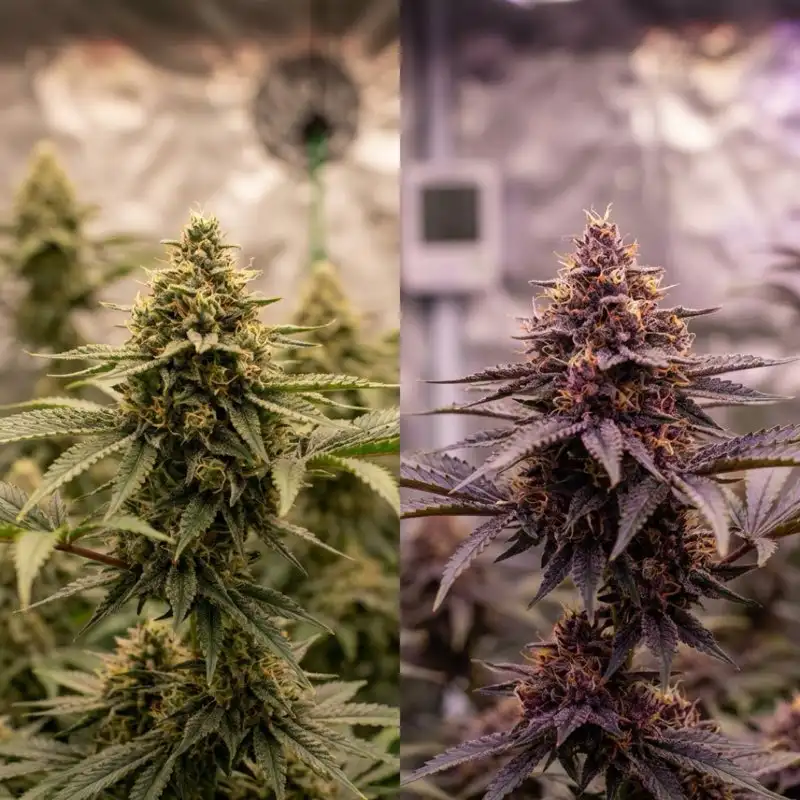
Similarly, earthy Kush profiles — think of the dense, incense-like aroma in Purple Kush — often contain measurable humulene contributing to that layered, complex nose.
3. The Science: Receptor Interactions and Research
Humulene does not bind directly to CB1 or CB2 receptors in any significant way, which means it does not produce psychoactive effects on its own. Instead, research suggests it may influence inflammation-related pathways through other mechanisms.
- A 2007 study published in Phytochemistry by Fernandes et al. found that humulene inhibited the production of certain pro-inflammatory markers in vitro.
- A 2009 study in the European Journal of Pharmacology investigated humulene alongside caryophyllene oxide, observing activity against tumor cell lines in animal models.
More recently, researchers have looked at humulene's potential as an appetite suppressant. Unlike myrcene and linalool — which are associated with relaxation and increased appetite — humulene appears to have the opposite effect in some models, making it genuinely distinct among common cannabis terpenes.
However, human clinical trials on isolated humulene are extremely limited, and drawing definitive conclusions from in vitro or animal data is premature. Growers should treat this science as foundational context rather than confirmed medical benefit.
Bioavailability Considerations
Because humulene is a sesquiterpene with relatively low volatility compared to monoterpenes like limonene, it survives combustion and vaporization slightly better, meaning more of it reaches the bloodstream via inhalation.
- At vaporization temperatures of 198°C (388°F), humulene becomes fully active.
- At temperatures below 160°C, much of it remains unvaporized — worth noting for users of temperature-controlled devices.
4. Aroma and Flavor Profile in Detail
Humulene has one of the most distinctive and immediately recognizable scent profiles in the terpene world. If you have ever cracked open a fresh hop cone or walked through a pine forest after rain, you already know humulene's signature — earthy, woody, slightly spicy, with a faint herbal bitterness that sits at the back of the throat.
Primary Aroma Notes
- Earthy/Woody: The dominant note — dry soil, aged timber, forest floor.
- Herbal: Reminiscent of fresh sage or dried thyme, with a subtle green quality.
- Spicy: A mild, dry spice — not sharp like pepper but warm like clove or cardamom.
- Hoppy: Unmistakably beer-adjacent in high-concentration cultivars, almost floral in its bitterness.
How Humulene Expresses in Different Cultivars
In an indica-dominant cultivar like Cookies Kush, humulene typically layers over a sweet, doughy base — the result is something like a spiced pastry with a woodland finish.
In heavier, more resinous genetics such as Northern Lights x Big Bud, the earthy, hash-like tones are amplified because humulene works alongside myrcene to push the profile toward dense, organic complexity. On the palate, humulene rarely presents as a sharp flavor — it lingers as a dry, slightly bitter aftertaste that experienced consumers often associate with quality, well-grown flower.
5. Top Cannabis Strains with High Humulene Content
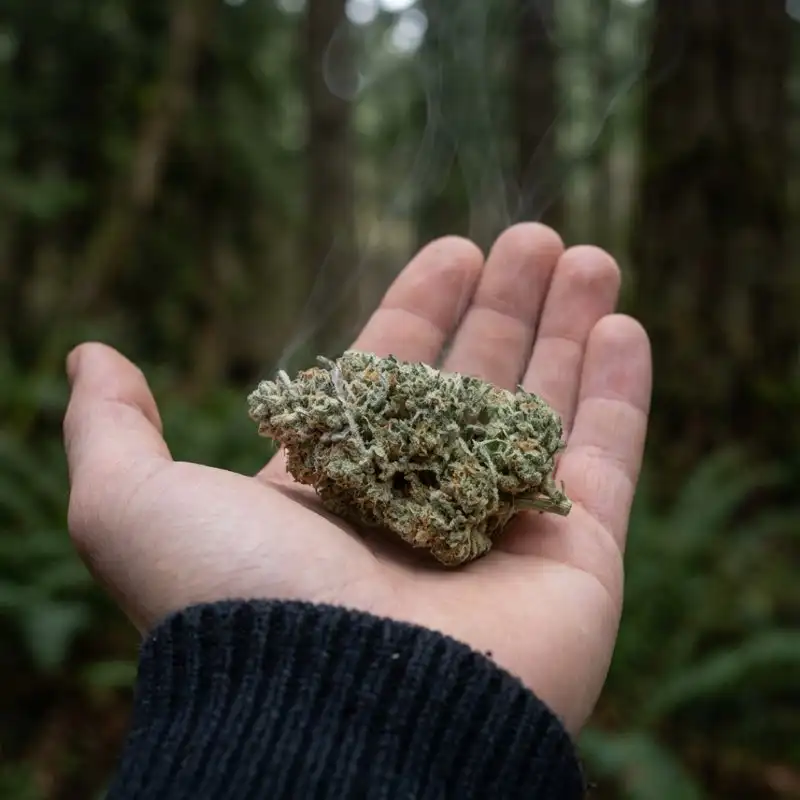
While terpene profiles vary between phenotypes, growing conditions, and curing methods, certain genetic lines consistently express elevated humulene. The following cultivars are worth seeking out if humulene is your target terpene.
OG and Kush Lineages
True OG is one of the clearest examples of humulene expression in commercial genetics. This California OG descendant produces dense, resin-coated buds with that signature earthy-fuel aroma where humulene and caryophyllene dominate the nose.
Expect a slow, measured flowering period of around 63-70 days indoors with yields of roughly 400-500g/m².
Purple Kush is another strong humulene carrier. The Hindu Kush genetics underlying this cultivar have centuries of selection pressure behind them, and the result is a profile rich in earthy, hash-forward terpenes. Purple Kush tends to finish in 8 weeks indoors, making it a reliable choice for growers who want both anthocyanin expression and a terpene-rich harvest.
Hybrid and Indica Expressions
Blue Magoo brings an interesting twist — the blueberry and floral notes from its DJ Short lineage sit alongside a subtle earthy backbone that humulene provides. This cultivar demonstrates how humulene can complement fruity profiles without overpowering them, adding depth rather than dominance.
Plushberry Autoflower is a newer-school option for growers wanting humulene in a faster-finishing format. Finishing in approximately 70-75 days from seed, Plushberry carries a berry-forward aroma with a distinct earthy undertone that points clearly to humulene in the profile.
For high-yielding cultivars with complex terpene chemistry, both Chronic feminized and Chronic autoflower deserve attention. The Chronic genetic line — legendary in the 1990s seed scene — carries a pungent, incense-like quality that has always hinted at significant humulene and caryophyllene content.
Browse the full DSS Genetics catalog for more humulene-forward options across different formats.
6. How to Maximize Humulene During the Grow

Terpene expression is part genetics, part environment. Once you have selected a cultivar with strong humulene genetics, the following cultivation strategies will help push expression to its ceiling.
Environmental Controls
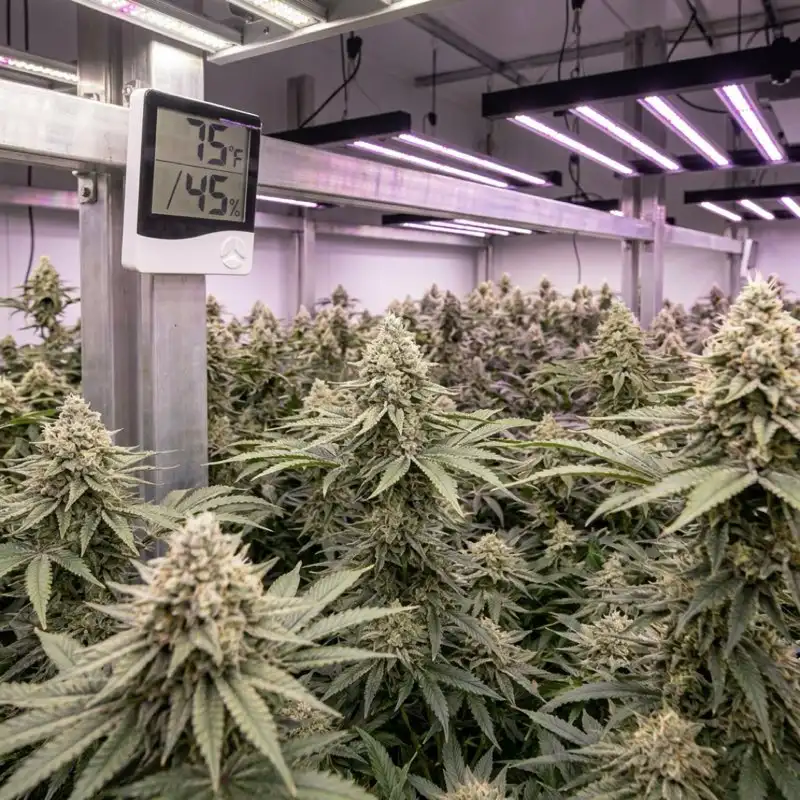
Keep daytime temperatures in the 24-26°C (75-79°F) range during vegetative growth, dropping to 18-22°C (65-72°F) at night during late flower. This temperature differential — known as DIF management — encourages terpene synthesis by slowing metabolic processes that would otherwise convert precursor molecules into other compounds.
Humidity should be managed carefully: 40-50% RH in late flower reduces mold risk while concentrating resin production.
Light Intensity and UV Exposure
UV-B light in the 280-315nm spectrum has been shown in multiple university studies to upregulate terpene and cannabinoid production in cannabis. Introducing UV-B supplementation during the final 2-3 weeks of flowering can meaningfully elevate total terpene content, including humulene.
Many LED full-spectrum fixtures now include UV channels for this purpose.
Stress Techniques and Nutrient Management
Mild controlled stressors — such as a light reduction in irrigation frequency during weeks 6-8 of flowering — can signal the plant to concentrate metabolites in its trichomes. Avoid excessive nitrogen in late flower, as high nitrogen pushes the plant toward vegetative chemistry rather than resinous production.
A clean flush in the final 10-14 days before harvest helps remove excess salts and allows the plant's natural terpene machinery to run without interference.
7. How to Preserve Humulene During Drying and Curing
Humulene has a boiling point of approximately 106°C (223°F), which makes it more stable than many monoterpenes during processing. However, improper drying and curing can still degrade it significantly through oxidation and enzymatic breakdown.
The Drying Environment
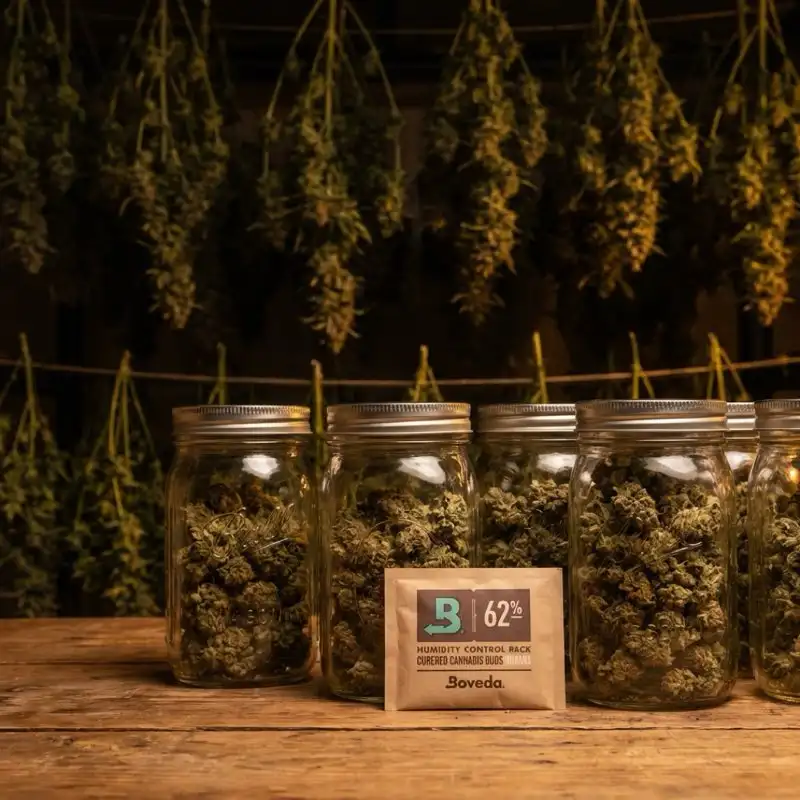
Dry in a dark room at 15-18°C (60-65°F) with 45-55% RH for a slow, even process. Target a drying time of 10-14 days rather than forcing a fast dry.
- Rapid drying at high temperatures causes chlorophyll to break down unevenly, creating harsh, grassy notes.
- Fast drying also volatilizes lighter terpene fractions, reducing overall terpene content.
- Whole-plant hanging is preferred over wet trimming — remaining fan leaves act as a moisture buffer.
Curing for Terpene Retention
Once stems snap cleanly and buds feel appropriately firm on the outside but slightly springy inside, transfer to glass mason jars at 58-62% RH (use Boveda or Integra packs).
- During the first two weeks, burp jars twice daily for 10-15 minutes to allow CO₂ and residual moisture to escape.
- After week two, once-daily burping is sufficient.
- A full cure of 4-8 weeks allows enzymatic processes to complete, maturing the terpene profile and smoothing the smoke significantly.
Humulene's earthy, complex notes become noticeably more defined after a proper cure compared to freshly dried flower.
8. Humulene vs. Other Major Terpenes
Understanding humulene is easier when you know how it compares to its close relatives and common co-occurring terpenes.
Humulene vs. Beta-Caryophyllene
These two terpenes are structurally related — both sesquiterpenes derived from FPP — and they frequently co-occur in OG and Kush genetics. Beta-caryophyllene is unique in that it acts as a dietary cannabinoid, binding to CB2 receptors, while humulene has no such direct receptor binding.
On the nose, caryophyllene is sharper and more pepper-forward, while humulene is softer, woodier, and more herbal. Together, they create the signature OG spice profile seen in cultivars like Northern Lights x Big Bud.
Humulene vs. Myrcene
Myrcene is the most abundant terpene in commercial cannabis, with an earthy, musky character often described as mango-like in high concentrations. Where myrcene tends toward heavy, sedating, couch-lock-associated profiles, humulene sits on the opposite end of the experiential spectrum.
Cultivars dominated by myrcene feel heavier; those where humulene takes a larger share often feel more nuanced and less one-dimensional. Cookies Kush is a good example of a strain where both terpenes coexist, with myrcene providing the body of the aroma and humulene adding a dry, spiced finish.
Common Misconceptions About Humulene
The most persistent misconception is that humulene is primarily a "minor" terpene with negligible influence. While it rarely reaches the concentrations of myrcene or limonene, its sensory impact per molecule is significant — a small percentage of humulene dramatically changes how a terpene profile reads on the nose.
- Misconception 1: Hoppy-tasting cannabis results from cross-breeding with hops. In reality, hops and cannabis are botanical relatives in the Cannabaceae family, but shared terpene chemistry is a product of parallel evolution, not hybridization.
- Misconception 2: Humulene always suppresses appetite. While some research points in this direction, the effect in whole-plant cannabis is modulated by dozens of other compounds and should not be treated as a predictable outcome.
Explore humulene-rich genetics for yourself at the DSS Genetics product catalog and let the plant speak for itself.
6. Frequently Asked Questions
What does humulene smell like in cannabis?
Humulene has an earthy, woody, and herbal aroma with a subtle dry spice quality — similar to fresh hops, sage, or clove. In cannabis, it contributes depth and complexity to the overall terpene profile rather than a single dominant scent. High-humulene strains often smell like a blend of forest floor, dried herbs, and light incense.
Which cannabis strains have the highest humulene content?
OG and Kush-lineage strains tend to express the highest humulene levels. Cultivars like True OG, Purple Kush, Northern Lights x Big Bud, and Cookies Kush consistently show measurable humulene in terpene analyses. That said, terpene profiles can vary significantly between phenotypes and growing environments, so lab testing your specific harvest is always the most accurate approach.
Does humulene get you high?
No — humulene does not produce psychoactive effects on its own. It does not bind to CB1 receptors, which are responsible for the cannabis high. However, through the entourage effect, humulene may subtly influence how the overall experience of a cannabis cultivar feels by modulating the expression of cannabinoids and other terpenes working together.
At what temperature does humulene vaporize?
Humulene has a boiling point of approximately 106°C (223°F), which is relatively low compared to some cannabinoids. For vaporizer users seeking to activate humulene along with other terpenes and cannabinoids, temperatures in the range of 185-198°C (365-388°F) are generally recommended to ensure full activation of the terpene profile.
How do I preserve humulene during the drying and curing process?
To preserve humulene, dry your cannabis slowly in a dark environment at 15-18°C with 45-55% relative humidity for 10-14 days. Avoid heat or rapid forced drying. After drying, cure in sealed glass mason jars at 58-62% RH, burping twice daily for the first two weeks. A full 4-8 week cure allows terpene chemistry to mature and will noticeably enhance humulene's earthy, complex expression in the final product.