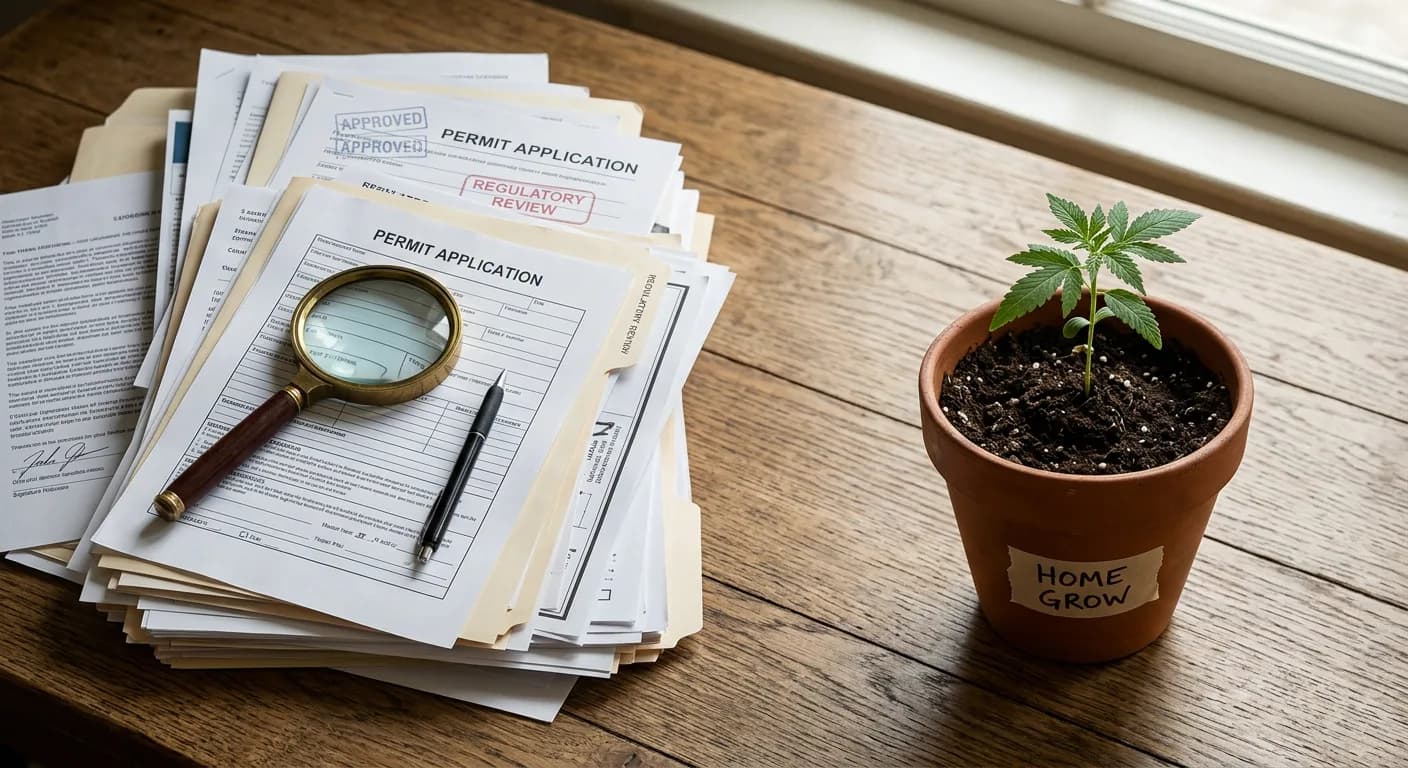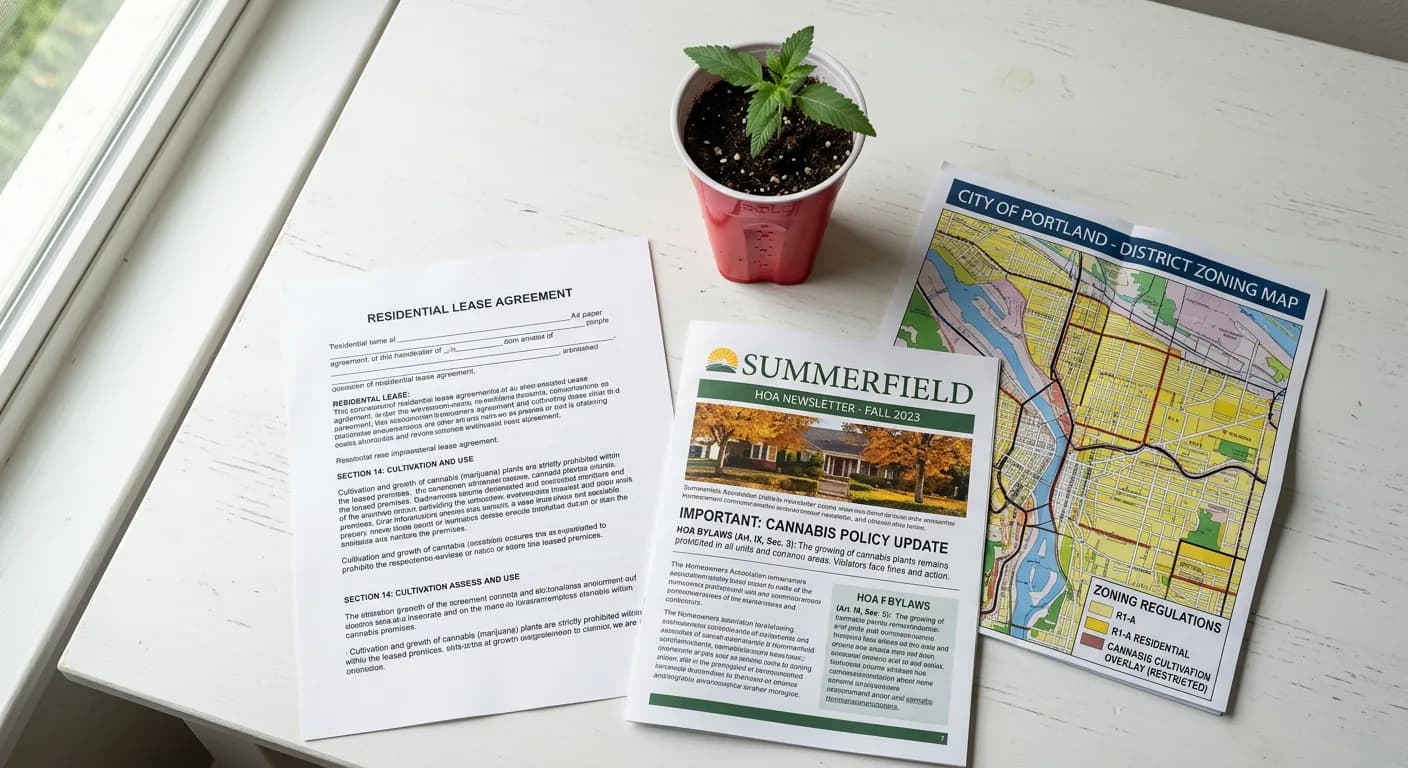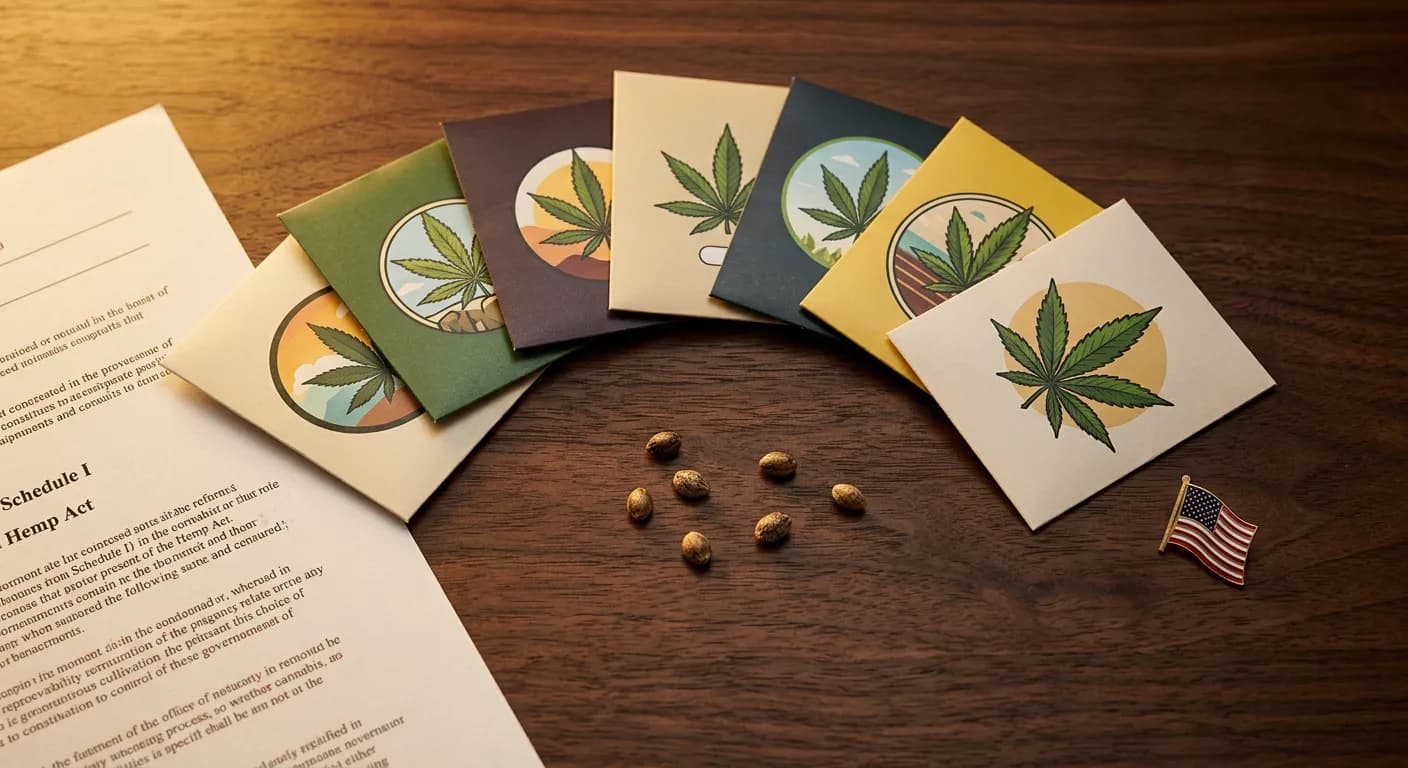
Here's the question burning in the back of every aspiring grower's mind before they click 'buy': are cannabis seeds legal to purchase in the United States? The answer is not a clean yes or no — and anyone who tells you otherwise is leaving out the most important parts.
What makes 2026 genuinely different from prior years is a series of regulatory moves that changed the legal landscape in ways most mainstream coverage barely touched. The DEA issued formal clarification acknowledging that cannabis seeds, tissue cultures, and genetic material are not automatically controlled substances under the Controlled Substances Act. That's a big deal — and it deserves more than a paragraph buried in a legal blog.
This guide unpacks every layer: federal law, state law, shipping law, the hemp seed loophole, what the DEA actually said, and what it means for you right now. Whether you're a collector, a licensed cultivator, or a curious first-timer in a legal state, you'll find your answer here.
What the DEA Actually Said About Cannabis Seeds in 2024–2025
The DEA's position on cannabis seeds is more nuanced than Schedule I headlines suggest. In formal correspondence — including a widely cited 2024 letter — the agency confirmed that cannabis seeds, plant tissue cultures, and other genetic material are not necessarily controlled substances under the Controlled Substances Act, depending on their THC content and intended use.
This matters enormously. It means seed status is conditional, not absolute.
The Key Language in the DEA Letter
The DEA letter drew directly on the 2018 Farm Bill's definitional framework. The agency stated that a cannabis seed that does not exceed 0.3% delta-9 THC on a dry-weight basis falls within the federal definition of hemp — and hemp is explicitly removed from Schedule I control. A seed that would produce a plant exceeding that threshold, however, remains in Schedule I territory under federal law.
'Cannabis seeds, tissue cultures, and other genetic material are not necessarily controlled under the Controlled Substances Act — their status depends on THC content and intended use.'
— DEA, formal correspondence, 2024
The practical problem: you cannot determine the THC potential of an ungerminated seed without genetic testing. This ambiguity is precisely why the carve-out matters — it shifts the burden of proof and softens the presumption of illegality for seed possession.
What This Means for Seed Buyers Right Now
The DEA clarification does not legalize all cannabis seeds at the federal level. It creates a framework where:
- Seeds with verifiable hemp genetics (≤0.3% THC potential) may be federally legal to possess and ship
- High-THC cannabis seeds remain Schedule I under the CSA in states without adult-use or medical programs
- Federal enforcement against individual seed buyers remains extremely rare and is not a stated DEA priority
- State law — not federal law — is the primary enforcement mechanism most buyers will actually encounter
The DEA has confirmed that cannabis seeds aren't automatically Schedule I contraband. Their legal status depends on THC content and, critically, what state you're in when you buy or germinate them. Federal law sets the ceiling; state law determines what's actually enforced on the ground.
Section 781 of the Agriculture Improvement Act: What It Actually Says
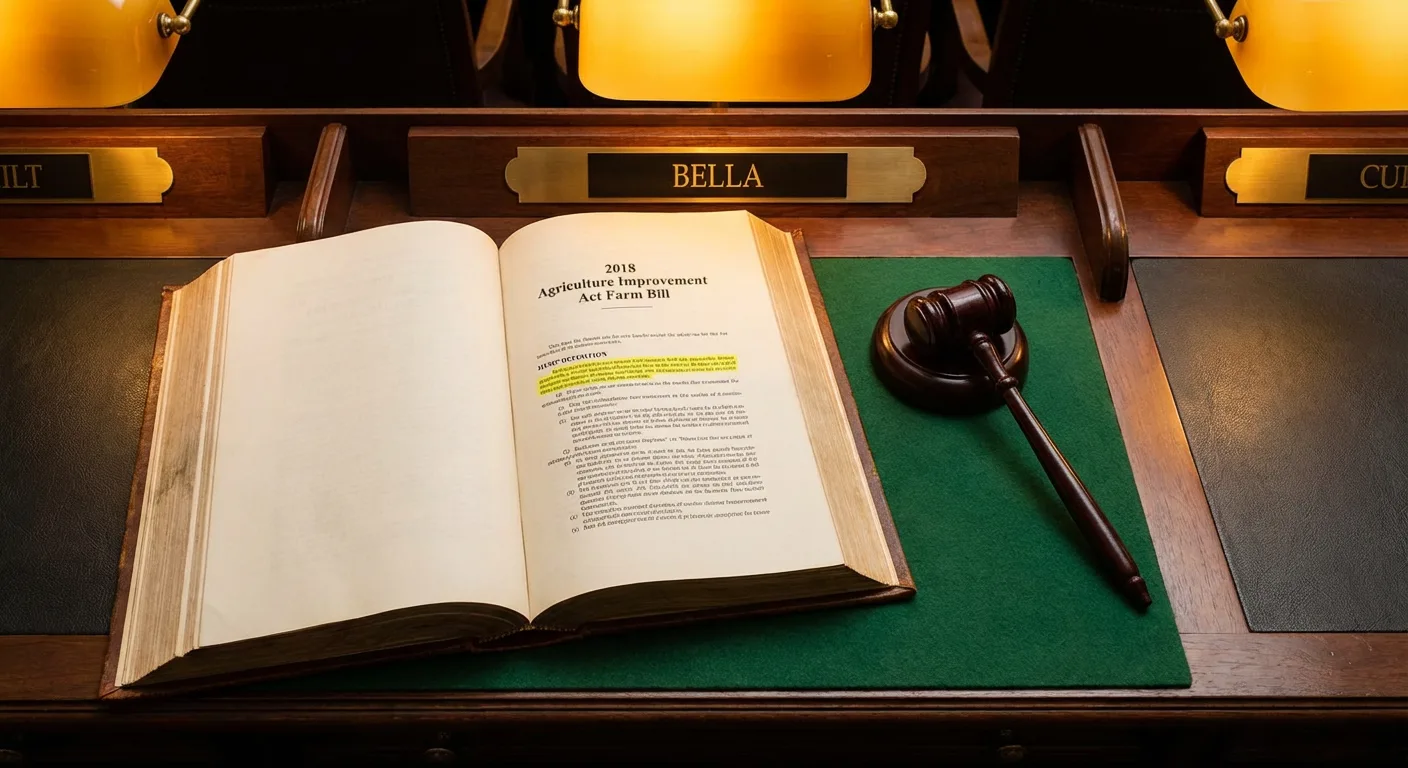
Section 781 of the 2018 Agriculture Improvement Act — better known as the Farm Bill — is the statutory foundation for the hemp seed exemption. It removed hemp and hemp-derived products from Schedule I of the CSA, defining hemp as Cannabis sativa L. with a delta-9 THC concentration of no more than 0.3% on a dry-weight basis. This single provision rewrote the legal relationship between cannabis genetics and federal drug law.
Most coverage of Section 781 either ignores it entirely or buries it in legal jargon. Here's what it means in plain English for seed buyers.
The Dry-Weight THC Test
A cannabis seed's legal classification under federal law hinges on one measurement: does the plant it produces — at the time of harvest — test above or below 0.3% delta-9 THC on a dry-weight basis? Section 781 applies this test to the harvested plant material, not the seed itself.
This creates a logical gap. An ungerminated seed cannot be tested for THC content. It has no THC. The DEA's 2024 clarification fills this gap by applying the hemp definition to seeds based on their intended or genetic profile — meaning certified hemp seeds sold by licensed producers carry federal legal protection, while unlabeled high-THC cannabis seeds do not have that same protection.
What Section 781 Does NOT Do
- It does not legalize the purchase of high-THC cannabis seeds in prohibition states
- It does not prevent states from enacting their own restrictions on hemp seeds
- It does not protect you if you germinate hemp seeds and the resulting plant tests above 0.3% THC
- It does not override state-level cannabis seed regulations in adult-use states
Section 781's most important contribution was definitional: by separating hemp from marijuana in the CSA, Congress created a legal pathway for cannabis genetics to move through commerce without automatic Schedule I classification. The DEA's subsequent letters clarified that seeds themselves can share in this exemption when their genetic profile qualifies.
The Three Legal Layers: Federal, State, and Shipping Law
Understanding cannabis seed legality requires thinking in three distinct layers simultaneously. Each layer operates independently — meaning you can be compliant at one level and in violation at another. Most confusion about buying cannabis seeds legally comes from collapsing all three into a single yes/no question.
Layer 1 — Federal Law (The CSA and Hemp Exemption)
At the federal level, high-THC cannabis remains a Schedule I controlled substance under the Controlled Substances Act. Possession, sale, or distribution of cannabis seeds with the intent to cultivate a plant exceeding 0.3% delta-9 THC is technically a federal offense. However, federal prosecution of individual seed buyers is vanishingly rare — the DEA and federal prosecutors focus enforcement resources on large-scale trafficking, not retail seed purchases.
Hemp seeds certified under USDA-approved programs are federally legal. Seeds marketed and sold within licensed state adult-use frameworks occupy a legal gray area at the federal level — technically prohibited under the CSA, but effectively tolerated in states where Congress has explicitly restricted the use of federal funds for cannabis enforcement in compliant state programs.
Layer 2 — State Law (The Layer That Actually Matters for Most Buyers)
This is where buying cannabis seeds legally or illegally is actually determined for most Americans. State law governs whether you can buy seeds, how many, from whom, and under what conditions. The landscape divides into four broad categories:
- Adult-use states (24 states + D.C.): Licensed retailers can legally sell cannabis seeds. Personal purchase and home cultivation are permitted up to state-defined plant limits.
- Medical-only states (14 states): Seeds may be available through licensed dispensaries to registered patients. Home cultivation rules vary significantly.
- Limited CBD/hemp states: Only hemp seeds are legally available. High-THC seeds have no legal purchase pathway.
- Full prohibition states (12 states): Cannabis seeds of any kind intended for cultivation are illegal. Possession can result in misdemeanor or felony charges depending on quantity.
Layer 3 — Shipping and Point-of-Sale Law
Even if your state permits cannabis seed possession, the act of shipping seeds across state lines introduces federal jurisdiction. The U.S. Postal Service and other federal carriers operate under federal law — meaning mailing high-THC cannabis seeds interstate is technically a federal offense regardless of the legality at origin and destination.
In practice, reputable seed banks ship discreetly and use packaging designed to avoid interception. Actual seizures do occur, but prosecution of individual buyers is extraordinarily rare. Most seized packages are simply confiscated without further action.
Important: Shipping cannabis seeds across international borders — including ordering from European or Canadian seed banks — adds customs and import law to the equation. Seeds seized at the border can trigger notification to local law enforcement, though prosecutions remain rare for small quantities.
Can I Legally Buy Cannabis Seeds Where I Live? A Decision Tree
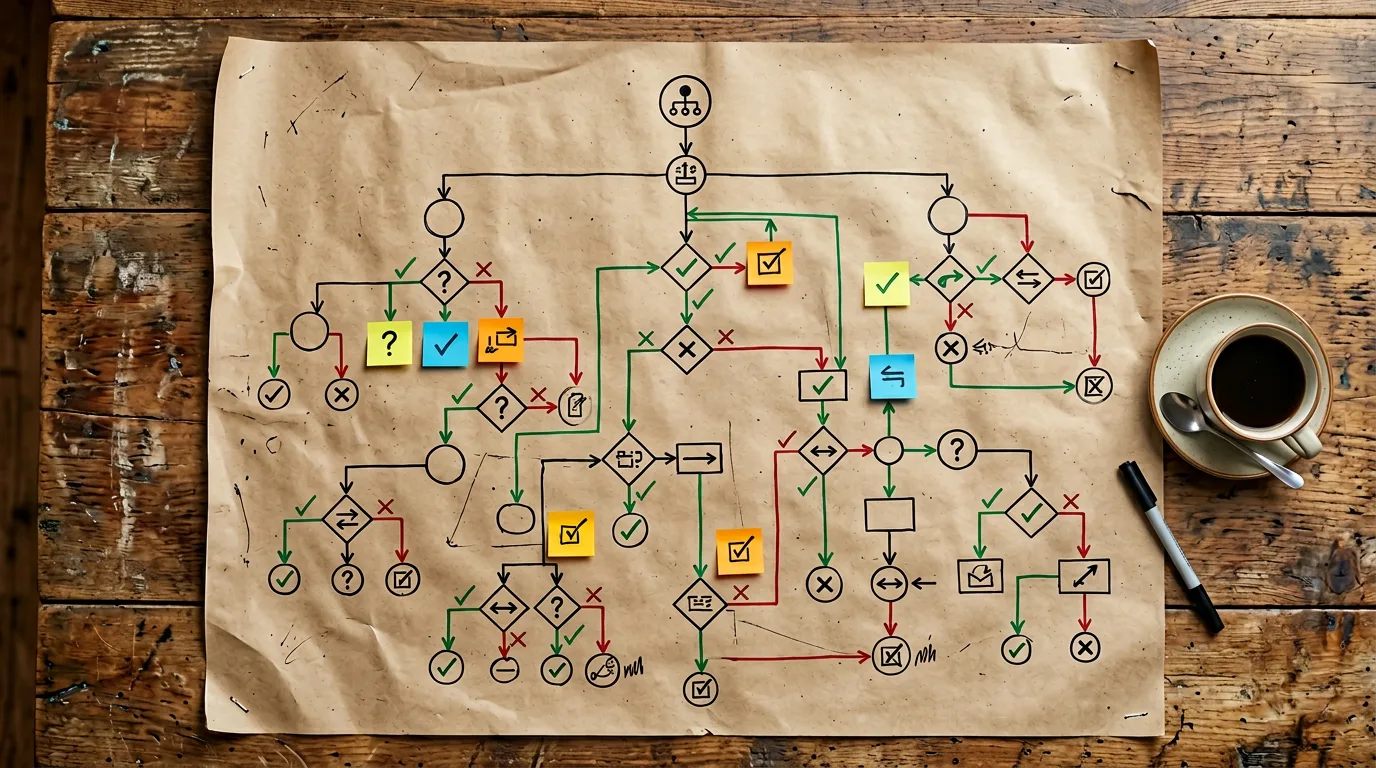
Use this framework to assess your situation before you buy. Work through each question in order — your answer at each stage determines the next step.
Is cannabis fully legal for adult use in your state?
If yes — states like California, Colorado, Michigan, Oregon, Illinois, and 19 others — you can legally purchase cannabis seeds from a licensed retailer. Check your state's plant count limits for home cultivation (typically 3–6 plants per adult). Proceed to Step 4 to verify home grow rules.
Do you have a valid medical cannabis card?
If yes and you're in a medical-only state, seeds may be available through licensed dispensaries. Some medical states allow home cultivation for registered patients; others prohibit it entirely. Check your state's patient home-grow statute specifically.
Are you only interested in hemp seeds (≤0.3% THC)?
If yes, hemp seeds from USDA-licensed producers are federally legal and available in all 50 states. These are distinct from high-THC cannabis seeds and will not produce the plants most recreational or medical growers are seeking. See the hemp seed section below for details.
Does your state permit home cultivation?
Even in adult-use states, not every state allows growing at home. Rhode Island, New Jersey, and others have adult-use programs but restricted home grow rights. Verify your specific state's home cultivation statute — not just its adult-use status — before germinating any seed.
Are you buying seeds as a collector or souvenir only?
In prohibition states, some buyers purchase seeds marketed as 'collector's items' or 'souvenirs' with no intent to germinate. Legally, this distinction carries limited protective weight — seeds are classified by their potential, not your stated intent, in most jurisdictions. This is a legal gray area, not a legal safe harbor.
Before ordering seeds online, search '[your state] home cultivation cannabis law 2026' and verify the current statute directly. State laws have changed rapidly — what was true in 2023 may not reflect 2026 rules in several states that have recently updated their adult-use frameworks.
Souvenir Seeds vs. Germination Intent: Does the Distinction Hold Up?
Many international and domestic seed banks market high-THC cannabis seeds as 'collector's items' or 'novelty souvenirs' — implying they are sold for display or genetic preservation, not cultivation. This legal framing has a long history in the industry, but its protective value in the United States is limited and often misunderstood.
The collector or souvenir defense is not a recognized legal exemption under federal law or most state laws. Under the CSA, possession of cannabis seeds with intent to grow — which is inferred from context, not just stated intent — constitutes possession of a controlled substance. The 'souvenir' label on packaging does not change the underlying legal analysis.
Where the Distinction Has Practical Value
The collector framing matters most in two specific contexts:
- Customs and import: Packages labeled as collectibles may receive less scrutiny, though customs officers are not bound by marketing language
- Prosecutorial discretion: In states without robust enforcement infrastructure, a small seed purchase with no cultivation evidence is unlikely to attract serious prosecution regardless of labels
Where It Offers No Protection
If you are caught germinating seeds, have grow equipment in your home alongside seeds, or communicate about growing in writing (including online), the souvenir defense evaporates immediately. Courts look at totality of circumstances, not seed bank disclaimers.
The 'souvenir' label is a commercial and marketing convention, not a legal shield. In legal states, you don't need it — just follow your state's rules. In prohibition states, it offers minimal protection and should not be relied upon as a legal strategy.
Hemp Seeds vs. Cannabis Seeds: The Legal Difference Explained
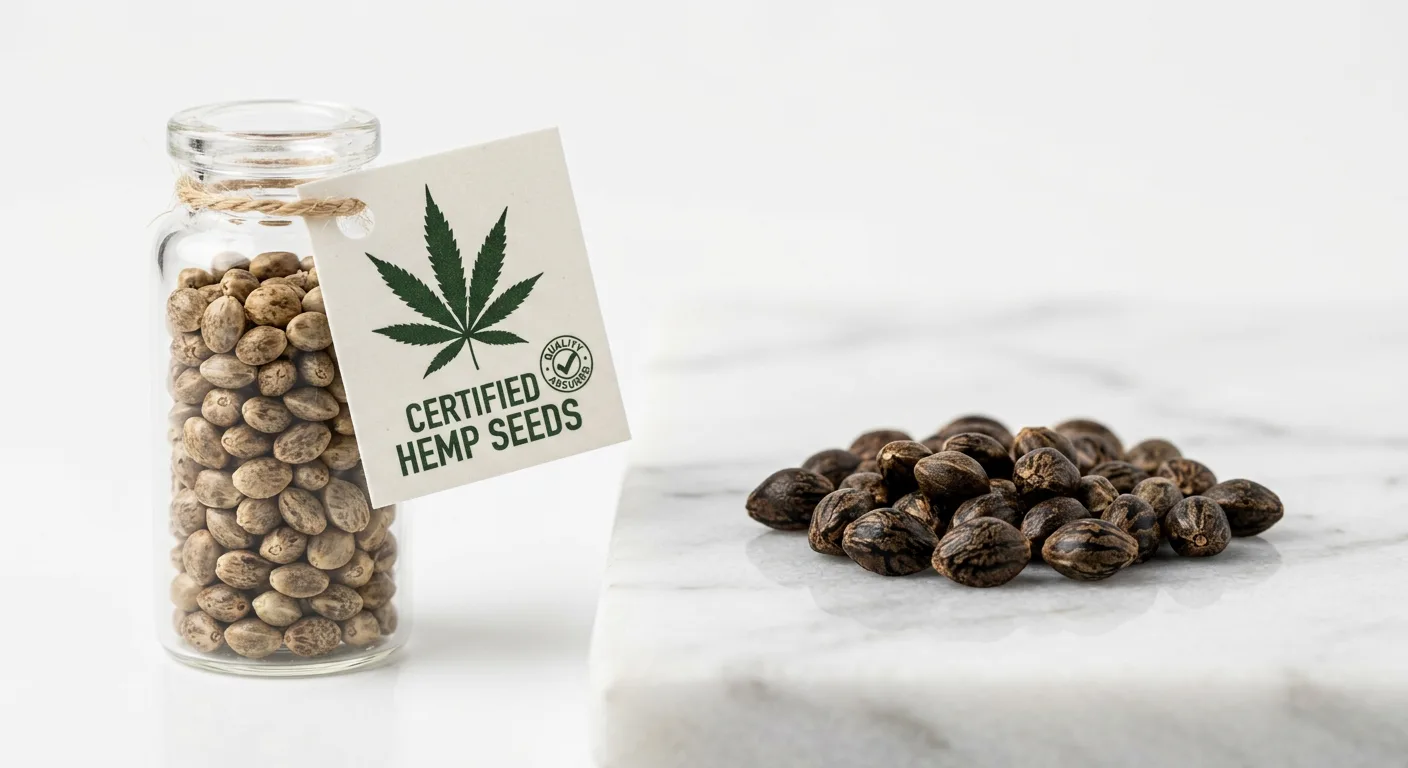
The legal distinction between hemp seeds and cannabis seeds is one of the most misunderstood areas in the entire seed law landscape. They come from the same species — Cannabis sativa L. — but federal law treats them entirely differently based on THC potential. Getting this wrong can mean the difference between a fully legal purchase and a federal violation.
| Feature | Hemp Seeds (Federal) | Cannabis Seeds (High-THC) |
|---|---|---|
| THC threshold | ≤0.3% delta-9 THC (dry weight) | >0.3% delta-9 THC potential |
| Federal legal status | Legal (Section 781, Farm Bill) | Schedule I (CSA) |
| Available in all 50 states? | Yes, from licensed producers | Only in adult-use/medical states |
| Can be shipped via USPS? | Yes, with proper documentation | Technically illegal interstate |
| Grow result | Low-THC fiber/CBD plants | Recreational/medical cannabis |
| Seed bank availability | Wide commercial availability | Adult-use states and online |
| DEA Schedule | Not scheduled (removed by Farm Bill) | Schedule I without state exemption |
The Hemp Seed 'Loophole' — Real or Myth?
You may have heard about a 'hemp seed loophole' that allows anyone to purchase cannabis seeds legally in all 50 states. Here's the reality: this loophole applies only to certified hemp genetics — seeds bred and certified to produce plants at or below 0.3% THC. The feminized, high-THC seeds most cultivators want (like OG Kush at 26% THC or White Widow at 25% THC) are definitionally excluded from the hemp category.
The confusion arises because ungerminated seeds contain no measurable THC themselves — they're just seeds. Some argue this means all seeds are technically hemp-legal. The DEA's 2024 clarification pushes back on this reading: the classification applies to the genetic potential of the seed, not the seed's current chemical composition.
CBD Seeds: A Special Case
CBD-rich cannabis seeds bred to stay under 0.3% delta-9 THC occupy the hemp category federally. These seeds are legally available, shippable, and plantable in all 50 states — provided the resulting plants are tested and remain compliant. Many cultivators in prohibition states use CBD-dominant genetics to grow legally while still working with Cannabis sativa plants.
If you're in a state where high-THC cannabis is still illegal but want hands-on cultivation experience, starting with certified hemp or CBD genetics is the legally sound path. You'll learn the same growing skills — VPD management, nutrient cycling, and canopy training — that transfer directly to high-THC cultivation when your state's laws change. Our VPD Calculator works for hemp and cannabis alike.
DEA Rescheduling in 2024–2025: What It Means for Seed Buyers Right Now
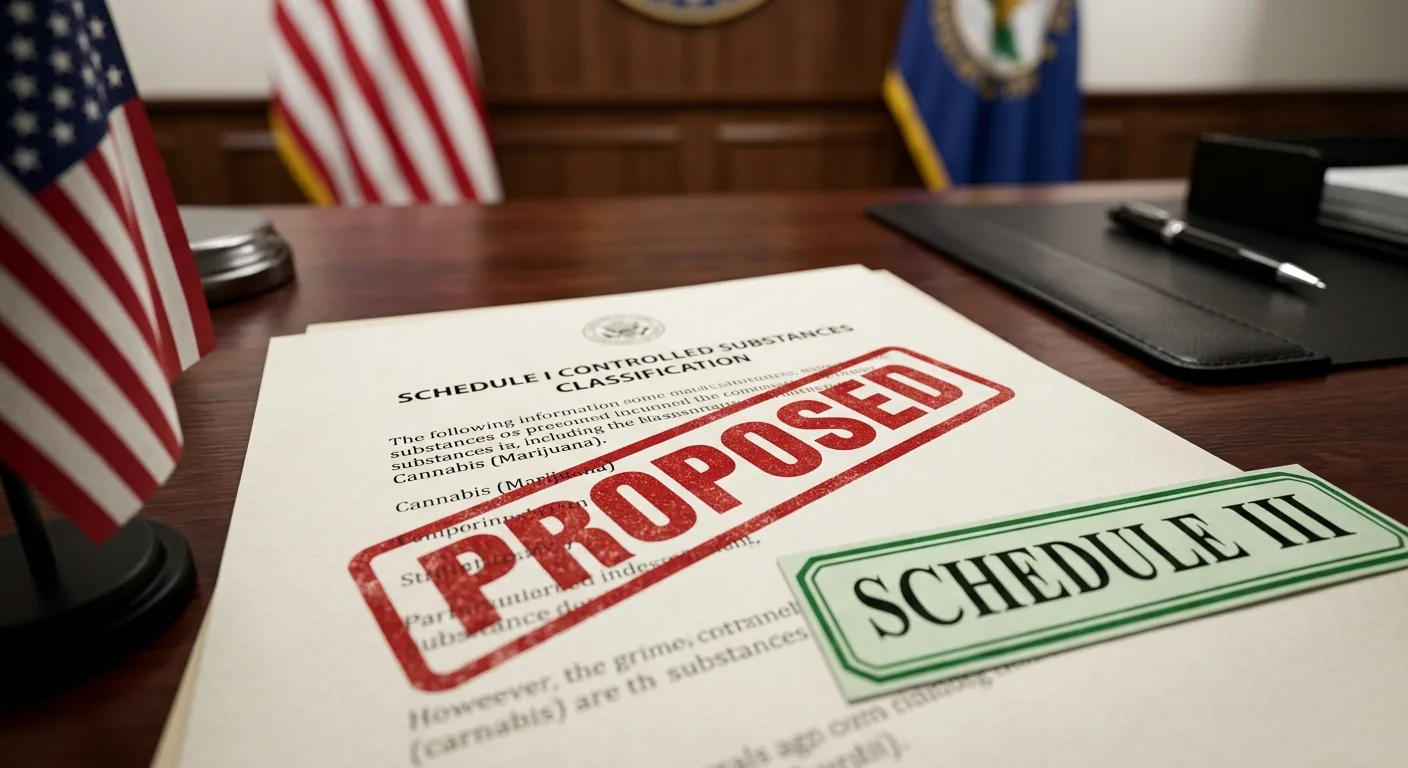
In May 2024, the DEA formally proposed moving cannabis from Schedule I to Schedule III of the Controlled Substances Act — a historic shift that, if finalized, would represent the most significant change to federal cannabis law since prohibition began in 1970. As of 2026, the rescheduling process is ongoing, with administrative hearings and legal challenges still working through the system.
What does this mean for seed buyers today? Less than advocates hoped, but more than zero.
What Schedule III Would Change for Seeds
If cannabis is moved to Schedule III, it will no longer be classified alongside heroin and LSD as a substance with 'no accepted medical use.' Schedule III substances — including ketamine and anabolic steroids — are controlled but recognized as having legitimate medical applications. For seed buyers, this would mean:
- Federal prosecution of cannabis seed possession would become even less likely — Schedule III carries significantly lower penalties than Schedule I
- Interstate commerce in cannabis seeds could become a regulatory question rather than a criminal one
- The legal pathway for licensed seed banks to operate federally would expand
- State-level prohibition would not automatically end — states can restrict substances beyond federal minimums
What Won't Change Immediately
Rescheduling does not equal legalization. Cannabis would still be a controlled substance requiring DEA registration for commercial cultivation and distribution. Home growing for personal use would not be federally authorized by rescheduling alone — that would require separate congressional action or state law. Seed buyers in prohibition states would still face state-level risk.
The rescheduling process has been legally contested by both pro-legalization groups (who want full descheduling) and anti-cannabis organizations (who want to maintain Schedule I). Even if Schedule III is finalized in 2026, the practical effect on retail seed purchases will be gradual — federal enforcement posture shifts slowly, and state laws won't automatically align.
State-by-State Cannabis Seed Law Summary (2026)
Cannabis seed laws vary more between states than almost any other consumer product in America. The table below summarizes the current legal framework for seed possession and purchase across all 50 states. For a full breakdown including plant limits, licensing requirements, and dispensary rules, see our dedicated state-by-state cannabis seed law guide.
| State | Adult-Use | Medical | Home Cultivation | Seed Purchase Legal? |
|---|---|---|---|---|
| California | ✅ Yes | ✅ Yes | ✅ 6 plants/adult | Yes, licensed retailers |
| Colorado | ✅ Yes | ✅ Yes | ✅ 3 plants flowering | Yes, licensed retailers |
| Michigan | ✅ Yes | ✅ Yes | ✅ 12 plants/household | Yes, licensed retailers |
| Oregon | ✅ Yes | ✅ Yes | ✅ 4 plants/household | Yes, licensed retailers |
| Illinois | ✅ Yes | ✅ Yes | ❌ Not permitted | Yes (no home grow) |
| New York | ✅ Yes | ✅ Yes | ✅ 3 plants/adult | Yes, licensed retailers |
| Nevada | ✅ Yes | ✅ Yes | ✅ 6 plants (if >25 mi from dispensary) | Yes, licensed retailers |
| New Jersey | ✅ Yes | ✅ Yes | ❌ Not permitted | Yes (no home grow) |
| Washington | ✅ Yes | ✅ Yes | ❌ Not permitted | Yes (no home grow) |
| Arizona | ✅ Yes | ✅ Yes | ✅ 6 plants/adult | Yes, licensed retailers |
| Florida | ❌ No | ✅ Yes | ❌ Not permitted | Medical patients only |
| Texas | ❌ No | ⚠️ Limited | ❌ Not permitted | Hemp seeds only |
| Georgia | ❌ No | ⚠️ Limited CBD | ❌ Not permitted | Hemp seeds only |
| Idaho | ❌ No | ❌ No | ❌ Not permitted | ❌ No (hemp included) |
| Kansas | ❌ No | ❌ No | ❌ Not permitted | Hemp seeds only |
| Wyoming | ❌ No | ❌ No | ❌ Not permitted | Hemp seeds only |
| South Carolina | ❌ No | ⚠️ CBD only | ❌ Not permitted | Hemp seeds only |
| North Dakota | ❌ No | ✅ Yes | ❌ Not permitted | Medical patients, dispensary |
| Montana | ✅ Yes | ✅ Yes | ✅ 2 mature plants | Yes, licensed retailers |
| Vermont | ✅ Yes | ✅ Yes | ✅ 6 plants/adult | Yes, licensed retailers |
*This table reflects laws as of early 2026. Cannabis legislation changes frequently — always verify your state's current statute before purchasing. This is a representative sample; see our full state-by-state guide for all 50 states.
Critical note on state preemption: Some cities and counties have stricter rules than their state. Even in fully legal states like California, certain municipalities prohibit dispensaries and home cultivation at the local level. Check both your state law AND your local ordinances before buying seeds.
Can You Legally Order Cannabis Seeds Online in 2026?
Online seed ordering is the most common way Americans acquire cannabis seeds — and it sits in the most complex legal territory. Ordering seeds online involves at least two legal jurisdictions simultaneously: the origin location of the seed bank and your delivery address. Whether that transaction is legal depends on both.
Domestic Seed Banks (U.S.-Based)
Seed banks operating within legal U.S. states — typically California, Colorado, Oregon, or Michigan — can legally sell seeds to customers within their state under state law. Shipping those seeds to customers in other states, however, crosses into interstate commerce, which is governed by federal law. Under the CSA, this technically constitutes interstate trafficking of a Schedule I substance (for high-THC seeds).
In practice, established U.S. seed banks use discreet packaging, ship via private carriers, and maintain clean operational records. The practical risk to individual buyers receiving small seed orders is very low — but the legal risk is not zero.
International Seed Banks
Many of the world's most respected genetics come from European and Canadian seed banks. Ordering from these sources means your seeds cross international borders through U.S. Customs and Border Protection. CBP has authority to seize cannabis-related materials, including seeds.
What actually happens when seeds are seized at the border varies significantly:
- Most small seed seizures result in a simple confiscation letter — no prosecution
- Buyers rarely face criminal charges for receiving small quantities of seeds
- Repeat large orders or commercially significant quantities increase the risk profile substantially
- Reputable international seed banks typically reship seized orders and use proven stealth packaging techniques
Are Feminized Seeds Legal to Buy Online?
Feminized seeds — bred to produce only female plants — carry the same legal classification as regular cannabis seeds. Their feminized nature doesn't change their legal status. A Northern Lights x Big Bud feminized seed is legally equivalent to a regular photoperiod seed under the CSA. The gender characteristic is agronomically significant but legally irrelevant.
Similarly, autoflowering seeds — like our Skywalker OG Autoflower at 23% THC — carry identical legal status to photoperiod seeds. Autoflower genetics are not a legal workaround; they're just a different flowering mechanism.
Reputable seed banks — including those we work with — ship discreetly, comply with applicable laws in their jurisdiction, and take responsibility for reship policies when packages are lost or seized. When evaluating where to buy, look for banks with established track records, clear genetics labeling, and transparent policies — not just low prices.
What Happens If You Get Caught With Cannabis Seeds?
This is the question most guides dance around. Let's address it directly: the consequences of being caught with cannabis seeds depend almost entirely on your state, the quantity involved, whether cultivation evidence is present, and your prior record.
In Adult-Use States
If you're a legal adult in a state with adult-use cannabis laws and you're within your state's possession limits, having cannabis seeds is legal. Full stop. No consequences. You can walk into a licensed dispensary, buy seeds, and take them home. Many adult-use states specifically list seeds as a purchasable cannabis product category.
In Medical-Only States
If you're a registered patient in a medical-only state, you may legally possess seeds for cultivation if your state's patient cultivation rules allow it. Without a valid medical card, possession of cannabis seeds is illegal and subject to the same penalties as other cannabis possession offenses — which vary from civil fines to misdemeanor charges depending on quantity.
In Prohibition States
This is where the stakes are real. In fully prohibitionist states, cannabis seeds are treated as cannabis — because legally, they are. Penalties vary dramatically:
- Civil fines: Some prohibition states have decriminalized small amounts — you'd pay a fine similar to a traffic ticket for a small number of seeds
- Misdemeanor charges: Most prohibition states charge small cannabis possession (including seeds) as a misdemeanor — typically fines plus potential jail time of up to 1 year
- Felony charges: Large quantities of seeds — especially with cultivation equipment, packaging suggesting distribution, or financial records — can trigger felony charges in some states
- Federal charges: Vanishingly rare for individual seed buyers, but theoretically possible if federal jurisdiction is established (e.g., border seizure)
Can You Go to Jail for Ordering Seeds Online?
Technically yes — imprisonment is a possible penalty for federal cannabis offenses. Practically, federal prosecution of individual buyers for small personal seed orders is extraordinarily rare. The DOJ and DEA allocate prosecution resources toward large trafficking operations, not individual consumers receiving hobby quantities of seeds.
The realistic risk for most individual buyers ordering small quantities is package seizure without further action, not criminal prosecution. That said, 'unlikely' is not the same as 'safe,' and the risk calculation changes significantly if you're in a strict prohibition state, order large quantities, or have prior drug convictions.
Your risk when buying cannabis seeds is almost entirely determined by your state law, not federal law. In legal states, risk is near zero. In prohibition states, risk scales with quantity, cultivation evidence, and local enforcement priorities. Know your state before you buy.
Buying Cannabis Seeds Legally: Best Practices for 2026
If you've worked through the legal framework and determined that purchasing seeds is appropriate in your situation, here's how to do it as safely and legally as possible.
In Legal States: Buy Local First
If you're in an adult-use state, buying from a licensed in-state dispensary or seed retailer is always the cleanest legal path. You pay taxes, you get documented provenance, and you have zero interstate shipping concerns. Many dispensaries in California, Colorado, Michigan, and Oregon now carry robust seed selections — including feminized, autoflower, and specialty genetics.
Online Orders: What to Look For
When ordering seeds online — whether domestic or international — look for these markers of a reputable seed bank:
- Clear genetics labeling with THC/CBD percentages
- Discreet shipping confirmation and documentation
- Reship or refund policy for seized or lost packages
- Customer reviews with verifiable germination success rates
- No claims of 'guaranteed legal' that sound too absolute
- Transparent country of origin and shipping timeline
- Secure payment processing with privacy protection
- Active customer service with responsive communication
Choosing the Right Genetics for Your Situation
Once you've confirmed you're operating legally, genetics selection becomes the primary decision. Different situations call for different seed types:
- First-time growers in legal states: Autoflowering seeds like Amnesia Haze Autoflower (17% THC) are forgiving, fast, and require no light schedule management — ideal for beginners. Read our full autoflower beginner's guide before you start.
- Indoor growers with controlled environments: Feminized photoperiod strains like Sour Diesel Feminized (24% THC) or Super Lemon Haze Feminized (23% THC) reward the investment in lighting and climate control with exceptional yields and potency.
- Outdoor growers in warm climates: Resilient, large-yielding varieties like Super Skunk Feminized (20% THC) or Northern Lights x Amnesia Haze Feminized (24% THC) thrive with minimal intervention in the right environment.
- High-potency focus: Strains like Quantum Kush Feminized (30% THC) or Purple Kush Feminized (27% THC) represent the cutting edge of THC production for experienced cultivators.
Not sure which genetics suit your setup? Our Grow Planner can help you match strain characteristics to your specific environment, experience level, and goals. And once seeds arrive, our seed storage guide will help you preserve viability for years.
When you receive seeds, don't just tuck them in a drawer. Proper storage — cool, dark, stable humidity — can maintain seed viability for 5+ years. A seed that cost $10–$15 and is stored correctly is an investment, not a consumable. See our complete seed storage guide for the exact conditions that maximize longevity.
The Future of Cannabis Seed Law in the United States
The legal trajectory for cannabis seeds in America is moving in one clear direction — toward greater access and reduced criminalization — but the path is uneven and the timeline uncertain. Here's what the next 2–5 years likely hold for seed buyers.
Federal Rescheduling Completion
If the DEA's proposed Schedule III reclassification is finalized, it will reduce — though not eliminate — federal risk for cannabis seed buyers. More importantly, it will open banking, research, and commerce pathways that make the legitimate seed industry more stable and accessible. Licensed domestic seed banks would face a significantly clearer regulatory environment.
State-Level Expansion
The number of adult-use states has grown from 2 (Colorado and Washington) in 2012 to 24 as of 2026. Political analysts project continued state-level expansion, with several large-population states currently in active legislative debate. Each state that legalizes adult use expands the number of Americans who can legally buy cannabis seeds without any federal or state risk.
Interstate Commerce Frameworks
Several western states — including California and Oregon — have passed legislation establishing frameworks for interstate cannabis commerce, contingent on federal approval. If federal law permits, this would allow licensed cultivators to ship seeds and plant material across state lines legally for the first time. This is a significant development for both breeders and buyers.
Seed Banking and Genetic Preservation
As legalization expands, there is growing legal recognition of cannabis genetic preservation as a legitimate scientific and agricultural pursuit. The legal protection for heirloom and landrace genetics — like those discussed in our heirloom cannabis strains guide — is likely to expand as the regulatory framework matures.
The legal environment for cannabis seeds in 2026 is the most permissive it has ever been in American history — and it is still actively improving. Buyers in legal states have clear, safe access. Buyers in prohibition states carry real but reduced risk. Federal prosecution of individual seed buyers remains an extreme rarity. Know your state, follow your state's rules, and the outlook is favorable.
Frequently Asked Questions
Are cannabis seeds legal in all 50 states?
No. Cannabis seeds are only fully legal to buy and possess in states with adult-use or medical cannabis programs — currently 24 adult-use states and 38 states with medical programs as of 2026. In the remaining prohibition states, cannabis seeds are treated as a controlled substance under state law. Hemp seeds (≤0.3% THC potential, from licensed producers) are federally legal in all 50 states under the 2018 Farm Bill, but high-THC cannabis seeds are not.
Can you go to jail for ordering seeds online?
Theoretically yes — federal law classifies high-THC cannabis seeds as Schedule I, and interstate shipping is technically illegal. In practice, federal prosecution of individual buyers for small personal-use seed orders is extraordinarily rare. Most seized packages result in confiscation only, with no follow-up criminal action. Your actual risk is much higher under state law if you're in a prohibition state where local enforcement may act on cannabis-related activity. In legal states, there is no realistic risk of prosecution for seed purchases.
What's the difference between hemp seeds and cannabis seeds legally?
Both come from Cannabis sativa L., but federal law treats them entirely differently. Hemp seeds — from plants bred to stay at or below 0.3% delta-9 THC — are federally legal under Section 781 of the 2018 Farm Bill and can be bought, sold, and shipped in all 50 states. High-THC cannabis seeds remain Schedule I controlled substances under the CSA at the federal level, with legality depending entirely on your state's laws. The seeds look identical; their legal status is determined by the genetic THC potential of the plant they would produce.
Are feminized cannabis seeds legal to buy?
Feminized seeds carry the same legal classification as regular cannabis seeds — their feminized nature has no legal significance. In adult-use states, feminized seeds are legal to purchase from licensed retailers. In medical states, registered patients may have access depending on state cultivation rules. In prohibition states, feminized seeds are treated identically to any other cannabis seeds under state law. The agricultural advantage of feminized genetics — all-female plants, no males to remove — is agronomic, not legal.
What did the DEA actually say about cannabis seeds in 2024?
In formal correspondence issued in 2024, the DEA confirmed that cannabis seeds, tissue cultures, and other genetic material are 'not necessarily' controlled substances under the Controlled Substances Act. This clarification — building on Section 781 of the 2018 Farm Bill — established that seed classification depends on THC potential, not automatic Schedule I status. Seeds qualifying as hemp (≤0.3% THC potential) are not controlled. High-THC cannabis seeds remain Schedule I federally, but the clarification softened the presumption of illegality for seed genetic material broadly and has been cited as meaningful precedent by legal advocates. You can verify the DEA's policy positions at DEA.gov.