Which Oil Makes the Best Cannabis Infused Cooking Oil?
Cannabis infused cooking oil is the backbone of homemade edibles — more versatile than cannabutter, more accessible than tinctures, and endlessly adaptable across recipes. But the carrier oil you choose fundamentally changes potency, flavor, shelf life, and how your body absorbs THC.
Coconut oil, olive oil, and MCT oil each bring distinct advantages to cannabis infusion. In over 15 years of cannabis cultivation and edible making, we've tested all three extensively. The right choice depends on whether you're baking brownies, drizzling salad dressing, filling capsules, or making sublingual drops.
This head-to-head comparison breaks down the fat-content science behind THC binding, provides complete infusion recipes for each oil, and gives you clear recommendations based on your specific use case. No more guessing — just data-driven answers.
The Fat-Content Science: Why Saturated Fats Bind More THC
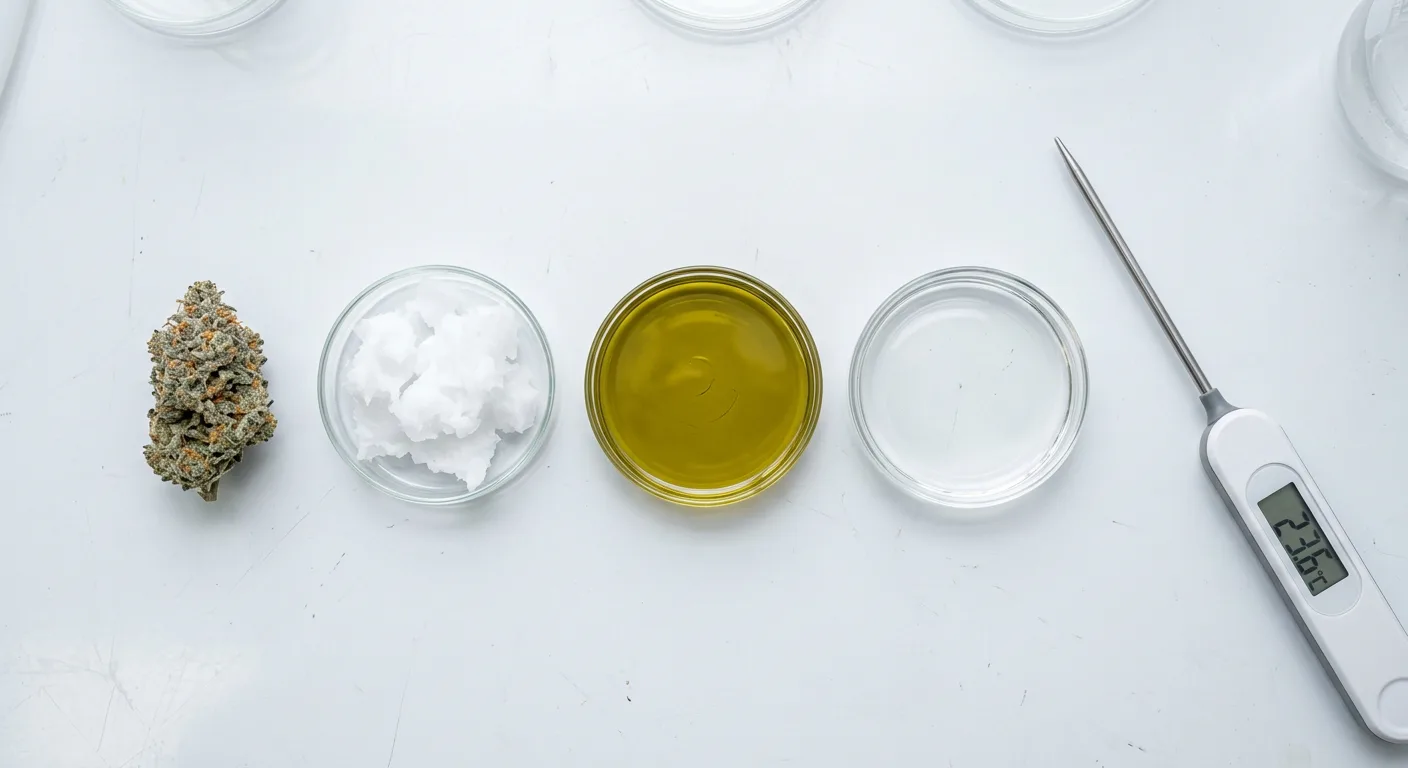
THC, CBD, and other cannabinoids are lipophilic — they dissolve in fats, not water. The type and amount of fat in your carrier oil directly determines how many cannabinoid molecules it can hold during infusion.
Saturated vs. Unsaturated Fat and Cannabinoid Retention
Saturated fatty acids have straight molecular chains that pack tightly together, creating more binding sites per volume for cannabinoid molecules. Unsaturated fats have kinked chains (from their double bonds), leaving gaps in their molecular structure and fewer available attachment points.
As detailed in Leafly's guide to cannabis coconut oil, coconut oil contains over 80% saturated fats compared to olive oil's roughly 14%. This means coconut oil can physically retain more cannabinoids during the infusion process, producing a more potent finished product per tablespoon.
Research suggests that medium-chain triglycerides (MCTs) — the dominant fats in coconut and MCT oil — are absorbed more rapidly through the intestinal wall than long-chain triglycerides found in olive oil. This faster absorption may increase the bioavailability of THC, meaning more of each dose reaches your bloodstream rather than being lost during digestion.
Why This Matters for Your Edibles
Higher saturated fat content translates to two practical advantages:
- Greater cannabinoid capacity — The oil can hold more THC/CBD per milliliter before reaching saturation
- Better extraction efficiency — More cannabinoids transfer from plant material to oil during the infusion window
- Improved bioavailability — MCT-based carriers may deliver cannabinoids to your system faster and more completely
That said, fat content isn't the only factor. Smoke point, flavor, shelf life, and your intended application all influence which oil wins for your specific situation.
Cannabis Coconut Oil: The Potency Powerhouse
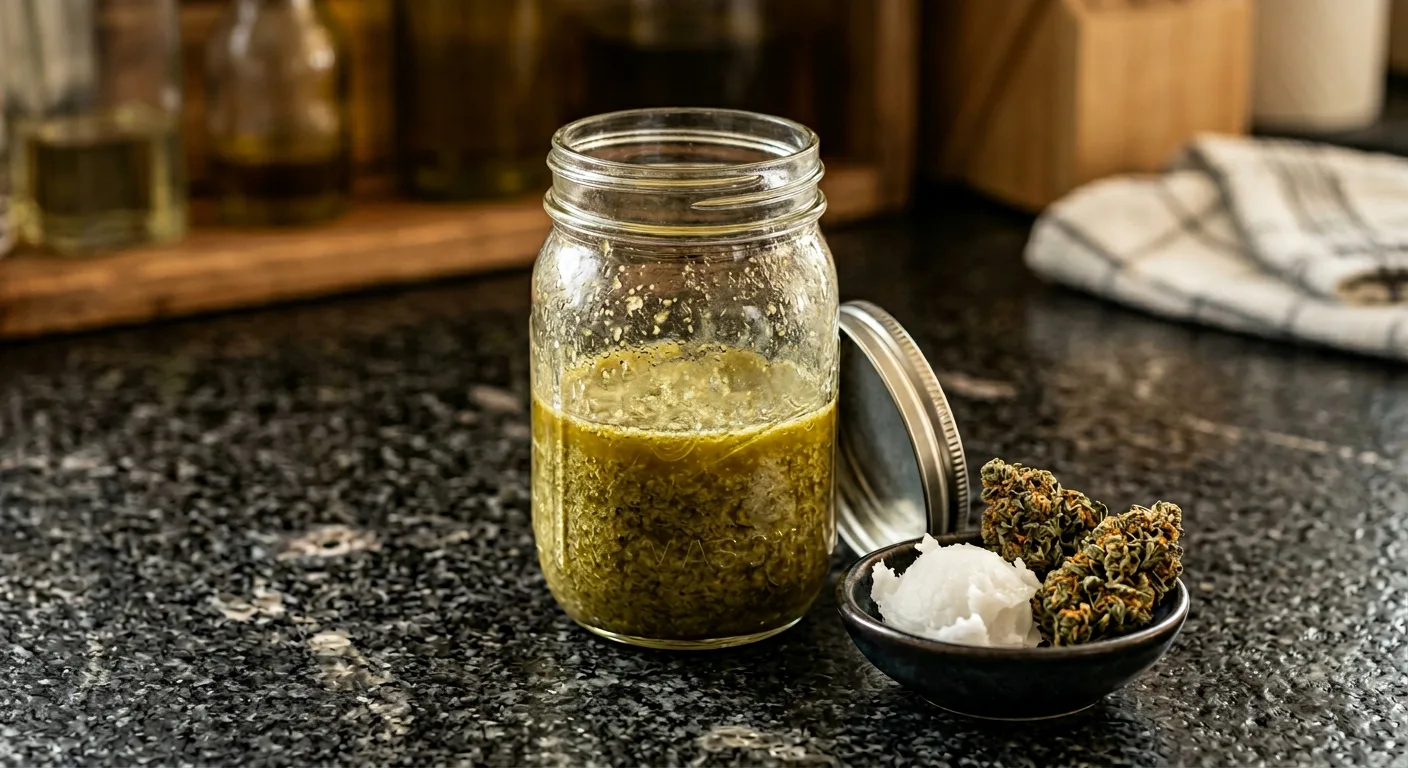
Cannabis coconut oil delivers the highest THC binding capacity of any common kitchen oil thanks to its 82% saturated fat content. It's the go-to choice for bakers, topical makers, and anyone prioritizing maximum potency per serving.
Key Properties of Coconut Oil for Cannabis Infusion
- Saturated fat content: ~82%
- Smoke point: 350°F (177°C) for virgin; 400°F (204°C) for refined
- State at room temperature: Solid below 76°F (24°C)
- Flavor profile: Mild coconut taste (virgin) to nearly neutral (refined)
- Shelf life (infused): 2–3 months refrigerated; 6+ months frozen
Best Uses for Cannabis Coconut Oil
- Baking: Brownies, cookies, and cakes — replaces butter 1:1 in most recipes
- Topicals: Solidifies into a balm-like consistency perfect for cannabis salves and lotions
- Capsules: Melts quickly for filling gel caps, resolidifies for clean handling
- Bulletproof coffee: Blends smoothly into hot beverages
- High-heat sautéing: Refined coconut oil handles moderate cooking temps
Choosing your coconut oil: Use refined coconut oil for edibles where you don't want coconut flavor. Use virgin (unrefined) when the coconut taste complements your recipe — think Thai curries, tropical smoothies, or chocolate-based desserts. Both have nearly identical saturated fat content and THC binding capacity.
Cannabis Coconut Oil Infusion Recipe
This recipe yields approximately 1 cup of infused coconut oil. Adjust the amount of cannabis to control potency — we provide dosing math below.
Combine Oil, Water, and Cannabis
In a saucepan or slow cooker, combine 1 cup of coconut oil with 1 cup of water and your decarbed cannabis. The water prevents scorching and helps filter out chlorophyll (which causes harsh, bitter flavors).
Low-and-Slow Infusion
Maintain a temperature between 160–200°F (71–93°C) for 2–6 hours. As Verilife's canna-oil guide emphasizes, aim for 180°F (82°C) and ensure the mixture never boils — boiling degrades cannabinoids and reduces potency. Stir occasionally.
Strain and Separate
Line a fine-mesh strainer with cheesecloth over a clean jar. Pour the mixture through, squeezing gently to extract all oil. Refrigerate for 4–8 hours. The solidified coconut oil will separate from the water layer — discard the water.
Store and Label
Transfer to an airtight container. Label with the date, strain used, amount of cannabis, and estimated potency. Store in the refrigerator for up to 3 months or freezer for 6+ months.
Temperature is critical. Keep your infusion below 200°F (93°C) at all times. THC begins to degrade significantly above 300°F, and even temperatures in the 220–250°F range during prolonged infusion can reduce final potency. Use a kitchen thermometer — don't guess.
THC Olive Oil: The Savory Kitchen Essential
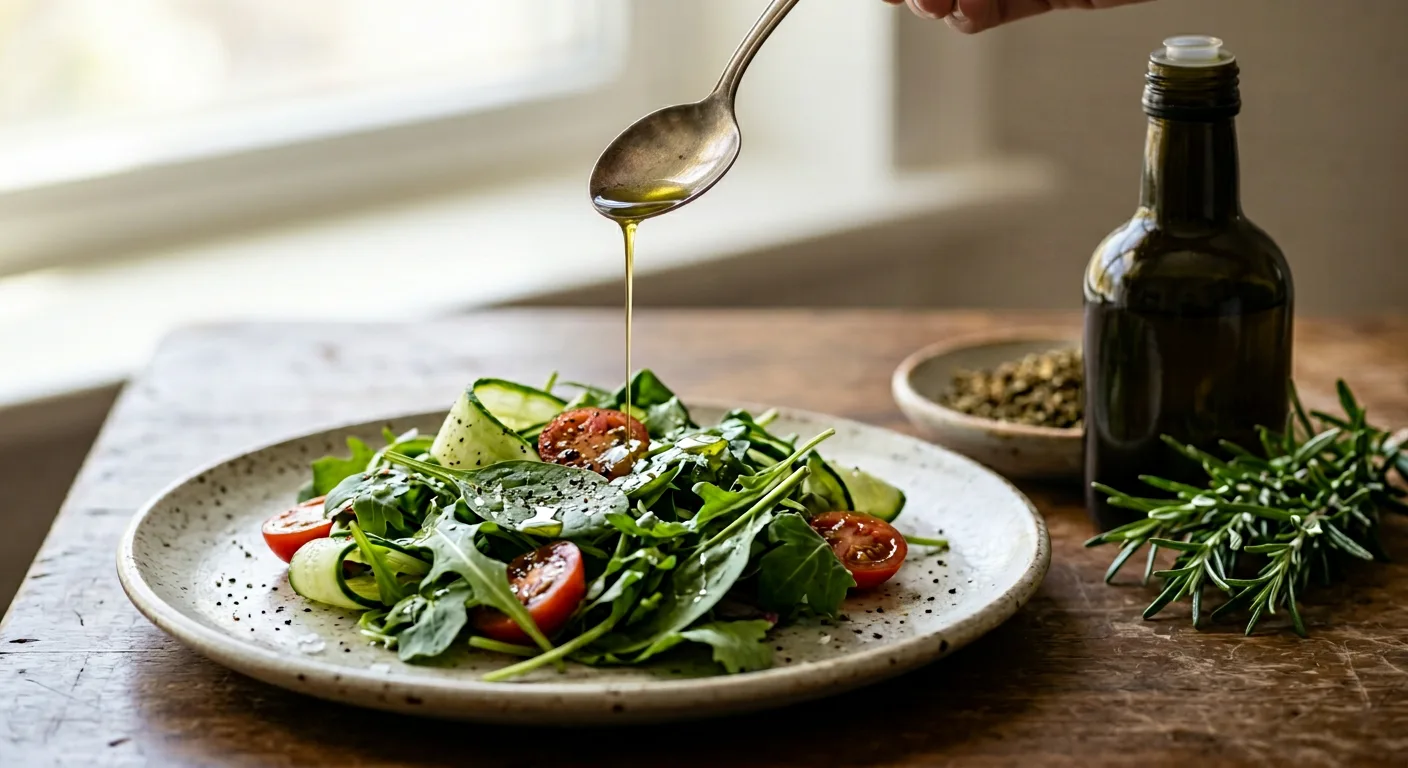
THC olive oil excels in savory cooking applications where its rich, fruity flavor enhances the dish. While its lower saturated fat content (~14%) means it binds fewer cannabinoids per volume, it remains a popular and heart-healthy choice for cannabis-infused cooking.
Key Properties of Olive Oil for Cannabis Infusion
- Saturated fat content: ~14% (76% monounsaturated)
- Smoke point: 375°F (191°C) for extra virgin; 470°F (243°C) for light/refined
- State at room temperature: Liquid
- Flavor profile: Fruity, peppery, herbaceous (varies by grade)
- Shelf life (infused): 1–2 months refrigerated (shorter than coconut oil due to higher unsaturated fat oxidation)
Best Uses for THC Olive Oil
- Salad dressings and vinaigrettes: The #1 application — no cooking required, preserving maximum potency
- Finishing oil: Drizzle over pasta, pizza, grilled vegetables, or bread
- Marinades: Infuses meat and vegetables with both flavor and cannabinoids
- Mediterranean cooking: Pairs naturally with Italian, Greek, and Middle Eastern cuisines
- Low-temp sautéing: Works for gentle cooking below 375°F
Why olive oil has a shorter shelf life: Olive oil's high monounsaturated fat content makes it more susceptible to oxidation than coconut oil. Cannabis infusion accelerates this by introducing plant compounds. Always store THC olive oil in dark glass containers in the refrigerator and use within 4–6 weeks for optimal flavor and potency.
How to Make Cannabis Infused Olive Oil at Home
This stovetop method is the simplest infusion technique. It works with any olive oil grade, though we recommend a mild-flavored extra virgin or light olive oil so the cannabis flavor comes through balanced.
Decarboxylate Cannabis
Preheat oven to 245°F (118°C). Spread 7–14 grams of ground flower on a parchment-lined sheet. Bake 30–40 minutes. Cool completely before proceeding.
Combine in Double Boiler
Set up a double boiler: fill the bottom pot with 2 inches of water, place a heat-safe bowl on top. Add 1 cup of olive oil and your decarbed cannabis to the bowl. A double boiler provides gentler, more consistent heat than direct flame — critical for olive oil, which can develop off-flavors when overheated.
Infuse at Low Temperature
Maintain 160–180°F (71–82°C) for 2–4 hours, stirring every 30 minutes. Olive oil doesn't tolerate prolonged high heat as well as coconut oil, so keep it on the lower end. The mixture should never simmer or bubble.
Strain, Bottle, and Store
Strain through cheesecloth into a dark glass bottle. Squeeze gently — don't wring the cheesecloth, which pushes bitter chlorophyll through. Seal tightly, label, and refrigerate immediately. Use within 4–6 weeks.
Flavor pairing tip: Try infusing olive oil with a floral or citrus-forward cannabis strain for salad dressings. Strains like Super Lemon Haze (23% THC, limonene-dominant) or Tangerine Haze (18% THC, bright citrus terpene profile) create beautifully aromatic finishing oils that complement Mediterranean dishes.
Cannabis MCT Oil for Edibles: Maximum Absorption, Minimum Fuss
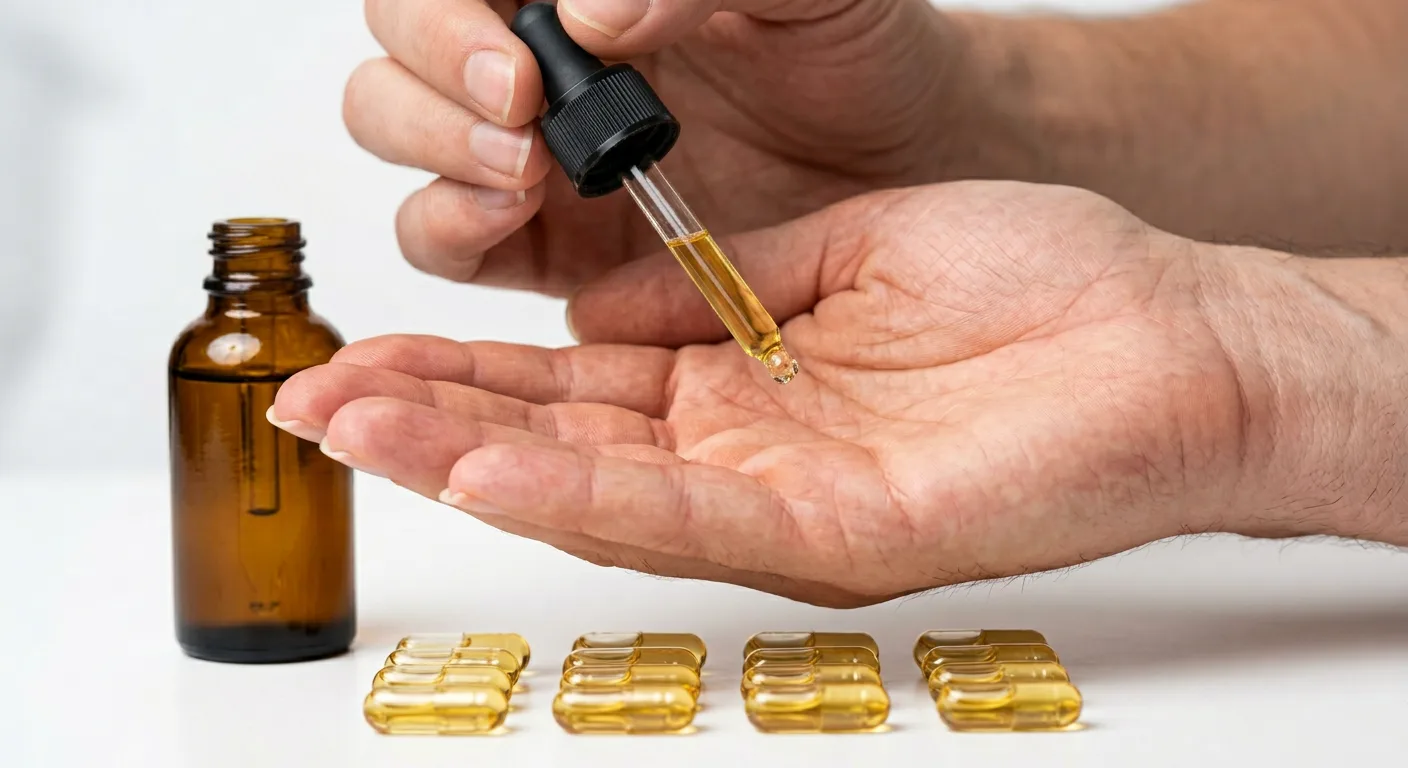
Cannabis MCT oil for edibles offers the highest bioavailability of any carrier oil, the most neutral flavor, and the best precision dosing — making it the preferred choice for capsules, sublingual drops, and measured tincture-style applications.
Key Properties of MCT Oil for Cannabis Infusion
MCT (medium-chain triglyceride) oil is fractionated coconut oil — the long-chain fatty acids have been removed, leaving only caprylic acid (C8) and capric acid (C10). This creates a unique carrier with distinct advantages.
- Saturated fat content: ~100% (all medium-chain)
- Smoke point: 320°F (160°C) — the lowest of the three, limiting cooking applications
- State at room temperature: Always liquid (will not solidify, even refrigerated)
- Flavor profile: Virtually flavorless and odorless
- Shelf life (infused): 3–6 months refrigerated; 12+ months frozen
MCT Oil Dosing and Bioavailability Advantage
Medium-chain triglycerides bypass normal fat digestion. Instead of being broken down by bile salts in the intestine like long-chain fats, MCTs are absorbed directly through the intestinal wall and transported to the liver via the portal vein. Research suggests this rapid absorption pathway may carry dissolved cannabinoids along with it, potentially increasing the speed of onset and the percentage of THC that reaches systemic circulation.
This is why MCT oil has become the gold standard for cannabis tinctures and sublingual products. When held under the tongue for 60–90 seconds, MCT-based cannabis oil can begin producing effects in as little as 15–30 minutes — significantly faster than the 45–90 minute onset typical of standard edibles.
Testing by SC Labs and C4 Laboratories, as referenced by Royal Queen Seeds, found that clarified butter, coconut oil, and olive oil all yielded strong infusion results. However, MCT oil's 100% saturated fat composition gives it the theoretical maximum binding capacity per milliliter, and its rapid absorption pathway makes it uniquely suited for sublingual delivery where speed matters most.
Best Uses for Cannabis MCT Oil
- Sublingual drops: The #1 application — fastest onset, most precise dosing
- Capsules: Stays liquid for easy filling, consistent dose per cap
- Smoothies and cold beverages: Blends invisibly with no flavor impact
- Low-heat drizzling: Add to finished dishes just before serving
- Pet formulations: Flavorless carrier for CBD applications (consult a veterinarian)
Do not use MCT oil for frying or high-heat cooking. Its 320°F smoke point is too low for sautéing, baking at standard temperatures, or any application requiring sustained heat above 300°F. MCT oil that reaches its smoke point will break down, produce acrid flavors, and destroy cannabinoids. Use it as a finishing oil, in no-heat recipes, or for sublingual and capsule applications.
Cannabis MCT Oil Infusion Recipe
Decarboxylate Cannabis
Same process: 245°F (118°C) for 30–40 minutes on parchment paper. For MCT oil tinctures, we recommend using higher-potency flower to maximize strength per drop. A strain like OG Kush (26% THC) or Purple Kush (27% THC) concentrates more cannabinoids into less material.
Combine MCT Oil and Cannabis
Add 1 cup MCT oil and 7–14 grams of decarbed flower to a mason jar. Unlike the stovetop methods above, MCT oil works exceptionally well with the mason jar water bath technique — seal the jar loosely and place it in a pot of simmering water.
Water Bath Infusion
Keep the water bath at 160–180°F (71–82°C) for 3–4 hours. The glass jar insulates the oil from direct heat, providing the gentlest infusion possible. Shake the jar gently every 30 minutes (use an oven mitt — it's hot).
Strain into Dropper Bottles
Strain through cheesecloth, then pour into amber glass dropper bottles for sublingual use or a jar for capsule filling. MCT oil stays liquid at any temperature, so storage is simple. Label each bottle with strain, date, and estimated mg/mL.
Head-to-Head Comparison Table: Coconut Oil vs Olive Oil vs MCT Oil
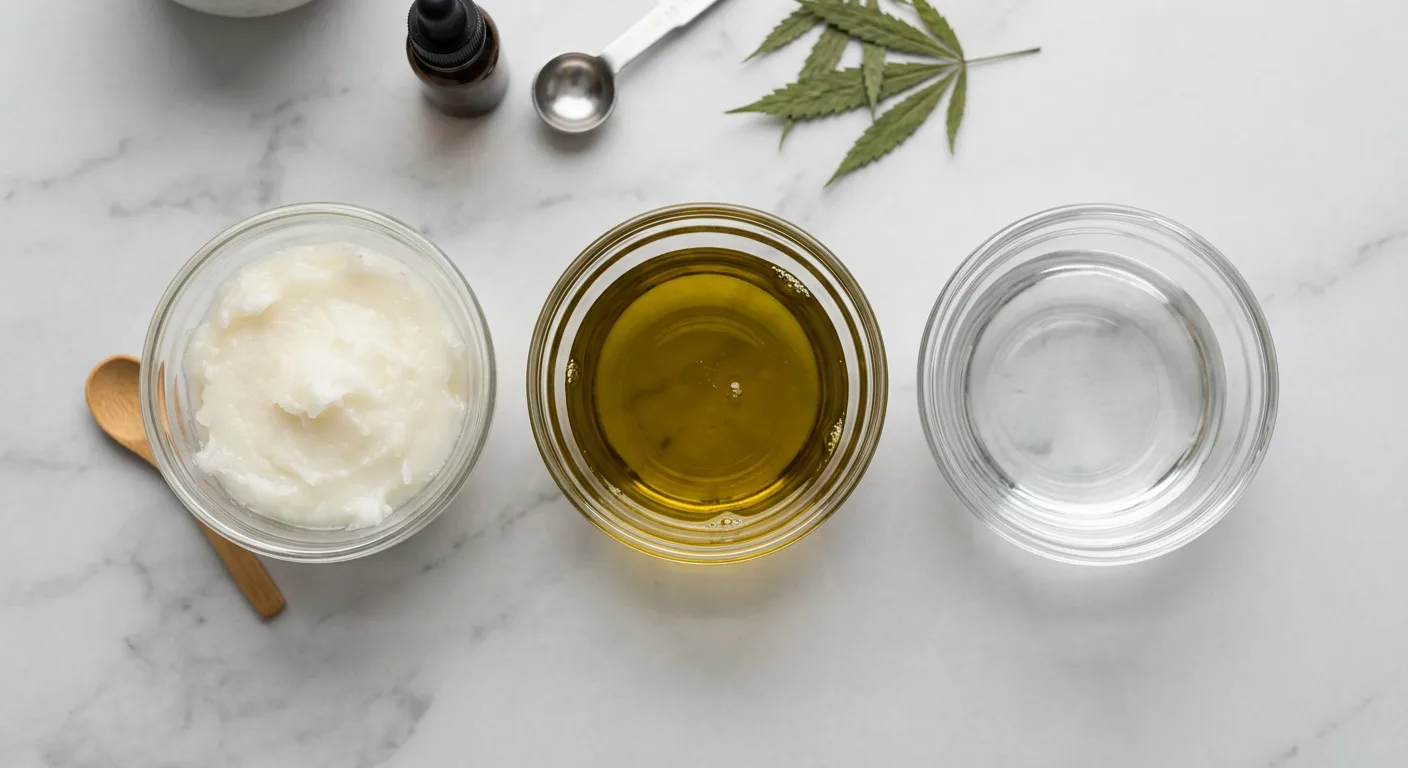
This comparison table covers every factor that matters when choosing the best oil for cannabis infusion. Use it as a quick reference to match your carrier oil to your intended application.
| Factor | Coconut Oil | Olive Oil | MCT Oil |
|---|---|---|---|
| Saturated Fat Content | ~82% | ~14% | ~100% |
| THC Binding Capacity | High | Moderate | Highest |
| Smoke Point | 350–400°F | 375–470°F | 320°F |
| State at Room Temp | Solid (below 76°F) | Liquid | Liquid |
| Flavor Impact | Mild coconut (virgin) / neutral (refined) | Fruity, peppery, herbaceous | Virtually none |
| Shelf Life (Refrigerated) | 2–3 months | 4–6 weeks | 3–6 months |
| Shelf Life (Frozen) | 6+ months | Not recommended | 12+ months |
| Bioavailability | High | Moderate | Highest |
| Best for Baking | ★★★★★ | ★★☆☆☆ | ★☆☆☆☆ |
| Best for Savory Cooking | ★★★☆☆ | ★★★★★ | ★★☆☆☆ |
| Best for Capsules | ★★★☆☆ | ★☆☆☆☆ | ★★★★★ |
| Best for Sublingual | ★☆☆☆☆ | ★★☆☆☆ | ★★★★★ |
| Best for Topicals | ★★★★★ | ★★★☆☆ | ★★☆☆☆ |
| Cost per Cup | $4–8 | $6–15 | $8–16 |
| Dietary Notes | Vegan, dairy-free | Vegan, heart-healthy fats | Vegan, keto-friendly |
Lecithin: The Bioavailability Booster for All Cannabis Oils
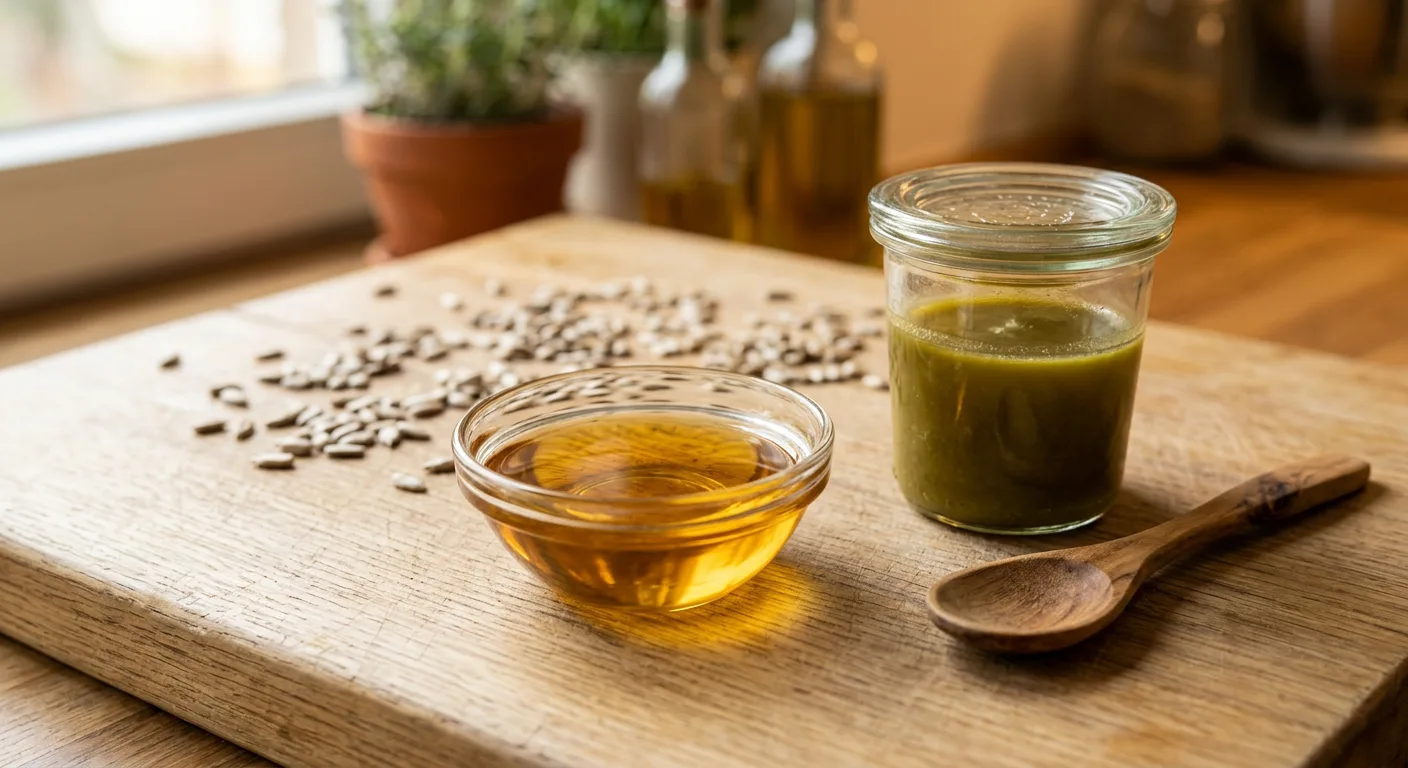
Adding sunflower or soy lecithin to any cannabis oil infusion may increase THC absorption by acting as an emulsifier — helping fat-soluble cannabinoids mix with your body's water-based digestive fluids for more complete uptake.
How Lecithin Works with Cannabis Oil
Lecithin is a phospholipid — a molecule with both a fat-loving and water-loving end. When added to cannabis oil, it creates a bridge between the oil-soluble cannabinoids and the aqueous environment of your digestive tract. This may help more THC pass through the intestinal lining instead of being excreted unused.
Many experienced edible makers report noticeably stronger effects when using lecithin, even with the same amount of cannabis. While peer-reviewed clinical studies on lecithin's specific effect on cannabinoid bioavailability remain limited, the food science behind phospholipid emulsification is well established.
How to Add Lecithin to Your Cannabis Oil
- Type: Sunflower lecithin (liquid or granules) is preferred over soy for allergen reasons
- Amount: 1 teaspoon per cup of oil
- When to add: Stir into the oil during the last 30 minutes of infusion while still warm
- Works with all three oils: Coconut, olive, and MCT all benefit equally from lecithin addition
Liquid vs. granular lecithin: Liquid sunflower lecithin dissolves instantly into warm oil with a quick stir. Granular lecithin takes longer to incorporate — dissolve it in a tablespoon of warm oil first, then add to your full batch. Both deliver the same emulsification benefit.
Dosing Your Cannabis Cooking Oil: Math That Matters
Accurate dosing separates a pleasant edible experience from an overwhelming one. Every batch of cannabis infused cooking oil requires simple math to estimate milligrams of THC per serving — regardless of which carrier oil you choose.
The Basic Dosing Formula
Here's the calculation, step by step:
- Step 1: Determine total available THC. Multiply your cannabis weight (in grams) by its THC percentage. Example: 7g of flower at 20% THC = 1,400 mg total THC.
- Step 2: Apply the extraction efficiency factor. Home infusions typically extract 40–60% of available cannabinoids. Using a conservative 50%: 1,400 × 0.50 = 700 mg estimated THC in your oil.
- Step 3: Divide by number of servings. If you made 1 cup (48 teaspoons): 700 ÷ 48 = ~14.6 mg THC per teaspoon.
As Leafly notes, using 7 grams of 20% THC flower gives you a potential 1,400 mg — though not all THC will survive decarboxylation and infusion. Our conservative 50% estimate accounts for real-world losses.
Start low, go slow. For new edible users, 5–10 mg of THC is a standard starting dose. Wait at least 60–90 minutes before considering more. Our edible dosage calculator can help you dial in precise per-serving amounts based on your flower's THC percentage and your total oil volume.
How Oil Choice Affects Perceived Potency
Even with identical THC content, you may feel different effects from the same dose depending on your carrier oil:
- MCT oil (sublingual): Fastest onset (15–30 min), shortest duration (3–4 hours), may feel "stronger" because absorption is more efficient
- Coconut oil (edible): Standard onset (45–90 min), standard duration (4–8 hours), predictable and steady
- Olive oil (edible): Similar onset to coconut oil but potentially lower peak effects due to reduced bioavailability from lower saturated fat content
Strain Recommendations by Oil Type and Use Case
The strain you infuse matters as much as the oil you choose. Different terpene profiles complement different carriers and culinary applications. Here are our tested recommendations for 2026.
Best Strains for Cannabis Coconut Oil (Baking and Desserts)
Coconut oil's sweet, tropical undertone pairs best with dessert-forward terpene profiles. Look for strains heavy in limonene, linalool, and caryophyllene:
- Girl Scout Cookies — 25–28% THC, sweet and earthy with baking-spice complexity. The dessert edible classic.
- White Cookies — 22% THC, creamy vanilla notes with earthy undertones that disappear seamlessly into brownies and cookies.
- Wedding Cake — 24–27% THC, rich vanilla and tangy sweetness. Exceptional in buttercream frostings made with cannabis coconut oil.
- Papaya — 25% THC, tropical fruit terpene profile that harmonizes naturally with coconut oil's character.
- Gelato — 20–25% THC, creamy dessert terpenes with a sweet citrus finish. Purpose-built for baked edibles.
Best Strains for THC Olive Oil (Savory Cooking)
Olive oil's peppery, herbaceous nature pairs with earthy, piney, and spicy terpene profiles:
- Sour Diesel — 24% THC, pungent fuel and herbal notes that cut through rich olive oil dishes.
- Super Lemon Haze — 23% THC, bright citrus limonene creates stunning cannabis vinaigrettes.
- Jack Herer — 18–23% THC, spicy pine and earth. Our top choice for cannabis-infused pasta oil drizzles.
- New York Power Diesel — 24% THC, grapefruit and diesel terpenes that add dimension to Mediterranean marinades.
- Durban Poison — 20–24% THC, sweet anise and earthy spice. Outstanding in salad dressings and dipping oils.
Best Strains for Cannabis MCT Oil (Capsules and Sublingual)
For MCT oil tinctures, flavor matters less — focus on potency and the cannabinoid-terpene effect you want:
- Purple Kush — 27% THC, heavy indica for nighttime sublingual drops targeting sleep and relaxation.
- Quantum Kush — 30% THC, our highest-potency option. Maximizes milligrams per drop for experienced users.
- Gorilla Glue #4 — 25–30% THC, potent and resinous. Ideal for high-strength capsules.
- Black Widow — 26% THC, balanced hybrid effects suited for daytime microdosing capsules.
- ACDC — 1:20 THC:CBD ratio. The go-to strain for CBD-dominant MCT oil for wellness applications.
Growing your own edible-grade flower? Use our grow planner to map out a multi-strain harvest specifically for your infusion needs — a dessert strain for coconut oil baking, a savory strain for olive oil cooking, and a high-THC variety for MCT oil tinctures. All of our feminized seeds ship with a germination guarantee.
Shelf Life and Storage: How Long Does Cannabis Cooking Oil Last?
How long does cannabis cooking oil last in the fridge? It depends entirely on the carrier oil. Coconut oil lasts 2–3 months refrigerated, MCT oil stretches to 3–6 months, and olive oil should be used within 4–6 weeks for both potency and flavor.
Storage Best Practices for All Three Oils
- Use dark glass containers (amber or cobalt) — light degrades THC
- Store in the refrigerator, not the pantry
- Keep containers airtight to prevent oxidation
- Label every batch with date, strain, amount, and estimated potency
- For long-term storage, freeze in silicone ice cube trays for pre-portioned doses
- Never store in plastic — cannabinoids can leach into and bond with plastic polymers
Signs Your Cannabis Oil Has Gone Bad
- Rancid smell: Any sour or "off" odor indicates fat oxidation — discard immediately
- Color change: Darkening or cloudiness (in normally clear oils) suggests degradation
- Mold: Any visible mold growth means the oil was contaminated — do not attempt to salvage
- Reduced effects: If your usual dose no longer works, THC may have degraded to CBN. The oil is safe but less potent.
For more on preserving cannabis potency long-term, see our guides on long-term cannabis storage and humidity packs for flower storage — both apply to pre-infusion flower preservation.
Decarboxylation: The Universal First Step
Every cannabis oil infusion — regardless of carrier — requires decarboxylation first. This heat-activated chemical reaction converts inactive THCA into THC and CBDA into CBD. Skip this step, and your oil will have minimal psychoactive effect.
Why You Must Decarb Before Infusing
Raw cannabis flower contains cannabinoid acids (THCA, CBDA), not their active forms. As Leafly's infusion guide explains, decarboxylation uses controlled heat to remove a carboxyl group from these acid molecules, transforming them into the active compounds that produce effects when consumed.
The infusion process alone — even over 4–6 hours at 180°F — does not fully decarboxylate cannabis. The temperatures are too low and the heat transfer through oil is too gentle for complete conversion. Pre-decarbing in the oven at 245°F ensures 85–95% of available THCA converts to THC before the oil infusion even begins.
Universal Decarb Settings
| Target Cannabinoid | Temperature | Time | Notes |
|---|---|---|---|
| THC | 245°F (118°C) | 30–40 min | Standard for most edible applications |
| CBD | 245°F (118°C) | 40–50 min | CBDA requires slightly longer conversion |
| CBN (sleep) | 295°F (146°C) | 60 min | Intentional THC degradation for sedative effects |
Reduce decarb odor: Place ground cannabis in a mason jar with the lid loosely screwed on and bake at 245°F for 40 minutes. The jar traps most terpene-heavy aromas inside while still allowing gas expansion. Let it cool completely before opening.
Which Oil Is Best for Cannabis Infusion and Why? Our 2026 Verdict
The best oil for cannabis infusion depends on your primary use case. There is no single winner — each oil dominates in its lane. Here's our definitive recommendation after testing all three across dozens of recipes and applications.
Choose Coconut Oil If...
- You primarily bake edibles (brownies, cookies, cakes, energy bites)
- You want the highest potency from a standard kitchen oil
- You make cannabis topicals, balms, or salves
- You need solid-state oil for easy portioning and storage
- You want the longest fridge shelf life among cooking-grade options
Choose Olive Oil If...
- You cook primarily savory dishes (pasta, salads, marinades, dipping oils)
- You want heart-healthy fats as a dietary priority
- You value the complex flavor olive oil adds to finished dishes
- You plan to use the oil within 4–6 weeks (smaller batches preferred)
Choose MCT Oil If...
- You want sublingual drops with 15–30 minute onset
- You fill your own capsules for precise dosing
- You need the longest shelf life and most stable storage
- You add cannabis oil to smoothies, coffee, or other beverages
- Flavor neutrality is non-negotiable
- You want maximum bioavailability from every milligram
Our overall recommendation: Make two oils. Keep cannabis coconut oil for baking and cooking, and keep a small batch of cannabis MCT oil in a dropper bottle for sublingual microdosing and capsule filling. This two-oil approach covers 95% of edible use cases while maximizing both potency and versatility. If you're cooking primarily savory dishes, swap the coconut oil for olive oil — but make it in smaller batches and use it faster.
For more cannabis kitchen projects, explore our recipes for cannabis-infused honey, homemade cannabis gummies, and THC-infused coffee.
Frequently Asked Questions
How long does cannabis cooking oil last in the fridge?
Cannabis coconut oil lasts 2–3 months refrigerated, MCT oil lasts 3–6 months, and olive oil should be used within 4–6 weeks. All three last significantly longer when frozen — coconut oil for 6+ months and MCT oil for up to 12 months. Always store in airtight dark glass containers and never in plastic, which can leach cannabinoids.
Which oil is best for cannabis infusion and why?
MCT oil has the highest theoretical THC binding capacity (100% saturated fat) and best bioavailability, making it ideal for sublingual and capsules. Coconut oil (82% saturated fat) is best for baking and topicals. Olive oil works best for savory cooking but binds less THC due to only 14% saturated fat. Most experienced edible makers keep both coconut and MCT oil on hand.
Can I use cannabis cooking oil in any recipe that calls for regular oil?
Yes, cannabis-infused oil replaces regular oil 1:1 in any recipe. However, avoid exposing it to temperatures above 340°F for extended periods, as this degrades THC. For high-heat recipes, add the cannabis oil after cooking or use it in components that aren't directly heated (frostings, dressings, no-bake recipes).
Does adding lecithin really make cannabis oil stronger?
Many experienced edible makers report noticeably stronger effects when using 1 teaspoon of sunflower lecithin per cup of oil. Lecithin acts as an emulsifier, helping fat-soluble cannabinoids mix with your body's water-based digestive fluids. While rigorous clinical data is limited, the food-science mechanism is well established and the anecdotal evidence is consistently positive.
Can I infuse concentrates like distillate or RSO into cooking oil instead of flower?
Absolutely. Distillate is already decarboxylated, so you can simply warm your carrier oil to 160°F and stir in the concentrate until fully dissolved — no multi-hour infusion required. RSO (Rick Simpson Oil) may or may not be fully decarboxylated depending on the extraction method, so check with your source. Concentrates also provide much more precise dosing since their THC content is lab-tested.
Sources & References
This article was researched and fact-checked using 6 verified sources including 2 authoritative references, 1 industry source, 3 community resources.
- How to make cannabis cooking oil | Leafly — leafly.com [Reference]
- How to Make Cannabis Infused Coconut Oil | Leafly — leafly.com [Reference]
- Cannabutter vs Infused Oil: Understanding The Differences - RQS Blog — royalqueenseeds.com [Industry]
- Delta 8 THC Infused Cooking Oils - The Calm Leaf — thecalmleaf.com [Community]
- What is Canna Oil - Cannabis Cooking Oil Recipe [5 Steps] | Verilife — verilife.com [Community]
- How to Make Cannabis Oil at Home: Step-by-Step Recipe — leafwell.com [Community]