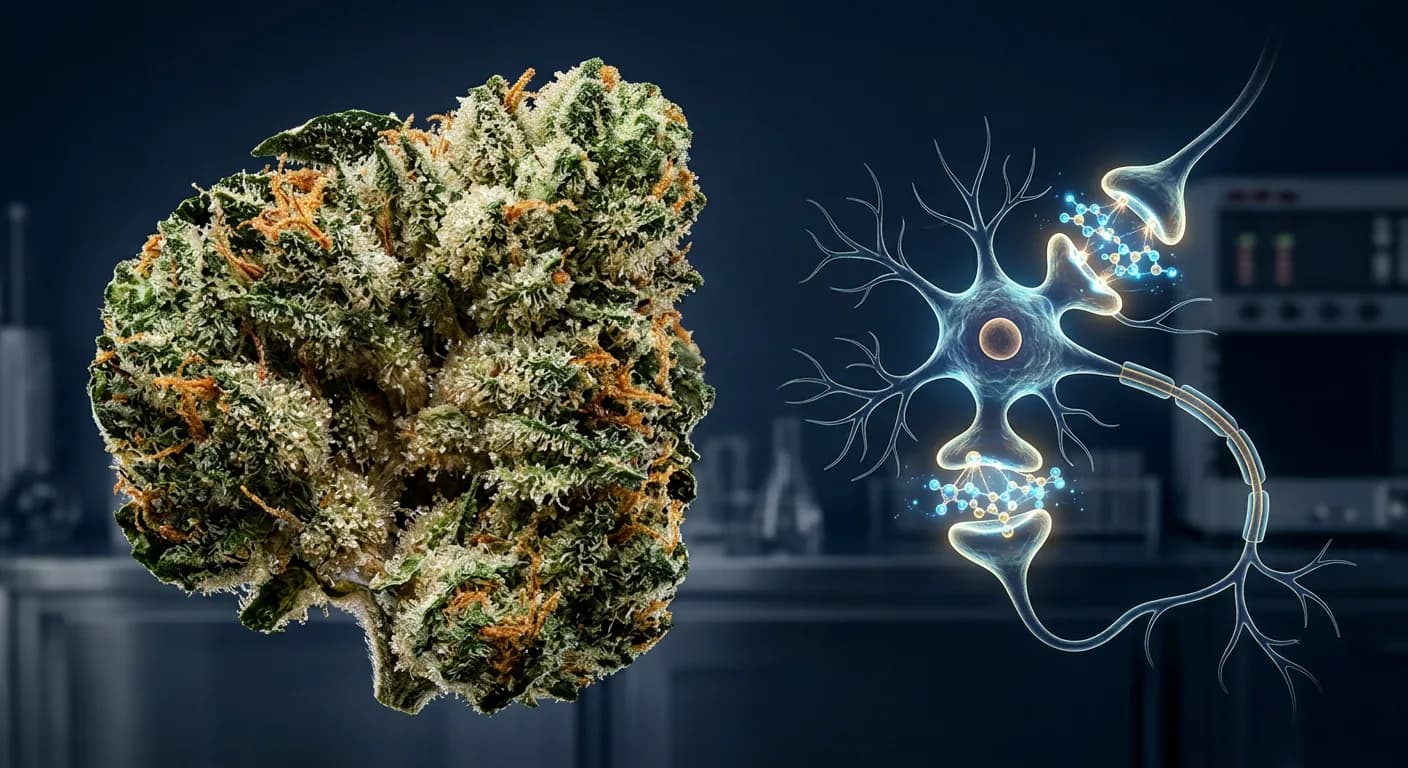
Light a joint, take a hit, and within minutes something shifts. Music sounds richer. Food tastes better. Ideas that seemed dull suddenly feel worth chasing. That warm cascade of reward isn't magic: it's cannabis dopamine chemistry, a cascade that starts in a tiny midbrain region called the ventral tegmental area and ripples outward through circuits that evolved to reinforce survival-critical behaviors.
But the same system that makes the first joint of a tolerance break feel transcendent is also the system that, after years of daily high-THC use, goes quiet. Heavy cannabis users release less dopamine in response to rewards than non-users. Understanding why, and what that means for growers, strain selection, and tolerance cycles, is one of the most practically useful pieces of neuroscience a cannabis enthusiast can learn.
How Dopamine Works in the Brain (Quick Primer)
Featured-snippet answer: Dopamine is a neurotransmitter released mainly by neurons in the midbrain, specifically the substantia nigra and ventral tegmental area (VTA), that signals reward prediction, motivation, and salience. It acts through five receptors (D1–D5) grouped into D1-like and D2-like families that shape everything from movement to pleasure.
Pop-science loves to call dopamine the "pleasure molecule," but that's a shortcut. Dopamine is better understood as a motivation and learning signal. A spike tells your brain: "Whatever just happened, pay attention, remember it, do it again." That's why it fires for food, sex, novelty, social connection, and for drugs that artificially trigger the same circuit.
The mesolimbic pathway, running from the VTA to the nucleus accumbens, is the brain's central reward highway. Over 50% of VTA neurons are dopaminergic, and they project directly into the circuits that govern craving, habit formation, and felt pleasure. This is the pathway cannabis talks to.
Why receptor families matter: D1-like receptors generally stimulate cells, D2-like receptors generally inhibit them. THC's effect on D1 receptors specifically remains understudied even after decades of cannabis neuroscience, a real knowledge gap we'll flag again later.
The endocannabinoid layer sitting on top
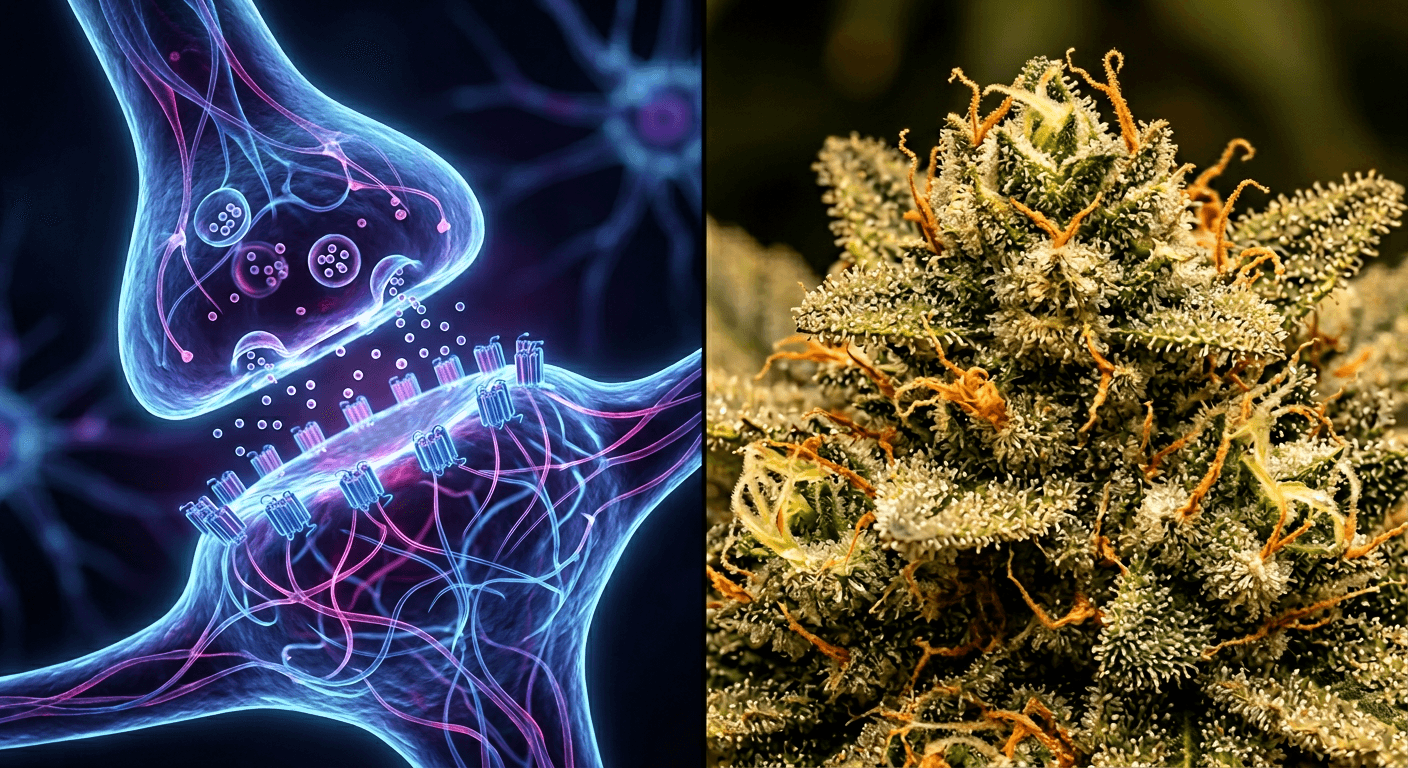
Here's the twist most primers skip: the endocannabinoid system doesn't run parallel to the dopamine system: it modulates it. CB1 receptors sit on GABA and glutamate neurons that synapse onto dopamine cells. When those CB1 receptors get activated, they change how much dopamine fires downstream. For a deeper look at this regulatory network, see our pillar guide on the endocannabinoid system.
The Acute Effect: Why Cannabis Feels Rewarding
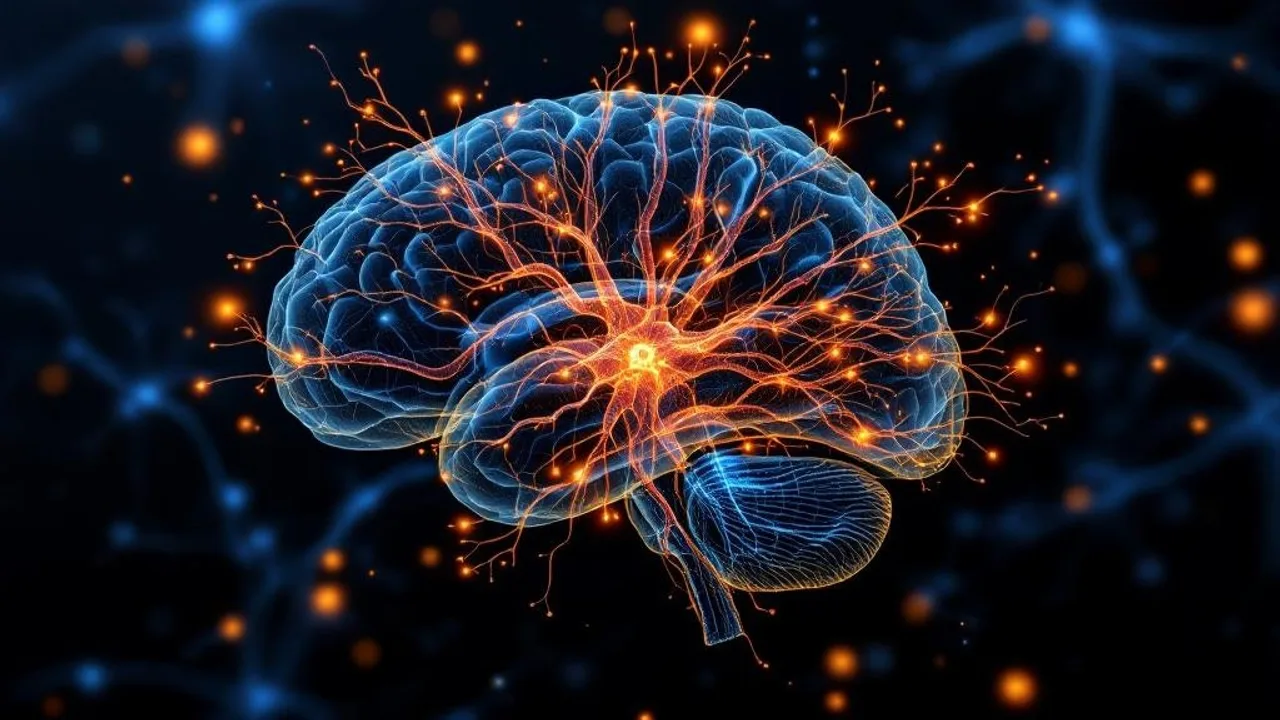
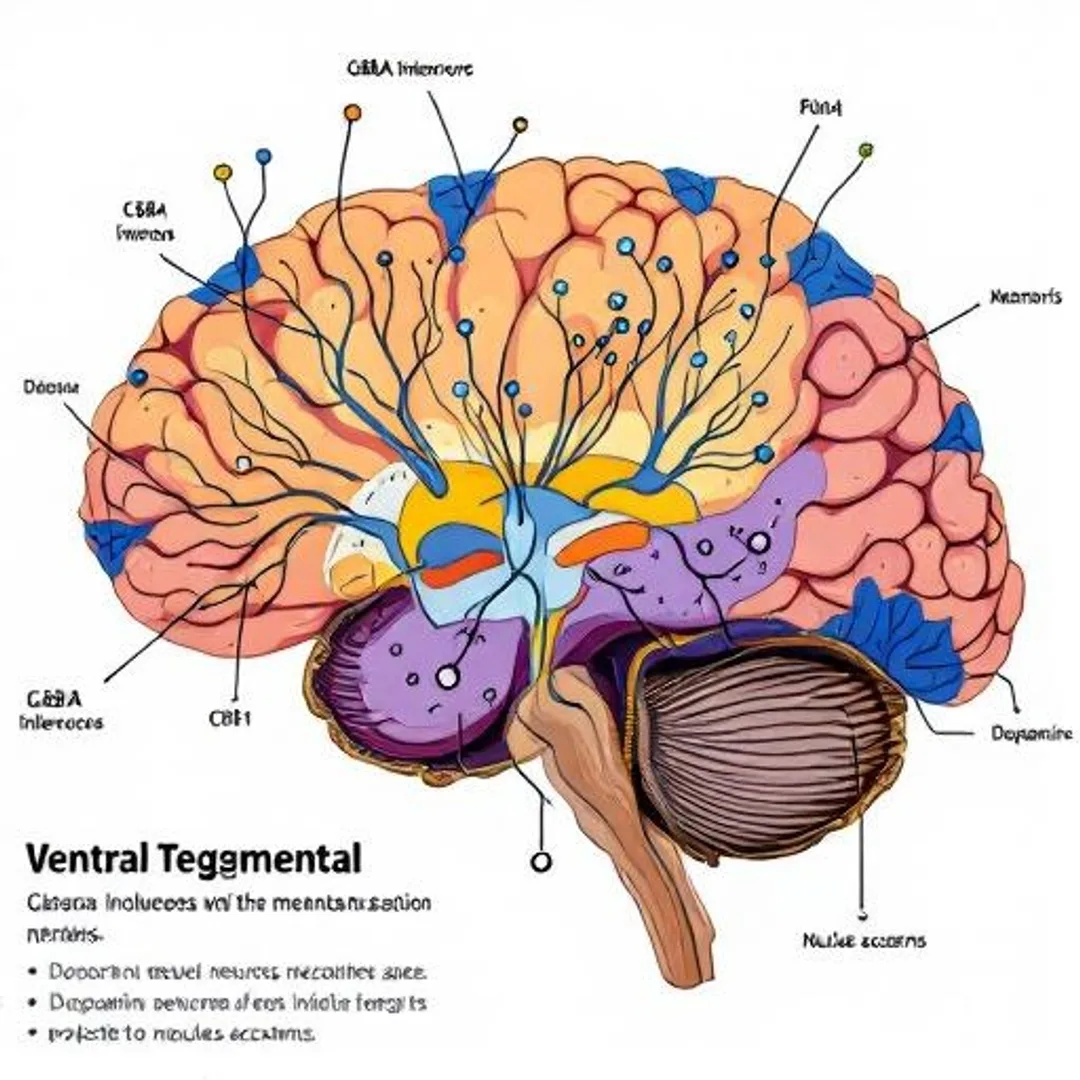
Featured-snippet answer: THC doesn't directly release dopamine. Instead, it binds CB1 receptors on inhibitory GABA neurons in the ventral tegmental area, silencing the "brake" that normally restrains dopamine cells. With the brake off, VTA dopamine neurons fire faster and release more dopamine into the nucleus accumbens, the disinhibition mechanism that produces the reward signal.
This is the single most misunderstood point in cannabis neuroscience. People say "weed releases dopamine" the way they'd say "coffee releases caffeine." It doesn't work that way. THC works indirectly, through a two-step chain:
- Step 1: THC binds CB1 receptors on GABAergic interneurons in the VTA.
- Step 2: Those GABA neurons stop inhibiting the neighboring dopamine neurons.
- Step 3: Dopamine neurons fire more freely, releasing dopamine into the nucleus accumbens.
Acute THC administration reliably increases dopamine release and dopamine neuron firing across the mesolimbic system: the finding has been replicated enough times that it's considered established.
Why this matters for how cannabis feels
Because THC hijacks a reward-prediction system, the signal isn't just "pleasure." It's salience, the sense that whatever you're experiencing matters. A mundane song becomes profound. A basic snack tastes engineered. A conversation feels unusually meaningful. That's your dopamine system labeling ordinary stimuli as reward-worthy.
Cannabis doesn't pour dopamine into your brain. It releases a brake. That distinction explains why tolerance builds (the brake's mechanics change) and why some strains feel more euphoric than others (different CB1 activation profiles produce different disinhibition curves).
High-THC Strains and the Dopamine Surge
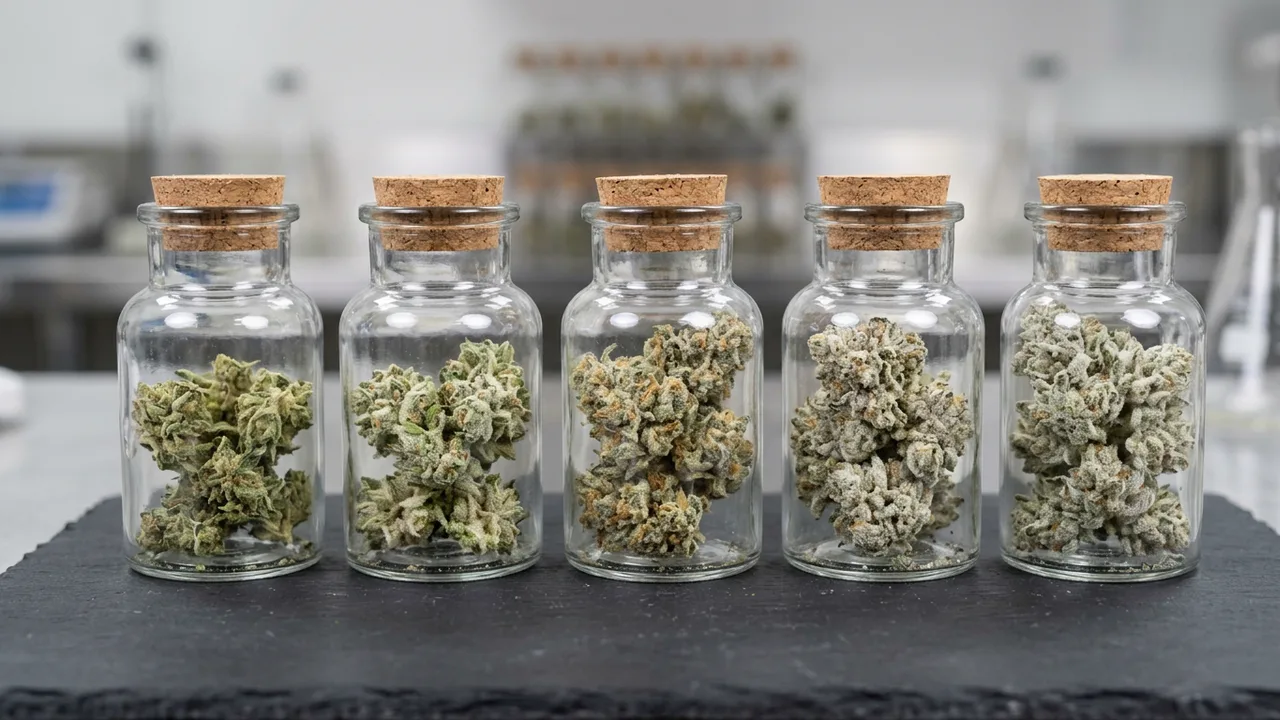
Higher CB1 agonist load means stronger disinhibition means a larger acute dopamine response. This is why a 26% THC flower hits differently than a 14% one, and why concentrates (often 70%+ THC) produce surges far outside what any evolved reward circuit was tuned to handle.
The THC content of street cannabis has increased at least three-fold over the past 20 years. Older dopamine studies were done on cannabis that would barely qualify as mid-shelf today, which is part of why researchers are reinvestigating long-term effects with fresh urgency.
| Strain tier | Typical THC | Expected acute dopamine response | Tolerance trajectory |
|---|---|---|---|
| Mild / balanced | 10–15% | Moderate surge, smoother curve | Slow tolerance build |
| Mid-potency modern flower | 16–22% | Strong surge, clear euphoria | Noticeable tolerance in weeks |
| High-THC modern flower | 23–30% | Sharp, intense surge | Fast tolerance build |
| Concentrates | 60–90%+ | Supraphysiological surge | Rapid, deep tolerance |
For growers thinking about the trade-off, options like Swiss Miss (15%) or Purple Power (10%) sit in the gentle-dopamine zone, while Quantum Kush (30%) and Purple Kush (27%) sit firmly in the surge-and-tolerance zone. Popular industry benchmarks like Gelato, Wedding Cake, and Runtz also land in that high-THC tier.
The Long-Term Picture: Blunted Dopamine in Heavy Users
Featured-snippet answer: Heavy, long-term cannabis use is associated with reduced dopamine release in the striatum compared to non-users, a pattern similar to what's seen in other addictions. The lower signaling shows up in regions tied to motivation, working memory, and attention, which researchers link to the "flattened" feeling some chronic users report.
The acute surge story is only half the picture. When researchers scan the brains of people who've been smoking heavily for years, they don't see a dopamine system running hot: they see one running cool. Long-term cannabis use is associated with lowered dopamine levels in circuits tied to motivation, pleasure, and reward.
The affected region, the striatum, handles working memory, impulsive behavior, and attention. That's consistent with the "I don't feel as sharp" or "nothing feels as good anymore" reports you'll find littered across r/leaves and r/Petioles, even if those subs rarely cite the underlying neuroscience.
Important context: "Blunted" doesn't mean "depleted." The evidence shows reduced release in response to stimuli, not that your brain is out of dopamine. And whether this reverses fully after cessation hasn't been directly addressed in the cited studies; it's an open question.
What the Columbia and Imperial Studies Found

Two research programs form the spine of the modern heavy-user dopamine picture.
The Columbia PET imaging study
Researchers at Columbia University Medical Center used PET imaging to compare dopamine release in 11 cannabis-dependent adults aged 21–40 with 12 matched healthy controls. Participants had, on average, started using cannabis at 16, became dependent by 20, and had been dependent for about 7 years. Nearly all of them smoked daily in the month before scanning.
Result: reduced dopamine release in the striatum of the heavy users, a signature closely resembling what's seen in stimulant and alcohol addictions.
"In light of the more widespread acceptance and use of marijuana, especially by young people, we believe it is important to look more closely at the potentially addictive effects of cannabis on key regions of the brain.", Anissa Abi-Dargham, MD
The Imperial / Nature review
A Nature review summarized by Imperial College London pulled the literature together and reached a similar conclusion: regular cannabis use over many years lowers dopamine levels involved in motivation, pleasure, and reward processing.
"Regular cannabis use over many years lowers levels of dopamine, which plays a key role in how the brain processes motivation, pleasure and reward.", Imperial College London reporting on Bloomfield et al.
The 2015 systematic review
Backing both is a 2015 systematic review in European Neuropsychopharmacology that identified 25 human studies covering over 568 participants (244 in cannabis-exposure groups) examining acute and chronic cannabis effects on dopamine. The convergent pattern: acute use bumps dopamine up, chronic heavy use correlates with blunted dopamine signaling.
The Causality Question: Cause or Pre-existing Difference?
Here's where honest reporting matters: we can't say with certainty that cannabis caused the reduced dopamine release in these users. Both the Columbia and Imperial researchers acknowledge that directionality is unclear, people with pre-existing differences in dopamine function may also be more likely to use heavily. You can't rerun someone's life without the drug to check.
On the other hand, researchers at the University of Otago argue that sustained recreational use of today's high-THC cannabis does produce long-term brain changes, particularly given the three-fold potency increase that has outrun most of the older literature.
"Cannabis is not a neutral substance. It can be beneficial and it can be harmful. As more research emerges, however, it becomes clearer and clearer that sustained recreational use of marijuana, especially when it has the high levels of THC now available, can produce long-term changes in brain function.", University of Otago Brain Health Research Centre
The honest position: strong association, contested causation. If you're a daily heavy user and you feel flatter than you used to, that's a signal worth taking seriously, even if the neuroscience hasn't fully closed the causal loop.
Tolerance, CB1 Downregulation, and the T-Break
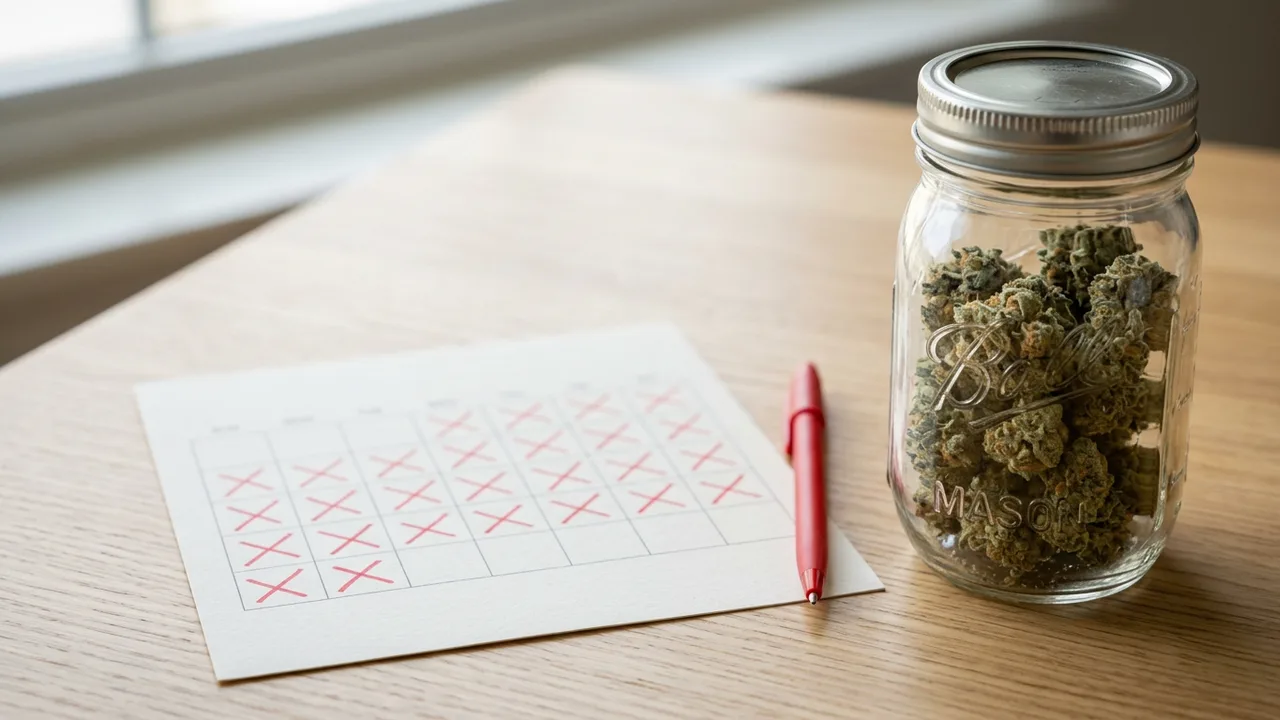
Although the cited research doesn't give us exact numerical curves for receptor density recovery, the mechanism is well-understood: repeated CB1 agonism causes receptors to internalize and desensitize. Less responsive CB1 → less VTA disinhibition → smaller dopamine surge → diminished subjective high.
That's why tolerance breaks work. By removing the agonist, CB1 receptors re-express and resensitize over days to weeks. Many users report that 2–4 weeks restores most of the acute effect, though recovery of the longer-term dopamine signaling changes seen in heavy users is not directly addressed by the cited evidence.
Stop cold, not tapered
CB1 receptors resensitize fastest under zero agonist load. For protocols and what to expect day by day, see our cannabis tolerance break guide.
Give it at least two weeks
Shorter breaks help, but the full CB1 upregulation curve unfolds over weeks, not days. Three to four weeks is the sweet spot most users report.
Come back low and slow
Reintroducing with a 10–15% THC flower like California Orange Bud preserves the reset far longer than jumping back to concentrates.
If you grow your own, a perpetual harvest that mixes one mild strain with one potent strain lets you rotate, using the lower-THC jar on weekdays keeps CB1 receptors more responsive for the Saturday-night high-THC session.
Choosing Strains to Manage Tolerance Cycles
Strain selection is the most underused tolerance-management tool in the grower's toolkit. High-THC monocultures drive fastest receptor desensitization. Rotation and balanced cannabinoid/terpene profiles soften the curve.
Gentle-dopamine rotation strains
- Swiss Miss: 15% THC, mellow daily driver
- Blue Moonshine, 13% THC, relaxed without heavy CB1 load
- Malawi Gold, 13% THC, classic sativa uplift
- Skunk Red Hair, 18% THC, moderate and balanced
High-impact strains to use sparingly
- Quantum Kush, 30% THC
- OG Kush, 26% THC
- Black Widow, 26% THC
- Industry names in this tier: Gorilla Glue (GG4), Gelato, Runtz, Wedding Cake, Zkittlez
For a bigger view of cannabinoid-receptor pairing, see our CB1 vs CB2 strain selection guide and the entourage effect deep-dive.
Dopamine and Creativity: What We Actually Know
Creativity research and dopamine research overlap, but the cannabis-creativity connection is far more folklore than neuroscience. What the verified literature supports is narrow: acute THC increases dopamine release in reward circuits, and dopamine is implicated in divergent-thinking tasks in the general neuroscience literature.
What it does not support is any specific quantitative claim that cannabis makes you more creative, or that certain strains "boost dopamine" to a measurable degree. Evidence is limited on those points, so we'll stay hedged.
Anecdotally, the strains users most often reach for in creative sessions lean sativa and terpinolene-forward, Jillybean, Tangerine Haze, Super Lemon Haze, plus classics like Jack Herer and Durban Poison. Whether that's dopaminergic, terpene-driven, or just lore is an open question. Browse our best strains for creativity shelf for the full working list.
Adolescent and Developmental Vulnerability
Developmental exposure, prenatal and adolescent, can compromise dopamine system function and behavior, with the adolescent and fetal brain being particularly vulnerable. The brain's reward circuits are still wiring themselves through the mid-20s, and sustained CB1 agonism during that window appears to alter trajectory in ways that casual adult use doesn't.
"These findings add to the growing body of research demonstrating the potentially adverse effects of cannabis, particularly in youth, at the same time that government policies and laws are increasing access and use.": Jeffrey Lieberman, MD, Columbia University
The Cannabis–Psychosis Connection Through Dopamine
A 2024 JAMA Psychiatry paper framed the cannabis–psychosis link specifically through dopamine convergence. Lower dopamine function in heavy users overlaps with circuits implicated in psychosis, addiction, and depression, which is why psychiatric researchers treat dopamine as the bridge between the two.
This doesn't mean cannabis causes psychosis in typical users. It does mean the dopamine system is where the interaction plays out, and people with psychosis-spectrum risk factors have a more compelling reason than average to keep THC doses modest and avoid early-onset heavy use.
What Researchers Still Don't Know
Despite decades of work, meaningful gaps remain:
- THC's specific effects on the D1 receptor remain under-studied.
- Quantitative dose-response curves in humans (low vs. high THC) aren't directly established in the cited literature.
- Whether blunted dopamine signaling in heavy users fully reverses after cessation, and over what timeline, isn't directly addressed by the cited sources.
- How CBD modulates dopamine in humans isn't covered by the verified sources here. For the broader THC/CBD comparison, see our cannabinoid receptor guide.
"We urgently need to better understand how cannabis affects the brain, to help policy makers and individuals make informed decisions.", Researcher quoted in Imperial College London news
Practical Takeaways for Cannabis Users and Growers (2026)
- Rotate strains across potency tiers, don't live at 25%+ THC every day.
- Consider a 2–4 week tolerance break if the high has flattened.
- Favor whole-flower over concentrates when dopamine reset is the goal.
- Avoid heavy daily use during adolescent development windows.
- If you feel flatter off-cannabis than you used to, take the signal seriously.
- Grow your own so you control potency tier and rotation.
- Track subjective effect, not just yield, pair harvests with a yield estimator and a simple session log.
Acute THC increases dopamine release via CB1-mediated disinhibition in the VTA. Heavy chronic use is associated with blunted dopamine signaling in the striatum. Causality is debated but the association is robust. Strain rotation and tolerance breaks are the practical levers you control.
Frequently Asked Questions
Does cannabis affect dopamine?
Yes. Acute THC indirectly increases dopamine release in the mesolimbic reward system via CB1 receptor activation on inhibitory VTA neurons. Long-term heavy use is associated with reduced dopamine release in the striatum.
Does cannabis deplete dopamine over time?
"Deplete" overstates it. Studies show heavy users have reduced dopamine release in response to rewards compared to non-users, but whether that reflects depletion, downregulation, or pre-existing differences is still debated.
How long is a tolerance break to reset dopamine response?
Most users report meaningful improvement in 2–4 weeks as CB1 receptors resensitize. The cited sources don't specify an exact recovery timeline for the longer-term dopamine changes seen in heavy users: that question remains open.
Do high-THC strains cause a bigger dopamine surge?
Greater CB1 agonist load produces stronger VTA disinhibition, which the mechanism predicts will yield a larger acute dopamine response. Street cannabis THC has risen roughly three-fold in 20 years, amplifying this effect compared to historical use.
Is the dopamine blunting in heavy users permanent?
Unknown from the cited evidence. Studies document the association with current heavy use but don't directly track reversibility after prolonged abstinence.
Sources & References
This article was researched and fact-checked using 9 verified sources including 5 peer-reviewed studies, 4 community resources.
- Does cannabis affect dopaminergic signaling in the human brain? A systematic review of evidence to date - ScienceDirect, sciencedirect.com/science/article/abs/pii/S0924977X15000887 [Research]
- A Brain on Cannabinoids: The Role of Dopamine Release in Reward Seeking - PMC , pmc.ncbi.nlm.nih.gov/articles/PMC3405830 [Research]
- Frontiers | Tetrahydrocannabinol and dopamine D1 receptor, frontiersin.org/journals/neuroscience/articles/10.3389/fnins.2024.1360205/full [Research]
- Developmental exposure to cannabis compromises dopamine system function and behavior - ScienceDirect, sciencedirect.com/science/article/pii/S2352154624000937 [Research]
- Convergence of Cannabis and Psychosis on the Dopamine System | Cannabis | JAMA Psychiatry | JAMA Network, jamanetwork.com/journals/jamapsychiatry/fullarticle/2832297 [Research]
- Heavy Cannabis Users Have Lower Dopamine Release in Brain | Columbia University Irving Medical Center, cuimc.columbia.edu/news/heavy-cannabis-users-have-lower-dopamine-release-brain [Community]
- Cannabis blunts the brain's reward system | Imperial News | Imperial College London, imperial.ac.uk/news/176013/cannabis-blunts-brains-reward-system [Community]
- The Effect of THC on the Dopamine System, 2016, Brain Health Research Centre | University of Otago, otago.ac.nz/news/newsroom/the-effect-of-thc-on-the-dopamine-system [Community]
- Heavy Cannabis Use Associated with Reduced Dopamine Release in Brain, Similar to Other Addictions | Columbia University Department of Psychiatry, columbiapsychiatry.org/news/heavy-cannabis-use-associated-reduced-dopamine-release-brain-similar-other-addictions [Community]