You picked up ten packs of premium seeds this season — you're only growing three of them. The other seven are sitting in a plastic bag somewhere, slowly dying. It doesn't have to go that way.
Knowing how to store cannabis seeds long term is the difference between cracking open a pack five years from now and getting 90% germination, or throwing away expensive genetics because bad storage destroyed the embryo inside. This guide covers the actual biology behind seed degradation, every storage method worth considering (with honest pros and cons), and the full freezer debate growers argue about on every forum.
If you've already read the basics on cannabis seed storage and viability timelines, this is the deep dive that picks up where that article leaves off.
Why Cannabis Seeds Degrade: The Biological Mechanisms
The best way to store cannabis seeds for years starts with understanding what you're actually fighting. Seeds aren't inert objects — they're living embryos in a state of suspended animation, and several biological processes are constantly working against them.
Lipid Oxidation
Cannabis seeds contain oil-rich endosperm tissue that fuels early germination. When oxygen contacts these lipids over time, oxidation breaks down the fats that the seedling embryo depends on for energy. This is the same chemistry that turns cooking oil rancid — and it's just as destructive inside a seed.
Moisture Intrusion and Cellular Damage
Even small amounts of moisture above the safe threshold trigger metabolic activity inside the seed. Once the embryo "wakes up" partially — burning energy reserves without being able to germinate — it exhausts itself and dies. Moisture above 15% relative humidity inside storage also supports mold and bacterial growth that destroys seeds from the outside in.
Dormancy Loss and Enzyme Degradation
Seeds maintain viability through specific proteins and enzymes that protect cellular membranes. Heat and temperature fluctuations accelerate the breakdown of these proteins. Once dormancy mechanisms fail, the embryo cannot successfully complete germination even if external conditions are perfect.
The seed's enemy hierarchy: Moisture is the fastest killer (weeks to months of damage in high humidity). Temperature fluctuation is the second fastest (breaks down proteins over months). Oxygen is the slowest but most insidious (lipid oxidation compounds over years). Your storage strategy must address all three simultaneously.
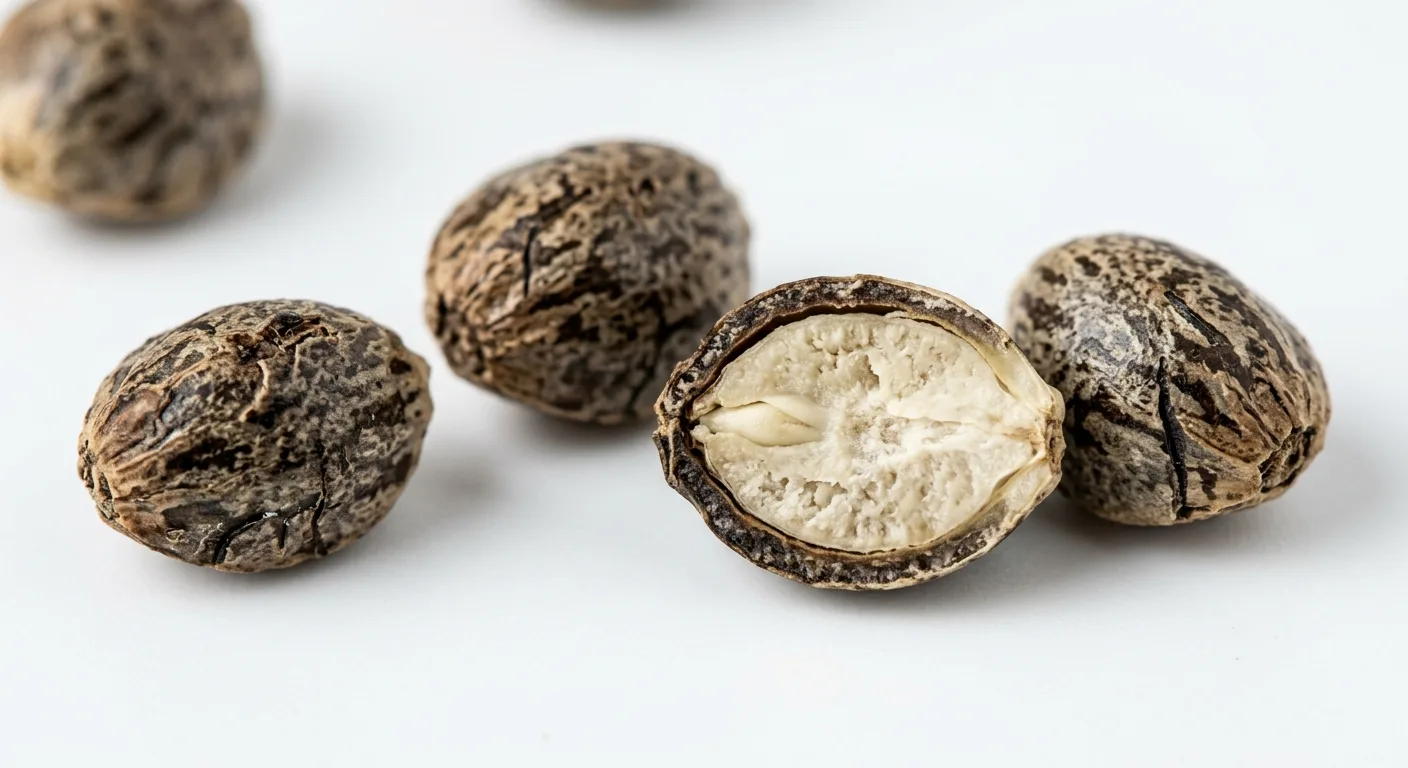
The Three Enemies of Seed Viability (With Specific Thresholds)
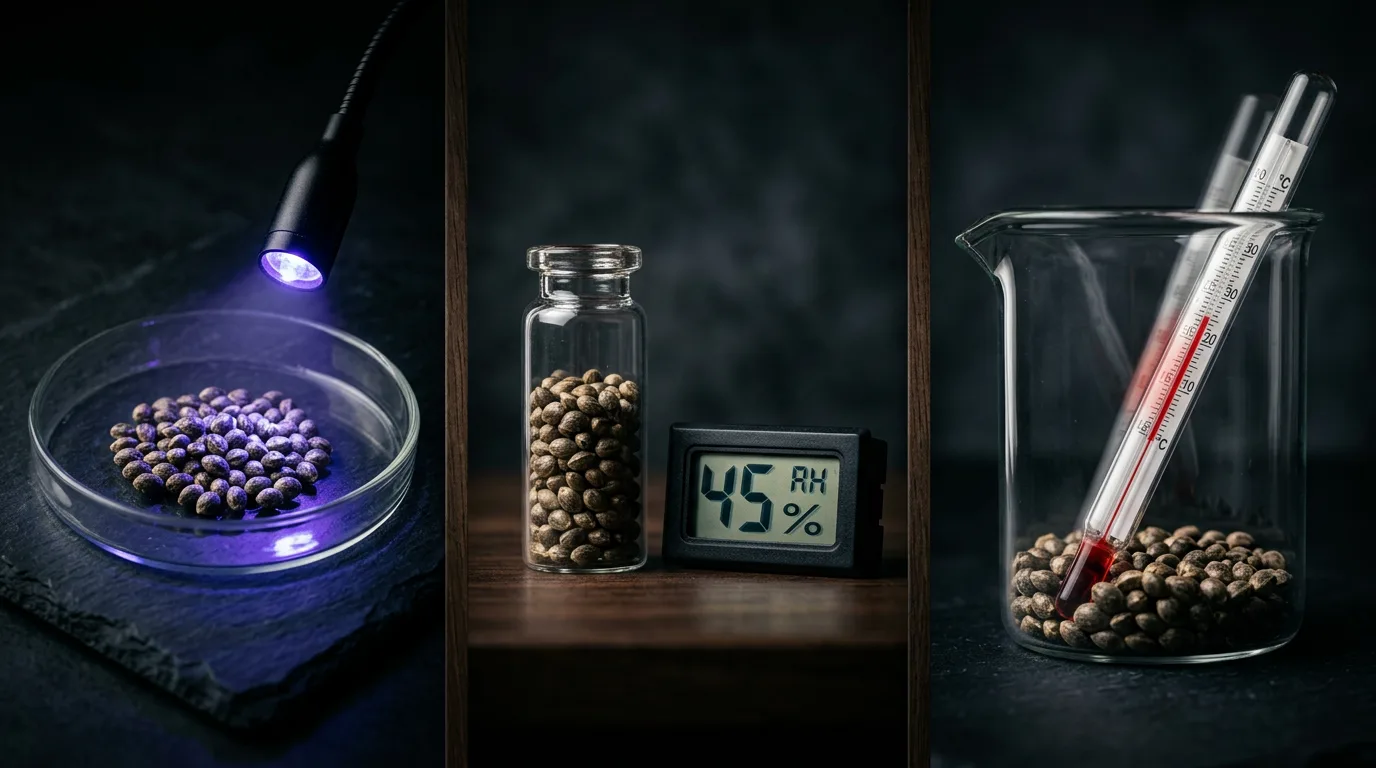
Light, moisture, and temperature fluctuation are the three core threats to cannabis seed viability. Each has specific, measurable thresholds — not vague guidelines, but hard numbers that separate good storage from wasted genetics.
Enemy 1: Light (UV Radiation)
UV and visible light trigger photochemical reactions in seed tissue, accelerating lipid oxidation and degrading DNA repair mechanisms. Even indirect ambient light over long periods causes cumulative damage.
- Store seeds in completely opaque containers — amber glass blocks UV but clear glass does not
- If using mylar bags, light penetration is already near zero
- Never store seeds on a shelf exposed to a window, even in a jar
Enemy 2: Moisture (Relative Humidity)
This is the single most controllable variable and the most dangerous if neglected. Research from agricultural seed science consistently points to the same safe thresholds:
| RH Level Inside Storage | Effect on Seeds | Risk |
|---|---|---|
| Below 8% | Metabolic activity fully suspended | ✅ Ideal for long-term |
| 8–15% | Minimal activity, safe short-term | ✅ Acceptable up to 1–2 years |
| 15–25% | Low-level metabolic activity begins | ⚠️ Degradation accelerates |
| Above 25% | Active metabolic drain, mold risk | ❌ Seed death within months |
| Above 40% | Mold, bacterial growth, rapid decay | ❌ Critical failure zone |
Enemy 3: Temperature Fluctuation
Fluctuating temperatures are more damaging than a consistently higher temperature. Every warm-cool cycle stresses seed tissue, expands and contracts moisture inside the seed coat, and accelerates enzyme degradation. The target for long-term storage is below 5°C (41°F) with stable, consistent temperatures — never a spot that heats up during the day and cools at night.
The worst place to store seeds: A kitchen cupboard near the stove, a garage shelf with temperature swings, or on top of any electrical equipment. These locations combine all three enemies simultaneously — ambient light, humidity fluctuations from cooking or weather, and daily temperature cycles.
Cannabis Seed Storage Methods Compared: Honest Pros and Cons
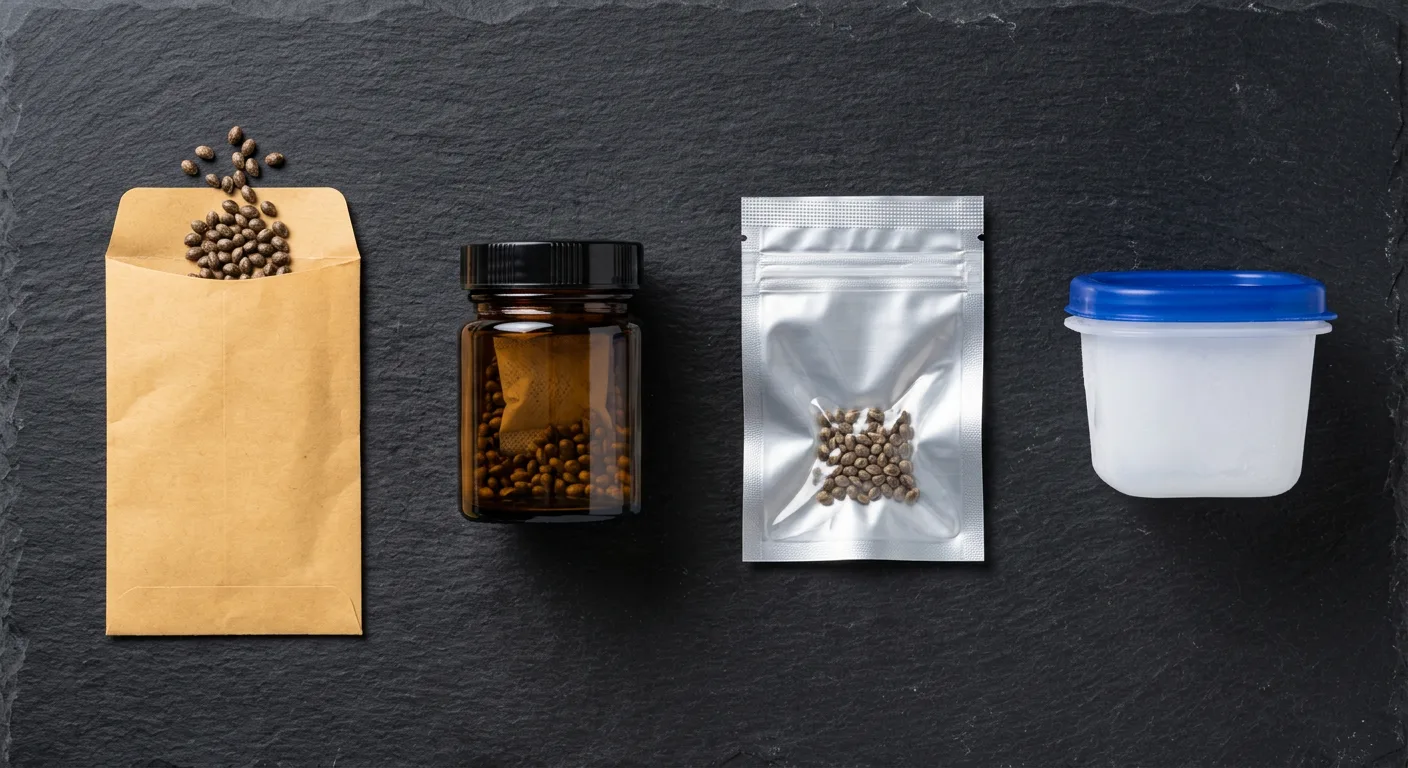
Not every storage method suits every situation. The right approach depends on how long you're storing seeds and how much effort you want to invest. Below is an honest, side-by-side breakdown of every method worth considering.
Method 1: Paper Envelope in a Dark Drawer
| Factor | Rating | Notes |
|---|---|---|
| Duration | ⭐⭐ Short-term only | 3–6 months maximum |
| Moisture control | ❌ None | Ambient RH penetrates paper |
| Temperature control | ❌ None | Subject to room fluctuations |
| Light protection | ⚠️ Partial | Only if drawer is consistently closed |
| Cost | ✅ Free | No setup required |
| Germination rate after storage | 60–80% if under 6 months | Drops rapidly after that |
Verdict: Only use this method if you're planting within the same season. It's the default "lazy" storage and it works short-term, but it's not a plan for protecting expensive genetics.
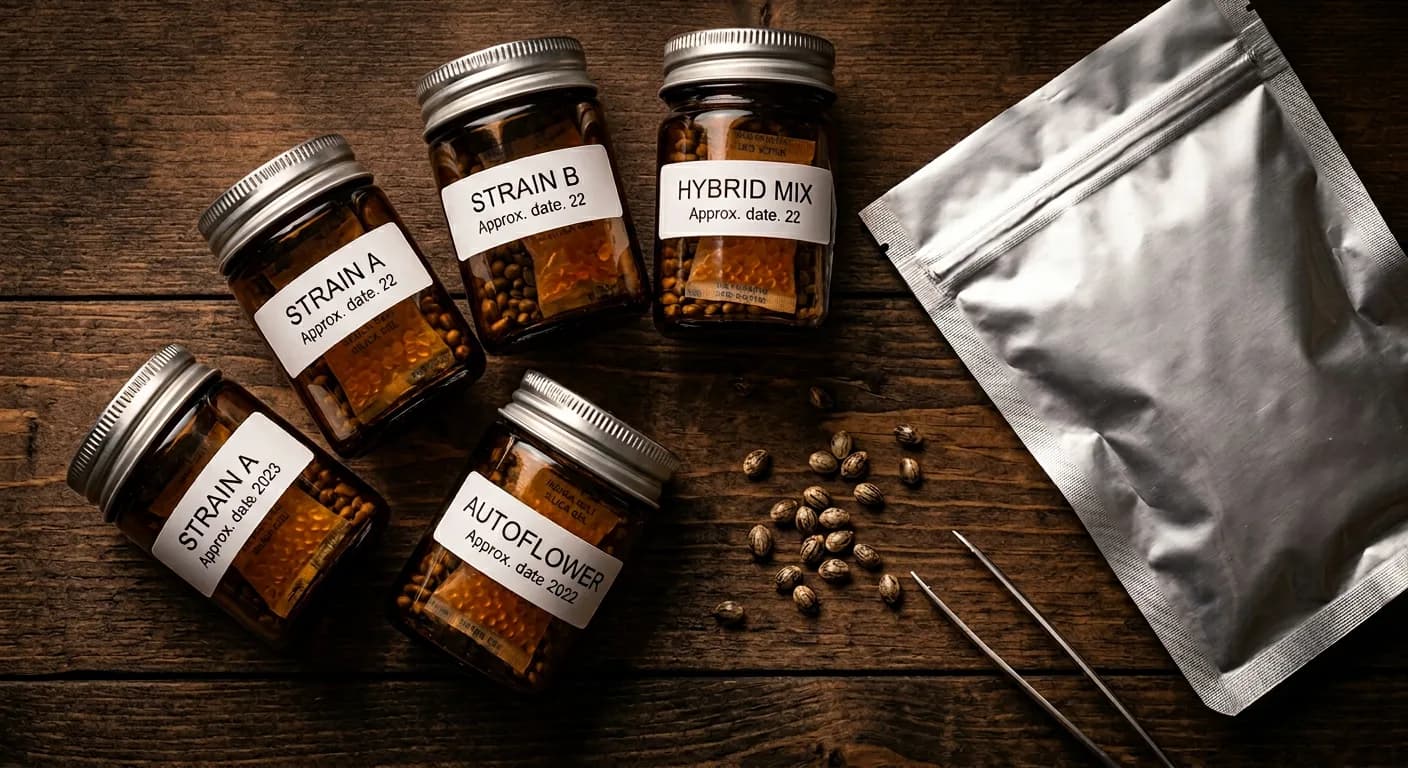
Method 2: Airtight Jar + Silica Gel Packets (1–3 Year Storage)
This is the most practical upgrade and genuinely extends seed viability for medium-term storage. A dark or amber glass jar with a tight lid, combined with food-grade silica gel desiccant packets, addresses the moisture problem effectively.
| Factor | Rating | Notes |
|---|---|---|
| Duration | ⭐⭐⭐ Medium-term | 1–3 years reliably |
| Moisture control | ✅ Good | Silica gel pulls RH below 10% |
| Temperature control | ⚠️ Partial | Place in fridge for best results |
| Light protection | ✅ Good | Use amber or opaque glass |
| Cost | ✅ Low ($5–15) | Jar + silica packets |
| Germination rate after storage | 75–90% at 2 years | With fridge storage |
How to use silica gel correctly: Use indicating silica gel packets — these change color (blue to pink, or orange to green depending on brand) when they've absorbed their maximum moisture capacity and need replacing. Non-indicating packets work, but you're guessing when to swap them. Use 1–2 grams of desiccant per 100ml of container volume.
Pro tip on silica gel for seed storage: Recharge spent silica gel packets in an oven at 120°C (250°F) for 1–2 hours instead of replacing them. They return to full desiccant capacity and can be reused indefinitely. Let them cool to room temperature before sealing into your storage container.
Verdict: The best everyday storage method for most home growers. Inexpensive, reliable, and reversible — you can open the jar to grab seeds without catastrophic risk. Pair with fridge storage for the full 3-year window.
Method 3: Vacuum-Sealed Mylar Bags (3–7 Year Storage)
Vacuum sealing cannabis seeds removes the oxygen that drives lipid oxidation and, when combined with mylar's moisture and light barrier, creates the closest thing to professional archival conditions available to home growers.
| Factor | Rating | Notes |
|---|---|---|
| Duration | ⭐⭐⭐⭐ Long-term | 3–7 years with freezer |
| Moisture control | ✅✅ Excellent | Mylar is moisture-impermeable |
| Oxygen control | ✅✅ Excellent | Vacuum removes O₂ near-completely |
| Light protection | ✅✅ Excellent | Mylar blocks 100% of light |
| Cost | ⚠️ Medium ($40–80) | Requires vacuum sealer |
| Germination rate after storage | 60–85% at 5–7 years | With freezer; highly variable |
Does vacuum sealing extend cannabis seed life? Yes — significantly. By eliminating the oxygen that drives lipid oxidation, vacuum sealing slows one of the three primary degradation pathways. Combined with a silica gel packet inside the bag before sealing and freezer-level temperatures, this is the best achievable home storage setup.
Verdict: The gold standard for anyone storing seeds beyond 3 years. The upfront cost of a vacuum sealer pays for itself after one pack of premium seeds protected over multiple growing seasons. See product recommendations in a later section for specific brands.
The three storage methods form a progression: envelope (0–6 months) → airtight jar + silica gel (6 months–3 years) → vacuum-sealed mylar + freezer (3–7+ years). Match the method to your actual storage timeline, not the most extreme option available.
The Freezer Debate: Can You Freeze Cannabis Seeds and Keep Them Viable?
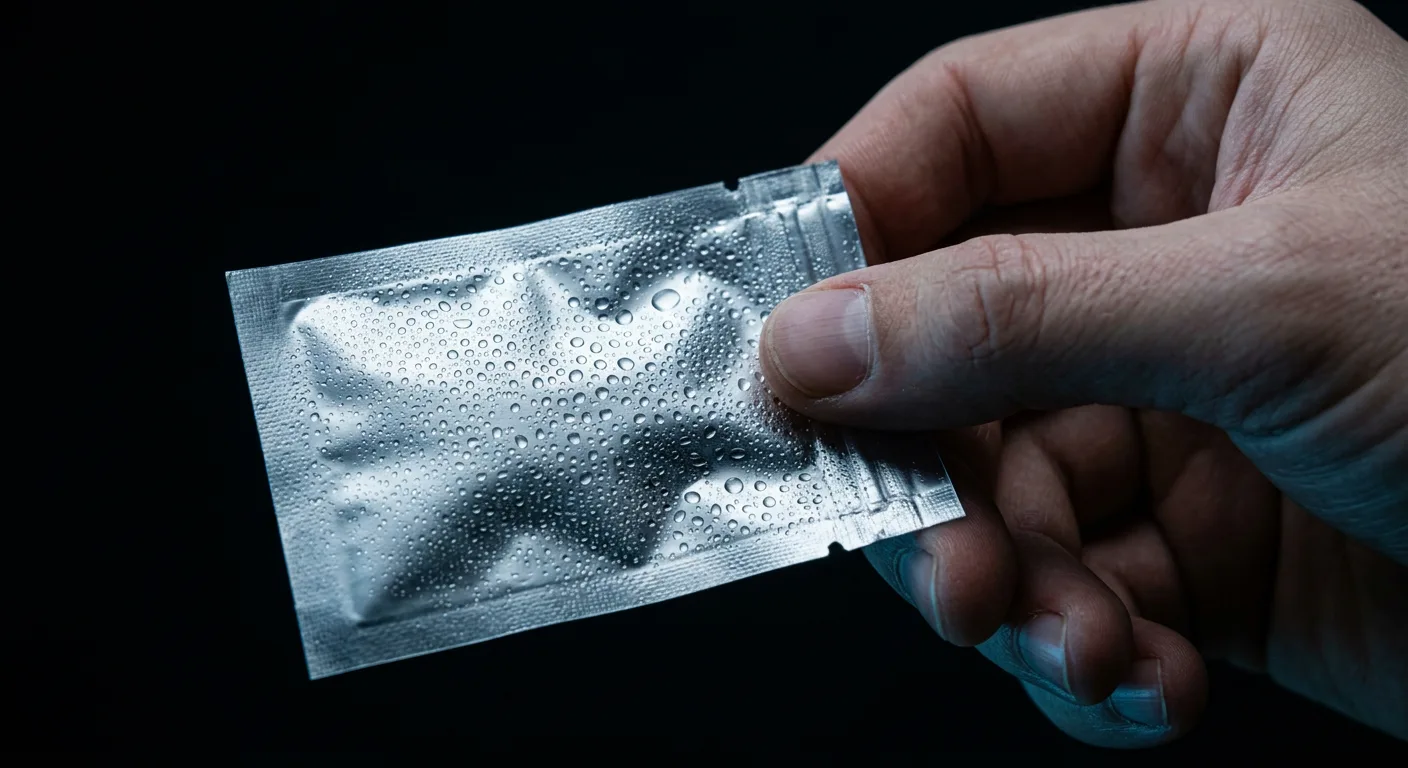
Freezing cannabis seeds is one of the most contested topics in home cultivation forums. Growers have strong opinions on both sides — and both sides have valid points. Here's what the science and practice actually show.
The Case For Freezing
Temperature is the core driver of metabolic degradation in seeds. Reducing storage temperature from room temperature (20°C/68°F) to fridge temperature (4°C/39°F) dramatically slows all enzymatic processes. Dropping further to freezer temperature (-18°C/0°F or below) essentially stops them.
Professional seed banks and botanical gene banks — including national agricultural repositories — store seeds at -18°C to -20°C as standard practice. The Svalbard Global Seed Vault maintains seeds at -18°C with a target of centuries-long viability. The principle is proven: cold = slow degradation = longer viability.
The Problem: Condensation on Thaw
Here's why forum debates get heated. When you pull frozen seeds into a warm room and open the container immediately, the cold seeds act like a glass of ice water on a humid day — moisture from the air condenses directly onto the seed surface and drives it into the seed coat.
This condensation event can push internal moisture content from the safe sub-8% range to damaging levels in minutes. The result is partially triggered germination, cellular damage, or mold — all from the act of accessing your carefully frozen seeds.
Never open frozen or refrigerated seed containers immediately after removing them from cold storage. Always allow the sealed container to equilibrate to room temperature first — this takes 2–4 hours for a small jar, up to 12 hours for larger vacuum-sealed packages. Open only after the exterior of the container feels completely room-temperature to the touch.
How Professional Seed Banks Actually Do It
Commercial gene banks use cryogenic storage at -196°C in liquid nitrogen for truly permanent archiving — a technology not available to home growers. For practical long-term storage, accredited seed banks use a protocol home growers can partially replicate:
- Pre-dry seeds to below 6–8% moisture content before freezing (preventing ice crystal formation inside seed tissue)
- Double-package in sealed containers to prevent freezer moisture from migrating to seeds
- Store at stable -18°C to -20°C in a dedicated freezer, not a frost-free freezer (frost-free models cycle temperature to eliminate ice buildup, creating exactly the temperature fluctuations seeds hate)
- Never refreeze after thawing — each freeze-thaw cycle causes mechanical damage to seed cell membranes
The Practical Home Workaround: Double Vacuum Sealing
The safest approach for home growers who want freezer-level preservation without the condensation risk uses a two-layer system:
- Place seeds with a silica gel packet in a small vacuum-sealed mylar bag (inner layer)
- Place that sealed bag inside a second vacuum-sealed mylar bag (outer layer)
- Store the double-sealed package in a chest freezer set to -18°C or colder
- When accessing: remove from freezer, allow 8–12 hours to fully equalize to room temp, then open only the outer layer
- Remove only the seeds you need; reseal the inner bag and return to freezer only if it has not yet been opened
The freezer verdict: Freezing works when done correctly, but the margin for error is smaller than fridge storage. For most home growers storing seeds for 1–3 years, a fridge is the better practical choice. For 5-year-plus archiving of irreplaceable genetics, a properly executed freeze is the right call.
Fridge vs Freezer: Side-by-Side Verdict
| Factor | Fridge (3–5°C) | Freezer (-18°C) |
|---|---|---|
| Best for storage duration | 1–3 years | 3–7+ years |
| Condensation risk | Low (with slow equalization) | High (requires strict protocol) |
| Temperature stability | Good (minimal cycling) | Excellent if chest freezer; poor if frost-free |
| Access frequency | Can open occasionally | Must minimize completely |
| Error forgiveness | High | Low |
| Germination rate after storage | 75–90% at 2 yrs | 60–85% at 5–7 yrs |
| Recommended for | Most home growers | Long-term genetic archiving |
Step-by-Step: How to Prepare Seeds for Long-Term Storage Before Freezing
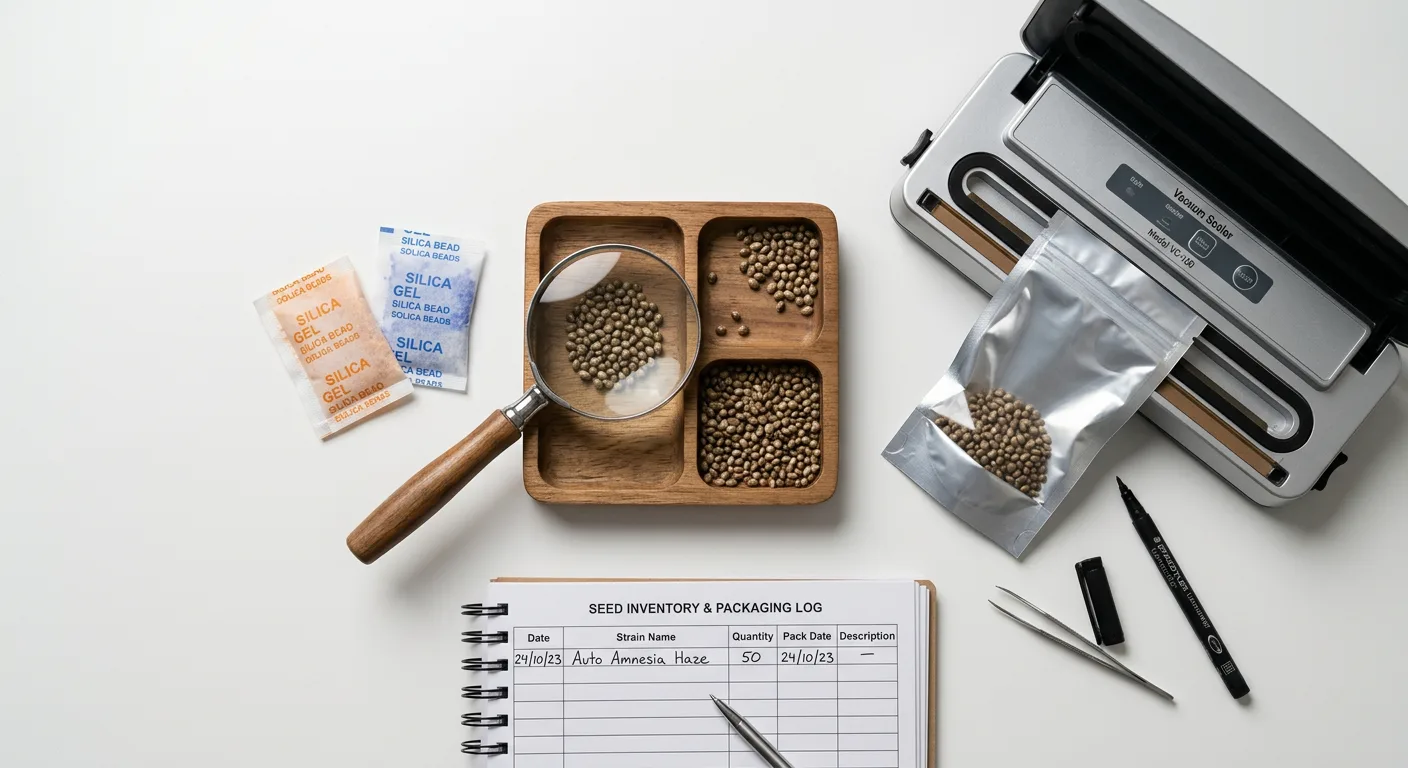
Preparation before storage is as important as the storage conditions themselves. Seeds that go into storage with residual moisture, in inadequate packaging, or without desiccant will underperform regardless of how cold or sealed the environment is.
Confirm Seed Condition Before Storage
Inspect each seed visually. Store only seeds with intact, uncracked seed coats, consistent coloring (tan to dark brown tiger-stripe patterns), and that feel firm rather than hollow or papery. Damaged seeds don't improve in storage — they just waste space in your archive.
Pre-Dry to Remove Residual Moisture
If seeds came directly from a breeder's sealed packaging they're typically ready to store. If they've been sitting in ambient conditions for a few weeks, place them in an open paper envelope inside a container with fresh silica gel for 24–48 hours before final packaging. Target: below 8% moisture content.
Package with Silica Gel
Place 1–2 indicating silica gel packets per bag alongside the seeds. Seal the inner mylar bag with a vacuum sealer. Do not overfill — seeds should have some space rather than being compressed against each other by the vacuum.
Double-Seal for Freezer Storage
For freezer storage, place the sealed inner bag into a second mylar bag and vacuum-seal again. This outer layer is your insurance against any freezer moisture, frost, or accidental condensation events.
Store in a Dedicated Container
Place all sealed seed bags in a rigid outer container — a dark glass jar, food-grade plastic container, or hard-sided storage box — before placing in the freezer or fridge. This protects against physical crushing and adds another barrier against moisture and odor from other freezer contents.
Log Your Seed Inventory
Keep a simple spreadsheet or notebook log: strain, source, storage date, expected germination window, and storage location. Cross-reference with your grow planner so you know exactly what's in storage and when to use it.
Pro tip for fridge storage: Use the back of a dedicated drawer or shelf in your fridge, not the door. Fridge doors experience more temperature cycling every time the refrigerator opens and closes. The interior maintains significantly more stable temperatures — essential for seed storage.
How to Test Viability After Long-Term Storage
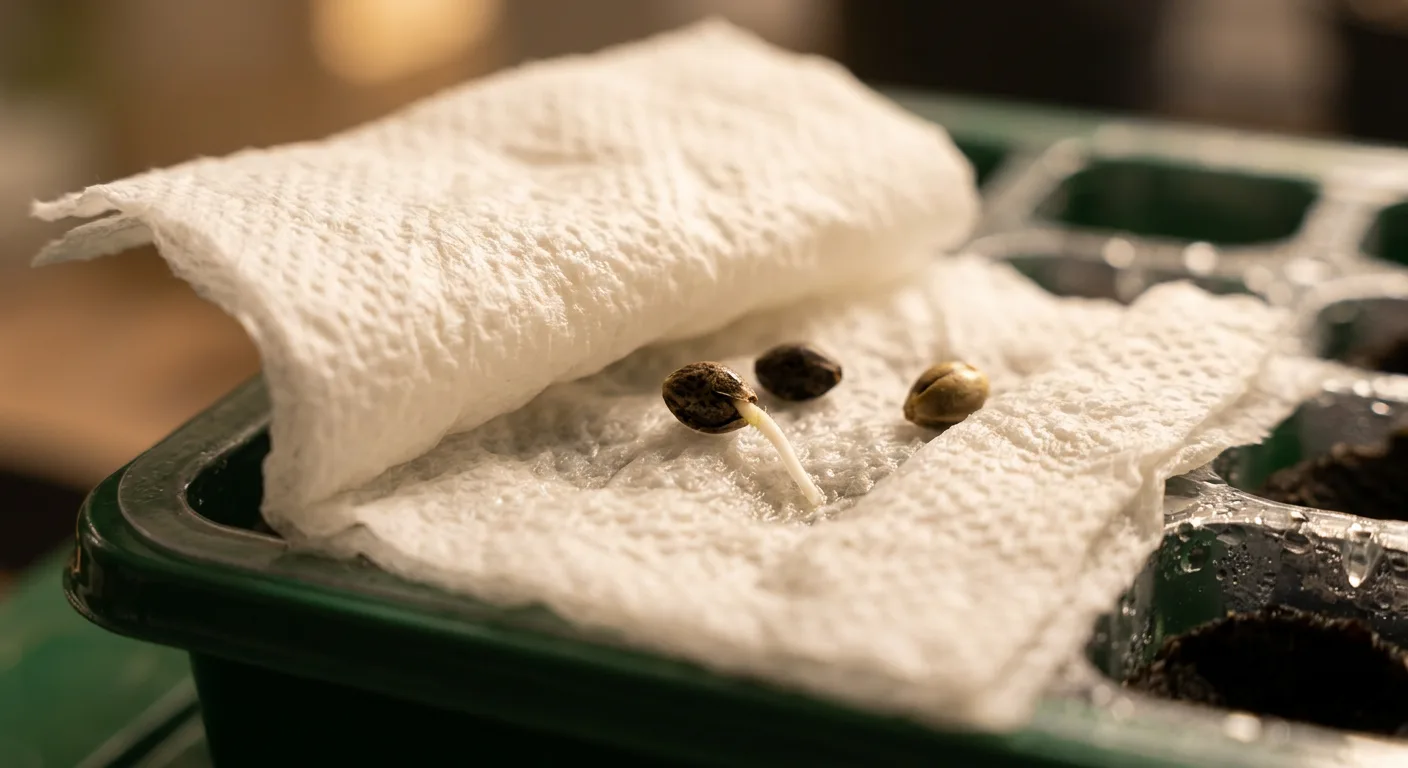
Before committing to a full grow with stored seeds, test a small sample for germination viability. Two methods work reliably — one quick screening test, one definitive test.
The Float Test (Quick Screening)
Drop seeds into a glass of room-temperature water and observe after 1–2 hours. Seeds that sink are typically viable with intact density. Seeds that float may have compromised interiors — though some viable seeds float initially due to trapped air, so this is a screening tool, not a final verdict.
- Sinks immediately: likely viable — proceed to germination
- Floats but sinks after gentle agitation: possibly viable — test germinate
- Floats persistently: likely compromised — germinate anyway, but lower expectations
Note: Run the float test only on seeds you intend to germinate immediately afterward. Soaking seeds and then re-drying them for storage causes more damage than skipping the test.
The Paper Towel Germination Test (Definitive)
This is the most reliable viability check and doubles as a germination method if seeds pass.
- Moisten a paper towel (damp, not soaking wet)
- Place 5–10 seeds evenly spaced on one half of the towel
- Fold the other half over the seeds
- Place inside a sealed zip-lock bag or between two plates to retain moisture
- Keep at 21–25°C (70–77°F) in a dark location
- Check at 48 hours, 72 hours, and 120 hours
Expected Germination Rates by Storage Age and Method
| Storage Age | Paper Envelope | Airtight Jar + Silica Gel | Vacuum Sealed + Freezer |
|---|---|---|---|
| Under 1 year | 80–90% | 90–95% | 90–95% |
| 1–2 years | 60–75% | 80–90% | 85–92% |
| 2–3 years | 30–50% | 70–85% | 80–88% |
| 3–5 years | 10–25% | 50–70% | 65–82% |
| 5–7 years | <10% | 25–45% | 50–75% |
These figures assume good starting seed quality and consistent storage conditions. Seeds from reputable sources with intact seed coats consistently outperform these averages. If you're purchasing seeds with a germination guarantee, confirm storage conditions don't void the guarantee terms.
Tips for Germinating Old Cannabis Seeds
Seeds that have been in long-term storage often need a little encouragement to break dormancy successfully.
- Soak in water for 12–18 hours before the paper towel method (rehydrates the seed coat)
- Add a tiny amount of hydrogen peroxide (3%) to the soak water — 2–3 drops per 250ml — to soften the seed coat and inhibit surface mold
- Maintain 24°C (75°F) consistently during germination — use a seedling heat mat if room temps fluctuate
- Be patient: old seeds can take 5–10 days to show a taproot vs 2–3 days for fresh seeds
- If germination rate is below 50%, germinate extra seeds to account for losses and adjust your grow plan accordingly using the grow planner tool
Scarification — gently scuffing the seed coat with fine-grain sandpaper or a nail file — can help very old seeds absorb water through a hardened seed coat. Rub very lightly in one direction; you want to thin the coat slightly, not damage the seed beneath it. This technique is borrowed from orchid and native plant seed banking and works well on cannabis seeds over 4 years old.
Product Recommendations: Specific Gear That Works
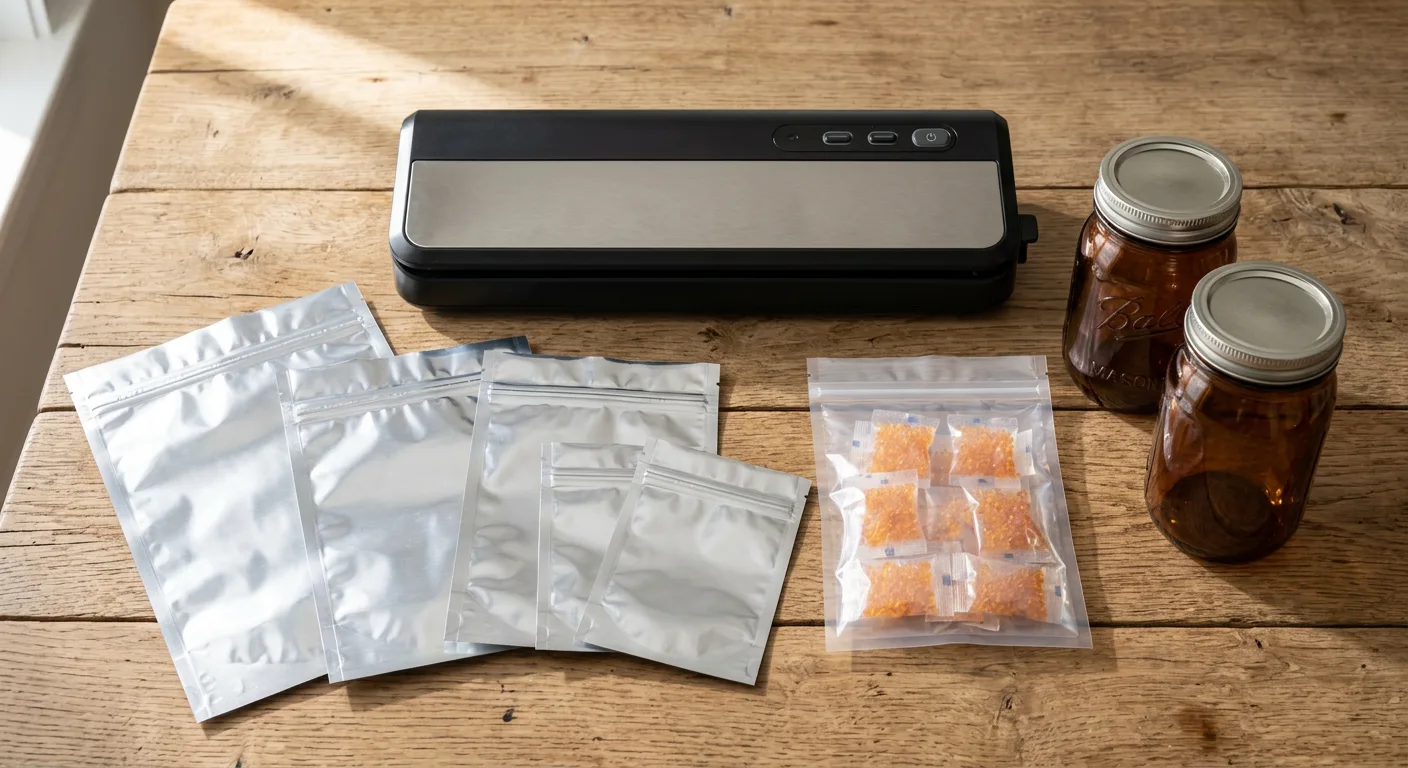
The right equipment makes the difference between a storage setup that holds up for years and one that fails at a critical moment. Here are specific product categories with what to look for — not generic advice, but actual specifications that matter.
Silica Gel Packets
Look for indicating silica gel packets in the 0.5g–2g size range. Key specifications:
- Indicating type: Color-change packets that visually show when they're saturated (blue-to-pink or orange-to-green varieties both work)
- Food-grade rating: FDA food-safe silica gel is non-toxic and appropriate for enclosed storage
- Quantity: Use 1–2 packets per 250ml of storage volume
- Brands that work: Eva-Dry, Dry&Dry, and Wisedry all produce consistent, rechargeable indicating packets available in multi-packs for under $15
Vacuum Sealers
For seed storage specifically, you don't need a commercial-grade machine. Look for:
- Handheld/compact models: FoodSaver VS0100 or similar entry-level models work perfectly for small seed bags
- Compatible bag type: Standard vacuum sealer bags work, but purpose-made mylar bags with a heat-seal strip (rather than just zip-lock) are more moisture-resistant over years
- Seal width: A wider heat seal (8–10mm) is more reliable than narrow seals for long-term storage
Container Types
| Container Type | Best For | Key Feature | Watch Out For |
|---|---|---|---|
| Amber glass jar with metal lid | 1–3 year fridge storage | Zero off-gassing, UV protection | Can crack if frozen |
| Vacuum mylar bags (7-mil+) | 3–7 year freezer storage | Moisture/oxygen barrier | Puncture risk — use rigid outer container |
| Opaque HDPE plastic jars | Medium-term, travel, backup | Lightweight, shatterproof | Minor oxygen permeability over years |
| 35mm film canisters | Small seed lots, budget option | Light-proof, compact | Not airtight; use inside another container |
The film canister trick: Old 35mm film canisters (opaque plastic, tight-snap lid) are excellent inner containers for holding a single strain's seeds before placing the canister inside a vacuum-sealed outer bag. They're light-proof, protect seeds from direct contact with desiccant packets, and let you organize multiple strains in one storage bag.
How Long Do Cannabis Seeds Last? Storage Life by Method
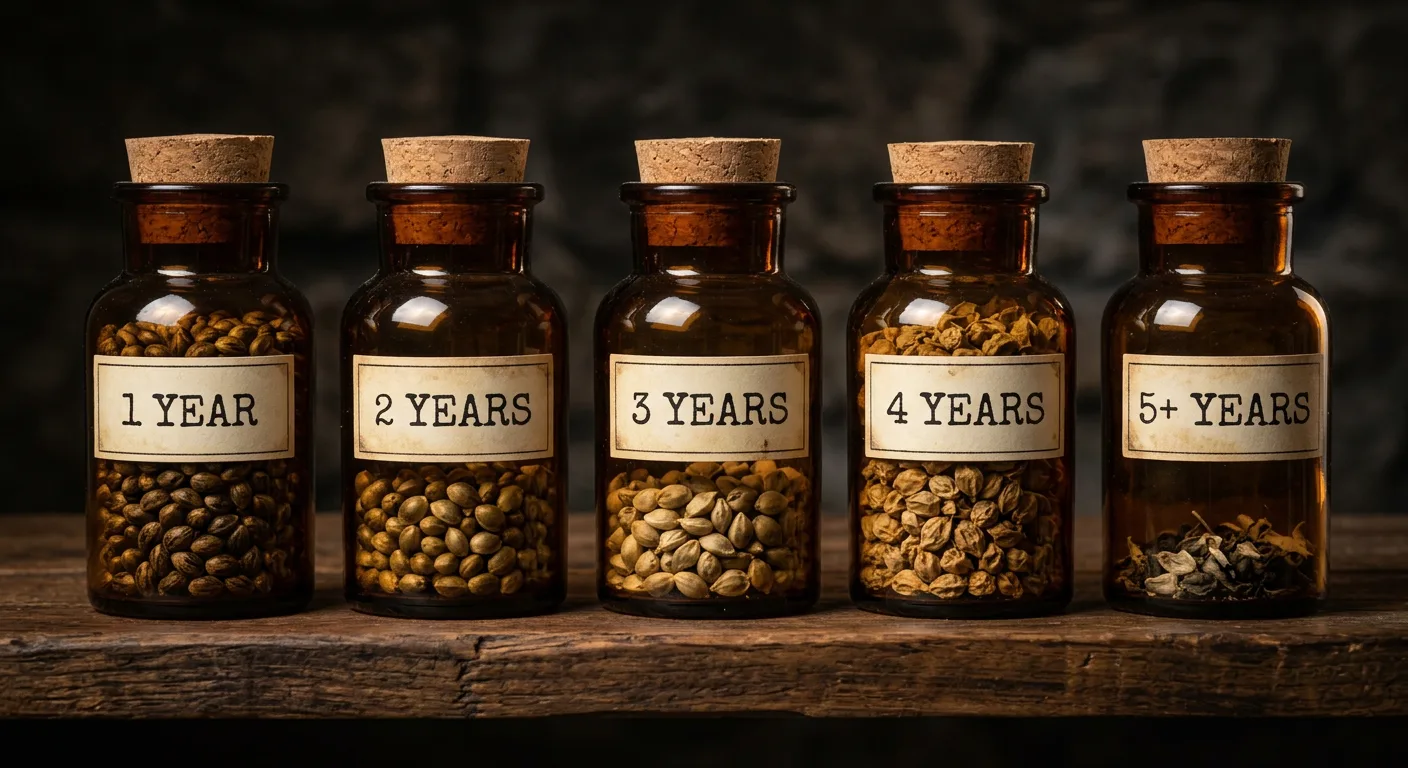
How long cannabis seeds last depends almost entirely on storage conditions — not just time. Fresh seeds stored poorly can fail within months; properly stored seeds have germinated successfully after a decade.
The ranges below reflect real-world outcomes across different home storage setups, not optimistic marketing figures:
- Room temperature in original packaging: 6–12 months before significant viability loss begins
- Airtight jar + silica gel, room temp: 1–2 years with acceptable germination rates
- Airtight jar + silica gel, fridge: 2–4 years with 75–85% germination
- Vacuum sealed mylar, fridge: 3–5 years with 75–88% germination
- Vacuum sealed mylar, chest freezer: 5–10 years with careful protocol; 60–80% germination
Genetics and original seed quality also play a role. High-quality feminized seeds from stable genetics — like White Widow Feminized (25% THC) or OG Kush Feminized (26% THC) — tend to have better-formed seed coats and higher starting viability, which translates directly to better outcomes after long storage.
Autoflower seeds behave identically to feminized seeds in storage — the flower-trigger genetics don't affect seed coat resilience or viability timelines. Whether you're archiving Amnesia Haze Autoflower or a photoperiod like Northern Lights x Big Bud Feminized, the same storage protocols apply. If you're still deciding between autoflower and feminized genetics for your collection, the autoflower vs feminized guide breaks down the differences in detail.
Heirloom and landrace genetics deserve particular care — their genetic irreplaceability makes proper storage worth the extra effort. See our guide on heirloom cannabis strain preservation for more context on why genetic archiving matters.
Storing Leftover Seeds Between Grows: The Practical Workflow
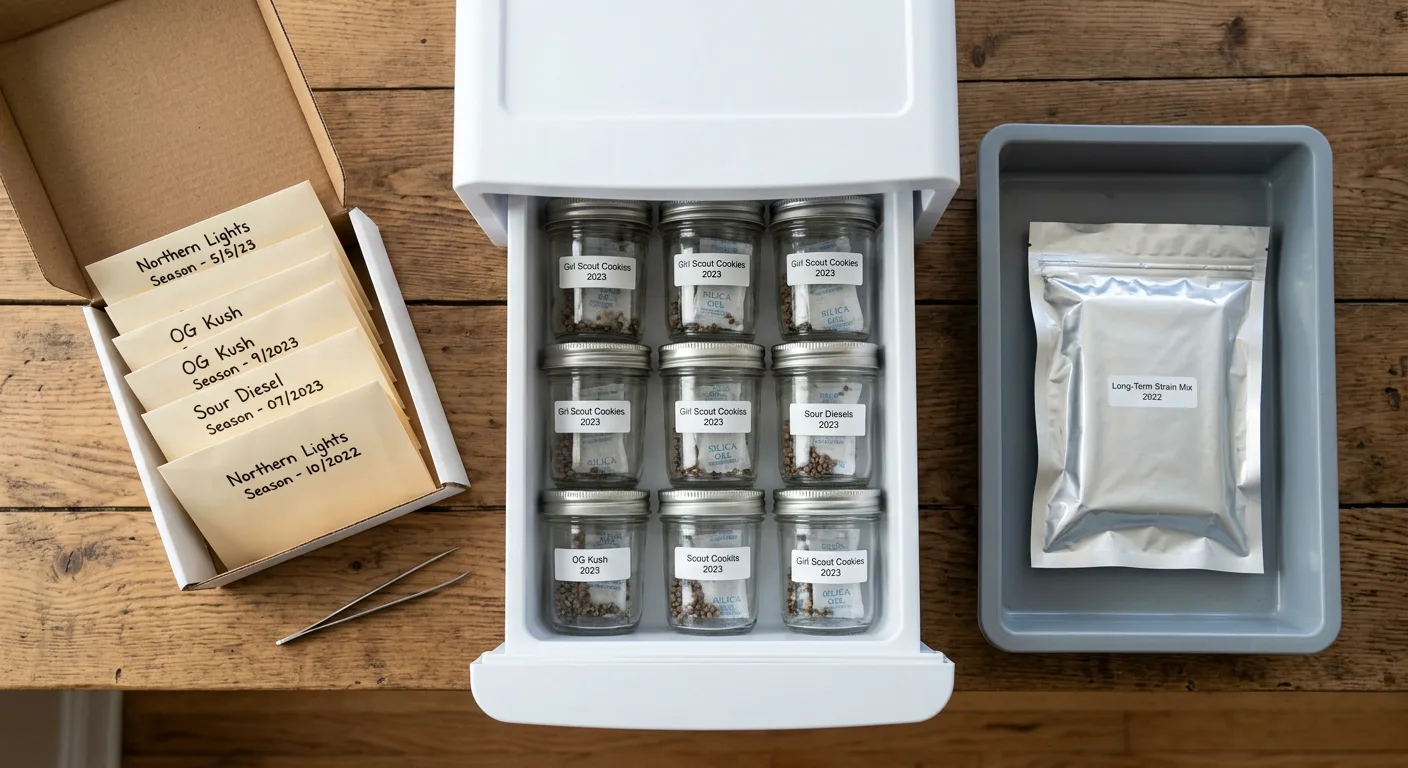
Most home growers aren't archiving seeds for a decade — they're handling leftover seeds between growing seasons and need a realistic, low-friction workflow that doesn't require laboratory precision.
The Between-Grows Protocol (Simple, Effective)
If your storage window is under 12 months:
- Keep seeds in original breeder packaging if unopened and reseal carefully if opened
- Add 1 silica gel packet to the original packaging
- Place in an opaque airtight container (small glass jar or dedicated seed box)
- Store in the back of your fridge, not the door
- Mark the date stored with masking tape on the outside
If your storage window is 1–3 years:
- Transfer seeds from breeder packs to labeled glass jars with indicating silica gel
- Store in fridge with stable temperature (measure with a thermometer; 3–5°C is ideal)
- Check silica gel color every 3–4 months and recharge as needed
- Log strain, count, and storage date — use the grow planner to schedule future use
The most common mistake growers make with leftover seeds isn't the storage method — it's forgetting what they have. A consistent labeling and logging system is as important as any container or desiccant. Seeds you can't identify or date are seeds you won't use confidently.
Organizing a Multi-Strain Seed Collection
If you collect seeds across multiple strains and growing seasons, a tiered organization system prevents confusion and protects your most valuable genetics:
- Tier 1 (current season): Paper envelopes in a small box on a dark shelf — seeds you're using within 3 months
- Tier 2 (medium-term): Glass jars with silica gel in the fridge — seeds for next 1–2 growing seasons
- Tier 3 (long-term archive): Vacuum-sealed mylar in the freezer — irreplaceable genetics, limited-run strains, or large quantities
Popular strains with stable genetics and wide availability — like Gorilla Glue #4, Wedding Cake, or Gelato — don't necessarily need Tier 3 archiving because they're accessible to repurchase. Strains you grew from your own phenotype selection, limited-release genetics, or older heirloom varieties are the ones worth the full freezer protocol.
For high-value genetics like Quantum Kush Feminized (30% THC) or Purple Kush Feminized (27% THC), investing in the full vacuum-seal-plus-freezer setup protects a real financial and genetic investment. Similarly, boutique autoflower varieties like Skywalker OG Autoflower (23% THC) or Holy Grail Kush Autoflower (20% THC) benefit from proper archiving if you find a phenotype worth preserving.
Frequently Asked Questions
Can you freeze cannabis seeds and keep them viable?
Yes — freezing cannabis seeds is viable when done correctly. Seeds must be pre-dried to below 8% moisture content, double-vacuum-sealed in mylar bags with silica gel, and stored in a stable chest freezer at -18°C or colder. The critical risk is condensation on thaw: always allow sealed containers to fully equalize to room temperature (8–12 hours) before opening. Never refreeze seeds after thawing. Done right, frozen seeds can maintain 60–80% germination viability for 5–10 years.
Does vacuum sealing extend cannabis seed life?
Yes, vacuum sealing meaningfully extends cannabis seed life by removing the oxygen that drives lipid oxidation — one of the three primary degradation mechanisms. When combined with mylar bags (which block moisture and light) and a silica gel desiccant packet, vacuum sealing can extend viable storage from 2–3 years to 5–7 years. The improvement is most significant for storage beyond 3 years; for shorter storage windows, an airtight jar with silica gel in the fridge delivers comparable results with less equipment.
How long do cannabis seeds last in the fridge?
Cannabis seeds stored in an airtight container with silica gel desiccant in a fridge at 3–5°C typically remain viable for 2–4 years with germination rates of 75–90%. The fridge is the best practical storage environment for most home growers — it provides stable low temperatures without the condensation risks of freezer storage. Use the back of a dedicated shelf or drawer rather than the door, which experiences more temperature cycling.
What is the best silica gel for cannabis seed storage?
Indicating silica gel packets — those that change color when saturated — are the best option for cannabis seed storage because they tell you when they need recharging without guessing. Food-grade indicating packets in the 0.5g–2g size range are ideal. Use 1–2 packets per 250ml of container volume. Brands like Dry&Dry, Eva-Dry, and Wisedry all produce reliable food-safe options. Recharge spent packets in an oven at 120°C for 1–2 hours rather than replacing them — they can be reused indefinitely.
Should I store autoflower seeds differently than feminized seeds?
No — autoflower seeds have the same storage requirements as feminized photoperiod seeds. The ruderalis genetics that govern automatic flowering don't affect seed coat structure, moisture sensitivity, or dormancy mechanisms. Both types need the same conditions: below 8% RH, stable temperatures below 5°C for long-term storage, complete darkness, and oxygen exclusion for extended archiving. Use the same container and desiccant protocols for both seed types. For help choosing between autoflower and feminized genetics, see the autoflower vs feminized guide.