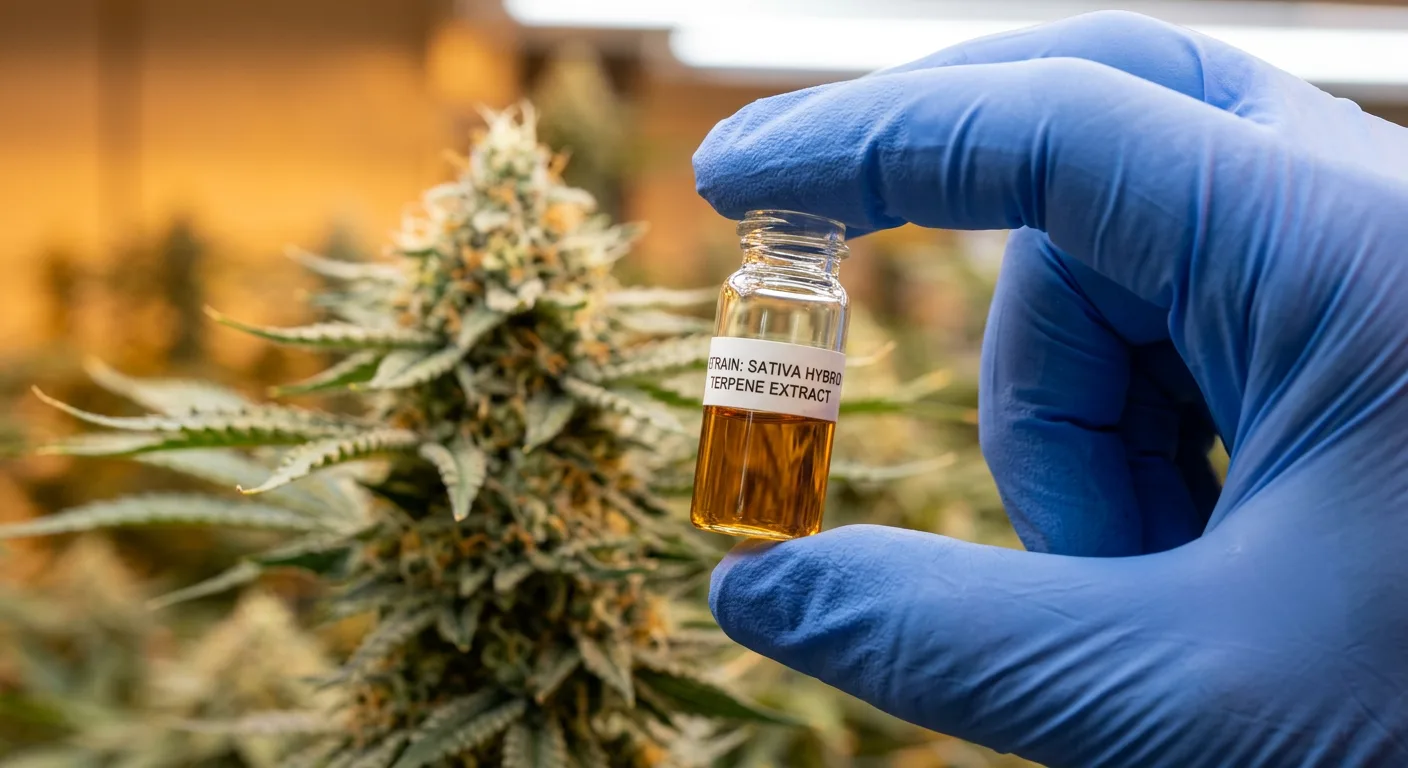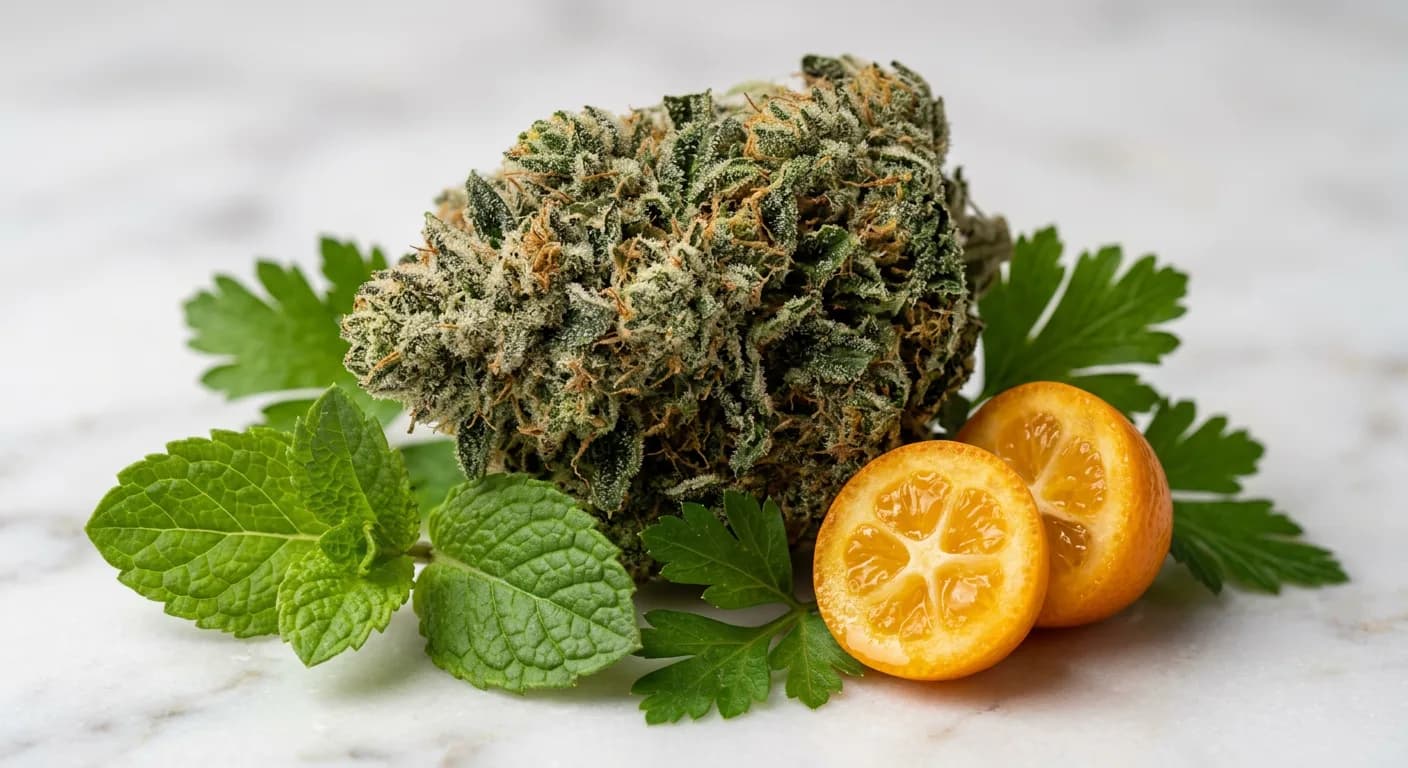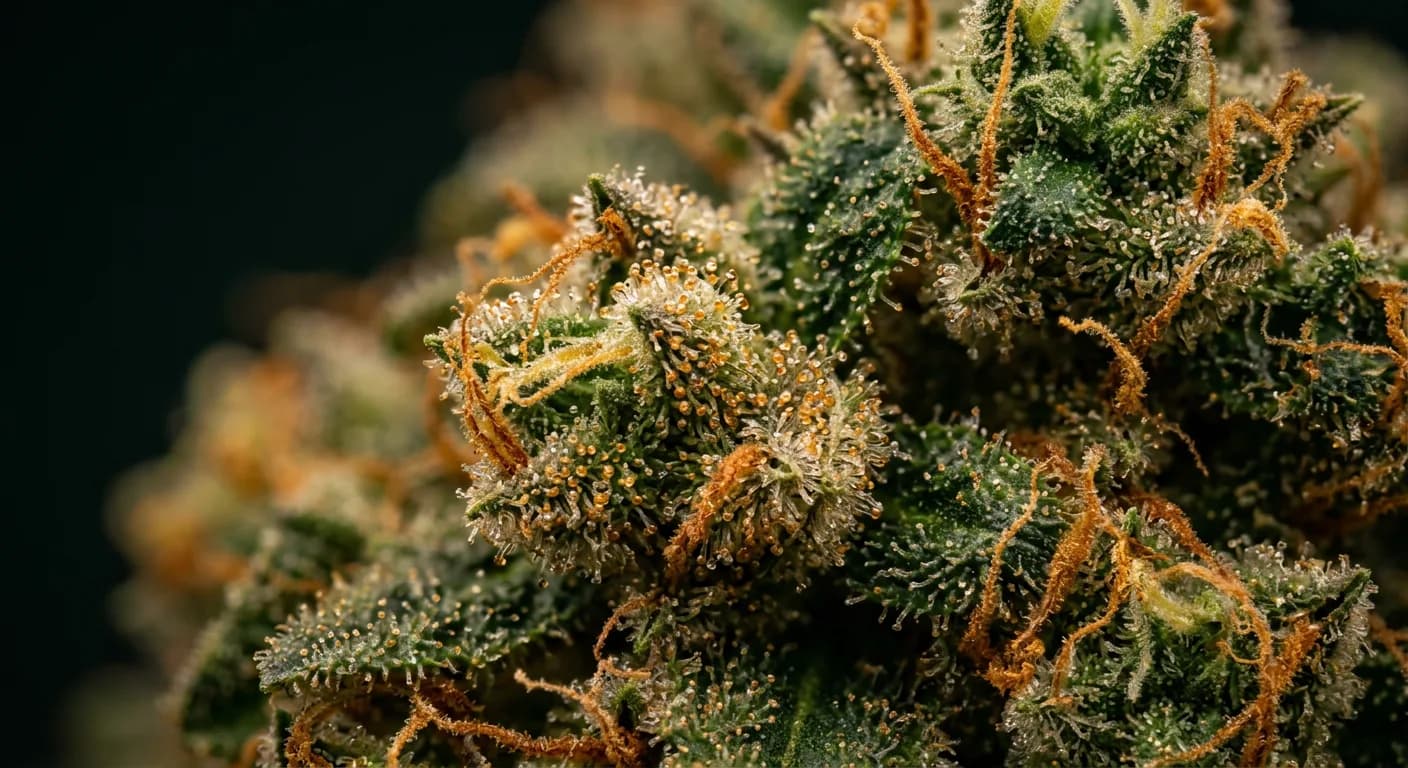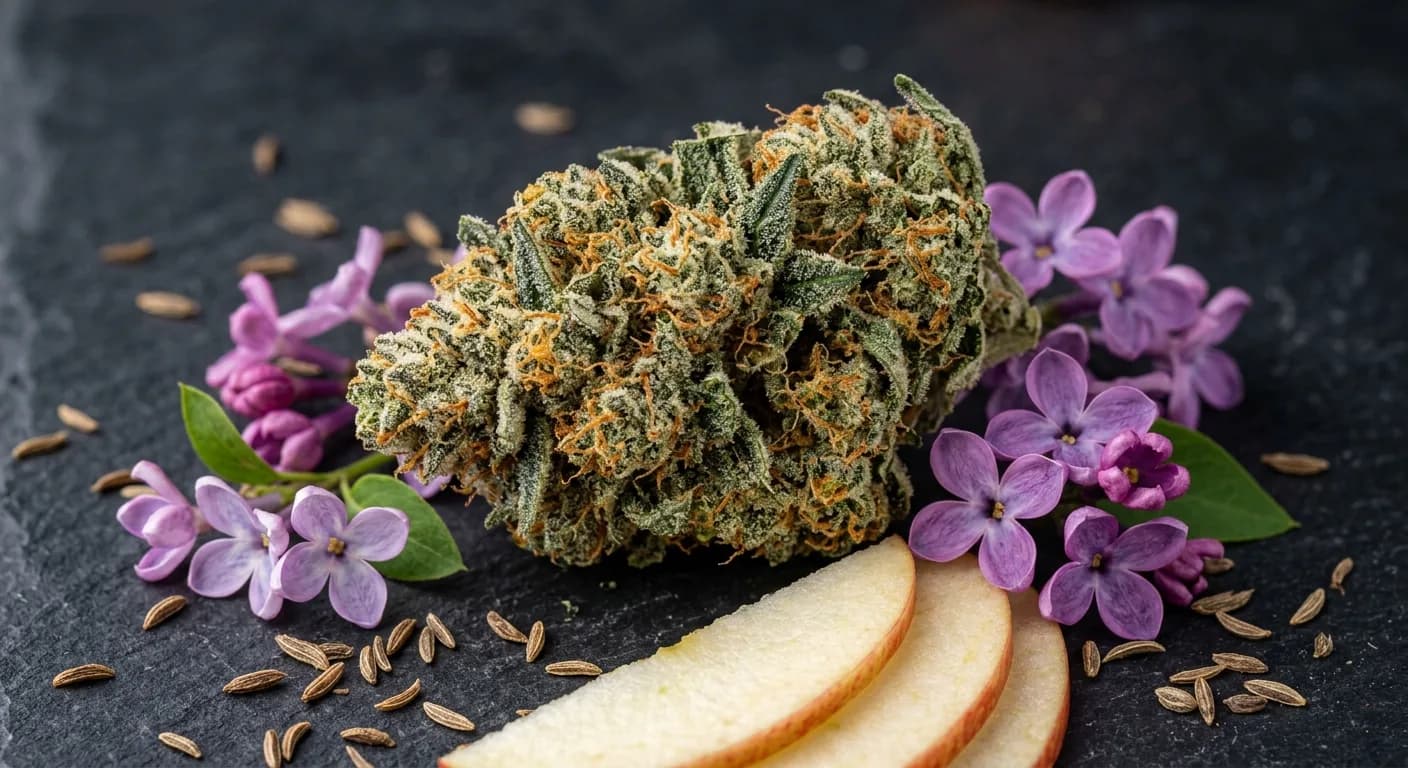
Pick up almost any terpene guide and you will find the same names at the top: myrcene, limonene, caryophyllene. Terpinolene terpene cannabis content is conspicuously absent — despite the fact that terpinolene is the dominant terpene in some of the most celebrated and widely grown strains on earth. Jack Herer has shaped cannabis culture for 30 years. Ghost Train Haze has held the title of world's strongest sativa in multiple competitions. Both are terpinolene-dominant. So why does almost no one talk about this compound?
The short answer: terpinolene is complex, rarely appears alone, and doesn't fit neatly into a one-line description the way "limonene = citrus and mood boost" does. That complexity is exactly what makes it worth understanding. This guide covers everything — the chemistry, the smell, the dose-dependent effects, the research, the best strains, and how to preserve it in your grow.
What Is Terpinolene? Chemical Identity and Natural Sources
Terpinolene is a naturally occurring monoterpene with the molecular formula C₁₀H₁₆. It belongs to the same chemical family as pinene and limonene, sharing a 10-carbon backbone built from two isoprene units. Unlike those terpenes, terpinolene is a non-cyclic monoterpene isomer — meaning its ring structure is only partially closed, giving it a uniquely reactive chemical shape that contributes to its complex scent profile.
Its boiling point sits at approximately 186°C (367°F), which is relatively high compared to myrcene (167°C) and much higher than some of the lighter monoterpenes. This has practical implications for growers and consumers: terpinolene survives curing better than many volatile terpenes, but is still sensitive to excessive heat during processing.
Where Does Terpinolene Appear in Nature?
Before you ever read a lab report on a cannabis strain, you have almost certainly encountered terpinolene. It appears in a wide range of familiar plants and foods:
- Apples — particularly green and golden varieties; terpinolene contributes to the clean, fresh top note
- Tea tree oil — one of its highest natural concentrations outside cannabis, present at 10–28%
- Cumin — gives cumin part of its earthy-herbal warmth
- Lilac blossoms — terpinolene is a key compound in the sweet floral scent
- Sage and rosemary — minor but detectable amounts
- Conifer trees — particularly pine and fir, where it blends with alpha-pinene
- Nutmeg — provides some of the spiced warmth alongside other monoterpenes
If you want to recognize terpinolene before you smell it in cannabis, grab a green apple, stand next to a lilac bush, or open a jar of whole cumin. The fresh, multi-layered quality those things share is terpinolene's signature.
In cannabis specifically, terpinolene is classified as a major terpene but a rarely dominant one. Most cannabis strains contain measurable terpinolene, but it sits in third or fourth position behind myrcene, caryophyllene, or limonene. Only a small percentage of strains — mostly sativa and sativa-leaning hybrids — list terpinolene as their primary terpene. That rarity is part of what makes terpinolene-dominant strains so distinctive and sought after by experienced consumers. See our full cannabis terpene chart to compare terpinolene's position alongside every other major compound.
What Does Terpinolene Smell Like in Cannabis?
Terpinolene has the most complex and layered aroma of any major cannabis terpene. Most terpenes are easy to describe in a single word — myrcene is musky, limonene is citrus, linalool is floral. Terpinolene refuses that simplicity.
A terpinolene-dominant cannabis flower typically smells like several things at once:
- Fresh and piney — a clean, crisp resinous quality like broken pine needles or a spruce forest
- Lightly citrusy — not the bold lemon of limonene, more like orange peel zest or green apple skin
- Faintly floral — a background sweetness reminiscent of lilac or fresh herbs in bloom
- Herbal and slightly woody — an earthy undertone that grounds the brighter top notes
- Occasionally spiced — in some phenotypes, a faint cumin-like warmth appears in the background
The reason terpinolene smells like multiple things is structural. Its partially closed ring allows it to interact with olfactory receptors in ways that trigger multiple scent associations simultaneously. Research on human scent perception has confirmed that people struggle to identify terpinolene as a single note — they describe it in compound phrases, which is a hallmark of chemically complex aroma compounds.
Science note: Terpinolene's aroma complexity comes from its chemical instability. It oxidizes relatively quickly compared to cyclic terpenes, producing secondary oxidation products that add additional scent dimensions. This is why a freshly opened terpinolene-dominant jar often smells slightly different than the same flower after 20 minutes of air exposure — you're smelling the terpene evolving in real time.
For growers, this complexity is a selling point and a challenge. A strain with terpinolene at the front of its profile will appeal to consumers who want something that doesn't smell like every other sativa — but it also means phenotype selection matters enormously, since terpinolene expression varies widely even within the same strain genetics.
Terpinolene Effects: Dose-Dependency and the Stimulating vs. Sedating Paradox
Terpinolene's effects are genuinely unique among cannabis terpenes because they appear to change depending on dose — a phenomenon called dose-dependency. Understanding this is key to understanding why terpinolene-dominant strains produce such energetic, clear-headed effects at typical consumption levels, and why isolated terpinolene showed sedative effects in some animal research.
Low-Dose Stimulating Effects
At the concentrations found in most cannabis flower (roughly 0.3–1.5% of total weight), terpinolene is consistently associated with uplifting, energetic, and euphoric effects. User surveys of terpinolene-dominant strains almost universally describe:
- Increased focus and mental clarity
- Euphoria without heavy sedation
- Creative ideation and conversational energy
- Mild mood elevation
- Daytime functionality — most users report being able to work, exercise, or socialize
These reports align with terpinolene's presence in strains like Jack Herer, which has been a go-to strain for morning and creative-use sessions for decades. This is not a coincidence — it reflects a real, consistent pharmacological pattern.
High-Dose Sedating Effects: The Research Context
A 2013 study published in Natural Product Communications found that terpinolene produced sedative effects in mice at high isolated doses, reducing locomotor activity when administered in isolation at quantities far exceeding what any cannabis flower could deliver. This finding gets misrepresented frequently in cannabis content — the sedation was dose-dependent and occurred with isolated terpinolene, not as part of a full cannabis terpene profile.
The distinction matters. Cannabis flower contains terpinolene alongside THC, cannabinoids, and other terpenes that modulate each other's effects. The sedative threshold from isolated terpinolene research does not map directly to inhaled or consumed cannabis flower. Real-world terpinolene-dominant strains produce overwhelmingly stimulating experiences at typical doses.
Important context: If you are sensitive to anxiety or stimulating cannabis effects, start with a very small dose of any terpinolene-dominant strain. Despite its generally uplifting reputation, high-THC terpinolene strains like Ghost Train Haze (which can exceed 25% THC) can trigger anxiety in THC-sensitive users — regardless of terpene profile.
Terpinolene and Anxiety: What Do We Actually Know?
Terpinolene itself does not appear to be an anxiogenic compound at normal concentrations. Unlike high-THC cannabis that lacks balancing terpenes, terpinolene is often credited (alongside pinene) with the clear-headed quality of classic sativa strains. The anxiety risk in terpinolene strains comes primarily from high THC levels, not the terpene itself.
For consumers specifically seeking uplifting but not anxiety-inducing experiences, a terpinolene-dominant strain with moderate THC (18–22%) is often a better choice than a myrcene-dominant high-THC strain. Pairing terpinolene with its synergistic companions — pinene and limonene — appears to support the most balanced uplifting experience. More on that in the entourage section below.
Terpinolene Research: Antioxidant, Antifungal, and Cardioprotective Properties
Terpinolene is underresearched compared to myrcene or caryophyllene, but the studies that exist suggest a promising therapeutic profile. The research is primarily preclinical — meaning cell studies and animal models — and should not be interpreted as confirmed medical treatment.
Antioxidant Activity
A 2005 study in Phytotherapy Research tested terpinolene's antioxidant capacity using standard DPPH radical scavenging assays. Terpinolene demonstrated significant antioxidant activity — notably higher than several other common monoterpenes tested in the same assay. Antioxidants neutralize free radicals, which play a role in cellular aging and inflammation.
Antifungal and Antibacterial Properties
Multiple studies have demonstrated terpinolene's activity against common pathogens. Its high concentration in tea tree oil — a well-documented antimicrobial substance — provides further context. In vitro studies have shown inhibitory effects against:
- Candida albicans (opportunistic fungal pathogen)
- Aspergillus species (common mold contaminant in cannabis)
- E. coli and Staphylococcus aureus in some antibacterial screens
For cannabis growers, terpinolene's antifungal activity is interesting because it suggests terpene-rich strains may have some natural resistance to mold pathogens at the surface level — though this does not replace proper humidity management. See our cannabis humidity control guide for practical prevention strategies.
Cardioprotective and Antiproliferative Research
A 2012 study in the Journal of Natural Medicines found that terpinolene inhibited protein expression related to LDL oxidation in rat aortic smooth muscle cells — a mechanism relevant to cardiovascular health. Separately, a 2013 study from Oncotarget found that terpinolene reduced the proliferation of brain tumor cells in vitro by downregulating PDGF signaling pathways. These are early-stage findings with no human clinical trials yet completed.
The Jack Herer Effect: Why Terpinolene-Dominant Strains Dominate the Focus and Euphoria Category
There is a reason that nearly every "best strains for creativity" or "best strains for focus" list features Jack Herer in the top three. The strain has been commercially available since the mid-1990s and has never fallen out of the top tier of sativa recommendations. The explanation is largely terpinolene.
Jack Herer's terpene profile typically features terpinolene as the dominant compound, followed by ocimene and myrcene. This specific combination — abundant terpinolene on top of lower myrcene — produces a clear-headed, energetic high that avoids the couch-lock often associated with myrcene-dominant strains. Users consistently describe Jack Herer as producing:
- Focused, detail-oriented thinking
- Social energy and conversational ease
- Creative association and ideation
- Euphoria without heavy physical sedation
The "Jack Herer effect" is a useful shorthand for the terpinolene experience: uplifting, focused, euphoric, and functionally energetic. If you've ever loved a sativa strain for daytime productivity and later found out it tested terpinolene-dominant, that's not a coincidence — it's chemistry.
Other Iconic Terpinolene-Dominant Strains
Beyond Jack Herer, a core group of strains consistently tests terpinolene-dominant across multiple lab reports:
- Ghost Train Haze — High-THC (25–28%) terpinolene-forward strain; intense euphoria and energy, best for experienced users
- Dutch Treat — Terpinolene dominant with a notably sweet, piney aroma; popular for daytime stress relief
- XJ-13 — Jack Herer × G13 Haze cross; terpinolene combines with myrcene for a balanced, focused high
- Chernobyl — Terpinolene with lime and tropical fruit notes; reported for clear-headed euphoria
- Agent Orange — Terpinolene + limonene synergy; bright citrus aroma and uplifting daytime effects
- Ace of Spades — Notable for terpinolene's floral side; fruit-forward with relaxed but functional energy
Looking for terpinolene-rich genetics in seed form? Our Super Lemon Haze Feminized Seeds (23% THC) carry the Haze genetics that underpin many terpinolene-dominant strains and express a bright, citrusy-piney aroma profile consistent with significant terpinolene content. Similarly, Tangerine Haze Feminized Seeds (18% THC) bring Haze-lineage terpene expression with accessible THC levels suited to daytime use.
For a broader view of which strain genetics produce the best focus and creative effects, see our guide to indica vs. sativa effects and growing differences.
Terpinolene vs. Limonene: Which Terpene Actually Lifts Your Mood?
Terpinolene and limonene are the two terpenes most associated with uplifting, euphoric cannabis effects — but they work differently, smell different, and suit different consumer profiles. Here is a direct comparison.
| Property | Terpinolene | Limonene |
|---|---|---|
| Primary aroma | Pine, floral, citrus, herbal — complex | Bright lemon-citrus — singular and direct |
| Natural sources | Apples, lilac, tea tree, cumin, pine | Lemon peel, orange, lime, grapefruit |
| Effect profile | Focused energy, euphoria, creative clarity | Mood elevation, stress reduction, anxiety relief |
| Dose-dependency | Stimulating at low doses; sedating at high isolated doses | Consistently uplifting across normal dose ranges |
| Dominance frequency | Rare as primary terpene (<10% of strains) | Common as primary terpene (~15–20% of strains) |
| Best for | Focus, creativity, daytime productivity, complex flavor | Mood lift, social anxiety, stress relief, bright flavor |
| Key strains | Jack Herer, Ghost Train Haze, Dutch Treat, XJ-13 | Super Lemon Haze, Wedding Cake, Gelato, Durban Poison |
| Synergizes well with | Pinene, ocimene, limonene | Terpinolene, linalool, caryophyllene |
| Boiling point | 186°C (367°F) | 176°C (349°F) |
The choice between a terpinolene-dominant and a limonene-dominant strain often comes down to the type of uplift you want. Limonene tends to produce a brighter, more immediate mood lift with strong anti-anxiety character. Terpinolene produces a more focused, productive energy with a more complex aroma reward. When both appear together — as they do in strains like Agent Orange — the combination is considered especially well-rounded for daytime use.
Read our full deep-dive on cannabis terpene synergy to understand how these compounds stack and interact across different profiles.
Entourage Synergy: How Terpinolene Works with Pinene and Limonene
Terpinolene rarely acts alone in cannabis — and that is actually a feature, not a limitation. The entourage effect describes how cannabinoids and terpenes modify each other's effects when consumed together. Terpinolene's most important synergistic relationships involve two partners: alpha-pinene and limonene.
Terpinolene + Alpha-Pinene: The Clarity Stack
Alpha-pinene is associated with mental alertness and has demonstrated acetylcholinesterase inhibition in research — meaning it may help preserve acetylcholine, a neurotransmitter critical for memory and focus. When pinene appears alongside terpinolene in a strain profile, users consistently report the clearest, most cognitively engaged highs. This combination explains why Jack Herer — which contains both — has such a reputation for creative productivity.
Pinene also has bronchodilatory properties (it opens airways), which may counteract some of THC's bronchoconstrictive effects and support more efficient inhalation. See our dedicated terpene synergy guide for a complete chart of these interactions.
Terpinolene + Limonene: The Mood-Focus Combination
When terpinolene and limonene co-occur, the result is often described as the ideal daytime sativa experience: uplifted mood, focused energy, and a bright, complex aroma. This pairing appears in Agent Orange, Chernobyl, and several Haze-family hybrids. The citrus dimension of both terpenes creates an amplified bright-aroma experience, while their complementary mood and focus effects appear to reinforce each other.
Grower tip: When evaluating seeds or clones for terpinolene potential, look for genetic lineages that include Haze genetics, Jack Herer, or Northern Lights × Haze crosses. These tend to produce terpene profiles where terpinolene, pinene, and limonene all express simultaneously. Our Northern Lights x Amnesia Haze Feminized Seeds (24% THC) blend the relaxed NL foundation with the bright Haze terpene expression that includes terpinolene as a contributing compound.
The Full Sativa Terpene Stack
Classic uplifting sativa profiles tend to share a recognizable terpene pattern. Understanding this pattern helps you read lab reports with more precision:
- Terpinolene as primary or secondary terpene
- Alpha-pinene and/or beta-pinene present
- Limonene in second or third position
- Myrcene below 0.5% (low myrcene = less sedation)
- Ocimene sometimes present as a supporting terpene
- Caryophyllene low or absent in the most energetic profiles
When you find a lab report showing this exact stack, you have found a strain likely to produce focused, euphoric, uplifting effects. This is what experienced consumers mean when they describe a "real sativa" — and terpinolene is usually what makes it feel that way.
Grower's Guide: Preserving Terpinolene During Late Flowering and Cure
For growers who choose terpinolene-dominant genetics, preservation of this terpene through harvest, dry, and cure is essential. Terpinolene is more volatile than sesquiterpenes like caryophyllene and more heat-sensitive than myrcene. That said, its relatively high boiling point (186°C) gives it some stability advantages over the lightest monoterpenes.
Late Flowering: Protecting Terpenes at the Source
Terpene synthesis in cannabis peaks during the final 2–3 weeks of flowering. During this window, environmental conditions directly influence terpinolene accumulation:
Lower Temperatures in the Final 2 Weeks
Drop night temperatures to 17–19°C (63–66°F) during the last two weeks of flowering. Temperature stress stimulates terpene production as a plant defense mechanism. Lower temps also slow terpene evaporation from trichomes.
Reduce Humidity Carefully
Target 45–50% relative humidity in late flowering. Low humidity encourages trichome density and reduces terpene loss through excessive transpiration. Use our VPD calculator to dial in the optimal temperature/humidity combination for your space.
Harvest Timing: Don't Rush It
Terpinolene content in trichomes is highest when trichomes are mostly cloudy with just 10–20% amber. Harvesting too early reduces terpene volume; harvesting too late degrades volatile monoterpenes. Check our cannabis trichome biology guide for detailed visual harvesting cues.
Slow Dry: 10–14 Days at 60°F / 60% RH
Fast drying destroys terpenes. A slow dry at 60°F (15.5°C) and 55–60% relative humidity over 10–14 days preserves the volatile terpene fraction more effectively than a 5–7 day quick dry. Hang whole branches rather than de-leafing immediately.
Cure in Glass at 62% RH
Cure in sealed glass jars with Boveda or Integra packs maintaining 62% humidity. Burp jars twice daily for the first week, then once daily for weeks 2–4. Terpinolene continues to express and distribute throughout the flower during cure, deepening the aroma complexity over 4–6 weeks.
Terpene preservation warning: Never cure cannabis in plastic containers. Plastic off-gasses compounds that interact with terpenes and degrades aroma quality over time. Glass mason jars are the minimum standard; UV-protected amber glass is ideal for long-term storage of terpinolene-rich flower.
Advanced cure tip: Some experienced growers report that terpinolene-dominant strains benefit from an extended cure of 6–8 weeks rather than the standard 4. The floral and herbal terpene notes become noticeably more pronounced after the 5-week mark as secondary terpene compounds oxidize and the profile matures.
For a complete environmental management strategy during your grow, our VPD cannabis guide covers the full framework for temperature and humidity management through every growth stage.
Seed Selection Guide: Best Cannabis Strains High in Terpinolene
Choosing seeds specifically for terpinolene expression requires understanding which genetic lineages reliably produce this terpene at dominant levels. The list below combines well-known industry strains you can research independently with strains available in our catalog — giving you a complete picture of what's available.
Legendary Industry Strains (Terpinolene-Dominant)
These strains consistently test terpinolene-dominant across multiple lab reports and are widely recognized as the reference points for this terpene profile:
- Jack Herer — The gold standard. Terpinolene typically 0.8–1.4% of flower weight. Uplifting, focused, piney-floral. Suitable for daytime use. Moderate THC (18–22%).
- Ghost Train Haze — High-THC terpinolene powerhouse (25–28%). Intense euphoria and stimulating energy. Best for experienced consumers. Multiple Cannabis Cup awards.
- Dutch Treat — Sweet, piney terpinolene expression. Relaxed but functional daytime effects. THC around 18–20%.
- XJ-13 — Jack Herer × G13 Haze. Terpinolene + myrcene combo produces balanced, euphoric focus. THC 22–24%.
- Chernobyl — Terpinolene with tropical lime character. Giggly, social, creative high. THC around 16–22%.
- Agent Orange — Terpinolene + limonene synergy with citrus-forward aroma. Classic uplifting daytime strain.
From Our Catalog: Strains for Terpinolene-Adjacent Uplifting Profiles
While single-terpene COAs vary by phenotype and batch, the following strains in our catalog carry Haze-family or sativa genetics that support complex terpene profiles featuring terpinolene as a key contributor:
- Super Lemon Haze Feminized (23% THC) — Haze × Lemon Skunk cross. Bright, piney-citrus terpene profile with energetic, uplifting effects consistent with terpinolene + limonene expression.
- Tangerine Haze Feminized (18% THC) — Haze lineage with citrus-sweet aroma. Accessible THC level for daytime use with complex terpene expression.
- Northern Lights x Amnesia Haze Feminized (24% THC) — Combines NL's reliable growth with Amnesia Haze's bright terpene complexity. Strong candidate for terpinolene expression in the Haze side of the genetics.
- Sour Diesel Feminized (24% THC) — Classic energetic sativa with complex terpene profile; some phenotypes express significant terpinolene alongside caryophyllene and myrcene.
- Blueberry Haze Feminized (20% THC) — Fruity-floral Haze hybrid; Haze genetics provide the foundation for terpinolene expression with a softer berry aroma dimension.
- New York Power Diesel Feminized (24% THC) — Diesel genetics with uplifting, functional energy; complex aroma profile suited to consumers seeking daytime potency.
Buyer's tip: When purchasing seeds specifically for terpinolene expression, look for strains that describe their aroma as "pine," "fresh," "herbal," or "complex floral-citrus" rather than purely sweet or purely fuel-like. These descriptors are the clearest indicators of terpinolene presence in the genetics. Use our grow planner tool to map out your growing season once you've selected your genetics.
Quick Seed Selection Reference
- Target Haze-lineage genetics for highest terpinolene probability
- Jack Herer crosses are reliable for terpinolene dominance
- Sativa or sativa-dominant hybrids more likely than pure indicas
- Look for aroma descriptions: pine, fresh, floral, herbal, citrus-complex
- Avoid strains described as purely sweet, candy, or earthy for terpinolene priority
- Request COA (certificate of analysis) from dispensaries when available
- For uplifting effects, prioritize low-myrcene profiles alongside terpinolene
Want to understand all the major terpenes side by side before making a selection? Our complete cannabis terpene chart maps 20+ terpenes by aroma, effect, and strain type. And if you're growing indoors, make sure your environment supports terpene preservation — our VPD calculator and yield estimator help you plan grows optimized for both quantity and quality.
Frequently Asked Questions About Terpinolene in Cannabis
What is terpinolene in cannabis?
Terpinolene is a naturally occurring monoterpene (C₁₀H₁₆) found in cannabis that produces a complex, multi-layered aroma combining pine, citrus, floral, and herbal notes. It is less common as a dominant terpene than myrcene or limonene but is the primary terpene in several celebrated strains including Jack Herer, Dutch Treat, and Ghost Train Haze. It is associated with uplifting, focused, and euphoric effects at typical consumption doses.
What does terpinolene smell like in cannabis?
Terpinolene smells fresh and complex — simultaneously piney, lightly citrusy, faintly floral, and slightly herbal. It is the most multi-dimensional aroma of any major cannabis terpene. If you've smelled a fresh green apple, lilac blossoms, or tea tree oil, you've already encountered terpinolene's scent signature. In cannabis, it creates a bright, clean top-note quality that distinguishes terpinolene-dominant strains from sweeter or earthier profiles.
Is terpinolene found in sativa or indica strains?
Terpinolene appears most often in sativa and sativa-leaning hybrid strains. It is very rarely dominant in pure indica genetics. The classic terpinolene-dominant strains — Jack Herer, Ghost Train Haze, XJ-13, Dutch Treat, Chernobyl — are all sativa or sativa-hybrid varieties. This association makes terpinolene one of the most reliable terpene predictors of an uplifting, energetic cannabis experience.
Does terpinolene cause anxiety or energy effects in cannabis?
At typical consumption levels, terpinolene is associated with energy, focus, and euphoria rather than anxiety. Animal research found sedative effects at high isolated doses, but these do not reflect normal cannabis consumption patterns. Anxiety risk in terpinolene-dominant strains is primarily driven by high THC content (Ghost Train Haze at 25%+ THC, for example), not by terpinolene itself. For anxiety-sensitive consumers, choosing a terpinolene strain with moderate THC (18–22%) significantly reduces risk.
How do I preserve terpinolene when growing and curing cannabis?
Preserve terpinolene by lowering grow room temperatures to 17–19°C during the last two weeks of flowering, harvesting at peak trichome development (mostly cloudy, 10–20% amber), drying slowly over 10–14 days at 60°F and 55–60% humidity, and curing in sealed glass jars at 62% relative humidity for a minimum of 4–6 weeks. Avoid plastic containers, excessive heat, and fast drying — all of which degrade volatile monoterpenes including terpinolene.