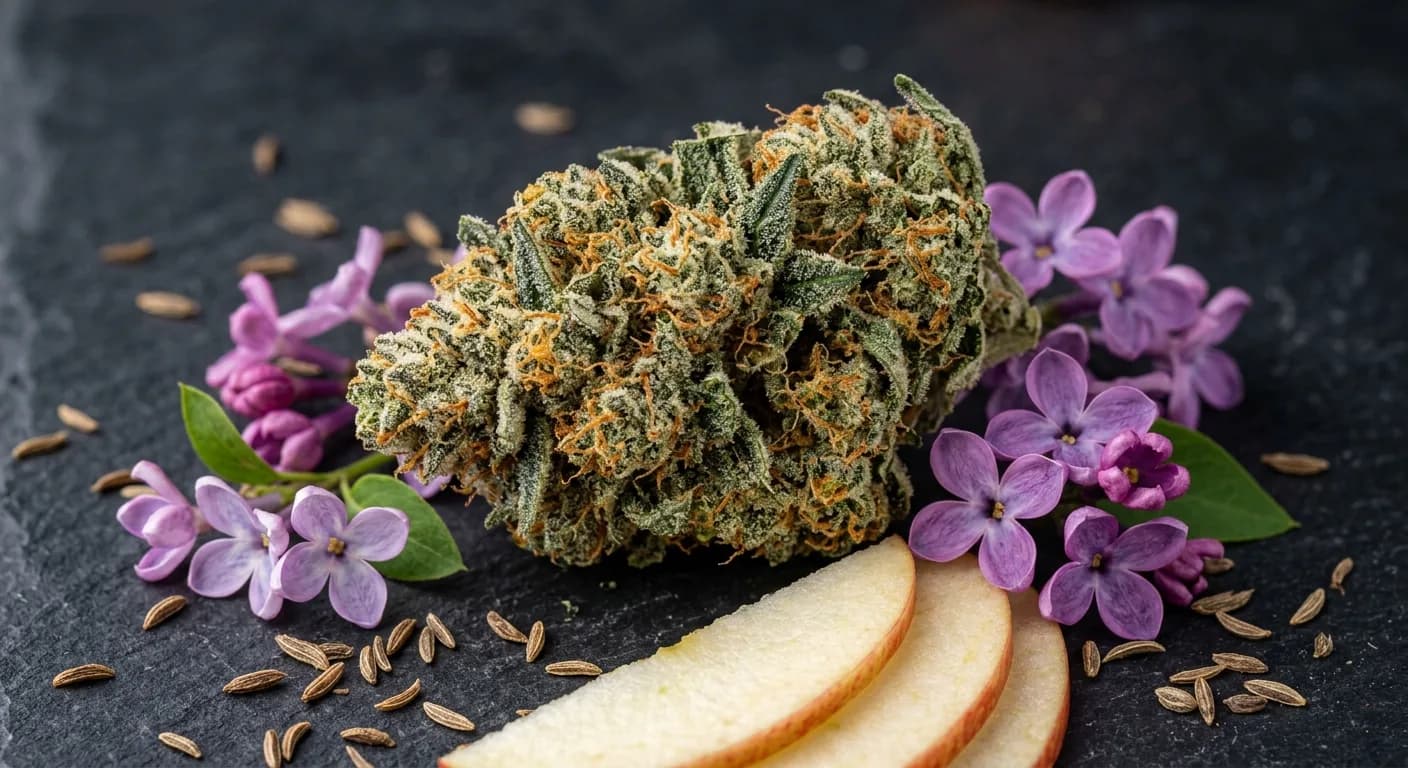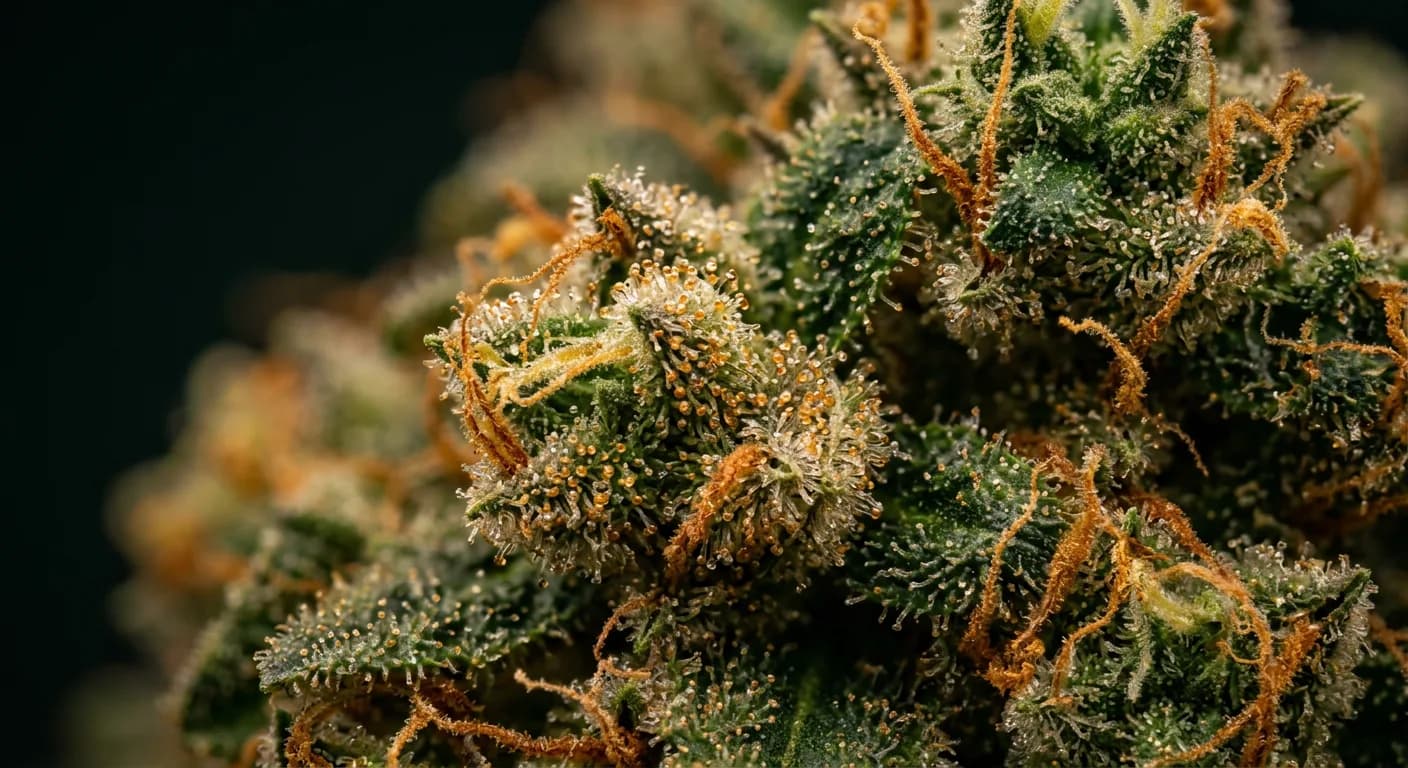
Pull up a COA for almost any popular cannabis strain and you will find it — a small, easy-to-overlook entry somewhere below myrcene and limonene, listed in concentrations under one percent. Most dispensary menus never mention it. Most strain guides skip it entirely. Yet the ocimene terpene in cannabis is directly responsible for some of the most distinctive and appealing aromas in the plant kingdom: the sweet tropical brightness of Strawberry Cough, the fresh herbal pop of Dutch Treat, the citrus-tinged lightness of Clementine.
Ocimene is the hidden floral terpene. It does not hit you with the aggressive dankness of myrcene or the sharp pine of alpha-pinene. Instead, it lifts a strain's scent profile into something cleaner, sweeter, and surprisingly complex. Once you know what to smell for, you will find it everywhere.
This guide covers everything: the chemistry, the three molecular variants, the antiviral and antifungal research, how it behaves in the entourage effect, which strains express it most strongly, and — critically for growers — why it vanishes faster than almost any other terpene if your drying and curing game is off. See our full Cannabis Terpene Synergy Chart for how ocimene fits into the broader terpene landscape.
What Is Ocimene? The Terpene Hidden in Plain Smell
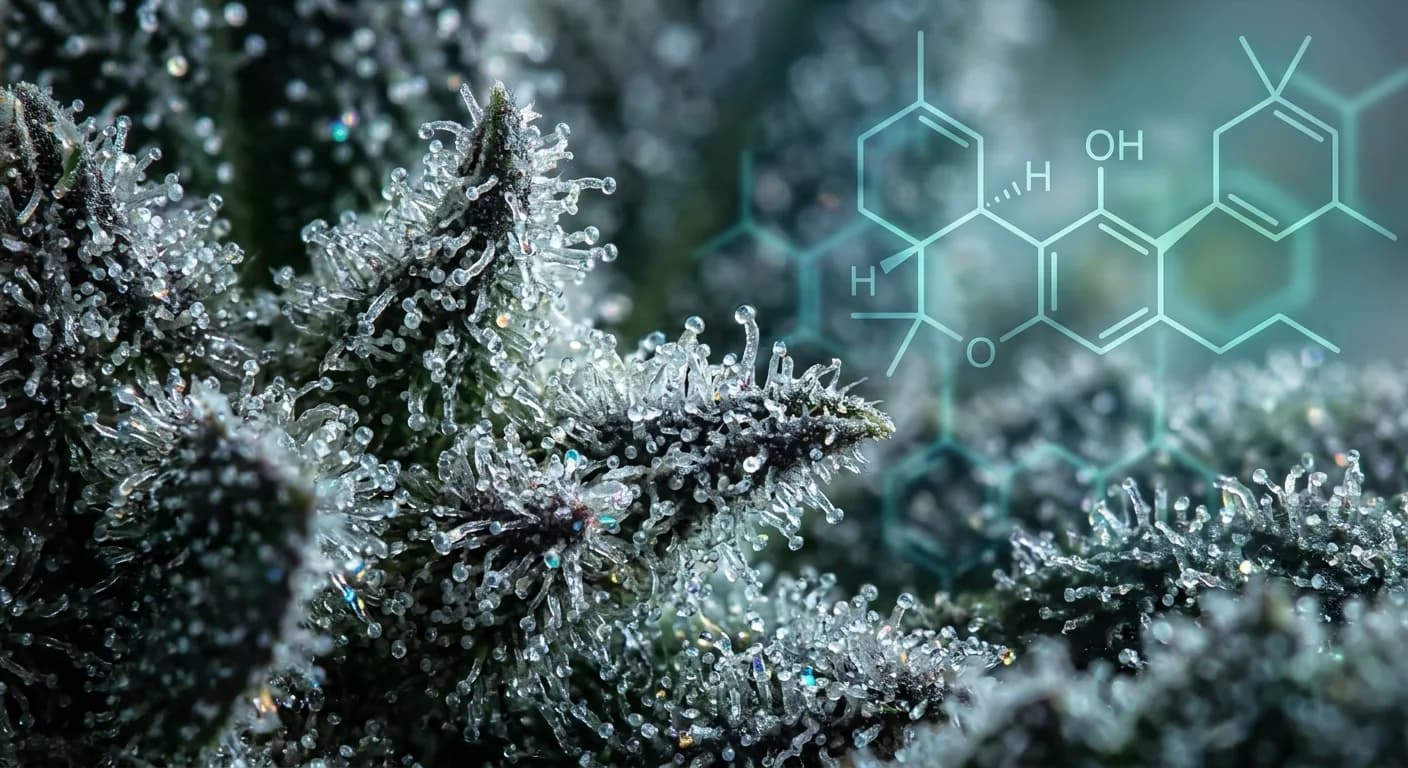
Ocimene is a naturally occurring monoterpene — a class of terpene built from two isoprene units — with the molecular formula C₁₀H₁₆. It belongs to the same broad family as limonene and terpinolene and shares their tendency toward bright, uplifting aromatic characters rather than the heavier, muskier notes produced by sesquiterpenes like myrcene and humulene.
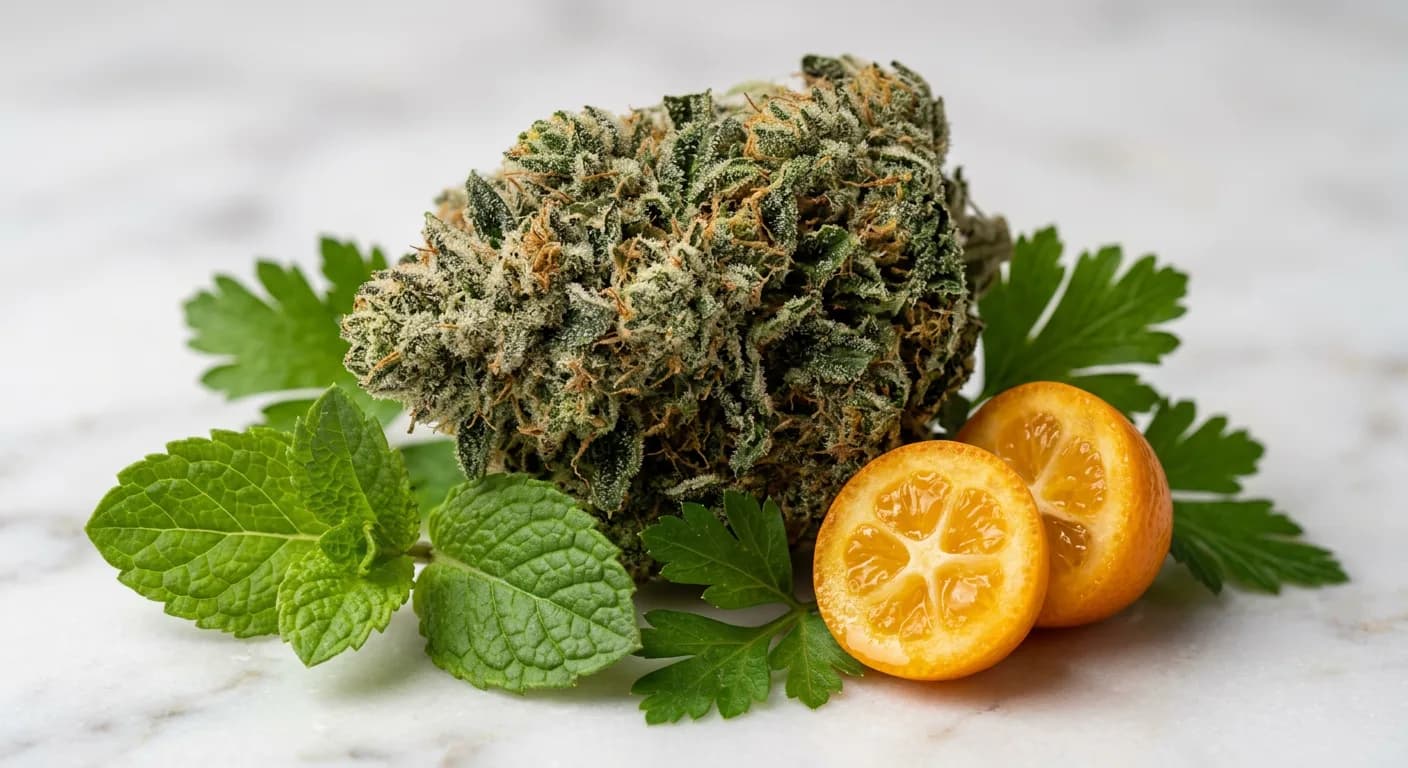
The name comes from Ocimum basilicum — common basil — where it was first identified as a dominant volatile compound. From there, researchers found it scattered across an impressive range of plant species:
- Mint — fresh, cool, slightly medicinal
- Parsley — green, sharp, herbaceous
- Orchids — delicate, floral, exotic
- Kumquats — citrusy, sweet, slightly tropical
- Basil — warm, spicy-sweet herbal
- Bergamot — floral citrus with soft edges
- Black pepper — spicy-sweet aromatic base note
In cannabis, ocimene functions as both an aroma contributor and a potential bioactive compound. It typically registers as a minor terpene — below 1% in most lab reports — but in certain strain profiles it becomes a defining element of the overall scent experience. Consulting our Cannabis Terpene Chart gives you a quick visual map of where ocimene sits relative to major and minor terpenes.
Ocimene is a naturally occurring monoterpene found in mint, parsley, orchids, kumquats, and basil. In cannabis, it contributes sweet, tropical, and herbal aromatic notes and may offer antiviral, antifungal, and anti-inflammatory benefits based on early research.
The Aroma Profile: What Ocimene Actually Smells Like
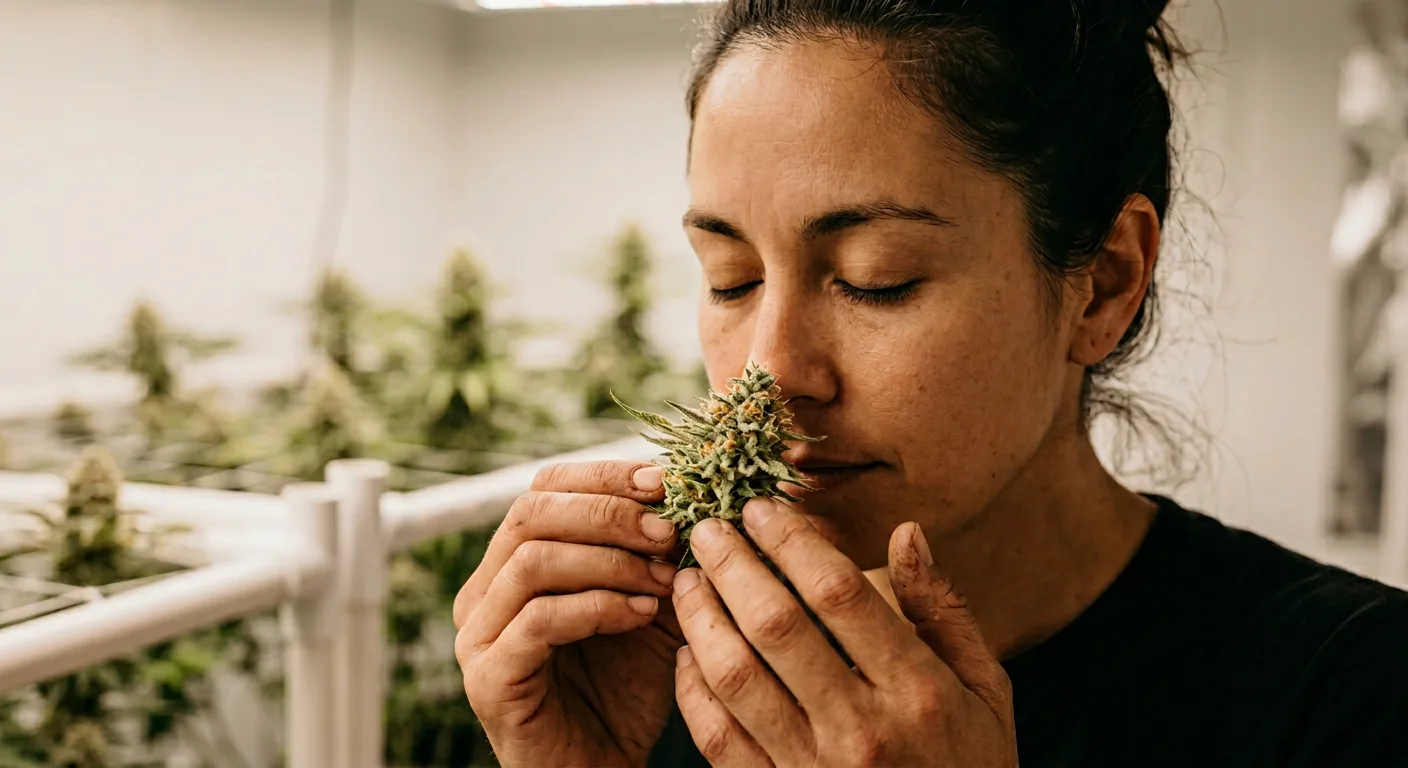
The ocimene aroma profile is genuinely distinctive once you know it — but it is not the kind of smell that announces itself loudly. It earns its place by layering complexity rather than punching you in the face.
Most experienced noses describe ocimene as producing aromas in the following range:
- Sweet — a clean, almost sugary sweetness, closer to tropical fruit than candy
- Herbal — fresh green herbs, mint, or parsley rather than dried sage or oregano
- Floral — delicate, not overpowering; orchid-like rather than rose-heavy
- Slightly woody — a soft, dry base note that prevents the sweetness from becoming cloying
- Tropical — mango-adjacent brightness that blends with limonene beautifully
What makes ocimene particularly interesting from a practical standpoint is what it doesn't smell like. It lacks the skunky sulfur compounds, the heavy fuel notes of diesel strains, and the sharp medicinal edge of pinene. This makes ocimene-dominant strains considerably more discreet for home growers — a detail that matters far more than most guides acknowledge.
If you grow for aroma discretion, strains with high ocimene tend to produce lighter, fresher-smelling buds that attract less attention than heavy myrcene or caryophyllene strains. Look for lab reports listing ocimene in the top three terpenes.
Alpha, Beta-Cis, Beta-Trans: Breaking Down the Three Forms of Ocimene
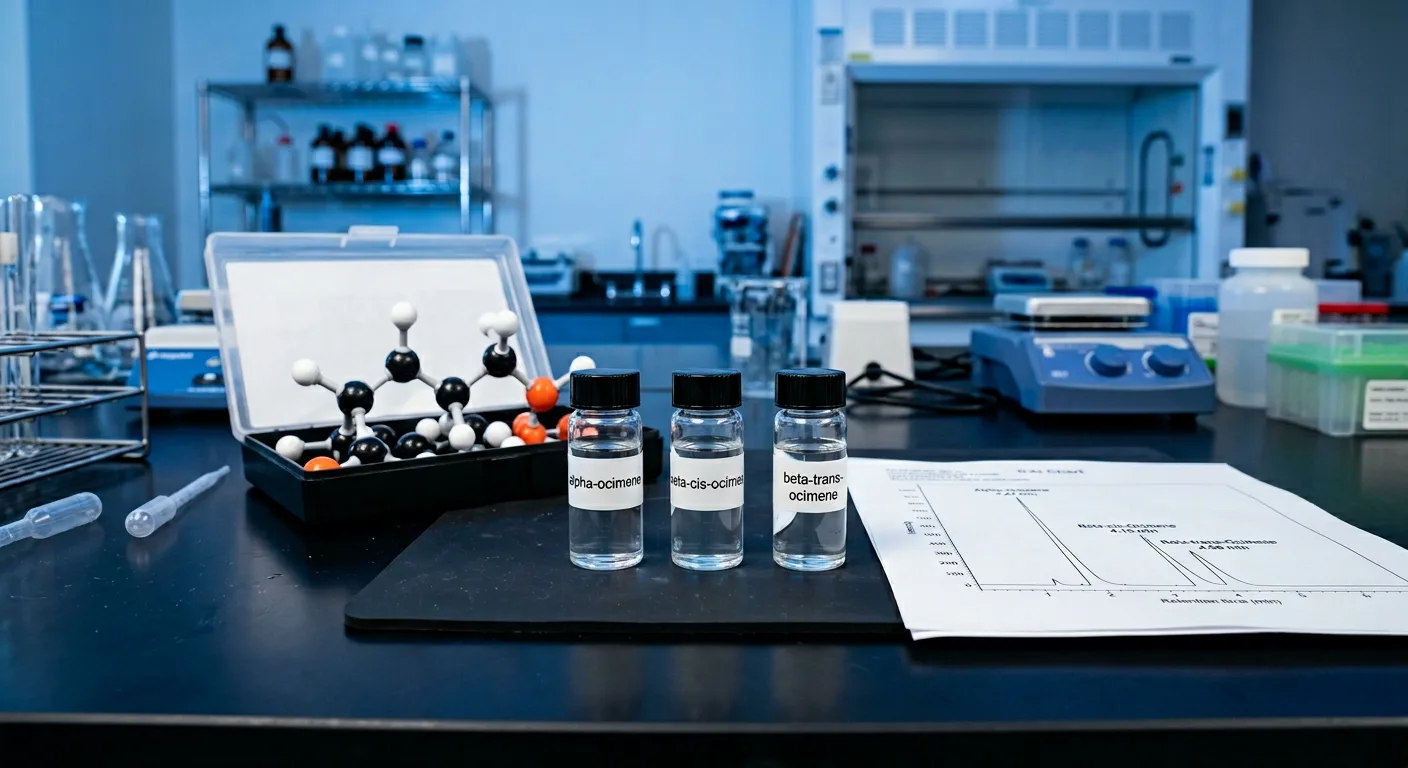
Here is where most competitor guides fall short — they treat ocimene as a single compound when it actually exists as three distinct chemical isomers. Each has a slightly different molecular arrangement, which affects its aroma character, volatility, and biological activity. Understanding the difference matters if you are interpreting lab reports seriously.
Alpha-Ocimene (α-Ocimene)
Alpha-ocimene has a slightly more open molecular chain structure than the beta variants. It tends to express the most straightforwardly sweet, tropical character in the aroma profile. It is the least commonly dominant isomer in cannabis but contributes meaningfully to fruit-forward strains.
Beta-Ocimene Cis (Z-β-Ocimene)
The cis form of beta-ocimene — often denoted as Z-β-ocimene or simply cis-ocimene — features a double bond geometry where two carbon groups sit on the same side of the molecule. This structural difference makes it slightly more water-soluble than the trans form and contributes a more distinctly herbal, green note alongside the sweetness. It is the isomer most commonly documented in ethnobotanical studies examining ocimene's antifungal properties.
Beta-Ocimene Trans (E-β-Ocimene)
The trans form — E-β-ocimene — has those same groups on opposite sides of the double bond. This geometry gives it a more volatile, airier character with the woodiest finish of the three variants. It is frequently the dominant ocimene isomer in cannabis lab reports when the specific isomer is identified, and it is also the most heat-sensitive, making it the first to evaporate during any post-harvest processing mistakes.
Most commercial cannabis COAs simply report total «ocimene» without distinguishing isomers. High-precision labs using GC-MS with isomer separation can distinguish all three. When a report lists only «ocimene,» it is likely capturing a combined peak — predominantly the beta-trans and beta-cis forms, as alpha is typically present in smaller amounts.
Why Isomers Matter for Growers and Consumers
The practical takeaway is this: a COA listing 0.4% ocimene may represent a very different sensory experience depending on which isomers dominate. Beta-trans produces the most volatility and the quickest aromatic loss after harvest. Beta-cis contributes the most herbal complexity. Alpha adds tropical sweetness. If you have access to a lab that separates isomers, the data becomes significantly more actionable.
Ocimene Research: Antiviral, Antifungal, and Anti-Inflammatory Properties

Research on ocimene's biological activity has been building quietly in the scientific literature for years, mostly outside the direct cannabis research space. Studies examining ocimene from essential oils of mint, basil, and black pepper have produced some genuinely interesting results worth examining carefully.
Antifungal Properties — Directly Relevant for Growers
A 2016 study published in Natural Product Research found that ocimene-rich essential oil fractions from Mentha longifolia demonstrated significant antifungal activity against multiple fungal pathogens including Aspergillus and Candida species. The mechanism appears to involve disruption of fungal cell membranes by the lipophilic monoterpene structure.
For cannabis growers, this has a direct practical implication: strains that produce higher concentrations of ocimene may possess a degree of endogenous antifungal resistance as part of the plant's natural defense chemistry. This is not a replacement for proper humidity management — see our Cannabis Humidity Control Guide for complete protocols — but it is a real biological mechanism worth understanding.
Antiviral Properties
A 2013 GC-MS analysis of black pepper essential oils identified ocimene as a key constituent and found the oil showed inhibitory activity against several viral strains in laboratory assays. Subsequent ethnobotanical literature has repeatedly noted ocimene-containing plant extracts as traditional remedies in regions where antiviral plant medicine is well-documented.
A 2014 study in the Journal of Natural Medicines examining tropical plant essential oils noted that ocimene-containing fractions showed activity against certain respiratory viruses in vitro. The decongestant properties associated with mint-family plants — where ocimene is a dominant volatile — have been noted in traditional herbal literature across multiple cultures. These findings are preliminary and limited to laboratory settings, not clinical human trials.
Anti-Inflammatory Activity
Research on several ocimene-containing essential oils has suggested anti-inflammatory effects through inhibition of pro-inflammatory enzyme pathways. A 2017 study examining Artemisia species found ocimene-rich fractions reduced inflammatory markers in cell-based assays. This aligns with the broader pattern seen in cannabis terpene research, where monoterpenes often contribute to the overall anti-inflammatory profile alongside cannabinoids like CBD.
All research on ocimene's antiviral, antifungal, and anti-inflammatory properties comes from preclinical studies — cell cultures and animal models — not human clinical trials. These findings are promising but not confirmed as therapeutic effects in humans. Do not make health decisions based on terpene data alone.
Ocimene in the Entourage Effect: How It Pairs with Limonene and Linalool
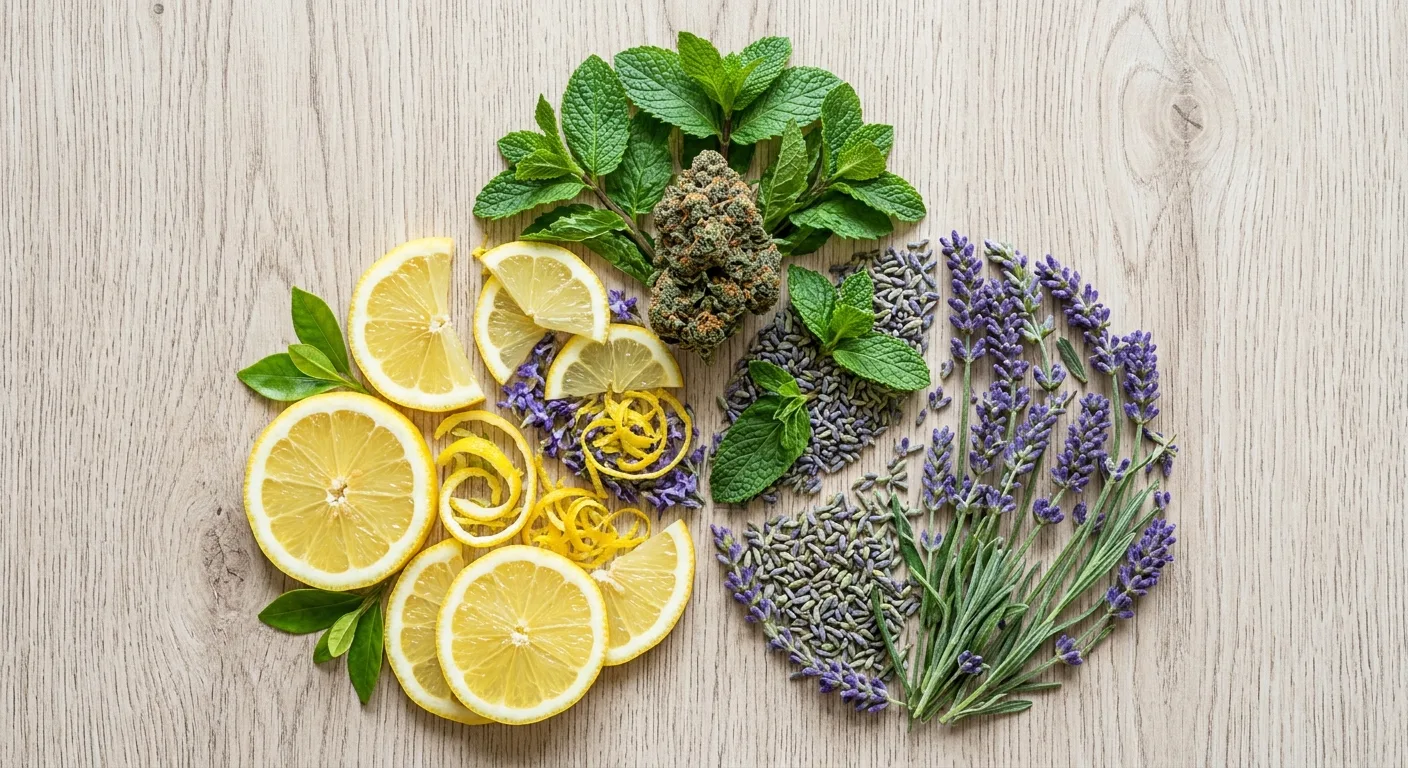
The entourage effect — the theory that cannabis compounds work synergistically rather than in isolation — is particularly visible in floral, uplifting strain profiles where ocimene plays a supporting role. The most common and expressive combination involves three terpenes working together: ocimene, limonene, and linalool.
Ocimene + Limonene: The Tropical-Citrus Uplift Stack
When ocimene and limonene co-occur in significant concentrations, the result is a genuinely distinctive aromatic and experiential profile. Limonene's sharp citrus brightness combines with ocimene's sweet, herbal-tropical base to create what many consumers describe as «sunshine in a jar» — uplifting, energizing, and mood-brightening without the one-dimensional edge of citrus alone.
Lab reports for Clementine, Golden Goat, and Tangerine Haze frequently show this combination. Our Tangerine Haze Feminized Seeds (18% THC) typically express this limonene-forward profile with contributing herbal complexity that may include ocimene expression depending on grow conditions.
Ocimene + Linalool: The Floral Balance Pair
This combination represents one of the more nuanced and less-discussed pairing dynamics in cannabis terpene science. Both terpenes are floral in character, but they sit on opposite ends of the spectrum in terms of effect associations and volatility. Ocimene brings uplifting, herbal energy; linalool brings calming, lavender-like relaxation. Together, they create a balanced floral profile that neither dominates nor cancels the other.
Read our dedicated Terpinolene Terpene Guide for another angle on how uplifting minor terpenes shape the high of sativa-leaning strains.
The Full Trio: Ocimene + Limonene + Linalool
When all three appear together in a single COA — with ocimene providing herbal-tropical sweetness, limonene delivering citrus energy, and linalool adding floral softness — the result is the archetype of what most consumers recognize as the classic «uplifting sativa» experience. This is not just about THC percentage. Many low-to-moderate THC strains with this terpene trio outperform higher-THC strains in mood elevation and creative energy.
The ocimene-limonene-linalool terpene trio is responsible for many of the most popular «uplifting» cannabis aromas and experiences. Understanding this combination helps you predict a strain's experiential profile far more accurately than THC percentage alone. Use our Terpene Chart to map these relationships visually.
Cannabis Strains with High Ocimene Content
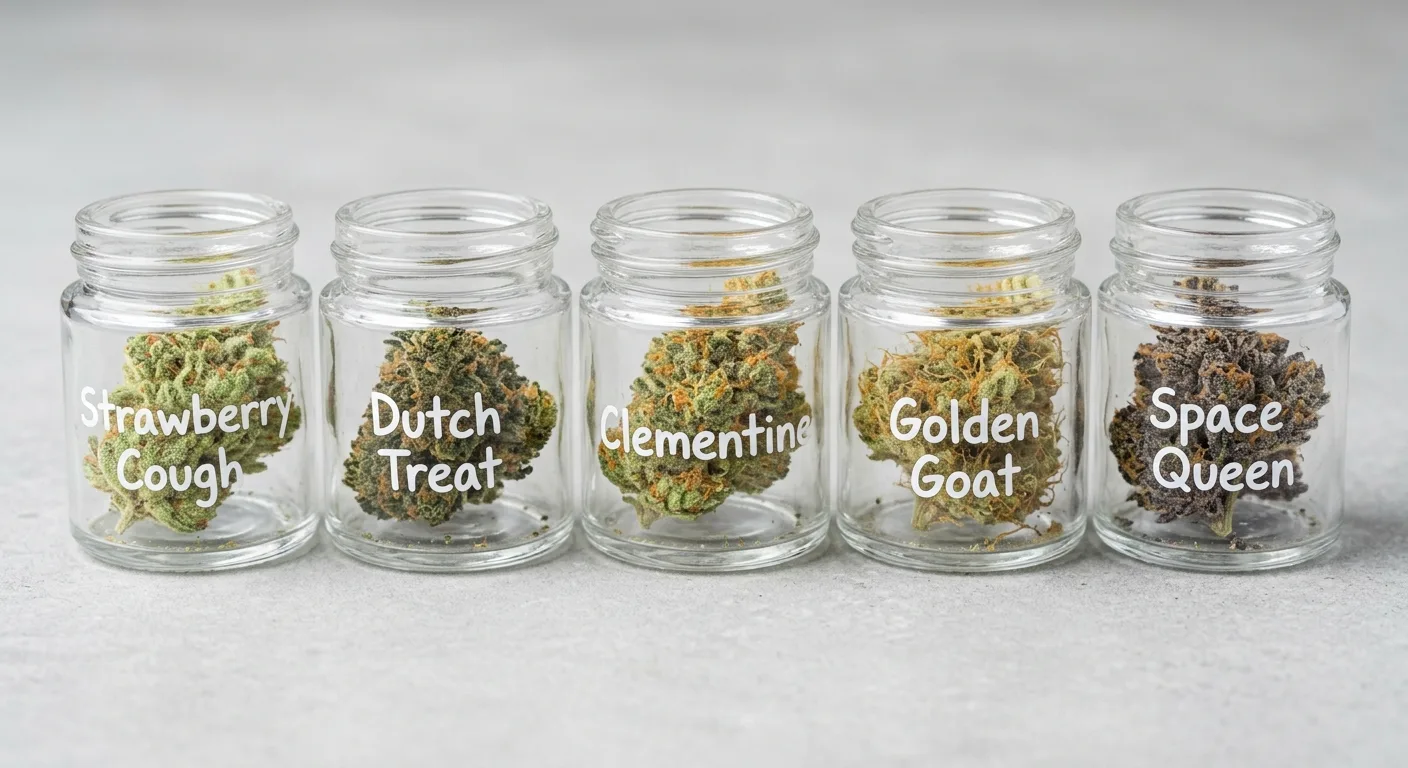
Ocimene shows up across a surprisingly wide range of cannabis varieties, but certain strains consistently express it at concentrations high enough to define their aroma and experience. Here are the five most reliably ocimene-forward strains documented in published lab data and community testing records.
Strawberry Cough
Strawberry Cough is arguably the single most discussed high-ocimene strain in cannabis. Multiple independent lab reports have identified ocimene among its top three terpenes alongside myrcene and caryophyllene. The strain's signature sweet berry-strawberry aroma with an herbal finish is almost entirely attributed to its ocimene expression layered over a moderate myrcene base. THC typically runs 17–22% depending on pheno.
Dutch Treat
Dutch Treat is a classic indica-leaning hybrid from the Pacific Northwest with a consistent reputation for sweet, piney, and herbal aromas. Lab testing frequently reveals ocimene as a significant minor terpene alongside terpinolene and myrcene. The terpinolene-ocimene combination is particularly responsible for its fresh, sweet-woody character that reads as almost eucalyptus-adjacent.
Clementine
Clementine — named for the citrus fruit — is a sativa-dominant hybrid that consistently tests high for limonene with notable ocimene expression. The limonene-ocimene combination here is textbook: bright citrus top note, sweet tropical mid note, and a clean herbal finish. Effects associated with Clementine are almost universally described as energizing and mood-elevating. THC typically runs 17–19%.
Golden Goat
Golden Goat has one of the most complex terpene profiles in regularly documented cannabis — a sativa-dominant hybrid with notes of tropical fruit, spice, and sour citrus. Ocimene appears consistently in its COAs, contributing the tropical-sweet element that distinguishes it from simpler citrus strains. THC ranges from 16–23% across phenotypes.
Space Queen
Space Queen is a sativa-leaning hybrid known for its tropical fruit salad aroma profile. Lab reports from multiple testing periods have shown significant ocimene concentrations alongside terpinolene and myrcene. The combination produces what many describe as «pineapple and vanilla» — a signature that is almost impossible to achieve without ocimene's sweet herbal contribution.
If you want to grow a strain likely to express notable ocimene, look for varieties with lab-documented terpinolene or limonene dominance paired with descriptions of tropical fruit or fresh herbal aromas. These are the strongest proxy signals for ocimene co-expression before you have a COA in hand. Our Super Lemon Haze Feminized Seeds (23% THC) often express this aromatic character.
For energy-focused strain exploration, you might also check our best strains for energy resource, where many ocimene-forward varieties appear.
The Grower's Challenge: Ocimene Is the Most Volatile Terpene in Your Harvest
Here is the single most practically important fact about ocimene that almost no guide covers adequately: ocimene has an extremely low boiling point of approximately 50–60°C for the dominant beta-trans isomer. This places it among the most thermally unstable terpenes in cannabis — and it means that every post-harvest decision you make either preserves or destroys it.
What Happens During Poor Drying
The standard mistakes that destroy ocimene are:
- Drying at temperatures above 20°C (68°F) — causes accelerated evaporation
- Using fans that blow directly on drying buds — moves volatile compounds off the surface faster than passive drying
- Drying in bright light — UV exposure catalyzes terpene oxidation and degradation
- Drying at relative humidity below 45% — too-fast drying locks the outer bud before inner terpenes can migrate and stabilize
- Drying at humidity above 70% — extends the process unnecessarily and risks mold
What Happens During Poor Curing
Even if drying was done correctly, curing mistakes destroy what remains:
- Curing in unsealed or loosely sealed containers — allows continuous off-gassing
- Skipping burping — paradoxically, insufficient burping traps CO₂ and ethanol off-gases that accelerate terpene breakdown
- Curing in warm environments — every 10°C rise in temperature approximately doubles the rate of terpene evaporation
- Curing with exposure to light through clear jars — photodegradation destroys monoterpenes including ocimene
A Strawberry Cough or Golden Goat grown to perfection but dried at 25°C under direct airflow will register near-zero ocimene on a COA. The genetics cannot express what the post-harvest environment destroys. Ocimene loss is permanent — there is no recovery once the terpene has evaporated.
The target environment for preserving ocimene through drying is 18–20°C with 55–62% relative humidity, in a dark space with gentle passive air circulation — not fans blowing directly on the plants. See our VPD for Cannabis Guide for how environmental management extends from grow room to drying room. Our VPD Calculator can help you maintain the right conditions throughout.
Drying Environment Setup for Ocimene Preservation
Set your drying room to 18–20°C and 55–62% RH. Use a hygrometer with data logging to track overnight drops. Dark space, no direct fans on buds, gentle exhaust ventilation only.
Slow Dry Timing
Target a 10–14 day drying period. Faster is not better for monoterpene-rich strains. The extra days at optimal temperature and humidity allow ocimene to remain in the bud matrix rather than evaporating into the air.
Curing in Sealed Glass
Use amber glass mason jars filled no more than 75% full. Store in a cool dark space at 18°C. Burp twice daily for the first week, once daily for the second, then every few days for weeks three through eight.
How to Detect Ocimene by Smell Before You Have a COA
Not every grower or consumer has immediate access to third-party lab testing. But ocimene has a distinctive aromatic signature that is identifiable by smell with a modest amount of practice. The key is knowing what you are looking for — and eliminating what it is not.
When you squeeze or lightly grind a fresh bud and detect any of the following, ocimene is likely present at meaningful concentrations:
- A distinctly sweet opening note that smells more like tropical fruit than citrus
- A fresh green herbaceous quality — closer to mint or parsley than to sage or oregano
- Absence of heavy skunk, diesel, or cheese notes dominating the profile
- A light, almost airy quality to the overall aroma — the scent does not «sit heavy»
- A faint woody or dry base note beneath the sweetness — not pine, not earth, just dry wood
- The aroma that intensifies briefly and then disperses more quickly than denser terpene profiles
That last point is diagnostically useful: ocimene's high volatility means it «blooms and fades» faster than myrcene or caryophyllene when you open a fresh jar. If your first whiff of a new strain is intensely sweet-herbal and then the aroma settles into something heavier within 30 seconds, you likely had an ocimene bloom.
For consumers comparing strains at a dispensary, the smell test against strains with known high-ocimene profiles like Strawberry Cough or Golden Goat is your best calibration tool. Once you have smelled confirmed ocimene expression, the pattern recognition clicks quickly.
Ocimene vs Linalool: Two Floral Terpenes, Very Different Characters
Ocimene and linalool are both described as «floral» terpenes in most guides — and that is where most guides stop. But they are actually quite different in their chemistry, aromatic character, stability, and associated effects. Understanding the comparison helps you navigate strain selection and terpene-forward purchasing decisions much more precisely.
| Property | Ocimene | Linalool |
|---|---|---|
| Terpene Class | Monoterpene (acyclic) | Monoterpenoid alcohol |
| Aroma Character | Sweet, herbal, tropical, floral | Lavender, floral, soft citrus, slightly spicy |
| Boiling Point | ~50–60°C (highly volatile) | ~198°C (much more stable) |
| Effect Association | Uplifting, energizing, creative | Calming, anxiolytic, sedating |
| Common Plant Sources | Mint, basil, parsley, orchids, kumquats | Lavender, coriander, rose, birch, cannabis |
| Antifungal Activity | Documented in multiple studies | Limited evidence; primarily antimicrobial |
| Stability in Cure | Very low — first terpene lost | High — survives most post-harvest conditions |
| Major or Minor in Cannabis | Minor (typically <0.5%) | Minor to moderate (typically 0.1–1%+) |
| Entourage Partners | Limonene, terpinolene | Myrcene, CBD, beta-caryophyllene |
| Best For | Daytime, creative, social use | Evening, relaxation, sleep support |
The most critical practical difference for growers and buyers is the volatility gap. Linalool — with its boiling point of 198°C — is an extremely stable terpene that survives normal drying, curing, and even some heat processing without significant loss. Ocimene starts evaporating at room temperature if conditions are wrong. A COA showing strong linalool and weak ocimene on a strain that should express both may indicate post-harvest handling problems rather than genetic absence.
For a deep dive into linalool, read our dedicated analysis in the Cannabis Terpene Synergy Guide which covers how linalool pairs with sedating cannabinoid profiles for sleep and relaxation. For sleep-focused strain selection, see our best strains for sleep resource.
The ocimene vs linalool boiling point difference of approximately 140°C is one of the largest stability gaps between any two commonly co-occurring cannabis terpenes. It means a single COA taken after suboptimal post-harvest conditions can show artificially high linalool ratios relative to ocimene, completely misrepresenting the living plant's terpene profile. Fresh frozen or cold-cured testing gives far more accurate ocimene readings.
Applying Ocimene Knowledge: Practical Grower and Consumer Takeaways
Now that you have the full picture — chemistry, variants, research, entourage dynamics, strain profiles, and post-harvest biology — here is how to apply it practically whether you are growing or buying.
For Growers
- Prioritize genetics with documented ocimene expression if you want sweet, tropical aromatic profiles
- Build your drying room to the 18–20°C, 55–62% RH specification before harvest, not after
- Use amber glass for curing — UV destroys monoterpenes including ocimene rapidly
- Request isomer-specific COAs from labs if you want to understand your actual ocimene profile
- Understand that higher-ocimene strains may carry some genetic antifungal resistance, but manage your grow environment regardless
- Use our Grow Planner to schedule harvest timing around optimal environmental windows
Our Sour Diesel Feminized Seeds (24% THC) are worth noting here — Sour Diesel consistently appears in published lab reports showing notable ocimene alongside its dominant caryophyllene and myrcene expression, making it one of the more accessible high-THC options for exploring this terpene combination. Similarly, Jillybean Feminized Seeds (18% THC) have a fruity, tropical character consistent with ocimene-contributing genetics.
For Consumers
- Ask dispensaries for COAs and look for ocimene in the terpene breakdown — even small concentrations matter
- Strains described as «sweet,» «tropical,» or «herbal» with energizing effects are your best proxy for ocimene presence
- Fresh-frozen or live resin products preserve ocimene better than standard dried flower in most cases
- Pair ocimene-dominant strains with activities requiring creative or social energy — the limonene-ocimene profile supports that experience
- For mood elevation focus, see our best strains for mood boost which includes several ocimene-expressing varieties
If you are trying to identify whether a strain you have grown expresses ocimene, smell it immediately after harvest at the chop, again after 7 days of drying, and again after 30 days of curing. The comparison across those three time points tells you how much ocimene your post-harvest process preserved — or lost.
Frequently Asked Questions About Ocimene Terpene in Cannabis
What is ocimene terpene in cannabis?
Ocimene is a naturally occurring monoterpene found in cannabis and many other plants including mint, parsley, orchids, and kumquats. It produces a sweet, floral, herbal aroma and appears most prominently in uplifting sativa-leaning strains like Strawberry Cough and Clementine. It typically registers as a minor terpene at under 0.5% on most COAs.
What does ocimene do in cannabis?
Ocimene contributes to the sweet, tropical, and herbal aroma signature of certain cannabis strains. Early research suggests it may have antiviral, antifungal, and anti-inflammatory properties. In the entourage effect, it pairs with limonene and linalool to support uplifting, mood-boosting, and creatively energizing experiences. All health-related findings are preclinical at this stage.
Is ocimene a major or minor cannabis terpene?
Ocimene is classified as a minor terpene in cannabis. It typically appears at concentrations under 0.5% in lab reports. In specific strains like Strawberry Cough, Dutch Treat, and Golden Goat, it can reach the top three terpene positions by concentration. Its high volatility means many COAs underreport it due to post-harvest evaporation losses.
Which cannabis strains have the highest ocimene content?
Strains consistently showing elevated ocimene in lab reports include Strawberry Cough, Dutch Treat, Clementine, Golden Goat, and Space Queen. Sour Diesel also frequently tests for notable ocimene alongside its dominant caryophyllene profile. All share sweet, fruity, herbal aromatic notes that serve as sensory proxies for ocimene presence.
Why does ocimene disappear during drying and curing?
Ocimene has a boiling point of approximately 50–60°C for its most common beta-trans isomer, making it the most volatile major terpene in cannabis. Temperatures above 20°C during drying, direct fan airflow, light exposure, and low relative humidity all accelerate evaporation. Properly drying at 18–20°C with 55–62% RH in a dark space significantly preserves ocimene through the cure.