On April 5, 2026, Missouri signed one of the most sweeping hemp THC state bans in the country — the same week a major multi-state cannabis operator collapsed, sending shockwaves through every corner of the legal market. These two events weren't coincidence. They were the collision of a legal gray zone that had been building since 2018, finally cracking wide open.
If you've been buying delta-8, delta-9 hemp gummies, HHC vapes, or any other hemp-derived THC product from a gas station or online retailer, your access may already be gone — or it's going away soon. This guide tracks every state that has banned or restricted hemp-derived cannabinoids in 2026, explains exactly why it's happening, and tells you what your legal options are when the hemp market closes the door.
The 2018 Farm Bill Loophole That Started Everything
The 2018 Farm Bill loophole enabled hemp-derived THC products by defining hemp as cannabis containing no more than 0.3% delta-9 THC by dry weight. That single measurement — dry weight — became the legal exploit that birthed a multi-billion-dollar gray market almost overnight.
Here's what lawmakers didn't anticipate: chemists could legally extract CBD from hemp, then convert it into delta-8 THC, delta-10 THC, HHC, THCO, and dozens of other psychoactive cannabinoids — all technically derived from federally legal hemp. A gummy could contain 50mg of delta-9 THC and still be "legal hemp" if the product weighed enough that the THC percentage stayed under 0.3% by dry weight.
The result was a product category that delivered marijuana-level highs with none of the regulatory oversight of the licensed cannabis market — no age verification standards, no testing mandates, no potency caps, no child-resistant packaging requirements at the federal level.
The Farm Bill was written to protect fiber hemp and CBD wellness products. The 0.3% dry-weight threshold was never designed to accommodate high-dose psychoactive edibles. States are now closing that gap one by one — and the pace accelerated dramatically in 2025 and 2026.
How the Loophole Was Exploited
The conversion process matters here. Delta-8 THC doesn't occur in meaningful concentrations in the hemp plant — it has to be chemically synthesized from CBD using an acid-catalyzed isomerization process. This is not extraction. This is manufacturing. The DEA argued as early as 2020 that synthetically derived cannabinoids fall outside the Farm Bill's protections, but enforcement was inconsistent and litigation kept the market open.
By 2023, you could walk into a convenience store in most states and buy a 6-pack of 100mg delta-9 hemp gummies for under $20. The licensed dispensary down the street — if one even existed in your state — was selling the same experience for $40 and up, with tax. The competitive pressure on regulated cannabis operators became enormous.
The DEA's Interim Final Rule published in February 2023 explicitly stated that "synthetically derived tetrahydrocannabinols remain schedule I controlled substances." This set the legal foundation for state-level enforcement actions that followed. Courts have been split, but the regulatory direction has been clear since that ruling.
Missouri Hemp THC Ban: What Actually Happened on April 5, 2026
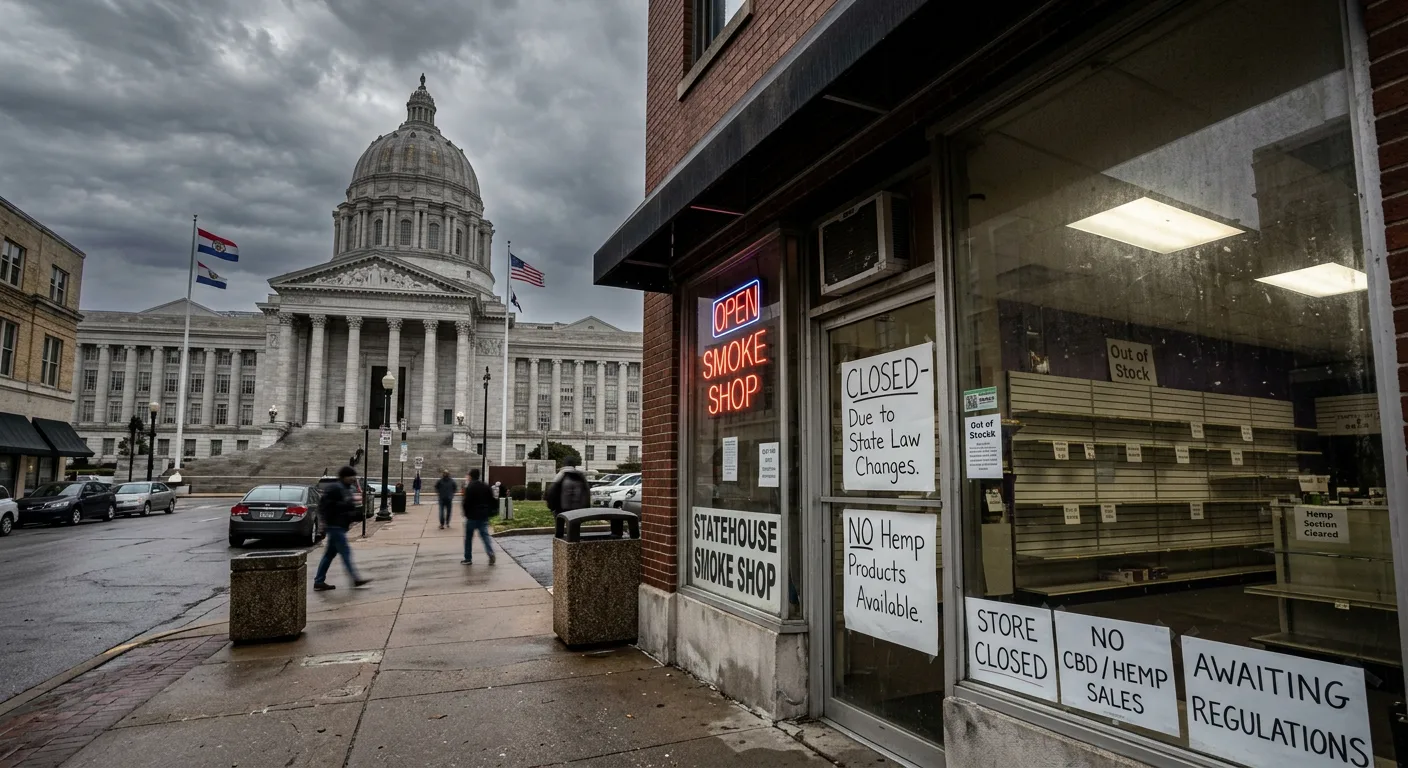
The Missouri hemp THC ban signed on April 5, 2026 prohibits the sale of hemp-derived products containing any intoxicating cannabinoids — including delta-8 THC, delta-9 THC above trace amounts, HHC, THCO, THCP, and all isomers — to consumers outside of licensed dispensaries. It is one of the broadest state-level hemp bans enacted to date.
Key Provisions of Missouri's 2026 Hemp Law
- Total THC cap of 0.3% applies to all hemp products — closing the dry-weight loophole for edibles
- Synthetic or semi-synthetic cannabinoids derived from CBD are explicitly classified as controlled substances
- Retailers selling non-compliant products face license revocation and civil penalties up to $10,000 per violation
- Online sales of intoxicating hemp products to Missouri residents are prohibited regardless of the seller's location
- Existing inventory must be removed from shelves within 60 days of the effective date
Missouri Residents: If you were purchasing delta-8, HHC, or hemp-derived delta-9 products from convenience stores, smoke shops, or online retailers, those purchases became illegal on April 5, 2026. Possession of previously purchased products is not addressed in the law, but new purchases and sales are now prohibited outside the licensed dispensary system.
The MSO Collapse Connection
The timing of Missouri's ban coincided with the high-profile collapse of a major multi-state cannabis operator (MSO) — a company that had been competing directly with the gray-market hemp sector for years. While the connection isn't simple cause-and-effect, the MSO's failure underscored how the unregulated hemp market had cannibalized licensed cannabis revenues in states like Missouri where dispensaries couldn't compete on price with untaxed hemp products.
Missouri's licensed cannabis market generated approximately $1.4 billion in sales in 2024. Industry analysts estimate that hemp-derived THC products captured an additional $200–400 million in the state during the same period — all untaxed, unlicensed, and unregulated. The ban is as much about protecting the licensed market's tax revenue as it is about consumer safety.
Hemp THC State Bans 2026: The Live Tracker Table
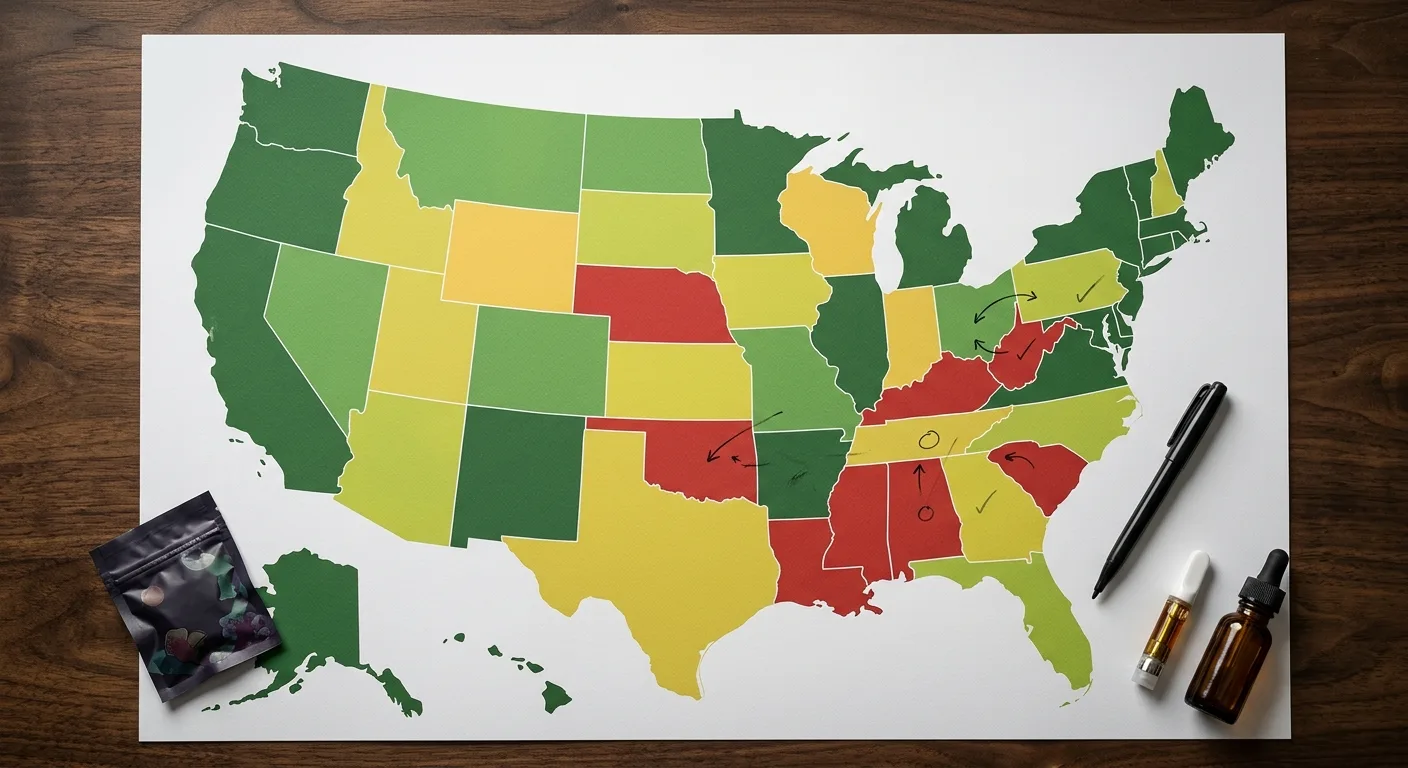
The following table tracks the current legal status of hemp-derived cannabinoids — including delta-8 THC, hemp-derived delta-9 THC, HHC, and related compounds — across all 50 states as of mid-2026. States are categorized by their most restrictive enforcement posture.
| State | Delta-8 Status | Hemp D9 Status | HHC Status | Key Law / Effective Date |
|---|---|---|---|---|
| Alabama | Banned | Banned | Banned | SB 225 / May 2024 |
| Alaska | Banned | Dispensary Only | Banned | State Board Rules / 2021 |
| Arizona | Restricted | Restricted | Restricted | HB 2032 / 2025 |
| Arkansas | Banned | Banned | Banned | Act 629 / 2023 |
| California | Restricted | Dispensary Only | Restricted | AB 45 / Ongoing Enforcement |
| Colorado | Banned | Banned | Banned | HB 23-1317 / 2023 |
| Connecticut | Banned | Dispensary Only | Banned | Dept of Consumer Protect. / 2022 |
| Delaware | Banned | Banned | Banned | State AG Guidance / 2024 |
| Florida | Restricted | Restricted | Restricted | HB 1515 / 2024 |
| Georgia | Legal (unregulated) | Legal (unregulated) | Legal (unregulated) | No specific restriction |
| Idaho | Banned | Banned | Banned | All THC isomers illegal statewide |
| Illinois | Banned | Dispensary Only | Banned | Cannabis Regulation Act / Enforcement |
| Indiana | Legal (unregulated) | Legal (unregulated) | Legal (unregulated) | No specific restriction |
| Iowa | Banned | Banned | Banned | Iowa Code 124 / Enforcement |
| Kansas | Banned | Banned | Banned | All THC isomers illegal |
| Kentucky | Restricted | Restricted | Restricted | SB 170 / 2024 |
| Louisiana | Banned | Banned | Banned | HB 640 / 2021 |
| Maryland | Restricted | Dispensary Only | Restricted | MCA Guidance / 2024 |
| Massachusetts | Banned | Dispensary Only | Banned | CCC Enforcement / 2023 |
| Michigan | Restricted | Restricted | Restricted | MRA Rules / 2024 |
| Minnesota | Legal (regulated) | Legal (regulated) | Legal (regulated) | HF 100 / 2023 — age-verified sales only |
| Mississippi | Banned | Banned | Banned | MDPH Guidance / 2021 |
| Missouri | Banned | Dispensary Only | Banned | SB 184 / April 5, 2026 |
| Montana | Banned | Dispensary Only | Banned | SB 546 / 2021 |
| Nebraska | Banned | Banned | Banned | AG Opinion / 2021 |
| Nevada | Banned | Dispensary Only | Banned | NRS Cannabis regs / Enforcement |
| New York | Banned | Dispensary Only | Banned | OCM Guidance / 2023 |
| North Carolina | Legal (unregulated) | Legal (unregulated) | Legal (unregulated) | Pending legislation 2026 |
| North Dakota | Banned | Banned | Banned | NDCC 19-24 / 2021 |
| Ohio | Restricted | Restricted | Restricted | HB 86 / 2024 |
| Oklahoma | Restricted | Restricted | Restricted | OMMA Rules / 2024 |
| Oregon | Banned | Dispensary Only | Banned | OHA Rules / 2022 |
| Pennsylvania | Restricted | Restricted | Restricted | DOH Guidance / Ongoing |
| Rhode Island | Banned | Dispensary Only | Banned | RIDOH Enforcement / 2023 |
| South Carolina | Banned | Banned | Banned | AG Opinion / 2022 |
| Tennessee | Restricted | Restricted | Restricted | SB 378 / 2024 |
| Texas | Contested | Contested | Contested | HB 4758 blocked by courts 2023 — active litigation |
| Utah | Banned | Dispensary Only | Banned | Utah Code 4-41a / 2021 |
| Vermont | Banned | Dispensary Only | Banned | VT DPS Guidance / 2022 |
| Virginia | Restricted | Restricted | Restricted | VDACS Regs / 2024 |
| Washington | Banned | Dispensary Only | Banned | LCB Policy / 2021 |
| Wisconsin | Legal (unregulated) | Legal (unregulated) | Legal (unregulated) | No specific restriction — no rec program |
| Wyoming | Banned | Banned | Banned | All THC isomers illegal statewide |
Table reflects enforcement status as of May 2026. Laws change rapidly — verify with your state's department of agriculture or health before purchasing. "Restricted" = legal with age/potency/packaging restrictions. "Dispensary Only" = intoxicating hemp products routed into the licensed cannabis market.
Reading the Table: "Restricted" doesn't mean freely available — it means your state has enacted rules around age verification (typically 21+), potency caps (often 5mg per serving), lab testing mandates, and retail licensing. In practice, many previously available products fail to meet these standards and have disappeared from shelves.
Why States Are Banning Hemp-Derived THC Products Now
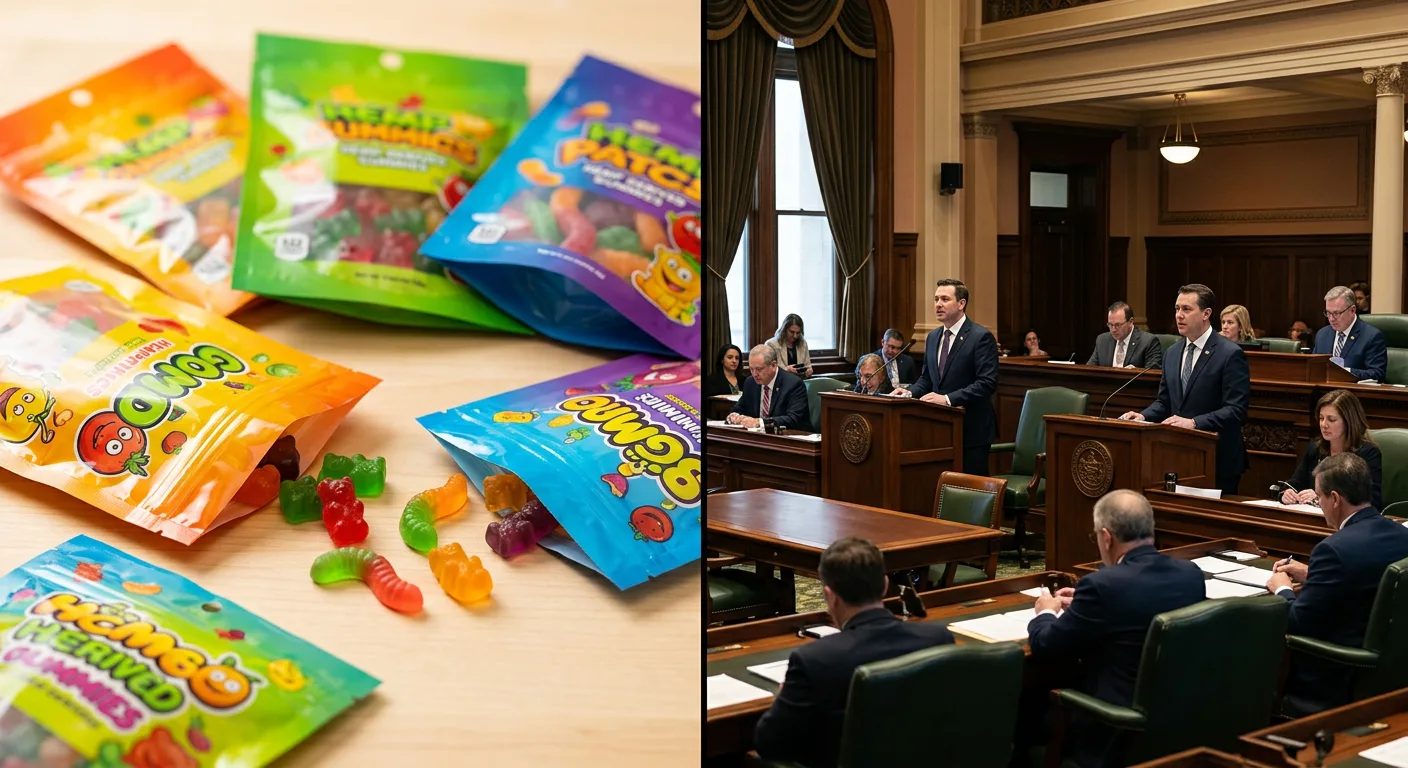
The wave of hemp THC state bans in 2025 and 2026 isn't happening in a vacuum — it's driven by four converging pressures that have shifted state legislatures from cautious observation to active prohibition.
1. Youth Access and Packaging Concerns
The most politically powerful argument for banning hemp THC has been documented cases of minors accessing products packaged to look like mainstream candy brands. Poison control centers in multiple states reported triple-digit percentage increases in calls related to hemp THC product ingestion by children between 2021 and 2024. That data became a legislative battering ram.
2. No Federal Testing Standards
Unlike licensed dispensary cannabis, hemp-derived THC products were sold for years with no mandatory third-party testing requirements. Investigative testing by journalists and consumer advocates found products with significantly higher THC content than labeled, pesticide residues, heavy metals, and residual solvents from the conversion process. Several major retailers were named in class-action lawsuits.
3. Licensed Market Pressure
Cannabis operators paying state licensing fees, excise taxes (often 20–37%), and compliance costs watched the unregulated hemp market undercut their prices by 50–70%. They lobbied aggressively for a level playing field. In states with significant licensed cannabis industries — Colorado, Washington, Oregon, Illinois, Massachusetts — bans or full channel-routing into dispensaries followed relatively quickly.
4. Federal Signal Clarity
The 2024 Farm Bill reauthorization process — still unresolved as of this writing — has produced draft language (including the widely discussed Section 781) that would tighten the federal definition of hemp to close the psychoactive loophole. States have read the direction of travel and are moving preemptively rather than waiting for federal clarity that may never arrive on a politically convenient timeline.
The states most likely to enact bans in the second half of 2026 are those where recreational cannabis is either newly legal or still prohibited — they have the strongest political motivation to either protect new industry tax revenue or prevent a psychoactive gray market from operating in their jurisdiction.
Understanding the Legal Distinctions: Hemp THC vs. Cannabis THC
Hemp THC and cannabis THC are chemically identical molecules — delta-9 THC is delta-9 THC regardless of which plant it came from. The only legal distinction has always been origin and concentration, not chemistry.
Federal Definition Comparison
| Category | Hemp (2018 Farm Bill) | Cannabis / Marijuana | 2026 Legislative Direction |
|---|---|---|---|
| Delta-9 THC Limit | ≤0.3% by dry weight | No federal limit (Schedule I) | Total THC ≤0.3% proposed |
| Delta-8 THC | Permitted if naturally derived | Schedule I (synthetic) | Explicit Schedule I in draft bills |
| HHC | Gray area — no explicit rule | No specific scheduling | Likely Schedule I under new rules |
| THCO | DEA says Schedule I (synthetic) | Schedule I | Explicitly banned in most state bans |
| Seeds | Viable seeds from ≤0.3% plants permitted | Schedule I | "Viable seed" definition under revision |
| Regulatory Body | USDA + State Depts of Ag | DEA + State Cannabis Agencies | Convergence ongoing |
This distinction matters enormously for consumers who had come to rely on hemp-derived products as an accessible, affordable alternative to the licensed dispensary market. For many people in non-recreational states, hemp-derived delta-8 or delta-9 was the only legal path to THC at all. Those options are now closing.
A 2024 study published in Drug and Alcohol Dependence found that delta-8 THC users reported effects indistinguishable from traditional delta-9 THC at equivalent doses, with similar rates of impairment, anxiety, and cognitive effects. The "milder" marketing claim common in the hemp industry was not supported by the research data.
Section 781 and the Federal Level: What's Coming
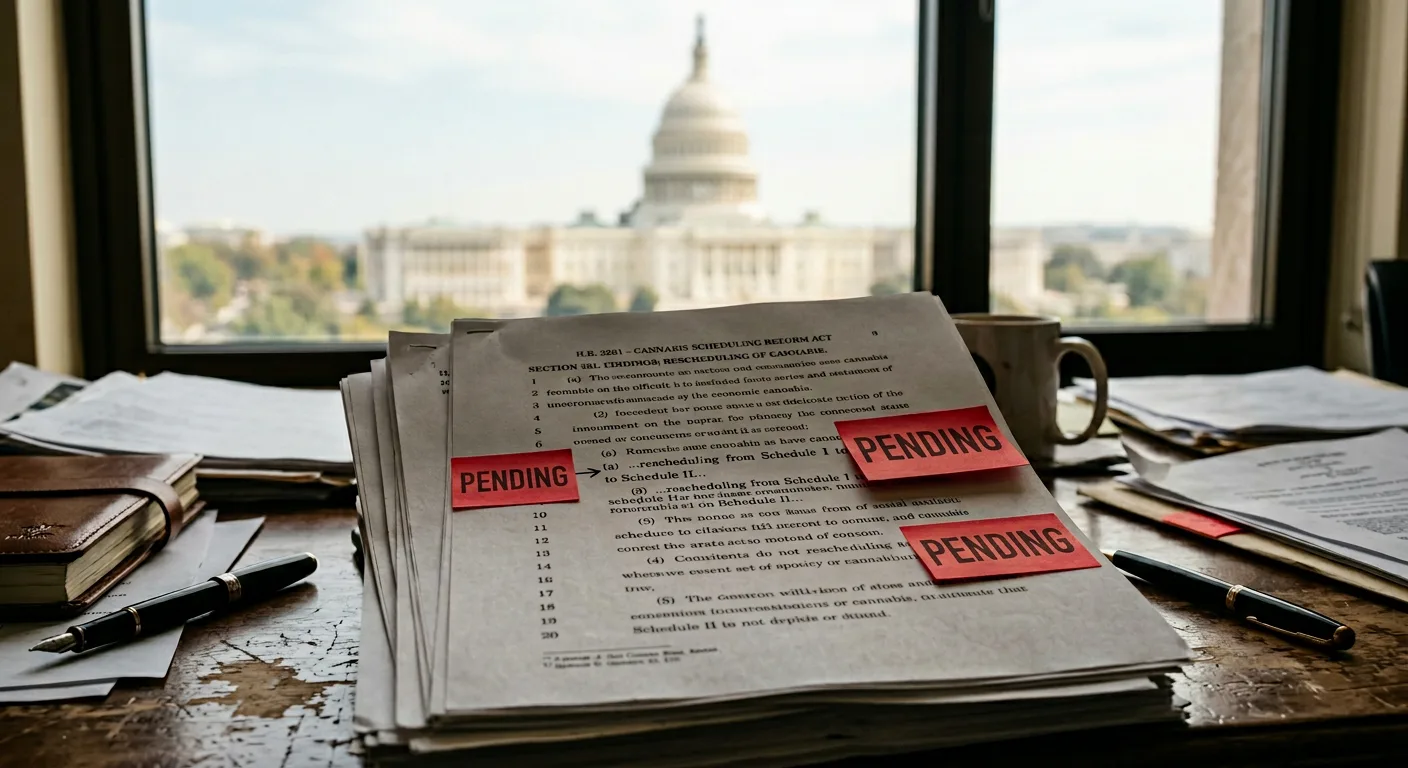
Section 781 of the proposed 2024 Farm Bill reauthorization would fundamentally redraw the federal definition of hemp in ways that make current state bans look mild. Understanding this federal layer is critical for anyone navigating hemp THC state bans in 2026 and beyond.
What Section 781 Would Change
- Total THC standard: Replaces the current delta-9-only measurement with a "total THC" test that includes THCa — the acidic precursor that converts to delta-9 when heated. This alone would remove most current hemp flower from the legal market.
- Synthetic cannabinoid prohibition: Explicitly bans cannabinoids that are "synthesized or manufactured outside the plant" — the direct legal basis for removing delta-8, HHC, THCO, and most hemp-derived psychoactive products.
- Viable seed reclassification: Contains language that would exclude seeds from cannabis plants exceeding THC thresholds from the hemp definition — creating new uncertainty for seed genetics operations.
- Interstate commerce restrictions: Would restrict cross-state-border movement of hemp products not meeting the new standards, effective November 12, 2026 in current draft language.
Seed Buyers, Pay Attention: The viable seed provisions in Section 781 have created real legal uncertainty about whether cannabis seeds from high-THC genetics can be classified as hemp and sold legally across state lines. Our complete breakdown of cannabis seed legality in 2026 is available in our Cannabis Seeds Legal Guide — read it before placing any interstate seed order.
Current Legislative Pushback
The hemp industry has not accepted Section 781 passively. Two House bills — H.R. 7010 and H.R. 6209 — have been introduced to provide transition relief and carve-outs for legitimate hemp operators. Industry groups representing fiber hemp, CBD supplement, and hemp food product companies are pushing hard to separate "functional hemp" from "intoxicating hemp" in the legislative language, arguing that the blanket language unfairly punishes a $28 billion industry for the behavior of a small psychoactive product segment.
The political reality is messy: progressive cannabis advocates want full legalization, hemp industry lobbyists want grandfather protections, law enforcement wants clear prohibition of psychoactive products, and fiscal conservatives want to protect state tax revenues from legal cannabis. None of these factions agree on how Section 781 should be rewritten, which means federal clarity remains elusive well into 2026.
What This Means for Consumers Who Were Buying Hemp THC Legally
If you live in a state that has banned or restricted hemp-derived THC products, your practical options in 2026 depend heavily on your state's broader cannabis legal status. The path forward looks very different depending on where you live.
If Your State Has Recreational Cannabis
The licensed dispensary market is your legal option. Yes, prices are higher — typically 40–80% more expensive than the hemp products you were buying. But the quality controls are dramatically better: mandatory testing, consistent potency labeling, child-resistant packaging, and state-regulated supply chains. The premium is real, but so is the accountability.
If Your State Has Medical Cannabis Only
You need a qualifying condition and a physician's recommendation to access the licensed market. For recreational users who had been relying on hemp delta-8 or delta-9 products, this is a genuine access problem. Medical programs in many states have significant barriers — cost, qualifying conditions, and availability of dispensaries in rural areas.
If Your State Has No Legal Cannabis Program
This is where the impact is sharpest. States like Alabama, Kansas, Wyoming, and Idaho have banned hemp-derived THC and have no legal cannabis framework whatsoever. For residents of these states, the closure of the hemp THC market is effectively a return to full prohibition for all THC products.
The consumer most harmed by hemp THC bans is the person living in a prohibition state who had been legally accessing hemp-derived THC as a substitute. For them, the options that remain are: crossing state lines (federally problematic), the illicit market (risky), or — in states where home cultivation is legal — growing their own.
How Hemp THC Bans Affect Seed Buyers: The Home Grow Equation
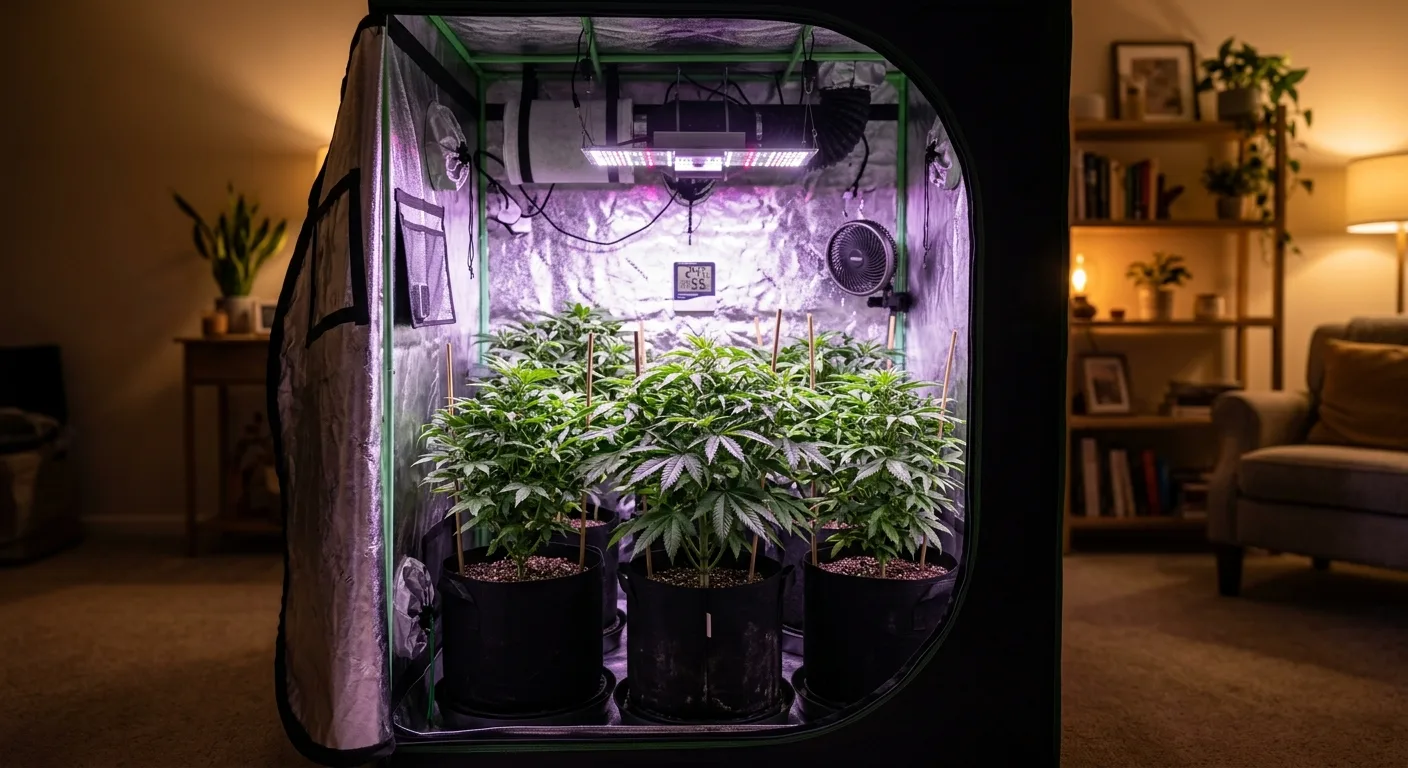
Here's the downstream reality that most coverage of hemp THC state bans misses entirely: when hemp-derived THC products disappear from legal commerce, home cultivation becomes the most attractive remaining option for cannabis consumers in recreational states.
If you're in a state like Colorado, Oregon, California, Michigan, or Massachusetts — where adults can legally grow 3–6 plants at home for personal use — the math changes significantly when your retail and hemp product options narrow. Growing your own cannabis goes from a hobbyist activity to a genuinely practical response to a market disruption.
The Cost Case for Home Growing
A single feminized seed from a quality genetics source costs $8–15. A well-managed indoor plant yielding 3–5 oz costs roughly $150–300 in electricity, nutrients, and supplies over a 10–14 week grow cycle. That's $30–100 per ounce — compared to $40–80 per eighth ($320–640 per ounce equivalent) at many dispensaries, and far less than the black-market alternatives that fill the void when hemp THC disappears.
Beyond cost, home growing gives you complete control over the cannabinoid and terpene profile of your medicine or recreational product. You choose whether you want a high-THC cultivar, a balanced CBD:THC variety, or a terpene-rich low-sedation daytime option. No hemp gummy can match that level of customization.
New to growing? Our Grow Cost Calculator lets you model your first grow's full expense — seeds, lights, nutrients, electricity — against what you'd spend buying the equivalent at a dispensary. Most first-time growers hit break-even by their second harvest. Use the Yield Estimator to project your harvest size before you invest in equipment.
Choosing the Right Strain When Making the Switch
The strain you grow matters enormously for the transition from hemp products to home-grown cannabis. Former hemp delta-8 users often preferred milder, more functional effects — which suggests balanced or moderate-THC genetics over maximum-potency cultivars. Here's a breakdown by use case:
For Relaxation and Sleep (Former Hemp Delta-9 Users)
Heavy indica and indica-dominant hybrids match the relaxing, body-focused effects most people sought from hemp gummies. Northern Lights (legendary sleep strain, ~18% THC) and Granddaddy Purple are the industry benchmarks for this profile. From our catalog, Northern Lights x Big Bud (20% THC) adds the yield potential of Big Bud genetics to that classic sedating profile — ideal for first-time growers who want results without complexity. Purple Kush (27% THC) is for experienced growers who want maximum sedation power.
For Daytime Function and Mood (Former Hemp Delta-8 Users)
Many hemp delta-8 users chose it specifically for its reported lower-anxiety, clearer-headed profile compared to traditional THC. Sativa-dominant hybrids replicate this. Jack Herer and Green Crack are the industry gold standards for functional daytime effects. From our catalog, Super Lemon Haze (23% THC) delivers a bright, energetic high with excellent indoor performance. Sour Diesel (24% THC) is the most widely recognized daytime strain globally and grows well in most home environments.
For Pain and Inflammation (Former Hemp CBD/Broad-Spectrum Users)
If you were using hemp products primarily for their CBD and minor cannabinoid content rather than THC, balanced strains with meaningful CBD are your target. Swiss Miss (15% THC with notable CBD expression) and Purple Power (10% THC, elevated CBD) offer more pharmacologically complex profiles than high-THC-only cultivars. Harlequin and ACDC are the industry leaders in high-CBD genetics if maximum CBD with minimal intoxication is your goal.
For Beginner Growers Who Need Simplicity
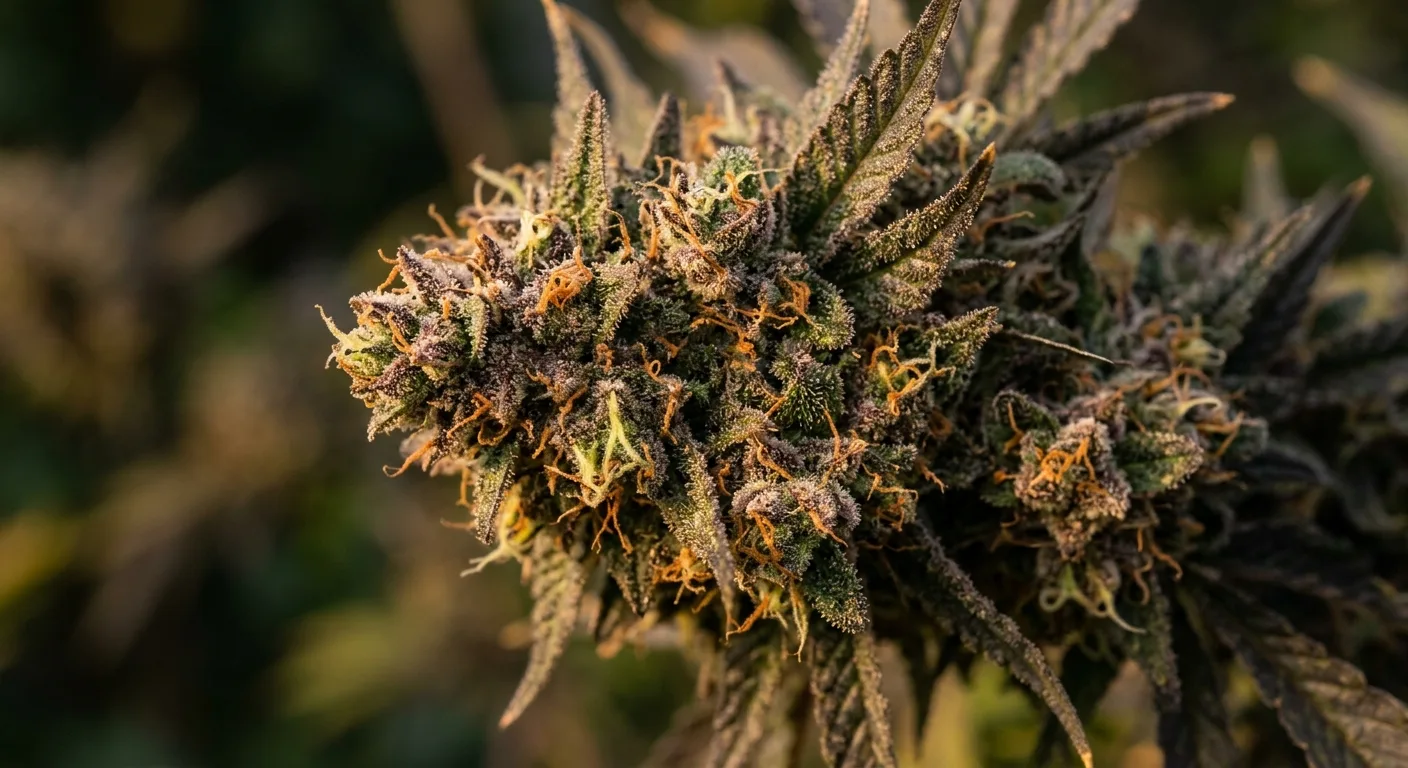
Autoflowering strains are the most forgiving starting point for first-time home growers — they flower based on age rather than light cycle, meaning you don't need to manage photoperiod changes, and they complete from seed to harvest in 70–90 days. Amnesia Haze Autoflower (17% THC) is a reliable beginner choice with manageable plant size. Skywalker OG Autoflower (23% THC) steps up the potency for those who want dispensary-grade results from their first grow.
For complete setup guidance, our Indoor Grow Tent Setup Guide walks through everything from equipment selection to your first harvest. The Grow Planner tool creates a customized week-by-week schedule based on your chosen strain and setup.
If you're transitioning from hemp CBD products and want the closest home-grown equivalent, look for strains with terpene profiles heavy in myrcene, linalool, and beta-caryophyllene — the same terpenes that made your hemp product work. Our beta-caryophyllene guide explains exactly how to select for these therapeutic terpene profiles.
States Where Home Growing Is Legal: Your 2026 Checklist
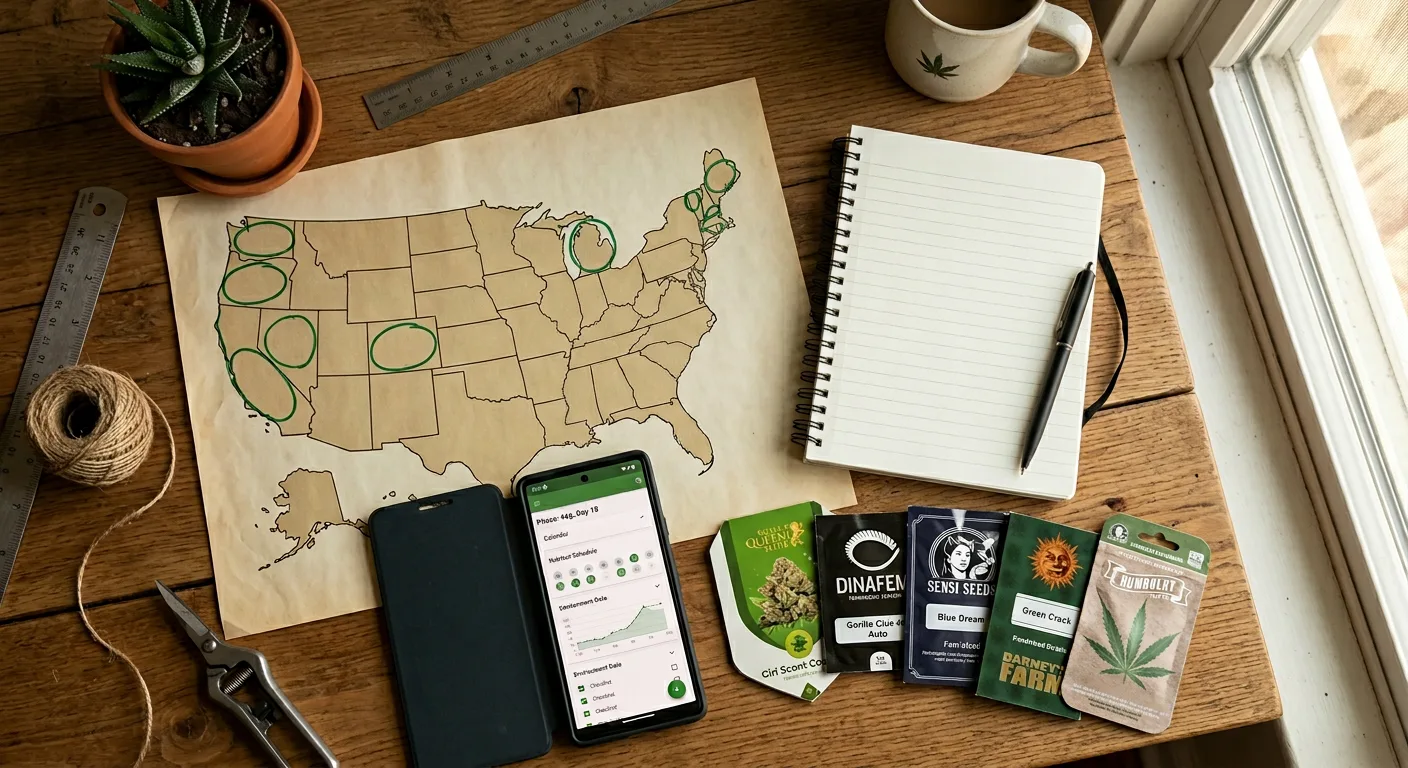
Home cultivation of cannabis for personal use is legal for adults in the following states as of mid-2026. Plant limits, canopy limits, and flowering restrictions vary by state — always verify current local rules before starting a grow.
- Alaska — 6 plants, max 3 flowering
- Arizona — 6 plants per adult, 12 per household
- California — 6 plants per adult
- Colorado — 6 plants per adult, 12 per household
- Connecticut — 6 plants per adult, 12 per household
- Illinois — 5 plants per household
- Maine — 3 mature plants, 12 immature, unlimited seedlings
- Maryland — 2 plants per adult, 4 per household
- Massachusetts — 6 plants per adult, 12 per household
- Michigan — 12 plants per household
- Minnesota — 8 plants per adult, 4 flowering
- Missouri — 6 plants per adult (medical program)
- Montana — 2 plants per adult, 4 per household
- Nevada — 6 plants per adult if no dispensary within 25 miles
- New Mexico — 6 mature, 12 immature, unlimited seedlings
- New York — 6 plants per adult, 12 per household
- Oregon — 4 plants per household
- Rhode Island — 6 plants per adult, 12 per household
- Vermont — 6 plants per adult, 4 flowering
- Virginia — 4 plants per household
- Washington D.C. — 6 plants per adult
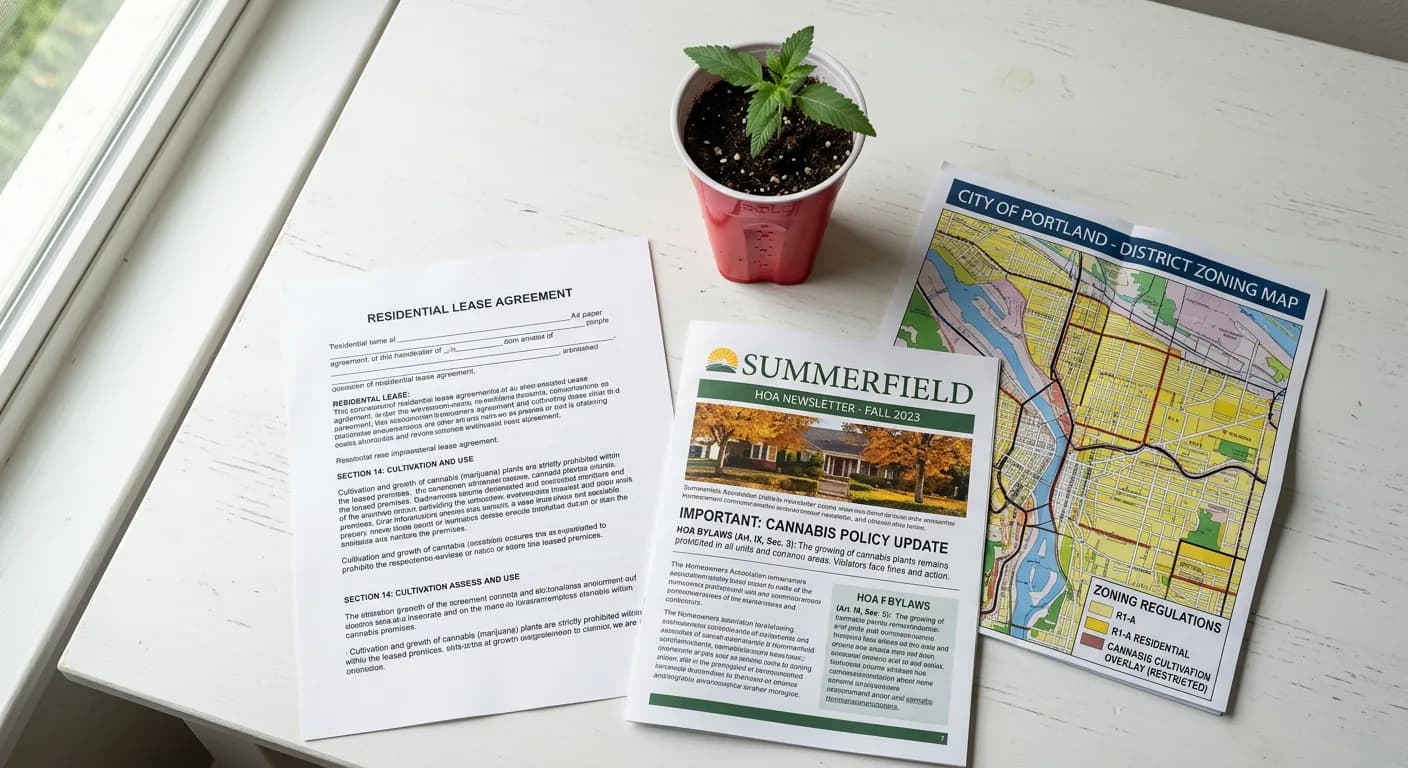
Home Grow Laws Are Hyperlocal: Several states allow municipalities to restrict home cultivation further. California, for example, allows cities to ban outdoor home grows. Always check your city or county ordinances in addition to state law. Some HOAs also have binding restrictions regardless of state law. When in doubt, grow indoors and keep your grow private.
Frequently Asked Questions
Which states have completely banned all hemp-derived THC products in 2026?
As of mid-2026, the states with the most complete bans on hemp-derived THC products — including delta-8, HHC, and hemp-derived delta-9 — include Alabama, Arkansas, Colorado, Idaho, Iowa, Kansas, Louisiana, Mississippi, Nebraska, North Dakota, Oregon (outside dispensaries), South Carolina, Utah (outside dispensaries), and Wyoming. Missouri joined this group with its April 5, 2026 ban. Note that states like Colorado, Oregon, Utah, and Missouri route intoxicating hemp products into their licensed dispensary systems rather than banning the products entirely — they're banned from unlicensed retail, not from commerce altogether.
Is delta-8 THC still legal anywhere in 2026?
Yes. As of mid-2026, delta-8 THC remains in legal gray zones or is explicitly permitted in approximately 12–15 states, including Georgia, Indiana, North Carolina, Wisconsin, and Minnesota (regulated). However, the trend is strongly toward restriction or outright bans. Several states that currently permit delta-8 have pending legislation that would ban it in 2026 or 2027. If you're purchasing delta-8 products, verify your state's current status using official state health or agriculture department resources, not retailer websites.
Does the Missouri hemp THC ban affect cannabis seeds?
Missouri's April 5, 2026 hemp THC ban focuses on intoxicating hemp consumer products — edibles, vapes, tinctures, and flower. It does not directly regulate the possession of cannabis seeds for home cultivation purposes. Missouri medical cannabis patients can grow up to 6 plants under the state's patient cultivation provision. However, interstate seed purchases remain subject to federal law considerations — see our complete 2026 seed legality guide for the full picture, including the Section 781 implications for seed sales.
If hemp THC is banned in my state, can I legally grow cannabis instead?
This depends entirely on whether your state has a legal recreational or medical home cultivation provision. Many states that have banned hemp THC products — like Colorado, Oregon, Massachusetts, Michigan, and New York — do allow adults to grow cannabis plants at home for personal use. If you're in a state with no legal cannabis program and no home grow rights, like Alabama, Kansas, or Wyoming, there is currently no legal path to any THC product. Check the checklist in this article and your state's cannabis regulatory agency for current plant limits and rules.
What is Section 781 and how does it affect hemp THC products?
Section 781 is proposed language in the 2024 Farm Bill reauthorization that would fundamentally change the federal definition of hemp. Key changes include a shift to a "total THC" measurement standard (which would disqualify most current hemp flower), an explicit prohibition on cannabinoids synthesized outside the plant (targeting delta-8, HHC, THCO, and similar products), and new rules around viable seeds from high-THC cannabis plants. As of mid-2026, Section 781 has not been enacted — the Farm Bill remains in legislative limbo — but several states have passed laws mirroring its provisions preemptively. The November 12, 2026 effective date referenced in draft language is the current key deadline to watch.