You ate a 10mg cannabis edible. Two hours later, nothing. So you ate another one — and four hours after that you were glued to the couch wondering if you were dying. Sound familiar? Cannabis edibles dosing is the single most misunderstood topic in the cannabis world, and the stakes are high enough that getting it wrong turns people off edibles for good.
This guide explains the real reason your experience differs so dramatically from your friend's, builds a dosing ladder you can actually use, and shows home growers how to calculate their own doses with precision that dispensary labels can't match. Whether a 10mg edible does nothing for you or sends you to the moon, this is the guide that finally explains why.
What You'll Learn in This Guide
- The first-pass metabolism science behind why edibles are a different drug than smoked THC
- The 6 variables that change how edibles hit your body specifically
- The complete dosing ladder from 2.5mg to 50mg+
- Home grower dose math — control your own potency
- Why gummies and butter edibles behave differently
- What to do when you've taken too much
- How to build a personal dosing log that works
The Science No One Explains: First-Pass Metabolism and 11-Hydroxy-THC
When you eat a cannabis edible, your liver converts delta-9-THC into 11-hydroxy-THC — a metabolite that is 3 to 5 times more potent than the THC you inhale from flower, crosses the blood-brain barrier more efficiently, and stays in your system far longer. This single biochemical fact explains almost every confusing edibles experience people have.
When you smoke or vaporize cannabis, delta-9-THC travels directly from your lungs into your bloodstream and reaches your brain within minutes. The liver still processes it eventually, but the initial effect is driven by delta-9-THC itself. Edibles take a completely different route.
The Edible's Journey Through Your Body
Stomach & Small Intestine (0–60 min)
THC is absorbed through the walls of the small intestine, a process that depends heavily on what you've eaten, your gut motility, and the fat content of the edible itself. This is why onset is so unpredictable compared to inhalation.
Portal Vein to Liver (the First Pass)
Before reaching general circulation, absorbed cannabinoids travel through the portal vein directly to the liver. Enzymes — primarily cytochrome P450 CYP2C9 and CYP3A4 — metabolize delta-9-THC into 11-hydroxy-THC (11-OH-THC). The proportion of this conversion varies enormously between people.
Brain Crossing (60–180 min)
11-OH-THC is more lipophilic than delta-9-THC, meaning it crosses the blood-brain barrier more readily. This is why the edible high feels deeper, more sedating, and more psychedelic to many people — you're experiencing a meaningfully different compound, not just more THC.
Extended Clearance (4–12 hours)
11-OH-THC then converts to 11-nor-9-carboxy-THC (THC-COOH), which is inactive but stays in fat tissue and is detectable in urine for days to weeks. The active phase lasts far longer than smoked cannabis, which is why edible highs stretch on for hours even as blood levels drop.
Expert Note: The CYP2C9 gene has at least 50 known variants in humans. People with reduced-function variants metabolize delta-9-THC to 11-OH-THC more slowly, meaning they feel less effect from the same dose — or experience a slower, later peak. This is one of the least-discussed reasons why 10mg does nothing for some people.
Key Takeaway: Edibles aren't just a different delivery method — they produce a chemically distinct high. 11-hydroxy-THC is the reason edibles feel heavier, last longer, and hit unpredictably. Understanding this one fact makes every dosing decision smarter.
Why Edibles Hit Everyone Differently: The 6 Key Variables
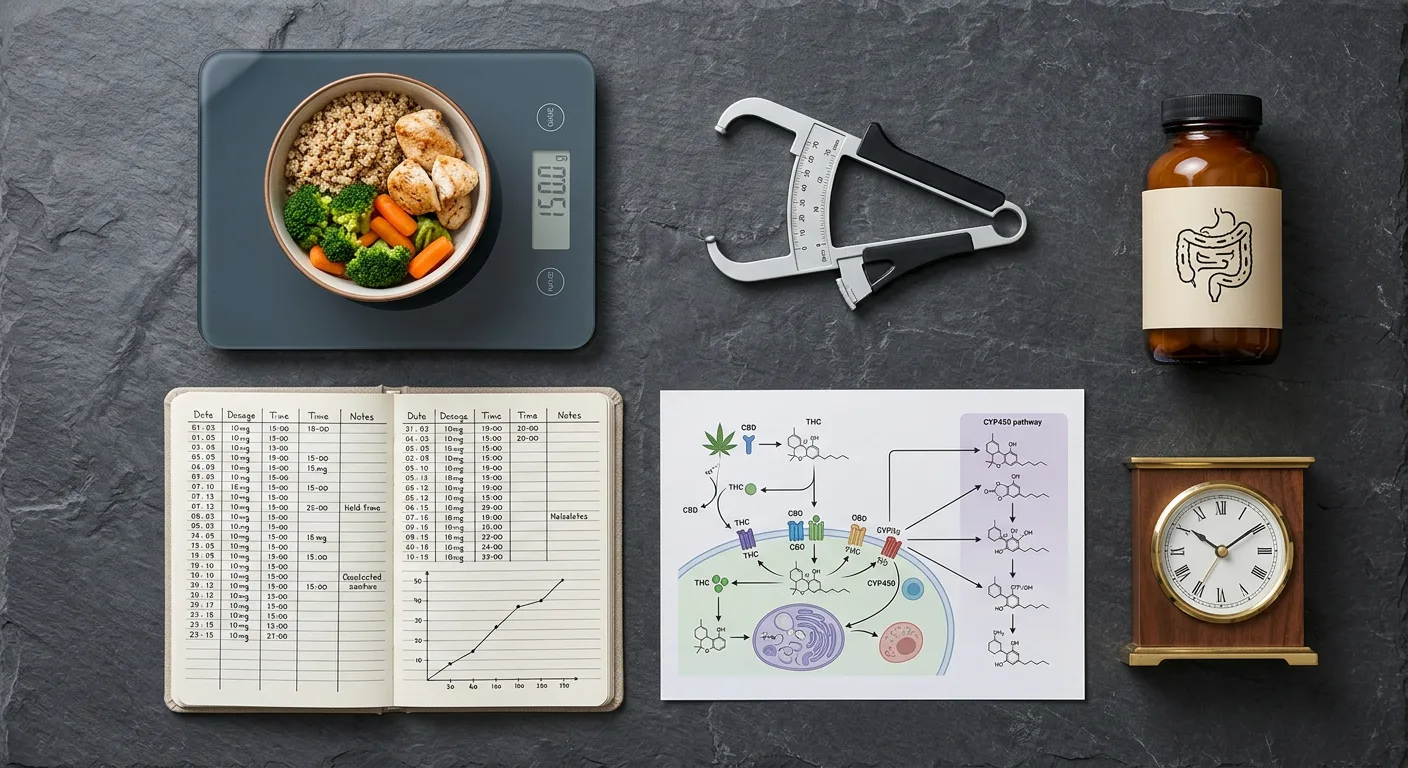
Two people eat identical 10mg gummies from the same package. One feels a mild, pleasant buzz. The other ends up anxious and couch-locked for eight hours. The six variables below explain exactly why this happens — and understanding them lets you predict your own response far more accurately.
Variable 1: Cytochrome P450 Enzyme Activity
Your CYP2C9 enzyme does most of the heavy lifting in converting THC to 11-OH-THC. Genetic variants can make this enzyme a fast converter, a slow converter, or something in between. Additionally, other medications and even grapefruit juice can inhibit CYP3A4, changing how THC is processed. You can't know your enzyme profile without genetic testing, which is why dosing experimentation is irreplaceable.
Variable 2: Body Composition and Fat Percentage
THC is highly lipophilic — it binds to fat tissue. People with higher body fat percentages may find that THC distributes into fat stores before reaching the brain, producing a delayed or blunted onset from a given dose. Paradoxically, over repeated use, THC stored in fat can release slowly, contributing to longer-lasting effects in some individuals.
Variable 3: Metabolic Rate
A faster metabolic rate generally means faster gastric emptying, faster absorption, and faster liver processing. Someone with a high metabolic rate may feel effects sooner and find they wear off faster. Someone with a slower metabolism may experience a slow, creeping onset that catches them off guard two hours later.
Variable 4: What You've Eaten
Eating a high-fat meal before an edible can dramatically intensify absorption. Research published in the European Journal of Nutrition found that a high-fat meal increased peak THC blood concentration by 4× compared to a fasted state. This is why the same dose hits very differently on an empty stomach versus after Thanksgiving dinner.
Variable 5: Gut Microbiome
Your gut bacteria influence how cannabinoids are absorbed and even partially metabolized before reaching the liver. People with compromised gut microbiomes (from antibiotic use, poor diet, or digestive disorders like IBS) report inconsistent edible experiences. This is a cutting-edge area of research, but the practical takeaway is that gut health matters for edible predictability.
Variable 6: Cannabis Tolerance
Regular cannabis users develop CB1 receptor downregulation — fewer active receptors and reduced sensitivity to THC. A daily smoker may need 25–50mg to feel what a naive user feels at 5mg. Tolerance resets significantly within 48–72 hours of abstinence, which is why a tolerance break before using edibles can make low doses effective again.
Pro Tip: If you're a regular smoker trying edibles for the first time, don't assume your smoke tolerance translates directly. The 11-OH-THC metabolite works differently than inhaled delta-9-THC — many heavy smokers are surprised by how strongly a 15mg edible hits them despite their usual tolerance.
The Edibles Dosing Ladder: From 2.5mg to 50mg+
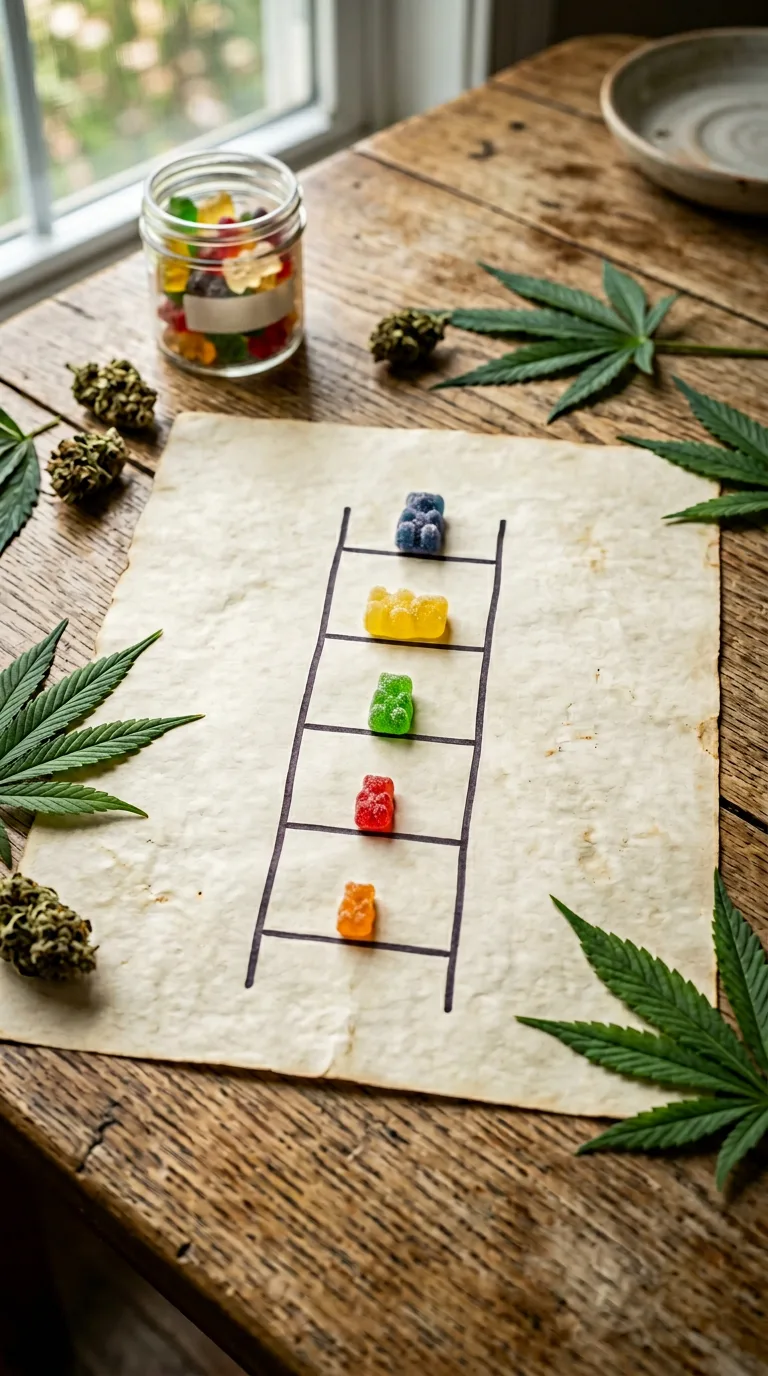
The edibles dosing ladder organizes THC doses into five tiers based on typical effect profiles, with realistic onset windows and duration ranges for each. Use it as a starting framework, not a guarantee — your position on this ladder will shift based on all six variables above.
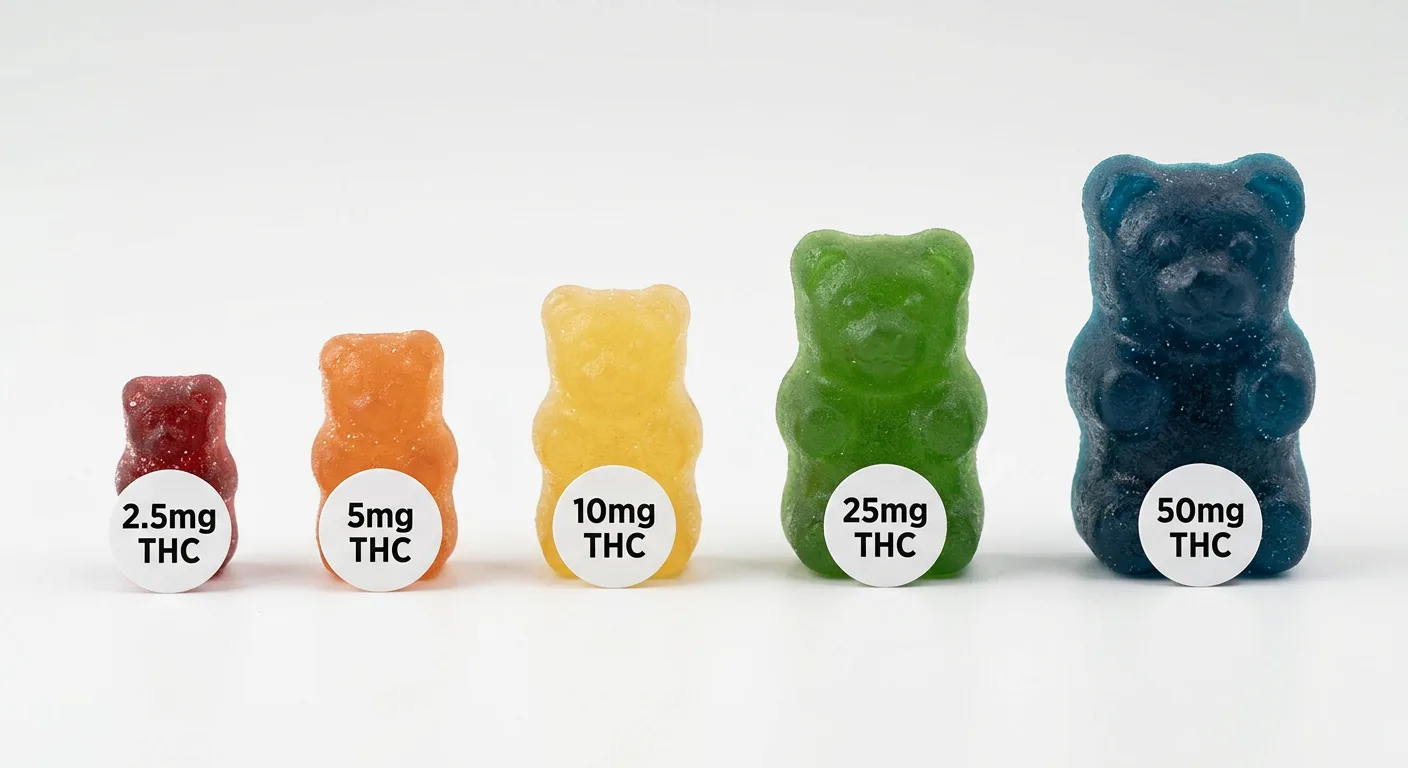
| Dose Tier | Who It's For | Typical Effects | Onset | Duration |
|---|---|---|---|---|
| 2.5mg (Microdose) | First-timers, low tolerance, medical users, seniors | Subtle mood lift, mild relaxation, slight sensory enhancement — most people remain fully functional | 45–90 min | 2–4 hrs |
| 5mg (Low Dose) | Beginners, occasional users, daytime use | Clear relaxation, mild euphoria, some appetite stimulation, slightly altered perception of time | 45–90 min | 3–5 hrs |
| 10mg (Standard Dose) | Recreational users with some experience, standard dispensary unit | Clear intoxication, strong relaxation, heightened senses, possible anxiety in naive users — requires a safe, comfortable setting | 60–120 min | 4–6 hrs |
| 25mg (Strong Dose) | Experienced users, high tolerance, medical patients | Strong psychoactive effect, deep body relaxation, sedation, distorted time perception, potential couch-lock | 60–120 min | 6–8 hrs |
| 50mg+ (Very High Dose) | Very high tolerance only, never for beginners | Intense intoxication, possible hallucinatory effects at very high doses, heavy sedation, significant next-day grogginess | 60–90 min | 8–12+ hrs |
Warning: Many dispensary products use 10mg as the standard serving, but 10mg is not a beginner dose — it's a moderate recreational dose for someone with established tolerance. First-timers should always start at 2.5–5mg and treat 10mg as a ceiling for their second or third experience, not their starting point.
Edibles Dosing for Beginners: A Step-by-Step First Experience
Choose Your Setting Carefully
Pick a safe, familiar, comfortable environment. Have water, light snacks, and entertainment you enjoy nearby. Avoid driving, operating machinery, or attending social obligations for at least 6 hours after dosing.
Start at 2.5–5mg
Take your chosen dose with a light meal that contains some fat to aid absorption. Set a timer for 2 hours. Do not take more before that timer goes off, no matter how little you feel.
Evaluate at the 2-Hour Mark
If you feel no effect at 2 hours, you can take an additional 2.5–5mg. If you feel mild effects, wait another 30–60 minutes before deciding. If you feel strong effects, you've found your dose — don't add more.
Record Everything
Note the dose, the product, what you ate beforehand, onset time, peak time, and the intensity of effects. This data is gold for your next session. See the dosing log template later in this guide.
Pro Tip: Use our free Edible Dosage Calculator to cross-reference your starting weight, tolerance level, and product potency before you dose. It takes 60 seconds and removes a lot of guesswork.
The Home Grower's Advantage: Controlling Your Own Dose Math
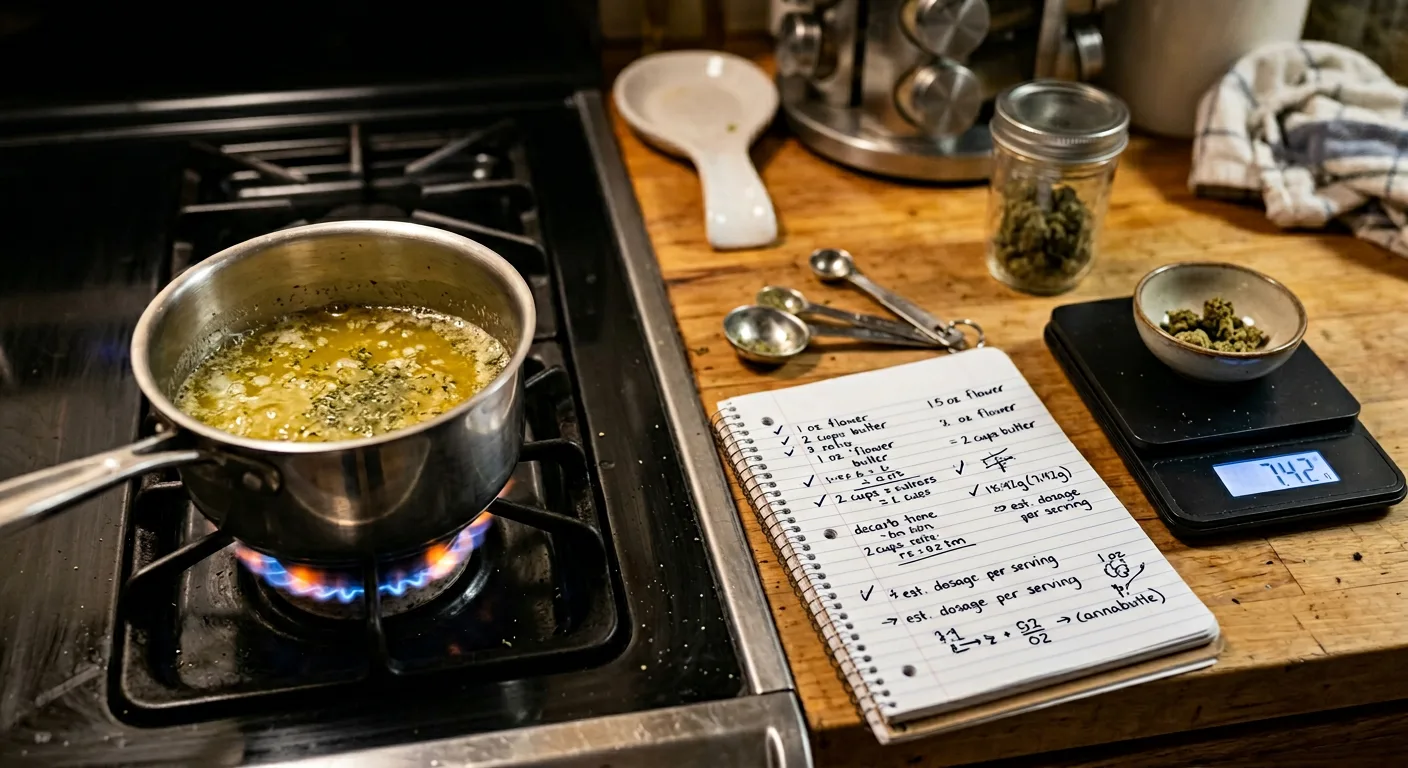
Home growers who make their own edibles have a massive advantage over dispensary shoppers: they know exactly what went into their infusion and can calculate doses with much greater accuracy than trusting a commercial label. Dispensary edible labels are legally required to show THC content, but testing variability, storage degradation, and inconsistent mixing mean real-world potency often differs from the label by 10–20%.
The Home Grower's Potency Formula
Here is the core calculation for determining the THC content of homemade edibles:
The Formula:
Total THC in infusion (mg) = Weight of cannabis used (g) × THC% × 1,000 × Extraction efficiency
Example: 10g of flower at 22% THC × 0.22 × 1,000 = 2,200mg total THC in the raw material. At a realistic 60–70% extraction efficiency for butter (home decarb + infusion), your actual infused THC is approximately 1,320–1,540mg. If that butter makes 48 cookies, each cookie contains roughly 27–32mg THC — far more than a beginner's dose.
Extraction Efficiency: What Home Growers Should Expect
- Coconut oil infusion (low temp, 4+ hrs): 60–80% extraction efficiency
- Butter infusion (double boiler, 3 hrs): 55–75% extraction efficiency
- Lecithin-enhanced infusion: Up to 85% (lecithin improves bioavailability further)
- Quick stovetop (under 1 hr): 30–50% extraction efficiency
Why Strain THC% Matters More Than You Think
The strain you grow determines your raw material potency and therefore your maximum possible dose per serving. A strain at 13% THC like Malawi Gold Autoflower produces very different cannabutter than a 27% THC cultivar like Purple Kush Feminized — you'd need roughly twice the amount of Malawi Gold flower to hit the same dose per serving.
| Strain | THC% | mg THC per 1g flower | mg THC after 65% extraction | Best For Edibles? |
|---|---|---|---|---|
| Purple Power Feminized | 10% | 100mg | 65mg | Precision microdosing — easy to control |
| Swiss Miss Feminized | 15% | 150mg | 97mg | Beginner edible batches |
| Super Skunk Feminized | 20% | 200mg | 130mg | Balanced potency, versatile batches |
| White Cookies Feminized | 22% | 220mg | 143mg | Strong recreational batches |
| OG Kush Feminized | 26% | 260mg | 169mg | High-potency, experienced users only |
| Purple Kush Feminized | 27% | 270mg | 175mg | Maximum potency batches — use sparingly |
For beginner edible makers, lower-THC strains like Purple Power (10%) or Swiss Miss (15%) give you a much wider margin for error. With a 27% THC strain like Purple Kush, a small miscalculation in your butter portions can mean the difference between a pleasant 10mg serving and an overwhelming 35mg one.
Key Takeaway: Home growers should choose their edible strain based on intended dose per serving, not just maximum potency. A predictable 10–15% THC strain often makes better edibles for beginners than the most potent cultivar in the lineup.
Also consider your strain's terpene profile. Myrcene-dominant strains like Northern Lights x Big Bud tend to produce more sedating edibles, while limonene-forward strains like Super Lemon Haze Feminized (23% THC) may produce a slightly more uplifting edible experience — though the effect difference is less pronounced with edibles than with inhalation.
For a deeper look at how terpenes survive cooking and how they influence your final edible's effects, check out our guide to pinene in cannabis and its role in the entourage effect.
Onset Timing: Why Fat-Based Edibles and Gummies Hit Differently
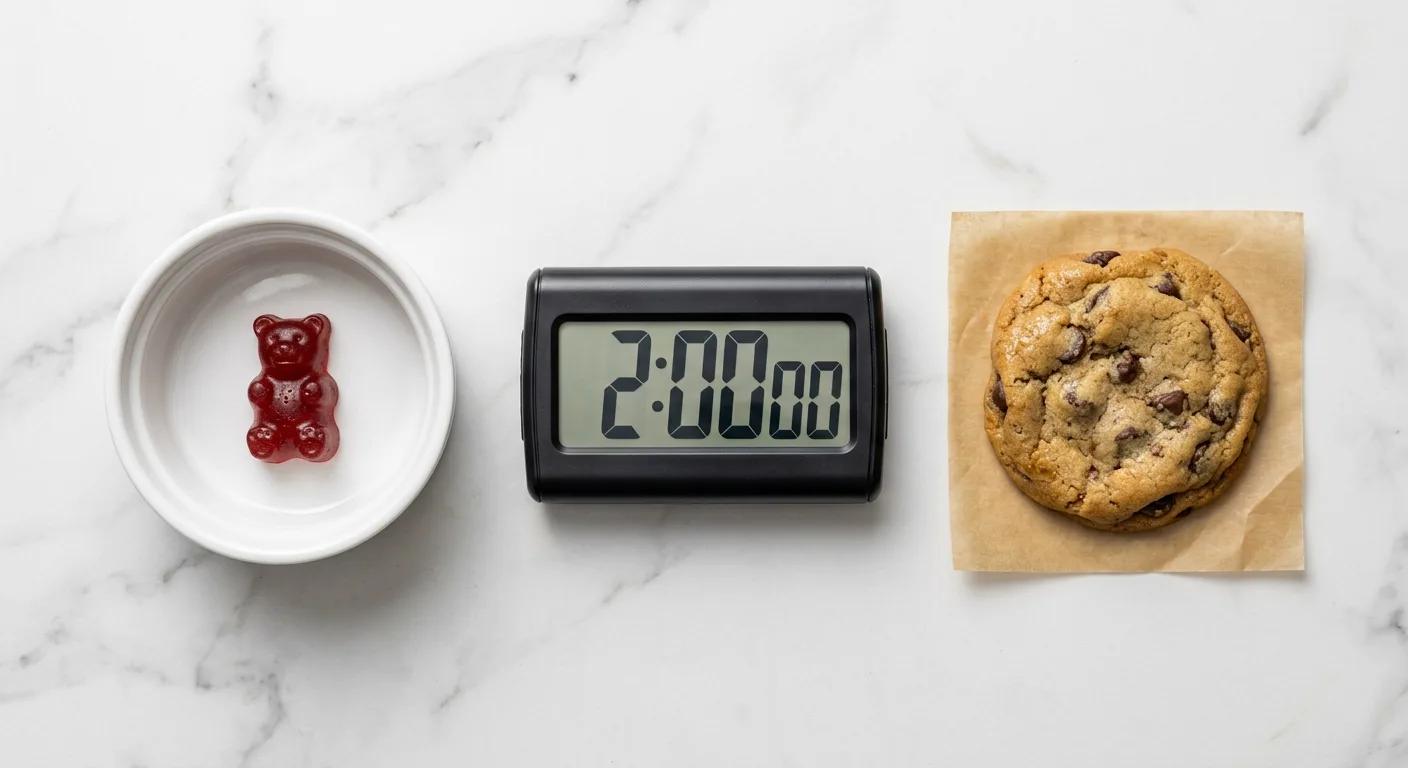
Not all edibles are created equal in timing. Fat-based edibles like cannabutter cookies, brownies, and infused chocolates follow a different absorption pathway than commercial gummies and hard candies — and understanding the difference prevents the classic 'it's not working yet so I'll take more' mistake.
Fat-Based Edibles (Butter, Coconut Oil, Chocolate)
THC is fat-soluble. In fat-based edibles, it binds to lipid molecules that must be emulsified in the small intestine before absorption can begin. This means onset depends heavily on your digestive state. On an empty stomach, you might feel effects in 45–60 minutes. After a large meal, that can stretch to 2–3 hours — but the peak intensity is often higher because fat enhances bioavailability.
- Typical onset range: 45 minutes to 2.5 hours
- Peak effect: 2–3 hours after ingestion
- Duration: 5–8 hours at moderate doses
- Best consumed with: A light meal containing some dietary fat
Commercial Gummies and Hard Candies
Modern commercial gummies use nano-emulsified THC — tiny droplets of oil dispersed in a water-based carrier. These absorb faster than full-fat edibles because they don't require the same lipid digestion process. Some nano gummies begin working in 20–45 minutes, which is significantly faster than traditional fat-based edibles. The tradeoff is that peak intensity is sometimes lower and duration may be shorter.
- Typical onset range: 20–90 minutes (highly variable)
- Peak effect: 1.5–2.5 hours after ingestion
- Duration: 4–6 hours at moderate doses
- Best consumed with: Light food or on a mostly empty stomach
Sublingual Tinctures and Lozenges (Bonus Category)
Sublingual tinctures held under the tongue for 60–90 seconds allow partial absorption directly into the bloodstream through the sublingual mucosa, bypassing first-pass metabolism partially. This produces faster onset (15–45 minutes) and a lighter, shorter high — making them excellent for dialing in dose before committing to a full edible experience.
Warning: The 'it's not working' window is the most dangerous moment in edibles use. Whether you're eating gummies or homemade cookies, commit to the 2-hour rule before even considering a second dose. The majority of overconsumption events happen because someone redosed at the 60–90 minute mark just as their first dose was about to peak.
The 2-Hour Rule — Non-Negotiable
Set a physical timer. Two hours. Do not rely on memory or 'how you feel at the time.' The 2-hour rule protects you from the most common and preventable edibles mistake. If at 2 hours you feel nothing at all, a supplemental 2.5–5mg is reasonable. If you feel any effect whatsoever, wait longer.
Pro Tip: If you're making homemade cannabutter or infused oil and want to understand full decarboxylation and infusion best practices, check our guide on when to harvest cannabis for maximum potency — the trichome state at harvest directly affects your edible's final potency.
Cannabis Edibles Too Strong: What to Do Right Now
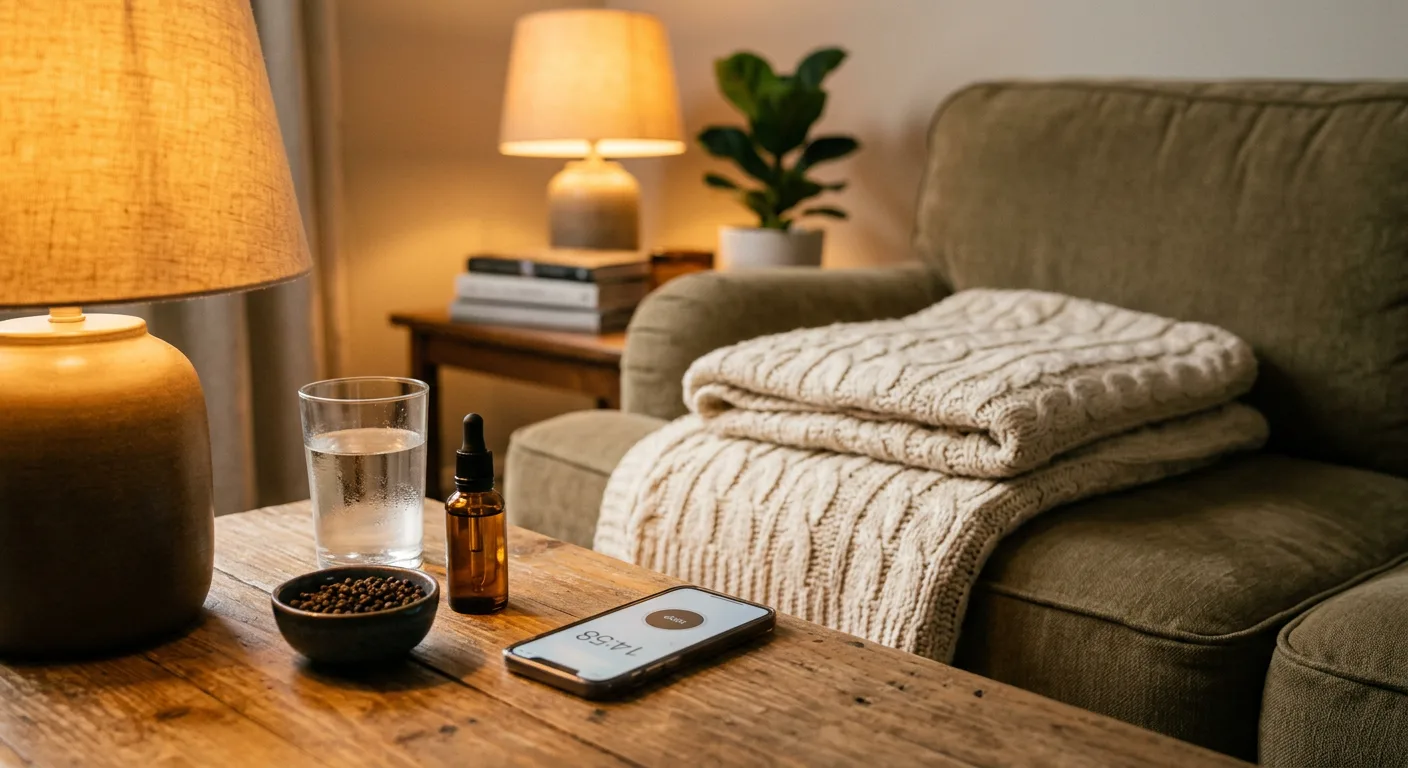
If you've taken too much and the room is spinning, the most important thing to know is this: no one has ever died from a cannabis edible overdose. The experience can feel terrifying, but it is medically benign and will pass. Here's exactly what to do, step by step.
Stay Calm and Remind Yourself It's Temporary
The anxiety and paranoia from too much THC are effects of the compound, not signs of a medical emergency. Telling yourself 'I took too much cannabis and this will pass in a few hours' is genuinely helpful and evidence-based. The peak of an edible high rarely lasts longer than 3–4 hours even at high doses.
Take a CBD Rescue Dose
CBD competes with THC at CB1 receptors and has demonstrated anxiolytic properties. A dose of 20–50mg CBD taken at the onset of anxiety can meaningfully reduce perceived intensity. This works best when you have a 1:1 CBD:THC ratio product available, but any pure CBD tincture or capsule will help. The CBD does not cancel the edible — it blunts the anxiety component.
Hydrate and Eat Something Simple
Drink water steadily. Eat something bland and easy to digest — crackers, bread, a banana. Food slows further THC absorption, provides blood sugar stability that reduces anxiety, and gives your hands something to do. Do not drink alcohol — it significantly increases THC blood concentration and will worsen the experience.
Find Your Safe Space and Change Your Environment
Go somewhere quiet, comfortable, and familiar. Lie down if the room feels like it's moving. A weighted blanket, controlled breathing (4 counts in, 7 counts hold, 8 counts out), and calming music have all been shown to reduce acute cannabis anxiety. Avoid screens with fast movement or loud audio.
The Black Pepper Trick — Myth-Busted
You may have read that sniffing or chewing black pepper reduces cannabis anxiety due to its beta-caryophyllene content. There is no peer-reviewed evidence confirming this works in humans at the amounts typically used. It's not harmful to try, but don't rely on it as a primary strategy. CBD, hydration, and environment change are far better-supported approaches.
Key Takeaway: If someone has consumed an extremely large dose and is experiencing chest pain, severe vomiting, loss of consciousness, or difficulty breathing — call emergency services. These rare reactions may require medical attention even though cannabis itself is not the cause of life-threatening events.
The 1:1 CBD:THC Ratio Explained
A 1:1 CBD to THC product (equal milligrams of each) produces a meaningfully different experience than THC alone. CBD modulates THC's binding at CB1 receptors and activates 5-HT1A serotonin receptors independently, reducing anxiety, racing heart, and paranoia while preserving much of the euphoria and pain relief. For anxiety-prone users or anyone who has had bad edible experiences in the past, a 1:1 product is worth exploring as a starting point before moving to pure THC edibles.
Building Your Personal Edibles Dosing Log
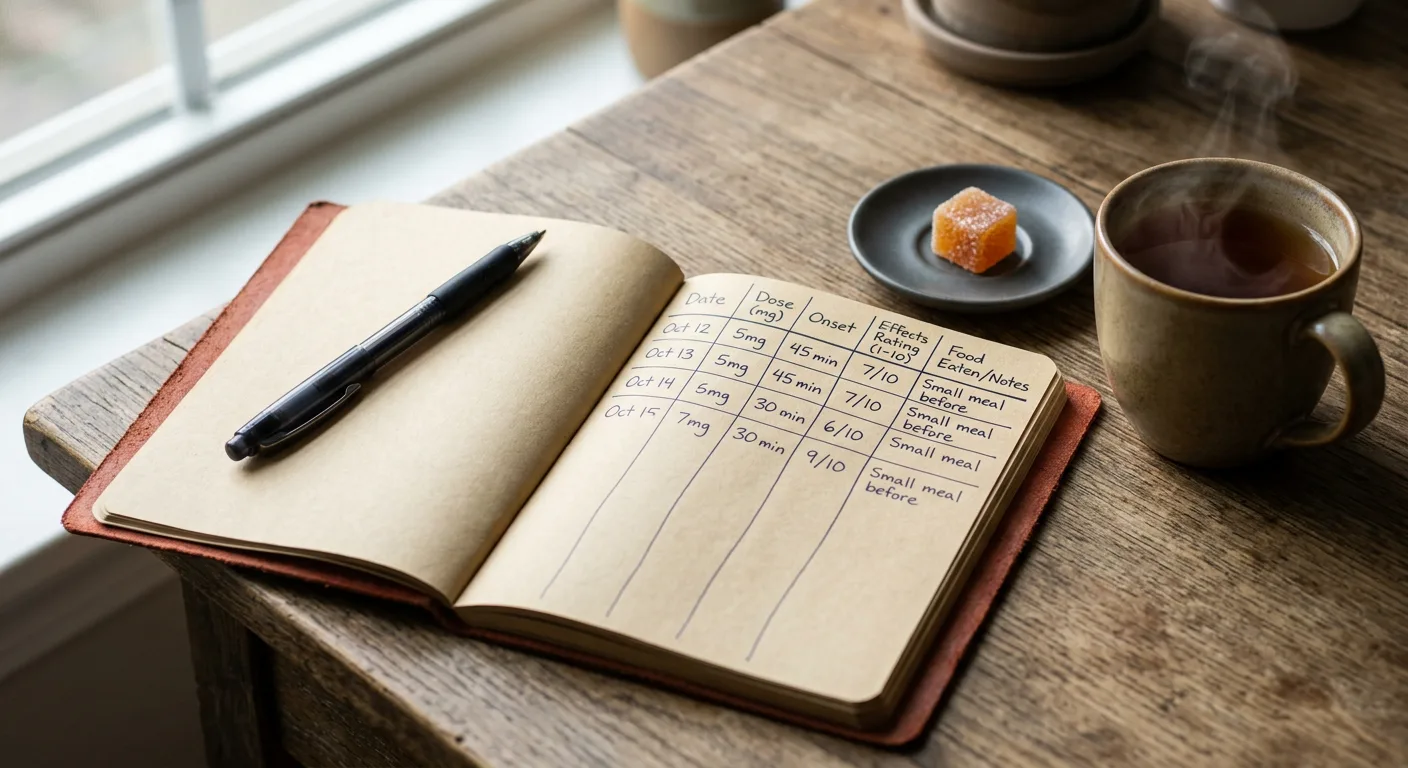
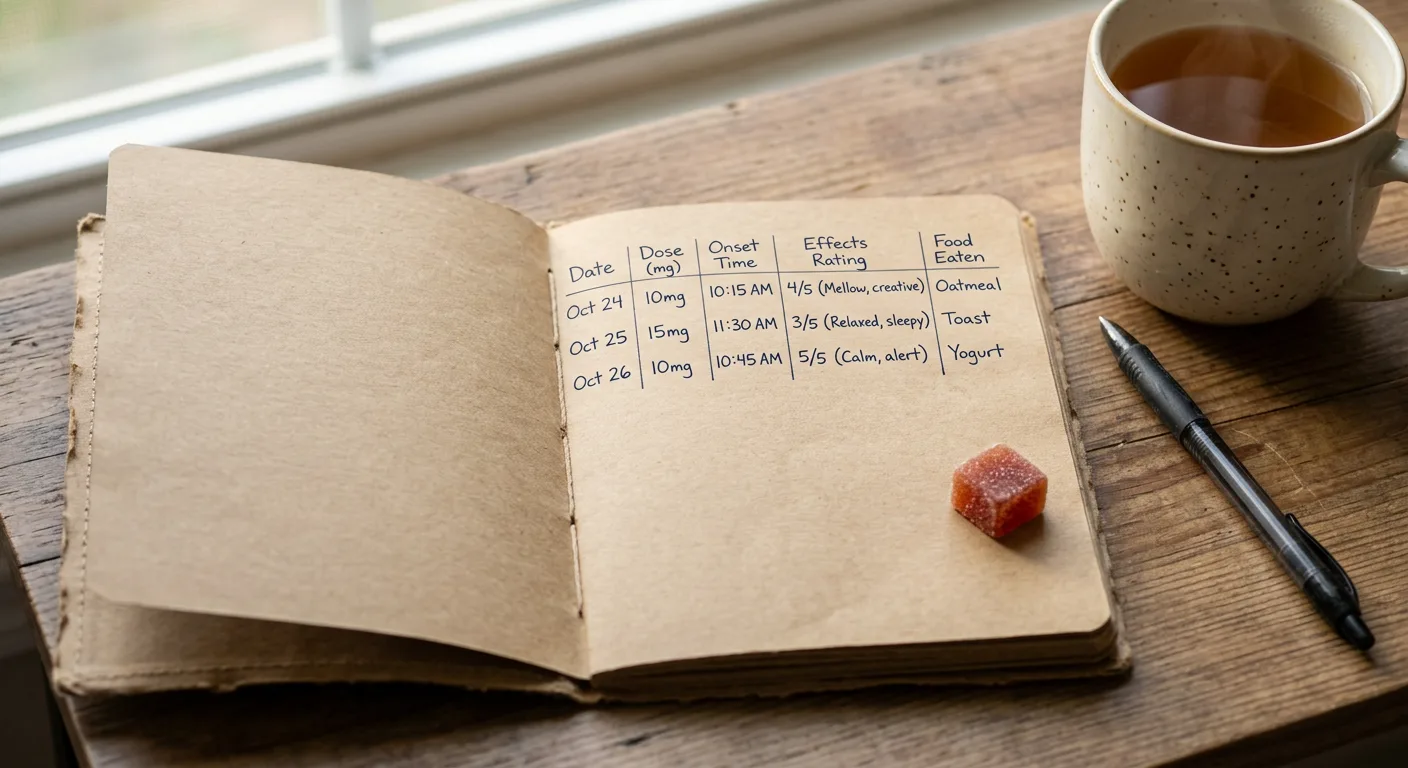
The single most effective tool for finding your perfect edible dose is a written log. Memory is unreliable — especially when you're high — and the variables change every session. A log lets you identify patterns, isolate what changed, and build toward a reliable personal protocol over 4–6 sessions.
The Dosing Log Template
- Date & Time of Ingestion: Record exact time down to the minute
- Product Used: Name, brand or homemade, and format (gummy, cookie, tincture)
- Dose Taken (mg THC): Be precise — cut gummies or use a milligram scale for homemade
- CBD Content (if any): Note the CBD dose alongside THC
- Last Meal: What you ate, how much, and how long before dosing
- Tolerance Context: Days since last cannabis use, typical frequency
- Onset Time: When you first noticed any effect at all
- Peak Time: When effects were strongest
- Peak Intensity (1–10 scale): Where 1 is barely noticeable and 10 is overwhelming
- Character of Effects: Relaxing vs. energizing, body vs. head, anxious vs. calm
- Duration to Full Sobriety: When you felt fully back to baseline
- Next Dose Intention: Would you go higher, lower, or same next time?
How to Read Your Log After 4 Sessions
After four logged sessions with different doses (starting at 2.5–5mg and titrating up by 2.5mg at a time), you'll start seeing your personal patterns. If every session at 10mg produces intensity ratings of 8–9, your optimal dose is probably 7.5mg. If your onset consistently runs 90–120 minutes, you know not to redose before 2 hours.
Pay special attention to the 'last meal' column — many people discover that food timing is the single biggest variable in their experience, more impactful even than the dose itself. Pinning down your optimal pre-dose meal context is worth as much as fine-tuning your milligrams.
Pro Tip: Home growers can add a 'strain used' column and 'extraction method' column to their log. Cross-referencing these against effect quality helps you identify which of your cultivars makes the best edibles for your specific goals — whether that's sleep, pain relief, or social relaxation. See our linalool vs. myrcene for sleep guide to understand how terpene choices affect your final edible's character.
When to Consider a Tolerance Break Before Edibles
If you've been consuming cannabis daily for more than 2–3 weeks, your CB1 receptor density has likely downregulated enough that standard doses feel weak or unreliable. A 48–72 hour tolerance break before your next edible session will reset enough receptor sensitivity that you may find your effective dose drops by 30–50%. This is the most cost-effective way to regain edible sensitivity without changing anything else.
Strain Choices for Home-Grown Edibles: Matching Potency to Purpose
Choosing your cultivation strain before you make edibles is as important as any recipe decision. The THC percentage determines your raw material, but the terpene profile, indica-sativa character, and CBD content shape what kind of edible you're actually making.
Best Strains for Relaxation and Sleep Edibles
Indica-dominant strains with myrcene-forward terpene profiles tend to produce the most sedating, body-focused edibles. Good options include:
- Northern Lights x Big Bud Feminized (20% THC) — heavy yield, classic indica sedation
- Purple Kush Feminized (27% THC) — potent, use less flower per batch
- Skywalker OG Autoflower (23% THC) — fast-growing, reliable potency
- Granddaddy Purple — not in our catalog but widely recognized for sedating edibles
- Bubba Kush — another classic for nighttime edible batches
For users exploring cannabis specifically for sleep support, our best strains for sleep guide covers this in depth.
Best Strains for Daytime and Social Edibles
Sativa-leaning and hybrid strains with limonene or pinene dominance can produce more uplifting, functional edible experiences — though keep in mind that the first-pass metabolism effect tends to flatten sativa/indica distinctions more than with inhalation:
- Super Lemon Haze Feminized (23% THC) — bright, citrusy terpene profile
- Sour Diesel Feminized (24% THC) — energizing character, popular for daytime use
- New York Power Diesel Feminized (24% THC) — diesel heritage, uplifting reputation
- Green Crack — classic sativa not in our catalog, often cited for daytime edibles
- Jack Herer — legendary sativa-dominant, excellent for creative edible experiences
Lower-THC Strains for Precision Edible Batches
If accurate dosing matters most to you — especially if you're making edibles for someone with low tolerance or medical purposes — choose a strain with moderate THC that gives you more room to work with:
- Purple Power Feminized (10% THC) — excellent for micro-dose batches
- Swiss Cheese Autoflower (17% THC) — mid-range potency, fast harvest cycle
- Cookies Kush Feminized (18% THC) — balanced potency with classic Kush character
Once you've selected your strain and grown your flower, use our Yield Estimator tool to project how much usable flower you'll harvest — and our Edible Dosage Calculator to plan your batch size and per-serving dose before you even decarb your first gram.
Frequently Asked Questions About Cannabis Edibles Dosing
These are the most-asked questions from first-time edible users and experienced growers making their own infusions for the first time.
Why do edibles not work for me?
Edibles may not work due to low CYP2C9 enzyme activity in your liver, a high-fat meal that slowed or altered absorption, low-quality or inaccurately labeled products, or an insufficient dose. Try increasing to 10–15mg, eating on a light stomach, and committing to the full 2-hour wait before concluding the edible had no effect. Home growers should verify their decarboxylation process — under-decarbed cannabis produces weak edibles regardless of the dose.
How long do edibles last?
Most edibles at moderate doses (5–15mg) last 4–8 hours. Higher doses (25mg+) can produce effects lasting 10–12 hours, with residual sedation into the following morning. The peak effect typically arrives 2–3 hours after ingestion. Factors that extend duration include higher body fat percentage, a high-fat meal taken with the edible, and low cannabis tolerance.
Can you overdose on edibles?
A lethal overdose from cannabis edibles is not considered pharmacologically possible based on current research — the LD50 (lethal dose for 50% of subjects) for THC in humans would require consuming amounts thousands of times any realistic dose. However, consuming too much THC can cause acute anxiety, racing heart, paranoia, nausea, and severe disorientation that may feel like a medical emergency. CBD, hydration, and rest are the best responses. Seek medical attention if someone loses consciousness or experiences severe vomiting they cannot control.
How much edible should I take for the first time?
First-time users should start with 2.5mg THC and wait the full 2 hours before considering any additional dose. If a 2.5mg product is unavailable, cut a standard 5mg piece in half. Do not combine with alcohol, and choose a setting where you have nowhere important to be for the next 6–8 hours. Your first experience is primarily about gathering data — not necessarily about achieving a strong effect.
Why did my edible hit me so much harder this time when I used the same dose?
Several factors can dramatically change the same dose's impact session to session: eating a higher-fat meal beforehand, a lower cannabis tolerance from a break, stress or fatigue (which amplifies THC's effects), a different product batch with slightly different actual potency, or a different time of day affecting your digestive rate. This is exactly why a dosing log is so valuable — it lets you identify which variable changed so you can control for it next time.