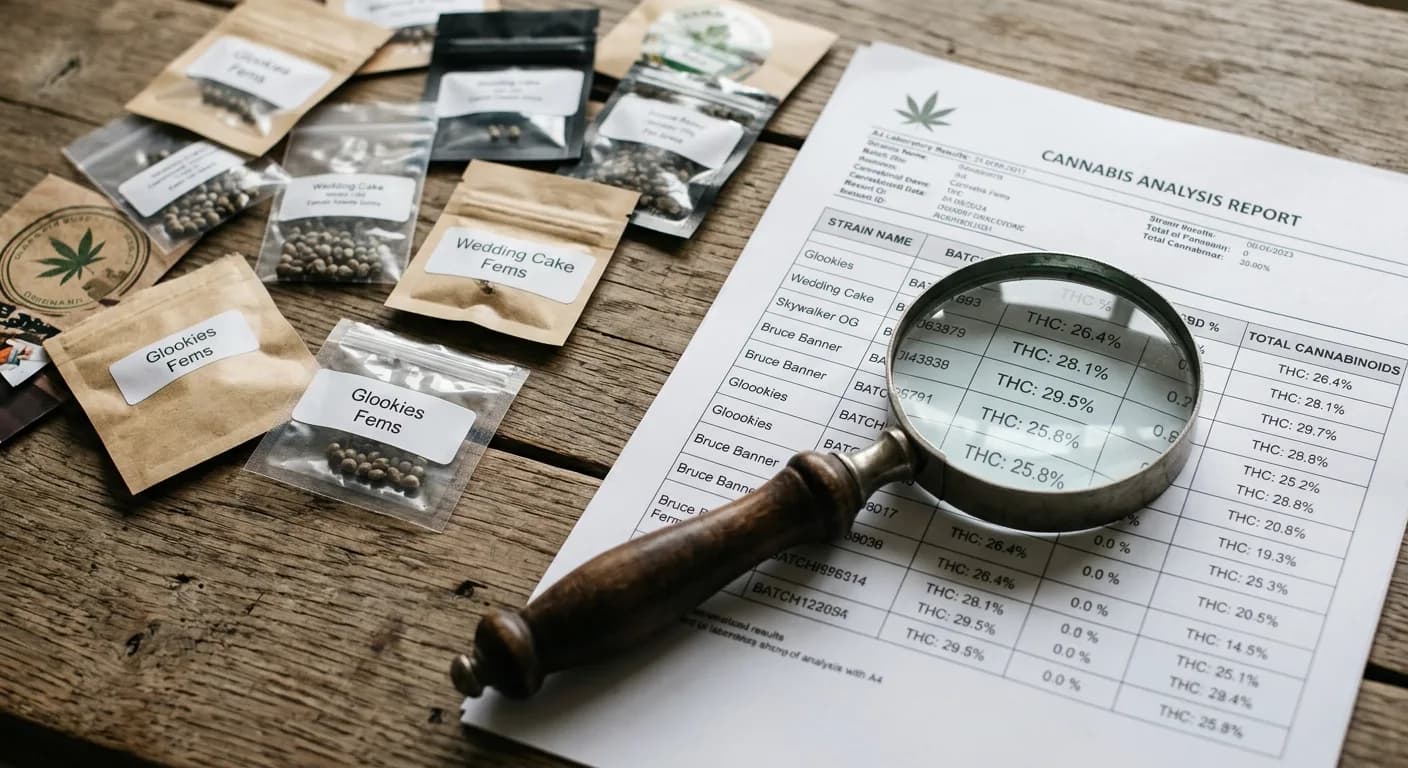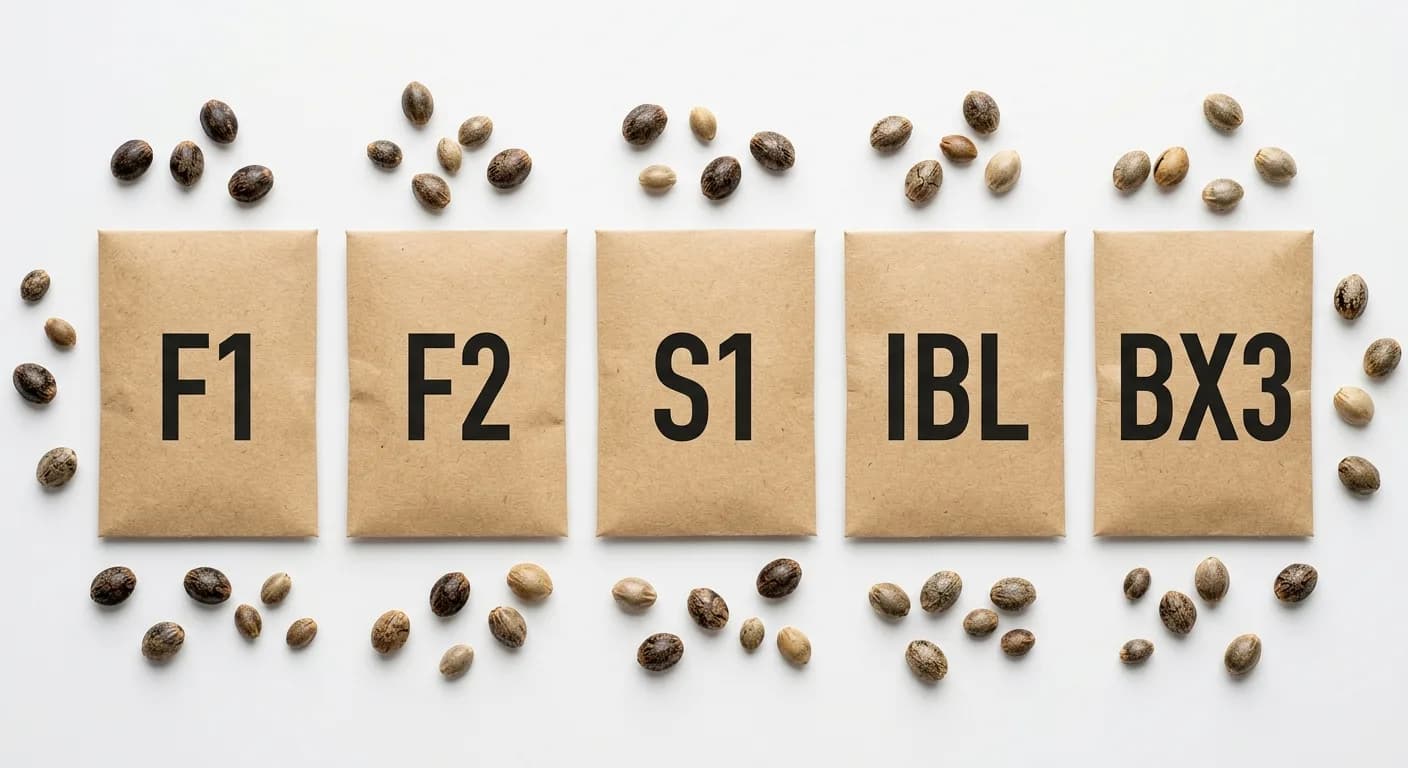
You found a seed packet that looks perfect — the breeder photos are stunning, the THC numbers are high, and the genetics sound exotic. Then you spot the label: F1 hybrid vs S1 IBL cannabis seeds. Suddenly you're second-guessing everything. What do those letters actually mean? And more importantly, does it change what you'll grow?
The answer is yes — significantly. An F1 hybrid and an S1 seed can come from the same mother plant but behave completely differently in your tent. An IBL strain will look almost identical across every seed in the packet, while an F2 might give you ten different phenotypes from ten seeds. These labels tell you what to expect before you ever crack a shell.
This guide decodes every breeding generation term that appears on cannabis seed packaging — F1, F2, F3, S1, IBL, BX — with practical guidance on which type suits your grow style. No genetics degree required. If you're still figuring out the basics of seed packaging more broadly, start with our guide on how to read cannabis seed packaging first, then come back here for the genetics deep-dive.
Why Breeding Terminology Actually Matters for Home Growers
Breeding generation labels predict how uniform your crop will be, how much vigor the plants will show, and whether you can reproduce the results reliably. Ignore them and you might plant ten seeds expecting ten identical plants — only to harvest ten wildly different phenotypes.
These terms come directly from classical Mendelian genetics, the same framework used in agriculture for over a century. When Monsanto breeds consistent corn or a tomato breeder locks in sweetness, they use the same F1/F2/IBL system cannabis breeders use today. Understanding it puts you on equal footing with the professionals.
- F1 hybrids deliver the most uniform, vigorous plants from a single pack
- F2+ seeds introduce phenotype variation — great for hunting, unpredictable for production
- S1 seeds are selfed copies of one parent — feminized but genetically different from true F1 crosses
- IBL seeds are deeply stabilized, consistent, often lower-vigor landrace-derived lines
- BX seeds tilt genetics heavily toward one elite parent through repeated backcrossing
The difference also shows up in price. True F1 hybrid seeds from two stable inbred lines cost more to produce and typically sell for $15–$25 per seed or higher. F2s and S1s are cheaper to create and usually priced lower. Knowing what you're buying helps you judge whether premium pricing is justified — or just marketing.
Whether you're growing autoflowers or feminized photoperiods, these generation labels apply across the board. Our complete breakdown of autoflower vs feminized seeds covers how these genetics interact with plant sex and flowering triggers — a good companion read to this guide.
What Is an F1 Hybrid Cannabis Seed?
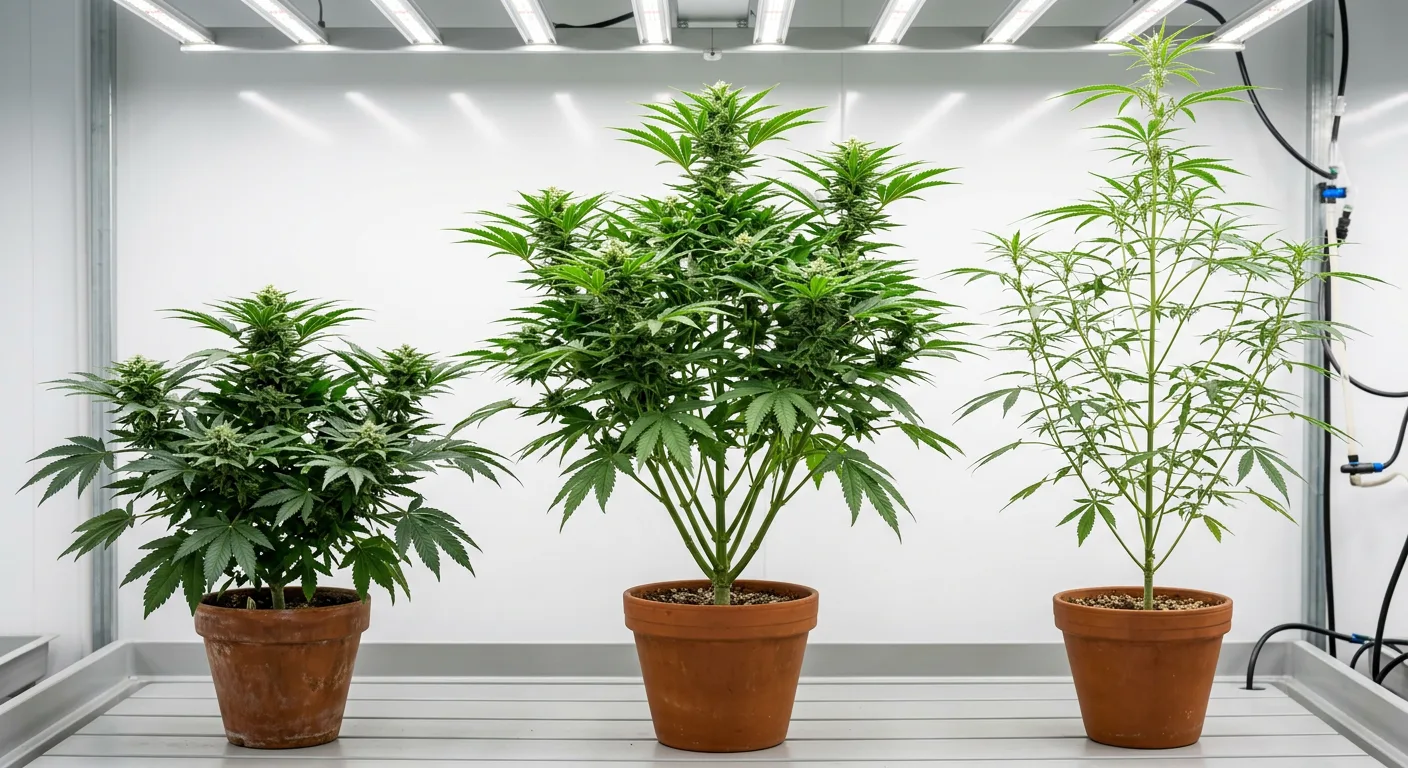
An F1 hybrid is the first-generation offspring produced by crossing two genetically distinct, stabilized parent lines. The "F" stands for "filial" (Latin for offspring) and "1" marks the first generation. When two true inbred lines (IBLs) are crossed, every seed in the resulting F1 batch inherits one copy of each parent's genes — making the whole batch remarkably uniform.
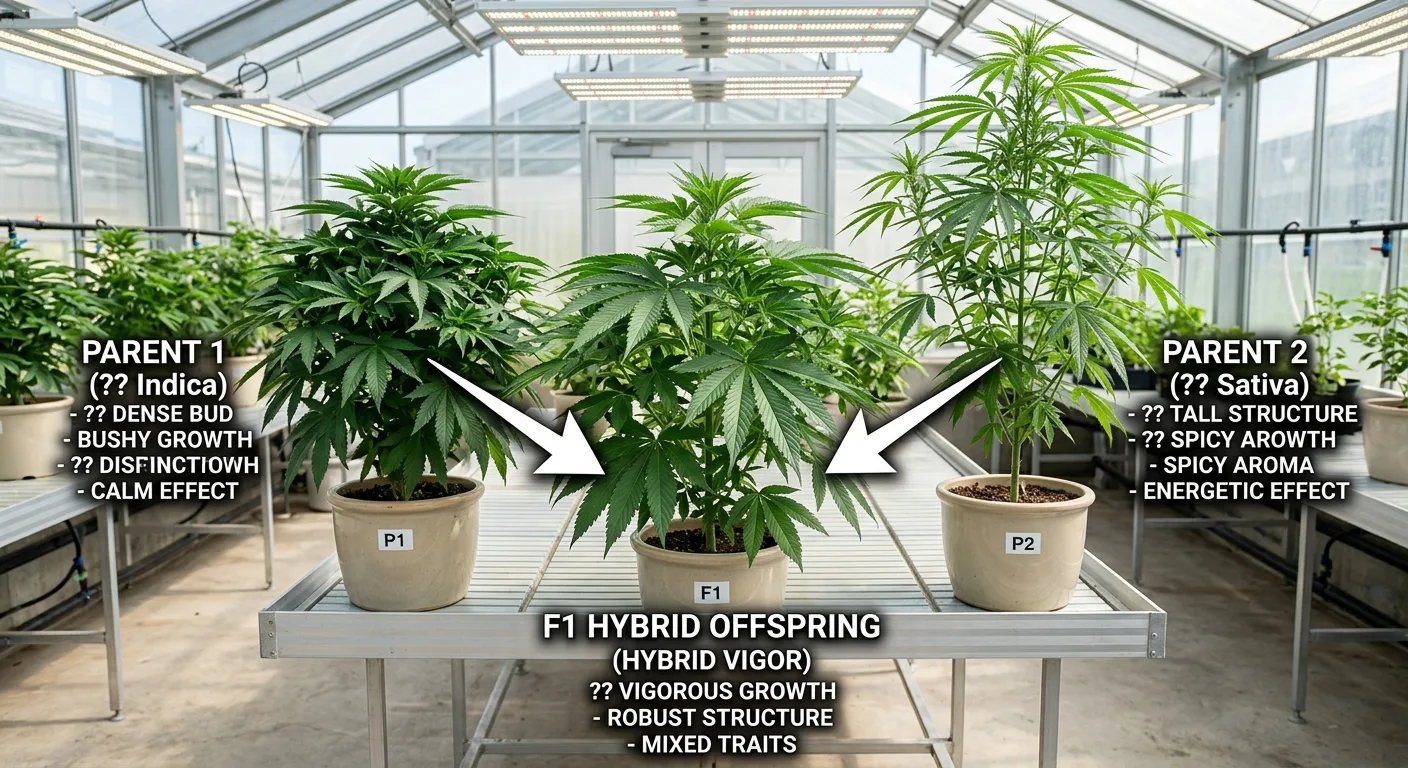
Hybrid Vigor (Heterosis): The Science Behind the Hype
F1 hybrids exhibit a phenomenon called heterosis — commonly called hybrid vigor. When two genetically different parents are crossed, the offspring often outperform both parents in growth rate, yield, disease resistance, and overall robustness. This isn't magic; it's the result of complementary gene pairs masking recessive weaknesses from either parent line.
In practical terms, F1 hybrid cannabis plants often grow 10–20% faster in their early vegetative stage compared to their parent lines, show more uniform canopy height (critical for even light distribution), and tend to resist stress — heat spikes, minor overwatering, humidity fluctuations — better than less stable genetics.
The Genetics Behind Hybrid Vigor: When two IBL parents carry different recessive alleles for the same gene locus, the F1 offspring is heterozygous at that position — it carries one working copy from each parent. This heterozygosity tends to mask negative recessives and activate complementary gene pathways, producing stronger expression than either homozygous parent alone. It's the same principle that makes F1 corn hybrids 20–30% more productive than open-pollinated varieties.
What Makes a "True" F1 vs a Marketing F1?
Here's where buyers get misled. A true F1 hybrid requires both parents to be stable, inbred lines — plants that have been selfed or sibling-crossed for at least 5–7 generations until they breed true. Crossing two random hybrid strains does not produce a true F1, even if the breeder labels it that way.
- True F1: IBL parent A × IBL parent B → highly uniform, vigorous offspring
- Poly-hybrid F1: Random hybrid A × Random hybrid B → labeled F1 but actually unpredictable
- Marketing F1: Any two-strain cross given an F1 label without true parental stability
Watch for "F1" Misuse: Some seed companies call any two-strain cross an "F1." If the breeder can't tell you the generation depth of the parent lines (IBL or at least F5–F7 parents), the F1 label may be aspirational rather than technical. Ask for parental line information before paying premium F1 prices.
Phenotypic Consistency in F1 Seeds
A well-made F1 pack from two true IBL parents produces plants that look and perform nearly identically — within about 5–10% variation in height, structure, and cannabinoid profile. For a commercial grower running 100 plants, that consistency is worth significant money. For a home grower with a 4×4 tent, it means every seed germinates into a plant you can plan around with confidence.
Strains like classic White Widow, OG Kush, and Northern Lights have earned reputations partly because their foundational genetics were stabilized into near-IBL consistency before widespread release. Our White Widow Feminized Seeds (25% THC) and OG Kush Feminized Seeds (26% THC) carry that foundational stability — making them predictable producers for home growers who want results, not surprises.
F2, F3, F4: What Happens When You Cross F1s Together
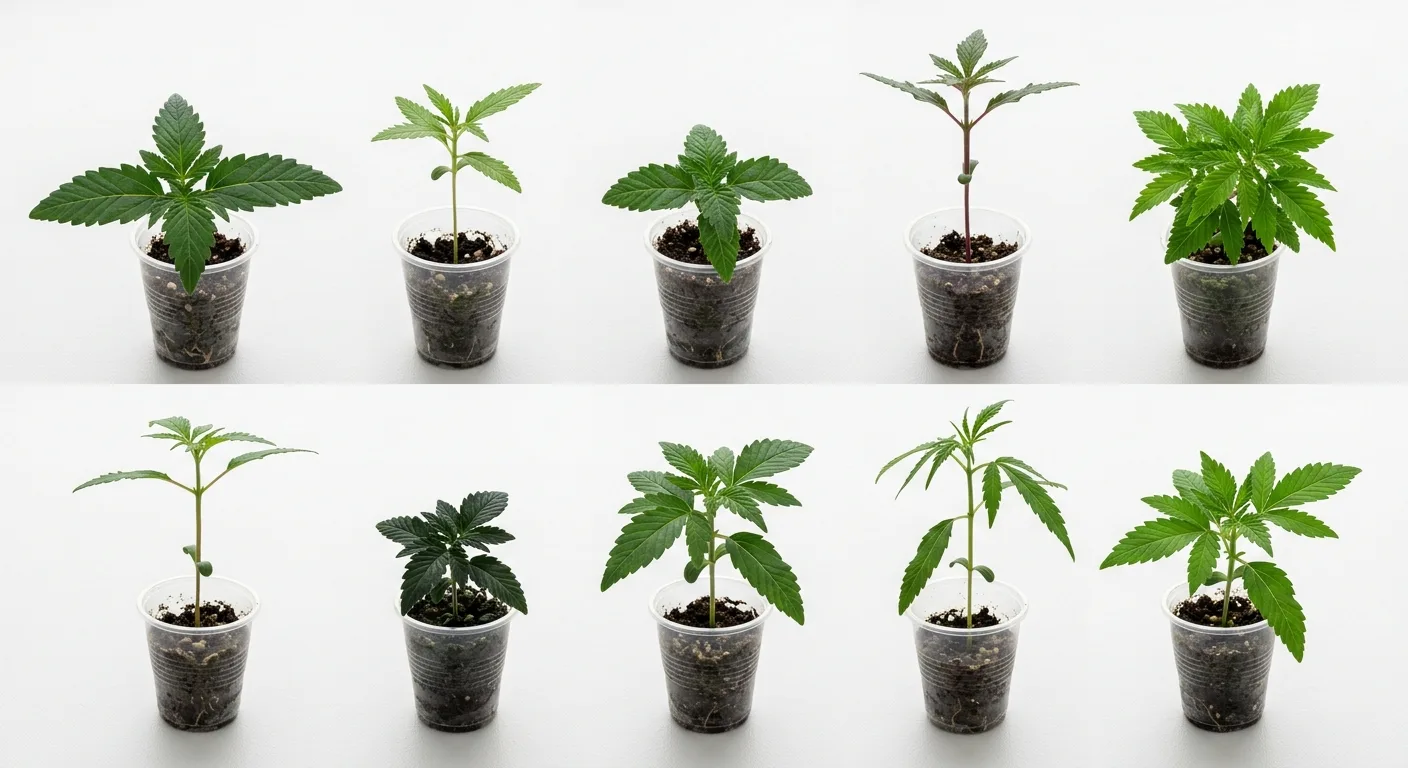
When two F1 hybrid plants are bred together, the offspring are called F2 seeds. Each subsequent generation of sibling-crossing adds another number — F3, F4, F5, and so on. With each generation, genetic variation within the population increases before it eventually decreases again as traits begin to stabilize through continued selection.
The F2 Generation: Why Breeders Call It the "Phenotype Treasure Chest"
The F2 generation is where professional breeders do their most exciting work. Because F1 plants are all heterozygous (carrying two different copies of many genes), crossing two of them produces an F2 population with enormous genetic diversity. Mendel's classic pea experiments showed that crossing two F1 hybrids produces approximately a 3:1 ratio of dominant to recessive trait expression — but with complex polygenic traits like cannabinoid content and terpene profile, the variation is far richer than a simple ratio.
- An F2 pack of 10 seeds might yield 10 distinctly different phenotypes
- Some phenotypes will exceed both parents in desirable traits (transgressive segregation)
- Some will express recessive traits that were hidden in the F1 generation
- Rare "unicorn" phenotypes only appear in F2+ populations — they cannot exist in a true F1
The Breeder's Lottery: F2 packs are where legendary keeper clones come from. When a breeder runs 200 F2 seeds looking for that one exceptional phenotype, they call it a "pheno hunt." For home growers with limited space, an F2 pack of 5–10 seeds is rarely the right buy — unless pheno hunting is exactly your goal. Check out our indica vs sativa genetics guide for context on how trait expression varies across generations.
F3 and F4: The Road to Stabilization
Breeders who find a standout F2 phenotype will then self it or cross it with a sibling to produce F3 seeds. Each generation of selective inbreeding increases homozygosity — the proportion of gene pairs where both copies are identical. More homozygosity means more predictable, consistent offspring.
By F5–F6, a line that started as an F1 hybrid begins to express IBL-like consistency. Many commercially available "stabilized" strains on the market today are actually F5–F7 lines sold under strain names, with the generation number quietly omitted from marketing.
| Generation | Genetic State | Phenotype Variation | Best For |
|---|---|---|---|
| F1 | Fully heterozygous (hybrid vigor peak) | Very low (5–10%) | Production grows, beginners |
| F2 | Segregating — high diversity | Very high (10+ distinct phenos) | Pheno hunting, breeding projects |
| F3 | Partially stabilizing | High, but narrowing | Intermediate breeding selection |
| F4–F5 | Mostly stabilized | Moderate — keeper lines emerging | Pre-IBL stabilization |
| F6–F7+ | Near-IBL | Low — breeding true | Seed production, IBL development |
| IBL | Highly homozygous | Very low (near clone-like) | Legacy preservation, collectors |
S1 Cannabis Seeds: Selfed, Not the Same as F1 Feminized
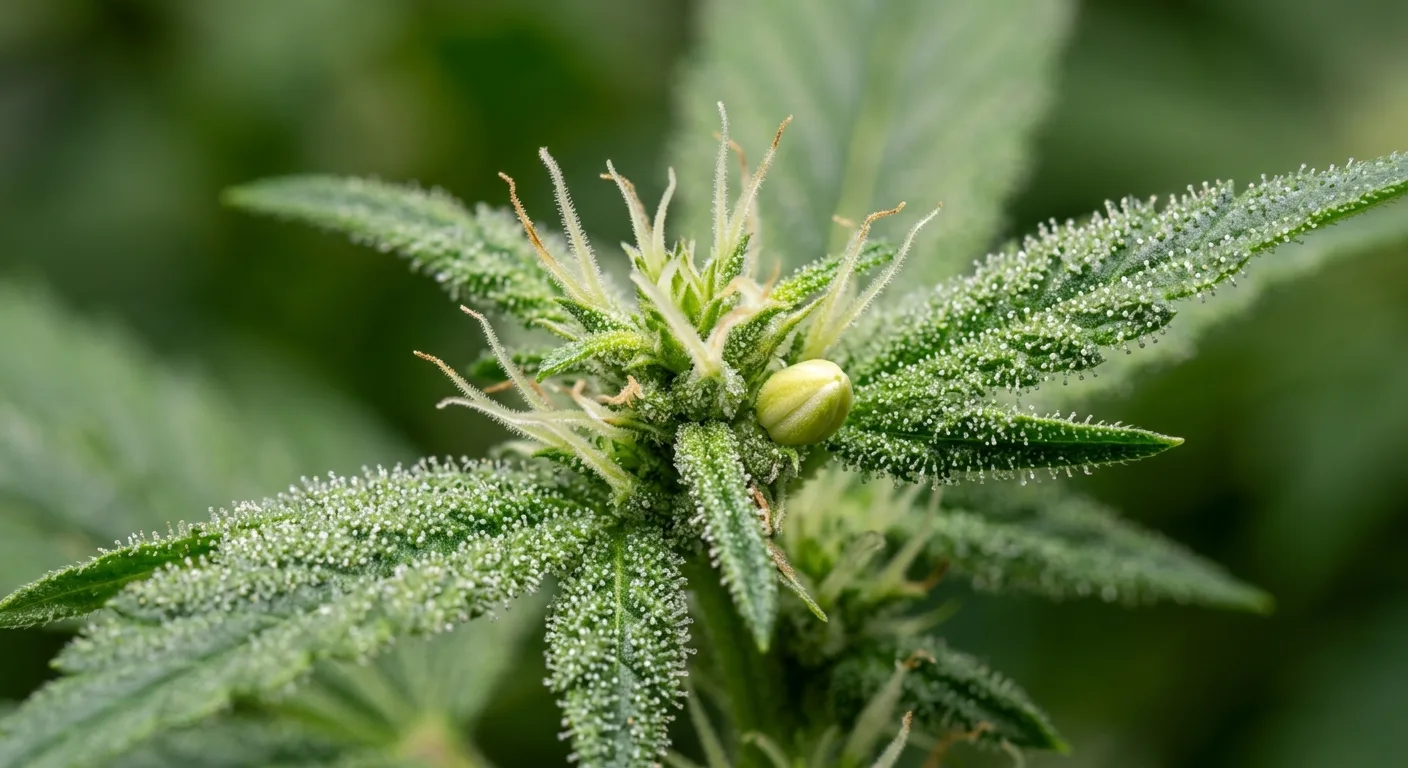
S1 seeds are produced by selfing — forcing a female plant to produce pollen and fertilize itself. The "S" stands for "selfed generation" and "1" marks the first generation of selfing. S1s are almost always feminized (99%+ female) because a female plant can only pass on female sex chromosomes, but they are genetically distinct from feminized F1 hybrid seeds in important ways.
How Selfing Works: Colloidal Silver and Rodelization
Breeders force sex reversal in a female plant using one of two methods. The most reliable is colloidal silver — a solution of silver particles in water sprayed on developing flower sites during early bloom. The silver ions block ethylene production, which triggers male flower development on an otherwise female plant. The resulting pollen carries only female (XX) chromosomes.
- Colloidal silver method: Reliable, consistent, industry standard for S1 and feminized seed production
- Rodelization: Allowing an over-mature female to self-pollinate naturally via stress-induced hermaphroditism — less reliable, higher hermaphrodite risk in offspring
- STS (silver thiosulfate): More potent than colloidal silver, used in professional breeding labs for increased pollen production
Why S1 Genetics Differ from F1 Feminized: When a female self-pollinates, the offspring inherit two copies of genes from the same genetic source. This is called autozygosity. It means S1 seeds will rapidly express recessive traits — including any latent hermaphrodite tendencies — that were hidden in the mother. S1s are copies of one parent, not a hybrid of two. The result: less hybrid vigor, but potentially more clone-accurate trait expression.
S1 vs F1 Feminized: The Critical Distinction
Both S1 seeds and F1 feminized hybrid seeds produce female plants. That's where the similarity ends. The table below breaks down the real differences:
| Characteristic | S1 (Selfed) | F1 Feminized Hybrid |
|---|---|---|
| Parent source | Single female plant | Two distinct parent lines |
| Genetic diversity | Low — offspring resemble mother | High heterozygosity — hybrid vigor |
| Hybrid vigor | Reduced or absent | Full heterosis expression |
| Phenotype consistency | Moderate — depends on mother's stability | High — especially from IBL parents |
| Hermaphrodite risk | Higher — recessive herm traits exposed | Lower — masked by heterozygosity |
| Best use | Preserving elite clone genetics in seed form | Production grows, commercial cultivation |
| Price | Mid-range | Premium |
Why S1s Are Valuable Despite the Limitations
S1 seeds solve a specific problem: preserving an elite mother plant in seed form. If a breeder has a legendary clone-only cut — a phenotype that can't be legally or physically shipped — selfing it creates seeds that carry approximately 87.5% of the mother's genetic identity (accounting for recombination). The S1 seeds become portable, storable copies of a prized genetic.
For home growers, S1s are useful when you want to grow something close to a famous clone-only cut without sourcing the actual clone. The trade-off is less vigor and a small but real increased hermaphrodite risk compared to true F1 feminized crosses. Always source S1 seeds from breeders who disclose the hermaphrodite rate of the original mother — a clean maternal phenotype produces much safer S1s.
S1 ≠ F1 feminized. Both produce female plants, but S1s are genetic copies of one parent while F1 feminized hybrids are crosses between two distinct parents. If a seed company sells "feminized" seeds without specifying whether they're F1 crosses or S1 selfs, ask — it changes what you'll grow.
IBL Cannabis Seeds: The Living History of a Strain
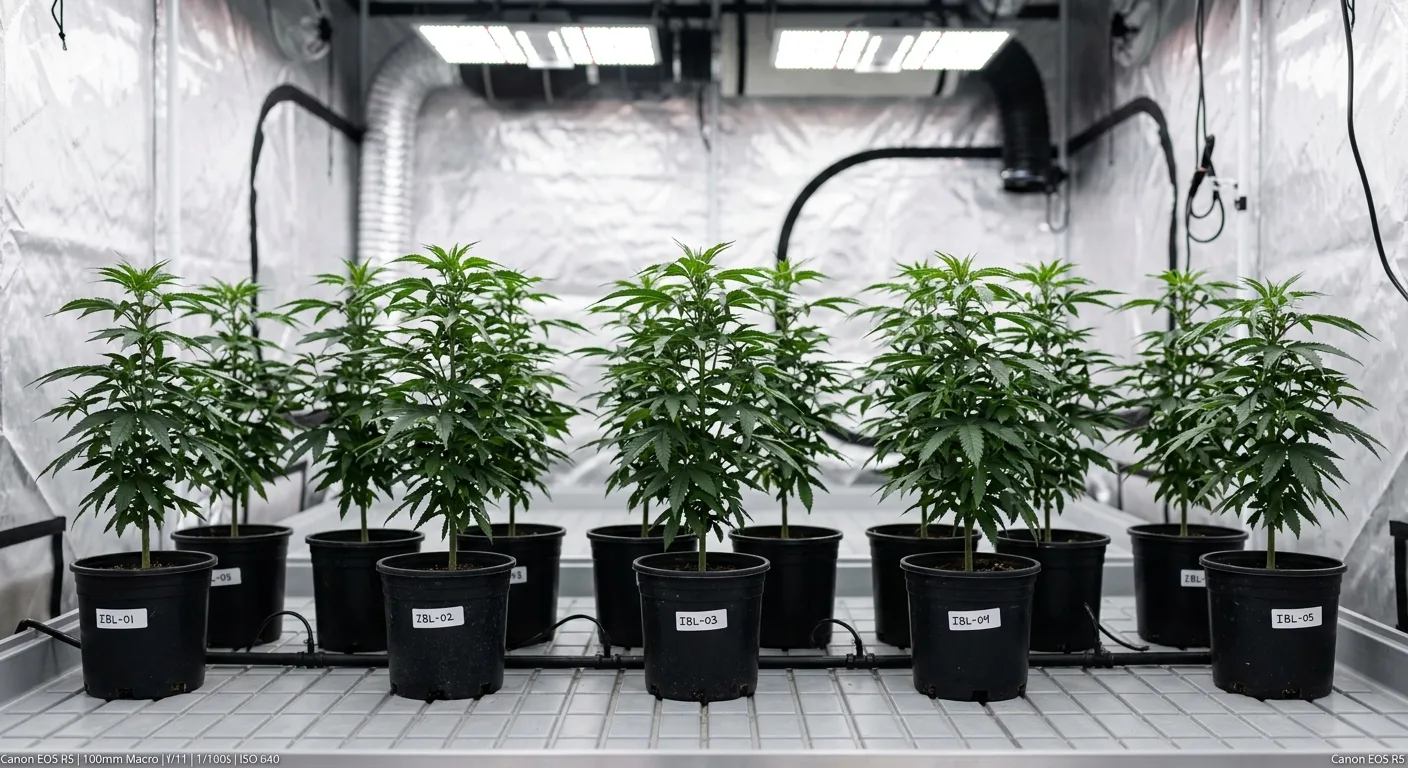
IBL stands for Inbred Line. An IBL strain has been selectively inbred — usually through sibling crosses or selfing — for so many generations (typically 5–10+) that it breeds true with extremely low phenotype variation. IBLs are the closest thing cannabis has to a pure, stable variety. They are often prized by collectors, historians, and breeders as the foundation of modern cannabis genetics.
How an IBL Is Created
Creating a genuine IBL takes years — often a decade or more. A breeder starts with a population showing desirable traits, selects the most consistent individuals, and breeds them together generation after generation while selecting only the most true-breeding offspring. Each generation of inbreeding increases homozygosity by approximately 50% at each locus. After 6–7 generations, most gene pairs are homozygous and the line breeds predictably.
Select Foundation Stock
Choose a landrace, heirloom, or stable hybrid population with clearly defined target traits — specific terpene profile, growth structure, cannabinoid ratio.
Sibling Cross or Self
Cross closely related individuals (brother × sister) or self the best female each generation. Select only offspring that closely match the target phenotype.
Repeat for 6–10 Generations
Each generation, homozygosity increases ~50% at each gene locus. By generation 7, most traits are fixed. This takes 5–10+ years with annual growing seasons.
Test and Release
Grow trial batches to verify consistency across seeds. A true IBL should produce plants with 90%+ trait similarity across the entire population.
Landrace-Derived IBLs and Why Collectors Prize Them
Many of the most respected IBLs trace back to landrace cannabis — geographically isolated, naturally selected populations from regions like Afghanistan, Colombia, Thailand, and Malawi. These landraces were themselves near-IBLs after centuries of natural selection. When early breeders isolated and stabilized specific landrace phenotypes in the 1970s and 1980s, they created the foundational IBLs that underpin almost all modern cannabis genetics.
- Classic Afghan IBLs contribute resin density, compact structure, and fast flowering
- Colombian and Thai IBLs contribute sativa stretch, cerebral effects, and complex terpene profiles
- Malawi and Swazi IBLs carry rare equatorial genetics with distinctive sweet/spicy profiles
Our Swazi Feminized Seeds (18% THC) trace their lineage to genuine Swazi African landrace genetics — one of the few remaining connections to pre-commercialization African cannabis heritage. Similarly, Malawi Gold Autoflower Seeds (13% THC) carry authentic Central African IBL genetics in a modern autoflowering format. For a deeper look at cannabis heritage and preservation, read our guide on heirloom cannabis strains, history, genetics and preservation.
The Trade-Off: IBL Stability vs Reduced Vigor
IBLs are predictable, but they pay a price for that predictability. Inbreeding depression — the accumulation of expressed recessive weaknesses through repeated inbreeding — can reduce yield, growth rate, and stress resistance in heavily inbred lines. This is the inverse of hybrid vigor. A true IBL often yields less per plant than an F1 hybrid made from the same parents.
For breeders and collectors, that trade-off is worthwhile — IBLs provide the stable foundation needed to create new F1 hybrids with consistent results. For home growers focused on maximum yield, IBLs may underwhelm unless grown with careful attention to optimal conditions.
IBLs breed true — plant ten seeds and get ten nearly identical plants. But "true" doesn't mean "maximum." IBLs often show 10–20% lower yields than F1 hybrids from the same genetic base. Their value is consistency, heritage, and breeding utility rather than raw production numbers.
BX (Backcross) Seeds: Locking In Elite Traits

A backcross (BX) is produced by crossing an F1 hybrid back to one of its parent lines. The goal is to increase the genetic contribution of one specific parent while retaining specific traits from the cross. BX1 means backcrossed once, BX2 twice, and BX3 three times. Each backcross generation approximately doubles the proportion of the recurrent parent's genetics in the offspring.
Why Breeders Use Backcrossing
Backcrossing solves a common breeding problem: you have an elite parent line with one outstanding trait — say, exceptional resin production or a specific terpene profile — but crossing it with another strain dilutes those traits. By crossing the F1 offspring back to the original elite parent repeatedly, you progressively recover that parent's genetics while (hopefully) maintaining the best trait introduced by the cross.
| Generation | Recurrent Parent % in Offspring | Typical Use |
|---|---|---|
| F1 (initial cross) | 50% each parent | Introduce new trait to elite line |
| BX1 | ~75% recurrent parent | Begin recovering parent traits |
| BX2 | ~87.5% recurrent parent | Elite parent traits mostly dominant |
| BX3 | ~93.75% recurrent parent | Near-recovery of original parent with added trait |
| BX4 | ~96.9% recurrent parent | Full recovery — essentially improved IBL |
BX vs S1: A Common Point of Confusion
Some breeders label S1 seeds as "BX" because selfing does move genetics back toward one parent (the mother herself). This is technically incorrect — a true BX crosses back to a different individual from the parent line, while an S1 uses the same plant as both pollen donor and seed recipient. The distinction matters because S1s accumulate homozygosity faster and carry higher recessive expression risk than a properly executed BX program.
Reading BX Labels on Seed Packets: When you see "BX3 OG Kush" on a seed packet, it means the strain was backcrossed three times toward an OG Kush parent line — the offspring should express approximately 93.75% OG Kush genetics plus a small contribution of whatever was crossed in initially. BX3+ seeds can be nearly as consistent as IBLs for the recurrent parent's traits.
S2, S3, and Beyond: Multi-Generation Selfing
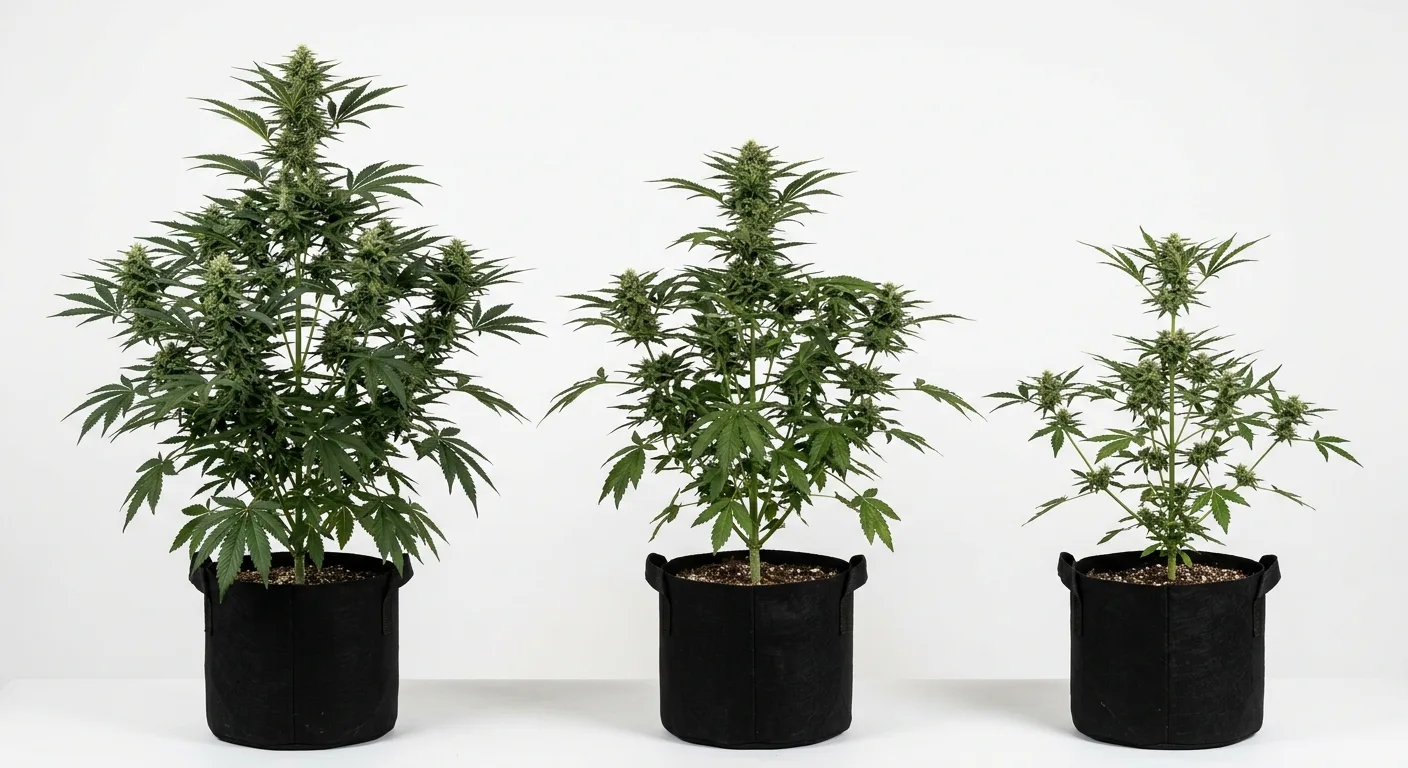
Just as F1 crosses can continue into F2, F3, and beyond, selfed lines can continue past S1 into S2, S3, and further. Each successive generation of selfing increases homozygosity, moving the line progressively toward IBL-like stability. However, the risk of inbreeding depression also compounds with each selfing generation.
- S1: First selfed generation — ~50% homozygosity increase from parent
- S2: S1 offspring selfed again — ~75% homozygosity, noticeable inbreeding begins
- S3: Significant inbreeding depression risk — vigor noticeably reduced in many lines
- S4+: Near-IBL stability but often significant vigor loss — only valuable in the strongest genetic backgrounds
Multi-generation selfing is a shortcut to IBL-like stability, but it skips the selective pressure that makes traditional IBL development rigorous. A traditional IBL built through sibling crosses with strong selection pressure typically produces healthier, more robust plants than an equivalent S4 selfed line from the same starting genetics.
Poly-Hybrid Seeds: The Modern Market Reality
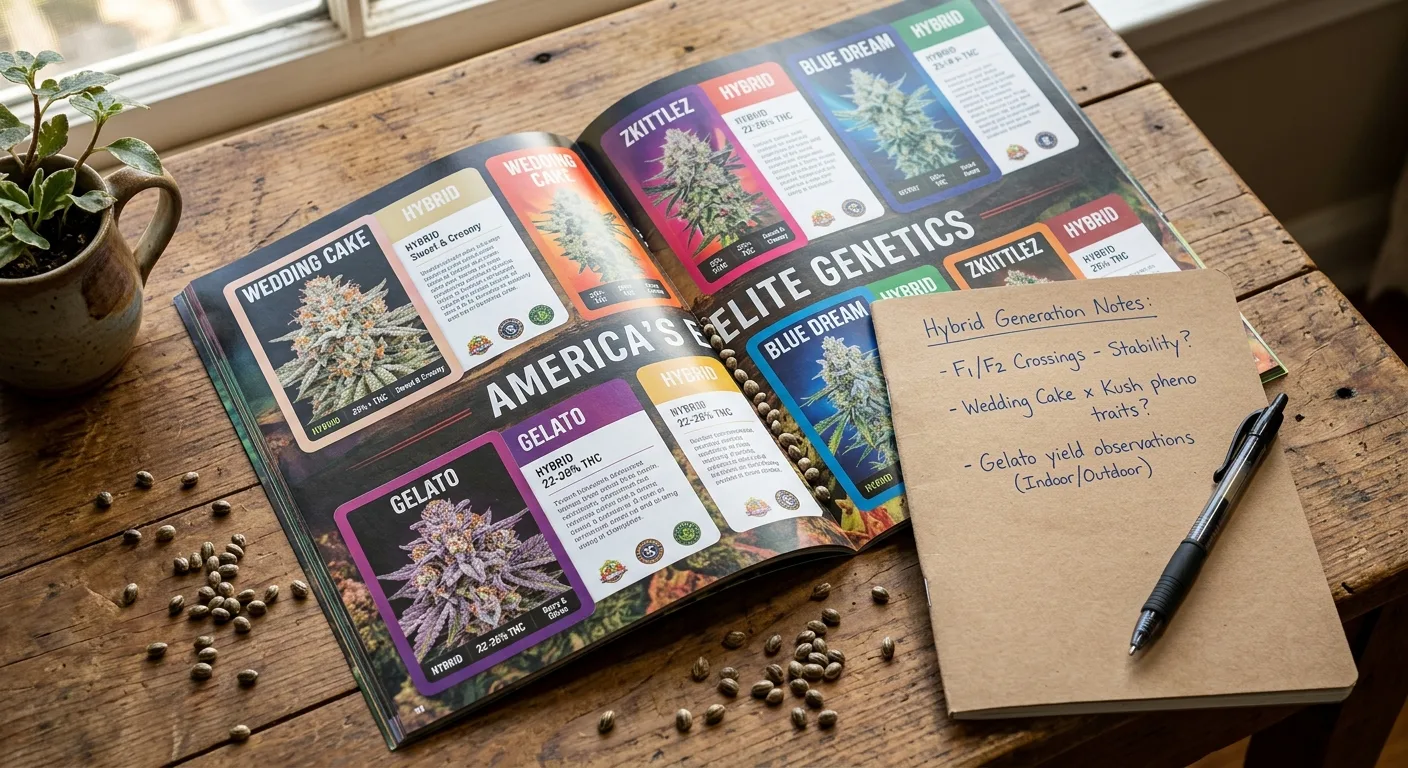
The vast majority of cannabis seeds sold today — including many marketed as "F1" — are technically poly-hybrids: crosses between two strains that are themselves already complex hybrids. Wedding Cake × Gelato, Gorilla Glue × Zkittlez, Runtz × Ice Cream Cake — these popular modern crosses stack generations of hybrid genetics without establishing true IBL parental lines first.
Poly-hybrids are not inherently inferior. They can produce excellent plants with outstanding effects and yields. But they behave differently from true F1 hybrids made from IBL parents:
- Higher phenotype variation within a pack (more like F2 behavior than true F1)
- Less predictable trait expression — a pack of 10 may show 4–6 distinct phenotypes
- Hybrid vigor is present but inconsistent, depending on how heterozygous both parents are
- Generally lower price than true F1 hybrids, but not always labeled differently
Premium Pricing Alert: Some breeders charge true F1 hybrid prices for poly-hybrid seeds. If a seed company cannot tell you the generation depth of their parent lines — or if both "parents" are themselves well-known commercial hybrids — you're almost certainly buying poly-hybrid seeds regardless of the F1 label. For pure consistency, look for breeders who publish their breeding methodology and parental IBL backgrounds.
Strains like Northern Lights × Big Bud Feminized Seeds (20% THC) and Northern Lights × Amnesia Haze Feminized Seeds (24% THC) represent this poly-hybrid model honestly — two well-known strains combined for complementary trait expression. Both parent strains have deep stabilization histories, which pushes these crosses closer to true F1 behavior than a typical modern poly-hybrid stacking newer, less-stable genetics.
The Complete Comparison: F1 vs F2 vs S1 vs IBL vs BX Side by Side
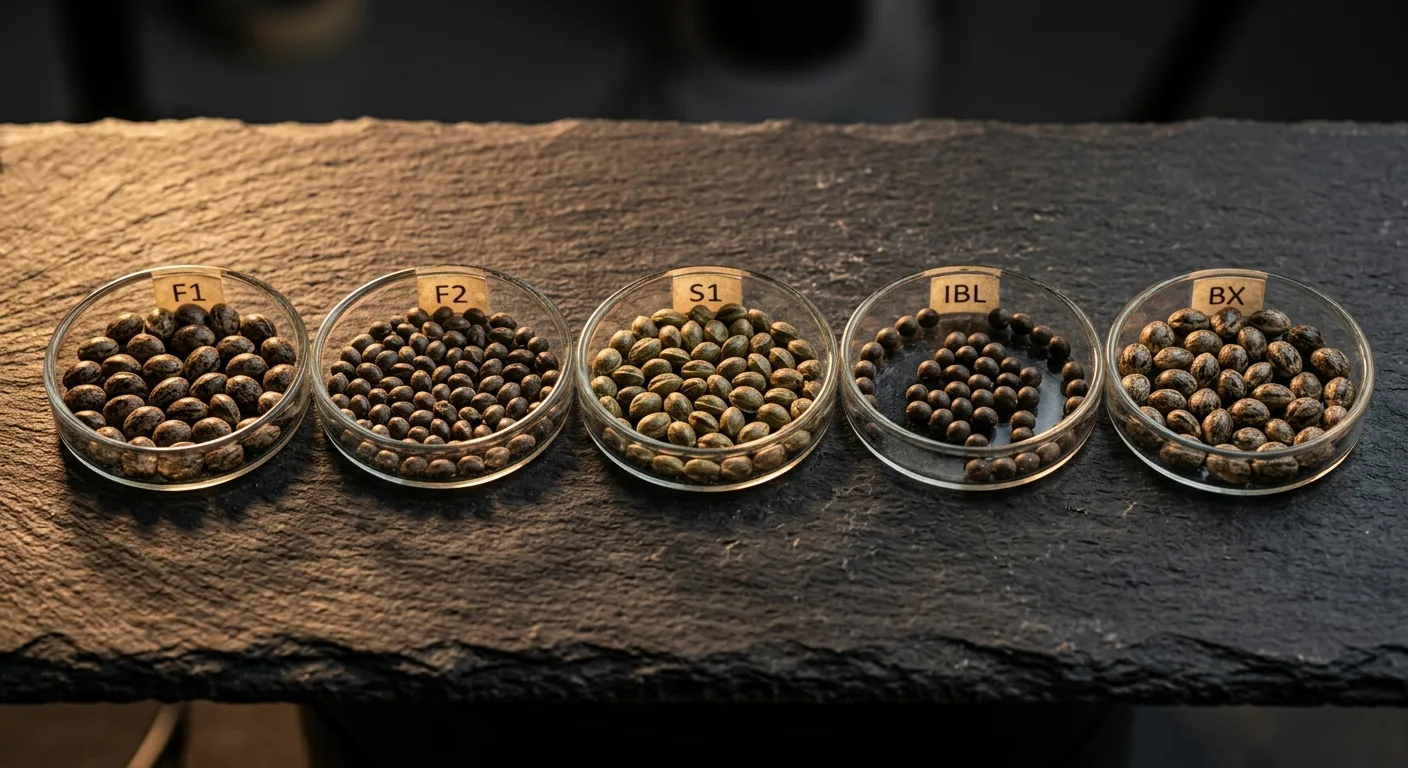
Before buying, compare the five main seed types across the traits that matter most for your grow. This table consolidates every key variable in one place.
| Trait | F1 Hybrid | F2 | S1 | IBL | BX3 |
|---|---|---|---|---|---|
| Phenotype uniformity | ★★★★★ | ★★☆☆☆ | ★★★☆☆ | ★★★★★ | ★★★★☆ |
| Hybrid vigor | ★★★★★ | ★★★☆☆ | ★★☆☆☆ | ★★☆☆☆ | ★★★☆☆ |
| Yield potential | ★★★★★ | ★★★★☆ | ★★★☆☆ | ★★★☆☆ | ★★★★☆ |
| Phenotype variety | ★☆☆☆☆ | ★★★★★ | ★★☆☆☆ | ★☆☆☆☆ | ★★☆☆☆ |
| Breeder utility | ★★★☆☆ | ★★★★★ | ★★★★☆ | ★★★★★ | ★★★★☆ |
| Beginner friendliness | ★★★★★ | ★★☆☆☆ | ★★★☆☆ | ★★★★☆ | ★★★★☆ |
| Hermaphrodite risk | Low | Low–Med | Med–High | Low | Low |
| Price per seed | $$$–$$$$ | $$ | $$–$$$ | $$–$$$ | $$$ |
| Replicability | High | Low | Medium | Very High | High |
Use the Right Tool for Planning: Once you've chosen your seed type, use our yield estimator tool to project harvest weight based on your setup. F1 hybrids consistently hit the higher end of yield estimates; F2 packs produce more variable results that are harder to predict with any single model.
Practical Buyer Decision Guide: Which Seed Type Is Right for You?
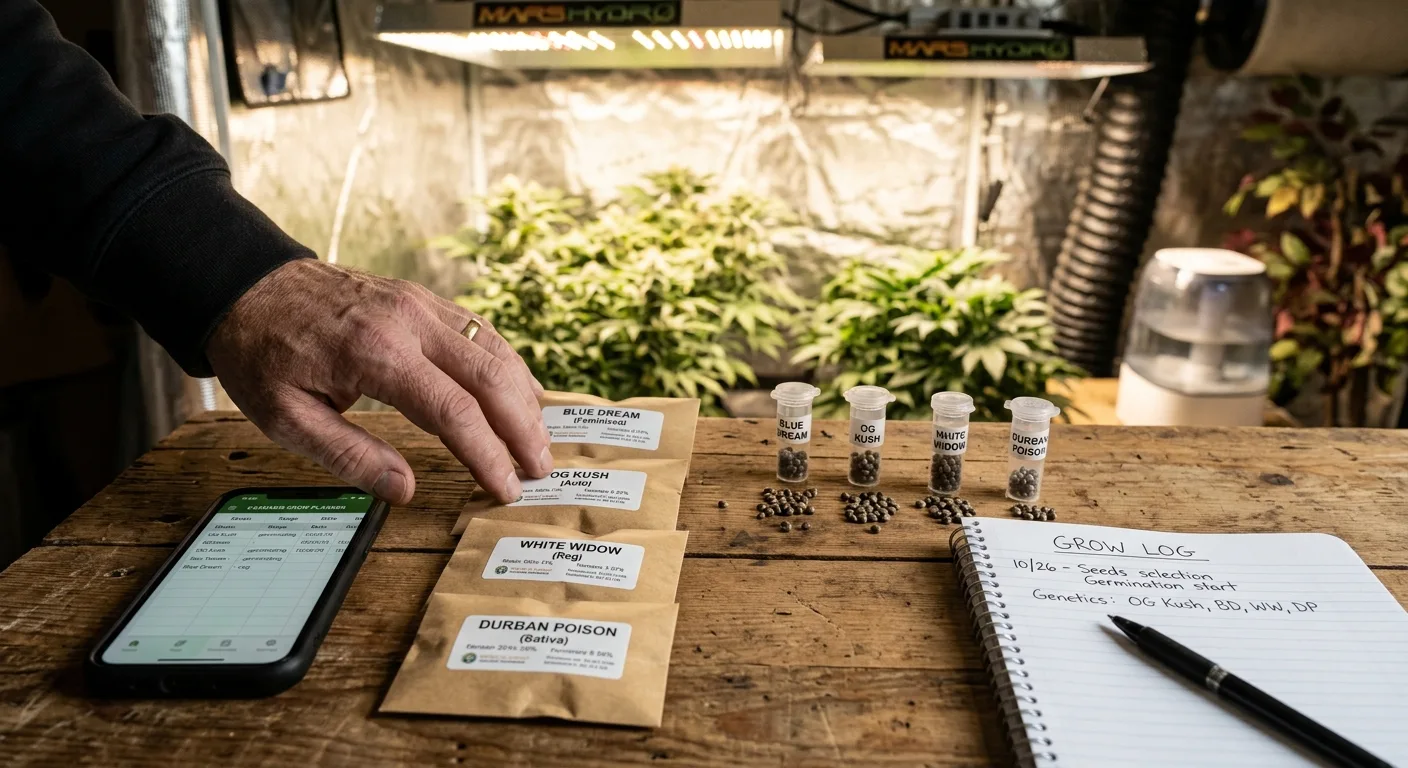
Knowing what each label means is only useful if it helps you make better buying decisions. Use this section as your decision framework based on your grow goals, experience level, and what you want out of a seed pack.
Buy F1 Hybrid Seeds If...
- You want every plant in your tent to perform consistently
- You're running a small space (1–4 plants) where variation hurts your canopy
- You're a beginner who needs predictable results to build confidence
- You're growing commercially or semi-commercially where consistency = money
- You want maximum yield and vigor from your genetics
- You don't have the space or resources to run pheno hunts
Good F1-stable options to explore: White Widow, OG Kush (both of which you'll find in our catalog), Northern Lights, Gorilla Glue #4, and Jack Herer — all strains with deep enough stabilization histories to produce reliably uniform phenotype expression across a seed pack.
Buy F2 Seeds If...
- You have space to run 20–50 seeds and select your favorite phenotype
- You're an experienced grower comfortable with variation management
- You're starting a breeding project and need genetic diversity to select from
- You want to potentially find a unique keeper phenotype not available in commercial clones
- Budget is a priority — F2 packs are cheaper per seed than F1s
Buy S1 Seeds If...
- You want to grow something close to a specific legendary clone-only cut
- You understand and accept slightly higher hermaphrodite risk
- You're preserving genetics in seed form for long-term storage
- You're an intermediate-to-advanced grower who can manage variation
For long-term seed storage guidance, our detailed article on how to store cannabis seeds for 5+ years covers humidity, temperature, and packaging best practices that apply to all seed types but are especially important for S1 seeds, which can degrade faster than robust F1 hybrids.
Buy IBL Seeds If...
- You're a collector preserving genetic heritage
- You want a foundation line to build new F1 hybrids from
- You value historical accuracy in strain expression over maximum yield
- You want seeds that breed true so you can maintain your own seed stock
- You grow for specific effects rather than maximum THC or yield
Buy BX Seeds If...
- You love a specific strain and want its traits maximized
- You're looking for high trait consistency with a slight yield advantage over pure IBL
- You want genetics that lean strongly toward a known elite parent
- You're breeding and want to reinforce specific traits without starting from scratch
The single most useful question to ask before buying: "How many plants can I realistically grow?" If the answer is 1–6, buy F1 or IBL for predictability. If the answer is 20+, F2 pheno hunts become viable and potentially rewarding. S1 and BX seeds fall in between — valuable for specific purposes but not general-purpose choices for most home growers.
Connecting These Terms to Everyday Seed Catalog Shopping

Most commercial seed catalogs don't list generation terminology prominently — you often have to dig into strain descriptions or contact the breeder directly. But there are contextual clues that help you identify what generation you're likely buying:
- "Feminized" alone: Could be S1, F1 feminized, or poly-hybrid — ask for clarification
- "Hybrid" or cross notation (e.g., "OG Kush × Durban Poison"): Likely poly-hybrid unless generation depth is stated
- "Stabilized" or "regular" seeds: Often IBL-derived or near-IBL selections
- "F1" explicitly stated: Verify parental IBL status before paying premium
- Named landrace strains: Often IBL or very close — Swazi, Malawi Gold, Durban Poison, Hindu Kush
- "BX2" or "BX3" in the name: Backcross notation — check which parent is dominant
The catalog items with the most transparent genetics tend to come from seed breeders who publish breeding notes, parent line histories, and generation depth. If a catalog only says "a legendary cross of two elite strains" without naming parents or generation depth, treat it as a poly-hybrid and price it accordingly. Our complete seed packaging guide covers what else to look for beyond just the genetics labels.
For growers choosing between feminized and autoflowering formats — a decision that interacts directly with genetics generation — our autoflower vs feminized seed guide maps exactly which breeding types are most commonly used in each format. Autoflower genetics typically run through more generations of inbreeding to stabilize the ruderalis autoflowering trait, making most autoflower seeds closer to IBL or near-IBL in behavior regardless of label.
Strains like Skywalker OG Autoflower Seeds (23% THC), Holy Grail Kush Autoflower Seeds (20% THC), and Amnesia Haze Autoflower Seeds (17% THC) demonstrate how autoflowering genetics combine the ruderalis autoflowering IBL trait with modern hybrid photoperiod genetics — a multi-generational breeding achievement that took decades to reach commercial consistency.
For high-THC photoperiod growers wanting stable, well-proven genetics, Purple Kush Feminized Seeds (27% THC), Quantum Kush Feminized Seeds (30% THC), and Black Widow Feminized Seeds (26% THC) all carry deep enough stabilization histories to deliver predictable results across a pack — behaving closer to true F1 or advanced poly-hybrid than to raw F2 variation.
Before finalizing any seed order, it's also worth checking our germination guarantee — seed quality at the point of purchase is separate from genetic generation, but both matter for your grow outcome.
A Note on "Feminized" vs Generation Labels: "Feminized" describes the sex of the plants — female-producing. F1, F2, S1, IBL, and BX describe the genetic generation. A seed can be simultaneously feminized AND F1 (cross between two IBL parents, with one reversed for pollen). These categories describe different things and both appear on premium seed packets. Always check both dimensions before buying.
What does F1 mean on a cannabis seed packet?
F1 stands for "first filial generation" — the offspring of a cross between two different parent plants. In cannabis, a true F1 hybrid comes from crossing two stabilized inbred lines (IBLs), producing seeds with high genetic uniformity and hybrid vigor. F1 seeds typically produce the most consistent, vigorous plants in a pack and are priced higher than F2 or poly-hybrid seeds.
Are S1 seeds the same as feminized seeds?
S1 seeds are a type of feminized seed, but not all feminized seeds are S1s. S1 seeds are produced by forcing a single female plant to pollinate itself (selfing), so offspring carry only that one parent's genetics. Other feminized seeds may be true F1 hybrids from two different IBL parents, reversed for pollen. S1s carry slightly higher hermaphrodite risk and reduced hybrid vigor compared to F1 feminized crosses.
What is an IBL cannabis strain and why do breeders value it?
IBL stands for Inbred Line — a cannabis strain that has been selectively inbred for 6–10+ generations until it breeds true with very low phenotype variation. Breeders value IBLs because they provide stable, predictable parent lines for creating consistent F1 hybrids. IBLs also preserve genetic heritage, especially for landrace-derived strains. The trade-off is reduced yield compared to F1 hybrids due to inbreeding depression.
Should I buy F1 or F2 cannabis seeds for a home grow?
For most home growers with 1–6 plants, F1 seeds are the better choice — they deliver consistent growth, maximum vigor, and predictable yields. F2 seeds make sense if you're running 20+ plants specifically to hunt for an exceptional phenotype or starting a breeding project. F2 packs produce significantly more variation and are harder to plan around in a small tent or limited-plant legal grow.
What does BX3 mean on a cannabis seed packet?
BX3 means the strain has been backcrossed three generations toward one parent line. Each backcross approximately doubles the proportion of the recurrent parent's genetics — so BX3 offspring carry roughly 93.75% of the dominant parent's genetic makeup. BX3 seeds deliver near-IBL consistency for the dominant parent's traits while retaining a small contribution from the original cross. They're useful for breeders reinforcing elite traits and for growers who love one specific strain's characteristics.