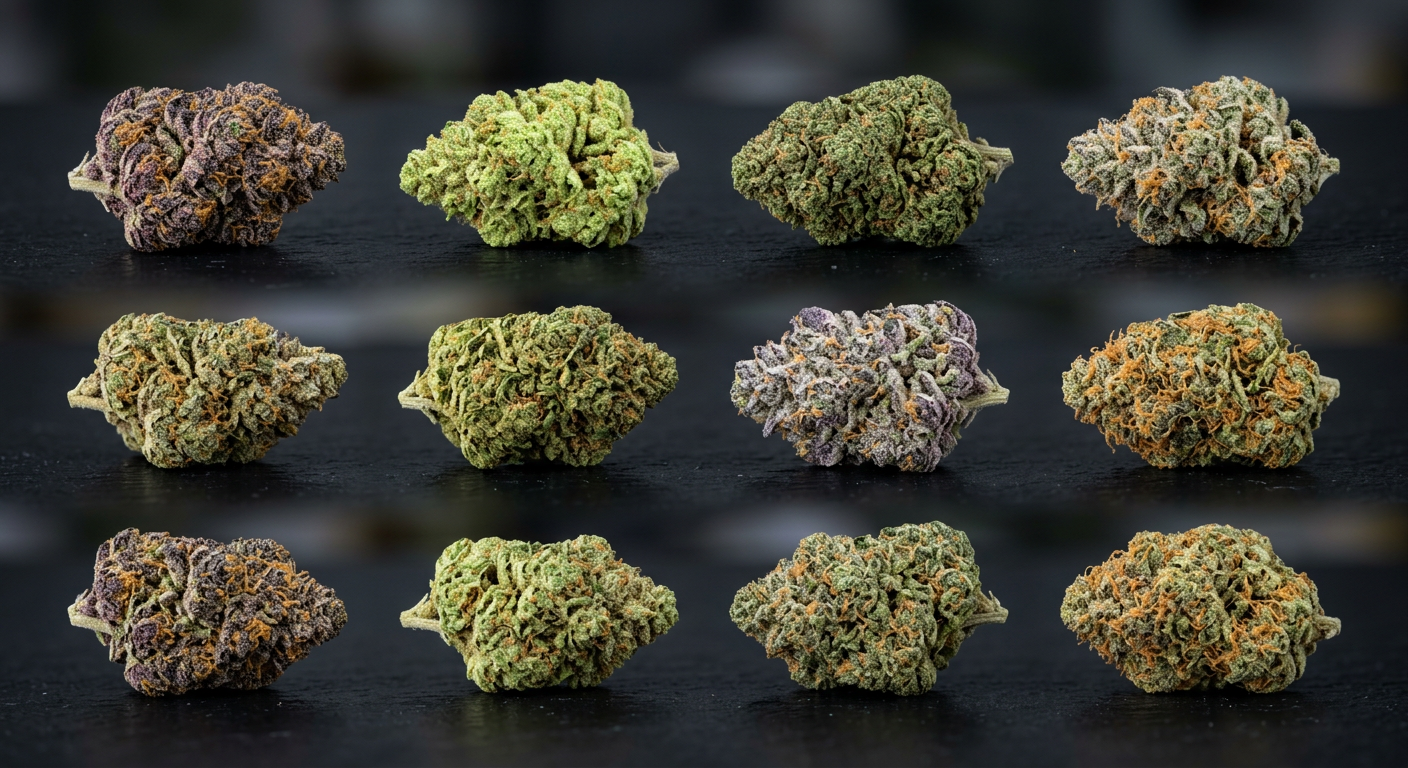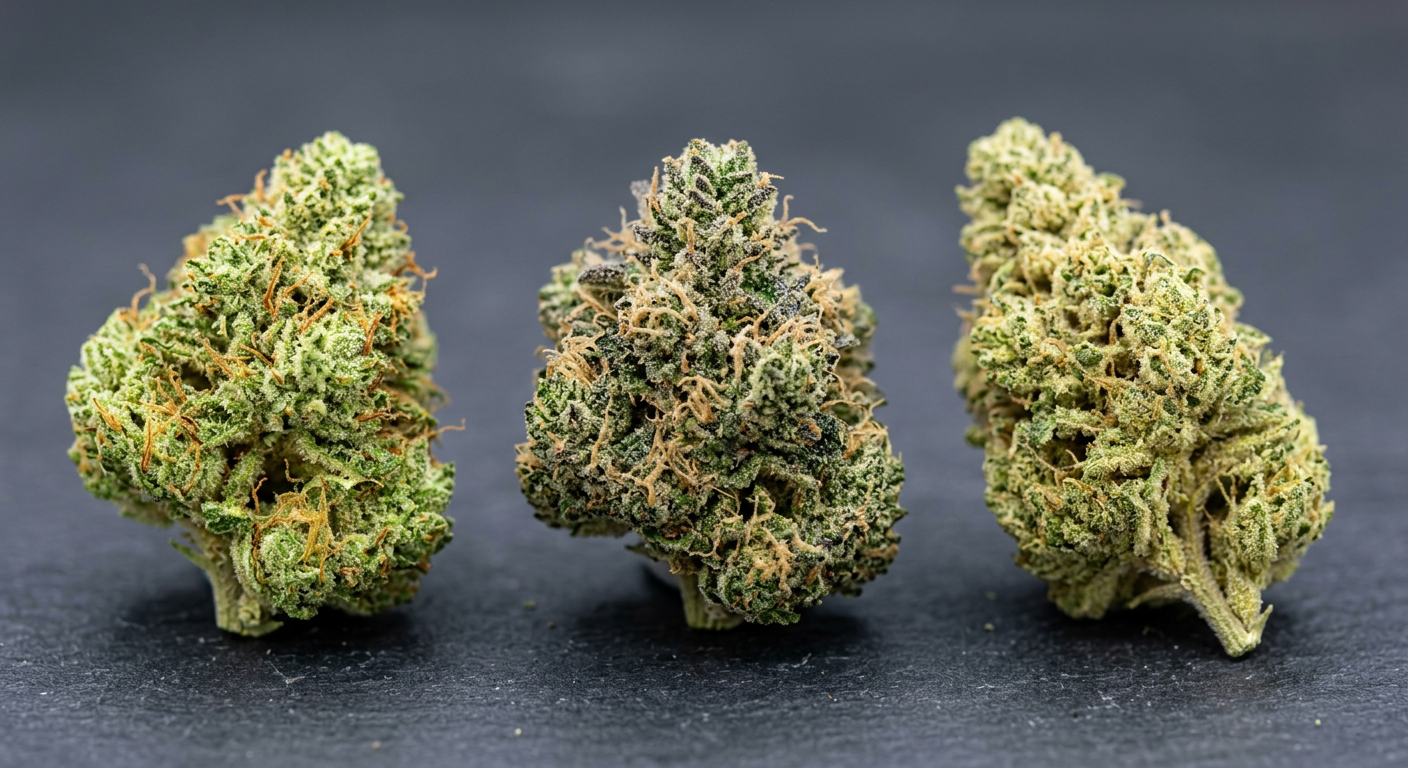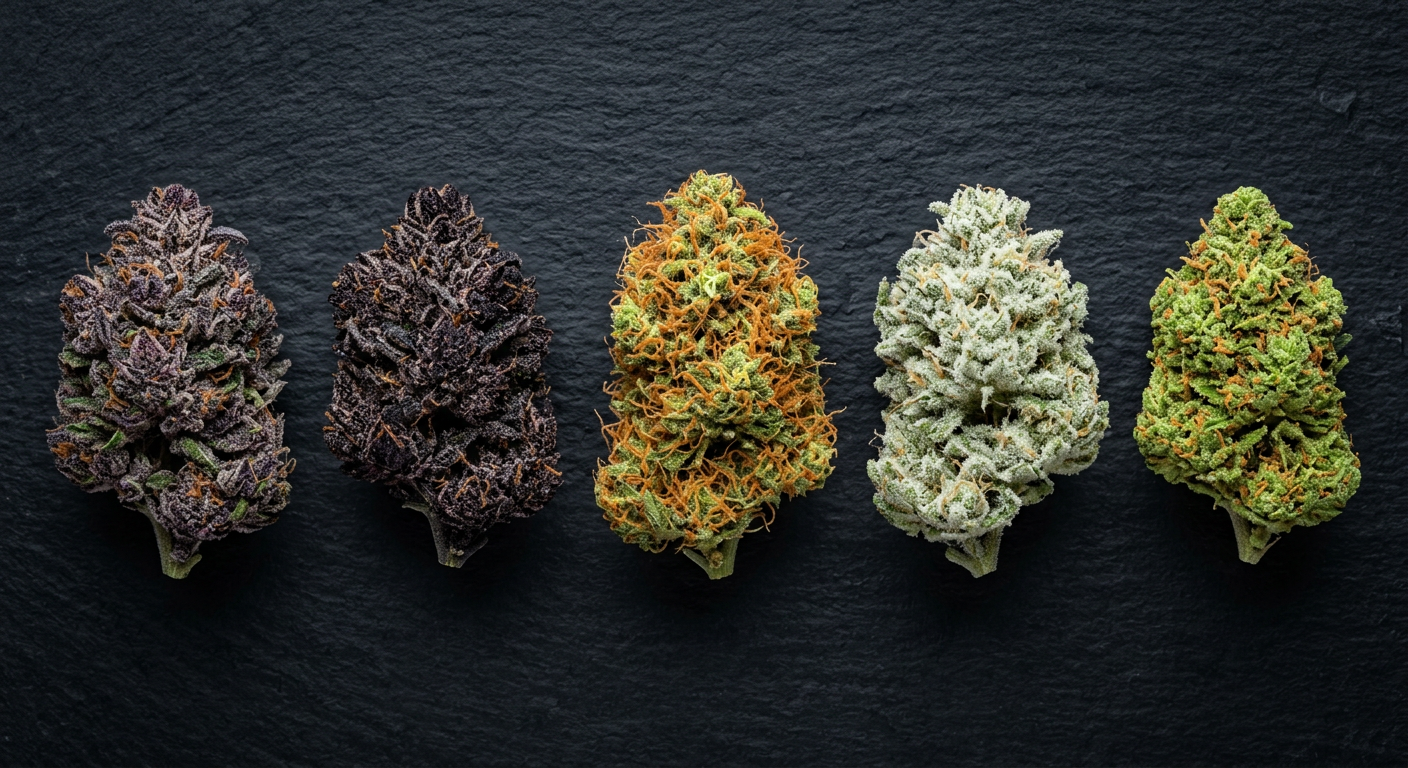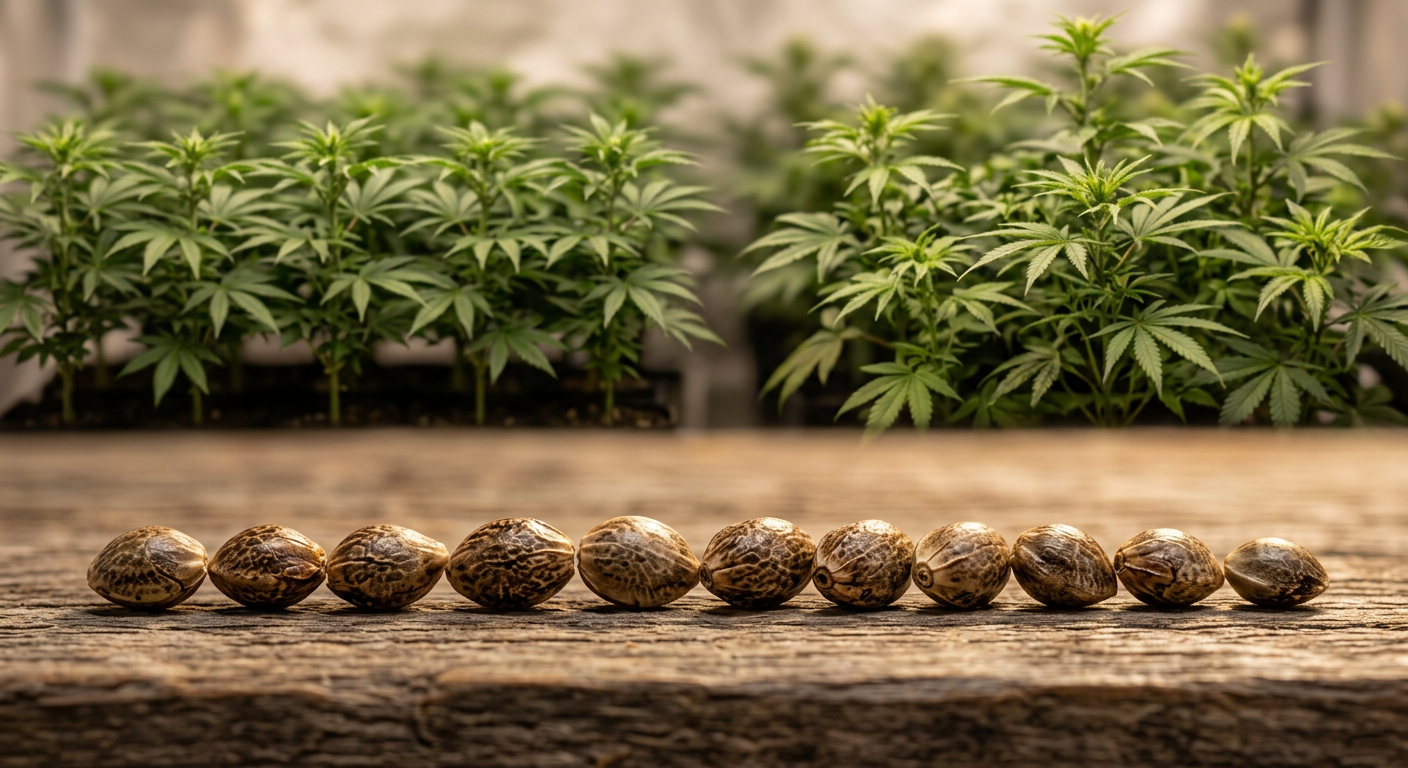
Imagine planting ten seeds from the same packet and harvesting ten completely different plants — different heights, different smells, different yields, and wildly inconsistent potency. That is the reality of growing from unstable cannabis genetics, and it costs growers time, money, and space every single season. Understanding stable cannabis strains genetics is the single most important concept for any grower who wants predictable, repeatable results.
This guide breaks down exactly what genetic stability means, how breeders achieve it through filial generation breeding, what to look for when buying seeds, and how to identify and avoid the pitfalls of unstable lines. Whether you grow two plants or two hundred, this knowledge will sharpen every decision you make at the seed stage.
What Is Genetic Stability in Cannabis?
Genetic stability in cannabis means that every seed from a given strain produces plants with near-identical traits — consistent height, flowering time, aroma, cannabinoid content, and yield. A truly stable strain behaves predictably across multiple grows, growers, and environments.
At the molecular level, stability comes from homozygosity — the condition where both alleles at a given gene locus carry the same instruction. When a plant is homozygous across most of its genome, its offspring express the same traits reliably. Unstable lines, by contrast, carry heterozygous gene pairs that randomly segregate into different phenotypes with every generation.
Think of it this way: a homozygous gene pair is like two identical dice — you always roll the same number. A heterozygous pair is like one regular die and one with different faces — the outcome changes every roll.
- Homozygous alleles — both copies of a gene match; traits breed true
- Heterozygous alleles — gene copies differ; offspring show trait variation
- Phenotypic uniformity — visual and chemical consistency across all plants
- Genetic drift — random allele frequency shifts that reduce stability over generations
Stability is not a binary on/off switch — it exists on a spectrum. Breeders typically consider a line "stable" when 90–95% of plants from a given seed batch express the target phenotype within acceptable variation ranges.
For a deeper dive into how cannabis genes work at every level, visit our complete cannabis genetics guide, which covers alleles, dominant and recessive traits, and hybridization theory from the ground up.
Stable vs. Unstable Cannabis Genetics: The Core Differences
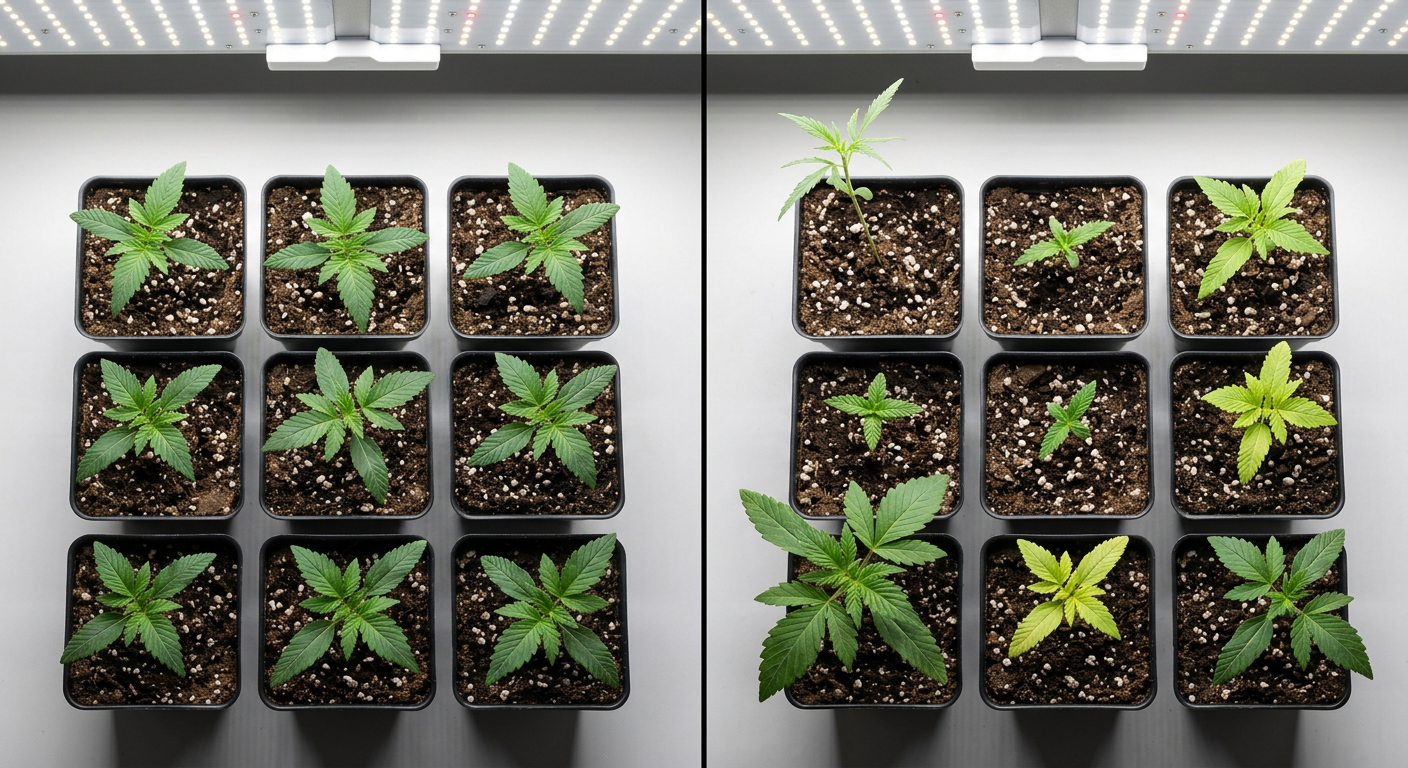
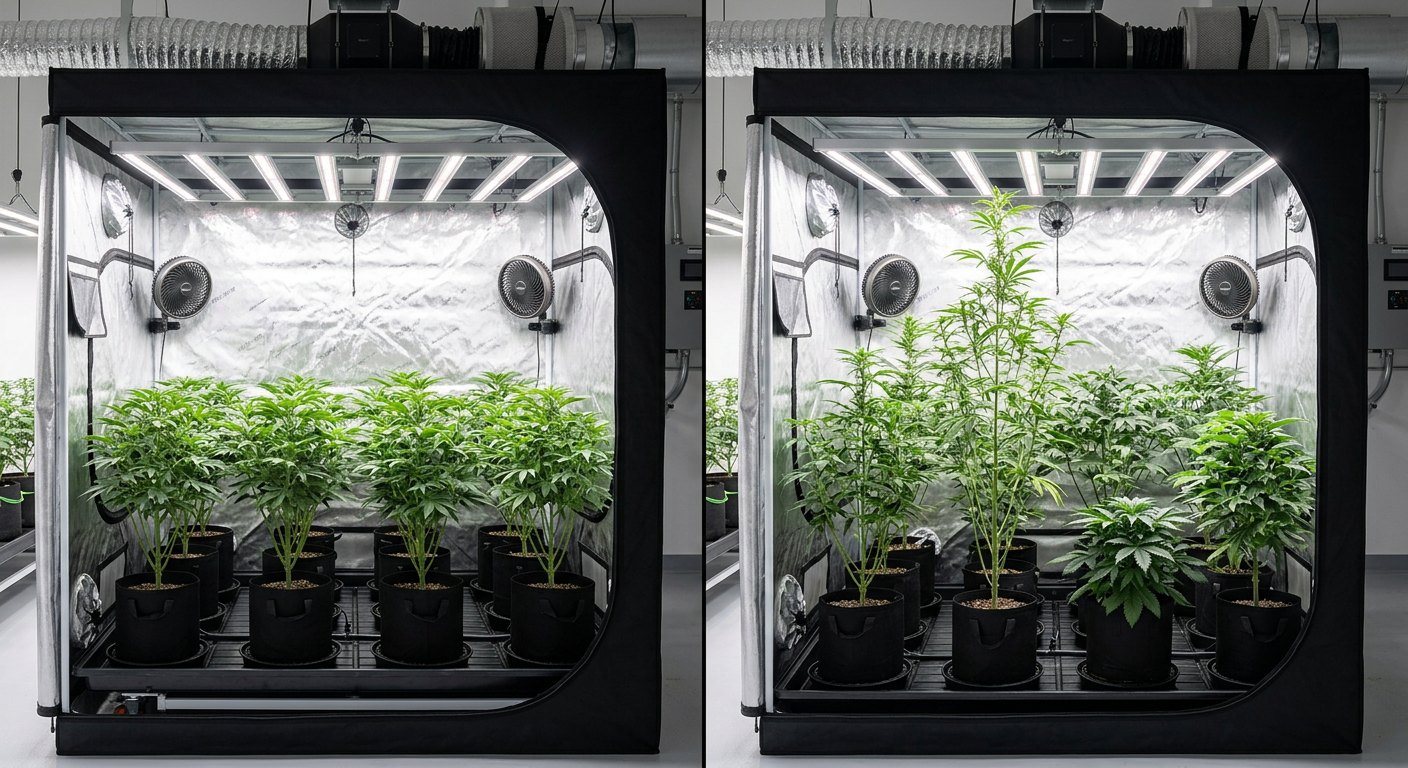
Stable cannabis genetics produce uniform, predictable plants batch after batch. Unstable genetics produce wide phenotypic variation — some plants may be exceptional, but most will be inconsistent, making commercial cultivation and personal grows frustrating and inefficient.
The table below maps the most important differences growers encounter in the real world:
| Trait | Stable Genetics | Unstable Genetics |
|---|---|---|
| Plant height at harvest | Within 10–15% across batch | Can vary 50–100% within batch |
| Flowering time | ±3–5 days across all plants | ±2–4 weeks across plants |
| THC/CBD content | Within ±2% of stated range | Can vary ±8–12% or more |
| Terpene profile | Consistent aroma and flavor | Wide variation, "mystery" plants |
| Yield per plant | Predictable, repeatable | Boom-or-bust between plants |
| Sex ratio (regular seeds) | ~50/50 male/female | Can skew unpredictably |
| Resistance to stress | Uniform across grow | Variable — some plants collapse, others thrive |
| Seed-to-seed consistency | High generation after generation | Degrades further each generation |
| Breeder documentation | Detailed lineage, F-generation noted | Often vague or unverified |
| Best use case | Commercial, medical, clone preservation | Breeding projects, phenotype hunting |
Unstable genetics are not always "bad" — experienced breeders intentionally work with heterozygous lines to discover exceptional phenotypes. The danger is when unstable seeds are sold as if they were stable, leaving everyday growers with unpredictable results and wasted resources.
The F-Generation System: How Breeders Build Stability
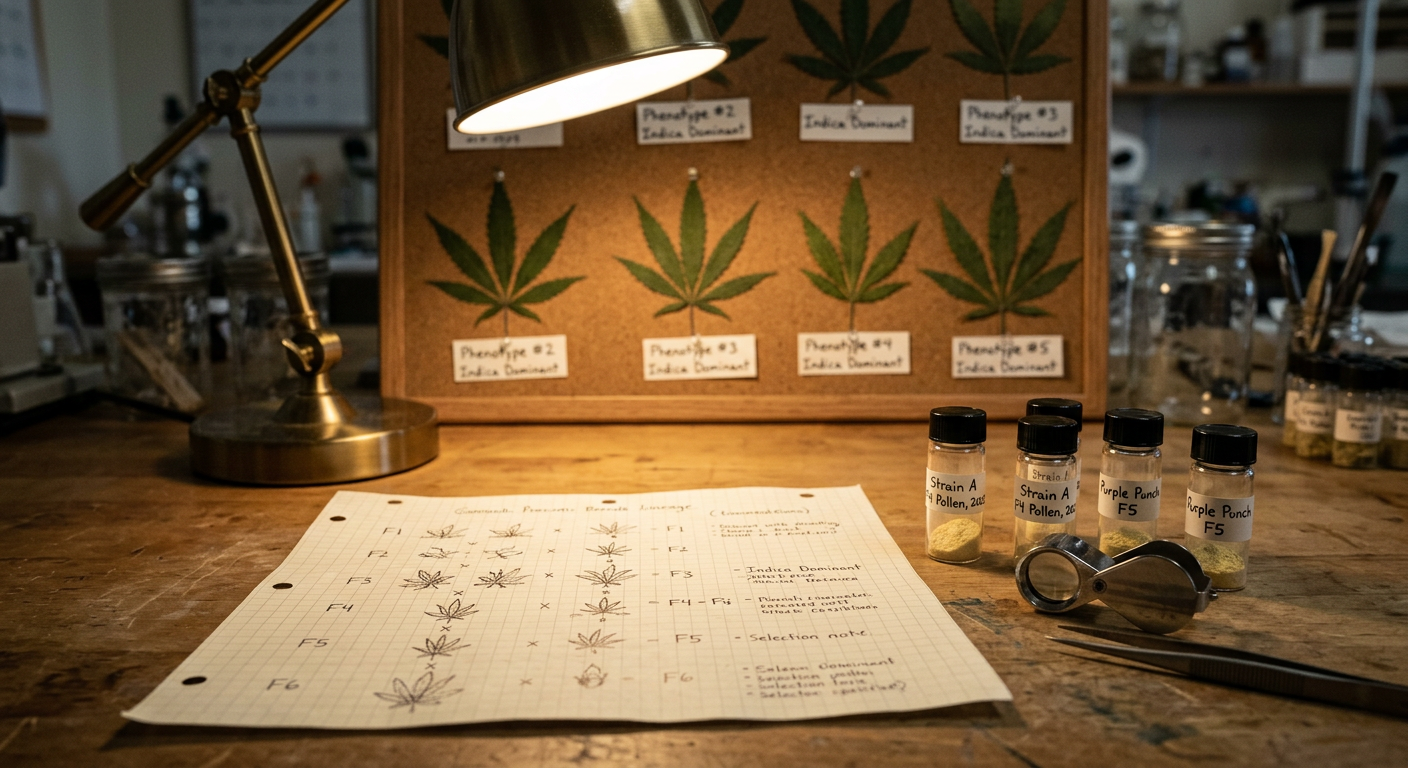
The filial generation system (F1, F2, F3, and beyond) is the backbone of cannabis stabilization breeding. Each generation represents one round of self-pollination or sibling crosses designed to push alleles toward homozygosity and lock in target traits.
Understanding this system tells you exactly how much work went into any seed you buy — and how consistent to expect those seeds to be.
F1: The First Hybrid Generation
An F1 hybrid is the direct offspring of two distinct parent lines. F1 plants often display hybrid vigor (heterosis) — they grow faster, yield more, and resist stress better than either parent. However, F1 plants are almost entirely heterozygous, meaning their seeds will not breed true.
- High vigor and uniformity within the F1 batch itself
- Seeds from F1 plants produce wildly variable F2 offspring
- Cannot be reliably replicated from seed without the original parent stock
- Best preserved as clones, not seeds
F2 and F3: Segregation and Selection
F2 plants are produced by crossing two F1 siblings. This is where breeders start to see the full range of genetic possibilities — and where serious selection work begins. Expect significant variation in an F2 population: roughly 25% of plants may express recessive traits hidden in the F1 generation.
F3 breeding involves selecting the best F2 plants and crossing or selfing them again. Homozygosity increases with each generation, and trait variation begins to narrow. Breeders cull aggressively at F2 and F3, keeping only the top 5–15% of plants that express the target phenotype.
Geneticists estimate that after each generation of inbreeding, heterozygosity is reduced by approximately 50%. Starting from a fully heterozygous F1, it takes roughly 5–6 generations of selection to achieve 95%+ homozygosity across most loci — which is why F5 and F6 are the industry benchmarks for stability.
F5 and F6: The Stability Benchmark
F5 and F6 generations represent the gold standard of stabilized cannabis strain development. At these generations, the vast majority of gene pairs have been driven to homozygosity through repeated selection, and plants from seed express nearly identical traits batch after batch.
- F5 — approximately 96.9% theoretical homozygosity
- F6 — approximately 98.4% theoretical homozygosity
- F7+ — diminishing returns; primarily used for the most critical commercial or medical breeding programs
When a breeder lists "F5" or "F6" on their seed documentation, that is a meaningful signal of quality work. If a breeder lists only "F1" or gives no generation data at all, treat those seeds as potentially variable — great for phenotype hunting, but not for a uniform commercial crop.
IBL: Inbred Lines and True Breeding
An IBL (Inbred Line) is a strain that has been stabilized through multiple generations of inbreeding to the point where it breeds true from seed. Classic IBLs like original Afghan #1 and early Skunk lines took 8–12 generations to achieve. Many of the most consistent cannabis strains on the market today descend from IBL work done in the 1980s and 1990s.
IBLs form the foundation of most modern hybrid programs — they provide the predictable, homozygous parents needed to produce uniform F1 hybrids. Strains like Northern Lights x Big Bud and Super Skunk trace their consistency directly back to rigorously developed IBL parent stock.
Genetic Drift: The Silent Killer of Strain Consistency
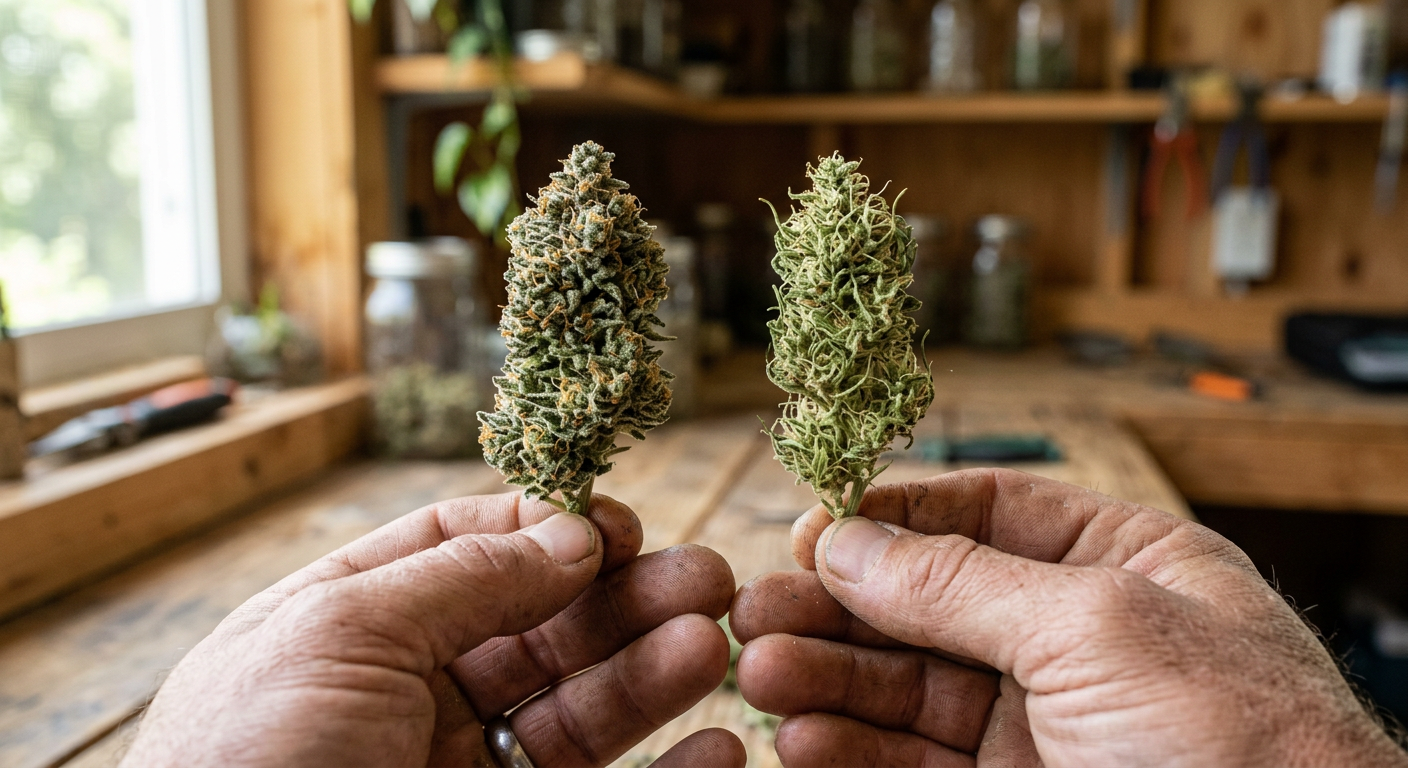
Genetic drift in cannabis strains refers to the random change in allele frequencies across generations, caused not by selection but by chance sampling errors. Over multiple generations, drift quietly degrades a strain's consistency — even without intentional crossing or hybridization.
Drift is most damaging in small breeding populations. When a breeder selects only 5–10 plants per generation, random variation in which individuals reproduce causes allele frequencies to shift unpredictably. A strain that was 95% uniform at F5 can drift toward 70% uniformity within 3–4 careless generations of seed production.
- Small population size — fewer than 20 plants dramatically increases drift risk
- Random mating — allowing all plants to cross without selection accelerates drift
- Poor record-keeping — losing track of which individuals were used each generation
- Long seed storage — old seeds with low germination rates reduce effective population size
"Bag seed" from even a legendary strain can produce wildly inconsistent results — not because the original strain was unstable, but because uncontrolled crosses, poor storage, and random pollination have introduced genetic drift over multiple generations of informal reproduction.
This is one reason why sourcing seeds from reputable breeders with documented lineage matters so much. See our guide to cannabis genetics testing and DNA authentication for tools that can verify strain identity and detect genetic drift in your seed stock.
How to Stabilize a Cannabis Strain: The Breeding Process
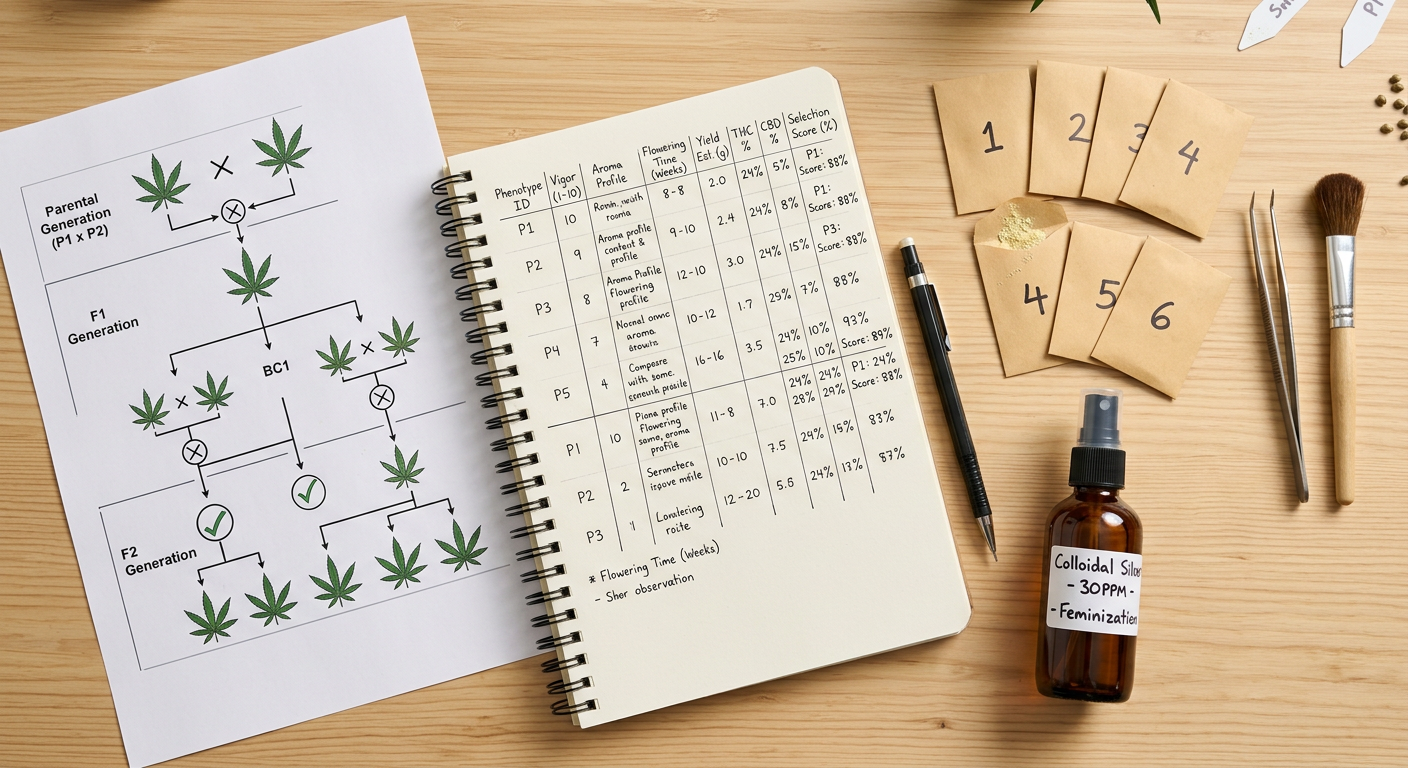
Stabilizing a cannabis strain requires systematic inbreeding, rigorous phenotype selection, and consistent documentation across multiple generations. The process typically takes 3–7 years and demands careful tracking of hundreds or thousands of individual plants.
Here is how professional breeders approach stabilization from scratch:
Define the Target Phenotype
Before any crosses are made, write down the exact traits you want to lock in: target THC%, terpene profile, plant height, flowering time, yield, and any unique characteristics. This becomes your selection scorecard for every subsequent generation.
Create Your F1 Foundation Cross
Select two stable parent lines that each contribute desirable traits. Cross them to produce a large F1 population — aim for at least 50 plants to capture maximum genetic diversity. Document every parent used with photos and measurements.
Aggressive F2 Selection
Grow a minimum of 100 F2 plants to capture the full range of segregating traits. Select the top 5–10% that most closely match your target phenotype. Cull all plants that show undesirable traits, even if other characteristics are excellent.
Sibling Cross or Self-Pollination at F3–F4
Cross your best F2 selections together (sibling crossing) or apply colloidal silver to force self-pollination (S1 breeding). Each method pushes alleles toward homozygosity. Self-pollination is faster but can reduce vigor; sibling crosses preserve more heterosis.
Test for Uniformity at F5+
At F5 and beyond, grow large test batches of 20–50 seeds and measure uniformity. If 90%+ of plants match the target phenotype within your defined tolerances, the line is considered stable. If not, continue selection for another generation.
Maintain the Line with Population Size Controls
Ongoing seed production must use at least 20–30 breeding plants per generation to prevent genetic drift. Document every cross, store backup seeds in cool dry conditions, and test a sample from every seed batch before commercial release.
Colloidal silver (CS) is the most common method for producing feminized seeds during stabilization work. Spraying a female plant with CS during the first two weeks of flowering forces it to produce male pollen sacs. The resulting seeds are all female (XX chromosomes) and carry only the mother's genetics — perfect for locking in a stable feminized line.
Testing for Stability: What Growers and Breeders Look For
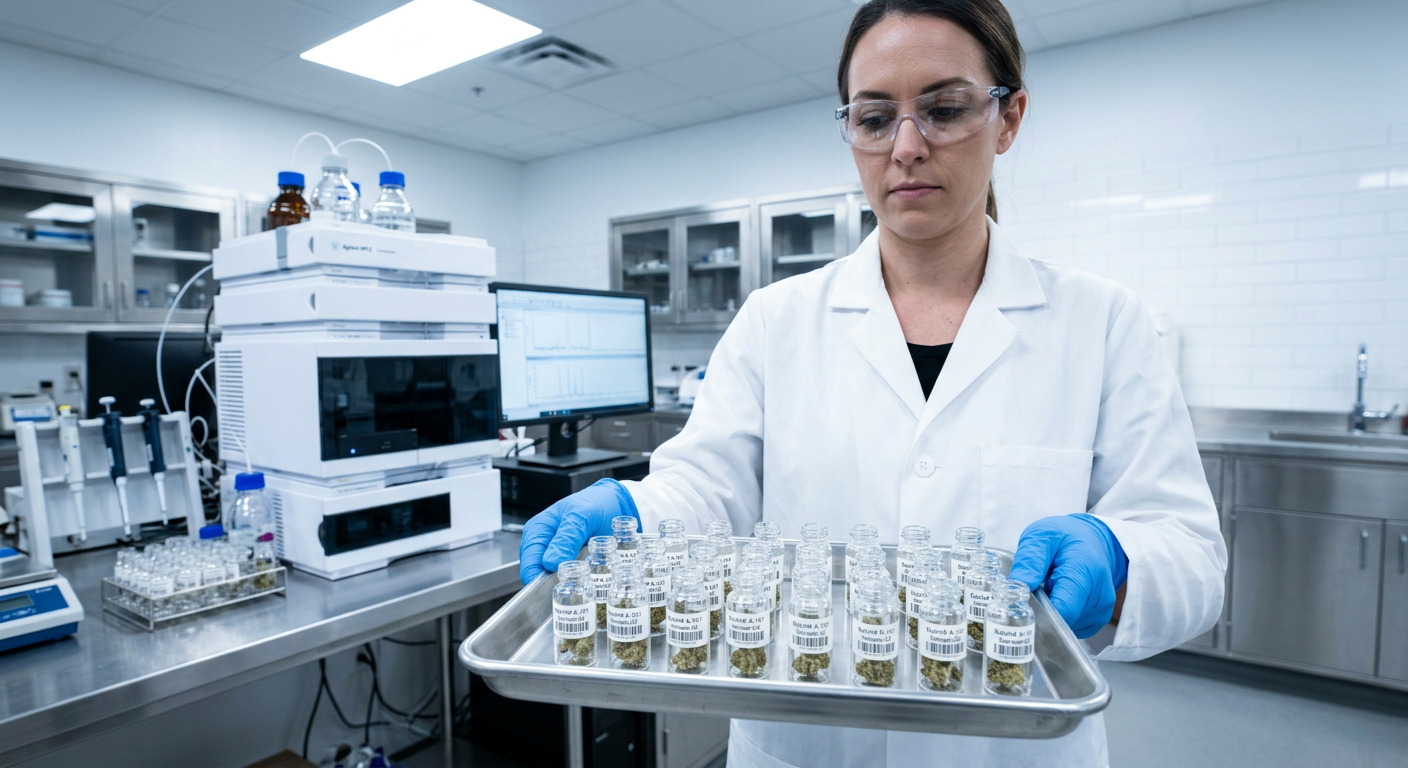
Testing genetic stability in cannabis involves both visual phenotyping across large populations and, increasingly, molecular DNA analysis. Rigorous testing at multiple stages of the breeding process is what separates professional seed producers from casual breeders.
Visual and Phenotypic Uniformity Testing
The simplest stability test is to grow a batch of 20–50 seeds and measure key traits across every plant at standardized checkpoints — typically at 2 weeks vegetative, at the flip to flower, at mid-flower, and at harvest.
- Height variation: should be within ±10–15% in a stable line
- Flowering initiation: all plants should show pistils within a 5-day window
- Days to harvest: full batch should finish within a 7–10 day window
- Bud structure, trichome density, and color should be consistent across 90%+ of plants
- Aroma: all plants should share the same dominant terpene profile
Chemical Analysis (Cannabinoid and Terpene Profiling)
Lab testing of flower samples from multiple plants in a batch reveals whether cannabinoid ratios (THC, CBD, CBG, etc.) and terpene profiles are consistent. A stable line will show tight clustering in cannabinoid data; an unstable line will show a wide scatter plot with outliers in multiple directions.
For growers producing for dispensaries or licensed markets, batch testing every harvest is now often a legal requirement — and it doubles as a real-world stability check on your seed source.
DNA Marker Analysis
Professional breeding programs use SNP (Single Nucleotide Polymorphism) analysis and microsatellite markers to measure homozygosity directly at the DNA level. This allows breeders to confirm stability without waiting for a full grow cycle — critical when working with multi-year breeding programs.
Our detailed guide on cannabis genetics testing and DNA analysis covers exactly how these tools work and which labs offer them to independent breeders and serious hobbyists.
DNA testing can identify genetic stability issues before you ever pop a seed. If you are investing in a large commercial grow or a long-term breeding project, spending $200–500 on SNP profiling of your seed stock can save thousands in wasted grow resources.
Stable vs. Unstable: Which Should You Choose?

The right choice between stable and unstable genetics depends entirely on your goals as a grower or breeder. Neither type is universally superior — they serve fundamentally different purposes and suit different skill levels and cultivation contexts.
| Grower Type | Best Genetic Choice | Why |
|---|---|---|
| Commercial cultivator | Stable / IBL / F5+ | Uniform canopy, predictable harvest dates, consistent product |
| Medical patient grower | Stable feminized | Reliable cannabinoid ratios for consistent dosing |
| Beginner home grower | Stable feminized | Predictable growth reduces mistakes and wasted resources |
| Phenotype hunter | Unstable F2/F3 | Wide variation increases chance of finding exceptional specimens |
| Breeding program | Mix of IBL parents + F1 hybrids | Stable parents produce reliable F1 hybrids with hybrid vigor |
| Clone-only grower | Any — find one great phenotype | Clones preserve a single phenotype regardless of seed stability |
| Seed production operation | Stable IBL or F5+ lines | Customers expect batch-to-batch consistency |
For most home and commercial growers, stable genetics are the clear choice. The only compelling reason to work with unstable lines is if you have the space, time, and expertise to run large populations and identify exceptional phenotypes — a process that requires significant resources to do properly.
Verdict: Stable Genetics Win for Most Growers
If your goal is consistent harvests, reliable quality, and efficient use of grow space, stable feminized seeds from documented lineages are the right tool. Strains like OG Kush Feminized (26% THC), White Widow Feminized (25% THC), and Purple Kush Feminized (27% THC) have been stabilized over decades of selective breeding — the uniformity is baked in.
For those interested in the history behind these foundational genetics, our heirloom cannabis strains guide explores how the original landrace lines were domesticated and stabilized into the classic varieties grown worldwide today.
Recognizing Stable Strains as a Buyer: What to Look For
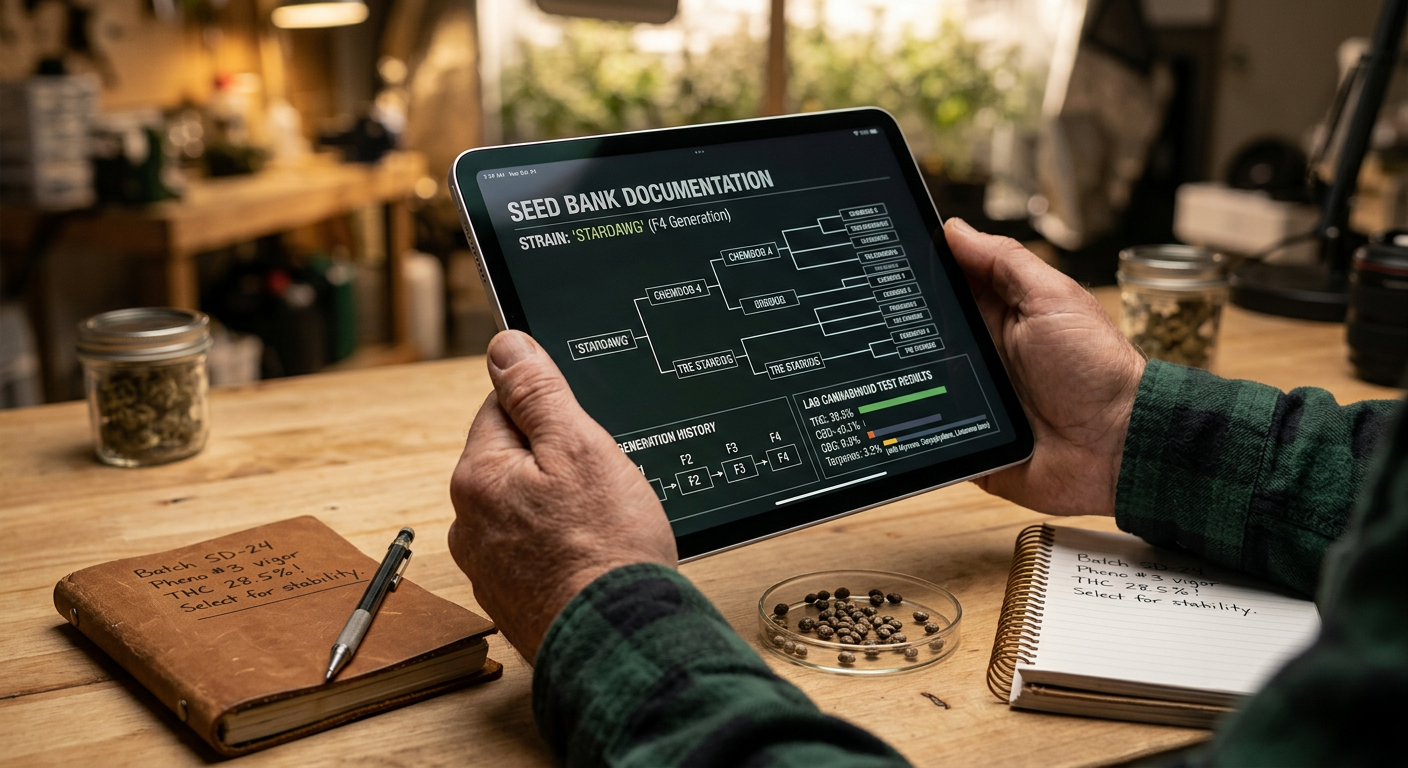
Most growers never breed their own strains — they buy seeds. Knowing how to evaluate a seed bank's genetics before you buy is the practical application of everything covered above. Stable cannabis strains leave a paper trail of quality indicators that savvy buyers can identify.
Breeder Documentation Red Flags vs. Green Flags
- ✅ F-generation noted — F4, F5, F6+ signals serious inbreeding work
- ✅ Parent lineage listed — both parents named with their own documented history
- ✅ Consistent user reviews — multiple growers reporting the same traits independently
- ✅ Lab test data available — cannabinoid and terpene profiles from multiple batches
- ✅ Long market history — strains that have been available for 5+ years with consistent feedback
- ❌ Vague lineage — "carefully selected hybrids" with no named parents
- ❌ Extreme trait claims — "40% THC" with no lab verification
- ❌ No generation data — listed only as "hybrid" or "cross" with no stabilization history
- ❌ Highly variable reviews — growers reporting completely different phenotypes from the same batch
Strain Examples: Documented Stability in Practice
The most consistently reviewed strains on the market share one trait: decades of selective breeding behind them. Consider these options with strong stability reputations:
- Sour Diesel Feminized (24% THC) — decades of stabilization work producing its signature fuel-forward terpene profile
- Skunk Special Feminized (24% THC) — one of the most documented IBL lineages in cannabis history
- Super Lemon Haze Feminized (23% THC) — multiple Cannabis Cup wins with consistent grower feedback across global markets
- Northern Lights x Amnesia Haze Feminized (24% THC) — two stable IBL parents crossed to produce a reliable F1 hybrid
- New York Power Diesel Feminized (24% THC) — well-documented lineage with consistent cannabinoid reporting
When evaluating a new seed bank, search for grow journals and independent reviews on cultivation forums before purchasing. A stable strain will have dozens of grow reports all describing similar plants — height, flowering time, smell, and yield will cluster tightly. An unstable strain will have wildly inconsistent reports, with growers describing plants that barely resemble each other.
Genetic Stability in Autoflowering Strains
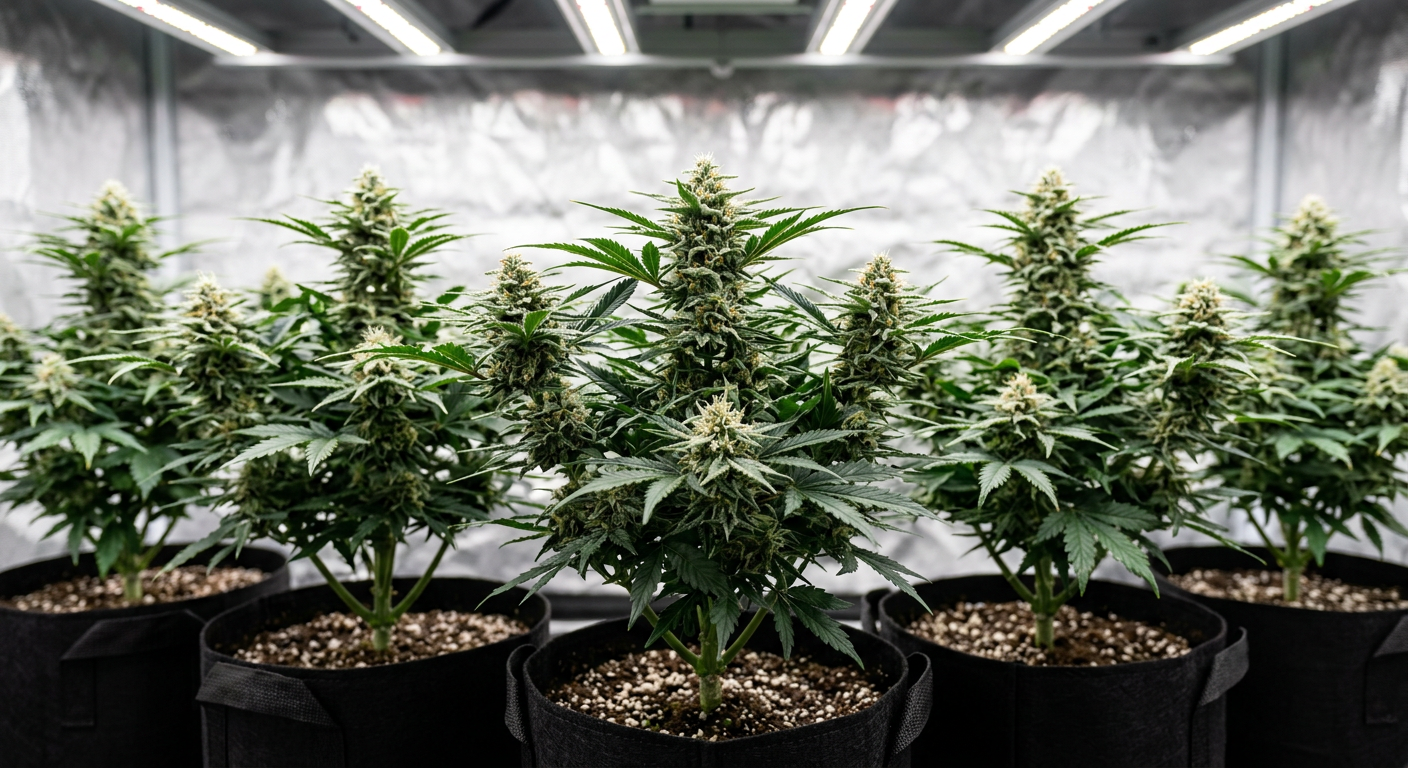
Autoflowering genetics add an extra layer of complexity to stability breeding because the autoflowering trait (governed by the Cannabis ruderalis-derived recessive gene) must be fully homozygous for 100% of plants to flower automatically without light cycle manipulation.
Early autoflower hybrids (often called "lowryder crosses" or first-generation autos) were notoriously unstable — some plants would autoflower on schedule, others would revert to photoperiod behavior, and potency lagged behind photoperiod equivalents. Modern autoflowers have benefited from 5–8 generations of focused stabilization work specifically targeting the ruderalis flowering gene.
- The autoflowering gene is recessive — both alleles must carry it for automatic flowering
- A single heterozygous allele produces a photoperiod plant despite being labeled "auto"
- Stable autoflowers should show 100% automatic flowering in test batches — any photoperiod reversions signal incomplete stabilization
- Cannabinoid stability in autos has improved dramatically — strains like Skywalker OG Autoflower (23% THC) and Amnesia Haze Autoflower (17% THC) now rival photoperiod counterparts in consistency
For a full breakdown of the differences between these breeding approaches, see our autoflower vs. photoperiod growing guide.
The ruderalis autoflowering gene (often mapped to chromosome 1) interacts with photoperiod response pathways involving the FT (FLOWERING LOCUS T) gene homologs in cannabis. When breeders achieve homozygosity at this locus, every single plant in the batch will initiate flowering based on age rather than light cycle — making grow planning dramatically more reliable.
Preserving Genetic Stability: Long-Term Considerations
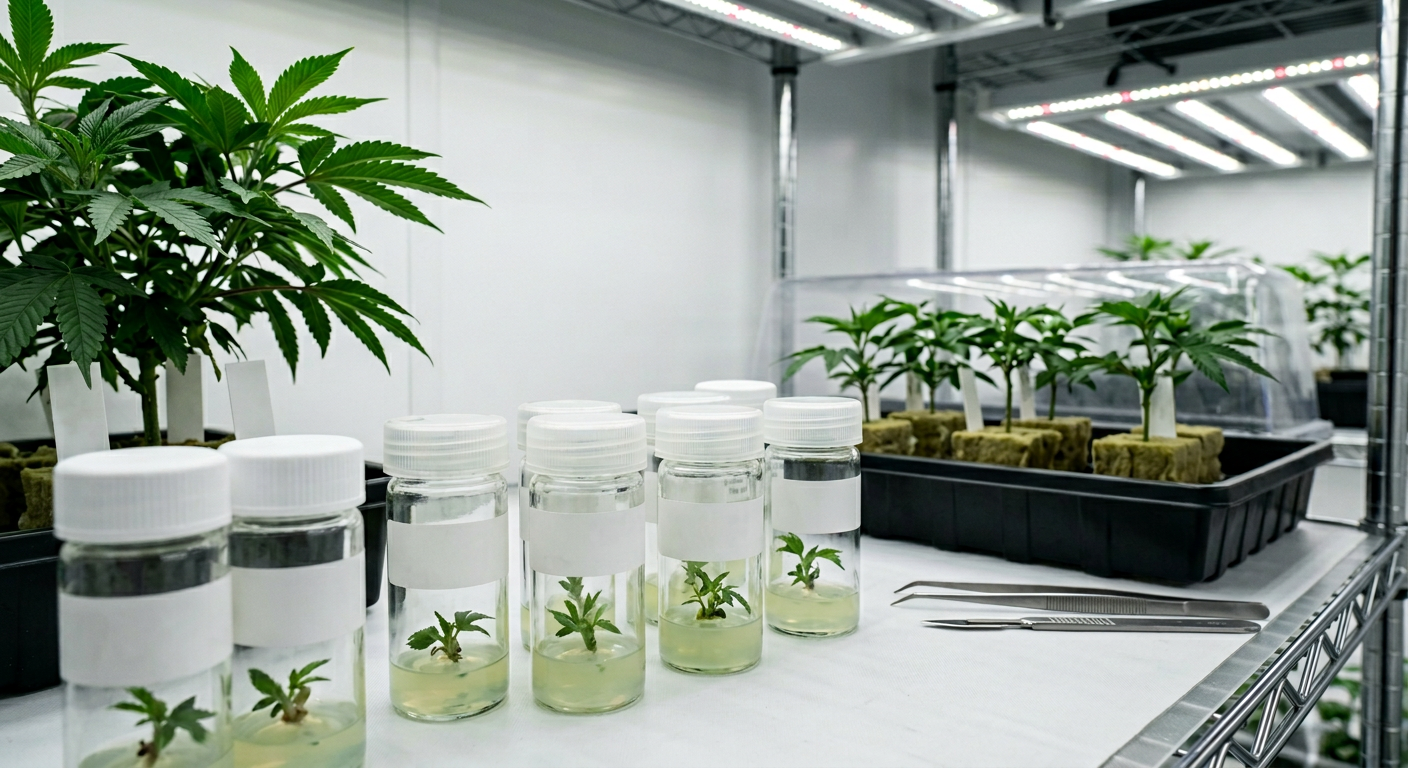
Achieving stability is only half the battle — maintaining it over time requires active stewardship. Stable cannabis strains can degrade through careless seed production, inadequate population sizes, contamination with outside pollen, and improper storage conditions.
Seed Storage and Viability
Seeds stored improperly lose viability unevenly — some seeds die, forcing growers to use a smaller-than-intended population. With fewer plants, genetic drift accelerates and the next generation may not represent the original stable line accurately.
- Store seeds at 6–8°C with 25–35% relative humidity for multi-year preservation
- Vacuum-seal in airtight containers with silica gel desiccant packets
- Never store seeds in direct light or fluctuating temperatures
- Test germination rates annually — if rates drop below 70%, use remaining seeds soon or risk population bottlenecks
Avoiding Contamination Drift
Unintended pollen contamination — from a nearby male plant, a hermaphrodite, or outdoor pollen drift — can introduce foreign alleles into a stable line within a single generation. Even one contamination event can compromise years of careful stabilization work.
- Remove all male plants before pollen sac opening unless intentionally breeding
- Use physical barriers (tents, rooms, screens) to isolate breeding populations
- Check feminized plants regularly for hermaphroditic pollen sacs, especially under stress
- Run clones of your most important stable phenotypes as insurance against seed stock degradation
- Source seeds from breeders with documented pollen-isolation protocols
- Keep detailed records of every generation used in ongoing seed production
Maintaining a clonal mother of your best stable phenotype is the ultimate insurance policy. Our cannabis vegetative stage guide covers mother plant management in detail, including how to keep mothers healthy and productive for years without genetic drift.
Understanding the deep history of how stable landrace populations evolved in isolation is also instructive — our landrace cannabis strains guide explains how geographic isolation functioned as a natural stabilization mechanism over centuries of adaptation.
Top Stable Cannabis Strains for Consistent Results
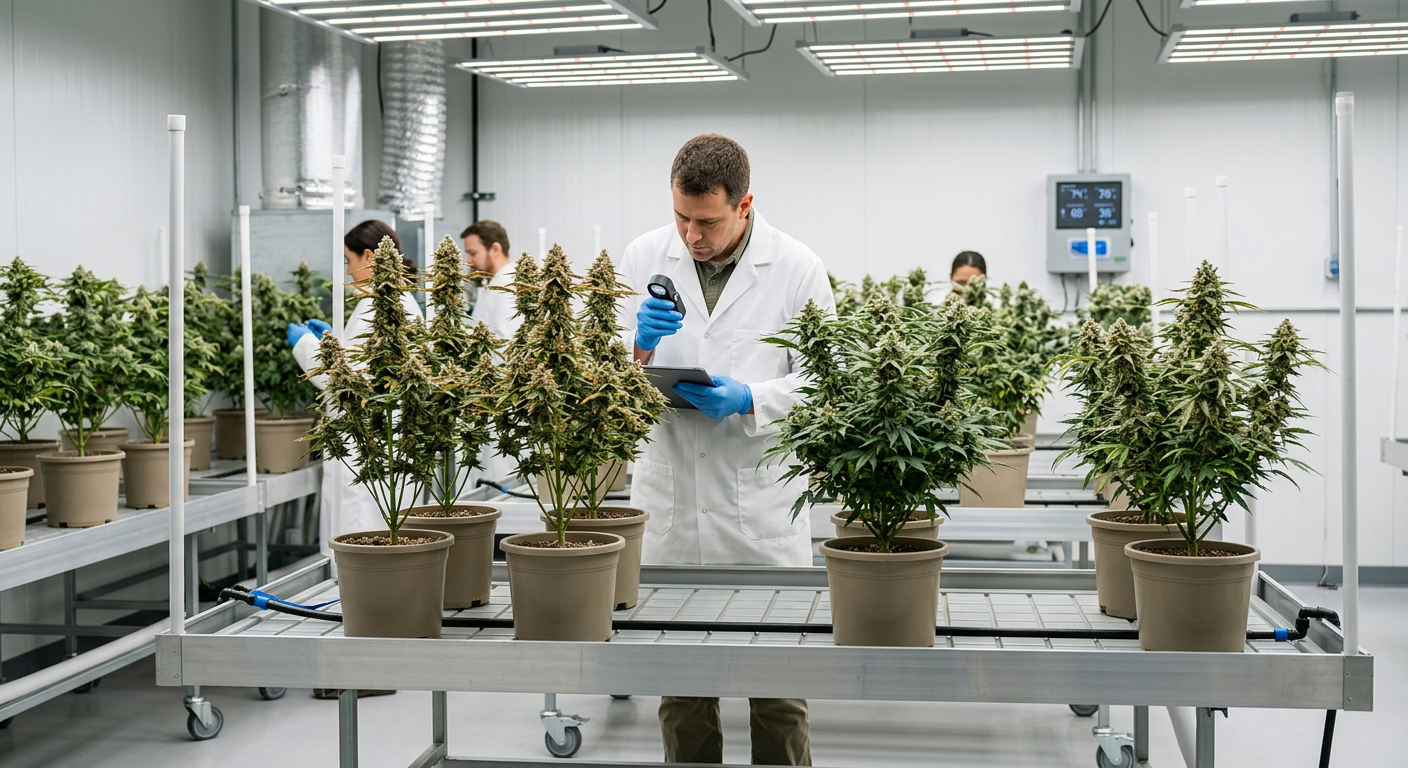
The strains below represent some of the most consistently reviewed and genetically documented options available, covering a range of effects, cannabinoid profiles, and growing styles. Each has a history of breeder investment in stability that translates directly into predictable grows.
| Strain | THC | Type | Stability Notes | Best For |
|---|---|---|---|---|
| OG Kush Feminized | 26% | Hybrid | Decades of selective breeding; iconic phenotype highly documented | Experienced growers seeking classic results |
| White Widow Feminized | 25% | Hybrid | One of the most tested IBL-backed hybrids in history | All growers; consistent in diverse environments |
| Purple Kush Feminized | 27% | Indica | Pure indica IBL; tightly uniform growth habit | Indoor SOG and SCROG grows |
| Sour Diesel Feminized | 24% | Sativa | Multiple generations of stabilization; consistent fuel aroma | Experienced sativa growers |
| Skunk Special Feminized | 24% | Hybrid | Classic IBL lineage, one of the most documented in cannabis history | Beginners and commercial growers |
| Super Skunk Feminized | 20% | Indica-dom | IBL-backed Skunk x Afghani; robust and consistent | High-yield indoor grows |
| Skywalker OG Autoflower | 23% | Auto Indica | Fully stabilized autoflowering gene; uniform batch performance | Fast-cycle growers, beginners |
| Northern Lights x Big Bud | 20% | Indica | Two IBL parents; reliable F1 hybrid consistency | Commercial yield-focused grows |
| Quantum Kush Feminized | 30% | Hybrid | High-THC line with consistent cannabinoid reporting | Potency-focused experienced growers |
| Black Widow Feminized | 26% | Hybrid | White Widow descendant with documented stable lineage | Growers wanting proven White Widow genetics |
If you are new to growing and want the most forgiving path to a consistent harvest, start with a well-documented stable feminized strain from a reputable source and follow it with a clone preservation strategy. Our guide to best cannabis strains for beginners highlights which stable genetics perform best with minimal intervention.
Frequently Asked Questions
What does it mean when a cannabis strain is "stable"?
A stable cannabis strain produces plants with near-identical traits — consistent height, flowering time, yield, aroma, and cannabinoid content — from seed, batch after batch. Stability comes from homozygous gene pairs achieved through multiple generations of selective inbreeding, typically F5 or higher for cannabis. Stable strains are predictable, repeatable, and ideal for commercial and home growers who want consistent results without hunting through variable phenotypes.
How many generations does it take to fully stabilize a cannabis strain?
Most breeders consider a cannabis strain adequately stable at F5 or F6 — roughly 5 to 6 generations of inbreeding and selection from the original F1 cross. At F5, theoretical homozygosity reaches approximately 96.9%, meaning over 95% of plants will express the target phenotype. Some programs push to F7 or beyond for medical or commercial applications where ultra-tight uniformity is required, but F5 is the practical industry benchmark.
Can feminized seeds be genetically unstable?
Yes. The feminization process (typically using colloidal silver or STS to force female plants to produce male pollen) does not automatically confer genetic stability. A feminized seed from an unstable heterozygous line will still produce phenotypically variable plants — they will just all be female. True stability requires the underlying genetics to be homozygous through multiple generations of selection, independent of whether the seeds have been feminized.
What is genetic drift in cannabis and how does it affect my seeds?
Genetic drift is the random change in allele frequencies in a breeding population due to chance rather than selection. In cannabis, it occurs most destructively when breeders use small populations (fewer than 20 plants) for seed production, causing certain alleles to disappear or dominate randomly. Over several generations, drift gradually degrades a strain's uniformity even without intentional crossing — which is why seeds from the same strain can produce noticeably different plants depending on how recently and carefully the seed stock was refreshed.
How can I test whether my cannabis seeds are from a stable line before growing a full batch?
The most practical test is a phenotype uniformity trial: germinate 20–30 seeds and measure height, internode spacing, leaf structure, and flowering initiation across all plants at standardized checkpoints. A stable line will show less than 15% variation in height and within a 5-day window for flowering initiation. For a more technical approach, DNA SNP profiling through a cannabis genetics testing laboratory can confirm homozygosity levels directly without a full grow cycle.