Psychosis Feminized Seeds
By Ivan K., DSS Genetics · Updated April 2026

Psychosis Feminized Seeds
SKU: DSS-PSYCH-FEM-5PK
Pack Size
Quantity
Disclaimer: For informational purposes only — not medical advice. Consult a healthcare professional before use.
About This Strain
Psychosis Feminized Seeds — Complete Strain Profile
Psychosis Feminized Seeds – Strain Overview
Psychosis is a 60% indica / 40% sativa hybrid born from two purple-leaning California legends: Querkle and Purple Urkle. Both parents trace their roots to the Mendocino and Humboldt County breeding scene, where grape-scented, resin-heavy indicas were refined over decades. The result is a strain that punches above its lineage's already-high reputation — delivering 18–22% THC with a terpene profile that smells like a berry patch dipped in earth and fuel. It's a natural fit among our best indica strains, offering something more complex than most pure sedative cultivars.
What makes Psychosis stand out is the sativa fraction inherited from Querkle's more stimulating phenotypes. That 40% sativa influence delays the heavy body sedation just long enough to deliver a genuinely euphoric, almost psychedelic onset — before the indica side pulls you into a deep, restful calm. Growers appreciate the medium plant size, the relatively short 55–60 day flowering window, and yields that consistently reward patience and proper technique. This is not a beginner strain, but it's far from the most demanding grow in this weight class.
Effects and Medical Benefits
The Psychosis high opens fast — within minutes of the first exhale, there's a warm pressure behind the eyes and a subtle shift in perception that earns this strain its name. Colors seem a touch more vivid, sounds a little more layered. It's not overwhelming, but first-time users should treat this with respect: 18–22% THC in an indica-dominant body means the ceiling is real.
By the 20–30 minute mark, the euphoric head buzz softens into something more grounded. Muscle tension releases in waves, starting in the shoulders and neck and working downward. Evening use is almost mandatory — fighting the sleepiness that arrives in the final stage of this high is a losing battle for most users.
Users consistently report these four effects across the arc of the experience:
- Euphoric onset — a bright, mood-lifting rush that feels more cerebral than most indica-leaning strains
- Full-body relaxation — progressive muscle release that deepens over 45–60 minutes post-consumption
- Gentle mental calm — racing thoughts slow without the mental fog common in heavier sedative strains
- Deep sedation — the final stage makes Psychosis a reliable evening or pre-sleep cultivar at moderate to higher doses
On the medical side, Psychosis has built a loyal following among patients seeking plant-based relief for:
- Chronic pain — particularly muscle tension, nerve sensitivity, and end-of-day physical exhaustion
- Insomnia — the sedative finale of this high is one of the more reliable sleep inducers at its THC range
- Stress — the euphoric opening stage actively counteracts cortisol-driven mental tension
- Anxiety — at controlled doses, the mood elevation and body relaxation work together to ease anxious thought loops
- Depression — the Querkle-driven euphoria provides a genuine lift that users describe as warm rather than artificially stimulating
The 0.1–1% CBD range is modest, but it isn't irrelevant. Even trace CBD interacts with Psychosis's terpene-rich profile to support what researchers describe as the entourage effect — where cannabinoids and terpenes work synergistically to produce effects greater than THC alone could deliver. The myrcene and caryophyllene in particular appear to amplify the body-relaxing and anti-inflammatory dimensions of the high beyond what the THC percentage alone would predict.
Aroma, Flavor and Terpene Profile
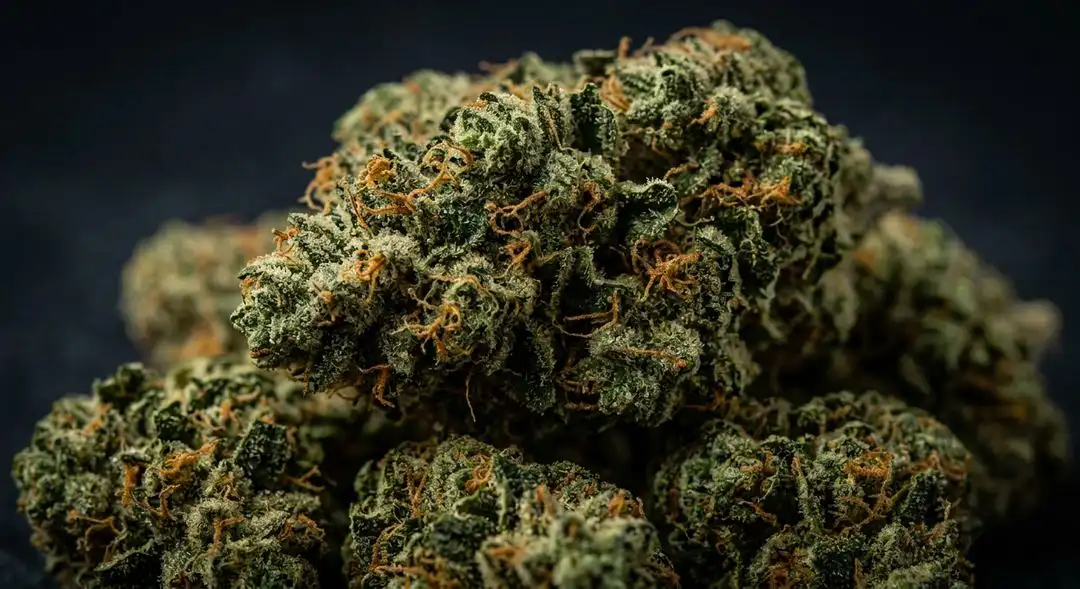
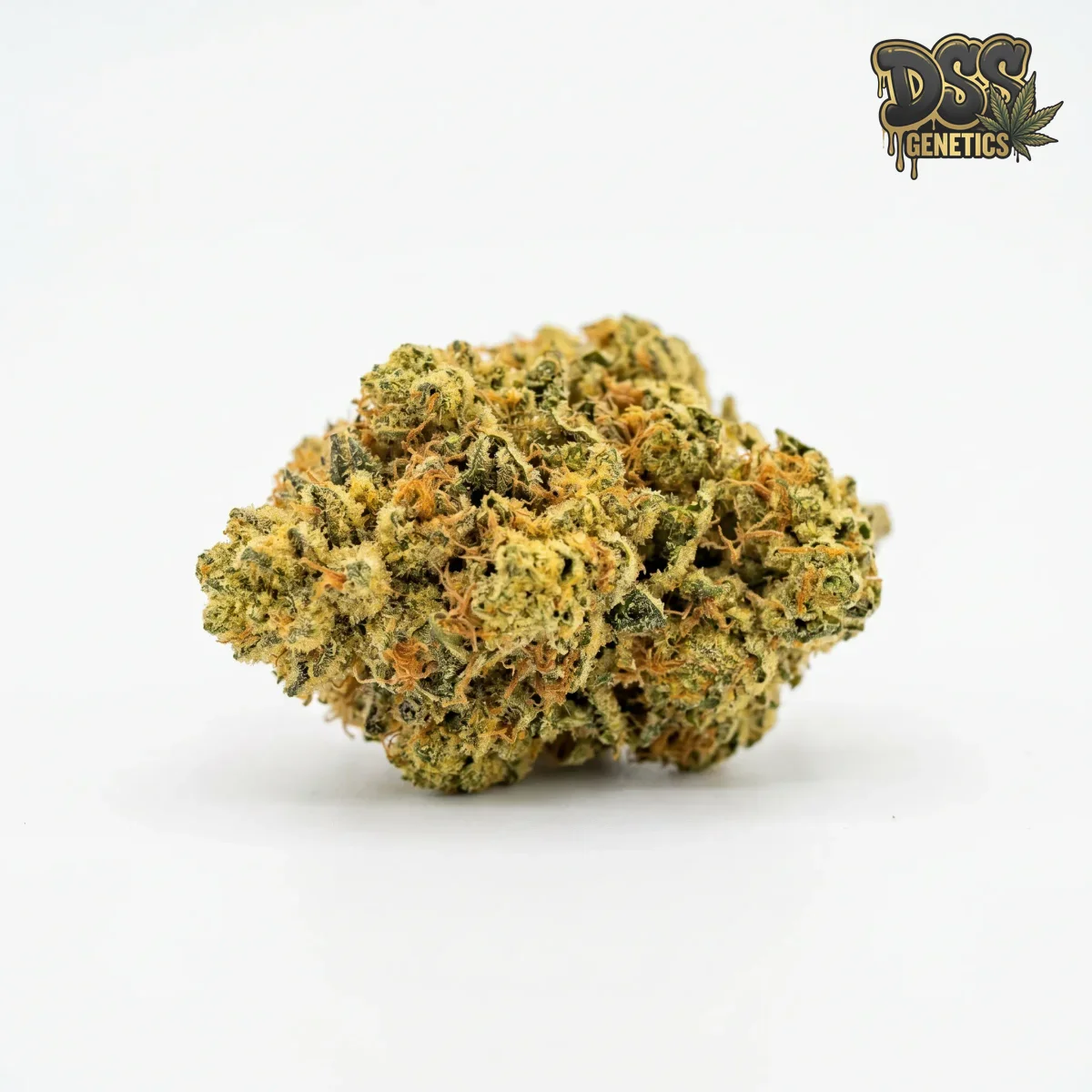
Crack open a jar of well-cured Psychosis and the first wave hits you with ripe berries and sweet grape — Purple Urkle's unmistakable fingerprint. Within seconds, a damp, dark-soil earthiness rises underneath it, and then the funk arrives: a skunky, slightly fuel-edged pungency that prevents this strain from ever smelling merely pleasant. It smells serious. It smells like something grown with intention.
On the inhale, the smoke is dense and sweet, with a candied berry quality that borders on grape candy. The exhale is where the earthy, skunky backbone asserts itself — a long, slow finish that coats the back of the throat with a fruity-meets-pungent complexity. This is not a one-note flavor profile. Every hit reveals something slightly different depending on curing quality and consumption temperature.
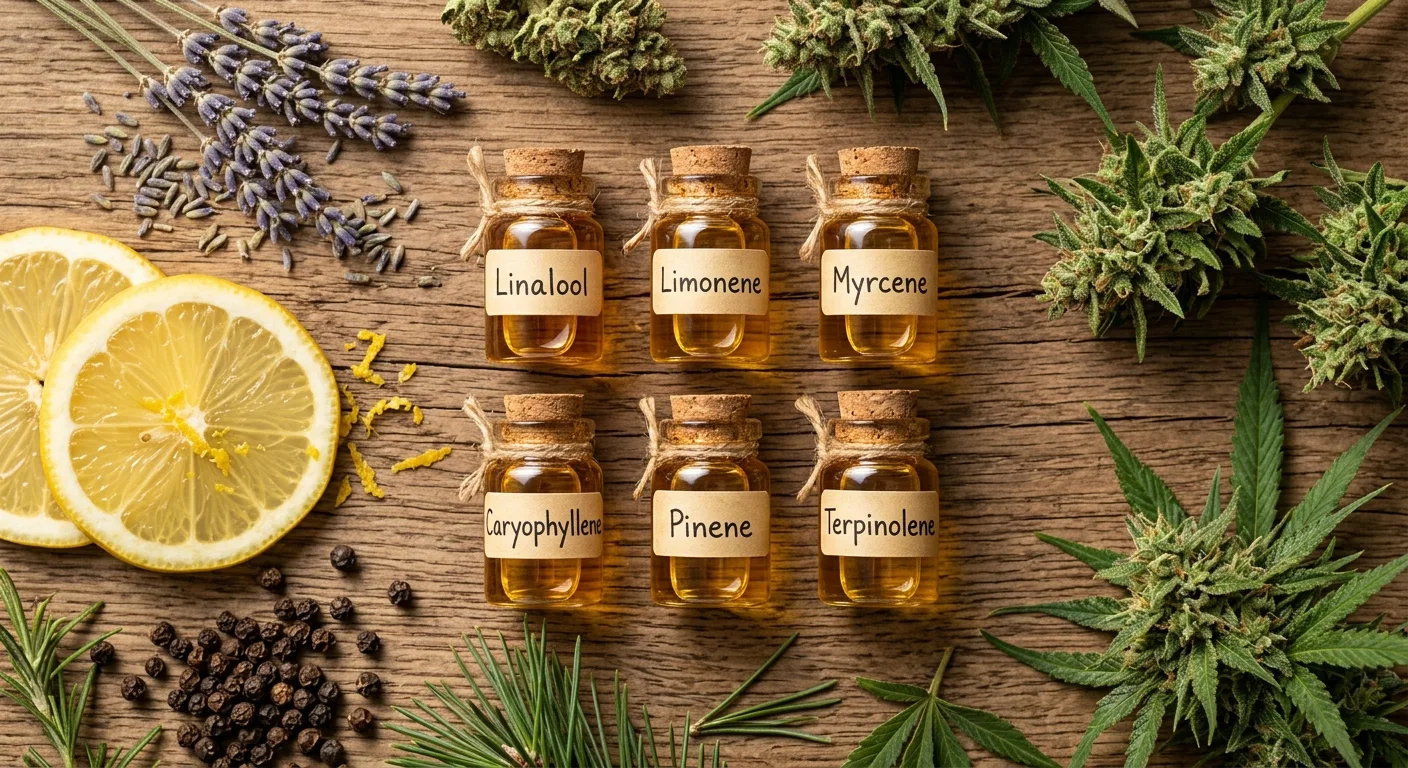
Myrcene is the dominant force in Psychosis's aroma. It's the terpene most responsible for the ripe, musky fruitiness that defines the Purple Urkle family, and it's also the compound most closely linked to the sedative, muscle-relaxing qualities that make this strain so effective for pain and insomnia. Myrcene is believed to increase cell membrane permeability in the blood-brain barrier, potentially allowing THC to act faster and more intensely — which may explain why Psychosis hits harder than its THC percentage alone would suggest.
Limonene adds a bright, citrus-forward lift to what would otherwise be a purely earthy-fruity profile. In Psychosis, it manifests as a subtle lemon-berry brightness in the mid-palate — easy to miss on the nose, but unmistakable in the flavor. Limonene's mood-elevating properties align perfectly with the euphoric onset of this high, and research suggests it may also support stress and anxiety relief at the biochemical level.
Caryophyllene is responsible for the spicy, slightly peppery edge that cuts through the sweetness in the aroma and the fuel note in the exhale. What makes caryophyllene uniquely valuable in a medical context is that it's the only terpene known to directly bind to CB2 receptors in the endocannabinoid system — functioning almost like a cannabinoid itself. In Psychosis, this translates to measurable anti-inflammatory support that complements the THC-driven pain relief.
Pinene plays a supporting role here, showing up as a faint herbal, almost forest-floor note beneath the dominant berry and earth tones. While subtle in the sensory profile, pinene's functional contributions are significant — it may partially counteract short-term memory impairment associated with high-THC consumption, and it supports bronchial dilation, which some users report as cleaner, easier breathing during and after consumption.
Growing Psychosis Seeds
Psychosis is rated moderate difficulty, and that rating is honest. It's not a strain that punishes minor mistakes catastrophically, but it does respond visibly to suboptimal conditions — particularly humidity mismanagement in late flower and nitrogen excess during the transition to bloom. Growers who've worked with other Urkle-family genetics will find Psychosis familiar and forgiving within that context.
The medium plant structure is one of Psychosis's most practical traits. Indoors, it fits comfortably in standard 4×4 or 5×5 grow tents without aggressive height management. Outdoors, it stays manageable even in unrestricted soil, rarely exceeding 4–5 feet under normal seasonal photoperiods. What we've found over dozens of grows with Urkle-lineage strains is that they reward growers who invest early in root zone development — healthy root mass during the vegetative stage pays dividends in flower density and trichome expression.
The purple coloration that defines both parent strains requires a real temperature drop to fully express in Psychosis. Dropping nighttime temps to 58–62°F during the final 2–3 weeks of flower will trigger anthocyanin production and produce the deep violet and blue hues that make these buds visually stunning. This temperature drop also tends to tighten calyx structure and slightly increase terpene density — a double benefit.
Humidity management is critical. During vegetative growth, maintain 50–60% relative humidity. As flowering progresses, begin stepping humidity down: 45–55% during early flower (weeks 1–4), 40–45% during mid-flower (weeks 4–7), and 35–40% in the final 10–14 days before harvest. The dense, resinous bud structure that makes Psychosis so rewarding also makes it a target for botrytis if airflow and humidity aren't tightly controlled.
In our experience, Psychosis responds exceptionally well to indoor growing under LED or HPS lighting at 600–750 µmol/m²/s during flower. Temperatures should stay between 72–82°F during lights-on periods, dropping to 58–68°F at night — particularly valuable in the final weeks for color development as noted above.
Key growing tips for Psychosis:
- Training: Apply LST or low-stress topping during veg to open the canopy — Psychosis responds with multiple flowering sites that significantly boost indoor yields
- Nutrients: Reduce nitrogen sharply at week 3–4 of flower and increase phosphorus and potassium — follow our cannabis nutrient guide for specific EC targets through mid and late bloom
- Humidity control: Step relative humidity down incrementally through flower — dense Urkle-family buds are high-risk for mold if humidity stays above 50% past week 5
- Indoor environment: Keep lights-on temps at 72–82°F and lights-off at 58–68°F for optimal terpene retention and purple color expression — see our indoor growing guide for full environment setup
- Outdoor timing: In temperate climates, Psychosis finishes in late September to mid-October — consult our outdoor growing guide for regional harvest timing and late-season moisture protection
Yield and Flowering Time
Psychosis flowers in 55–60 days from the flip to 12/12 — a relatively brisk finish for an indica-dominant strain with this level of terpene and resin complexity. Indoor growers can expect 1.4–1.8 oz/ft² under dialed-in conditions. Outdoor plants in full sun with unrestricted root zones produce 26–35 oz/plant, which puts Psychosis among the more productive cultivars in our high-yield collection for its size class.
The yield range reflects how responsive this strain is to grower input. The lower end of the indoor range represents grows with minimal training and basic environmental management. The upper end — 1.8 oz/ft² — consistently appears in runs where LST was applied during veg, humidity was stepped down properly through flower, and the nutrient schedule front-loaded phosphorus in weeks 3–5. Outdoor yields of 30–35 oz/plant are achievable in warm, Mediterranean-style climates with long summers and low late-season humidity.
To maximize your harvest:
- Trichome timing: Harvest when 65–75% of trichomes are milky white with 15–25% amber for peak sedative effect — earlier harvests skew the effect toward the euphoric, heady side; later harvests push deeper into couch-lock territory
- Final flush: Flush with plain pH-corrected water (6.0–6.5 for soil, 5.7–6.1 for hydro) for the final 7–10 days before harvest to clear residual nutrients and improve flavor clarity
- Late-flower humidity: Drop to 35–40% RH in the final 10–14 days to protect dense buds from botrytis and encourage maximum trichome expression
- Drying and curing: Hang dry whole branches for 7–10 days at 60–65°F and 55–60% RH, then cure in sealed jars for a minimum of 3–4 weeks — Psychosis's terpene profile develops significantly during cure, with the berry and earthy notes deepening considerably after week 3
Why Buy Psychosis Seeds from DSS Genetics?
Every Psychosis feminized seed ships with our full germination guarantee — if it doesn't sprout when you follow our germination guide, we replace it. No hoops, no hassle. Orders ship in discreet, plain packaging with no cannabis-related branding anywhere on the outside of the package.
- Germination guaranteed — every seed is backed by our replacement promise, no questions asked
- Discreet shipping — plain, unmarked packaging on every order
- Spend $100 or more — receive complimentary premium seeds added to your order automatically
- Optimal seed storage — seeds are stored at controlled temperature and humidity from processing through delivery, preserving maximum viability and genetic integrity
Frequently Asked Questions
What is the genetic background of Psychosis feminized seeds?
Psychosis is a cross between Querkle and Purple Urkle — two California-origin indica-dominant strains with deep roots in the Humboldt and Mendocino cannabis breeding tradition. Querkle itself is a Urkle-derived hybrid known for adding sativa lift to the otherwise heavy grape-and-earth profile of its parent. The resulting 60/40 indica-sativa balance gives Psychosis a more dynamic effect arc than either parent strain delivers alone. If you enjoy this lineage, explore our broader best indica collection for related cultivars.
How difficult is Psychosis to grow?
Psychosis is rated moderate difficulty. It's not the right choice for a first grow, but growers with one or two completed cycles under their belt will find it manageable with proper humidity control and a disciplined nutrient schedule. The biggest challenge is the dense bud structure — it requires consistent airflow and late-flower humidity management to prevent mold. If you're newer to cannabis cultivation, consider starting with a strain from our easy-to-grow collection before tackling Psychosis. For growers ready to step up, our flowering stage guide covers the environmental controls that make the biggest difference with dense-budding indicas.
What does Psychosis smell and taste like?
Psychosis opens with ripe berry and sweet grape on the nose — an unmistakable Purple Urkle inheritance — followed by damp earth, skunk, and a pungent, faintly fuel-edged finish. The flavor follows a similar arc: sweet and fruity on the inhale, earthy and skunky on the exhale. The four primary terpenes driving this profile are Myrcene (earthy, musky, fruity), Limonene (citrus-bright), Caryophyllene (spicy, peppery), and Pinene (herbal, forest-floor). Proper curing deepens the berry and earthy complexity significantly — don't rush the cure on this one.
Medical Disclaimer: This information is for educational purposes only and should not be considered medical advice. Always consult a healthcare professional before using cannabis for medical purposes. Individual results may vary.
Frequently Asked Questions
Psychosis — Common Questions Answered
What is Psychosis?
Psychosis is a balanced hybrid cannabis strain (60% Indica / 40% Sativa) bred from Querkle x Urkle. It produces THC levels of 18–22% and CBD levels of 0.1–1%. Known for its relaxing, euphoric, sleepy effects and sweet, earthy, berry flavor profile.
Is Psychosis easy to grow?
Psychosis is moderately challenging to grow. Beginners can succeed with some research, but it benefits from basic knowledge of pH management and nutrient schedules. Growing difficulty: Moderate. It thrives in temperate climates and reaches a medium plant size.
How long does Psychosis take to flower?
Psychosis has a flowering time of 55–60 days. Switch to a 12/12 light cycle to initiate flowering. Expected yields are 1.4 to 1.8 oz/ft² indoors and 26 to 35 oz/plant outdoors.
What are the effects of Psychosis?
Psychosis delivers relaxing, euphoric, sleepy effects. Many growers report it helps with pain, insomnia, stress, anxiety, depression. With THC levels of 18–22%, it provides a moderate to strong experience suitable for most users.
What does Psychosis smell and taste like?
Psychosis's dominant terpenes are Myrcene, Limonene, Caryophyllene, Pinene, which give it a sweet, earthy, berry, skunky, fruity, pungent flavor and aroma profile. Myrcene contributes earthy, herbal notes and is associated with relaxing effects.Limonene adds citrusy brightness and may elevate mood.Caryophyllene provides spicy, peppery notes and may help with inflammation.
Can I grow Psychosis indoors and outdoors?
Yes, Psychosis performs well both indoors and outdoors. Indoor yields average 1.4 to 1.8 oz/ft², while outdoor grows can produce 26 to 35 oz/plant. It prefers temperate conditions. Its medium height is manageable in most indoor setups.
What does "feminized" mean for Psychosis seeds?
Feminized Psychosis seeds are bred to produce only female plants, which are the ones that develop smokable buds. This eliminates the need to identify and remove male plants, saving time and maximizing your grow space. Over 99% of feminized seeds will produce female plants.
Grower Reviews
Real grow experiences from our community
Similar Strains
Get 10% Off Your First Order
Join our newsletter for exclusive deals, growing tips, and new strain drops.