Purple Kush Autoflower Seeds
By Ivan K., DSS Genetics · Updated April 2026

Purple Kush Autoflower Seeds
SKU: DSS-PUKU-AUTO-5PK
Pack Size
Quantity
Disclaimer: For informational purposes only — not medical advice. Consult a healthcare professional before use.
About This Strain
Purple Kush Autoflower Seeds — Complete Strain Profile
Purple Kush Autoflower Seeds – Strain Overview
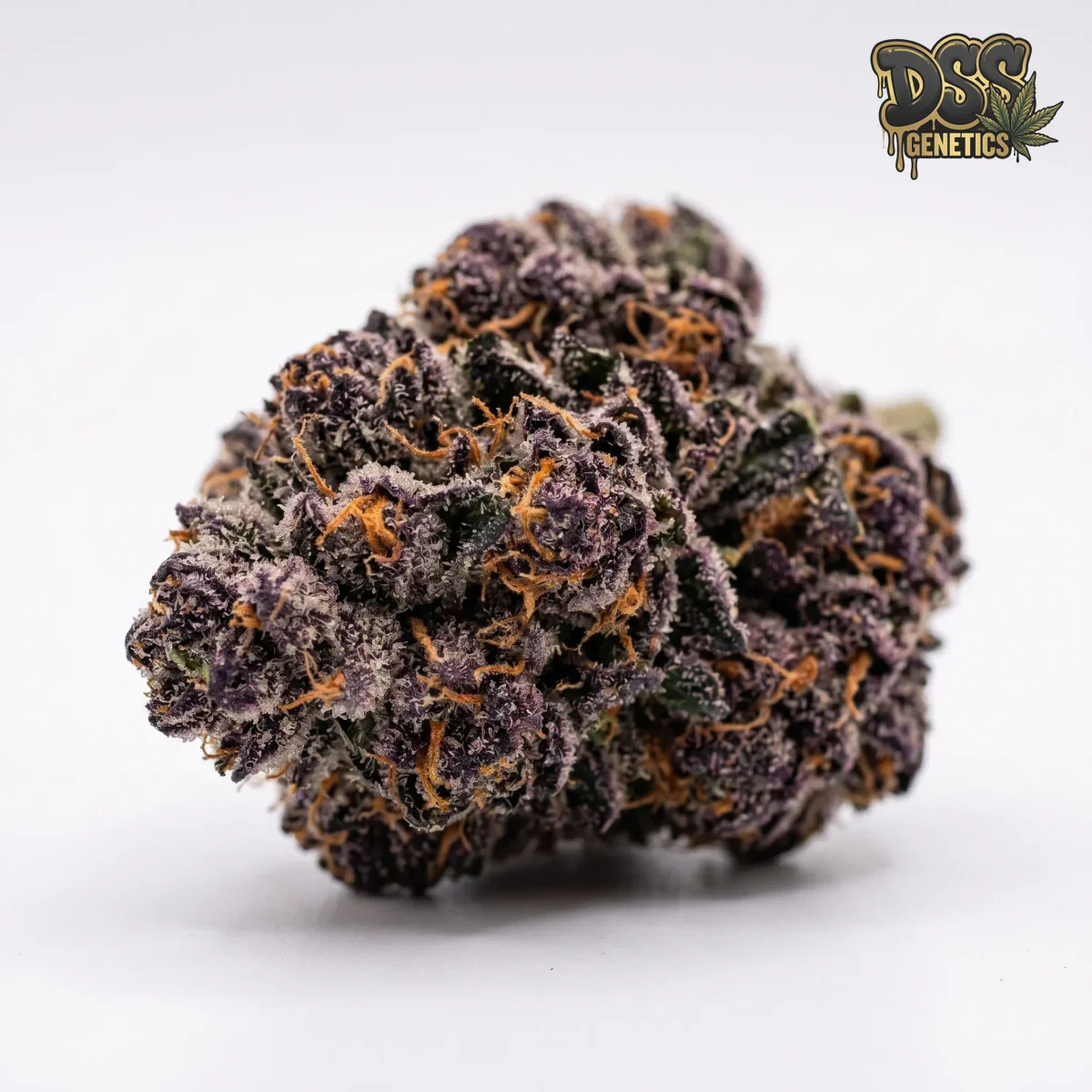
Purple Kush Autoflower is the product of three legendary landrace and near-landrace genetics: Hindu Kush, Purple Afghani, and Ruderalis. The Hindu Kush parent traces its roots to the mountain valleys stretching between Pakistan and Afghanistan — one of the oldest cannabis gene pools on earth. Purple Afghani brings deep violet coloration and a narcotic body weight, while the Ruderalis integration unlocks automatic flowering without sacrificing the dense, resinous structure both Kush parents are celebrated for. The result is a 90% indica powerhouse that finishes on its own schedule, regardless of light cycle.
With THC levels sitting between 15–20%, this strain hits the sweet spot between approachable and genuinely potent — strong enough to satisfy experienced consumers, measured enough for newcomers exploring the indica side of cannabis. If you're building a collection around reliable, hard-hitting plants that don't demand expert-level care, Purple Kush Autoflower deserves a spot in your best autoflower lineup.
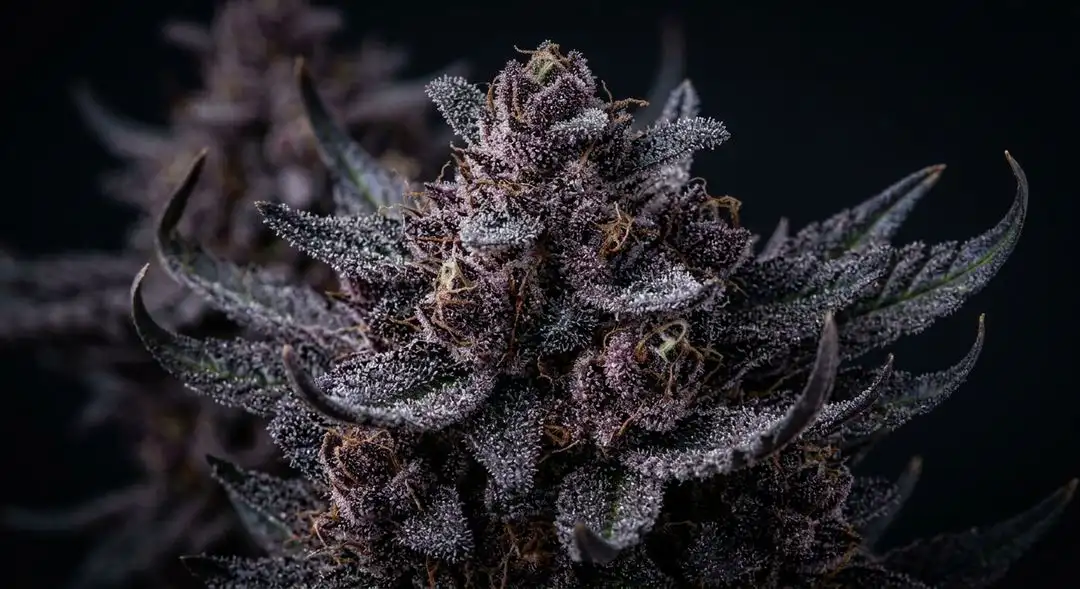
Effects and Medical Benefits
The high opens with a warm, cushioned euphoria that spreads from behind the eyes outward — not a racy cerebral surge, but a slow brightening of mood that feels almost gentle given the indica dominance. Within 20–30 minutes, the body component arrives, unwinding muscle tension and settling into a calm that makes the couch feel like the exact right place to be. What separates Purple Kush from heavier knockouts is that the mental clarity lingers longer than you'd expect from a 90% indica — there's a window of soft creativity and reflective ease before deeper sedation takes hold at higher doses.
Users consistently report these distinct phases:
- Euphoric uplift — a mood-brightening wave that arrives within minutes and smooths out stress and mental chatter
- Full-body relaxation — progressive muscle release that moves from the shoulders down, easing physical tension without immediately flooring you
- Creative calm — a reflective, unhurried headspace ideal for journaling, listening to music, or gentle creative work
- Deep sedation — at higher doses or as the high matures, a true indica heaviness settles in, making this excellent for nighttime use
On the medical side, Purple Kush Autoflower is regularly sought out for:
- Chronic pain — the Kush body effect delivers reliable physical relief without a heavily psychoactive ceiling
- Anxiety — the grounded, slowing character of this strain quiets racing thoughts without triggering paranoia
- Insomnia — evening doses routinely guide users toward deep, restorative sleep
- Depression — the euphoric opening phase offers genuine mood elevation before the sedative body effect takes over
- Muscle spasms — the indica-dominant body melt is particularly effective at interrupting involuntary muscle tension
The trace CBD content (0.01–0.2%) plays a supporting role that shouldn't be dismissed. Even at low levels, CBD contributes to the entourage effect — the way cannabinoids and terpenes modulate each other's activity in the body. Here, it may temper the sharpest edges of the THC experience and contribute a subtle anti-inflammatory layer that complements the strain's pain-relief reputation.
Aroma, Flavor and Terpene Profile
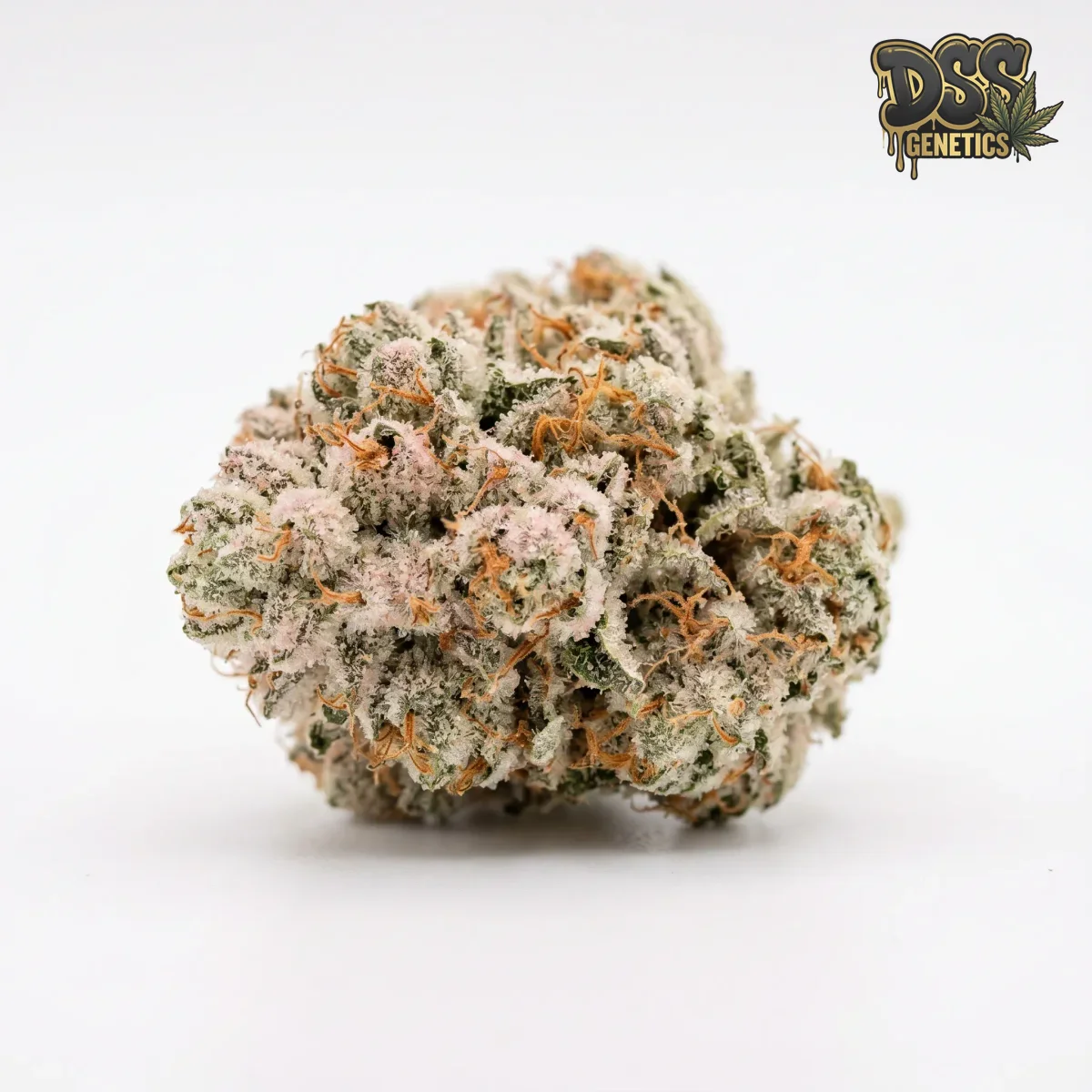
Crack open a cured Purple Kush bud and the first thing you notice is a burst of sharp pine — not a delicate forest whisper but something resinous and immediate, like snapping a fresh branch off a pine tree. That sharp opening softens within seconds into a sweet berry undercurrent, blueberry specifically, with a rounded earthiness underneath that anchors the whole profile. On the inhale, the smoke is smooth and fragrant, carrying that pine-berry combination cleanly. The exhale brings forward the citrus edge — a brief brightness that fades into a lingering earthy sweetness on the palate.
What makes this profile memorable is the contrast: something green and sharp sitting alongside something sweet and fruity. It's not a one-note Kush musk. The Purple Afghani genetics push the berry and sweetness forward, while the Hindu Kush ancestry keeps everything grounded in that classic earthy, hashy foundation.
Humulene is the most abundant terpene in this strain at 0.77%, which immediately signals why the aroma skews earthy and slightly woody rather than purely sweet. Humulene is also found in hops, sage, and ginseng — it carries a dry, herbal, grounding character that gives Purple Kush its depth and complexity. Beyond aroma, humulene has drawn attention for potential anti-inflammatory properties, adding another layer to this strain's medical appeal for users dealing with pain and inflammation.
Caryophyllene comes in at 0.65% and is the only terpene known to directly bind to CB2 receptors in the endocannabinoid system. This gives it a pharmacological role beyond simple aroma — it contributes spicy, peppery warmth to the flavor profile while potentially delivering analgesic and anti-inflammatory effects that operate independently of the strain's THC content. For medical consumers, this makes Caryophyllene one of the most valuable terpenes in the profile.
At 0.51%, Myrcene rounds out the trio, bringing the classic musky, earthy sweetness that defines most Kush-family strains. Myrcene is widely associated with sedative effects and may enhance THC permeability across the blood-brain barrier — which helps explain why this strain's body effect feels so thorough and enveloping despite a THC level that isn't extreme. The blueberry and berry notes you taste on the exhale are in large part Myrcene's contribution.
Growing Purple Kush Seeds
Purple Kush Autoflower is genuinely beginner-friendly — not in the vague, marketing-language sense, but in the practical sense that it forgives mild overwatering, handles light stress training without complaint, and doesn't require a dialed-in photoperiod schedule to trigger flowering. It moves from seed to harvest in 56–63 days on its own timeline, making it one of the fastest-finishing indicas you can grow without sacrificing yield quality.
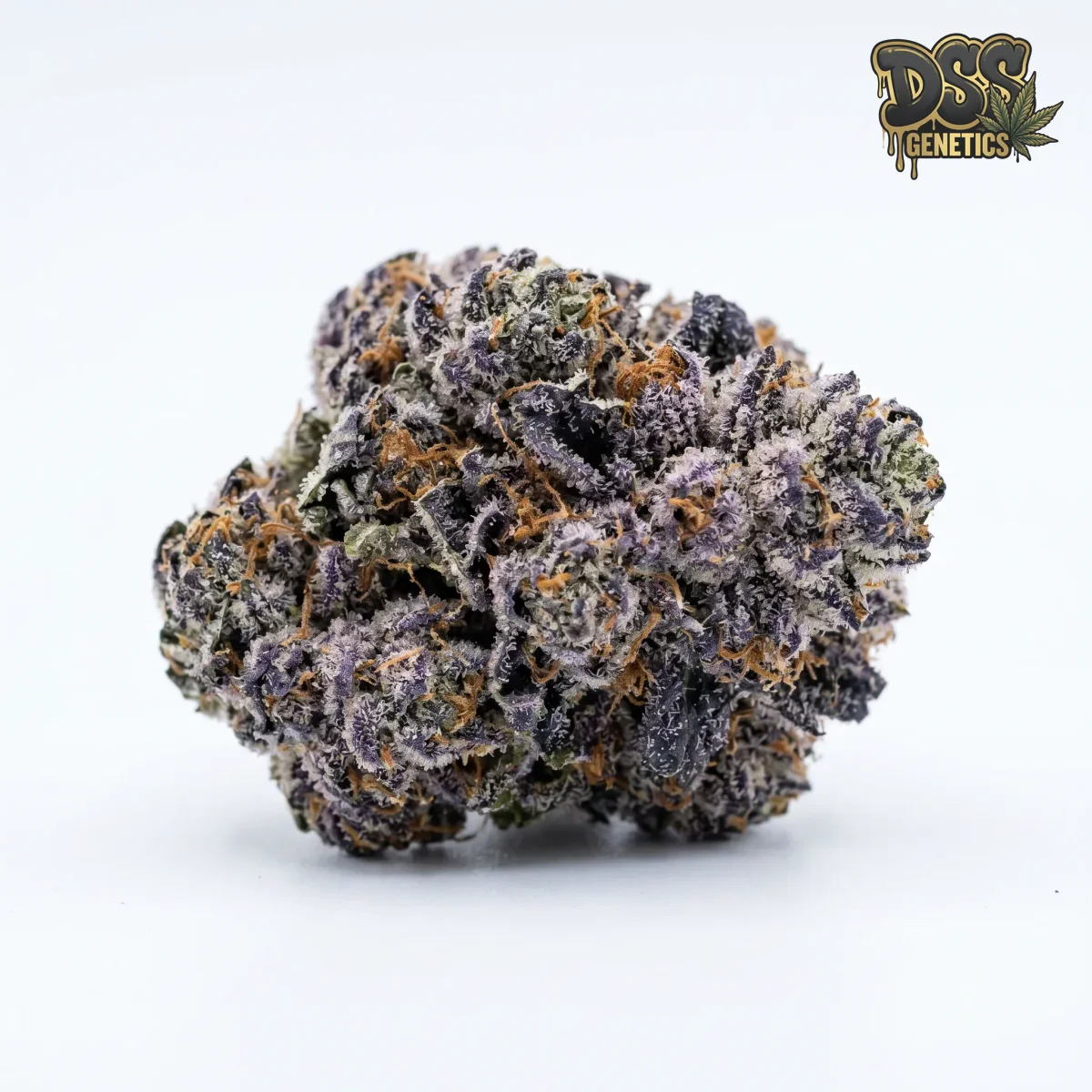
The plant reaches a medium height, typically staying compact enough for discreet indoor grows without requiring aggressive topping to manage canopy. In our experience across multiple grows, the purple coloration in the buds and sugar leaves intensifies significantly when nighttime temperatures drop to 60–65°F (15–18°C) during the final two weeks before harvest. This is a cosmetic effect driven by anthocyanin pigment production, but it also signals that the plant is healthy and responding well to its environment. Maintain daytime temperatures between 70–80°F (21–27°C) and you'll have an easy grow from start to finish.
Humidity management is the one area where you can't afford to be casual. Keep relative humidity at 50–60% during the vegetative phase, then drop it to 40–50% once flowering begins. Dense Kush buds retain moisture, and if late-flower humidity climbs above 55%, you risk bud rot setting in — a frustrating loss on what should be an easy grow. Airflow matters here: a gentle oscillating fan directed across the canopy does more to prevent mold than any other single intervention.
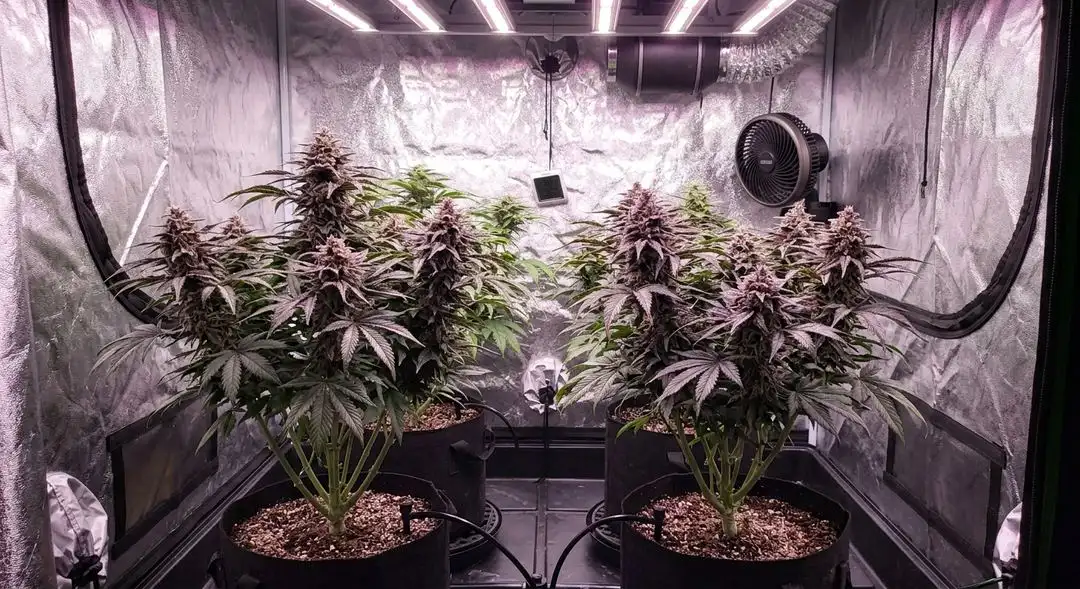
Key growing tips for Purple Kush Autoflower:
- Light schedule: Run 18/6 light/dark from seed to harvest — autoflowers don't need a 12/12 flip, and 18 hours of light maximizes energy for bud production. See our indoor growing guide for full setup recommendations.
- Training approach: Low-stress training (LST) works exceptionally well — gently bend and tie main branches outward at weeks 2–3 to open the canopy and expose lower bud sites to light. Avoid heavy topping on autoflowers. Visit our training techniques guide for step-by-step instructions.
- Nutrients: Start with a light nutrient schedule — autoflowers have smaller root systems and burn easily. Transition to a phosphorus and potassium-heavy bloom formula at the first signs of pre-flower. Our nutrient guide outlines exact feeding windows for autoflower strains.
- Outdoor growing: Purple Kush Autoflower thrives outdoors in warm, dry climates. The auto genetics mean you can plant multiple sequential crops from spring through early fall without coordinating with the sun's schedule. Our outdoor growing guide covers soil prep and seasonal timing in detail.
- Germination: Start seeds directly in their final container when possible — autoflowers don't benefit from transplanting, and root disturbance during the rapid auto growth phase can stall development and cut into your final yield. Follow our germination guide for the paper towel or direct-to-soil methods.
Yield and Flowering Time
Purple Kush Autoflower moves from seed to harvest in just 56–63 days — among the faster turnarounds in the best indica category. Indoor growers working with a well-dialed environment can expect 0.9–1.1 oz per square foot, which is a solid return for an easy-rated auto. Outdoors, individual plants produce 1–1.8 oz per plant, with the upper end achievable in warm, sunny climates with good soil and consistent watering. The compact medium stature means you can run more plants per square foot than you would with a stretchy sativa hybrid, which partially offsets the per-plant yield compared to larger photoperiod strains.
What we've found over dozens of grows is that the difference between landing at 0.9 oz/ft² and pushing toward 1.1 oz/ft² almost always comes down to light intensity and consistency rather than nutrients or training. Purple Kush Autoflower responds noticeably to PPFD values above 600 µmol/m²/s during flowering — if your light is underpowered for your grow space, that's the first variable to address before adjusting anything else.
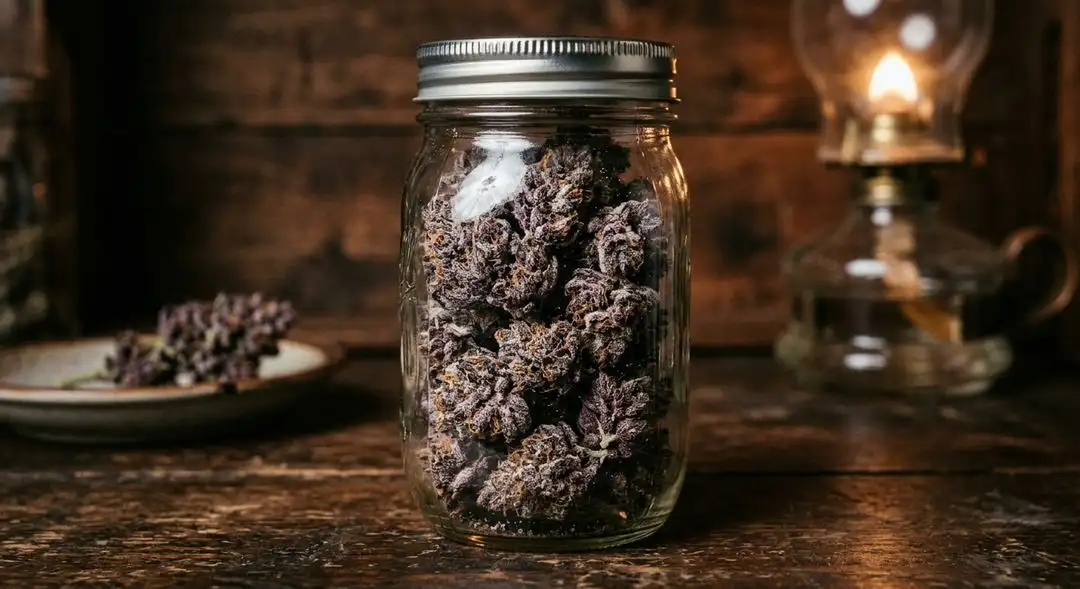
To maximize your harvest:
- Trichome timing: Harvest when trichomes show 70–80% milky white with 10–20% amber — amber trichomes signal THC converting to CBN, which deepens the sedative quality ideal for the insomnia and pain relief applications this strain is known for
- Late-flower humidity: Drop relative humidity to 40–45% in the final two weeks to protect dense buds from mold and to concentrate resin production as the plant finishes
- Nutrient flush: Flush with plain pH-balanced water for the final 7–10 days before harvest to clear residual salts and improve the cleanliness of the final smoke
- Drying and curing: Slow dry for 10–14 days at 60–65°F and 55–60% RH before jarring — rushing this step is the most common reason otherwise excellent Purple Kush loses its berry and pine aroma before it reaches the jar
Why Buy Purple Kush Seeds from DSS Genetics?
Every Purple Kush Autoflower seed ships with our full germination guarantee — if it doesn't sprout under proper conditions, we replace it, no argument. We store seeds in climate-controlled conditions to protect viability from the moment they're packaged to the moment they reach your door, and every order ships in plain, discreet packaging that gives nothing away.
- Germination guaranteed — every seed backed by our replacement promise if it fails to sprout under proper conditions
- Discreet shipping — plain, unmarked packaging on every order
- Spend $100+ — receive complimentary premium seeds added to your order automatically
- Proper cold-chain storage — seeds are kept at optimal temperature and humidity from warehouse to delivery to protect germination rates
Frequently Asked Questions
Is Purple Kush Autoflower a good strain for first-time growers?
Yes — Purple Kush Autoflower is rated easy difficulty and is one of the most forgiving strains you can start with. It doesn't require light cycle management, stays at a manageable medium height, and tolerates minor environmental fluctuations without dramatically affecting yield. Browse our full easy-to-grow collection if you're building a beginner grow room and want to compare options before deciding.
How long does Purple Kush Autoflower take from seed to harvest?
The total seed-to-harvest window is 56–63 days under an 18/6 light schedule. Because this is an autoflower, there's no need to switch to 12/12 to trigger flowering — the plant transitions automatically, typically showing pre-flower signs around days 21–28. For a detailed breakdown of what to expect week by week, our flowering stage guide covers the full progression including when to shift your nutrient formula from grow to bloom.
What terpenes give Purple Kush its distinctive aroma and do they have medical value?
The three dominant terpenes are Humulene (0.77%), Caryophyllene (0.65%), and Myrcene
Medical Disclaimer: This information is for educational purposes only and should not be considered medical advice. Always consult a healthcare professional before using cannabis for medical purposes. Individual results may vary.
Frequently Asked Questions
Purple Kush — Common Questions Answered
What is Purple Kush?
Purple Kush is a indica-dominant cannabis strain (90% Indica / 10% Sativa) bred from Hindu Kush x Purple Afghani x Ruderalis. It produces THC levels of 15–20% and CBD levels of 0.01–0.2%. Known for its relaxing, euphoric, uplifting effects and pine, sweet, earthy flavor profile.
Is Purple Kush easy to grow?
Yes, Purple Kush is an excellent choice for beginners. It has a forgiving growth pattern and doesn't require advanced techniques to produce good yields. Growing difficulty: Easy. It thrives in temperate climates and reaches a medium plant size.
How long does Purple Kush take to flower?
Purple Kush has a flowering time of 56–63 days. Switch to a 12/12 light cycle to initiate flowering. Expected yields are 0.9 to 1.1 oz/ft² indoors and 1 to 1.8 oz/plant outdoors.
What are the effects of Purple Kush?
Purple Kush delivers relaxing, euphoric, uplifting, creative, energetic, calming effects. Many growers report it helps with pain, muscle spasms, anxiety, depression, insomnia. With THC levels of 15–20%, it provides a moderate to strong experience suitable for most users.
What does Purple Kush smell and taste like?
Purple Kush's dominant terpenes are Myrcene (0.51%), Caryophyllene (0.65%), Humulene (0.77%), which give it a pine, sweet, earthy, citrus, berry, blueberry flavor and aroma profile.
Can I grow Purple Kush indoors and outdoors?
Yes, Purple Kush performs well both indoors and outdoors. Indoor yields average 0.9 to 1.1 oz/ft², while outdoor grows can produce 1 to 1.8 oz/plant. It prefers temperate conditions. Its medium height is manageable in most indoor setups.
Grower Reviews
Real grow experiences from our community
Get 10% Off Your First Order
Join our newsletter for exclusive deals, growing tips, and new strain drops.