Picture this: you spend $80 on premium feminized seeds, nurse them through germination, and watch them thrive in vegetative growth — only to see your harvest wiped out by early frost, botrytis rot, or heat stress in week six of flower. This happens to thousands of growers every season. The culprit is almost never bad seeds. It's bad cannabis seed selection by climate.
Most seed guides tell you to pick based on THC percentage, flavor profile, or effect type. Those things matter — but only after you've matched your seed to your actual environment. This guide flips the usual approach and puts climate first, giving you a framework that works whether you're growing in the Arizona desert, coastal Maine, or a greenhouse in the Pacific Northwest.
Work through this guide in order. By the end, you'll know exactly which seed type fits your climate, which traits to look for on packaging, and which strains to avoid before you spend a dollar.
Why Climate Is the #1 Factor Most Beginner Growers Overlook
Climate is the single most important factor in outdoor and greenhouse cannabis seed selection because it's the one variable you cannot fully control. Nutrients, training, and watering schedules are all adjustable mid-grow. Your regional weather is not.
The r/microgrowery community is full of post-harvest autopsies that share one theme: growers who chose strains based on THC percentages or marketing copy, not their local climate conditions. The pattern shows up constantly — beginners in the UK buying 90-day flowering Hazes, growers in Florida planting dense indica hybrids in July, northern growers starting photoperiod plants too late to finish before October frosts.
What makes this problem worse is that most seed bank product pages bury climate recommendations in fine print, if they mention it at all. Royal Queen Seeds and ILGM both cover strain selection by climate, but they treat it as a secondary filter after you've already picked your strain — not as the starting point it should be.
The core principle: Your climate determines your seed type first. Seed type narrows your strain options. Strain-level traits like THC, flavor, and yield come last. Every experienced outdoor grower starts at step one — beginners usually skip straight to step three.
Cannabis is a phenotypically plastic plant — it adapts within limits, but those limits are genetically encoded. A strain bred for the Lebanese highlands will struggle in Mississippi humidity. A dense OG Kush phenotype that thrives in a dry California fall will develop botrytis (bud rot) in three days under coastal Oregon rain. Understanding these genetic boundaries before you buy saves you from a preventable loss.
Before you look at a single strain name, check your local agricultural extension data for two numbers: your average last spring frost date and your average first fall frost date. The gap between them is your outdoor growing window. Everything else in this guide builds from that number.
The 5 Climate Variables That Should Drive Your Seed Selection
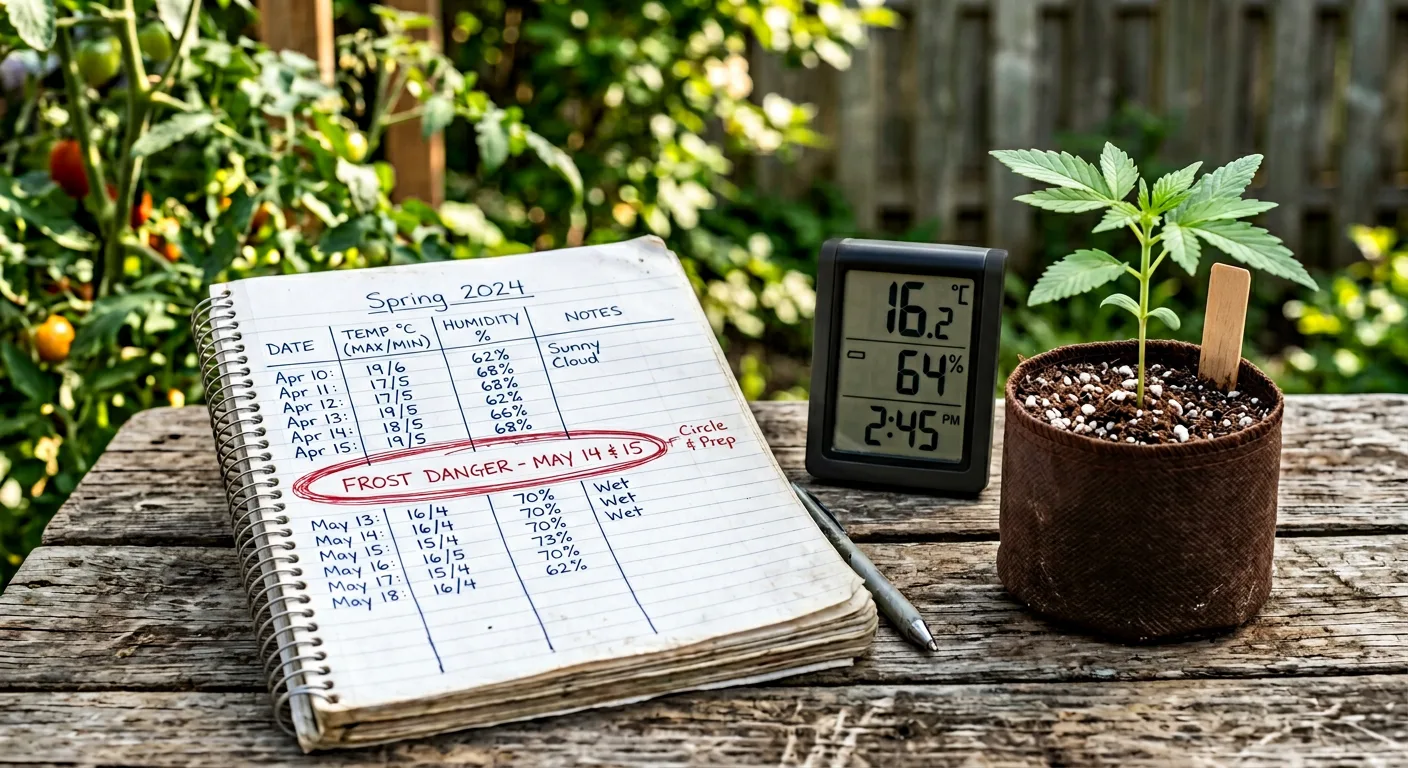
Five measurable climate variables determine which cannabis seeds will succeed in your environment. Evaluate all five before choosing a seed type — missing even one can lead to crop failure despite excellent growing technique.
Average High Temperature (°F/°C)
Cannabis grows optimally between 70–85°F (21–29°C). Sustained temperatures above 90°F (32°C) during flower slow terpene production and can cause heat stress — look for heat-tolerant genetics. Below 60°F (15°C) at night during late flower triggers early senescence and slows bud development significantly.
Average Relative Humidity (RH%)
Humidity is the fastest route to crop loss in outdoor cannabis. Vegetative cannabis handles 50–70% RH comfortably. During flower, anything consistently above 55–60% RH dramatically increases botrytis risk. Check your region's average RH in September and October — that's your flowering-period risk window.
Season Length (Frost-Free Days)
Count the frost-free days between your last spring frost and first fall frost. Most photoperiod cannabis strains need 120–180+ frost-free days to complete their full cycle outdoors. If your window is under 120 days, autoflowers or specifically bred short-season photoperiods are your only reliable options.
UV Index
High-altitude or equatorial grows expose plants to intense UV radiation. UV stress can accelerate trichome production — a natural defense response — but it also stresses plants not bred for high-UV environments. Sativa-dominant genetics from equatorial regions generally handle high UV better than northern indica varieties.
Wind Exposure
Consistent wind above 15 mph causes physical stem stress, accelerates soil moisture evaporation, and can snap branches during late-stage flower when buds are heavy. Coastal and high-altitude growers should prioritize shorter, stockier indica-dominant genetics with sturdy branch structure over tall, top-heavy sativas.
Pro Tip: Use a free weather data service like Weather Underground's historical records to pull monthly humidity averages and first/last frost dates for your exact zip code — not just your region. Microclimates between ZIP codes can differ by 10–15 frost-free days and 8–12% average humidity.
Once you have these five numbers documented, you're ready to match them against the climate profiles below. You don't need a perfect match — you need to understand which variables in your local climate pose the highest risk, then select seeds that specifically address those risks.
Seed Type Recommendations by Climate Profile
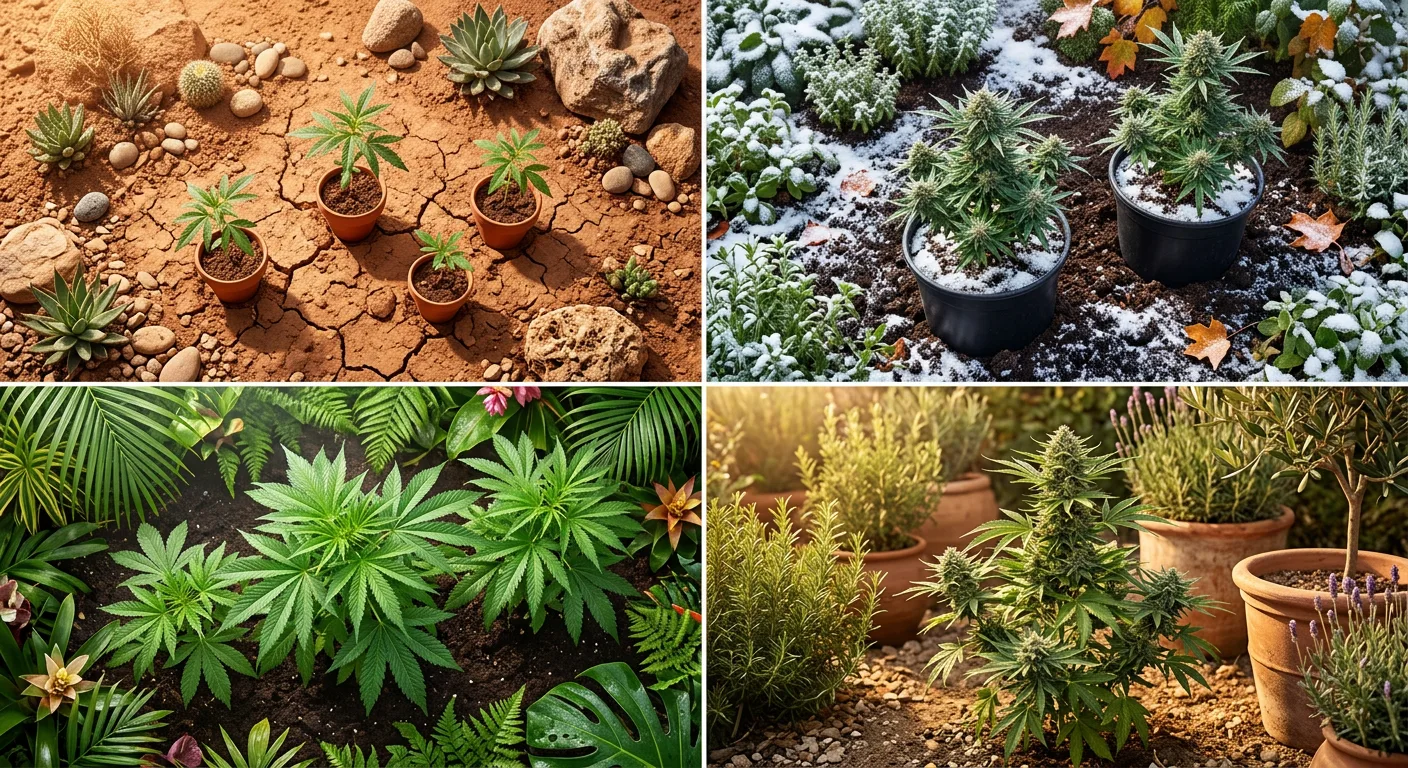
Each major climate type demands a different seed strategy. The five profiles below — hot and dry, cold and northern, hot and humid, Mediterranean, and greenhouse — cover the most common growing environments worldwide and give you specific seed traits and strain recommendations for each.
These profiles aren't rigid boxes. If your climate sits between two profiles (warm and moderately humid, for example), read both relevant sections and prioritize the trait that matches your highest-risk variable.
Hot & Dry Climates: Heat-Tolerant Sativas and Hybrids
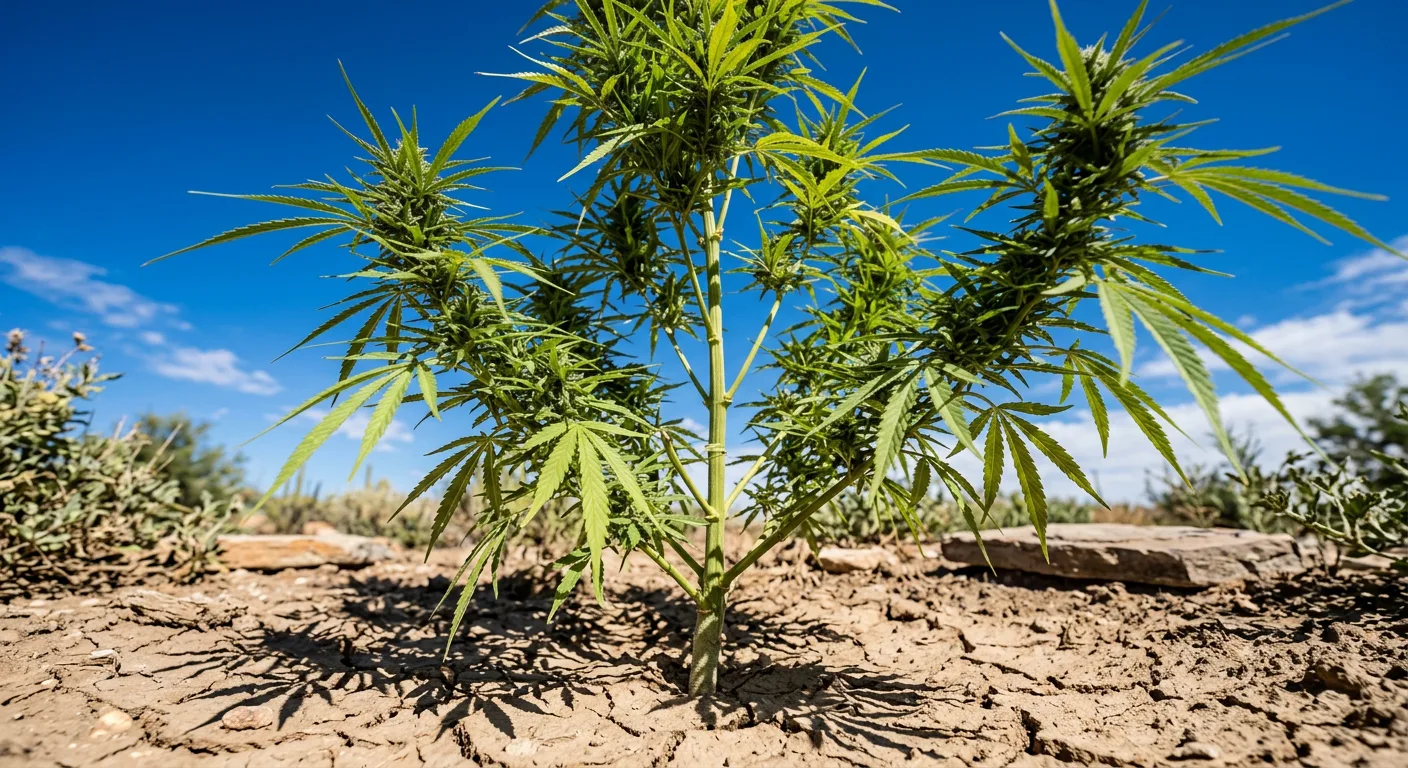
Hot, dry climates — think the American Southwest, Southern Spain, North Africa, or inland Australia — offer long growing seasons and intense sunlight. The challenge is sustained heat above 90°F (32°C) and low humidity that can stress plants and dry out the root zone rapidly. Seeds that thrive here carry genetic heritage from similarly hot, dry regions of the world.
What to Look For in Hot & Dry Climate Seeds
- Sativa or sativa-dominant hybrid genetics (evolved in equatorial, low-humidity regions)
- Long flowering windows (9–12+ weeks) — the extended season accommodates them
- Narrow, elongated leaf structure — allows heat dissipation and reduces moisture loss
- Deep root systems — genetic trait associated with landrace sativas from arid regions
- High heat tolerance threshold — specifically mentioned in breeder notes
- Drought-stress resilience — strains that don't immediately show nutrient lockout under heat
Top Strain Picks for Hot & Dry Climates
Landrace sativa varieties and their direct descendants perform best here. Sour Diesel Feminized (24% THC) is a reliable hot-climate performer — its sativa-dominant genetics and open structure handle heat far better than most hybrids. Swazi Feminized (18% THC) is bred directly from Swazi Gold, an African landrace that evolved under intense equatorial sun and dry-season conditions — one of the most heat-tolerant genetics available.
Well-known industry picks include Durban Poison (a pure South African sativa landrace), Strawberry Cough, and Jack Herer — all bred with equatorial or Mediterranean genetics that tolerate sustained heat. Tangerine Haze Feminized (18% THC) brings Haze genetics developed in California's warm, dry interior valleys and handles summer heat reliably.
Strains to Avoid in Hot & Dry Climates: Dense, compact indica hybrids like Purple Kush, Blueberry, and most OG Kush phenotypes struggle in sustained heat above 90°F. Their tight bud structure also traps dry-heat particulates, reducing airflow around developing calyxes. Save these for cooler or indoor environments.
Hot & Dry Strategy: Timing Is Everything
In very hot climates (average summer highs above 100°F / 38°C), consider timing your outdoor grow to avoid peak summer heat during the flowering stage. Starting seeds in March or April and targeting an October finish keeps the most heat-sensitive flowering phase in slightly cooler September–October temperatures.
Cold & Northern Climates: Autoflowers and Fast-Finishing Photoperiods
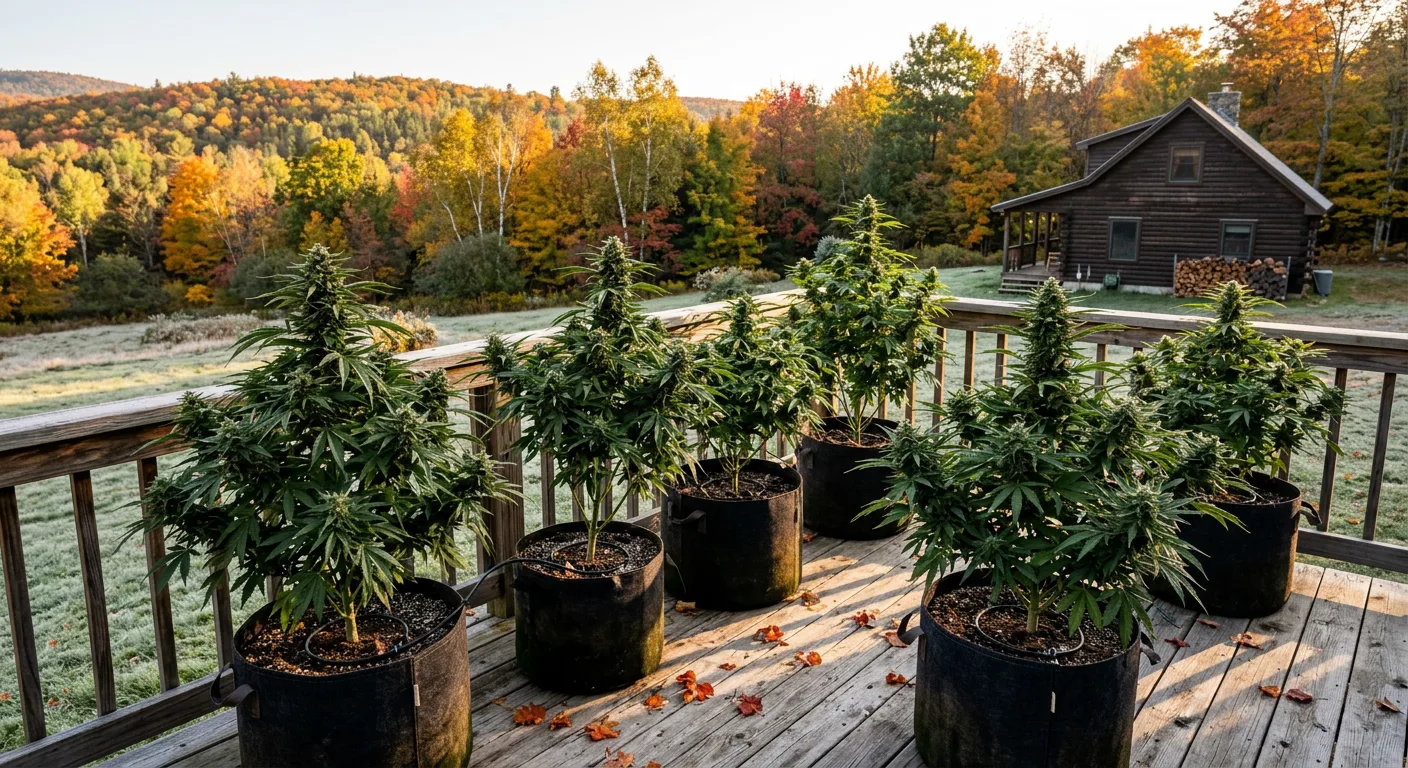
Cold and northern climates — northern US states, Canada, Scandinavia, the UK, and high-altitude grows — present a simple problem: not enough frost-free days to finish most photoperiod strains. The solution is equally simple in principle but requires the right genetics to execute successfully.
Why Autoflowers Dominate in Northern Climates
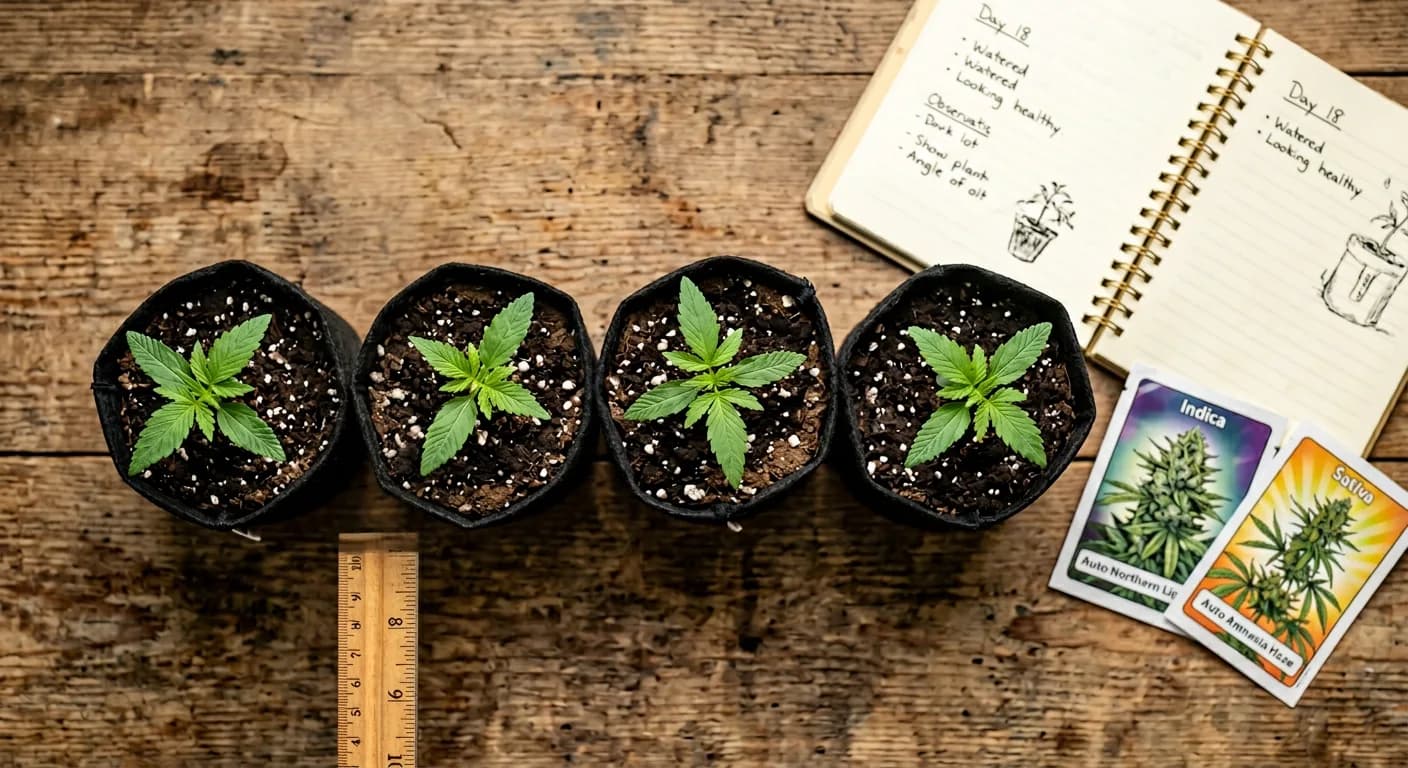
Autoflowering cannabis doesn't wait for light cycle changes to begin flowering. It flowers based on age — typically beginning the transition at 3–4 weeks old and finishing harvest-ready in 70–90 days total from seed. That's the entire answer to a 90-day growing window.
Learn more about the complete tradeoffs between seed types in our guide to autoflower vs feminized seeds — it covers the key decisions in detail.
- Autoflower advantages in cold climates: finish before first frost regardless of light cycle
- Can run 2 outdoor harvests in some northern climates (May–July + August–October)
- Start seeds indoors 2–3 weeks early to extend effective season length
- No light-dep or blackout structures needed — autoflowers handle long summer days naturally
- Modern autoflowers reach 18–23% THC — the potency gap vs photoperiods has largely closed
Top Strain Picks for Cold & Northern Climates
Amnesia Haze Autoflower (17% THC) brings the classic Haze flavor profile into an autoflower format that finishes in under 80 days — perfect for northern growers who want premium genetics without gambling on the frost calendar. Skywalker OG Autoflower (23% THC) delivers dense, resinous OG Kush-lineage buds in a 75–85 day window.
Holy Grail Kush Autoflower (20% THC) is a cold-hardy option with strong root vigor even in cooler soil temperatures — a trait that matters in northern springs when soil takes longer to warm up. For fast-finishing photoperiod options, Northern Lights x Big Bud Feminized (20% THC) is built from two of cannabis cultivation's most cold-adapted indica lines and typically finishes by late September in northern latitudes.
Popular industry-wide picks for cold climates include Early Skunk, Critical Mass, and Short Stuff autoflowers — all specifically bred for compressed seasons and cold-night tolerance.
Science Note: Autoflowering genetics originate from Cannabis ruderalis, a subspecies that evolved near the Arctic Circle in Russia and Central Asia where summers are short and light cycles irregular. The age-based flowering trigger is a direct evolutionary adaptation to unreliable photoperiod cues — exactly what makes these plants so valuable in northern human growing environments.
Pro Tip for Northern Growers: Use our free Grow Planner Tool to map your local frost dates against autoflower flowering timelines. It takes 3 minutes and eliminates the guesswork of whether your chosen strain will finish before your first fall frost.
Hot & Humid Climates: Mold-Resistant Genetics with Open Bud Structure
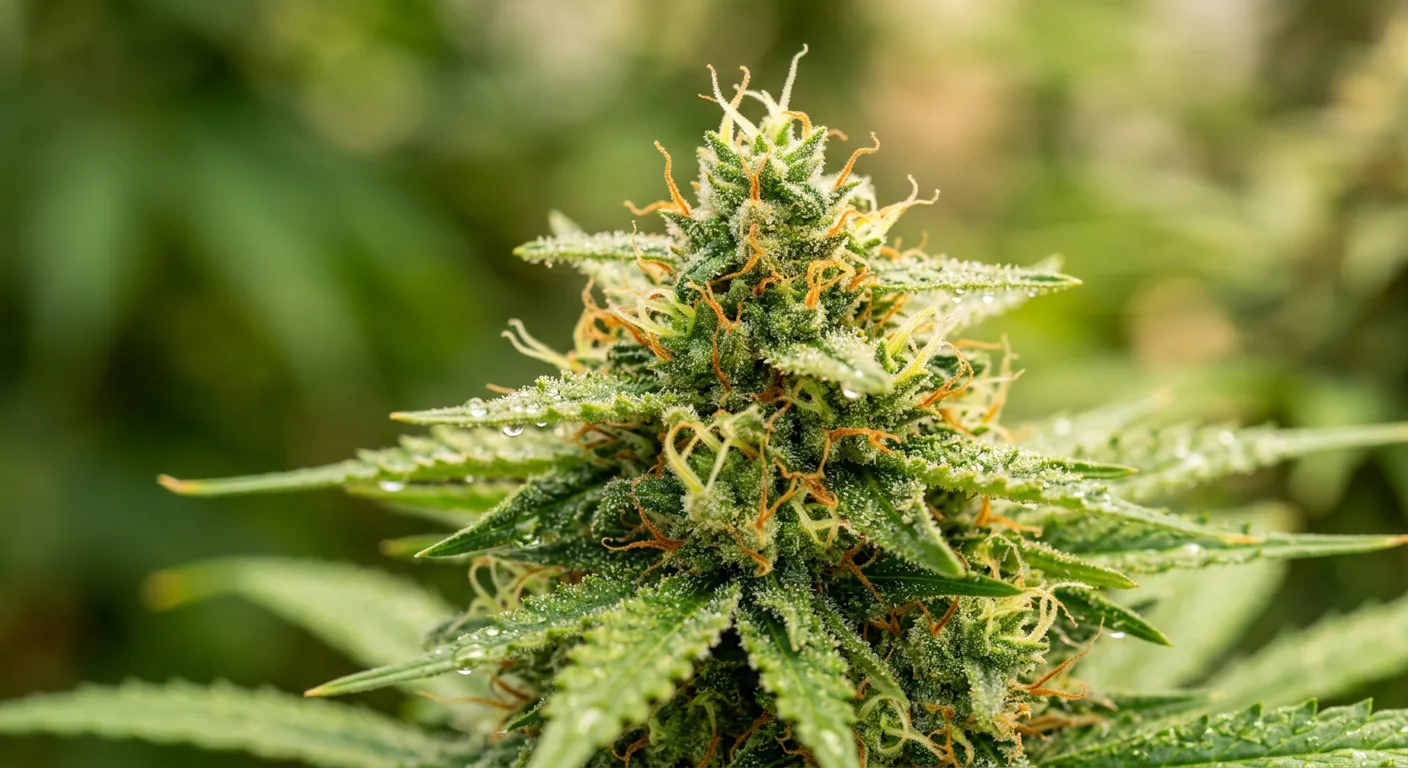
Hot and humid climates — the US Southeast, Hawaii, the Gulf Coast, the Caribbean, coastal Central America, and Southeast Asia — are the most challenging environment for cannabis cultivation. High temperatures AND high humidity together create ideal conditions for botrytis (bud rot) and powdery mildew, especially in dense-budding strains during the flowering stage.
Understanding Why Bud Structure Matters So Much Here
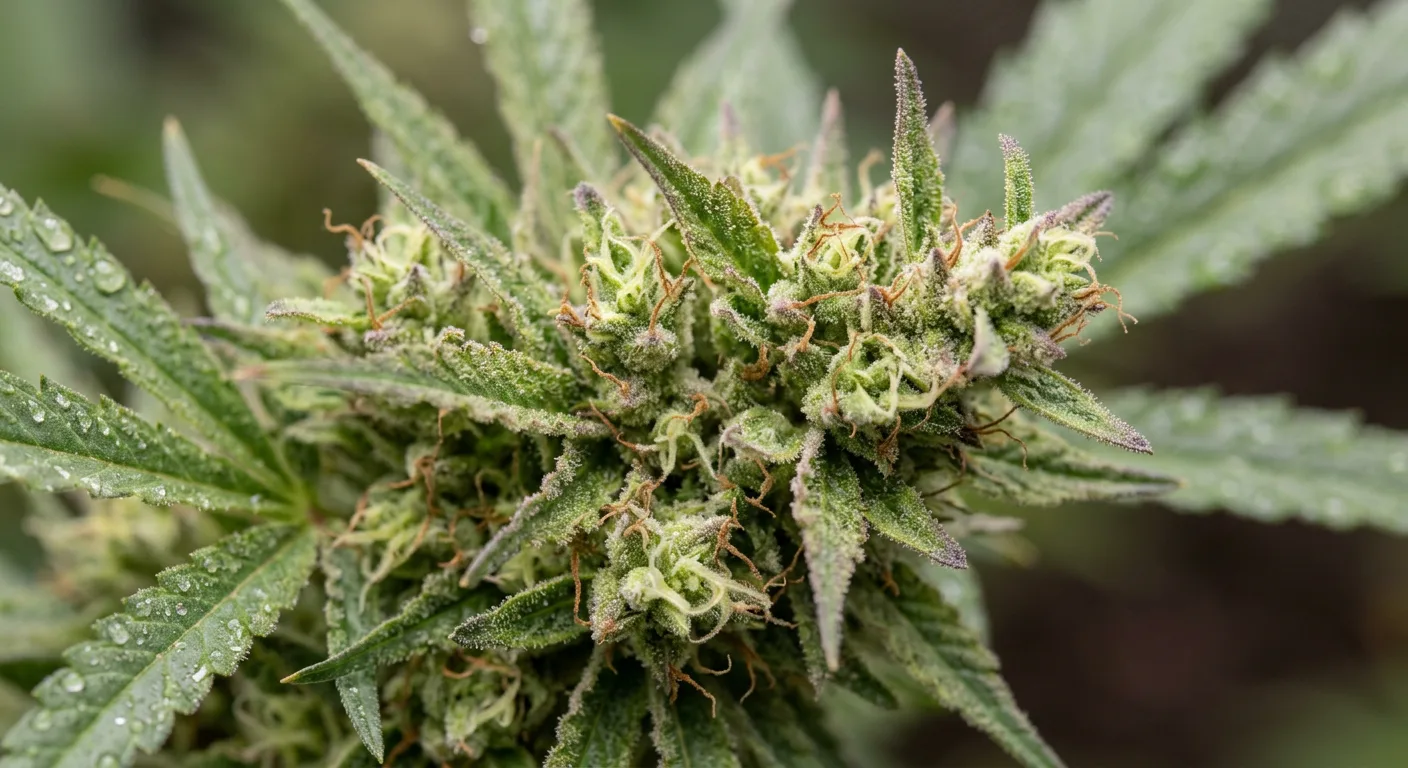
Botrytis (gray mold) infects cannabis when moisture gets trapped inside dense bud clusters where airflow is minimal. Strains with tight, compact indica bud structure are extremely vulnerable — the interior of a dense cola can reach 70–75% RH even when ambient humidity is at 60%, simply because there's no airflow between the calyx clusters.
Mold-resistant strains for humid climates share a distinct physical trait: open, airy bud architecture with space between individual calyxes. This isn't just aesthetics — it's the airflow that prevents moisture from pooling inside the flower and creating the anaerobic pockets where botrytis thrives.
Traits to Look For in Humid Climate Seeds
- Open calyx structure and loose bud architecture (listed in breeder notes)
- Sativa or Haze lineage — these genetics naturally produce airier flowers
- African or Southeast Asian landrace ancestry — evolved in tropical humidity
- Short flowering window — less time in humid conditions = less mold exposure
- Resistance to botrytis and powdery mildew (explicitly noted by breeder)
- Strong resin production — terpenes including caryophyllene and myrcene have natural antifungal properties
Top Strain Picks for Hot & Humid Climates
Swazi Feminized (18% THC) from Swazi Gold lineage was bred in the hot, semi-humid highlands of Swaziland — this strain has real-world mold resistance built into its genetics. Malawi Gold Autoflower (13% THC) traces to another African landrace selected for open bud structure and resistance to tropical humidity conditions.
From well-known industry strains, Trainwreck, Acapulco Gold, and Thai landrace-derived genetics all carry the open flower structure that resists mold in humid conditions. Super Lemon Haze Feminized (23% THC) combines Lemon Skunk with Super Silver Haze genetics — both lines known for their loose calyx formation and natural resistance to humid-environment pathogens.
Critical Humid-Climate Warning: Never plant OG Kush, Blueberry, Northern Lights, or other dense-budding indicas in high-humidity outdoor environments without a greenhouse. Their compact bud structure turns into a botrytis incubator the moment September humidity spikes. Losses of 50–100% of a crop to bud rot in these climates are not uncommon with the wrong genetics.
Mediterranean Climates: The Widest Seed Selection Available
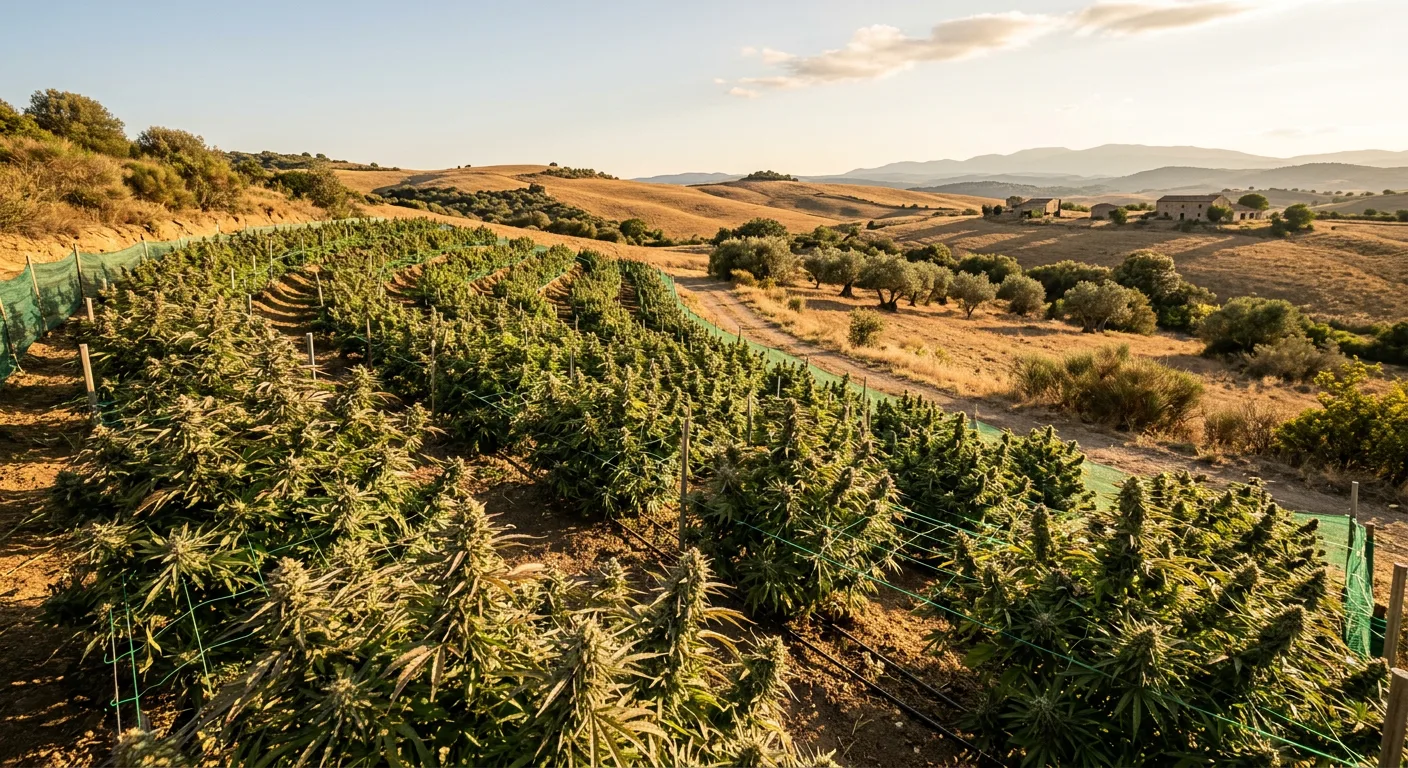
Mediterranean climates — coastal California, the Pacific Northwest (south), much of southern Europe, southern Australia, and coastal Chile — offer the most favorable conditions for outdoor cannabis cultivation. Long, warm, dry summers followed by mild autumns give growers the longest effective window and the most control over their growing season.
If you grow in a Mediterranean climate, you have access to essentially the full catalog of feminized photoperiod genetics. The challenge here isn't survival — it's optimization. Your goal is maximizing yield, potency, and terpene expression, which means selecting strains with the longest viable flowering windows your season allows.
Mediterranean Climate Advantages
- 150–200+ frost-free days in most Mediterranean zones
- Low September–October humidity (60–75% of years) reduces mold pressure
- Strong autumn light intensity maintains terpene and THC production through late harvest
- Warm nights (above 55°F / 13°C) allow late-season flowering without cold stress
Best Seed Strategy for Mediterranean Growers
Feminized photoperiod seeds are the optimal choice here. They allow full vegetative growth through long summer days and transition into flower as fall approaches — aligning their most productive phase with the best weather of the year. You can also run earlier-season crops with autoflowers for a double harvest if your frost-free window allows.
OG Kush Feminized (26% THC) was literally developed in California's Mediterranean coastal climate — it's one of the most naturally adapted strains for this environment. White Widow Feminized (25% THC) thrives in Mediterranean conditions, producing heavy resin yields in the dry autumn air. New York Power Diesel Feminized (24% THC) rewards Mediterranean growers with exceptional yields when given a full vegetative season.
Well-known industry picks for Mediterranean climates include GSC (Girl Scout Cookies), Zkittlez, Wedding Cake, and Gelato — all developed in or near California's Mediterranean zone and optimized for exactly these conditions.
Greenhouse Growing: Light-Dep Compatible Strains
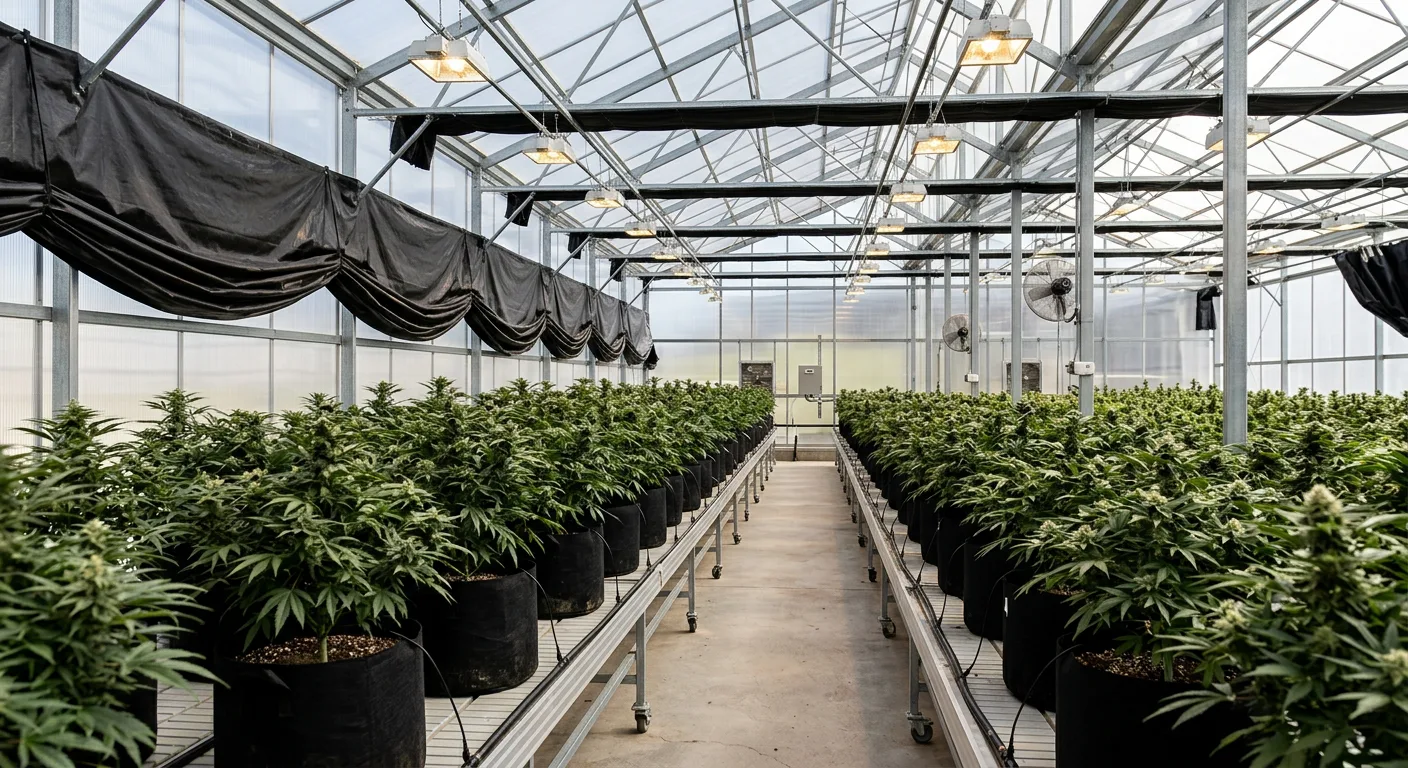
Greenhouse growing sits between indoor and outdoor cultivation — you get the environmental protection of a structure combined with (ideally) free solar light energy. The key challenge unique to greenhouse growing is controlling the flowering trigger for photoperiod plants, which leads directly to the most important greenhouse seed selection concept: light deprivation compatibility.
What Makes a Strain Good for Greenhouse Production?
Light deprivation (light-dep) is the practice of covering a greenhouse with blackout curtains for 12 hours per day to force photoperiod plants into flowering earlier than natural light cycles would trigger. This technique allows multiple harvests per year and gives growers precise control over harvest timing.
- Choose strains with reliable, consistent flowering triggers — stable response to 12/12 is critical for light-dep
- Feminized photoperiod genetics are the primary greenhouse seed type
- Medium-height strains (4–6 feet) work best in standard commercial greenhouse heights
- Strains with moderate humidity tolerance handle greenhouse microclimates (which run 5–10% RH higher than outdoor)
- Fast-finishing photoperiods (8–9 week flower time) allow 3+ harvests per year with light-dep in mild climates
- Autoflowers can supplement greenhouse production without light-dep equipment, but photoperiods dominate commercial greenhouse ops
Top Strains for Greenhouse Production
Wonder Woman Feminized (22% THC) is a consistently reliable light-dep performer — predictable flowering response, medium height, and strong calyx structure that handles the slightly elevated humidity of greenhouse environments. Super Skunk Feminized (20% THC) brings exceptional mold resistance and dense yields to greenhouse production, finishing in 8 weeks of flower — ideal for 3-cycle light-dep operations.
Silver Pearl Feminized (21% THC) is a greenhouse-bred strain with naturally compact structure suited to medium greenhouse heights, reliable flowering response, and strong resin coverage. Cheese and Critical+ are popular industry choices for greenhouse production due to their consistent photoperiod response and high yield-per-square-foot metrics.
Greenhouse Grower Tip: Use our Light Calculator to determine the supplemental lighting you'll need during low-light winter months if you're running year-round greenhouse production. Matching light intensity to your strain's requirements dramatically affects yield and flower density.
Indoor Growing: When Your Environment IS Your Climate
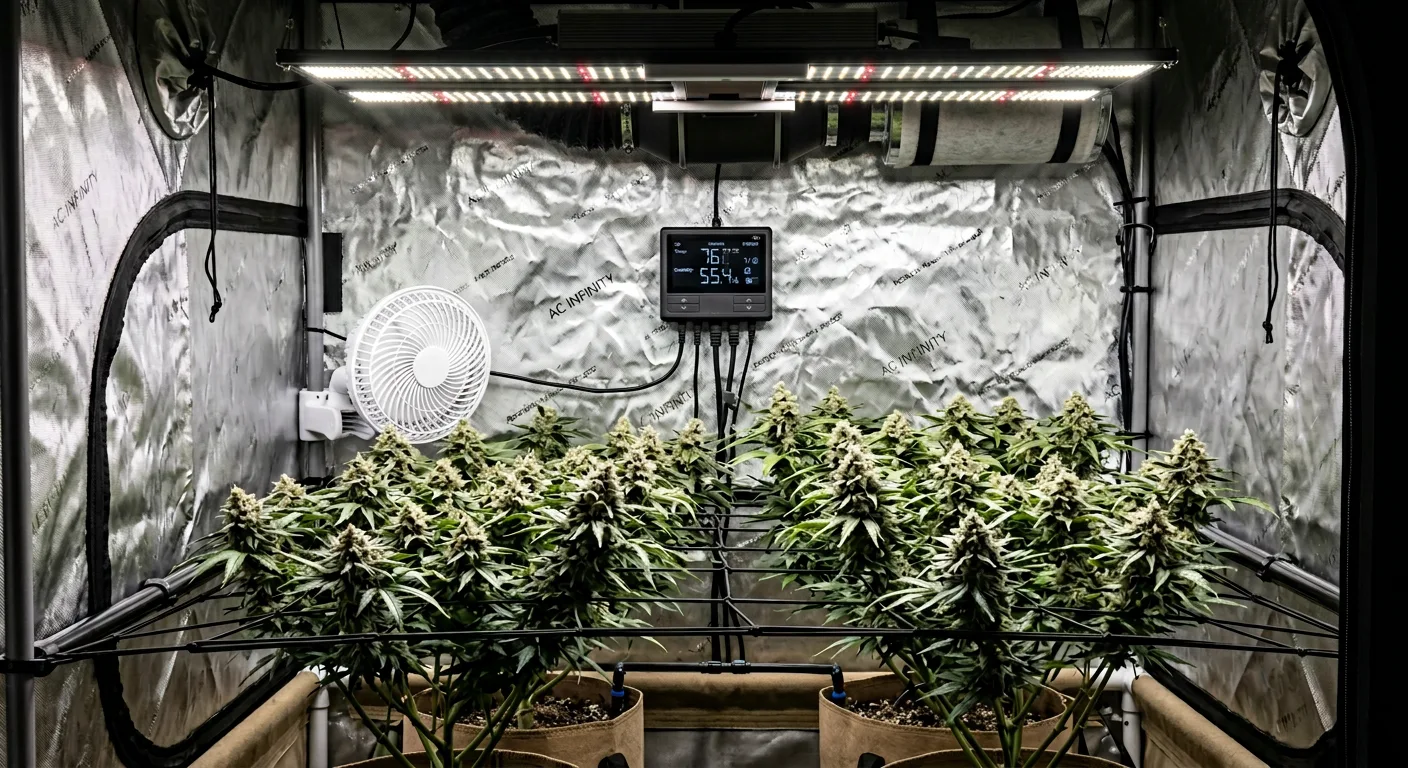
Indoor cultivation is the one context where climate is not a limitation — it's a setting. A well-equipped indoor grow room allows you to dial in temperature, humidity, CO2, and light spectrum with precision that no outdoor environment can match. But this creates a different seed selection challenge: with no environmental constraints, which traits should drive your choices?
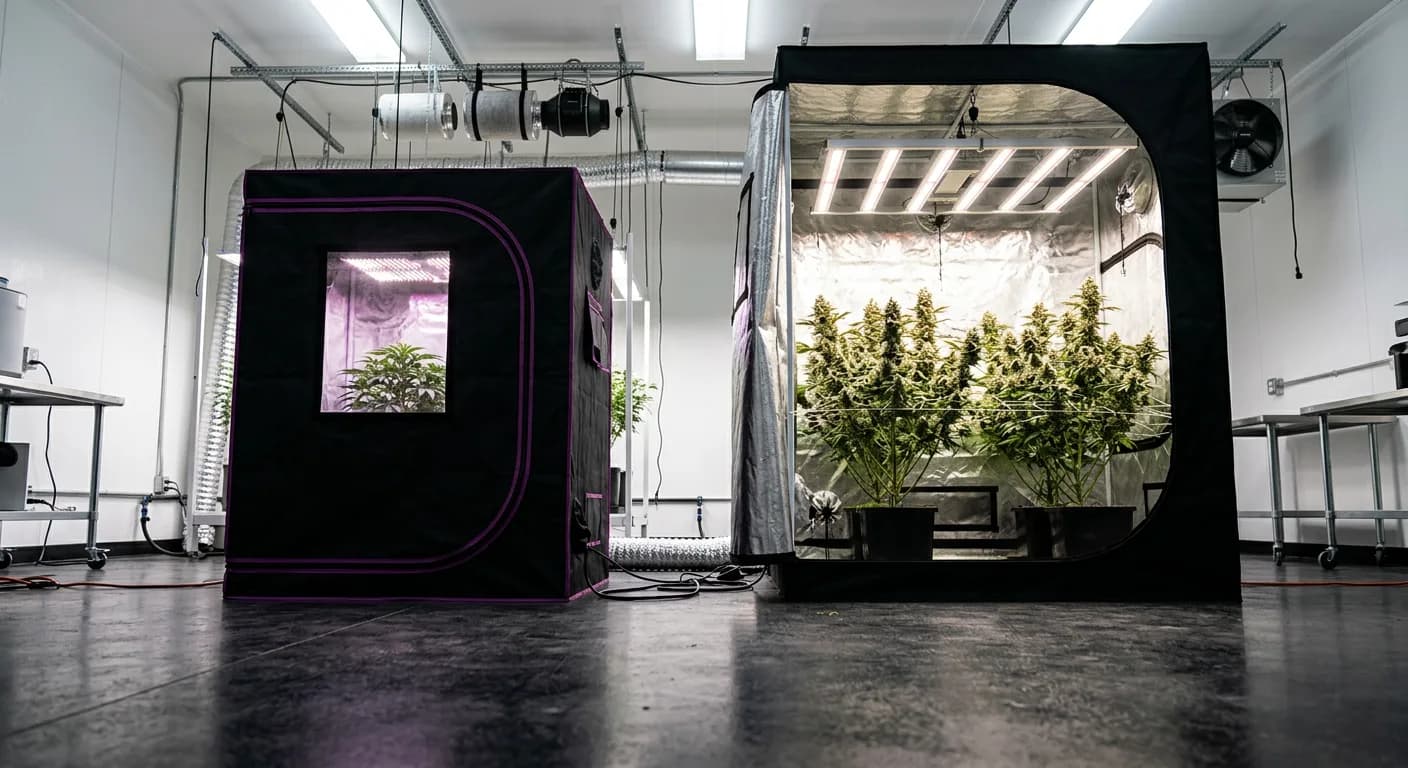
Indoor cannabis seed selection shifts from climate-matching to optimization. Your primary selection factors indoors become yield-per-watt efficiency, height management (critical in tent grows), flowering time (shorter cycles = more harvests per year), and desired effect profile.
Indoor Seed Selection by Grow Setup
If you're growing in a 4x4 tent, height-control matters enormously. Indica-dominant and hybrid seeds that stay under 4 feet in flower are far easier to manage than tall sativas that outgrow your light canopy. Our Complete Indoor Grow Tent Setup Guide covers ideal strain heights by tent size in full detail.
- Small tents (2x2, 2x4): Autoflowers and compact indica hybrids — max 3 feet in flower
- Standard tents (4x4, 5x5): Most photoperiod feminized strains work — watch sativa stretch
- Large rooms (8x8+): Full sativa phenotypes viable with proper training techniques
- Target VPD of 0.8–1.2 kPa in flower — indoor control means you can run optimal ranges constantly
- Indoor = you choose your climate, so THC%, yield, and flowering time drive selection
Use our VPD Calculator to set your indoor climate precisely — indoor growers have the advantage of dialing in the exact humidity and temperature combinations that maximize trichome production at every stage of the plant's life cycle.
Indoor Insight: Indoor growers have the luxury of choosing any seed based on desired outcome rather than climate survival. The only remaining environmental constraint is your physical grow space dimensions. Focus your selection on flowering time, height, and yield potential — then dial your climate controls to match the strain's ideal parameters.
High-THC indoor performers from our catalog: Quantum Kush Feminized (30% THC), Purple Kush Feminized (27% THC), and Black Widow Feminized (26% THC) all deliver exceptional results in controlled indoor environments where their environmental preferences can be met precisely.
How to Read Breeder Climate Recommendations on Seed Packaging
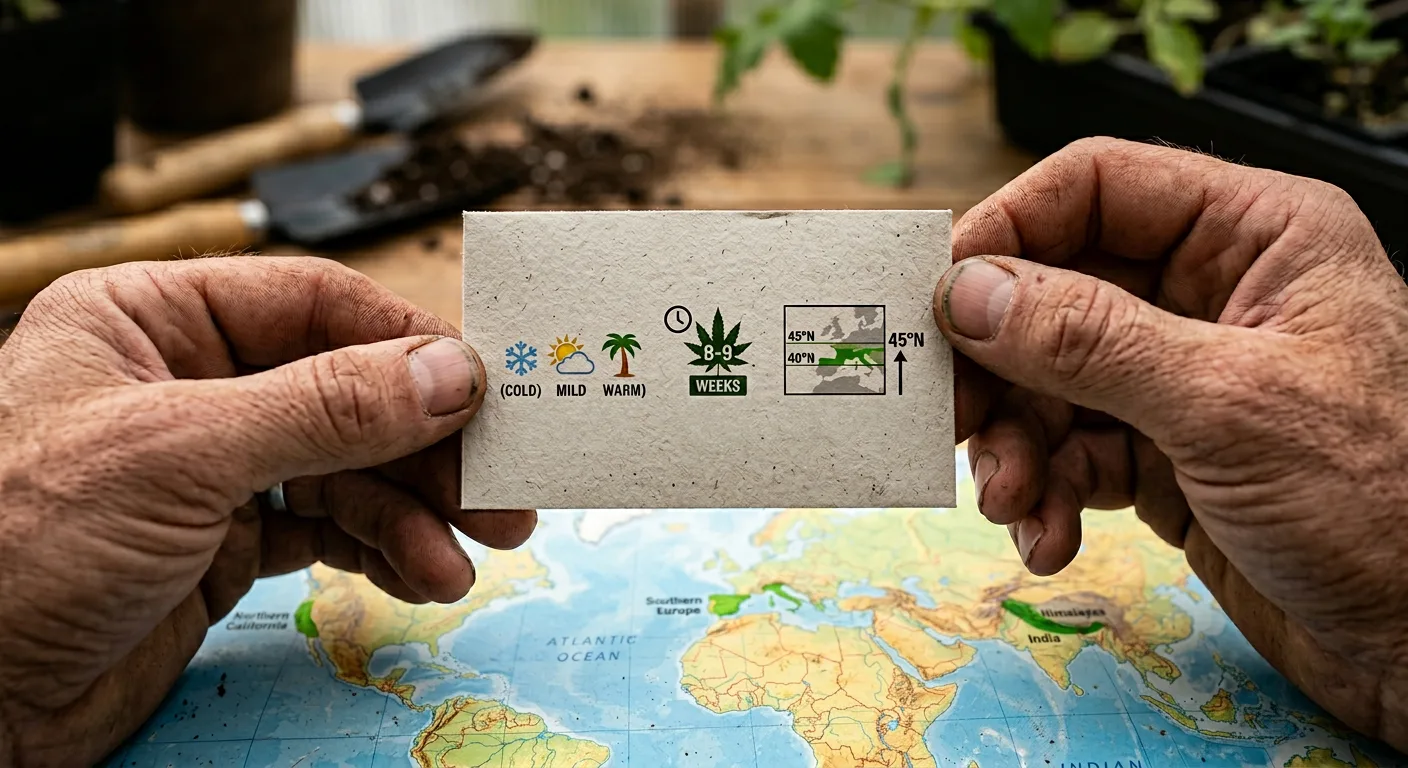
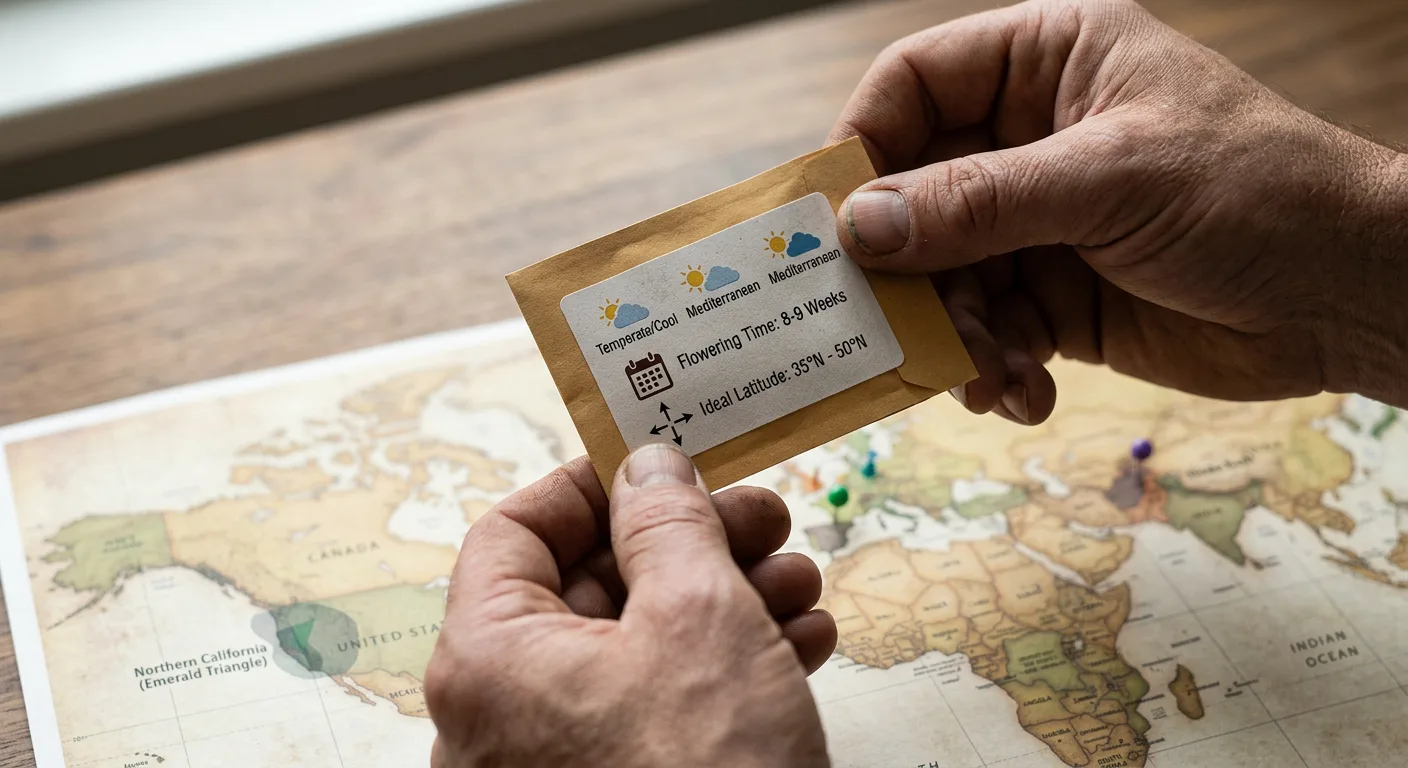
Seed packaging contains climate data — but it's often written in shorthand that beginners misread or skip entirely. Understanding how to decode breeder recommendations is the final skill that connects your climate analysis to a confident purchasing decision.
Our complete guide to reading cannabis seed packaging covers every data point in detail — here's what to focus on specifically for climate matching:
Key Packaging Data Points for Climate Selection
- "Outdoor harvest month": This tells you when the strain finishes under natural light in the Northern Hemisphere. October = long-season strain; August–September = short-season or autoflower. Compare this to your first frost date.
- "Climate" or "Zone" recommendations: Reputable breeders list Mediterranean, Continental, Tropical, or Northern — match to your profile.
- "Mold/pest resistance" rating: Usually on a 1–5 scale. For humid climates, never go below a 3/5 for outdoor grows.
- Flowering time: Measured in weeks from 12/12 flip (photoperiod) or from germination (autoflower). Add 8–10 weeks vegetative for photoperiods to get total outdoor time needed.
- "Indoor/Outdoor" designation: Some strains are explicitly flagged as indoor-only due to their low humidity tolerance or extremely long flowering times that don't work in most outdoor climates.
Expert Note: "Flowering time" listed on seed packs refers to the photoperiod stage only. For outdoor planning, add your full vegetative period to get total time in the ground. A strain listed as "8 weeks flower" still needs 100+ days outdoors from transplant — don't mistake the flowering window for the total grow cycle.
When packaging is vague or missing climate data entirely, check the strain's genetic lineage. Sativa-dominant genetics from Africa, Southeast Asia, or South America signal heat and humidity tolerance. Indica-dominant genetics from Afghanistan, Pakistan, or the Hindu Kush signal cold-hardiness and drought tolerance but poor performance in humid conditions. This lineage-based inference is a reliable backup when breeder notes are thin.
Before purchasing any seeds, verify our germination guarantee policy — quality seeds from reputable genetics programs should arrive with confidence that they'll perform as labeled.
Climate-to-Seed Selection Comparison Table
Use this table as your quick-reference framework. Identify your climate column, then use the recommended seed type and trait list to filter your strain choices before looking at THC, flavor, or yield.
| Climate Type | Recommended Seed Type | Key Traits to Look For | Strains to Avoid | Example Picks |
|---|---|---|---|---|
| Hot & Dry (SW USA, S. Spain, N. Africa) |
Feminized Photoperiod Sativa / Sativa-Dominant Hybrid | Heat tolerance, narrow leaves, deep roots, long flowering window, equatorial lineage | Dense indica hybrids, OG Kush phenotypes in peak summer | Sour Diesel, Swazi, Durban Poison, Tangerine Haze |
| Cold & Northern (N. US, Canada, UK, Scandinavia) |
Autoflower (primary) / Fast-Finishing Photoperiod (secondary) | 70–90 day total cycle, cold-night tolerance, compact structure, ruderalis genetics | Long-flowering sativas (Haze photoperiods), 10–12+ week flowering indicas | Amnesia Haze Auto, Skywalker OG Auto, NL x Big Bud, Early Skunk |
| Hot & Humid (SE USA, Gulf Coast, Hawaii, Caribbean) |
Feminized Photoperiod Sativa / Mold-Resistant Hybrid | Open bud structure, mold/botrytis resistance 3+/5, short flower window, African/SE Asian lineage | Any dense indica (Northern Lights, Blueberry, Purple Kush, OG Kush) | Swazi, Malawi Gold Auto, Super Lemon Haze, Trainwreck, Acapulco Gold |
| Mediterranean (Coastal CA, S. Europe, S. Australia) |
Feminized Photoperiod (widest selection available) | Long flowering window OK, high resin production, large yield potential, terpene expression | Very-long Haze-only strains (13–16 weeks) in shorter Mediterranean windows | OG Kush, White Widow, NY Power Diesel, GSC, Gelato, Zkittlez |
| Greenhouse / Light-Dep (Commercial or semi-pro production) |
Feminized Photoperiod (light-dep) / Autoflower (no-dep supplemental) | Reliable 12/12 flowering response, medium height, moderate humidity tolerance, fast flower time | Extremely tall sativas, strains with inconsistent or delayed flowering response | Wonder Woman, Super Skunk, Silver Pearl, Cheese, Critical+ |
| Indoor (Controlled) (Tent or room grows) |
Any type — selection driven by outcome, not climate | Height management, yield-per-watt, flowering time, THC/CBD target | Strains with requirements (heat, UV, altitude) you can't replicate indoors | Quantum Kush, Purple Kush, Black Widow, Wedding Cake, Gorilla Glue |
Your Pre-Purchase Climate Checklist
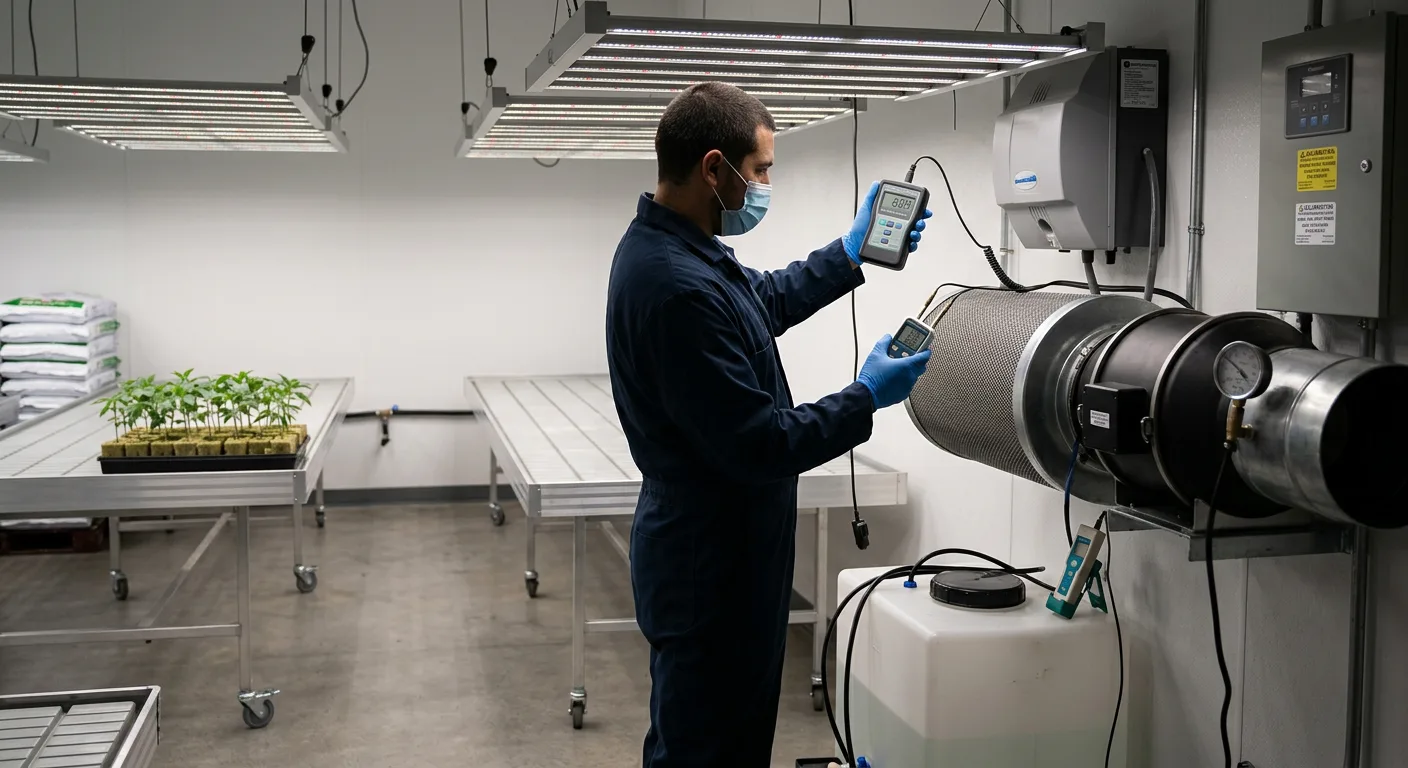
Before placing your seed order, run through this 10-point check. It takes under five minutes and eliminates the most common mismatch errors growers make at the buying stage.
- Know your frost-free window (last spring frost → first fall frost dates)
- Know your average September–October relative humidity percentage
- Know your average summer high temperature
- Identified your climate profile from the five profiles above
- Chosen the correct seed type (autoflower vs photoperiod feminized) for your profile
- Confirmed outdoor harvest date on packaging is before your first fall frost
- Checked mold resistance rating if you're in a humid climate (3+/5 minimum)
- Verified plant height is manageable for your growing space or setup
- Checked genetic lineage for climate-of-origin alignment
- Confirmed your seed source offers a germination guarantee
Final Takeaway: The best cannabis seeds for your grow are not the ones with the highest THC percentage or the most awards — they're the ones genetically matched to survive and thrive in your specific climate conditions. One hour of climate research before buying saves you an entire season of preventable failure.
Use our free Grow Planner to map your climate data against strain recommendations, and our Yield Estimator to project realistic harvests once you've matched the right seed type to your environment. For deeper guidance on the genetics side of seed selection, our team's analysis in the seed packaging guide and the Indica vs Sativa growing guide cover the lineage decisions in detail.
Frequently Asked Questions
What cannabis seeds grow best outdoors?
The best outdoor cannabis seeds depend entirely on your local climate. In hot, dry regions, heat-tolerant sativas like Sour Diesel and Swazi perform best. In cold northern climates, autoflowers that finish in 70–90 days are the most reliable choice. In humid environments, prioritize mold-resistant strains with open bud architecture like Malawi Gold or Trainwreck. In Mediterranean climates, you have access to the widest selection — feminized photoperiod strains deliver the best yields here.
Can autoflowers grow in cold weather?
Yes — autoflowers are among the best cannabis seeds specifically for cold weather. Their 70–90 day seed-to-harvest cycle lets them complete a full grow before hard frosts hit. For very cold climates, start seeds indoors 2–3 weeks before your last frost date and transplant outdoors once nighttime temperatures consistently stay above 50°F (10°C). Strains like Amnesia Haze Autoflower and Skywalker OG Autoflower handle cold nights well once established.
What cannabis seeds grow best in cold climates?
Autoflowering strains are the top pick for cold climates because they complete their full life cycle in 70–90 days regardless of light schedule. Fast-finishing indica-dominant photoperiods are the next best option — strains like Northern Lights x Big Bud typically finish by late September in northern latitudes, beating first frost. Avoid sativa-dominant photoperiods with 10+ week flowering times in climates with fewer than 150 frost-free days.
What are the best cannabis strains for hot humid outdoor grows?
For hot, humid outdoor grows, look for strains with mold-resistant genetics, open bud structure, and African or Southeast Asian landrace lineage. Swazi Feminized, Malawi Gold Autoflower, Super Lemon Haze, and Trainwreck are proven performers. Avoid dense indica hybrids entirely — their compact bud clusters trap moisture and develop botrytis rapidly in sustained humidity above 60% RH.
How do I know if a strain will finish before my first fall frost?
Check the strain's listed outdoor harvest month on the seed packaging — if it says October but your first frost arrives in late September, that strain won't finish in time. For photoperiod feminized seeds, count backward from your first frost by the strain's total flowering time (plus 2 weeks buffer). For autoflowers, count 90 days forward from your planned transplant date and compare it against your first frost date. Our free Grow Planner does this calculation automatically.