Every harvest season, the same debate erupts across cannabis forums: does the pre-harvest dark period actually do anything, or is it one of the hobby's most persistent myths? Growers on r/microgrowery have asked this question hundreds of times, and the answers range from sworn testimonials to dismissive one-liners — with almost nobody citing actual evidence.
This guide is different. We're going to examine the real plant science, dig into what the community data actually shows, explain the plausible mechanisms, and give you a clear, nuanced answer you can act on. No hype, no hand-waving.
The Claim: What Growers Actually Believe
The pre-harvest dark period theory holds that placing cannabis plants in complete darkness for 48 to 72 hours immediately before cutting triggers a measurable increase in trichome production and terpene concentration. The logic is intuitive enough that it spreads easily: stress the plant at the last moment, force a final resin surge, harvest at peak.
The two most common versions of the mechanism growers cite are:
- Stress-response resin production — the plant interprets prolonged darkness as an environmental threat and pushes additional resin as a protective response.
- Terpene concentration through turgor pressure changes — as the plant's water balance shifts in darkness, volatile terpenes become more concentrated in the trichome heads.
Origin note: The 48–72 hour dark period idea appears to trace back to older photoperiod manipulation techniques used in commercial greenhouse horticulture — adapted by cannabis growers and passed down through forum culture rather than any documented research paper.
A secondary version of the claim, popular among outdoor growers, holds that cutting at dawn — before the plant has experienced any light that day — preserves terpenes that would otherwise volatilize under heat and UV. This is a related but distinct idea, and it has somewhat stronger supporting logic, which we'll cover below.
What the Plant Science Actually Says
Plant science doesn't directly study cannabis dark-period harvesting, but it does give us a solid foundation to evaluate the claim. Understanding what actually happens in trichomes and terpene glands during light and dark phases is the starting point for any honest answer.
Trichome Development and the Scotophase
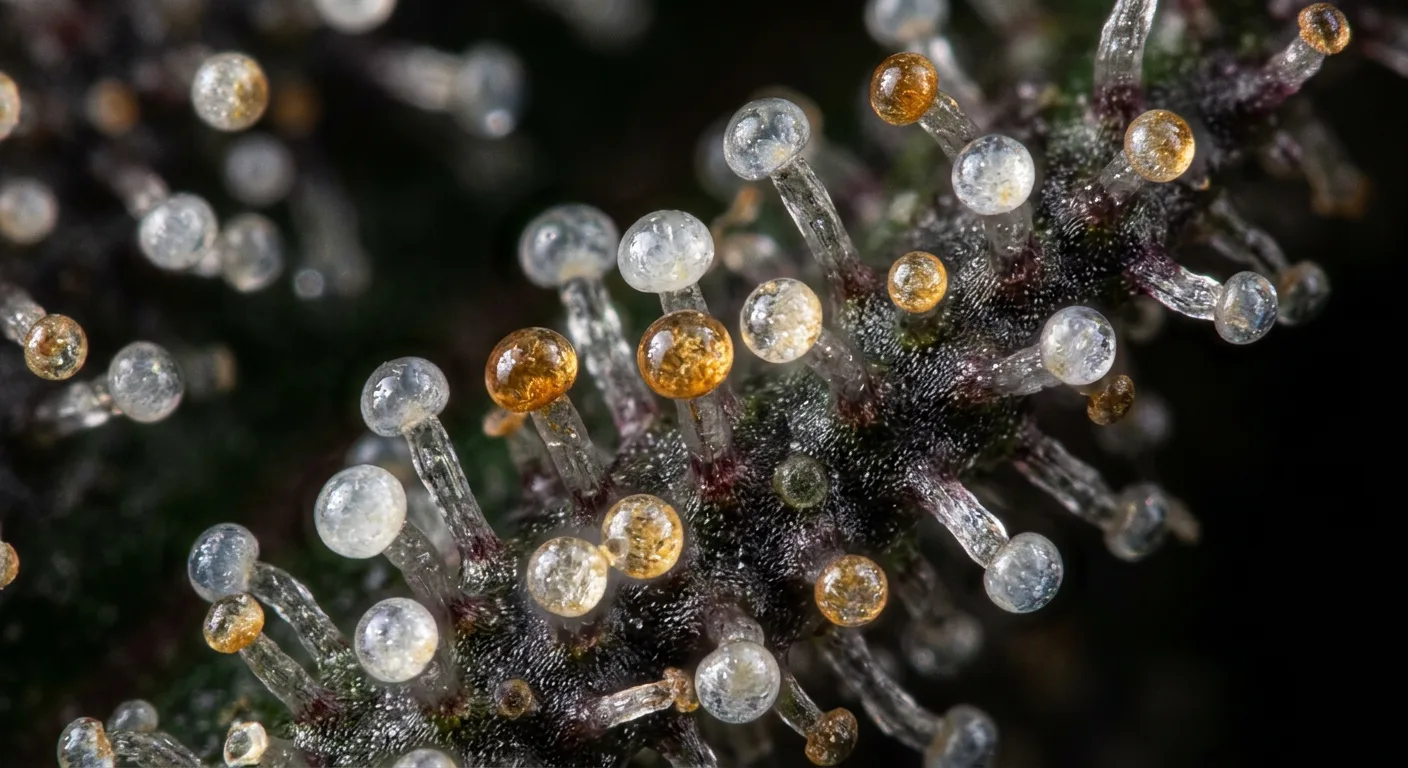
Trichomes — the resin-producing structures that contain THC, CBD, and terpenes — do show rhythmic behavior. Research on cannabis and related aromatic plants confirms that secondary metabolite biosynthesis, including terpenoid production, often peaks during the dark phase (scotophase) of the light cycle.
A 2021 study published in Nature Plants documented light-responsive terpene synthase activity in cannabis, confirming that terpene biosynthesis is influenced by circadian rhythms and light exposure. Terpene volatilization — the evaporation of aromatic compounds — is also demonstrably higher under heat and UV exposure during the light phase.
Science insight: THC biosynthesis (via the enzymatic conversion of CBGA to THCA) is not primarily light-regulated in the same way terpene synthesis is. THC levels in mature cannabis are largely set by genetics and are accumulating over weeks of flowering — not dramatically alterable in 48–72 hours of darkness at the end of the cycle.
The key question is: does extending the dark phase from the normal 12 hours to 48–72 hours create a meaningfully larger effect than what already occurs during routine night cycles? That's where the science gets thin.
Terpene Volatility: The Strongest Case for Pre-Harvest Darkness
The argument for harvesting after a dark period is actually strongest when framed around terpene preservation rather than new synthesis. Terpenes like myrcene, limonene, and linalool are highly volatile — they evaporate when exposed to heat and UV radiation during the light cycle.
Cutting plants at the end of a light period, when temperatures are elevated and terpenes have been partially volatilizing for 12 hours, logically produces lower terpene content in the final product compared to cutting at the end of the dark period, when temperatures are cooler and less volatilization has occurred. This mechanism is well-supported and applies to the basic argument for timing your cut to the end of the dark phase — even without an extended dark period.
- Myrcene boiling point: 167°C, but begins volatilizing at room temperatures under UV
- Limonene: detectable vapor loss above 25°C with UV exposure
- Linalool: highly sensitive to both heat and light degradation
- Caryophyllene: more stable, less affected by the light/dark cycle
For deep dives into specific terpenes, see our guides on caryophyllene, pinene, and linalool — all of which behave differently under light and heat exposure.
What Actually Happens Inside the Plant During Extended Darkness
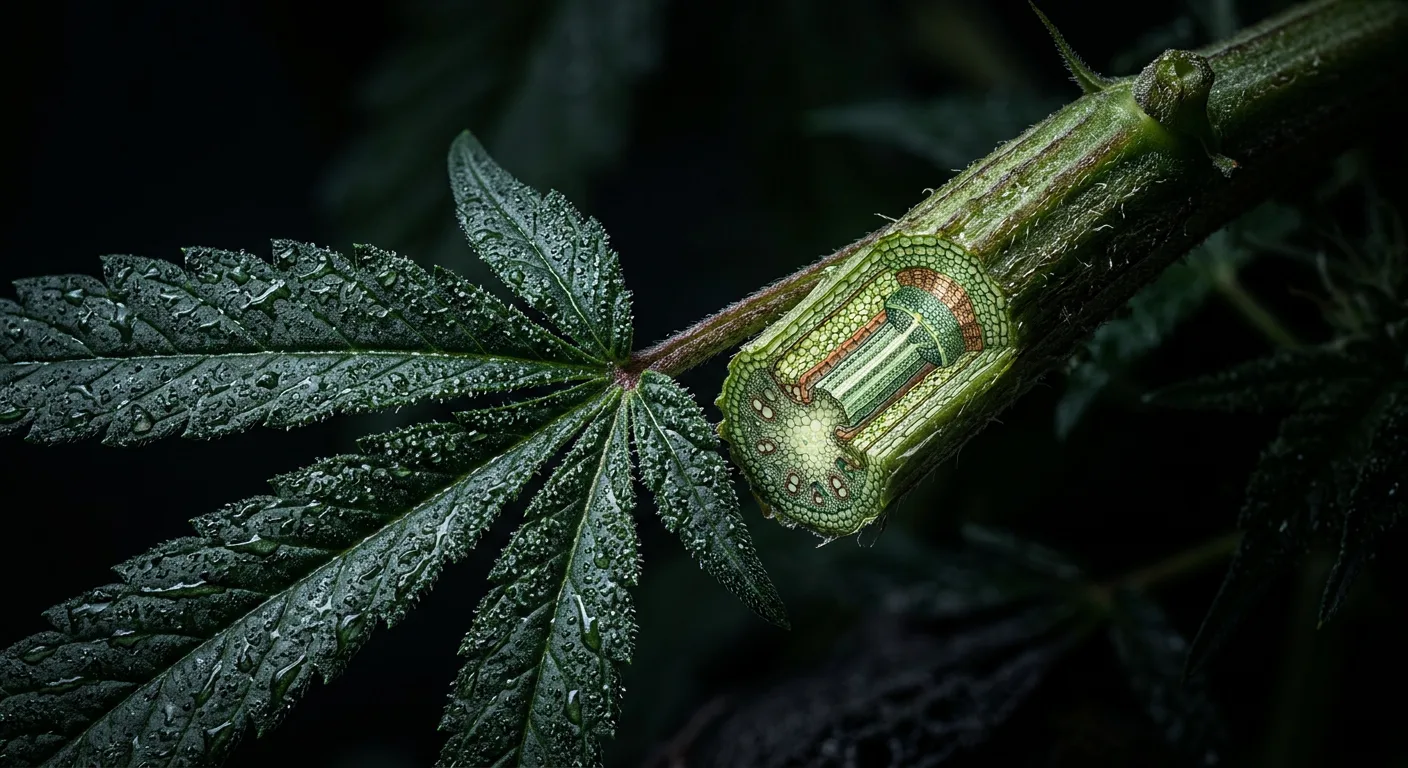
When you place a cannabis plant in complete darkness for 48–72 hours at the end of its flowering cycle, several real physiological changes occur. None of them are dramatic, but they are documentable and help explain why some growers report a difference.
Sugar Drawdown and Starch Metabolism
Without photosynthesis, the plant begins consuming its stored carbohydrate reserves — primarily sucrose and starch held in the leaves and stem tissue. This is the same mechanism exploited during a flush period. As sugar metabolism shifts, the overall energy available for secondary metabolite production temporarily changes.
Interestingly, some research in non-cannabis aromatic plants shows that carbohydrate status influences terpene biosynthesis — lower sugar availability can shift metabolic flux toward terpenoid pathways under specific conditions. This is a plausible (if not confirmed) mechanism for a modest terpene effect during a prolonged dark period.
Chlorophyll Breakdown Begins
After roughly 48–72 hours without light, you may begin to see early chlorophyll catabolism — the process that creates the yellow and purple color changes associated with late-season senescence. Some growers deliberately use this to enhance anthocyanin expression in purple strains.
Important: Extending the dark period beyond 72 hours significantly accelerates chlorophyll breakdown. This can degrade chlorophyll into pheophytin, which contributes harsh, vegetal flavors to dried bud. Keep the dark period within the 48–72 hour window for this reason alone.
Turgor Pressure and Terpene Concentration
As the plant stops actively transpiring and photosynthesizing, cell turgor pressure in trichome stalks changes. Some growers and researchers have theorized that this compression effect may cause terpene compounds to become more concentrated within the trichome head — not through new synthesis, but through physical reorganization of the resin.
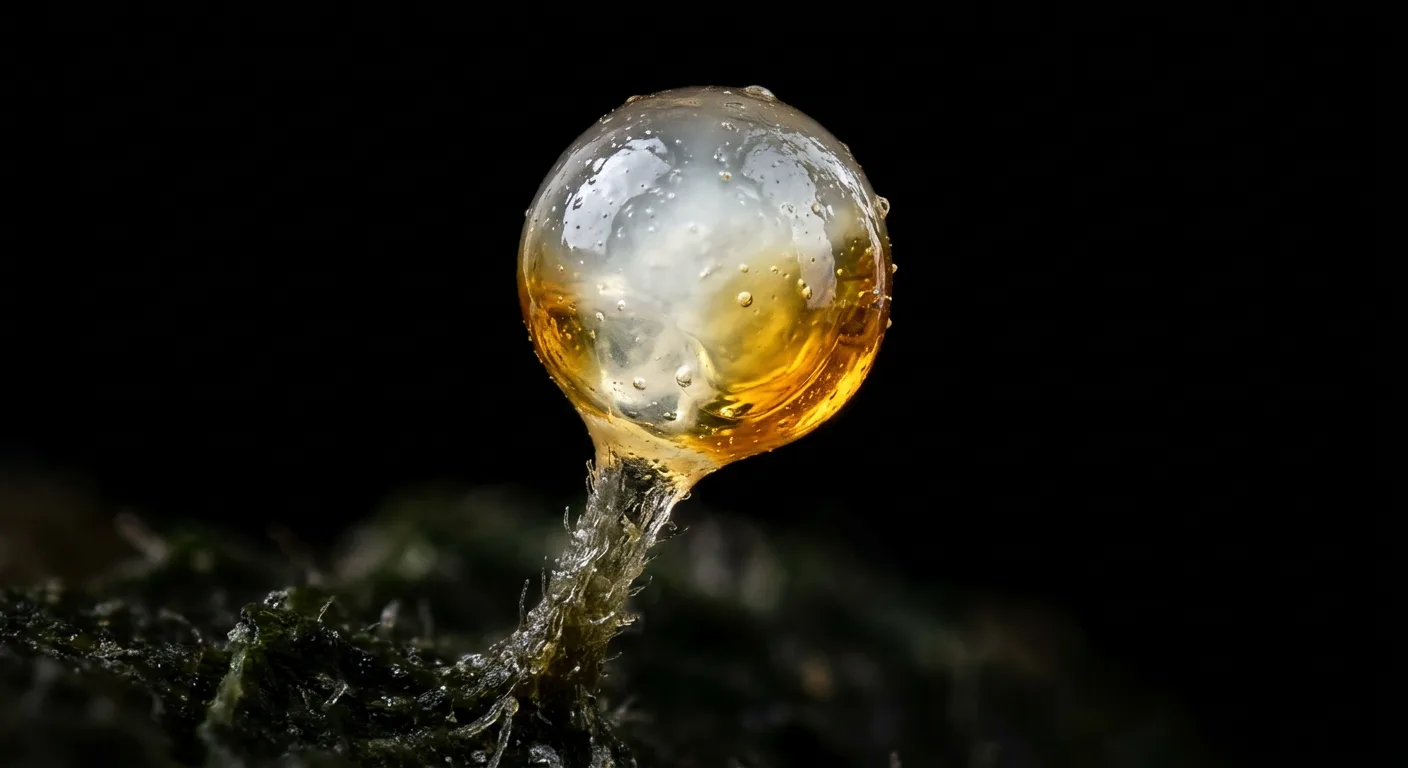
This mechanism is speculative but not implausible. The effect, if real, would be more pronounced in strains with dense trichome coverage and high baseline terpene production — which aligns with why some growers notice a difference on certain cultivars but not others.
Grower Community Data: Forums, Polls, and Real-World Reports
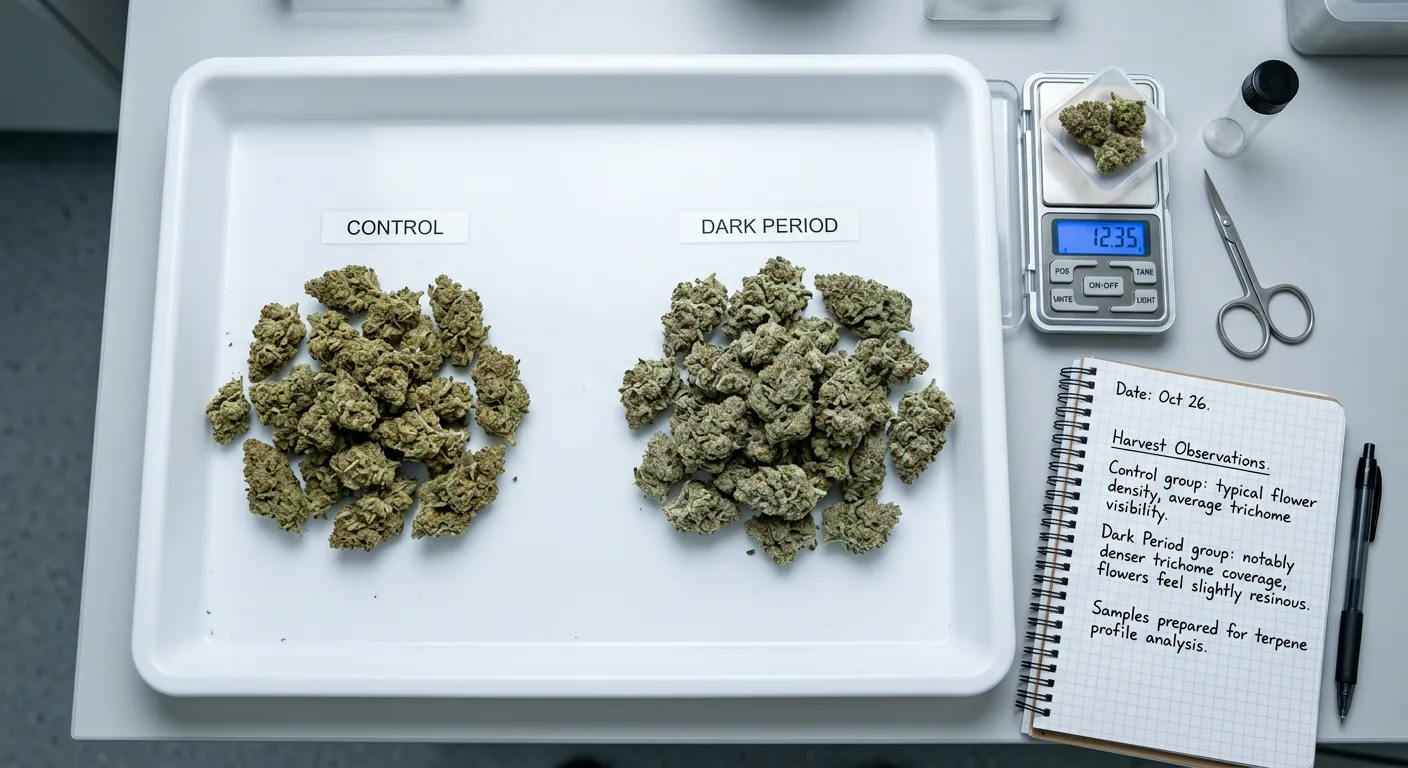
In the absence of controlled studies, grower-reported data is the closest thing we have to real-world evidence. It's imperfect — confirmation bias is rampant in cannabis cultivation communities — but patterns across large sample sizes are worth examining.
What r/microgrowery Polls Show
Informal polling threads on r/microgrowery consistently show a roughly 60/40 split: approximately 60% of growers who have tried a pre-harvest dark period report noticing something — most commonly described as improved aroma, slightly smoother smoke, or enhanced appearance of trichomes. About 40% report no detectable difference.
Crucially, very few growers run controlled splits — the same strain, same environment, same harvest window, with one plant dark-period treated and one control. The handful of growers who have reported split-run comparisons show:
- Aroma differences reported in approximately 3 out of 5 informal split tests
- Visual trichome appearance: inconclusive across reports
- Subjective potency: no consistent pattern
- Smoke quality/harshness: slight improvement in majority of dark-period samples
The grower consensus leans toward a modest terpene-forward effect — improved aroma and smoke quality — rather than any meaningful increase in THC content. This aligns far better with the terpene preservation mechanism than with the stress-response THC surge narrative.
The GrowWeedEasy Experiment
GrowWeedEasy's documented attempt to test the 3-day dark period on a real Runtz plant produced inconclusive results — the author noted the buds from the dark-period plant appeared similar to controls, with no dramatic visible trichome change. This single-plant test lacks statistical weight but it's one of the few documented attempts at an actual comparison, and it suggests the effect — if any — is subtle.
The Verdict: Myth, Fact, or Something in Between?
After reviewing the plant science, the community data, and the proposed mechanisms, the honest answer is: the pre-harvest dark period is a plausible low-risk technique with modest evidence for terpene benefit and no convincing evidence for THC increase.
| Claim | Evidence Level | Verdict |
|---|---|---|
| 48–72 hr darkness increases THC content | No peer-reviewed support; grower data inconclusive | ❌ Not supported |
| Dark period concentrates terpenes | Plausible mechanism; some grower support; indirect science | ⚠️ Possible, modest |
| Terpenes are preserved better in darkness | Well-supported by terpene volatility science | ✅ Supported |
| Harvesting at end of dark phase is better than mid-light | Supported by terpene volatility data | ✅ Supported |
| 72+ hours darkness improves over 48 hours | No evidence; chlorophyll risk increases | ❌ Not worth it |
| Dark period works better on some strains than others | Forum consensus; biologically plausible | ⚠️ Likely true |
The most defensible version of the pre-harvest dark period is this: cutting at the end of a 24–48 hour dark period preserves terpenes that would otherwise volatilize during the light phase. It's a terpene preservation strategy more than a terpene production strategy — and that's a meaningful distinction.
If you're growing high-terpene cultivars — something like OG Kush (26% THC, renowned for its complex terp profile), Sour Diesel (24% THC), or Super Lemon Haze (23% THC) — the case for a 48-hour dark period is arguably stronger, because these cultivars produce significant volatile terpene loads that are worth protecting at harvest.
Autoflower vs. Photoperiod: Does the Dark Period Apply to Both?
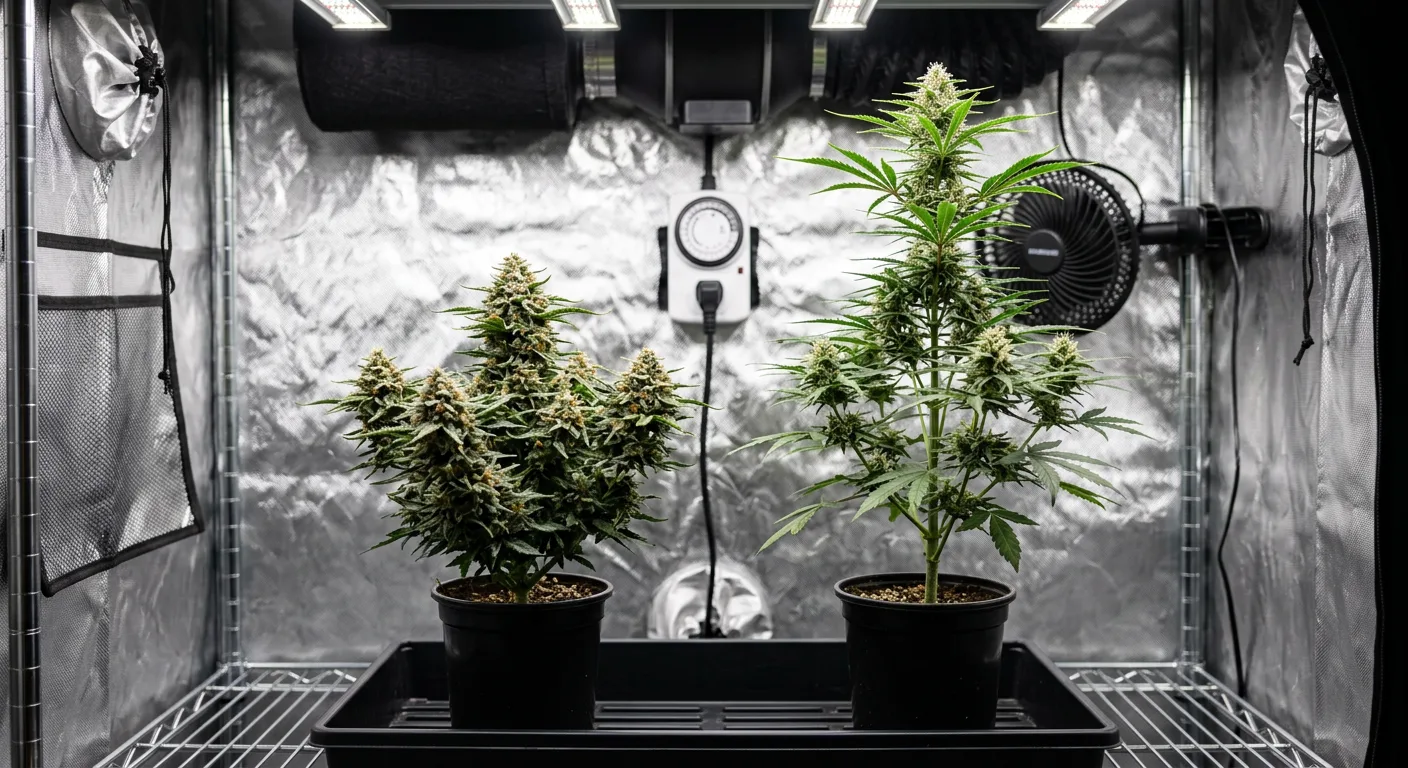
Autoflowering strains flower based on age rather than photoperiod, which means their trichome development isn't driven by the same light-cycle mechanisms that govern photoperiod plants. This raises a legitimate question: does the pre-harvest dark period even make sense for autos?
Photoperiod Plants
For photoperiod strains, the standard recommendation of 12 hours of darkness per day throughout flowering means the plant is already adapted to significant daily dark periods. The trichome biosynthesis rhythms we discussed are well-established in photoperiod plants, which makes the 48-hour extension at least biologically engaged with those rhythms.
Autoflowering Plants
Autoflowers are typically run on 18/6 or 20/4 light schedules, meaning their dark period during flowering is much shorter — only 4–6 hours per day. The trichome development cycle on these plants may be less strongly entrained to light/dark rhythms, which means the theoretical scotophase accumulation mechanism is weaker.
That said, the terpene preservation argument still applies. Cutting an autoflower at the end of a 24–48 hour dark period — rather than in the middle of its light cycle — still means you're harvesting at a point when terpene volatilization has been minimized. For an autoflower like Skywalker OG Auto (23% THC) or Holy Grail Kush Auto (20% THC), that's a worthwhile consideration.
For autoflowers, consider a 24-hour dark period rather than a full 48–72 hours. The biological case for extended darkness is weaker in autos, and you reduce any marginal risk to chlorophyll integrity. The terpene preservation benefit still applies.
How to Execute the Pre-Harvest Dark Period Correctly
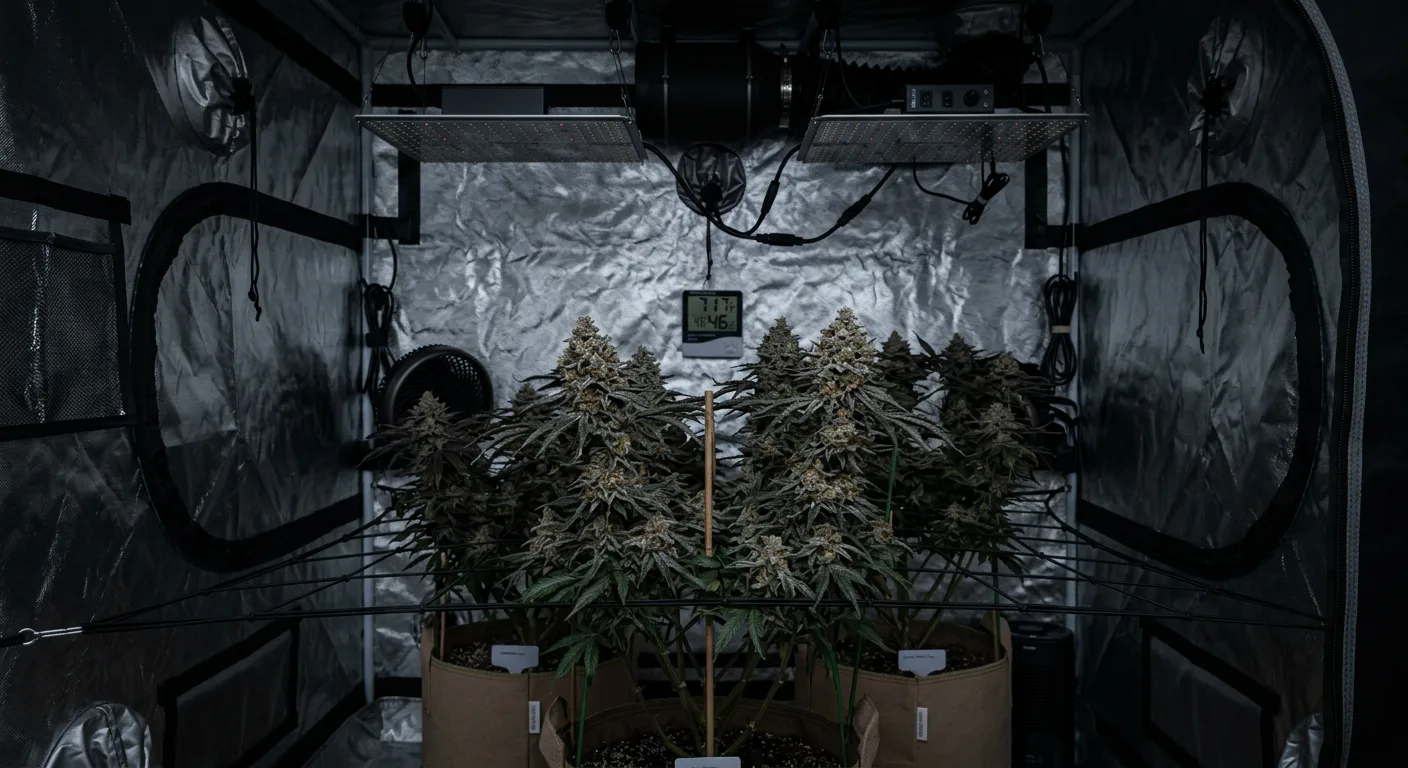
If you decide to run a pre-harvest dark period, execution matters. Done sloppily, you can trigger stress responses, introduce humidity problems, or — in photoperiod plants — cause light-stress hermaphroditism from light leaks. Here's how to do it right.
Confirm Trichome Readiness First
The dark period is a finishing technique, not a ripening accelerator. Your trichomes must already be at the target maturity window — mostly cloudy with 10–30% amber for most cultivars — before you start the dark period. A jeweler's loupe (30–60x) or digital microscope gives you accurate trichome color readings. If trichomes are still mostly clear, extend your flowering cycle — darkness won't fix premature harvest.
Seal Every Light Leak
This is the single most important execution step for photoperiod plants. Even a pinhole of light during what should be total darkness can cause stress responses or re-vegetative signaling in some sensitive cultivars. Use black tape on all tent seams, cover controller LED displays, and check with a smartphone camera in night mode — it picks up light sources invisible to the naked eye. For autoflowers this is less critical but still good practice.
Maintain Temperature Stability
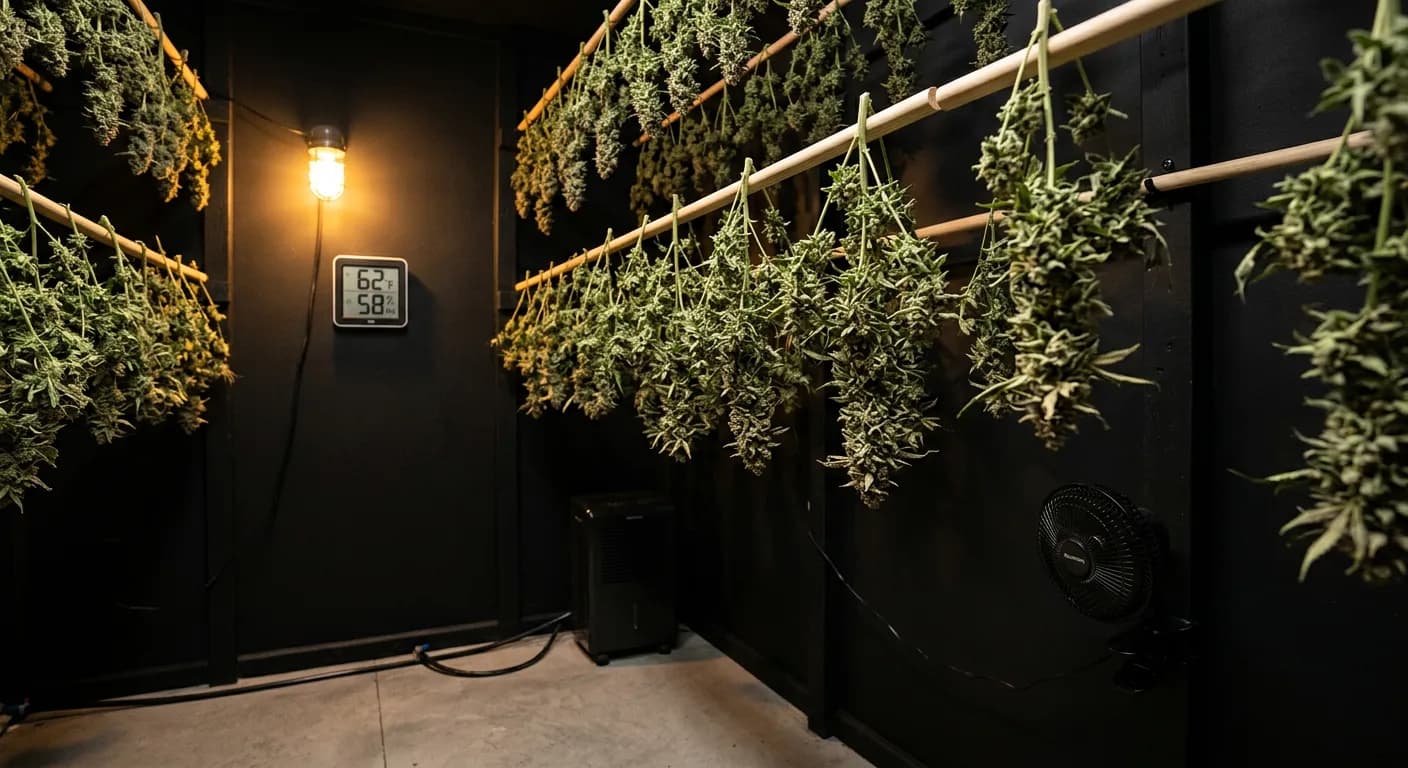
Without lights on, tent temperature drops. Keep the grow space between 18–24°C (65–75°F) during the dark period — this is the optimal range for terpene preservation. Temperatures above 26°C will accelerate terpene volatilization and negate any benefit. Temperatures below 15°C risk slowing metabolism too aggressively. Your existing HVAC should handle this if you monitor it at the start of the dark period.
Manage Humidity (Don't Let It Climb)
Without transpiration driven by lights and heat, humidity can rise in a sealed tent. Target 45–55% RH during the dark period. If your tent tends to run humid, leave your exhaust fan running at low speed. Botrytis (bud rot) is opportunistic at this late stage, and dense buds in a humid sealed environment are a risk — especially on high-density strains. Check our humidity control guide for tent-specific tips.
Do Not Water During the Dark Period
Skip any watering once you begin the dark period. The plant is shutting down photosynthesis and doesn't need additional water uptake. Wet medium in a dark, cooler environment increases humidity risk. Let the medium dry out naturally — it actually makes the plant easier to handle at harvest and reduces stem moisture, which can slow drying.
Harvest at the 48-Hour Mark
Cut your plants at the 48-hour point. This is the optimal window: sufficient time for the physiological effects to take place, short enough to avoid meaningful chlorophyll degradation. If you're running 72 hours, make sure your temperature and humidity are dialed in perfectly — the margin for error narrows. Harvest immediately at the end of the dark period, before the space receives any light.
Critical reminder: Never begin the dark period if your plant shows any signs of bud rot, mold, or late-stage pest pressure. A dark, static environment accelerates these problems. Harvest immediately if you detect any active infection.
What Actually Moves the Needle on Potency (More Than Darkness)
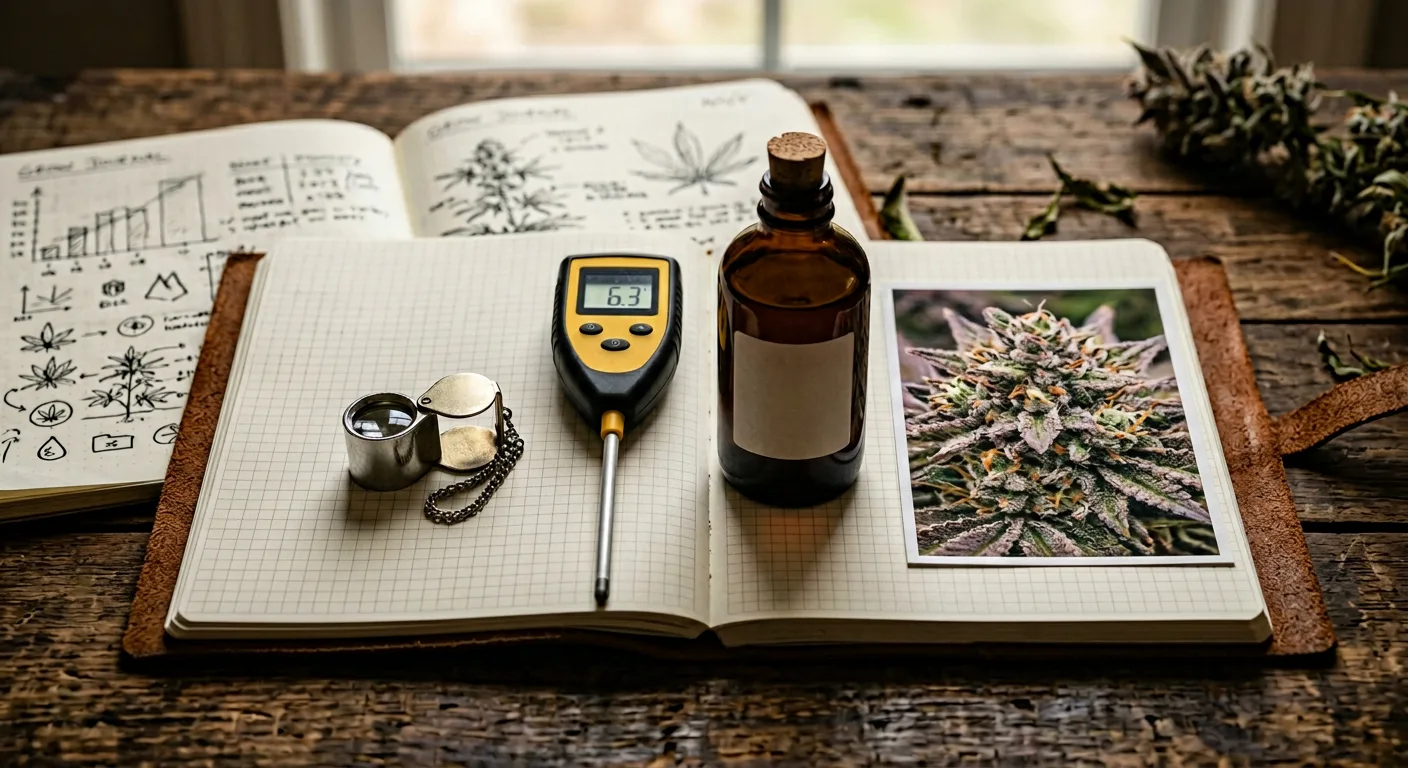
Here's the uncomfortable truth that forum threads rarely acknowledge: the pre-harvest dark period, at best, contributes a marginal terpene improvement. The factors that actually determine final potency and terpene quality are far more significant — and far more within your control throughout the grow.
Genetics: The Ceiling Is Set Before You Plant
No harvest technique can push a 15% THC strain to 25%. Your genetic ceiling is fixed. If maximum potency is your priority, start with genetics bred for it. Strains like Quantum Kush (30% THC), Purple Kush (27% THC), and Black Widow (26% THC) will outperform lower-THC cultivars regardless of any harvest technique. See our top 10 highest THC strains guide for a full rundown.
Harvest Timing: The Single Biggest Variable
Harvesting even one week too early or too late has a larger impact on cannabinoid and terpene profile than any dark period could produce. Trichome color is your compass: clear trichomes mean immature THCA; cloudy trichomes are peak THCA; amber trichomes indicate THCA converting to CBN.
- Mostly cloudy, 0–10% amber: peak THC, energetic effect
- Mostly cloudy, 10–30% amber: slightly reduced THC, more relaxing
- Mostly amber: significant THC degradation, sedative effect
- Clear trichomes: unripe — never harvest here regardless of dark period
Drying and Curing: Where Most Terpenes Are Lost
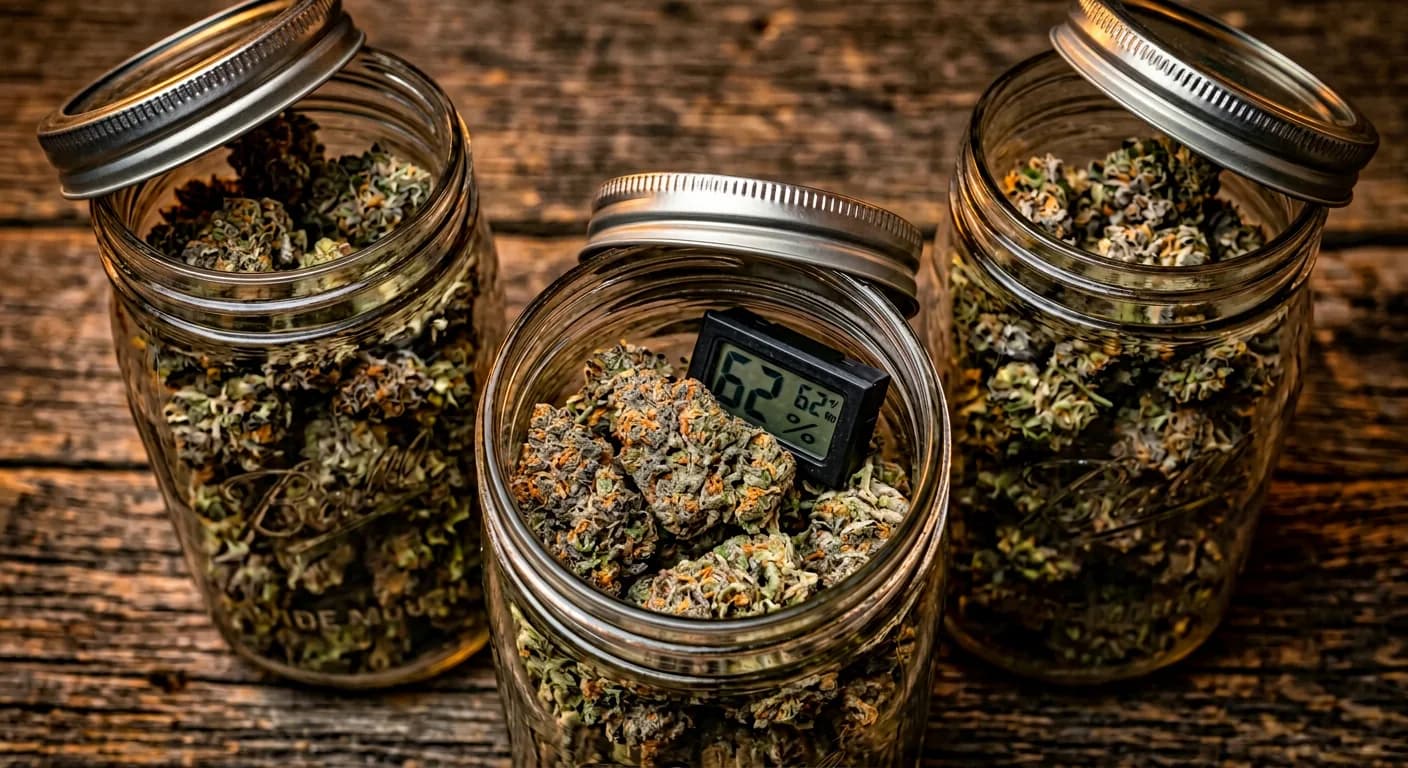
After all the debate about pre-harvest darkness, the single largest post-harvest impact on terpene quality is your dry and cure process. Drying too fast (under 7 days) destroys terpenes through rapid volatilization. Curing in sealed jars for 2–4 weeks allows enzymatic processes to refine terpene profiles and smooth cannabinoid compounds. Our mason jar curing guide covers the full protocol.
Use our yield estimator tool and grow planner to map your full harvest window and ensure you're timing the dark period to genuine trichome readiness — not just calendar days.
Light Quality and Intensity Throughout Flowering
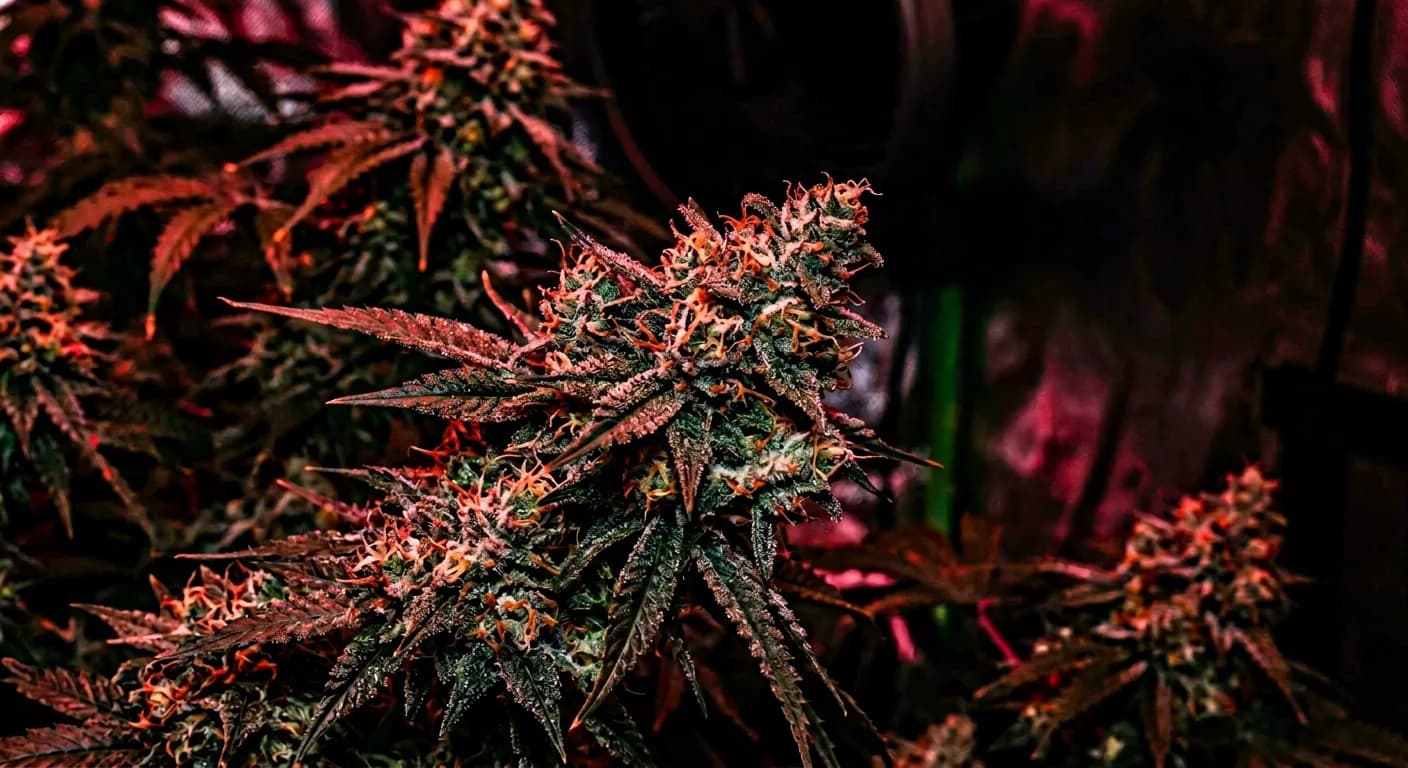
UV-B light exposure (280–315nm wavelength) during the flowering cycle is documented to increase terpene and cannabinoid production as a photoprotective response — the same stress-response mechanism often (incorrectly) attributed to harvest-time darkness. Running UV-B supplementation for 2–3 weeks before harvest is far better supported by plant science than a terminal dark period. For light optimization details, see our cannabis light schedule guide.
Science insight: The stress-response resin production mechanism is real — but it operates over weeks of light-cycle management, UV exposure, and environmental variation during flowering. A 48–72 hour dark period at the very end of the cycle is too short a window to engage this mechanism meaningfully for cannabinoid synthesis.
VPD Management Throughout Flowering
Vapor pressure deficit (VPD) optimization during flowering significantly affects trichome density and terpene quality. Running VPD in the 1.2–1.6 kPa range during late flowering is documented to improve resin production. Our VPD calculator makes this easy to dial in, and the VPD guide covers the full science.
Frequently Asked Questions
How long should the dark period be before harvest?
Most growers who use this technique run 48 to 72 hours of complete darkness immediately before cutting. Beyond 72 hours, evidence suggests diminishing returns and possible onset of chlorophyll breakdown that can negatively affect flavor. 48 hours is the most commonly reported sweet spot in the grower community, and it represents the optimal balance of potential benefit versus risk.
Does a dark period actually increase THC before harvest?
There is no peer-reviewed evidence confirming that 48–72 hours of pre-harvest darkness measurably increases THC percentage. THC synthesis is largely set by genetics and accumulates over weeks of flowering — it cannot be meaningfully boosted in a final short dark period. The more plausible benefit is terpene preservation: volatile terpenes that would normally evaporate under heat and light during the day cycle are retained when you cut at the end of an extended dark phase.
Should I do a dark period before harvest for autoflowers?
The dark period is less biologically compelling for autoflowers because they don't regulate flowering through photoperiod signals. Their trichome development rhythms are less strongly tied to light/dark cycles. However, a 24-hour dark period before cutting is unlikely to cause harm and still preserves terpenes by allowing the plant to enter a low-metabolism state before harvest. If you grow autos, treat the dark period as optional and keep it to 24 hours maximum.
Can the dark period hurt my plants?
A properly executed 48–72 hour dark period at the end of a complete flowering cycle poses minimal risk. The main hazards are: light leaks causing stress in photoperiod plants, humidity climbing and risking late-stage botrytis, temperature dropping too low or climbing too high without lights, and running the dark period before trichomes are genuinely mature. Follow the step-by-step execution protocol above and these risks are easily managed.
Does the dark period work better on certain strains?
Forum consensus and biological logic both suggest yes. High-terpene cultivars with abundant volatile aromatic compounds — think Sour Diesel, OG Kush, or Super Lemon Haze — have more to gain from the terpene-preservation mechanism of a pre-harvest dark period. Dense, resinous strains with significant trichome coverage may also show more visible trichome consolidation. Strains with more stable terpene profiles (higher proportions of sesquiterpenes like caryophyllene, which are less volatile) will likely show less difference.