The Wet Trim vs Dry Trim Cannabis Debate: Why It Actually Matters
The wet trim vs dry trim cannabis debate has filled more forum threads than almost any other post-harvest topic — and for good reason. The method you choose directly affects how your buds smell, taste, look, and burn. Get it wrong for your environment and you risk mold, harsh smoke, or terpene loss you can never get back.
This is not a question with a single universal answer. The right method depends on your humidity, your strain, your schedule, and what you plan to do with your harvest. This guide covers every variable so you can make the right call — every time.
What Is Wet Trimming? (And How It Actually Works)
Wet trimming means removing fan leaves and sugar leaves from your cannabis buds immediately after cutting the plant down — before any drying takes place. The plant material is still fully hydrated, the leaves are standing out naturally, and the scissors glide through fresh tissue with relatively little resistance.
Most wet trimmers follow a two-step sequence: remove large fan leaves first (which have almost no trichomes), then go back and manicure the sugar leaves close to the bud surface. The trimmed buds are then placed on wire drying racks or hung individually rather than hung as whole branches.
Wet Trimming: Pros
- Faster and easier in the moment — Fresh plant tissue is pliable. Leaves stand away from the bud and cut cleanly.
- Cleaner visual result — Easier to get a tight, commercial-style manicure when everything is hydrated.
- Better for high-humidity environments — Fewer leaves means less surface area for moisture to cling to, dramatically reducing mold risk during drying.
- Simpler logistics — No need for a dedicated low-humidity drying room. Buds dry faster, freeing up space sooner.
- Lower labor cost at scale — Commercial trimmers paid by weight prefer wet material because volume is higher and trimming is faster per hour.
- Collected trim is easier to process — Fresh-cut sugar leaves yield better dry sift and bubble hash because trichome heads are still intact on flexible leaf tissue.
Wet Trimming: Cons
- Immediate terpene exposure — Cutting and handling trichomes on fresh material exposes volatile terpenes to air and light stress right at harvest.
- Faster, harsher dry — With the protective leaf layer removed, moisture evaporates quickly — sometimes too quickly — producing a rougher smoke.
- Resin clogs scissors fast — Fresh resin is extremely sticky. Scissors need cleaning with isopropyl alcohol every 20–30 minutes.
- More trichome transfer to tools — Wet, sticky trichomes bond to blade surfaces more aggressively than dry ones.
- Less forgiving of drying room errors — Without the sugar leaf buffer, any temperature spike or RH drop hits the bud directly.
What Is Dry Trimming? (And How It Actually Works)
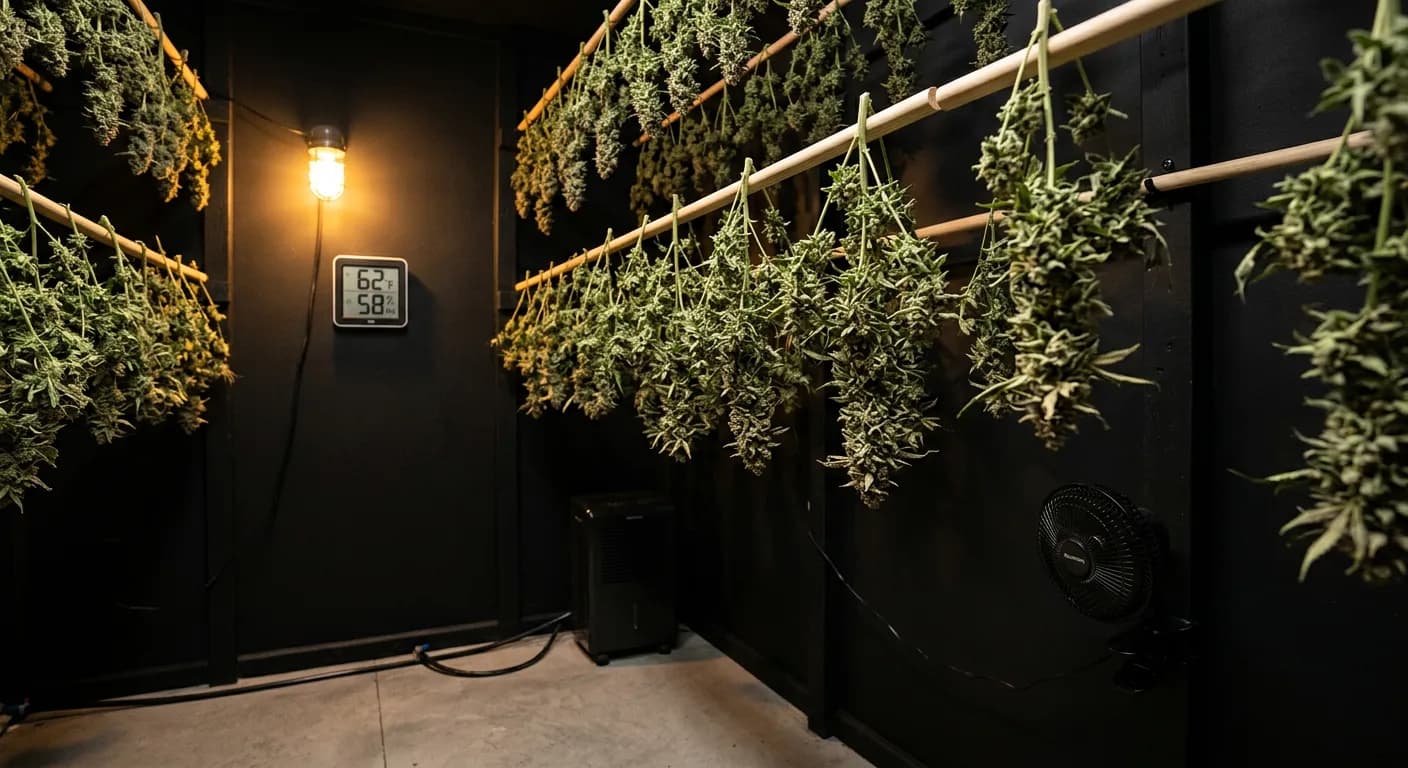
Dry trimming means hanging your cannabis — whole plants or large branches — and letting them dry completely before any trimming takes place. The sugar leaves and remaining fan leaves stay on the plant throughout the drying period, slowly curling inward and cradling the bud as moisture leaves the tissue.
After 10–14 days, when small stems snap cleanly rather than bend, you take the dried branches down and trim the now-crispy leaves away from the bud. The process is slower and more labor-intensive at this stage, but the drying phase itself is largely hands-off.
Dry Trimming: Pros
- Sugar leaves act as a protective sheath — They regulate moisture loss, slowing the dry and buffering the bud against environmental swings.
- Slower, more controlled drying — A longer dry at 60–65°F and 55–60% RH consistently produces smoother, better-tasting cannabis.
- Terpene preservation — The reduced surface exposure during drying allows volatile monoterpenes (like myrcene, limonene, and pinene) to stabilize rather than off-gas rapidly. See our guide on pinene in cannabis for why this matters.
- More forgiving of minor humidity fluctuations — The leaf buffer absorbs some of the environmental variation in the drying room.
- Better final aroma and smoothness — This is the dominant consensus on r/microgrowery and r/cannabiscultivation, and it aligns with the science of slower, cooler drying.
- Less immediate time pressure — You can hang whole plants and trim on your own schedule once dry.
Dry Trimming: Cons
- Significantly stickier and harder to trim — Dried trichome stalks are brittle, and dried leaves grip the bud surface tightly.
- Higher mold risk in humid environments — Keeping leaves on during drying in a room above 65% RH is a mold invitation.
- Requires more drying space — Whole branches take far more hanging room than rack-dried individual buds.
- Slower scissors and more scissor hash — Dried resin builds up faster on blades, though scissor hash is a bonus for some growers.
- Harder to achieve a pristine visual manicure — Dried sugar leaves snap off less cleanly than fresh ones, sometimes leaving stem stubs.
- Requires a controlled drying environment — You need consistent 58–65% RH and 60–70°F for the full 10–14 day window.
The core tradeoff is simple: wet trimming protects your bud from mold and speeds up your workflow; dry trimming protects your terpenes and produces better-tasting cannabis when your environment cooperates.
Side-by-Side Comparison Table
| Factor | Wet Trim | Dry Trim |
|---|---|---|
| Drying time | 5–7 days | 10–14 days |
| Mold risk (high humidity) | Low | High |
| Mold risk (low humidity) | Neutral | Low |
| Terpene preservation | Moderate | Superior |
| Trichome loss to scissors | Higher (wet resin sticks) | Lower (dry resin is less adhesive to blades) |
| Ease of trimming | Easier (fresh tissue) | Harder (dry, brittle leaves) |
| Final smoke quality | Good | Generally better |
| Visual appearance | Excellent (tight manicure) | Good (slightly rougher edges possible) |
| Time pressure at harvest | High (must trim immediately) | Low (can trim on your own schedule) |
| Best for | Humid climates, large harvests, beginners | Dry climates, small batches, quality focus |
| Space required (drying) | Less (racks work fine) | More (whole branches need hanging space) |
| Equipment needed | Scissors, trays, racks | Hanging lines/racks, hygrometer, scissors |
Trichome Loss: What the Evidence Actually Shows
The trichome loss debate is one of the most persistent arguments in the wet vs dry trimming conversation. The claim is straightforward: wet trichomes are stickier and adhere to scissor blades more than dry ones, meaning wet trimming costs you more of your cannabinoid and terpene content.
There is genuine logic behind this. Fresh resin has a liquid-like viscosity — it flows and bonds to surfaces. Dry resin is more brittle and crystalline, meaning trichome heads tend to snap off rather than smear. When they snap off dry, they fall into your trim tray. When they smear wet, they bond to your blade and are harder to recover.
A 2023 analysis of post-trimming scissor hash found that wet trimming sessions yielded up to 30% more blade residue by weight compared to dry trimming sessions with equal bud volumes — suggesting meaningful trichome transfer to tools during wet trimming. However, collection of wet scissor hash is also simpler, meaning some of that loss is recoverable as a byproduct.
The terpene exposure argument is better supported. Monoterpenes like myrcene, limonene, and beta-caryophyllene are volatile — they evaporate under heat, light, and air exposure. When you trim wet, you expose trichome heads to all three stressors immediately after harvest, during the most vulnerable window. Our guide to caryophyllene terpene in cannabis explains why protecting these compounds matters beyond just aroma.
The practical verdict: if terpene and cannabinoid preservation is your top priority — especially for gifting, competition, or personal connoisseur use — dry trimming has the stronger evidence base. If you're processing a large commercial harvest in a humid region, the trichome loss from wet trimming is an acceptable tradeoff for mold risk reduction.
The Decision Matrix: Which Method Should YOU Use?
No single answer fits every grower. Use this decision matrix to identify the right method for your specific situation. Answer each variable honestly — the pattern of your answers will point clearly to wet, dry, or hybrid trimming.
| Your Situation | Recommendation | Reason |
|---|---|---|
| Drying room RH consistently above 65% | Wet Trim | Mold risk outweighs terpene benefit |
| Drying room RH consistently 55–62% | Dry Trim | Ideal conditions for slow, terpene-preserving dry |
| Growing dense Indica or Kush genetics | Dry Trim (or Hybrid) | Dense buds need slower drying; sugar leaves prevent case hardening |
| Growing airy Sativa genetics | Wet Trim acceptable | Lower density = lower mold risk even without leaf removal |
| Harvest for personal use / connoisseur | Dry Trim | Quality over convenience |
| Large commercial harvest volume | Wet Trim | Speed and labor efficiency at scale |
| Limited time to trim post-harvest | Dry Trim | Hang and walk away; trim when ready |
| Must trim within 24 hours of harvest | Wet Trim | Only practical option under time pressure |
| High-resin, trichome-heavy strain | Dry Trim | More terpenes and cannabinoids to protect |
| Gifting or selling to discerning consumers | Dry Trim | Better aroma, smoother smoke, stronger impression |
| First-time grower, small tent grow | Hybrid (partial wet trim) | Removes mold risk while protecting bud quality |
Invest in a quality digital hygrometer with min/max memory for your drying room before harvest. Knowing your actual RH range over 24 hours is the single most important data point in deciding your trimming method. The VPD calculator can help you model your drying environment before you cut.
Bud Density and Trimming Method
Bud density is an underrated factor in this decision. Dense, compact Indica-dominant buds — think OG Kush, Northern Lights, or Purple Kush genetics — retain internal moisture far longer than airy Sativa structures. Wet trimming these dense buds and then rack-drying them too quickly risks a phenomenon called case hardening: the outer surface dries and seals before the interior moisture can escape, leaving a harsh, hay-flavored interior.
Dry trimming with the sugar leaf sheath intact forces slower, more even moisture release from dense buds — exactly what they need. Airy, open-structured Sativas like Tangerine Haze or Sour Diesel have far less of this problem; their structure allows airflow through the bud itself, making wet trimming safer.
End-Use and Volume Considerations
- Personal use, small batch (1–4 plants): Dry trimming is almost always worth it. You have the time, space, and stakes are low enough to experiment.
- Gifting to friends or cannabis enthusiasts: Dry trim. The improved aroma and smoothness will be noticed immediately.
- Large indoor commercial runs (20+ plants): Wet trimming or machine trimming is a practical necessity. Optimize your drying room environment instead.
- Outdoor harvest in autumn humidity: Wet trim, especially in climates where October brings rain and RH spikes above 70%.
- Extracting for concentrate or hash: Either method works, but note that wet-trimmed material produces cleaner fresh-frozen live resin since the plant is already processed at peak freshness.
The Hybrid Approach: Best of Both Worlds
The hybrid or partial wet trim is the method most recommended for home growers who want mold protection without sacrificing terpene quality. It involves two distinct steps performed at two different times — and it genuinely delivers the advantages of both methods while minimizing the downsides of each.
Immediately After Harvest: Remove Fan Leaves Only
Cut the plant down and immediately strip all large fan leaves by hand or with scissors. These leaves contain minimal trichomes and hold the most moisture. Removing them reduces surface area and mold risk without exposing any trichome-bearing material to premature handling stress.
Hang to Dry with Sugar Leaves Intact
Hang whole branches or stems in your drying room at 60–65°F and 58–62% RH. The sugar leaves remain on the bud, acting as the protective sheath that makes dry trimming superior. Target a 10–14 day dry until small stems snap cleanly.
After Drying: Trim Sugar Leaves
Once fully dry, trim the now-crispy sugar leaves from the bud surface. The dried leaves pull away cleanly enough for a respectable manicure without the excess trichome transfer of fully wet trimming. Your scissors will still collect some scissor hash — that's a bonus, not a problem.
The hybrid method is particularly effective for dense Indica genetics grown in environments where RH sits in the 60–65% range — high enough to make leaving all leaves on slightly risky, but not so humid that immediate full wet trimming is mandatory. Many experienced home growers on r/microgrowery report that the hybrid approach produces results nearly indistinguishable from full dry trimming in final quality.
The hybrid method — fan leaves removed wet, sugar leaves left for dry trimming — is the best entry point for new growers. It removes most mold risk while still protecting the terpene-rich trichomes on sugar leaves through the critical drying window.
Trimming Tools: Scissors vs Machines vs Bowl Trimmers
Your trimming method interacts directly with your tool choice. The wrong combination — like running fully dried cannabis through a bowl trimmer designed for wet material — produces noticeably worse results. Here is an honest breakdown of each tool category.
Hand Scissors
Hand scissors remain the gold standard for quality-focused trimming regardless of wet or dry method. They give you full control over how close you cut, prevent the mechanical trichome damage of spinning machines, and allow you to work around the unique shape of each bud. Two pairs are ideal — one larger pair for fan leaves, one small curved bonsai-style pair for detail work on sugar leaves.
- Best for: Small to medium harvests, dry trimming, connoisseur-quality finishing
- Wet trimming note: Clean blades with 91%+ isopropyl alcohol every 20–30 minutes to prevent resin buildup from slowing your cuts
- Dry trimming note: Expect more scissor hash accumulation; use it — it's pure resin
- Recommended brands: Chikamasa, Fiskars micro-tip, or curved bonsai scissors from any garden supplier
Bowl Trimmers (Spin Trimmers)
Bowl trimmers use a spinning blade beneath a flexible mesh surface. You place trimmed or partially trimmed buds on top, spin the handle, and the suction draws leaves through the mesh to be cut by the blade. They are fast — a pound of wet-trimmed material can be finished in minutes — but the mechanical action is rough on trichomes.
- Best for: Large wet harvests where speed is the priority
- Not recommended for: Dry trimming (brittle trichomes shatter under mechanical stress) or any harvest where final quality is the goal
- Quality impact: Measurable trichome loss on bud surfaces; buds look slightly 'beaten' compared to hand-scissored results
Electric Trimming Machines
Electric trimmers use tumbling drums or counter-rotating blades to automate the trimming process at commercial scale. They are designed for wet trimming of large volumes — think 10+ pounds per hour throughput. Quality suffers significantly compared to hand trimming, and they are not appropriate for high-value, trichome-rich strains.
- Best for: Large commercial operations prioritizing volume over quality
- Avoid if: You are growing any high-resin strain where terpene and trichome preservation matters
- Hybrid use: Some operations use electric machines for rough trimming, then hand-finish premium batches
Never run fully dry, brittle cannabis through a bowl trimmer or electric machine. The tumbling action physically shatters trichome stalks and heads at scale, resulting in visible degradation of bud surface resin coverage. Reserve machines for wet trimming only, and hand-finish anything destined for discerning consumers.
Tool Comparison at a Glance
| Tool | Speed | Quality Output | Best For | Wet or Dry? |
|---|---|---|---|---|
| Hand scissors (straight) | Slow | Excellent | Fan leaves, both methods | Both |
| Hand scissors (curved) | Slow–Moderate | Superior | Sugar leaf detail work | Both (ideal for dry) |
| Bowl trimmer | Fast | Moderate | Large wet harvests | Wet only |
| Electric trimmer | Very Fast | Lower | Commercial volume | Wet only |
High-Resin Strains and Why Your Trimming Method Matters More
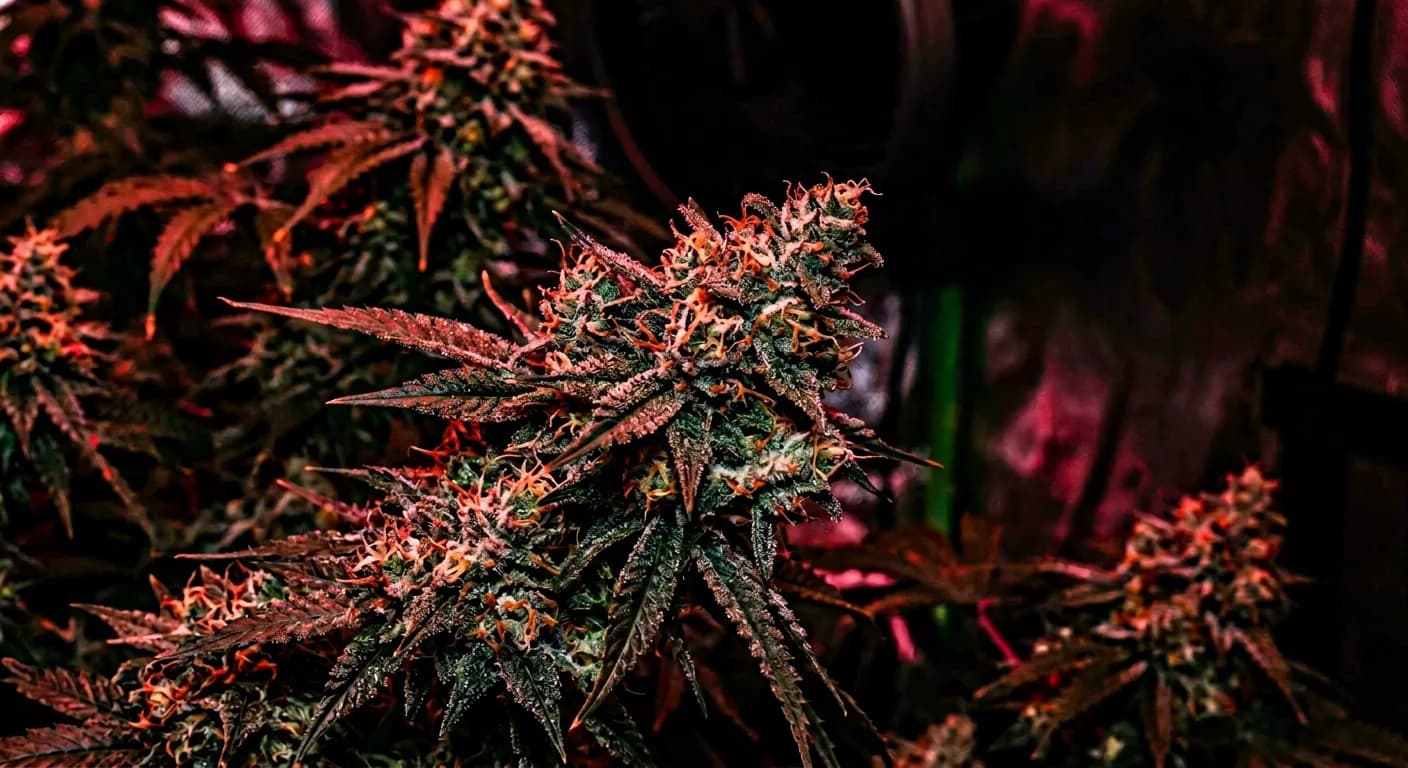
Not all cannabis is equally affected by trimming method. A mid-shelf strain at 15% THC with modest terpene production loses relatively little from wet trimming. A frosty, high-resin cultivar at 25–30% THC with a complex terpene profile loses significantly more — because it has more to lose.
Dense trichome coverage means more resin surface exposed during wet trimming, more resin sticking to blades, and more volatile terpenes escaping during faster drying. The math is straightforward: high-resin strains benefit proportionally more from the protection that dry trimming provides.
Genetics like OG Kush (26% THC), Purple Kush (27% THC), and Quantum Kush (30% THC) are exactly the kind of strains where trimming method makes a perceptible difference in the finished product. These cultivars produce trichome coverage dense enough that proper dry trimming — combined with a good cure — elevates the final quality from good to exceptional.
Similarly, strains like White Widow (25% THC) — one of the most famously resinous cultivars in cannabis history — and Black Widow (26% THC) were specifically bred for maximum resin production. Wet trimming these strains is almost counterproductive: you spend more time cleaning scissors, lose more trichomes per snip, and risk accelerating terpene loss in a plant that was grown specifically for its aromatic complexity.
For ultra-high-resin strains, chill your scissors in the freezer for 10 minutes before trimming sessions. Cold metal is less adhesive to fresh resin than room-temperature metal, reducing trichome transfer to your blades during wet trimming. It makes a measurable difference on frosty genetics.
Other high-resin candidates where dry trimming pays off most include naturally terpene-forward strains. Sour Diesel-derived cultivars like Sour Diesel (24% THC) carry volatile fuel-like terpenes that evaporate under any unnecessary heat or handling stress. New York Power Diesel (24% THC) shares this lineage and benefits equally from protected drying. For a full breakdown of the highest-resin options available, see our top highest-THC strains guide.
Airy, lower-resin Sativas — like Swazi (18% THC) or Tangerine Haze (18% THC) — are more forgiving of wet trimming because their open bud structure reduces mold risk and their terpene profile is somewhat less volatile. Even so, slower drying still produces better results than rushing.
Practical Tips to Get the Best Results from Either Method
Choosing the right method is step one. Executing it well determines whether you actually realize those theoretical benefits. These are the practical details that separate a mediocre harvest finish from an exceptional one.
For Wet Trimming: Execution Tips
- Work in a cool room (65°F or below) — heat accelerates terpene loss during handling
- Trim under low-intensity lighting; UV exposure degrades trichomes
- Clean scissors with 91%+ isopropyl alcohol every 20–30 minutes — never let resin build up
- Collect resin from isopropyl washes; evaporate the alcohol for a bonus concentrate
- Transfer trimmed buds to drying racks immediately — don't let them sit in piles
- Target 60–65°F and 50–60% RH in your drying room
- Run an oscillating fan on low across the room — not directly on buds
- Check for dry in 5–7 days using the stem-bend test
For Dry Trimming: Execution Tips
- Hang whole branches or plants — not individual small buds — to maximize the sugar-leaf sheath effect
- Target 58–62% RH and 60–65°F for the drying room
- Keep the drying room dark; light degrades both chlorophyll and trichomes
- Check stems daily after day 8; snap a small stem — when it breaks cleanly, you're ready
- Trim with sharp, freshly cleaned scissors; expect more scissor hash to collect
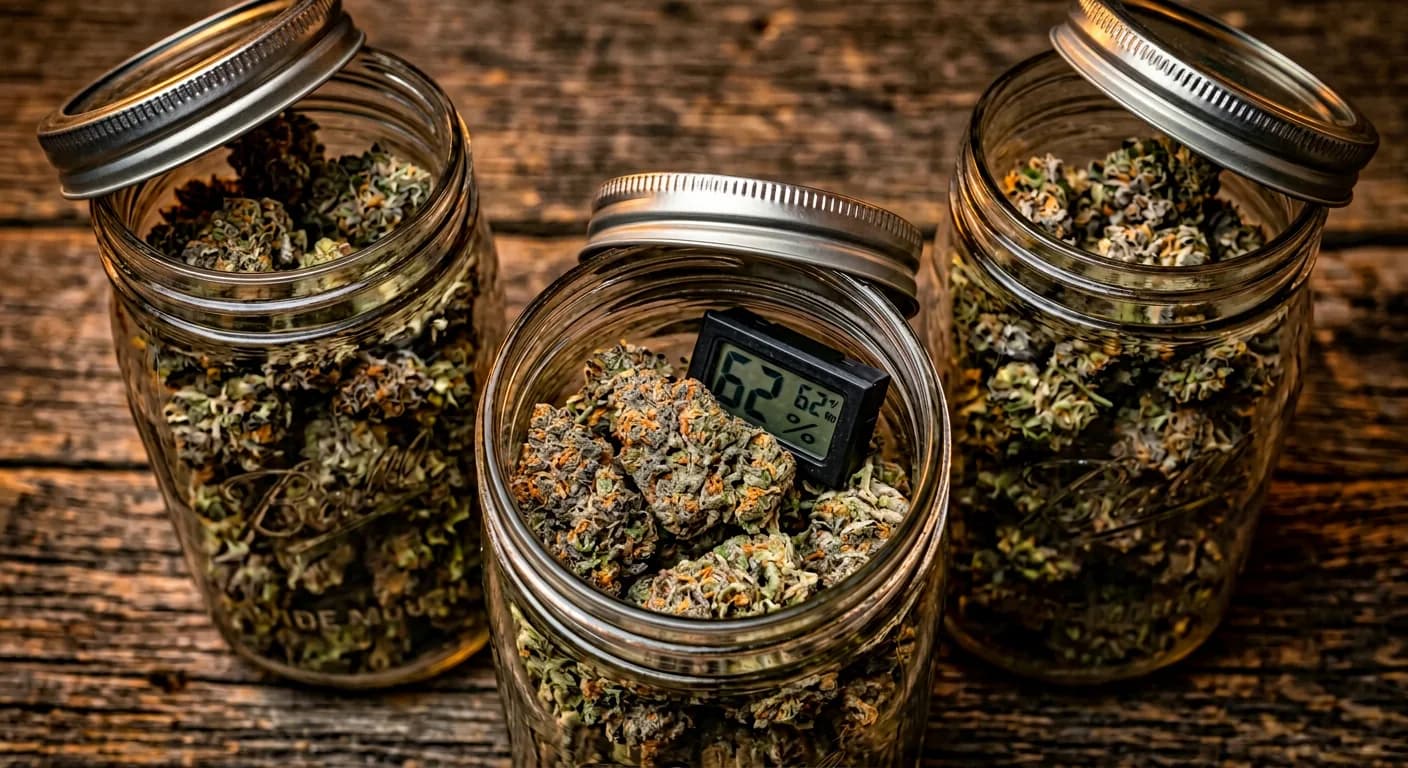
- Move trimmed buds directly to sealed glass jars for curing
- Burp jars twice daily for the first two weeks; see our mason jar curing guide for a full schedule
- Store finished bud at 58–62% RH using Boveda or Integra humidity packs
Use a hygrometer inside your drying room, not just outside it. Internal room conditions can differ significantly from ambient readings, especially in basement grows or tent setups. Our VPD calculator helps you model and hit the right temperature-humidity combinations for your specific drying environment.
Scissor Hash: Don't Waste It
Both trimming methods produce scissor hash — the resin that accumulates on your blade surfaces. Wet scissor hash is soft and pliable, almost like bubble hash. Dry scissor hash is darker and more concentrated. Neither should be wiped off with a paper towel and thrown away.
- Wet scissor hash: Scrape with a razor blade or toothpick; roll into small balls and smoke or press
- Dry scissor hash: Collect with a credit card or razor; more potent by volume due to lower moisture content
- Isopropyl wash method: Soak scissors in 91% IPA for 10 minutes, let the alcohol fully evaporate in a glass dish, and collect the residue
Drying Room Setup: The Variables That Matter Most
Your drying room quality determines whether your trimming method choice actually pays off. The best dry trim in the world won't save cannabis dried in a hot, bright, windy room. Optimize for these three parameters above all others:
- Temperature: 60–65°F (15–18°C) — cooler is better; heat drives terpene evaporation
- Humidity: 55–65% RH — the exact range depends on bud density and trimming method; dry trim needs closer to 60–62%
- Airflow: Gentle, indirect circulation — enough to prevent stagnant pockets, not enough to accelerate surface drying
For a comprehensive breakdown of managing humidity through the entire cultivation cycle, see our cannabis humidity control guide. Planning your next grow? The grow planner tool helps you map out harvest timing so your drying room is ready when your plants are.
Never dry cannabis at temperatures above 75°F (24°C). High heat is the single fastest way to destroy the terpene profile of your harvest — even a perfectly executed dry trim cannot compensate for a hot, rushed dry. If your drying space runs warm, add an air conditioner or portable cooling unit before harvest day.
Verdict: Wet Trim vs Dry Trim — Which Is Actually Better?
After weighing every variable, the honest answer is that dry trimming produces better cannabis in the majority of controlled home-grow environments — but wet trimming is the correct choice in specific, well-defined circumstances. Here is the final verdict card for each situation.
Dry Trim Wins When: Your drying room holds 55–65% RH consistently, you are growing dense Indica or high-resin genetics, quality is your primary goal, and you have the time and space to hang whole branches for 10–14 days. The terpene preservation, smoother dry, and overall better final aroma make dry trimming the superior method for home growers who can control their environment.
Wet Trim Wins When: Your drying environment regularly exceeds 65% RH, you are harvesting a large volume that cannot be hung and monitored for two weeks, you are growing airy Sativa genetics with low mold risk, or time constraints require immediate processing. The mold-prevention advantage is real and significant — it is always better to wet trim and lose some terpenes than to dry trim and lose the entire harvest to Botrytis.
The hybrid method — fan leaves removed immediately, sugar leaves left for dry trimming — is the best practical recommendation for most home growers. It combines the mold-risk reduction of partial wet trimming with the terpene-protection benefits of dry trimming and requires no special equipment or conditions beyond a reasonably controlled drying space.
Whichever method you choose, the quality of your genetics sets the ceiling. Starting with elite, stable seeds with proven terpene profiles and robust resin production gives you more to protect — and more to gain from doing it right. For your next grow, explore our full OG Kush, Purple Kush, and White Widow seed collections, all backed by our germination guarantee.
Frequently Asked Questions
Does wet trimming reduce terpene content compared to dry trimming?
Yes, there is strong grower consensus and logical scientific basis that wet trimming exposes terpene-rich trichomes to air, light, and handling stress immediately after harvest. Dry trimming lets sugar leaves act as a protective sheath during the drying phase, allowing volatile terpenes like myrcene, limonene, and pinene to stabilize through a slower moisture-release process. The difference is most pronounced in high-resin strains where terpene content is highest to begin with.
Is wet trimming or dry trimming better for preventing mold?
Wet trimming is better for mold prevention in high-humidity environments. Removing leaves immediately after harvest reduces surface area and allows buds to dry faster, lowering the window of opportunity for Botrytis cinerea (grey mold) and other fungal pathogens. If your drying space consistently sits above 65% RH, wet trimming is the clearly safer choice regardless of any terpene trade-off.
Do dry-trimmed buds actually smell better than wet-trimmed buds?
Many experienced growers report that dry-trimmed cannabis has a stronger, more complex aroma after curing. The sugar leaves slow moisture loss, giving terpenes more time to stabilize rather than evaporate rapidly. While large-scale controlled studies are limited, grower consensus on forums like r/microgrowery strongly and consistently favors dry trimming for aroma quality, particularly for terpene-rich Kush and Diesel genetics.
Can I use a trimming machine for both wet and dry trimming?
You can use bowl trimmers and electric machines for wet trimming with acceptable results. However, running fully dry cannabis through mechanical trimmers causes significant trichome loss — brittle dry trichome stalks shatter under mechanical stress at a much higher rate than fresh, flexible ones. For dry-trimmed material, hand scissors are always the recommended tool. Reserve machines for large wet-trim commercial operations only.
How long does cannabis take to dry after wet trimming vs dry trimming?
Wet-trimmed cannabis typically reaches the stem-snap stage in 5–7 days in a controlled environment of 60–65°F and 50–60% RH. Dry-trimmed cannabis, with sugar leaves intact, usually takes 10–14 days under the same temperature but at slightly higher RH (58–63%). The slower dry of the dry-trim method is intentional and beneficial — it consistently produces smoother, better-tasting finished bud when curing is done properly afterward.