You've done the research on strains. You know what you want to grow. Then comes the question that stops every new home grower cold: how many plants can I actually keep without breaking the law? Home grow cannabis laws vary so dramatically from state to state that a setup perfectly legal in Colorado could land you in serious trouble just across the border in Kansas.
The short answer: in states where home growing is legal, plant limits typically range from 2 to 12 plants per household. But the details buried inside those limits — mature vs. immature counts, per-person vs. per-household rules, indoor-only requirements, and visibility laws — are where most growers accidentally step outside the law.
This guide covers every legal home grow state in 2026, gives you the exact numbers, and ends with practical advice on how to buy the right number of seeds so your plant count stays clean from day one.
The Complete State-by-State Home Grow Plant Limit Table
The table below is the most comprehensive reference available for home grow cannabis laws in 2026. It covers recreational and medical rules, mature vs. immature distinctions, and household vs. per-person limits in one place.
In states where home growing is legal, limits typically range from 2 to 12 plants per household. The most common limit is 6 plants per adult or household — but the definition of "plant" and who the limit applies to changes everything.
| State | Home Grow Legal? | Mature Plant Limit | Immature/Seedling Limit | Household or Per-Person | Indoor/Outdoor Restrictions | Notes |
|---|---|---|---|---|---|---|
| Alaska | ✅ Recreational + Medical | 3 mature | 3 immature | Per person (max 6 mature per household) | Both; must not be visible from public | No limit on seedlings under 12 inches |
| Arizona | ✅ Recreational + Medical | 6 | No separate limit | Per person (max 12 per household with 2+ adults) | Both; secured, not visible from public | Must be in locked space |
| California | ✅ Recreational + Medical | 6 | Included in 6-plant total | Per person (no household cap stated) | Both; not visible from public street or neighbor | Local jurisdictions may ban outdoor grows |
| Colorado | ✅ Recreational + Medical | 3 mature | 3 immature | Per person (max 12 total per residence) | Both; must be enclosed and locked | Medical patients can apply for more than 6 |
| Connecticut | ✅ Recreational (as of 2023) + Medical | 3 mature | 3 immature | Per person (max 12 per household) | Both; not visible from public | Recreational home grow began July 1, 2023 |
| Delaware | ✅ Recreational (limited) | 3 mature | 3 immature | Per person | Indoor strongly preferred; must not be visible | Law effective 2023; check local ordinances |
| Hawaii | ⚕️ Medical only | 3 mature | 4 immature | Per patient | Both; must be in an enclosed locked facility | Recreational home grow not currently permitted |
| Illinois | ⚕️ Medical only | 5 | No separate limit | Per patient | Indoor only; enclosed locked space | Recreational users face penalties for home grow |
| Maine | ✅ Recreational + Medical | 3 mature | 12 immature | Per person | Both; must not be visible | Unlimited seedlings under 12 inches in some interpretations |
| Maryland | ✅ Recreational + Medical | 2 mature | No separate limit | Per person (max 4 per household) | Both; not visible from public | One of the lower per-person limits nationally |
| Massachusetts | ✅ Recreational + Medical | 6 mature | No separate limit | Per person (max 12 per household) | Both; not visible from public | Household cap applies when 2+ adults reside together |
| Michigan | ✅ Recreational + Medical | 12 | No separate immature limit | Per person | Both; in an enclosed locked space | One of the most generous recreational limits in the US |
| Minnesota | ✅ Recreational (as of 2023) + Medical | 2 mature | 8 immature | Per household | Both; not visible from public, must be secured | Began August 1, 2023 |
| Missouri | ✅ Recreational + Medical | 3 mature | 3 immature | Per person (max 6 mature per household) | Both; in enclosed locked space, not visible | Amendment 3 passed November 2022 |
| Montana | ✅ Recreational + Medical | 2 mature | 2 immature | Per person (max 4 mature per household) | Both; not visible from public | Seedlings under 8 inches sometimes excluded from count |
| Nevada | ✅ Recreational + Medical | 6 | No separate limit | Per person (max 12 per household) | Indoor only if within 25 miles of a cannabis retailer | Rural exception allows outdoor growing |
| New Jersey | ❌ Legal state; no home grow | — | — | — | — | Home cultivation not permitted even for recreational users |
| New Mexico | ✅ Recreational + Medical | 6 mature | 12 immature | Per person (max 12 mature per household) | Both; in a locked space, not visible | Medical patients may qualify for higher limits |
| New York | ✅ Recreational + Medical | 3 mature | 3 immature | Per person (max 6 mature per household) | Both; not visible from public street or neighboring property | Home grow became legal December 2022 |
| Ohio | ✅ Recreational (as of 2024) | 6 | 6 immature | Per person (max 12 per household) | Both; not visible from public | Issue 2 passed November 2023; home grow active 2024 |
| Oregon | ✅ Recreational + Medical | 4 mature | No separate limit | Per household | Both; not visible from public | Medical patients may grow more with registration |
| Vermont | ✅ Recreational | 2 mature | 4 immature | Per person (max 4 mature per household) | Both; not visible from public | No commercial sale; personal use only |
| Virginia | ✅ Recreational | 4 | No separate limit | Per household | Both; not visible without use of optical aids from public | Plants must be tagged with grower's name and ID |
| Washington | ⚕️ Medical only | 6 mature | 6 immature | Per patient (up to 15 with authorization) | Both; not visible from public | Recreational home growing remains illegal in WA |
| Washington D.C. | ✅ Recreational (gifting economy) | 6 | No separate limit | Per person (max 12 per household) | Both | No retail sales; gifting legal; unique legal landscape |
| Florida | ⚕️ Medical only (recreational passed 2024 — implementation ongoing) | Not yet established for rec | — | — | — | Monitor state regulations in 2025–2026 for home grow updates |
Laws change fast. The table above reflects regulations as of early 2026. Several states updated home grow rules in 2023–2024, and more changes are expected. Always verify your state's current statute before germinating a single seed. Local county or city ordinances may be stricter than state law.
States That Allow Home Cannabis Cultivation: Full Breakdown
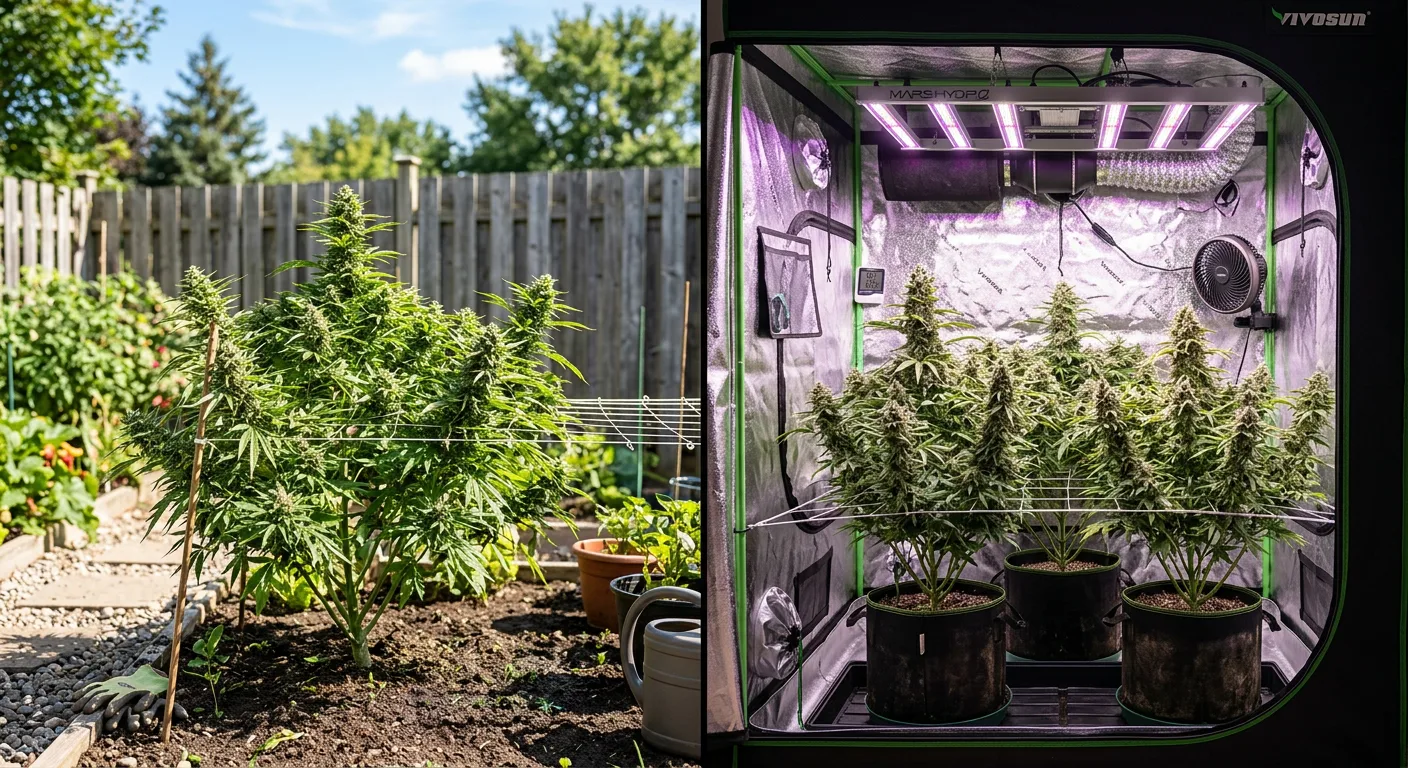
As of 2026, roughly 24 states allow some form of home cannabis cultivation — either recreational, medical, or both. Understanding which category your state falls into changes not just how many plants you can grow, but whether you need a medical card to grow at all.
States With Recreational Home Growing Rights
These states allow any adult 21+ to cultivate cannabis at home without a medical card:
- Alaska — 3 mature, 3 immature per person
- Arizona — up to 6 per person, 12 per household
- California — 6 plants per person
- Colorado — 3 mature, 3 immature per person (max 12 per residence)
- Connecticut — 3 mature, 3 immature per person
- Delaware — 3 mature, 3 immature per person
- Maine — 3 mature, 12 immature per person
- Maryland — 2 mature per person (4 per household)
- Massachusetts — 6 mature per person (12 per household)
- Michigan — 12 plants per person
- Minnesota — 2 mature, 8 immature per household
- Missouri — 3 mature, 3 immature per person
- Montana — 2 mature, 2 immature per person
- Nevada — 6 per person (with location restrictions)
- New Mexico — 6 mature, 12 immature per person
- New York — 3 mature, 3 immature per person
- Ohio — 6 mature, 6 immature per person
- Oregon — 4 mature per household
- Vermont — 2 mature, 4 immature per person
- Virginia — 4 plants per household
- Washington D.C. — 6 per person
States Where Home Growing Requires a Medical Card
These states have legal cannabis but restrict home cultivation to registered medical patients only:
- Hawaii — 3 mature, 4 immature per patient
- Illinois — 5 plants per patient (recreational home growing prohibited)
- Washington State — 6 mature, 6 immature per patient (up to 15 with authorization)
Legal States With No Home Growing at All
Some states fully legalized recreational cannabis but explicitly banned home cultivation. This is a critical distinction that trips up new residents:
- New Jersey — recreational sales are legal, but growing at home is not permitted
- Rhode Island — retail sales launched in 2023, but home grow laws remain complex; verify current status
Home grow laws often lag behind retail legalization by one to three years. States like New York and Connecticut legalized home growing months to years after their first recreational sales launched. If your state just went legal, don't assume home growing is automatically permitted — check the specific cultivation statute.
Mature vs. Immature Plants: Why This Distinction Changes Everything
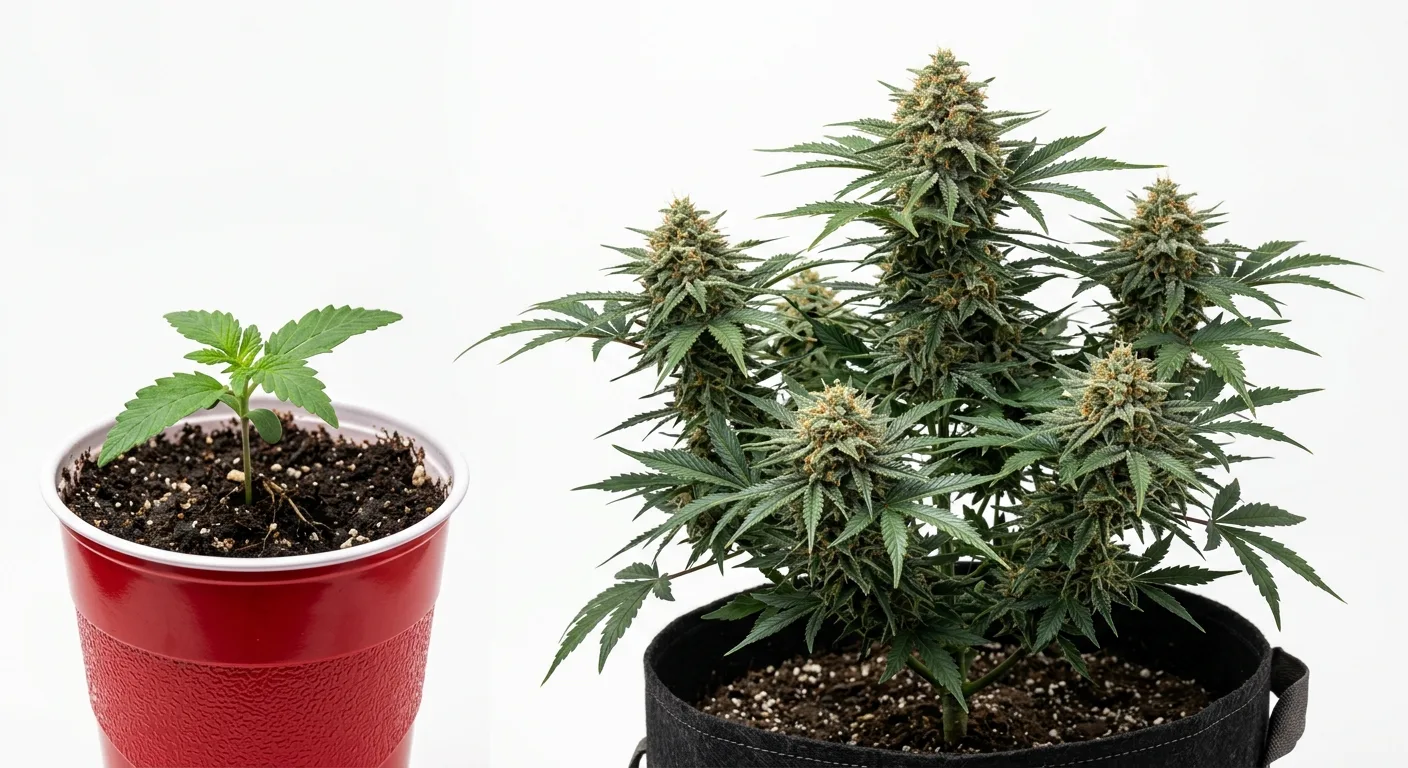
Whether your seedlings count toward your legal plant limit is one of the most misunderstood aspects of home grow cannabis laws — and it has huge practical implications for how you run your grow operation.
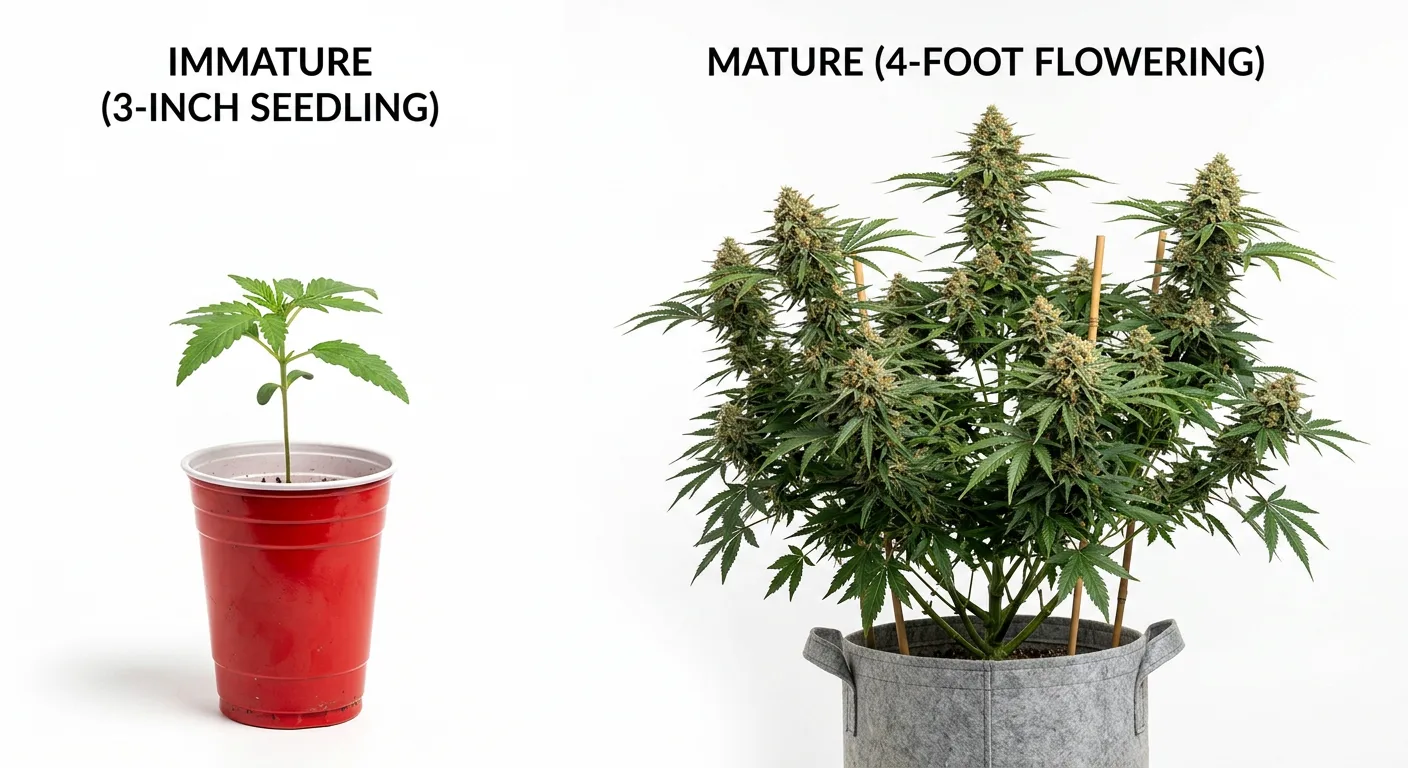
About half of all legal home grow states separate mature and immature plants in their statutes. When they do, immature plants are usually defined by one of three criteria:
- Height threshold: Plants under 12 inches (Alaska) or under 8 inches (Montana) are classified as immature
- Flowering status: Any plant not yet showing female flowers is immature (most common approach)
- Root development: Cuttings or clones without developed root systems may not count at all in some states
Why This Matters for Your Growing Schedule
Home growers almost always start more seedlings than they intend to keep. You start 8 seeds, you cull males (if using regular seeds), you might lose one to damping off — the extra seeds are insurance. If your state counts all plants equally, those 8 germinating cups immediately consume your legal allotment the moment they sprout.
In a state like Colorado (3 mature + 3 immature = 6 total per person), a two-person household can have up to 12 plants legally. In a state like Oregon (4 mature per household, no immature distinction), those same 8 seedlings already exceed the limit.
Grower's Tip: If your state counts all plants regardless of maturity, start your seeds in a propagation tray and only transplant into pots the number of plants you're legally allowed to keep. Cull extras before they become countable plants. Keep records of when each plant was transplanted.
Per-Person vs. Per-Household Limits: What Couples and Roommates Must Know
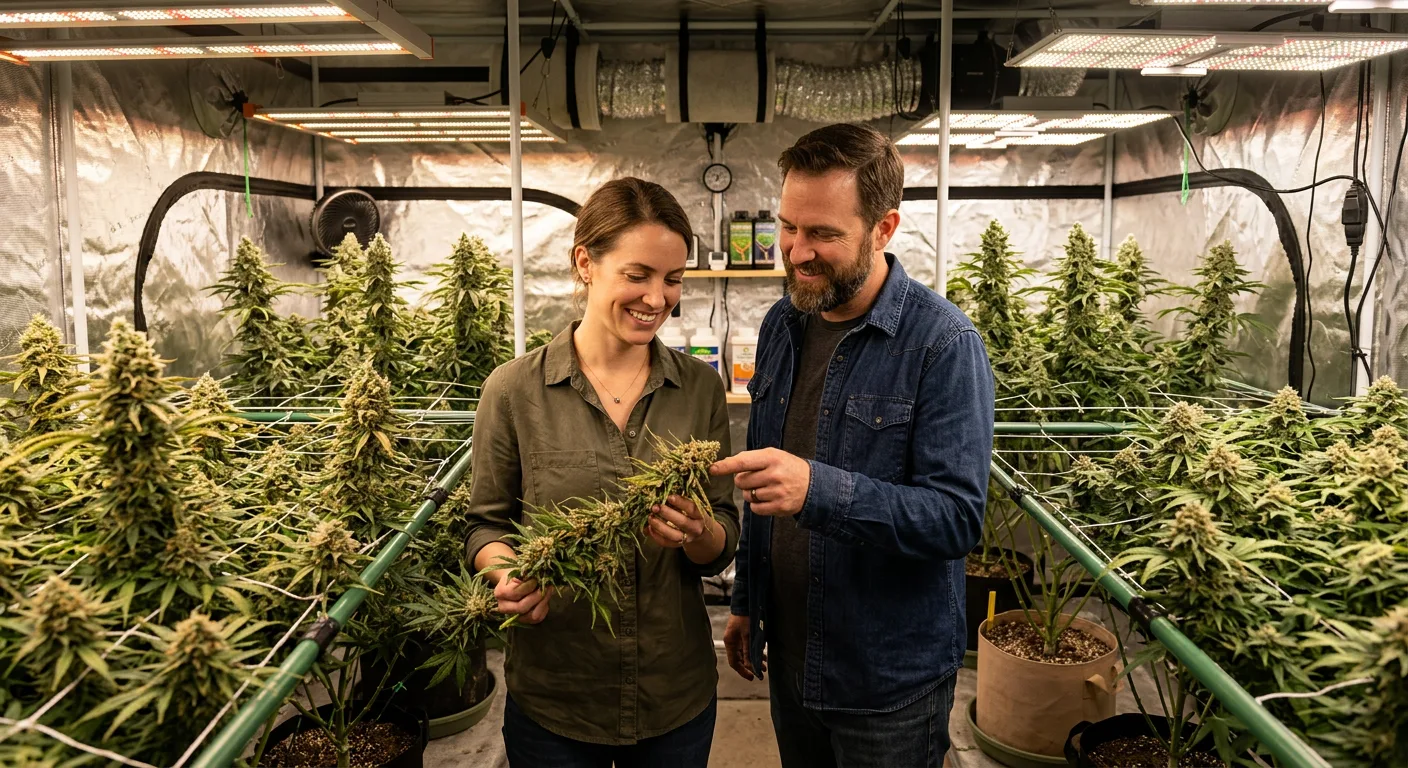
The difference between a per-person and a per-household plant limit can literally double the size of your legal grow — or create unexpected problems if you misread the law.
Consider a couple living together in Massachusetts: each person is allowed 6 mature plants, and the household cap is 12. Two adults × 6 plants = exactly 12, which hits the household maximum. Add a third adult roommate, and the household cap still applies — you don't get 18 plants just because three adults live together.
States With Generous Per-Person Stacking
These states allow multiple adults in the same home to combine their individual limits up to a household cap:
- Massachusetts: 6 per person, 12 per household
- Colorado: 3 mature + 3 immature per person, 12 per residence
- New Mexico: 6 mature per person, 12 mature per household
- Arizona: 6 per person, 12 per household
- Michigan: 12 per person — no stated household cap, making it the most generous recreational state for multi-adult households
States With Strict Household-Only Limits
These states set a single household limit regardless of how many adults live there:
- Oregon: 4 mature plants per household — a second adult does not add to this
- Virginia: 4 plants per household total
- Minnesota: 2 mature + 8 immature per household
Always read whether your state's limit is per-person or per-household before planning your grow. For couples and roommates, this single distinction can mean the difference between growing 4 plants legally and growing 12.
States Where Only Medical Patients Can Grow at Home
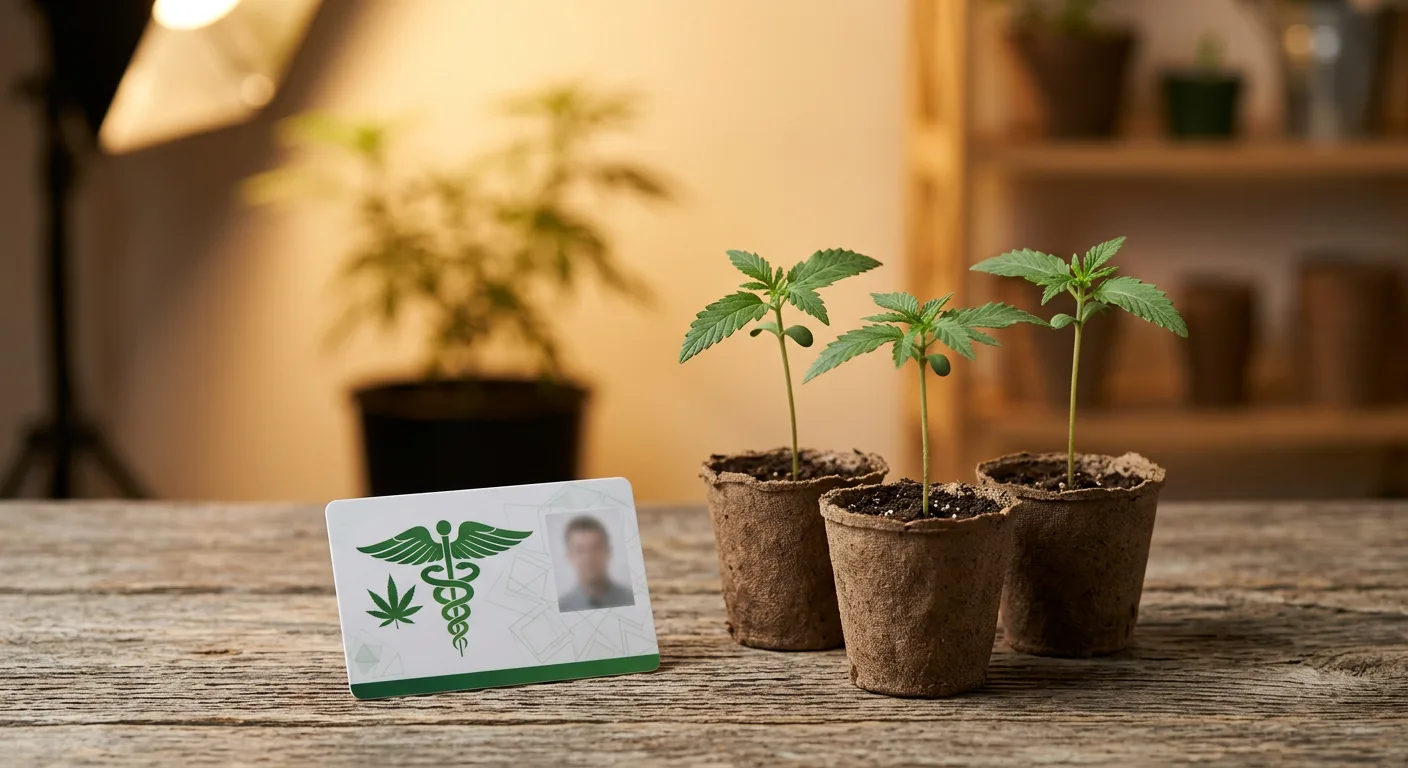
If you live in a state where recreational cannabis is sold legally but home growing requires a medical card, you cannot legally grow at home without one — even though you can buy from a licensed dispensary.
This is the situation recreational users face in Illinois and Washington State. Illinois medical cardholders can grow up to 5 plants, while recreational consumers face legal penalties for any home cultivation. Washington State permits medical patients to grow 6 mature and 6 immature plants, with a pathway to grow up to 15 with written provider authorization — but no home growing rights exist for recreational consumers.
How to Get Medical Growing Rights
If you live in a medical-only cultivation state and want to grow legally:
- Obtain a valid medical cannabis card through your state's patient registry
- Keep your card current — expired cards void your cultivation rights
- In some states (like Washington), get a written authorization from your healthcare provider specifying plant counts above the default
- Register your grow site if your state requires it (Hawaii requires grow site registration)
Medical Grower's Tip: Medical cardholders in states like Colorado can apply for extended plant counts beyond the recreational limit if their condition requires larger yields. Work with a cannabis-knowledgeable physician to explore this if 6 plants aren't enough for your needs.
Indoor vs. Outdoor Rules and Visibility Requirements by State
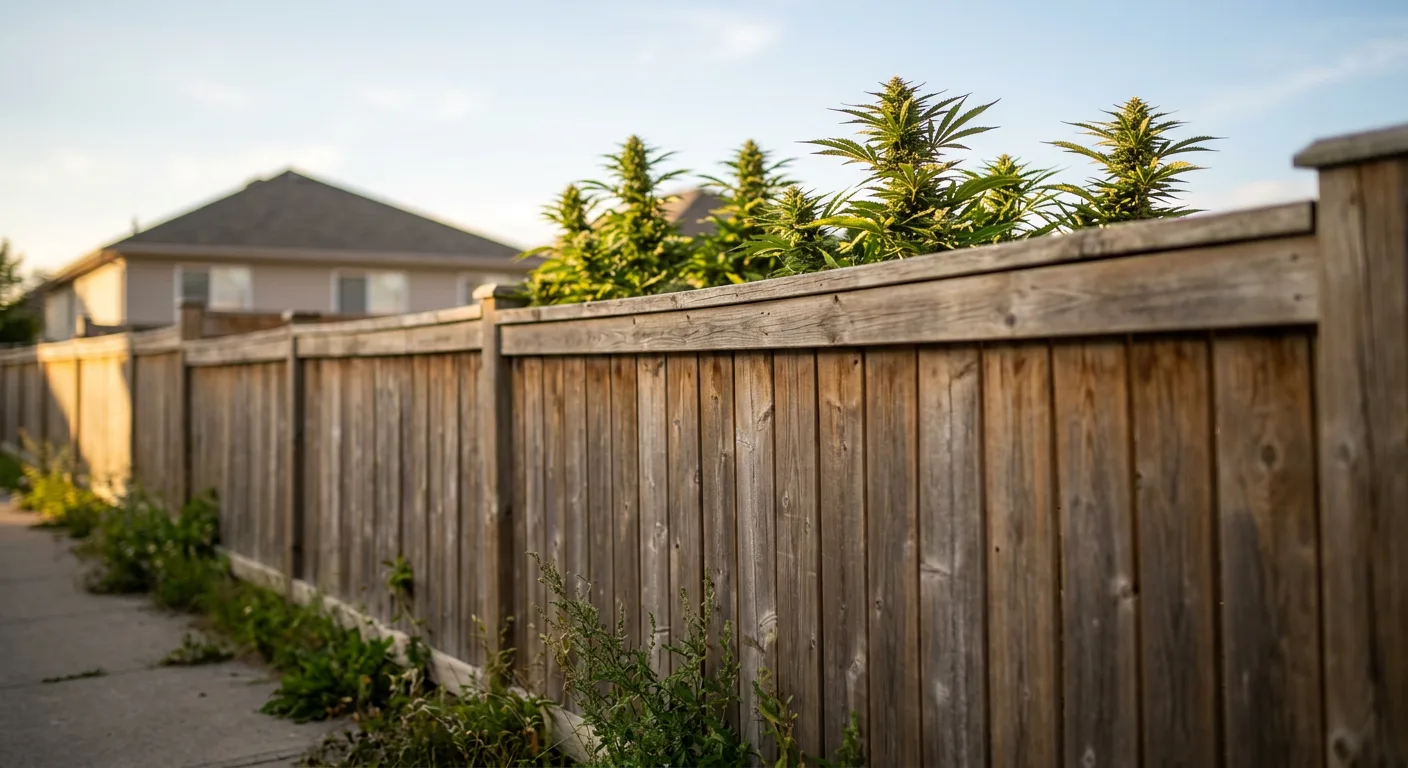
Where you grow your plants — and whether your neighbors can see them — is often as legally important as how many plants you grow. Visibility restrictions exist in almost every home grow state, and indoor-only requirements exist in a handful.
The Visibility Rule: What 'Not Visible From Public' Actually Means
Most states require that home cannabis plants not be "visible from a public place without the use of optical aids." In practical terms, this means:
- Plants cannot be seen from a public street, sidewalk, or park
- Plants cannot be visible from a neighboring property without binoculars or zoom lenses
- Second-floor visibility from a neighbor's window is often excluded from the restriction, though this varies
- Virginia's law specifically says plants must not be visible without optical aids — one of the clearest formulations
States With Indoor-Only Requirements
Nevada is the most notable example of an indoor-only restriction tied to retail access. If you live within 25 miles of a licensed cannabis retailer in Nevada, you must grow indoors. The logic is that if you have easy retail access, the state expects you to buy rather than grow outdoors. Only rural Nevada residents more than 25 miles from any dispensary can grow outdoors.
Illinois medical patients must grow in an enclosed, locked space — effectively requiring indoor cultivation regardless of location.
States That Allow Both Indoor and Outdoor With Conditions
Most legal states allow both indoor and outdoor cultivation as long as the visibility and security requirements are met. Common requirements across states include:
- Locked enclosure or secured growing area (Arizona, Colorado, Michigan)
- Not visible from any public right-of-way
- Childproof access restrictions in homes with minors
- No more than a specified distance from a school or playground (varies by municipality)
- Plants labeled with grower's name and state ID (Virginia specifically requires this)
Local Ordinances Can Override State Law. California is the clearest example: the state allows 6 plants per adult, but dozens of counties and cities — including Los Angeles County unincorporated areas and many Bay Area cities — have banned outdoor home growing entirely. Always check your city and county ordinances separately from state law before you plant outdoors.
Landlord and Rental Restrictions
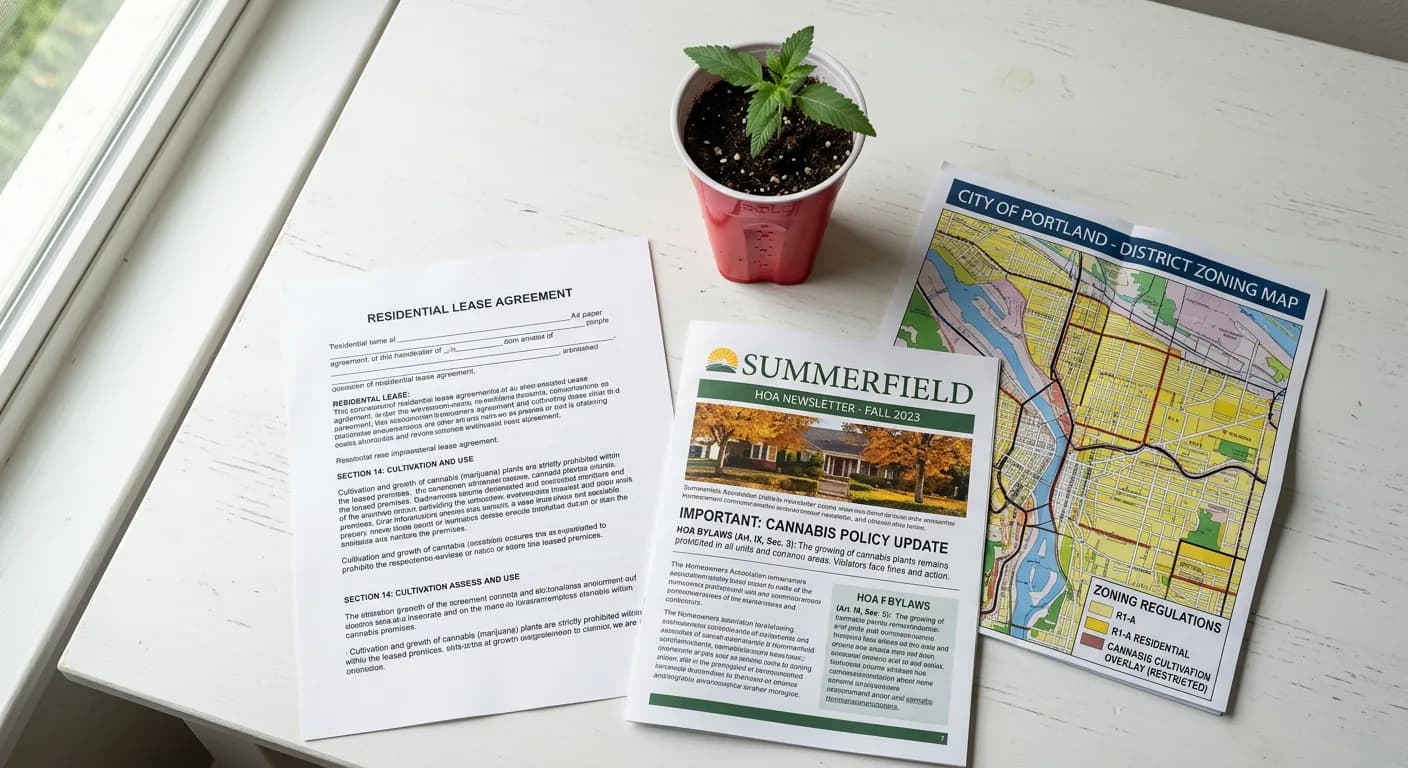
This is one of the most overlooked legal landmines in home cannabis cultivation. State law gives you the right to grow — but it does not override your lease agreement with a private landlord. Most standard apartment leases prohibit cannabis cultivation for practical reasons:
- High humidity from grow operations can cause mold damage
- Grow lighting increases electricity costs attributed to the unit
- Cannabis cultivation can create liability concerns for property owners
- Some landlord insurance policies are voided if cannabis is grown on the property
Even in states with strong home grow protections, courts have consistently ruled that a landlord can prohibit cultivation as a lease condition. If you rent, get written permission before you germinate a single seed. If your landlord says no, your safest options are negotiation, finding cannabis-friendly housing, or waiting until you own your space.
How to Stay Within Your Legal Plant Count as a Home Grower
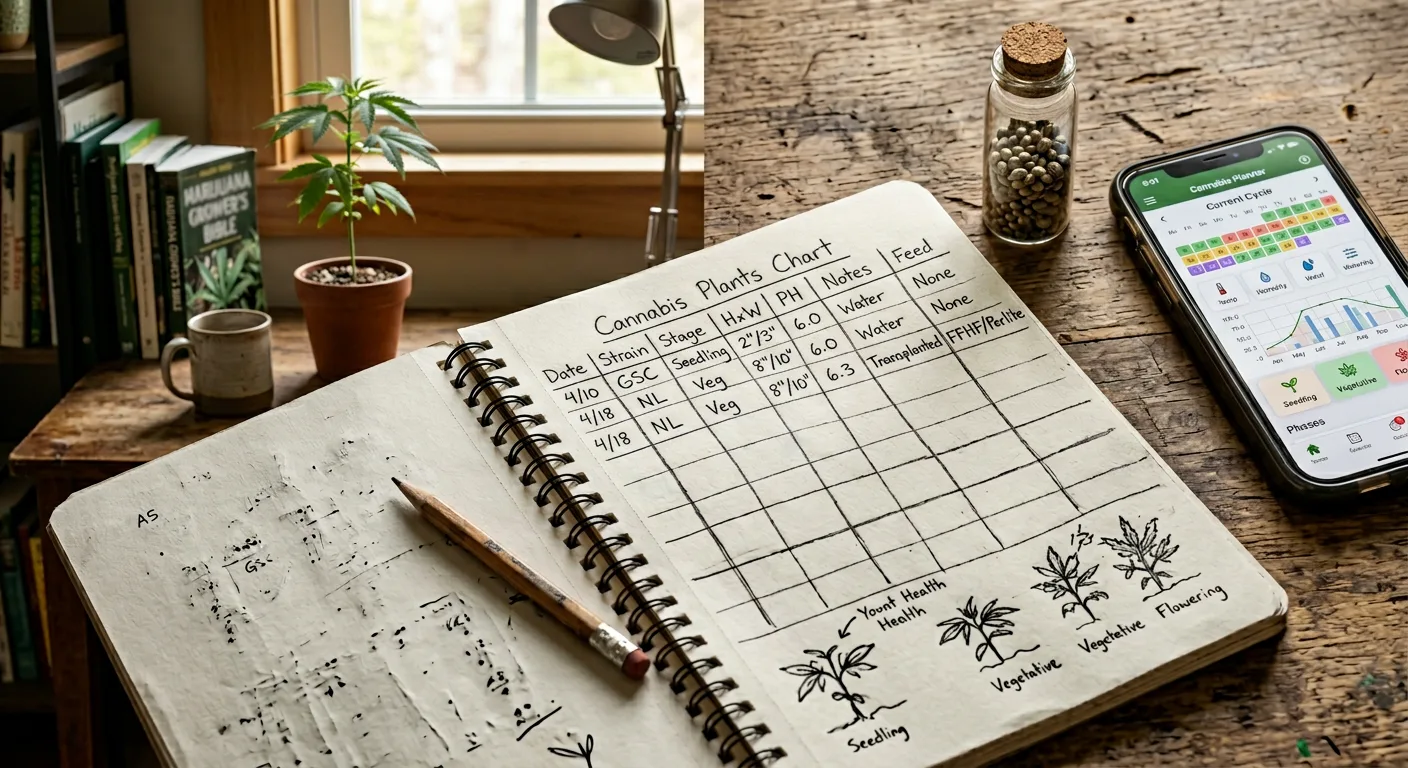
Knowing your state's plant limit is step one. Staying consistently within that limit through an entire grow cycle — from germination through harvest — requires a system.
Step 1: Know Your Exact Limit Before You Start
Identify Your Specific Limits
Look up your state's cultivation statute directly (not just a summary). Note the mature count, immature count, and whether the limit is per-person or per-household. Write these numbers down and post them in your grow space.
Count Every Living Rooted Plant
Unless your state explicitly excludes seedlings or immature plants from the count, assume every plant with a root system counts. Germinating seeds in paper towels do not count. A seed in a cup of water does not count. The moment a seedling breaks soil and develops roots, count it.
Track Maturity Transitions
If your state separates mature and immature plants, document when each plant enters flowering. A dated photo log works well for this. If you're ever questioned, you can demonstrate exactly when each plant crossed the maturity threshold.
Use a Grow Planner
A grow planner helps you schedule plant counts across time. Our free Grow Planner Tool lets you map out your entire cycle so you never accidentally exceed your legal count when juggling multiple plants at different stages.
Harvest or Remove Before Starting New Plants
In a perpetual harvest setup, it's tempting to start new seedlings before the current crop finishes. If you do this, all plants — those flowering and those just sprouted — count simultaneously toward your limit. Harvest and clear your space before germinating the next batch unless you've accounted for all plants in your legal count.
Perpetual Harvests and Staggered Growing
Many experienced growers run a perpetual harvest: always having one set of plants in veg and one in flower. This is perfectly legal as long as the total plant count across both groups stays within your limit. If you're in a 6-plant state, that might mean 3 in veg and 3 in flower simultaneously.
If you're planning a staggered operation, our Yield Estimator Tool can help you calculate how much you'll harvest per cycle and whether splitting your plant count between stages makes sense for your consumption needs.
Perpetual Harvest Tip: Autoflowering strains are ideal for staggered grows because they don't depend on light schedule changes to flower. You can run autos alongside photoperiod plants without light schedule conflicts. Check out our autoflower guide for beginners for a full breakdown.
How Many Seeds Should You Buy? A Plant-Count-Based Guide
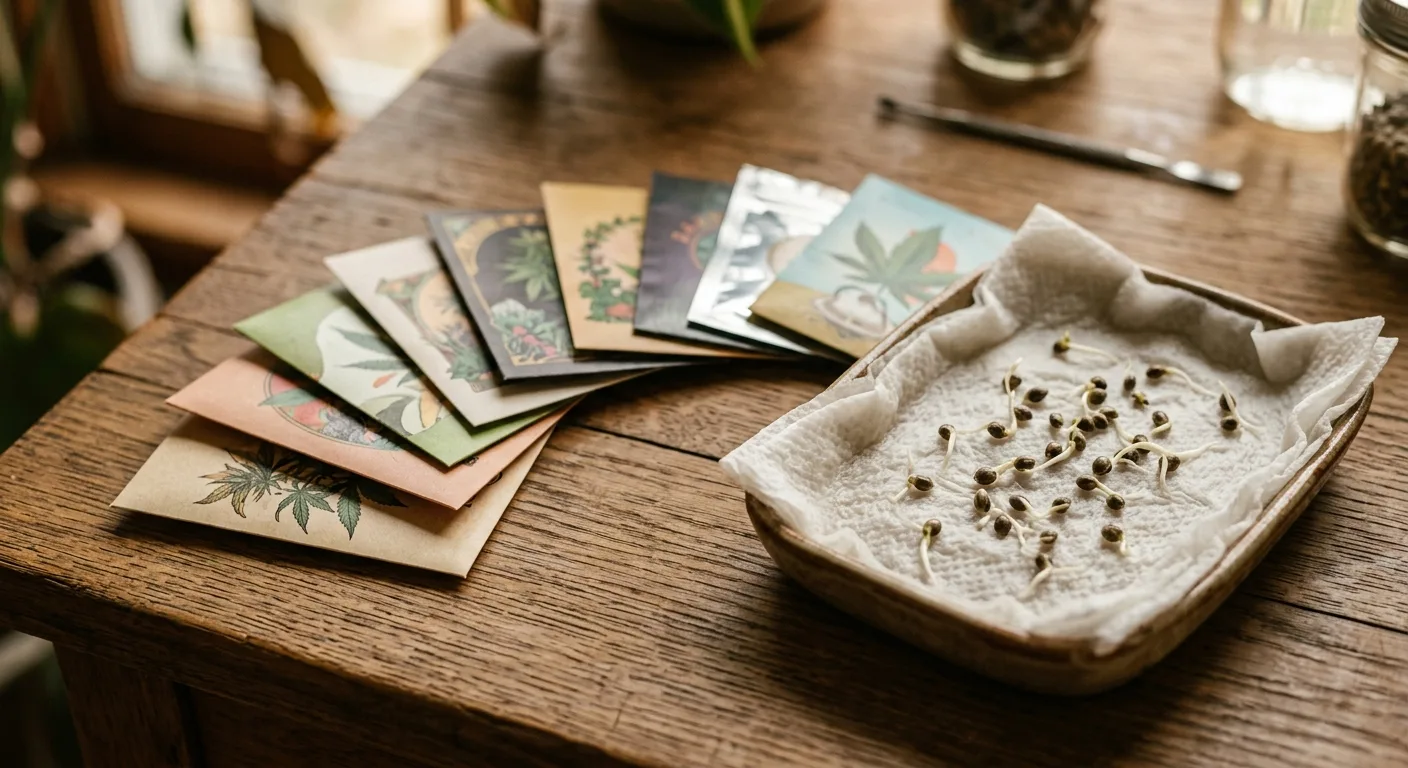
This is the question every home grower faces at the seed-buying stage — and the answer depends directly on your state's plant limit and the type of seeds you choose.
The Germination Rate Reality
No seed germinates at 100%. Even premium feminized seeds from reputable genetics have germination rates between 85% and 95% under ideal conditions. That means if you plant exactly 6 seeds in a 6-plant-limit state, you might end up with 5 plants — or even 4 if conditions aren't perfect.
The smart approach is to start more seeds than your target plant count, then cull down to your legal limit before they become countable mature plants. Here's the math by state limit:
| Your State's Plant Limit | Target Plants to Keep | Feminized Seeds to Buy | Regular Seeds to Buy |
|---|---|---|---|
| 2 plants (Maryland, Montana) | 2 | 4–5 seeds | 6–8 seeds |
| 3 plants (New York, Vermont, Missouri) | 3 | 5–6 seeds | 8–10 seeds |
| 4 plants (Oregon, Virginia) | 4 | 6–7 seeds | 10–12 seeds |
| 6 plants (California, Arizona, Nevada, Massachusetts) | 6 | 8–10 seeds | 14–18 seeds |
| 12 plants (Michigan) | 12 | 14–16 seeds | 24–30 seeds |
Feminized vs. Regular Seeds: The Plant Count Calculation
When your legal plant count is limited, feminized seeds are almost always the smarter choice. Here's exactly why:
- Feminized seeds produce female plants 95–99% of the time. No wasted plant count on males you'll throw away. If your limit is 6, you can realistically expect to keep all 6 of the plants you grow from feminized seeds.
- Regular seeds produce roughly 50% male and 50% female plants. To end up with 6 female plants, you'd need to start around 14–18 regular seeds, weed out males as they show sex (using precious time during your veg phase), and risk accidental pollination if you miss an early male.
- Autoflower feminized seeds combine guaranteed-female genetics with a time-based flower trigger — ideal for beginners or growers who want to maximize plant count efficiency without managing light schedules. See our autoflower vs. photoperiod guide for a deeper comparison.
When your legal plant count is limited, every plant that turns out male is a wasted slot. Feminized seeds protect your legal grow space by virtually eliminating male plants from the equation.
Recommended Strains for Limited-Count Grows
When you can only keep 3, 4, or 6 plants, strain selection becomes critical. You want high yield per plant, reliable performance, and genetics that reward the individual attention you'll give each one. Here are some strong options across different growing goals:
For maximum yield from a small plant count: Northern Lights × Big Bud is one of the most yield-focused crosses ever produced. It combines the legendary reliability of Northern Lights with the enormous bud mass of Big Bud — producing dense, resinous colas from just 3–4 plants. Our Northern Lights × Big Bud Feminized Seeds at 20% THC are an excellent choice for 6-plant state growers who want a serious harvest.
For potency in a 3-plant state: When you're limited to 3 plants, THC output per plant matters enormously. OG Kush Feminized Seeds (26% THC) and White Widow Feminized Seeds (25% THC) both produce exceptional quality from compact plant counts. Industry favorites like Gorilla Glue #4 and Wedding Cake also perform exceptionally in small-count grows with proper training.
For beginners in any state: Northern Lights × Amnesia Haze Feminized Seeds (24% THC) blends the forgiving, mold-resistant Northern Lights genetics with the soaring Amnesia Haze effect profile — a great all-rounder for first-time home growers working within plant limits. Classic beginner strains like Blue Dream and Gorilla Glue are also widely praised for their forgiving nature.
For stealth indoor grows under plant count pressure: Swiss Cheese Autoflower Seeds (17% THC) and Amnesia Haze Autoflower Seeds (17% THC) stay compact, finish fast (60–75 days from seed), and don't require light schedule management — perfect for discreet indoor setups where you want to maximize your legal count efficiently. Zkittlez auto is another popular choice among the autoflower crowd for its fruity flavor and manageable size.
For high-THC from a minimal plant count: Quantum Kush Feminized Seeds tops our catalog at 30% THC — one of the highest potency options available for home growers who want maximum return from fewer plants. Purple Kush Feminized Seeds (27% THC) is another exceptional high-THC option that thrives both indoors and outdoors.
Training Tip: When growing fewer plants, use high-stress training (HST) and low-stress training (LST) to maximize your yield from each individual plant. Techniques like topping and SCROG (Screen of Green) can multiply the output of a single plant significantly. Read our guide on topping cannabis plants to get started.
Planning Your Seed Order Around Your Legal Limit
Before you add seeds to your cart, run through this checklist:
- Confirm your state's current mature plant limit
- Confirm whether immature plants are counted separately
- Confirm whether the limit is per-person or per-household
- Decide how many plants you want to keep at maturity
- Add 30–40% extra seeds if buying feminized (to account for germination losses)
- Add 100%+ extra seeds if buying regular seeds (to account for males)
- Use the Grow Planner to map out your cycle before ordering
- Use the Yield Estimator to calculate expected harvest weight per plant
Understanding your home grow cannabis laws isn't just about staying legal — it's the foundation of planning an efficient, productive grow. Every decision, from strain selection to seed count to growing schedule, flows from knowing exactly how many plants you can legally keep. Get that number right first, and everything else gets easier.
For more on legal seed purchasing across the US, see our detailed guide: Are Cannabis Seeds Legal in the US? Complete 2026 Guide. If you're just starting out, our Complete Indoor Grow Tent Setup Guide walks through everything you need to build a legal, efficient home grow from scratch.
Frequently Asked Questions: Home Grow Cannabis Laws
How many cannabis plants can I legally grow at home?
It depends entirely on your state. Legal home grow limits range from 2 plants per person in states like Maryland and Montana to 12 plants per person in Michigan. The most common limit is 6 plants per adult or per household. Always verify your current state statute because laws change frequently, and local city or county ordinances may impose stricter limits than the state.
Do seedlings count toward my legal plant limit?
In many states, yes — all rooted plants count regardless of growth stage. However, roughly half of all legal home grow states distinguish between mature and immature plants and allow higher counts of seedlings or young plants. States like Colorado, Michigan, Maine, and Montana make this distinction. Check your state's specific definition of "mature" cannabis plant before starting extra seedlings.
Can I grow cannabis at home if I rent my apartment or house?
State law may permit home growing, but your landlord can legally prohibit it through your lease agreement. Even in fully legal recreational states, most standard apartment leases ban cannabis cultivation due to moisture damage risks, electricity concerns, and insurance issues. Always review your lease carefully and get written permission from your landlord before setting up any grow operation inside a rental property.
Which states allow home cannabis growing without a medical card?
As of 2026, states that allow recreational home growing without a medical card include Alaska, Arizona, California, Colorado, Connecticut, Delaware, Maine, Maryland, Massachusetts, Michigan, Minnesota, Missouri, Montana, Nevada, New Mexico, New York, Ohio, Oregon, Vermont, Virginia, and Washington D.C., among others. Some legal states like New Jersey and Washington State do not permit recreational home growing even though retail sales are legal.
How many seeds should I buy if my state limits me to 6 plants?
If your target is 6 mature plants, buy 8–10 feminized seeds to account for germination rates of 85–95%. If you're using regular seeds, buy 14–18 seeds to account for both germination losses and the roughly 50% of plants that will be male and need to be removed. Feminized seeds are strongly recommended for limited-count grows because they virtually eliminate wasted plant slots from male plants.