Something seismic happened on April 1, 2026 — and it was no joke. For the first time in the program's 60-year history, Medicare hemp CBD coverage 2026 became a reality, with the federal government officially authorizing reimbursement for hemp-derived CBD and trace-THC products for eligible seniors.
Within days, the pharmaceutical lobby and drug-safety advocacy groups filed legal challenges. The courtroom battles are just beginning. And for the 65 million Americans on Medicare — many of whom are already quietly using CBD for arthritis, chronic pain, and sleep — this policy shift carries enormous practical weight.
But here's the angle most coverage is missing entirely: this moment also validates a growing movement among older, budget-conscious Americans who are choosing to grow their own high-CBD cannabis at home rather than pay retail prices — even with a $500 annual benefit on the table. Let's unpack everything.
What Exactly Changed: The Medicare Hemp Policy Explained
Starting April 1, 2026, Medicare beneficiaries can receive up to $500 annually in coverage for qualifying hemp-derived products through a pilot program integrated into existing Medicare services. The program applies to products that meet federal hemp standards — meaning they contain no more than 0.3% Delta-9 THC by dry weight — and are sold by participating, vetted vendors.
The policy change arrived through two parallel tracks. First, the Centers for Medicare & Medicaid Services (CMS) revised coverage language to include "cannabis products legal at both the state and federal level." Second, FDA Commissioner Marty Makary issued a memo in late March 2026 indicating the agency would no longer enforce existing prohibitions on oral CBD products, clearing the regulatory runway for CMS to act.
This isn't full marijuana legalization under Medicare. It's a carefully scoped pilot covering federally legal hemp products — those under 0.3% THC — up to $500 per year per beneficiary. Think CBD oils, hemp-based capsules, and topicals from vetted suppliers.
Which Hemp Products Are Eligible for Medicare Reimbursement?
The pilot program specifies a narrow but meaningful product category. To qualify for Medicare hemp reimbursement, a product must be:
- Derived from U.S.-grown, federally compliant hemp (≤0.3% Delta-9 THC)
- Manufactured by a participating vendor with third-party lab testing on file
- An oral or topical formulation — not smoked or vaped products
- Recommended by a Medicare-enrolled healthcare provider
- Used for a documented condition such as chronic pain, inflammation, or sleep disorders
Products excluded from coverage include any full-spectrum extracts that exceed the 0.3% THC threshold, smokable hemp flower, vape cartridges, and edibles that don't meet pharmaceutical-grade labeling standards. The $500 annual cap applies to the retail cost of covered products before any co-pay structure is applied.
What About Hemp-Derived THC Products?
This is where it gets nuanced. The NORML-reported guidance confirmed that hemp-derived THC — meaning trace amounts of Delta-9 and cannabinoids like Delta-8 or Delta-10 that exist within the 0.3% legal threshold — can be present in covered products. The policy does not exclude full-spectrum hemp extracts simply because they contain minor THC. It excludes products that exceed the 0.3% limit.
Full-spectrum hemp extracts contain a complete cannabinoid profile including trace THC, CBG, CBN, and terpenes. The "entourage effect" — where cannabinoids work synergistically — is a key reason many CBD users prefer full-spectrum over isolate products. Medicare's policy doesn't explicitly block these products, which is partly why the lawsuits focus on the THC language.
Why the Lawsuits Are Already Flying
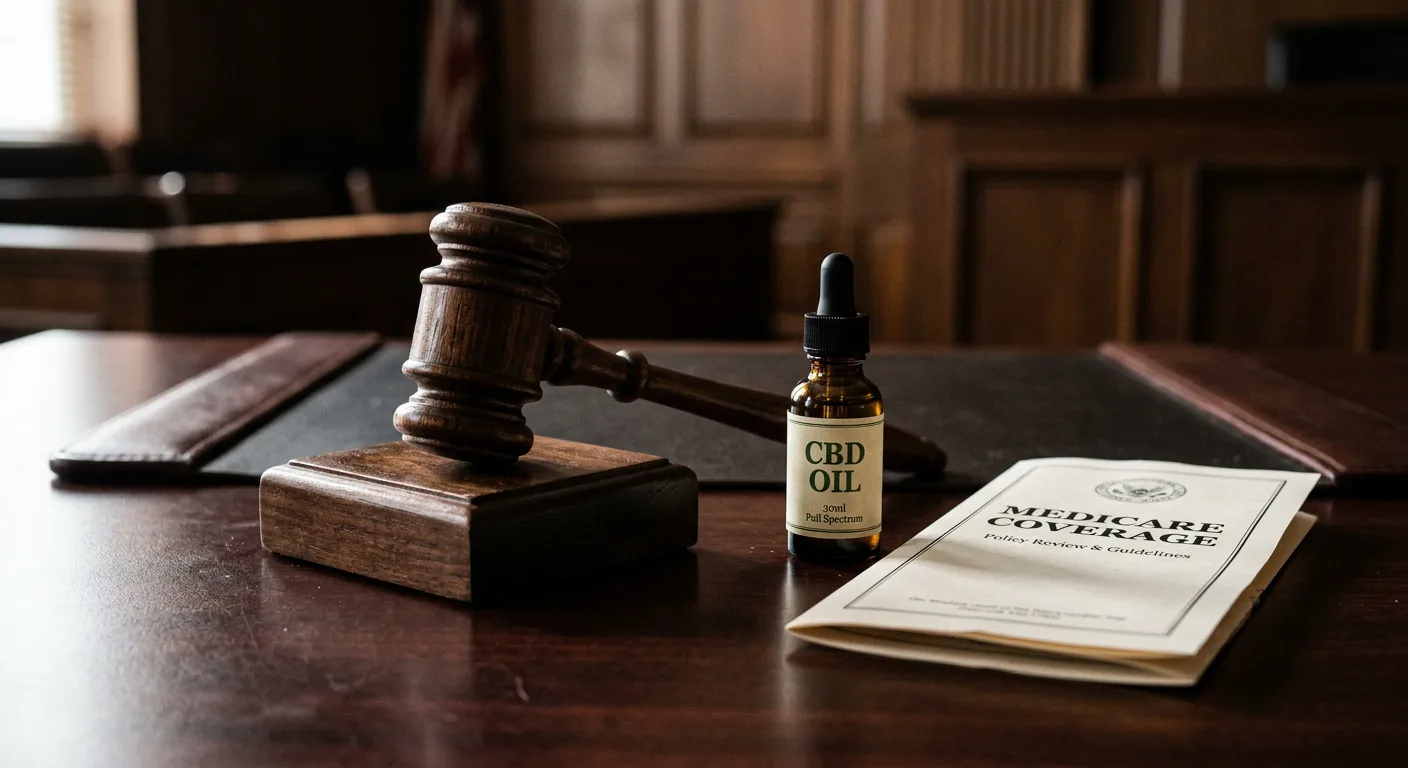
Three separate legal challenges were filed within the first two weeks of the program's launch. Understanding who is suing — and why — tells you everything about the political economy of this policy shift.
The Pharmaceutical Industry's Objection
Major pharmaceutical companies and their lobbying arms argue that allowing Medicare to cover hemp CBD products without the FDA's full drug-approval process sets a dangerous precedent. Their core legal argument: the FDA has never approved CBD as a drug for the conditions covered under this program, and CMS lacks the authority to reimburse for unapproved drug substances under the Social Security Act.
The subtext here is competitive threat. Epidiolex, the only FDA-approved CBD medication (used for rare forms of epilepsy), commands a retail price north of $32,000 per year. Hemp CBD products achieving similar outcomes at $500 or less per year represent an existential pricing challenge.
Drug Safety Group Arguments
Groups like the Coalition for Cannabis Policy, Education, and Regulation (CPEAR) take a different angle. Their challenge focuses on consumer protection: without standardized dosing, manufacturing controls equivalent to pharmaceutical GMP standards, and peer-reviewed clinical trial data, they argue that Medicare is effectively endorsing an unproven health intervention for a vulnerable population.
Legal Status Note: The Medicare hemp pilot program is currently active as of this writing (April 2026), but legal challenges may pause or restructure the program. Check with your Medicare plan administrator for the most current enrollment and coverage details before purchasing products expecting reimbursement.
Insurance Industry Pushback
Private Medicare Advantage insurers — who administer benefits for over 30 million seniors — are resisting implementation on cost grounds. Some plans have announced they won't incorporate the hemp benefit until the legal challenges are resolved, effectively leaving their enrollees without access to the $500 benefit that traditional Medicare beneficiaries can theoretically access.
The lawsuits aren't just legal noise — they could pause or significantly restructure the program. The pharmaceutical industry has deep pockets and strong precedent arguments. The outcome over the next 12-18 months will define whether Medicare hemp CBD coverage becomes permanent or a brief policy experiment.
What This Signals for Federal Cannabinoid Legitimacy
Step back from the legal skirmishes and the policy significance becomes clear. This is the first time the federal government has formally acknowledged hemp-derived cannabinoids as having legitimate health utility worth public insurance dollars. That's a threshold moment — even if the program is narrow and litigated.
The FDA's non-enforcement memo on oral CBD products is equally significant. It signals that the agency is no longer treating CBD as an illegal drug substance in functional terms, even without formal rescheduling or congressional action. Combined with the DEA's 2024 proposed rule to move cannabis to Schedule III, the federal posture toward cannabinoids has shifted more in the last 18 months than in the previous 50 years.
"For the first time, a federal health agency is spending public money on cannabinoid therapy. Whatever the courts decide about this specific program, that genie does not go back in the bottle."
For the broader cannabis industry — including hemp farmers, CBD brands, and medical cannabis dispensaries — this moment represents regulatory tailwind they haven't experienced before. And for everyday people managing chronic conditions, it signals that the decades-long battle to have cannabinoids taken seriously as medicine is reaching a tipping point.
The Real Math: Does the $500 Benefit Actually Cover Your CBD Needs?
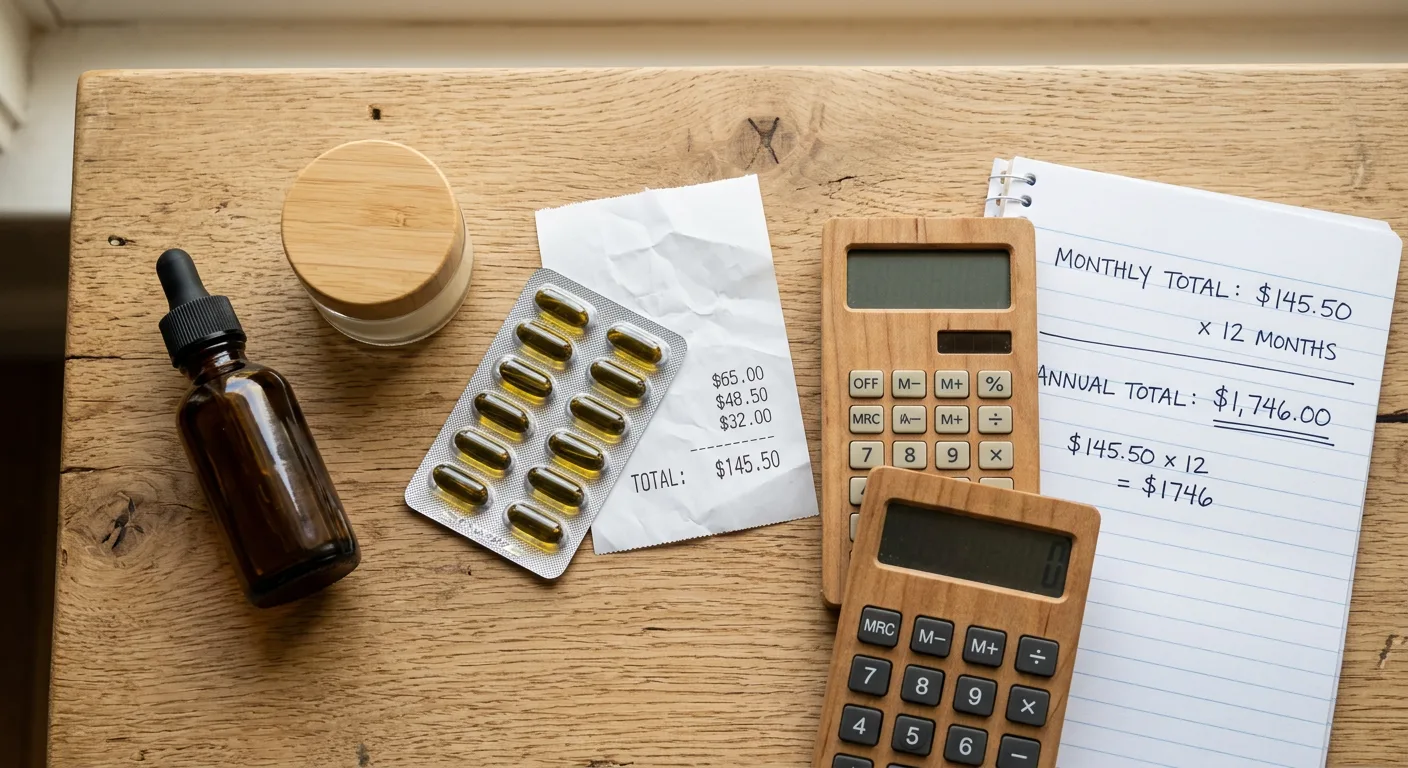
Let's get practical. High-quality CBD products aren't cheap, and $500 annually sounds generous until you price out what consistent therapeutic use actually costs.
| CBD Product Type | Typical Monthly Cost | Annual Cost | Covered by $500 Benefit? |
|---|---|---|---|
| CBD Oil (1,000mg, full-spectrum) | $40–$70 | $480–$840 | Partially to fully |
| CBD Capsules (25mg x 30ct) | $50–$80 | $600–$960 | Partially |
| CBD Topical Cream (arthritis use) | $35–$60/month | $420–$720 | Mostly covered |
| Full-Spectrum Tincture (2,500mg) | $80–$130 | $960–$1,560 | One-third covered |
| Home-Grown CBD Flower (annual yield) | $5–$15 (utilities) | $60–$180 total | N/A — you own it |
For moderate CBD users, the $500 benefit might genuinely cover the bulk of their annual spend. But for people who use higher doses — common for serious chronic pain or severe arthritis — the benefit barely covers half a year's supply at premium retail prices.
Pro Tip: Even if you qualify for Medicare hemp reimbursement, the $500 cap resets annually and only applies to participating vendors. If your preferred brand isn't in the program, you're still paying out of pocket. Use our Grow Cost Calculator to see exactly what a home grow costs compared to retail CBD purchase over 12 months.
Growing Your Own High-CBD Cannabis: The Cost-Saving Strategy Medicare Overlooked
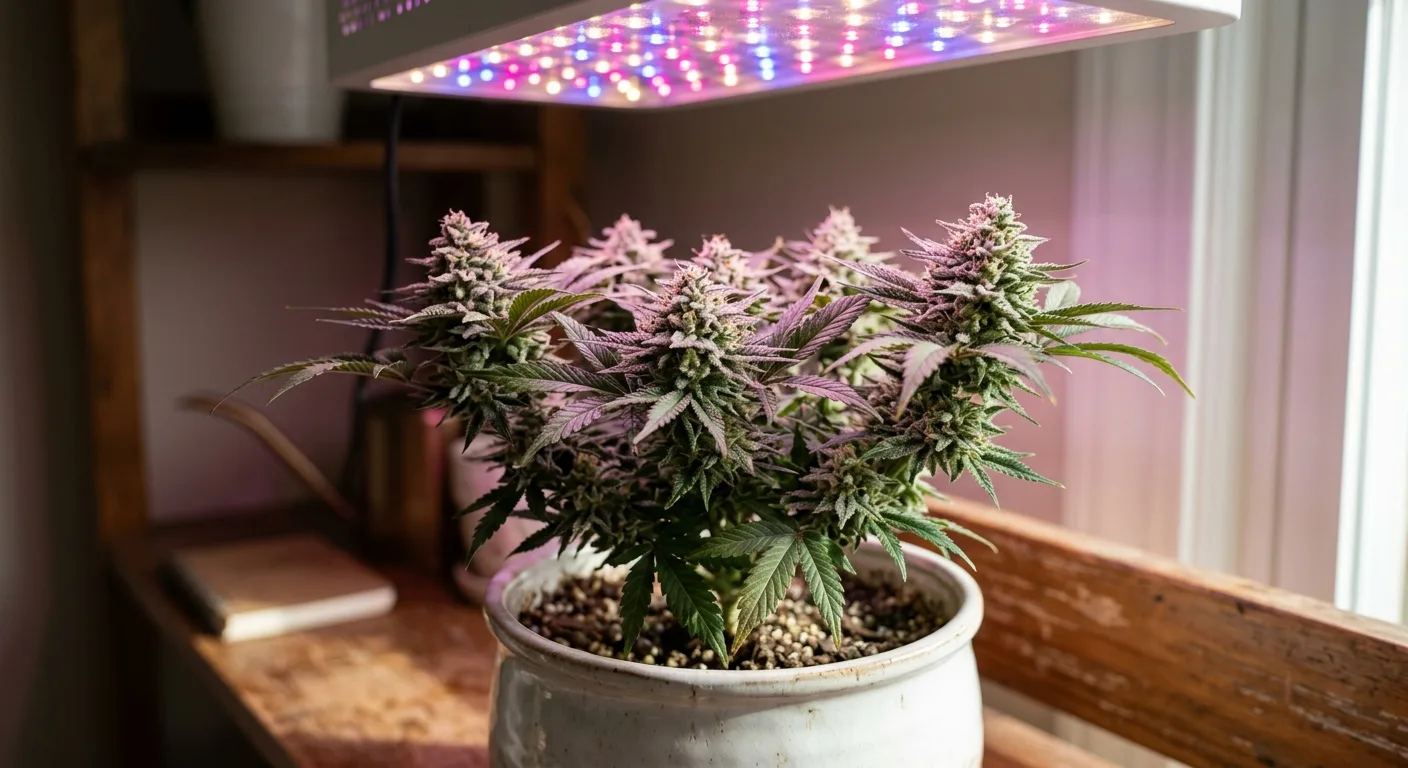
Here's where the policy conversation intersects with practical home cultivation. The $500 Medicare benefit validates the health use case for CBD — but it doesn't solve the cost problem for fixed-income seniors who need consistent, high-dose cannabinoid therapy. Growing your own does.
A single feminized high-CBD cannabis plant, grown indoors under modest conditions, can yield 60–120 grams of dried flower per harvest. At three harvests per year (feasible with autoflowering genetics), that's up to 360 grams annually — enough to produce several liters of CBD oil or tincture, hundreds of capsules, or a year's supply of topical preparations.
Best High-CBD Strains Worth Growing in 2026
Selecting the right genetics is the most important decision a home CBD grower makes. Not all "CBD strains" are equal — the cannabinoid ratio, terpene profile, and ease of cultivation matter enormously. Here are the strains most relevant to therapeutic home growing:
- Charlotte's Web — The strain that launched the modern CBD movement. Roughly 20:1 CBD:THC ratio, used widely for inflammation and seizure management. Not widely available as feminized seeds but worth seeking from licensed hemp seed suppliers.
- ACDC — A phenotype of Cannatonic with CBD levels reaching 20%+ and THC rarely above 1%. Earthy, woody terpene profile. Excellent for daytime pain management without psychoactive effects.
- Harlequin — One of the most studied CBD strains, typically running 5:2 CBD:THC. Mild sativa dominance makes it functional for daytime use. Strong myrcene and caryophyllene profile supports anti-inflammatory benefits.
- Ringo's Gift — A cross between ACDC and Harle-Tsu. Can reach ratios as high as 24:1 CBD:THC. Reliable for anxiety and chronic pain. Medium height and manageable in indoor grows.
- Cannatonic — The genetic backbone of much of the modern medical CBD breeding world. Balanced 1:1 to 20:1 ratios depending on phenotype. Moderate yield, robust terpene expression.
For Home Growers: If you want a balanced approach — some CBD benefit with mild psychoactive relaxation for sleep and pain — consider strains in the 1:1 to 5:1 CBD:THC range. They're easier to find as stable feminized seeds and often produce higher yields than ultra-high-CBD varieties. Check our guide on Cannabis for Chronic Pain for detailed cannabinoid profiles by condition.
What If You Want Therapeutic Effects Plus Some THC?
Some Medicare-age growers aren't looking for zero psychoactivity — they want the full entourage effect for serious pain conditions. For those growers, strains with moderate THC and meaningful CBD content offer the best of both worlds, particularly for nighttime use.
Our Swiss Miss Feminized Seeds run at around 15% THC with notable secondary cannabinoid expression and a calming terpene profile that works well for evening pain relief. Purple Power Feminized Seeds offer a milder 10% THC alongside distinctive anthocyanin content — the same pigments that give berries their anti-inflammatory properties. For sleep specifically, our Cannabis for Insomnia guide covers the full cannabinoid and terpene stack that drives sedation.
For growers who prioritize ease over maximum CBD ratio, autoflowering genetics make the process significantly more accessible. Our guide to Autoflower Seeds for Beginners walks through why autoflowers are ideal for the home medical grower: faster cycles (60–75 days), smaller footprints, and no need to manage light schedules.
The Home Grow Math: CBD Oil From Seed to Bottle
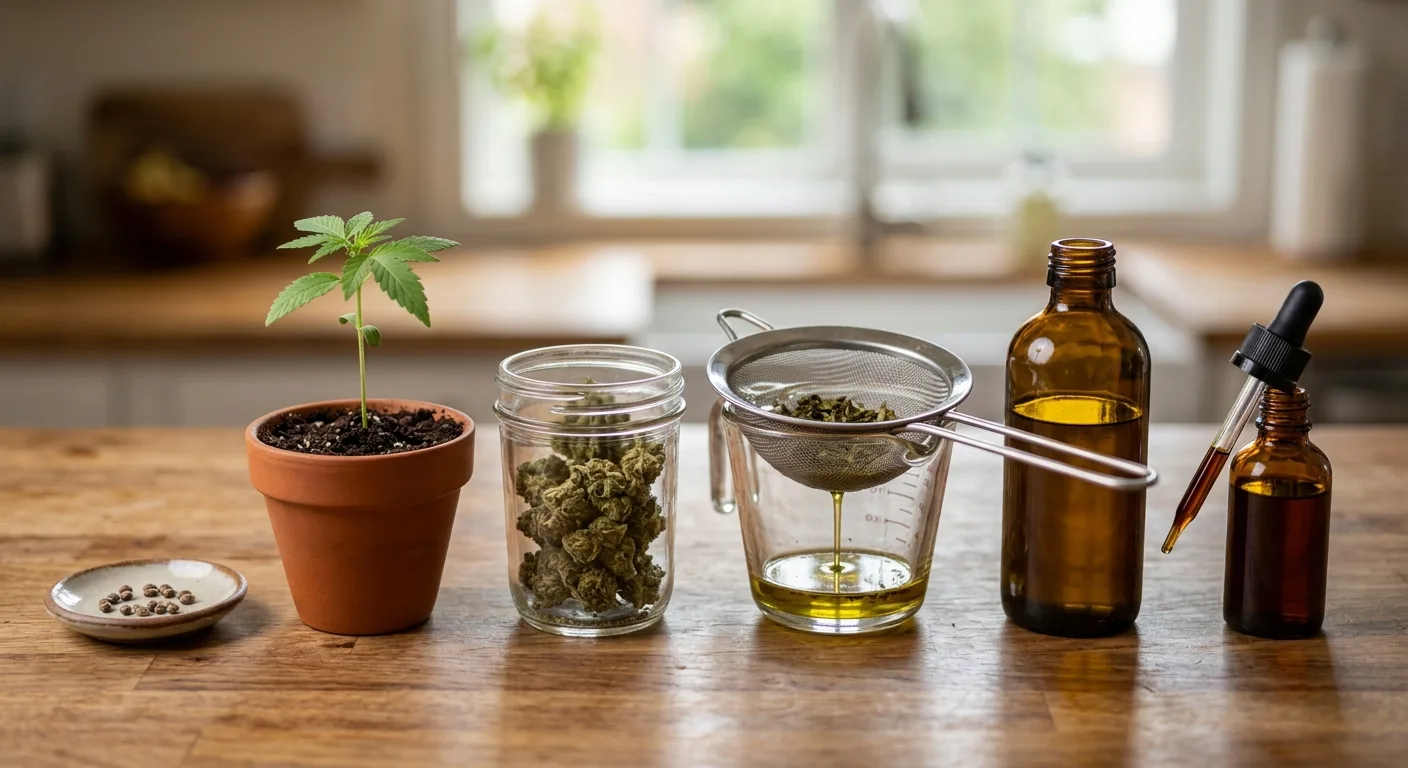
Let's run the actual numbers so this stops being theoretical. Assume you're a Medicare beneficiary in a state where home cultivation is legal, and you want a consistent supply of CBD-rich oil for arthritis or chronic pain.
Seed Investment
A pack of quality feminized high-CBD seeds typically runs $40–$80 for 5–10 seeds. Assuming 80% germination and one plant per grow cycle, your seed cost per harvest is roughly $8–$16.
Grow Setup
A basic 2x2 grow tent setup with LED lighting and ventilation costs $150–$300 upfront and lasts 3–5 years. Amortized over 10 harvests, that's $15–$30 per harvest. Our Indoor Grow Tent Setup Guide covers every component with cost breakdowns.
Operating Costs
Electricity for a 2x2 tent with a 200W LED runs approximately $15–$25/month. Nutrients, soil, and water add another $10–$20/month. Total operating cost per 10-week grow: $60–$90.
Yield to Oil Conversion
A single high-CBD plant yielding 80 grams of dried flower can produce approximately 400–600mL of CBD-infused oil at home using simple olive oil extraction. Retail equivalent value: $200–$400. Use our Yield Estimator to project your specific setup's output.
Annual Total vs. Medicare Benefit
Three harvests per year at $75 average operating cost = roughly $225 in annual growing costs. Retail CBD equivalent produced: $600–$1,200. Medicare covers up to $500 of retail products — your home grow beats that value by 2–5x at a fraction of the cost.
The Medicare $500 hemp benefit is meaningful — but home cultivation can produce 2–5x that value in CBD products for under $250/year in operating costs. For fixed-income seniors on Medicare, growing your own isn't just a hobby. It's a legitimate healthcare cost-reduction strategy.
Know the Legal Landscape Before You Grow
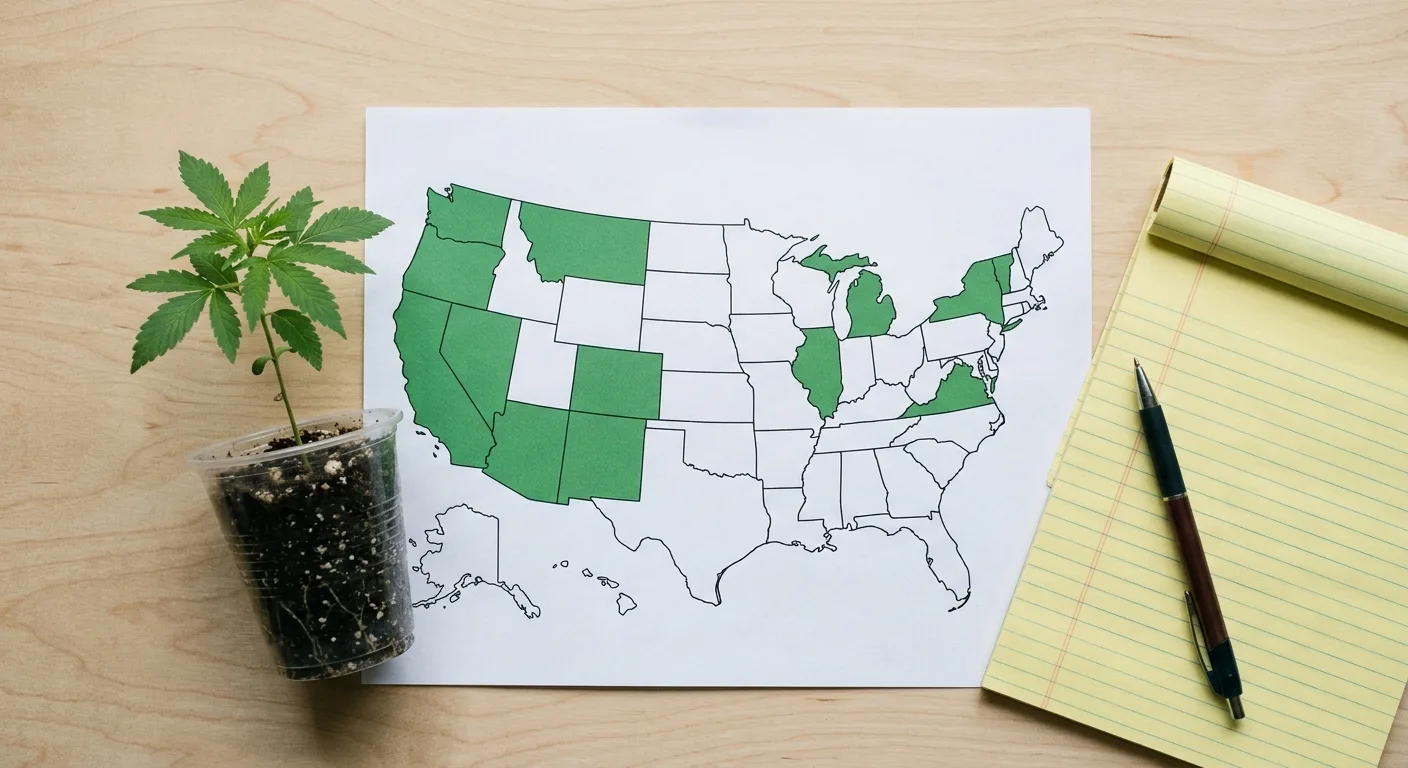
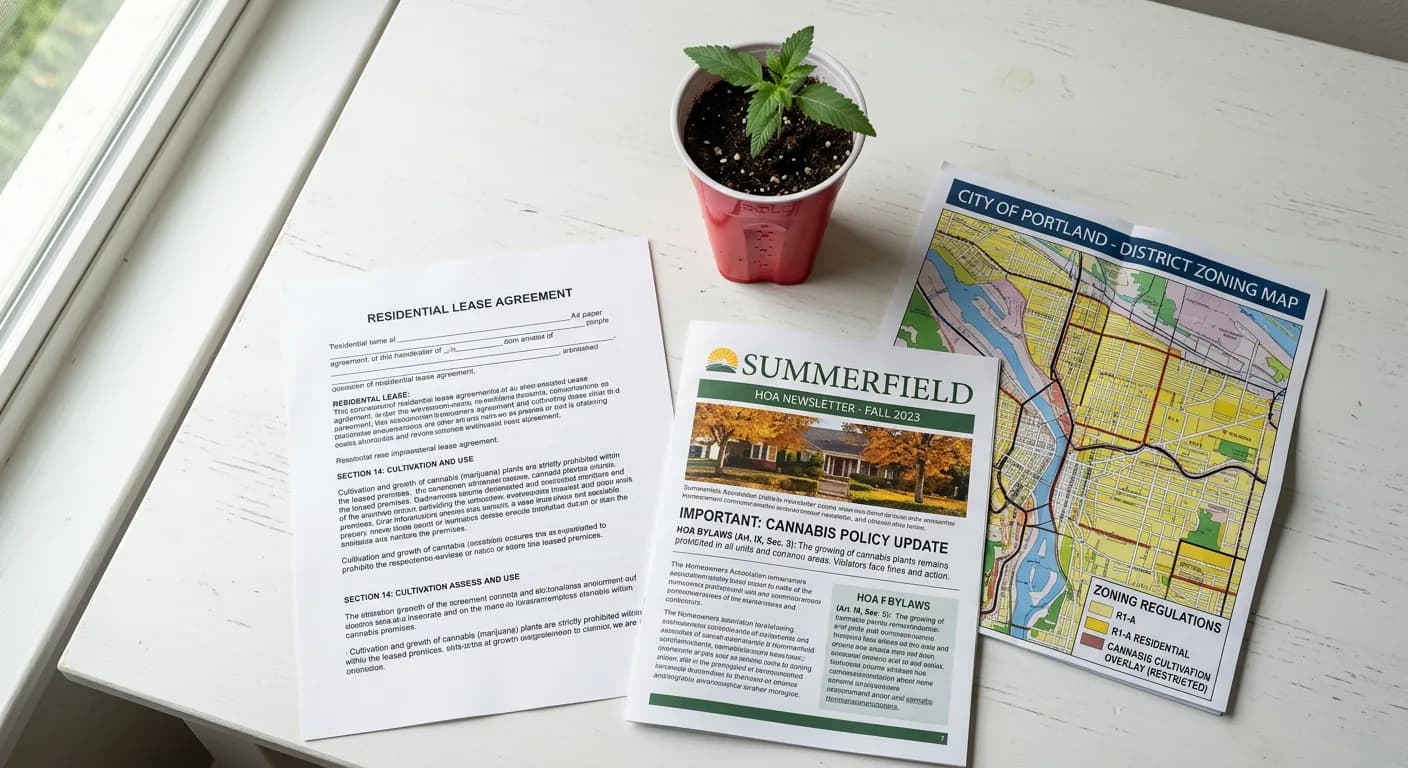
The Medicare hemp coverage policy applies to products you purchase — it says nothing about home cultivation. And home grow legality remains entirely a state law question.
As of 2026, over 20 states permit home cultivation for recreational or medical purposes, with plant limits typically ranging from 2 to 12 plants per household. States like Colorado, Michigan, Oregon, and California have long allowed personal grows. Others, including Florida and Texas, still prohibit home cultivation regardless of the federal hemp landscape.
Know Your State Laws: Federal hemp policy does NOT override state home cultivation restrictions. Growing cannabis plants at home — even low-THC, CBD-dominant varieties — may be illegal in your state. Always verify your local and state laws before starting a home grow. Our 2026 Cannabis Seed Legality Guide has state-by-state breakdowns.
It's also worth noting that hemp seeds — those sold specifically for growing hemp with verified low-THC genetics — occupy a different legal category than cannabis seeds in some states. The 2018 Farm Bill legalized the sale and transport of hemp seeds federally, which has created an opening for home hemp cultivation separate from state cannabis laws in certain jurisdictions.
Practical Strain Selection for the Older Home Grower
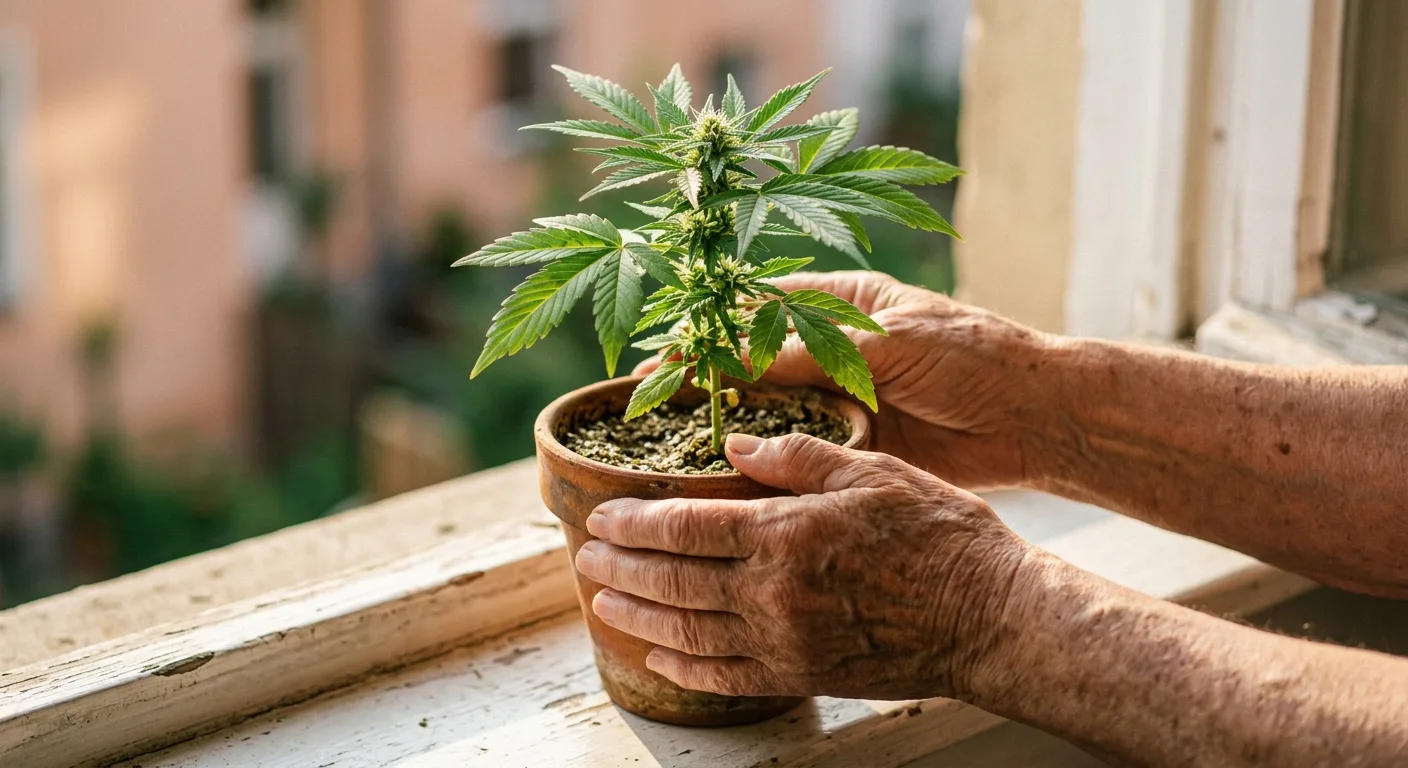
Seniors new to home cultivation have specific needs that differ from younger, recreational growers. Strains should prioritize easy management, forgiving growing profiles, and therapeutic cannabinoid/terpene combinations.
- Choose autoflowering genetics — no light schedule management required
- Look for mold and pest resistance in the strain description
- Prioritize compact height (under 80cm) for apartment or small-space grows
- Target strains with myrcene and beta-caryophyllene as dominant terpenes for anti-inflammatory effects
- Select feminized seeds to eliminate male plants and maximize yield certainty
- Use pre-mixed quality soil to simplify nutrient management — see our Best Soil for Cannabis Beginners Guide
- Start with a single plant before scaling — simpler legally and practically
- Use our Grow Planner Tool to map your harvest timeline from seed to harvest
The terpene beta-caryophyllene deserves special attention for this audience. It's the only terpene known to directly bind to CB2 receptors — the same receptors involved in immune response and inflammation. Strains rich in this terpene (look for descriptions of spicy, peppery, or woody aromas) amplify CBD's anti-inflammatory properties in ways that pure CBD isolate products simply cannot match. It's a key reason why home-grown full-spectrum flower consistently outperforms retail CBD isolate for arthritis management, even at lower CBD concentrations.
The endocannabinoid system responds to the full spectrum of plant compounds — cannabinoids, terpenes, and flavonoids together. This "entourage effect" is why whole-plant preparations from home-grown flower often outperform isolated CBD extracts at equivalent or lower doses. Medicare's covered products are predominantly isolate or broad-spectrum — home-grown full-spectrum flower is a step above, therapeutically speaking.
What Comes Next: The Future of Federal Hemp Health Coverage

Regardless of how the current lawsuits resolve, the Medicare hemp pilot program has permanently shifted the political and regulatory conversation. Several developments are worth watching over the next 12–24 months.
- Medicaid expansion: If the Medicare pilot survives legal challenge, advocates will push to extend hemp coverage to Medicaid, potentially reaching lower-income patients who can't afford even the current $500 benefit's co-pay structure
- FDA drug approval pathway: The agency has signaled openness to a new regulatory framework for CBD that doesn't require full pharmaceutical trial costs — this could dramatically expand the range of covered products
- Private insurance adoption: Some Medicare Advantage plans are already exploring voluntary hemp benefit riders. Commercial insurers are watching closely
- Schedule III rescheduling impact: If the DEA finalizes cannabis rescheduling to Schedule III, the entire conversation expands from hemp-derived CBD to medical cannabis more broadly
- Home cultivation acknowledgment: Long-term, advocates are pushing for Medicare or Medicaid frameworks that acknowledge home cultivation as a cost-effective self-care strategy — similar to how some plans cover gym memberships
The direction of travel is clear even if the road is bumpy. Federal health policy is slowly, grudgingly acknowledging that tens of millions of Americans are already using cannabinoids for health management — and that ignoring that reality costs the healthcare system more in the long run than engaging with it thoughtfully.
Stay Ahead of the Policy Curve: Use our Plant Diagnosis Tool to troubleshoot any issues with your CBD home grow, and our Edible Dosage Calculator if you're making CBD-infused oils or edibles from your harvest. Both tools are free and built for home growers of all experience levels.
The Bottom Line: Coverage Is a Start, Growing Is the Strategy
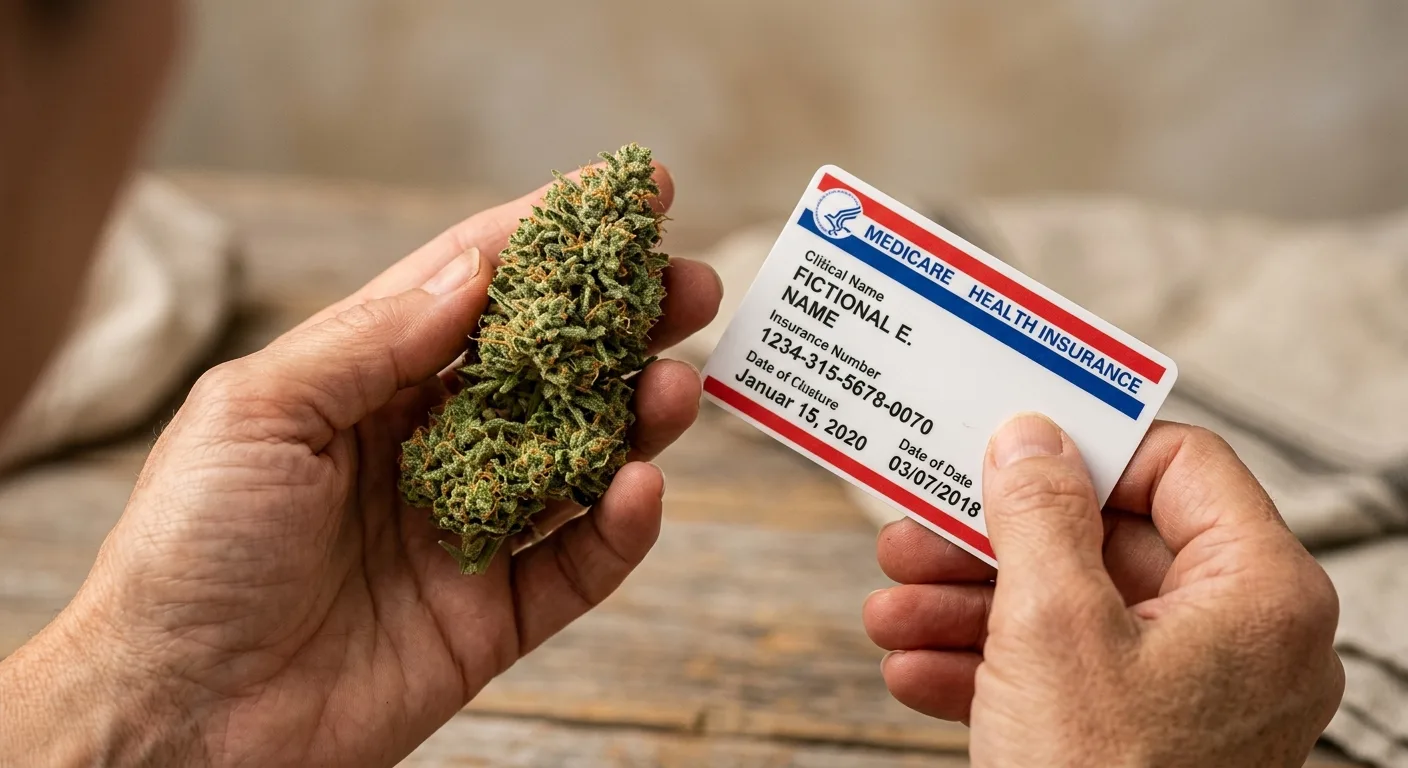
Medicare hemp CBD coverage in 2026 is a genuine milestone — politically, symbolically, and practically for the seniors who will use that $500 benefit. But it's a floor, not a ceiling. The benefit is capped, legally contested, restricted to specific vendors, and may not cover the products or doses that work best for your specific condition.
Home cultivation of high-CBD cannabis strains — where legal — offers something the Medicare program never can: complete control over your supply, your dose, your cannabinoid profile, and your cost. A well-managed home grow produces therapeutic-grade CBD material at a fraction of retail cost, with the full-spectrum entourage effect that retail CBD products rarely achieve.
Whether you're monitoring the lawsuit developments, planning to use your Medicare benefit, or considering your first home grow, the message from this policy moment is the same: cannabinoids are legitimate medicine, the federal government is starting to admit it, and the most empowering thing you can do is understand your options fully.
Explore our guide to Best Cannabis Strains for Sleep and our deep dive into Cannabis for Chronic Pain to start building your therapeutic grow plan today.
Frequently Asked Questions
Does Medicare cover CBD in 2026?
Yes, as of April 1, 2026, Medicare offers up to $500 annually in coverage for qualifying hemp-derived CBD and trace-THC products through a new pilot program. Products must come from federally compliant U.S.-grown hemp (≤0.3% THC), be recommended by a Medicare-enrolled provider, and be purchased through participating vendors. Legal challenges are active and may affect program availability — check with your plan administrator.
What hemp products does Medicare cover?
Medicare's pilot program covers oral and topical hemp-derived products including CBD oils, tinctures, capsules, and topical creams from participating vendors with third-party lab testing. Smokable hemp flower, vape products, and edibles that don't meet labeling standards are excluded. The $500 annual benefit applies to the retail cost before co-pays.
Why are there lawsuits against Medicare's hemp CBD coverage program?
Three categories of challengers have filed suits: pharmaceutical companies argue that CMS lacks authority to reimburse for FDA-unapproved drug substances; drug safety groups argue there's insufficient clinical trial data to protect the vulnerable senior population; and private Medicare Advantage insurers are resisting implementation on cost grounds. Courts are expected to rule within 12–18 months.
Is it legal to grow high-CBD cannabis at home to save on healthcare costs?
Home cultivation legality is entirely determined by state law. Over 20 U.S. states permit some form of home cannabis cultivation as of 2026, with plant limits typically between 2 and 12 plants. The federal Medicare hemp policy does not address home growing. Always verify your specific state and local laws before starting a home grow. See our 2026 Cannabis Seed Legality Guide for state-by-state details.
How much CBD can I produce from a home grow compared to the $500 Medicare benefit?
A single high-CBD feminized plant in a basic indoor setup can yield 60–120 grams of dried flower, producing approximately 400–600mL of CBD-infused oil — with a retail equivalent value of $200–$400. Three harvests per year can produce $600–$1,200 worth of CBD material at an operating cost of roughly $225 annually, significantly exceeding the $500 Medicare benefit value at a fraction of the cost.