Roughly 700,000 cancer patients receive chemotherapy in the United States every year, and up to 80% of them experience nausea or vomiting despite modern antiemetic drugs. That single statistic explains why cannabis for nausea has become one of the most researched therapeutic applications of the plant—and why the FDA approved a synthetic THC drug (dronabinol) for this exact purpose back in 1985.
But synthetic cannabinoids only tell half the story. Whole-plant cannabis delivers a cocktail of THC, CBD, and terpenes that work together through the entourage effect, often outperforming single-molecule solutions. Below, we break down the science, rank the 12 best strains for nausea, and give you practical dosing and timing advice so you can find real weed nausea relief.
How Cannabis Fights Nausea: CB1, CB2 & the Vomiting Reflex
Cannabis reduces nausea and vomiting primarily by activating CB1 receptors in the brainstem's dorsal vagal complex—the body's "vomiting center." THC mimics the endocannabinoid anandamide, dampening serotonin (5-HT3) signals that trigger the emetic reflex before they reach conscious awareness.
The endocannabinoid system (ECS) acts as a gatekeeper for nausea signals. Two receptor types matter most:
- CB1 receptors — concentrated in the brainstem, gut, and vagus nerve. THC binds here to suppress both nausea (the queasy sensation) and emesis (active vomiting).
- CB2 receptors — found mainly in immune cells and the GI tract. CBD and beta-caryophyllene interact with CB2 to reduce gut inflammation that fuels chronic nausea.
A 2011 British Journal of Pharmacology review showed that low-dose THC reduces conditioned nausea in animal models by up to 50%, while CBD at higher doses (10–20 mg/kg) suppresses toxin-induced vomiting through a different pathway—5-HT1A serotonin receptors. This is why CBD THC nausea combinations often outperform either cannabinoid alone.
Science insight: Cannabidiolic acid (CBDA)—the raw, unheated form of CBD—shows even stronger anti-nausea activity than CBD itself in preclinical research. Juicing raw cannabis leaves or using low-temperature tinctures preserves CBDA, making them worth exploring for severe nausea.
Types of Nausea Cannabis May Help (And One It Won't)

Cannabis can address multiple nausea types including chemotherapy-induced, motion-related, and migraine-associated nausea. However, Cannabinoid Hyperemesis Syndrome (CHS) is one critical exception where cannabis actually causes the nausea rather than relieving it.
Nausea Conditions Where Cannabis Shows Promise
- Chemotherapy-induced nausea (CINV) — The most studied application. Cannabis nausea chemotherapy research dates back to the 1970s, and dronabinol remains FDA-approved for CINV that resists standard antiemetics.
- Post-operative nausea — Early clinical data suggests inhaled cannabis reduces post-surgery nausea faster than oral antiemetics.
- Migraine-associated nausea — Up to 90% of migraine sufferers report nausea. Strains rich in myrcene and linalool address both the headache and the stomach distress. See our guide to the best strains for migraines for deeper coverage.
- GI conditions — Crohn's disease, IBS, and gastroparesis patients frequently report nausea relief from moderate-THC strains.
- Morning sickness — While some women historically used weed for morning sickness, current medical guidelines strongly advise against it due to potential fetal development risks. No major medical organization recommends cannabis during pregnancy.
Warning — Weed for Morning Sickness: Despite anecdotal reports, the American College of Obstetricians and Gynecologists (ACOG) advises against all cannabis use during pregnancy. THC crosses the placental barrier and may affect fetal brain development. Discuss safer antiemetic options with your OB-GYN.
Cannabinoid Hyperemesis Syndrome (CHS): When Cannabis Causes Nausea
Cannabis for CHS nausea is a contradiction—because CHS is caused by chronic, heavy cannabis use itself. Symptoms include cyclical vomiting, abdominal cramping, and the hallmark behavior of compulsive hot showering for relief. If you use cannabis daily and experience worsening nausea, CHS should be on your radar.
- CHS typically affects daily users consuming high-THC cannabis for 1+ years.
- The only proven treatment is complete cannabis cessation.
- Hot water bathing provides temporary relief by activating TRPV1 receptors—the same receptors that capsaicin targets.
If you suspect CHS, stop all cannabis products and see a healthcare provider immediately. More cannabis will not fix CHS—it will make it worse.
The Role of Terpenes in Anti-Nausea Cannabis Strains
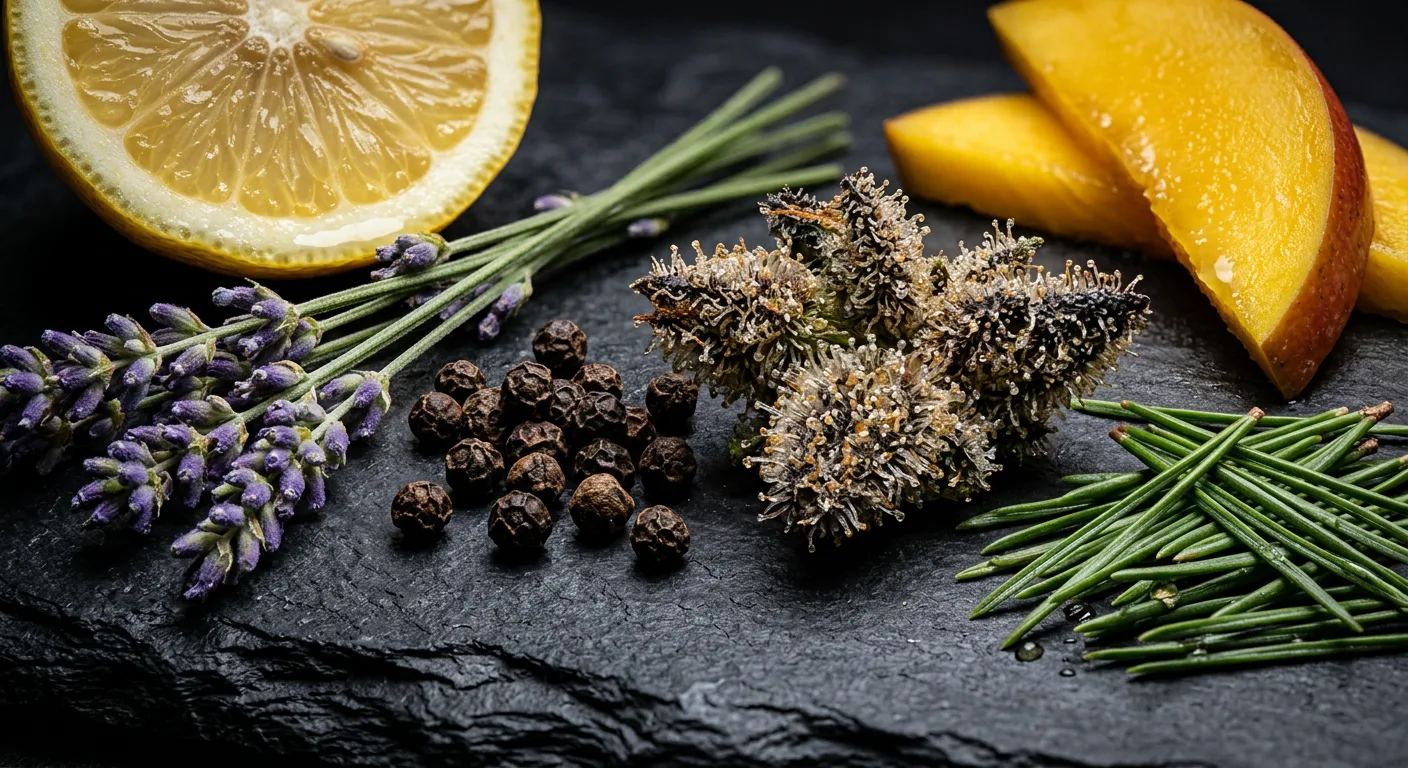
Terpenes work alongside cannabinoids to shape how a strain affects nausea. The most effective anti-nausea cannabis strains share specific terpene signatures—particularly myrcene, limonene, beta-caryophyllene, and linalool—that independently target nausea pathways.
| Terpene | Anti-Nausea Mechanism | Aroma | Strains High in This Terpene |
|---|---|---|---|
| Myrcene | Relaxes GI smooth muscle, reduces gut motility | Earthy, musky | Northern Lights, OG Kush, Granddaddy Purple |
| Limonene | Increases gastric motility, reduces acid reflux signals | Citrus, lemon | Super Lemon Haze, Sour Diesel, Jack Herer |
| Beta-Caryophyllene | Activates CB2 receptors, reduces gut inflammation | Peppery, spicy | GSC, OG Kush, Cookies strains |
| Linalool | Calms anxiety-driven nausea via GABA modulation | Floral, lavender | Lavender, Amnesia Haze, Do-Si-Dos |
| Pinene | Counteracts THC-induced disorientation that can worsen nausea | Pine, fresh | Jack Herer, Blue Dream, Haze genetics |
For deeper dives into individual terpene profiles, check our guides on pinene in cannabis, humulene's effects, and caryophyllene strains for inflammation.
Key takeaway: Look for strains combining myrcene + limonene for physical nausea, or linalool + beta-caryophyllene for anxiety-driven nausea. A terpene lab report tells you more about anti-nausea potential than THC percentage alone. Learn how to read a cannabis terpene COA.
12 Best Cannabis Strains for Nausea and Vomiting Relief
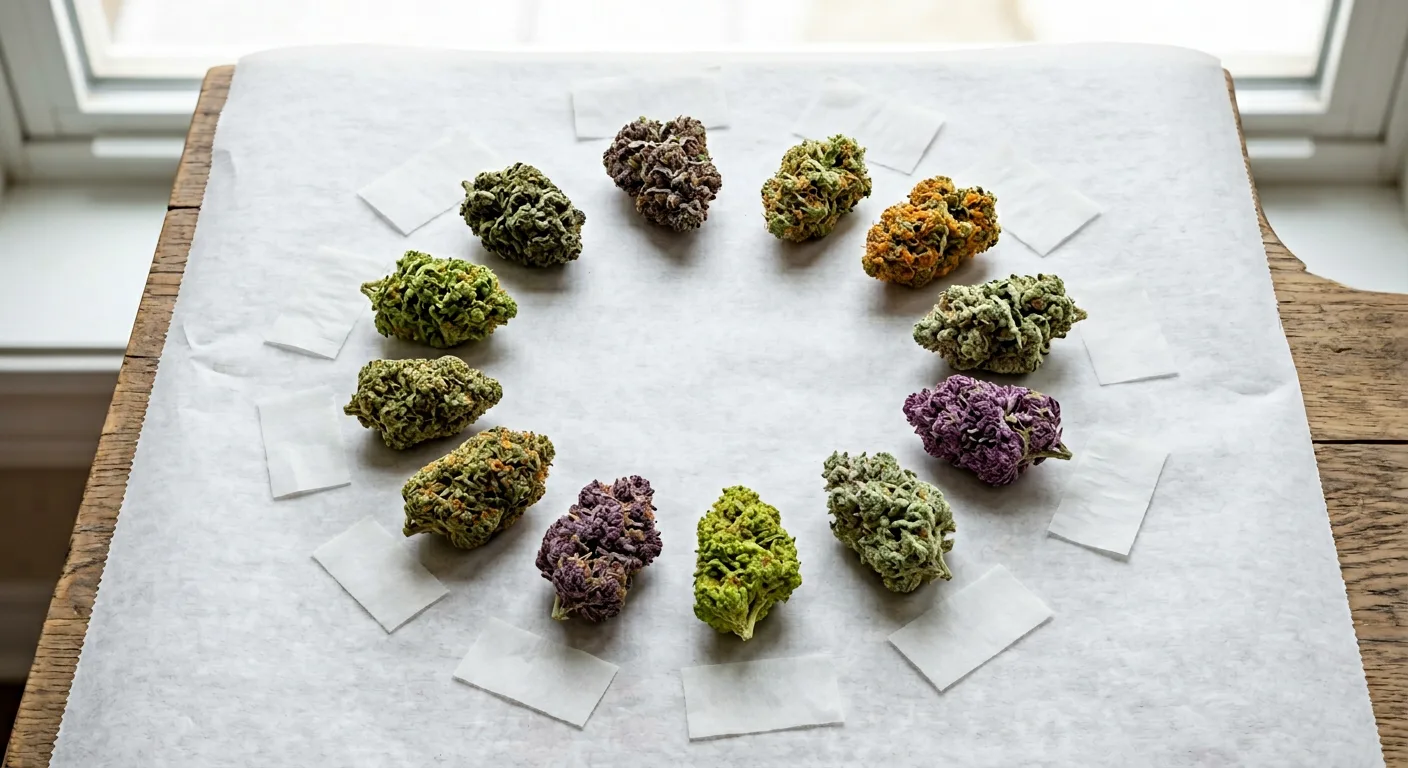
The best marijuana strains nausea patients reach for combine moderate-to-high THC levels, stomach-settling terpene profiles, and manageable side effects. Our picks balance clinical evidence, user reviews across platforms, and terpene data from lab reports. We include both classic industry strains and varieties from our seed catalog.
1. Northern Lights — The Gold Standard Indica for Stomach Calm
Northern Lights has been a go-to for nausea patients since the 1980s. Its heavy myrcene content relaxes the GI tract while moderate THC levels (18–20%) suppress the vomiting reflex without overwhelming beginners. The body-heavy sedation also helps chemotherapy patients sleep through the worst nausea windows.
Grow your own with our Northern Lights x Big Bud Feminized Seeds (20% THC), which adds Big Bud's generous yields to Northern Lights' legendary anti-nausea genetics.
2. Sour Diesel — Fast-Acting Sativa for Daytime Nausea
When nausea strikes in the morning and you can't afford to be couch-locked, Sour Diesel delivers. Its dominant limonene terpene profile settles the stomach while the energetic sativa high keeps you functional. Many chemotherapy patients prefer Sour Diesel for pre-treatment dosing because it manages anticipatory nausea without heavy sedation.
Our Sour Diesel Feminized Seeds test at 24% THC with a pungent fuel-and-citrus aroma that signals a limonene-rich harvest.
3. Granddaddy Purple (GDP) — Deep Relaxation Meets Appetite Rescue
GDP dominates nearly every "best strains nausea" list for good reason. The combination of myrcene for gut relaxation and linalool for anxiety relief makes it a double-action antiemetic. It also stimulates appetite—critical for patients who've been too nauseated to eat. The grape-and-berry flavor is easy on sensitive palates.
4. OG Kush — The All-Purpose Anti-Nausea Hybrid
OG Kush contains the trifecta of anti-nausea terpenes: myrcene, beta-caryophyllene, and limonene. Its 26% THC makes it potent, so low doses (one small inhalation) often suffice. The balanced hybrid effect works for both daytime and evening nausea without extreme sedation or raciness.
Grow this classic from OG Kush Feminized Seeds—a reliable producer that finishes in 8–9 weeks indoors.
5. Jack Herer — Uplifting Nausea Control with Pinene Clarity
Named after the legendary cannabis activist, Jack Herer combines pinene's mental clarity with limonene's stomach-settling action. This is the strain for migraine-associated nausea—strains for migraine nausea need to address both the headache and the queasiness, and Jack Herer's terpene blend does exactly that. Its moderate THC keeps cognitive function intact.
6. Blue Dream — Gentle Entry Point for Nausea Newcomers
Blue Dream remains one of the most widely recommended anti-nausea cannabis strains for first-time medical users. Its balanced effects won't overwhelm anxious patients, and the sweet berry flavor avoids triggering smell-sensitive stomachs. The myrcene-pinene combo offers body relaxation with clear-headedness—perfect for daytime dosing.
7. Super Lemon Haze — Limonene-Rich Energizer
Two-time Cannabis Cup winner Super Lemon Haze is loaded with limonene—the terpene most directly linked to improved gastric motility. Patients with slow-digestion nausea (gastroparesis, opioid-induced constipation) often find the most relief from limonene-dominant strains like this one. The bright citrus aroma doubles as aromatherapy.
Our Super Lemon Haze Feminized Seeds produce frosty, lemon-scented colas at 23% THC. A reliable performer for growers in warm climates or indoor setups.
8. ACDC — High-CBD, Low-THC for Extreme Sensitivity
Not everyone can tolerate THC—especially during chemotherapy when drug interactions are a concern. ACDC offers a 20:1 CBD THC nausea ratio that activates 5-HT1A serotonin receptors to reduce nausea without any psychoactive high. It's the safest option for patients on complex medication regimens, elderly users, or anyone who's had THC worsen their nausea.
9. Papaya — Tropical Indica for Evening Stomach Settling
Papaya's sweet, tropical flavor makes it palatable for patients who can't stomach pungent strains. Its heavy indica effects arrive fast and focus on the abdomen, making it ideal for post-dinner nausea or pre-bedtime dosing. The 25% THC means experienced users get strong relief, but beginners should start with a single puff.
Grow it from our Papaya Feminized Seeds—a compact plant that thrives in small indoor spaces and finishes quickly.
10. Harlequin — The Balanced 5:2 CBD:THC Healer
Harlequin sits in the sweet spot between full-THC and CBD-only strains. Its roughly 5:2 CBD:THC ratio provides enough THC to activate CB1 anti-nausea receptors while CBD moderates any anxiety or paranoia. Many dispensaries recommend Harlequin for chemotherapy patients who want gentle, sustained nausea relief without heavy intoxication.
11. Purple Kush — Potent Nighttime Nausea Knockout
At 27% THC, Purple Kush Feminized Seeds produce one of the most potent indicas in our catalog. This is the strain for severe, treatment-resistant nausea—the kind that wakes you up at 3 AM. Its pure indica genetics deliver heavy sedation alongside CB1 receptor saturation. Not for beginners, but invaluable for patients who've built THC tolerance through extended treatment.
12. Cannatonic — Medical-Grade Balanced Ratio
Cannatonic's near-equal CBD:THC ratio makes it the most versatile anti-nausea cannabis strain for medical programs worldwide. Research suggests 1:1 ratios maximize the entourage effect for nausea while minimizing psychoactive side effects. It's commonly available in capsule and tincture forms at dispensaries, making precise dosing easier for clinical settings.
Key takeaway: No single strain works for everyone. Start with moderate-THC options like Blue Dream or balanced CBD:THC strains like Harlequin. Only escalate to high-THC strains like Purple Kush or OG Kush if gentler options don't provide enough relief.
CBD:THC Ratios — Choosing the Right Cannabinoid Balance
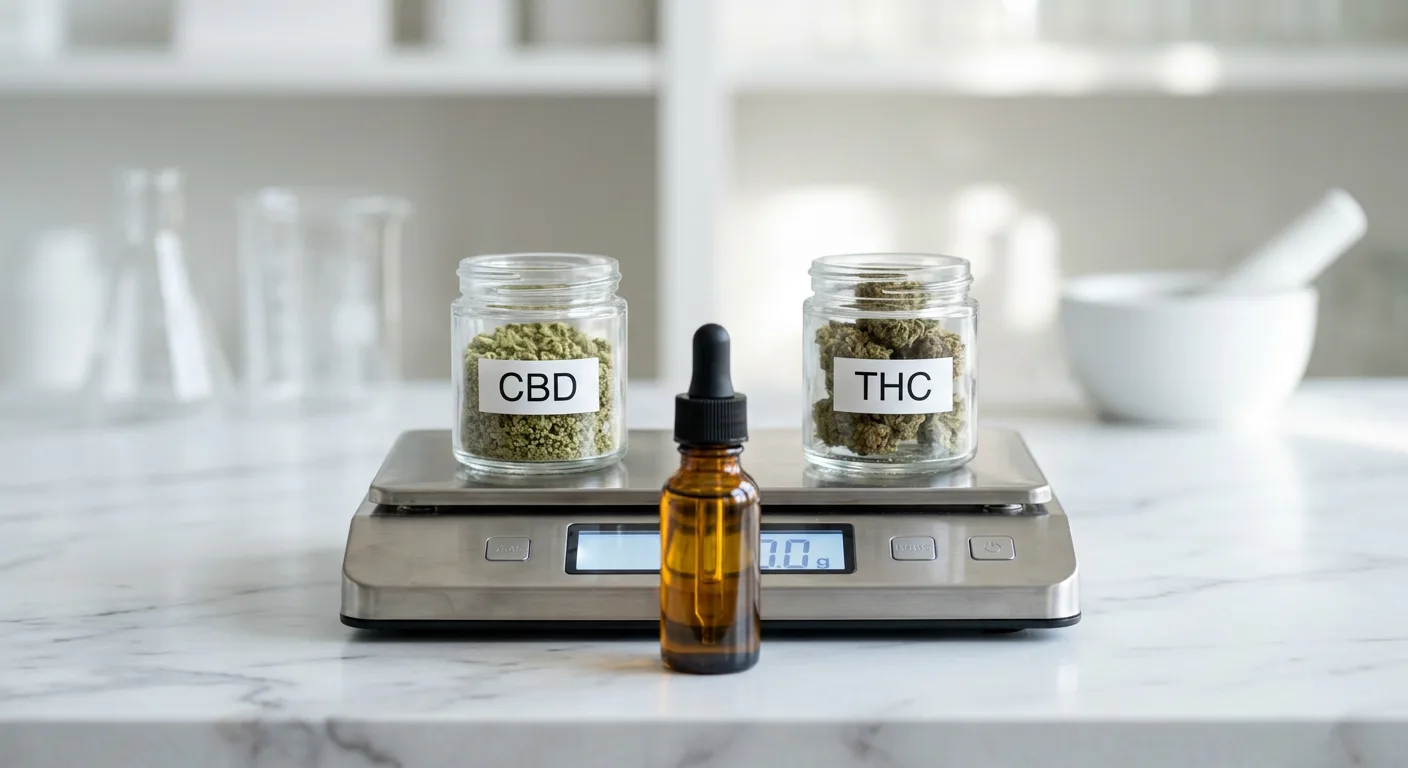
The ideal CBD THC nausea ratio depends on your tolerance, the severity of your symptoms, and whether you need to stay functional. Higher THC provides stronger CB1 activation for acute vomiting, while CBD cushions side effects and adds 5-HT1A receptor activity for chronic nausea.
| Ratio (CBD:THC) | Best For | Psychoactive Effect | Example Strains |
|---|---|---|---|
| 20:1 | Mild nausea, medication-sensitive patients | None | ACDC, Charlotte's Web |
| 5:1 to 3:1 | Moderate nausea, daytime use | Very mild | Harlequin, Remedy |
| 1:1 | Balanced relief, chronic GI nausea | Moderate | Cannatonic, Pennywise |
| 1:5 to 0:1 | Severe acute vomiting, CINV | Strong | OG Kush, Northern Lights, GDP |
Growing tip: If you grow at home, consider planting both a high-THC and a high-CBD strain. Blending the dried flower in different ratios lets you customize your CBD THC nausea ratio precisely. Our Grow Planner can help you map a dual-strain garden layout.
Best Consumption Methods for Nausea Relief
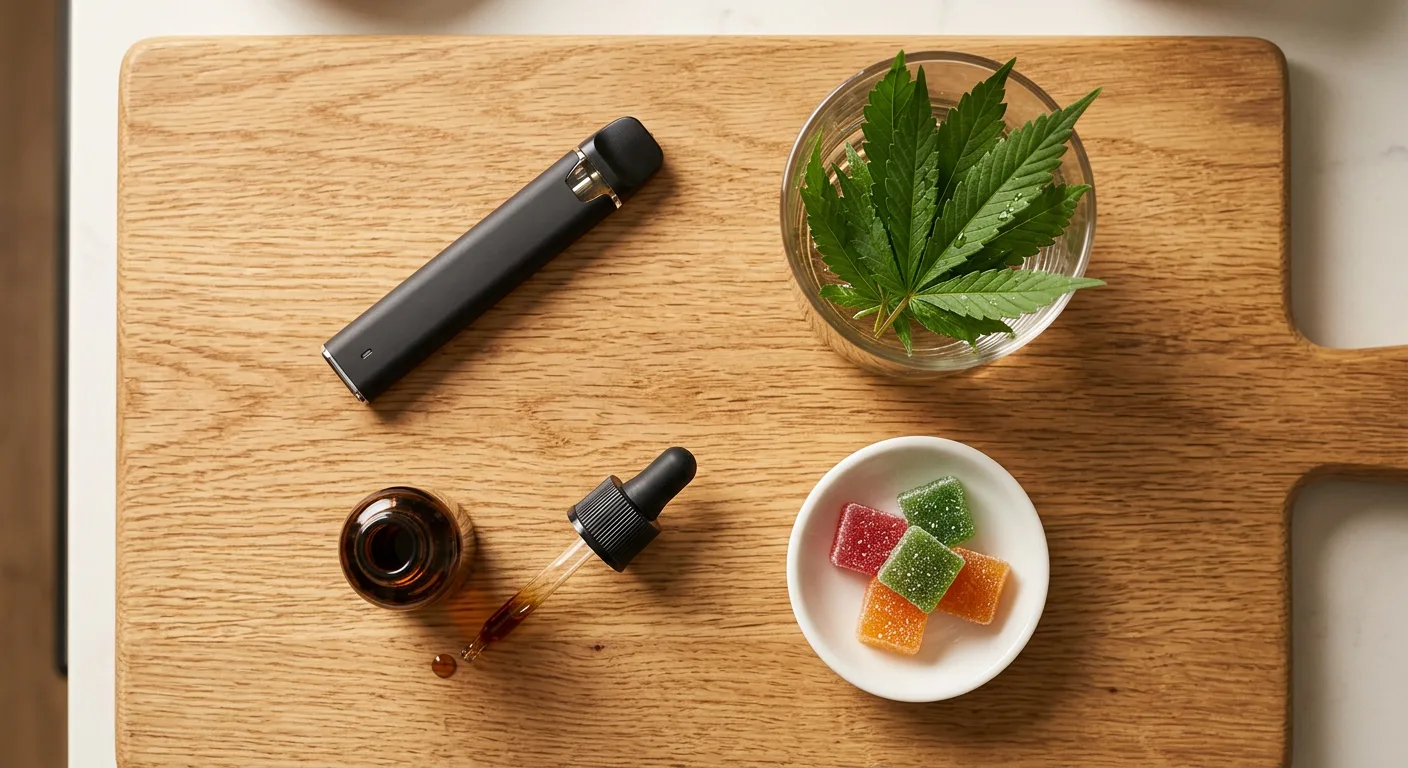
The delivery method matters as much as the strain. Inhalation (smoking or vaporizing) provides the fastest nausea relief—usually within 1–3 minutes—while edibles take 45–90 minutes but last 4–8 hours. For acute vomiting episodes, speed is everything.
Inhalation (Vaporizing or Smoking)
- Onset: 1–3 minutes
- Duration: 1–3 hours
- Best for: Acute vomiting, anticipatory nausea before meals or treatments
- Tip: Vaporizing at 365–385°F preserves limonene and linalool terpenes that degrade at higher temperatures
Sublingual Tinctures and Oils
- Onset: 15–30 minutes
- Duration: 4–6 hours
- Best for: Patients who can't inhale (lung issues, hospital settings), sustained all-day nausea
- Tip: Hold under the tongue for 60 seconds before swallowing. Use our Edible Dosage Calculator for precise milligram targeting
Edibles and Capsules
- Onset: 45–90 minutes
- Duration: 4–8 hours
- Best for: Overnight nausea management, scheduled chemotherapy sessions (dose 90 minutes before treatment)
- Caution: If actively vomiting, absorption is unreliable. Switch to inhalation or sublingual methods
Raw Cannabis Juice (CBDA Preservation)
- Onset: 30–45 minutes
- Duration: 3–5 hours
- Best for: Patients wanting anti-nausea effects without any psychoactive high
- Tip: Juice fresh fan leaves and small buds. CBDA is non-psychoactive and early research shows it may be more potent than CBD for nausea at lower doses
Growing tip: Home growers have the unique advantage of access to fresh plant material for raw juicing. Even your trimmed fan leaves contain CBDA. Keep leaves refrigerated and juice within 3 days of harvest. Check our harvest timing guide for optimal cannabinoid windows.
Dosing and Timing: A Practical Protocol
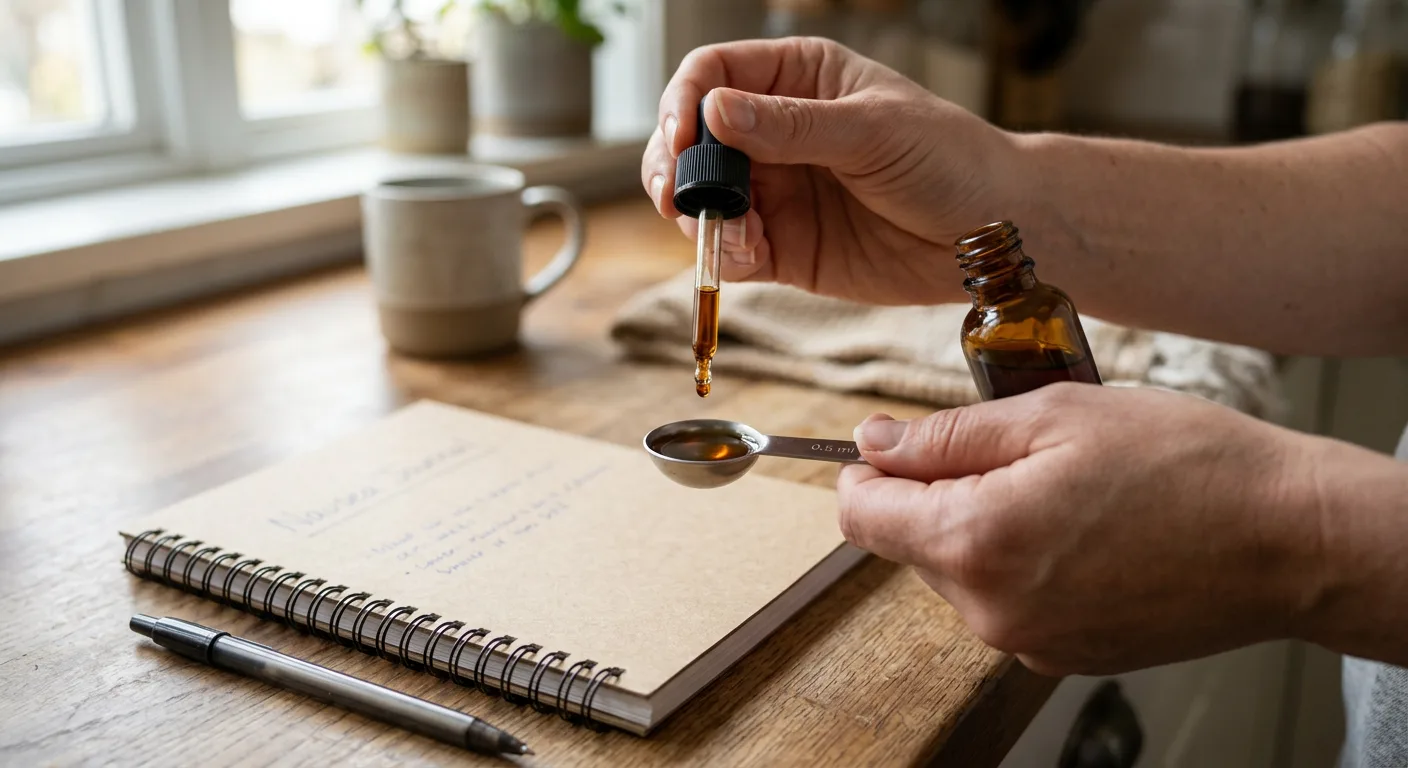
Effective dosing for nausea relief follows the "start low, go slow" principle. Begin with 2–5 mg THC (or one small inhalation) and wait 15 minutes before taking more. Most patients find their effective dose within 5–15 mg THC for nausea control.
Pre-Dose 30–90 Minutes Before Triggers
If you know nausea is coming (chemotherapy appointment, migraine aura, morning pattern), dose preventatively. Inhale 30 minutes before; take an edible 90 minutes before. Anticipatory dosing is consistently more effective than reactive dosing.
Start With 2–5 mg THC
One small vaporizer puff delivers roughly 2–3 mg THC. One tincture dropper (1 mL) typically contains 5–10 mg depending on the product. Begin at the low end—you can always take more, but you can't take less.
Wait Before Redosing
Inhalation: wait 15 minutes. Sublingual: wait 30 minutes. Edibles: wait a full 2 hours. Over-dosing THC can cause dizziness that actually worsens nausea.
Track and Adjust
Keep a nausea journal. Record strain, dose, method, timing, and relief on a 0–10 scale. After 5–7 sessions, patterns emerge. Most patients settle on a consistent strain and dose within 2 weeks.
Caution: THC doses above 20–30 mg can paradoxically increase nausea and dizziness in sensitive individuals. This is especially true for edibles, where delayed onset leads to accidental over-consumption. More is not better for weed nausea relief.
Cannabis for Chemotherapy Nausea: What the Research Shows

Cannabis nausea chemotherapy research consistently shows that cannabinoids reduce CINV when standard antiemetics (ondansetron, granisetron) fall short. A 2015 Cochrane review of 23 randomized controlled trials found that cannabinoids were more effective than placebo and comparable to conventional antiemetics for controlling nausea and vomiting.

Key findings from clinical literature:
- Dronabinol (synthetic THC) received FDA approval in 1985 for CINV and remains a Schedule III prescription medication.
- Nabilone (synthetic cannabinoid) is approved in multiple countries and shows particular effectiveness for delayed-onset nausea (24–72 hours post-chemo).
- Whole-plant cannabis frequently outperforms isolated cannabinoids in patient surveys, suggesting the entourage effect of terpenes and minor cannabinoids adds measurable benefit.
- A 2022 Israeli study of 324 cancer patients found that inhaled cannabis reduced nausea severity by 50% or more in 78% of participants.
Oncologists increasingly recognize cannabis as a complement to—not a replacement for—standard antiemetic protocols. The best outcomes occur when patients combine prescribed medications (like ondansetron) with low-dose cannabis for breakthrough nausea.
Key takeaway: Never discontinue prescribed antiemetics in favor of cannabis without discussing it with your oncologist. Cannabis works best as an add-on therapy for chemotherapy nausea that breaks through standard medication.
Strains to Avoid When You're Nauseated
Not every strain helps nausea—some can make it worse. Avoid strains with these characteristics when your stomach is already unsettled.
- Ultra-high THC with no CBD — Strains above 28–30% THC (like some concentrate-bred phenotypes) can cause "the spins" and dizziness that worsen nausea, especially in patients with low tolerance.
- Strong diesel/chemical aromas — Smell sensitivity spikes during nausea. Pungent strains can trigger vomiting before you even inhale. Opt for mild, fruity, or sweet-smelling strains like Papaya or Blue Dream.
- High-THCV sativas — THCV is a CB1 antagonist at low doses, meaning it can partially block the anti-nausea effects of THC. Some African sativa landraces (Durban Poison at certain phenotypes) contain notable THCV levels.
- Untested edibles — Without lab-verified dosing, edibles are a gamble. An accidental 50 mg dose can produce severe nausea on its own.
Growing tip: If you grow for nausea relief, harvest at peak maturity (50–70% amber trichomes) rather than early. Slightly degraded THC converts to CBN, which adds sedative and anti-nausea properties. Our harvest timing guide covers trichome reading in detail.
Growing Your Own Anti-Nausea Strains: Quick Start Checklist
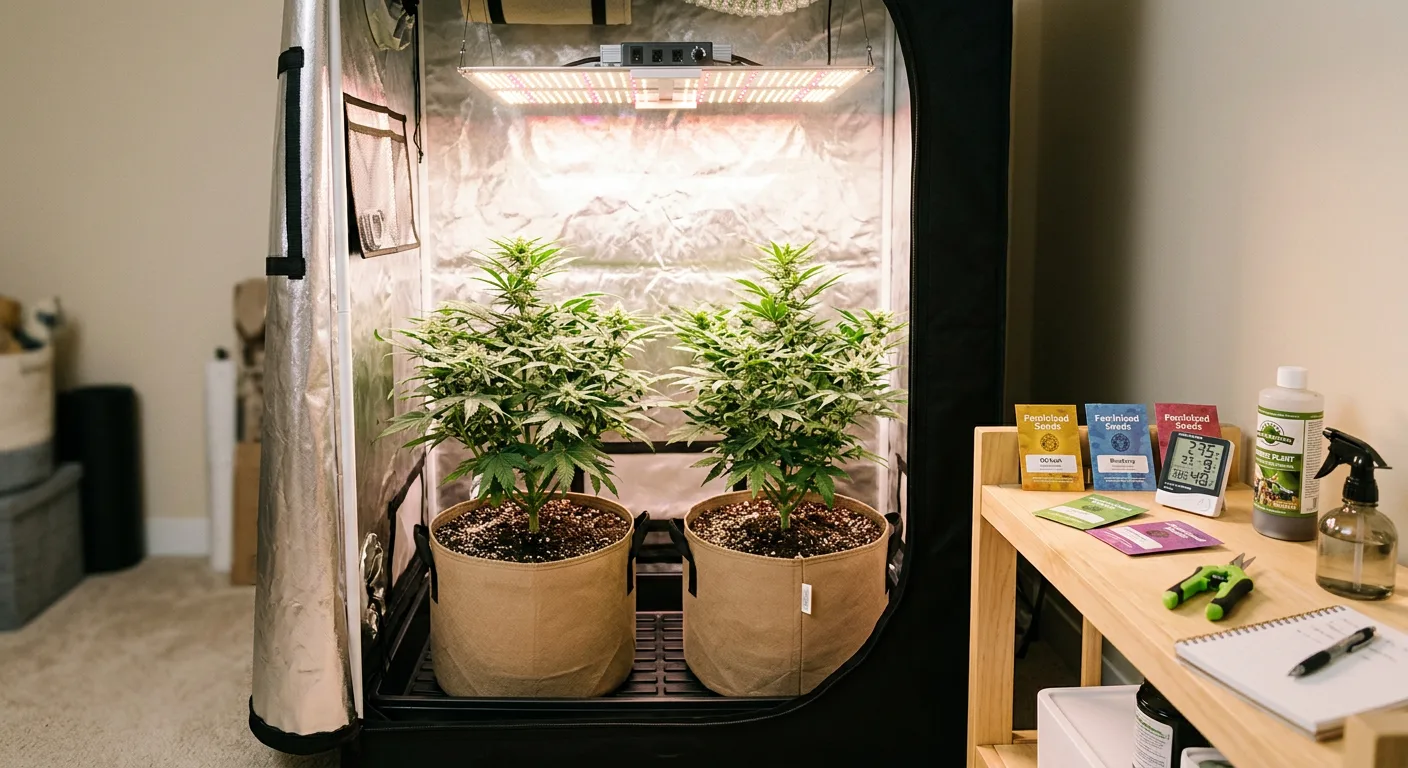
Growing at home ensures you have a consistent supply of your preferred anti-nausea cannabis strains without dispensary availability issues. These strains are beginner-friendly and produce reliable results.
- Choose feminized seeds to guarantee flower-producing plants — see our feminized vs. regular seed guide
- Start with Northern Lights genetics for easy indoor growing and mold resistance
- Maintain VPD between 0.8–1.2 kPa during flower using our VPD Calculator
- Harvest at 50–70% amber trichomes for maximum anti-nausea terpene preservation
- Cure for 2–4 weeks in glass jars to develop full terpene expression
- Store cured flower with humidity packs at 58–62% RH — read our humidity pack comparison
- Test a small sample before committing to a full harvest for nausea use
- All our seeds ship with a germination guarantee for added confidence
For a complete setup walkthrough, see our indoor grow tent setup guide. Estimate your harvest potential with our Yield Estimator tool.
Frequently Asked Questions
What is the best cannabis strain for chemotherapy nausea?
Northern Lights and OG Kush are among the most widely recommended strains for chemotherapy-induced nausea. Northern Lights offers moderate THC (18–20%) with heavy myrcene for gut relaxation, while OG Kush provides stronger 26% THC for treatment-resistant nausea. For patients who cannot tolerate psychoactive effects, ACDC (20:1 CBD:THC) or Cannatonic (1:1 ratio) offer nausea relief without a high. Always coordinate cannabis use with your oncologist to avoid medication interactions.
Does CBD or THC work better for nausea?
THC is more effective for acute nausea and active vomiting because it directly activates CB1 receptors in the brainstem's vomiting center. CBD works through a different mechanism (5-HT1A serotonin receptors) and is better for chronic low-grade nausea and anxiety-driven stomach distress. Research shows that combining both cannabinoids in ratios between 1:1 and 3:1 CBD:THC often provides the best overall nausea relief with fewer side effects than high-THC alone.
Is cannabis safe to use for morning sickness during pregnancy?
No. While cannabis has historical use for morning sickness, the American College of Obstetricians and Gynecologists (ACOG), the American Academy of Pediatrics, and most major medical organizations advise against all cannabis use during pregnancy. THC crosses the placental barrier and may affect fetal neurodevelopment. Safer alternatives like ginger, vitamin B6, and prescription antiemetics (doxylamine) should be discussed with your OB-GYN instead.
Can cannabis make nausea worse?
Yes, in two key scenarios. First, excessive THC doses (especially from edibles) can cause dizziness and paradoxical nausea. Second, Cannabinoid Hyperemesis Syndrome (CHS) is a condition where chronic heavy cannabis use itself causes cyclical vomiting. CHS typically affects daily users consuming high-THC cannabis for a year or more. If your nausea worsens with cannabis use and you find relief only from hot showers, stop all cannabis and consult a doctor—you may have CHS.
What is the fastest way to use cannabis for nausea relief?
Vaporizing or smoking dried flower provides the fastest nausea relief, typically within 1–3 minutes. Vaporizing is preferred because it preserves nausea-fighting terpenes like limonene and linalool that degrade at combustion temperatures. Take one small puff, wait 15 minutes, and add more only if needed. Sublingual tinctures are the second-fastest method at 15–30 minutes, while edibles take 45–90 minutes and are better for sustained prevention than acute rescue.