Walk into any garden center and the soil aisle looks deceptively simple — dozens of bags, all promising lush growth. But choosing the wrong one for your first cannabis grow can wreck seedlings, lock out nutrients, and cost you an entire crop before the plant ever hits its stride.
This guide cuts through the noise. You'll learn exactly what makes soil cannabis-ready, which pre-mixed brands actually deliver, why certain big-box products are a trap for beginners, and how to build a cheap custom mix that outperforms expensive options. If you're hunting for the best soil for cannabis beginners, this is the only guide you need.
What Makes Soil 'Cannabis-Ready'?
Cannabis-ready soil drains fast, holds enough moisture to stay hydrated between waterings, buffers pH naturally in the 6.2–6.8 range, and provides a light nutrient charge that feeds seedlings without burning them. It also contains enough aeration material to prevent root suffocation.
Most garden soils fail at least two of those criteria. Understanding each property stops you from picking the wrong bag on instinct alone.
The Four Properties That Actually Matter
1. Drainage and Aeration
Cannabis roots need oxygen just as much as water. Compacted or clay-heavy soil holds moisture too long, starves roots of air, and creates the perfect conditions for root rot. A well-structured cannabis soil should drain completely within 30–60 seconds of watering and spring back slightly when squeezed — never clumping into a solid mass.
2. pH Buffering
Cannabis absorbs nutrients in a narrow pH window. In soil, that window is 6.2 to 6.8. Below 6.0, iron and manganese become toxic. Above 7.0, phosphorus and calcium lock out. A good cannabis soil contains organic matter (like compost or worm castings) that naturally buffers pH and prevents wild swings between waterings.
3. Nutrient Charge — Light, Not Heavy
Seedlings need almost no added nutrients for their first 2–3 weeks. They live off cotyledon energy and whatever trace minerals exist in the soil. A 'hot' mix — one loaded with concentrated synthetic or organic nutrients — overwhelms young roots and causes tip burn, yellowing, and stunted growth.
Seedling Rule: If a bag of soil claims to 'feed plants for up to 6 months,' do NOT put a seedling directly into it. The nutrient concentration is too high for roots that have never established. Start seedlings in a lighter mix and transplant into richer soil at the 3–4 true-leaf stage.
4. Structure and Water Retention
The ideal cannabis soil holds about 40–50% of its volume as water after a thorough watering, then dries out enough to allow re-oxygenation within 2–3 days. Peat moss, coco coir, and perlite all contribute to this balance. Pure sphagnum peat alone retains too much moisture; pure sandy loam drains too fast. A blend is always the goal.
Think of cannabis-ready soil as a fast-draining sponge: it soaks up water evenly, holds enough for roots to drink steadily, then releases it quickly so air can refill the gaps. No single ingredient achieves this — it's always a blend.
How to Read a Bag of Soil Before You Buy
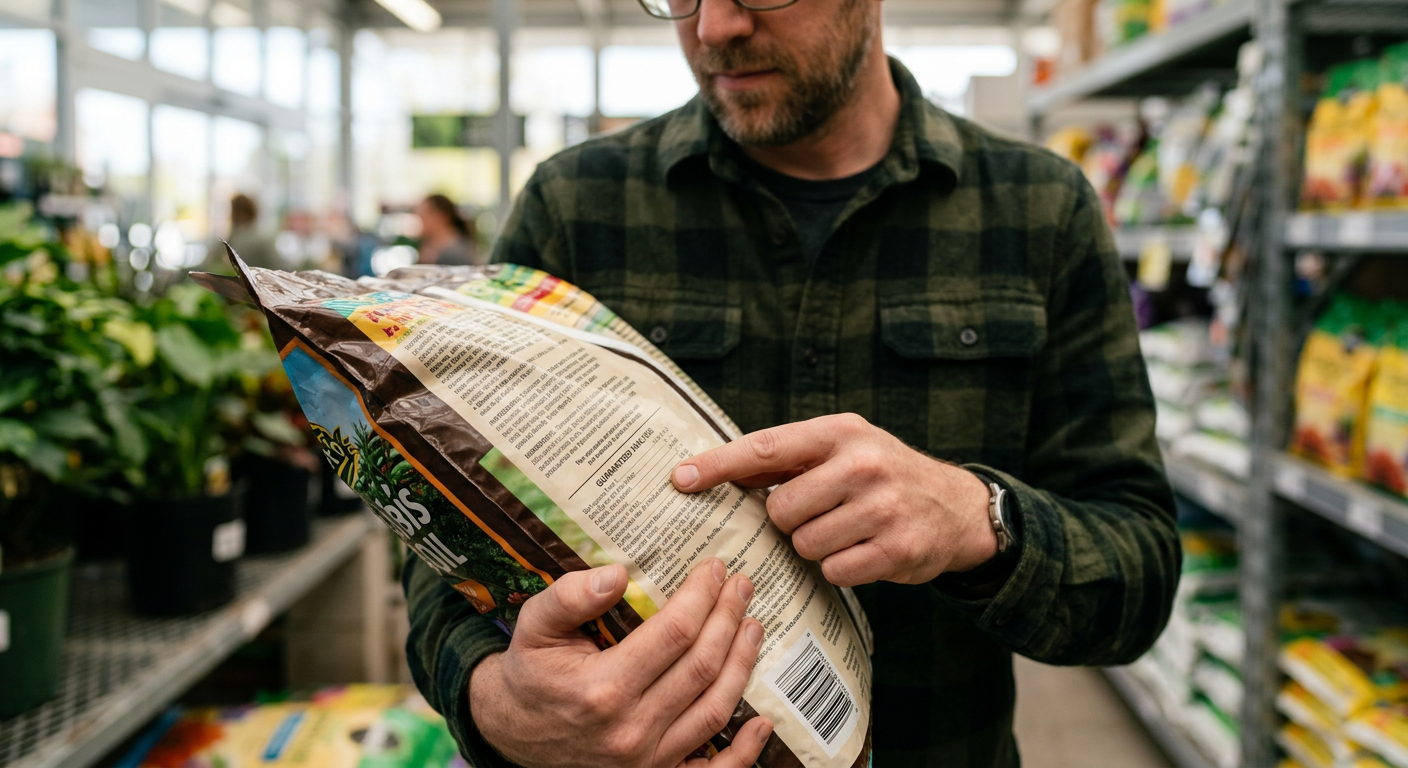
Every bag of potting mix includes an N-P-K ratio, a list of ingredients, and sometimes a pH range. Most beginners skip all three. Here's how to decode them in under two minutes at the garden center.
Understanding N-P-K on Soil Bags
N-P-K stands for Nitrogen (N), Phosphorus (P), and Potassium (K) — the three macronutrients every plant needs. On a soil bag, they're listed as a ratio like 0.05-0.05-0.05 or 0.10-0.05-0.05. These small decimals represent the percentage of each nutrient by weight in the soil mix itself.
- N (Nitrogen): Drives vegetative leafy growth. Cannabis needs more N during veg, less during flower.
- P (Phosphorus): Supports root development and flower production.
- K (Potassium): Regulates water uptake, disease resistance, and bud density.
For a beginner's first grow, look for a balanced, low N-P-K starting ratio — something around 0.05-0.05-0.05 to 0.10-0.10-0.10. Numbers above 0.20 on any value indicate a 'hot' mix that may burn seedlings. Numbers preceded by a statement like 'continuous-release for 6 months' are a red flag regardless of the decimal value.
Reading the Ingredient List
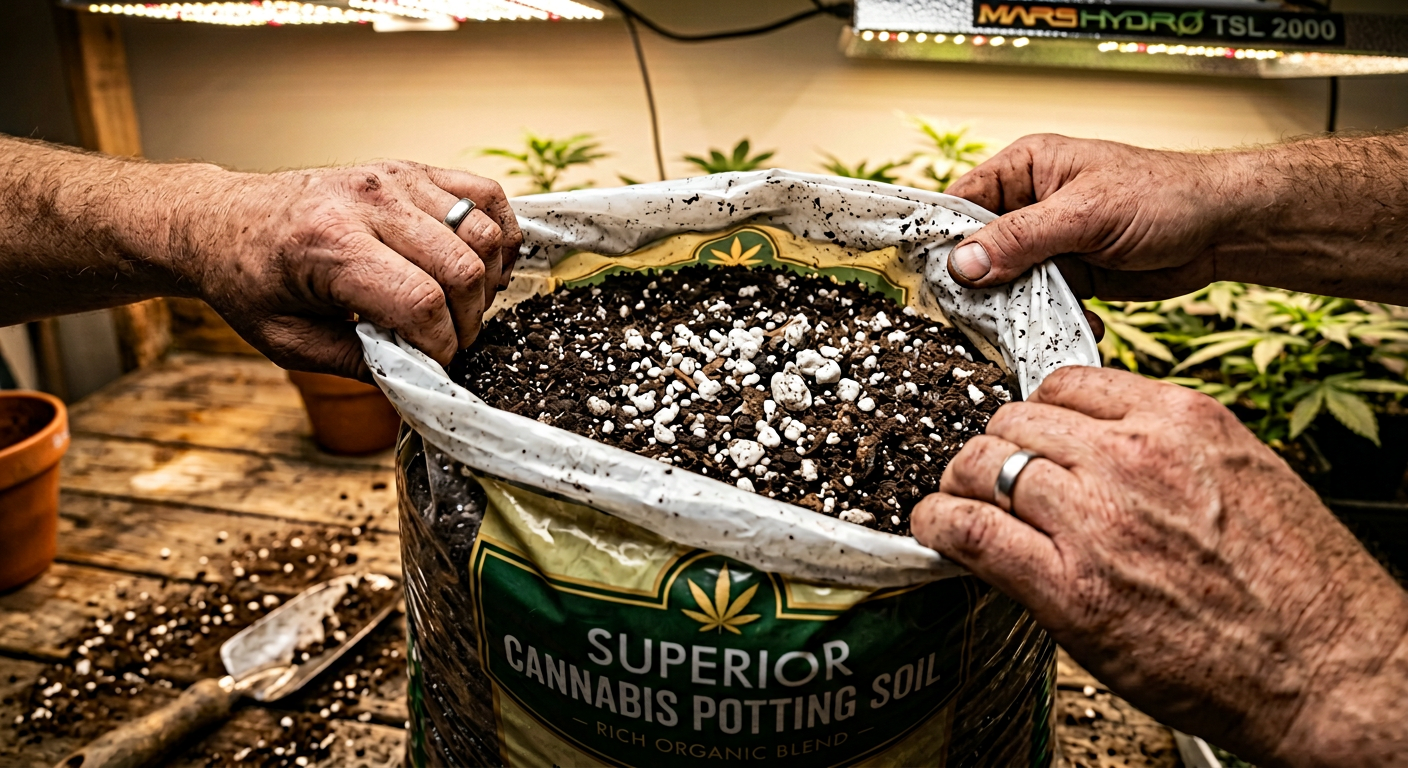
Flip the bag over and scan for these terms:
- Perlite or pumice: White volcanic material for drainage. Good.
- Sphagnum peat moss or coco coir: Water retention base. Good.
- Worm castings or compost: Gentle, biologically active nutrients. Good.
- Bark fines or wood chips: Structural aeration. Acceptable in small amounts.
- Slow-release synthetic fertilizer beads: Visible as small colored pellets. Risky for cannabis seedlings.
- 'Moisture control' formula: Usually means gel-based water retention agents. Avoid for cannabis.
Squeeze the bag before buying. Cannabis soil should feel light and slightly springy — not dense and compact. If it feels like a brick or has a strong chemical smell, put it back. Good organic soil smells earthy, like a forest floor after rain.
Checking pH Straight From the Bag
Some premium soils list an intended pH range on the label (Fox Farm Ocean Forest, for example, targets 6.3–6.8 out of the bag). If no pH is listed, assume you need to test it. Use a simple soil pH probe or a slurry test: mix 1 tablespoon of soil with 2 tablespoons of distilled water, stir, let it settle for 10 minutes, then test the water with a pH meter.
Most peat-based mixes come in between 5.8 and 6.5 fresh from the bag. If you're below 6.0, add a small amount of agricultural lime (dolomite lime) to bring pH up. If you're above 7.0, sulfur or a small pH-down solution can correct it before planting.
Why Miracle-Gro Is a Beginner Trap
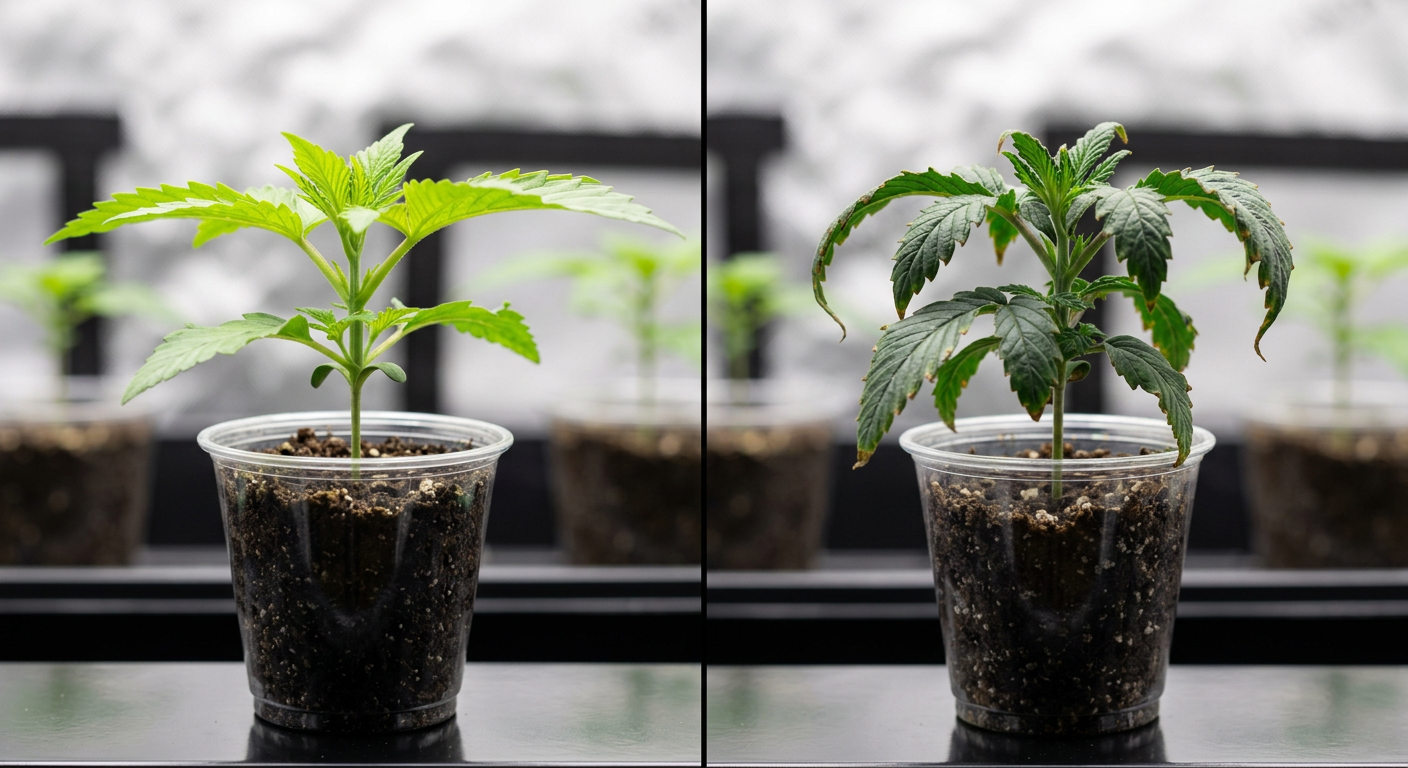
Miracle-Gro Potting Mix is one of the worst choices for cannabis beginners because it uses time-release synthetic nitrogen pellets that keep releasing nutrients for up to 6 months — far longer and more intensely than cannabis roots can handle. This causes nitrogen toxicity, dark clawing leaves, and nutrient lockout that most beginners misdiagnose as something else entirely.
The Slow-Release Nitrogen Problem
Standard Miracle-Gro Potting Mix contains Scotts' proprietary slow-release fertilizer beads. These beads activate based on temperature and moisture — meaning every time you water, you trigger another nutrient dump. Cannabis, especially during seedling and early veg stages, needs nutrient levels you can control. A substrate that auto-feeds unpredictably removes that control entirely.
The classic symptom pattern in Miracle-Gro cannabis grows goes like this: seedlings look fine for 7–10 days, then leaves curl downward (the 'claw'), tips go dark brown, and growth stalls. Beginners add more water trying to flush the problem, which just triggers more nutrient release. It's a cycle that's very hard to escape without a full transplant.
What About Miracle-Gro Organic? The Miracle-Gro Performance Organics line is genuinely different — it uses compost, feather meal, and bone meal rather than synthetic pellets. Some experienced growers use it with success. But the pH runs slightly high (6.8–7.2 out of the bag) and it's still nutrient-dense enough to risk burning seedlings. If you're a first-timer, start with purpose-built cannabis soil and remove one variable from the equation.
Other Garden Center Traps to Avoid
- Moisture control mixes: Contain polymer crystals that over-saturate the root zone. Cannabis is extremely prone to root rot when waterlogged.
- Topsoil bags: These are outdoor amendments, not potting mixes. They compact aggressively in containers and almost always run above pH 7.0.
- Seed-starting mixes alone: Very light, almost zero nutrients. Fine for germination but plants will need transplanting within 10–14 days or they'll starve.
- 'Orchid mix' or cactus soil: Drainage is too extreme — roots dry out too fast for cannabis in most indoor conditions.
Top Pre-Mixed Soils for Cannabis Beginners: Ranked and Reviewed
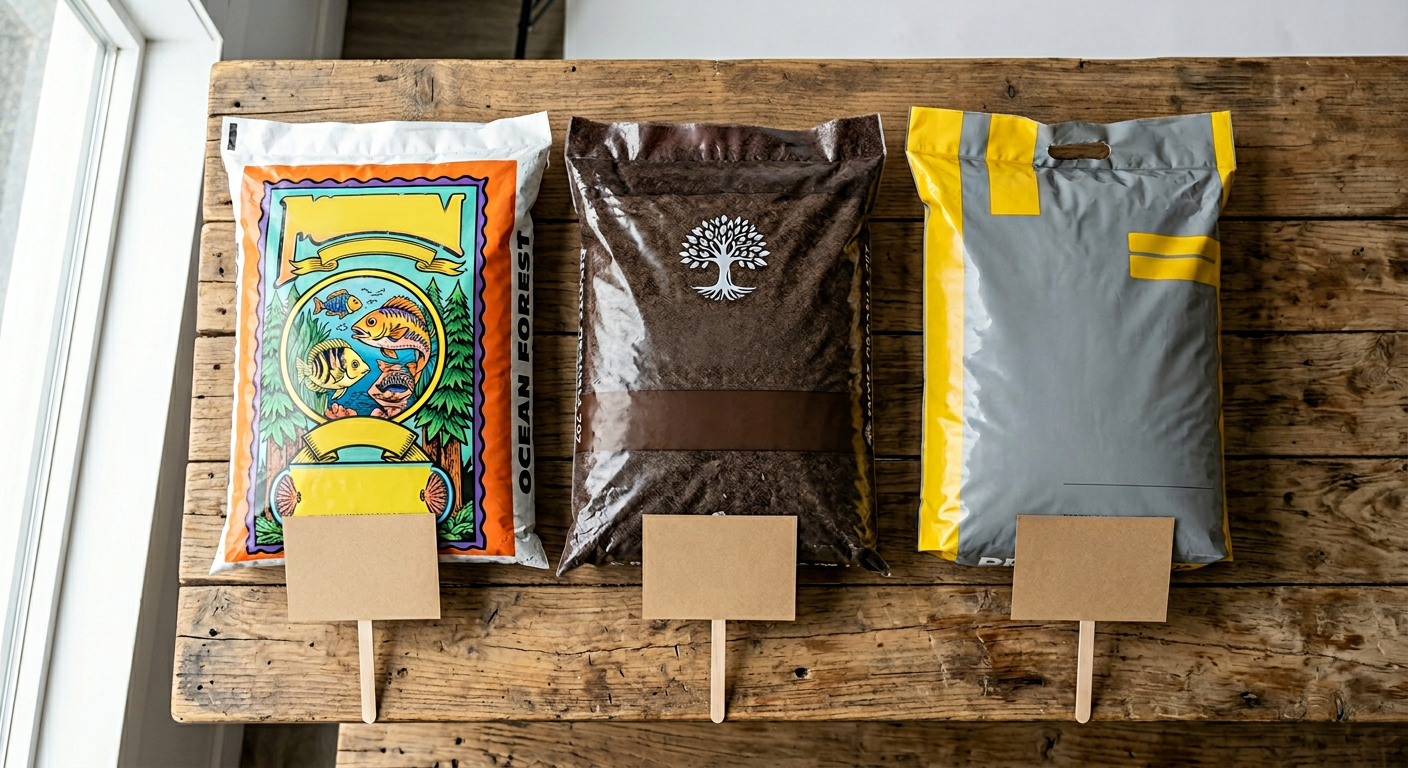
The best premixed soil for growing cannabis as a beginner will be pH-stable, lightly amended with organic nutrients, and contain 15–30% perlite already blended in. These three options consistently top grower polls and real-world grows.
| Brand / Product | pH (Out of Bag) | Perlite Included | Nutrient Charge | Price Range | Beginner Verdict |
|---|---|---|---|---|---|
| Fox Farm Ocean Forest | 6.3–6.8 | No (add 20–30%) | Medium (earthworm castings, bat guano) | $20–$28 / 1.5 cu ft | ✅ Best all-around pick |
| Roots Organics Original | 6.0–7.0 | Partial (~15%) | Medium-light (guano, worm castings) | $30–$40 / 1.5 cu ft | ✅ Excellent structure, great drainage |
| Pro-Mix HP | 5.5–6.5 | Partial (perlite + mycorrhizae) | Very light (near-soilless) | $35–$55 / 3.8 cu ft | ✅ Best for growers who want full nutrient control |
| Black Gold All Purpose | 6.0–7.0 | Yes (~15–20%) | Light (earthworm castings) | $16–$22 / 1.5 cu ft | ⚠️ Decent budget option, check pH before use |
| Miracle-Gro Potting Mix | 6.0–7.0 | No | Heavy (synthetic slow-release) | $12–$18 / 1 cu ft | ❌ Avoid — slow-release nitrogen causes burn |
| Generic Topsoil | 6.5–8.0 | No | Variable / unknown | $5–$10 / 40 lb bag | ❌ Avoid — compacts in containers, pH unstable |
Fox Farm Ocean Forest — The Community Standard
Ocean Forest has been the default recommendation in cannabis growing communities for over 15 years — and it earns that status. It blends earthworm castings, bat guano, fish meal, and forest humus in a peat-moss base that drains beautifully and buffers pH reliably in the sweet spot for cannabis. Out of the bag, it runs 6.3–6.8 — almost no adjustment needed.
The one consistent note from experienced growers: it runs slightly hot for seedlings less than 2 weeks old. Many growers start seeds in a lighter mix (seed-starting mix or plain Pro-Mix) and transplant into Ocean Forest at the 3-leaf stage. Add 20–30% perlite by volume to improve drainage if growing in containers over 3 gallons.
Roots Organics Original — Best for Structure
Roots Organics Original ships with a noticeably chunky, airy texture right out of the bag — you can see and feel the perlite, pumice, and coco fiber blend without doing anything to it. This makes it one of the most forgiving soils for overwatering, which is the number one beginner mistake. It's slightly more expensive than Ocean Forest but the built-in drainage saves headaches.
Nutrient charge is moderate, drawing from bat guano, feather meal, and worm castings. pH runs consistent in the 6.2–6.8 range through most of a grow cycle. Some growers supplement with additional calcium and magnesium after week 5–6 as the organic charge depletes.
Pro-Mix HP — Best for Growers Who Want Control
Pro-Mix HP (High Porosity) is technically a peat-based soilless medium rather than true soil — it contains perlite, peat moss, and mycorrhizal inoculants but almost no nutritional charge. pH stabilizes around 5.8–6.2 out of the bag, which sits at the lower edge of cannabis's preferred range. You'll need to run nutrients from week 1–2 of seedling growth.
This might sound like a disadvantage, but it's actually a strength for control-oriented beginners. Because the medium contributes almost nothing nutritionally, what you feed is what the plant gets — no guessing, no hidden burn risk. Pro-Mix HP is popular among growers who want soil-like handling (easy, forgiving watering) with a clean nutrient slate.
Mycorrhizal Inoculants in Soil: Several premium soils (including Pro-Mix and some Roots Organics products) contain mycorrhizal fungi. These create a symbiotic network with cannabis roots that increases the effective surface area for nutrient absorption by up to 700%. They work best when roots come into direct contact with them during transplanting — so try not to soak the root ball before transplanting into inoculated media.
Pre-Mixed vs DIY Soil: Which Should Beginners Choose?
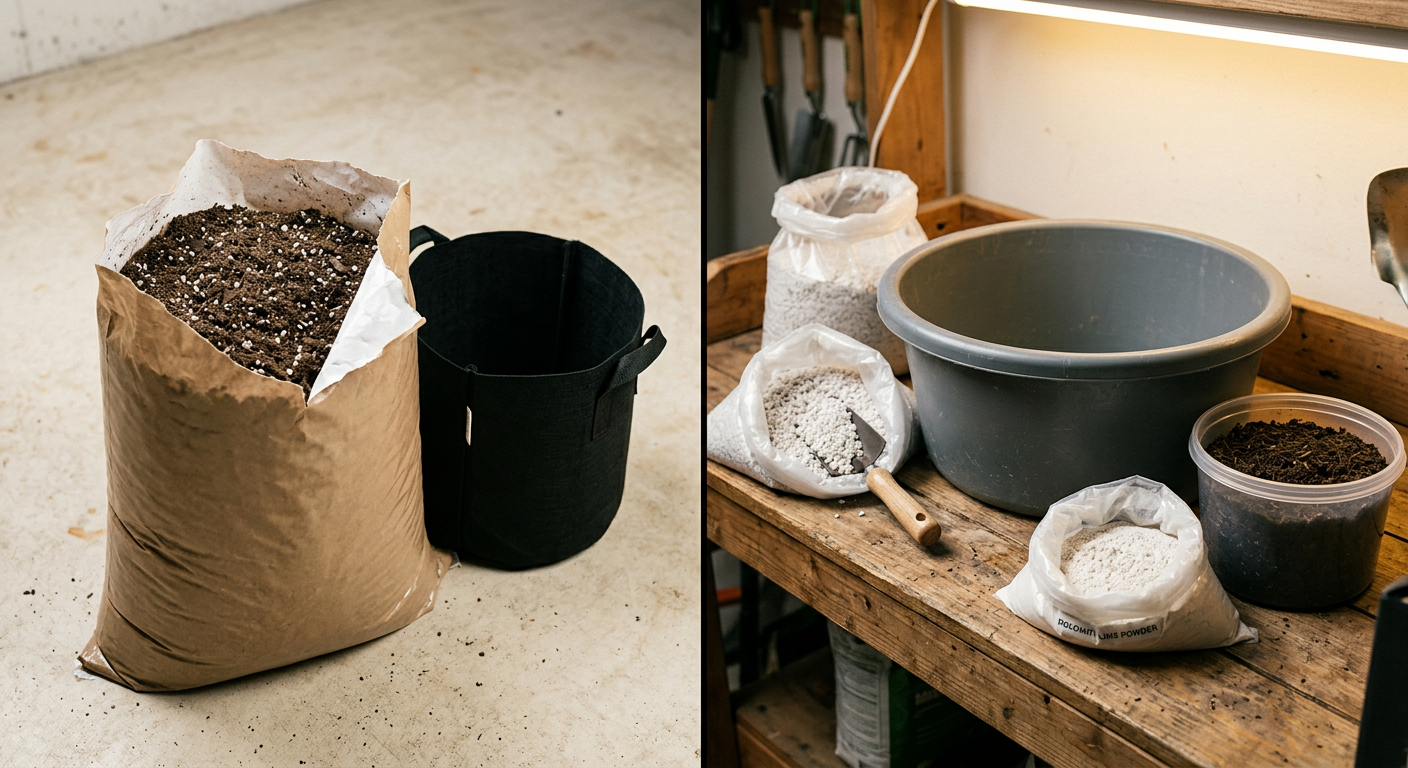
Beginners should almost always start with a quality pre-mixed soil like Fox Farm Ocean Forest or Roots Organics rather than building a custom blend. Pre-mixed soils are pH-stable, consistently blended, and ready to use — removing three major variables that can derail a first grow. DIY mixes reward growers who already understand what each component does.
The Case for Pre-Mixed Soil
- Consistent batch-to-batch quality from reputable brands
- pH buffering already dialed in (most premium mixes need little adjustment)
- Organic nutrient charge calibrated for cannabis-style feeding
- One fewer decision to troubleshoot if problems appear
- Available at most hydroponic stores and online
The Case for DIY Soil Mixes
- Significantly cheaper at scale (multiple plants or multiple grows)
- Fully customizable nutrient and drainage profile
- Better understanding of what your plants are growing in
- Allows you to create living soil systems with rich microbiology
- Rewarding once you understand the components
The golden rule: on your first grow, simplify everything. One unknown variable is manageable. Four unknown variables (soil mix, light, watering, nutrients all DIY at once) is how you lose a crop and don't know which thing went wrong. Get one successful grow under your belt with proven pre-mix, then experiment.
How to Amend Cheap Soil Into a Cannabis-Ready Mix
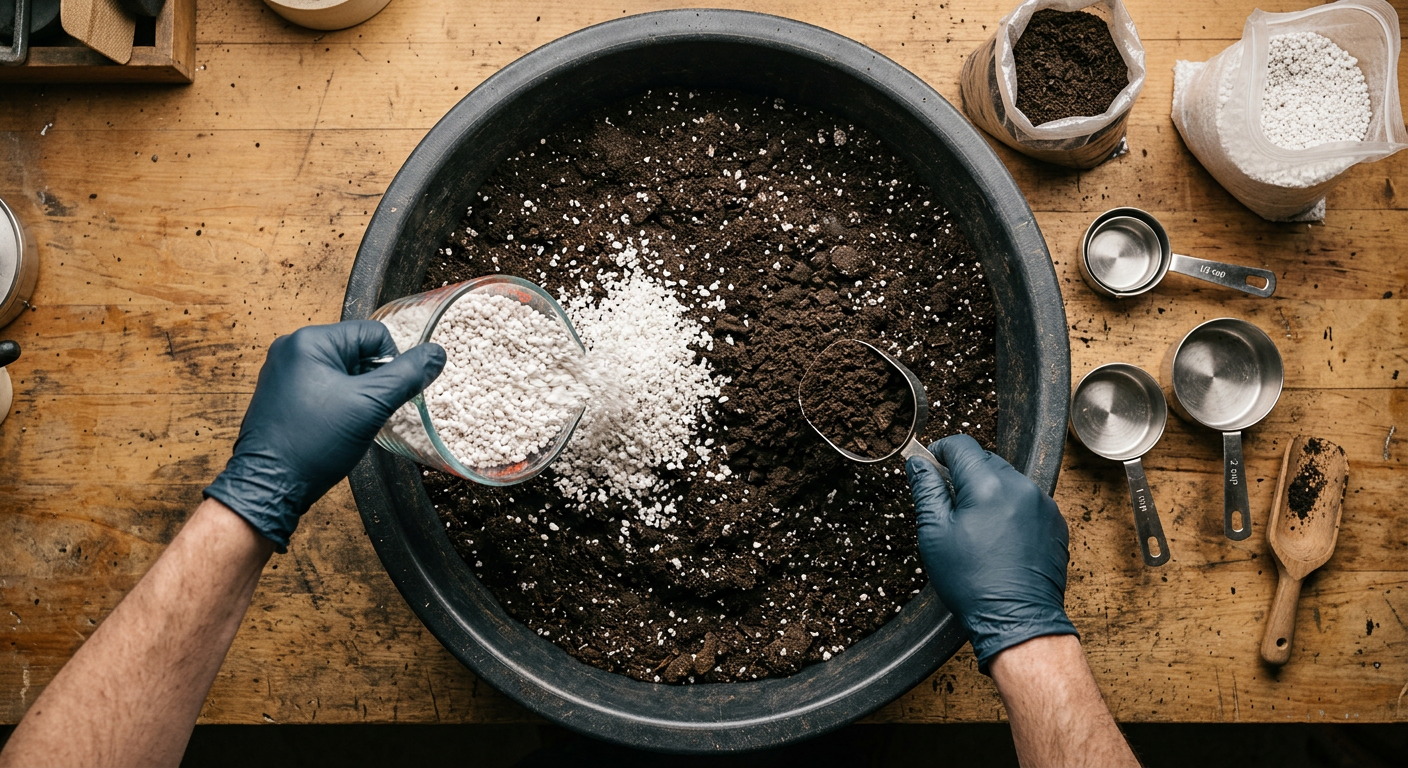
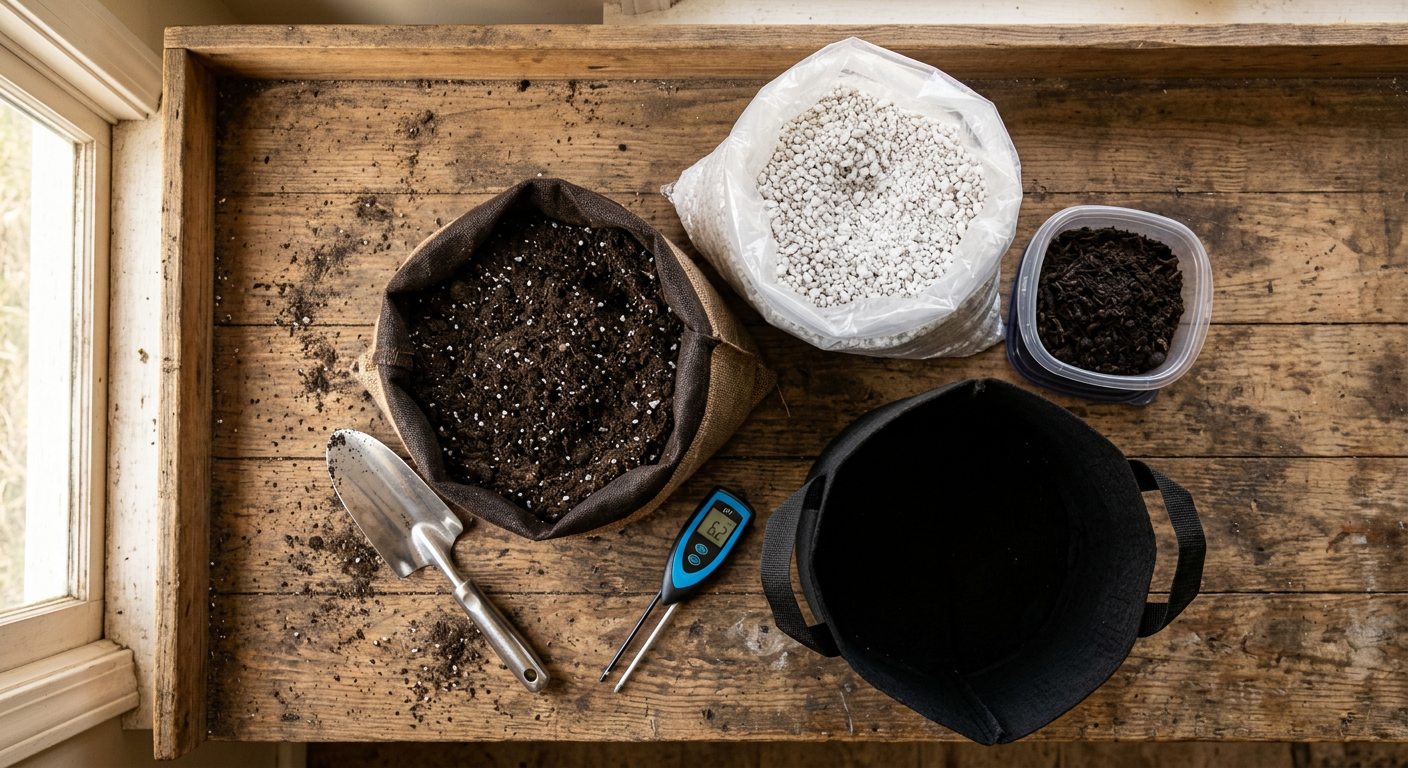
You can transform a basic but decent budget potting mix into a solid cannabis substrate by adding perlite for drainage, worm castings for gentle nutrition, and optionally dolomite lime for pH buffering. This approach keeps costs low while giving you far better results than using cheap soil straight from the bag.
The Beginner's Amendment Formula
Start with a Neutral Base
Choose a basic peat-based potting mix with no added fertilizer — something labeled 'garden mix,' 'all-purpose mix,' or 'organic potting soil' without a fertilizer claim. Black Gold All Purpose, Espoma Organic, or a store-brand organic mix all work. Avoid anything labeled 'feeds for X months.'
Add Perlite (20–30% by Volume)
Perlite is the single most impactful amendment you can make. For every 10 liters of base soil, mix in 3 liters of horticultural perlite. This creates air pockets, prevents compaction, and stops roots from sitting in waterlogged zones. Use coarse or medium perlite (#3 grade) rather than the fine dust variety.
Add Worm Castings (10–20% by Volume)
Earthworm castings add a gentle, slow-releasing nutrient boost that even seedlings tolerate well. They also add beneficial microbial life and improve moisture retention. Use 1–2 liters of worm castings per 10 liters of base mix. Don't exceed 30% worm castings — higher ratios can compact and restrict drainage.
Buffer pH With Dolomite Lime (Optional)
If your base mix runs acidic (below 6.0), mix in 1 tablespoon of powdered dolomite lime per gallon of finished mix. Dolomite lime raises pH slowly and also adds calcium and magnesium — two nutrients cannabis commonly depletes. Skip this step if your base mix already tests at 6.2–6.8.
Test and Adjust Before Potting
Do the slurry test (1 tbsp soil + 2 tbsp distilled water, wait 10 minutes, test pH) before you pot your seedlings. Target pH 6.3–6.5 for the mix at this stage. If you're in range, you're ready. If not, add small corrections before your plant is in the ground — it's much easier to fix soil than to fix soil with a plant in it.
Budget Comparison: Pre-Mix vs Amended Cheap Soil
| Approach | Cost per 10L | Setup Time | Control Level | Best For |
|---|---|---|---|---|
| Fox Farm Ocean Forest (ready-to-use) | ~$7–$9 | 5 minutes | Medium | True beginners, first grow |
| Budget mix + perlite + worm castings | ~$4–$6 | 20–30 minutes | Medium-High | Budget grows, second grow onward |
| Full DIY living soil recipe | ~$3–$5 | 1–2 hours + cook time | Full | Experienced organic growers |
Buy perlite in bulk 8-quart or larger bags rather than small garden-center portions. The per-liter price drops dramatically. Store what you don't use in a sealed garbage bag — perlite keeps indefinitely when dry.
Cannabis Soil pH and Nutrients: What to Know Before You Water
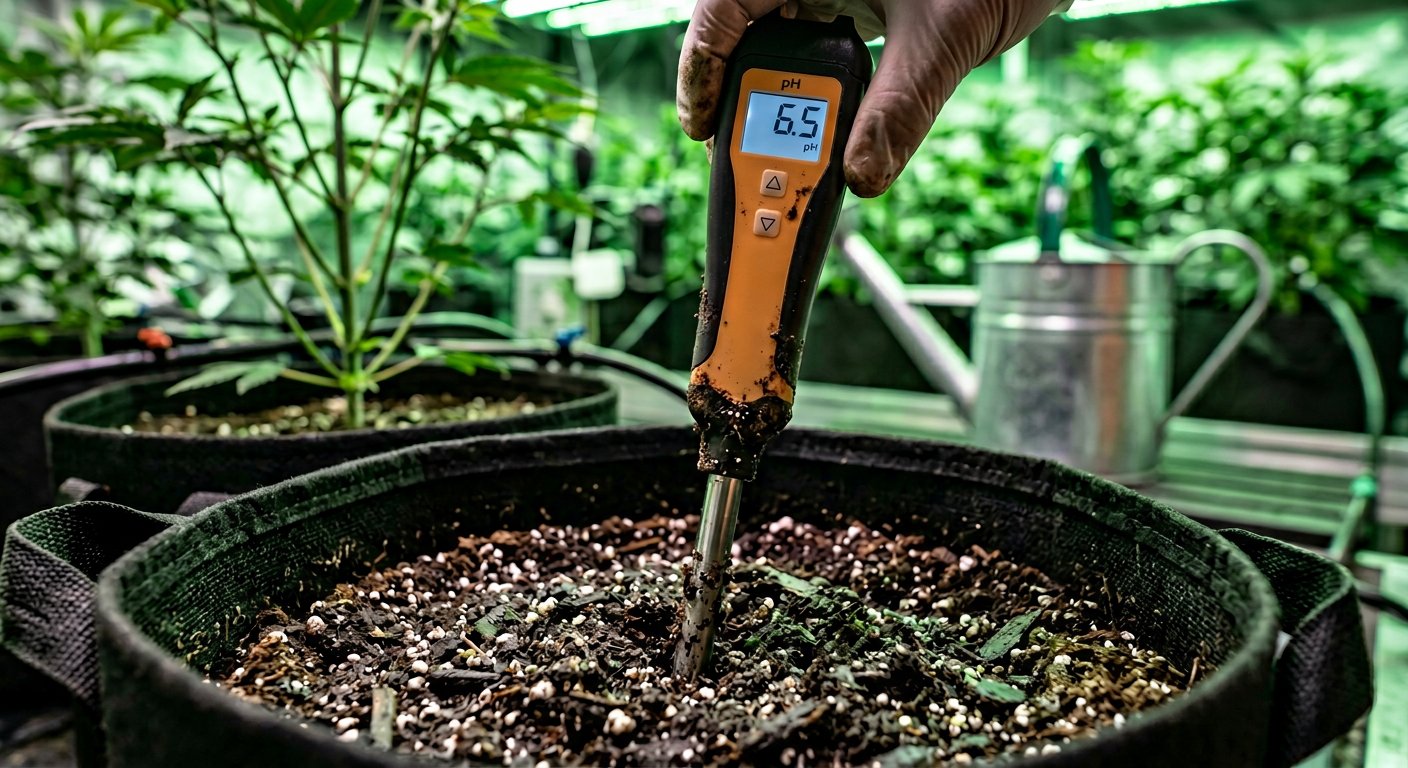
Cannabis soil pH directly controls which nutrients roots can absorb. Even perfectly fertilized soil becomes useless if pH drifts outside 6.2–6.8 because essential minerals chemically bind to soil particles and become unavailable to roots — a condition called nutrient lockout. Managing pH is more important than managing nutrients.
pH and Nutrient Availability at a Glance
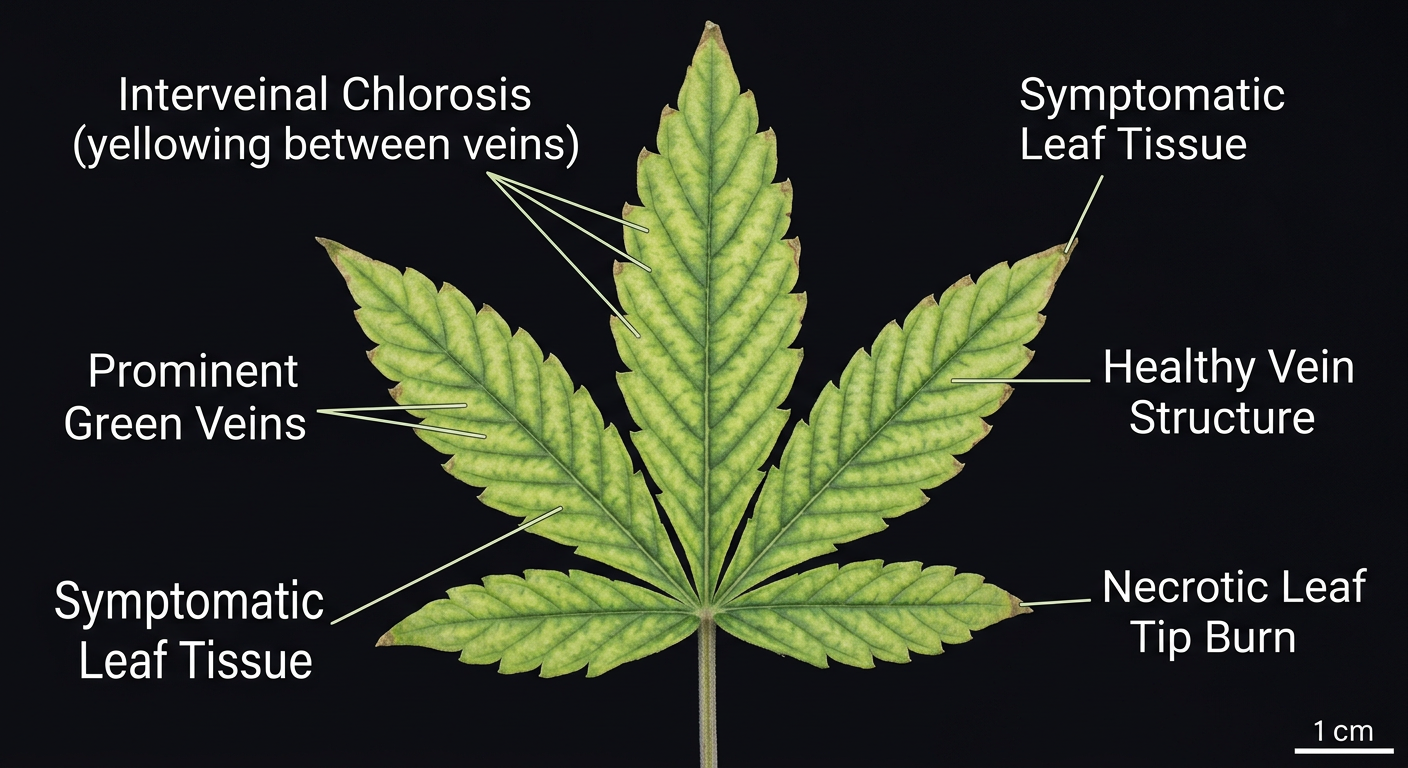
- pH 6.0–6.5: Best zone for nitrogen, phosphorus, potassium, and most trace minerals
- pH 6.5–7.0: Calcium and magnesium most available — useful during late veg and flower
- Below 6.0: Iron and manganese become toxic; phosphorus locks out
- Above 7.0: Calcium forms calcium phosphate, unavailable to roots; magnesium drops
Most pH problems in soil develops slowly — not from a single watering but from accumulated drift over weeks. Use pH-adjusted water (target 6.3–6.5 for soil) every time you water and test your runoff monthly with a pH meter. If runoff pH drops below 6.0 or rises above 7.0, flush the pot with pH-corrected water until runoff stabilizes.
When to Start Adding Nutrients to Pre-Mixed Soil
With Fox Farm Ocean Forest or Roots Organics, most cannabis plants don't need any supplemental nutrients for the first 3–5 weeks — the organic charge in the soil handles early growth. Signs that the charge is depleting include pale new growth, slight yellowing of lower leaves, or slower growth rate than expected.
When you do introduce nutrients, start at 25–50% of the manufacturer's recommended dose and work up. Cannabis in its first grow responds better to slightly underfed conditions than to aggressive feeding schedules. Use our Nutrient Calculator to build a weekly feeding schedule based on your plant's size and growth stage.
Container Size and How It Interacts With Your Soil Choice
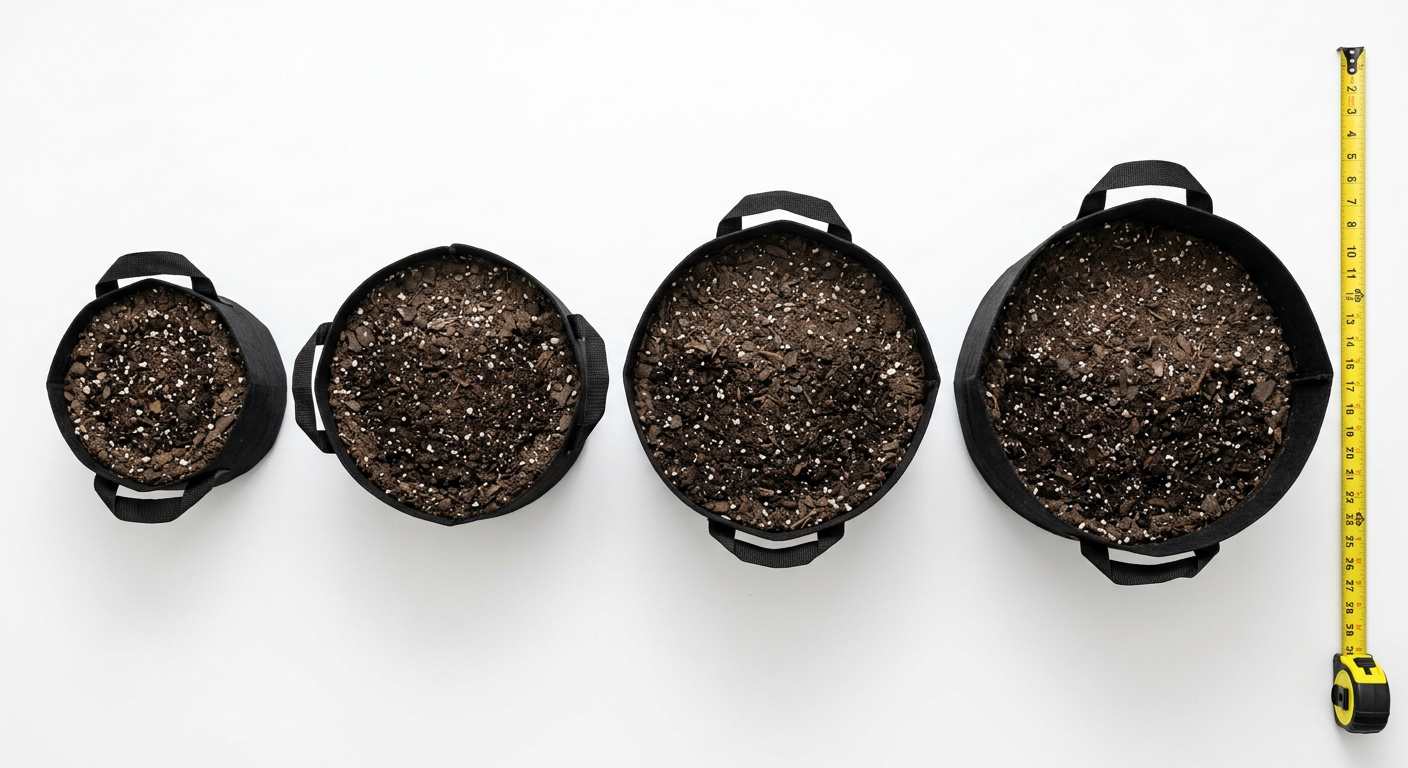
The container size you choose directly affects how fast your soil dries between waterings, which in turn affects root oxygenation and pH stability. Choosing the right pot size for your soil type prevents the two most common beginner watering mistakes: overwatering dense soil in large pots, or letting plants dry out too fast in small pots with perlite-heavy mixes.
Matching Soil Type to Container Size
- Dense, peat-heavy soil (low perlite): Use smaller containers (1–3 gal) or add more perlite to compensate
- Chunky, well-amended soil (20–30% perlite): Works in 3–5 gallon pots for most photoperiods
- Pro-Mix HP or near-soilless: Benefits from larger containers (5–7 gal) — dries faster, so more root volume equals more buffer
- Autoflowers: Most growers use 3-gallon fabric pots with well-amended soil — autoflowers don't like transplanting, so pot selection at germination matters
Fabric pots (also called smart pots or air-prune containers) are the best pairing for cannabis soil at any level. The breathable fabric air-prunes roots naturally, forces the plant to create a dense root structure, and dries evenly from the sides rather than only from the top. They cost $3–$8 and dramatically reduce overwatering risk compared to plastic nursery pots.
For a complete breakdown of your indoor setup from lights to containers, our Indoor Grow Tent Setup Guide covers every decision in sequence so nothing gets missed.
Common Soil Problems Beginners Miss (And How to Spot Them Early)
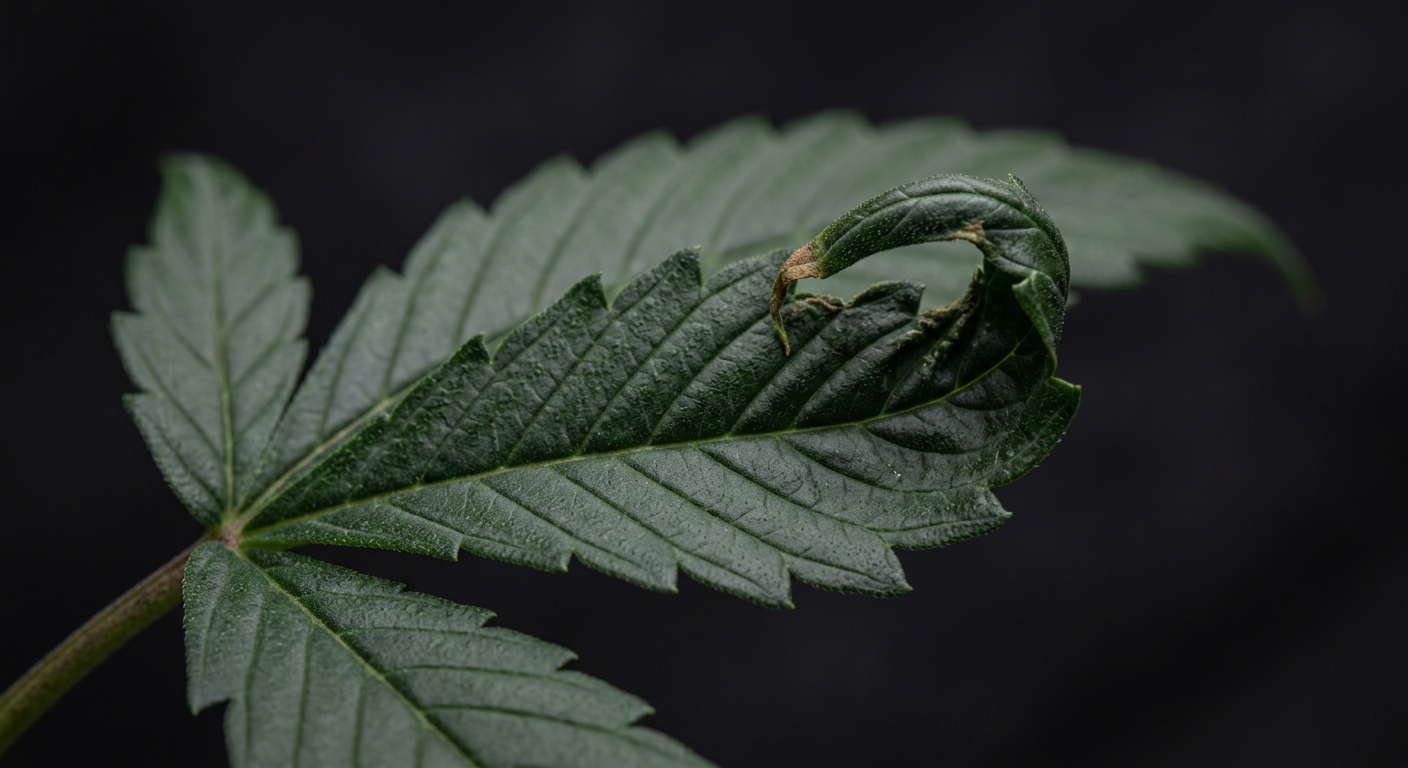
Soil problems rarely announce themselves obviously — they show up as plant symptoms that beginners attribute to wrong causes. Knowing which soil condition causes which symptom saves weeks of chasing the wrong fix.
Symptom-to-Soil-Cause Quick Reference
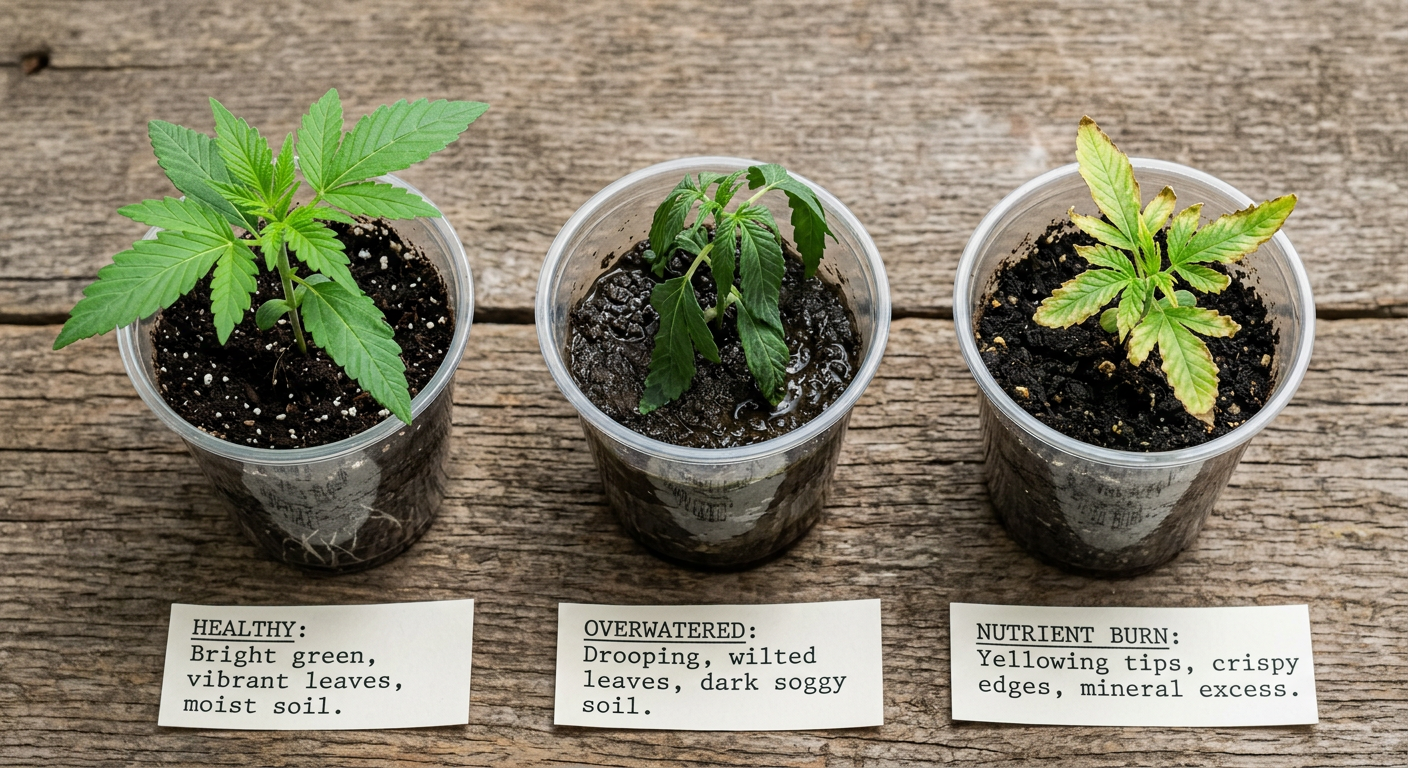
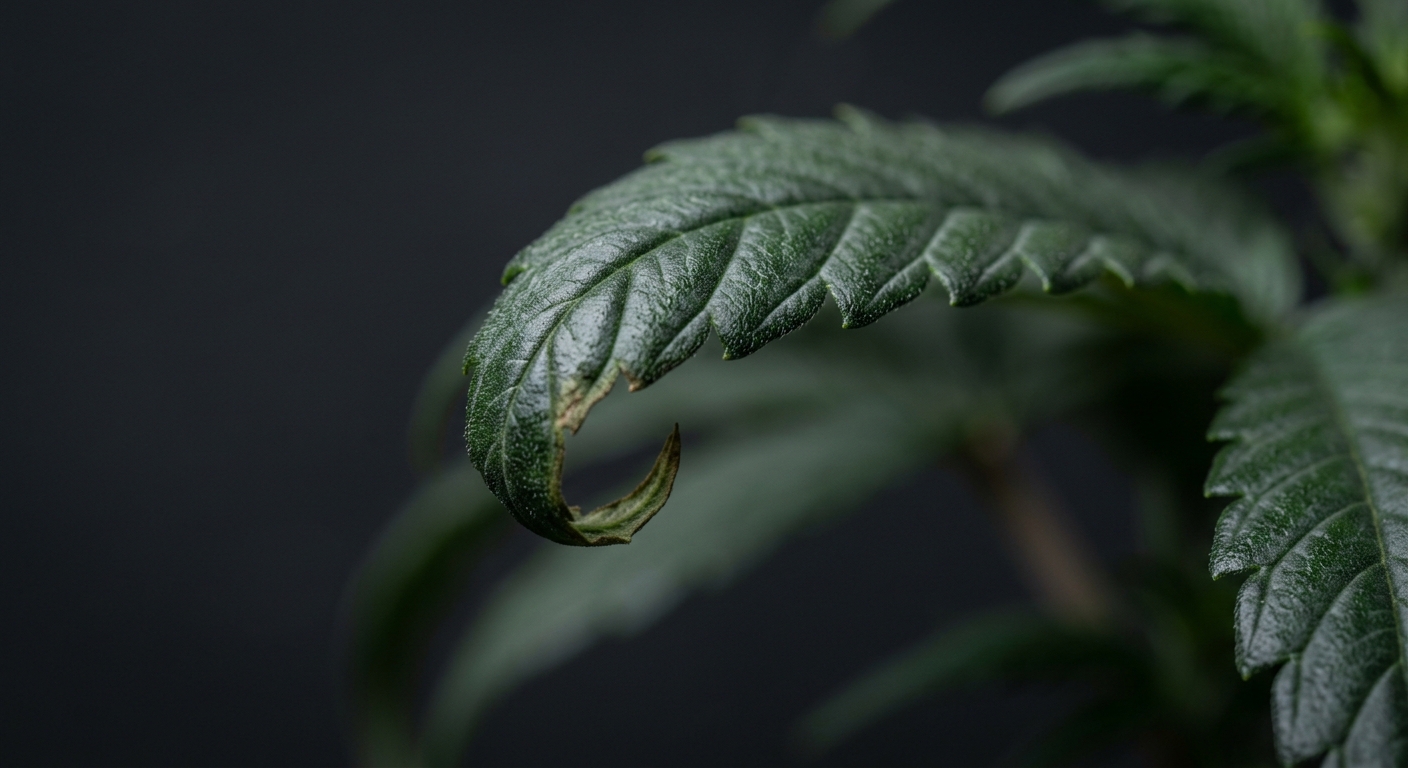
- Dark green leaves curling downward ('claw'): Nitrogen toxicity — soil is too hot or slow-release fertilizer activating. Don't feed more; flush or transplant.
- Yellow lower leaves, normal new growth: Nitrogen depletion — organic charge used up, time to begin feeding.
- Brown tips on new growth: Either nutrient burn (too-hot soil) or calcium deficiency from low pH. Test pH first before adding calcium.
- Drooping, dark, heavy leaves after watering: Overwatering — soil doesn't drain fast enough. Add perlite or repot.
- Pale yellow-green new growth, older leaves normal: Iron or manganese lockout — pH likely above 7.0.
- Purple/red stems in seedlings: Often phosphorus lockout from cold temperatures or low pH — check soil temp and pH together.
If you're already seeing symptoms and need to diagnose quickly, the Plant Diagnosis Tool walks you through visual symptoms step-by-step to identify the most likely cause. For detailed seedling-stage visual diagnosis, the Cannabis Seedling Problems guide covers week-by-week issues with photos.
Test pH first, always. About 70% of 'nutrient problems' in cannabis are actually pH problems in disguise. Before adding any nutrient solution or amendment to fix a symptom, take a runoff pH reading. If pH is out of range, fix that before anything else.
Soil for Indoor vs Outdoor Cannabis Grows
Indoor and outdoor cannabis grows need different soil properties because the environment they operate in differs dramatically. Indoor soil must drain fast and stay oxygenated in confined containers with controlled watering. Outdoor soil benefits from more water retention and biological complexity to handle rain events, temperature swings, and longer root runs.
Indoor Grow Soil Priorities
- High aeration (25–30% perlite minimum) to compensate for no natural wind and soil movement
- Consistent pH buffering — indoor plants are pH-tested every watering, so stability matters more than outdoor buffering
- Light-medium nutrient charge to allow precise feeding schedules
- Designed for container use — compaction resistance in 3–10 gallon fabric pots
Outdoor Grow Soil Priorities
- Higher organic matter for water retention through dry spells
- Richer microbial community (more compost, worm castings, or living soil elements)
- Deep biological structure for roots that can run 2–4+ feet in the ground
- Coarser drainage at the base of raised beds or large containers to prevent waterlogging in heavy rain
For indoor grows specifically, the choice of potting soil feeds directly into every other decision — from watering frequency to nutrient schedule to how often you need to pH test. If you want a complete workflow from seedling to harvest timed correctly, the Germination Guide is where to start, and our Grow Planner tool will build a day-by-day schedule around your specific setup.
Coco Coir vs Potting Soil for Cannabis Beginners
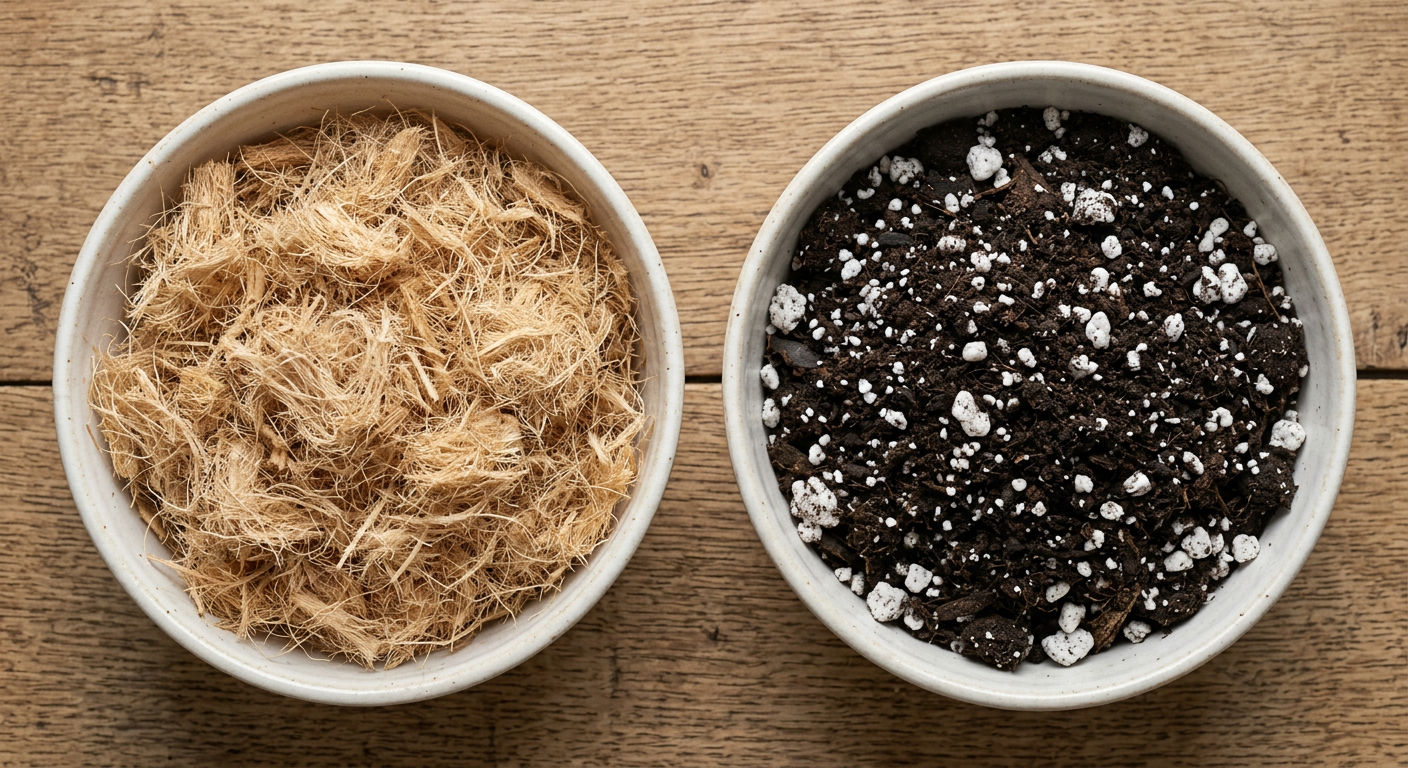
Coco coir and traditional potting soil behave differently enough that beginners should treat them as separate growing systems — not interchangeable options. Coco is a soilless medium that requires full nutrient delivery from the start but drains almost perfectly and eliminates overwatering risk. Soil is more forgiving, holds a nutrient charge, and behaves more like what most beginners intuitively expect growing media to do.
| Property | Potting Soil | Coco Coir |
|---|---|---|
| Nutrient Charge | Built-in organic charge | None — full liquid feeding required |
| pH Range | 6.2–6.8 | 5.5–6.3 |
| Overwatering Risk | Moderate | Very low (near impossible to overwater) |
| Beginner Curve | Low — soil buffers mistakes | Medium — requires daily/frequent watering & nutrients from day 1 |
| Cost | $18–$55 per grow | $15–$35 per grow (+ nutrients) |
| Best For | First-time growers wanting simplicity | Growers who want faster growth and maximum control |
The short answer for most beginners: start with soil. Coco coir is excellent and many growers prefer it long-term, but it requires feeding nutrients from day one and watering more frequently (sometimes daily). Soil gives you a buffer — it holds nutrients, retains moisture, and corrects minor pH swings automatically. Learn with soil, then experiment with coco once you understand how your plants eat and drink.
The Right Seeds for Your Soil Setup
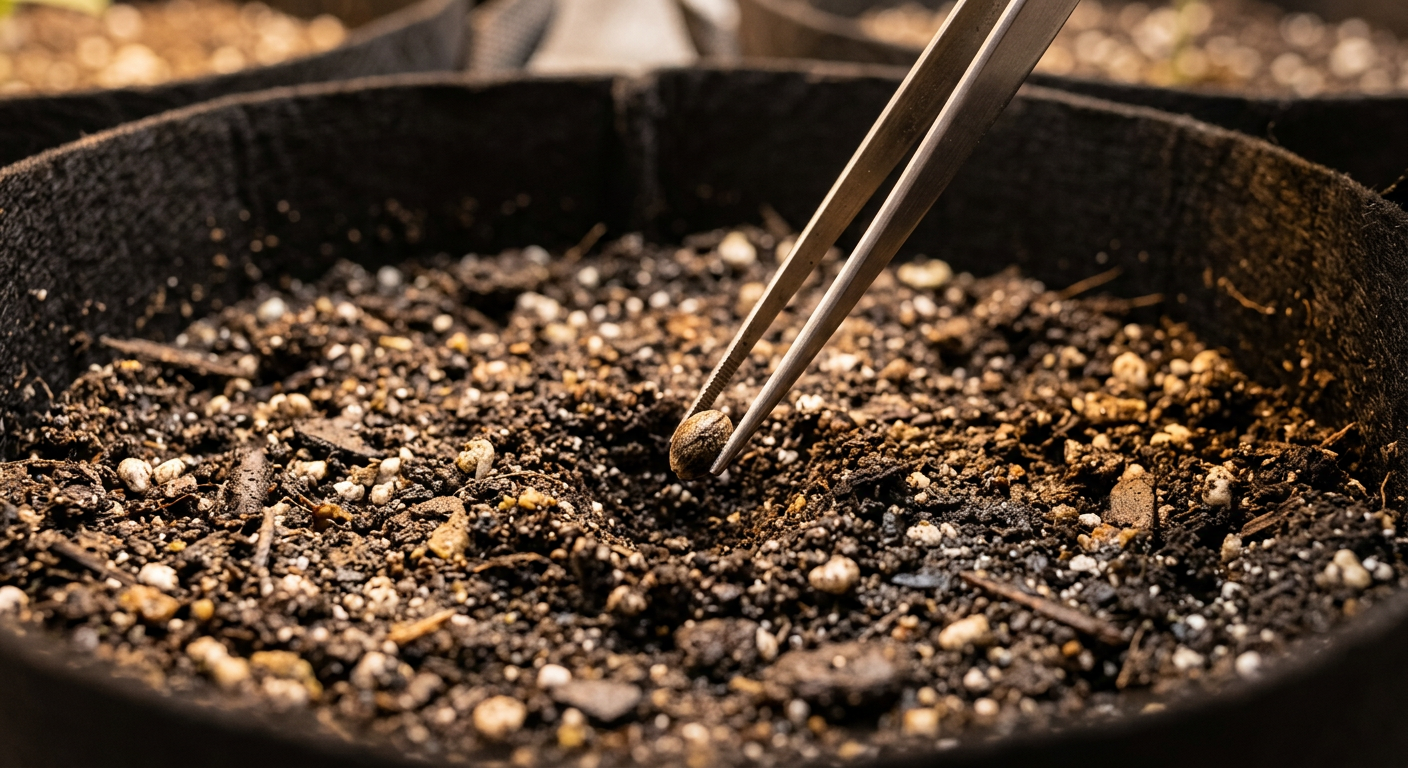
Soil choice and strain choice interact — a very heavy-feeding, high-THC strain in a lightly amended beginner mix will exhaust nutrients faster than a robust, forgiving strain. Getting both right on your first grow gives you the best chance at a successful harvest.
For beginners using a pre-mixed soil like Ocean Forest, these strains offer a forgiving grow profile with strong results:
- Northern Lights x Big Bud (20% THC) — One of the most recommended beginner strains globally. Short, compact, resilient to minor deficiencies, fast flower cycle. Handles moderate nutrient swings without drama.
- White Widow (25% THC) — A legendary, stable strain that adapts well to soil and performs consistently across different nutrient levels. Excellent first photoperiod grow.
- Amnesia Haze Autoflower (17% THC) — Ideal if you want to skip transplanting entirely. Plant directly into your final 3-gallon pot, let the organic soil charge carry it through early growth, and you'll be harvesting in 10–12 weeks from seed.
- Blue Dream — A sativa-dominant hybrid (not in our catalog) widely regarded as one of the most forgiving strains for beginners. Vigorous root system adapts to both quality pre-mixed soils and amended budget mixes.
- Super Skunk (20% THC) — Fast-flowering, short structure, handles minor pH fluctuations without showing severe symptoms. Good choice for growers still dialing in their pH management.
- Critical Mass — A classic indica-dominant strain (not in our catalog) with a strong reputation for soil grows. Dense branching, forgiving feeding requirements, and a predictable growth pattern that's easy to manage in containers.
- Skywalker OG Autoflower (23% THC) — For growers who want high potency without photoperiod complexity. Grows well in quality pre-mixed soil with minimal supplemental feeding through mid-flower.
For more beginner-appropriate picks across different grow styles, the Best Cannabis Strains for Beginners guide covers 12 forgiving varieties with grow notes for each. If you're growing indoors and want to match your strain to your soil and light setup, the Best Strains for Indoor Growing guide narrows the field further.
Before you germinate, use the Yield Estimator to get a realistic target for your specific setup — strain, container size, light wattage, and grow medium all factor into final harvest weight.
If you're running autoflowers in soil, resist the urge to transplant. Autos have a fixed life cycle and transplant stress eats into that window. Choose your final container size (3 gallons is the standard), fill it with your amended mix, and germinate directly into it. The Germination Guide explains the safest method for getting seeds into soil without damage.
Frequently Asked Questions
Can I use garden soil for cannabis plants?
Regular outdoor garden soil is not suitable for growing cannabis in containers. It compacts aggressively in pots, restricts drainage, and typically runs at pH 6.8–8.0 — above the 6.2–6.8 range cannabis needs. It also introduces unknown pathogens, insects, and weed seeds. Always use a purpose-formulated potting mix for container cannabis grows.
What potting soil should beginners use for cannabis?
Fox Farm Ocean Forest is the most widely recommended pre-mixed soil for cannabis beginners. It comes pH-balanced to 6.3–6.8, contains a light organic nutrient charge from worm castings and bat guano, and performs consistently across indoor and outdoor grows. Add 20–30% perlite to improve drainage before use. Roots Organics Original and Pro-Mix HP are strong alternatives depending on whether you prefer a richer or more neutral starting medium.
Can you use Miracle-Gro soil for cannabis plants?
Standard Miracle-Gro Potting Mix is not recommended for cannabis. It contains time-release synthetic nitrogen that activates every time you water — leading to nitrogen toxicity, leaf clawing, and nutrient lockout that's difficult to fix without a full repot. The Miracle-Gro Performance Organics line is a better option if you must use it, but purpose-built cannabis soils like Fox Farm Ocean Forest give beginners far more predictable results.
What is the ideal soil pH for cannabis?
Cannabis grown in soil thrives at a pH between 6.2 and 6.8. The center of this range (6.4–6.6) gives the broadest nutrient availability across nitrogen, phosphorus, potassium, calcium, and magnesium. Test runoff pH monthly using a digital pH meter. If runoff drops below 6.0, flush with pH 6.5 water. If it rises above 7.0, flush with slightly acidified water (pH 6.0–6.2) until runoff stabilizes.
How do I know when my soil's nutrient charge is running out?
The first signs that your pre-mixed soil's organic charge is depleting are: slight yellowing of the oldest lower leaves, noticeably slower new growth, or pale coloration on new shoots compared to established growth. In Fox Farm Ocean Forest, this typically happens between weeks 4–6 of vegetative growth. At that point, begin a light feeding schedule — starting at 25% of the recommended nutrient dose and increasing weekly based on plant response.