You cut them down. Maybe it was impatience, maybe a pest scare, maybe you just miscounted the flowering weeks. Either way, you're holding buds that don't smell quite right, look pale and airy, and you're already dreading the smoke test. The harvesting cannabis too early effects are real — and some of them can't be undone.
This isn't a guide about how to harvest correctly. That guide already exists. This is the rescue guide — the honest breakdown of what just happened to your cannabinoids, what you can realistically save, and what to lock in before your next grow so this never happens again.
What 'Too Early' Actually Means: The Chemistry Behind Premature Harvest
Harvesting cannabis too early means cutting the plant before its cannabinoid and terpene synthesis has reached peak output. It's not just a timing issue — it's a biochemical one, and understanding the chemistry tells you exactly what you lost.
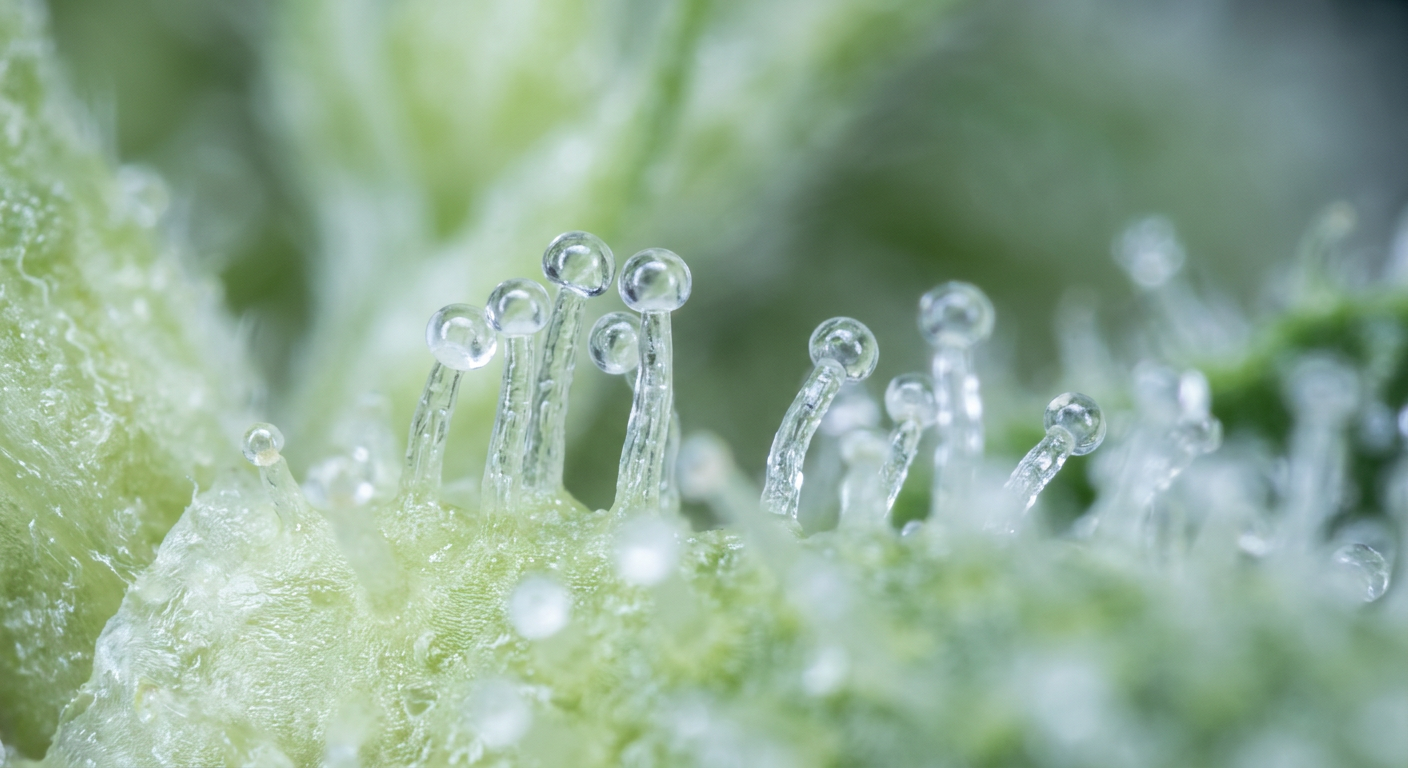
Cannabis produces cannabinoids in trichomes — tiny resin glands covering the buds and sugar leaves. The process starts with CBG (cannabigerol), often called the "mother cannabinoid," which enzymes then convert into THCA, CBDA, and other cannabinoid acids. THCA is the acidic, non-psychoactive precursor to THC. It only becomes psychoactive THC when heated (smoked, vaped, or decarboxylated). If you harvest before this conversion chain completes, you're left with high CBG, low THCA, and immature terpene profiles.
The science: At the clear trichome stage, the plant is still actively synthesizing THCA from CBG. The enzyme THCA synthase is mid-process. Cutting now is like pulling bread out of the oven after 10 minutes — the Maillard reaction hasn't happened yet. You can't finish the bread on the counter. Similarly, you cannot complete cannabinoid synthesis post-harvest. For a deeper look at how trichomes build cannabinoids from scratch, see our guide to cannabis trichome biology and cannabinoid production.
Terpenes — the aromatic compounds responsible for flavor, smell, and the entourage effect — also accumulate heavily in the final two weeks of flowering. An early harvest can strip out 40–60% of the terpene density you would have gotten at peak ripeness. To understand why terpenes matter so much to the final experience, read our breakdown of the entourage effect.
Key takeaway: "Too early" means the THCA biosynthesis chain is incomplete, CBG remains unconverted, and terpene density is far below its potential. These deficits are locked in at the moment of harvest — no post-harvest process changes them.
The Trichome Development Stages: A Visual Harvest Timing Chart
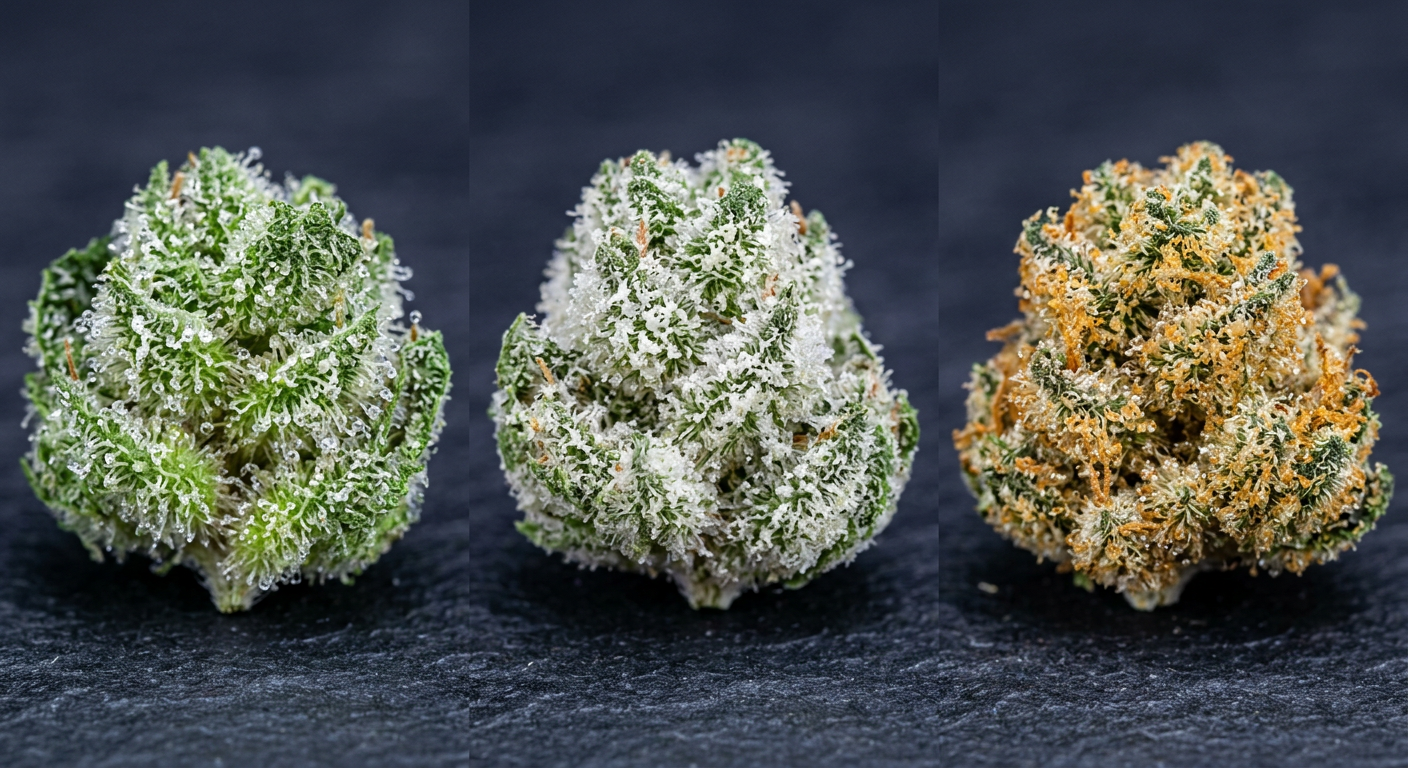
Trichome color is the single most reliable indicator of harvest timing. Here's what each stage means for potency and what the plant is actually doing chemically at each phase.
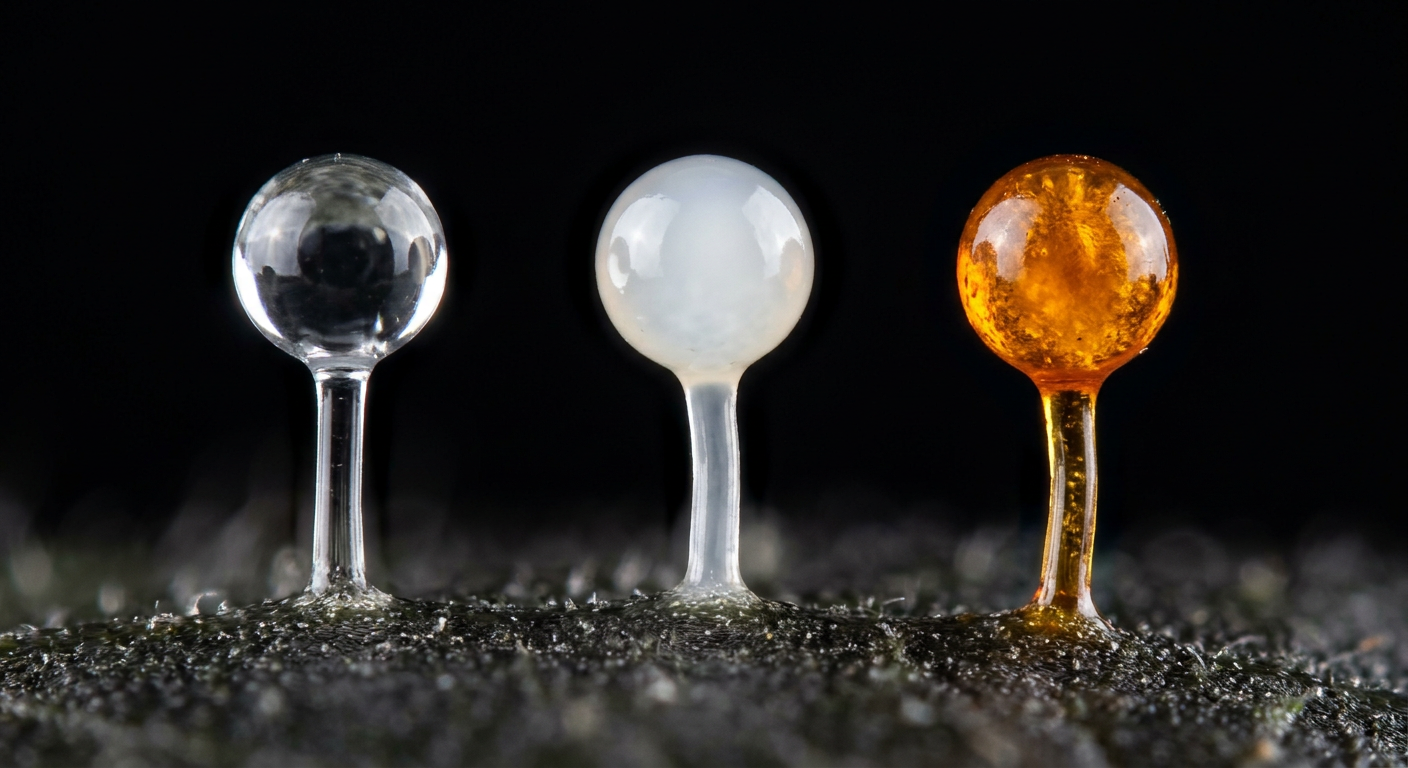
| Trichome Stage | Appearance | Cannabinoid Status | Harvest Decision |
|---|---|---|---|
| Clear / Translucent | Glassy, see-through heads | High CBG, very low THCA — synthesis incomplete | 🚫 Way too early — 2–4 weeks out |
| Mostly Clear, Some Milky | Mixed glass and white trichomes | THCA building, CBG still elevated | 🚫 Still too early — 1–2 weeks out |
| 50–70% Milky White | Mostly opaque, few clear | THCA near peak, terpenes still building | ⚠️ Close but wait — 1 week out |
| 70–90% Milky, 10–30% Amber | Dense milky with amber creeping in | THCA at peak, terpenes fully expressed | ✅ Harvest now for peak THC |
| 50%+ Amber | Majority amber/brown trichomes | THC degrading to CBN | ⚠️ Late harvest — sedative, couch-lock effect |
Gear tip: A standard jeweler's loupe (30–60x) can show trichome color, but a digital USB microscope (100–200x) gives you a clear, unambiguous view. Investing $15–30 in one of these tools is the single highest-ROI purchase you can make as a home grower.
The pistil method (watching hairs turn orange/red) is a rough secondary indicator but not reliable for timing — genetics, humidity, and stress all affect pistil color independent of trichome maturity. Always use trichomes as your primary metric. For the full harvest timing methodology, check our guide on when to harvest cannabis for maximum potency.
How Much Potency Do You Actually Lose? Stage-by-Stage Breakdown
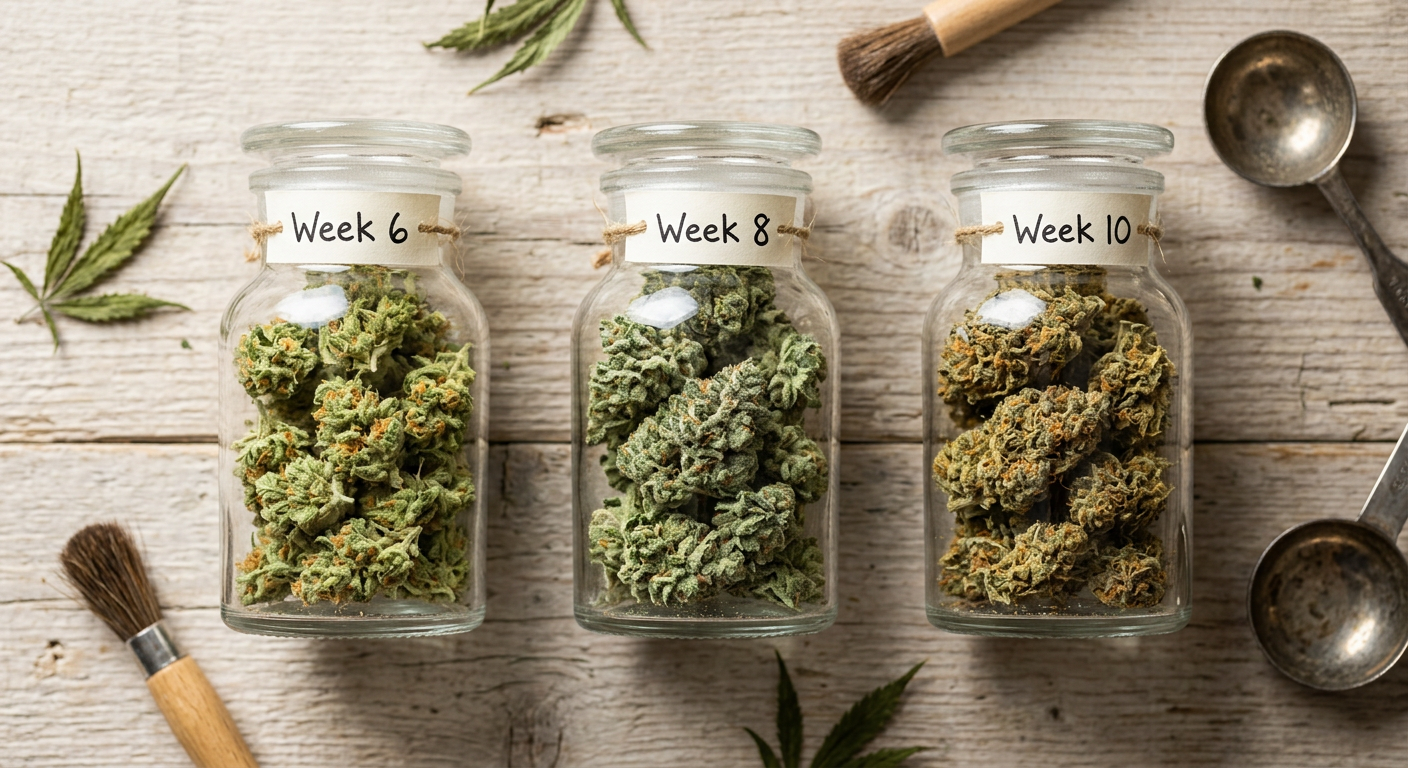
This is the question everyone actually wants answered. Here's an honest, numbers-based breakdown of what early harvest costs you in real THC percentage points — based on where trichomes were at cut time.
| Harvest Timing | Trichome State | Estimated THC% | Vs. Peak Loss |
|---|---|---|---|
| Very early (3–4 weeks pre-peak) | All clear | 5–8% | Up to 70% below peak |
| Early (2–3 weeks pre-peak) | Mostly clear, some milky | 8–13% | 40–55% below peak |
| Slightly early (1–2 weeks pre-peak) | 50% milky, 50% clear | 13–17% | 20–35% below peak |
| Near peak (1 week early) | 70% milky, minimal amber | 17–21% | 5–15% below peak |
| Peak harvest | 70–90% milky, 10–30% amber | 20–27%+ | Baseline |
To put this in real-world context: a strain like OG Kush Feminized (26% THC potential) harvested at the all-clear trichome stage might test at 7–8% THC — roughly the potency of a low-grade commercial product. That same plant given 3 more weeks delivers a completely different experience.
Bottom line on potency loss: The earlier you harvest relative to peak, the steeper the potency cliff. Even harvesting just one week early can cost you 10–15% of your achievable THC — which is often the difference between average and exceptional bud.
The Sensory Signs Your Cannabis Was Harvested Too Early
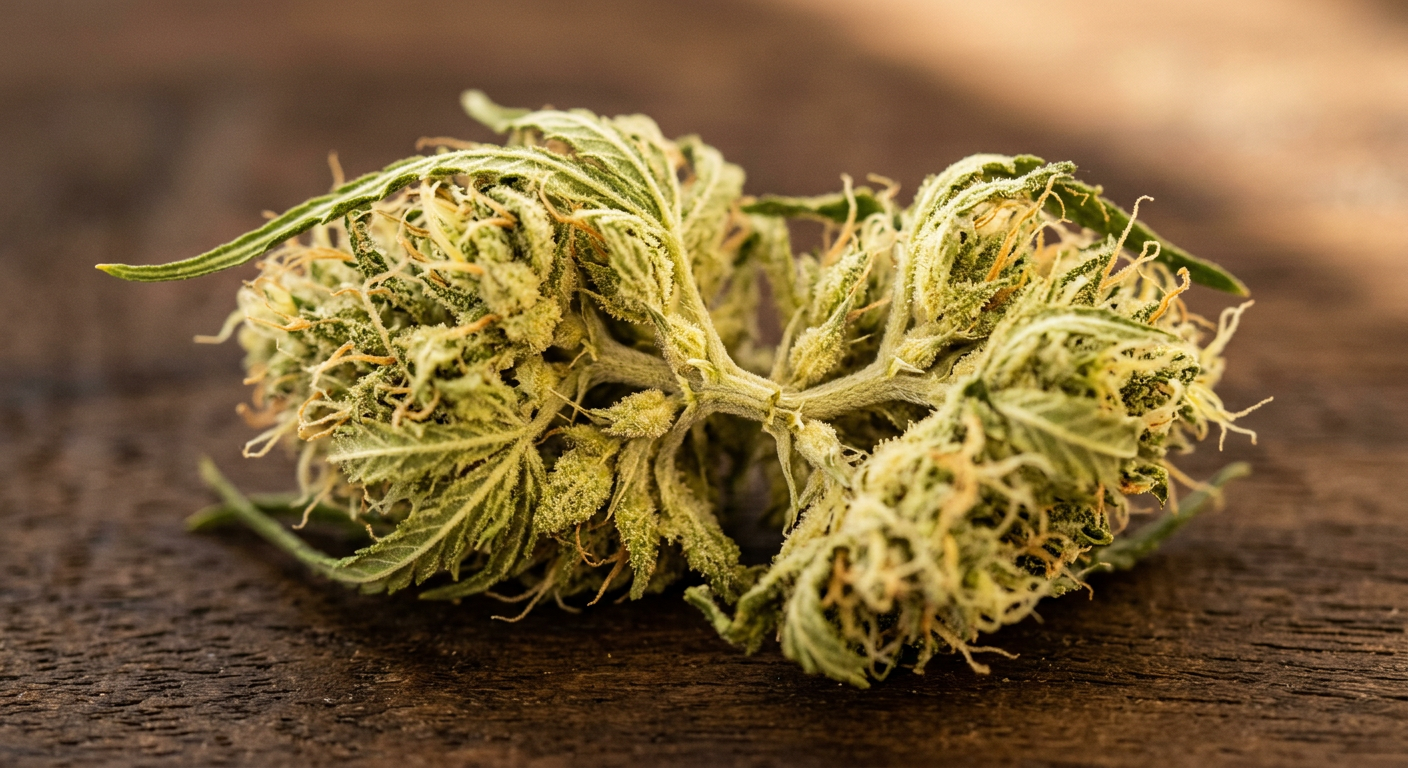
You don't always need a microscope to suspect a premature harvest after the fact. Early-harvested cannabis has a distinctive profile across smell, appearance, and effect that experienced growers recognize immediately.
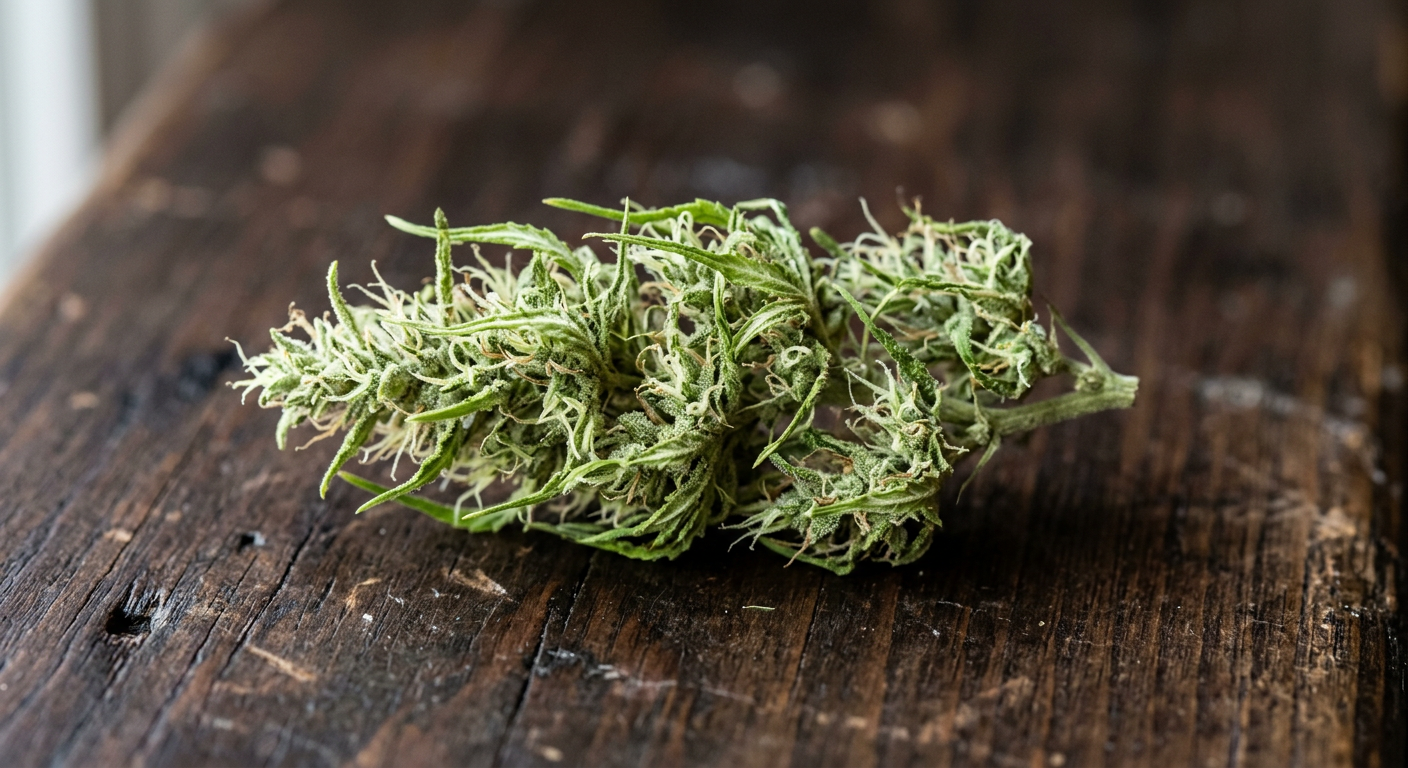
Visual Signs
- Buds are light, airy, and poorly compacted — not dense nuggets
- Pale or bright green color even after drying (chlorophyll hasn't broken down properly)
- Sparse trichome coverage — buds don't look frosty or sparkly
- Pistils (hairs) still mostly white rather than orange/red
- Low dry weight — significantly less than expected for the strain
Smell and Flavor Signs
- Strong grassy, hay, or fresh-cut plant smell during drying
- Thin, watery terpene profile — no depth or complexity
- Harsh, scratchy smoke that irritates the throat immediately
- Flavor disappears quickly — short finish with little aftertaste
- Chlorophyll-forward taste (think: mown lawn, green vegetables)
Effect Profile of Immature Cannabis
This is where early harvest hits hardest. The effect of cannabis harvested too early is qualitatively different — not just weaker, but genuinely unpleasant for many people.
- Racey, anxious headspace — high CBG and low terpene modulation creates a stimulating, jittery effect
- Weak, short-lived high — THCA levels are low, so onset is weak and duration is short
- Headache — common complaint from early-harvest smoke, likely linked to harsh combustion and immature terpene ratios
- No body effect — the relaxing, full-body quality of mature cannabis comes from the terpene-cannabinoid synergy that simply isn't present yet
If you're getting a jittery, anxious feeling from your harvest: this is the classic immature cannabis signature. High CBG combined with incomplete terpene development and low THCA creates this specific uncomfortable headspace. It's not dangerous — but it confirms the harvest was premature. You can learn more about CBG's role in our CBG: The Mother Cannabinoid guide.
Can You Rescue an Early Harvest? Honest Recovery Options
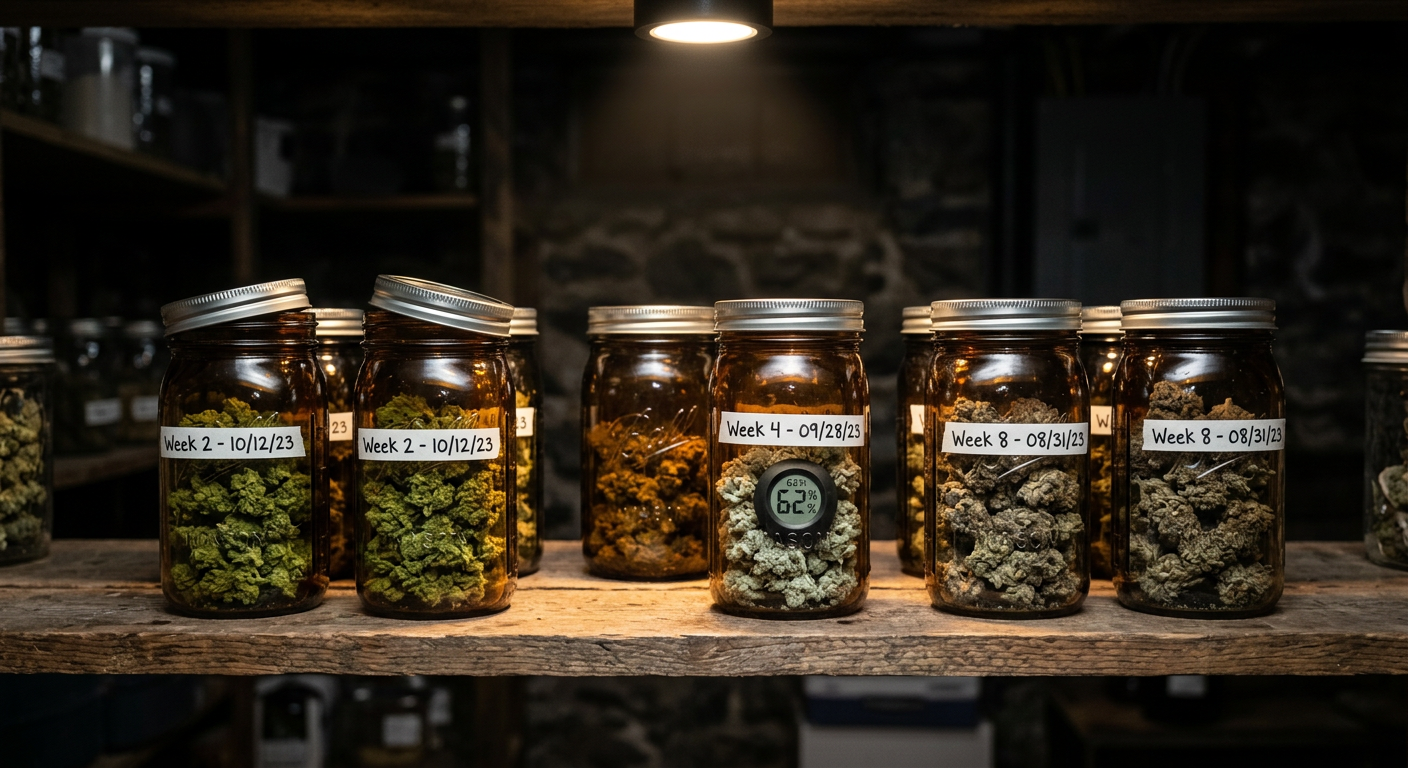
Here's where most guides are either too optimistic or completely silent. Let's give you the honest answer about what a long cure can and cannot fix when cannabis is harvested too early.
What Curing CAN Improve
- Harshness: A proper 4–8 week cure allows chlorophyll and other organic compounds to break down enzymatically — this directly reduces the throat-burning quality of early harvest bud
- Grassy smell: Extended curing converts some of the raw plant smell into a more developed aroma — you'll lose the hay note over time
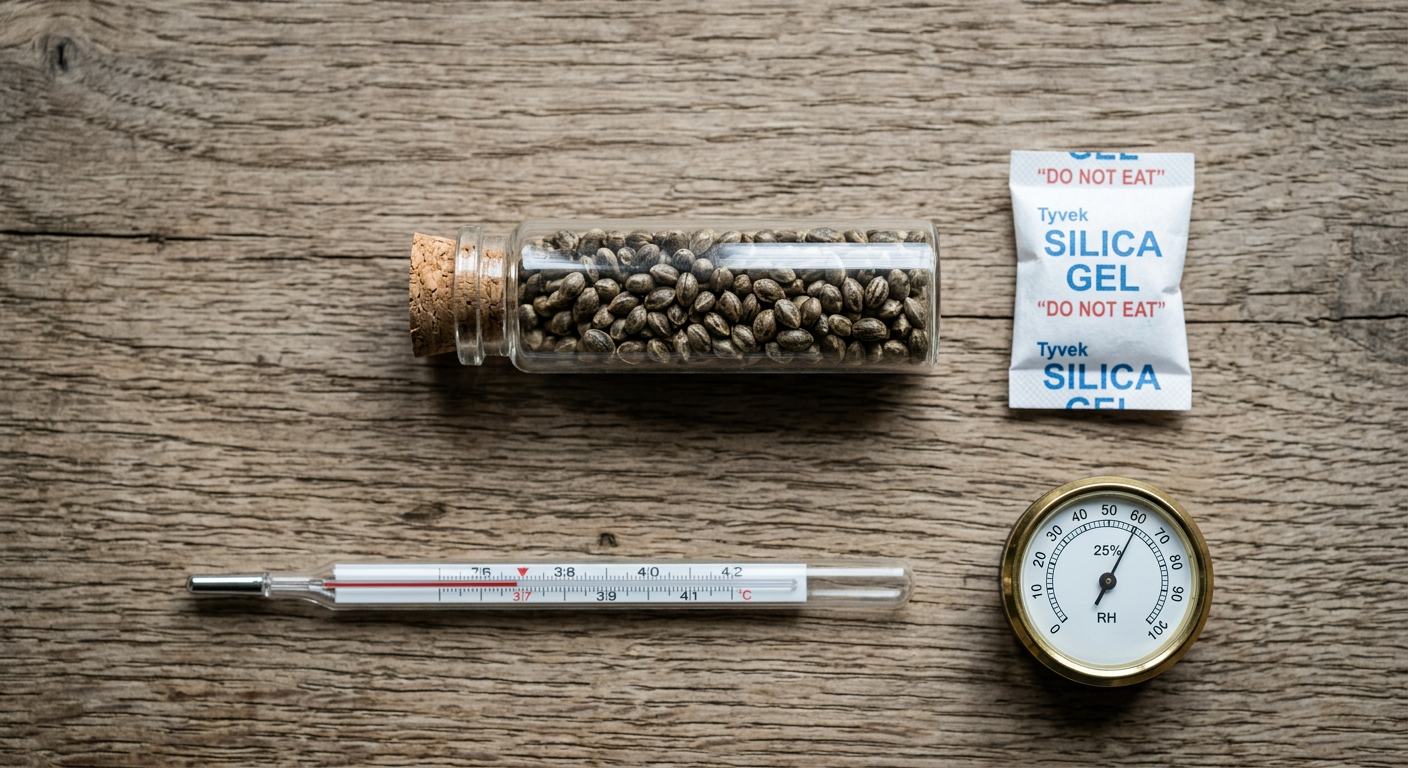
- Moisture consistency: Proper curing (target 60–65% RH in sealed jars) creates a more even moisture profile throughout the bud, improving the smoke
- Flavor complexity: Minor terpene transformations can occur during cure — some growers report improved depth after 6–8 weeks even on early harvests
What Curing CANNOT Fix
- THCA that was never synthesized — the cannabinoid ceiling is set at harvest, period
- Terpene density — terpenes that never formed cannot be created in a jar
- Bud density and dry weight — structural development stopped at cut time
- The anxious, CBG-forward effect profile
- Low potency — no cure extends or increases the psychoactive potential
Honest rescue verdict: A long, careful cure (8+ weeks) will make early-harvest cannabis noticeably more pleasant to smoke — less harsh, better smell, smoother flavor. But it will not increase potency. Manage expectations accordingly, and review our full cannabis drying and curing process guide to get the most out of what you have.
The One Partial Exception: Edibles and Concentrates
If your early harvest has genuinely low THC but decent volume, processing it into edibles or concentrates is worth considering. Decarboxylation during edible preparation converts all available THCA to THC efficiently — and while the ceiling is still low, you can dose accordingly. Our edible dosage calculator can help you work out correct dosing from lower-potency material. The full science of decarboxylation is covered in our decarboxylation guide.
Step-by-Step: How to Confirm Harvest Readiness (Do This Next Time)
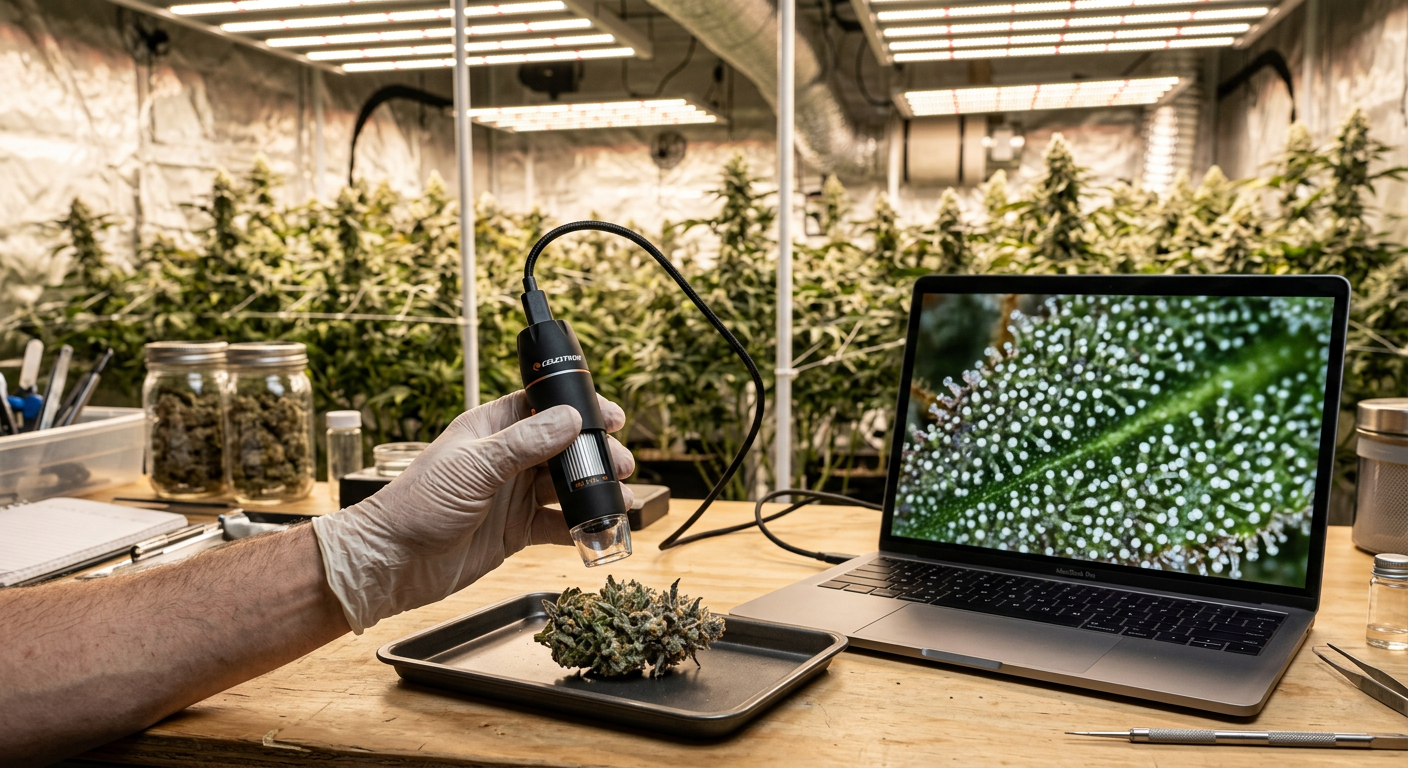
The goal now is to make sure this never happens again. This progress tracker walks you through a bulletproof harvest readiness protocol for your next grow.
Get the Right Magnification Tool
A jeweler's loupe (30–60x) is the minimum — $8–12 on any online marketplace. A digital USB microscope (100–200x) is better, showing trichome color with complete clarity. Smartphone macro clip lenses (40–60x) work as a budget middle ground. Inspect trichomes on the bud itself, not the sugar leaves — sugar leaf trichomes mature faster and give false readings.
Know Your Strain's Advertised Flowering Window
Every strain has a published flowering time — use it as a minimum countdown, not a harvest date. If your strain says 8–9 weeks, start trichome checking at week 8. Don't harvest on schedule; harvest on trichomes. Use our grow planner tool to map out your strain's full timeline and set milestone reminders.
Start Weekly Trichome Checks from Week 6 of Flower
Begin inspecting trichomes every 5–7 days from week 6 of flowering. Photograph them each time so you can see progression. You're looking for the transition from clear to milky white — when 70–80% of trichomes are milky white and the first 10–20% begin turning amber, you're in the target window.
Check Multiple Sites on the Plant
Trichomes mature unevenly — top colas mature faster than lower bud sites. Sample at least 3 locations: top cola, middle bud, lower branch. If tops are ready but lowers are still clear, you can harvest the tops and let the lowers run another week, or average the reading across sites to make a single cut decision.
Use the Pistil Check as a Secondary Confirmation
By the time trichomes are 70% milky, at least 70–80% of pistils should have turned orange, red, or brown. If your trichomes look ready but pistils are still mostly white, give it a few more days and recheck — the plant may still be pushing development. Both indicators pointing to readiness gives you a strong confirmation signal.
Log Everything in Writing
Keep a simple grow journal — or use our free grow planner — recording trichome observations, pistil percentages, and dates. After 2–3 grows, you'll have strain-specific data that tells you exactly when each of your plants peaks. This removes guesswork entirely by the third cycle.
The 48-Hour Darkness Pre-Harvest Technique
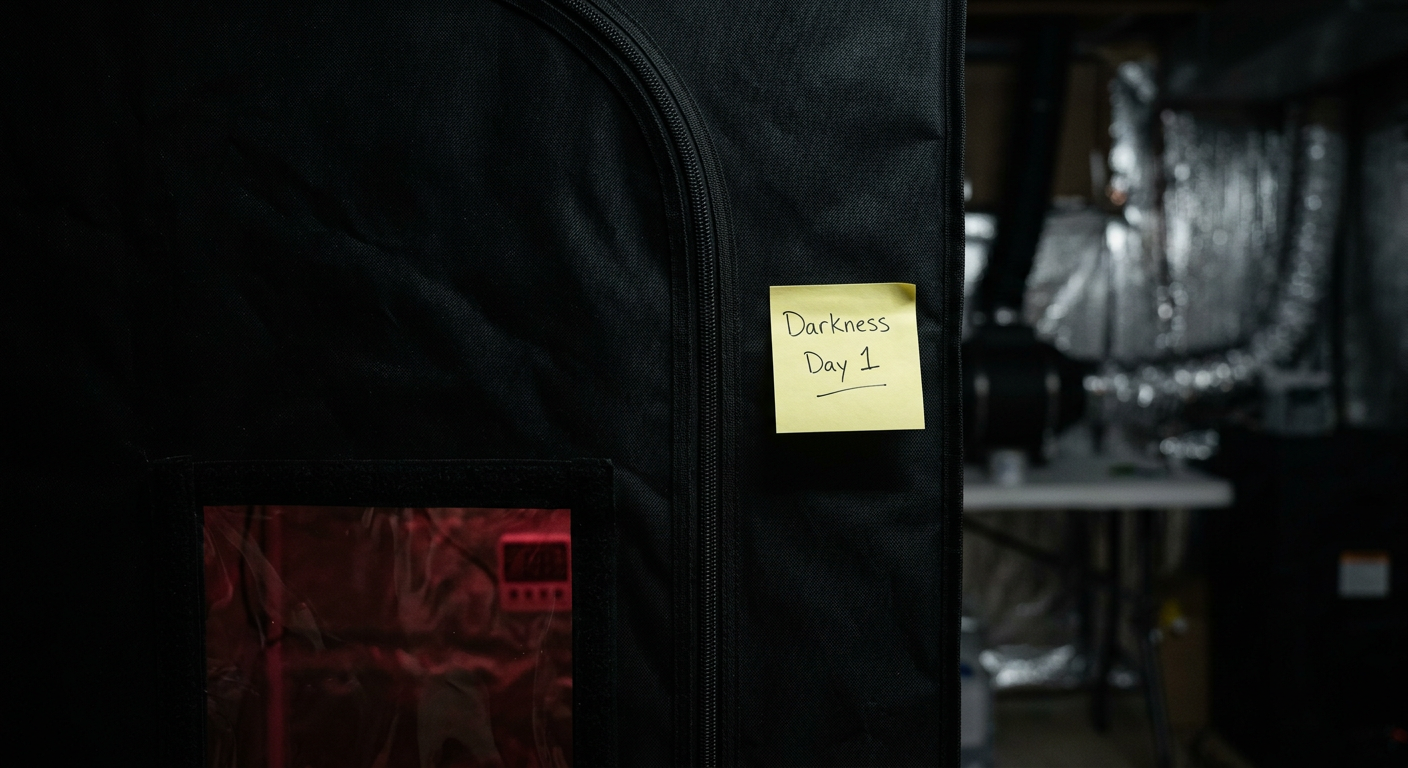
The 48-hour darkness technique involves placing your plant in complete darkness for 48 hours immediately before harvest. This is one of the most debated but widely practiced finishing techniques among experienced indoor growers.
The Theory Behind It
The working hypothesis is that darkness triggers the plant to move resin — the protective function of trichomes — to the outer surfaces of buds in response to perceived nighttime stress. Some growers also claim that light degrades THCA, so eliminating light exposure in the final hours preserves what's already there.
Scientific status: Peer-reviewed evidence for the 48-hour darkness technique is limited. However, the anecdotal reports from experienced growers are consistent enough to make it worth the zero-cost experiment. Cannabis does produce terpenes and resin as a UV-stress response, and darkness eliminates the degradation factor entirely. The technique costs nothing and carries no downside risk — which makes it easy to recommend as a finishing step.
How to Execute It Correctly
- Only run this technique when trichomes are already at harvest readiness — it is a finisher, not a ripener. It does not rescue premature trichomes.
- Keep temps cool (60–70°F / 15–21°C) and humidity around 45–50% during the dark period to slow any mold risk
- Ensure complete darkness — any light leaks reduce the effect
- Harvest immediately after the 48-hour window — don't extend beyond 72 hours as trichome degradation can begin
- This works best with strains that already have good resin production genetics
Combine with flushing: Many growers run their 10–14 day flush ending precisely when the 48-hour dark window begins. The combination of a full flush and darkness finish is widely considered the highest-quality pre-harvest protocol for flavor and smoothness.
How to Avoid This Mistake Next Grow: Build a Reliable Harvest Checklist
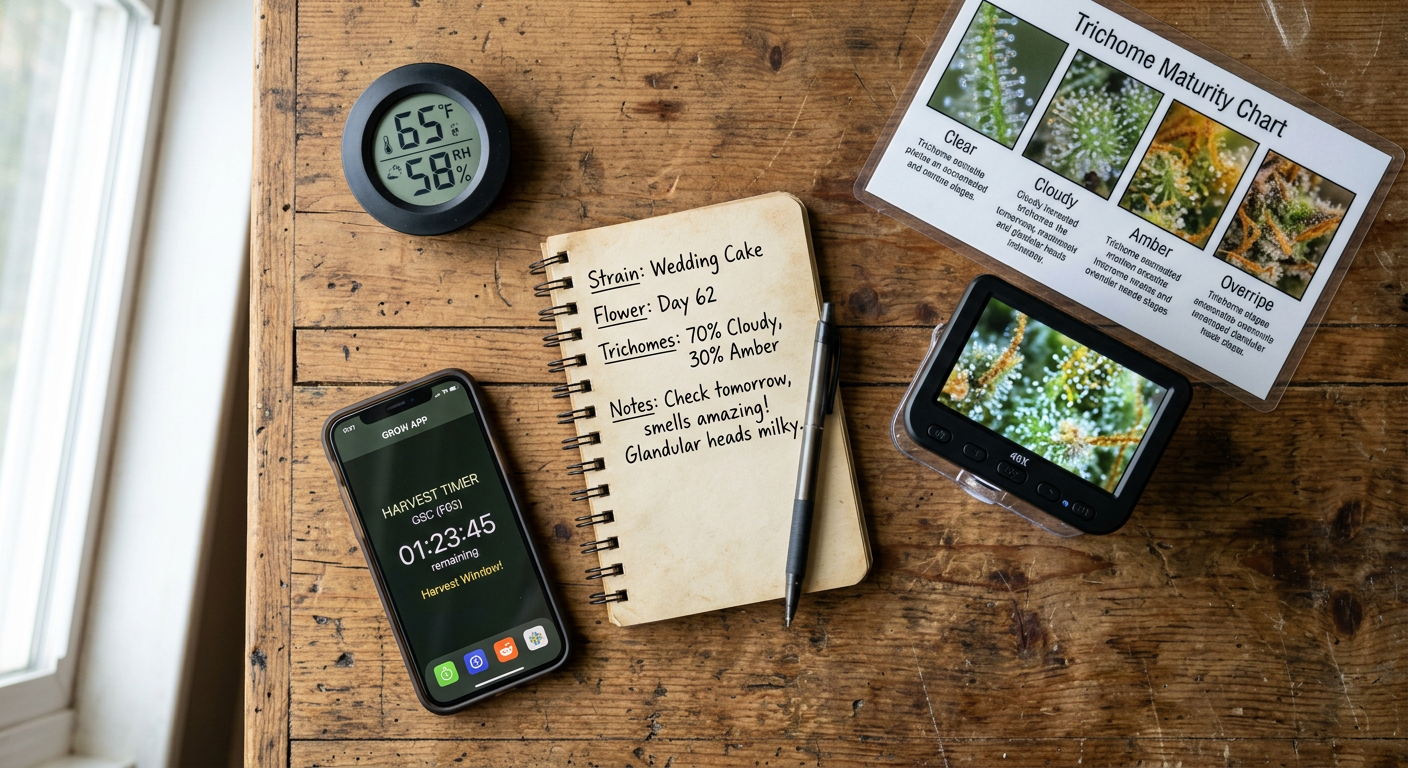
Every premature harvest comes down to the same root causes: impatience, uncertainty, stress (pests, space, life events), or simply not having a repeatable system. Here's how to build one.
Choose Genetics with Predictable Flowering Windows
One of the most underrated ways to reduce harvest anxiety is growing strains with stable, well-documented genetics. When a strain consistently flowers in 8 weeks — not 8 to 11 depending on the phenotype — you can plan your trichome window with far greater confidence.
Stable feminized genetics like Northern Lights x Big Bud Feminized (20% THC, 8–9 week flower) and Super Skunk Feminized (20% THC, reliable 7–8 week finish) give beginners the predictability they need to nail harvest timing. For growers who want the shortest possible path to harvest with minimal timing pressure, autoflowering varieties like Skywalker OG Autoflower (23% THC) run on internal clocks that make window planning highly reliable. Read our autoflower vs photoperiod guide for help deciding which suits your setup.
Genetic consistency is a deeper topic worth understanding before your next seed purchase — our cannabis strain stability and genetic consistency guide breaks down what to look for.
Your Pre-Harvest Readiness Checklist
- Flowering week is within the strain's published window minimum
- 70%+ of trichomes on bud sites are milky white under 60x magnification
- 10–30% of trichomes are showing early amber transition
- 70–80% of pistils have turned orange/red/brown
- Buds feel firm and dense when lightly squeezed
- Smell is at peak intensity — rich, complex, strain-specific
- Flush has been completed (if applicable — 10–14 days)
- 48-hour darkness window completed (optional but recommended)
- Drying space is prepared: 60–70°F, 55–60% RH, dark room with airflow
- Grow journal is updated with trichome photo and date
Strains That Reward Patient Growers with Maximum Potency
If you've just experienced an early harvest disappointment and want to rebuild with strains that have clearly signaled flowering timelines and high potency ceilings, these are strong choices for your next run:
- Purple Kush Feminized — 27% THC potential, 7–8 week flower, dense trichome-covered buds that make harvest timing visually obvious
- Quantum Kush Feminized — 30% THC potential, consistent 9-week window, extreme resin production
- White Widow Feminized — 25% THC, 8-week classic with one of the most well-documented trichome development curves in home growing
- New York Power Diesel Feminized — 24% THC, fast flowering with a clear end-stage resin explosion that signals readiness
- Gorilla Glue (GG4) — 26–28% THC, extremely heavy trichome production makes visual harvest timing straightforward, available from multiple breeders
- Wedding Cake — 25% THC, reliable 9-week photoperiod flowering with dense, resinous buds and a distinct color change at maturity
- Black Widow Feminized — 26% THC, well-structured flowering window with clear visual maturity cues
Use our free tools: Before your next grow, run your strain through the yield estimator and grow planner to map your entire timeline. Having a written plan with milestone check-ins dramatically reduces the anxiety that leads to premature harvest decisions.
One More Starting Point Worth Getting Right
Most early harvest anxiety traces back to problems that started much earlier in the grow — slow germination, weak seedlings, or a plant that never fully established. A shaky start extends vegetative time, creates unpredictable flowering timelines, and puts growers in "panic harvest" mode. Make sure your next grow starts correctly by working through our complete cannabis germination guide — getting germination and early seedling development right sets a predictable pace for everything that follows.
Don't let early harvest anxiety compound: Some growers who harvest too early immediately try to "re-veg" the plant or harvest remaining lower buds. If you took only the top colas early, the lower buds can continue and ripen properly — monitor those trichomes closely and let them run to full maturity. The lower buds weren't cut; they can still reach their potential.
Summary: What You're Working With and What Comes Next
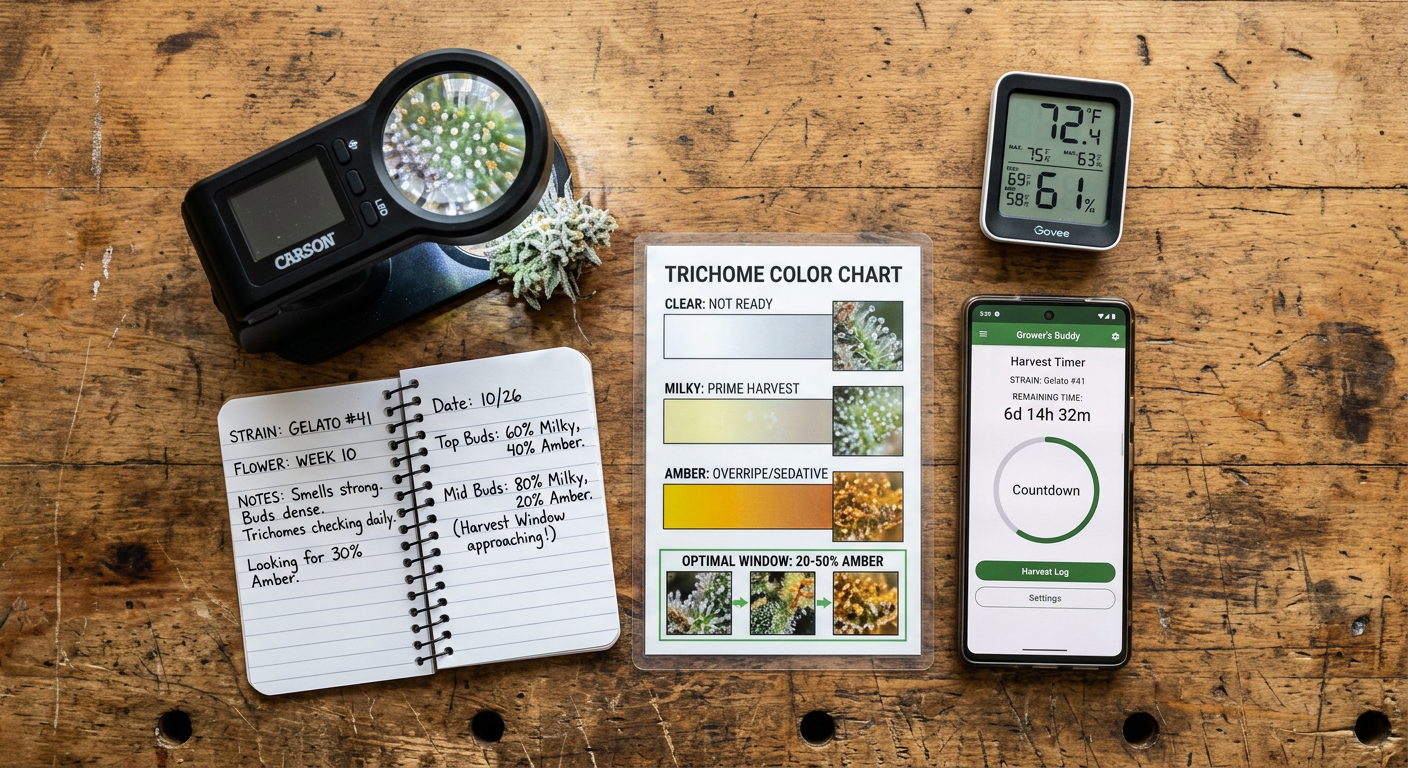
If you've already harvested early, here's the realistic situation: your potency is fixed, your terpene profile is thinner than it should be, and the effect will be weaker and potentially more anxiety-prone than the strain's potential. That's the honest assessment.
What you can do right now is execute the best possible cure — sealed glass jars at 62% RH, burped daily for the first two weeks, then every 3–4 days for 6–8 weeks total. This won't add THC, but it will meaningfully improve the smoking experience. For details on maximizing your cure, revisit the drying and curing guide.
For your next grow: choose stable genetics, start trichome checks at week 6 of flower, document every inspection with photos and dates, and use the harvest readiness checklist above as your decision gate. The growers who never harvest too early aren't luckier — they just built a repeatable system and stuck to it.
Final takeaway: Early harvest is one of the most common and most fixable beginner mistakes. It costs potency and flavor but not your confidence or your next grow. Build the system, grow stable genetics, and you'll never cut too early again.
Frequently Asked Questions
Will cannabis harvested too early still get you high?
Yes, but significantly less so. Early-harvested cannabis has lower THCA (the THC precursor), underdeveloped terpenes, and elevated CBG levels. The effect is typically a weak, racey, anxious buzz rather than a full, relaxed high — and it tends to be short-lived. The harsher smoke also makes the experience unpleasant for many people.
How much potency do you lose by harvesting cannabis too early?
Depending on how early you harvest, you can lose 30–70% of your potential THC. At the all-clear trichome stage (3–4 weeks pre-peak), THC content may be as low as 5–8%. The same strain at peak ripeness — with 70–90% milky trichomes — might reach 20–27%. Even harvesting one week early can cost 10–15 percentage points.
Can curing save cannabis that was harvested too early?
A long cure (6–8 weeks) will improve harshness and reduce the grassy, chlorophyll-heavy flavor through enzymatic breakdown. However, curing cannot create new cannabinoids. THCA that was never synthesized by the plant will not appear in the jar. The potency ceiling is permanently set at the moment of harvest — curing only improves the smoking experience within that ceiling.
How do I know if I harvested my cannabis too early?
Key signs include: pale, airy buds with sparse trichome coverage; a grassy or hay smell during drying; harsh smoke that burns the throat; a jittery, anxious effect rather than a relaxed high; and lower-than-expected dry weight. The most definitive check is trichome color — if they were mostly clear or mixed clear/milky at harvest, it was too early.
How early is too early to harvest cannabis?
Anything before 70% of trichomes have turned milky white is considered too early for most strains targeting peak THC. At the all-clear stage (2–4 weeks before peak), you're cutting at a fraction of potential potency. Even harvesting at 50% milky and 50% clear — just one to two weeks early — can cost 20–35% of achievable THC and noticeably reduces terpene density and flavor complexity.