Why Harvest Timing Is the Single Most Important Decision You'll Make
You've spent weeks — sometimes months — dialing in your environment, nutrients, and training. Then harvest day arrives, and most growers guess. That single decision, made in the wrong week or even the wrong day, can slash your final THC content by 20–30% or flip a sharp, energetic high into a couch-locked sedative experience you didn't plan for.
Knowing when to harvest cannabis isn't intuition — it's science you can learn in an afternoon. This guide walks you through every signal your plant sends, from trichome color to pistil fade, so you never leave potency on the table again.
Understanding Trichomes: Your Real-Time Potency Meter
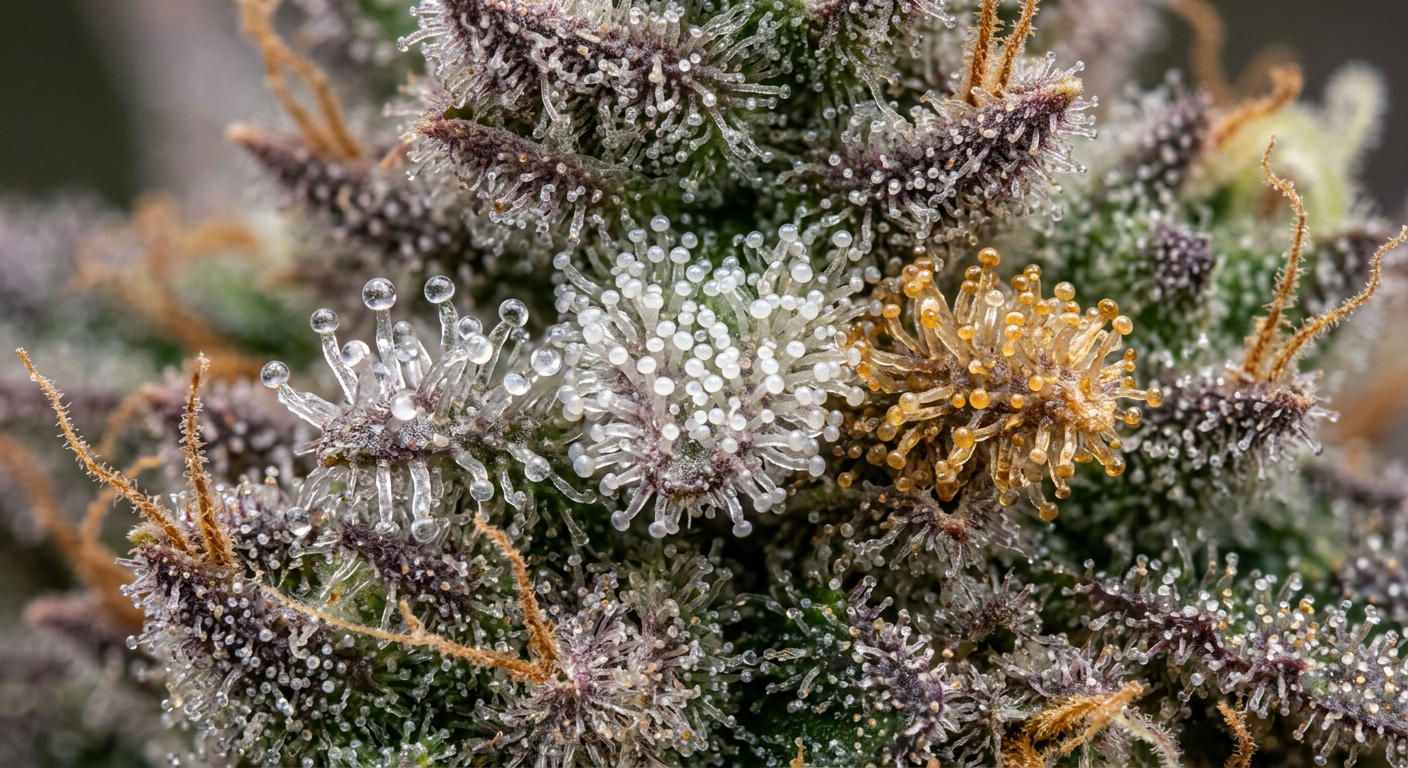
Trichomes are the tiny, mushroom-shaped resin glands that coat your buds and sugar leaves. These structures are where THC, CBD, terpenes, and every other cannabinoid are manufactured and stored. Their color at the time of harvest is the most reliable indicator of chemical maturity available to any grower.
Reading trichome color requires a magnification tool — your naked eye simply can't resolve the detail needed. Once you understand the three color stages, you hold a precise, real-time readout of what's happening inside every bud on your plant.
Trichome color is the gold standard for cannabis harvest timing. Clear trichomes signal immaturity, cloudy trichomes indicate peak THC, and amber trichomes show THC degrading into CBN — each stage dramatically changes your final product's effect profile.
The Three Trichome Color Stages Explained
| Trichome Color | Cannabinoid State | Effect Profile | Harvest Recommendation |
|---|---|---|---|
| 🔵 Clear / Translucent | THCa still converting — not yet peak | Thin, anxious, cerebral — unpleasant for most | Do NOT harvest yet |
| ⚪ Milky / Cloudy White | THC at or near maximum concentration | Sharp, energetic, euphoric, cerebral sativa-like | Harvest for peak potency |
| 🟠 Amber / Golden | THC degrading into CBN | Heavy, sedative, body-focused, couch-lock | Harvest for relaxing/medical effects |
The Science: THC (tetrahydrocannabinol) doesn't appear in the plant as THC — it begins as THCa, a non-psychoactive acid. As trichomes mature and are exposed to heat, light, and oxygen, THCa converts to THC. Continued exposure causes THC to degrade into CBN (cannabinol), which has roughly 10% of THC's psychoactivity but strong sedative properties. Amber trichomes are a direct visual signal of this degradation.
Cannabis Harvest Trichome Color: How to Read Them Accurately
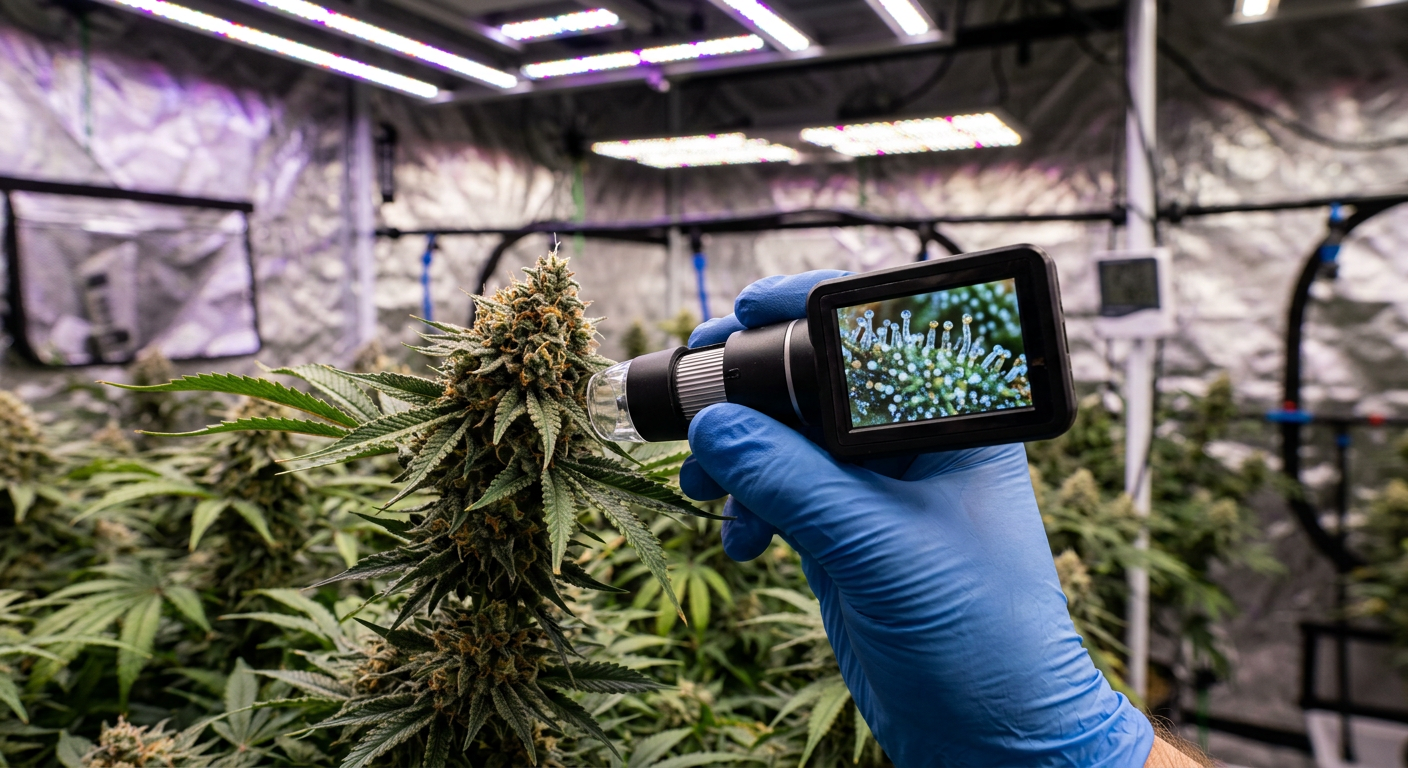
Reading trichome color for cannabis harvest decisions requires the right equipment and the right technique. You need to examine trichomes on the bud itself — not on fan leaves or sugar leaves away from the cola, as these mature at different rates and will give misleading readings.
Always take samples from multiple bud sites at different canopy heights, since lower buds often lag behind tops by 5–7 days in trichome development.
Choose Your Magnification Tool
A 60–100x jeweler's loupe (under $15) works well for most growers. A digital USB microscope (100–200x, under $40) gives the clearest images and lets you photograph trichomes for daily comparison. A basic 30x pocket microscope is the minimum usable magnification.
Clip a Small Sample Bud
Snap off a small lower bud or a sugar leaf close to a main cola. Trying to examine trichomes on a living, swaying plant produces blurry images. A fresh clip laid flat under a microscope gives you a stable, clear view of the resin heads.
Focus on the Mushroom Heads, Not the Stalks
Trichomes have a stalk and a rounded head — the head is where cannabinoid concentration is highest and where color change is most meaningful. Stalks will often appear clear even on mature plants, so use only the head color as your reference point.
Sample Daily in the Final 2 Weeks
Trichome ripeness can accelerate rapidly in the final stretch of flowering. Start daily sampling at week 7 for fast strains or week 9 for slower cultivars. Take photos each day and compare — this timeline approach catches the peak window before it passes.
Decide on Your Target Ratio
For maximum THC potency, aim for 90–100% milky/cloudy trichomes with zero to minimal amber. For a balanced, slightly sedative effect, target 70% cloudy and 20–30% amber. For full sedation and CBN-dominant effects, allow 50%+ amber — though most growers never need to go this far.
Pro Tip: Photograph your trichome samples against a white background each day and label them with the date. This comparison log makes the color transition from clear → cloudy → amber unmistakably obvious and removes all guesswork from your harvest decision.
Visual Cannabis Harvest Time Symptoms You Can Spot With the Naked Eye
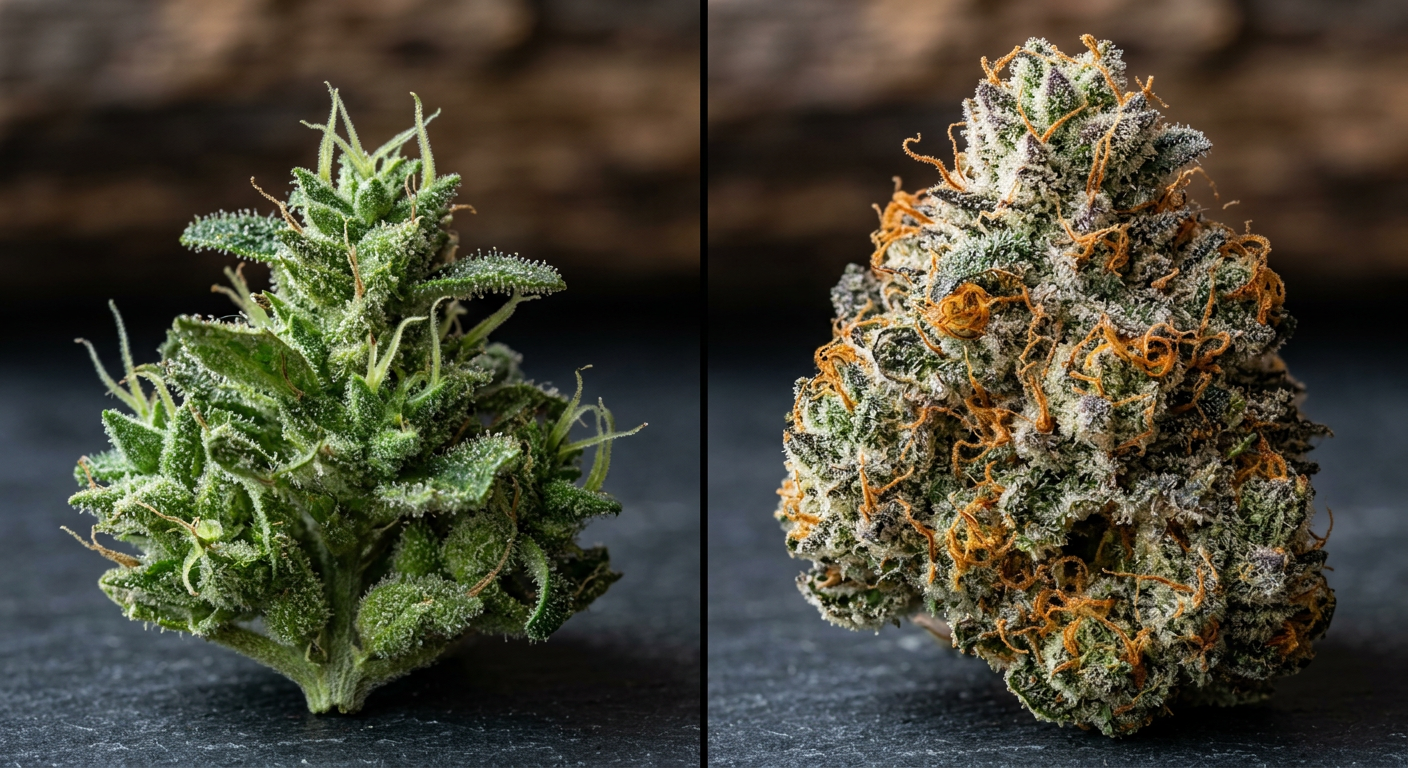
Trichome examination is the most precise method, but your plant also sends several large-scale visual signals that indicate approaching maturity. These whole-plant signs are useful for narrowing your harvest window before you break out the microscope — think of them as your early warning system.
No single visual cue should trigger harvest on its own. Use these signals together as a convergence of evidence, then confirm with trichome color.
Visual harvest indicators include pistil color change (50–70% orange/red), calyx swelling, fan leaf yellowing, and resin production peaking. These signs narrow your harvest window but should always be confirmed with trichome inspection for accuracy.
Key Visual Harvest Signals
- Pistil color change: White hairs (pistils) darken to orange, red, or brown. When 50–70% of pistils have changed color, you're entering the harvest window. At 70–90% color change, most strains are ready or very close.
- Calyx swelling: The small seed pods (calyxes) that make up your buds swell and stack tightly together as the plant reaches full maturity. This stacking creates the dense, fat buds you're after.
- Fan leaf yellowing: Late-stage nitrogen uptake slows naturally as the plant shifts all energy to resin production. Some yellowing of lower fan leaves is normal and expected in week 6–8 of flower — it's not a deficiency signal at this stage.
- Trichome resin visibility: If you can see glistening resin with the naked eye from 2–3 feet away and smell the aroma from across the room, your plant is well into late flowering.
- Bud density and weight: Buds should feel firm and dense when gently squeezed. Loose, airy buds late in flower may need more time or indicate a light or environment issue.
- Leaf curl and fade: Overall plant vigor drops as senescence begins. This is normal and indicates the plant is completing its life cycle.
Caution: Don't confuse nutrient deficiency with natural harvest-time leaf fade. If leaves yellow rapidly before week 6 of flower, with curling and spots, that's a nutrient problem — not a harvest signal. True harvest fade is gradual and appears in the final 1–2 weeks of a healthy plant's cycle.
Early vs Late Harvest Cannabis Effects: What You're Actually Trading
Every day past peak maturity, THC molecules degrade. Every day before peak, your plant hasn't finished building its cannabinoid profile. The difference between harvesting one week early versus one week late isn't just about timing — it fundamentally changes what ends up in your jar.
Understanding these trade-offs lets you make an informed decision based on your personal goals, not just a calendar date.
| Harvest Timing | Trichome Profile | THC Level | Primary Effect | Best For |
|---|---|---|---|---|
| Early (Week 1–2 before peak) | Mostly clear, some cloudy | Low — THCa conversion incomplete | Racy, anxious, thin cerebral buzz | No one — avoid this window |
| Peak (Optimal window) | 90–100% cloudy, 0–5% amber | Maximum possible for that strain | Sharp, euphoric, full-spectrum high | Recreational users, energetic daytime use |
| Slightly Late (5–10% amber) | 80% cloudy, 10–20% amber | Slightly reduced THC, rising CBN | Balanced cerebral + body relaxation | Evening use, stress relief, anxiety |
| Late (30–50%+ amber) | Mixed cloudy/amber/clear degrading | Significantly reduced THC | Heavy sedation, body-dominant, couch-lock | Sleep disorders, pain management |
Early harvest cannabis effects are frequently misunderstood. Many growers assume harvesting early preserves a cleaner THC product — but the opposite is true. Underdeveloped trichomes contain incomplete cannabinoid profiles, elevated levels of non-psychoactive precursors, and harsher terpene compounds that produce anxious, uncomfortable effects. Always wait for the cloudy window.
THC vs CBD Maturity: Timing Differences That Matter
THC-dominant strains and CBD-dominant strains follow different maturity curves, and if you apply the same trichome targets to both, you'll miss the mark on one of them. Understanding these differences is especially critical for medical growers targeting specific cannabinoid ratios.
CBD doesn't degrade into a sedative compound the same way THC degrades into CBN. This means CBD-rich strains tolerate slightly later harvest windows without the same potency penalty that THC-dominant plants face.
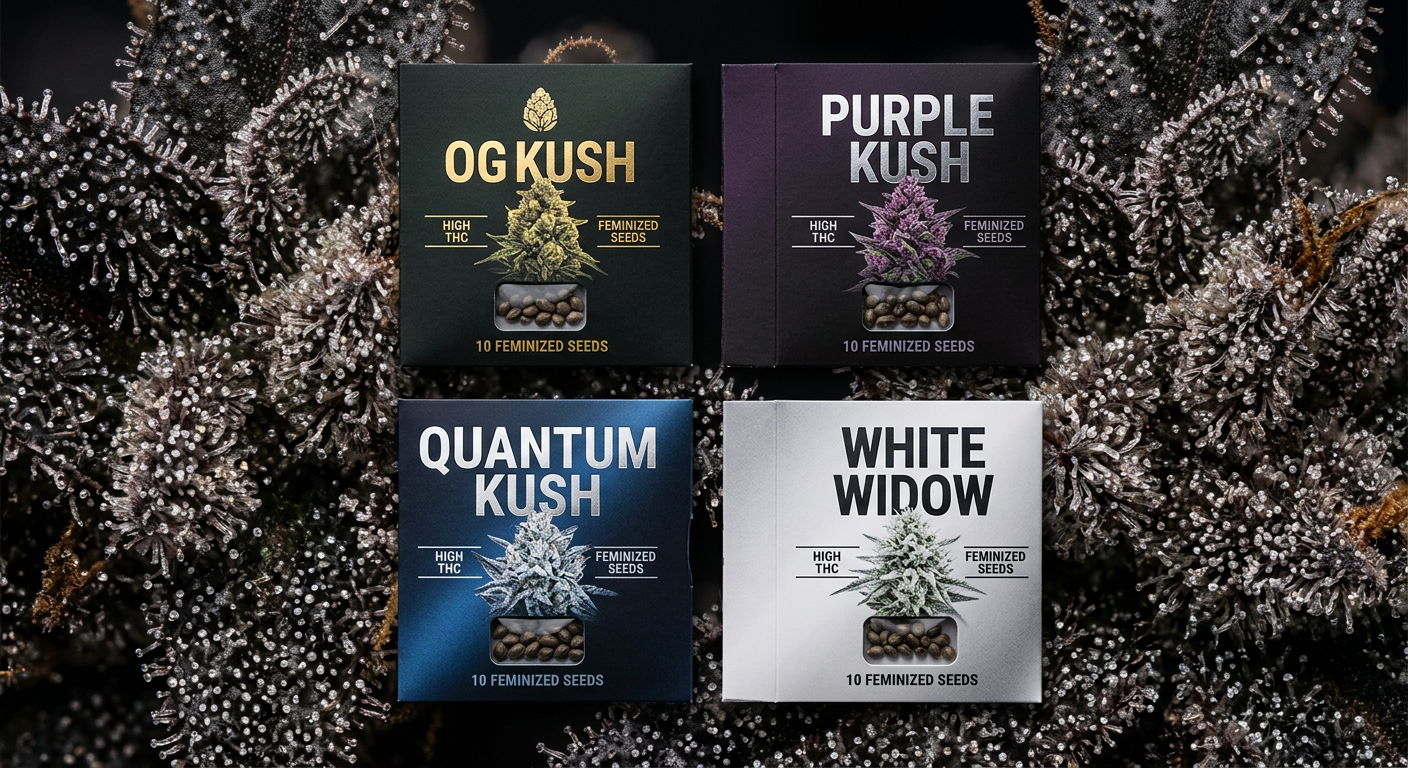
- THC-dominant strains: Harvest at 90–100% cloudy trichomes for peak THC. Every additional day of amber development costs measurable potency. Strains like OG Kush (26% THC), Purple Kush (27% THC), and Quantum Kush (30% THC) need precise timing to hit their genetic ceiling.
- High-THC sativa strains: Sativa-leaning genetics like New York Power Diesel (24% THC) and Super Lemon Haze (23% THC) often take 10–14 weeks of flower and have longer harvest windows due to their extended trichome ripening curve.
- CBD-dominant strains: CBD peaks later in the trichome cycle than THC. Target 10–20% amber on CBD varieties to allow full CBD expression, as harvesting at all-cloudy may under-develop the CBD fraction. Always consult your specific strain's breeder data.
- Autoflowering strains: Autos like Amnesia Haze Autoflower and Skywalker OG Autoflower (23% THC) move through their cycle faster — begin daily trichome checks at week 8 from germination, as their peak window is shorter.
Pro Tip: If you're growing a strain for the first time, keep a grow journal with weekly trichome photos starting at week 6 of flower. By your second grow of the same strain, you'll know exactly what week to start your final flush and when the peak window opens.
Strain-Specific Harvest Timing: How to Use Breeder Data Correctly
Every seed bank publishes a flowering time for each strain — but growers routinely misread these numbers. A stated flowering time of "8–9 weeks" means 8–9 weeks from the moment you switched to 12/12 light cycle (for photoperiods) or from seed for autoflowers. It does not account for genetic variation, environmental conditions, or your specific grow setup.
Treat breeder flowering times as a starting point, not a finish line. Real-world experience consistently shows that many strains run 1–2 weeks longer than stated, particularly when grown in soil versus hydro, or under lower light intensity.
Breeder-stated flowering times are averages under ideal conditions. Add 1–2 weeks to the stated window as your trichome inspection start date, then use daily trichome readings to find the actual peak. Never chop on a calendar date alone.
Typical Harvest Windows by Strain Type
- Fast indicas (7–8 weeks): Strains like Northern Lights x Big Bud (20% THC) and Purple Kush often finish in 49–56 days from 12/12 flip. Start trichome checks at day 42.
- Mid-range hybrids (8–10 weeks): The largest group — including White Widow (25% THC), OG Kush, and Skunk Special (24% THC) — typically finish in 56–70 days. Begin checks at day 50.
- Sativa-dominant (10–14 weeks): Long-flowering genetics like Sour Diesel (24% THC), Super Lemon Haze, and Tangerine Haze (18% THC) need patience — don't start checks before day 63 and expect them to run to day 84 or beyond.
- Autoflowering varieties (70–90 days from seed): Start trichome checks at day 60 regardless of visual development. Autos can peak and pass their window faster than photoperiods. See our Cannabis Flowering Stage Timeline for detailed weekly breakdowns.
How to Flush Cannabis Before Harvest (And Why Timing Matters)
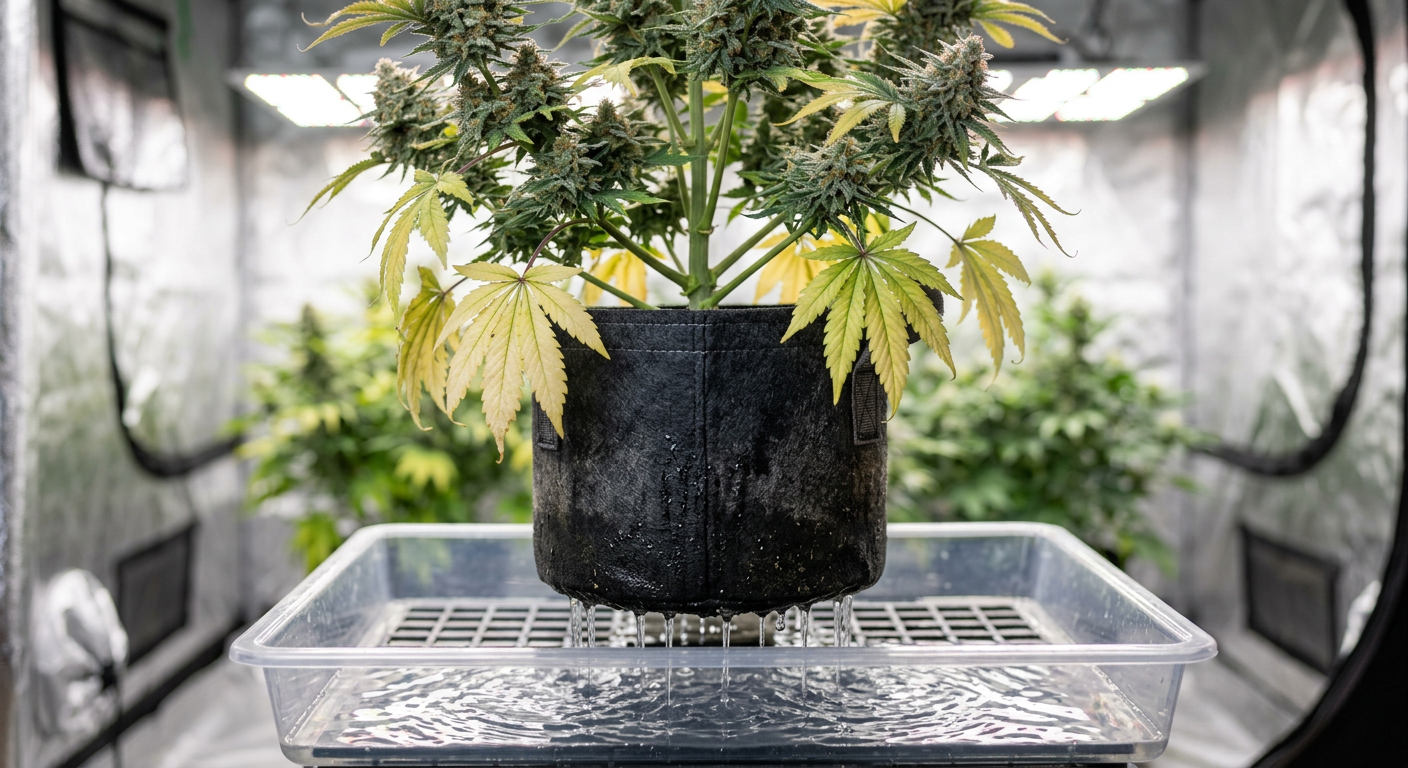
Flushing means running plain, pH-balanced water through your growing medium in the final days before harvest. The goal is to push residual mineral salts and unused nutrients out of the root zone and the plant's vascular tissue, resulting in a smoother, cleaner final smoke. This is one of the most debated practices in cannabis cultivation — but when done correctly, the timing is critical.
The length of your flush depends directly on your growing medium. Getting this wrong — either flushing too early or skipping it entirely in salt-based nutrient systems — directly impacts the final taste and burn quality of your harvest.
Determine Your Flush Duration by Medium
Soil growers should flush 10–14 days before harvest. Coco coir growers need 5–7 days. Hydroponic systems require just 2–3 days of plain water before chop. Organic living soil growers using compost teas and dry amendments often skip flushing entirely — the medium naturally buffers salt accumulation. See our Living Soil Growing Guide for more detail.
Use the Right Water Temperature and pH
Use plain, unchlorinated water at 6.0–6.8 pH for soil or 5.8–6.2 for hydro and coco. Water temperature should be room temperature — 68–72°F (20–22°C). Cold water shocks roots; warm water encourages microbial growth. Run enough water to achieve 20–30% runoff on the first flush pass.
Monitor TDS/PPM of Runoff
Use a TDS (total dissolved solids) meter to check the PPM of your runoff water. Incoming water might read 150–200 PPM; initial flush runoff from a heavily fertilized medium can read 1,500–3,000 PPM. Your target is runoff PPM within 200–400 PPM of your input water, which confirms the medium has been adequately cleared.
Watch for the Flush Response in the Plant
After 5–7 days of flushing, plants will begin yellowing more aggressively as stored nutrients are consumed. This is a positive sign — it means the plant is drawing down its internal reserves. Some yellowing of fan leaves during flush is desirable and confirms the process is working as intended.
Caution: Don't begin your flush based on a calendar date. Start it based on trichome readings — you want to begin flushing when you're approximately 10–14 days from your target harvest window. If you flush too early and your plant isn't actually close to peak, you'll stall trichome development and lose potency. Always let trichome color guide your flush start date.
Step-by-Step: How to Harvest Weed Plants on Harvest Day
Harvest day itself requires more preparation than most growers expect. The decisions you make in the 24 hours before and during harvest — from timing of the cut to how you handle the plant — affect the quality and terpene preservation of your final product. Rushed harvest days lead to degraded terpenes and lost resin.
The best time to harvest is early in the morning, before your grow lights turn on (for indoor grows) or just after sunrise (for outdoor). This is when terpene concentrations are highest, as heat and light throughout the day cause volatile terpene compounds to evaporate off the plant surface.
Give Plants a Full Dark Period Before Harvest
Keep lights off (or harvest before sunrise outdoors) for 24–48 hours before cutting. Extended darkness triggers the plant to push remaining resin and sugars toward the buds. Many experienced growers report a noticeable density and resin boost from a 36–48 hour final dark period — it costs nothing and takes zero extra effort.
Gather Your Tools and Prepare Your Drying Space
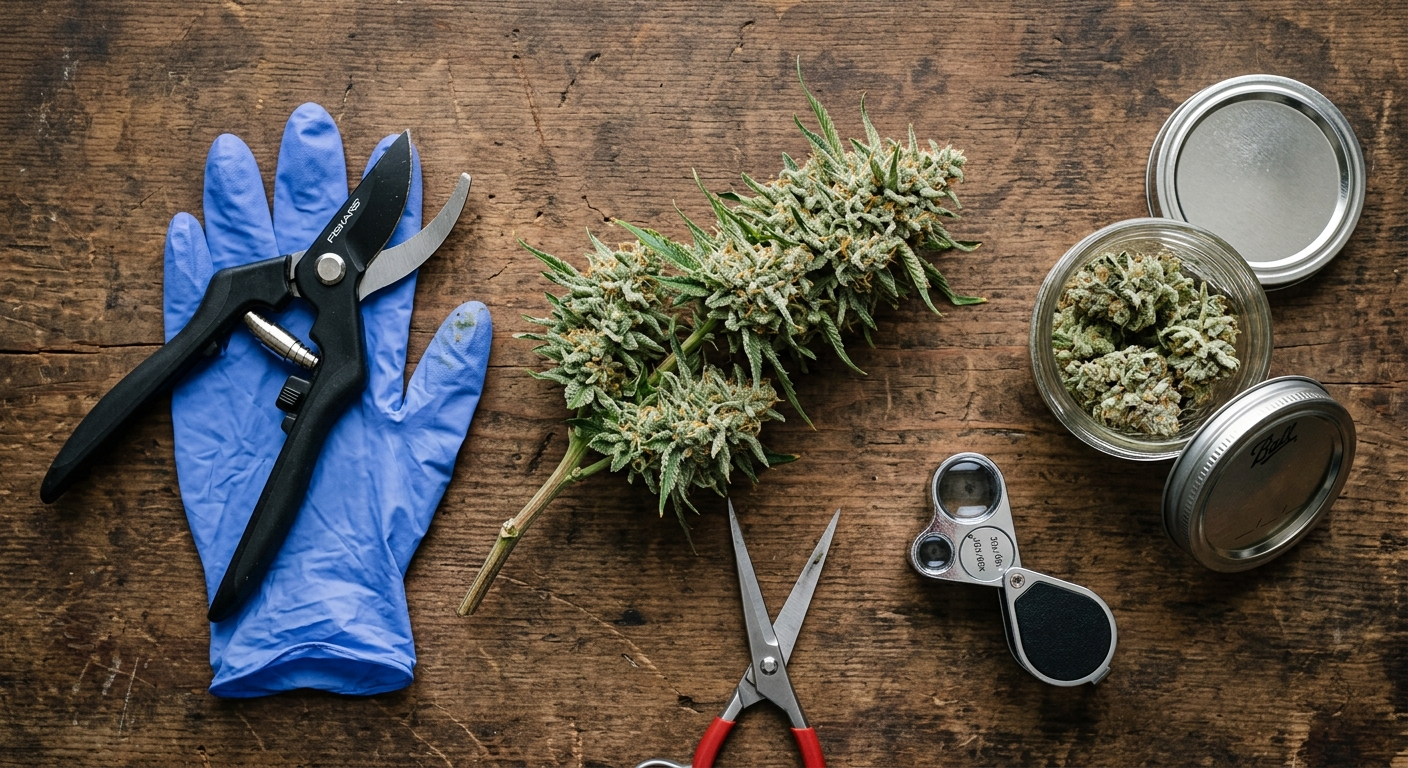
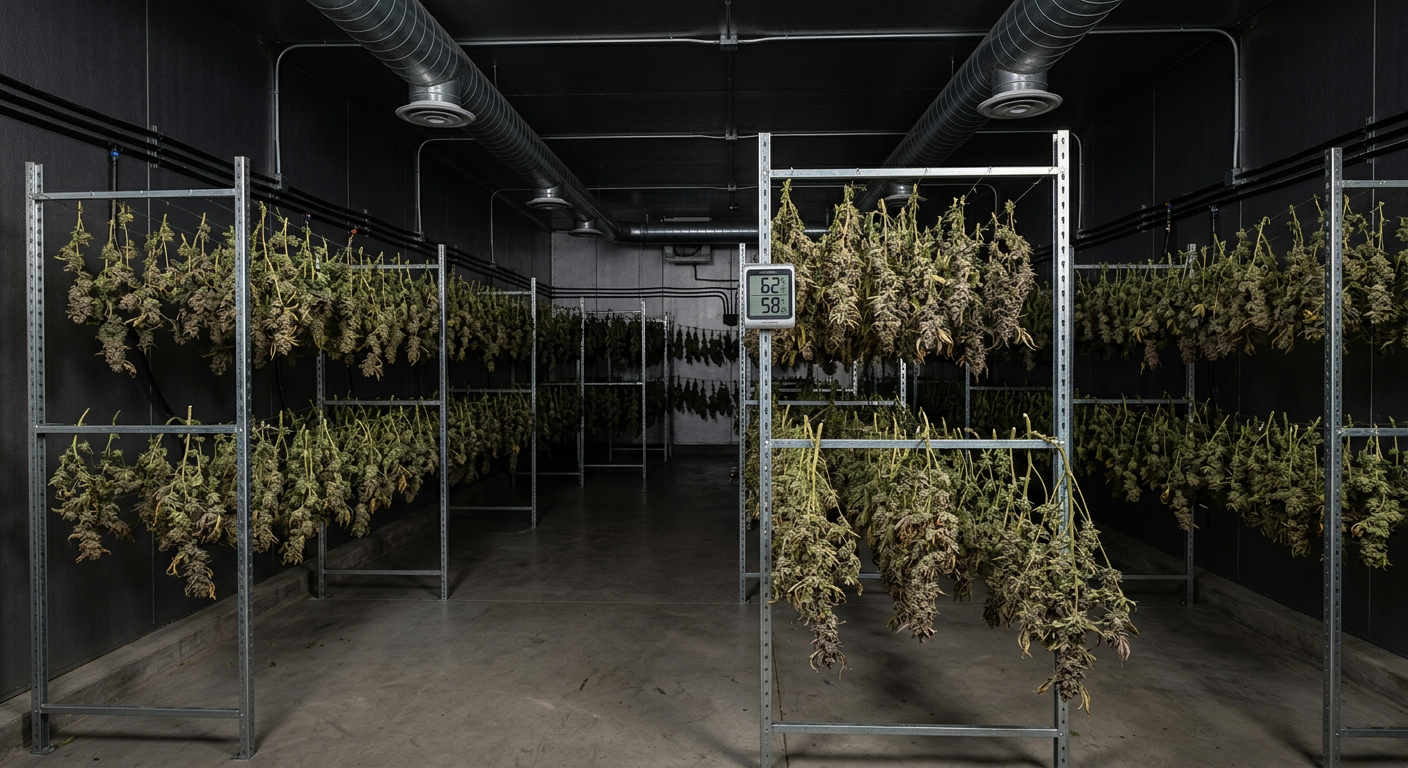
You'll need: sharp pruning shears or scissors (sterilized with isopropyl alcohol), trimming scissors, latex or nitrile gloves, string or hangers for drying, and a drying space at 60–65°F (15–18°C) with 55–62% relative humidity. If your VPD is outside range in the drying space, address it before you cut.
Cut, Trim, and Hang
Cut main branches at the base and remove large fan leaves immediately. You can wet trim (remove all sugar leaves now) or dry trim (hang whole branches and trim after drying). Dry trimming is generally better for terpene preservation and produces a slower, more even dry. Hang branches upside down in your drying space with adequate airflow between them — no touching.
Dry for 10–14 Days, Then Cure
Slow drying at 60–65°F and 55–62% RH for 10–14 days preserves terpenes and prevents harsh smoke. Buds are dry enough to cure when small stems snap (rather than bend). Move to airtight glass jars, burping daily for the first 2 weeks, then weekly. A minimum 4-week cure dramatically improves flavor, smoothness, and potency expression. See our Flowering Stage Guide for post-harvest timing details.
Pro Tip: Label every harvest batch with the strain name, harvest date, trichome profile at harvest (e.g., "95% cloudy, 5% amber"), and dry weight. This data becomes invaluable for dialing in timing on your next grow cycle and building a strain-specific harvest log that removes guesswork permanently.
Choosing Seeds That Reward Precise Harvest Timing
Harvest timing matters most with high-THC genetics — the higher the ceiling, the more you gain from hitting the peak window precisely. Strains with lower THC potential have less to lose from a slightly imperfect harvest, while elite cultivars require your best timing to reach their genetic maximum.
Whether you're growing your first plant or your fiftieth, matching your skill level and grow setup to the right strain makes harvest timing easier and results more consistent. Here are some top performers worth growing with precision:
- Quantum Kush (30% THC) — The highest-ceiling strain in this lineup. Demands precise trichome monitoring; harvesting even 5 days late on this cultivar means measurable THC loss. Reward is enormous when timed correctly.
- Purple Kush (27% THC) — Fast-finishing indica (7–8 weeks) with a compact harvest window. Trichomes transition from cloudy to amber quickly in the final week — daily checks are essential.
- Black Widow (26% THC) — A resin-heavy cultivar with excellent trichome visibility. Its heavy resin production makes trichome reading straightforward, making it a great strain for practicing harvest timing.
- OG Kush (26% THC) — An industry benchmark for harvest-dependent potency. OG Kush's complex terpene profile also benefits from a precise cut — even slight over-ripening dulls its characteristic fuel and citrus aromatics.
- White Widow (25% THC) — A classic that's forgiving of minor timing errors due to its wide harvest window, but still delivers dramatically better results when cut at the all-cloudy stage.
- Papaya (25% THC) — Dense, resinous indica hybrid with a clearly defined ripening curve. The trichome transition is textbook — ideal for growers building their trichome-reading skills.
- Northern Lights x Amnesia Haze (24% THC) — A hybrid that combines indica speed with sativa-style resin development. Runs slightly longer than pure indicas — expect 9–10 weeks for full expression.
- Skywalker OG Autoflower (23% THC) — High-THC auto that proves autoflowers can compete with photoperiods when harvest timing is dialed in. Shorter window means faster decision-making is required.
For newer growers still building their trichome-reading skills, strains like Wonder Woman (22%) and White Cookies (22%) offer a more forgiving harvest window while still rewarding precision. Pair your seed selection with solid foundational knowledge from our Complete Beginner's Guide to Growing Cannabis Indoors.
High-THC strains above 25% THC have the most to gain — and lose — from precise harvest timing. The genetic ceiling only matters if you hit the harvest window. Pair elite genetics with daily trichome monitoring in the final 2 weeks for maximum return on your grow investment.
Harvest Timing Mistakes: The 6 Most Costly Errors Growers Make
Even experienced growers fall into predictable harvest timing traps. Most errors come down to relying on incomplete information — using only pistil color, only calendar dates, or only the breeder's stated week without microscope confirmation. Here are the six mistakes that cost growers the most potency, and exactly how to avoid each one.
- Mistake 1 — Harvesting by calendar date only: Breeder timing is an average, not a guarantee. Your specific phenotype, environment, and light intensity all affect the actual finish date. Always confirm with trichomes, never with a date alone.
- Mistake 2 — Reading trichomes on fan leaves: Fan leaves mature faster than bud trichomes and will show amber while your buds are still at peak. Always read trichomes directly on or adjacent to the main colas.
- Mistake 3 — Harvesting all plants at the same time: Individual plants — even from the same seed batch — can vary by 5–10 days in maturity. Check each plant individually and harvest them separately based on their own trichome profile.
- Mistake 4 — Flushing too early: Beginning your flush 3–4 weeks before harvest starves the plant of nutrients during active bud development. This reduces yield and can halt trichome production before it peaks. Start flush based on trichome readiness, not a planned date.
- Mistake 5 — Using inadequate magnification: A 10x jeweler's loupe is not enough to see trichome color accurately. Minimum 30x, ideally 60–100x. Misreading trichome color due to poor magnification is one of the most common causes of mistimed harvests.
- Mistake 6 — Harvesting during the middle of the light cycle: Terpenes are most concentrated before heat and light exposure. Harvesting mid-day (for indoor grows) or in the afternoon (outdoor) allows volatile terpenes to dissipate. Always harvest at the start of your dark period or in the early morning.
Building good harvesting fundamentals works hand-in-hand with strong growing technique throughout the plant's lifecycle. Explore our guides on Topping Cannabis Plants and the ScrOG Growing Guide to maximize bud site development heading into your harvest window.
Quick Harvest Readiness Checklist
Use this checklist in the final 2 weeks of flower to confirm harvest readiness before you make your cut. Every item should be checked — not just most of them.
- ✅ Trichomes are 70–100% cloudy/milky when viewed at 60x+ magnification on bud samples
- ✅ Amber trichome percentage matches your target effect (0–5% for max THC, 15–30% for relaxing/sedative)
- ✅ 50–80% of pistils have darkened from white to orange/red/brown
- ✅ Calyxes are swollen and stacked — buds feel firm and dense to gentle touch
- ✅ Fan leaves show natural yellowing — not deficiency-related, consistent with late-flower senescence
- ✅ Flush is complete — runoff PPM is within 200–400 PPM of input water
- ✅ Aroma is at peak intensity — you can smell the plant from across the room
- ✅ Drying space is prepared — 60–65°F, 55–62% RH, airflow confirmed
- ✅ Tools are cleaned and sterilized — scissors, shears, and gloves ready
- ✅ Dark period is scheduled — 24–48 hours of darkness before cutting
For a complete picture of what your plant goes through before reaching this checklist, revisit the full Cannabis Flowering Stage Timeline — understanding each week of flowering makes harvest timing decisions dramatically more intuitive.
Frequently Asked Questions
How do I know exactly when to harvest cannabis without a microscope?
Without a microscope, use pistil color as your primary indicator. Harvest when 70–80% of pistils have turned orange or red, calyxes are fully swollen, buds feel dense, and the aroma is at peak intensity. This method is less precise than trichome inspection and may result in a 3–7 day margin of error, but it works as a solid baseline. Investing in a 60x jeweler's loupe (under $15) dramatically improves accuracy and is strongly recommended for any serious grow.
What happens if you harvest cannabis too early?
Harvesting cannabis too early means trichomes are still clear or mostly clear — THCa-to-THC conversion is incomplete and the full cannabinoid profile hasn't developed. The resulting product is typically low in THC, has a thin and sometimes anxious effect, and lacks the full terpene expression of a mature plant. Yield also suffers significantly, as buds continue to gain weight in the final 1–2 weeks. Early harvest cannabis effects are almost universally disappointing compared to properly timed harvests.
Do amber trichomes always mean the plant is past its peak?
Not necessarily — it depends on your goal. For maximum THC potency, yes, amber trichomes indicate THC is degrading into CBN and potency is declining. But for users seeking heavy body relaxation, sleep aid effects, or pain relief, 20–30% amber is a deliberate and desirable target. Cannabis harvest amber trichomes are a tool, not an automatic failure — use them intentionally based on your personal effect preferences.
How long should I flush before harvesting cannabis?
Flush timing depends on your growing medium. Soil growers should flush 10–14 days before harvest using plain pH-balanced water (6.0–6.8 pH). Coco coir growers need 5–7 days. Hydroponic systems require just 2–3 days of plain water. Begin your flush when trichome inspection shows you're approximately 2 weeks from your target harvest date — not based on a calendar. Always monitor runoff PPM to confirm the flush is effectively clearing residual salts from the medium.
Do autoflowering strains have different harvest timing than photoperiod strains?
Autoflowering strains follow a seed-to-harvest timeline rather than a light-cycle-dependent one, typically finishing in 70–90 days from germination. Their trichome maturity signals — clear, cloudy, amber — are identical to photoperiod strains, but the window moves faster. Begin daily trichome checks on autoflowers at day 55–60 from germination. High-THC autos like Skywalker OG Autoflower (23% THC) and Amnesia Haze Autoflower (17% THC) reward the same precise timing approach as any photoperiod cultivar.