Why One Cut Can Double Your Harvest
Imagine spending 8 weeks growing a beautiful cannabis plant — tall, proud, and dominated by a single central cola. Now imagine that same plant with 8 equal colas, all packed with dense buds, filling your entire canopy. That transformation costs you exactly one snip and five minutes of your time.
Topping cannabis plants is the single most effective structural training technique available to home growers. Done correctly, it redirects the plant's energy, breaks apical dominance, and multiplies your bud sites in ways that can increase yield by 30–40% without adding a single watt of light.
This guide covers everything: the science behind the cut, the exact node count to target, a numbered step-by-step process, recovery timelines, multiple-topping strategies, autoflower limitations, and how to stack topping with other training methods for maximum results.
What Is Topping Cannabis? (The Science Explained)
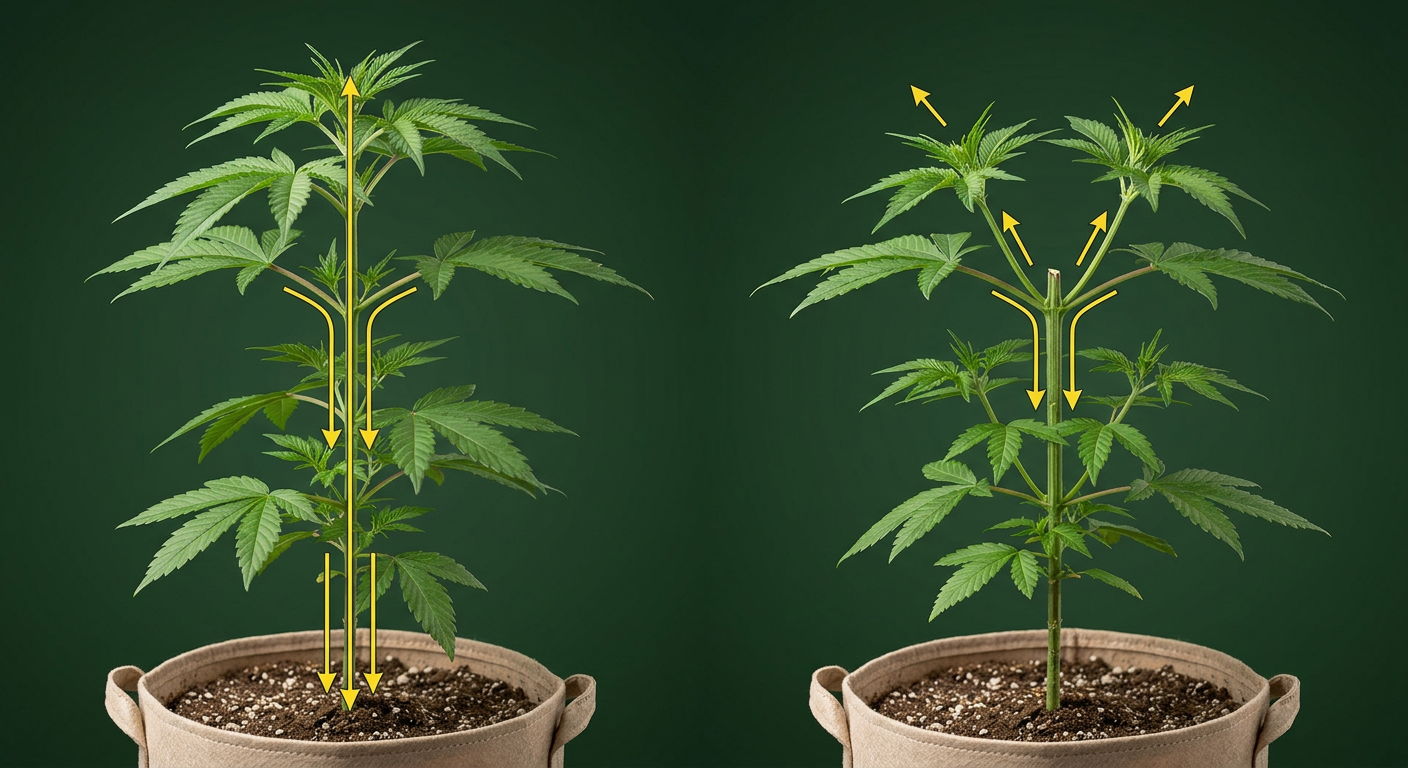
Topping cannabis means surgically removing the apical meristem — the main growing tip — from the top of your plant. This single growing point is responsible for producing auxin, a plant hormone that suppresses the growth of lateral branches below it. When you remove it, that hormonal suppression lifts immediately.
Within 24–48 hours, the two nodes directly below the cut begin racing upward to fill the void. Instead of one dominant cola, you now have two. Top again, and you have four. The plant's root system and energy budget remain the same, but that energy now feeds multiple colas instead of one.
This is classified as a high-stress training (HST) technique because it causes physical tissue damage. Unlike low-stress training (LST) methods that bend and tie, topping actually wounds the plant — which is why timing and sterile technique matter so much.
The Science: Auxin is produced in apical tips and travels downward, suppressing lateral bud development via a process called apical dominance. Removing the apex causes a rapid rise in cytokinin activity in the lower nodes, triggering lateral shoot elongation. Studies on cannabis show that plants topped at the 4th–6th node demonstrate the most vigorous lateral branching response with minimal stress delay.
When to Top Cannabis Plants: Node Count & Timing
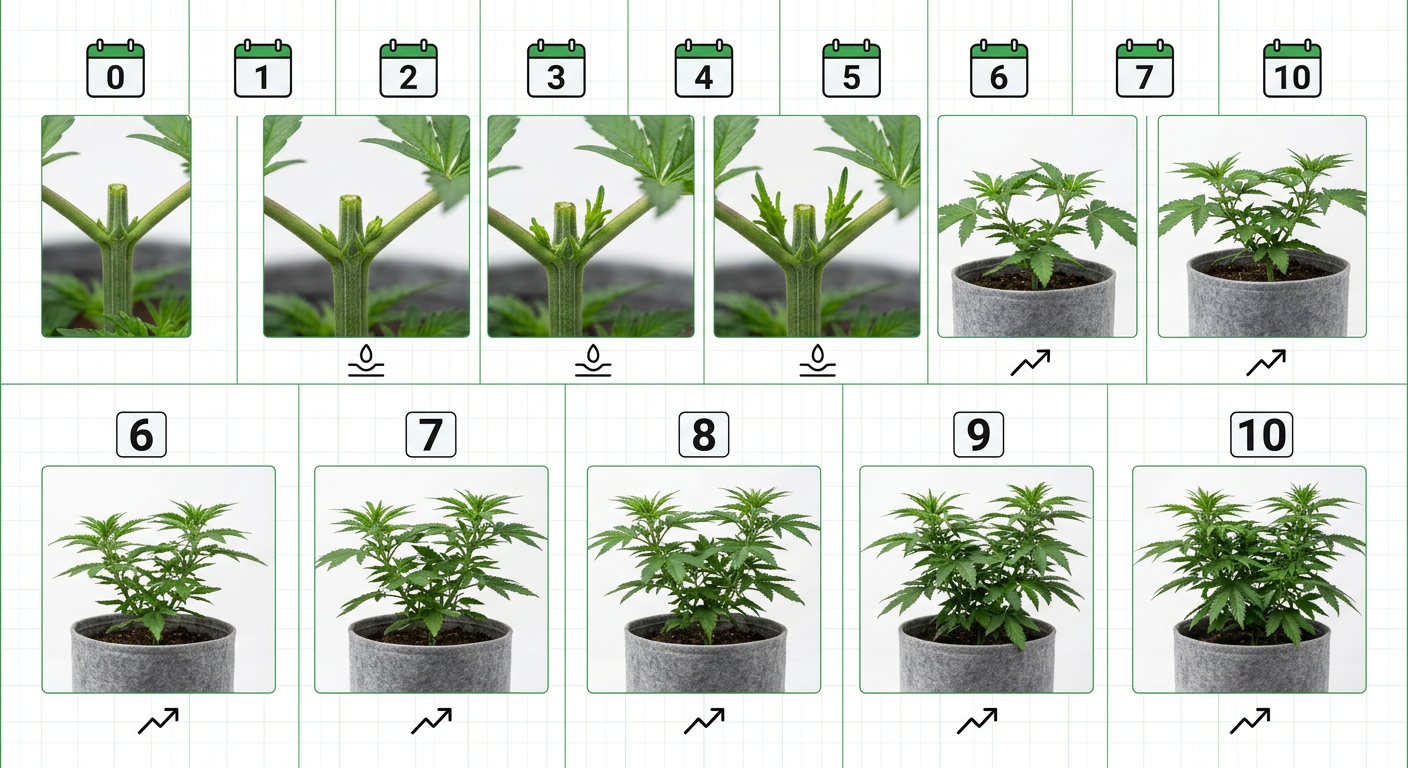
Timing is the most critical variable in successful topping. Top too early and the plant lacks the root mass and energy reserves to recover quickly. Top too late and you waste valuable vegetative time on recovery when the plant should be building structure.
The ideal window is when your plant has developed 5–6 nodes, which typically occurs 3–4 weeks into the vegetative stage under proper lighting. At this point, the plant has enough leaf surface area to sustain photosynthesis during recovery and enough internodal structure to produce two strong, well-spaced colas.
The Rule of 5: Wait until your cannabis plant has at least 5 nodes before topping. This ensures adequate root development, sufficient leaf surface for photosynthesis during recovery, and gives the two resulting colas enough internode spacing to develop into distinct, productive branches.
Node Count Quick Reference
| Node Count | Plant Age (approx.) | Topping Recommendation | Reason |
|---|---|---|---|
| 1–3 Nodes | Week 1–2 | ❌ Too Early | Insufficient roots, high stress risk |
| 4 Nodes | Week 2–3 | ⚠️ Possible but risky | Works for experienced growers only |
| 5–6 Nodes | Week 3–4 | ✅ Ideal Window | Best recovery, best branching response |
| 7–8 Nodes | Week 4–5 | ✅ Still effective | Slightly longer recovery but works well |
| 9+ Nodes | Week 5+ | ⚠️ Late but viable | Wastes veg time; consider FIM instead |
Beyond node count, look at the plant's overall health. Leaves should be deep green, internodal spacing should be compact (not stretched), and there should be no signs of nutrient deficiency or pest pressure. Never top a stressed plant — fix the problem first, then top during the next healthy growth phase.
Pro Tip: Top in the morning or early in your light cycle. Plants are most metabolically active during their "daytime," which means wound-sealing compounds (like callose) are produced faster. This reduces infection risk and shortens recovery time by 12–24 hours compared to topping at the end of the light period.
How to Top Cannabis: Step-by-Step Tutorial
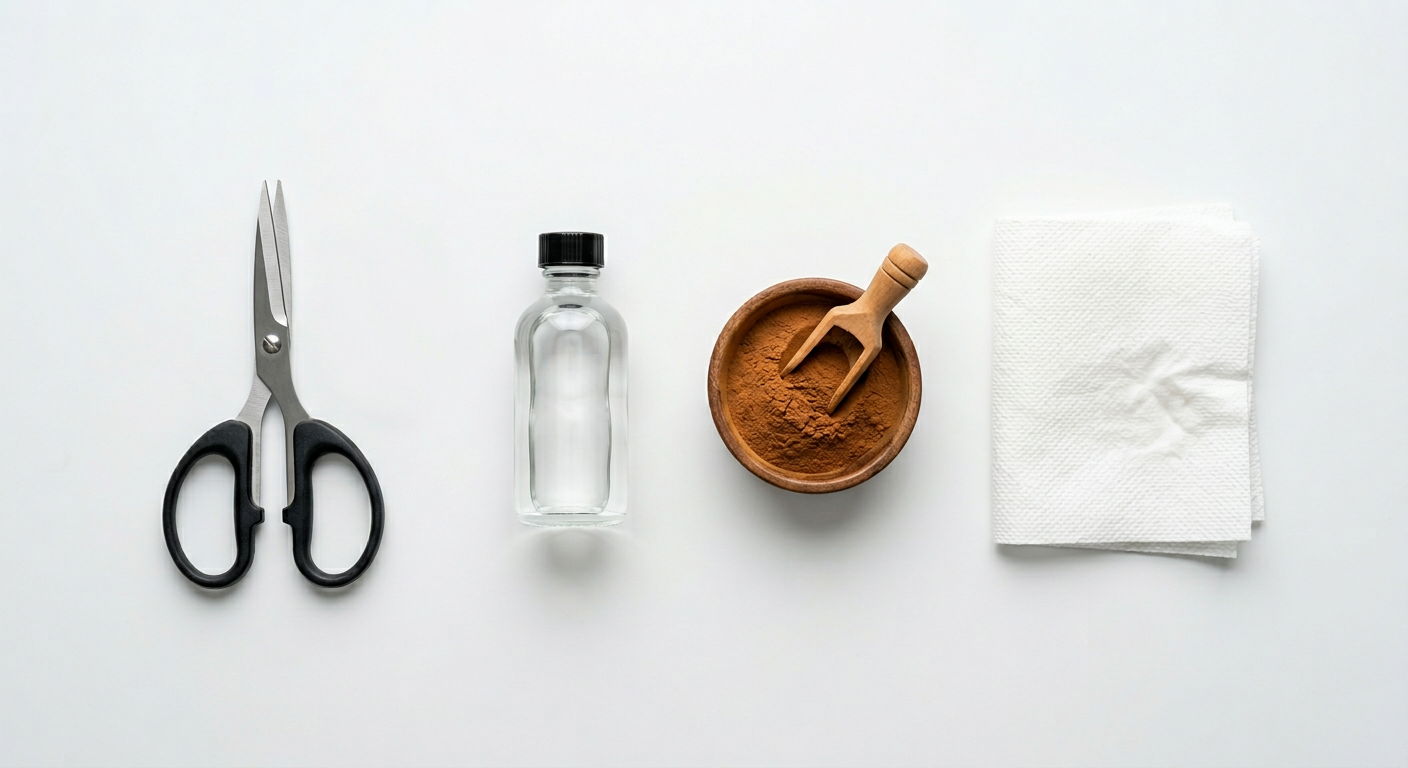
The actual cut takes less than 10 seconds. The preparation and aftercare take longer — and they're what determine whether your topping succeeds or causes problems. Follow this exact process every time.
Gather Your Tools
You need sharp scissors or a straight-edge razor blade, isopropyl alcohol (70% or higher) for sterilization, a clean paper towel, and optional rooting gel or cinnamon powder as a natural wound sealant. Never use dull scissors — they crush tissue instead of cutting cleanly, dramatically increasing infection risk and recovery time.
Sterilize Everything
Wipe your cutting tool with isopropyl alcohol and let it air-dry for 60 seconds before making the cut. This step is non-negotiable — pathogens like Botrytis and Fusarium can enter through fresh wounds. Sterilize again between plants if you're topping multiple plants in the same session.
Identify the 5th Node and Growth Tip
Count up from the soil — each pair of leaves (or alternating leaf set) represents one node. Locate the very top growing tip, which looks like a small tight cluster of new growth emerging from between the topmost leaves. This is your target. The cut will be made just above the 5th node, removing the entire growing tip.
Make the Cut
Position your blade at a 45-degree angle just above the 5th node — about 5mm above the node itself. Cut cleanly and decisively in one motion. A 45-degree angle is important because it maximizes surface area for healing while allowing water to run off, reducing rot risk. Don't saw back and forth; one clean slice is all you need.
Apply Wound Sealant (Optional but Recommended)
Dust the cut surface lightly with cinnamon powder or apply a tiny amount of rooting gel. Cinnamon contains cinnamaldehyde, a natural antifungal compound that protects the fresh wound without the chemical residues of commercial sealants. This step is most important in humid environments (above 65% RH) where mold risk is elevated.
Adjust Environmental Conditions
For the next 3–5 days, reduce light intensity slightly (if using LEDs, raise the fixture by 6–8 inches), maintain temperature at 72–77°F (22–25°C), and keep humidity between 55–65%. These conditions minimize transpiration stress while the plant redirects its energy budget to the two new growing tips.
Monitor and Resume Normal Care
Within 24–48 hours you should see the two lateral shoots at the 5th node beginning to point upward. By day 5–7, they'll be clearly growing and the plant will look like a "V" shape at the top. Resume normal feeding, lighting, and training after day 5, once the plant shows active, healthy new growth from both new tips.
Critical Warning: Never top a cannabis plant during the first 2 weeks of the flowering stage. Once flowering has been triggered, the plant is no longer producing the vegetative growth hormones needed for rapid recovery. Topping in flower causes severe stress, stunts bud development, and can reduce your final yield by 20–30% rather than increasing it.
Cannabis Topping Recovery Time: What to Expect Day by Day
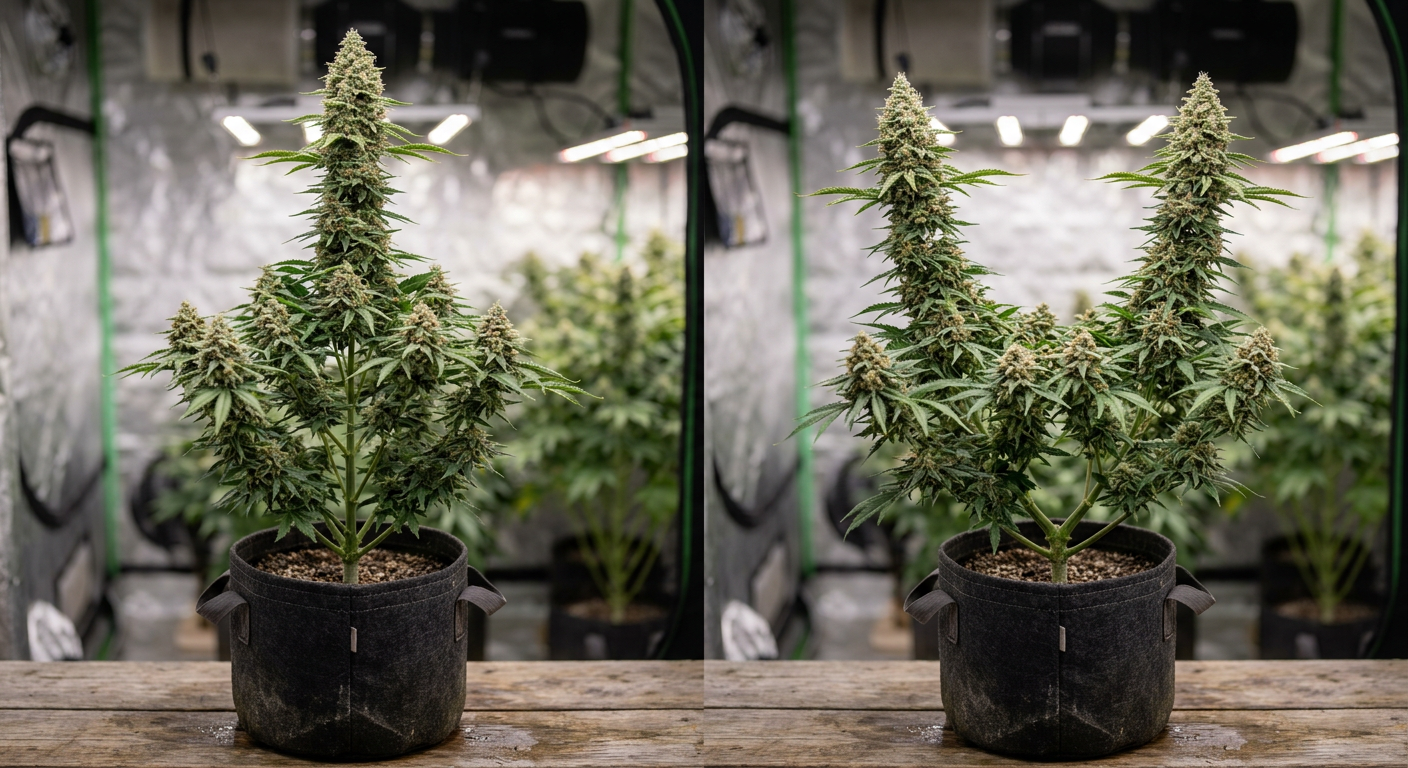
Understanding the recovery timeline helps you avoid the most common mistake growers make after topping: panicking and over-compensating with extra nutrients or water when the plant seems to stall. Recovery follows a predictable pattern — trust the process.
Here's exactly what happens during cannabis topping recovery:
- Hours 0–12: The plant enters a mild shock state. New vertical growth stops. This is normal — the plant is redirecting hormonal signaling.
- Hours 12–24: Wound callus formation begins at the cut site. The two lateral shoots at the top node start to orient upward.
- Day 2–3: Lateral shoots show visible upward growth of 5–15mm. New leaf pairs begin forming. The plant looks like a small "Y" or "V" at the top.
- Day 4–5: Growth accelerates significantly. Both new colas are actively elongating. Lower branches also start responding with renewed vigor as auxin suppression lifts throughout the plant.
- Day 7–10: Full recovery. The two new main colas are growing at the same rate as the original tip was before topping. Resume all training activities.
- Week 2–3: The two colas reach the same height the original tip would have reached. Net vegetative time loss: approximately 5–7 days.
Recovery Reality Check: A well-timed top on a healthy plant costs you 5–7 days of vegetative growth. In exchange, you gain 2–4x the main colas, significantly improved light penetration, and a flatter canopy that's much easier to manage with ScrOG or LST techniques.
Poor recovery — where a plant stalls for 10+ days — is almost always caused by one of three things: topping too early (before 5 nodes), topping a plant that was already stressed, or environmental conditions that are too cold or too dry post-cut.
How Many Times Can You Top Cannabis?
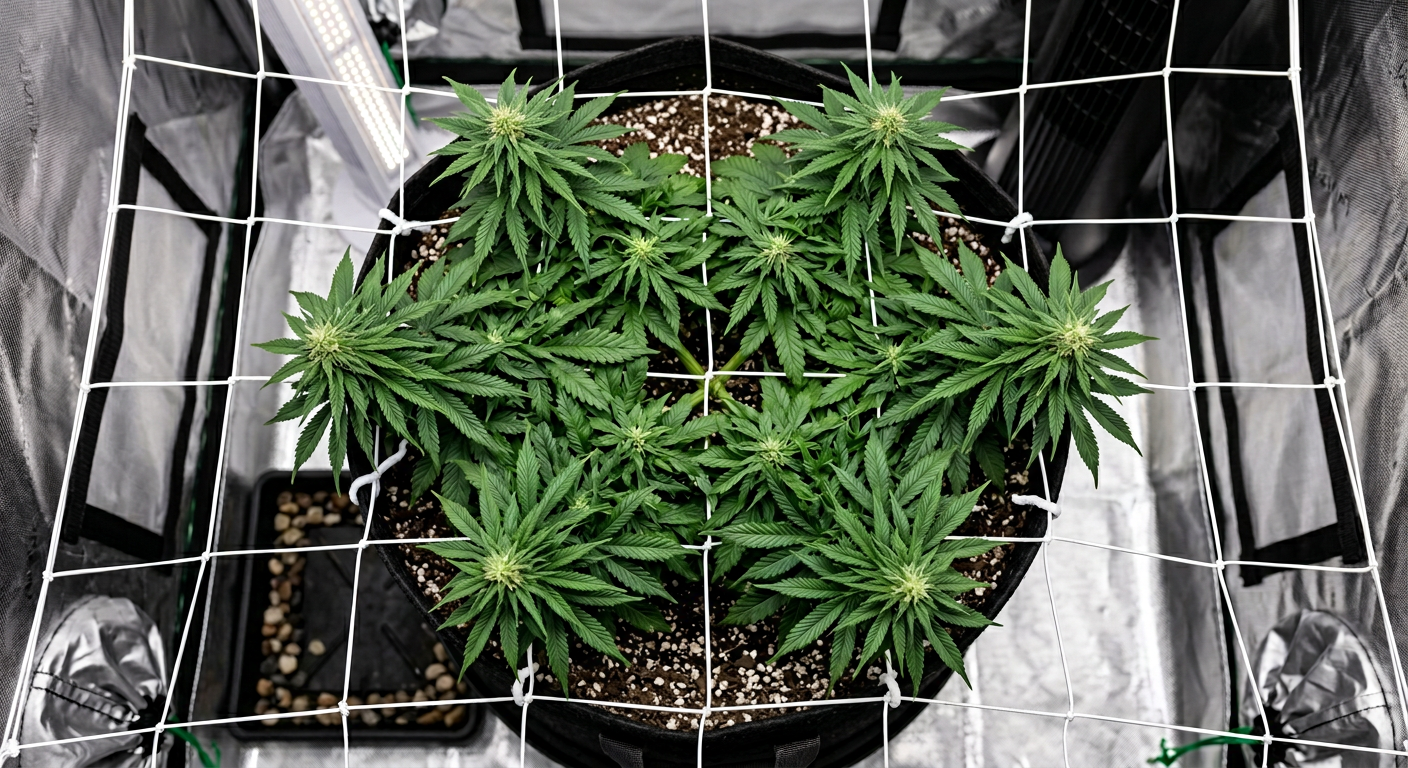
There's no hard biological limit to how many times you can top a cannabis plant. Each topping doubles your main colas: one top gives you 2, a second top gives you 4, a third gives you 8, and a fourth gives you 16. In practice, most indoor growers stop at 2–3 toppings (4–8 colas) because managing 16+ colas requires significant space, training infrastructure, and light coverage.
Multiple Topping Strategy by Grow Setup
| Setup | Recommended Tops | Final Cola Count | Veg Time Needed |
|---|---|---|---|
| Small tent (2×2 ft) | 1–2 toppings | 2–4 colas | 4–5 weeks veg |
| Medium tent (3×3 ft) | 2–3 toppings | 4–8 colas | 5–7 weeks veg |
| Large tent (4×4 ft) | 3–4 toppings | 8–16 colas | 7–9 weeks veg |
| Outdoor / greenhouse | 4–5 toppings | 16–32 colas | 8–12 weeks veg |
When performing multiple toppings, allow 7–10 days of recovery between each topping session. This gives the plant time to fully redirect energy before you introduce new stress. Some growers top all new colas at once on the second round — this works well if the plant is vigorous and healthy.
Pro Tip for Multiple Tops: After your second or third topping, combine with LST (low-stress training) to spread the resulting colas horizontally. This creates an incredibly flat, even canopy where every cola sits at the same distance from your light source — maximizing photon uniformity and bud density across all tops simultaneously. Check out our ScrOG growing guide for how to combine these techniques perfectly.
Topping vs FIMming Cannabis: Which Wins?
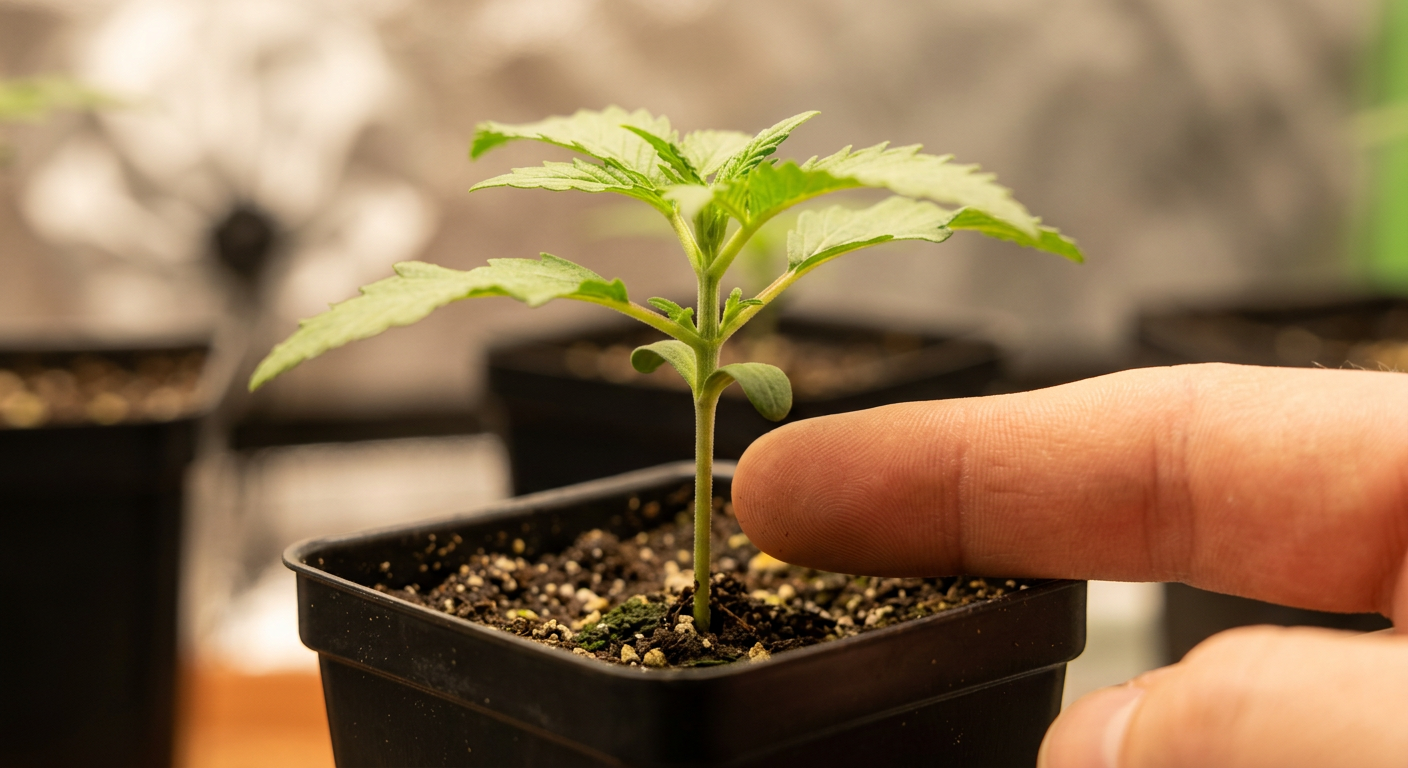
FIM (which stands for "F*** I Missed") is a variation of topping where instead of removing the entire growing tip, you pinch off approximately 75% of it. The remaining 25% of the growth tip stays on the plant. The result is typically 3–4 new colas instead of 2, but with less predictability and a faster (less traumatic) recovery.
FIM Science: Because FIM leaves partial apical tissue intact, it doesn't fully eliminate auxin production at the top. This creates a partial hormonal disruption that often activates not just the two top nodes (as with topping) but also the next 1–2 nodes below, producing 3–4 new shoots. The trade-off is less structural control — FIM results are less uniform than topping.
| Factor | Topping | FIMming |
|---|---|---|
| New colas produced | 2 (consistent) | 3–4 (variable) |
| Recovery time | 5–7 days | 3–5 days |
| Technique difficulty | Easy — one clean cut | Moderate — precise pinch needed |
| Canopy uniformity | Very uniform (symmetrical) | Less uniform, asymmetric possible |
| Stress level | High stress | Medium-high stress |
| Best for | Structured ScrOG, SOG | Maximizing sites, fast recovery |
| Autoflower safe? | Risky | Slightly less risky but still risky |
The verdict: For beginner growers and structured indoor grows, topping wins on consistency and predictability. For experienced growers who want maximum bud sites with minimal recovery delay, FIM is worth experimenting with — especially on vigorous sativa-dominant strains with long vegetative periods.
Strains like New York Power Diesel (24% THC) and Sour Diesel Feminized (24% THC) respond exceptionally well to topping thanks to their vigorous, fast-growing sativa structure and natural tendency toward upward stretch.
Topping Autoflowers: The Honest Truth
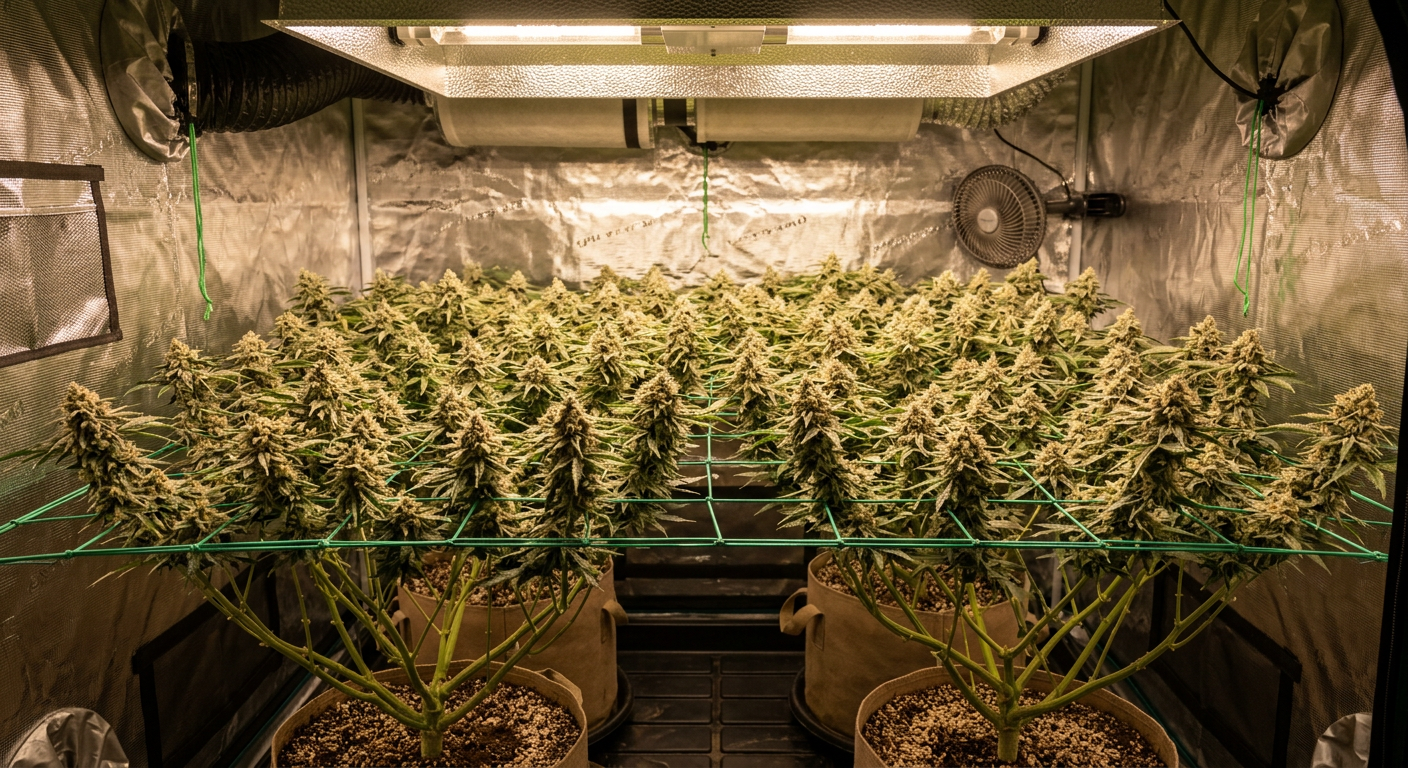
Topping autoflowers is one of the most debated topics in cannabis cultivation. The honest answer is: it can work, but it comes with significant risks that most growers should understand before trying it.
Autoflowering cannabis plants operate on a fixed genetic timer. They begin flowering automatically after 3–5 weeks regardless of light cycle. This means the vegetative window available for recovery is much shorter than with photoperiod plants. If a 5–7 day recovery period eats into your already-compressed veg time, you may end up with a smaller plant overall.
- Autoflowers with 4–5 week veg windows: Topping is high-risk. Recovery time consumes too much of the available growth phase.
- Fast-finishing autos (8–9 week seed-to-harvest): Generally not recommended for topping.
- Longer-running autos (10–12+ weeks): A single topping at week 2–3 can work if the plant is vigorous and healthy.
Autoflower Warning: If you want to top an autoflower, do it early — at the 4th node, no later than week 3 from germination. Any later and the plant will enter pre-flower during recovery, severely limiting the benefit. For most autoflower growers, LST is a far safer yield-boosting alternative that carries zero stress risk.
For autoflower growers who still want to maximize yield, consider these autoflowering strains that respond well to light training: Skywalker OG Autoflower (23% THC), Holy Grail Kush Autoflower (20% THC), and Amnesia Haze Autoflower (17% THC). These strains have longer vegetative windows that create slightly more flexibility for early topping.
For a deep dive into autoflower growth stages and timing, visit our cannabis vegetative stage guide which covers both photoperiod and auto development timelines.
Topping Cannabis Yield Increase: Realistic Numbers
Let's cut through the hype and look at real numbers. Topping alone, without any other training, typically increases yield by 20–35% compared to an untopped plant grown under identical conditions. When combined with LST or ScrOG, that number can reach 40–60% over an untrained plant.
The mechanism is straightforward: an untopped plant produces one dominant main cola and many smaller secondary buds. The main cola gets the most light but represents a fraction of total bud potential. Topping redistributes that potential across multiple equal colas, each receiving direct light exposure and developing into full-size buds.
- Untopped indoor plant (600W HPS, 4×4 ft): ~2.5–3.5 oz per plant typical
- Single-topped plant (same conditions): ~3.5–4.5 oz per plant typical
- Double-topped + LST (same conditions): ~5–7 oz per plant typical
- Triple-topped + ScrOG (same conditions): ~6–9 oz per plant typical
The Multiplier Effect: Topping doesn't just double your colas — it also improves light penetration to lower branches, increasing their yield too. A well-topped and trained plant can produce 4–5x more usable bud from lower branches alone compared to an untrained plant where lower buds are shaded out and remain small and airy.
Strains that show the most dramatic yield response to topping are typically indica-dominant or hybrid strains with natural bushy tendencies. Northern Lights x Big Bud Feminized (20% THC), White Widow Feminized (25% THC), and OG Kush Feminized (26% THC) are all exceptional candidates for aggressive topping programs.
For the ultimate yield optimization, pair topping with the techniques covered in our complete ScrOG guide — the combination is widely considered the gold standard for indoor yield maximization.
Combining Topping with Other Training Methods
Topping is most powerful as part of a complete training system rather than a standalone technique. Each subsequent training method you add compounds the benefits of the previous one, building a canopy structure that squeezes maximum productivity from every watt of light.
The Complete Training Stack
Top at Node 5 (Week 3–4 Veg)
Create your initial 2-cola structure. Allow 7 days full recovery before introducing any additional training. This is the foundation of the entire training program.
Begin LST After Recovery (Week 4–5 Veg)
Once the two new colas are established, begin bending them outward and downward using soft ties or LST clips. The goal is to create a horizontal canopy rather than two competing vertical spikes. This opens up the center of the plant to light and air circulation.
Second Topping (Week 5–6 Veg)
Top each of the two colas once they've grown to 4–5 nodes themselves, creating 4 main colas. At this point you have a plant with 4 equal tops spreading outward — a perfect base for ScrOG installation.
Install ScrOG Net (Week 6–7 Veg)
Place your screen 8–12 inches above the canopy and weave the 4 main colas and all lateral branches through the net as they grow. Continue tucking growth under the screen for 1–2 weeks until the entire canopy is flat, green, and filled with bud sites pointing upward through the mesh.
Lollipopping Before Flip (Final Week Veg)
Remove all growth below the ScrOG screen — popcorn buds, small shoots, and fan leaves blocking airflow. This "lollipopping" technique redirects energy from unproductive lower growth to the screen-level canopy, where all your prime bud sites are located. Then trigger flowering by switching to 12/12.
This five-step system consistently produces some of the highest indoor yields possible. Sativa-leaning strains with long stretch like Super Lemon Haze Feminized (23% THC) and Northern Lights x Amnesia Haze Feminized (24% THC) are ideal for this approach because their vigorous growth fills screens quickly and efficiently.
For the growing environment that makes all of this training possible, make sure your VPD (Vapor Pressure Deficit) is dialed in correctly — optimal VPD dramatically speeds up recovery from topping and fuels the explosive growth phase that follows.
Pro Tip — Mainlining: For growers who want the ultimate structured approach, consider mainlining — a specific topping protocol where you top at node 3, remove everything below, then top again at node 3 on each new shoot. This creates a perfectly symmetrical 8-cola "manifold" structure where every cola is genetically identical distance from the roots, producing remarkably even bud development.
Best Cannabis Strains for Topping
While any photoperiod cannabis strain can be topped, some respond better than others. The ideal topping candidate is a vigorous grower with strong branching genetics, a relatively long vegetative window, and internodal spacing that allows the two new colas adequate room to develop without overcrowding.
Indica-dominant strains tend to recover fastest from topping due to their compact, high-energy growth patterns. Sativa-dominant strains develop the most dramatically — their long nodes and vigorous stretch create impressive multi-cola structures. True hybrids offer the best of both.
- Best for beginners learning to top: White Widow Feminized (25% THC) — forgiving, fast-recovering, classic structure
- Best for maximum yield potential: Purple Kush Feminized (27% THC) — dense indica bud development across multiple colas
- Best sativa for topping: Super Lemon Haze Feminized (23% THC) — explosive lateral branching, fills large canopies
- Best high-THC topping candidate: Quantum Kush Feminized (30% THC) — responds extremely well to multiple toppings
- Best hybrid for structured training: OG Kush Feminized (26% THC) — natural bush structure that thrives under topping + LST
- Best for ScrOG combination: Black Widow Feminized (26% THC) — vigorous, resinous, excellent lateral branching
Before you start any training program, make sure your seeds germinate correctly — visit our complete cannabis seed germination guide and our seedling care guide to ensure you're starting with the strongest possible foundation before you ever pick up the scissors.
Common Topping Mistakes (And How to Avoid Them)
After helping thousands of growers through their first topping experience, the same mistakes come up repeatedly. Knowing these in advance saves weeks of setback time.
- Topping too early (before node 4–5): The plant doesn't have enough leaf surface or root mass to recover efficiently. Wait for the 5th node minimum.
- Using dirty or dull tools: Introduces pathogens directly into fresh tissue. Always sterilize with 70%+ isopropyl alcohol before every cut.
- Topping a stressed or sick plant: Never top when there are signs of nutrient deficiency, pH problems, pests, or root issues. Resolve the problem first — a stressed plant can take 2–3 weeks to recover from a top instead of 5–7 days.
- Overwatering after topping: Reduced leaf surface means reduced transpiration. The plant needs less water than usual during recovery. Stick to your normal watering schedule — don't add extra thinking it will "help."
- Topping into the flowering stretch: Once you've flipped to 12/12, the first 2 weeks of flowering (the stretch) will not support topping. Plan all topping to finish at least 1 week before your planned flip date.
- Not training after topping: Topping without follow-up LST allows the two new colas to grow straight up and compete with each other. Always bend them outward after recovery to maximize canopy spread.
For context on how topping fits into the overall plant lifecycle, review our cannabis vegetative stage guide and our flowering stage timeline — understanding both stages helps you plan your entire training schedule from seed to harvest.
Final Summary: Topping cannabis plants at the 5th node during weeks 3–4 of vegetation, using sterile tools, with a clean 45-degree cut and 7 days recovery time, is the single most impactful training technique available to indoor cannabis growers. Combined with LST and ScrOG, it routinely produces 40–60% yield increases over untrained plants with zero additional input costs.
Frequently Asked Questions
How long does it take for cannabis to recover from topping?
Most healthy cannabis plants recover from topping in 5–7 days. You'll see the two new lateral shoots visibly growing upward within 24–48 hours of the cut. Full recovery, where the new colas are growing as vigorously as the original tip, typically occurs by day 7–10. Plants topped too early or during stress may take 10–14 days or longer to fully recover.
Can you top cannabis in the flowering stage?
No — you should not top cannabis during the flowering stage. Once plants are in flower, they lack the vegetative hormonal balance needed for rapid recovery from high-stress techniques. Topping in flower causes severe stress, stunts bud development, and reduces yield. All topping should be completed at least 1 week before switching to the 12/12 flowering light cycle.
Does topping always increase yield?
Yes, when done correctly on photoperiod plants, topping consistently increases yield by 20–40% compared to untrained plants under identical conditions. The increase comes from creating multiple equal colas that each receive direct light exposure, rather than one dominant cola with shaded secondary buds. Combining topping with LST or ScrOG can push yield increases to 50–60%.
What is the difference between topping and FIMming cannabis?
Topping removes the entire apical growth tip, creating 2 new colas with high consistency. FIMming removes approximately 75% of the tip, often producing 3–4 new shoots but with less predictability. Topping is better for structured canopy management and ScrOG setups. FIMming recovers slightly faster and produces more shoots but with less uniform structure. Both are high-stress training techniques.
How many times should I top my cannabis plant?
Most indoor growers top 2–3 times, producing 4–8 main colas — the ideal range for tents between 3×3 and 4×4 feet. Each topping doubles your colas: 1 top = 2 colas, 2 tops = 4 colas, 3 tops = 8 colas. Allow 7–10 days recovery between each topping session, and ensure your vegetative period is long enough to accommodate multiple toppings before flipping to flower.
How long does it take for cannabis to recover from topping?
Most healthy cannabis plants recover from topping in 5–7 days. You'll see the two new lateral shoots visibly growing upward within 24–48 hours. Full recovery typically occurs by day 7–10. Plants topped too early or during stress may take 10–14 days to fully recover.
Can you top cannabis in the flowering stage?
No. You should not top cannabis during the flowering stage. Plants in flower lack the vegetative hormonal balance needed for rapid recovery. Topping in flower causes severe stress, stunts bud development, and reduces yield. Complete all topping at least 1 week before switching to a 12/12 flowering light schedule.
Does topping always increase cannabis yield?
Yes, when done correctly on photoperiod plants, topping consistently increases yield by 20–40% compared to untrained plants under identical conditions. Combining topping with LST or ScrOG can push yield increases to 50–60% over an untrained plant.
What is the difference between topping and FIMming cannabis?
Topping removes the entire apical growth tip, creating 2 new colas with high consistency. FIMming removes approximately 75% of the tip, often producing 3–4 new shoots with less predictability. Topping is better for structured ScrOG setups while FIMming recovers slightly faster and produces more shoots.
How many times should I top my cannabis plant?
Most indoor growers top 2–3 times, producing 4–8 main colas — ideal for 3×3 to 4×4 ft tents. Each topping doubles your cola count: 1 top = 2 colas, 2 tops = 4, 3 tops = 8. Allow 7–10 days recovery between each topping session.