Here's a scenario every new grower dreads: you've spent 10 weeks nurturing your plants — watering, feeding, adjusting your lights — and just as your ladies are starting to flower, you spot a cluster of small yellow bananas hanging off one of them. That's a male plant. And if you didn't catch it in time, your entire crop is seeded, your yield is wrecked, and your first grow is over. This is the central reason the feminized vs regular cannabis seeds debate matters so much for beginners — and it's exactly what this guide will break down.
Whether you're weighing up your first seed order or trying to understand what the labels actually mean, this complete comparison will tell you everything you need to make a confident, informed decision.
What Are Regular Cannabis Seeds?
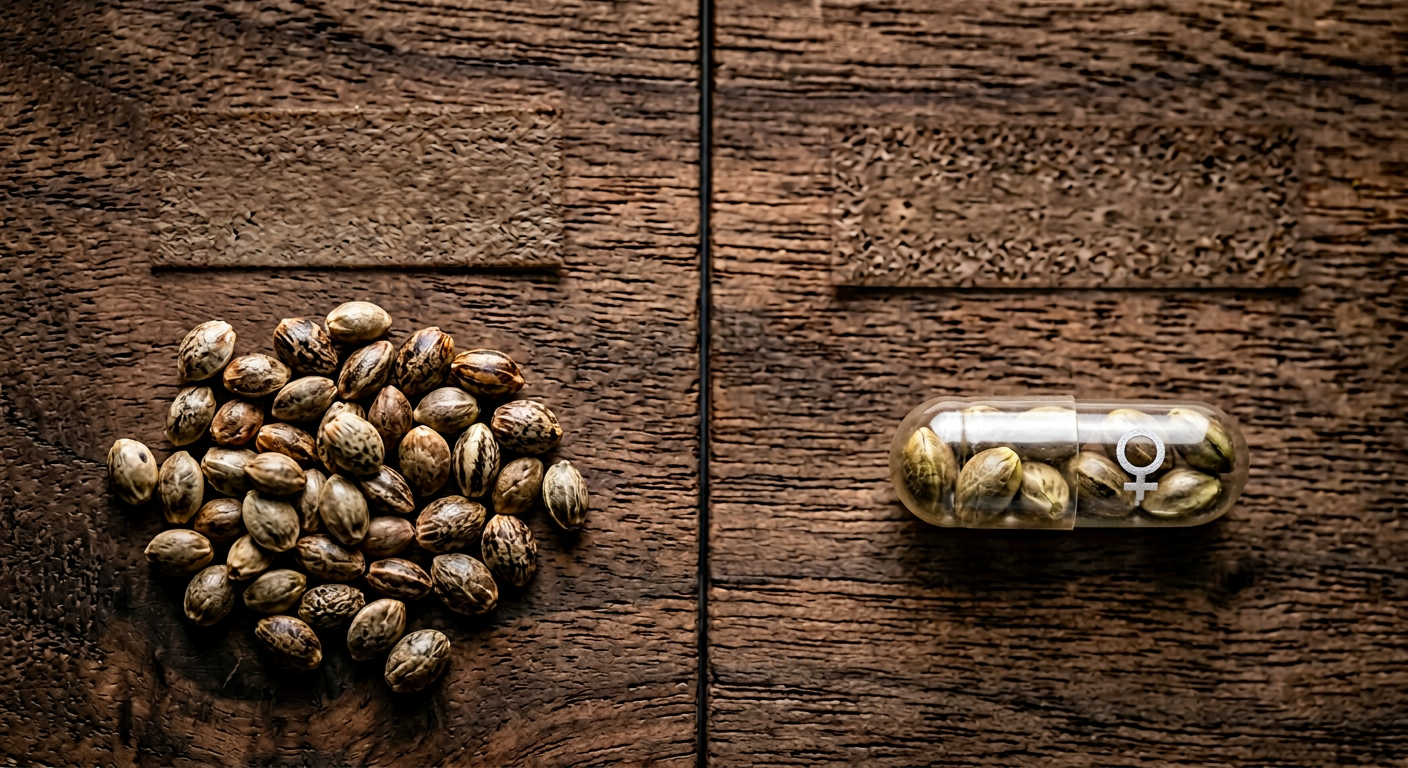
Regular cannabis seeds are exactly what nature produces: seeds that contain both male and female chromosomes, giving roughly a 50/50 chance of producing a male or female plant. They're the unmodified, natural starting point of cannabis genetics — nothing has been done to influence the sex of the resulting plant.
Regular seeds are produced when a male plant pollinates a female. The resulting seeds carry an X chromosome from the mother and either an X or a Y chromosome from the father — making the eventual sex completely unpredictable until the plant reveals itself during the pre-flowering stage.
- Natural 50/50 male-to-female ratio
- Contain both X and Y chromosomes
- Cannot be sexed until pre-flower (weeks 4–6 typically)
- Preferred by breeders who need male plants
- Generally cheaper per seed than feminized equivalents
Regular seeds are a breeding tool first and a personal cultivation tool second. If you don't need male plants, you're paying for genetics you'll either kill or miss entirely.
What Are Feminized Cannabis Seeds?
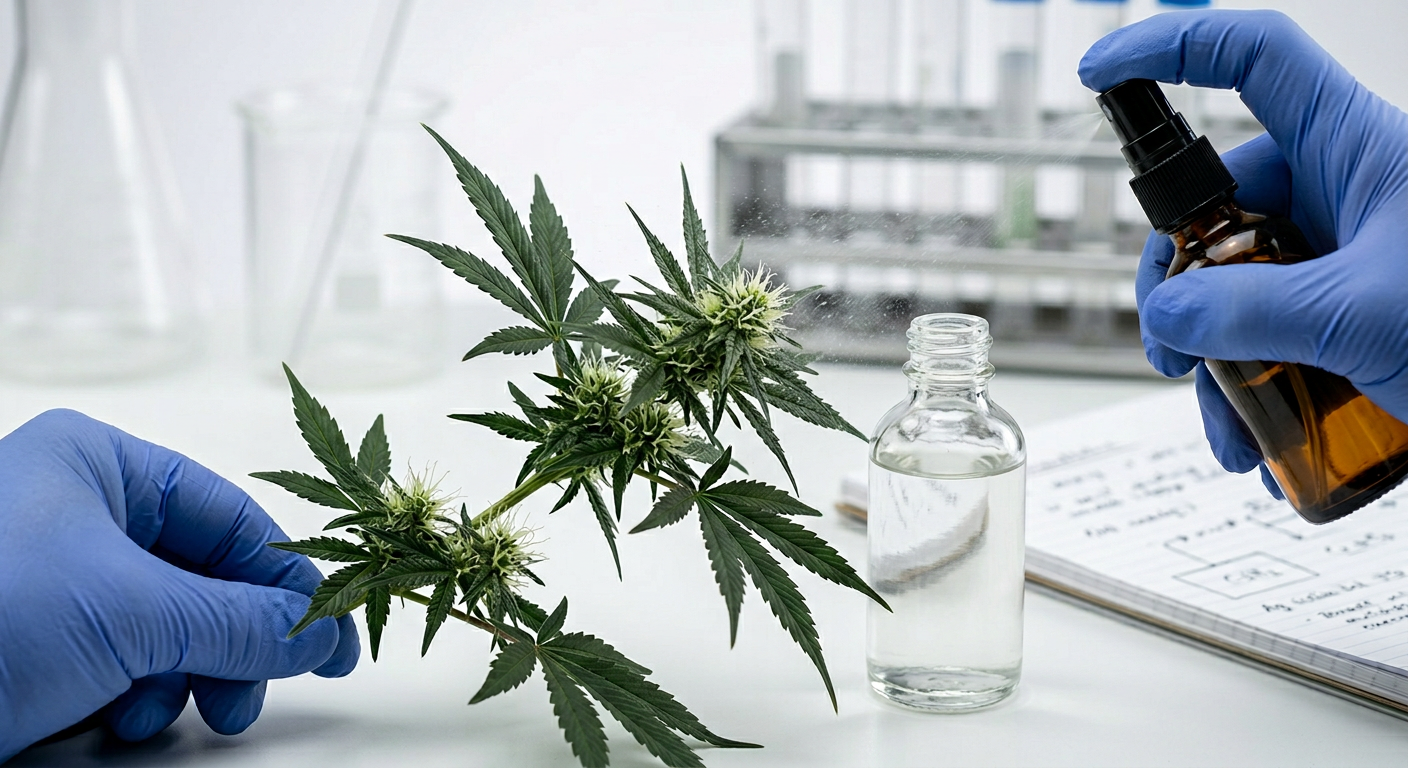
Feminized cannabis seeds are seeds that have been treated to produce only female plants — with approximately 99% reliability. They're not genetically modified organisms (GMOs). Instead, they're produced using a natural chemical process that forces a female plant to produce male pollen, which is then used to fertilise another female.
Because both parents are female, all resulting seeds carry only X chromosomes — and only female plants grow from them. This is the core of what makes feminized seeds so valuable for growers who simply want to harvest resin-coated buds without the complexity of sex-sorting.
How Are Feminized Seeds Actually Made?
There are two main methods breeders use to create feminized seeds, and neither involves any genetic modification:
Colloidal Silver Method
A solution of colloidal silver (tiny silver particles suspended in water) is sprayed onto a female plant during early flowering. The silver ions block the ethylene receptors that trigger female flowering, causing the plant to produce male pollen sacs instead. This pollen, carrying only X chromosomes, is collected and used to fertilise another female — producing seeds that are genetically all-female.
Silver Thiosulfate (STS) Method
Silver thiosulfate solution works on the same biological principle as colloidal silver — blocking ethylene to induce male flowers on a female plant — but is considered more reliable and consistent. STS is the professional standard used by most commercial seed banks producing feminized genetics at scale.
Science insight: Neither colloidal silver nor STS alters the DNA sequence of the plant. They manipulate hormonal expression — specifically ethylene suppression — to change which sex organs develop. The plant's genome remains entirely unchanged. This is why feminized seeds are explicitly NOT GMO products.
The 99% Female Guarantee — What It Really Means
When seed banks say feminized seeds produce female plants 99% of the time, this is based on population averages — not a guarantee on every individual seed. In practice, it means that in a pack of 10 feminized seeds, you're statistically unlikely to encounter a single male. Most growers run dozens of grows using feminized genetics and never see an unwanted male plant.
The rare exception: hermaphroditism. Feminized plants can occasionally produce both male and female flowers (hermies) under severe stress — extreme heat, light leaks during dark periods, or nutrient toxicity. This is not a defect of the feminized breeding process — it's a stress response that can occur in any cannabis plant. Managing your environment well eliminates most hermie risk.
Important: A hermaphrodite plant (one showing both male and female flowers) is not the same as a male plant. It's caused by environmental stress, not by the seed's genetics. Good grow conditions — stable temperature, no light leaks, correct nutrient levels — dramatically reduce the chance of hermaphroditism. See our indoor grow tent setup guide for environment control basics.
Regular Seeds vs Feminized Seeds: Side-by-Side Comparison
The clearest way to understand the difference between regular and feminized cannabis seeds is to lay the key factors side by side. Here's how they compare across every dimension a beginner actually cares about.
| Factor | Regular Seeds | Feminized Seeds |
|---|---|---|
| Sex of plant | ~50% male, ~50% female | ~99% female |
| Need to identify & remove males | Yes — mandatory | No — almost never |
| Risk of crop pollination | High if any male is missed | Extremely low |
| Suitable for breeding | Yes — ideal | Limited — no stable males |
| Suitable for first grow | Not recommended | Strongly recommended |
| Cost per seed | Lower (typically 30–50% less) | Higher — but justified |
| Grow space efficiency | Up to 50% wasted on males | Nearly 100% productive |
| Genetic modification (GMO) | No | No |
| Grow complexity | Moderate–High | Low–Moderate |
| Cloning potential | Yes (from females) | Yes |
| Ideal user | Experienced breeders | Beginners & personal growers |
For beginners, the cost saving of regular seeds is immediately wiped out the moment you have to kill half your plants, buy replacement seeds, and lose weeks of grow time. The math doesn't work in favour of regular seeds for a first grow.
Why Male Plants Are Catastrophic for a First Grow
If you're new to growing, you might wonder how bad a male plant really is. The answer: potentially devastating to your entire harvest. Understanding why requires a quick look at cannabis reproduction.
Male cannabis plants don't produce buds — they produce pollen sacs. When those sacs burst, they release clouds of pollen that can travel through your grow space and land on the white pistils of nearby female flowers. Within days, those fertilised flowers stop producing resin and start producing seeds instead.
What Happens When a Female Gets Pollinated
- Bud development stops and seed production begins
- Resin (cannabinoid) production drops sharply
- Buds become seedy, harsh, and far less potent
- Smokable yield can drop by 50–80% in heavily pollinated plants
- You can't un-pollinate a plant — the damage is permanent
Critical timing warning: Male plants reveal their sex during pre-flowering — usually around weeks 4–6 from seed. But pollen sacs can open within days of becoming visible. A beginner who doesn't check plants daily, or who doesn't know what pre-flowers look like, can easily miss the window. One open male in a 4-plant grow can ruin every female in the tent.
The Hidden Costs of Growing Regular Seeds as a Beginner
Beyond the catastrophic pollination risk, regular seeds impose a series of hidden costs on new growers that are rarely discussed:
- Wasted grow space: If 5 of your 10 plants turn out male, half your tent, soil, pots, nutrients, and electricity were spent on plants you'll compost
- Wasted time: You won't know the sex until weeks 4–6 — by then you've invested nearly half your vegetative grow time
- Stress: Daily checking for male pre-flowers adds anxiety to an already steep learning curve
- Replacement costs: If you don't have enough females left after culling males, you may need to buy more seeds mid-grow
- Yield planning is impossible: You can't predict your final plant count or yield without knowing the sex ratio in advance
When you factor all of these in, the cheaper price-per-seed of regular genetics stops looking like a bargain very quickly. Our grow cost calculator can help you model the real economics of your planned setup before you buy.
The Real Cost Premium: Feminized vs Regular Seeds
The cost difference between feminized and regular seeds is real — but much smaller than most beginners expect, and easily justified by the risk reduction they provide. Here's how to think about the actual numbers.
A typical regular seed might cost £3–£6 per seed. A feminized equivalent of the same strain might cost £6–£12 per seed — roughly a 2–3× premium. That sounds significant until you do the per-harvest maths.
Cost Comparison: A 4-Plant First Grow
| Scenario | Regular Seeds (8 seeds for 4 females) | Feminized Seeds (4 seeds) |
|---|---|---|
| Seeds purchased | 8 (to account for ~50% males) | 4 |
| Cost per seed | £5 | £10 |
| Total seed cost | £40 | £40 |
| Plants that produce buds | ~4 (after culling males) | ~4 |
| Risk of missed male | High | Near zero |
| Wasted grow space | 4 pots, 4 lots of soil, 4 lots of nutrients | None |
| Stress level | High (daily sex checks required) | Low |
The seed cost is often identical when you account for buying extras to guarantee enough females. But the resources wasted growing those males to sexing age — soil, nutrients, water, electricity, and time — add real cost on top. Feminized seeds win on total grow economics, not just risk reduction.
If you're planning your first grow and want to estimate your total costs before buying anything, use our free grow cost calculator — it factors in seeds, lighting, nutrients, and equipment so you go in with clear numbers.
Regular Seeds Are for Breeders — Not Beginners
Regular seeds exist because breeders need them. You cannot create new cannabis genetics without male plants — they're the paternal half of any cross. A breeder developing a new strain needs stable, healthy males with desirable traits to pollinate selected females, creating offspring that carry both parents' characteristics.
This is legitimate, skilled work — but it's not what a first-time grower is doing. If your goal for your first grow is simply to produce quality buds to smoke, regular seeds offer zero advantages and several serious disadvantages.
When Regular Seeds Make Sense
- You want to create your own crosses or breed new strains
- You're preserving heirloom genetics that only exist as regular seeds (see our guide to heirloom cannabis strains)
- You're an experienced grower comfortable with sex identification
- You have a dedicated breeding space separate from your main grow
- You need to develop a male phenotype library for ongoing projects
Regular seeds are a specialist tool. Using them on your first grow is like learning to drive in a manual transmission race car — technically possible, but unnecessarily complex when a simpler option exists.
Decision Flowchart: Feminized or Regular?
Use this simple decision framework to settle the question for your specific situation. Answer each question honestly and follow the path.
Is this your first or second grow?
Yes → Choose feminized seeds. Full stop. The learning curve is steep enough without adding male identification and culling to your plate.
No → Move to question 2.
Do you want to breed your own strains?
Yes → Regular seeds are the right choice. You need male plants, and you need the genetic diversity that regular seeds provide.
No → Move to question 3.
Do you have a separate breeding space away from your main grow?
Yes → Regular seeds for breeding; feminized for your main canopy.
No → Feminized seeds. Even experienced growers with limited space use feminized to maximise yield per square metre.
Is your primary goal to harvest smokable buds?
Yes → Feminized seeds, always. Your grow space should be 100% productive, 100% female.
No → Define your goal more clearly before buying seeds — the answer changes based on what you're actually trying to achieve.
Still figuring out your grow setup before buying seeds? Our free grow planner tool helps you map out your space, light requirements, and plant count — making your seed choice even clearer before you spend anything.
Do Feminized Seeds Always Produce Female Plants?
Feminized seeds produce female plants approximately 99% of the time — a rate high enough that the vast majority of growers never encounter a male from feminized stock. However, 'always' is technically not accurate: no biological process is 100% absolute across every seed from every batch.
The more relevant question for beginners is: what could go wrong, and how do you prevent it? The two main sources of problems with feminized seeds are poor-quality genetics (buying from unreliable sources) and hermaphroditism caused by environmental stress.
How to Maximise Female Expression from Feminized Seeds
- Buy from reputable seed sources with verified feminization processes
- Maintain stable temperatures — avoid heat spikes above 30°C (86°F)
- Eliminate all light leaks during the dark period in flowering
- Avoid severe nutrient deficiencies or toxicities
- Don't stress the plant with aggressive training during flowering
- Monitor humidity — high humidity combined with heat stresses plants significantly
If you want to check your environment is dialled in before flipping to flower, our VPD calculator will tell you whether your temperature and humidity combination is optimal for cannabis at each growth stage.
Science insight: Hermaphroditism in cannabis is primarily a stress response driven by ethylene production — the same hormone pathway that feminized seed production manipulates. When a plant experiences enough stress to trigger survival mode, it attempts to self-pollinate to ensure reproduction. This is evolutionary adaptation, not a genetics flaw — and good growing practice makes it extremely rare.
Are Feminized Seeds Worth It for a First Grow?
Yes — feminized seeds are unambiguously worth the price premium for a first-time grower. The cost difference rarely exceeds the price of a single wasted plant's worth of resources, and the risk reduction they provide is enormous. Here's the verdict broken down clearly.
Verdict: Feminized Seeds for Beginners
| Consideration | Verdict |
|---|---|
| Risk of crop loss from males | ✅ Eliminated with feminized seeds |
| Grow space efficiency | ✅ 100% of space produces buds |
| Learning curve complexity | ✅ Simpler — no sex monitoring needed |
| Cost per usable plant | ✅ Equal to or less than regular seeds |
| Breeding potential | ❌ Not suitable for creating new strains |
| Genetic diversity | ❌ Slightly narrower than regular populations |
| Overall first-grow suitability | ✅✅✅ Strongly recommended |
The only scenario where a beginner might rationally choose regular seeds is if they specifically want to learn about cannabis breeding from day one — and even then, starting with feminized for the main grow while experimenting with a single regular plant on the side is a safer approach.
Once you've chosen your seeds and you're ready to germinate, make sure you follow a reliable method. Our cannabis germination guide covers every technique from paper towel to direct soil — with success rates and common mistakes to avoid. It's the essential next step after you've bought your seeds.
First-time growers often underestimate how much easier a grow becomes when you remove even one variable. Feminized seeds eliminate the sex-monitoring variable entirely — letting you focus on learning lighting, watering, nutrients, and training without the added pressure of male plant surveillance.
Our Recommended Feminized Strains for First Grows
Choosing the right strain for your first feminized grow matters almost as much as choosing feminized over regular. The best beginner strains combine manageable THC levels or forgiving growth patterns with reliable feminized genetics. Here are our top picks — including well-known industry staples and strains we carry — across different experience goals.
Best Feminized Strains for True Beginners (Forgiving Grows)
These strains tolerate minor mistakes, have shorter flowering times, and don't demand expert-level environmental precision:
- Northern Lights x Big Bud Feminized (20% THC) — One of the most forgiving genetics combinations available. Northern Lights is legendary for resilience; Big Bud adds exceptional yield. Dense, resinous buds, compact plant structure, and a relatively short 8-week flower time make this ideal for a first indoor grow.
- White Widow Feminized (25% THC) — A beginner classic with decades of proven genetics. Extremely adaptable, handles minor nutrient inconsistencies well, and produces heavy, crystalline buds. One of the most widely grown feminized strains on the planet for good reason.
- Super Skunk Feminized (20% THC) — Skunk genetics are among the most stable and beginner-friendly available. Super Skunk grows vigorously, responds well to basic training techniques, and delivers consistent harvests without demanding perfect conditions.
- Blue Dream — Not a strain we carry, but worth mentioning as a benchmark beginner feminized strain. High tolerance for environmental variation, large yields, and a well-balanced high. If you find it from a trusted source, it's a reliable first-grow option at around 21% THC.
- Purple Power Feminized (10% THC) — Lower THC makes this an excellent choice for growers who want to learn technique without producing an overpowering product. Grows tall with classic sativa structure, making it great for observing plant development.
Best Feminized Strains for Beginners Wanting Higher Potency
If you want your first grow to also deliver serious potency, these feminized options combine beginner-tolerant growth with impressive THC percentages:
- OG Kush Feminized (26% THC) — A legendary strain with reliable feminized genetics. OG Kush requires slightly more attention to humidity during late flower but rewards careful beginners with exceptional resin production and that iconic fuel-and-earth aroma.
- Silver Pearl Feminized (21% THC) — Fast-flowering, compact, and prolific. Silver Pearl is an overlooked beginner gem — it finishes in around 7–8 weeks of flower and produces dense, silvery buds with high trichome coverage for its THC level.
- Gorilla Glue #4 (GG4) — One of the most popular feminized strains globally and for good reason. At around 25–28% THC, it produces enormous, resin-drenched buds and grows with a forgiving, vigorous structure that suits beginners who want top-shelf results. Check our complete GG4 strain guide for grow details.
- Black Widow Feminized (26% THC) — A direct descendant of the original White Widow genetics, selected for higher potency. Grows with the same reliable structure as White Widow but pushes THC levels into the upper range. Excellent for beginners who want to understand what high-potency cultivation looks like.
- White Cookies Feminized (22% THC) — The Cookies lineage crossed with White genetics produces dense, aromatic buds with a sweet, earthy profile. Manageable height, strong lateral branching, and consistent feminized performance make this a strong mid-potency beginner choice.
Best Feminized Strains for Beginners Who Want Big Yields
Yield is often the primary goal for a first grow. These feminized strains are chosen specifically for their production potential in beginner-managed conditions:
- Wonder Woman Feminized (22% THC) — Named for its exceptional yield-to-effort ratio. Wonder Woman grows fast, responds well to basic topping (see our topping guide), and delivers dense harvests with relatively straightforward care requirements.
- Skunk Special Feminized (24% THC) — Skunk Special combines the legendary Skunk #1 production profile with boosted potency. Vigorous growth, wide canopy spread, and heavy bud production per square metre make this a yield-focused beginner strain with proven genetics.
- Wedding Cake — A widely available feminized strain producing extremely dense, calyxed buds at 25–27% THC. Grows with a strong central cola structure and responds well to low-stress training. High demand at harvest time with less maintenance than many high-yield options.
- Sour Diesel Feminized (24% THC) — A tall, vigorous sativa-dominant strain that rewards beginners who have height room. Sour Diesel grows quickly in veg, produces abundant branches loaded with long, narrow buds, and delivers a famously energetic effect profile.
- New York Power Diesel Feminized (24% THC) — The New York Diesel lineage brings compact, manageable structure with impressive yield and a sharp citrus-fuel aroma. More suited to smaller spaces than classic Sour Diesel while maintaining similar potency and effect character.
Before you select your strain, use our free yield estimator tool to understand how much your chosen strain is likely to produce based on your grow space, light wattage, and training approach. It takes the guesswork out of harvest planning.
Once you've germinated and your seedlings emerge, our cannabis seedling problems visual diagnosis guide is your go-to reference for the first two weeks — the most common point where beginner grows encounter their first challenges.
Frequently Asked Questions
Do feminized seeds always produce female plants?
Feminized seeds produce female plants approximately 99% of the time — high enough that most growers never encounter a male from feminized stock across their entire growing career. The rare exception is hermaphroditism, which is caused by environmental stress (heat spikes, light leaks, nutrient extremes) rather than a flaw in the seed's genetics. Buying from reputable sources and maintaining a stable grow environment eliminates virtually all risk.
Are feminized seeds worth it for a first-time grower?
Absolutely yes. Feminized seeds eliminate the biggest risk facing a beginner grower — accidentally missing a male plant and pollinating your entire crop. When you factor in the cost of the extra regular seeds needed to guarantee enough females, the wasted resources growing males to sexing age, and the risk of losing a harvest, feminized seeds are clearly the better economic and practical choice for anyone growing for personal use.
What happens if you grow regular seeds as a beginner?
Roughly half your plants will be male. You'll need to identify and remove them during pre-flowering (weeks 4–6), which requires knowing what male pre-flowers look like and checking plants daily. If you miss even one male, its pollen can fertilise your females — causing them to produce seeds instead of resin, dramatically reducing potency and smokable yield. First-time growers who don't catch males in time often lose the majority of their harvest.
Can you clone feminized cannabis plants?
Yes — feminized plants clone exactly like any other cannabis plant. Clones taken from a healthy feminized mother will also be female, since cloning preserves the parent plant's genetics including its sex chromosomes. This makes feminized seeds even more valuable for personal growers: you can buy seeds once, find a phenotype you love, and take clones from it indefinitely without ever needing to buy seeds again.
Are feminized seeds GMO?
No. Feminized cannabis seeds are not genetically modified organisms. They're produced using colloidal silver or silver thiosulfate solution, which manipulates the plant's hormonal expression to induce male flowers on a female plant — without altering the plant's DNA sequence in any way. The resulting seeds are the product of natural pollination between two female plants, not laboratory gene editing. Feminized seeds are simply selectively bred, natural cannabis seeds.